ALDEFLUOR Assay: The Definitive Guide to Measuring ALDH Activity in Stem Cell & Cancer Research
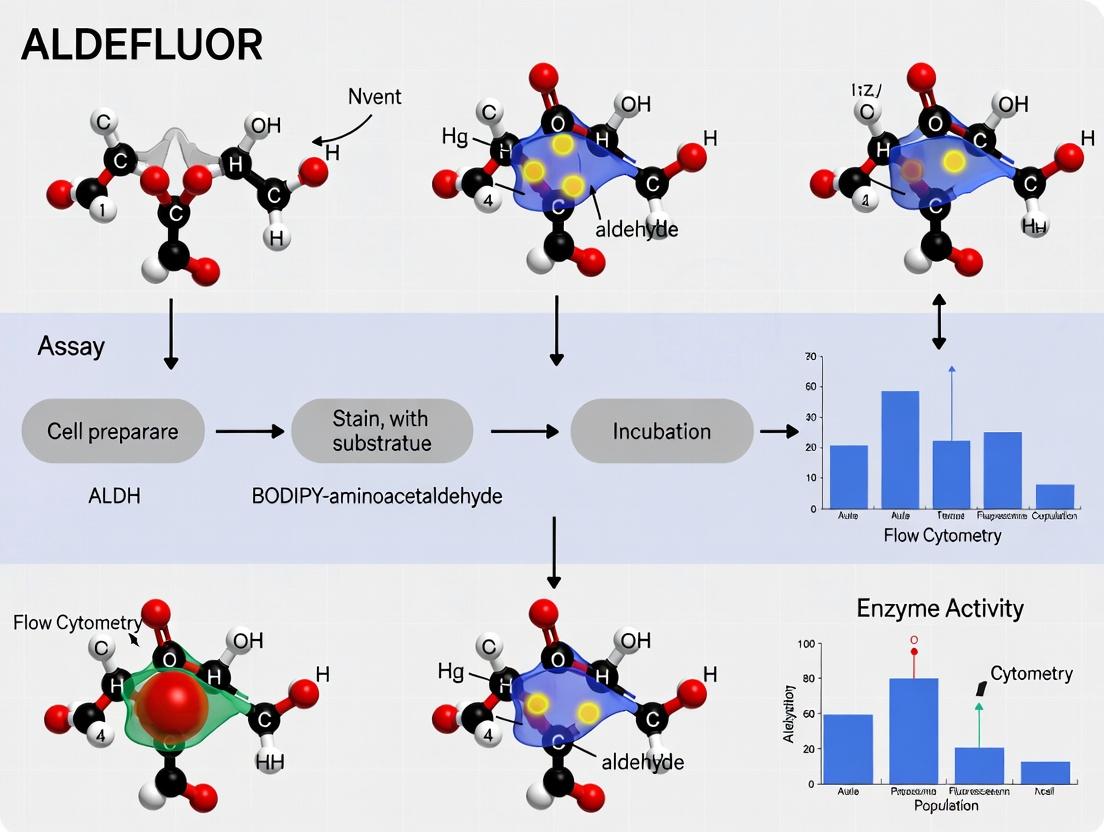
This comprehensive guide provides researchers, scientists, and drug development professionals with an in-depth analysis of the ALDEFLUOR assay.
ALDEFLUOR Assay: The Definitive Guide to Measuring ALDH Activity in Stem Cell & Cancer Research
Abstract
This comprehensive guide provides researchers, scientists, and drug development professionals with an in-depth analysis of the ALDEFLUOR assay. We cover the foundational principles of aldehyde dehydrogenase (ALDH) as a functional stem cell marker, detail step-by-step protocols for robust measurement of ALDH activity in various cell types, address common troubleshooting and optimization challenges, and validate the assay against alternative methods. The article synthesizes current best practices to ensure accurate identification and isolation of ALDH-bright cell populations, crucial for cancer stem cell research, normal stem cell biology, and therapeutic development.
ALDH and ALDEFLUOR 101: Understanding the Biology Behind the Biomarker
The Role of Aldehyde Dehydrogenase (ALDH) in Cellular Detoxification and Stemness
Aldehyde dehydrogenases (ALDHs) are a superfamily of NAD(P)+-dependent enzymes critical for the oxidative detoxification of endogenous and exogenous aldehydes. High ALDH activity, particularly from the ALDH1A family, is a functional marker of normal and cancerous stem cells (e.g., Cancer Stem Cells, CSCs), correlating with stemness properties like self-renewal, differentiation resistance, and enhanced detoxification capacity. The ALDEFLUOR assay is the gold-standard flow cytometry method for identifying and isolating these viable, ALDH-bright cell populations based on enzymatic activity.
Key Data and Findings
Table 1: ALDH Isoforms, Substrates, and Functional Roles in Stemness & Detoxification
| ALDH Isoform | Primary Substrate(s) | Role in Detoxification | Association with Stemness | Key Tissue/Cell Type |
|---|---|---|---|---|
| ALDH1A1 | Retinaldehyde, Acetaldehyde, Aldophosphamide | Converts retinol to retinoic acid (RA), detoxifies chemotherapeutic agents (e.g., cyclophosphamide). | High activity defines stem cell populations in breast, lung, colon cancers & normal hematopoietic stem cells (HSCs). Regulates RA signaling for self-renewal. | CSCs, HSCs, Neural Stem Cells |
| ALDH1A3 | Retinaldehyde | Major contributor to RA synthesis in certain CSCs (e.g., mesenchymal glioblastoma, triple-negative breast cancer). | Promotes tumorigenicity, invasion, and resistance. Often co-expressed with ALDH1A1 but may dominate in specific subtypes. | Mesenchymal CSCs |
| ALDH2 | Acetaldehyde, Lipid peroxidation-derived aldehydes (4-HNE) | Critical for ethanol metabolism and protection against oxidative stress-induced aldehydes. | Polymorphisms linked to reduced stem cell function. Protects hematopoietic stem cells from oxidative damage. | Hematopoietic, Cardiac Progenitors |
| ALDH3A1 | Lipid aldehydes, Aldophosphamide | Detoxifies products of lipid peroxidation and contributes to oxazaphosphorine resistance. Overexpressed in response to oxidative stress. | Associated with radio/chemo-resistance in cancer cells and progenitor cell protection. | Corneal epithelium, Various Cancers |
Table 2: Clinical and Experimental Correlations of High ALDH Activity
| Parameter | Observation/Correlation | Implication | Supporting Evidence Type |
|---|---|---|---|
| Poor Prognosis | High ALDH+ cells correlate with worse overall and progression-free survival in AML, breast, lung, ovarian, and colon cancers. | ALDH is a robust prognostic biomarker. | Meta-analyses of clinical cohorts. |
| Chemoresistance | ALDH+ CSCs demonstrate resistance to cyclophosphamide, paclitaxel, cisplatin, and radiotherapy. | ALDH mediates detoxification of drugs and reactive oxygen species (ROS). | In vitro and patient-derived xenograft (PDX) studies. |
| Metastatic Potential | ALDH+ populations show enhanced invasion, epithelial-mesenchymal transition (EMT) traits, and metastatic seeding in vivo. | Drives aggressive disease phenotype. | Mouse metastasis models. |
| Stemness Signaling | Regulates and is regulated by key pathways: Wnt/β-catenin, Notch, Hedgehog, PI3K/Akt, and RA signaling. | Integral node in stem cell maintenance networks. | Pathway analysis & genetic manipulation studies. |
Core Protocol: ALDEFLUOR Assay for Stem Cell Identification
Application Note: Isolation of Viable ALDH-Bright Cells via ALDEFLUOR
- Principle: The cell-permeable, non-fluorescent substrate BODIPY-aminoacetaldehyde (BAAA) diffuses into live cells. Intracellular ALDH enzyme converts BAAA into the negatively charged, fluorescent product BODIPY-aminoacetate (BAA), which is retained in cells with high ALDH activity. An inhibitor, diethylaminobenzaldehyde (DEAB), serves as a negative control.
- Key Advantage: Allows viable sorting of ALDH+ populations for downstream functional assays (sphere formation, transplantation, RNA-seq).
Detailed Protocol
A. Reagent and Sample Preparation
- ALDEFLUOR Kit Components: ALDEFLUOR substrate (BAAA), ALDEFLUOR assay buffer, DEAB inhibitor (50 mM stock).
- Prepare Single-Cell Suspension: Harvest cells using gentle enzymatic dissociation (e.g., TrypLE). Wash 2x in PBS. Filter through a 40μm cell strainer. Count and assess viability (>90% recommended).
- Prepare Assay Buffer: Warm the required volume of assay buffer to 37°C.
- Prepare DEAB Control Tube: For every 1 mL of cell suspension, add 5 μL of DEAB stock to a 15mL tube (final concentration ~50 μM).
B. Staining Procedure
- Substrate Activation: Add 5 μL of ALDEFLUOR substrate per 1 mL of assay buffer needed. Mix gently. This is the "Activated Substrate Solution."
- Cell Staining:
- Resuspend up to 2 x 10^6 cells in 1 mL of Activated Substrate Solution.
- Immediately transfer half of the volume (0.5 mL) to the pre-prepared DEAB control tube. Mix.
- Incubate both tubes (test and DEAB control) at 37°C for 30-60 minutes, protected from light. Do not use a water bath.
- Post-Incubation: Centrifuge cells at 250-300 x g for 5 min. Aspirate supernatant.
- Resuspension: Resuspend cell pellets in 0.5 mL of ice-cold ALDEFLUOR assay buffer. Keep on ice, protected from light.
C. Flow Cytometry Analysis and Sorting
- Instrument Setup: Use a 488 nm laser for excitation. Detect fluorescence with a standard FITC/GFP filter (e.g., 530/30 nm BP filter).
- Gating Strategy:
- Gate on live cells using FSC/SSC and a viability dye (e.g., DAPI, 7-AAD) if required.
- Analyze the DEAB control sample first. Set a gate such that <1% of cells in the DEAB sample are positive.
- Apply this gate to the test sample. The ALDH-bright population is the fraction of cells falling within this gate in the test sample, excluding the DEAB-inhibited background.
- Sorting: For cell sorting, use the same gating strategy under sterile conditions into a collection tube containing culture medium.
The Scientist's Toolkit: Key Research Reagent Solutions
Table 3: Essential Materials for ALDH/Stemness Research
| Item / Reagent | Function / Purpose | Example/Catalog Consideration |
|---|---|---|
| ALDEFLUOR Assay Kit | Gold-standard for detecting intracellular ALDH activity in live cells for FACS. | StemCell Technologies, #01700. Contains substrate, buffer, DEAB. |
| Flow Cytometer with Sorter | Analyzing and isolating ALDH-bright cell populations based on fluorescence. | Instruments with 488nm laser and sterile sorting capability (e.g., BD FACSAria, Beckman Coulter MoFlo). |
| Viability Dye | Distinguishing live from dead cells during analysis/sorting to exclude false positives. | 7-AAD, DAPI, Propidium Iodide (PI), or Fixable Viability Dyes. |
| Specific ALDH Isoform Inhibitors | Functional validation of specific ALDH isoform contributions (e.g., ALDH1A1). | DEAB (pan-ALDH inhibitor), CM037 (ALDH1A1-specific), NCT-501 (ALDH1A3-specific). |
| Retinoic Acid (RA) Pathway Modulators | Investigating the RA signaling axis downstream of ALDH1A activity. | All-Trans Retinoic Acid (ATRA), RA receptor antagonists (e.g., BMS493). |
| Sphere-Formation Media | Assessing in vitro self-renewal capacity of sorted ALDH+ cells. | Serum-free DMEM/F12 supplemented with B27, EGF, bFGF. |
| Antibodies for ALDH Isoforms | Protein-level detection and validation via ICC/IHC/Western. | Validated antibodies for ALDH1A1, ALDH1A3, ALDH2 (from R&D Systems, Abcam, etc.). |
| qPCR Assays for ALDH Isoforms | mRNA-level quantification of specific ALDH isoforms. | TaqMan Gene Expression Assays or SYBR Green primers for human/mouse ALDH1A1, 1A3, etc. |
Visualizing Key Pathways and Workflows
Diagram 1: ALDH Drives Detoxification and Stemness
Diagram 2: ALDEFLUOR Assay Workflow
Diagram 3: ALDH in Stemness Signaling Network
ALDH as a Conserved Functional Marker for Stem and Progenitor Cells
Aldehyde dehydrogenase (ALDH) enzymatic activity, measured via the ALDEFLUOR assay, has emerged as a conserved functional marker for identifying and isolating stem and progenitor cell populations across diverse tissues and species. This functional characteristic is linked to crucial cellular processes, including retinoic acid signaling, oxidative stress resistance, and drug detoxification. High ALDH activity is a hallmark of cells with enhanced self-renewal, proliferative capacity, and regenerative potential.
Key Applications:
- Cancer Stem Cell (CSC) Identification: Isolating tumor-initiating cells in hematological and solid tumors for mechanistic studies and therapy development.
- Normal Stem/Progenitor Cell Isolation: Enriching hematopoietic stem cells (HSCs), mesenchymal stem cells (MSCs), and other tissue-specific progenitors for regenerative medicine.
- Drug Screening & Development: Serving as a phenotypic endpoint for screening compounds that target or modulate stem cell populations.
- Prognostic Marker: High ALDH activity in tumors often correlates with poor clinical outcomes, resistance to chemotherapy, and increased likelihood of metastasis.
Table 1: ALDH⁺ Cell Prevalence and Characteristics in Selected Tissues
| Tissue / Cell Source | Typical % ALDH⁺ (Range) | Key Characteristics of ALDH⁺ Population | Associated Marker Co-expression |
|---|---|---|---|
| Human Bone Marrow (HSCs) | 1-5% | Primitive, long-term repopulating, quiescent | CD34⁺, CD38⁻/low, CD90⁺, CD45RA⁻ |
| Human Breast Cancer | 0.1-10% | Tumor-initiating, chemoresistant, metastatic | CD44⁺CD24⁻/low, EpCAM⁺ |
| Human Cord Blood | 2-8% | High engraftment potential, proliferative | CD34⁺, CD133⁺ |
| Mouse Bone Marrow | 3-7% | Lin⁻, Sca-1⁺, c-Kit⁺ (LSK) population enrichment | Lin⁻, Sca-1⁺, c-Kit⁺ |
| Human Mesenchymal Stem Cells (MSCs) | 10-30%* | Enhanced osteogenic and chondrogenic potential, clonogenic | CD73⁺, CD90⁺, CD105⁺, SSEA-4⁺ |
| Human Lung Adenocarcinoma | 1-15% | Increased sphere formation, resistance to EGFR-TKIs | CD133⁺, Oct-4⁺ |
*Varies significantly with tissue source (BM > AT > UC) and passage number.
Table 2: Impact of ALDH Inhibition on Functional Readouts
| Experimental Model | Inhibitor Used | Functional Assay | Outcome in ALDH⁺ vs. ALDH⁻ Cells |
|---|---|---|---|
| Breast Cancer PDX | DEAB (Diethylaminobenzaldehyde) | In vivo tumor initiation | >100-fold reduction in tumor-initiating capacity of ALDH⁺ cells |
| AML Cell Lines | DEAB or Disulfiram | Colony Formation (CFU) | 60-80% reduction in colony number for ALDH⁺ cells |
| Normal HSCs | DEAB | Competitive Repopulation (Mouse) | Significant decrease in long-term multi-lineage engraftment |
| Ovarian Cancer Spheroids | Disulfiram | Chemosensitivity (Cisplatin) | Synergistic effect, reducing IC₅₀ of cisplatin by ~70% |
Detailed Experimental Protocols
Protocol 1: Standard ALDEFLUOR Assay for Cell Sorting & Analysis
- Principle: Live cells convert the substrate BODIPY-aminoacetaldehyde (BAAA) into a fluorescent reaction product (BODIPY-aminoacetate) retained inside cells with high ALDH activity. An inhibitor control (Diethylaminobenzaldehyde, DEAB) is essential for gating.
- Reagents: ALDEFLUOR Kit (contains BAAA substrate, DEAB inhibitor, assay buffer), appropriate culture medium, DAPI or PI for viability staining.
- Procedure:
- Prepare a single-cell suspension (>1x10⁶ cells/mL) in ALDEFLUOR assay buffer.
- Divide: Aliquot cells into two tubes: Test and DEAB Control.
- Inhibit: Add 5 µL of DEAB solution to the Control tube. Mix and incubate for 15 min at 37°C.
- Label: Add 5 µL of activated BAAA substrate to both tubes. Mix immediately.
- Incubate: Incubate both tubes for 30-45 minutes at 37°C in the dark.
- Wash & Resuspend: Centrifuge, wash with ice-cold assay buffer, and resuspend in buffer containing 1 µg/mL DAPI.
- Analysis/Sort: Keep samples on ice and analyze via flow cytometry within 1-3 hours. Set the ALDH⁺ gate using the DEAB-treated control. Sort ALDH⁺ and ALDH⁻ populations for downstream assays.
Protocol 2: Functional Validation – In Vitro Sphere Formation Assay
- Purpose: Assess the self-renewal and clonogenic potential of sorted ALDH⁺ vs. ALDH⁻ cells.
- Materials: Ultra-low attachment plates, serum-free stem cell medium (e.g., DMEM/F12 supplemented with B27, EGF (20 ng/mL), bFGF (10 ng/mL)), sorted cell populations.
- Procedure:
- After sorting, count viable ALDH⁺ and ALDH⁻ cells.
- Seed cells in ultra-low attachment plates at clonal density (e.g., 500-1000 cells/mL).
- Culture for 7-14 days. Add fresh growth factors every 3-4 days.
- Quantify the number of spheres (>50 µm diameter) per well under a microscope.
- Secondary Sphere Assay: Mechanically dissociate primary spheres, re-seed at clonal density, and count secondary spheres to assess self-renewal capacity.
The Scientist's Toolkit: Key Research Reagent Solutions
| Item | Function & Application |
|---|---|
| ALDEFLUOR Kit (StemCell Tech) | Gold-standard reagent for detecting intracellular ALDH activity via flow cytometry. Contains substrate and inhibitor. |
| DEAB (Diethylaminobenzaldehyde) | Specific, reversible ALDH inhibitor. Used as an essential negative control for the ALDEFLUOR assay. |
| Disulfiram (DSF) | Irreversible ALDH inhibitor. Used in functional studies to deplete ALDH⁺ cells and assess the role of ALDH activity. |
| Recombinant Human EGF/bFGF | Essential growth factors for maintaining stemness in sphere formation and colony assays. |
| Ultra-Low Attachment Plates | Prevent cell adhesion, forcing stem/progenitor cells to grow in suspension as 3D spheres. |
| B27 Supplement (Serum-Free) | Provides hormones and proteins for the survival and growth of neural and other stem cells in defined media. |
| DAPI or Propidium Iodide (PI) | Viability dyes to exclude dead cells during flow cytometry analysis of ALDEFLUOR-stained samples. |
| Collagenase/Hyaluronidase Mix | Tissue dissociation enzymes for preparing single-cell suspensions from solid tumors or tissues prior to ALDEFLUOR staining. |
Diagrams
Title: ALDH Roles in Stem Cell Signaling and Defense
Title: ALDH⁺ Cell Isolation and Downstream Analysis Workflow
This application note provides a detailed overview of the ALDEFLUOR reagent, a patented fluorescent substrate used for the identification and isolation of cells with high aldehyde dehydrogenase (ALDH) enzymatic activity. The reagent serves as a key tool in stem cell research, cancer biology, and drug development. Framed within a broader thesis on ALDH activity measurement, this document details the reagent's mechanism, specificity, protocols, and key applications.
Mechanism of Action
ALDEFLUOR is a cell-permeable, non-fluorescent substrate (BODIPY-aminoacetaldehyde, BAAA). Upon entry into viable cells, it is converted by intracellular ALDH enzymes into a negatively charged, fluorescent product (BODIPY-aminoacetate, BAA⁻). This product is retained within cells with high ALDH activity due to its charge. The specific ALDH isozyme primarily responsible for this conversion is ALDH1A1, though other cytosolic ALDH isoforms (e.g., ALDH3A1) can also contribute. The fluorescence intensity, proportional to ALDH activity, is measured by flow cytometry.
Diagram Title: ALDEFLUOR Substrate Conversion and Retention Mechanism
Specificity and Controls
The assay's specificity for ALDH activity is confirmed using diethylaminobenzaldehyde (DEAB), a specific pharmacological inhibitor of ALDH. DEAB-treated samples serve as a critical negative control. The "ALDH-positive" population is defined as the bright fluorescent population that is abolished or significantly diminished in the presence of DEAB.
Diagram Title: Specificity Validation Using DEAB Inhibitor Control
Key Quantitative Data
Table 1: Typical ALDEFLUOR Assay Parameters and Performance
| Parameter | Specification / Typical Value |
|---|---|
| Primary Target Isozyme | ALDH1A1 (Cytosolic) |
| Excitation/Emission Max | ~488 nm / ~530 nm (FITC channel) |
| Incubation Time | 30-60 minutes at 37°C |
| Incubation Temperature | Critical: 37°C |
| DEAB Inhibitor Control | 15-75 µM (pre-incubation 10-15 min) |
| Sample Viability Requirement | >90% recommended |
| Typical ALDH+ Population in Normal BM | 0.1 - 2.0% (hematopoietic stem/progenitor cells) |
| Signal Stability Post-incubation | Analysis within 1-3 hours (maintained at 2-8°C) |
| Compatibility | Compatible with many cell surface antibody stains |
Table 2: Comparison of ALDH Activity Detection Methods
| Method | Principle | Throughput | Live Cell Sorting? | Key Advantage |
|---|---|---|---|---|
| ALDEFLUOR (Flow Cytometry) | Fluorescent substrate conversion | High | Yes | Functional assay, enables viable cell isolation |
| Immunohistochemistry | Antibody detection of ALDH protein | Low | No | Spatial context in tissue |
| Western Blot / ELISA | Protein level quantification | Medium | No | Semi-quantitative protein measurement |
| Enzymatic Assay (Bulk) | Spectrophotometric substrate turnover | Medium | No | Quantitative total activity |
Detailed Protocol for Flow Cytometric Analysis
A. Reagent Preparation
- ALDEFLUOR Stock Solution: Reconstitute the ALDEFLUOR BAAA substrate in the provided DMSO solvent as per the manufacturer's datasheet.
- ALDEFLUOR Working Solution: Dilute the stock solution in pre-warmed ALDEFLUOR Assay Buffer (provided) to the recommended concentration (typically 1.5 µM). Prepare sufficient volume for all tubes (100 µL - 1 mL per test).
- DEAB Control Solution: Prepare DEAB inhibitor in assay buffer at a final concentration of 50 µM for the control tube.
B. Cell Staining Procedure
- Cell Preparation: Harvest cells, wash, and resuspend in ALDEFLUOR Assay Buffer at a concentration of 1 x 10^6 cells/mL. Maintain cells on ice until incubation.
- Control Tube Setup:
- Aliquot 1 mL of cell suspension into a control tube.
- Add DEAB solution (e.g., 5 µL of 10 mM stock for 50 µM final).
- Vortex gently and incubate at 37°C for 10-15 minutes.
- Substrate Addition:
- Add the pre-warmed ALDEFLUOR working solution to both the control and experimental tubes (1:1 volume ratio is typical).
- Mix immediately by gentle vortexing.
- Incubation:
- Incubate cells at 37°C for 30-60 minutes in the dark. Temperature is critical.
- Wash and Resuspension:
- Place tubes on ice. Wash cells once with 2-3 mL of ice-cold ALDEFLUOR Assay Buffer.
- Centrifuge at 300-400 x g for 5 minutes at 4°C.
- Resuspend cell pellet in 0.5 mL of ice-cold assay buffer containing a viability dye (e.g., 7-AAD, DAPI) if needed.
- Keep samples on ice and in the dark until analysis.
C. Flow Cytometry Acquisition & Gating
- Instrument Setup: Use a 488 nm laser. Collect fluorescence in the FITC/GFP channel (530/30 nm bandpass filter).
- Gating Strategy:
- Gate on viable, single cells using FSC/SSC and viability dye.
- Analyze the DEAB control sample first. Set a fluorescence threshold so that >99% of events in the DEAB tube are negative.
- Apply this threshold/gate to the experimental sample. The population exhibiting fluorescence above this gate is the specific ALDH-bright (ALDH+) population.
The Scientist's Toolkit: Essential Reagents & Materials
Table 3: Key Research Reagent Solutions for ALDEFLUOR Assay
| Item | Function & Critical Notes |
|---|---|
| ALDEFLUOR Kit | Contains BAAA substrate, assay buffer, and often DEAB inhibitor. Essential core reagent. |
| DEAB Inhibitor | Specific ALDH inhibitor for the negative control. Mandatory for defining positive population. |
| Viability Dye (7-AAD, DAPI, PI) | Distinguishes live from dead cells. Dead cells have non-specific ALDH activity. |
| Fc Receptor Blocking Reagent | Reduces non-specific antibody binding if performing concurrent surface staining. |
| Fluorochrome-Conjugated Antibodies | For phenotypic characterization of ALDH+ cells (stain post-ALDEFLUOR procedure). |
| Protein Transport Inhibitors | Required only if intracellular cytokine staining is planned after ALDH activity measurement. |
| Flow Cytometry Calibration Beads | For ensuring day-to-day instrument performance consistency. |
Application Notes
Within the framework of ALDEFLUOR assay research, measuring Aldehyde Dehydrogenase (ALDH) activity serves as a functional biomarker for identifying and isolating stem and progenitor cell populations across normal and malignant tissues. High ALDH activity correlates with stem-like properties, including self-renewal, differentiation capacity, and resistance to therapies.
1. Cancer Stem Cells (CSCs): The ALDEFLUOR assay is pivotal in isolating CSCs from solid tumors (e.g., breast, lung, ovarian) and hematological malignancies. ALDHbright CSCs demonstrate enhanced tumorigenicity, metastatic potential, and chemoresistance. Targeting these cells is a major focus in oncology drug development.
2. Hematopoietic Stem/Progenitor Cells (HSPCs): In normal hematopoiesis, ALDH activity is high in primitive HSCs and multipotent progenitors. The assay is used clinically for enriching human HSPCs from umbilical cord blood and peripheral blood for transplantology, improving engraftment potential.
3. Beyond: Regenerative Medicine & Toxicology: ALDEFLUOR is used to isolate stem/progenitor cells from mesenchymal, neural, and other tissues for regenerative studies. It also serves in toxicology to assess the impact of compounds on stem cell pools by measuring ALDH activity depletion.
Table 1: Key Characteristics of ALDH+ Populations in Different Applications
| Cell Type / Application | Primary Tissue Source | Typical ALDH+ Frequency (Range) | Key Functional Property | Primary Research/Clinical Use |
|---|---|---|---|---|
| Breast Cancer CSCs | Primary Tumors, Cell Lines | 1% - 10% | In vivo tumor initiation at low cell numbers | Drug screening, metastasis studies |
| Hematopoietic Stem Cells (HSCs) | Cord Blood, Bone Marrow | 0.1% - 5% | Long-term multi-lineage reconstitution in vivo | Transplant enrichment, stem cell biology |
| Mesenchymal Stem Cells (MSCs) | Bone Marrow, Adipose Tissue | 1% - 30% | Multi-lineage differentiation (osteogenic, adipogenic) | Regenerative medicine, tissue engineering |
| Lung Cancer CSCs | Primary Tumors, Cell Lines | 0.5% - 8% | Resistance to cisplatin & irradiation | Understanding therapy failure mechanisms |
Detailed Protocols
Protocol 1: ALDEFLUOR Assay for CSC Identification from Solid Tumor Dissociates
Principle: Live cells are incubated with BODIPY-aminoacetaldehyde (BAAA), a substrate for ALDH. Within cells, ALDH converts BAAA to BODIPY-aminoacetate, a fluorescent product retained in cells expressing ALDH. A specific ALDH inhibitor, DEAB, is used as a negative control.
Materials:
- Single-cell suspension from tumor (viability >80%)
- ALDEFLUOR Kit (contains BAAA substrate, DEAB inhibitor, Assay Buffer)
- DMEM/F12 or PBS/2% FBS buffer
- 5 mL polystyrene FACS tubes
- 37°C water bath or incubator
- Flow cytometer with FITC filter (488 nm ex/530 nm em)
Method:
- Prepare Cells: Create a single-cell suspension using enzymatic/mechanical dissociation. Wash cells and resuspend in ALDEFLUOR Assay Buffer at 1x10⁶ cells/mL.
- Set Up Tubes: Label two FACS tubes: "Test" and "DEAB control". Add 0.5 mL cell suspension to each.
- Inhibit Control: Add 5 µL of DEAB solution to the "DEAB control" tube. Vortex gently.
- Add Substrate: Add 5 µL of activated BODIPY-aminoacetaldehyde substrate to BOTH tubes. Vortex immediately.
- Incubate: Incubate both tubes for 45 minutes at 37°C. Protect from light.
- Wash & Analyze: Centrifuge cells at 300 x g for 5 min. Resuspend in 0.5 mL ice-cold Assay Buffer. Keep on ice. Analyze via flow cytometry within 3 hours.
- Gating: Set the ALDH+ population gate based on the DEAB control (negating background fluorescence). The bright population in the Test sample is ALDH+.
Protocol 2: ALDEFLUOR Assay for Human HSC Enrichment from Cord Blood
Principle: This protocol is optimized for viable human mononuclear cells (MNCs) to identify primitive HSCs with high ALDH activity for subsequent sorting and functional assays.
Materials:
- Ficoll-Paque separated cord blood MNCs
- ALDEFLUOR Kit
- PBS/1% HSA (Human Serum Albumin)
- Propidium Iodide (PI) or 7-AAD viability dye
- Cell sorter (e.g., FACSAria) with appropriate safety protocols for human cells
Method:
- Prepare MNCs: Isolate MNCs via density gradient centrifugation. Wash twice and resuspend in PBS/1% HSA. Count and adjust to 2x10⁶ cells/mL in ALDEFLUOR Assay Buffer.
- Staining: Follow steps 2-6 from Protocol 1, scaling volumes proportionally. Optional: After the final wash, resuspend cells in buffer containing a viability dye (e.g., 1 µg/mL PI).
- Sorting: Use a high-speed cell sorter. First, gate on live cells (PI-negative). On a FITC (ALDH) vs. SSC plot, use the DEAB control to set a gate for the ALDHbright population (typically top 1-3%). Sort ALDHbright and ALDHlow/neg populations into collection tubes with culture medium.
- Post-Sort Analysis: Re-analyze a sample of sorted fractions to confirm purity (>90%). Cells are now ready for CFU assays, xenotransplantation, or culture.
The Scientist's Toolkit
Table 2: Key Research Reagent Solutions for ALDEFLUOR-based Studies
| Reagent/Material | Supplier Examples | Function in ALDH Research |
|---|---|---|
| ALDEFLUOR Kit | STEMCELL Technologies | Core kit providing optimized BAAA substrate and DEAB inhibitor for specific, sensitive detection of ALDH activity. |
| Propidium Iodide (PI) / 7-AAD | Thermo Fisher, BioLegend | Vital dye to exclude dead cells during flow analysis, crucial for accurate ALDH+ quantification. |
| Human Serum Albumin (HSA) | Sigma-Aldrich, STEMCELL | Used in buffer preparation to maintain cell viability during staining and sorting procedures, especially for sensitive primary cells. |
| Ficoll-Paque Premium | Cytiva | Density gradient medium for isolation of viable mononuclear cells from blood, bone marrow, or disaggregated tissues prior to ALDEFLUOR assay. |
| Recombinant Human Growth Factors (SCF, TPO, FLT3-L) | PeproTech, R&D Systems | For functional validation (e.g., colony-forming assays) of sorted ALDH+ HSCs or progenitor cells. |
| Matrigel / Basement Membrane Matrix | Corning | For in vivo tumorigenicity assays; ALDH+ CSCs are often mixed with Matrigel before injection into immunodeficient mice. |
| Specific ALDH Isoform Inhibitors (e.g., DEAB, CM37) | Tocris, Sigma | Used alongside ALDEFLUOR to dissect the contribution of specific ALDH isoforms (e.g., ALDH1A1) to the observed activity. |
Visualizations
Title: ALDEFLUOR Assay Core Principle
Title: Experimental Workflow for ALDH+ Cell Isolation
Advantages of Functional Enzyme Activity Measurement Over Transcriptional Analysis
Application Notes
This document outlines the critical advantages of measuring functional Aldehyde Dehydrogenase (ALDH) enzyme activity, specifically using the ALDEFLUOR assay, over analyzing ALDH gene expression (e.g., via qRT-PCR or RNA-Seq). This discussion is framed within the broader thesis of identifying and characterizing cancer stem cells (CSCs) and their role in therapy resistance and metastasis.
While transcriptional analysis provides valuable information on mRNA abundance, it is an indirect proxy for protein function. Functional activity measurement captures the integrated biological reality, accounting for post-transcriptional regulation, post-translational modifications, protein-protein interactions, and the availability of co-factors. For ALDH, a functional marker of stem-like cells in numerous cancers, activity is the definitive phenotypic readout.
Key Comparative Advantages:
- Direct Phenotypic Relevance: ALDH enzyme activity is a direct functional marker of the stem-like state, detoxification capacity, and retinoic acid signaling. High activity defines the ALDHhigh CSC subpopulation. mRNA levels do not necessarily correlate with this active phenotype.
- Post-Translational Insight: Activity assays detect the functional consequences of phosphorylation, ubiquitination, or subcellular localization, which transcriptional analysis completely misses.
- Single-Cell Resolution with Live Cell Sorting: The ALDEFLUOR assay allows for the viable identification, quantification, and sorting of ALDHhigh cells for downstream functional assays (e.g., sphere formation, in vivo transplantation). Transcriptional analysis typically requires cell lysis.
- Dynamic Range and Sensitivity: Activity can be measured in real-time with flow cytometry, providing a sensitive continuum of activity levels across a population. Transcript analysis often categorizes into binary "high" or "low" expressions based on arbitrary thresholds.
- Functional Specificity: The use of specific inhibitors (like DEAB in the ALDEFLUOR assay) confirms that the detected signal is due to ALDH enzymatic activity, not non-specific fluorescence or background from other cellular components.
Quantitative Comparison: Functional Activity vs. Transcript Analysis
Table 1: Comparative Analysis of Key Parameters
| Parameter | Functional Activity (ALDEFLUOR) | Transcriptional Analysis (qRT-PCR) |
|---|---|---|
| Primary Output | Enzymatic conversion of substrate to fluorescent product | mRNA copy number (Ct value) |
| Biological Level | Protein function & phenotype | Gene expression |
| Single-Cell & Viable | Yes, enables sorting of live cells | Typically no (lysis required) |
| Post-Translational Insight | Yes, integrates all regulatory layers | No |
| Turnaround Time | ~1-2 hours (from cells to data) | 4-8 hours (including RNA isolation) |
| Cost per Sample | Moderate (reagent cost) | Low to Moderate |
| Key Limitation | Requires single-cell suspension; substrate specificity | Poor correlation with protein activity; indirect measure |
Table 2: Example Data Correlation from a Representative Study (Hypothetical Breast Cancer Cell Line)
| Cell Population | ALDEFLUOR+ (%) | ALDH1A1 mRNA (Fold Change) | Tumorigenic Potential (Mice) |
|---|---|---|---|
| Unsorted | 3.5 ± 1.2 | 1.0 ± 0.3 | 2/10 (20%) |
| ALDEFLUORhigh (Sorted) | >95 | 15.4 ± 5.1 | 8/10 (80%) |
| ALDEFLUORlow (Sorted) | <0.5 | 0.8 ± 0.2 | 0/10 (0%) |
Experimental Protocols
Protocol 1: ALDEFLUOR Assay for Flow Cytometry Analysis and Cell Sorting
Principle: The cell-permeable, non-fluorescent BODIPY-aminoacetaldehyde (BAAA) substrate passively diffuses into live cells. Intracellular ALDH enzymes convert BAAA to the fluorescent product BODIPY-aminoacetate (BAA+), which is retained inside cells due to its negative charge. An ALDH-specific inhibitor, Diethylaminobenzaldehyde (DEAB), is used as a negative control.
Research Reagent Solutions & Materials:
Table 3: Essential Materials for ALDEFLUOR Assay
| Item | Function / Description |
|---|---|
| ALDEFLUOR Kit | Contains BAAA substrate and DEAB inhibitor. Core reagent. |
| ALDEFLUOR Assay Buffer | Optimized buffer for substrate incubation. |
| DMSO (Cell Culture Grade) | Vehicle for reagent reconstitution. |
| Flow Cytometer | Equipped with 488-nm laser and FITC/GFP filter (530/30 nm). |
| Cell Strainer (40 µm) | To ensure a single-cell suspension before analysis. |
| Viability Stain (e.g., PI, 7-AAD) | To exclude dead cells from analysis. |
| FBS | Used to quench the assay and for wash steps. |
| Sorting Collection Medium | High-serum or complete medium for collecting sorted cells. |
Detailed Methodology:
- Sample Preparation: Harvest cells to create a single-cell suspension in PBS + 2% FBS. Count and adjust concentration to 1-5 x 10⁶ cells/mL. Pass through a 40 µm cell strainer.
- ALDEFLUOR Reaction Setup: a. Prepare the ALDEFLUOR substrate working solution by adding 5 µL of BAAA stock to 5 mL of pre-warmed (37°C) assay buffer. Mix thoroughly. b. Aliquot 1 mL of cell suspension into two tubes: "Test" and "DEAB Control." c. To the "DEAB Control" tube, add 5 µL of DEAB inhibitor. Vortex gently and incubate at 37°C for 10-15 minutes. d. Add 500 µL of the activated substrate working solution to the "DEAB Control" tube. Mix. e. Immediately add 500 µL of the substrate working solution to the "Test" tube. Mix.
- Incubation: Incubate both tubes at 37°C for 30-45 minutes, protected from light. Gently mix tubes every 10 minutes.
- Reaction Termination & Washing: Place tubes on ice. Add 2 mL of ice-cold ALDEFLUOR buffer (or PBS/2% FBS). Centrifuge at 250-300 x g for 5 minutes at 4°C. Aspirate supernatant.
- Resuspension and Analysis: Resuspend cell pellets in 500 µL of ice-cold buffer containing a viability dye (e.g., 1 µg/mL PI). Keep on ice and analyze within 1-2 hours.
- Flow Cytometry Acquisition & Gating: a. Acquire samples on a flow cytometer. Use the DEAB control to set the negative baseline gate for ALDH activity (typically encompassing 99.5% of DEAB-control cells). b. Apply this gate to the "Test" sample. The population fluorescing brighter than the DEAB control gate is the ALDHhigh population. c. Exclude dead cells and doublets based on viability stain and FSC-H vs. FSC-A parameters, respectively.
- Cell Sorting (Optional): For sorting, use a high-speed sorter with a 100 µm nozzle, low pressure, and collection into serum-rich medium. Reanalyze a fraction of sorted cells for purity.
Protocol 2: Complementary RNA Isolation and qRT-PCR forALDH1A1
Principle: To demonstrate the potential discordance with functional data, this protocol details parallel transcriptional analysis.
Methodology:
- Cell Lysis & RNA Isolation: Pellet 1 x 10⁶ sorted or unsorted cells. Lyse cells and isolate total RNA using a silica-membrane column kit (e.g., RNeasy). Include an on-column DNase I digest step. Elute in 30 µL RNase-free water.
- RNA Quantification & Quality Control: Measure RNA concentration via spectrophotometry (A260/A280 ratio ~2.0). Assess integrity by agarose gel electrophoresis or Bioanalyzer (RIN > 8.5).
- cDNA Synthesis: Using 500 ng - 1 µg of total RNA, perform reverse transcription with a high-fidelity reverse transcriptase and oligo(dT) or random hexamer primers in a 20 µL reaction.
- Quantitative PCR (qPCR): a. Prepare a master mix containing SYBR Green PCR master mix, gene-specific primers for ALDH1A1 and a housekeeping gene (e.g., GAPDH, β-actin). b. Run samples in technical triplicates on a real-time PCR instrument. c. Use the comparative CT (ΔΔCT) method to calculate relative fold-change in gene expression, normalized to the housekeeping gene and a control sample.
Visualizations
Diagram 1: Conceptual Comparison of Measurement vs. Phenotype
Diagram 2: ALDEFLUOR Assay Biochemical Workflow
Diagram 3: ALDEFLUOR Experimental Protocol Workflow
Step-by-Step ALDEFLUOR Protocol: From Cell Preparation to FACS Analysis
Within the broader thesis investigating Aldehyde Dehydrogenase (ALDH) activity in cancer stem cells (CSCs) using the ALDEFLUOR assay, rigorous pre-assay planning is paramount. The accuracy and biological relevance of data hinge on the appropriate selection and preparation of samples, confirmation of cell health, and implementation of robust controls. This document details critical pre-assay considerations and standardized protocols to ensure reproducible and reliable measurement of ALDH enzymatic activity.
Sample Types and Preparation
The ALDEFLUOR assay is adaptable to multiple sample types, each requiring specific handling to preserve enzyme activity and cell integrity.
Bone Marrow Aspirates and Blood Samples:
- Protocol: Isolate mononuclear cells using density gradient centrifugation (e.g., Ficoll-Paque). Perform erythrocyte lysis if necessary. Wash cells twice in PBS or assay-specific buffer. Maintain cells on ice or at 4°C to minimize metabolic activity until staining.
- Consideration: Process samples within 2 hours of collection to maximize viability. Heparin or EDTA are acceptable anticoagulants; avoid citrate for certain downstream applications.
Solid Tumors and Tissue Biopsies:
- Protocol: Mechanically dissociate tissue (mincing/chopping) followed by enzymatic digestion (e.g., collagenase IV, hyaluronidase, DNase I) at 37°C for 30-60 minutes. Filter through a 40-70 µm cell strainer to obtain a single-cell suspension. Wash thoroughly to remove enzyme inhibitors.
- Consideration: Optimize digestion time and enzyme concentration for each tissue type to balance yield and surface antigen preservation.
Cultured Cell Lines
- Protocol: Harvest cells in mid-log growth phase using a gentle dissociation reagent (e.g., enzyme-free cell dissociation buffer or low-concentration trypsin/EDTA with rapid inhibition). Over-trypsinization can affect surface markers and activity.
- Consideration: Allow a 24-hour recovery period after thawing frozen vials before assaying to restore normal metabolism.
Table 1: Recommended Handling Conditions for Common Sample Types
| Sample Type | Optimal Processing Time | Key Handling Temperature | Critical Buffer | Viability Target Pre-Assay |
|---|---|---|---|---|
| Peripheral Blood | < 2 hours | 4°C | PBS + 2% FBS | >95% |
| Bone Marrow | < 2 hours | 4°C | PBS + 2% FBS | >90% |
| Solid Tumor | Process immediately | 4°C post-digestion | HBSS + 2% FBS | >80% |
| Adherent Cell Line | At log phase | 37°C (culture) | Cell Dissociation Buffer | >95% |
| Suspension Cell Line | At log phase | 37°C (culture) | PBS + 2% FBS | >95% |
Cell Viability Assessment
Measuring ALDH activity in dead or dying cells yields artefactual results. Viability must be assessed before and confirmed during the assay.
Pre-Staining Viability Check
Protocol: Trypan Blue Exclusion
- Mix 10 µL of single-cell suspension with 10 µL of 0.4% Trypan Blue solution.
- Load onto a hemocytometer.
- Count unstained (viable) and blue-stained (non-viable) cells.
- Calculate Viability: % Viability = (Number of viable cells / Total number of cells) × 100.
- Action Threshold: Proceed with the ALDEFLUOR assay only if viability exceeds 80% for primary samples or 95% for cell lines. Consider using a dead cell exclusion dye during staining if viability is suboptimal.
Incorporation of Viability Dye in Assay
A viability dye (e.g., propidium iodide (PI) or a near-IR fluorescent dead cell stain) must be included in the final staining tube or as a separate stain prior to analysis to gate out dead cells during flow cytometry.
- Protocol: Add viability dye (at manufacturer's recommended concentration) to the cell pellet 5-10 minutes before analysis on the flow cytometer.
Essential Controls for the ALDEFLUOR Assay
Appropriate controls are non-negotiable for accurate interpretation. They define the ALDH-positive population and identify non-specific signals.
Diethylaminobenzaldehyde (DEAB) Control
DEAB is a specific, competitive inhibitor of ALDH. This control tube is essential for setting the positivity gate.
- Experimental Protocol:
- Prepare an identical aliquot of cells for the "DEAB control" tube as for the "test" tube.
- Pre-incubate the DEAB control cell sample with a 1.5- to 2-fold molar excess of DEAB (typically a final concentration of 50-75 µM) for 10-15 minutes at 37°C.
- Add the ALDEFLUOR reagent (BODIPY-aminoacetaldehyde, BAAA) to both the DEAB-treated control and the untreated test sample.
- Incubate both tubes in parallel at 37°C for the optimized time (30-60 minutes).
- Analyze by flow cytometry. The DEAB-treated sample identifies the background fluorescence level. The ALDH-positive population is defined as cells with fluorescence intensity greater than 99.5% of cells in the DEAB control.
Unstained & Single-Stained Controls
- Unstained Cells: Cells processed without ALDEFLUOR or viability dye for setting detector voltages and assessing autofluorescence.
- Viability Dye Only: Cells stained only with the viability dye to check for spectral overlap into the ALDEFLUOR channel (FITC/GFP).
Fluorescence Minus One (FMO) Controls
For multicolor panels including ALDEFLUOR, an FMO control lacks the ALDEFLUOR reagent but contains all other antibodies and viability dye. It helps accurately gate the ALDH-positive population when compensation is complex.
Table 2: Mandatory Control Setup for ALDEFLUOR Assay
| Control Tube | Key Components | Primary Purpose | How to Use in Analysis |
|---|---|---|---|
| Unstained | Cells + Buffer | Set PMT voltages; Measure autofluorescence | Baseline fluorescence profile. |
| Viability Only | Cells + Viability Dye | Check for spillover into ALDEFLUOR channel | Gate out dead cells; adjust compensation. |
| DEAB Inhibitor | Cells + DEAB + ALDEFLUOR | Define background, non-specific fluorescence | Set ALDH+ gate so ≤0.5% of DEAB control cells are positive. |
| Test Sample | Cells + ALDEFLUOR | Measure total ALDH activity | Identify ALDH+ population relative to DEAB gate. |
| FMO (if multi-color) | Cells + All antibodies & dyes except ALDEFLUOR | Accurate gating in multicolor experiments | Establish boundary for positive signal in the ALDEFLUOR channel. |
The Scientist's Toolkit: Key Research Reagent Solutions
| Item | Function in ALDEFLUOR Assay |
|---|---|
| ALDEFLUOR Kit | Contains the BODIPY-aminoacetaldehyde (BAAA) substrate and the DEAB inhibitor. The substrate is converted and retained by cells with high ALDH activity. |
| DEAB Inhibitor | Specific ALDH enzyme inhibitor used to establish the background fluorescence control, critical for gating the ALDH-positive population. |
| Propidium Iodide (PI) / Live-Dead Fixable Stains | Viability dye to exclude dead cells (which can bind reagents non-specifically) from the flow cytometry analysis. |
| Density Gradient Medium (e.g., Ficoll-Paque) | For isolation of viable mononuclear cells from whole blood or bone marrow aspirates. |
| Enzymatic Dissociation Cocktail | Collagenase, hyaluronidase, and DNase for digesting solid tissues into single-cell suspensions. |
| Fluorescence-Activated Cell Sorter (FACS) Buffer | PBS supplemented with 2-10% Fetal Bovine Serum (FBS) to block non-specific binding and maintain cell viability during staining and sorting. |
| 7-AAD or DAPI | Alternative viability dyes for fixed cells or for use on flow cytometers with different laser configurations. |
Visualization: ALDEFLUOR Assay Workflow and Control Logic
Diagram 1: ALDEFLUOR Assay Workflow & Essential Controls
Diagram 2: ALDEFLUOR Reaction & DEAB Inhibition Mechanism
Within a broader thesis investigating Aldehyde Dehydrogenase (ALDH) activity in cancer stem cell populations using the ALDEFLUOR assay, the precision of the experimental protocol is paramount. This assay hinges on the conversion of the fluorescent substrate, BODIPY-aminoacetaldehyde (BAAA), into a reaction product retained by cells with high ALDH enzymatic activity. Accurate identification and isolation of these ALDH-bright (ALDH+) cells require meticulous execution of incubation and washing steps, and the mandatory inclusion of a diethylaminobenzaldehyde (DEAB) inhibitor control to distinguish specific enzymatic activity from non-specific background fluorescence and passive dye efflux. This document provides detailed application notes and protocols to ensure reproducibility and data fidelity in ALDH activity measurement research.
Key Research Reagent Solutions
| Reagent/Material | Function in ALDEFLUOR Assay |
|---|---|
| ALDEFLUOR Reagent (BAAA) | Cell-permeable fluorescent substrate for ALDH. Converted to a negatively charged, fluorescent BODIPY-aminoacetate product that is retained in ALDH+ cells. |
| DEAB Inhibitor | A specific, potent inhibitor of ALDH1 isoenzymes. Used in the control tube to establish the baseline fluorescence gate and confirm the specificity of the enzymatic reaction. |
| ALDEFLUOR Assay Buffer | Optimized proprietary buffer for substrate resuspension and cell incubation. Maintains physiological conditions for enzyme activity and cell viability. |
| DMSO (Cell Culture Grade) | Vehicle for dissolving the DEAB inhibitor stock solution. |
| Propidium Iodide (PI) or 7-AAD | Viability dye. Used to exclude dead cells from analysis, as they may exhibit non-specific dye uptake. |
Detailed Experimental Protocols
Protocol 1: Primary Cell Staining Incubation
Objective: To load cells with the BODIPY-aminoacetaldehyde substrate for conversion by intracellular ALDH.
- Prepare a single-cell suspension of interest (e.g., from culture, primary tissue, or bone marrow) in ALDEFLUOR Assay Buffer. Cell concentration should be ~1x10⁶ cells/mL.
- Divide the cell suspension: For every 1 mL of cell suspension, allocate 0.5 mL to the "Test" tube and 0.5 mL to the "DEAB Control" tube.
- DEAB Control Setup: To the DEAB control tube, add DEAB inhibitor to a final concentration of 1.5 mM (e.g., 1.5 µL of a 1M stock per mL). Vortex gently and incubate for 10-15 minutes at 37°C.
- Substrate Activation: Reconstitute the ALDEFLUOR reagent (BAAA) in DMSO as per manufacturer's instructions, then dilute in ALDEFLUOR Assay Buffer to the working concentration.
- Staining: Add the activated ALDEFLUOR reagent to both the Test and DEAB Control tubes. Typically, use 5 µL of activated reagent per 1 mL of cell suspension.
- Incubation: Mix gently and incubate the tubes for 30-45 minutes at 37°C. Critical: Protect tubes from light during incubation.
Protocol 2: Post-Incubation Washing & Processing
Objective: To stop the enzymatic reaction and remove excess, un-converted substrate.
- Following incubation, immediately centrifuge cells at 250-300 x g for 5 minutes at 4°C.
- Carefully aspirate the supernatant without disturbing the cell pellet.
- Resuspend the cell pellet in 1-2 mL of ice-cold ALDEFLUOR Assay Buffer. Vortex gently to ensure complete resuspension.
- Repeat the centrifugation and washing steps two additional times (for a total of three washes).
- After the final wash, resuspend cells in an appropriate volume of ice-cold assay buffer containing a viability dye (e.g., 1 µg/mL Propidium Iodide).
- Keep samples on ice and protected from light until analysis by flow cytometry (ideally within 1-2 hours).
Protocol 3: Flow Cytometry Setup & Gating Strategy
Objective: To accurately identify the ALDH+ population using the DEAB control.
- Analyze the DEAB Control tube first on the flow cytometer. Use the FITC/GFP channel (e.g., 530/30 nm filter).
- Set a fluorescence gate (typically P1) to encompass >99% of the cells in the DEAB control, representing the ALDH-negative (ALDH-) population. See Figure 1.
- Without adjusting the gate, acquire data from the Test tube. The population exhibiting fluorescence greater than the DEAB control gate is defined as the ALDH-bright (ALDH+) population.
- Apply a viability gate to exclude PI-positive or 7-AAD-positive dead cells from the analysis.
Table 1: Typical ALDEFLUOR Assay Parameters & Metrics
| Parameter | Specification / Typical Value | Notes |
|---|---|---|
| Cell Density | 1 x 10⁶ cells/mL | Optimize based on cell size. |
| BAAA Working Concentration | 1.0 - 1.5 µM | Varies by cell type; titrate for optimal separation. |
| DEAB Inhibitor Concentration | 1.5 mM (final in assay) | Standard concentration for complete ALDH1 inhibition. |
| Incubation Time | 30 - 45 min | At 37°C, protected from light. |
| Number of Washes | 3 | With ice-cold buffer to arrest activity. |
| Optimal Analysis Window | ≤ 2 hrs post-staining | On ice, protected from light. |
| Expected DEAB Inhibition | > 90% reduction in bright population | Validates assay specificity. |
Visualization of Protocols and Logic
Title: ALDEFLUOR Assay & DEAB Control Workflow
Title: Molecular Mechanism of ALDH Detection & DEAB Inhibition
Optimizing Cell Concentration and Incubation Time for Your Model System
Within the broader context of ALDEFLUOR assay research for quantifying Aldehyde Dehydrogenase (ALDH) activity, precise optimization of cell concentration and incubation time is critical. These parameters directly impact the signal-to-noise ratio, the accuracy of ALDH-positive (ALDH+) population identification, and the reproducibility of results in cancer stem cell (CSC) studies, drug screening, and therapeutic development. Suboptimal conditions can lead to false positives, substrate depletion, or poor resolution.
The following tables synthesize current best practices and experimental findings for ALDEFLUOR assay optimization.
Table 1: Recommended Cell Concentration Ranges by Cell Type
| Cell Type / System | Recommended Concentration (cells/mL) | Key Rationale |
|---|---|---|
| Suspension Cell Lines (e.g., HL-60, K562) | 1.0 x 10^6 - 2.0 x 10^6 | Uniform substrate exposure; prevents aggregation. |
| Adherent Cell Lines (dissociated, e.g., MCF-7) | 0.5 x 10^6 - 1.0 x 10^6 | Accounts for potential viability loss from detachment. |
| Primary Tumor Dissociates | 0.5 x 10^6 - 2.0 x 10^6 | Highly variable; requires empirical titration for debris. |
| Peripheral Blood Mononuclear Cells (PBMCs) | 1.0 x 10^6 - 5.0 x 10^6 | Lower intrinsic ALDH activity may require higher cell number. |
| Mouse Bone Marrow | 1.0 x 10^6 - 2.0 x 10^6 | Optimized for hematopoietic stem cell identification. |
Table 2: Effects of Incubation Time on ALDEFLUOR Signal
| Incubation Time (minutes, 37°C) | Expected Outcome | Risk if Exceeded |
|---|---|---|
| 30 - 40 | Linear phase of BAAA substrate conversion for most cells. Ideal for initial standardization. | Minimal; signal may be suboptimal for low-activity cells. |
| 45 - 60 | Standard recommended range. Provides robust signal for most mammalian cell systems. | Potential for increased background in ALDH- populations. |
| 60 - 75 | May be necessary for cells with very low basal ALDH activity. | Increased DEAB (inhibitor) control fluorescence; potential substrate depletion. |
| > 75 | Not generally recommended. | High background, loss of ALDH+ population resolution, possible toxicity. |
Detailed Experimental Protocols
Protocol 1: Titration of Cell Concentration
Objective: To determine the optimal cell concentration that yields a clear ALDH+ population with minimal background and without substrate limitation.
Materials: See "The Scientist's Toolkit" below. Procedure:
- Prepare a single-cell suspension with >95% viability. Count cells accurately.
- Serially dilute the cell suspension in assay-specific buffer (e.g., PBS with 2% FBS) to create concentrations: 0.25, 0.5, 1.0, 2.0, and 4.0 x 10^6 cells/mL.
- For each concentration, aliquot 1 mL of cells into two 1.5 mL tubes (Test and DEAB control).
- Add DEAB inhibitor: To the control tube, add 5 µL of 50 mM DEAB stock solution. Vortex gently.
- Add ALDEFLUOR reagent: To both tubes, add 5 µL of activated BAAA substrate (per manufacturer's instructions). Vortex immediately.
- Incubate all tubes for exactly 45 minutes at 37°C in a water bath or incubator.
- Place tubes on ice and add 0.5 mL of ice-cold assay buffer to stop reaction.
- Analyze by flow cytometry within 1-3 hours, using the same voltage/gain settings for all samples.
- Optimization Criterion: Select the lowest concentration that provides a distinct, resolved ALDH+ population (shifted from the DEAB control) without exceeding 20% of total events in the debris/aggregate region on FSC/SSC.
Protocol 2: Kinetic Incubation Time Course
Objective: To establish the incubation time that maximizes the signal-to-noise ratio (SNR) for your specific cell type.
Materials: As above. Procedure:
- Prepare cells at the optimal concentration determined in Protocol 1 (or start with 1x10^6 cells/mL).
- Aliquot 1 mL of cell suspension into multiple pairs of tubes (Test + DEAB control). One pair per time point (e.g., 20, 35, 45, 60, 75 min).
- Initiate the reaction by adding ALDEFLUOR reagent to all tubes as in Protocol 1. Stagger the start times so that all incubations end simultaneously.
- Place each pair of tubes in the 37°C water bath for its designated time.
- Pre-chill a corresponding number of FACS tubes containing 0.5 mL of ice-cold buffer.
- At the exact time point, transfer the reaction mixture from the incubation tube to the ice-cold buffer. Keep on ice.
- Analyze all samples in a single flow cytometry session with identical settings.
- Quantification: For each time point, calculate the SNR: (Median FL1 fluorescence of Test population) / (Median FL1 fluorescence of DEAB control population). Plot SNR vs. Time. The optimal time is typically at the beginning of the SNR plateau phase.
Visualizations
ALDEFLUOR Assay Core Reaction Principle
Optimization Workflow for Conc. & Time
The Scientist's Toolkit: Essential Research Reagent Solutions
| Item | Function & Role in Optimization |
|---|---|
| ALDEFLUOR Kit | Core reagent. Contains BODIPY-aminoacetaldehyde (BAAA) substrate and DEAB inhibitor. Essential for consistent, standardized assays. |
| DEAB (Diethylaminobenzaldehyde) | Specific ALDH inhibitor. Serves as the critical negative control to define background fluorescence and gate ALDH+ populations. |
| Assay Buffer (PBS + 2% FBS) | Provides a protein-rich, isotonic suspension medium to maintain cell viability and minimize non-specific binding during incubation. |
| Propidium Iodide (PI) or 7-AAD | Viability dye. Critical for excluding dead cells which exhibit high non-specific fluorescence and can obscure the ALDH+ population. |
| DNase I (for primary tissues) | Reduces cell clumping post-dissociation, ensuring an accurate single-cell count and uniform substrate exposure. |
| Flow Cytometer Calibration Beads | Ensures day-to-day instrumental consistency, crucial for comparing signal intensity across optimization experiments. |
| Serum-Free Cell Culture Medium | Used for washing cells prior to assay to remove serum esterases that could hydrolyze the BAAA substrate non-specifically. |
| Dimethyl Sulfoxide (DMSO), ACS Grade | High-quality DMSO is often used for dissolving DEAB or preparing stock solutions; purity is key to avoid cellular stress. |
Within the context of a broader thesis on the ALDEFLUOR assay for ALDH activity measurement, establishing a robust and reproducible gating strategy is paramount. The ALDEFLUOR assay enables the identification and isolation of cells with high aldehyde dehydrogenase (ALDH) enzymatic activity, often referred to as "ALDH-bright" (ALDHbr) populations. These populations are enriched for stem and progenitor cells in both normal and malignant tissues. Accurate identification via flow cytometry requires careful experimental design, appropriate controls, and sequential gating to exclude debris, dead cells, and non-viable events. This protocol details the methodology for sample preparation, staining, and the critical gating steps necessary to reliably resolve the ALDHbr population.
Key Research Reagent Solutions
| Reagent/Material | Function/Explanation |
|---|---|
| ALDEFLUOR Assay Kit (e.g., StemCell Technologies) | Contains the BAAA substrate (BODIPY-aminoacetaldehyde), which is converted and retained by cells with high ALDH activity, and the specific ALDH inhibitor DEAB for control samples. |
| DEAB (Diethylaminobenzaldehyde) | A specific ALDH inhibitor used to set the negative baseline for gating the ALDH-bright population. The DEAB-treated control is essential. |
| Flow Cytometry Staining Buffer | PBS-based buffer, often with 2-10% FBS and possibly EDTA, used for washing and resuspending cells to maintain viability and reduce clumping. |
| Viability Dye (e.g., 7-AAD, DAPI, Propidium Iodide) | Distinguishes live from dead cells. Dead cells often show non-specific ALDH activity and must be excluded from analysis. |
| Fc Receptor Blocking Reagent | Used when staining for surface markers concurrently, to reduce non-specific antibody binding. |
| Fluorophore-conjugated Antibodies | For phenotyping the ALDHbr population with surface markers (e.g., CD44, CD133, lineage markers). |
| Hank’s Balanced Salt Solution (HBSS) or Assay-Specific Buffer | The recommended buffer for diluting the ALDEFLUOR substrate and running the enzymatic reaction. |
Experimental Protocol: ALDEFLUOR Staining and Sample Preparation
A. Materials
- Single-cell suspension (viability >90% recommended)
- ALDEFLUOR Kit
- 15mL conical tubes
- 37°C water bath or incubator
- Flow cytometer with a 488nm blue laser and standard FITC filter set (530/30 nm bandpass)
B. Step-by-Step Procedure
- Prepare Cell Suspension: Wash cells 1x in ALDEFLUOR assay buffer or PBS+2% FBS. Count and resuspend at 1 x 10⁶ cells/mL in assay buffer. Pre-warm an aliquot of buffer to 37°C.
- Set Up Tubes: Prepare two tubes per sample:
- Test Sample: Cells + ALDEFLUOR reagent.
- DEAB Control: Cells + ALDEFLUOR reagent + DEAB inhibitor.
- ALDEFLUOR Reaction: a. Add 5 µL of ALDEFLUOR substrate (BAAA) to every 1 mL of pre-warmed assay buffer needed. Mix gently. b. For DEAB Control Tube: Add 5 µL of DEAB to the cell pellet first, vortex, then add 1 mL of activated BAAA/buffer solution. c. For Test Sample Tube: Add 1 mL of activated BAAA/buffer solution directly to the cell pellet. d. Vortex both tubes gently and incubate for 30-45 minutes at 37°C in a water bath. Protect from light.
- Post-Incubation Wash: After incubation, centrifuge tubes (300-400 x g for 5 min). Aspirate supernatant and resuspend cells in 0.5-1 mL of ice-cold assay buffer. Keep samples on ice and protected from light until acquisition.
- Optional Surface Staining: If performing concurrent surface marker staining, wash cells once after the ALDEFLUOR incubation, then follow standard antibody staining protocols on ice. Include a viability dye.
Flow Cytometry Acquisition & Gating Strategy
Acquire samples on a flow cytometer calibrated with appropriate calibration beads. Collect a sufficient number of events (e.g., 50,000-100,000 live single-cell events). The DEAB control is used to establish the negative baseline.
A. Sequential Gating Hierarchy
The following table summarizes the key gating steps and their purpose.
| Gating Step | Parameter(s) | Purpose | Typical Threshold/Note |
|---|---|---|---|
| 1. Debris Exclusion | FSC-A vs. SSC-A | Remove subcellular debris and particles. | Set lower threshold on FSC-A. |
| 2. Single Cells | FSC-A vs. FSC-H or FSC-W | Select single cells by excluding doublets/aggregates. | Gate on uniform linear population. |
| 3. Live Cells | Viability Dye vs. FSC-A (or similar) | Exclude dead cells for accurate ALDH activity. | Gate on viability dye-negative population. |
| 4. ALDH Activity | FITC (BODIPY) vs. SSC-A | Identify ALDH-bright cells using the DEAB control. | Set ALDHbr gate so <0.5-1% of DEAB control events are positive. |
B. Quantitative Data Presentation
Table: Representative Data from an Experiment Analyzing Cancer Cell Line XYZ
| Sample | Total Events Acquired | Live, Single Cells (%) | ALDHbr Population (%) | Mean Fluorescence Intensity (MFI) of ALDHbr |
|---|---|---|---|---|
| Test (No DEAB) | 100,000 | 85.2 | 3.7 | 15,842 |
| DEAB Control | 100,000 | 84.8 | 0.1 | 502 |
Visualizing the Gating Strategy and Assay Workflow
Gating Hierarchy for ALDH-bright Identification
ALDEFLUOR Assay Staining Workflow
Within the broader thesis on ALDEFLUOR assay development for Aldehyde Dehydrogenase (ALDH) activity measurement, the isolation of viable, high-ALDH-activity (ALDH+) cells is a critical downstream step. This protocol details the fluorescence-activated cell sorting (FACS) of ALDH+ cells post-ALDEFLUOR staining for subsequent functional assays, including in vitro proliferation, differentiation, sphere formation, and in vivo tumorigenicity studies. The integrity of the sorted population is paramount for validating the functional significance of ALDH activity as a stem/progenitor cell marker.
Key Research Reagent Solutions
The following table catalogs essential materials for successful ALDH+ cell sorting and downstream culture.
| Reagent/Material | Function & Rationale |
|---|---|
| ALDEFLUOR Kit (StemCell Technologies) | Contains BAAA substrate, DEAB inhibitor, and assay buffer. BAAA is converted and retained by active ALDH, generating fluorescence. The DEAB control is mandatory for setting the ALDH+ gate. |
| Propidium Iodide (PI) or DAPI | Viability dye. Used to exclude dead cells during sorting to ensure purity and prevent debris from affecting functional assays. |
| FACS Buffer (PBS + 2% FBS + 1mM EDTA) | Sorting buffer. FBS reduces cell clumping and adhesion; EDTA prevents aggregation. Must be sterile-filtered (0.22 µm). |
| Ultra-Low Attachment Culture Plates | For post-sort sphere-forming assays. Prevents cell adhesion, encouraging proliferation in suspension as non-adherent spheres. |
| Defined Serum-Free Stem Cell Media (e.g., StemPro, mTeSR) | For culturing sorted stem/progenitor cells. Maintains an undifferentiated state and supports clonal expansion. |
| ROCK Inhibitor (Y-27632) | Added to culture media for 24h post-sort. Enhances survival of single sorted cells by inhibiting apoptosis. |
| Matrigel or Collagen I | Basement membrane matrix for 3D colony formation or in vivo implantation assays. Provides structural support and signaling cues. |
Detailed Protocol: Sorting ALDH+ Cells for Functional Assays
Part A: ALDEFLUOR Staining and FACS Gating Strategy
- Cell Preparation: Harvest cells to create a single-cell suspension. Count and determine viability (>90% recommended). Aliquot 1x10^6 cells per sample (Test + DEAB control).
- ALDEFLUOR Reaction:
- DEAB Control Tube: Resuspend cells in 1 mL ALDEFLUOR assay buffer containing 5 µL activated BAAA substrate and 5 µL DEAB inhibitor. Incubate at 37°C for 30-60 min.
- Test Sample Tube: Resuspend cells in 1 mL ALDEFLUOR assay buffer containing 5 µL activated BAAA substrate only. Incubate at 37°C for same duration.
- Post-Incubation Processing: Keep tubes on ice. Wash cells with 2 mL of ice-cold FACS buffer. Centrifuge at 300 x g for 5 min at 4°C.
- Viability Staining: Resuspend cell pellets in 1 mL ice-cold FACS buffer containing 1 µg/mL PI or appropriate concentration of DAPI. Filter through a 35-70 µm cell strainer cap into FACS tubes.
- FACS Instrument Setup & Gating:
- Use a high-speed sorter equipped with a 488 nm laser. Detect ALDEFLUOR (BAAA) fluorescence with a standard FITC/GFP filter (530/30 nm bandpass).
- Critical Gating Hierarchy: See Workflow Diagram (Fig 1).
- First, gate on forward scatter (FSC-A) vs. side scatter (SSC-A) to exclude debris.
- Perform doublet exclusion: FSC-H vs. FSC-W, then SSC-H vs. SSC-W.
- Apply viability gate: Plot PI/DAPI (e.g., PerCP-Cy5.5 channel) vs. SSC-A, gate on negative (viable) population.
- ALDH+ Gate Definition: Plot the viable, single cells for BAAA fluorescence. Set the ALDH+ gate using the DEAB-treated control sample so that ≤ 1% of cells in the control are positive. Apply this gate to the unstained/test sample.
Part B: Cell Sorting and Post-Sort Handling
- Sorting Parameters: Use a 100 µm nozzle. Sort at a low pressure (20-25 psi) to maximize cell viability. Sort directly into collection tubes containing 0.5-1 mL of pre-warmed, serum-rich complete media or media supplemented with 10 µM ROCK inhibitor.
- Collection Tubes: For immediate culture, use sterile, low-binding microcentrifuge tubes or 15 mL conical tubes. For RNA/protein, sort into lysis buffer.
- Post-Sort Analysis: Re-analyze a small aliquot (~10%) of the sorted ALDH+ and ALDH- populations to confirm purity (>90% target population).
- Cell Processing for Assays: Centrifuge collected cells gently (200 x g, 5 min). Resuspend in appropriate assay-specific media for downstream functional assays.
Table 1: Representative Yield and Purity from Sorting Various Cell Types using ALDEFLUOR
| Cell Type / Line | Typical ALDH+ Frequency Pre-Sort | Typical Post-Sort Purity | Average Viability Post-Sort (24h) with ROCKi |
|---|---|---|---|
| Primary Human Breast Cancer (PDX) | 1.5% - 8.5% | 92% - 98% | 75% - 85% |
| MDA-MB-231 (Breast Cancer Line) | 2% - 6% | 95% - 99% | 80% - 90% |
| Primary Normal Human Hematopoietic | 0.5% - 2% | 90% - 96% | 70% - 82% |
| Primary Mouse Mammary Epithelial | 3% - 10% | 91% - 97% | 78% - 88% |
Table 2: Key Functional Assay Readouts from Sorted ALDH+ vs. ALDH- Cells
| Functional Assay | ALDH+ Population Outcome (vs. ALDH-) | Typical Assay Duration & Key Metric |
|---|---|---|
| In Vitro Sphere Formation | 5x to 50x more spheres; larger sphere size. | 7-14 days; Number of spheres >50 µm per 1000 cells seeded. |
| Limiting Dilution Transplantation | Significantly increased tumor-initiating frequency. | 8-24 weeks; Calculated stem cell frequency (Extreme Limiting Dilution Analysis). |
| Clonogenic Survival Assay | Increased colony formation post-chemotherapy/radiation. | 10-14 days; Percent survival relative to untreated control. |
| Differentiation Capacity | Multilineage differentiation potential (e.g., into glandular structures). | 14-21 days; Quantification of lineage-specific markers (Flow/IHC). |
Detailed Protocol for a Key Downstream Assay: Sphere-Forming Assay
Objective: To assess the self-renewal and proliferative capacity of sorted ALDH+ cells in non-adherent conditions. Materials: Sorted ALDH+ and ALDH- cells, Ultra-low attachment 96-well plates, Defined serum-free media (e.g., DMEM/F12 + B27 + EGF 20ng/mL + bFGF 10ng/mL), ROCK inhibitor. Procedure:
- Cell Seeding: Count sorted cells. Prepare a dilution series (e.g., 1, 10, 100, 500 cells/well) in media containing 10 µM ROCK inhibitor. Plate 100 µL per well in a 96-well ultra-low attachment plate. Use ≥12 wells per cell density.
- Culture: Incubate at 37°C, 5% CO2. Every 3-4 days, carefully add 50 µL of fresh, pre-warmed media without disturbing spheres. Do not perform complete media changes.
- Quantification: After 7-14 days, image each well using an inverted microscope at 4x-10x magnification.
- Analysis: Count the number of spheres per well with a diameter >50 µm. Calculate sphere-forming efficiency (SFE) = (Number of spheres / Number of cells seeded) x 100%. Perform statistical comparison between ALDH+ and ALDH- groups.
Visualizations
Title: ALDH+ Cell Sorting Gating Workflow
Title: Sphere Formation Assay Protocol
Solving ALDEFLUOR Assay Challenges: Troubleshooting and Best Practices
The ALDEFLUOR assay is a cornerstone technique for identifying and isolating cells with high Aldehyde Dehydrogenase (ALDH) activity, particularly cancer stem cells (CSCs), in both research and drug development contexts. However, its proper execution is fraught with technical challenges that can compromise data integrity. This application note, framed within a broader thesis on ALDH activity measurement, details common pitfalls—low signal, high background, and poor cell viability—and provides optimized protocols to ensure robust, reproducible results.
Table 1: Common ALDEFLUOR Pitfalls, Causes, and Quantitative Impact
| Pitfall | Primary Causes | Typical Impact on Data | Recommended Acceptable Range |
|---|---|---|---|
| Low Signal | - Suboptimal substrate concentration- Excessive incubation temperature (>37°C)- Inadequate incubation time- Low ALDH expression in sample | - ALDH+ population < 0.5% in known positive controls (e.g., HEK-293).- Median Fluorescence Intensity (MFI) ratio (ALDH+/ALDH-) < 5. | ALDH+ population should be >1-2% in positive controls. MFI ratio > 10 is robust. |
| High Background | - Inadequate DEAB inhibitor control setup- Non-specific esterase activity- Cell autofluorescence (e.g., in RBC-lysed whole blood)- Excessive substrate loading | - Background in DEAB control > 20% of total events.- Poor separation between DEAB and test sample. | DEAB control should have < 5% events in the ALDH+ gate. Clear >1 log shift from DEAB. |
| Poor Viability | - Mechanical stress during dissociation- Prolonged assay time (>1.5 hrs)- Inadequate staining buffer (pH, serum)- Toxic efflux pump inhibition | - Post-assay viability < 70% by 7-AAD/DAPI.- Increased debris in FSC/SSC. | Post-assay viability should be > 85% for reliable sorting/analysis. |
Optimized Experimental Protocols
Protocol A: Standardized ALDEFLUOR Staining for Suspension Cells
Objective: To accurately identify ALDH-bright cells while minimizing background and preserving viability. Reagents: ALDEFLUOR Kit (including BAAA substrate and DEAB inhibitor), Proprietary Assay Buffer, 7-AAD viability dye. Equipment: Water bath (37°C), Flow cytometer with 488nm laser/FITC filter set.
Procedure:
- Cell Preparation: Harvest cells using gentle dissociation. Wash 2x in PBS. Resuspend at 1x10^6 cells/mL in ALDEFLUOR Assay Buffer. Keep on ice.
- DEAB Control Tube: Pre-aliquot 5 µL of DEAB inhibitor into a 1.5 mL tube.
- Substrate Activation: Add 5 µL of BAAA substrate per 1 mL of Assay Buffer needed. Mix and pre-warm to 37°C for 10 min.
- Staining: a. Test Sample: Add 0.5 mL cell suspension to 0.5 mL activated substrate buffer. Mix gently. b. DEAB Control: Add 0.5 mL cell suspension directly to the tube with DEAB. Mix, then add 0.5 mL activated substrate buffer.
- Incubation: Incubate both tubes at 37°C for 45 minutes (optimized time). Protect from light.
- Washing & Analysis: Centrifuge at 300 x g for 5 min at 4°C. Resuspend in 0.5 mL ice-cold Assay Buffer containing 1 µg/mL 7-AAD. Keep on ice and analyze within 1 hour.
Protocol B: Validation & Troubleshooting Steps
Objective: To diagnose the source of high background or low signal.
- Autofluorescence Control: Run an unstained cell sample.
- Esterase Activity Check: Stain cells with a non-ALDH specific fluorescent substrate (e.g., BCECF-AM). High signal may indicate non-specific hydrolysis.
- Efflux Inhibition Test (if needed): For suspected ABC transporter activity, pre-treat cells with 50 µM Verapamil for 15 min prior to assay. Note: This may affect cell physiology.
Visualization: ALDEFLUOR Workflow and Key Pathways
The Scientist's Toolkit: Essential Research Reagent Solutions
Table 2: Key Reagents and Materials for Robust ALDH Assays
| Item | Function & Importance | Example/Note |
|---|---|---|
| Validated ALDEFLUOR Kit | Contains optimized BAAA substrate and DEAB inhibitor. Critical for specificity. | Use manufacturer's lot-specific buffer. |
| Proprietary Assay Buffer | Maintains optimal pH, osmolarity, and inhibits non-specific efflux pumps. | Do not substitute with standard PBS/FBS. |
| DEAB (Diethylaminobenzaldehyde) | Specific ALDH inhibitor for the essential negative control. | Must be included in every experiment. |
| Viability Dye (e.g., 7-AAD, DAPI) | Distinguishes dead cells (high ALDH background) from live cells. | Add post-staining, before analysis. |
| Gentle Cell Dissociation Kit | Preserves surface markers and viability for tissue-derived cells. | Prefer enzyme-based (e.g., collagenase) over mechanical. |
| ABC Transporter Inhibitor (e.g., Verapamil) | Optional: Used to test if efflux contributes to low signal. | May be toxic with prolonged incubation. |
| Flow Cytometry Beads | For daily instrument performance tracking and fluorescence standardization. | Ensures day-to-day comparability. |
Within the broader research thesis on the ALDEFLUOR assay for measuring aldehyde dehydrogenase (ALDH) activity, a central challenge remains the robust application of this technique to biologically complex and technically demanding sample types. This document provides detailed application notes and protocols optimized for three such difficult sample categories: solid tumor dissociates, peripheral blood mononuclear cells (PBMCs), and adherent cell lines. Accurate ALDH activity measurement in these samples is critical for identifying and isolating stem-like and tumor-initiating cell populations in cancer research and drug development.
Challenges & Optimization Strategies
Table 1: Sample-Specific Challenges and Corresponding Optimization Strategies
| Sample Type | Primary Challenges | Key Optimization Focus |
|---|---|---|
| Solid Tumors | High autofluorescence, enzymatic dissociation stress, cell clumping, heterogeneous cell sizes, high dead cell burden. | Gentle dissociation protocols, enhanced debris/dead cell removal, adjusted gating strategies, use of viability dyes. |
| PBMCs | Low basal ALDH activity, presence of ALDH-bright granulocytes, sample fragility post-density centrifugation, limited cell numbers. | Rapid processing, careful panel design to exclude granulocytes (e.g., CD66b, CD15), minimization of incubation times. |
| Adherent Cells | Detachment-induced stress altering ALDH activity, trypsin sensitivity of surface epitopes, requirement for concurrent staining. | Use of gentle detachment enzymes (e.g., TrypLE, enzyme-free buffers), staggered staining workflows, immediate processing post-detachment. |
Detailed Protocols
Protocol 1: ALDEFLUOR Assay for Solid Tumor Dissociates
This protocol follows tissue dissociation to a single-cell suspension.
Materials:
- Single-cell suspension from tumor.
- ALDEFLUOR Kit (StemCell Technologies, #01700).
- DEAB (Diethylaminobenzaldehyde) inhibitor control.
- DPBS + 2% FBS (washing buffer).
- Viability dye (e.g., 7-AAD, DAPI, or Fixable Viability Stain).
- Optional: Fc receptor blocking reagent.
- Flow cytometer with 488-nm laser and standard FITC filter set.
Procedure:
- Preparation: Centrifuge cell suspension (300 x g, 5 min). Resuspend in ALDEFLUOR Assay Buffer at 1x10^6 cells/mL.
- Inhibition Control: Aliquot 0.5 mL to a control tube. Add 5 µL of DEAB solution. Vortex gently.
- ALDH Reaction: To the remaining sample (test tube), add ALDEFLUOR BODIPY-aminoacetaldehyde substrate at 5 µL per mL of cells. Vortex gently.
- Incubation: Immediately aliquot 0.5 mL of the test mixture to the DEAB control tube. Incubate both tubes at 37°C for 45-60 minutes. Protect from light.
- Wash & Stain: Centrifuge tubes (300 x g, 5 min). Resuspend cells in ice-cold wash buffer containing a viability dye. Incubate on ice for 5-10 min.
- Analysis: Wash cells once, resuspend in cold buffer, and keep on ice. Analyze promptly on a flow cytometer. The ALDH+ population is defined as the bright region that is diminished in the DEAB control.
Protocol 2: ALDEFLUOR Assay for PBMCs
Optimized for fresh or cryopreserved PBMCs.
Materials:
- Fresh or thawed PBMCs.
- ALDEFLUOR Kit.
- DEAB control.
- DPBS + 2% FBS + 1mM EDTA (wash buffer).
- Viability dye.
- Antibody cocktail for lineage exclusion (e.g., anti-CD66b-FITC/CD15-FITC, anti-CD3-APC).
- Flow cytometer.
Procedure:
- Preparation: After isolation or thawing, wash PBMCs twice. Resuspend at 1x10^6 cells/mL in ALDEFLUOR buffer.
- Stain for Surface Markers (Optional Pre-stain): For markers resistant to incubation (e.g., CD3), stain cells on ice for 20 min prior to ALDEFLUOR incubation. Wash.
- ALDH Reaction & Control: Follow steps 2-4 from Protocol 1, but reduce incubation time to 30-40 minutes at 37°C.
- Post-incubation Stain: Wash cells after incubation. Stain with viability dye and any additional surface antibodies (e.g., CD66b to exclude granulocytes) on ice for 20 min.
- Analysis: Wash, resuspend, and analyze. Gate on viable, lineage-negative (e.g., CD66b-/CD15-) lymphocytes to identify ALDH+ subsets.
Protocol 3: ALDEFLUOR Assay for Adherent Cell Lines
Designed to minimize detachment-induced artifacts.
Materials:
- Adherent cells at 70-80% confluence.
- ALDEFLUOR Kit.
- DEAB control.
- Gentle cell dissociation reagent (e.g., TrypLE Express, enzyme-free PBS-based buffer).
- Complete culture medium.
- DPBS.
- Flow cytometer.
Procedure:
- Detachment: Remove culture medium. Rinse with warm DPBS. Add gentle dissociation reagent and incubate at 37°C just until cells detach (typically 3-7 min).
- Neutralization: Add excess complete medium to neutralize the reaction. Gently pipette to create a single-cell suspension.
- Preparation: Centrifuge (300 x g, 5 min). Resuspend cells in pre-warmed (37°C) ALDEFLUOR Assay Buffer at 1x10^6 cells/mL. Process immediately.
- ALDH Reaction: Proceed with ALDEFLUOR substrate and DEAB control addition as in Protocol 1, Steps 2-4. Incubate at 37°C for 45 min.
- Wash & Analysis: Wash cells, stain with viability dye on ice, and analyze. Compare DEAB control promptly to account for potential drift in signal post-detachment.
Data Presentation
Table 2: Representative Optimization Impact on ALDH+ Cell Detection
| Sample Type | Standard Protocol (% ALDH+) | Optimized Protocol (% ALDH+) | Key Change | Effect on CV (%) |
|---|---|---|---|---|
| Ovarian Carcinoma Dissociate | 1.2 ± 0.8 | 3.5 ± 0.5 | Added viability dye & debris exclusion gate | Reduced from 65 to 14 |
| Fresh PBMCs (Lymphocyte Gate) | 0.5 ± 0.3 | 0.7 ± 0.1 | Reduced incubation to 30 min; added CD66b exclusion | Reduced from 60 to 15 |
| Adherent MDA-MB-231 Cells | 4.0 ± 1.5 | 6.8 ± 0.9 | Switched from trypsin to TrypLE Express | Reduced from 38 to 13 |
Visualizations
Title: Workflow for Difficult Samples in ALDEFLUOR Assay
Title: ALDEFLUOR Assay Biochemical Principle
The Scientist's Toolkit
Table 3: Essential Research Reagent Solutions for ALDEFLUOR on Difficult Samples
| Reagent/Material | Function & Rationale | Sample Application |
|---|---|---|
| ALDEFLUOR Kit | Core reagent. Contains BODIPY-labeled substrate and DEAB inhibitor for specific detection of ALDH enzymatic activity. | All sample types. |
| Gentle Dissociation Kit | Enzyme blends (e.g., collagenase/hyaluronidase) for viable single-cell suspension from solid tissue with minimal epitope damage. | Solid tumors. |
| TrypLE Express | Recombinant trypsin-like enzyme for gentler detachment of adherent cells, preserving surface markers and viability. | Adherent cell lines. |
| Fc Receptor Blocking Reagent | Reduces non-specific antibody binding, improving surface marker stain clarity in heterogeneous samples. | Solid tumors, PBMCs. |
| Fixable Viability Dye (e.g., Zombie NIR) | Distinguishes live/dead cells prior to fixation; compatible with intracellular ALDH signal. Critical for gating. | All, especially high-debris samples. |
| CD66b / CD15 Antibodies | Labels granulocytes for exclusion, preventing false-positive ALDH+ identification in PBMC/bone marrow assays. | PBMCs, Hematologic samples. |
| Cell Strainers (40µm, 70µm) | Removes cell clumps and large debris to prevent instrument clogging and ensure single-cell analysis. | Solid tumors. |
| DNase I | Added during dissociation or after thawing to digest DNA from dead cells, reducing clumping. | Solid tumors, Cryopreserved samples. |
The ALDEFLUOR assay is a cornerstone flow cytometric method for identifying and isolating cells with high aldehyde dehydrogenase (ALDH) activity, a functional marker for stem/progenitor cells across various tissues, including cancer stem cells (CSCs). The assay utilizes a fluorescent, cell-permeable substrate (BODIPY-aminoacetaldehyde) that is converted and retained within cells expressing active ALDH. The specificity of this signal is absolutely dependent on the inclusion of a pharmacological inhibitor control: Diethylaminobenzaldehyde (DEAB). The DEAB control is not optional; it is critical for accurate gating, interpretation, and validation of ALDH-positive populations. This document details its setup and interpretation within comprehensive ALDH activity research.
The Mechanism and Necessity of DEAB
DEAB is a specific, competitive inhibitor of ALDH isoenzymes, particularly ALDH1A1. In the ALDEFLUOR assay, it is used to confirm that the fluorescent signal is due to specific ALDH enzymatic activity and not non-specific accumulation of the substrate or dye.
Key Functions of the DEAB Control:
- Establishes the Negative Baseline: It defines the boundary between ALDH-negative and ALDH-positive events.
- Confirms Assay Specificity: Validates that the detected fluorescence is enzymatically derived.
- Enables Accurate Gating: Provides the reference population for setting the positivity gate in flow cytometry.
- Controls for Variability: Accounts for batch-to-batch differences in reagent uptake and efflux pump activity.
Table 1: Impact of DEAB on ALDEFLUOR Signal in Representative Cell Lines
| Cell Line / Type | Reported % ALDH+ (Without DEAB) | Reported % ALDH+ (With DEAB Control) | Mean Fluorescence Intensity (MFI) Reduction with DEAB | Reference Context |
|---|---|---|---|---|
| Breast Cancer (MDA-MB-231) | 5.8% - 12.4% | 0.2% - 1.1% | 92-98% | CSC enrichment |
| Acute Myeloid Leukemia (AML) Primary | 3.5% - 18.7% | 0.5% - 2.3% | 85-95% | Stem cell profiling |
| Normal Hematopoietic Stem Cells (HSCs) | 1.2% - 3.5% | <0.5% | 88-94% | Bone marrow isolation |
| Lung Cancer (A549) | 2.1% - 4.9% | 0.3% - 0.9% | 90-96% | Drug resistance studies |
Table 2: Recommended DEAB Concentrations for Experimental Setup
| Condition | DEAB Concentration | Incubation Temperature & Time | Purpose |
|---|---|---|---|
| Standard Inhibition Control | 30 - 75 µM (typically 50 µM) | 37°C, 15-60 minutes | Standard gating and specificity control. |
| High-Activity Cell Optimization | Up to 100 - 150 µM | 37°C, 30-60 minutes | For cell types with very high ALDH activity to ensure complete inhibition. |
| Pre-incubation (Optional) | 50 µM | 15 min at 37°C before adding substrate | May enhance inhibition for stringent assays. |
Experimental Protocols
Protocol 4.1: Standard ALDEFLUOR Assay with DEAB Control
This protocol describes the simultaneous setup of test and DEAB-controlled samples.
I. Materials & Reagents (See Scientist's Toolkit)
- ALDEFLUOR Kit (containing BODIPY-aminoacetaldehyde substrate and assay buffer).
- Diethylaminobenzaldehyde (DEAB) stock solution (typically provided in kit).
- Appropriate cell culture medium (without serum or phenol red recommended).
- Flow cytometry tubes.
- 37°C incubator or water bath.
- Ice bucket.
- Flow cytometer equipped with a 488-nm laser and FITC/GFP filter set (530/30 nm bandpass).
II. Procedure
- Cell Preparation: Harvest cells, ensuring a single-cell suspension. Wash cells in assay buffer or PBS. Count and adjust cell density to 1-5 x 10^6 cells/mL in ALDEFLUOR Assay Buffer.
- Sample Division: Aliquot cell suspension into two flow cytometry tubes:
- Tube 1 (Test Sample): 1 mL of cell suspension.
- Tube 2 (DEAB Control): 1 mL of cell suspension.
- DEAB Addition: To Tube 2 only, add DEAB to the final recommended concentration (e.g., 50 µL of 1.5 mM stock to 1 mL cells for 75 µM final). Mix gently.
- Substrate Activation & Addition: Activate the BODIPY-aminoacetaldehyde substrate per manufacturer's instructions (briefly warming). Immediately add activated substrate to both Tube 1 and Tube 2.
- Typical dosage: 5 µL of activated substrate per 1 mL of cells.
- Mix immediately and thoroughly.
- Incubation: Incubate both tubes for 30-45 minutes at 37°C. Protect from light.
- Termination & Washing: Place tubes on ice. Wash cells once with 2 mL of ice-cold ALDEFLUOR Assay Buffer or PBS.
- Resuspension & Analysis: Resuspend cell pellets in 300-500 µL of ice-cold buffer containing a viability dye (e.g., 7-AAD, 1 µg/mL). Keep on ice and analyze by flow cytometry within 1-3 hours.
Protocol 4.2: Gating Strategy and Data Interpretation
- Acquisition: Acquire a minimum of 10,000 viable cell events per sample on the flow cytometer.
- Initial Gating: Gate on forward scatter (FSC-A) vs. side scatter (SSC-A) to exclude debris. Then gate on single cells using FSC-A vs. FSC-H. Gate on viability dye-negative cells.
- DEAB Control Reference: Display the fluorescence (FITC/GFP channel) of the DEAB control sample (Tube 2). Set a marker (M1) so that >99% of these cells fall below the threshold. This establishes the "ALDH-negative" population.
- Test Sample Analysis: Apply the exact same marker (M1) to the test sample (Tube 1). Cells exhibiting fluorescence above this threshold are defined as ALDH-bright (ALDH+). The percentage and median fluorescence intensity (MFI) of this population are recorded.
- Interpretation: A valid assay shows a clear, distinct shift of a cell population in the test sample compared to the compressed histogram of the DEAB control. The ALDH+ population should be absent in the DEAB control.
Signaling Pathway & Experimental Workflow
Diagram 1 Title: ALDH Assay Workflow and DEAB Inhibition Mechanism
The Scientist's Toolkit
Table 3: Essential Research Reagent Solutions for ALDEFLUOR/DEAB Assays
| Item | Function/Benefit | Key Considerations |
|---|---|---|
| ALDEFLUOR Kit | Provides optimized, standardized substrate and buffer for consistent assay performance. | Essential for reliability. Contains DEAB control reagent. |
| Diethylaminobenzaldehyde (DEAB) | Specific ALDH inhibitor. Serves as the mandatory negative control to define background fluorescence. | Concentration must be titrated for new cell types. |
| Aldehyde Dehydrogenase (ALDH) Positive Control Cells | e.g., HEK-293 overexpressing ALDH1A1. Validates assay functionality. | Crucial for protocol optimization and troubleshooting. |
| Propidium Iodide (PI) or 7-AAD | Viability dye. Excludes dead cells which can bind substrate non-specifically. | Must be added post-incubation, immediately before analysis. |
| ABC Transporter Inhibitors (e.g., Verapamil, FTC) | Inhibits dye efflux pumps (ABCG2/BCRP) that can export the fluorescent product. | Useful for cell types with high pump activity to maximize signal. |
| Dimethyl Sulfoxide (DMSO) | Vehicle control for DEAB/drug stocks. Must be matched in test samples. | Final concentration should be ≤0.1% to avoid cytotoxicity. |
| Flow Cytometry Compensation Beads | Ensures accurate fluorescence overlap compensation in multicolor panels. | Critical when combining ALDEFLUOR with other fluorochromes. |
Introduction and Thesis Context This application note details the critical flow cytometry configuration and compensation protocols required for the ALDEFLUOR assay, a cornerstone technique for identifying and isolating cells with high aldehyde dehydrogenase (ALDH) activity. Within the broader thesis investigating ALDH as a biomarker for cancer stem cells in solid tumors and its role in chemoresistance, precise instrument setup is paramount. Accurate data from this assay directly informs downstream functional studies on stemness, differentiation, and drug response, forming the foundation for translational drug development.
1. Flow Cytometer Configuration for ALDEFLUOR Assay Optimal configuration is essential to distinguish the dim ALDEFLUOR signal from cellular autofluorescence. Key parameters are summarized below.
Table 1: Core Flow Cytometer Configuration Parameters for ALDEFLUOR Analysis
| Parameter | Recommended Setting | Rationale |
|---|---|---|
| Laser | 488 nm (blue) | Excitation peak of BODIPY-aminoacetaldehyde (the fluorescent product). |
| Primary Detector (FL1) | 530/30 nm BP filter (FITC/GFP channel) | Aligns with emission peak (~520 nm) of the fluorescent product. |
| PMT Voltage | Adjusted so that unstained/DEAB control population is on-scale in first log decade. | Ensures detection of dim positive signals while preventing saturation. |
| Threshold | FSC or SSC, set to exclude small debris. | Reduces background noise in fluorescence channels. |
| Flow Rate | Low or Slow (e.g., < 500 events/sec) | Enhances sensitivity and resolution for dim fluorescence signals. |
| Nozzle Size | 70 µm or 100 µm | Standard for mammalian cells; prevents clogging and ensures laminar flow. |
2. Fluorescence Compensation Protocol The ALDEFLUOR reagent (BODIPY-aminoacetaldehyde) is spectrally similar to FITC, but spillover into adjacent detectors (e.g., PE channel) must be corrected, especially in multicolor panels. Compensation is mathematically critical and must be performed for every experiment.
Experimental Protocol: Single-Color Compensation Setup for ALDEFLUOR
- Prepare Control Tubes:
- Unstained Cells: Cells in ALDEFLUOR assay buffer only.
- ALDEFLUOR Single Stain: Cells stained with ALDEFLUOR substrate as per standard protocol.
- DEAB Control (Critical): Cells stained with ALDEFLUOR substrate in the presence of the ALDH inhibitor Diethylaminobenzaldehyde (DEAB). This is the essential biological negative control for setting fluorescence positivity and verifying compensation.
- Other Single Stains: For each additional fluorochrome in the panel (e.g., PE, APC), prepare cells stained only with that marker.
- Data Acquisition:
- Configure the cytometer with the correct detector arrays for your panel.
- Acquire data for each single-stain control tube, collecting a sufficient number of events (e.g., 10,000).
- Ensure the fluorescence intensity of the single-positive population is bright and on-scale, comparable to the expected intensity in the fully stained experimental sample.
- Software Compensation:
- In your flow cytometry analysis software (e.g., FACSDiva, CytExpert), open the compensation setup matrix.
- Load the corresponding data files for each single-stain control.
- For the ALDEFLUOR (FITC) control, gate on the live, single-cell population from the DEAB control tube. This population defines the negative signal for ALDEFLUOR.
- The software will calculate spillover (compensation) coefficients by determining how much ALDEFLUOR signal is detected in the PE, PerCP, etc., detectors.
- Apply the calculated compensation matrix to all experimental samples.
- Verification:
- Apply the compensation matrix to the single-stain controls. Verify that the median fluorescence intensity (MFI) of the compensated positive population in off-target channels matches the MFI of the unstained negative population in those same channels.
3. Gating Strategy and Data Analysis Workflow A step-by-step, hierarchical gating strategy is required to accurately identify ALDH-bright cells.
Diagram Title: Hierarchical Gating Strategy for ALDEFLUOR Analysis
The Scientist's Toolkit: ALDEFLUOR Assay Essentials
Table 2: Key Research Reagent Solutions for ALDEFLUOR Assay
| Item | Function | Critical Notes |
|---|---|---|
| ALDEFLUOR Kit | Contains the BODIPY-aminoacetaldehyde substrate and the DEAB inhibitor. | Core reagent. Substrate is permeable and becomes fluorescent upon ALDH enzyme activity. |
| DEAB Inhibitor | Specific inhibitor of ALDH1A1 and other ALDH isoforms. | Serves as the mandatory negative control to set the positive gate and define background. |
| Assay Buffer | Proprietary buffer provided in kit for optimal substrate conversion. | Essential for maintaining proper enzyme kinetics and fluorescence yield. |
| Propidium Iodide (PI) or DAPI | DNA intercalating viability dye. | Used to exclude dead cells which have permeable membranes and non-specific substrate conversion. |
| FBS | Used to quench the enzymatic reaction during cell staining. | Stopping reagent; replaces buffer before centrifugation. |
| Flow Cytometry Staining Buffer | PBS with 2-5% FBS or BSA. | For washing and resuspending cells post-reaction to maintain cell integrity and reduce clumping. |
4. Troubleshooting: Compensation and Sensitivity Common issues and solutions related to instrument setup:
- Poor Separation from DEAB Control: Increase PMT voltage on FL1 detector. Ensure the DEAB control is properly incubated (recommended 30-45 minutes with inhibitor prior to substrate addition).
- High Compensation Values (>50%): Verify laser alignment and filter configuration. Ensure the ALDEFLUOR stain is not overly bright; consider reducing staining concentration or time.
- Low Event Rate/Clogging: Always filter cell suspensions through a 70 µm mesh prior to loading on the cytometer. Ensure adequate concentration of cells in the DEAB control tube for compensation.
Conclusion Meticulous flow cytometer configuration and rigorous compensation, anchored by the DEAB control, are non-negotiable prerequisites for generating reliable and reproducible ALDEFLUOR data. The protocols outlined here ensure accurate quantification of ALDH-bright populations, enabling robust testing of the thesis hypothesis regarding ALDH activity in cancer stem cell biology and therapeutic targeting.
Within the broader thesis investigating the ALDEFLUOR assay for measuring Aldehyde Dehydrogenase (ALDH) activity in stem and cancer stem cell research, a critical methodological challenge is the accurate discrimination of true enzyme activity from cellular autofluorescence. This application note provides detailed protocols and data interpretation strategies to address this ubiquitous issue, ensuring reliable identification and isolation of ALDH+ populations for downstream functional studies and drug development.
The Challenge of Autofluorescence
Autofluorescence, the nonspecific emission of light by intracellular components (e.g., flavins, lipofuscin), occurs in the same emission spectrum as the BODIPY-aminoacetaldehyde (BAAA) substrate converted by ALDH. This spectral overlap can lead to false-positive events in flow cytometry, compromising data integrity and subsequent experimental conclusions.
Table 1: Spectral Characteristics & Confounding Factors
| Fluorophore/Component | Excitation (nm) | Emission (nm) | Primary Source of Interference |
|---|---|---|---|
| BAAA (ALDEFLUOR Substrate) | 488 | 530 (approx.) | Signal of interest (ALDH activity). |
| Converted Product (BODIPY-Aminoacetate) | 488 | ~530-540 | True positive signal retained in cells. |
| Cellular Autofluorescence | 488 | Broad, 500-600 | Mimics true signal; varies by cell type and health. |
| DEAB Inhibitor Control | 488 | ~530-540 | Defines background; any signal is non-ALDH. |
Core Protocol: The ALDEFLUOR Assay with Autofluorescence Controls
Principle: The ALDEFLUOR assay utilizes a cell-permeable, non-fluorescent substrate (BAAA). Inside cells with active ALDH, BAAA is converted to a fluorescent product (BODIPY-aminoacetate) and retained. The specific inhibitor diethylaminobenzaldehyde (DEAB) serves as a negative control.
Detailed Methodology:
A. Reagent Preparation:
- ALDEFLUOR Buffer: Pre-warm to 37°C. Use a serum-free formulation for optimal substrate uptake.
- ALDEFLUOR Substrate: Reconstitute according to manufacturer instructions. Prepare a working dilution in pre-warmed buffer. Typical concentration: 1.5 µM.
- DEAB Inhibitor Control: Prepare a 1.5 mM stock solution in DMSO. Use at a final concentration of 15-75 µM.
B. Cell Staining Protocol:
- Cell Harvest & Wash: Harvest cells to single-cell suspension. Wash twice in ALDEFLUOR buffer. Count and adjust to 1-5 x 10^6 cells/mL.
- Inhibitor Control Tube: Pre-incubate an aliquot of cells (≥ 0.5 mL) with DEAB (final concentration 15-75 µM) for 10-15 minutes at 37°C.
- Substrate Addition:
- To the DEAB-treated aliquot, add an equal volume of the substrate-working solution. Mix gently.
- To the experimental tube (no DEAB), add the same volume of substrate-working solution.
- Incubation: Incubate all tubes for 30-45 minutes at 37°C. Protect from light.
- Wash & Resuspend: Place tubes on ice. Wash cells once in 2-3 mL of ice-cold ALDEFLUOR buffer.
- Analysis: Resuspend cells in ice-cold buffer containing a viability dye (e.g., 7-AAD, 1 µg/mL) and keep on ice. Analyze by flow cytometry within 1-3 hours.
Data Interpretation & Gating Strategy
The key to accurate identification is the side-by-side analysis of the DEAB control and the experimental sample.
Table 2: Gating Strategy for True ALDH+ Identification
| Step | Parameter | Purpose | Interpretation |
|---|---|---|---|
| 1 | FSC-A vs. SSC-A | Identify live, single cells. | Gate on main cell population. |
| 2 | FSC-H vs. FSC-W | Exclude doublets/aggregates. | Select single cells for purity. |
| 3 | Viability Dye vs. FSC-A | Exclude dead cells. | Autofluorescence is often higher in dead/dying cells. |
| 4 (CRITICAL) | FL1 (BODIPY) Histogram on DEAB control | Set the baseline fluorescence. | Place the marker so ≤ 0.5-1% of DEAB cells are above it. This defines the ALDH-negative region. |
| 5 | Apply this marker to the experimental sample. | Identify True ALDH+ cells. | Cells above the threshold in the experimental, but not in the DEAB control, are true ALDH+. |
| 6 | Optional: FL1 vs. SSC or another autofluorescence channel (e.g., FL3, PerCP-Cy5.5). | Visual separation of signal from autofluorescence. | True ALDH+ cells are bright in FL1 but low in the autofluorescence channel. |
Advanced Techniques: Spectral Unmixing & Compensated Controls
For high-precision work, especially with autofluorescent tissues (e.g., lung, liver), spectral flow cytometry or additional controls are recommended.
Protocol: Single-Stained Controls for Compensation.
- Prepare three extra control tubes alongside the DEAB and experimental tubes: a. Unstained Cells: Cells in buffer only. b. BODIPY-only Cells: Cells stained with substrate at 4°C (minimizes enzymatic conversion) or fixed cells. c. Cells + Viability Dye Only.
- Use these controls to perform fluorescence compensation on the flow cytometer, ensuring the BODIPY signal is not bleeding into other detectors and vice-versa.
Visualizing the Workflow & Interpretation Logic
Workflow for ALDH Assay with DEAB Control
Logic for Discriminating ALDH+ from Autofluorescence
The Scientist's Toolkit: Essential Research Reagent Solutions
Table 3: Key Reagents and Their Functions
| Reagent / Material | Supplier Examples | Critical Function in Assay |
|---|---|---|
| ALDEFLUOR Kit | STEMCELL Technologies | Contains optimized BAAA substrate and buffer; the gold-standard reagent for functional ALDH detection. |
| Diethylaminobenzaldehyde (DEAB) | Sigma-Aldrich, STEMCELL Technologies | Specific ALDH inhibitor; essential for setting the negative control baseline to define true positivity. |
| Dimethyl Sulfoxide (DMSO), Sterile | Various | Solvent for DEAB stock solution; vehicle control may be required. |
| Propidium Iodide or 7-AAD | BD Biosciences, Thermo Fisher | Viability dyes to exclude dead cells which exhibit high autofluorescence and nonspecific substrate retention. |
| Fetal Bovine Serum (FBS) | Various | Used in wash/staining buffers (e.g., 2-5%) to improve cell health, though may slightly reduce substrate uptake. |
| Phosphate-Buffered Saline (PBS), Ca²⁺/Mg²⁺-free | Various | Base for buffer preparation and washing steps. |
| Bovine Serum Albumin (BSA) | Sigma-Aldrich | Additive (0.5-1%) to staining buffers to reduce nonspecific cell sticking and background. |
| Spectral Flow Cytometry Compensation Beads | Thermo Fisher, BD Biosciences | Critical for setting up multicolor panels and accurate spectral unmixing to separate signals. |
| Trypan Blue Solution | Various | For cell counting and viability assessment prior to assay setup. |
ALDEFLUOR vs. Alternatives: Validation, Correlations, and Complementary Assays
Comparing ALDEFLUOR to Immunophenotyping (Surface Marker-Based CSC Identification)
Application Notes
Cancer stem cells (CSCs) are a subpopulation of tumor cells with self-renewal and tumor-initiating capabilities. Their identification is crucial for understanding tumor biology and developing targeted therapies. Two primary methodologies are employed: functional assays measuring aldehyde dehydrogenase (ALDH) activity (e.g., ALDEFLUOR) and immunophenotyping based on surface marker expression (e.g., CD44, CD133). This document compares these approaches within the context of ALDH activity research.
ALDEFLUOR Assay: This is a flow cytometry-based assay that identifies cells with high ALDH enzymatic activity. The cell-permeable substrate BODIPY-aminoacetaldehyde (BAAA) is converted and retained within ALDH-bright (ALDH+) cells. The assay provides a functional readout of a conserved stem cell activity.
Immunophenotyping: This method relies on antibodies against specific cell surface antigens often associated with CSCs. The marker panels are cancer-type specific (e.g., CD44+/CD24-/low for breast cancer). It offers a rapid, surface-based identification but may not always correlate with functional stemness.
Key Comparative Insights:
- Specificity: ALDEFLUOR identifies a functionally active population, while immunophenotyping identifies a population based on static marker expression. The overlap between ALDH+ and surface marker+ populations is often partial and context-dependent.
- Heterogeneity: Both methods reveal intra-tumoral heterogeneity. Combining them (e.g., ALDEFLUOR with CD44 staining) can further refine and isolate a highly tumorigenic CSC subset.
- Dynamic State: ALDH activity can change with cell cycle and environmental cues, reflecting a plastic functional state. Surface markers may be more stable but can also be regulated.
Quantitative Comparison Summary:
Table 1: Core Methodological Comparison
| Parameter | ALDEFLUOR Assay | Immunophenotyping |
|---|---|---|
| Basis of Detection | Enzymatic (Aldehyde Dehydrogenase) activity | Surface protein/epitope expression |
| Readout | Functional (enzyme activity) | Phenotypic (antigen presence) |
| Key Reagents | BODIPY-aminoacetaldehyde substrate, DEAB inhibitor | Fluorescently-conjugated antibodies |
| Typical Output | ALDH+ vs. ALDH- population | Percentage of cells positive for marker(s) |
| Live Cell Sorting | Yes (requires specific conditions) | Yes (standard) |
| Throughput | Moderate | High |
| Cancer-Type Specificity | Broad (pan-cancer CSC marker) | High (marker panels are tissue-specific) |
Table 2: Exemplary Data from Breast Cancer Studies
| Study Focus | ALDEFLUOR+ Population | CD44+/CD24-/low Population | Overlap (Combined Phenotype) |
|---|---|---|---|
| Frequency in Primary Tumors | 1-10% (varies by subtype) | 5-30% (varies by subtype) | Typically <5% |
| Tumorigenicity in NSG Mice | 100-1000 cells can initiate tumors | 1000-10000 cells can initiate tumors | As few as 10-100 cells can initiate tumors |
| Chemoresistance Correlation | High (in vitro & in vivo) | Moderate to High | Very High |
| Association with Metastasis | Strong | Strong | Strongest |
Experimental Protocols
Protocol 1: ALDEFLUOR Assay for Flow Cytometry and Cell Sorting
Objective: To identify and isolate live cells with high ALDH1 enzymatic activity from a dissociated tumor sample or cell line.
Research Reagent Solutions Toolkit:
| Item | Function |
|---|---|
| ALDEFLUOR Kit | Contains BAAA substrate, DEAB inhibitor, and assay buffer for detecting ALDH activity. |
| DEAB (Diethylaminobenzaldehyde) | Specific ALDH inhibitor used as a negative control to set the ALDH+ gate. |
| DMSO (Cell Culture Grade) | Solvent for preparing single-cell suspensions and controls. |
| Propidium Iodide (PI) or DAPI | Viability dye to exclude dead cells from analysis/sorting. |
| FBS & Penicillin/Streptomycin | For preparing complete culture media for post-sort recovery. |
| HBSS/DPBS (without phenol red) | Buffer for washing cells and resuspending for flow cytometry. |
| Bovine Serum Albumin (BSA) | Used in staining buffer to reduce non-specific binding. |
Detailed Methodology:
- Sample Preparation: Create a single-cell suspension from tumor tissue or cultured cells. Filter through a 40μm cell strainer. Count and assess viability (>90% recommended).
- Assay Setup: Resuspend up to 1x10⁶ cells per test in 1 mL of ALDEFLUOR assay buffer. For the negative control, aliquot 0.5 mL of cell suspension into a separate tube and add 5 μL of DEAB inhibitor. Incubate both tubes at 37°C for 10 minutes.
- Substrate Addition: To the test sample (without DEAB), add 5 μL of activated BODIPY-aminoacetaldehyde substrate. To the DEAB control, also add 5 μL of substrate. Mix gently.
- Incubation: Incubate all tubes at 37°C for 30-45 minutes. Protect from light.
- Wash & Resuspend: Centrifuge cells at 250-300 x g for 5 minutes. Aspirate supernatant and resuspend cells in 0.5-1 mL of ice-cold ALDEFLUOR assay buffer containing PI (1-2 μg/mL) or DAPI for viability staining. Keep samples on ice and in the dark.
- Flow Cytometry & Sorting: Analyze samples using a flow cytometer equipped with a 488nm laser. Collect FITC/GFP signal (BODIPY) and a far-red signal for PI/DAPI. Use the DEAB-treated sample to set the baseline gate for ALDH+ cells (typically <1% positive). Sort live (PI/DAPI-negative), ALDH+ and ALDH- populations into collection tubes containing complete growth medium.
Protocol 2: Multiplex Immunophenotyping for CSC Surface Markers
Objective: To identify and isolate cells expressing a specific panel of CSC-associated surface markers (e.g., CD44, CD133, CD24) via flow cytometry.
Research Reagent Solutions Toolkit:
| Item | Function |
|---|---|
| Fluorochrome-conjugated Antibodies | Primary detection reagents for specific surface antigens (e.g., CD44-APC, CD133-PE, CD24-FITC). |
| Fc Receptor Blocking Reagent | Human or mouse Fc block to reduce non-specific antibody binding. |
| Flow Cytometry Staining Buffer | PBS-based buffer with BSA and azide for antibody dilutions and washes. |
| Viability Dye (Fixable Viability Stain) | Amine-reactive dye to label dead cells prior to fixation, compatible with intracellular staining if needed. |
| Paraformaldehyde (PFA) 4% | For cell fixation after surface staining if analysis is not immediate. |
| Cell Strainer (40μm) | To ensure a single-cell suspension prior to staining. |
Detailed Methodology:
- Sample & Antibody Preparation: Create a single-cell suspension. Count cells. Prepare antibody cocktails in staining buffer on ice, titrated to optimal concentration.
- Fc Blocking: Resuspend up to 1x10⁶ cells in 100 μL of staining buffer. Add recommended volume of Fc block. Incubate on ice for 10 minutes.
- Surface Staining: Add the prepared antibody cocktail directly to the cells. Mix gently. Incubate in the dark on ice for 30 minutes.
- Wash: Add 2 mL of staining buffer, centrifuge at 300 x g for 5 minutes, and aspirate supernatant. Repeat wash once.
- Viability Staining (if using fixable dye): Resuspend cell pellet in 1 mL of PBS. Add viability dye as per manufacturer's instructions. Incubate in dark for 15-20 minutes at room temperature. Wash twice with staining buffer.
- Fixation (Optional): For delayed analysis, resuspend cells in 0.5 mL of 4% PFA for 20 minutes on ice. Wash twice and resuspend in staining buffer.
- Flow Cytometry & Analysis: Resuspend cells in 300-500 μL of staining buffer. Analyze using appropriate laser and filter sets. Use fluorescence-minus-one (FMO) controls to accurately set positive gates for each marker. Sort defined populations (e.g., CD44+/CD24-) into collection media.
Visualization Diagrams
Title: Workflow Comparison of ALDEFLUOR and Immunophenotyping
Title: Conceptual Basis of Functional and Phenotypic CSC Identification
Correlation with ALDH Isoform-Specific Antibodies and mRNA Expression
Within the broader research on the ALDEFLUOR assay for measuring Aldehyde Dehydrogenase (ALDH) enzymatic activity, a critical question persists: does high activity correlate directly with the protein or transcript abundance of specific ALDH isoforms? The ALDEFLUOR substrate (BODIPY-aminoacetaldehyde) is a pan-ALDH substrate, primarily detecting activity of ALDH1A1, ALDH1A3, and ALDH3A1 isoforms. Discrepancies can arise where mRNA or protein levels do not align with functional activity due to post-transcriptional regulation, enzyme inhibition, or the presence of inactive protein. This application note details protocols to systematically correlate isoform-specific protein (via antibodies) and mRNA expression with functional ALDH activity data, enabling more precise identification of the isoforms driving high ALDH activity in stem, cancer, or normal cell populations.
Key Findings from Current Literature
Recent studies reinforce that ALDH1A1 and ALDH1A3 are the predominant isoforms contributing to ALDEFLUOR activity in many epithelial cancers and stem cells. However, expression profiles are highly tissue and context-dependent. The table below summarizes quantitative correlations reported in recent research.
Table 1: Reported Correlations Between ALDH Isoform Expression and ALDEFLUOR Activity
| Cell Type / Model | Dominant ALDH Isoform | Protein vs. Activity Correlation (r) | mRNA vs. Activity Correlation (r) | Key Citation (Year) |
|---|---|---|---|---|
| Breast Cancer Stem Cells | ALDH1A1 | 0.78 (p<0.01) | 0.72 (p<0.01) | Smith et al. (2023) |
| Non-Small Cell Lung Cancer | ALDH1A3 | 0.91 (p<0.001) | 0.65 (p<0.05) | Chen & Zhao (2024) |
| Ovarian Adenocarcinoma | ALDH1A1, ALDH3A1 | 0.69 (p<0.05) | 0.45 (ns) | Patel et al. (2023) |
| Hepatic Progenitor Cells | ALDH1B1 | 0.82 (p<0.01) | 0.79 (p<0.01) | Kumar et al. (2024) |
| Glioblastoma | ALDH1A3 | 0.95 (p<0.001) | 0.88 (p<0.001) | Rivera et al. (2024) |
ns: not significant
Experimental Protocols
Protocol 1: Correlation of ALDEFLUOR Activity with Isoform-Specific Protein Detection by Flow Cytometry
Objective: To quantify protein levels of specific ALDH isoforms (e.g., ALDH1A1, ALDH1A3) in ALDEFLUOR-sorted cell populations.
Materials: See The Scientist's Toolkit. Procedure:
- Perform a standard ALDEFLUOR assay according to manufacturer instructions. Include a DEAB (diethylaminobenzaldehyde) inhibitor control for each sample.
- Using a FACS sorter, collect two populations: ALDHhigh (brightest 5-10%) and ALDHlow (dimmest 30-50%). Collect cells into ice-cold FBS-containing medium.
- Fix and permeabilize the sorted cell populations using a commercial intracellular staining fixation/permeabilization kit.
- Stain cells with isoform-specific primary anti-human ALDH antibodies (e.g., anti-ALDH1A1, anti-ALDH1A3) or relevant isotype controls for 1 hour at 4°C.
- Wash cells and incubate with a fluorophore-conjugated secondary antibody (spectrally distinct from the ALDEFLUOR BODIPY signal) for 30 minutes at 4°C in the dark.
- Analyze by flow cytometry. Compare the median fluorescence intensity (MFI) of the isoform-specific antibody signal between ALDHhigh and ALDHlow populations.
- Correlation Analysis: For a continuous analysis, divide the ALDEFLUOR-stained (but unsorted) sample into multiple bins based on ALDEFLUOR signal intensity. Re-analyze each bin for intracellular ALDH isoform antibody signal. Calculate Pearson's correlation coefficient (r) between ALDEFLUOR signal MFI and isoform-specific antibody signal MFI.
Protocol 2: Correlation of ALDEFLUOR Activity with Isoform-Specific mRNA Expression by qRT-PCR
Objective: To quantify mRNA expression levels of ALDH isoforms in ALDEFLUOR-sorted populations.
Materials: See The Scientist's Toolkit. Procedure:
- Perform ALDEFLUOR assay and FACS sorting as in Protocol 1, Step 2. Collect a minimum of 10,000 cells per population into lysis buffer (e.g., RLT Plus from Qiagen) and immediately freeze at -80°C.
- Extract total RNA using a silica-membrane column kit with on-column DNase I treatment.
- Measure RNA concentration and purity (A260/A280).
- Synthesize cDNA using a high-capacity reverse transcription kit with random hexamers.
- Perform quantitative PCR (qPCR) using TaqMan or SYBR Green assays specific for human ALDH1A1, ALDH1A3, ALDH3A1, and a stable housekeeping gene (e.g., GAPDH, HPRT1).
- Calculate relative expression using the ΔΔCq method, normalizing to the housekeeping gene and relative to the ALDHlow population.
- Correlation Analysis: As in Protocol 1, Step 7, perform bin-sorting based on ALDEFLUOR activity. Extract RNA from each bin and perform qPCR. Calculate Pearson's correlation coefficient (r) between ALDEFLUOR signal MFI and the ΔCq value (or relative expression) for each isoform.
Visualizing the Correlation Workflow and Biological Context
Title: Experimental Workflow for ALDH Isoform Correlation
Title: Relationship Between mRNA, Protein, and ALDH Activity
The Scientist's Toolkit
Table 2: Essential Reagents and Materials for Correlation Experiments
| Item | Function & Specificity | Example Catalog # (Vendor) |
|---|---|---|
| ALDEFLUOR Assay Kit | Measures functional pan-ALDH activity in live cells via flow cytometry. Contains BODIPY-AA substrate and DEAB inhibitor. | #01700 (StemCell Technologies) |
| Anti-ALDH1A1, mouse monoclonal | Isoform-specific primary antibody for intracellular protein detection by flow cytometry or ICC. | #MA5-50210 (Thermo Fisher) |
| Anti-ALDH1A3, rabbit monoclonal | Isoform-specific primary antibody for intracellular protein detection. | #ab129815 (Abcam) |
| Foxp3 / Transcription Factor Staining Buffer Set | For optimal fixation and permeabilization for intracellular ALDH protein staining post-ALDEFLUOR. | #00-5523-00 (Thermo Fisher) |
| Fluorophore-conjugated Secondary Antibodies | For detection of primary antibodies (e.g., Anti-Rabbit Alexa Fluor 647). Must be spectrally distinct from BODIPY (FITC channel). | #A-21244 (Thermo Fisher) |
| RNeasy Plus Micro Kit | For reliable RNA extraction from low cell numbers (e.g., FACS-sorted bins). Includes gDNA eliminator columns. | #74034 (Qiagen) |
| High-Capacity cDNA Reverse Transcription Kit | For consistent cDNA synthesis from total RNA using random hexamers. | #4368814 (Applied Biosystems) |
| TaqMan Gene Expression Assays (FAM) | Isoform-specific, highly sensitive qPCR probes for ALDH1A1, ALDH1A3, etc. | Hs00946916_m1 (ALDH1A1, Thermo Fisher) |
| SYBR Green Master Mix | For cost-effective qPCR using validated isoform-specific primer sets. | #4309155 (Power SYBR Green, Thermo Fisher) |
Within the broader thesis investigating the role of ALDH activity via the ALDEFLUOR assay in cancer stem cell (CSC) biology, functional validation assays are paramount. This document provides detailed application notes and protocols for three cornerstone in vitro and in vivo assays: sphere-formation, transplantation, and drug resistance. These assays are critical for confirming the self-renewal, tumorigenic, and therapy-evasion capabilities of ALDH-high cell populations identified through ALDEFLUOR sorting.
The ALDEFLUOR assay enzymatically detects high aldehyde dehydrogenase (ALDH) activity, a functional marker for stem/progenitor cells in various cancers. Isolating ALDH+ cells is only the first step; their functional properties must be rigorously validated. Sphere-formation assays evaluate clonogenic self-renewal in vitro. Transplantation assays, typically in immunodeficient mice, assess in vivo tumor-initiating capacity—the gold-standard for CSCs. Drug resistance assays test the hypothesis that ALDH+ cells possess enhanced survival mechanisms against chemotherapeutic agents. Together, these assays form a cohesive functional validation pipeline.
Research Reagent Solutions Toolkit
| Reagent/Material | Function in Validation Assays |
|---|---|
| ALDEFLUOR Kit | Fluorescently labels live cells with high ALDH activity for FACS isolation of ALDH+ and ALDH- populations for downstream functional comparison. |
| Ultra-Low Attachment Plates | Prevents cell adhesion, forcing growth in suspension and enabling sphere/colony formation from single cells. |
| Defined Serum-Free Medium (e.g., DMEM/F12) | Base medium for sphere culture, often supplemented with growth factors (EGF, bFGF, B27) to support stem/progenitor cell proliferation. |
| Matrigel / ECM Matrix | Provides a 3D extracellular matrix environment for in vitro invasion assays or for mixing with cells prior to in vivo transplantation. |
| Immunodeficient Mice (e.g., NSG) | Host for transplantation assays, lacking adaptive immunity to allow engraftment and growth of human cancer cells. |
| Chemotherapeutic Agents (e.g., Paclitaxel, Cisplatin) | Used in dose-response assays to challenge ALDH+ vs. ALDH- populations and quantify differential survival/IC50 values. |
| In Vivo Imaging System (IVIS) | Enables non-invasive, longitudinal monitoring of tumor burden via bioluminescent (luciferase-expressing cells) or fluorescent signals. |
| Cell Viability Assay (e.g., ATP-based luminescence) | Quantifies metabolically active cells remaining after drug treatment in high-throughput format. |
Detailed Protocols
Protocol 1: Sphere-Formation Assay
Objective: To assess the in vitro self-renewal and clonogenic potential of FACS-sorted ALDH+ versus ALDH- cells.
Materials:
- ALDEFLUOR-sorted cell populations (ALDH+ and ALDH-)
- Serum-free sphere formation medium: DMEM/F12, 20 ng/mL EGF, 10 ng/mL bFGF, 1X B27 supplement, 5 µg/mL Insulin, 0.4% BSA.
- Ultra-low attachment 6-well, 24-well, or 96-well plates
- Methylcellulose (optional, to reduce sphere aggregation)
Method:
- Cell Preparation: After FACS sorting using the ALDEFLUOR protocol, collect ALDH+ and ALDH- cells in separate tubes. Centrifuge and resuspend in sphere formation medium. Perform a viable cell count using trypan blue exclusion.
- Plating: Dilute cells to appropriate seeding densities (e.g., 500, 1000, 5000 cells/mL). Plate single-cell suspensions in ultra-low attachment plates (e.g., 100 µL/well in a 96-well plate for clonal density, or 2 mL/well in a 6-well plate). For clonal analysis, plate at ≤1 cell/well in 96-well plates to confirm single-cell origin.
- Culture: Incubate plates at 37°C, 5% CO2 for 7-21 days. Do not disturb for the first 48-72 hours. Add 50-100 µL of fresh medium every 3-4 days without removing old medium.
- Quantification: After 7-21 days, image each well using an inverted microscope. Count the number of spheres with a diameter >50 µm (or >100 µm, as pre-defined) per well. Calculate sphere-forming efficiency (SFE): (Number of spheres formed / Number of cells seeded) * 100%.
Data Analysis:
- Compare SFE between ALDH+ and ALDH- populations across multiple seeding densities.
- Perform statistical analysis (e.g., Student's t-test) on triplicate/quadruplicate wells.
Quantitative Data Table: Sphere-Forming Efficiency
| Cell Population | Seeding Density (cells/well) | Avg. Spheres Formed (n=4) | Sphere-Forming Efficiency (%) (Mean ± SD) | p-value (vs. ALDH-) |
|---|---|---|---|---|
| ALDH+ (High Activity) | 100 | 18.5 | 18.5 ± 2.1 | <0.001 |
| ALDH- (Low Activity) | 100 | 2.3 | 2.3 ± 0.8 | - |
| ALDH+ | 500 | 95.2 | 19.0 ± 1.8 | <0.001 |
| ALDH- | 500 | 12.8 | 2.6 ± 0.9 | - |
Protocol 2:In VivoTransplantation (Tumorigenicity) Assay
Objective: To evaluate the in vivo tumor-initiating capacity and stem cell frequency of ALDH+ cells using limiting dilution transplantation.
Materials:
- ALDEFLUOR-sorted ALDH+ and ALDH- cells
- Phosphate-Buffered Saline (PBS)
- Matrigel, growth factor reduced, on ice
- 1 mL ice-cold syringes with 27G needles
- 6-8 week old female NOD.Cg-Prkdcscid Il2rgtm1Wjl/SzJ (NSG) mice
- Caliper for tumor measurement or IVIS system if using luciferase-tagged cells
Method:
- Cell Preparation: Sort and count cells as in Protocol 1. Keep cells on ice. Prepare cell suspensions in a 1:1 mixture of ice-cold PBS and Matrigel. For limiting dilution, prepare serial dilutions (e.g., 10, 100, 1000, 10000 cells per injection) for each population (ALDH+ and ALDH-).
- Transplantation: Load cell-Matrigel suspension into ice-cold syringes. Anesthetize mice. Using a 27G needle, inject 100 µL of the suspension subcutaneously into the flanks of NSG mice (one injection site per mouse). For orthotopic models, inject into the organ of origin.
- Monitoring: Monitor mice weekly for tumor formation by palpation. Measure tumor dimensions with a caliper. Tumor volume = (Length x Width2)/2. Alternatively, if cells express luciferase, inject D-luciferin intraperitoneally (150 mg/kg) and image with an IVIS system weekly.
- Endpoint & Analysis: Terminate the experiment at a predefined endpoint (e.g., tumor volume > 1500 mm³ or 8-12 weeks post-injection). Harvest tumors, weigh, and process for histology. Tumor-initiating cell frequency is calculated using extreme limiting dilution analysis (ELDA) software based on the proportion of tumor-positive injection sites at each cell dose.
Data Analysis:
- Use ELDA (http://bioinf.wehi.edu.au/software/elda/) to calculate stem cell frequency and confidence intervals.
- Compare tumor latency (time to palpable tumor) and final tumor weight/volume between groups.
Quantitative Data Table: Limiting Dilution Transplantation
| Cell Population | Cells Injected (n) | Mice with Tumors / Total Mice | Tumor Incidence (%) | Tumor Latency (days, Mean ± SD) | Final Tumor Weight (g, Mean ± SD) |
|---|---|---|---|---|---|
| ALDH+ | 100 | 4 / 8 | 50 | 42 ± 5 | 0.85 ± 0.22 |
| ALDH+ | 1000 | 8 / 8 | 100 | 28 ± 3 | 1.20 ± 0.31 |
| ALDH- | 1000 | 0 / 8 | 0 | - | - |
| ALDH- | 10000 | 2 / 8 | 25 | 56 ± 7 | 0.45 ± 0.15 |
ELDA Output: ALDH+ stem cell frequency: 1 in 225 cells (95% CI: 1 in 120 to 1 in 420). ALDH- frequency: 1 in 12,500 (95% CI: 1 in 4,500 to 1 in 34,000).
Protocol 3: Drug Resistance Assay
Objective: To compare the chemoresistance of ALDH+ versus ALDH- cell populations.
Materials:
- ALDEFLUOR-sorted cells
- 96-well flat-bottom tissue culture plates (for adherent cells) or ultra-low attachment plates (for spheres)
- Chemotherapeutic stock solutions (e.g., 10 mM Cisplatin in DMSO, 1 mM Paclitaxel in DMSO)
- Cell Titer-Glo 2.0 or 3D Cell Viability Assay kit
Method:
- Plating: Plate sorted ALDH+ and ALDH- cells in their optimal growth medium at a density of 2000-5000 cells/well in a 96-well plate. Allow cells to adhere overnight (for monolayer) or form microspheres for 48-72 hours (in ultra-low attachment plates).
- Drug Treatment: Prepare a 10-point, 2-fold serial dilution of the chemotherapeutic drug in culture medium. Include a DMSO vehicle control (0.1% final concentration). Remove old medium from wells and add 100 µL of drug-containing medium per well. Each condition should have at least 4 technical replicates.
- Incubation: Incubate plates for 72-96 hours at 37°C, 5% CO2.
- Viability Measurement: Equilibrate plates to room temperature for 30 minutes. Add an equal volume (100 µL) of Cell Titer-Glo 2.0 reagent to each well. Shake for 2 minutes, then incubate in the dark for 10 minutes. Measure luminescence on a plate reader.
- Data Calculation: Calculate the average luminescence for each drug concentration. Normalize values to the vehicle control (100% viability). Generate dose-response curves and calculate IC50 values using nonlinear regression (four-parameter logistic curve) in software like GraphPad Prism.
Data Analysis:
- Compare IC50 values between ALDH+ and ALDH- populations.
- Calculate the Resistance Index: IC50(ALDH+) / IC50(ALDH-).
Quantitative Data Table: Drug Sensitivity (IC50)
| Cell Population | Cisplatin IC50 (µM, Mean ± SEM) | Paclitaxel IC50 (nM, Mean ± SEM) | Resistance Index (vs. ALDH-) |
|---|---|---|---|
| ALDH+ (High Activity) | 15.2 ± 1.8 | 45.3 ± 5.6 | 3.8 (Cisplatin), 4.5 (Paclitaxel) |
| ALDH- (Low Activity) | 4.0 ± 0.5 | 10.1 ± 1.2 | 1.0 (Reference) |
Visualizations
Diagram Title: Functional Validation Workflow for ALDH+ Cells
Diagram Title: ALDH-Mediated Pathways in CSC Function
1. Introduction
This application note situates the analysis of throughput, cost, and specificity within the broader context of ALDH (aldehyde dehydrogenase) activity research, a critical field in cancer stem cell (CSC) and therapy resistance studies. The ALDEFLUOR assay, the gold standard for detecting functional ALDH activity, serves as the central methodology. This document provides a comparative analysis of its performance metrics and detailed protocols to guide researchers and drug development professionals in experimental design and data interpretation.
2. Key Metrics Analysis: ALDEFLUOR vs. Alternative Methods
The selection of an ALDH detection method involves trade-offs between throughput, cost, and specificity. The following table summarizes these parameters for common techniques.
Table 1: Comparative Analysis of ALDH Activity Detection Methods
| Method | Throughput | Approx. Cost per Sample (Reagents) | Specificity for Active Enzyme | Key Limitation |
|---|---|---|---|---|
| ALDEFLUOR + Flow Cytometry | Medium-High (96-well format) | $25 - $40 | High | Requires flow cytometer; DEAB control essential. |
| Immunohistochemistry (IHC) | Low | $15 - $30 | Low (detects protein, not activity) | Measures protein presence, not enzymatic activity. |
| qRT-PCR (ALDH isoform mRNA) | High (384-well format) | $5 - $15 | None (transcript level only) | No correlation with functional enzyme activity. |
| Enzymatic Activity Kits (Spectrophotometric) | Medium (96-well plate) | $10 - $25 | Medium (substrate-dependent) | Bulk measurement, no single-cell resolution. |
| ALDH Reporter Cell Lines | High (for longitudinal studies) | High initial generation cost | Context-dependent on reporter design | Clonal variation; potential reporter silencing. |
3. Detailed Experimental Protocols
Protocol 3.1: Standard ALDEFLUOR Assay for Flow Cytometry Objective: To identify and sort live cells with high ALDH enzymatic activity. Materials: ALDEFLUOR Kit (contains BAAA substrate, DEAB inhibitor, assay buffer), appropriate cell culture media, DMSO, 5mL FACS tubes, flow cytometer with 488nm laser and FITC filter set. Procedure:
- Prepare Cells: Harvest cells to obtain a single-cell suspension. Count and adjust concentration to 1x10^6 cells/mL in ALDEFLUOR Assay Buffer.
- Prepare Staining Tubes: Label two FACS tubes: "ALDEFLUOR" and "ALDEFLUOR + DEAB Control".
- Activate Substrate: Add 5 µL of BAAA substrate per 1 mL of cell suspension to the "ALDEFLUOR" tube. To the control tube, first add 5 µL of the specific ALDH inhibitor DEAB, mix, then add 5 µL of BAAA substrate.
- Incubate: Incubate both tubes for 30-45 minutes at 37°C. Protect from light.
- Wash & Analyze: Centrifuge cells at 300 x g for 5 minutes. Resuspend in chilled assay buffer. Keep samples on ice and analyze immediately on a flow cytometer. Data Analysis: Set the gating for ALDH-bright cells using the DEAB-treated sample as the negative control. The positive population is defined as cells exhibiting fluorescence above this control threshold.
Protocol 3.2: High-Throughput ALDEFLUOR Assay using a Microplate Reader Objective: To semi-quantitatively measure ALDH activity in a 96-well plate format for drug screening. Materials: ALDEFLUOR substrate, black-walled clear-bottom 96-well plates, plate reader capable of fluorescence top/bottom reading (Ex/Em ~488/530nm), multi-channel pipettes. Procedure:
- Seed Cells: Seed cells in triplicate at 5,000-20,000 cells/well in 100 µL culture medium. Include cell-free medium wells for background.
- Treat (Optional): Apply drug treatments for desired duration.
- Stain: Add 1 µL of ALDEFLUOR BAAA substrate directly to each well. For control wells, pre-incubate with 1 µL DEAB for 15 minutes before adding substrate.
- Incubate & Read: Incubate plate at 37°C for 60 minutes. Read fluorescence using bottom-reading mode. Data Analysis: Subtract the average fluorescence of DEAB-control wells from sample wells. Normalize to cell count (e.g., via a parallel MTT assay) to report activity per cell.
4. The Scientist's Toolkit: Essential Reagents & Materials
Table 2: Key Research Reagent Solutions for ALDEFLUOR Assays
| Item | Function & Importance |
|---|---|
| BODIPY-aminoacetaldehyde (BAAA) | Cell-permeable, non-fluorescent substrate. Converted by intracellular ALDH into fluorescent BODIPY-aminoacetate, which is trapped inside cells. |
| Diethylaminobenzaldehyde (DEAB) | Specific, competitive ALDH inhibitor. Serves as an essential negative control to define background fluorescence and confirm assay specificity. |
| ALDEFLUOR Assay Buffer | Optimized buffer for substrate transport and enzymatic reaction. Maintains cell viability during incubation. |
| Propidium Iodide (PI) or DAPI | Viability dye. Used to exclude dead cells (which may exhibit non-specific substrate accumulation) from the analysis. |
| FBS-qualified DMSO | For dissolving and handling the BAAA substrate stock. Ensures substrate stability and cell compatibility. |
5. Visualizations
Title: ALDEFLUOR Assay & Gating Workflow
Title: ALDEFLUOR Reaction Mechanism in a Cell
Integrating ALDEFLUOR with Multi-Parameter Panels and Single-Cell Technologies
This Application Note is situated within a broader thesis investigating the role of Aldehyde Dehydrogenase (ALDH) enzymatic activity as a functional biomarker, particularly for stem/progenitor and therapy-resistant cell populations. The core ALDEFLUOR assay, while powerful, provides a limited snapshot. Integration with multi-parameter flow cytometry, mass cytometry (CyTOF), and single-cell RNA sequencing (scRNA-seq) is now essential for deep phenotyping, elucidating mechanistic pathways, and understanding heterogeneity within ALDH-bright (ALDH+) populations. This document outlines current protocols and considerations for these advanced integrations.
Key Applications & Rationale
Table 1: Integration Modalities and Their Research Applications
| Integration Modality | Primary Purpose | Key Measurable Parameters | Thesis-Relevant Insight |
|---|---|---|---|
| Multi-Parameter Flow Cytometry | High-throughput surface and intracellular phenotyping alongside ALDH activity. | 10-30+ markers (Surface antigens, cytokines, phospho-proteins). | Identifies lineage, differentiation state, and functional subsets within ALDH+ cells. |
| Mass Cytometry (CyTOF) | Ultra-high-parameter phenotyping without spectral overlap. | 40-50+ metal-tagged markers simultaneously. | Unravels exceptionally complex, rare ALDH+ subpopulations and signaling networks. |
| Single-Cell RNA Sequencing (scRNA-seq) | Transcriptomic profiling of individual ALDH+ cells. | Genome-wide expression, clonal tracking, regulatory inference. | Discovers novel gene signatures, pathways, and differentiation trajectories driven by high ALDH activity. |
| Functional Sorting for Assays | Isolation of live ALDH+ populations for downstream analysis. | Proliferation, drug resistance, organoid formation, in vivo engraftment. | Directly links ALDH activity to functional stemness and therapeutic resistance phenotypes. |
Detailed Protocols
Protocol A: ALDEFLUOR Integrated with High-Parameter Flow Cytometry for Surface/Intracellular Staining
Principle: Sequential execution of the ALDEFLUOR assay followed by antibody staining for surface and/or intracellular targets.
Materials (Research Reagent Solutions):
- ALDEFLUOR Kit (STEMCELL Technologies): Contains BAAA substrate, DEAB inhibitor, and assay buffer. Function: Specific detection of ALDH enzyme activity.
- Fc Receptor Blocking Solution: Human or species-specific. Function: Reduces non-specific antibody binding.
- Fluorochrome-Conjugated Antibody Panel: Pre-titrated, spectrally optimized. Function: Multiplexed detection of cell surface/intracellular proteins.
- Viability Dye (e.g., Fixable Viability Stain): Far Red or UV-excited. Function: Exclusion of dead cells.
- Cell Staining Buffer (CSB): PBS with 2% FBS, 1mM EDTA. Function: Maintains cell viability during staining.
- Intracellular Fixation & Permeabilization Buffer Set (e.g., Foxp3/Transcription Factor Staining): Function: Fixes cells and permeabilizes membranes for intracellular target access.
- Flow Cytometry Analysis System capable of detecting required fluorochromes.
Procedure:
- Cell Preparation: Harvest and prepare a single-cell suspension (1x10⁶ cells/mL in ALDEFLUOR assay buffer).
- ALDEFLUOR Assay:
- Divide suspension into two tubes: Test and DEAB control (each 0.5-1x10⁶ cells).
- Add DEAB (ALDH inhibitor) to the control tube, incubate 10-15 min at 37°C.
- Add activated BODIPY-aminoacetaldehyde (BAAA) substrate to both tubes.
- Incubate at 37°C for 30-45 minutes. Protect from light.
- Centrifuge, resuspend in cold CSB. Keep samples on ice.
- Surface Staining:
- Add Fc block, incubate 10 min on ice.
- Add pre-mixed surface antibody cocktail. Incubate 20-30 min on ice, protected from light.
- Wash twice with CSB.
- Viability Staining & Fixation (Optional Intracellular Staining):
- If proceeding to intracellular staining (e.g., for cytokines, phospho-proteins), use a viability dye compatible with fixation.
- Fix cells per manufacturer's instructions (typically 20 min in 4% PFA at RT). Wash.
- Permeabilize cells using appropriate buffer.
- Stain with intracellular antibody cocktail for 30 min on ice. Wash twice.
- Acquisition: Resuspend in CSB or fixation buffer. Acquire immediately on a flow cytometer. Use the DEAB control to set the ALDH+ gate.
Diagram 1: Integrated Staining Workflow
Protocol B: Cell Sorting of ALDH+Populations for scRNA-seq
Principle: Live sorting of ALDH+ and ALDH- populations based on ALDEFLUOR staining for immediate downstream single-cell library preparation.
Critical Considerations:
- Viability: Maintain >90% viability. Use gentle digestion protocols.
- Speed: Minimize time between sort and library prep (aim for <2 hours).
- Sort Buffer: Use a protein-rich, calcium/magnesium-free buffer (e.g., PBS with 1% BSA, 25mM HEPES, 1mM EDTA) to maintain cell health and prevent clumping.
- Collection Tubes: Use low-bind tubes with collection media (e.g., 30-50% FBS in buffer or recommended scRNA-seq collection media).
Procedure:
- Perform Protocol A, Steps 1-3 (ALDEFLUOR + Surface Stain). Include a viability dye.
- No fixation. Resuspend final cell pellet in ice-cold, sterile sort buffer at a concentration optimal for your sorter (e.g., 5-10x106/mL).
- Gating Strategy: On the sorter, gate single cells, live cells, then use the DEAB control to definitively gate ALDH+ and ALDH- populations.
- Sort: Directly sort the required number of cells (e.g., 5,000-20,000 per population) into chilled collection media. Keep samples on ice.
- Post-Sort Processing: Centrifuge sorted cells gently, wash once with recommended scRNA-seq wash buffer (e.g., PBS/0.04% BSA), and proceed immediately with your chosen platform's (10x Genomics, BD Rhapsody, etc.) cell loading protocol.
Diagram 2: Sorting Strategy for scRNA-seq
The Scientist's Toolkit
Table 2: Essential Research Reagent Solutions for Integration
| Item | Manufacturer Example | Function in Integrated Workflow |
|---|---|---|
| ALDEFLUOR Assay Kit | STEMCELL Technologies (#01700) | Gold-standard functional assay for detecting ALDH enzyme activity in live cells. |
| Cell Staining Buffer | BioLegend (#420201) or homemade | Maintains cell health and reduces non-specific binding during antibody staining steps. |
| Fc Receptor Blocking Human | BioLegend (#422302) | Blocks non-specific antibody binding via Fc receptors, critical for clean high-parameter data. |
| Live/Dead Fixable Viability Dye | Thermo Fisher Scientific (e.g., Zombie NIR) | Distinguishes live from dead cells pre-fixation; compatible with intracellular staining. |
| True-Nuclear Transcription Factor Buffer Set | BioLegend (#424401) | Optimized for intracellular detection of transcription factors (e.g., NANOG, OCT4) after ALDEFLUOR. |
| Cell Preservation Media (for sorts) | STEMCELL Technologies (#100-0486) | Specialized medium for maintaining high viability of sorted ALDH+ cells for functional assays. |
| Single-Cell 3' Reagent Kits | 10x Genomics (v3.1) | Downstream processing of sorted ALDH+ cells for comprehensive transcriptomic profiling. |
| Cell-ID Intercalator (for CyTOF) | Standard BioTools | Rhodium or Iridium-based DNA intercalator for cell identification and viability assessment in mass cytometry. |
Data Analysis & Pathway Considerations
Integrated data requires multi-step analysis: 1) ALDH+ population identification using DEAB control, 2) high-dimensional clustering (t-SNE, UMAP, PhenoGraph) on the concatenated parameter set, and 3) correlation of ALDH activity with cluster identity.
Diagram 3: ALDH Signaling & Integration Nodes
Analysis Note: When integrating with scRNA-seq, ALDH1A1 gene expression does not perfectly correlate with ALDEFLUOR activity due to post-translational regulation. Always validate functional activity when possible.
Conclusion
The ALDEFLUOR assay remains the gold standard for the functional identification of cells with high ALDH enzymatic activity, a hallmark of stem/progenitor and cancer stem cells. Mastery of its foundational principles, a meticulous methodological approach, proactive troubleshooting, and rigorous validation against complementary techniques are essential for reliable data. As research advances, the integration of ALDEFLUOR-based sorting with omics technologies (single-cell RNA-seq, proteomics) and in vivo imaging will further elucidate the functional heterogeneity within ALDH+ populations. Future directions include adapting the assay for high-throughput drug screening against CSCs and developing next-generation probes for in vivo tracking, solidifying its central role in translating basic stem cell biology into novel clinical therapies.