Beyond PD-L1: Advancing Predictive Biomarkers for Immunotherapy Response in Oncology
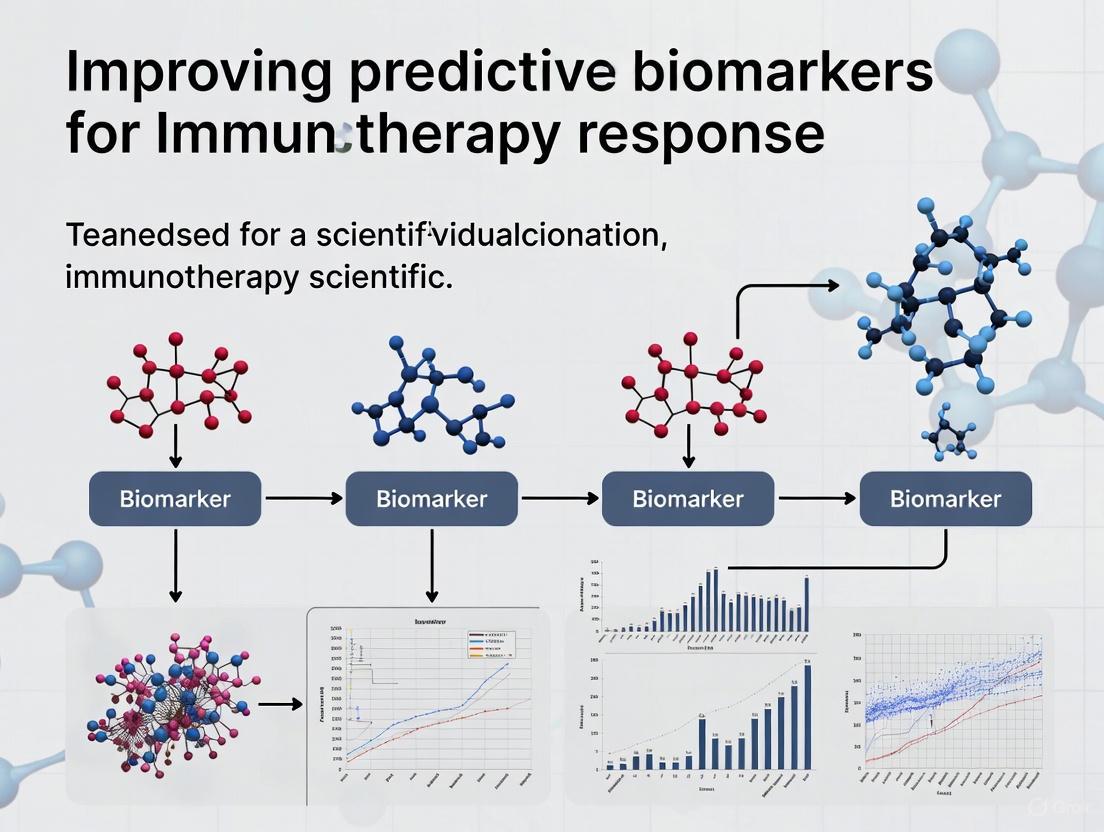
Immunotherapy has revolutionized cancer treatment, yet patient response rates remain variable, underscoring the critical need for robust predictive biomarkers.
Beyond PD-L1: Advancing Predictive Biomarkers for Immunotherapy Response in Oncology
Abstract
Immunotherapy has revolutionized cancer treatment, yet patient response rates remain variable, underscoring the critical need for robust predictive biomarkers. This article synthesizes the current landscape, exploring the limitations of FDA-approved biomarkers like PD-L1, TMB, and MSI, and delves into emerging candidates from the tumor microenvironment, host-related factors, and liquid biopsies. We examine the methodological frameworks for biomarker discovery and analytical validation, address key challenges such as tumor heterogeneity and assay standardization, and evaluate strategies for clinical validation and the development of integrated, multivariable models. Aimed at researchers and drug development professionals, this review provides a comprehensive roadmap for advancing biomarker science to achieve precision immuno-oncology, ultimately improving patient selection and treatment outcomes.
The Established and Emerging Landscape of Immunotherapy Biomarkers
Immune checkpoint inhibitors (ICIs) have transformed cancer treatment, enabling durable responses across multiple malignancies. However, these therapies are effective only in a subset of patients, underscoring the critical need for predictive biomarkers to guide patient selection. Three biomarkers—programmed death-ligand 1 (PD-L1), tumor mutational burden (TMB), and microsatellite instability (MSI)—have received FDA approval for this purpose. This technical resource examines the clinical utility, inherent limitations, and methodological challenges associated with these biomarkers to support research efforts aimed at improving immunotherapy response prediction.
Biomarker-Specific Technical Guides
PD-L1 (Programmed Death-Ligand 1)
Clinical Utility and FDA Approvals
PD-L1 was the first FDA-approved predictive biomarker for immunotherapy, initially approved for non-small cell lung cancer (NSCLC) in 2015. It has since gained approval as a companion or complementary diagnostic for six additional tumor types: gastric or gastroesophageal junction adenocarcinoma, cervical cancer, urothelial carcinoma, head and neck squamous cell carcinoma (HNSCC), esophageal squamous cell carcinoma (ESCC), and triple-negative breast carcinoma (TNBC) [1]. The biological rationale stems from the PD-1/PD-L1 interaction mechanism, where tumor cells expressing PD-L1 on their surface can bind to PD-1 on T cells, leading to T cell inhibition and immune escape [1]. Blocking this interaction reactivates T cell activity against tumors.
Technical Challenges and Troubleshooting
Challenge 1: Inconsistency Across FDA-Approved Assays Four different FDA-approved immunohistochemistry (IHC) testing methods create standardization challenges [1] [2].
Table: Comparison of FDA-Approved PD-L1 Assays
| Testing Method | Antibody Clone | Scoring System | Platform | Key Approved Indications |
|---|---|---|---|---|
| PD-L1 IHC 22C3 pharmDx | 22C3 | TPS, CPS | Dako/Agilent | NSCLC, HNSCC, Cervical Cancer, Gastric/GEJ adenocarcinoma |
| PD-L1 IHC 28-8 pharmDx | 28-8 | TPS | Dako/Agilent | NSCLC (with nivolumab) |
| VENTANA PD-L1 (SP142) | SP142 | IC, TPS | Ventana/Roche | TNBC, Urothelial Carcinoma, NSCLC |
| VENTANA PD-L1 (SP263) | SP263 | TPS, IC | Ventana/Roche | NSCLC, Urothelial Carcinoma (varies by region) |
Troubleshooting Guidance:
- Pre-analytical factors: Standardize tissue fixation protocols (e.g., 10% neutral buffered formalin for 6-72 hours) to prevent epitope degradation.
- Assay selection: Choose the assay specifically corresponding to the intended therapeutic agent. Do not interchange assays for a given drug.
- Scoring training: Implement regular calibration sessions for pathologists using standardized digital images to minimize inter-observer variability.
Challenge 2: Biological Heterogeneity and Glycosylation Tumor heterogeneity (spatial and temporal) and PD-L1 glycosylation can lead to false-negative results [2]. Glycosylation in the extracellular domain of PD-L1 can mask epitopes recognized by detection antibodies, potentially leading to underestimation of PD-L1 expression in up to 40% of patient tissues [2].
Troubleshooting Guidance:
- Multi-region sampling: For heterogeneous tumors, analyze multiple tumor regions when feasible.
- Deglycosylation protocols: For research purposes, consider implementing enzymatic deglycosylation methods (e.g., PNGase F treatment) to improve antibody detection, though this is not yet clinically validated.
Diagram: Impact of PD-L1 Glycosylation on Detection Accuracy
TMB (Tumor Mutational Burden)
Clinical Utility and FDA Approvals
TMB measures the total number of mutations per megabase (mut/Mb) of DNA and reflects neoantigen load, which increases the likelihood of T-cell recognition [3]. In 2020, the FDA granted accelerated approval to pembrolizumab for treatment of adult and pediatric patients with unresectable or metastatic TMB-high (TMB-H) solid tumors (≥10 mut/Mb) that have progressed following prior treatment [1] [3]. This approval was based on KEYNOTE-158, which showed an overall response rate of 29% in TMB-H patients versus 6% in non-TMB-H patients [4].
Technical Challenges and Troubleshooting
Challenge 1: Lack of Standardization Across Platforms TMB measurement lacks uniform technical standards across different next-generation sequencing (NGS) panels, affecting result comparability [3].
Table: TMB Cut-off Comparisons Across Studies
| Study/Cancer Type | TMB Cut-off | Assay Type | Clinical Outcome |
|---|---|---|---|
| KEYNOTE-158 (Pan-Cancer) | ≥10 mut/Mb | NGS (Foundation Medicine) | ORR: 29% vs 6% in low-TMB |
| Goodman et al. (Diverse Cancers) | ≥20 mut/Mb | NGS (Foundation Medicine) | RR: 58% vs 20% |
| CheckMate 026 (NSCLC) | ≥243 mutations | WES | Improved PFS with nivolumab |
| Melanoma Studies | ~100-200 mutations | WES | Associated with improved OS |
Troubleshooting Guidance:
- Panel size optimization: Use panels covering ≥1 Mb for more reliable TMB estimation. Be aware that smaller panels introduce greater variability.
- Harmonization protocols: Implement reference standard materials and cross-validation procedures when switching platforms.
- Germline filtering: Ensure robust matched normal tissue sequencing or bioinformatic filtering to distinguish somatic from germline variants.
Challenge 2: Variable Predictive Value Across Cancer Types TMB's predictive value varies significantly across cancer types, with strongest evidence in melanoma, NSCLC, and small cell lung cancer, but less predictive in others [3].
Troubleshooting Guidance:
- Cancer-specific validation: Establish cancer-type-specific TMB thresholds rather than applying universal cut-offs.
- Combination approaches: Integrate TMB with other biomarkers (e.g., PD-L1, gene expression profiles) rather than relying on TMB alone.
MSI (Microsatellite Instability)
Clinical Utility and FDA Approvals
MSI-high (MSI-H) and mismatch repair deficiency (dMMR) were the first tissue-agnostic biomarkers approved for immunotherapy, with pembrolizumab receiving accelerated approval in 2017 and full approval in 2023 for adult and pediatric patients with unresectable or metastatic MSI-H/dMMR solid tumors [5]. This approval was based on a pooled analysis of 504 patients across more than 30 cancer types, demonstrating an objective response rate (ORR) of 33.3%, with 77% of responders maintaining response for ≥12 months [5].
Technical Challenges and Troubleshooting
Challenge 1: Detection Method Variability MSI/dMMR status can be assessed by either PCR-based methods (detecting microsatellite instability) or IHC (detecting loss of MMR proteins: MLH1, MSH2, MSH6, PMS2) [5].
Troubleshooting Guidance:
- Concordance awareness: Understand that while MSI-PCR and dMMR-IHC have >90% concordance in colorectal cancer, discordance is higher in other cancers.
- Reflex testing protocol: Implement IHC first followed by PCR or NGS for ambiguous cases, or when tumor morphology suggests MSI but IHC is intact.
- Control inclusion: Always include appropriate positive and negative controls in each assay run.
Challenge 2: Tumor Type-Specific Frequency While MSI-H/dMMR occurs in approximately 1.5% of all tumors, its frequency varies significantly across cancer types [6]. It is most common in colorectal (15-20%), endometrial (20-30%), and gastric cancers (15-20%), but much rarer in other malignancies [6].
Troubleshooting Guidance:
- Population prioritization: For cancer types with low MSI-H prevalence (<5%), consider cost-effective screening approaches such as integrating MSI testing into larger NGS panels.
- Morphological correlation: Train pathologists to recognize histological features associated with MSI-H (e.g., tumor-infiltrating lymphocytes, Crohn's-like lymphocytic reaction, mucinous differentiation) to enrich for testing positive cases.
Advanced Experimental Protocols
Comprehensive Biomarker Integration Protocol
Objective: To simultaneously assess PD-L1 expression, TMB, and MSI status from a single tumor specimen.
Materials:
- FFPE tumor tissue sections (≥20% tumor content)
- DNA/RNA co-extraction kit (e.g., AllPrep DNA/RNA FFPE Kit)
- NGS library preparation kit
- PD-L1 IHC antibodies (clone-specific based on intended use)
- Next-generation sequencer (minimum 100x coverage)
- Bioinformatics pipeline for TMB and MSI analysis
Procedure:
- Specimen Qualification: Assess tumor content and viability on H&E-stained section.
- Nucleic Acid Extraction: Co-extract DNA and RNA from consecutive FFPE sections.
- Parallel Processing:
- For DNA: Prepare NGS libraries using targeted panels (minimum 1 Mb). Sequence to adequate depth (≥100x).
- For RNA: Perform gene expression profiling (optional for T-cell inflamed GEP).
- For Protein: Perform PD-L1 IHC on adjacent section using validated antibody.
- Bioinformatic Analysis:
- Calculate TMB (mutations/Mb) excluding known driver mutations.
- Determine MSI status using >100 microsatellite loci.
- Integrate with PD-L1 IHC scores (TPS/CPS/IC).
Troubleshooting:
- Low DNA yield: Consider whole genome amplification with unique molecular identifiers to minimize artifacts.
- Discordant results: Re-assess tumor content and consider regional heterogeneity.
PD-L1 IHC Validation Protocol
Objective: To establish a laboratory-developed PD-L1 IHC test with appropriate validation.
Materials:
- FFPE cell lines with known PD-L1 expression (positive and negative controls)
- FDA-approved companion diagnostic antibodies or analytically validated alternatives
- Automated IHC stainer
- Antigen retrieval solutions
Procedure:
- Antibody Titration: Perform checkerboard titration using known positive and negative controls.
- Pre-analytical Variables: Test the impact of ischemic time (1-6 hours) and fixation time (6-72 hours).
- Reproducibility Assessment: Conduct inter- and intra-observer concordance studies with ≥3 pathologists.
- Scoring Training: Implement digital image analysis alongside manual scoring to improve consistency.
Validation Criteria:
- ≥95% inter-observer concordance for positive/negative calls
- ≥90% inter-run reproducibility
- 100% concordance with known controls
Frequently Asked Questions
Q1: Which biomarker has the highest predictive value for ICI response? No single biomarker demonstrates universal superiority. Each captures different biological aspects: PD-L1 indicates pre-existing immune response, TMB reflects potential neoantigen burden, and MSI indicates genomic instability. The predictive power varies by cancer type, with combination approaches generally providing the most accurate prediction [1] [7].
Q2: Can TMB replace PD-L1 testing in clinical practice? Not currently. While TMB is a tissue-agnostic biomarker, it has limitations including platform variability and uncertain predictive value in some cancers. Current evidence supports using them as complementary rather than replacement biomarkers [3]. Research shows that combining TMB with PD-L1 identifies patients with the best outcomes, with those having high TMB and PD-L1 ≥50% achieving response rates of 57% [2].
Q3: How do we handle discordant results between MSI by PCR and dMMR by IHC? Discordant results occur in approximately 2-5% of cases. Follow this algorithm:
- Repeat both tests to exclude technical errors.
- If discordance persists, consider MLH1 promoter methylation testing.
- Proceed with NGS-based MSI testing as a tie-breaker.
- In research settings, functional assays like in vitro synthesized protein assays can help resolve difficult cases.
Q4: What is the clinical significance of microsatellite-stable (MSS) tumors with high TMB? Emerging evidence suggests that MS-stable/TMB-high tumors represent a distinct subgroup that may benefit from ICIs. One study showed that MS-stable/TMB-high patients had significantly longer progression-free survival (26.8 months vs. 4.3 months) after checkpoint blockade compared to MS-stable/TMB-low/intermediate patients [6]. This population is considerably larger than the MSI-high subset (7,972 vs. 2,179 patients in one analysis of 148,803 samples) [6].
Research Reagent Solutions
Table: Essential Research Tools for Immunotherapy Biomarker Studies
| Reagent/Category | Specific Examples | Research Application | Key Considerations |
|---|---|---|---|
| PD-L1 IHC Antibodies | Clones 22C3, 28-8, SP142, SP263, E1L3N, 73-10 | Protein expression detection | Clone-specific epitope recognition; varying sensitivity to glycosylation |
| NGS Panels for TMB | FoundationOne CDx, MSK-IMPACT, TruSight Oncology 500 | Comprehensive genomic profiling | Panel size >1 Mb improves TMB reliability; validate against WES |
| MSI Testing Reagents | Promega MSI Analysis System, NGS microsatellite panels | Genomic instability assessment | Include ≥100 loci for NGS-based approach; concordance with IHC varies by cancer type |
| Reference Materials | Horizon Discovery FFPE standards, SeraCare reference materials | Assay validation and QC | Ensure coverage of all MMR proteins for MSI; include TMB reference standards |
| Automated Image Analysis | HALO, Visiopharm, QuPath | Digital pathology quantification | Reduce inter-observer variability in PD-L1 scoring; validate algorithms |
Emerging Biomarkers and Future Directions
While PD-L1, TMB, and MSI represent the current standard, research continues to identify next-generation biomarkers. Promising candidates include:
- T-cell inflamed gene expression profile (GEP): Captures the pre-existing immune-active tumor microenvironment [1]
- Tumor-infiltrating lymphocytes (TILs): Low-cost, reproducible biomarker particularly relevant in breast cancer [4]
- Gut microbiome: Specific microbial signatures correlate with ICI response [2]
- Combination biomarkers: Integrating multiple biomarkers (e.g., TMB+GEP) has shown improved predictive performance compared to single biomarkers [1]
Diagram: Evolution of Predictive Biomarkers for Immunotherapy
The field continues to evolve toward integrated models that combine multiple biomarkers with clinical features, potentially enhanced by artificial intelligence and machine learning approaches. These advances promise to improve the precision of immunotherapy response prediction and ultimately patient outcomes.
Frequently Asked Questions (FAQs)
FAQ 1: Why does immune cell density alone often fail to predict immunotherapy response accurately?
While immune cell density provides a basic measure of immune presence, it fails to capture the critical spatial organization of cells within the Tumor Microenvironment (TME). The functional state of the immune response is heavily influenced by where cells are located. For instance, a high density of CD8+ T cells is less meaningful if they are excluded from the tumor epithelium and confined to the stroma due to physical barriers or immunosuppressive signals [8]. Spatial biology reveals that the co-localization or avoidance between specific cell types (e.g., cytotoxic T cells and cancer cells) is a more powerful predictor of outcome than density alone [9]. Advanced computational algorithms like the Tumor-Immune Partitioning and Clustering (TIPC) method can identify subtypes with identical immune cell densities but vastly different spatial arrangements and clinical outcomes [8].
FAQ 2: What are the main classes of spatial signatures, and which are most relevant for predicting immunotherapy response?
Spatial signatures can be conceptualized at three levels of complexity [9]:
- Univariate Distribution Patterns: The spatial distribution of a single cell type or molecule (e.g., whether T cells are clustered or dispersed).
- Bivariate Spatial Relationships: The spatial interaction between two cell types or molecules (e.g., co-localization of CD8+ T cells with cancer cells, or avoidance of T cells by granulocytes).
- Higher-Order Structures: Complex, multicellular organizational units like spatial niches or cellular communities (e.g., a tertiary lymphoid structure). For immunotherapy, bivariate relationships and higher-order structures have shown significant predictive value, as they more directly reflect active immune engagement and functional coordination within the TME [10].
FAQ 3: Our lab is new to spatial biology. What is a practical first step for integrating spatial context into our biomarker studies?
A highly accessible and informative first step is to analyze the partitioning of immune cells between tumor epithelial and stromal compartments. This can be done using multiplexed immunofluorescence (mIF) or immunohistochemistry (IHC) on standard tissue sections, followed by digital image analysis [8]. By simply quantifying the density of key immune cells (e.g., CD8+ T cells, FoxP3+ Tregs) in separately annotated tumor and stromal regions, you can derive powerful spatial metrics. This approach has successfully identified colorectal cancer subtypes with differential prognosis, independent of cell density alone [8].
FAQ 4: We've observed that some patients with "immune-hot" tumors do not respond to immunotherapy. Can spatial biology explain this?
Yes, this is a key strength of spatial analysis. Not all "hot" tumors are functionally equivalent. Spatial profiling can uncover immunosuppressive resistance niches even within a generally inflamed TME. For example, a "hot" tumor may be enriched for specific macrophage subpopulations (e.g., SPP1+ or SELENOP+ macrophages) that interact with tumor and T cells via protumorigenic pathways, such as through the CD44 receptor, thereby dampening the effective immune response [11]. Furthermore, the presence of certain cell types in specific locations, such as granulocytes and proliferating tumor cells in the tumor compartment, has been linked to resistance despite a high overall immune cell count [10].
Troubleshooting Guides
Issue 1: Low Cell Segmentation or Phenotyping Accuracy in Multiplexed Imaging Data
Problem: Preprocessing of raw imaging data (e.g., from CODEX, MIBI, or multiplexed IF) results in inaccurate cell segmentation or cell type annotation, leading to noisy spatial data.
Solution:
- Quality Control and Signal Registration: Ensure rigorous quality control and correction of raw data, including noise removal, threshold determination for point detection, and precise signal registration between imaging rounds [9].
- Leverage Established Pipelines: For commercial platforms like CODEX, utilize pre-optimized computational pipelines and normalization strategies that have been developed for specific data types [9].
- Validate with Morphology: Always overlay segmentation results with H&E or DAPI images to visually confirm accuracy. Manually correct a subset of images to train or validate machine learning-based segmentation tools [11].
Issue 2: Translating Complex Spatial Patterns into a Quantifiable Biomarker
Problem: You can visualize compelling spatial patterns (e.g., immune cell clustering), but struggle to convert these observations into a robust, quantitative score for statistical analysis or clinical application.
Solution:
- Adopt Spatial Metrics: Move beyond simple cell counting and apply established spatial statistics. Useful metrics include:
- G-cross/L-cross functions: Estimate the cumulative distribution of distances from one cell type to another [8].
- Morisita-Horn Index: An ecological measure adapted to quantify the co-localization of two cell types after tessellating the tissue into subregions [8].
- Distance-Based Analysis: Quantify the composition of all cells within a specific distance (e.g., 50 µm) from a target cell type, such as tumor boundary cells [11].
- Utilize Computational Algorithms: Implement algorithms like TIPC, which jointly measures immune cell partitioning (tumor vs. stroma) and clustering to assign tumors into discrete, biologically meaningful spatial subtypes [8].
- Apply Machine Learning: Train models using spatial features. For example, LASSO-penalized Cox models can be used to build a predictive signature from multiple spatial cell-type fractions, constraining coefficients to identify either resistance- or response-associated features [10].
Issue 3: Different Spatial Platforms Yield Seemingly Inconsistent Results
Problem: Data from a sequencing-based spatial transcriptomics platform (e.g., Visium) suggests one biology, while an imaging-based platform (e.g., Xenium, MERSCOPE) suggests another.
Solution:
- Understand Platform Limitations: Recognize the inherent differences. Sequencing-based methods like original Visium capture RNA from spots that may contain multiple cells, requiring deconvolution algorithms to infer cell-type composition [9]. Imaging-based platforms like Xenium offer single-cell resolution but for a predefined panel of genes [9] [11].
- Employ an Integrated Approach: Use the platforms complementarily. For example, use whole transcriptome Visium HD data to get an unbiased view of all expressed genes and identify regions of interest. Then, perform deep phenotyping of those specific regions with a targeted, high-resolution imaging platform like Xenium to validate cell types and interactions at a cellular level [11].
- Leverage Single-Cell References: Generate a paired single-cell RNA sequencing dataset from the same sample. This can be used to deconvolve the spots in sequencing-based data, improving cell type annotation and bridging the gap between the two spatial modalities [11].
Quantitative Data on Spatial Signatures
Table 1: Experimentally Validated Spatial Signatures Associated with Immunotherapy Outcomes
| Signature Type | Cancer Type | Spatial Feature Description | Associated Outcome | Statistical Evidence |
|---|---|---|---|---|
| Resistance Signature [10] | NSCLC | High fractions of proliferating tumor cells, granulocytes, and vessels within the tumor compartment. | Poorer Progression-Free Survival | HR = 3.8, P = 0.004 (Training); HR = 1.8, P = 0.05 (Validation) |
| Response Signature [10] | NSCLC | High fractions of M1/M2 macrophages and CD4+ T cells within the stromal compartment. | Improved Progression-Free Survival | HR = 0.4, P = 0.019 (Training); HR = 0.49, P = 0.036 (Validation) |
| TIPC Subtypes [8] | Colorectal Cancer | Six unsupervised subtypes based on T-cell distribution patterns (e.g., partitioning, clustering). | CRC-Specific Survival | Three of four "hot" spatial subtypes had significantly longer survival vs. a "cold" reference. |
| Macrophage Neighborhoods [11] | Colorectal Cancer | SPP1+ macrophages co-localizing with TGFBI+ tumor cells in the tumor periphery. | Poorer Prognosis | Inferred protumorigenic crosstalk via CD44 receptor and other pathways. |
Experimental Protocols for Key Spatial Analyses
Protocol 1: Analyzing Tumor-Immune Compartmentalization using Multiplexed IF and Digital Pathology
This protocol details how to quantify the partitioning of immune cells between tumor and stromal areas [8].
Sample Preparation and Staining:
- Cut sections from Formalin-Fixed Paraffin-Embedded (FFPE) tumor tissue blocks.
- Stain using a multiplexed immunofluorescence panel (e.g., Pan-CK for tumor epithelium, CD3/CD8 for T cells, CD45 for leukocytes, DAPI for nuclei). Automated staining systems are recommended for consistency.
Image Acquisition and Processing:
- Scan slides using a high-throughput slide scanner capable of multispectral imaging.
- Use spectral unmixing software to generate single-channel images for each marker.
Tissue and Cell Segmentation:
- Tissue Compartment Annotation: Manually or algorithmically annotate the tumor epithelium and stromal regions on the digital image based on the Pan-CK signal.
- Cell Segmentation and Phenotyping: Use a cell segmentation algorithm (e.g., based on DAPI nuclei staining) to identify individual cells. Then, classify each cell based on marker expression thresholds (e.g., CD8+ Pan-CK- = Cytotoxic T cell).
Spatial Quantification:
- Calculate the density (cells/mm²) of each immune cell phenotype within the total tumor epithelium and total stroma separately.
- The TIPC algorithm can then be applied to these density measures to assign spatial subtypes [8].
Protocol 2: Building a Predictive Spatial Signature from Proteomic Data
This protocol outlines a machine-learning approach to develop a spatial cell-type-based signature for predicting clinical outcomes, as demonstrated in NSCLC [10].
Spatial Proteomics Data Generation:
- Profile patient tissues (e.g., from a retrospective cohort) using a spatial proteomics platform like CODEX with a panel of ~30 antibodies to identify major cell types.
Data Preprocessing:
- Segment cells and assign cell types based on marker expression.
- For each patient and specified tissue compartment (tumor or stroma), calculate the fraction of each cell type.
Signature Training with LASSO-Cox Regression:
- Split the training cohort multiple times into tenfolds.
- For each split, build a LASSO-penalized Cox proportional hazards model to predict a time-to-event endpoint (e.g., 2-year PFS).
- For a resistance signature, constrain coefficients to be non-negative to select only risk-associated features.
- For a response signature, constrain coefficients to be non-positive to select only protective features.
- Identify cell types that are consistently selected across all data splits.
Model Validation:
- Train a final Cox model using the consistently selected cell types on the full training set.
- Validate the performance of this model on one or more independent validation cohorts.
The Scientist's Toolkit: Key Reagents and Computational Tools
Table 2: Essential Resources for TME Spatial Signature Research
| Resource Name | Category | Primary Function | Key Application in TME Research |
|---|---|---|---|
| CODEX [9] [10] | Multiplexed Proteomics Platform | Simultaneously images >40 protein markers on a single FFPE tissue section with single-cell resolution. | High-plex cell phenotyping and spatial mapping of immune and tumor cells in intact tissue. |
| Xenium In Situ [9] [11] | In Situ Transcriptomics Platform | Targeted RNA imaging at subcellular resolution for hundreds of genes. | Deep phenotyping of specific cell states and analyzing ligand-receptor interactions in situ. |
| Visium HD [11] | Spatial Transcriptomics Platform | Whole transcriptome analysis at single-cell-scale resolution (8 µm x 8 µm bins). | Unbiased discovery of gene expression patterns and spatial niches across the entire tissue. |
| TIPC Algorithm [8] | Computational Algorithm | Jointly quantifies immune cell partitioning (tumor/stroma) and clustering. | Classifies tumors into spatial subtypes with prognostic and predictive significance. |
| LIANA [11] | Computational Tool | Infers cell-cell communication from spatial transcriptomics data based on ligand-receptor interactions. | Hypothesizes mechanistic interactions between cell types within spatial neighborhoods. |
Visualizing Key Concepts and Workflows
Spatial Signature Classification
Spatial Signature Development Pipeline
Frequently Asked Questions (FAQs)
FAQ 1: What characteristics of the gut microbiome serve as biomarkers for immunotherapy response? The gut microbiome is considered a promising predictive biomarker because its characteristics can differentiate between patients who respond to immunotherapy and those who do not. Key features include community structure (diversity and stability), taxonomic composition (the presence and abundance of specific bacterial species), and molecular functions (the metabolites and pathways they produce) [12]. These features are stable enough at the individual level to provide a reliable baseline measurement before treatment begins [12].
FAQ 2: Which specific gut bacteria are associated with a positive response to Immune Checkpoint Inhibitors (ICIs)? Clinical and preclinical studies have identified several bacterial taxa that are enriched in patients responding to ICIs. The specific bacteria can vary by cancer type and the ICI used [12] [13]. The table below summarizes some key bacteria associated with positive responses.
| Cancer Type | Associated Bacteria (Enriched in Responders) | Proposed Mechanism |
|---|---|---|
| Melanoma, various cancers | Faecalibacterium, Ruminococcaceae, Clostridiales [12] | Positive correlation with CD8+ T cell tumor infiltration and circulating effector T cells [12]. |
| Melanoma | Bifidobacterium [13] | Promotes dendritic cell (DC) maturation and increases tumor-specific CD8+ T cell activity [13]. |
| Melanoma | Bifidobacterium longum, Collinsella aerofaciens, Enterococcus faecium [13] | FMT from responding patients improved therapy outcomes in mice [13]. |
| Non-Small Cell Lung Cancer (NSCLC), Renal Cell Carcinoma (RCC) | Akkermansia muciniphila [13] | Associated with improved efficacy of anti-PD-1 therapy [13]. |
| Melanoma (for CTLA-4 blockade) | Bacteroides thetaiotaomicron, Bacteroides fragilis [12] | Oral administration restored anti-tumor effects in mice; stimulates Th1 cell activation [12] [13]. |
FAQ 3: How can the gut microbiome be modulated to improve immunotherapy outcomes? Several intervention strategies target the gut microbiome to enhance efficacy and reduce side effects. These include [12] [13]:
- Fecal Microbiota Transplantation (FMT): Transferring stool from a responding donor to a non-responding patient to restore a beneficial microbial community.
- Probiotics/Prebiotics: Supplementing with specific live bacteria (probiotics) or compounds that promote the growth of beneficial bacteria (prebiotics).
- Dietary Interventions: Modifying diet to shape the composition and function of the gut microbiota.
- Antibiotic Administration: While often detrimental, the timing and type of antibiotics are crucial, and their use is a key area of investigation [12].
FAQ 4: What is the role of microbial metabolites in shaping the response to immunotherapy? Gut bacteria produce functional molecules that can systemically influence the immune system. The effects of these metabolites can be complex and sometimes contradictory, depending on the context [12].
| Metabolite | Association with Immunotherapy | Proposed Mechanism of Action |
|---|---|---|
| Short-Chain Fatty Acids (SCFAs) e.g., Butyrate | Varied (may limit or suppress) [12] | Can limit anti-CTLA-4 activity by restricting CD80/CD86 on DCs; butyrate may induce immunosuppressive Tregs [12]. |
| Inosine | Positive [12] | Production by Bifidobacterium pseudolongum enhances response via T cell adenosine A2A receptor [12]. |
| Ursodeoxycholic Acid (UDCA) | Positive [12] | Enriched in responders and associated with Lachnoclostridium [12]. |
| Anacardic Acid | Positive [12] | Stimulates neutrophils/macrophages and enhances T-cell recruitment [12]. |
FAQ 5: Why might findings on microbiome biomarkers be inconsistent across different studies? Identifying universally consistent microbial markers is challenging due to several confounding factors [12] [13]:
- Individual and Environmental Variability: Genetics, diet, environment, and medication use (like antibiotics) create significant heterogeneity.
- Clinical Trial Design: Differences in patient cohorts, cancer types, and specific immunotherapy protocols (e.g., anti-PD-1 vs. anti-CTLA-4).
- Methodological Inconsistencies: Variations in sample processing, sequencing technologies, and data analysis.
Troubleshooting Common Experimental Issues
Problem: Low microbial diversity in patient samples.
- Potential Cause: Prior or concurrent use of broad-spectrum antibiotics [13].
- Solution:
- Document Antibiotic History: Carefully record all antibiotic use for at least one month prior to baseline stool sample collection.
- Strategic Timing: If possible, schedule baseline sample collection before initiating any antibiotic treatment.
- Consider Modulation: In preclinical models, FMT or specific probiotic supplementation from responders can reverse the negative effects of antibiotics [13].
Problem: Failure to detect key bacterial strains or gene fusions in biomarker tests.
- Potential Cause: Use of an inappropriate or low-sensitivity testing method.
- Solution:
- Use Next-Generation Sequencing (NGS): Opt for NGS panels, which can test for a wide array of relevant biomarkers simultaneously [14].
- Include RNA Sequencing: For detecting gene fusions (e.g., ALK, ROS1), which can be hard to find with DNA sequencing alone, ensure your commercial test or in-house protocol includes RNA sequencing [14].
- Validate with Liquid Biopsies: Consider using liquid biopsies for faster results, but be aware they are less sensitive than tissue biopsies, especially for complex alterations or when tumor burden is low [14].
Problem: Unclear if a biomarker is a "state" or "trait" marker.
- Potential Cause: Single-timepoint measurement and unclear relationship to the dynamic disease process.
- Solution:
- Longitudinal Sampling: Collect samples at multiple time points: before treatment, during treatment (e.g., at several cycles), and at disease progression [12].
- Define the Marker Type:
- Type 0/Trait Marker: A marker of the intrinsic cause and longitudinal course of the illness. Requires correlation with long-term clinical outcomes.
- Type 1/State Marker: Identifies the effect of a drug intervention. Compare pre- and post-treatment samples.
- Type 2/Surrogate Endpoint: Predicts the clinical course. Validate against established clinical endpoints like survival or tumor shrinkage [15].
Experimental Protocols & Workflows
Protocol 1: Analyzing Gut Microbiome Composition via Fecal Sample Metagenomics
This protocol outlines the steps for using metagenomic sequencing to characterize the gut microbiome from stool samples for biomarker discovery [12] [13].
1. Sample Collection and Stabilization:
- Collect fresh stool samples from patients at baseline (before immunotherapy initiation).
- Use standardized collection kits with DNA/RNA stabilizers to preserve microbial nucleic acids.
- Store samples immediately at -80°C.
2. DNA Extraction and Library Preparation:
- Perform mechanical and/or enzymatic lysis of microbial cells to ensure comprehensive DNA recovery.
- Use a kit designed for fecal samples to extract high-quality, high-molecular-weight DNA.
- Prepare sequencing libraries using a whole-genome shotgun (WGS) approach for untargeted analysis.
3. Sequencing and Bioinformatic Analysis:
- Sequence the libraries on a Next-Generation Sequencing (NGS) platform (e.g., Illumina).
- Process raw sequences through a quality control pipeline (e.g., FastQC) and trim adapters.
- Align reads to microbial genomes or cluster them into metagenomic species bins for taxonomic profiling.
- Perform functional annotation to identify enriched metabolic pathways (e.g., using KEGG, MetaCyc).
4. Statistical Integration with Clinical Data:
- Correlate microbial alpha-diversity (within-sample) and beta-diversity (between-sample) with clinical response status.
- Use multivariate statistical models (e.g, LEfSe, DESeq2) to identify specific taxa or functions that are significantly associated with response or non-response.
Protocol 2: Establishing a Causal Link via Fecal Microbiota Transplantation (FMT) in Germ-Free Mice
This protocol is used to experimentally validate whether a patient's microbiome directly influences immunotherapy response [13].
1. Donor Sample Preparation:
- Select fecal samples from characterized human patients who are either strong responders or non-responders to immunotherapy.
- Homogenize the fresh or frozen stool in sterile, anaerobic phosphate-buffered saline (PBS).
- Centrifuge at low speed to remove large particulate matter. The supernatant contains the microbial inoculum.
2. Animal Model and Colonization:
- Use 8-12 week old germ-free or antibiotic-pretreated C57BL/6 mice.
- By oral gavage, administer the human microbiota inoculum to the mice.
- Allow the microbiome to engraft for 2-3 weeks, confirming stable colonization by sequencing fecal pellets.
3. Tumor Implantation and Treatment:
- Implant the mice with a syngeneic tumor cell line (e.g., MC38 colon cancer, B16 melanoma).
- Once tumors are palpable, initiate treatment with the relevant immune checkpoint inhibitor (e.g., anti-PD-1, anti-CTLA-4 antibody).
- Monitor tumor volume and survival compared to control mice.
4. Endpoint Analysis:
- Harvest tumors and analyze immune cell infiltration via flow cytometry (e.g., for CD8+ T cells, Tregs, MDSCs).
- Profile the gut and tumor microbiome of the mice post-treatment to confirm maintenance of the donor profile.
Signaling Pathways and Experimental Workflows
Gut Microbiome Modulation of Immunotherapy Response
Experimental Workflow for Microbiome Biomarker Discovery
The Scientist's Toolkit: Research Reagent Solutions
| Item/Category | Function/Explanation | Example Application |
|---|---|---|
| Next-Generation Sequencing (NGS) | High-throughput sequencing technology for comprehensive profiling of microbial communities and host genetics from various sample types [14] [13]. | Used for tumor DNA sequencing to find mutations (e.g., EGFR, KRAS) and for shotgun metagenomics of stool samples to profile the gut microbiome [14]. |
| Germ-Free Mouse Models | Mice raised in sterile isolators with no resident microbiota, essential for establishing causality in microbiome studies [12] [13]. | Used for FMT experiments to test if a patient's microbiome can transfer a response phenotype to immunotherapy [13]. |
| Fecal Microbiota Transplantation (FMT) Protocol | A method to transfer the entire gut microbial community from a donor to a recipient, used to modify or restore the microbiome [12] [13]. | In clinical trials, FMT from responders is combined with ICIs to overcome resistance in refractory melanoma patients [13]. |
| Flow Cytometry Panels | Allows for the simultaneous measurement of multiple cell surface and intracellular proteins on single cells. | Used to analyze immune cell populations (e.g., CD8+ T cells, Tregs, MDSCs) in tumors and secondary lymphoid organs after immunotherapy in animal models [12]. |
| Liquid Biopsy Kits | Tests that analyze circulating tumor DNA (ctDNA) from a blood sample to detect biomarker status less invasively than a tissue biopsy [14]. | Can be used to monitor biomarker status (e.g., EGFR mutations) during treatment; results are faster but may be less sensitive than tissue tests [14]. |
| Probiotic Strains | Defined, live bacterial preparations intended to confer a health benefit by modulating the gut microbiota. | In preclinical models, oral gavage of specific strains (e.g., Bifidobacterium, Bacteroides fragilis) enhances the efficacy of CTLA-4 and PD-1 blockade [12] [13]. |
Technical Support Center: FAQs & Troubleshooting Guides
This technical support center addresses common challenges in ctDNA analysis for researchers focusing on predictive biomarkers for immunotherapy response. The FAQs and guides below are built on current literature and aim to facilitate robust experimental design and execution.
Frequently Asked Questions (FAQs)
FAQ 1: What are the primary technical factors limiting the sensitivity of ctDNA assays for detecting Minimal Residual Disease (MRD)?
The sensitivity of ctDNA assays for MRD detection is co-limited by biological and technical factors [16] [17].
- Input DNA Quantity and ctDNA Fraction: The absolute number of mutant DNA fragments in a sample is a fundamental constraint. For example, a 10 mL blood draw from a patient with a low-shedding tumor (e.g., some lung cancers yielding ~5 ng/mL plasma) might provide only ~8,000 haploid genome equivalents (GEs). If the ctDNA fraction is 0.1%, this yields a mere eight mutant GEs for the entire analysis, making detection statistically improbable [16].
- Sequencing Depth and Limit of Detection (LoD): Achieving a 99% probability of detecting a variant with a Variant Allele Frequency (VAF) of 0.1% requires a sequencing depth of approximately 10,000x after bioinformatic processing [16]. While ultra-deep sequencing (>20,000x) is proposed, it remains cost-prohibitive for many routine labs. Reducing the LoD from 0.5% to 0.1% could increase alteration detection rates from 50% to approximately 80% [16].
- Tumor DNA Shedding: The amount of ctDNA released into the bloodstream is highly variable across cancer types and individual patients, influenced by tumor type, location, stage, and volume [17]. This biological variability directly impacts the detectability of ctDNA, especially in early-stage or non-metastatic settings.
FAQ 2: How can bioinformatics pipelines be optimized to enhance specificity and minimize false positives in ctDNA variant calling?
Strategic bioinformatics are critical for distinguishing true somatic variants from sequencing artifacts [16].
- Unique Molecular Identifiers (UMIs): Incorporating a UMI barcoding step during library preparation is essential. UMIs tag original DNA molecules prior to PCR amplification, allowing bioinformatics tools to collapse PCR duplicates and differentiate true mutations from amplification-induced errors. Under optimal conditions, UMI deduplication typically yields about 10% of the raw reads for final variant calling [16].
- "Allowed" and "Blocked" Lists: Implementing curated lists of known true variants ("allowed" lists) and common artifacts or variants stemming from clonal hematopoiesis ("blocked" lists) can streamline analysis and improve accuracy [16].
- Variant Calling Thresholds: For the high-sensitivity needed in ctDNA analysis, the minimum number of supporting reads for a variant (
n) can be lowered. Whilen=5is often used for tissue DNA,n=3can be used for ctDNA because the DNA is not prone to formalin-induced damage like cytosine deamination [16].
FAQ 3: Within the context of immunotherapy research, what is the clinical and technical significance of detecting ctDNA dynamics?
Dynamic changes in ctDNA levels serve as a powerful pharmacodynamic/response biomarker for monitoring immunotherapy efficacy [4].
- Predictive and Prognostic Value: A reduction in ctDNA levels early during treatment is strongly correlated with improved outcomes. A systematic review found that a ≥50% reduction in ctDNA within 6-16 weeks after initiating immune checkpoint inhibitor (ICI) therapy correlated with better Progression-Free Survival (PFS) and Overall Survival (OS) [4]. This makes ctDNA dynamics a valuable surrogate endpoint for early-phase clinical trials.
- Mechanistic Insight: Unlike static biomarkers, serial ctDNA monitoring can capture the evolving molecular landscape of the tumor under immune pressure, including the emergence of resistance mechanisms [16]. This can provide insights into why a therapy may be failing.
- Technical Consideration for Timing: For predicting outcomes in non-metastatic cancer or response to neoadjuvant therapy, evidence suggests that ctDNA from longitudinal samples collected during and after treatment outperforms baseline samples alone. This highlights the importance of a pre-planned serial sampling strategy [17].
FAQ 4: What are the key considerations for choosing between tumor-informed and tumor-agnostic ctDNA assays?
The choice hinges on the research context, required sensitivity, and available resources [18].
- Tumor-Informed Assays (Patient-Specific): These assays are designed based on mutations identified in a patient's tumor tissue sequencing. They typically offer higher sensitivity for tracking a specific set of mutations and are ideal for MRD detection and monitoring in adjuvant settings [18].
- Tumor-Agnostic Assays (Fixed Panels): These panels target a pre-defined set of genes and mutations relevant across many cancer types. They are more practical when tumor tissue is unavailable and are widely used for therapy selection in advanced cancers to identify actionable mutations (e.g., in EGFR, KRAS, ESR1) [16] [4]. The trade-off can be lower sensitivity for MRD compared to tumor-informed approaches.
Troubleshooting Common Experimental Challenges
Challenge 1: Inconsistent or Low ctDNA Yield from Blood Samples
| Potential Cause | Solution |
|---|---|
| Pre-analytical variability (blood draw tube, processing delay). | Standardize protocols: Use validated blood collection tubes (e.g., Streck, Streck Cell-Free DNA BCT tubes), process plasma within specified timeframes (e.g., within 2-6 hours of draw if using EDTA tubes), and ensure consistent centrifugation steps [17]. |
| Low tumor shedding (inherent to certain cancer types or early stages). | Increase blood collection volume (e.g., from 10 mL to 20 mL) to increase the total number of genome equivalents available for analysis [16]. |
| Suboptimal DNA extraction efficiency. | Use extraction kits specifically optimized for low-concentration, short-fragment cell-free DNA. Ensure proper elution volume to avoid over-dilution [17]. |
Challenge 2: High Background Noise or False-Positive Variant Calls
| Potential Cause | Solution |
|---|---|
| Inadequate UMI handling and read deduplication. | Implement and validate a robust UMI-aware bioinformatics pipeline. Ensure the pipeline correctly groups reads by UMI to account for PCR and sequencing errors [16]. |
| Clonal hematopoiesis (CH)- derived variants. | Filter variants against a matched white blood cell (WBC) or buffy coat DNA sample to subtract mutations originating from hematopoietic cells rather than the tumor [19]. |
| Sequencing errors at low VAFs. | Apply stricter bioinformatics filters, such as a minimum base quality score and a minimum number of unique supporting reads (after UMI deduplication). Use "blocked" lists for recurrent sequencing artifacts [16]. |
Challenge 3: Failure to Detect ctDNA in Patients with Evident Disease
| Potential Cause | Solution |
|---|---|
| Assay sensitivity is insufficient for the very low VAFs present. | Consider a more sensitive technology (e.g., digital PCR for known specific mutations) or a tumor-informed NGS assay designed for ultra-low VAF detection [17] [18]. |
| Variant not covered by the assay panel. | For fixed panels, ensure the panel covers a sufficiently broad and relevant genomic region. For tumor-informed assays, verify that the selected mutations for tracking are clonal and not subclonal [19]. |
| Extreme spatial tumor heterogeneity. | The sampled blood may not capture the genomic profile of all tumor lesions. In advanced disease, re-biopsy (tissue or liquid) might reveal different subclones [17]. |
Table 1: Relationship Between Sequencing Depth, Variant Allele Frequency (VAF), and Detection Probability. This table illustrates why ultra-deep sequencing is necessary for detecting the ultra-low frequency variants typical of MRD or early-stage disease [16].
| Target VAF | Required Depth for 99% Detection Probability | Typical Effective Depth After UMI Deduplication (Yield ~10%) |
|---|---|---|
| 1.0% | ~1,000x | ~100x |
| 0.5% | ~2,000x | ~200x |
| 0.1% | ~10,000x | ~1,000x |
Table 2: Clinically Validated and Emerging Predictive Biomarkers in Immunotherapy. This table situates ctDNA among other key biomarkers used to predict response to immune checkpoint inhibitors [20] [4].
| Biomarker | Category | Mechanism / Rationale | Key Limitations |
|---|---|---|---|
| ctDNA Dynamics | Predictive/Pharmacodynamic | Reduction in level indicates molecular response; can detect emerging resistance. | Lack of standardized thresholds for "response"; biological factors like low shedding [4]. |
| PD-L1 Expression | Predictive | High expression suggests pre-existing immune response; target for ICIs. | Tumor heterogeneity; assay variability; dynamic expression [4]. |
| Tumor Mutational Burden (TMB) | Predictive | High TMB implies more neoantigens, potentially enhancing T-cell recognition. | Lack of universal cutoff; varies by cancer type; expensive to measure [4]. |
| Microsatellite Instability (MSI-H) | Predictive | Defective DNA repair leads to high neoantigen load; tissue-agnostic biomarker. | Limited to a small subset of most cancer types [4]. |
| Tumor-Infiltrating Lymphocytes (TILs) | Predictive/Prognostic | Direct evidence of host anti-tumor immune response in the tumor microenvironment. | Lack of universal, standardized scoring system across cancer types [4]. |
Detailed Experimental Protocols
Protocol 1: Ultra-Deep Hybrid-Capture NGS for ctDNA Analysis in Immunotherapy Monitoring
This protocol is designed for sensitive detection and monitoring of ctDNA variants in plasma using a tumor-agnostic or tumor-informed panel [16].
Sample Collection and Processing:
- Collect 20 mL of peripheral blood into cell-free DNA blood collection tubes.
- Process within the manufacturer's recommended timeframe (typically 3-7 days for Streck tubes). Isolate plasma through a two-step centrifugation protocol: first, 1,600 x g for 10 minutes at 4°C to separate plasma from cells, followed by a high-speed spin of 16,000 x g for 10 minutes at 4°C to remove residual cells and debris.
- Store plasma at -80°C if not extracting immediately.
Cell-free DNA Extraction and Quantification:
- Extract cfDNA from 4-8 mL of plasma using a silica-membrane or magnetic bead-based kit optimized for short-fragment DNA.
- Quantify the extracted cfDNA using a fluorescence-based method (e.g., Qubit dsDNA HS Assay). The expected yield is highly variable but can range from <10 ng to >100 ng per mL of plasma in cancer patients [16].
Library Preparation with UMI Barcoding:
- Construct NGS libraries from 20-100 ng of cfDNA.
- Critical Step: Incorporate double-stranded UMIs during the adapter ligation step. This tags each original DNA molecule uniquely before PCR amplification.
Target Enrichment and Sequencing:
- Perform hybrid capture using a custom or commercial panel targeting genes of interest (e.g., a pan-cancer immunotherapy panel).
- Sequence the enriched libraries on an Illumina platform to a raw depth of at least 20,000x to achieve an effective depth of ~2,000x after deduplication [16].
Bioinformatic Analysis:
- Data Preprocessing: Demultiplex raw sequencing data and align reads to the reference genome (e.g., hg38).
- UMI Processing: Group reads by their UMI families to consensus sequences, correcting for PCR and sequencing errors.
- Variant Calling: Call somatic variants from the deduplicated BAM files using a caller sensitive to low-VAF mutations (e.g., MuTect2, VarScan2). Apply a minimum supporting read threshold (e.g.,
n=3unique reads) [16]. - Annotation and Filtering: Annotate variants and filter against in-house "blocked" lists and a matched white blood cell DNA sequence (if available) to remove clonal hematopoiesis-related variants.
Protocol 2: Tumor-Informed ctDNA Assay for MRD Detection
This protocol, often used in studies like NRG-GI005 (COBRA) and NRG-GI008 (CIRCULATE-US), involves creating a patient-specific assay [21] [18].
Tumor Whole Exome/Genome Sequencing:
- Sequence the patient's tumor tissue and matched normal DNA to identify a set of 10-50 clonal, patient-specific somatic mutations (e.g., SNVs, indels).
Custom Assay Design:
- Design a personalized, multiplex PCR panel (e.g., using Anchored Multiplex PCR or similar technology) targeting the selected set of mutations.
ctDNA Sequencing and Analysis:
- For each subsequent plasma sample, construct a UMI-based NGS library from the extracted cfDNA.
- Amplify the library using the patient-specific primer panel.
- Sequence and analyze the data using a UMI-aware pipeline. The presence of any one or more of the tracked mutations is reported as a positive ctDNA result.
Signaling Pathways and Workflow Visualizations
The Scientist's Toolkit: Research Reagent Solutions
Table 3: Essential Materials and Digital Resources for ctDNA Research. This table lists key reagents, tools, and databases critical for successful experimental execution and data interpretation [16] [19].
| Item | Function / Application | Notes |
|---|---|---|
| cfDNA Blood Collection Tubes (e.g., Streck) | Stabilizes nucleated blood cells for up to 14 days, preventing genomic DNA contamination and preserving cfDNA profile. | Critical for multi-center trials and standardizing pre-analytical variables [17]. |
| UMI Adapters | Tags each original DNA molecule with a unique barcode before PCR amplification to enable error correction. | Foundational for achieving high specificity in low-VAF variant calling [16]. |
| Hybrid Capture Panels (e.g., Illumina TSO500 ctDNA, custom panels) | Enriches NGS libraries for a predefined set of cancer-related genes. | Tumor-agnostic panels are versatile for therapy selection; ensure coverage of relevant genes (e.g., ESR1, EGFR, KRAS) [16] [4]. |
| Tumor-Informed Assay Design Services (e.g., from Signatera, Personalis) | Creates a patient-specific, ultra-sensitive NGS assay for MRD detection and monitoring. | Optimal for clinical trials in the adjuvant setting where maximum sensitivity is required [18]. |
| CTDdgv Database | A curated resource for identifying and interpreting ctDNA driver genes and variants, including clinical significance. | Provides clinically annotated ctDNA variants from literature, aiding in the biological interpretation of findings [19]. |
| geMERlb Pipeline | A bioinformatics tool designed specifically to identify tumor driver genes and variants from ctDNA mutation spectra. | Useful for discovering new driver events in liquid biopsy data [19]. |
Methodologies for Biomarker Discovery and Clinical Application
NGS & Transcriptomics FAQs
What are the primary causes of low library yield in NGS, and how can I fix them?
Low library yield is a common issue that can arise from multiple points in the preparation workflow. The table below outlines frequent root causes and their corrective actions [22].
| Cause of Low Yield | Mechanism of Yield Loss | Corrective Action |
|---|---|---|
| Poor Input Quality | Enzyme inhibition from contaminants (salts, phenol, EDTA) or degraded nucleic acid [22]. | Re-purify input sample; ensure high purity (260/230 > 1.8, 260/280 ~1.8); use fresh wash buffers [22]. |
| Inaccurate Quantification | Over- or under-estimating input concentration leads to suboptimal enzyme stoichiometry [22]. | Use fluorometric methods (Qubit) over UV absorbance; calibrate pipettes; use master mixes [22]. |
| Fragmentation Issues | Over- or under-fragmentation reduces adapter ligation efficiency [22]. | Optimize fragmentation parameters (time, energy); verify fragment size distribution pre-ligation [22]. |
| Suboptimal Adapter Ligation | Poor ligase performance or incorrect adapter-to-insert molar ratio [22]. | Titrate adapter:insert ratio; ensure fresh ligase and buffer; maintain optimal incubation temperature [22]. |
| Overly Aggressive Cleanup | Desired fragments are excluded during bead-based size selection [22]. | Optimize bead-to-sample volume ratio; avoid over-drying beads [22]. |
How should I design my RNA-Seq experiment for differential expression analysis?
A robust RNA-Seq experimental design is critical for generating statistically sound results [23] [24]. Key considerations include:
- Biological Replicates: Always use biological replicates (multiple independent biological samples per experimental group) to estimate biological variance and provide statistical power for differential expression detection. Do not pool replicates before sequencing, as this eliminates the ability to measure biological variation [23].
- Sequencing Depth: The required depth depends on transcriptome complexity and the research goal. For example, bacterial transcriptomes require fewer reads than mammalian ones. As a general guideline for mammalian studies, 20-30 million reads per library is often sufficient for standard differential expression analysis, but experiments aiming to detect lowly expressed genes or alternative splicing may require significantly deeper sequencing [24].
- Read Type: Paired-end (PE) sequencing is highly recommended over single-end (SE). PE sequencing, where both ends of a DNA fragment are sequenced, provides superior alignment accuracy, enables better detection of alternative splicing events, and helps identify structural variants [23].
- Library Preparation: The choice of library prep method must align with the research question. For cost-effective gene expression profiling of coding RNA, 3' mRNA-Seq is suitable. However, if the goal is to investigate alternative splicing, differential transcript usage, or non-coding RNA, a whole transcriptome approach with either poly(A) enrichment or ribosomal RNA depletion is necessary [24].
My NGS run shows a high percentage of duplicate reads. What does this mean?
A high duplicate rate often indicates low library complexity, meaning the sequencing run is dominated by a small number of unique original DNA fragments that have been PCR-amplified and sequenced multiple times [22] [23].
- Primary Cause: The most common cause is insufficient starting material, leading to over-amplification during the library preparation PCR. Excessive PCR cycles can also cause this [22] [23].
- Solution: Increase the amount of input DNA/RNA within the recommended range for your library prep kit. If input material is limited, use library preparation methods specifically designed for low-input samples. You can also reduce the number of PCR cycles, though this may further reduce yield, making optimizing input quantity the preferred solution [22].
Diagram 1: Core NGS workflow with common failure points.
Multiplex Immunohistochemistry (mIHC) FAQs
I am getting little to no staining in my mIHC experiment. What should I check?
A lack of staining can be frustrating and points to issues with the antibody, protocol, or sample [25]. Follow this troubleshooting checklist:
- Antibody Validation: Ensure your primary antibody is validated for IHC and specifically for the application on your sample type (e.g., FFPE tissue). Always include a high-expressing positive control to confirm the entire procedure is working [25].
- Sample Antigenicity: Use freshly cut tissue sections. Stored slides can lose antigenicity over time. If storage is necessary, keep slides at 4°C [25].
- Antigen Retrieval: This is a critical step for FFPE tissues. Inadequate antigen retrieval is a common cause of failure. Use a microwave oven or pressure cooker for retrieval, as water baths are not recommended. Ensure you are using the correct, freshly prepared buffer specified in the antibody's datasheet [25].
- Antibody Incubation: Follow the product-specific protocol for dilution and diluent. For many antibodies, optimal results are achieved with an overnight incubation at 4°C [25].
- Detection System: Use a sensitive, polymer-based detection system rather than older avidin/biotin-based systems, which are less sensitive. Always check the expiration date of your detection reagents [25].
How can I minimize background staining in multiplex IHC?
High background staining reduces the signal-to-noise ratio and can obscure specific staining. Common causes and solutions are listed below [25].
| Cause of High Background | Explanation | Corrective Action |
|---|---|---|
| Inadequate Deparaffinization | Residual paraffin causes spotty, uneven background [25]. | Repeat with new tissue sections and fresh xylene [25]. |
| Endogenous Enzyme Activity | Endogenous peroxidases in the tissue react with HRP-based detection systems [25]. | Quench slides in 3% H₂O₂ for 10 minutes before primary antibody incubation [25]. |
| Endogenous Biotin | Tissues like liver and kidney have high endogenous biotin that interferes with biotin-based detection [25]. | Use a polymer-based detection system; perform a biotin block after the standard blocking step [25]. |
| Insufficient Blocking | Non-specific antibody binding sites are not blocked [25]. | Block with 1X TBST with 5% Normal Goat Serum for 30 minutes prior to primary antibody [25]. |
| Secondary Antibody Cross-Reactivity | The secondary antibody binds to endogenous immunoglobulins in the tissue [25]. | Always include a no-primary-antibody control; use species-specific secondary antibodies and consider using antibodies from different host species in your panel [25]. |
| Inadequate Washing | Unbound antibodies and reagents are not fully removed [25]. | Wash slides 3 times for 5 minutes with TBST after primary and secondary antibody incubations [25]. |
What are the key detection systems for multiplex IHC, and how do I choose?
Multiplex IHC relies on different detection chemistries to visualize multiple markers on a single slide. The choice depends on the level of multiplexing and the available imaging equipment [26].
- Chromogenic Detection: Uses enzymes (HRP or AP) to deposit colored precipitates (e.g., DAB-brown, AEC-red). It is simple and compatible with standard brightfield microscopy but is limited to visualizing ~3-5 markers simultaneously due to color overlap and is only semi-quantitative. It is generally not recommended for high-plex mIHC [26].
- Fluorescent Detection: Uses fluorophore-conjugated antibodies (direct or indirect) to generate signals detected by fluorescence microscopy. It allows for 4-7 markers or more per round, is highly quantitative, and excellent for co-localization studies. Challenges include tissue autofluorescence and spectral overlap, which can be mitigated with spectral unmixing [26].
- Tyramide Signal Amplification (TSA): A highly sensitive enzymatic method where HRP catalyzes the covalent deposition of fluorophore- or hapten-labeled tyramide. TSA provides up to 100-fold signal amplification, making it ideal for detecting low-abundance targets. Its covalent nature allows for antibody stripping between cycles, enabling high-plex cyclic staining with dozens of markers from the same host species [26].
Diagram 2: mIHC workflow with detection paths and issues.
The Scientist's Toolkit: Research Reagent Solutions
This table details essential materials and their functions in the featured high-throughput technologies [25] [26] [27].
| Reagent / Material | Function | Application Area |
|---|---|---|
| Polymer-based Detection Reagents | Sensitive detection system that avoids endogenous biotin interference; provides superior signal amplification compared to avidin/biotin systems [25]. | Multiplex IHC |
| Tyramide Signal Amplification (TSA) Kits | Enzyme-mediated method for extreme signal amplification (100x+); enables high-plex cyclic staining via covalent deposition [26]. | Multiplex IHC |
| Validated Primary Antibodies | Highly specific, IHC-validated antibodies are the foundation of a specific and reproducible multiplex panel [25] [26]. | Multiplex IHC |
| Indexed Adapters (Barcodes) | Short, unique DNA sequences ligated to library fragments, allowing multiple samples to be pooled and sequenced in a single run (multiplexing) [28] [27]. | NGS / Transcriptomics |
| Library Preparation Kits | Reagent kits for converting extracted nucleic acids into a sequencing-ready library, including steps for fragmentation, adapter ligation, and amplification [28] [27]. | NGS / Transcriptomics |
| RNA Depletion/Enrichment Kits | Kits for ribosomal RNA depletion (for total RNA-seq) or poly(A) enrichment (for mRNA-seq) to focus sequencing on RNAs of interest [24]. | Transcriptomics |
Biomarker Discovery & Validation FAQs
What are the key validated and emerging biomarkers for immunotherapy response?
The field of immunotherapy biomarkers is evolving rapidly. The table below summarizes several key biomarkers relevant to predicting response to immune checkpoint inhibitors [4].
| Biomarker | Type | Mechanism & Utility | Limitations |
|---|---|---|---|
| PD-L1 | Predictive | Expression on tumor/immune cells inhibits T-cell activation; high expression (≥50% in NSCLC) predicts better response to PD-1/PD-L1 inhibitors [4]. | Tumor heterogeneity, assay variability, dynamic expression [4]. |
| MSI-H/dMMR | Predictive | Defective DNA repair leads to high mutational burden and neoantigen load; tissue-agnostic biomarker for immunotherapy [4]. | Limited to a subset of patients (common in colorectal, rare in other cancers) [4]. |
| Tumor Mutational Burden (TMB) | Predictive | High number of mutations (e.g., ≥10 mutations/Mb) correlates with increased neoantigens and better ICI response [4]. | Cost, standardization of cutoff values, variable performance across cancer types [4]. |
| Tumor-Infiltrating Lymphocytes (TILs) | Predictive/Prognostic | High levels of CD8+ T cells in tumor microenvironment reflect pre-existing anti-tumor immunity [4]. | Lack of universal scoring standards; being incorporated into some guidelines [4]. |
| Circulating Tumor DNA (ctDNA) | Emerging Predictive/Prognostic | Dynamic monitoring of tumor burden; a reduction (≥50%) early during therapy correlates with improved PFS and OS [4]. | Not yet a validated surrogate endpoint; requires correlation with long-term outcomes [4]. |
| Multi-omics Signatures | Emerging Predictive | Integration of genomic, transcriptomic, and proteomic data with machine learning improves predictive accuracy over single biomarkers [4]. | Computational complexity, requires large datasets, not yet clinically standardized [4]. |
How can high-throughput technologies address tumor heterogeneity in biomarker discovery?
Tumor heterogeneity is a major challenge for biomarker development, as a single biopsy may not represent the entire tumor's molecular landscape. Advanced technologies help overcome this limitation [4] [29] [30].
- Liquid Biopsies and ctDNA: Analysis of circulating tumor DNA (ctDNA) provides a "real-time," comprehensive snapshot of the tumor's genetic landscape from a blood draw, capturing heterogeneity from different metastatic sites. This can be used to monitor response and emergence of resistance mutations [4] [30].
- Single-Cell and Spatial Transcriptomics: Single-cell RNA sequencing (scRNA-seq) can profile the gene expression of individual cells within a tumor, revealing distinct cell subpopulations (e.g., immune, stromal, malignant) and their functional states. Spatial transcriptomics adds a crucial layer by preserving the geographical context of these cells, allowing researchers to understand the architecture of the tumor microenvironment and how cell-cell interactions influence immunotherapy response [30].
- Multiplex Immunohistochemistry (mIHC): mIHC is a powerful tool for visualizing the complex interplay of different immune and tumor cells in situ. By simultaneously labeling multiple markers (e.g., CD8, PD-1, PD-L1, cytokeratin), researchers can quantify the density, location, and functional state of tumor-infiltrating lymphocytes and assess their spatial relationship to tumor cells, which can be more predictive than simple biomarker expression levels [26].
The development of robust predictive biomarkers is crucial for identifying which patients will benefit from cancer immunotherapy. While immune checkpoint inhibitors (ICIs) have transformed oncology, only 20-30% of patients achieve durable responses, highlighting the critical need for better predictive models [4] [31]. Bioinformatics pipelines analyzing RNA sequencing data have become indispensable in this pursuit, enabling researchers to decode the complex molecular signatures of tumor-immune interactions.
The evolution from bulk RNA-seq to single-cell and spatial transcriptomic technologies represents a paradigm shift in biomarker discovery. Bulk RNA-seq provides population-level expression averages but masks cellular heterogeneity [32] [33]. Single-cell RNA sequencing (scRNA-seq) resolves this heterogeneity by profiling individual cells, revealing rare cell populations and distinct cell states within the tumor microenvironment (TME) [33]. Spatial transcriptomics now integrates this rich molecular data with histological context, mapping gene expression patterns within intact tissue architecture [32]. This technological progression demands increasingly sophisticated bioinformatics pipelines to transform complex data into clinically actionable biomarkers.
This technical support center addresses the key challenges researchers face when implementing these bioinformatics workflows, with a specific focus on applications in immunotherapy biomarker development. By providing troubleshooting guidance, experimental protocols, and best practices, we aim to empower researchers to generate more reliable, reproducible data that accelerates the discovery of next-generation predictive biomarkers.
Sequencing Technologies Comparison and Selection Guide
Technical Specifications and Applications
Understanding the fundamental differences between sequencing approaches is essential for selecting the appropriate technology for immunotherapy biomarker research. Each method offers distinct advantages and limitations for profiling the tumor microenvironment and immune responses.
Table 1: Comparison of RNA Sequencing Technologies for Biomarker Research
| Feature | Bulk RNA-Seq | Single-Cell RNA-Seq | Spatial Transcriptomics |
|---|---|---|---|
| Resolution | Population average [33] | Individual cell [33] | Tissue location + molecular profile [32] |
| Key Strength | Detects overall expression shifts [33] | Reveals cellular heterogeneity and rare populations [33] | Preserves spatial context of cell interactions [32] |
| Primary Limitation | Masks cell-to-cell variation [32] [33] | Loses native tissue architecture [32] | Lower throughput/cellular resolution than scRNA-seq (technology-dependent) [32] |
| Ideal for Immunotherapy Biomarkers | Differential expression between responder/non-responder cohorts [33] | Identifying specific immune cell states linked to response [33] | Characterizing immune cell localization (e.g., TLS, exclusion) [34] |
| Typical Cost | Lower [33] | Higher [33] | Highest |
| Data Complexity | Lower | High [35] | Highest |
Technology Selection Guidelines
Choosing the appropriate sequencing technology depends on your specific research question within immunotherapy biomarker discovery:
- Use Bulk RNA-Seq when: Your goal is to identify overall transcriptomic signatures (e.g., a specific gene expression profile) that differentiate ICI responders from non-responders across patient cohorts, and your budget is constrained [33].
- Use Single-Cell RNA-Seq when: You need to identify which specific immune or tumor cell subpopulations (e.g., a rare, exhausted T-cell state or a dendritic cell subtype) are associated with treatment response or resistance, and you are willing to accept the loss of spatial information [33].
- Use Spatial Transcriptomics when: Understanding the spatial relationships within the tumor microenvironment (e.g., the presence and maturity of Tertiary Lymphoid Structures (TLS), or the proximity of immune cells to tumor cells) is critical to your biomarker hypothesis [32] [34].
Each method can be used complementarily. For instance, spatial transcriptomics can validate and provide context for discoveries made using scRNA-seq [32].
Troubleshooting Common Bioinformatics Pipeline Challenges
This section addresses frequent issues encountered during the analysis of sequencing data for biomarker development.
Frequently Asked Questions (FAQs)
Q1: My bulk RNA-seq analysis shows a biomarker signature, but I cannot tell which cell type it's coming from. How can I resolve this?
A: This is a fundamental limitation of bulk sequencing. To deconvolute the cellular origins of your signal, you can:
- Transition to scRNA-seq: This is the most direct method to assign expression to specific cell types (e.g., T cells, macrophages, tumor cells) and discover novel subsets [33].
- Use Computational Deconvolution: Employ tools (e.g., CIBERSORTx) that use scRNA-seq data from similar samples as a reference to estimate cell type proportions from your bulk data. This is a cost-effective alternative to wet-lab validation.
Q2: In my scRNA-seq data, I am having difficulty identifying rare but potentially important immune cell populations. What can I do?
A: Rare cell populations are often missed due to standard sequencing depths and analysis parameters.
- Increase Sequencing Depth: Sequence more reads per cell to increase the chance of detecting low-abundance transcripts characteristic of rare cells [35].
- Utilize Cell Hashing or Multiplexing: Techniques like cell hashing allow you to pool samples, enabling the processing of more cells per run cost-effectively, thereby increasing the likelihood of capturing rare events [35].
- Employ Targeted Approaches: Use methods like SMART-seq for higher sensitivity in detecting low-abundance transcripts [35].
- Adjust Clustering Parameters: Carefully tune the resolution of your clustering algorithm and use multiple marker genes for annotation to avoid having rare populations merged with larger ones.
Q3: My spatial transcriptomics data from tumor sections has low signal-to-noise ratio. How can I improve data quality?
A: Low signal can stem from sample quality or analytical issues.
- Optimize Sample Preparation: Plant and other tissues with rigid cell walls, vacuoles, or abundant polyphenols are particularly challenging. Optimize fixation and permeabilization protocols to enhance probe accessibility without degrading RNA [32].
- Validate with Orthogonal Methods: Confirm key findings using a complementary technique like RNAscope or immunohistochemistry (IHC) on sequential sections [32].
- Apply Advanced Computational Methods: Use specialized normalization and imputation tools designed for spatial data to account for technical noise and dropout events while preserving spatial patterns.
Q4: How can I ensure my bioinformatics pipeline is clinically reproducible for biomarker validation?
A: Reproducibility is non-negotiable for clinical translation.
- Adopt Standardized Practices: Use version-controlled, containerized workflows (e.g., Docker, Singularity) to ensure consistent software environments [36].
- Follow Established Guidelines: Adhere to consensus recommendations for clinical bioinformatics, such as using the HG38 reference genome, standardized file formats, and rigorous pipeline testing with truth sets like GIAB [36].
- Implement Robust QC: Embed quality control checks at every stage, from raw read quality (e.g., FastQC) to alignment metrics and variant calling quality scores [36] [37].
Troubleshooting Guide for Common Data Quality Issues
Table 2: Troubleshooting Common Data Quality Issues in Sequencing Pipelines
| Problem | Potential Cause | Solution | Preventive Measures |
|---|---|---|---|
| Low Alignment Rate | Sample contamination, poor RNA quality, incorrect reference genome. | Check RNA Quality (RIN > 8), verify reference genome matches organism and build (e.g., HG38) [36]. | Use standardized RNA extraction protocols, implement rigorous QC post-extraction. |
| High Batch Effects | Technical variation from different processing times, personnel, or reagent lots. | Apply batch correction algorithms (e.g., Combat, Harmony) [35]. | Randomize samples across sequencing runs, use consistent protocols, and include control samples. |
| Ambient RNA Contamination | RNA released from dead/dying cells during tissue dissociation (scRNA-seq). | Use bioinformatic tools (e.g., SoupX, DecontX) to estimate and subtract background. | Optimize tissue dissociation to maximize cell viability, use cell viability dyes during sorting. |
| Dropout Events (scRNA-seq) | Technical failures in capturing/amplifying low-abundance transcripts. | Apply imputation methods carefully to predict missing values [35]. | Use UMIs during library prep to correct for amplification bias [35]. |
| Sample Mislabeling/Swap | Human error during sample handling or data upload. | Perform sample identity verification using genetically inferred markers (e.g., sex, SNPs) [36]. | Implement barcode labeling and Laboratory Information Management Systems (LIMS) [37]. |
Experimental Protocols for Key Methodologies
Protocol: Setting Up a scRNA-seq Experiment for Profiling the Tumor Immune Microenvironment
Objective: To generate high-quality single-cell suspensions from tumor tissue for identifying immune and tumor cell subtypes associated with ICI response.
Materials:
- Fresh tumor tissue (from biopsy or resection)
- Cold tissue preservation medium (e.g., RPMI on ice)
- Gentle tissue dissociation kit (enzyme-based, e.g., collagenase)
- DNase I
- Fluorescence-Activated Cell Sorting (FACS) buffer (PBS + BSA)
- Viability dye (e.g., Propidium Iodide or DAPI)
- 10x Genomics Chromium Controller and Single Cell 3' Reagent Kits [33]
Method:
- Tissue Collection & Transport: Place fresh tissue in cold preservation medium and process within 1 hour to maximize viability.
- Single-Cell Suspension:
- Mince tissue finely with scalpel in dissociation reagent.
- Incubate with gentle agitation at 37°C for 15-30 mins. Monitor dissociation visually.
- Quench enzyme activity with complete media containing serum.
- Filter suspension through a 40μm strainer.
- Centrifuge and resuspend pellet in FACS buffer with DNase I.
- Viability and Concentration Assessment:
- Count cells and assess viability using a hemocytometer with trypan blue or an automated cell counter.
- Critical Step: Aim for >80% viability. If viability is low, perform dead cell removal (e.g., using magnetic beads).
- Adjust concentration to the target required by your platform (e.g., 700-1,200 cells/μl for 10x Genomics).
- Library Preparation & Sequencing:
- Load cells onto the microfluidic device (e.g., 10x Genomics Chromium) according to manufacturer's instructions to create Gel Bead-In-Emulsions (GEMs) [33].
- Proceed with reverse transcription, cDNA amplification, and library construction.
- Sequence libraries to a recommended depth (e.g., 50,000 reads per cell is a common starting point).
Bioinformatics Analysis:
- Process raw data through the platform-specific pipeline (e.g.,
cellranger). - Perform downstream analysis in R/Python using Seurat or Scanpy for quality control, normalization, clustering, and marker gene identification to define cell types and states.
Protocol: Integrating Spatial Transcriptomics with scRNA-seq Data
Objective: To overlay cell-type-specific gene expression from scRNA-seq onto spatial transcriptomics data to understand cellular organization in the tumor microenvironment.
Materials:
- Consecutive tissue sections: one for spatial transcriptomics (fresh frozen) and one for scRNA-seq (dissociated) or H&E staining.
- Spatial transcriptomics platform (e.g., 10x Genomics Visium, NanoString GeoMx).
- scRNA-seq dataset from the same or a highly similar tumor type.
Method:
- Data Generation:
- Generate spatial gene expression matrix and H&E image from the spatial transcriptomics platform.
- Generate an annotated scRNA-seq reference dataset identifying all major immune and stromal cell types.
- Computational Integration:
- Quality Control: Filter both datasets for low-quality cells/spots and genes.
- Data Normalization: Normalize counts in both datasets using a method like SCTransform (Seurat) or log-normalization.
- Anchor-Based Integration: Use integration tools such as Seurat's
FindTransferAnchorsandTransferDatafunctions [32] or Tangram to map cell type labels and/or continuous expression values from the scRNA-seq reference onto the spatial locations.
- Validation:
- Visually inspect the predicted spatial distribution of cell types. Do they make biological sense (e.g., T cells in stromal regions, tumor cells in nests)?
- Validate key predictions using IHC or multiplexed immunofluorescence on a consecutive section.
Visualizing Workflows and Signaling Pathways
Bioinformatics Pipeline for Multi-Modal Data Integration
Diagram 1: Multi-modal data integration workflow for biomarker discovery.
Key Signaling Pathways in Cancer Immunotherapy
Diagram 2: PD-1/PD-L1 checkpoint blockade mechanism, a key immunotherapy target.
The Scientist's Toolkit: Essential Research Reagents and Materials
Table 3: Key Research Reagent Solutions for Advanced Sequencing Workflows
| Item | Function/Role | Example Applications in Biomarker Research |
|---|---|---|
| Unique Molecular Identifiers (UMIs) | Tags individual mRNA molecules during reverse transcription to correct for amplification bias and enable accurate transcript counting [35]. | Essential for precise quantification of gene expression in scRNA-seq, especially for identifying subtle differences in immune cell states between responders and non-responders. |
| Cell Hashing Oligonucleotides | Antibody-oligonucleotide conjugates that label cells from different samples with unique barcodes, allowing sample multiplexing in a single scRNA-seq run [35]. | Reduces batch effects and costs by processing multiple patient tumor samples together, improving the power of cohort studies for biomarker identification. |
| Viability Dyes (e.g., PI, DAPI) | Distinguish live cells from dead cells during cell sorting or sample QC based on membrane integrity. | Critical for ensuring high-quality input for scRNA-seq, as RNA from dead cells contributes to ambient background noise and confounds analysis. |
| Feature Barcoding Kits | Enables simultaneous capture of RNA and surface protein data (CITE-seq) or CRISPR perturbations (Perturb-seq) at single-cell resolution. | Allows immunophenotyping of cells (e.g., CD4, CD8, PD-L1) alongside transcriptomic profiling, providing a more comprehensive view of the immune context. |
| Spatial Barcoded Slides | Glass slides coated with arrays of barcoded oligos that capture mRNA from tissue sections placed on top, preserving spatial location information [32]. | The core consumable for spatial transcriptomics, used to map the distribution of immune cells and biomarker expression within the tumor architecture. |
| Padlock Probes | Probes used in in-situ sequencing methods (e.g., STARmap) for highly multiplexed, sub-cellular resolution spatial transcriptomics [32]. | Enables targeted, high-resolution spatial profiling of a custom panel of biomarker genes within the tumor microenvironment. |
Frequently Asked Questions (FAQs)
FAQ 1: What are the primary types of multi-omics data integration? Multi-omics data integration strategies are broadly categorized based on how the data is collected from samples [38] [39]:
- Matched (Vertical) Integration: Data from different omics layers (e.g., genomics, transcriptomics, proteomics) are collected from the same set of samples or cells. The cell itself is used as an anchor for integration, enabling the direct analysis of relationships between molecular layers within the same biological unit [38] [39].
- Unmatched (Diagonal) Integration: Data is generated from different cells or samples. This is more computationally challenging as there is no direct cellular anchor. Instead, integration relies on projecting cells into a shared latent space or using prior biological knowledge to find commonality [38] [39].
- Mosaic Integration: This approach is used when different samples have been profiled for various, overlapping combinations of omics modalities. Tools like COBOLT and StabMap can integrate these datasets by leveraging the partial overlaps [39].
FAQ 2: Which machine learning models are best suited for supervised multi-omics integration? The choice of model depends on your biological question and data structure. Common supervised approaches include [40] [41] [42]:
- DIABLO (Data Integration Analysis for Biomarker discovery using Latent cOmponents): A popular supervised method that uses a multiblock sPLS-DA framework to integrate multiple datasets in relation to a categorical outcome (e.g., responder vs. non-responder). It identifies latent components that maximize the separation between known classes and selects discriminative features from each omics layer [38] [40].
- Random Forest (RF) and Support Vector Machines (SVM): These are versatile algorithms often used for classification tasks, such as predicting immunotherapy response. They can be applied to pre-integrated feature sets or for selecting important biomarkers from individual omics layers [43] [40] [42].
- LASSO (Least Absolute Shrinkage and Selection Operator) and other regularized models: These are highly effective for high-dimensional data, as they perform feature selection by shrinking less important coefficients to zero, helping to build robust, interpretable models with a reduced set of predictive features [40].
FAQ 3: How can I address the challenge of missing data in multi-omics datasets? Missing data is a common issue, often arising from technical limitations (e.g., undetectable low-abundance proteins) or biological constraints [44]. Solutions include:
- Advanced Imputation Strategies: Use methods like matrix factorization or deep learning (DL)-based reconstruction to estimate missing values. These techniques model the underlying structure of the data to make informed predictions about what is missing [44].
- Model-Based Handling: Some dynamic deep learning models are designed to handle missing values natively. For example, multiple-instance learning models can be trained on multimodal data even with redundant or missing information across modalities [40].
- Algorithm Selection: Choose integration tools that are robust to missing data. Always document the extent and pattern of missingness and the imputation method used, as this can impact downstream analysis [45].
FAQ 4: What are the best practices for preprocessing and normalizing multi-omics data before integration? Proper preprocessing is critical for successful integration [45]:
- Standardize and Harmonize: Each omics technology has unique characteristics, measurement units, and noise profiles. Data must be normalized to account for differences in sample size, concentration, and technical biases. This often involves steps like log-transformation, quantile normalization, and variance stabilization [45].
- Correct for Batch Effects: Use methods like ComBat to remove non-biological technical variation introduced by different experimental batches, days, or platforms [44].
- Store Raw Data: For reproducibility, always store the raw data alongside the preprocessed data. This allows for the reapplication of preprocessing steps with different parameters or methods if needed [45].
Troubleshooting Guides
Problem 1: Poor Model Performance or Failure to Generalize
- Potential Causes:
- Batch Effects: Uncorrected technical variation can cause the model to learn these artifacts instead of true biological signal [45] [44].
- Overfitting: The model is too complex and has memorized the noise in the training data, failing to perform on new test data. This is a high risk when the number of features (p) is much larger than the number of samples (n) [41].
- Incorrect Integration Method: Using an unsupervised method (like MOFA) for a supervised prediction task, or vice versa [38].
- Poor Feature Quality: The selected features may not be biologically relevant or may have high levels of noise [40].
- Solutions:
- Apply rigorous batch effect correction techniques before integration [44].
- Use regularization methods (e.g., LASSO, ridge regression) to penalize model complexity and reduce overfitting. Implement nested cross-validation to properly tune hyperparameters and assess model performance [40] [41].
- Ensure the integration method aligns with your goal. Use supervised methods (DIABLO, random forest) for prediction and unsupervised methods (MOFA, SNF) for exploratory discovery [38] [40].
- Perform robust feature selection using algorithms like SVM-RFE or random forest importance scores to prioritize informative features [40].
Problem 2: Difficulty in Biologically Interpreting Model Output
- Potential Causes:
- Solutions:
- Employ Explainable AI (XAI) techniques such as SHAP (SHapley Additive exPlanations) to interpret complex models and understand the contribution of each feature to the prediction [44].
- Conduct pathway and network analysis on the key features identified by the model. Map genes, proteins, and metabolites onto shared biochemical networks (e.g., protein-protein interaction networks, metabolic pathways) to infer biological mechanism [38] [46].
Problem 3: Technical Errors During Data Integration
- Potential Cause: Data Format and Scale Incompatibility: Attempting to integrate data matrices with different scales, dimensions, or formats directly [45] [44].
- Solutions:
- Preprocessing and Format Unification: Ensure all omics datasets are converted into a compatible format, typically an n-by-k samples-by-features matrix. Perform normalization to make the data distributions across modalities more comparable [45].
- Use of Flexible Tools: Employ tools specifically designed to handle heterogeneous data. For instance, MOFA+ uses a probabilistic framework to model different data types, and dynamic deep learning models can handle redundant information and missing values across modalities [38] [40].
Multi-Omics Integration Methods at a Glance
The table below summarizes some of the most widely used computational tools for multi-omics integration.
Table 1: Key Multi-Omics Integration Methods and Their Applications
| Method | Integration Type | Core Methodology | Key Application in Immunotherapy Research |
|---|---|---|---|
| MOFA+ [38] | Unsupervised, Matched & Unmatched | Bayesian factor analysis to infer latent factors that capture shared and specific variation across omics layers. | Identify co-varying molecular patterns across genomics, transcriptomics, and epigenomics associated with response vs. non-response [38]. |
| DIABLO [38] | Supervised, Matched | Multiblock sPLS-DA to identify latent components that discriminate predefined classes and select integrative biomarkers. | Discover robust multi-omics biomarker panels (e.g., mRNA-protein pairs) predictive of immunotherapy outcome [38] [40]. |
| SNF [38] | Unsupervised, Unmatched | Similarity Network Fusion to construct and fuse sample-similarity networks from each omics layer into a single network. | Classify patient subtypes based on integrated molecular signatures from unmatched data sources [38]. |
| Seurat (v4/v5) [39] | Matched & Unmatched (Bridge) | Weighted nearest neighbor (WNN) and bridge integration to jointly analyze multimodal data (e.g., RNA + ATAC, cross-species). | Characterize the tumor microenvironment at single-cell resolution by integrating transcriptomics and epigenomics [39]. |
Experimental Protocol: A Multi-Omics Workflow for Immunotherapy Biomarker Discovery
This protocol outlines a reference workflow for building a predictive model of immunotherapy response using multi-omics data, based on methodologies cited in recent literature [47].
1. Patient Cohort Selection and Sample Collection
- Cohort Definition: Define a cohort of patients with a specific cancer (e.g., advanced Pancreatic Ductal Adenocarcinoma, Melanoma) who will receive immunotherapy. Stratify patients based on confirmed response (Responder vs. Non-Responder) using standard criteria like RECIST 1.1 [47].
- Sample Acquisition: Collect matched baseline tissue biopsies (e.g., tumor) and biofluids (e.g., blood) before treatment initiation. For longitudinal monitoring, collect serial blood samples for liquid biopsy analysis [47] [42].
2. Multi-Omics Data Generation
- Genomics/Epigenomics: Perform whole-genome sequencing (WGS) or targeted panel sequencing on tumor tissue and germline DNA to identify somatic mutations (TMB, SNVs), copy number alterations, and DNA methylation patterns [42].
- Transcriptomics: Conduct bulk RNA-seq or single-cell RNA-seq (scRNA-seq) on tumor tissue to profile gene expression and immune cell deconvolution (e.g., using CIBERSORT). Spatial transcriptomics can be added to map immune architecture [47] [42].
- Proteomics/Metabolomics: Use mass spectrometry or immunoassays (e.g., Olink) to quantify protein and metabolite abundances in tissue and/or plasma. This can include cytokine profiling (e.g., IL-6, IFN-γ) and metabolomic analysis of the tumor microenvironment (e.g., lactate levels) [47] [42].
- Immunophenotyping: Utilize flow cytometry or multiplex immunohistochemistry (mIHC) on tumor tissue and peripheral blood to quantify immune cell subsets (e.g., CD8+ T cells, Tregs, macrophages) [47].
3. Data Preprocessing and Harmonization
- Raw Data Processing: Use established pipelines for each data type (e.g., GATK for genomics, DESeq2 for RNA-seq, MaxQuant for proteomics) for quality control, alignment, and quantification [44].
- Normalization and Batch Correction: Normalize data within each platform. Apply batch effect correction algorithms (e.g., ComBat) to remove technical variation across processing batches [45] [44].
- Data Matrix Construction: Compile cleaned data into sample-by-feature matrices for each omics type, ensuring sample identifiers are aligned.
4. Model Building and Integration
- Feature Selection: Apply filters (e.g., remove low-variance features) and use supervised methods (e.g., LASSO, RF feature importance) to reduce dimensionality and select potential biomarker candidates from each omics layer [40].
- Data Integration and Training: Apply a supervised multi-omics integration method (e.g., DIABLO) or a machine learning model (e.g., Random Forest, XGBoost) trained on the concatenated or integrated features to predict response status.
- Validation: Evaluate model performance using held-out test sets or cross-validation, reporting metrics like AUC, accuracy, and F1-score. Validate findings in an independent patient cohort if available [40].
Multi-Omics Biomarker Discovery Workflow
Table 2: Key Research Reagents and Computational Tools for Multi-Omics Studies
| Category | Item | Function in Research |
|---|---|---|
| Wet-Lab Reagents & Kits | Single-Cell Multi-Omics Kits (e.g., 10x Genomics Multiome ATAC + Gene Expression) | Enable simultaneous profiling of chromatin accessibility (ATAC-seq) and gene expression (RNA-seq) from the same single cell [39]. |
| Olink & SomaScan Proteomics Panels | High-throughput, high-sensitivity platforms for quantifying thousands of proteins from minimal sample volumes (e.g., serum/plasma) [41] [44]. | |
| Multiplex Immunohistochemistry/Immunofluorescence (mIHC/IF) Panels | Allow simultaneous detection of multiple protein markers (e.g., CD8, PD-L1, FoxP3) on a single tissue section to characterize the spatial tumor immune microenvironment [47]. | |
| Bioinformatics Tools & Software | R/Bioconductor Packages (e.g., mixOmics, MOFA2) |
Provide comprehensive statistical frameworks for multivariate multi-omics integration, including methods like DIABLO and MOFA [45]. |
Python Libraries (e.g., Scikit-learn, PyTorch/TensorFlow, INTEGRATE) |
Offer machine learning and deep learning environments for building custom predictive models and performing complex data integration tasks [45] [40]. | |
Deconvolution Algorithms (e.g., CIBERSORTx, xCell) |
Estimate the abundance of different immune cell types from bulk RNA-seq data, crucial for characterizing the tumor microenvironment [42]. | |
| Reference Databases | The Cancer Genome Atlas (TCGA) | A public repository containing multi-omics data from thousands of tumor samples, used for discovery, validation, and as a reference dataset [38]. |
| Protein-Protein Interaction Networks (e.g., STRING, BioGRID) | Used for network-based integration and biological interpretation of multi-omics results by mapping features onto known interactions [46]. |
This technical support center provides troubleshooting guides and FAQs to help researchers address specific issues during the development and validation of fit-for-purpose biomarker assays, particularly within the context of improving predictive biomarkers for immunotherapy response.
Foundational Concepts & Frequently Asked Questions
What does "Fit-for-Purpose" mean in biomarker validation?
Fit-for-purpose (FFP) assay development means ensuring the validation approach and performance characteristics of an assay are appropriately aligned with its specific Context of Use (COU) [48]. Rather than applying a one-size-fits-all validation standard, the FFP strategy tailors the extent of validation to match the clinical and scientific objectives of the study, the decision-making risk associated with the data, and the specific stage of drug development [48] [49].
Why is defining "Context of Use" so critical before starting validation?
The Context of Use (COU) is a formal definition that specifies how a biomarker will be used and the decisions it will support [48]. It is the most critical factor in designing an appropriate validation strategy because the same biomarker may require completely different validation approaches depending on its application.
Example Case Studies: The table below illustrates how the same complement factor protein biomarker requires different validation approaches based on two distinct Contexts of Use [48].
| Context of Use Aspect | Case A: Pharmacodynamic Response | Case B: Patient Stratification |
|---|---|---|
| Biomarker Role | Measure biological effect of a drug | Select patients for treatment |
| Key Decision | Did the drug engage the target? | Does this patient qualify for the trial? |
| Critical Assay Performance Need | High accuracy and precision at the pre-dose baseline | High precision and reproducibility around a clinical cut-point |
| Consequence of Error | Misinterpretation of the magnitude of pharmacological effect | Incorrect inclusion or exclusion of patients |
What are the key differences between validating a biomarker assay versus a PK assay?
Biomarker and pharmacokinetic (PK) assays have fundamentally different validation paths because they measure different types of analytes in different matrices, leading to distinct challenges [48].
Key Differences Between Biomarker and PK Assays
| Aspect | PK Assays | Biomarker Assays |
|---|---|---|
| Analyte | Exogenous drug compound | Endogenous molecule |
| Matrix | Defined, often available as a true "blank" matrix | Biological matrix with pre-existing analyte levels; a true blank may not exist |
| Calibration | Absolute quantification using authentic, well-defined standards | Often relative quantification; may rely on spiked matrix or surrogate standards |
| Precision Target | Strict (e.g., ≤15% CV) | Fit-for-purpose, based on Context of Use and biological variability |
| Governance | Highly standardized (e.g., ICH M10) | Flexible, context-sensitive framework [48] |
How should my validation strategy evolve with the drug development phase?
A phase-appropriate approach ensures the assay meets the specific regulatory and scientific requirements for each development stage [49]. The following workflow outlines the key stages and goals for assay development and validation.
Phase-Appropriate Assay Stages
| Clinical Phase | Assay Stage | Purpose & Key Characteristics |
|---|---|---|
| Preclinical / Phase 1 | Fit-for-Purpose | A method that gives reliable results for decision-making in screening and early safety/dosing studies. Focus on accuracy, reproducibility, and biological relevance [49]. |
| Phase 2 | Qualified Assay | Supports dose optimization and process development. Intermediate precision, accuracy, specificity, linearity, and range are formally evaluated [49]. |
| Phase 3 / Commercial | Validated Assay | Supports confirmatory efficacy, safety, lot release, and stability. Fully validated per FDA/EMA/ICH guidelines (e.g., ICH Q2(R2)) under GMP/GLP standards with full documentation [49]. |
Troubleshooting Common Experimental Issues
My biomarker's Context of Use has changed mid-study. How should I proceed?
The Context of Use is not static and often evolves as clinical development progresses [48]. A pharmacodynamic marker in Phase I might be repurposed as a predictive marker in Phase II.
- Action: You must formally reassess the biomarker's validation status. The existing FFP validation may be insufficient for the new, higher-stakes application. This will likely require a refinement of the current assay or a full revalidation to meet the new performance demands and ensure data credibility [48].
My ligand binding assay shows high variability in the low concentration range. Is this acceptable?
The acceptability of variability is determined by the Context of Use.
- Scenario A (Acceptable): If you are measuring a large, 1000-fold drop in a pharmacodynamic biomarker, high variability at the low post-dose concentrations may be inconsequential because the percent change from baseline will still be clear and the decision risk is low [48].
- Scenario B (Not Acceptable): If you are using the biomarker to stratify patients around a specific concentration cut-point, high variability in that range is unacceptable. It could lead to incorrect patient inclusion/exclusion.
- Solution: Re-optimize the assay (e.g., sample dilution, capture/detection antibody pairs, incubation times) to improve precision in the critical concentration range.
How can I efficiently optimize my PCR assay conditions for a new biomarker test?
Traditional thermocyclers, where all wells on a plate share the same conditions, force the use of split-plot designs, inflating workload, consumable use, and timelines [50] [51].
- Solution: Implement Design of Experiments (DOE) using a platform with independently controlled wells. This allows you to test multiple variables (e.g., annealing temperature, denature time, reagent concentrations) in a single, fully randomized plate, drastically reducing the number of plates and time required [50] [51].
Example DOE Workload Comparison
| Experimental Scenario | Plates on Legacy System | Plates on Independent-Well System | Estimated Time Saved |
|---|---|---|---|
| Testing 6 reagent + 3 thermocycler factors | 8 plates | 4 plates | ~8 hours [51] |
| Adding one more annealing temperature | 12 plates (+50%) | 4 plates (no increase) | ~16 hours [51] |
| Complex design (10 annealing temps) | Up to 60 plates | 10-20 plates | 80-100 hours [51] |
Experimental Protocols & Key Workflows
Protocol: Fit-for-Purpose Analytical Validation for a Novel Predictive Biomarker
This protocol outlines the key steps for establishing a FFP validation for a biomarker intended for use in early-phase immunotherapy trials.
1. Define Context of Use (COU): Formally document the biomarker's role (e.g., predictive, pharmacodynamic), the biological matrix, intended population, and how the data will inform decisions [48] [52]. 2. Select Analytical Platform: Choose a platform (e.g., LC-MS/MS, ligand binding, PCR, flow cytometry) suitable for the analyte and the intended use setting (central lab vs. local) [48] [52]. 3. Develop Initial Assay Method: Focus on getting a robust signal. Key parameters to optimize include: * Sample Collection & Stability: Define acceptable storage conditions and freeze-thaw cycles [52]. * Assay Range & Linearity: Ensure the dynamic range covers expected physiological and pharmacological levels. * Specificity: Demonstrate that the assay measures the intended analyte without interference from the matrix or similar molecules [49]. 4. Execute Fit-for-Purpose Validation Experiments: Based on the COU, perform a targeted set of experiments to establish performance characteristics. The diagram below shows a logical pathway for these experiments.
5. Establish Preliminary Acceptance Criteria: Set justified limits for key parameters like precision (%CV) and accuracy (%nominal) based on the validation data and the risk associated with the COU [49].
Protocol: Implementing Design of Experiments (DOE) for PCR Assay Development
This protocol uses modern instrumentation to streamline PCR optimization [50] [51].
1. Identify Factors and Ranges: List all variables to be optimized (e.g., forward/reverse primer concentration, MgCl₂ concentration, annealing temperature, denature time) and define their high and low test values. 2. Design the Experiment: Using software or a statistical DOE approach, create a randomized run order that tests all desired factor combinations. 3. Plate Setup on an Independent-Well Thermocycler: * Assign different thermocycling conditions (e.g., different annealing temperatures) to individual wells across the same plate. * Dispense the pre-prepared reagent mixes according to the DOE design. 4. Run the Plate and Analyze Data: Execute the PCR run and use the results (e.g., Ct values, amplification efficiency, specificity) to build a statistical model identifying the optimal factor settings. 5. Verify the Model: Run a confirmation experiment using the predicted optimal conditions to verify improved assay performance.
The Scientist's Toolkit: Essential Research Reagent Solutions
Key Research Reagent Solutions for Biomarker Assay Development
| Item | Function | FFP Considerations |
|---|---|---|
| Reference Standard (RS) | Serves as the calibrator for the assay; allows for relative quantification of the biomarker [49]. | Purity and characterization level should be appropriate for the phase. Plan for long-term storage as single-use aliquots [49]. |
| Master Cell Bank | Provides a consistent, renewable source of cells for cell-based bioassays (e.g., potency assays) [49]. | For phases beyond early development, should be produced under GMP guidance with QC/QA oversight to ensure assay reproducibility [49]. |
| Validated Antibody Pairs | For immunoassays; provide specificity for capturing and detecting the target biomarker. | Specificity and affinity must be demonstrated in the intended matrix. Lot-to-lot variability should be assessed. |
| Stable Matrix (e.g., serum, plasma) | The biological fluid in which the biomarker is measured. | Source and processing should be consistent. A "true" blank matrix may not be available for endogenous biomarkers [48]. |
| Controls (Positive, Negative, QC) | Monitor assay performance and reproducibility across runs. | Controls should be stable and span the dynamic range of the assay, especially around critical decision points [52]. |
Overcoming Critical Challenges in Biomarker Implementation
Frequently Asked Questions (FAQs)
Q1: What are the main types of tumor heterogeneity, and why do they matter for immunotherapy? Tumor heterogeneity exists at multiple levels. Spatial heterogeneity refers to distinct molecular profiles found in different geographic regions of a single tumor or between a primary tumor and its metastases [53] [54]. Temporal heterogeneity describes how tumor cells and their molecular characteristics evolve over time, often under the selective pressure of treatments [54] [55]. For immunotherapy, this variation is critical because a biomarker measured from a single biopsy may not represent the entire tumor, leading to inaccurate predictions of treatment response. For instance, spatial heterogeneity in biomarkers like PD-L1 expression or homologous recombination deficiency (HRD) scores has been directly linked to varied clinical outcomes [53] [56].
Q2: How does intratumoral heterogeneity lead to treatment resistance? Intratumoral heterogeneity provides a reservoir of diverse cell populations. When a selective pressure like a targeted therapy or immunotherapy is applied, pre-existing resistant subclones—which may not have been detected in a limited biopsy—can survive and proliferate, leading to disease relapse [54] [55]. This is often driven by genomic instability, epigenetic modifications, and dynamic interactions with the tumor microenvironment [54]. In advanced High-Grade Serous Ovarian Cancer (HGSOC), for example, simpler, sympodial patterns of tumor evolution have been associated with greater resistance to chemotherapy [53].
Q3: What are the current best practices for sampling tumors to account for heterogeneity? The traditional single biopsy is often insufficient. Current research supports multiregion sequencing, which involves molecular analysis of tissue sampled from multiple regions of a tumor [53] [55]. Furthermore, longitudinal liquid biopsies—serial analysis of circulating tumor DNA (ctDNA) or circulating immune cells from blood samples—are emerging as powerful, minimally invasive tools to capture both spatial and temporal heterogeneity, monitoring clonal evolution throughout the disease course and treatment [56] [57].
Q4: Can a patient's tumor be reclassified from "cold" to "hot" to improve immunotherapy response? Yes, this is an active area of research. "Cold" tumors (immune-excluded or immune-desert) are characterized by a lack of T-cell infiltration. Strategies to convert them to "hot" (immune-inflamed) tumors include combining immunotherapy with therapies that target the tumor microenvironment, such as anti-angiogenic agents, or using novel machine learning frameworks that stratify patients into hot and cold subgroups to optimize predictive modeling and potentially guide combination therapies [58]. Research also suggests the gut microbiome can modulate response, indicating another potential avenue for intervention [59].
Troubleshooting Guides
Issue 1: Inconsistent Predictive Biomarker Results from Single-Region Biopsies
- Problem: A pre-treatment biopsy shows a high level of a predictive biomarker (e.g., PD-L1 expression or high TMB), yet the patient does not respond to immune checkpoint blockade (ICB).
- Background: This is a classic sign of spatial heterogeneity. The single biopsy captured a "hotspot" of immune activity or mutagenesis that is not representative of the tumor's overall biology [53] [54].
- Solution:
- Implement Multimodal Assessment: Do not rely on a single biomarker. Integrate data from multiple sources, such as imaging (CT, PET/CT), genomic sequencing from multiple regions, and proteomic analyses, to build a more comprehensive picture [53] [56].
- Utilize Liquid Biopsies: If available, use a liquid biopsy to assess ctDNA. This can provide a more global, albeit diluted, snapshot of the tumor's genetic landscape, capturing mutations from multiple subclones [57].
- Adopt Heterogeneity-Optimized Modeling: Consider computational approaches that explicitly account for heterogeneity. For example, one framework uses K-means clustering to first stratify patients into "hot-tumor" and "cold-tumor" subgroups before applying subtype-specific predictive models, which has been shown to improve accuracy [58].
Issue 2: Acquired Resistance After Initial Response to Therapy
- Problem: A patient initially responds well to a targeted therapy or immunotherapy but later experiences disease progression.
- Background: This demonstrates temporal heterogeneity and clonal evolution. The initial treatment effectively kills the dominant, drug-sensitive clones, but pre-existing or newly evolved resistant subclones are selected for and eventually dominate the tumor burden [54] [55].
- Solution:
- Perform Longitudinal Monitoring: Conduct serial liquid biopsies at baseline, during treatment, and at progression. Tracking the dynamics of specific mutations or the overall ctDNA burden can provide early evidence of emerging resistance [57].
- Analyze Clonal Evolution Patterns: Upon progression, re-biopsy the tumor (if safe and feasible) to identify the resistance mechanism. In NSCLC, for instance, new mutations in the EGFR gene or activation of bypass signaling pathways are common causes of resistance [54] [56].
- Design Combinatorial Strategies: Based on the identified resistance mechanism, design a subsequent line of therapy that targets both the original driver and the new resistance pathway. The goal is to anticipate and preempt the tumor's evolutionary escape routes [55].
Issue 3: Poor Performance of a Pan-Cancer ICB Response Predictor
- Problem: A machine learning model trained to predict response to immune checkpoint inhibitors performs well on one cancer type but fails to generalize across others.
- Background: This is due to interpatient and inter-tumoral heterogeneity. The model likely learned features specific to the immune context of the initial cancer type(s) and is violated by the multimodal distribution of features across different cancers [58] [60].
- Solution:
- Apply Heterogeneity-Aware Clustering: Before building a predictive model, use unsupervised clustering (e.g., K-means) on the pan-cancer dataset to identify latent patient subgroups with distinct biological profiles (e.g., "hot" vs. "cold" TME) [58].
- Build Subgroup-Specific Models: Instead of a single monolithic model, train separate predictive models for each biologically distinct subgroup. A support vector machine (SVM) might be optimal for "hot-tumor" subtypes, while a random forest (RF) might be better for "cold-tumor" subtypes [58].
- Incorporate Dynamic Biomarkers: Move beyond static, pre-treatment biomarkers. Integrate early on-treatment changes in peripheral immune cells, such as the expansion of effector memory T cells and B cells, which have shown high predictive value across cancer types [57].
Summarized Quantitative Data
Table 1: Impact of Heterogeneity-Optimized Modeling on ICB Response Prediction Accuracy
| Cancer Type / Dataset | Conventional Model Accuracy | Heterogeneity-Optimized Model Accuracy | Improvement | Key Features Used |
|---|---|---|---|---|
| Melanoma | Reported as baseline | Not explicitly stated | +1.24% (mean gain) | Tumor Mutational Burden (TMB), Neutrophil-to-Lymphocyte Ratio (NLR), Microsatellite Instability (MSI), Age, Drug Type [58] |
| Non-Small Cell Lung Cancer (NSCLC) | Reported as baseline | Not explicitly stated | +1.24% (mean gain) | TMB, NLR, MSI, Age, Drug Type [58] |
| Pan-Cancer Cohort | Reported as baseline | Not explicitly stated | +1.24% (mean gain) | TMB, NLR, MSI, Age, Drug Type [58] |
Table 2: Objective Response Rates (ORR) to CAR-T Cell Immunotherapy Across Cancers (Meta-Analysis Data)
| Cancer Type | Pooled Objective Response Rate (ORR) | Heterogeneity (I² statistic) | Number of Patients (for ORR) |
|---|---|---|---|
| Multiple Myeloma | 86.77% (400/461) | Not specified | 461 [60] |
| Leukemia | 84.92% (259/305) | Not specified | 305 [60] |
| Lymphoma | 67.92% (36/53) | Not specified | 53 [60] |
| All Hematologic Malignancies (Pooled) | 84.86% (695/819) | Low (I² = 61%) | 819 [60] |
Experimental Protocols
Protocol 1: Multiregion Sequencing to Assess Spatial Heterogeneity
Objective: To comprehensively characterize genetic and transcriptomic diversity within a single tumor and its metastases.
Materials: Fresh-frozen or FFPE tumor tissue samples from multiple geographically separate regions of the primary tumor and from matched metastatic sites; matched normal tissue (e.g., blood).
Methodology:
- Sample Collection: During surgery or biopsy, collect at least 3-5 regions from the primary tumor, ensuring sampling from the core, periphery, and any visually distinct areas. Collect matched metastatic lesions if accessible [53] [54].
- Nucleic Acid Extraction: Isolve DNA and RNA from each sample using standard kits. Assess quality and quantity via spectrophotometry and bioanalyzer.
- Library Preparation & Sequencing: Perform whole-exome sequencing (WES) or a targeted deep sequencing panel (e.g., MSK-IMPACT) on all DNA samples. For a subset, perform RNA sequencing to assess transcriptomic heterogeneity [53].
- Bioinformatic Analysis:
- Variant Calling: Identify somatic single nucleotide variants (SNVs) and copy number alterations (CNAs) for each region.
- Clonal Decomposition: Use tools like PyClone or EXPANDS to infer cancer cell fractions and identify clonal (present in all regions) and subclonal (private to specific regions) mutations [53] [55].
- Phylogenetic Tree Reconstruction: Build a phylogenetic tree to visualize the evolutionary relationship between the different tumor regions using software such as PhyloWGS [53].
Protocol 2: Longitudinal Liquid Biopsy to Monitor Temporal Heterogeneity
Objective: To non-invasively track clonal evolution and detect early signs of treatment resistance.
Materials: Blood collection tubes (e.g., Streck cfDNA tubes), plasma extraction equipment, DNA extraction kits for cell-free DNA (cfDNA).
Methodology:
- Sample Collection:
- Draw blood at key time points: pre-treatment (baseline), early on-treatment (e.g., after 1-2 cycles of therapy), at the time of best response, and upon clinical progression [57].
- Process samples within a standard time window to isolate plasma. Centrifuge to separate plasma from blood cells and freeze at -80°C until use.
- cfDNA Extraction and Sequencing: Extract cfDNA from plasma. Prepare sequencing libraries and perform deep targeted sequencing using the same panel as for the tumor tissue (e.g., MSK-IMPACT) [57].
- Data Analysis:
- Variant Calling: Identify somatic mutations in the cfDNA.
- Variant Allele Frequency (VAF) Tracking: Monitor the changes in VAF for each mutation over time. A mutation that disappears or decreases VAF indicates a treatment-sensitive clone, while one that increases suggests the outgrowth of a resistant subclone [55] [57].
- ctDNA Burden: Calculate the overall mutant ctDNA burden as a measure of total disease burden, which can be an early indicator of response or progression [57].
Signaling Pathways and Experimental Workflows
Heterogeneity Workflow
The Scientist's Toolkit: Research Reagent Solutions
Table 3: Essential Materials for Studying Tumor Heterogeneity and Immunotherapy Response
| Item / Reagent | Function / Application | Specific Example / Note |
|---|---|---|
| MSK-IMPACT Sequencing Panel | A targeted gene sequencing panel used for high-depth sequencing of tumor and normal DNA to identify somatic mutations, used in many clinical studies [58] [57]. | Enables consistent profiling across samples and time points; FDA-approved for solid tumors. |
| Streck Cell-Free DNA Blood Collection Tubes | Preserves blood samples for cfDNA analysis by stabilizing nucleated blood cells, preventing genomic DNA contamination and enabling accurate liquid biopsy [57]. | Critical for reliable pre-analytical sample handling in longitudinal studies. |
| Anti-PD-1/PD-L1 and Anti-CTLA-4 Inhibitors | Immune checkpoint inhibitors used in preclinical mouse models and clinical trials to study the dynamics of ICB response and resistance [59] [57]. | Key therapeutic agents for validating predictive biomarkers. |
| Single-Cell RNA Sequencing Kits (e.g., 10x Genomics) | Allows for transcriptomic profiling at the single-cell level, resolving cellular composition and phenotypic states within the tumor microenvironment that are masked in bulk data [57]. | Used to dissect immune cell populations in blood and tumor. |
| CausalNex (Python Library) | A library for building Bayesian networks to infer causal relationships from complex datasets, helping to move beyond correlation to causality in heterogeneity studies [60]. | Useful for modeling how specific heterogeneities drive treatment outcomes. |
Frequently Asked Questions (FAQs)
1. Why is there so much variability in PD-L1 testing, and how does it impact my clinical trials?
The variability stems from the drug-diagnostic co-development model, where different anti-PD-1/PD-L1 therapies were developed alongside their own specific immunohistochemistry (IHC) assays [61]. These assays use different antibodies, platforms, and scoring systems, leading to a lack of interchangeability [4] [62] [61]. For clinical trials, this means that patient selection and stratification can vary significantly depending on the assay and the chosen cut-off value, potentially affecting trial outcomes and the accurate identification of responders. The table below summarizes the key differences in FDA-approved assays.
Table: Variability in FDA-Approved PD-L1 Assays
| Therapeutic Antibody | Associated PD-L1 Assay | Scoring Measure | Example Cut-off (by cancer type) |
|---|---|---|---|
| Pembrolizumab | 22C3 (Dako) | Tumor Proportion Score (TPS), Combined Positive Score (CPS) | NSCLC: TPS ≥1% or ≥50% [61] |
| Nivolumab | 28-8 (Dako) | Tumor Proportion Score (TPS) | NSCLC: TPS ≥1%, ≥5%, or ≥10% [61] |
| Atezolizumab | SP142 (Ventana) | Tumor Cell (TC) and Immune Cell (IC) score | NSCLC: TC ≥10% & IC ≥50% [61] |
| Durvalumab | SP263 (Ventana) | Tumor Cell (TC) score | NSCLC: TC ≥25% [61] |
2. My patient's tissue sample is limited. How can I perform multiple biomarker tests?
With limited tissue, comprehensive genomic profiling (CGP) via next-generation sequencing (NGS) is a highly efficient approach [14]. A single NGS test can simultaneously evaluate a wide range of biomarkers, including EGFR, ALK, ROS1, and also assess complex genomic signatures like Tumor Mutational Burden (TMB) and Microsatellite Instability (MSI) [14] [63]. For protein-level biomarkers like PD-L1, which still requires IHC, close coordination with your pathology lab is essential to prioritize testing and optimize tissue use. Furthermore, liquid biopsies (analysis of circulating tumor DNA in blood) are emerging as a minimally invasive alternative for genomic biomarker testing, though they may have lower sensitivity for detecting gene fusions or in cases with low tumor burden [14].
3. What is the difference between a "companion" and a "complementary" diagnostic?
Understanding this distinction is crucial for test interpretation and regulatory compliance.
- A Companion Diagnostic is a test that is essential for the safe and effective use of a corresponding therapeutic product. Its result is required to determine whether a patient should receive a specific drug. An example is the PD-L1 IHC 22C3 pharmDx test for first-line pembrolizumab in NSCLC with PD-L1 TPS ≥50% [62] [61].
- A Complementary Diagnostic is a test that aids in the benefit-risk decision-making about a therapeutic product but is not absolutely required for prescription. Treatment is not considered harmful if the test is not performed or returns a negative result, though testing is highly recommended. The PD-L1 IHC 28-8 PharmDx test for second-line nivolumab in non-squamous NSCLC is an example of a complementary diagnostic [62] [61].
4. How can I standardize biomarker analysis across multiple research sites in a trial?
Implementing a central laboratory for key biomarker assays is the most effective strategy to minimize inter-site variability [64]. Additionally, the use of standardized protocols, automated platforms, and pre-analytical guidelines for sample collection, fixation, and processing is critical [65]. For emerging biomarkers, the National Cancer Institute (NCI) supports the Cancer Immune Monitoring and Analysis Centers (CIMACs) network, which uses standardized, state-of-the-art assays to analyze biospecimens from immunotherapy clinical trials, ensuring uniformity and data comparability [64].
5. Are there standardized cut-off values for biomarkers like TMB?
Currently, there are no universally standardized cut-offs for quantitative biomarkers like TMB [66] [63]. The cut-off values can be context-dependent, varying by tumor type, therapy, and the specific assay used. For instance, the FDA granted approval for pembrolizumab in any solid tumor with a TMB cut-off of ≥10 mutations per megabase, as determined by an approved test [4] [62]. However, clinical trials are assessing therapeutic responses at various cut-off levels, and the optimal threshold may differ across cancer types [63]. This highlights the need for ongoing research and harmonization efforts to define clinically relevant, disease-specific cut-offs.
Troubleshooting Guides
Issue 1: Inconsistent PD-L1 Scoring Between Pathologists
Problem: Subjective interpretation of PD-L1 IHC stains leads to low inter-observer concordance, especially for immune cell scoring or samples with staining around the cut-off value.
Solution:
- Implement Digital Pathology: Utilize digital image analysis tools to provide quantitative, reproducible scores for PD-L1 expression, reducing subjectivity [62].
- Standardized Training: Ensure all pathologists undergo certified training programs for the specific assay being used (e.g., programs offered by assay manufacturers or professional societies) [62].
- Use Consensus Guidelines: Develop and adhere to standardized scoring manuals, such as the FDA-approved interpretation guides for each assay, which define how to count tumor and immune cells [4] [62].
- Pathology Review: For clinical trials, institute a central pathology review process to ensure scoring consistency across all samples [64].
Issue 2: Discordant Results Between MMR IHC and MSI PCR Tests
Problem: A small percentage of tumors may show discordant results, for example, proficient MMR by IHC but MSI-High by PCR, or vice versa.
Solution:
- Understand Assay Limitations: Recognize that each method has unique pitfalls. IHC can be falsely negative due to mutations that yield an antigenically intact but non-functional protein. MSI PCR can be falsely negative due to intratumoral heterogeneity [62].
- Reflex Testing Strategy: If results are discordant or ambiguous, perform a reflex test using the alternative method. Using both tests in tandem, though not always cost-effective, detects slightly more cases than either test alone [62].
- Utilize NGS: Next-generation sequencing can simultaneously assess MSI status and the mutational profile of MMR genes, providing a more comprehensive genomic picture to resolve discrepancies [63].
Issue 3: Low DNA Yield or Quality from Tumor Samples
Problem: Insufficient quantity or poor quality (degraded) DNA from formalin-fixed, paraffin-embedded (FFPE) tumor samples fails NGS or other molecular tests.
Solution:
- Optimize Pre-analytical Steps: Standardize tissue fixation protocols (e.g., fixative type, duration) across collection sites to prevent DNA degradation [65].
- Macrodissection: Prior to DNA extraction, have a pathologist identify and macrodissect areas of high tumor cellularity to enrich for tumor DNA and improve assay success [62].
- Consider Liquid Biopsy: If tissue is exhausted or unusable, use a liquid biopsy (blood draw) to obtain circulating tumor DNA for genomic profiling. This is highly accurate for finding mutations like EGFR and can also report on TMB and MSI status [14] [63].
The Scientist's Toolkit: Research Reagent Solutions
Table: Essential Materials for Immunotherapy Biomarker Research
| Reagent / Tool | Function in Research |
|---|---|
| FDA-approved IHC Assays (22C3, 28-8, SP142, SP263) | Gold-standard reagents for quantifying PD-L1 protein expression on tumor and immune cells; essential for correlative studies linked to specific therapies [62] [61]. |
| Comprehensive NGS Panels | Allows for simultaneous assessment of multiple biomarker classes from limited DNA, including single-nucleotide variants, indels, TMB, MSI, and copy number variations [14] [63]. |
| Commutable Reference Materials | Standardized controls with known biomarker values (e.g., specific PD-L1 expression, TMB level) used to harmonize results across different laboratories, platforms, and assays [65]. |
| Multiplex Immunofluorescence (mIF) Panels | Enables simultaneous visualization of multiple cell types (e.g., CD8+ T cells, PD-L1+ cells, macrophages) within the tumor microenvironment, allowing for spatial analysis of immune cell interactions [4] [67]. |
| ctDNA Extraction Kits | Specialized reagents for isolating circulating tumor DNA from blood plasma samples, enabling non-invasive "liquid biopsy" for genomic biomarker analysis [14] [63]. |
Experimental Workflow & Logical Diagrams
Diagram 1: Biomarker Testing Decision Pathway
The following diagram outlines a logical workflow for navigating biomarker testing decisions in a research or clinical setting, addressing common hurdles like limited tissue and test selection.
Diagram 2: PD-L1 Assay Harmonization Challenge
This diagram illustrates the core problem of multiple, non-harmonized PD-L1 assays arising from the drug-diagnostic co-development model.
FAQs: Mechanisms of Immunotherapy Resistance
FAQ 1: What are the primary mechanisms by which tumors develop resistance to immune checkpoint blockade? Resistance to immune checkpoint inhibition (ICI) arises through complex interactions within the tumor microenvironment (TME). Key mechanisms include:
- Tumor-Intrinsic Factors: Alterations in tumor cells themselves, such as defects in antigen presentation (e.g., downregulation of MHC molecules), activation of alternative immunosuppressive pathways (e.g., upregulation of IDO, TIM-3, or LAG-3), and insensitivity to immune effector molecules like IFN-γ [68] [69] [70].
- Tumor-Extrinsic/ Microenvironmental Factors: The recruitment and activation of immunosuppressive cells, including regulatory T cells (Tregs), myeloid-derived suppressor cells (MDSCs), and M2-type tumor-associated macrophages (TAMs), which create a "cold" TME inhospitable to cytotoxic T cells [71] [70]. A newly identified mechanism involves cancer-induced nerve injury, where damaged neurons release inflammatory signals like IL-6 that create a chronically suppressive TME [72].
- Host Systemic Factors: Aberrancies in systemic immune function and the presence of soluble factors, such as elevated lactate dehydrogenase (LDH), which correlate with poor prognosis [4] [71].
FAQ 2: Beyond PD-L1, what emerging biomarkers show promise for predicting immunotherapy response? While PD-L1 expression, microsatellite instability-high (MSI-H), and tumor mutational burden (TMB) are established biomarkers, they have limitations due to heterogeneity and variable predictive accuracy [4] [68]. Emerging biomarkers include:
- Dynamic Liquid Biopsies: Longitudinal monitoring of circulating immune cells via liquid biopsy can reveal early on-treatment expansion of effector memory T cells and B cells, which strongly predicts response in HNSCC and other cancers [57].
- Composite Transcriptional Signatures: Signatures derived from multi-omics data, such as those reflecting T-cell inflammation or immune activation, offer improved predictive power over single biomarkers [4] [57].
- Tumor-Immune Interaction Maps: Computational frameworks like ImogiMap statistically validate functional interactions between tumor-associated processes and immune checkpoints, nominating novel co-targets associated with immune phenotypes like IFN-γ expression [73].
- Immunoscore: Quantifying the density and location of CD8+ and CD3+ T cells within the tumor core and invasive margin is being investigated as a potential biomarker, particularly in colorectal cancer [74].
FAQ 3: What experimental models best recapitulate the human tumor-immune microenvironment for resistance studies? Moving beyond traditional 2D cell cultures, several advanced models more faithfully mimic the in vivo TME:
- Patient-Derived Organoids (PDOs): 3D cultures derived from patient tumor cells that can be co-cultured with autologous immune cells to study patient-specific drug responses and immune cell recruitment [71].
- Patient-Derived Explant Cultures: These maintain the original tumor architecture, including native stromal and immune cells, allowing for short-term studies of drug efficacy within an intact TME [71].
- Organ-on-a-Chip and Bioprinting: Bioengineered platforms that model the biophysical and chemical complexities of the TME, including vascularization and spatial organization of different cell types [71].
Troubleshooting Guides
Issue 1: Inconsistent Predictive Power of PD-L1 Biomarker
| Potential Cause | Troubleshooting Strategy | Experimental Protocol to Consider |
|---|---|---|
| Tumor Heterogeneity: Spatial and temporal variations in PD-L1 expression within a single tumor and between primary and metastatic sites [68]. | Multi-region sampling: Analyze PD-L1 expression from multiple tumor regions. Use complementary biomarkers: Combine PD-L1 with TMB or a T-cell inflammation gene signature [4] [68]. | Protocol: Multi-focal PD-L1 IHC Staining.1. Obtain FFPE tumor tissue sections.2. Perform IHC staining for PD-L1 using a validated antibody (e.g., clones 22C3, SP142).3. Score using both Tumor Proportion Score (TPS) and Combined Positive Score (CPS) in at least three distinct tumor regions [68]. |
| Dynamic Regulation: PD-L1 expression can be induced by IFN-γ in the TME, making single-timepoint biopsies unreliable [4] [68]. | Longitudinal assessment: Utilize liquid biopsy to monitor soluble PD-L1 or dynamic changes in the peripheral immune repertoire [68] [57]. | Protocol: Longitudinal Blood Collection for Immune Monitoring.1. Collect peripheral blood pre-treatment and at early on-treatment time points (e.g., 2-3 weeks post-treatment initiation).2. Isolate PBMCs for scRNA-seq and TCR sequencing.3. Analyze for clonal expansion of effector memory T cells and B cells as an early indicator of response [57]. |
Issue 2: "Cold" Tumor Microenvironment Not Responsive to ICB
| Potential Cause | Troubleshooting Strategy | Experimental Protocol to Consider |
|---|---|---|
| Lack of T-cell Infiltration: The TME is dominated by immunosuppressive cells (Tregs, MDSCs) and lacks cytotoxic T cells [71] [70]. | Combination therapies: Co-target alternative immune checkpoints (e.g., LAG-3, TIM-3) or use cytokines to promote T-cell chemotaxis. Modulate the TME: Target metabolic pathways or nerve injury signals (e.g., IL-6) that suppress immunity [70] [72]. | Protocol: Ex Vivo Immune Co-culture Assay.1. Generate patient-derived tumor organoids (PDOs).2. Isolate autologous PBMCs or TILs from the same patient.3. Co-culture PDOs with immune cells in the presence of ICIs (anti-PD-1) and candidate combination drugs (e.g., anti-LAG-3, anti-IL-6).4. Measure T-cell-mediated tumor killing via flow cytometry (e.g., CD8+ Granzyme B+ cells) and cytokine release [71]. |
| Cancer-Induced Nerve Injury: Tumor infiltration of nerves triggers a neuronal injury response that suppresses anti-tumor immunity [72]. | Target neuronal signaling: Block key injury signals like IL-6 or type I interferons in combination with anti-PD-1 therapy [72]. | Protocol: Assessing Neuronal Injury in Preclinical Models.1. In murine models (e.g., cutaneous SCC, melanoma), assess tumor-nerve interaction via immunohistochemistry for myelin basic protein (MBP) and neuronal markers.2. Measure levels of IL-6 and type I interferons in the TME.3. Treat with anti-PD-1 alone or in combination with an anti-IL-6 receptor antibody and evaluate tumor growth and T-cell function [72]. |
Table 1: Established and Emerging Predictive Biomarkers in Immunotherapy
| Biomarker | Mechanism | Associated Cancers | Key Limitations |
|---|---|---|---|
| PD-L1 Expression [4] [68] | Predicts response to anti-PD-1/PD-L1 by indicating pre-existing immune recognition. | NSCLC, Melanoma, HNSCC, others. | Intra-tumoral heterogeneity, dynamic regulation, assay variability. |
| MSI-H/dMMR [4] [74] | High neoantigen load due to defective DNA repair. | Colorectal, Endometrial, others (tissue-agnostic). | Limited to a subset of patients; rare in common cancers like prostate. |
| Tumor Mutational Burden (TMB) [4] [57] | High mutation load correlates with increased neoantigens. | Melanoma, NSCLC, Bladder. | Cut-off values vary by cancer; less predictive in MSS colorectal cancer [74]. |
| Tumor-Infiltrating Lymphocytes (TILs) [4] [71] | Presence of CD8+ T cells in the TME indicates active anti-tumor immunity. | Melanoma, TNBC, HNSCC. | Lack of universal scoring standards; spatial distribution is critical. |
| Liquid Biopsy Signature [57] | Early on-treatment expansion of peripheral effector memory T and B cells. | HNSCC, Melanoma, NSCLC, Breast. | Requires longitudinal sampling; still investigational. |
Table 2: Key Immunosuppressive Cells and Their Mechanisms in the TME
| Cell Type | Primary Immunosuppressive Mechanisms | Potential Targeting Strategies |
|---|---|---|
| Regulatory T Cells (Tregs) [71] [70] | CTLA-4-mediated suppression of APCs; IL-2 sequestration; production of inhibitory cytokines (e.g., IL-10, TGF-β). | Anti-CTLA-4 antibodies; agents targeting Treg stability (e.g., anti-CCR4). |
| Myeloid-Derived Suppressor Cells (MDSCs) [71] | Arginase and iNOS expression depletes essential nutrients for T cells; promotes Treg expansion; secretes pro-angiogenic factors. | PDE-5 inhibitors; ATRA; COX-2 inhibitors. |
| M2 Tumor-Associated Macrophages (TAMs) [71] [70] | Production of anti-inflammatory cytokines (e.g., IL-10); expression of PD-L1, PD-L2, and Siglec-15; promotion of tissue repair and fibrosis. | CSF-1R inhibitors; CD40 agonists; repolarization to M1 phenotype. |
Signaling Pathways and Experimental Workflows
Diagram 1: Key signaling pathways in immunotherapy resistance.
Diagram 2: Experimental workflow for dynamic biomarker identification.
The Scientist's Toolkit: Research Reagent Solutions
Table 3: Essential Reagents and Models for Investigating Resistance Mechanisms
| Research Tool | Function/Application | Key Utility in Resistance Studies |
|---|---|---|
| ImogiMap Software [73] | A bioinformatics tool for statistically validating functional interactions between tumor-associated processes and immune checkpoints. | Identifies novel combinatorial TAP-ICP interactions co-associated with immune phenotypes (e.g., IFN-γ), guiding target discovery. |
| Patient-Derived Organoids (PDOs) [71] | 3D ex vivo cultures derived from patient tumor cells that retain genomic and phenotypic characteristics of the original tumor. | Used in autologous immune co-culture assays to test ICI efficacy and combination strategies in a patient-specific context. |
| Anti-IL-6 Receptor Antibody [72] | Blocks signaling of the pro-inflammatory cytokine IL-6, which is released upon cancer-induced nerve injury. | Used in combination with anti-PD-1 in preclinical models to overcome nerve injury-mediated resistance. |
| scRNA-seq & scTCR-seq Kits [57] | Enables high-resolution profiling of the transcriptome and T-cell receptor repertoire of individual cells from blood or tumor tissue. | Critical for longitudinal immune monitoring to identify dynamic, early on-treatment predictive signatures of response. |
| Validated PD-L1 IHC Antibodies [68] | Clones (e.g., 22C3, SP142) approved as companion diagnostics for assessing PD-L1 expression via immunohistochemistry. | Essential for standardizing PD-L1 scoring (TPS, CPS) across samples and understanding biomarker heterogeneity. |
Optimizing Biomarker Strategies for Combination Immunotherapies
Biomarker FAQs and Troubleshooting Guide
FAQ 1: What are the primary validated biomarkers for immunotherapy, and what are their key limitations?
The table below summarizes the core biomarkers used in clinical practice and development, along with common challenges researchers encounter.
Table 1: Established Biomarkers for Immunotherapy: Applications and Limitations
| Biomarker | Predictive Value | Common Assays | Key Limitations & Troubleshooting |
|---|---|---|---|
| PD-L1 | Predicts response to anti-PD-1/PD-L1 agents in specific cancers (e.g., NSCLC, gastric cancer) [75] [4]. | IHC (clones 22C3, 28-8, SP142, SP263) on tumor and/or immune cells [75] [76]. | - Heterogeneity: Significant intra-tumoral and inter-metastatic variability. A single biopsy may not be representative [75].- Assay Variability: Different antibody clones and scoring systems (TPS, CPS) are not interchangeable, complicating cross-trial comparisons [75] [4].- Dynamic Expression: Expression can be modulated by prior therapies (e.g., chemotherapy, targeted therapy) [75]. |
| dMMR/MSI-H | Strong predictor of response to PD-1 blockade; FDA-approved as a tissue-agnostic biomarker [75] [4]. | IHC (MMR proteins), PCR, or NGS [75] [76]. | - Discordant Cases: Rare discordance between IHC and PCR/NGS results may occur; cases may still respond to treatment [76].- Prevalence: Relatively rare in most common solid tumors [75]. |
| Tumor Mutational Burden (TMB) | Correlates with neoantigen load and response to ICIs; FDA-approved as a tissue-agnostic biomarker for pembrolizumab (TMB ≥10 mut/Mb) [75] [4] [76]. | Targeted NGS panels, Whole Exome Sequencing (WES), or liquid biopsy (ctDNA) [76]. | - Lack of Standardization: Variable panel sizes, gene content, and bioinformatic pipelines make universal cut-offs challenging [75] [76].- Inconsistent Predictive Value: Predictive power is not uniform across all cancer types [76]. |
FAQ 2: Why do some patients with positive biomarkers fail to respond to combination immunotherapies?
This is a common issue often rooted in tumor-intrinsic and extrinsic resistance mechanisms. Key factors to investigate include:
- Genomic Alterations: The presence of specific mutations can confer resistance. Investigate alterations in:
- Tumor Microenvironment (TME) Factors: A "cold" tumor, characterized by low T-cell infiltration or the presence of immunosuppressive cells (e.g., Tregs, MDSCs), can prevent response even with high TMB or PD-L1 [77].
- Biomarker Complexity: Relying on a single biomarker is often insufficient. A response may require a favorable combination of multiple factors (e.g., high TMB + high PD-L1 + high TILs) [75] [78].
FAQ 3: How can we approach biomarker development for novel immunotherapy combinations?
- Implement Dual-Matched Strategies: For combinations of a gene-targeted therapy and an ICI, use biomarkers for both agents. For example, match a BRAF inhibitor to a BRAF V600E mutation and an ICI to a separate immune biomarker like TMB-H or PD-L1 [78]. A recent analysis found that only 1.3% of clinical trials combining these therapies employed a biomarker for both drugs, highlighting a major area for optimization [78].
- Leverage Multi-Omics and AI: Integrate genomic, transcriptomic, and proteomic data to build more predictive models. AI models trained on routine labs, imaging, and spatial omics are beginning to outperform single biomarkers like PD-L1 [4] [79].
- Focus on Pharmacodynamic Biomarkers: To determine if a drug is hitting its target, measure downstream biological effects. For example, assess changes in T-cell clonality or immune cell populations in tumor tissue or peripheral blood pre- and post-treatment [80].
Key Experimental Protocols
Protocol 1: Comprehensive Molecular Profiling for Biomarker Discovery
This protocol outlines a methodology for integrated biomarker analysis from a tumor biopsy sample.
- Objective: To simultaneously assess a broad range of genomic and immunologic biomarkers from a single specimen to guide combination therapy strategies.
- Materials: Formalin-fixed paraffin-embedded (FFPE) tumor tissue sections, DNA/RNA extraction kits, NGS platform, IHC automated stainer.
- Procedure:
- Nucleic Acid Extraction: Isolve high-quality DNA and RNA from macro-dissected FFPE sections to ensure sufficient tumor content.
- Next-Generation Sequencing (NGS):
- Perform whole exome sequencing or a large targeted pan-cancer NGS panel to assess:
- TMB: Calculate the total number of somatic mutations per megabase.
- dMMR/MSI status: Determine via computational analysis of microsatellite regions.
- Somatic Mutations: Interrogate a predefined list of oncogenic drivers (e.g., BRAF, KRAS) and resistance-associated genes (e.g., JAK1/2, B2M, STK11) [76] [80].
- Perform whole exome sequencing or a large targeted pan-cancer NGS panel to assess:
- Immunohistochemistry (IHC):
- Troubleshooting:
- Low DNA/RNA Yield: Use dedicated FFPE extraction kits and check tumor cellularity before extraction.
- Inconclusive MSI Results: Confirm NGS findings with a orthogonal method like fragment analysis (PCR) or IHC for MMR proteins.
Protocol 2: Peripheral Immune Monitoring via T-Cell Receptor (TCR) Sequencing
This protocol uses a liquid biopsy approach to monitor the systemic immune response.
- Objective: To track clonal dynamics of T-cells in peripheral blood as a potential predictive and pharmacodynamic biomarker.
- Materials: Peripheral blood collection tubes (e.g., EDTA), plasma separation kits, DNA extraction kits, TCR sequencing kit/library prep.
- Procedure:
- Sample Collection: Collect peripheral blood at baseline (pre-treatment) and at defined cycles during treatment (e.g., every 2-3 cycles).
- Plasma and PBMC Isolation: Centrifuge blood to separate plasma (for ctDNA) and peripheral blood mononuclear cells (PBMCs) for genomic DNA extraction.
- TCR Sequencing: Amplify the CDR3 region of the TCRβ chain from PBMC-derived DNA using a multiplex PCR approach. Perform high-throughput sequencing.
- Data Analysis:
- TCR Richness: Calculate the total number of unique TCR clonotypes in the sample.
- Clonal Dynamics: Track the expansion of specific T-cell clones over time and their persistence.
- Troubleshooting:
- Studies, such as the LONESTAR trial, have shown that higher TCR richness in baseline peripheral blood is associated with improved response to ICIs and a lower risk of immune-related adverse events [80].
- A drop in TCR richness on treatment may indicate immunosuppression or lack of response.
Signaling Pathways and Workflows
The following diagrams illustrate key concepts and experimental setups for optimizing biomarker strategies.
Biomarker-Informed Therapy Selection
Resistance Mechanisms to Immunotherapy
The Scientist's Toolkit: Research Reagent Solutions
Table 2: Essential Reagents and Tools for Immunotherapy Biomarker Research
| Research Tool | Function / Application | Example Use-Case |
|---|---|---|
| Validated IHC Antibody Clones | Detection and quantification of protein expression in FFPE tissue. | Precisely measure PD-L1 expression using FDA-approved clones (e.g., 22C3, SP142) to ensure data comparability with clinical trials [75]. |
| Comprehensive NGS Panels | Simultaneous assessment of TMB, MSI, and specific somatic mutations from limited DNA input. | Use a panel covering >1 Mb of genome to reliably calculate TMB and identify resistance mutations (e.g., JAK1/2, B2M) in a single assay [76] [80]. |
| TCR Sequencing Kits | Profiling of T-cell receptor repertoire diversity and clonality from blood or tissue. | Monitor pharmacodynamic changes in the immune system by tracking TCR richness and clonal expansion in patient PBMCs during therapy [80]. |
| Spatial Transcriptomics Platforms | Mapping gene expression within the context of tissue architecture. | Characterize "cold" vs "hot" tumor regions and identify interactions between immune cells and tumor cells in the tumor microenvironment [79]. |
| Automated CgA Assay | Measurement of circulating protein biomarkers in serum/plasma. | Monitor disease progression and treatment response in neuroendocrine tumors, as validated in the CASPAR study [80]. |
Clinical Validation and the Path to Integrated Predictive Models
Defining Clinical Utility for Predictive Biomarkers
For a predictive biomarker to achieve clinical success and regulatory approval, it must demonstrate clear clinical utility. This means providing evidence that using the biomarker to guide treatment decisions improves patient outcomes compared to not using it [81]. The journey from discovery to clinical use is long and requires rigorous validation [81].
Key Properties of an Ideal Biomarker
An ideal biomarker should possess several key characteristics [81]:
- It should be either binary (present or absent) or quantifiable without subjective assessments.
- The assay must be adaptable to routine clinical practice with a timely turnaround (days, not weeks).
- It must be both sensitive and specific.
- It should be detectable using easily accessible specimens.
Established FDA-Approved Biomarkers for Immunotherapy
The table below summarizes the three main biomarkers currently approved by the FDA for predicting response to Immune Checkpoint Inhibitors (ICIs) [82] [63].
| Biomarker | Definition | Measurement | Primary Clinical Utility |
|---|---|---|---|
| PD-L1 Expression [82] [63] | Protein biomarker indicating immune suppression. | Immunohistochemistry (IHC) with Tumor Proportion Score (TPS) or Combined Positive Score (CPS). | Predicts response to anti-PD-1/PD-L1 agents across multiple cancer types (e.g., NSCLC, urothelial carcinoma). |
| Tumor Mutational Burden (TMB) [82] [63] | Quantifies the frequency of somatic mutations in a tumor. | Comprehensive genomic profiling via next-generation sequencing (NGS); reported as an integer score. | Elevated TMB correlates with higher neoantigen load and improved response to ICIs across diverse cancers. |
| Microsatellite Instability (MSI) [82] [63] | Genomic signature of deficient DNA mismatch repair (dMMR). | NGS; reported as MSI-High (MSI-H) or Microsatellite Stable (MSS). | A tissue-agnostic biomarker for response to pembrolizumab across all solid tumors. |
Navigating the Regulatory Pathway: FDA's Biomarker Qualification Program
The FDA has established a structured pathway for biomarker qualification, formalized by the 21st Century Cures Act [83]. The goal of the Biomarker Qualification Program (BQP) is to enable the "public adoption of new biomarkers," so that any researcher can use a qualified biomarker in their clinical trial without having to re-validate it [83].
The Qualification Process
The BQP outlines a three-stage pathway for submitting prospective biomarkers for FDA review [83]:
- Letter of Intent (LOI): The developer submits an LOI, which the FDA aims to review within 3 months.
- Qualification Plan (QP): If the LOI is accepted, the developer assembles a detailed qualification plan. The FDA's target for reviewing a QP is 6 months.
- Full Qualification Package (FQP): After an accepted QP, the developer submits a full evidence package. The FDA aims to complete its assessment within 10 months.
Current Challenges and Real-World Timelines
While the BQP provides a clear framework, its implementation has faced challenges [83]:
- Slow Progress: As of 2025, the FDA had only qualified eight biomarkers through the BQP, with the most recent qualification in 2018.
- Extended Timelines: Median review times for LOIs and QPs are often more than double the FDA's target goals.
- Complexity for Surrogate Endpoints: Biomarkers intended for use as surrogate endpoints require significantly more evidence and have a median development time of nearly four years for the qualification plan alone.
Practical Considerations for Researchers
Given the slow pace of the BQP, alternative pathways may be more efficient. The FDA can also accept new biomarkers through "collaborative group interactions" during drug development and approval processes [83]. For bespoke therapies for ultra-rare diseases, the FDA's new "plausible mechanism" pathway offers a regulatory roadmap that relies on well-characterized historical data and confirmation of target engagement [84].
Frequently Asked Questions (FAQs) for Researchers
Q: What is the difference between a prognostic and a predictive biomarker? A: A prognostic biomarker provides information about the patient's overall cancer outcome, regardless of a specific therapy. A predictive biomarker provides information about the likely response to a specific therapeutic intervention [81]. For example, in a randomized trial, a predictive biomarker is identified through a statistical test for interaction between the treatment and the biomarker [81].
Q: Our biomarker is continuous. Should we dichotomize it to establish a simple "positive/negative" cutoff for clinical use? A: Generally, no. The pervasive practice of "dichotomania" is a major pitfall in biomarker research [85]. Dichotomizing a continuous variable discards valuable information, reduces statistical power, and assumes a discontinuous relationship in nature that rarely exists. It is better to use the continuous value in model development and defer dichotomization for clinical decision-making to later stages, if absolutely necessary [81] [85].
Q: What are the most common sources of error in generating biomarker data? A: Pre-analytical errors are among the most significant issues. Key problems include [86]:
- Sample Handling: Improper temperature regulation during storage or processing can lead to degradation of proteins and nucleic acids.
- Inconsistent Sample Preparation: Variability in processing protocols introduces bias and affects downstream reproducibility.
- Contamination: Environmental contaminants or cross-sample transfer can skew results.
- Human Error: Complex manual procedures are prone to errors, which can be mitigated through automation and robust SOPs.
Q: Beyond PD-L1, TMB, and MSI, what are some emerging biomarker candidates? A: Research is actively exploring several other promising areas [82] [87] [20]:
- Tumor Immune Microenvironment (TIME): Signatures related to specific immune cell infiltrates.
- Circulating Tumor DNA (ctDNA): A non-invasive "liquid biopsy" approach to monitor tumor burden and genomic changes.
- Gene Expression Profiles: Multi-gene signatures related to immune activation or resistance.
- HLA Diversity: The diversity of a patient's human leukocyte antigen system.
- Gut Microbiome: The composition of gut bacteria has been shown to influence immunotherapy response.
Troubleshooting Guides for Common Experimental Issues
Issue 1: Biomarker Fails to Validate in an Independent Cohort
Potential Causes and Solutions:
- Cause: Overfitting in Discovery. The biomarker model was too complex for the initial sample size, capturing noise instead of a true biological signal.
- Cause: Unaccounted for Pre-analytical Variability. Differences in sample collection, processing, or storage between the discovery and validation cohorts introduced bias.
- Solution: Implement and document standardized SOPs across all collection sites. Use automated homogenization and processing systems where possible to minimize human-induced variability [86].
- Cause: Inadequate Statistical Power. The validation study was too small to detect a real but modest biomarker effect.
- Solution: Perform an a priori power calculation before initiating the validation study to ensure a sufficient number of patients and outcome events [81].
Issue 2: High Unpredictable Variability in Biomarker Assay Results
Potential Causes and Solutions:
- Cause: Reagent or Operator Inconsistency.
- Solution: Implement rigorous quality control (QC) checkpoints, use validated reagents, and ensure comprehensive training for all technicians. Utilize barcoding systems to track reagents and prevent misidentification [86].
- Cause: Batch Effects.
- Solution: During the experimental design, use randomization to assign cases and controls to different testing plates or batches. This controls for non-biological experimental effects due to changes in reagents, technicians, or machine drift [81].
- Cause: Equipment Calibration Drift.
- Solution: Establish and adhere to a strict equipment maintenance and calibration schedule. Use automated monitoring systems to alert staff to performance deviations [86].
Potential Causes and Solutions:
- Cause: Inappropriate Dichotomization. Different cutpoints were used to define "high" vs. "low" biomarker expression.
- Solution: Avoid dichotomization during the analysis phase. Retain the continuous nature of the biomarker data to maximize information. Use non-linear models if the relationship is not linear [85].
- Cause: Lack of a Pre-specified Analysis Plan. Conducting multiple, unplanned analyses increases the likelihood of false-positive findings.
- Solution: Write and agree upon an analytical plan prior to receiving the data. This plan should define the primary outcomes, hypotheses, and statistical methods to be used [81].
- Cause: Focusing on Misleading Metrics.
- Solution: Select metrics that align with the study goals. For a diagnostic biomarker, sensitivity and specificity are key. For a prognostic/predictive biomarker, measures of discrimination (e.g., C-index, AUC) and calibration are more informative [81].
The Scientist's Toolkit: Essential Research Reagent Solutions
| Tool / Reagent | Function in Immunotherapy Biomarker Research |
|---|---|
| Comprehensive Genomic Profiling (CGP) Panels | Simultaneously assesses hundreds of cancer-related genes to measure TMB, MSI, and specific mutations from a single tissue or blood sample [63]. |
| IHC Antibody Clones (e.g., 22C3, 28-8, SP142) | Used to detect and quantify PD-L1 protein expression on tumor and immune cells. Different clones and scoring systems (TPS, CPS) are linked to specific FDA-approved drugs [82] [63]. |
| Circulating Tumor DNA (ctDNA) Assays | Enables non-invasive "liquid biopsy" for biomarker measurement, including bTMB (blood TMB), and can be used for disease monitoring [82] [63]. |
| Automated Homogenization Systems | Standardizes the initial sample preparation process (e.g., for tissue lysates), reducing manual variability and contamination risk, thereby improving data reproducibility [86]. |
| Multiplex Immunofluorescence (mIF) | Allows simultaneous detection of multiple immune cell markers (e.g., CD8, CD4, FOXP3) within the tumor microenvironment to characterize the immune contexture. |
Experimental Workflow and Regulatory Pathway Diagrams
Biomarker Development Workflow
FDA Biomarker Qualification Pathway
Plausible Mechanism for Bespoke Therapies
Comparative Analysis of Biomarker Performance Across Different Cancer Types
Cancer immunotherapy, particularly immune checkpoint inhibitors (ICIs), has revolutionized oncology by enabling durable responses across multiple malignancies. However, significant variability in treatment response underscores the critical need for robust predictive biomarkers to guide patient selection [4]. Biomarkers in immunotherapy are broadly categorized as either predictive, identifying patients likely to respond to specific treatments, or prognostic, providing information about overall clinical outcomes independent of therapy [4] [88]. The ideal biomarker should be specific, reproducible, clinically accessible, and mechanistically informative, though real-world application faces challenges from tumor heterogeneity, assay variability, and dynamic biomarker expression [4].
This technical support document provides a comparative analysis of biomarker performance across cancer types, detailed experimental protocols for biomarker assessment, troubleshooting guidance for common research challenges, and essential research tools. This resource aims to support researchers and clinicians in optimizing biomarker-driven precision oncology approaches.
Comparative Performance of Established Biomarkers
Validated Clinical Biomarkers
Table 1: Clinically Validated Predictive Biomarkers for Immunotherapy
| Biomarker | Cancer Types with Evidence | Predictive Performance | Clinical Status | Key Limitations |
|---|---|---|---|---|
| PD-L1 Expression | NSCLC, Melanoma, Gastric Cancer, HNSCC | In NSCLC with PD-L1 ≥50%, pembrolizumab showed median OS of 30 mo vs 14.2 mo with chemo (HR: 0.63) [4]. In GC, CPS ≥1, ≥5, and ≥10 show varying predictive value [89]. | FDA-approved for multiple cancer types | Inter-assay variability, tumor heterogeneity, dynamic expression [4] [89] |
| MSI-H/dMMR | Colorectal, Endometrial, Gastric, Pancancer | Tissue-agnostic approval with 39.6% ORR to pembrolizumab; 78% durable responses [4] | FDA-approved tissue-agnostic biomarker | Limited to subset of patients (∼15% of CRC, ∼30% of EC) [4] [90] |
| Tumor Mutational Burden (TMB) | Multiple solid tumors, Melanoma, NSCLC | TMB ≥10 mut/Mb: 29% ORR vs 6% in low-TMB; TMB ≥20 mut/Mb: improved survival (HR: 0.52) [4] | FDA-approved for pembrolizumab | Cost, standardization challenges, variable cutoff by cancer type [4] |
| Tumor-Infiltrating Lymphocytes (TILs) | TNBC, HER2+ Breast Cancer, Melanoma, HNSCC | High TILs associated with improved response and prognosis; incorporated into Scandinavian breast cancer guidelines [4] | Clinical guidelines for breast cancer | Lack of universal scoring standards, spatial heterogeneity [4] [57] |
Emerging and Investigational Biomarkers
Table 2: Emerging Biomarkers Requiring Further Validation
| Biomarker | Cancer Types with Evidence | Potential Predictive Value | Current Status |
|---|---|---|---|
| Circulating Tumor DNA (ctDNA) | Multiple solid tumors, HNSCC, Colorectal | ≥50% ctDNA reduction within 6-16 weeks post-ICI correlates with better PFS and OS; dynamic monitoring capability [4] [57] | Extensive validation ongoing; liquid biopsy approach |
| Neutrophil-to-Lymphocyte Ratio (NLR) | Lung, Colorectal, Breast, Gastric cancers | High NLR associated with worse response rates and survival outcomes; reflects systemic inflammation [88] | Investigational; requires standardized cutoffs |
| Relative Eosinophil Count (REC) | Melanoma | REC ≥1.5% associated with median OS of 27 mo vs 5-7 mo with lower counts in CTLA-4 inhibition [4] | Early research phase |
| Gut Microbiome | Multiple cancer types undergoing immunotherapy | Specific microbial signatures associated with improved ICI response; modulates immune activation [91] | Preclinical and early clinical investigation |
| Multi-omics Signatures | NSCLC, Melanoma, HNSCC | ~15% improvement in predictive accuracy using integrated genomic, transcriptomic, and proteomic data with machine learning [4] | Research phase; computational complexity |
Experimental Protocols for Biomarker Assessment
PD-L1 Immunohistochemistry (IHC) Protocol
Principle: Detect PD-L1 protein expression on tumor cells and immune cells using specific antibodies and visual quantification.
Materials:
- Formalin-fixed paraffin-embedded (FFPE) tumor tissue sections (4-5 μm)
- PD-L1 validated antibodies (e.g., 22C3, 28-8, SP142, SP263)
- Automated IHC staining system
- Antigen retrieval solution (citrate-based, pH 6.0 or EDTA-based, pH 8.0)
- Detection system (e.g., polymer-based HRP detection)
- Hematoxylin counterstain
- Positive and negative control tissues
Procedure:
- Cut FFPE tissue sections at 4-5 μm thickness and mount on charged slides
- Bake slides at 60°C for 30 minutes to ensure adhesion
- Deparaffinize slides in xylene and rehydrate through graded alcohols
- Perform antigen retrieval using appropriate buffer and heating method
- Block endogenous peroxidase activity with 3% hydrogen peroxide
- Apply primary PD-L1 antibody at optimized concentration and incubate
- Apply labeled polymer-HRP secondary reagent
- Develop with DAB chromogen and counterstain with hematoxylin
- Dehydrate, clear, and mount slides
Scoring Methods:
- Tumor Proportion Score (TPS): Percentage of viable tumor cells with partial or complete membrane staining
- Combined Positive Score (CPS): Number of PD-L1 staining cells (tumor cells, lymphocytes, macrophages) divided by total number of viable tumor cells, multiplied by 100
Troubleshooting:
- Weak or No Staining: Verify antigen retrieval conditions, antibody concentration, and expiration
- High Background: Optimize blocking step, antibody concentration, and wash stringency
- Inconsistent Staining: Ensure consistent tissue processing and fixation times
Figure 1: PD-L1 IHC Staining and Scoring Workflow
Microsatellite Instability (MSI) Testing Protocol
Principle: Identify defects in DNA mismatch repair by evaluating length variations in microsatellite regions.
Materials:
- FFPE tumor tissue and matched normal DNA
- PCR master mix with fluorescently labeled primers
- Capillary electrophoresis system (e.g., ABI sequencer)
- Microsatellite marker panel (e.g., BAT-25, BAT-26, NR-21, NR-24, MONO-27)
- DNA quantification instrument
- IHC antibodies for MMR proteins (MLH1, MSH2, MSH6, PMS2) - alternative method
Procedure:
- Extract DNA from FFPE tumor and normal tissues using commercial kits
- Quantify DNA and assess quality (A260/A280 ratio ~1.8-2.0)
- Amplify microsatellite markers using multiplex PCR:
- Reaction volume: 25 μL
- DNA: 10-20 ng
- Cycling conditions: 95°C for 10 min, 35 cycles of (95°C for 30s, 55°C for 30s, 72°C for 30s), 72°C for 7 min
- Analyze PCR products by capillary electrophoresis
- Compare tumor and normal microsatellite fragment sizes
Interpretation:
- MSI-High: Size shifts in ≥30% markers (≥2/5 markers in pentaplex panel)
- MSI-Low: Size shifts in <30% markers (1/5 markers)
- MSS: No size shifts in any markers
Troubleshooting:
- Poor Amplification: Check DNA quality, optimize DNA input, consider DNA repair enzyme treatment
- Inconclusive Results: Ensure adequate tumor content (>20%), repeat testing, consider additional markers
- Discordant IHC and PCR: Investigate non-standard MMR mutations, confirm tumor sampling
Tumor Mutational Burden (TMB) Assessment by NGS
Principle: Quantify total number of somatic mutations per megabase of genome examined using next-generation sequencing.
Materials:
- FFPE tumor tissue and matched normal DNA (when available)
- Targeted NGS panel (≥1 Mb recommended) or whole exome sequencing
- DNA shearing system (e.g., Covaris)
- NGS library preparation kit
- Sequencing platform (Illumina, Ion Torrent)
- Bioinformatics pipeline for variant calling
Procedure:
- Extract and quantify DNA from tumor and normal samples
- Assess DNA quality (DV200 for FFPE samples)
- Shear DNA to appropriate fragment size (150-300 bp)
- Prepare sequencing libraries with adapter ligation and sample barcoding
- Hybridize to targeted capture panel (if using targeted approach)
- Sequence to appropriate depth (≥500x for tumor, ≥200x for normal)
- Analyze data using bioinformatics pipeline:
- Align sequences to reference genome
- Call somatic variants (SNVs, indels)
- Filter out germline variants, sequencing artifacts, and drivers
- Calculate TMB: (total somatic mutations / size of coding region sequenced in Mb)
Interpretation:
- TMB-High: Varies by cancer type and assay; commonly ≥10 mut/Mb for targeted NGS
- Consider tumor purity, ploidy, and clinical context
Troubleshooting:
- Low Tumor Purity: Enrich tumor content by macrodissection, adjust variant calling thresholds
- Panel Size Effects: Use consistent panel size for comparisons, validate with WES if possible
- FFPE Artifacts: Implement FFPE-specific filters, duplicate removal, validate with fresh tissue when possible
Technical Support: Troubleshooting Common Research Challenges
Frequently Asked Questions (FAQs)
Q1: How do we address tumor heterogeneity in biomarker assessment?
A: Tumor heterogeneity remains a significant challenge in biomarker reliability. Implement multi-region sampling when possible to account for spatial heterogeneity. For temporal heterogeneity, consider serial liquid biopsies to monitor dynamic changes [4] [57]. Pathological review should ensure adequate tumor content (>20%) and annotate areas of necrosis or inflammation. Single-cell technologies can resolve heterogeneity but remain research tools currently.
Q2: What is the optimal method for validating biomarker cutoffs across different cancer types?
A: Biomarker cutoffs should be validated using large, well-annotated clinical cohorts specific to each cancer type. Begin with retrospective analysis of clinical trial data using receiver operating characteristic (ROC) curves to identify cutpoints with optimal sensitivity and specificity. Prospective validation in independent cohorts is essential before clinical implementation [89]. Consider cancer-specific biological and clinical factors rather than applying universal cutoffs.
Q3: How can we standardize biomarker testing across different platforms and laboratories?
A: Standardization requires implementation of reference standards, inter-laboratory comparison programs, and adherence to established guidelines. For PD-L1 IHC, use standardized assay kits with appropriate controls and participate in proficiency testing programs [91]. For NGS-based biomarkers like TMB, use reference materials with known mutation load and establish bioinformatics quality metrics. Documentation of all procedures and regular audit of processes is critical.
Q4: What strategies can improve predictive value when single biomarkers show limited accuracy?
A: Combine multiple biomarkers into integrated signatures. Multi-omics approaches that combine genomic, transcriptomic, and immunophenotypic data can improve predictive accuracy by ~15% compared to single biomarkers [4] [91]. Machine learning algorithms can effectively integrate these diverse data types. Consider both tumor-intrinsic factors (TMB, PD-L1) and host factors (systemic inflammation markers, microbiome) for comprehensive assessment.
Q5: How should we handle discordant results between different biomarker testing methods?
A: First, verify technical quality of all tests including sample adequacy, controls, and protocol adherence. Understand the biological reasons for potential discordance (e.g., PD-L1 IHC vs. mRNA expression, MSI PCR vs. MMR IHC). When discordance persists, prioritize the method with strongest clinical validation for the specific clinical context. Consider orthogonal validation and consult multidisciplinary tumor boards for complex cases.
Advanced Technical Issue Resolution
Issue: Low DNA/RNA Quality from FFPE Samples
- Solution: Implement quality control metrics (DV200 for RNA, fragment size for DNA), use repair enzymes during extraction, optimize extraction protocols for aged samples, and consider targeted panels requiring less input material.
Issue: High Background in Immunohistochemistry
- Solution: Titrate primary antibody concentration, optimize blocking steps (serum, protein blocks), adjust antigen retrieval conditions (pH, time), increase wash stringency, and review detection system compatibility.
Issue: Variant Calling Inconsistencies in NGS
- Solution: Standardize bioinformatics pipelines, implement multiple callers with consensus approach, establish minimum coverage thresholds, use matched normal tissue when possible, and incorporate mutation signature analysis to distinguish true somatic variants.
The Scientist's Toolkit: Essential Research Reagents and Technologies
Table 3: Research Reagent Solutions for Biomarker Development
| Category | Specific Products/Technologies | Research Application | Key Considerations |
|---|---|---|---|
| IHC Platforms | Dako Autostainer, Ventana BenchMark, BOND-III | Protein expression analysis (PD-L1, MMR proteins) | Platform-specific protocols affect results; validate across systems |
| NGS Technologies | Illumina NovaSeq, Ion Torrent Genexus, Tempus xF | TMB, MSI, mutation profiling | Panel size impacts TMB calculation; validate against gold standards |
| Liquid Biopsy Platforms | Guardant360, FoundationOne Liquid CDx, InVisionSeq | ctDNA analysis for dynamic monitoring | Sensitivity limits for low tumor fraction; concordance with tissue |
| Single-Cell Technologies | 10X Genomics, BD Rhapsody, Nanostring GeoMx | Tumor microenvironment characterization | High cost; computational complexity; sample preparation critical |
| Spatial Biology Platforms | Visium Spatial Gene Expression, CODEX, Multiplexed Ion Beam Imaging | Spatial context of immune cells and biomarkers | Complex data analysis; preservation of spatial information |
| Multi-omics Integration | CIBERSORTx, Immunophenogram, proprietary algorithms | Integrated biomarker signatures | Computational expertise required; validation in independent cohorts |
Figure 2: Biomarker Development and Technology Selection Pathway
The field of predictive biomarkers for cancer immunotherapy continues to evolve rapidly, with established biomarkers like PD-L1, MSI, and TMB joined by emerging candidates from liquid biopsy, microenvironment analysis, and multi-omics approaches. The future of biomarker development lies in integrated models that combine multiple data types to improve predictive accuracy and enable truly personalized immunotherapy approaches. As these technologies advance, standardization and validation across diverse patient populations will be essential for clinical implementation. This technical support resource provides foundational protocols and troubleshooting guidance to support these efforts, with regular updates recommended as the field progresses.
Cancer immunotherapy, particularly the use of immune checkpoint inhibitors (ICIs), has transformed oncology by achieving durable remissions across various malignancies [4]. However, a critical challenge persists: only 20–30% of patients experience sustained benefit from these treatments [31] [92]. This underscores the urgent need for precise, clinically actionable predictive tools. Traditional single biomarkers like PD-L1 expression demonstrate predictive value in only about 28.9% of FDA-approved indications [92]. The limitations of these single-parameter approaches have driven the field toward multivariable models that integrate diverse data types—genomic, transcriptomic, proteomic, clinical, and imaging—to achieve the superior predictive accuracy necessary for personalized cancer care [4] [31] [92].
Quantitative Comparison of Predictive Approaches
The evolution from single biomarkers to integrated models has demonstrated measurable improvements in predictive performance. The table below summarizes the key characteristics and performance metrics of different predictive approaches.
Table 1: Performance Comparison of Predictive Biomarkers and Models in Immunotherapy
| Predictive Approach | Key Metrics/Components | Reported Performance | Primary Limitations |
|---|---|---|---|
| Single Biomarkers | PD-L1 expression, TMB, MSI status [4] [92] | PD-L1 predictive in ~29% of FDA approvals; TMB-H: ORR 29% vs. 6% (low-TMB) [92] [4] | Biological heterogeneity, assay variability, limited predictive accuracy [92] |
| AI/ML Models (e.g., SCORPIO, LORIS) | Integration of clinical, molecular & imaging data; 6 routine parameters (age, albumin, NLR, etc.) [92] | AUC: 0.76 for OS (SCORPIO); 81% predictive accuracy (LORIS) [31] [92] | "Validation gap" - performance drop in external cohorts; interpretability concerns [31] [92] |
| Multi-Omics Integration | Genomic, transcriptomic, proteomic, and spatial data [4] [92] | ~15% improvement in predictive accuracy; AUC > 0.85 in select studies [4] [92] | Data standardization issues, computational complexity, validation challenges [31] [92] |
| Spatial Biomarkers & Digital Pathology | Multiplex immunofluorescence, digital spatial transcriptomics [31] [92] | AUC values up to 0.84 [31] | Requires specialized platforms and analytical expertise [92] |
Troubleshooting Guide: Common Experimental Challenges and Solutions
FAQ 1: Our multivariable model performed well internally but failed during external validation. What could be the cause and how can we address this?
Answer: This common issue, known as the "validation gap," occurs when models trained on one dataset fail to generalize to others [31] [92].
Root Cause Analysis:
- Cohort Bias: The original training data may not represent the broader patient population (e.g., single-institution data) [92].
- Technical Variability: Differences in assay platforms, sequencing pipelines, or biomarker scoring methods between institutions [31] [92].
- Data Preprocessing Inconsistencies: Normalization methods and quality control thresholds were not uniformly applied.
Solution Protocol:
- Implement Prospective Validation: Design studies that include diverse patient cohorts from multiple clinical sites during the development phase [92].
- Standardize Operating Procedures: Adopt common data standards, such as those from the Global Alliance for Genomics and Health (GA4GH), for all assays and data generation platforms [92].
- Use Harmonized Protocols: Ensure consistent sample processing, DNA/RNA extraction, and sequencing depths across all validation sites [31].
FAQ 2: We are encountering challenges integrating disparate data types (e.g., genomic, clinical, and imaging data). What are the best practices for data fusion?
Answer: Integrating multi-modal data is complex but crucial for robust models [4] [92].
Root Cause Analysis:
- Different Scales and Distributions: Various data types (e.g., continuous TMB values, categorical clinical data, and image features) exist on different scales.
- Missing Data: Certain data types may be unavailable for some patient samples, creating incomplete datasets.
Solution Protocol:
- Adopt a Multi-Modal Integration Framework:
- Use early fusion (combining raw data), intermediate fusion (combining feature representations), or late fusion (combining model predictions) based on the data characteristics [92].
- Apply normalization techniques specific to each data modality before integration.
- Handle Missing Data Systematically:
- Implement multiple imputation techniques for missing clinical and genomic variables.
- Consider using algorithms that can handle missing data natively, such as some tree-based methods.
- Apply Dimensionality Reduction: Use techniques like PCA (Principal Component Analysis) or autoencoders for high-dimensional data (e.g., transcriptomics, image features) to reduce noise and computational complexity [92].
- Adopt a Multi-Modal Integration Framework:
FAQ 3: How can we improve the interpretability of complex AI models for clinical translation?
Answer: The "black box" nature of some complex models hinders clinical adoption [31].
Root Cause Analysis:
- Model Complexity: Highly complex models (e.g., deep neural networks) can make it difficult to understand how input variables lead to a specific prediction.
Solution Protocol:
- Incorporate Explainable AI (XAI) Techniques:
- Use SHAP (Shapley Additive Explanations) or LIME (Local Interpretable Model-agnostic Explanations) to quantify the contribution of each feature to individual predictions [92].
- Generate attention maps for models using histopathology images to highlight regions of interest.
- Develop Hybrid Models: Combine interpretable components (e.g., linear models for clinical data) with more complex components (e.g., neural networks for image data) to maintain overall interpretability [92].
- Create Clinician-Friendly Outputs: Visualize model predictions with confidence scores and key contributing factors in an intuitive dashboard format.
- Incorporate Explainable AI (XAI) Techniques:
FAQ 4: What are the key considerations for validating metabolic and spatial biomarkers in our models?
Answer: Metabolic and spatial biomarkers are emerging as critical components but require specific validation approaches [92].
Root Cause Analysis:
- Technical Validation: Lack of standardized assays for metabolic biomarkers (e.g., GLUT1 expression) and spatial profiling platforms.
- Analytical Complexity: Complex data output from technologies like multiplex immunofluorescence requires sophisticated bioinformatics pipelines.
Solution Protocol:
- For Metabolic Biomarkers (e.g., GLUT1, GLUT3):
- Validate antibody specificity using knockout cell lines or mass spectrometry.
- Correlate protein expression with functional readouts (e.g., lactate production, FDG-PET uptake) in a subset of samples [92].
- For Spatial Biomarkers (TIL spatial arrangement, cell-cell proximity):
- For Metabolic Biomarkers (e.g., GLUT1, GLUT3):
Experimental Protocols for Key Methodologies
Protocol 1: Developing a Multi-Omics Integration Pipeline
Purpose: To systematically integrate genomic, transcriptomic, and clinical data for predicting immunotherapy response.
Reagents & Equipment:
- DNA/RNA from FFPE tumor tissue
- Whole exome sequencing platform
- RNA sequencing platform
- Clinical outcome data (Response, PFS, OS)
- Computational environment (R/Python with necessary libraries)
Procedure:
- Data Generation:
- Perform whole exome sequencing to calculate Tumor Mutational Burden (TMB) and identify mutations.
- Perform RNA sequencing to quantify gene expression and perform immune cell deconvolution (e.g., using CIBERSORTx) to estimate Tumor-Infiltrating Lymphocytes (TILs) [4] [92].
- Collate clinical variables, including PD-L1 status (by IHC), prior therapies, and baseline laboratory values (e.g., LDH) [4].
Data Preprocessing:
- Normalize TMB as mutations per megabase.
- Transform RNA-seq data using TPM (Transcripts Per Million) and log2 transformation.
- Z-score normalize continuous clinical variables.
Feature Selection and Integration:
Troubleshooting Tip: If integration fails due to missing data, consider using the MissForest imputation algorithm, which is effective for mixed data types (continuous and categorical).
Protocol 2: Spatial Analysis of the Tumor Immune Microenvironment
Purpose: To quantify the spatial relationships between immune and tumor cells and integrate these metrics into a predictive model.
Reagents & Equipment:
- FFPE tumor tissue sections
- Multiplex immunofluorescence panel (e.g., CD8, CD4, PD-L1, Pan-CK, DAPI)
- Automated imaging system (e.g., Vectra, CODEX)
- Image analysis software (e.g., HALO, QuPath)
Procedure:
- Staining and Imaging:
- Stain FFPE sections with a validated multiplex immunofluorescence antibody panel.
- Scan slides using an automated imaging system to generate high-resolution whole-slide images.
Cell Phenotyping and Segmentation:
- Use image analysis software to segment individual cells based on nuclear staining (DAPI).
- Phenotype each cell based on marker expression (e.g., CD8+ T cell, CK+ tumor cell).
Satial Analysis:
- Calculate the density of CD8+ T cells within the tumor core and invasive margin.
- Measure the minimum distance between CD8+ T cells and tumor cells.
- Determine the spatial clustering of immune cells using methods like Ripley's K-function.
Data Integration:
Troubleshooting Tip: If autofluorescence obscures signal, include a background subtraction step during image processing and validate staining patterns with a pathologist.
Visualizing Workflows and Signaling Pathways
Diagram 1: Multivariable Model Development Workflow
Diagram 2: Key Signaling Pathways in Immunotherapy Response
The Scientist's Toolkit: Essential Research Reagent Solutions
Table 2: Key Reagents and Materials for Predictive Biomarker Research
| Reagent/Material | Primary Function | Application in Immunotherapy Research |
|---|---|---|
| Anti-PD-L1 Antibodies (IHC validated) | Detect PD-L1 protein expression on tumor and immune cells [4] | Standardized scoring (TPS, CPS) for patient stratification; required for companion diagnostics [4] [92] |
| DNA/RNA Extraction Kits (FFPE-compatible) | Isolate high-quality nucleic acids from formalin-fixed, paraffin-embedded (FFPE) tumor samples [4] | Enable TMB and MSI analysis from DNA; immune gene expression profiling from RNA [4] [92] |
| Multiplex Immunofluorescence Panels | Simultaneously detect multiple protein markers (e.g., CD8, CD4, PD-1, PD-L1, CK) on a single tissue section [31] [92] | Spatial analysis of the tumor immune microenvironment; quantification of immune cell densities and interactions [92] |
| TCR Sequencing Kits | Profile the T-cell receptor (TCR) repertoire diversity and clonality [4] | Assess T-cell clonal expansion as a measure of anti-tumor immune response [4] |
| Digital Spatial Profiling Platforms | Enable whole-transcriptome or protein analysis from specific tissue regions defined by morphology [92] | Correlate gene/protein expression with specific tissue compartments (e.g., tumor nest, stroma) [92] |
| Peripheral Blood Collection Tubes (cfDNA) | Stabilize blood samples for circulating tumor DNA (ctDNA) analysis [4] | Non-invasive biomarker for monitoring tumor burden and molecular response during therapy [4] |
FAQs: Biomarker Development and Clinical Integration
What are the main types of clinical trial designs used for predictive biomarker validation?
Several biomarker-based trial designs are used, each with distinct advantages and requirements. The choice depends on the existing evidence for the biomarker's predictive strength and its technical maturity [93].
Table: Key Biomarker-Based Clinical Trial Designs
| Design Type | Description | Best Used When | Example Trials |
|---|---|---|---|
| Enrichment Design [93] | Only patients who test positive for the biomarker are enrolled in the trial. | There is strong preliminary evidence that the treatment is only effective in biomarker-positive patients. | N9831 [93], TOGA [93] |
| Marker-by-Treatment Interaction Design [93] | All patients are enrolled and randomized, with biomarker status used as a stratification factor. | You need to simultaneously validate the biomarker and test the treatment's efficacy across subgroups. | INTEREST [93], MARVEL [93] |
| Biomarker Strategy Design [93] | Patients are randomized to a biomarker-guided treatment arm or a standard-of-care arm. | The goal is to test the utility of a biomarker-based treatment strategy for clinical decision-making. | SHIVA [93], M-PACT [93] |
| Sequential Testing Design [93] | The treatment effect is first tested in the overall population, then in a biomarker-positive subgroup if the overall test is negative. | You want a fall-back option to find a sensitive subpopulation if the drug does not work in an unselected population. | Adaptive Signature Design [93] |
How can we address the challenge of low biomarker prevalence in a clinical trial?
For biomarkers with low prevalence, a sequential testing design can be used, but it may have low power. A more effective strategy is the use of adaptive enrichment [93]. This method allows the trial to initially enroll a broad population but uses pre-planned interim analyses to assess the treatment effect within the biomarker-positive subgroup. Based on this analysis, the trial can then adapt to enrich—or focus subsequent enrollment—specifically on the biomarker-positive patients, thereby ensuring an adequate sample size for this critical subgroup [93]. Bayesian statistical approaches are particularly well-suited for these adaptive designs [94].
Our biomarker assay is complex and slow. How can we integrate it into a time-sensitive clinical trial?
Slow assay turnaround time is a major operational hurdle, particularly for designs that require biomarker results for treatment allocation [93]. Solutions involve both operational and design-level changes:
- Operational: Establish dedicated, streamlined laboratory workflows and leverage AI-powered automated data interpretation to significantly reduce analysis time [95].
- Design-based: Consider trial designs that do not require real-time biomarker results for initial enrollment. For example, in a sequential testing or adaptive signature design, the biomarker analysis can be performed on archived samples after patient enrollment and outcome assessment, with the results used for a pre-planned secondary analysis [93].
How can Real-World Evidence (RWE) complement clinical trials in biomarker development?
RWE, derived from sources like electronic health records (EHRs) and medical claims, is no longer just for post-market safety [96]. It is now critical throughout the biomarker lifecycle:
- Biomarker Validation: Regulatory bodies like the FDA and EMA increasingly accept high-quality RWE to understand biomarker performance in diverse, real-world populations [95] [96]. Networks like EMA's DARWIN EU provide access to data from millions of patients for such studies [96].
- Post-Market Monitoring: RWE is essential for gathering data on a drug's long-term benefits, risks, and how biomarker-defined patient subgroups respond outside the controlled trial environment [96].
- Filling Knowledge Gaps: RWE can help answer questions about biomarker utility in patient populations that are often excluded from traditional clinical trials, offering a more comprehensive view of clinical utility [96].
What are the key regulatory considerations for a biomarker-driven trial in 2025?
The global regulatory landscape is evolving rapidly. Key agencies have established specific pathways and initiatives to support innovation:
- FDA (US): The Complex Innovative Trial Designs (CID) Pilot Program is accelerating approval pathways for trials using adaptive designs and AI [94]. The Center for Real-World Evidence Innovation (CCRI) coordinates the use of RWE in regulatory decisions [96].
- EMA (Europe): The Adaptive Pathways Initiative supports seamless Phase I/II transitions and the use of RWE [94]. However, the In Vitro Diagnostic Regulation (IVDR) presents a new set of challenges for biomarker assay validation and companion diagnostic development, requiring careful planning due to potential inconsistencies between member states [97].
- Asia: While offering attractive patient populations, sponsors must carefully assess the acceptability of data from these regions by the FDA and EMA [98].
Troubleshooting Common Experimental Issues
Problem: Inconsistent Biomarker Results from Heterogeneous Patient Samples
Issue: Tumor heterogeneity leads to variable biomarker readings, making it difficult to stratify patients consistently for immunotherapy trials.
Solution: Employ multi-omics and single-cell analysis technologies to achieve a comprehensive view of the tumor microenvironment [95] [97].
Table: Essential Research Reagent Solutions for Advanced Biomarker Analysis
| Research Tool | Function in Biomarker Research |
|---|---|
| Multi-omics Profiling Platforms (e.g., from Sapient Biosciences, Element Biosciences) [97] | Integrates data from genomics, transcriptomics, proteomics, and metabolomics from a single sample to create comprehensive biomarker signatures and uncover hidden biological relationships. |
| Single-Cell Analysis Technologies (e.g., from 10x Genomics) [95] [97] | Resolves tumor heterogeneity by profiling individual cells, enabling the identification of rare cell populations and specific biomarkers within the complex tumor microenvironment. |
| Spatial Biology Tools (e.g., Multi-plex Immunofluorescence (MIF)) [98] | Preserves the spatial context of cells and biomarkers within a tissue section, allowing researchers to analyze critical cellular interactions and functional states in the tumor microenvironment. |
| Liquid Biopsy & ctDNA Analysis [95] | Provides a non-invasive method for biomarker detection and real-time monitoring of disease progression and treatment response, overcoming challenges of tissue sampling heterogeneity. |
| AI-Powered Computational Pathology (e.g., PathAI, AIRA Matrix) [94] [97] | Uses AI algorithms to analyze whole-slide images with high accuracy, detecting subtle morphological features and biomarker patterns that are missed by manual pathology assessment. |
Experimental Protocol: A Multi-Omics Workflow for Biomarker Discovery
- Sample Collection: Obtain fresh or frozen tumor tissue and matched blood samples.
- Single-Cell Suspension: Create a single-cell suspension from the tumor tissue using enzymatic and mechanical dissociation.
- Cell Partitioning and Barcoding: Use a platform (e.g., 10x Genomics) to partition individual cells into droplets with unique molecular barcodes.
- Library Preparation: Prepare next-generation sequencing (NGS) libraries for transcriptomics (RNA-seq) and potentially for genomics (DNA-seq).
- Multi-Omic Data Integration: Sequence the libraries and use bioinformatics pipelines to align sequences, quantify gene expression, and call genetic variants. Integrate this data with proteomic or metabolomic data from the same sample set.
- AI-Driven Analysis: Apply machine learning algorithms to the integrated multi-omics dataset to identify complex patterns and novel biomarker signatures predictive of immunotherapy response.
The following diagram illustrates the logical workflow for validating and integrating a biomarker into clinical development, from initial discovery to regulatory submission and real-world monitoring.
Problem: High-Dimensional Data from Multi-Omics Experiments is Difficult to Interpret
Issue: The volume and complexity of data from genomics, proteomics, and transcriptomics make it challenging to extract clinically actionable insights.
Solution: Integrate Artificial Intelligence (AI) and Machine Learning (ML) into the analytical workflow [95] [98] [99].
Troubleshooting Steps:
- Data Preprocessing: Ensure raw data is cleaned, normalized, and batch-corrected to remove technical artifacts.
- Feature Selection: Use ML algorithms (e.g., regularized regression, random forests) to identify the most informative features from the high-dimensional dataset, reducing noise.
- Model Training: Train a predictive model (e.g., a classifier for response vs. non-response) on a training set of patient data.
- Cross-Validation: Rigorously validate the model using cross-validation techniques to avoid overfitting and ensure generalizability [93].
- Independent Verification: As a critical final step, always biologically verify AI-generated findings using orthogonal experimental methods. "Don't trust what AI tells you, go verify," is a key principle in the field [98].
Problem: Our Clinical Trial is Stalled by Slow Patient Recruitment
Issue: Inability to enroll enough patients, especially those with a specific biomarker, delays the trial timeline.
Solution: Leverage Real-World Data (RWD) and AI for patient identification.
Experimental Protocol: Using RWD to Accelerate Enrollment
- Data Partnership: Establish partnerships with healthcare systems or access federated data networks like DARWIN EU [96] or the OHDSI/OMOP network [100].
- Query Development: Formulate a computable phenotype that defines trial eligibility criteria (e.g., cancer type, prior therapies, biomarker status based on lab data).
- Federated Search: Execute the query across the network's databases. In a federated model, data remains at its source, and only aggregated, de-identified results are returned, ensuring patient privacy [99].
- Site Identification: The query results will identify specific clinical sites with a high density of potentially eligible patients, allowing for targeted outreach and activation.
The following diagram outlines a modern, adaptive clinical trial framework that integrates biomarkers, RWE, and AI from the outset to create a more efficient and future-proof development pathway.
Conclusion
The journey toward precise prediction of immunotherapy response is advancing beyond single-analyte biomarkers. The future lies in integrated, multivariable models that combine features of the tumor genome, the dynamic tumor immune microenvironment, and host systemic factors. Success will depend on overcoming standardization challenges, embracing novel technologies like AI and liquid biopsies, and validating these sophisticated tools through robust clinical trials. By focusing on these collaborative and multidisciplinary efforts, the field can realize the promise of precision immuno-oncology, ensuring that the right patients receive the right immunotherapies, thereby maximizing efficacy and improving survival outcomes.
References
- 1. FDA-Approved and Emerging Next Generation Predictive ... [https://pmc.ncbi.nlm.nih.gov/articles/PMC8216110/]
- 2. Advances and prospects of biomarkers for immune checkpoint ... [https://pmc.ncbi.nlm.nih.gov/articles/PMC11293349/]
- 3. The Challenges of Tumor Mutational Burden ... [https://pmc.ncbi.nlm.nih.gov/articles/PMC7878292/]
- 4. Predictive Biomarkers in Cancer Immunotherapy [https://pmc.ncbi.nlm.nih.gov/articles/PMC12289453/]
- 5. FDA Converts to Full Approval Indication for KEYTRUDA® ... [https://www.merck.com/news/fda-converts-to-full-approval-indication-for-keytruda-pembrolizumab-for-certain-adult-and-pediatric-patients-with-advanced-microsatellite-instability-high-msi-h-or-mismatch-repair-deficient/]
- 6. Microsatellite-Stable Tumors with High Mutational Burden ... [https://pmc.ncbi.nlm.nih.gov/articles/PMC6774837/]
- 7. Navigating established and emerging biomarkers for ... [https://www.sciencedirect.com/science/article/abs/pii/S1535610825001072]
- 8. Tumor-immune partitioning and clustering algorithm for ... [https://journals.plos.org/ploscompbiol/article?id=10.1371/journal.pcbi.1012707]
- 9. Quantifying and interpreting biologically meaningful spatial ... [https://pmc.ncbi.nlm.nih.gov/articles/PMC11897387/]
- 10. Spatial signatures for predicting immunotherapy outcomes ... [https://pmc.ncbi.nlm.nih.gov/articles/PMC12513832/]
- 11. How mapping the spatial biology of the tumor ... [https://www.10xgenomics.com/blog/how-mapping-the-spatial-biology-of-the-tumor-microenvironment-can-benefit-cancer-drug-discovery-and-development]
- 12. Role of gut microbiome in cancer immunotherapy [https://pmc.ncbi.nlm.nih.gov/articles/PMC10537950/]
- 13. Gut microbiota shapes cancer immunotherapy responses [https://www.nature.com/articles/s41522-025-00786-8]
- 14. Navigating Biomarker Testing: Frequently Asked Questions [https://www.lung.org/lung-health-diseases/lung-disease-lookup/lung-cancer/symptoms-diagnosis/biomarker-testing/biomarker-faqs]
- 15. Biomarkers in development of psychotropic drugs - PMC [https://pmc.ncbi.nlm.nih.gov/articles/PMC3182003/]
- 16. Real-World Technical Hurdles of ctDNA NGS Analysis [https://pmc.ncbi.nlm.nih.gov/articles/PMC12564474/]
- 17. The biological and technical challenges facing utilizing ... [https://www.sciencedirect.com/science/article/abs/pii/S0304383525001387]
- 18. ASCO 2025: Optimizing Breast Cancer Surveillance With ... [https://www.onclive.com/peer-exchange/asco-2025-optimizing-breast-cancer-surveillance-with-ctdna-testing-transforming-early-detection]
- 19. A comprehensive database for identifying and interpreting ... [https://www.nature.com/articles/s41597-025-05550-3]
- 20. Predictive biomarkers of immunotherapy response with ... [https://www.nature.com/articles/s41401-023-01079-6]
- 21. Circulating Tumor DNA: One of Our Newest Tools for ... [https://www.nrgoncology.org/Home/News/Post/circulating-tumor-dna-one-of-our-newest-tools-for-managing-solid-tumors/]
- 22. How to Troubleshoot Sequencing Preparation Errors (NGS ... [https://www.cd-genomics.com/resource-sequencing-preparation-troubleshooting.html]
- 23. RNA-seq Data: Challenges in and Recommendations for ... [https://pmc.ncbi.nlm.nih.gov/articles/PMC4230301/]
- 24. Experimental and Data Analysis Planning for RNA-Seq [https://www.lexogen.com/blog/rna-lexicon-experimental-and-data-analysis-planning-for-rna-sequencing/]
- 25. Immunohistochemistry (IHC) Troubleshooting Guide & the ... [https://www.cellsignal.com/learn-and-support/troubleshooting/ihc-troubleshooting-guide?srsltid=AfmBOopx9Y_HEcqpZoW-JrJoBM-yRz8gntAfLHrUU1pUQpkV27fVGt6w]
- 26. Multiplex immunohistochemistry (mIHC): A technical deep ... [https://www.abcam.com/en-us/knowledge-center/immunohistochemistry/multiplex-immunohistochemistry-mihc]
- 27. Next-Generation Sequencing (NGS) | Explore the technology [https://www.illumina.com/science/technology/next-generation-sequencing.html]
- 28. Next Generation Sequencing Platform: Ultimate Guide 2025 [https://lifebit.ai/blog/next-generation-sequencing-platform/]
- 29. The Future of Precision Oncology: Biomarkers and Drug ... [https://binaytara.org/cancernews/article/the-future-of-precision-oncology-biomarkers-and-drug-development]
- 30. Experts Forecast Cancer Research and Treatment ... [https://www.aacr.org/blog/2025/01/10/experts-forecast-cancer-research-and-treatment-advances-in-2025/]
- 31. Predictive models for immune checkpoint inhibitor ... [https://www.sciencedirect.com/science/article/pii/S1040842825003683]
- 32. Opportunities and challenges in the application of ... [https://pmc.ncbi.nlm.nih.gov/articles/PMC12568615/]
- 33. Bulk vs. single cell RNA-seq: Experimental differences and ... [https://www.10xgenomics.com/blog/bulk-vs-single-cell-RNA-seq-experimental-differences-and-advantages-of-single-cell-resolution]
- 34. Recent advances in biomarkers for predicting the efficacy ... [https://www.frontiersin.org/journals/immunology/articles/10.3389/fimmu.2025.1554871/full]
- 35. Challenges in Single-Cell RNA Seq Data Analysis & ... [https://www.elucidata.io/blog/challenges-and-solutions-in-single-cell-rna-seq-data-analysis]
- 36. Recommendations for bioinformatics in clinical practice - PMC [https://pmc.ncbi.nlm.nih.gov/articles/PMC12535132/]
- 37. Garbage In, Garbage Out: Dealing with Data Errors ... [https://blog.omni-inc.com/blog/garbage-in-garbage-out-dealing-with-data-errors-bioinformatics]
- 38. Multi-Omics: Challenges and Solutions [https://bigomics.ch/blog/key-challenges-in-multi-omics-data-integration/]
- 39. A Guide to Multi-omics Integration Strategies [https://frontlinegenomics.com/a-guide-to-multi-omics-integration-strategies/]
- 40. Informing immunotherapy with multi-omics driven machine ... [https://www.nature.com/articles/s41746-024-01043-6]
- 41. Machine learning and multi-omics integration [https://translational-medicine.biomedcentral.com/articles/10.1186/s12967-025-06425-2]
- 42. Beyond single biomarkers: multi-omics strategies to predict ... [https://link.springer.com/article/10.1007/s10238-025-01902-w]
- 43. Beyond single biomarkers: multi-omics strategies to predict ... [https://pubmed.ncbi.nlm.nih.gov/41193778/]
- 44. AI-driven multi-omics integration in precision oncology [https://pmc.ncbi.nlm.nih.gov/articles/PMC12634751/]
- 45. Ten quick tips for avoiding pitfalls in multi-omics data ... [https://pmc.ncbi.nlm.nih.gov/articles/PMC10325053/]
- 46. 2025 Trends: Multiomics [https://www.genengnews.com/topics/omics/2025-trends-multiomics/]
- 47. Multi-omics analyses inform mechanisms of ... [https://pmc.ncbi.nlm.nih.gov/articles/PMC12528169/]
- 48. Unlocking the Power of Biomarkers in Early Phase Clinical ... [https://www.agilexbiolabs.com/biomarker-revolution-fit-for-purpose-validation-drug-development/]
- 49. Selecting Bioanalytical Assays for FDA Approved Clinical ... [https://www.marinbio.com/company/selecting-bioanalytical-assays-fda-clinical-trials-commercialization/]
- 50. Power Up Your Assay Development: DOE Made Easy ... [https://www.n6tec.com/blog/power-up-your-assay-development-doe-made-easy-on-iconpcr-tm]
- 51. DOE made easy: Better assay development [https://www.news-medical.net/whitepaper/20251001/DOE-made-easy-Better-assay-development.aspx]
- 52. A Guide to Biomarker Validation [https://sonraianalytics.com/a-guide-to-biomarker-validation/]
- 53. and Spatial - temporal in advanced... intra tumoral heterogeneity [https://pubmed.ncbi.nlm.nih.gov/37220750/]
- 54. and drug resistance in cancer Intratumoral heterogeneity [https://cancerci.biomedcentral.com/articles/10.1186/s12935-025-03734-w]
- 55. and resistance to cancer therapies Tumour heterogeneity [https://www.nature.com/articles/nrclinonc.2017.166?error=cookies_not_supported]
- 56. and Spatial in Clonal Evolution of... Temporal Heterogeneity [https://reference-global.com/article/10.2478/fco-2023-0005]
- 57. Longitudinal liquid biopsy identifies an early predictive ... [https://www.nature.com/articles/s41467-025-63538-4]
- 58. Heterogeneity-optimized method for predicting immune ... [https://www.nature.com/articles/s41598-025-17718-3]
- 59. Current Challenges in Cancer Immunotherapy: Multimodal ... [https://pmc.ncbi.nlm.nih.gov/articles/PMC6420990/]
- 60. Heterogeneity and efficacy of immunotherapy in multiple cancer [https://biologicalproceduresonline.biomedcentral.com/articles/10.1186/s12575-025-00274-5]
- 61. The importance of PD-L1 diagnostic assay harmonization ... [https://pmc.ncbi.nlm.nih.gov/articles/PMC6297543/]
- 62. Cancer Immunotherapy Biomarker Testing [https://www.cap.org/member-resources/articles/cancer-immunotherapy-biomarker-testing-what-pathologists-need-to-know]
- 63. Immunotherapy Biomarkers [https://www.foundationmedicine.com/resource/immunotherapy-biomarkers]
- 64. Developing Biomarkers for Immunotherapy - NCI [https://www.cancer.gov/news-events/cancer-currents-blog/2018/immunotherapy-biomarkers-research-network]
- 65. Harmonisation of Laboratory Testing - PMC [https://pmc.ncbi.nlm.nih.gov/articles/PMC3428255/]
- 66. A Review of Cutoffs for Nutritional Biomarkers [https://www.sciencedirect.com/science/article/pii/S216183132300145X]
- 67. Immunotherapy Biomarkers [https://www.cancerresearch.org/biomarkers-in-cancer-immunotherapy]
- 68. Overcoming resistance to anti-PD-L1 immunotherapy [https://molecular-cancer.biomedcentral.com/articles/10.1186/s12943-025-02400-z]
- 69. A comprehensive insights of cancer immunotherapy ... [https://pubmed.ncbi.nlm.nih.gov/39883235/]
- 70. Checkpoint Markers and Tumor Microenvironment [https://pmc.ncbi.nlm.nih.gov/articles/PMC9367329/]
- 71. Modelling the tumor immune microenvironment for precision ... [https://pmc.ncbi.nlm.nih.gov/articles/PMC9234475/]
- 72. Study uncovers new mechanism of immunotherapy ... [https://ecancer.org/en/news/26930-study-uncovers-new-mechanism-of-immunotherapy-resistance]
- 73. Mapping the functional interactions at the tumor-immune ... [https://www.nature.com/articles/s42003-023-04777-3]
- 74. Predictive biomarkers for immune checkpoint inhibition ... [https://pubmed.ncbi.nlm.nih.gov/40652318/]
- 75. Optimizing early-phase immunotherapy trials: the role of ... [https://www.frontiersin.org/journals/immunology/articles/10.3389/fimmu.2025.1664443/full]
- 76. Optimizing early-phase immunotherapy trials - PubMed Central [https://pmc.ncbi.nlm.nih.gov/articles/PMC12586187/]
- 77. Overcoming tumour resistance in cancer immunotherapy ... [https://link.springer.com/article/10.1007/s12094-025-04137-z]
- 78. Gene- and immune-targeted therapy combinations using ... [https://www.nature.com/articles/s41698-025-01038-w]
- 79. Immuno-Oncology 2025: Expert Panel Weighs in on AI, ... [https://www.cancerresearch.org/blog/immuno-oncology-2025-expert-panel]
- 80. MD Anderson Research Highlights for January 9, 2025 [https://www.mdanderson.org/newsroom/molecular-insights-cancer-cell-progression-novel-predictive-biomarkers-multiple-cancer-types-strategies-improve-immunotherapy-treatments.h00-159773289.html]
- 81. Biomarker Discovery and Validation: Statistical Considerations [https://pmc.ncbi.nlm.nih.gov/articles/PMC8012218/]
- 82. Potential predictive biomarkers in antitumor immunotherapy [https://pmc.ncbi.nlm.nih.gov/articles/PMC11625675/]
- 83. Sluggish biomarker program offers FDA opportunity for ... [https://www.agencyiq.com/blog/sluggish-biomarker-program-offers-fda-opportunity-for-reform/]
- 84. FDA unveils new regulatory roadmap for bespoke drug ... [https://www.biopharmadive.com/news/fda-plausible-mechanism-pathway-n-of-1-crispr/805235/]
- 85. How to Do Bad Biomarker Research - Statistical Thinking [https://www.fharrell.com/post/badb/]
- 86. Common Lab Issues That Impact Biomarker Data [https://blog.omni-inc.com/blog/common-lab-issues-that-impact-biomarker-data]
- 87. The Importance of Predictive Biomarkers and Their ... [https://pmc.ncbi.nlm.nih.gov/articles/PMC11429372/]
- 88. Predictive Biomarkers of Immunotherapy [https://www.intechopen.com/online-first/1227081]
- 89. Predictive biomarkers in the era of immunotherapy for ... [https://www.frontiersin.org/journals/immunology/articles/10.3389/fimmu.2025.1599908/full]
- 90. Predictive Biomarkers for Immunotherapy in Endometrial ... [https://www.mdpi.com/2072-6694/17/15/2420]
- 91. A Comprehensive Oncological Biomarker Framework Guiding ... [https://pmc.ncbi.nlm.nih.gov/articles/PMC12466961/]
- 92. Predictive Modeling for Immunotherapy Response in Cancer [https://oncodaily.com/oncolibrary/immunotherapy-respons]
- 93. Clinical trial designs incorporating predictive biomarkers - PMC [https://pmc.ncbi.nlm.nih.gov/articles/PMC4737867/]
- 94. The Future of Early-Phase Clinical Trials: AI, Biomarkers & Smarter Study Designs - Accelsiors [https://accelsiors.com/the-future-of-early-phase-clinical-trials-ai-biomarkers-smarter-study-designs/]
- 95. Challenges and Future Trends in Biomarker Analysis for ... [https://blog.crownbio.com/challenges-and-future-trends-in-biomarker-analysis-for-clinical-research-whats-ahead-in-2025]
- 96. Harnessing Real-World Evidence to Future-Proof Drug ... [https://www.pharmtech.com/view/harnessing-real-world-evidence-to-future-proof-drug-development]
- 97. Insights from Biomarkers & Precision Medicine 2025 [https://www.signifyresearch.net/insights/biomarkers-billions-and-breakthroughs-insights-from-biomarkers-precision-medicine-2025/]
- 98. How AI & Biomarkers Are Reshaping the Next Frontier in ... [https://www.precisionformedicine.com/blog/how-ai-biomarkers-are-reshaping-the-next-frontier-in-drug-development]
- 99. Artificial Intelligence in Cancer Drug Discovery in 2025 - OncoDaily [https://oncodaily.com/oncolibrary/artificial-intelligence-in-cancer-drug-discovery]
- 100. RWE as the Top Trend in 2025 [https://www.iqvia.com/blogs/2025/01/rwe-as-the-top-trend-in-2025]