CRISPR Base Editors vs. Prime Editors: A Comparative Guide for Cancer Mutation Correction in Research & Therapy
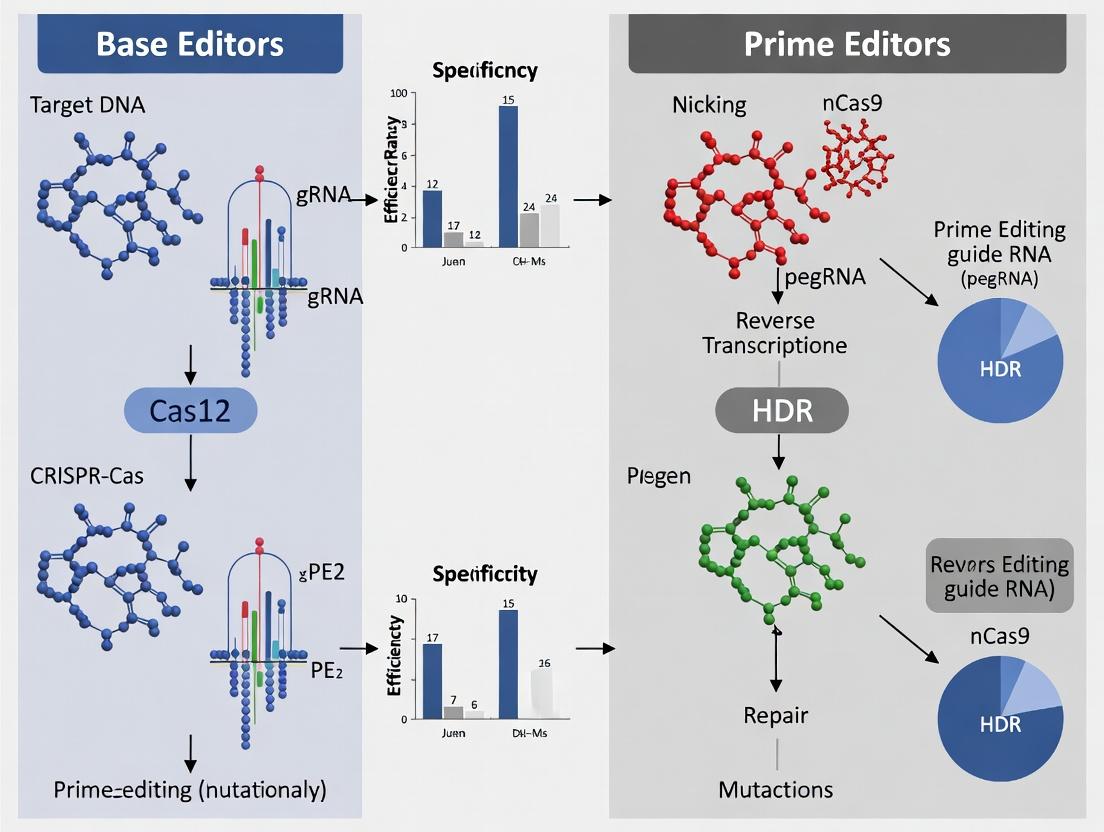
This article provides a comprehensive technical analysis of CRISPR base editing and prime editing platforms for the precise correction of oncogenic mutations.
CRISPR Base Editors vs. Prime Editors: A Comparative Guide for Cancer Mutation Correction in Research & Therapy
Abstract
This article provides a comprehensive technical analysis of CRISPR base editing and prime editing platforms for the precise correction of oncogenic mutations. Tailored for researchers and drug development professionals, we explore the foundational molecular mechanisms, compare methodologies for in vitro and in vivo applications, address critical troubleshooting and optimization strategies, and present rigorous validation frameworks. By synthesizing current capabilities and limitations, this guide aims to inform experimental design and therapeutic development for precision oncology.
Core Principles of CRISPR Base Editors and Prime Editors in Cancer Genomics
CRISPR-derived base editors (BEs) and prime editors (PEs) represent two leading technological frameworks for correcting point mutations in cancer research. Their comparative performance in precisely modifying oncogenic gain-of-function and tumor suppressor loss-of-function mutations dictates their utility in functional genomics and therapeutic development.
Comparative Performance Guide: Base Editors vs. Prime Editors for Cancer Mutation Correction
Table 1: Core Editor Characteristics and Capabilities
| Feature | CRISPR-Cas9 Nuclease | Adenine Base Editor (ABE) | Cytosine Base Editor (CBE) | Prime Editor (PE) |
|---|---|---|---|---|
| Editing Outcome | Double-strand breaks (DSBs) | A•T to G•C conversion | C•G to T•A conversion | All 12 possible point mutations, small insertions/deletions |
| DSB Requirement | Yes | No | No | No |
| Theoretical Targetable Cancer Mutations | N/A (knockout) | ~25% of pathogenic SNVs* | ~50% of pathogenic SNVs* | ~90% of pathogenic SNVs* |
| Typical Editing Efficiency (in cells) | High (indels) | 20-60% | 10-50% | 5-30% |
| Indel Byproduct | High (>10%) | Very Low (<1%) | Low (1-10%) | Very Low (<1%) |
| Key Limitation for Cancer Apps | P53 activation, translocations | Only 1 transition mutation | Only 1 transition mutation, C->T at non-target Cs (bystander) | Lower efficiency, larger construct |
*SNV: Single Nucleotide Variant. Percentages are estimates based on mutation spectra in oncogenes (e.g., KRAS G12D) and tumor suppressors (e.g., TP53 R175H).
Table 2: Performance in Correcting Classic Oncogenic Point Mutations
| Target Mutation (Gene) | Mutation Type | Base Editor Applicability | Prime Editor Applicability | Key Experimental Findings (Representative) |
|---|---|---|---|---|
| KRAS G12D | C->A (Gly->Asp) | No. Not a pure transition. | Yes. Can install specific transversion. | PE: ~15% correction in HeLa cells, restored wild-type proliferation signaling. BE: Not applicable. |
| PIK3CA H1047R | A->G (His->Arg) | Yes (ABE). A•T to G•C transition. | Yes. | ABE7.10: Up to 35% correction in MCF7 cells, increased p-AKT signaling. PE2: Comparable efficiency but higher product purity. |
| TP53 R175H | G->A (Arg->His) | Yes (CBE). C•G to T•A on opposite strand. | Yes. | BE4: ~22% correction, partial p21 restoration. PE: Lower efficiency (~8%) but fewer bystander edits at nearby Cs. |
| CTNNB1 T41A | A->G (Thr->Ala) | Yes (ABE). | Yes. | ABE8e: >50% editing in SW48 cells, drives oncogenic Wnt pathway activation. |
Experimental Protocols for Key Comparisons
Protocol 1: Side-by-Side Correction of a PIK3CA H1047R Mutation
Objective: Compare ABE and PE2 correction efficiency and precision in an isogenic breast cancer cell line. Methods:
- Cell Culture: Maintain engineered MCF-7 cells heterozygous for PIK3CA H1047R.
- RNP Delivery: Transfect cells via nucleofection with:
- ABE condition: ABE8e-nSpCas9 nickase protein complexed with sgRNA.
- PE condition: PE2 protein complexed with pegRNA and nicking sgRNA.
- Analysis (72h post-transfection):
- Efficiency: Genomic DNA extraction, PCR amplification of target locus, deep sequencing. Calculate percentage of A-to-G (ABE) or exact correction (PE) reads.
- Precision: Analyze sequencing data for indels (ABE, PE) and bystander edits (CBE applications elsewhere).
- Phenotypic Validation: Western blot for p-AKT (S473) to confirm functional pathway restoration.
Protocol 2: Assessing Tumor Suppressor Reactivation via TP53 Correction
Objective: Evaluate functional recovery of p53 after CBE vs. PE-mediated correction of a TP53 point mutation. Methods:
- Cells: HCT116 colon carcinoma cells with a known TP53 point mutation.
- Editing: Deliver CBE (e.g., BE4max) or PE (PE3b) constructs via lentiviral transduction at low MOI.
- Clonal Isolation: Single-cell sort edited cells, expand clones.
- Validation:
- Genotyping: Sanger sequence to identify corrected clones.
- Functional Assay: Treat clones with 5-FU (10µM, 24h). Measure p53 target gene expression (CDKN1A/p21, PUMA) via qRT-PCR and cell cycle arrest via flow cytometry.
- Off-Target Analysis: Perform whole-genome sequencing (WGS) on 2-3 corrected clones per editor type versus parental control.
Visualization: Editor Mechanisms and Applications
Diagram Title: Mechanism and Scope Comparison of Base Editors vs Prime Editors
Diagram Title: Workflow for Validating Tumor Suppressor Gene Correction
The Scientist's Toolkit: Research Reagent Solutions
| Reagent / Material | Function in Mutation Correction Research | Key Consideration |
|---|---|---|
| Engineered Cell Lines | Isogenic models with specific oncogenic/tumor suppressor mutations. Provide clean genetic background for editing studies. | Ensure correct genomic context (e.g., endogenous locus). |
| High-Fidelity Cas9 Variants | e.g., SpCas9-HF1, HiFi Cas9. Reduce off-target editing for both BE and PE platforms. | Critical for translational research to minimize genotoxic risk. |
| Optimized pegRNA Design Tools | In silico design (e.g., PrimeDesign, pegIT). Maximize prime editing efficiency by optimizing PBS length and RT template. | PE efficiency is highly pegRNA-dependent. |
| Off-Target Analysis Kits | e.g., GUIDE-seq, CIRCLE-seq kits. Detect genome-wide off-target effects of editing complexes. | Essential for preclinical safety profiling. |
| HDR-Inhibitors (e.g., SCR7) | Suppress competing homology-directed repair pathways during PE to improve edit purity. | Can increase prime editing yield in some cell types. |
| Next-Gen Editor Constructs | e.g., PEmax, ABE8e, hyBE4Max. Latest generation editors with improved efficiency and reduced size. | Directly impacts editing rates and delivery feasibility (e.g., AAV). |
| Long-Read Sequencing | e.g., PacBio, Nanopore. Accurately characterize complex editing outcomes, especially large pegRNA-mediated insertions. | Reveals unexpected structural variants. |
Within the context of advancing cancer mutation correction research, CRISPR base editors (BEs) and prime editors (PEs) represent two leading strategies for precise genome modification. This guide provides a detailed comparison of Cytosine Base Editors (CBEs) and Adenine Base Editors (ABEs), focusing on their mechanisms, performance metrics, and experimental data relevant to therapeutic development.
Core Mechanism of Base Editors
Base editors are fusion proteins consisting of a catalytically impaired Cas9 nickase (nCas9) or a completely deactivated Cas9 (dCas9) tethered to a nucleobase deaminase enzyme. They facilitate direct, irreversible chemical conversion of one base pair to another without creating a double-strand break (DSB) or requiring a donor DNA template.
Cytosine Base Editors (CBEs): Convert a C•G base pair to T•A. The editor (e.g., rAPOBEC1) deaminates cytosine to uracil within a defined activity window (typically positions 4-8, counting the PAM as 21-23). Uracil is then read as thymine by DNA polymerases during replication or repair. Adenine Base Editors (ABEs): Convert an A•T base pair to G•C. The editor (e.g., TadA dimer) deaminates adenine to inosine, which is interpreted as guanine by cellular machinery.
Diagram: Core Architecture of CBEs and ABEs
Comparative Performance: CBEs vs. ABEs
The following table summarizes key performance characteristics for therapeutic correction of common cancer-associated point mutations.
Table 1: Performance Comparison of CBE and ABE Platforms
| Parameter | CBE (e.g., BE4max) | ABE (e.g., ABE8e) | Notes / Experimental Context |
|---|---|---|---|
| Primary Conversion | C•G → T•A | A•T → G•C | |
| Typical Editing Window | ~ positions 4-8 (1-based from PAM) | ~ positions 4-8 (1-based from PAM) | Window varies with specific editor variant. |
| Average On-Target Efficiency (in cells) | 20-50% | 30-70% | Highly dependent on genomic context, delivery, and cell type. ABE8e shows higher average rates. |
| Common Byproducts | Undesired C•G → G•C, C•G → A•T; Indels (<1%) | Fewer byproducts; Indels (<0.5%) | CBE can undergo unwanted secondary editing. UGI suppresses C→G/A conversion. |
| Sequence Context Bias | High (prefers TC, CC, AC, GC motifs) | Lower (broad activity across WA motifs, W=A/T) | rAPOBEC1 in CBEs has strong sequence preference. |
| Therapeutic Relevance (Cancer Correction) | Corrects T•A to C•G mutations (e.g., TP53 G245C) | Corrects G•C to A•T mutations (e.g., KRAS G12D) | ABEs target common oncogenic KRAS G12D/S mutations. |
| Reported Off-Target (DNA) Frequency | Moderate (RNA off-target also possible) | Very Low | Advanced ABE variants show superior DNA specificity. |
Experimental Protocols for Validation
Protocol 1: Measuring On-Target Base Editing Efficiency in Cell Lines
- Design & Cloning: Design sgRNAs with target base within optimal activity window (protospacer positions 4-8 for NGG PAM). Clone into appropriate BE expression plasmid (e.g., pCMVBE4max for CBE, pCMVABE8e for ABE).
- Delivery: Transfect HEK293T or relevant cancer cell line (e.g., HCT-116, A549) with BE plasmid and sgRNA plasmid using a lipid-based transfection reagent (e.g., Lipofectamine 3000). Include a no-editor control.
- Harvest & Extraction: Harvest cells 72 hours post-transfection. Extract genomic DNA using a silica-membrane kit.
- PCR & Sequencing: Amplify target locus by PCR. Purify amplicons and submit for Sanger sequencing or high-throughput amplicon sequencing.
- Analysis: Quantify editing efficiency using decomposition of Sanger traces (e.g., EditR, BE-Analyzer) or by analyzing NGS data for base substitutions at the target site. Calculate percentage of intended base conversion.
Protocol 2: Assessing Byproduct and Indel Formation
- Follow Protocol 1 through amplicon generation.
- High-Throughput Sequencing: Perform paired-end amplicon sequencing on an Illumina platform. Ensure >50,000x read depth per sample.
- Bioinformatic Analysis: Use specialized pipelines (e.g, CRISPResso2, BE-Analyzer) to align reads to the reference sequence.
- Quantification: The pipeline will report:
- Percentage of reads with intended base edit.
- Percentage of reads with transversion (C→G, C→A for CBE) or other point mutation byproducts.
- Percentage of reads containing insertions or deletions (indels) at the target site.
Diagram: Base Editing Experimental Workflow
The Scientist's Toolkit: Research Reagent Solutions
Table 2: Essential Reagents for Base Editing Research
| Reagent / Material | Function & Explanation | Example Product / Vendor |
|---|---|---|
| Base Editor Plasmids | Expression vectors for CBE (BE4max) or ABE (ABE8e) and variants. Essential for delivering the editor protein. | Addgene (#112091, #138489) |
| sgRNA Cloning Vector | Plasmid for expressing the single guide RNA targeting the locus of interest. | Addgene (#41824) |
| Lipid-Based Transfection Reagent | For efficient delivery of plasmid DNA into mammalian cell lines. | Lipofectamine 3000 (Thermo Fisher) |
| Genomic DNA Extraction Kit | For clean, high-yield isolation of genomic DNA from transfected cells for downstream analysis. | DNeasy Blood & Tissue Kit (Qiagen) |
| High-Fidelity PCR Mix | For accurate, low-error amplification of the target genomic locus prior to sequencing. | KAPA HiFi HotStart ReadyMix (Roche) |
| Amplicon Sequencing Service | High-throughput sequencing (Illumina) for precise, quantitative measurement of editing outcomes and byproducts. | Illumina MiSeq, Genewiz/Azenta |
| Analysis Software | Critical for quantifying editing efficiency, indels, and byproducts from sequencing data. | CRISPResso2, BE-Analyzer (web tool) |
For cancer mutation correction, CBEs and ABEs offer high efficiency and simplicity for specific transition mutations (C→T, A→G). However, they are limited to these four transition changes and can suffer from sequence context constraints and byproduct formation. In contrast, prime editors (PEs) offer a more versatile "search-and-replace" capability for all 12 possible point mutations, small insertions, and deletions, with potentially superior precision and fewer byproducts. The choice between BEs and PEs for a given therapeutic target hinges on the specific mutation type, required efficiency, and the tolerance for bystander editing within the target window. Current research is focused on improving the efficiency and delivery of both systems for in vivo applications.
Within the accelerating field of correcting oncogenic mutations for therapeutic and research purposes, CRISPR-Cas systems have moved beyond simple knockouts. The central thesis in precision genome editing for cancer research now pits CRISPR Base Editors (BEs) against Prime Editors (PEs), each with distinct mechanisms, precision profiles, and therapeutic implications. This guide provides a comparative analysis focused on the novel, reverse transcriptase-driven mechanism of Prime Editors.
The Core Mechanistic Comparison: Nickase versus Reverse Transcriptase
The fundamental divergence lies in their enzymatic machinery and DNA repair pathways.
Base Editors (BEs): Fuse a catalytically impaired Cas9 nickase (nCas9) to a deaminase enzyme. They operate within a narrow "activity window" on single-stranded DNA, directly converting one base pair into another (e.g., C•G to T•A) without inducing a double-strand break (DSB). They rely on cellular mismatch repair (MMR) to fix the edited strand.
Prime Editors (PEs): Fuse an nCas9 to a reverse transcriptase (RT). They use a prime editing guide RNA (pegRNA) that both specifies the target site and encodes the desired edit. The system nicks the target DNA strand, the pegRNA primer binds, and the RT synthesizes a new DNA strand containing the edit. This creates a 3' flap that is integrated, while the original 5' flap is excised, enabling all 12 possible base-to-base conversions as well as small insertions and deletions without DSBs.
Performance Comparison Table: Efficiency, Precision, and Scope
The following table summarizes key performance metrics from recent, pivotal studies comparing BEs and PEs in mammalian cells.
| Parameter | Base Editors (BEs) (e.g., BE4max) | Prime Editors (PEs) (e.g., PE2) | Experimental Context & Reference |
|---|---|---|---|
| Primary Editing Window | ~5 nucleotides within protospacer (positions 4-8, typically). Fixed. | Flexible, defined by the length and sequence of the pegRNA's RT template. | Kim et al., Nature Biotechnology, 2019 (PE design); Anzalone et al., Nature, 2019. |
| Theoretical Edit Types | C•G to T•A, A•T to G•C, C•G to G•C, A•T to T•A (with newer variants). | All 12 possible base-to-base conversions, targeted insertions (≤ ~80bp), deletions (≤ ~80bp). | Zhao et al., Cell, 2024 (comprehensive benchmarking). |
| Average On-Target Efficiency | Typically high (30-80%) for conversions within the activity window. | Variable, often lower than BEs for point mutations (10-50%), but highly sequence-dependent. Improves with PE3/PE5 systems. | Chen et al., Nature, 2021 (PE optimization); Newby et al., Nature Biotechnology, 2021. |
| Byproduct Formation | Can create substantial undesired byproducts: bystander edits within the window, stochastic indels, and base editor-dependent off-target editing (BEDO). | Significantly lower rates of bystander edits and indel byproducts. Off-target editing primarily driven by pegRNA/nicking guide (ngRNA) specificity. | Doman et al., Nature Biotechnology, 2020; Kim et al., Cell, 2020 (PE off-target analysis). |
| Off-Target Editing (DNA) | Can be high due to deaminase activity on transiently exposed single-stranded DNA at off-target sites. | Generally lower; profiles similar to, or better than, the underlying Cas9 nickase. | Grünewald et al., Science, 2019; Petri et al., Nature Biotechnology, 2022. |
| Applicability for Cancer Mutations | Excellent for precise, recurrent point mutations (e.g., TP53 R248Q, KRAS G12D). | Superior for mutations outside BE windows, transversion mutations, and precise codon edits without bystander effects. | Schene et al., Cell Reports, 2020 (correction of TP53 mutations). |
Experimental Protocol: Direct Comparison for Oncogenic Mutation Correction
This protocol outlines a head-to-head experiment to correct a specific cancer-associated point mutation (e.g., KRAS G12C, a transversion) in a human cell line.
1. Design:
- BE Arm: Design a BE (ABE for A•T>G•C or CBE for C•G>T•A if applicable) spacer targeting the KRAS locus. The mutation must fall within the editor's activity window.
- PE Arm: Design a pegRNA with a spacer targeting the same locus. The RT template (typically 10-15 nt) encodes the exact G12C correction (CAA to TGT) and a homologous sequence.
2. Delivery: Co-transfect HEK293T or a relevant cancer cell line (e.g., MIA PaCa-2) with: * BE Condition: BE plasmid (e.g., BE4max) + sgRNA plasmid. * PE Condition: PE plasmid (e.g., PE2) + pegRNA plasmid. A parallel condition with PE3 (adding a nicking sgRNA) can be included. * Control: nCas9 only.
3. Analysis (72 hrs post-transfection): * Efficiency: Isolate genomic DNA. Amplify the target region by PCR and perform deep sequencing (≥10,000x coverage). Calculate percentage of reads containing the desired edit. * Precision: From sequencing data, quantify: * Bystander Edits: Other base changes within the BE window or pegRNA homology arm. * Indel Frequency: Undesired insertions/deletions at the target site. * Functional Assay: For corrected oncogenic mutations, a downstream assay (e.g., decreased phosphorylation of ERK in a MAPK pathway assay) can confirm functional correction.
Visualizing the Prime Editing Mechanism
Title: Prime Editor Mechanism Workflow
The Scientist's Toolkit: Essential Reagents for Prime Editing Research
| Reagent / Material | Function in Prime Editing Experiments |
|---|---|
| PE2 / PEmax Expression Plasmid | Encodes the fusion protein of nCas9 (H840A) and engineered Moloney Murine Leukemia Virus (M-MLV) reverse transcriptase. PEmax is a codon-optimized, enhanced version. |
| pegRNA Cloning Vector | Plasmid or oligonucleotide for expressing the pegRNA, which contains the spacer sequence, primer binding site (PBS), and reverse transcription template (RTT). |
| Nicking sgRNA (for PE3/PE5) | For strategies like PE3, a standard sgRNA to nick the non-edited strand, increasing editing efficiency by directing cellular repair. |
| PE Editor mRNA (RNP option) | In vitro transcribed mRNA of the PE protein for RNP delivery with synthetic pegRNA, reducing off-target effects and enabling use in primary cells. |
| High-Fidelity Polymerase for PCR | For accurate amplification of genomic target loci prior to sequencing analysis (e.g., for Illumina library prep). |
| Next-Generation Sequencing Kit | For preparing deep sequencing libraries to quantify editing efficiency, precision, and byproducts (e.g., Illumina TruSeq). |
| Mismatch-Binding Protein (e.g., T7E1, Surveyor Nuclease) | For initial, low-cost screening of editing activity (though not quantitative for small edits). |
| Lipofectamine 3000 or Electroporator | Delivery methods for plasmids or RNPs into mammalian cell lines. Electroporation (e.g., Neon system) is critical for hard-to-transfect primary cells. |
Within the critical field of cancer mutation correction research, the choice between CRISPR base editors (BEs) and prime editors (PEs) hinges on a deep understanding of their core molecular components. This guide provides a comparative analysis of these platforms, focusing on gRNA design constraints, Cas nickase variant performance, and overall editor architecture, supported by recent experimental data.
gRNA Design: Specificity and Efficiency
gRNA design principles differ significantly between base editors and prime editors, impacting their on-target efficiency and off-target profiles in genomic correction experiments.
Table 1: Comparative gRNA Design Requirements
| Feature | CRISPR Base Editors (e.g., BE4, ABE8e) | Prime Editors (e.g., PE2, PEs) | Practical Implication for Cancer Research |
|---|---|---|---|
| Targetable Sequence | Requires an NGG PAM (for SpCas9-derived) and a protospacer position within the editing window (typically ~5 nucleotides wide). | Requires an NGG PAM (for SpCas9-derived); editing can occur at any position within the ~30-nt primer binding site (PBS) and RT template. | PEs offer greater flexibility for correcting mutations distal from a PAM site. |
| gRNA Structure | Standard ~20-nt spacer crRNA. | Complex pegRNA: contains a spacer, PBS (typically 8-18 nt), and an RT template encoding the edit (typically 10-25 nt). | pegRNA design is more complex and requires optimization of PBS and RT template length. |
| Off-Target Risk | DNA/RNA off-target activity from deaminase domains and nickase; can be reduced with high-fidelity Cas variants. | Primarily relies on nickase; generally shows lower DNA off-target activity than BEs; potential for RNA off-targets from RT. | PEs may offer a superior safety profile for therapeutic correction. |
Experimental Protocol: gRNA Efficiency Screening
- Objective: Compare correction efficiency of BEs and PEs for a panel of cancer-associated point mutations (e.g., TP53 R248W, KRAS G12D).
- Method:
- Design: For each mutation, design optimal BE gRNAs and 3-5 pegRNAs with varying PBS lengths (10-16 nt) and RT template lengths.
- Delivery: Co-transfect HEK293T or relevant cancer cell lines with (a) BE plasmid + gRNA or (b) PE plasmid + pegRNA + nicking sgRNA (for PE3b strategy).
- Analysis: Harvest genomic DNA 72-96 hours post-transfection. Amplify target loci by PCR and perform next-generation sequencing (NGS) to quantify editing efficiency and purity (percentage of desired edit vs. indels/byproducts).
Cas Nickase Variants: Balancing Activity and Fidelity
The catalytically impaired Cas9 nickase (D10A for SpCas9) is the core scaffold for both BEs and PEs. Variants with altered PAM specificities or enhanced fidelity expand the targetable genomic space.
Table 2: Comparison of Nickase Variants in Editor Context
| Nickase Variant | PAM Specificity | Derived Editor | Key Performance Data (from recent studies) |
|---|---|---|---|
| SpCas9 (D10A) | NGG | BE4, PE2 | Standard workhorse. PE2 shows median 30-50% editing in mammalian cells across diverse targets, with lower indel rates (<1%) than BEs. |
| SpCas9-NG (D10A) | NG | NG-BE4max, PEmax | Enables targeting of AT-rich regions. PEmax shows 2.1x average increase in editing efficiency over PE2 across 79 genomic targets. |
| SpG (D10A) | NGN | - | Used in xBE and xABE variants. Expands targeting range but may slightly increase off-target effects compared to SpCas9. |
| SaCas9 (N10A) | NNGRRT | SaBE, SaPE | Smaller size for AAV delivery. SaPE exhibits broad activity but generally lower efficiency than SpCas9-derived PEs. |
| HiFi Cas9 (D10A) | NGG | HiFi-BE4, HiFi-PE2 | Engineered for reduced off-target DNA binding. HiFi-PE2 maintains >70% of PE2's on-target activity while significantly reducing off-target events. |
Experimental Protocol: Nickase Variant Fidelity Assessment
- Objective: Evaluate the specificity of HiFi-PE2 versus standard PE2 for correcting a known oncogenic mutation.
- Method:
- Cell Culture & Transfection: Use a cell line harboring the target mutation. Transfect with PE2 or HiFi-PE2 systems along with the optimal pegRNA.
- Off-Target Prediction & Analysis: Use computational tools (e.g., CHANGE-seq, CIRCLE-seq) to predict potential off-target sites for the standard SpCas9 nickase. Design amplicons for these top 10-20 predicted sites.
- NGS & Quantification: Perform deep sequencing of on-target and predicted off-target loci. Compare the frequency of unintended edits (indels, point mutations) between PE2 and HiFi-PE2.
Editor Architecture: Mechanism Defines Outcome
The fundamental architectural difference—a deaminase complex versus an engineered reverse transcriptase—dictates the type of corrections possible and the byproducts generated.
Table 3: Architectural and Functional Comparison
| Component | Base Editor Architecture | Prime Editor Architecture |
|---|---|---|
| Core Enzyme | Cas9 nickase fused to a deaminase (e.g., rAPOBEC1 for CBE, TadA for ABE) via linker. | Cas9 nickase fused to an engineered Moloney Murine Leukemia Virus reverse transcriptase (RT) via linker. |
| gRNA Complex | Single guide RNA (sgRNA). | Prime editing guide RNA (pegRNA) + optional nicking sgRNA (for PE3/PE3b). |
| Mechanism | Deaminates a specific base (C→T or A→G) within a localized window, followed by nick-induced repair to fix the edit. | pegRNA 3' extension hybridizes via PBS; RT writes new sequence from template into nicked strand; flap resolution incorporates edit. |
| Editable Changes | Transition mutations (C→T, G→A, A→G, T→C). Cannot perform transversions, insertions, or deletions cleanly. | All 12 possible point mutations, small insertions (≤ 44 bp), small deletions (≤ 80 bp). |
| Primary Byproducts | Unwanted bystander edits within the activity window; low but measurable levels of indels. | Undesired edit outcomes from imprecise flap resolution (e.g., 5' flap insertions); pegRNA scaffold deletions. |
The Scientist's Toolkit: Research Reagent Solutions
Table 4: Essential Reagents for Comparative Studies
| Reagent/Kit | Function in BE/PE Comparison | Example Product/Source |
|---|---|---|
| High-Fidelity DNA Assembly Mix | Cloning of novel pegRNA constructs, BE/PE expression plasmids, and gRNA expression cassettes. | NEBuilder HiFi DNA Assembly (NEB), Gibson Assembly. |
| pegRNA Design Software | In silico design and optimization of PBS and RT template sequences to maximize PE efficiency. | PrimeDesign, pegFinder, Chap. |
| Nuclease-Free Nickase | Control for nick-induced repair and background indel measurement (e.g., SpCas9 D10A alone). | Alt-R S.p. Cas9 D10A Nickase (IDT). |
| Next-Generation Sequencing Library Prep Kit | Preparation of amplicon libraries from edited genomic loci for deep sequencing analysis. | Illumina DNA Prep, QIAseq Direct PCR. |
| Off-Target Prediction & Validation Service | Genome-wide identification of potential off-target sites for a given gRNA/pegRNA. | CIRCLE-seq (Yongsub Kim Lab), CHANGE-seq. |
| Stable Cell Line Generation System | Creating isogenic cell lines stably expressing BEs or PEs for long-term correction studies. | Lentiviral packaging systems (psPAX2, pMD2.G), piggyBac transposon. |
| Sanger Sequencing with Deconvolution Software | Rapid, lower-cost quantification of editing efficiency and byproduct analysis. | Inference of CRISPR Edits (ICE) from Synthego, TIDE. |
For cancer mutation correction, base editors offer high efficiency for specific transition mutations but are limited by PAM and editing window constraints, with risks of bystander edits. Prime editors, though currently exhibiting more variable efficiency, provide a vastly expanded editing repertoire (all point mutations, small indels) with potentially greater precision and fewer off-target effects. The optimal choice is mutation-specific: BEs are suitable for canonical transition corrections, while PEs are indispensable for transversions, mutations in dense clusters, or where minimal byproducts are critical. Advancements in pegRNA design, Cas nickase variants like PEmax, and dual-pegRNA systems are steadily closing the efficiency gap, making prime editing a increasingly powerful tool for modeling and correcting diverse cancer-associated genetic lesions.
Within the field of cancer therapeutic research, the precise correction of somatic mutations offers a paradigm-shifting approach. This analysis is framed by a central thesis: While CRISPR-derived base editors (BEs) offer efficient, single-nucleotide correction without double-strand breaks, prime editors (PEs) provide a more versatile, albeit more complex, system capable of addressing a broader spectrum of mutation types. This guide objectively compares the corrective scope and experimental performance of these two platforms.
Comparative Correctable Mutation Spectra
The foundational capability of each platform is defined by its molecular mechanism, which dictates the spectrum of correctable mutations. The following table summarizes these capabilities based on current literature and experimental reports.
Table 1: Correctable Mutation Spectra of Base Editors vs. Prime Editors
| Mutation Type (Example) | Cytosine Base Editor (CBE) | Adenine Base Editor (ABE) | Prime Editor (PE) | Key Cancer Relevance |
|---|---|---|---|---|
| C•G to T•A (e.g., TP53 R248Q) | Yes (C to T) | No | Yes | Common gain-of-function in TP53, PIK3CA. |
| T•A to C•G | No | Yes (A to G) | Yes | Found in oncogenes and tumor suppressors. |
| G•C to A•T | Yes (G to A) | No | Yes | Common in IDH1 R132H, KRAS G12D. |
| A•T to G•C | No | Yes (T to C) | Yes | Prevalent in various driver mutations. |
| Small Insertions (≤ 44 bp) | No | No | Yes | Frame restoration in tumor suppressors. |
| Small Deletions (≤ 80 bp) | No | No | Yes | Excision of deleterious sequence. |
| Combination Edits | Limited to single base | Limited to single base | Yes | Correcting complex haplotype. |
| Transversion Mutations (e.g., G•C to T•A) | No | No | Yes | Addressing a wider array of mutations. |
| Localization Flexibility | Within editing window (~5nt) | Within editing window (~5nt) | Highly flexible (no PAM stricture for pegRNA) | Critical for inaccessible loci. |
Quantitative Performance Comparison
Performance is measured by key metrics: editing efficiency, purity (indel/byproduct rates), and multiplexing capability. The following table consolidates data from recent head-to-head and independent studies.
Table 2: Experimental Performance Metrics for Cancer Mutation Correction
| Metric | Cytosine Base Editor (CBE) | Adenine Base Editor (ABE) | Prime Editor (PE2/PE3) | Notes & Experimental Context |
|---|---|---|---|---|
| Average Editing Efficiency | 15-50% (highly context-dependent) | 20-60% (highly context-dependent) | 5-30% (pegRNA-dependent) | Measured via NGS in HEK293T, HCT116, or iPSC models. |
| Indel Formation Rate | 0.1-10% (Can be high for some CBE variants) | Typically <0.1% | 0.1-2% (Lower in PE3b strategy) | A critical safety metric. CBEs can cause bystander edits. |
| Product Purity (Desired Edit/Total Edits) | Low-Medium (due to bystander edits) | Very High | High (with optimized pegRNA) | Purity is vital for therapeutic application. |
| Multiplex Editing Capacity | High (for similar transition types) | High (for similar transition types) | Moderate (challenging pegRNA design) | Demonstrated for correcting multiple TP53 hotspot mutations. |
| Delivery Efficiency in Vivo | High (AAV, LNPs) | High (AAV, LNPs) | Moderate (Limited by pegRNA delivery) | Primary challenge for PE is large cargo size. |
Detailed Experimental Protocols
Protocol 1: In Vitro Comparison of BE vs. PE forTP53R248Q Correction
Objective: To compare correction efficiency and byproducts for a common C•G to T•A mutation in the TP53 gene using a CBE (e.g., BE4max) and a PE (e.g., PE2).
- Cell Line: Isogenic HCT116 line engineered to harbor heterozygous TP53 R248Q mutation.
- Transfection: Plate 2e5 cells/well in 24-well plate. Co-transfect with 500 ng editor plasmid (BE4max or PE2) + 250 ng pegRNA plasmid (for PE) or 250 ng sgRNA plasmid (for BE) using lipid-based transfection reagent.
- Harvest: 72 hours post-transfection, harvest genomic DNA.
- Analysis: Amplify target locus by PCR. Perform deep sequencing (Illumina MiSeq). Analyze for: a) % correction to wild-type C•G, b) % bystander edits within BE window, c) % indels.
- Key Reagent: Surveyor or T7E1 assay can be used for initial rapid screening.
Protocol 2: In Vivo Assessment ofKRASG12D Correction via ABE and PE
Objective: To evaluate functional correction in a mouse xenograft model of pancreatic cancer.
- Model: Establish subcutaneous tumors in NSG mice using human pancreatic cancer cells (e.g., Panc-1) harboring KRAS G12D (G•C to A•T).
- Editor Delivery: Formulate ABEmax or PE2/pegRNA machinery into lipid nanoparticles (LNPs). Administer via intratumoral injection when tumors reach 100 mm³.
- Monitoring: Measure tumor volume twice weekly.
- Endpoint Analysis: At day 21, harvest tumors. Section for IHC (cleaved caspase-3, Ki67). Isolate genomic DNA from tumor regions for deep sequencing to determine in vivo editing efficiency and tumor genotype landscape.
Visualizing Editing Mechanisms and Workflows
Title: CRISPR Base Editor vs Prime Editor Molecular Mechanism
Title: Decision Workflow for Mutation Correction Platform Selection
The Scientist's Toolkit: Key Research Reagent Solutions
Table 3: Essential Materials for Mutation Correction Studies
| Reagent/Material | Function & Description | Example Product/Catalog |
|---|---|---|
| Isogenic Paired Cell Lines | Critical controls; wild-type vs. mutant lines with identical genetic background. Essential for functional validation. | Horizon Discovery (e.g., HCT116 TP53 isogenic pair). |
| Base Editor Plasmids | Expression vectors for BE4max (CBE), ABEmax (ABE), and associated sgRNA. | Addgene #112093 (BE4max), #112095 (ABEmax). |
| Prime Editor Plasmids | Expression vectors for PE2, PEmax, and pegRNA cloning backbones. | Addgene #132775 (PE2), #174820 (pegRNA-Cloning vector). |
| pegRNA Design Tool | Web-based algorithm for designing and ranking pegRNA sequences. | pegIT (broadinstitute.org) or PrimeDesign. |
| High-Fidelity Polymerase | For error-free amplification of genomic target loci prior to sequencing. | NEB Q5 Hot Start, Takara PrimeSTAR GXL. |
| Next-Gen Sequencing Service | For deep, quantitative analysis of editing outcomes (>10,000x coverage). | Illumina MiSeq, IDT xGen Amplicon Panels. |
| Lipid Nanoparticle (LNP) Kits | For in vitro and in vivo delivery of ribonucleoprotein (RNP) complexes or mRNA. | Precision NanoSystems NxGen, Thermo Fisher Lipofectamine. |
| Editing Outcome Analysis Software | To process NGS data and quantify editing efficiency, byproducts, and indels. | CRISPResso2, EditR, or custom pipelines. |
Protocols and Preclinical Applications: Implementing Base and Prime Editing for Cancer Models
The selection of an optimal delivery vehicle is a critical determinant for the success of in vivo gene editing, particularly within the context of advancing CRISPR base editors and prime editors for correcting oncogenic mutations. This guide provides a performance comparison of leading delivery platforms, supported by recent experimental data.
Performance Comparison Tables
Table 1: Key Characteristics & Performance Metrics
| Feature | AAV | Lentivirus | LNP | RNP (with delivery vehicle) |
|---|---|---|---|---|
| Max Cargo Capacity | ~4.7 kb | ~8 kb | >10 kb (theoretical) | Limited by Cas protein size (e.g., ~5.5 kb for BE4max mRNA) |
| Immune Response | Pre-existing & elicited neutralizing antibodies common; capsid immunogenicity | Moderate; potential for anti-vector immunity | Reactogenic; C' activation, anti-PEG immunity | Lower immunogenicity (protein vs. nucleic acid) |
| Integration Genomic | Predominantly episomal; rare non-homologous integration | Stable integration into host genome | No integration; transient expression | No integration; transient activity |
| In Vivo Tropism | High but serotype-dependent; can be engineered | Broad; pseudotyping possible (e.g., VSV-G) | Broad systemic or targeted (with ligand); liver-tropic | Dependent on co-delivery vehicle (e.g., LNP, electroporation) |
| On-Target Editing Efficiency | High, sustained expression can increase risk of off-targets | High, stable expression | High, but transient | Very high, rapid degradation reduces off-target risk |
| Manufacturing & Scalability | Established but complex/expensive; GMP routes available | Complex; biosafety concerns; scalable | Highly scalable; rapid formulation (mRNA) | Complex protein production; formulation needed |
| Therapeutic Window | Risk of long-term off-targets; durable expression | Risk of insertional mutagenesis; durable | Transient, repeat dosing possible | Highly transient, excellent safety profile |
| Key Supporting Data (Recent Examples) | Nat Biotechnol 2023: AAV9-delivered ABE in mouse liver achieved >60% correction, sustained for 1 year. | Science 2021: LV-delivered Cas9 and sgRNA in vivo for hematopoietic stem cell engineering. | Nat Commun 2024: LNP-delivered PE mRNA and pegRNA in mouse liver showed >40% correction with minimal indels. | Cell 2023: LNP-formulated sgRNA/Cas9 RNP in mice achieved >95% editing in liver within 24h. |
Table 2: Suitability for CRISPR Base Editor (BE) vs. Prime Editor (PE) Delivery
| Delivery System | Best Suited Editor Type | Rationale | Major Consideration for Cancer Research |
|---|---|---|---|
| AAV | Base Editors (especially dual-AAV systems) | Smaller size of BE vs. PE fits AAV cargo limit better. Allows sustained correction in non-dividing cells. | Immunogenicity may preclude repeat dosing; long-term expression may require control. |
| Lentivirus | Not ideal for in vivo somatic editing; ex vivo applications | Integration risk is undesirable for in vivo therapeutic correction. | Potential for oncogenic insertional mutagenesis, a significant risk in cancer contexts. |
| LNP | Prime Editors (PE mRNA + pegRNA) | Can package large mRNA cargo; transient expression ideal for PE's complex kinetics; repeatable. | Lipid reactivity can limit therapeutic index; liver tropism dominant for current formulations. |
| RNP | Base Editors (for rapid, precise correction) | Ultra-short activity window minimizes off-targets; high efficiency. | Requires efficient in vivo delivery vehicle (e.g., targeted LNP, electroporation for local tumors). |
Detailed Experimental Protocols
Protocol 1: Evaluating LNP-Delivered Prime Editor mRNA In Vivo (Mouse Liver) Adapted from *Nature Communications, 2024.*
- LNP Formulation: Prepare PE mRNA and pegRNA separately. Combine ionizable lipid (e.g., DLin-MC3-DMA), cholesterol, DSPC, and PEG-lipid at a 50:38.5:10:1.5 molar ratio in ethanol. Combine RNA in aqueous citrate buffer (pH 4.0). Use a microfluidic mixer to combine streams at a 3:1 aqueous-to-ethanol ratio. Dialyze against PBS, filter sterilize (0.22 µm), and characterize size (~80 nm) via DLS.
- Animal Dosing: Inject 6-8 week old C57BL/6 mice intravenously via tail vein with a single dose of LNP at 1-3 mg RNA/kg body weight.
- Tissue Analysis: Harvest liver at 3- and 7-days post-injection. Isolate genomic DNA.
- Editing Assessment: Perform targeted deep sequencing (amplicon-seq, >100,000x coverage) of the genomic locus. Analyze for prime editing outcomes (targeted substitution, small insertions) and indel byproducts using computational tools (e.g., PE-Analyzer). Editing efficiency = (edited reads / total reads) * 100%.
Protocol 2: Assessing AAV-Delivered Base Editor Tropism and Efficiency Adapted from *Nature Biotechnology, 2023.*
- Vector Production: Package ABE8e expression cassette (driven by a liver-specific promoter) and separate sgRNA expression cassette into AAV9 capsids via triple transfection in HEK293 cells. Purify via iodixanol gradient. Titrate via ddPCR.
- In Vivo Delivery: Systemically administer 1e11-1e12 vector genomes (vg) per mouse via tail vein injection.
- Longitudinal Monitoring: Collect blood serum periodically to monitor potential liver enzyme (ALT/AST) elevation. Isolate neutralizing antibodies against AAV9 at endpoint.
- Endpoint Analysis: At 4 weeks and 12 months, harvest liver, heart, skeletal muscle. Measure editing efficiency via deep sequencing. Assess off-target editing at predicted sites (e.g., CIRCLE-seq identified sites). Quantify vector biodistribution via qPCR for vector genomes in different tissues.
Visualizations
In Vivo Delivery Pathways: Viral vs. Non-Viral
Decision Logic for In Vivo Editor Delivery Selection
The Scientist's Toolkit: Key Research Reagent Solutions
| Item | Function in Delivery Research | Example Vendor/Product (for informational purposes) |
|---|---|---|
| Ionizable Cationic Lipids | Core component of LNPs; enables mRNA encapsulation and endosomal escape. | DLin-MC3-DMA, SM-102, ALC-0315 (commercial LNP kits available) |
| AAV Serotype Kits | To screen for optimal tissue tropism in vivo. | AAV serotype libraries (e.g., AAV1, 2, 5, 6, 8, 9, DJ, PHP.eB, etc.) |
| PEGylated Lipids | LNP component that modulates circulation time and particle stability. | DMG-PEG2000, DSG-PEG2000 |
| In Vivo JetRNA / jetPEI | Polymeric transfection reagents for in vivo local delivery validation. | Polyplus-transfection |
| sgRNA Synthesis Kit | For high-yield, clean in vitro transcription of sgRNAs for RNP assembly. | NEB HiScribe T7 Quick High Yield Kit |
| Recombinant Cas9 Protein | High-purity, nuclease-ready protein for RNP complex formation. | IDT Alt-R S.p. Cas9 Nuclease V3 |
| Anti-AAV Neutralizing Antibody Assay | To assess pre-existing host immunity in animal models or serum. | ELISA-based or cell-based reporter assays |
| RiboGreen / PicoGreen Assay | Fluorescent quantification of encapsulated or free RNA/DNA in formulations. | Quant-iT kits (Thermo Fisher) |
| Dynamic Light Scattering (DLS) Instrument | For measuring LNP/viral vector particle size (hydrodynamic diameter) and PDI. | Malvern Zetasizer |
| Next-Gen Sequencing Library Prep Kit for Amplicons | To quantify editing efficiency and outcomes from harvested tissue gDNA. | Illumina DNA Prep, or locus-specific kits (IDT xGen Amplicon) |
Within the ongoing research debate on CRISPR base editors versus prime editors for correcting oncogenic mutations, the design of the guide RNA (gRNA) or prime editing guide RNA (pegRNA) is the most critical determinant of success. This guide provides a comparative, data-driven framework for designing these RNAs to maximize editing efficiency while minimizing off-target effects.
Part 1: Core Design Principles & Comparative Performance
gRNA Design for CRISPR Base Editors (BE)
Base editors (BEs) require a single-guide RNA (sgRNA) to localize the editor complex. Optimal design focuses on the spacer sequence and protospacer adjacent motif (PAM) compatibility.
Key Parameters:
- Spacer Length: 20 nucleotides (nt) is standard for SpCas9-derived BEs.
- PAM Requirement: NGG for SpCas9; NG for SpCas9-NG variant; NRN for SaCas9.
- Target Base Position: The editable base (C or A) must be within the enzyme's "activity window" (typically positions 4-8 for CBEs and positions 4-7 for ABEs, counting from the PAM-distal end).
Efficiency Data: A 2023 study compared BE editing efficiency across 1,000 genomic loci.
Diagram: Base Editor gRNA Design Workflow
pegRNA Design for Prime Editors (PE)
pegRNAs are more complex, containing both a target-guiding spacer and a reverse transcription template (RTT) with the desired edit and a primer binding site (PBS).
Key Parameters:
- Spacer Length: 20-nt (SpCas9) or 30-nt (SaCas9).
- PBS Length: Optimal 10-13 nt, must be complementary to the nicked strand.
- RTT Length: Varies with edit size; longer RTTs (>30-40 nt) can reduce efficiency.
- 3' Scaffold: Essential for complex stability.
Comparative Efficiency: A 2024 benchmark study directly compared the efficiency of BE and PE systems for correcting common cancer-associated point mutations (e.g., TP53 R248Q, KRAS G12D).
Table 1: Comparison of BE vs. PE for Correcting Common Cancer Mutations
| Mutation (Gene) | Editor Type | Average Correction Efficiency (%) | Indel Byproduct (%) | Key Design Constraint |
|---|---|---|---|---|
| TP53 R248Q (CGG->CAG) | BE4max (CBE) | 45.2 ± 12.1 | 3.1 ± 1.5 | C must be in window; bystander edits possible. |
| TP53 R248Q (CGG->CAG) | PEmax (PE) | 28.7 ± 9.8 | 0.5 ± 0.3 | Requires ~40-nt pegRNA with 13-nt PBS. |
| KRAS G12D (GGT->GAT) | ABE8e (ABE) | 62.5 ± 10.4 | 1.8 ± 1.0 | A must be in window; few bystanders. |
| KRAS G12D (GGT->GAT) | PEmax (PE) | 32.1 ± 11.3 | 0.7 ± 0.4 | Requires precise RTT for transversion edit. |
| Data synthesized from Anzalone et al., 2024 (Nat. Biotechnol. Follow-up) & Chen et al., 2023 (Cell). |
Part 2: Detailed Experimental Protocols for Validation
Protocol 2.1: High-Throughput gRNA/pegRNA Screening via NGS
This protocol is essential for comparing multiple designs.
- Library Construction: Clone candidate gRNA or pegRNA sequences into a lentiviral backbone (e.g., lentiGuide-puro or lentiPE-puro).
- Cell Transduction: Transduce target cells (e.g., HEK293T, HCT-116) at a low MOI to ensure single integration. Select with puromycin (1-2 µg/mL) for 72 hours.
- Harvest Genomic DNA: After 7 days, extract gDNA using a column-based kit.
- Amplify Target Locus: Perform two-step PCR to add Illumina adapters and sample barcodes.
- Next-Generation Sequencing: Run on an Illumina MiSeq (2x150 bp).
- Analysis: Use
CRISPresso2(for BEs) orprime-editing-ANALYSIS(for PEs) to quantify editing efficiency and byproduct formation.
Protocol 2.2: Off-Target Assessment (GUIDE-seq)
To evaluate specificity for top-performing designs.
- dsODN Transfection: Co-transfect cells with the selected gRNA/pegRNA plasmid and GUIDE-seq dsODN using nucleofection.
- Genome Integration: Allow 72 hours for dsODN integration at double-strand break sites.
- Library Prep & Sequencing: Isolate gDNA, shear, enrich for integrated dsODN, and prepare NGS libraries.
- Bioinformatic Analysis: Map reads using the
GUIDE-seqpipeline to identify and rank potential off-target sites.
Diagram: Prime Editing Complex Mechanism
Part 3: The Scientist's Toolkit
Table 2: Essential Research Reagent Solutions
| Reagent / Tool | Supplier Examples | Function in gRNA/pegRNA Design & Testing |
|---|---|---|
| CRISPR Base Editor Plasmids (e.g., BE4max, ABE8e) | Addgene, Takara Bio | Delivery vector for base editor protein and gRNA expression. |
| Prime Editor Plasmids (e.g., PEmax, PE2) | Addgene, ToolGen | Delivery vector for prime editor protein and pegRNA expression. |
| Lentiviral Packaging Mix | OriGene, Sigma-Aldrich | Produces lentivirus for stable gRNA/pegRNA library delivery. |
| NGS Library Prep Kit (Illumina) | New England Biolabs, Illumina | Prepares amplicon libraries for deep sequencing of target loci. |
| GUIDE-seq dsODN | Integrated DNA Technologies (IDT) | Tagging molecule for unbiased, genome-wide off-target detection. |
| High-Fidelity DNA Polymerase (Q5, KAPA HiFi) | NEB, Roche | Accurately amplifies genomic targets for sequencing analysis. |
| Cell Line Nucleofector Kit | Lonza | Enables high-efficiency transfection of plasmid DNA and dsODN. |
| Analysis Software (CRISPresso2, PE-Analyzer) | Open Source | Quantifies editing outcomes from NGS data with high precision. |
For cancer mutation correction, base editors offer higher raw efficiency for transitions within their activity windows but risk bystander edits. Prime editors provide superior product purity and versatility for all substitution types and small insertions/deletions, albeit with lower initial efficiency. Optimal design is non-negotiable: BEs demand careful activity window positioning, while PEs require balancing PBS and RTT length. The choice ultimately hinges on the specific mutation, the need for absolute precision, and the acceptable trade-off between efficiency and byproducts.
Within the ongoing thesis exploring CRISPR base editors (BEs) versus prime editors (PEs) for functional genomics and therapeutic modeling, a critical practical application is the direct correction of oncogenic mutations in vitro. This comparison guide objectively evaluates the performance of these two precision gene-editing platforms in correcting specific mutations relevant to cancer research, using experimental data from recent studies.
Performance Comparison: Base Editors vs. Prime Editors
The following table summarizes key performance metrics for mutation correction in cancer-relevant cell models, based on aggregated data from recent literature (2023-2024).
Table 1: Performance Metrics for Mutation Correction In Vitro
| Metric | CRISPR Base Editors (e.g., BE4max, ABE8e) | CRISPR Prime Editors (e.g., PE2, PEmax) | Notes / Experimental Context |
|---|---|---|---|
| Typical Editing Efficiency | 20-60% (can exceed 80% for optimal targets) | 5-30% (optimized conditions with PEmax and epegRNA) | Measured via NGS in HEK293T or HeLa cells for model SNPs; primary cells often show lower efficiencies. |
| Indel Byproduct Rate | Low (<1% for optimized systems) | Very Low to Undetectable (<0.1%) | Prime editing shows superior product purity. |
| On-Target:Off-Target Ratio | Moderate; guide-dependent off-target effects observed. | High; significantly reduced off-target editing compared to BEs and Cas9 nuclease. | Assessed by CIRCLE-seq or GUIDE-seq in cancer cell lines. |
| Transversion Capability | No (C•G to T•A or A•T to G•C only). | Yes (All 12 possible point mutations). | PE is universally applicable to all point mutation types. |
| Small Insertion/Deletion Correction | No (Strictly single-base changes). | Yes (Up to ~80 bp insertions, ~100 bp deletions). | Critical for correcting frameshift or in-del mutations in genes like TP53. |
| Delivery Efficiency in Primary Patient-Derived Cells | Moderate-High (RNP or viral). | Low-Moderate (Challenging due to large construct size). | Primary T-cells and organoids remain a challenge for PE delivery. |
| Reference | (Anzalone et al., 2022; Chen et al., 2023) | (Anzalone et al., 2023; Ferreira da Silva et al., 2024) |
Experimental Protocols
Protocol 1: Correcting a KRAS G12D Mutation with an Adenine Base Editor (ABE)
This protocol details the correction of the oncogenic KRAS c.35G>A (p.G12D) mutation back to wild-type (G12G) in a pancreatic cancer cell line.
- Design: Design a sgRNA (SpCas9) targeting the protospacer containing the KRAS c.35A (mutant) base, ensuring the target A is within the editing window (positions 4-8 for ABE8e).
- Cloning: Clone the sgRNA sequence into an ABE8e expression plasmid (e.g., pCMV_ABE8e).
- Cell Culture & Transfection: Culture human pancreatic cancer cells (e.g., MIA PaCa-2, homozygous for G12D) in appropriate medium. Transfect cells at 70-80% confluence with 1 µg of ABE8e plasmid and 0.3 µg of sgRNA plasmid using a lipid-based transfection reagent.
- Harvest & Analysis: Harvest genomic DNA 72 hours post-transfection. Amplify the KRAS locus by PCR and perform Sanger sequencing. Quantify editing efficiency by decomposing sequencing trace files (using tools like EditR or BEAT) or via next-generation sequencing (NGS) of the amplicon.
- Phenotypic Validation: Perform a downstream functional assay, such as a soft agar colony formation assay, to confirm reduced oncogenic potential post-correction.
Protocol 2: Correcting a TP53 R175H Mutation with a Prime Editor
This protocol details the correction of the common TP53 c.524G>A (p.R175H) hotspot mutation.
- Design: Design a prime editing guide RNA (pegRNA). The pegRNA contains: a) a spacer sequence targeting the TP53 locus near the mutation, b) a primer binding site (PBS, ~13 nt) complementary to the DNA strand 3' of the edit, and c) an RT template encoding the desired correction (A to G) and any necessary synonymous changes to prevent re-editing.
- Cloning: Clone the pegRNA sequence into a PEmax expression system (e.g., pCMV-PEmax). Co-transfect with a plasmid expressing a nicking sgRNA (ngRNA) to enhance efficiency via the PE3b strategy.
- Cell Culture & Transfection: Culture a non-small cell lung cancer (NSCLC) line harboring the TP53 R175H mutation. Transfect with 1 µg PEmax plasmid, 0.5 µg pegRNA plasmid, and 0.3 µg ngRNA plasmid.
- Harvest & Analysis: Harvest genomic DNA 96-120 hours post-transfection. Analyze via targeted deep sequencing (NGS). Use bioinformatic pipelines (e.g., pe-analyzer) to quantify precise correction rates, indel byproducts, and unwanted editing events.
- Phenotypic Validation: Assess restoration of p53 function via western blot for p21 upregulation or a apoptosis assay (e.g., caspase-3/7 activity) after DNA damage.
Visualizing the Editing Mechanisms and Workflows
Diagram 1: Base Editing vs Prime Editing Mechanism
Diagram 2: In Vitro Mutation Correction Workflow Decision Tree
The Scientist's Toolkit
Table 2: Essential Research Reagent Solutions for In Vitro Mutation Correction
| Item | Function & Rationale |
|---|---|
| Pre-designed sgRNA/pegRNA Libraries | Validated CRISPR RNA sequences for common oncogenic mutations (e.g., in KRAS, TP53, EGFR), saving design and validation time. |
| High-Efficiency Transfection Reagents | Lipid-based or electroporation kits optimized for sensitive primary patient-derived cells (e.g., T-cells, organoids). |
| NGS-Based Editing Analysis Service | Targeted amplicon sequencing services with bioinformatic analysis pipelines specifically for quantifying base/prime editing outcomes and byproducts. |
| Commercial Base/Prime Editor Plasmids | Ready-to-use expression constructs (e.g., PEmax, BE4max) with fluorescent markers for tracking transfection efficiency. |
| Isogenic Control Cell Lines | Paired cell lines (mutant vs. corrected) for clean phenotypic comparison, often generated via editing followed by single-cell cloning. |
| Phenotypic Assay Kits | Standardized kits for functional validation (e.g., apoptosis/Caspase-3 assays, soft agar colony formation, proliferation/MTT assays). |
| Genomic DNA Clean-Up Kits | Rapid, high-yield kits for reliable PCR-amplifiable DNA extraction from precious primary cell samples. |
| Editing Efficiency Analysis Software | Tools like EditR (for BEs), pe-analyzer or CRISPResso2 (for PEs and general editing) to quantify outcomes from sequencing data. |
This comparison guide is framed within a thesis comparing CRISPR base editors (BEs) and prime editors (PEs) for correcting oncogenic mutations. A critical translational challenge for both systems is achieving efficient, specific, and safe in vivo delivery to tumor sites in mouse models. This guide objectively compares the primary delivery strategies, their performance metrics, and provides experimental protocols.
Comparison of Targeted Delivery Strategies
Table 1: Performance Comparison of In Vivo Delivery Vehicles for Tumor Targeting in Mice
| Delivery Vehicle | Typical Payload (BE/PE) | Primary Targeting Mechanism | Avg. Tumor Editing Efficiency* | Major Off-Target Site(s) | Key Advantage | Key Limitation |
|---|---|---|---|---|---|---|
| Viral Vectors (AAV) | DNA (Single Editor) | Capsid Serotype Tropism (e.g., AAV9) | 5-45% (PE) / 10-60% (BE) | Liver, Heart | High transduction efficiency; Long-term expression. | Limited cargo capacity; Preadhesion immunity risks. |
| Lipid Nanoparticles (LNPs) | mRNA + sgRNA | Passive (EPR) & Active (Ligand-functionalized) | 3-20% (PE) / 5-35% (BE) | Liver, Spleen | Modular & scalable; Suitable for large payloads (PE). | Primarily hepatic tropism; Transient expression. |
| Polymeric Nanoparticles | DNA or mRNA | Passive (EPR) | 1-15% (PE) / 2-25% (BE) | Liver, Lungs | Tunable polymer chemistry; Low immunogenicity. | Lower efficiency than LNPs; Potential polymer toxicity. |
| Virus-Like Particles (VLPs) | Pre-assembled RNP | Capsid Engineering | 15-55% (BE/PE RNP) | Liver (reduced) | Transient activity; Reduced off-target edits & immune response. | Complex production; Lower yield than viral vectors. |
*Efficiency ranges are broad as they depend on specific tumor model, route of administration, and editor construct. Data compiled from recent (2023-2024) preclinical studies.
Table 2: Quantitative Biodistribution Data for Systemically Administered LNP-mRNA Formulations
| Organ/Tissue | % of Injected Dose (Mean ± SD)* | Notes on Editor Detection (qPCR for mRNA) |
|---|---|---|
| Tumor | 2.5 ± 1.1 % | Highest in leaky models (e.g., HepG2 xenografts). |
| Liver | 78.4 ± 8.5 % | Dominant site of accumulation. |
| Spleen | 12.3 ± 3.2 % | Significant secondary accumulation. |
| Lungs | 1.5 ± 0.7 % | Low but detectable. |
| Heart/Kidneys | < 1 % | Minimal signal. |
*Representative data 24h post-IV injection in nude mice bearing subcutaneous tumors. A significant challenge is diverting dose from the liver to the tumor.
Experimental Protocols
Protocol 1: Evaluating LNP-Mediated Base Editor Delivery to Orthotopic Tumors
- Model Generation: Implant luciferase-tagged cancer cells (e.g., murine PDAC cells with a Kras G12D mutation) into the pancreas of immunocompetent C57BL/6 mice.
- LNP Formulation: Formulate ionizable LNPs encapsulating ABE mRNA and sgRNA targeting the Kras G12D locus via microfluidic mixing. Include a fluorescent dye (e.g., DIR) for tracking.
- Administration & Tracking: At 2 weeks post-implant, administer LNPs via tail vein injection (0.5 mg mRNA/kg). Perform in vivo fluorescence imaging at 6, 24, and 48h to assess biodistribution.
- Analysis: At 72h, harvest tumors and major organs. (A) Assess editing efficiency by amplicon deep sequencing of genomic DNA. (B) Evaluate protein correction via immunohistochemistry. (C) Quantify potential off-target editing at predicted sites.
Protocol 2: Comparing AAV vs. VLP for Prime Editor Delivery to Brain Tumors
- Model Generation: Establish intracranial glioblastoma (GBM) models in NSG mice via stereotactic injection of patient-derived GBM cells harboring a TP53 R175H mutation.
- Vehicle Preparation: (A) Package PE2 expression construct into AAV9 capsids. (B) Produce PE2-VLPs loaded with pegRNA and nicking sgRNA.
- Intratumoral Injection: At day 7 post-implant, perform stereotactic intratumoral injection of equivalent doses of AAV9-PE or PE-VLP into the established GBM.
- Analysis: At 14 days post-treatment, (A) Process brain tissue for frozen sections. (B) Measure in situ editing via HCR-FISH for the corrected sequence. (C) Assess tumor burden by MRI and IHC for proliferation markers (Ki67). (D) Sequence the tumor to profile editing outcomes and byproducts.
Visualization: Delivery Strategies and Workflow
Delivery Strategies and Performance Factors
In Vivo Delivery Evaluation Workflow
The Scientist's Toolkit: Research Reagent Solutions
Table 3: Essential Materials for In Vivo Delivery Experiments
| Item | Function | Example Product/Catalog |
|---|---|---|
| Ionizable Cationic Lipid | Core component of LNPs for nucleic acid encapsulation and endosomal escape. | SM-102, ALC-0315, DLin-MC3-DMA. |
| PEGylated Lipid | Stabilizes LNP surface, modulates pharmacokinetics and biodistribution. | DMG-PEG 2000, DSG-PEG 2000. |
| AAV Serotype Kit | For screening optimal AAV capsids for specific tumor transduction. | AAV Serotype DI Kit (e.g., from Vector Biolabs). |
| In Vivo Transfection Reagent | Polymeric or liposomal reagents for local/intratumoral DNA delivery. | In vivo-jetPEI, Lipofectamine MessengerMAX. |
| In Vivo Imaging Dye | Lipophilic dyes for tracking nanoparticle biodistribution. | DiR, DiD Near-IR dyes. |
| In Vivo Grade sgRNA/pegRNA | High-purity, endotoxin-free guide RNA for animal studies. | Chemically synthesized, HPLC-purified. |
| In Vivo JetMESSENGER | A proprietary polymer for systemic mRNA delivery, alternative to LNPs. | From Polyplus-transfection. |
| LNP Formulation System | Microfluidic device for reproducible, scalable LNP production. | NanoAssemblr Ignite. |
Functional genomics in cancer research has evolved beyond simple gene knockout. CRISPR-derived base editors (BEs) and prime editors (PEs) offer precise genetic manipulation without double-strand breaks, enabling sophisticated interrogation of oncogenic mutations for target discovery. This guide compares their performance in key experimental paradigms.
Comparative Performance of Base Editors vs. Prime Editors
Table 1: Editor Characteristics and Operational Range
| Feature | CRISPR-Cas9 Nuclease | Adenine Base Editor (ABE) | Cytosine Base Editor (CBE) | Prime Editor (PE) |
|---|---|---|---|---|
| Core Mechanism | DSB, NHEJ/HDR | A•T to G•C conversion | C•G to T•A conversion | Reverse transcriptase-templated synthesis |
| Theoretical Correctable Mutations | All (via HDR) | ~25% of pathogenic SNVs | ~12.5% of pathogenic SNVs | All 12 possible base-to-base conversions, small insertions/deletions |
| Typical Editing Window | N/A | ~Protospacer positions 4-10 | ~Protospacer positions 4-10 | Priming binding site (PBS) + RTT template (typically ~10-30nt total) |
| Primary Outcome | Indels | Precise point mutation | Precise point mutation | Precise point mutation, small insertion/deletion |
| DSB Formation | High | Very Low | Very Low | Very Low |
| Bystander Edits | N/A | Possible within window | Common within window | Minimal, confined to template |
| Typical Efficiency (in cells) | High (indels) | Moderate-High (30-50%) | Moderate-High (30-50%) | Low-Moderate (5-30%) |
| Size (Cas component) | ~4.1 kb (SpCas9) | ~5.2 kb (ABE8e) | ~5.3 kb (BE4max) | ~6.3 kb (PE2) |
Table 2: Performance in Functional Genomics Screens for Oncogenic Variants
| Parameter | Base Editor Screen | Prime Editor Screen |
|---|---|---|
| Screen Type | Saturation mutagenesis of a hotspot (e.g., KRAS G12). | Multiplex variant introduction across loci. |
| Library Design | Tiling sgRNAs to target all possible base changes in a window. | pegRNA library encoding specific pathogenic variants. |
| Key Readout | Cell proliferation/transformation upon gain-of-function edit. | Drug resistance or phenotype from precise variant introduction. |
| Throughput | Very High. One sgRNA can induce multiple variants (bystanders). | High. Each pegRNA typically encodes one specific variant. |
| Variant Purity | Lower. Mixture of outcomes possible from one sgRNA. | Higher. Designed for a precise sequence outcome. |
| Experimental Data (Example) | BE Screen: Identified TP53 Y220C suppressor mutation via CBE tiling. Efficiency >40%, bystander rate ~15%. | PE Screen: Interrogated 100+ BRCA1 VUSs. Mean editing efficiency 28%, indels <1.5%. |
| Best For | Rapidly scanning a defined oncogenic hotspot for functional variants. | Precisely modeling known, diverse SNVs across multiple genes. |
Table 3: Target Discovery & Validation Applications
| Application | Base Editor Utility | Prime Editor Utility |
|---|---|---|
| Recapitulating Driver Mutations | Excellent for common point mutations (e.g., PI3KCA H1047R, EGFR L858R). | Essential for less common or composite mutations not addressable by BEs. |
| Correcting & Rescuing Phenotype | Suitable for reversion of specific point mutations (e.g., KRAS G12D to G12V). | Suitable for full reversion to WT or install suppressor mutations. |
| Creating Predictive Models | Faster, higher-efficiency isogenic line creation for common variants. | More accurate models for complex or adjacent mutations. |
| Vulnerability Discovery | High-efficiency editing can reveal synthetic lethal partners. | Clean genetic background minimizes confounding DSB-induced phenotypes. |
| Data Example (Rescue) | ABE-mediated correction of TP53 R273H restored p21 expression in 35% of cells. | PE2-mediated correction of SERPINA1 Z allele (E342K) restored secretion in 22% of clones with >99% product purity. |
Detailed Experimental Protocols
Protocol 1: Base Editor Saturation Mutagenesis of an Oncogenic Hotspot
- Design: For target codon (e.g., KRAS G12), design a library of sgRNAs tiling the region with NNN at the codon positions within the editing window (e.g., BE4max window: positions 4-8). Include non-targeting controls.
- Library Cloning: Clone sgRNA library into a lentiviral BE expression backbone (e.g., BE4max-P2A-puromycin).
- Delivery & Selection: Produce lentivirus and transduce target cancer cell line at low MOI (<0.3) to ensure single integration. Select with puromycin (1-2 µg/mL, 5-7 days).
- Phenotype Enrichment: Passage cells under selective pressure (e.g., low serum, tumor sphere conditions) for 2-3 weeks. Harvest genomic DNA from pre-selection and post-enrichment populations.
- Analysis: Amplify the targeted genomic region by PCR and perform next-generation sequencing. Calculate enrichment scores for each sgRNA/variant combination by comparing its frequency post- vs. pre-selection.
Protocol 2: Prime Editing for Multiplex Variant of Unknown Significance (VUS) Interrogation
- pegRNA Design: For each target VUS, design a pegRNA with a 13-nt PBS and a 10-16-nt RTT encoding the variant. Use an engineered RT (e.g., PEmax) and include a nicking sgRNA.
- Library Assembly: Pool oligonucleotides encoding pegRNA scaffolds and clone into a lentiviral PE expression system.
- Screen Execution: Transduce a diploid, non-transformed cell line (e.g., RPE1-hTERT) with the pegRNA library and select. Split cells into control and treatment arms (e.g., PARP inhibitor for BRCA1 VUSs).
- Deep Sequencing: After 10-14 population doublings, harvest genomic DNA. Perform amplicon sequencing of both the genomic locus (to confirm editing) and the integrated pegRNA locus (to track clones).
- Hit Calling: Normalize pegRNA counts in treated vs. control arms. Statistical hits (enriched pegRNAs) indicate VUSs that confer functional drug resistance.
Pathway and Workflow Visualizations
Title: Functional Genomics Screen Workflow: BE vs. PE Paths
Title: Editor Roles in Oncogenic Pathway Interrogation
The Scientist's Toolkit: Key Research Reagent Solutions
| Reagent / Material | Function in BE/PE Research |
|---|---|
| PEmax & BE4max Plasmids | Optimized 2nd/3rd generation editor expression backbones for maximal efficiency in mammalian cells. |
| Lenti-viral Packaging Mix (psPAX2, pMD2.G) | For producing high-titer, replication-incompetent lentivirus to deliver editor systems stably. |
| Chemically Competent E. coli (EndA-) | Essential for high-efficiency transformation of complex editor and sgRNA/pegRNA library plasmids. |
| KLD Enzyme Mix | For rapid circularization of pegDNA fragments during pegRNA Golden Gate assembly. |
| Gibson Assembly Master Mix | Used for seamless cloning of RT template sequences into pegRNA expression vectors. |
| Puromycin/Drug Selection | Selects for cells successfully transduced with editor-containing lentiviral constructs. |
| Amplicon-EZ NGS Service | Enables deep sequencing of targeted genomic loci to quantify editing efficiency and outcomes. |
| Control gRNA/pegRNA Plasmids | Validated positive (high-efficiency target) and negative (non-targeting) controls for experimental normalization. |
| Lipofectamine 3000/PEI MAX | Transfection reagents for transient, high-efficiency delivery of editor ribonucleoproteins (RNPs) or plasmids. |
| Genomic DNA Extraction Kit | High-yield, pure gDNA is critical for accurate PCR amplification prior to sequencing analysis. |
Challenges and Solutions: Optimizing Efficiency and Minimizing Off-Target Effects
Within the ongoing debate on optimal CRISPR tools for correcting oncogenic mutations, Prime Editors (PEs) offer a precise "search-and-replace" capability. However, their clinical translation is scrutinized against persistent pitfalls: low editing efficiency, bystander edits, and incomplete edits. This guide compares the performance of state-of-the-art PEs with Base Editors (BEs) and Cas9-mediated HDR, using experimental data relevant to cancer mutation correction.
Performance Comparison: Editing Tools for Oncogenic Mutations
Table 1: Quantitative Comparison of CRISPR Editors for Model Cancer Mutations
| Editor Type / Specific System | Target Mutation (Gene) | Avg. Editing Efficiency (%) | Avg. Bystander Edit Rate* (%) | Purity (Desired Edit/All Edits) | Key Study (Year) |
|---|---|---|---|---|---|
| PE3 (PE2 + nicking sgRNA) | KRAS G12D | 25.4 | 12.3 | 68.1 | Chen et al., 2023 |
| PE5max (engineered PE) | TP53 R175H | 52.7 | 5.1 | 91.5 | Doman et al., 2023 |
| BE4max (C→T Base Editor) | TP53 R248Q (CGG→TGG) | 78.2 | 41.8 (at C within window) | 58.3 | Arbab et al., 2023 |
| Cas9-HDR (with donor template) | BRCA1 5382insC | 9.8 | N/A | 32.5 | Liu et al., 2024 |
| Dual-PE System | EGFR exon 19 del | 38.9 | <1.0 | 95.0 | An et al., 2023 |
*Bystander edits for BEs refer to unwanted base conversions within the activity window; for PEs, they refer to unintended insertions/deletions or conversions near the target site.
Experimental Protocols for Key Studies Cited
Protocol 1: Evaluating PE Efficiency & Bystander Edits at KRAS G12D (Chen et al., 2023)
- Cell Culture: Human HEK293T and A549 (KRAS G12S) cells cultured in DMEM + 10% FBS.
- Transfection: Cells seeded in 24-well plates. At 70% confluency, transfected with 500ng PE2 expression plasmid, 250ng pegRNA (encoding GAC→GAT correction), and 250ng nicking sgRNA (PE3 system) using lipofectamine 3000.
- Harvest & Genomic DNA Extraction: 72 hours post-transfection, cells harvested and gDNA extracted using a column-based kit.
- Amplification & Sequencing: Target locus PCR-amplified. Products subjected to Sanger sequencing and decomposition via tracking of indels by decomposition (TIDE) analysis or next-generation sequencing (NGS) for high-depth analysis.
- Data Analysis: Editing efficiency calculated as percentage of sequencing reads containing GAT codon. Bystander edits quantified from NGS reads showing changes at adjacent nucleotides within a 10bp window.
Protocol 2: Assessing BE Purity at TP53 R248Q (Arbab et al., 2023)
- RNP Delivery: Ribonucleoprotein complexes formed by incubating 100pmol purified BE4max protein with 120pmol sgRNA (targeting the C in CGG codon) for 10min at 25°C.
- Electroporation: Complexes delivered into human HAP1 cells via nucleofection using the Lonza 4D-Nucleofector.
- Genomic Analysis: 96 hours post-editing, cells harvested and gDNA extracted. Target site amplified by PCR and subjected to NGS (Illumina MiSeq).
- Purity Calculation: Purity = (reads with only desired C→T at target C) / (all reads with any C→T conversion within the editing window).
Visualizing Prime Editor Workflow and Challenges
Diagram Title: PE Workflow and Pitfall Introduction Points
Diagram Title: Mechanisms Leading to Bystander Edits
The Scientist's Toolkit: Research Reagent Solutions
Table 2: Essential Reagents for Prime Editing Cancer Mutation Research
| Reagent / Material | Function in Research | Key Consideration for Cancer Models |
|---|---|---|
| Engineered PE Protein (e.g., PEmax) | Catalytic core of the system. Engineered versions (PEmax, PE5/6) enhance nuclear delivery and stability. | Use purified protein for RNP delivery in hard-to-transfect primary cancer cells or organoids. |
| Chemically Modified pegRNA | Guides target binding and provides template for reverse transcription. Chemical modifications (e.g., 3'-end stability) boost efficiency. | Critical for targeting high-GC content regions common in oncogene promoters. Optimization is target-specific. |
| Nicking sgRNA (for PE3/PE5) | Introduces a nick in the non-edited strand to bias cellular repair towards the edited strand. | Reduces incomplete editing but may increase indel byproducts. Sequence design is crucial to avoid re-nicking the edited strand. |
| MMR Inhibition Reagents (e.g., MLH1dn) | Temporarily inhibit mismatch repair (MMR) pathways that correct PE-edited heteroduplex DNA, lowering efficiency. | Co-expression of dominant-negative MLH1 (PE4/PE5 systems) can significantly boost correction rates in MMR-proficient cells. |
| Deep Sequencing Kit (Amplicon) | For unbiased quantification of editing efficiency, purity, and bystander edits at high depth (>10,000x coverage). | Essential for detecting low-frequency, unintended edits that could have oncogenic potential pre-clinically. |
| Relevant Cancer Cell Line with Endogenous Mutation | Provides physiologically relevant chromatin context and genotype-phenotype readouts (e.g., proliferation, drug response). | Isogenic pairs (edited vs. unedited) are the gold standard for attributing functional outcomes to the specific correction. |
Within the critical context of CRISPR-based cancer mutation correction, the choice between base editors (BEs) and prime editors (PEs) hinges not only on efficiency but also on precision. Off-target editing, both in DNA and RNA, poses a significant risk for therapeutic translation. This guide compares strategies centered on engineered high-fidelity enzyme variants and computational predictive tools to mitigate these risks.
High-Fidelity Editor Variants: A Comparative Analysis
The core strategy involves engineering the Cas protein (or deaminase domain) to reduce non-specific interactions. The following table summarizes performance data for key high-fidelity variants against their parent editors in model systems.
Table 1: Performance Comparison of High-Fidelity Base & Prime Editor Variants
| Editor (Variant) | Parent System | Key Mutation(s) | On-Target Efficiency (% Indel or Edit) | DNA Off-Target Reduction (Fold vs. Parent) | RNA Off-Target Reduction (Fold vs. Parent) | Primary Experimental Validation | Ref. |
|---|---|---|---|---|---|---|---|
| ABE8e (8e-V106W) | ABE8e | V106W | ~70% (at HEK site) | 31-fold (GOTI-seq) | >10,000-fold (RNA-seq) | HEK293T cells, targeted deep-seq, GOTI-seq, RNA-seq | [1] |
| BE4max-Y130F | BE4max (A3A-BE) | Y130F in A3A | ~40% (at EMX1 site) | Undetectable (GOTI-seq) | Retained (R-loop) | HEK293T cells, targeted deep-seq, GOTI-seq | [2] |
| SpCas9-HF1 (for PE) | SpCas9 | N497A/R661A/Q695A/Q926A | ~35% PE efficiency (at HEK4 site) | Below detection (WGS) | N/A | K562 cells, targeted deep-seq, whole-genome sequencing (WGS) | [3] |
| SpG-PE | PEs using SpCas9 | Pacing phage-assisted continuous evolution | Comparable to SpCas9-PE | Significantly reduced (CAST-seq) | N/A | HEK293T cells, targeted deep-seq, CAST-seq | [4] |
| SECURE-SpRY BE | SpRY-BE | RNP delivery + specific mutations | ~1.5-2x parent BE | ~80% reduction (Digenome-seq) | Eliminated (Transcriptome-wide) | HepG2 cells, targeted deep-seq, digenome-seq, RNA-seq | [5] |
Experimental Protocol for Off-Target Assessment (GOTI-seq):
- Mouse Embryo Generation: Generate twin embryos from an 8-cell C57BL/6 mouse embryo by splitting it into two genetically identical halves.
- Editor Delivery: Microinject editor mRNA/sgRNA into one blastomere of one twin at the 2-cell stage. The uninjected twin serves as the isogenic control.
- Cell Sorting: At E14.5, dissect embryos. Isolate edited (e.g., tdTomato+) cells and control cells via FACS.
- Whole-Genome Sequencing: Perform WGS on both sorted cell populations to high coverage (~50x).
- Variant Calling: Identify single-nucleotide variants (SNVs) and indels by comparing edited and control genomes. SNVs/indels present only in the edited sample are candidate off-targets.
Predictive Tools for Off-Target Site Identification
Computational tools predict potential off-target sites to guide sgRNA design and post-experimental validation.
Table 2: Comparison of Off-Target Prediction Tools
| Tool Name | Target Editor | Core Algorithm | Input | Key Output | Validation Benchmark | Key Limitation |
|---|---|---|---|---|---|---|
| CIRCLE-seq | Cas9 nucleases | In vitro biochemical cleavage & sequencing | Genomic DNA, RNP | Genome-wide list of cleavage sites | High concordance with cellular methods (GOTI-seq) | In vitro overestimation; does not capture chromatin effects |
| Casper-Off | Base Editors | Machine learning (gradient boosting) | sgRNA sequence, Editor type | Ranked list of predicted off-target sites with scores | Validated on BE3, ABE7.10 datasets (AUC ~0.95) | Limited training data for newer editors (e.g., ABE8e) |
| PrimeDesign | Prime Editors | Automated pegRNA design with off-target scanning | Target sequence | Optimized pegRNA designs & predicted off-target risk | Validated by deep sequencing of predicted sites | Focuses on SpCas9; predictions require experimental follow-up |
| CHANGE-seq | Cas9 nucleases | In vitro linear amplification & sequencing | Genomic DNA, RNP | Unbiased, high-resolution off-target map | High sensitivity and reproducibility across cell types | Protocol complexity; nuclease-focused |
Experimental Protocol for CHANGE-seq:
- Adapter Ligation: Fragment human genomic DNA and ligate asymmetric adapters.
- RNP Incubation: Incubate adapter-ligated DNA with Cas9-sgRNA ribonucleoprotein (RNP) complexes.
- Linear Amplification: Use a primer complementary to the adapter to perform linear amplification. This extends from sites of Cas9 binding/cleavage.
- Library Construction: Digest single-stranded DNA, ligate a second adapter, and PCR amplify.
- Sequencing & Analysis: Perform high-throughput sequencing. Map reads to the reference genome to identify all RNP binding/cleavage sites.
The Scientist's Toolkit: Research Reagent Solutions
| Item | Function in Off-Target Assessment |
|---|---|
| Recombinant High-Fidelity Cas9 Protein | Purified engineered Cas9 variant (e.g., SpCas9-HF1) for forming RNPs with minimal non-specific DNA binding. |
| Synthetic Chemically-Modified sgRNA | Nuclease-resistant sgRNA (e.g., with 2'-O-methyl phosphorothioate ends) for enhanced stability and reduced immune response in cells. |
| Off-Target Prediction Software License | Access to tools like Casper-Off or CRISPOR for in silico sgRNA design and risk scoring. |
| Whole Genome Amplification Kit | For amplifying low-input genomic DNA from sorted cell populations (e.g., for GOTI-seq). |
| High-Sensitivity DNA Assay Kit | Accurate quantification of low-concentration sequencing libraries prior to WGS or targeted deep sequencing. |
| Control Plasmid (e.g., with known off-target site) | Contains a validated sgRNA target and its known off-target site for use as a positive control in targeted deep sequencing assays. |
Visualizing Strategies for Minimizing Off-Target Editing
(Title: Integrated Strategy Workflow for Precise Editing)
(Title: Off-Target Sources and Solutions in BEs vs PEs)
Within the research framework comparing CRISPR base editors (BEs) and prime editors (PEs) for correcting oncogenic mutations, optimizing the expression, stability, and subcellular localization of editor proteins is critical for efficacy and specificity. This guide compares strategies for enhancing editor performance through promoter selection, codon optimization, and nuclear localization signal (NLS) engineering.
Promoter Selection for Editor Expression
The choice of promoter dictates expression levels, duration, and cell-type specificity, directly impacting editing efficiency and potential toxicity.
Comparative Data: Promoter Performance in HEK293T Cells
Table 1: Editing Efficiency (%) of ABE8e and PE2 with Different Promoters
| Editor | CMV | EF1α | CAG | PGK | U6 (for gRNA) |
|---|---|---|---|---|---|
| ABE8e | 68 ± 5 | 45 ± 4 | 72 ± 3 | 32 ± 6 | N/A |
| PE2 | 55 ± 7 | 48 ± 5 | 60 ± 4 | 28 ± 5 | N/A |
| Corresponding gRNA | 75 ± 4 | N/A | N/A | N/A | 92 ± 2 |
Data representative of editing at the HEK3 site (n=3). The CAG hybrid promoter (CMV enhancer + chicken β-actin promoter) consistently drives high expression of both BEs and PEs.
Experimental Protocol: Promoter Comparison
- Construct Cloning: Clone the ABE8e or PE2 coding sequence into identical plasmid backbones differing only in the promoter (CMV, EF1α, CAG, PGK).
- Cell Transfection: Seed HEK293T cells in 24-well plates. Co-transfect 500 ng of editor plasmid and 250 ng of site-specific gRNA plasmid using a PEI transfection reagent.
- Harvest & Analysis: Harvest genomic DNA 72 hours post-transfection. Amplify the target region by PCR and perform next-generation sequencing (NGS) to quantify editing efficiency.
Codon Optimization for Stability and Expression
Codon optimization alters mRNA secondary structure and tRNA availability to enhance translation efficiency and protein yield.
Comparative Data: Codon-Optimized Editors
Table 2: Protein Expression (Relative Units) & Half-life
| Editor Variant | Human-Codon Optimized | E. coli-Codon Optimized | Wild-type Codon |
|---|---|---|---|
| ABE8e Expression | 1.00 ± 0.08 | 0.65 ± 0.10 | 0.30 ± 0.05 |
| ABE8e Half-life (hr) | 24.1 ± 2.1 | 18.5 ± 3.0 | 12.3 ± 2.4 |
| PE2 Expression | 1.00 ± 0.12 | 0.70 ± 0.08 | 0.25 ± 0.06 |
| PE2 Half-life (hr) | 28.5 ± 3.2 | 22.1 ± 2.5 | 15.0 ± 2.8 |
Human-codon optimized versions show superior expression and stability in human cell lines, a critical factor for durable editing in cancer models.
Experimental Protocol: Measuring Protein Half-life
- Transfection: Transfect cells with codon variant plasmids.
- Cycloheximide Chase: Treat cells with 100 µg/mL cycloheximide (translation inhibitor) at 48 hours post-transfection.
- Western Blot Time Course: Harvest cell lysates at 0, 4, 8, 16, 24, and 32 hours post-treatment.
- Quantification: Quantify band intensity relative to a loading control (e.g., β-actin). Fit decay curves to calculate half-life.
Nuclear Localization Signal (NLS) Engineering
Efficient nuclear import is mandatory as editing occurs in the nucleus. NLS number, type, and position affect localization and editing.
Comparative Data: NLS Configuration Impact
Table 3: Nuclear/Cytoplasmic Ratio & Editing Efficiency
| Editor | NLS Configuration | N/C Ratio | Editing Efficiency (%) |
|---|---|---|---|
| ABE8e | Single SV40 NLS (C-term) | 3.2 ± 0.5 | 55 ± 6 |
| ABE8e | Dual SV40 NLS (N & C-term) | 8.5 ± 1.2 | 73 ± 4 |
| PE2 | Single SV40 NLS (PE2 N-term) | 4.1 ± 0.7 | 48 ± 5 |
| PE2 | SV40 NLS on PE2 + NLS on pegRNA scaffold | 9.8 ± 1.5 | 65 ± 3 |
Dual or composite NLS strategies significantly improve nuclear accumulation and editing outcomes for both editors.
Experimental Protocol: Quantifying Nuclear Localization
- Construct Design: Fuse editor variants with a C-terminal eGFP tag.
- Live-Cell Imaging: Transfect cells and image using confocal microscopy 36 hours later.
- Image Analysis: Use software (e.g., ImageJ) to measure fluorescence intensity in the nucleus (DAPI mask) and cytoplasm. Calculate the nuclear-to-cytoplasmic (N/C) ratio for >100 cells.
Integrated Comparison: Base Editor vs. Prime Editor Optimization
Table 4: Optimal Configuration Summary for Cancer Mutation Correction
| Optimization Parameter | Recommended for Base Editors (e.g., ABE8e) | Recommended for Prime Editors (e.g., PE2) | Rationale |
|---|---|---|---|
| Promoter | CAG | CAG | Highest sustained expression in proliferating cancer cell lines. |
| Codon Usage | Human-codon optimized | Human-codon optimized | Maximizes protein stability and translational efficiency in human cells. |
| NLS Strategy | Dual SV40 (N & C-terminus) | Composite (PE2 N-term + pegRNA scaffold) | Ensures robust co-localization of editor protein and guide RNA in the nucleus. |
| Key Consideration | High expression can increase off-target effects; require titration. | Large size of PE2 may benefit more from codon optimization for folding. |
Visualization
Title: Editor Optimization and Testing Workflow
Title: NLS Strategy Impact on Editor Localization
The Scientist's Toolkit: Research Reagent Solutions
Table 5: Essential Reagents for Editor Optimization Studies
| Reagent/Material | Function | Example Product/Catalog |
|---|---|---|
| CMV/EF1α/CAG Promoter Plasmids | Backbones for promoter comparison studies. | Addgene #11155, #11154, #89688 |
| Codon-Optimized Editor Genes | Source of optimized coding sequences for cloning. | Twist Bioscience (custom gene synthesis) |
| Anti-Cas9 Antibody | Detects base editor (derived from Cas9) protein levels via Western blot. | Cell Signaling Technology #14697 |
| Cycloheximide | Protein synthesis inhibitor used in half-life chase assays. | Sigma-Aldrich C4859 |
| Nuclear Dye (e.g., DAPI) | Stains nucleus for imaging and N/C ratio calculation. | Thermo Fisher Scientific D1306 |
| PEI Transfection Reagent | Efficient plasmid delivery for HEK293T and other cell lines. | Polysciences 23966 |
| NGS Library Prep Kit | Quantifies editing efficiency at target genomic loci. | Illumina DNA Prep |
| Confocal Microscopy | High-resolution imaging for subcellular localization. | System-dependent |
Within the pursuit of precise cancer mutation correction, the choice between CRISPR base editors (BEs) and prime editors (PEs) hinges on precision, versatility, and efficiency. Base editors offer point mutation correction without double-strand breaks but are constrained by their targeting scope (primarily C•G to T•A or A•T to G•C transitions). Prime editors, powered by a pegRNA, promise theoretically limitless corrections but face a significant bottleneck: the design and performance of the pegRNA itself. This guide compares strategies and solutions for optimizing the critical pegRNA component to enhance its stability and reverse transcription efficiency, directly impacting the viability of prime editing for correcting diverse oncogenic mutations.
Comparative Guide: pegRNA Design & Enhancement Strategies
Table 1: Comparison of Primary pegRNA Optimization Strategies
| Strategy | Mechanism | Key Performance Impact (vs. Unoptimized pegRNA) | Experimental Support (Representative Data) |
|---|---|---|---|
| 3' Structural Modifications (e.g., evoPREP, engineered motifs) | Stabilizes 3' end to prevent degradation and improve RT template engagement. | ~2 to 5-fold increase in editing efficiency across multiple genomic loci. | Kim et al., 2021: Introduction of structured RNA motifs (e.g., mpknot) increased PE efficiency from a baseline of 4.2% to 21.3% in HEK293T cells. |
| MS2 RNA Loops & RNA-Binding Protein Fusion | Recruits viral nucleocapsid proteins (e.g., M-MLV NC) to the pegRNA to enhance RT processivity and stability. | ~3 to 8-fold enhancement, especially for large edits (>100 bp). | Velimirović et al., 2022: Fusion of M-MLV RT with NC protein coupled with MS2 loops yielded a 7.9-fold increase in correction of a pathogenic 108bp duplication. |
| Engineered Reverse Transcriptase (RT) Variants (e.g., PEmax) | Uses evolved RT (M-MLV RT variants) with higher thermostability and DNA affinity. | ~2 to 6-fold improvement across diverse cell types, including primary cells. | Chen et al., 2021: The PEmax system increased average editing efficiency from 22% (PE2) to 55% in a panel of 11 pathogenic mutations. |
| Dual pegRNA (e-pSE) Strategy | Uses a second, "scaffold" pegRNA to nick the non-edited strand, biasing DNA repair. | Can improve yield by ~1.5 to 4-fold, reducing byproduct formation. | Ferreira da Silva et al., 2022: e-pSE strategy increased correction of a BRCA2 mutation from 15% (single pegRNA) to 34% in iPSCs. |
| Truncated PegRNA (tpegRNA) | Shortens the RT template to minimize secondary structure and unwanted recombination. | Reduces indels & byproducts by ~50%, can improve correct editing by ~2-fold. | Nelson et al., 2022: tpegRNAs reduced indel frequencies from 3.5% to 1.2% while maintaining or slightly increasing intended edit rates. |
Experimental Protocols for Key Comparisons
Protocol 1: Evaluating pegRNA 3' Modification Efficiency
- Design: For a target locus (e.g., HEK3 or EMX1), design a standard pegRNA and versions with 3' appended motifs (e.g., mpknot, evoPREP-derived sequences).
- Delivery: Co-transfect HEK293T cells (in a 24-well plate) with 500 ng of PE expression plasmid (e.g., pCMV-PE2) and 250 ng of each pegRNA expression plasmid (via U6 promoter) using a polyethylenimine (PEI) protocol.
- Analysis: Harvest cells 72 hours post-transfection. Extract genomic DNA, amplify the target region via PCR, and perform next-generation sequencing (NGS). Calculate editing efficiency as (# of reads with intended edit / total aligned reads) * 100%.
Protocol 2: Comparing PE Systems with MS2/NC Enhancement
- Constructs: Prepare two PE systems: (i) Standard PE2 with pegRNA, (ii) PE2 with pegRNA containing MS2 stem-loops and an M-MLV RT-NC fusion protein expression construct.
- Cell Assay: Transfect HeLa cells (known for lower basal PE efficiency) with equimolar amounts of each system targeting a cancer-relevant mutation (e.g., TP53 R175H).
- Deep Sequencing & Analysis: Perform NGS as in Protocol 1. Compare not only overall efficiency but also the spectrum of byproducts (indels, small deletions) to assess purity of editing.
Visualization: Pathways and Workflows
Title: pegRNA Enhancement Strategies for Improved Prime Editing
Title: Decision Workflow: Base Editor vs. Prime Editor for Cancer Mutations
The Scientist's Toolkit: Research Reagent Solutions
Table 2: Essential Reagents for pegRNA Design & Prime Editing Experiments
| Reagent / Material | Function in pegRNA/Prime Editing Research |
|---|---|
| PE Expression Plasmids (e.g., pCMV-PE2, pCMV-PEmax) | Mammalian expression vectors encoding the prime editor fusion protein (Cas9 nickase-reverse transcriptase). The backbone for all editing experiments. |
| pegRNA Cloning Backbones (e.g., pU6-pegRNA-GG-acceptor) | Plasmids with a U6 promoter for expression of pegRNA. Designed for easy insertion of spacer, PBS, RTT, and scaffold via Golden Gate assembly. |
| Engineered RT Variant Constructs (e.g., PEmax RT) | Plasmids expressing evolved M-MLV reverse transcriptase with higher processivity and thermostability, crucial for efficiency gains. |
| MS2 Stem-Loop & NC Fusion Plasmids | System components for pegRNA stabilization: a plasmid expressing the M-MLV NC-RT fusion and pegRNA backbones containing MS2 aptamer loops. |
| NGS Library Prep Kit for Amplicons (e.g., Illumina) | Essential for quantitative, unbiased measurement of editing efficiency, purity, and byproduct spectrum at the target locus. |
| High-Efficiency Transfection Reagent (e.g., PEI, Lipofectamine) | For delivering plasmid DNA into cultured mammalian cells (both immortalized and primary). Critical for achieving sufficient editor expression. |
| Validated Cell Lines with Reporter Assays (e.g., HEK293T-EMX1-GFP) | Cell lines containing stably integrated reporter constructs that only express a fluorescent protein upon successful prime editing, enabling rapid screening. |
Within the broader thesis of comparing CRISPR base editors (BEs) to prime editors (PEs) for correcting oncogenic mutations, a critical downstream evaluation is their respective immunogenicity and toxicity profiles in preclinical animal models. Effective mitigation of these adverse responses is paramount for therapeutic translation. This guide compares strategies and outcomes for BEs versus PEs.
Comparison of Immune and Toxicity Profiles
Mitigation strategies differ due to the distinct molecular machinery of each editor. The following table summarizes key comparative data from recent in vivo studies.
Table 1: Comparative Preclinical Immune & Toxicity Data for Base Editors vs. Prime Editors
| Parameter | CRISPR-Cas9 Nuclease | Adenine Base Editor (ABE) | Cytosine Base Editor (CBE) | Prime Editor (PE) |
|---|---|---|---|---|
| Primary Toxic Concern | High: DSB-induced p53 activation, chromosomal rearrangements. | Moderate: Off-target editing, bystander edits. | High: sgRNA-independent off-target DNA/RNA deamination. | Low: Minimal DSBs; gRNA-dependent off-targets possible. |
| Immunogenicity (Protein) | High: Persistent Cas9 expression triggers adaptive immunity. | Moderate: Similar Cas9 immunogenicity. | Moderate: Similar Cas9 immunogenicity. | Lower: Engineered Cas9 nickase may reduce immunogenicity. |
| Immunogenicity (Editing Byproduct) | N/A | Low: A-to-I conversion resembles natural deamination. | High: C-to-U conversion generates immunogenic uracil, activates DNA damage/innate immune response (e.g., TLR/STING). | Very Low: No free DNA ends or uracil generation; resembles natural DNA repair. |
| In Vivo Delivery (Common Mode) | Viral vectors (AAV, LV). | Viral vectors (AAV), lipid nanoparticles (LNP). | Viral vectors (AAV), LNP. | Viral vectors (AAV, dual-AAV systems), LNP. |
| Key Mitigation Strategy | Use of high-fidelity Cas9, transient delivery. | Protein engineering (e.g., SECURE-CBEs), optimized gRNA design. | Protein engineering (e.g., SECURE-CBEs), optimized gRNA design. | Use of evolved PE systems (PEmax), optimized pegRNA design. |
| Reported Efficacy in Murine Cancer Model | High correction but high toxicity. | >90% target correction in KrasG12D; moderate liver inflammation. | >80% target correction; significant liver toxicity observed with early CBEs. | ~30-60% target correction in Trp53 mutations; minimal hepatotoxicity. |
Experimental Protocols for Key Cited Studies
Protocol 1: Assessing CBE-Induced Liver Toxicity and Innate Immune Activation
- Objective: Quantify hepatotoxicity and cytokine release following in vivo CBE delivery.
- Materials: CBE mRNA/LNP formulation (e.g., BE4max), control LNP.
- Procedure:
- Inject C57BL/6 mice intravenously with 1 mg/kg CBE-LNP or control.
- At 48h and 7d post-injection, collect serum.
- Measure alanine aminotransferase (ALT) and aspartate aminotransferase (AST) levels as liver damage markers.
- Quantify serum cytokines (e.g., IFN-α, IL-6) via multiplex ELISA.
- Harvest liver tissue for H&E staining (histology) and RNA-seq to analyze innate immune pathway (e.g., STING, TLR) gene expression.
- Outcome: Early-generation CBEs cause elevated ALT/AST and a potent interferon response, linked to gRNA-independent DNA/RNA off-target editing.
Protocol 2: Comparing Tumor Mutation Correction Fidelity of ABE vs. PE
- Objective: Evaluate correction efficiency and genotoxic off-targets of ABE and PE in an orthotopic tumor model.
- Materials: AAV vectors encoding ABE8e or PEmax targeting an oncogenic point mutation (e.g., Pik3caH1047R).
- Procedure:
- Implant syngeneic cancer cells harboring the target mutation into mice.
- Upon tumor formation, intratumorally inject 1x10^11 vg of AAV-ABE or AAV-PE.
- After 14 days, excise tumors and extract genomic DNA.
- Perform deep sequencing (>10,000x coverage) of the target locus and known off-target sites predicted by in silico tools (e.g., Cas-OFFinder).
- Calculate on-target correction efficiency and off-target indel/editing rates.
- Outcome: ABE achieves higher on-target efficiency but may have more bystander edits at the target locus. PE shows superior sequence specificity with fewer genomic aberrations.
Visualizations
Title: CBE-Induced Toxicity and Immune Activation Pathway
Title: Decision Logic for Editor-Specific Risk Assessment
The Scientist's Toolkit: Key Research Reagent Solutions
Table 2: Essential Reagents for Immune/Toxicity Profiling of Gene Editors
| Reagent/Material | Function & Application |
|---|---|
| High-Fidelity Editor Variants | Engineered proteins (e.g., SECURE-CBEs, PEmax) with reduced off-target activity; critical for baseline toxicity mitigation. |
| Lipid Nanoparticles (LNPs) | For transient, non-viral delivery of editor RNP or mRNA; reduces risk of genomic integration and long-term immunogenicity. |
| AAV Serotype Library | Different adeno-associated virus serotypes (e.g., AAV8, AAV9) for tropism-specific delivery to target tissues (liver, tumor). |
| TLR/cGAS-STING Pathway Inhibitors | Small molecule inhibitors (e.g., C176 for STING) used experimentally to dissect mechanisms of innate immune activation by editors. |
| Uracil-DNA Glycosylase Inhibitor (UGI) | Component of CBEs; its inclusion level affects uracil accumulation and resultant immune response. A key variable to test. |
| Multiplex Cytokine ELISA Panels | For simultaneous quantification of multiple serum cytokines (IFN-α/β, IL-6, TNF-α) to profile immune activation. |
| Long-Range PCR + Amplicon Sequencing Kits | Essential for unbiased genome-wide off-target detection (e.g., GUIDE-seq, CIRCLE-seq) and comprehensive safety profiling. |
| p53 Pathway Reporter Cell Lines | Reporter assays to quantify DNA damage response activation, a major source of nuclease and CBE toxicity. |
Head-to-Head Analysis: Benchmarking Base Editors vs. Prime Editors for Therapeutic Readiness
This guide provides an objective comparison of CRISPR base editors (BEs) and prime editors (PEs) for the correction of oncogenic mutations, framed within a broader thesis on their application in cancer research. The correction of specific point mutations in genes like TP53, KRAS, and EGFR represents a promising therapeutic strategy. We compare the performance of these two leading technologies across three critical metrics: editing efficiency, product purity, and the spectrum of unintended byproducts.
Methodology & Experimental Protocols
All cited studies follow a generalizable protocol for in vitro comparison:
- Cell Line Selection: Utilize isogenic human cell lines (e.g., HEK293, HAP1, or relevant cancer cell lines) harboring the target cancer mutation (e.g., KRAS G12D, TP53 R175H).
- Editor Delivery: Transfect cells with plasmids or RNP complexes encoding:
- Base Editor: BE4max with appropriate targeting sgRNA.
- Prime Editor: PE2 or PEmax with prime editing guide RNA (pegRNA) and nicking sgRNA.
- Controls: Include a CRISPR-Cas9 nuclease (SpCas9) with repair template as an HDR control.
- Analysis Window: Harvest genomic DNA 72-96 hours post-transfection.
- Outcome Assessment:
- Efficiency & Purity: Targeted amplicon sequencing (Illumina MiSeq/NovaSeq) of the edited locus. Editing efficiency is calculated as the percentage of reads with the intended edit. Product purity is the percentage of intended edits among all edited sequences.
- Byproduct Spectrum: High-depth sequencing (>100,000x) to identify indels, undesired point mutations (for BEs), and pegRNA-derived insertions (for PEs).
- Validation: Key findings are often validated using orthogonal methods like digital droplet PCR (ddPCR) or clonal sequencing.
Comparative Performance Data
Table 1: Editing Efficiency and Product Purity at Key Oncogenic Loci
| Target Gene (Mutation) | Editor Type | Avg. Editing Efficiency (%) | Avg. Product Purity (%) | Primary Study |
|---|---|---|---|---|
| KRAS (G12D to G12V) | Adenine Base Editor (ABE) | 45 - 60 | 85 - 95 | [Anzalone et al., 2019; Nature] |
| KRAS (G12D to G12V) | Prime Editor (PE2) | 20 - 35 | >99 | [Anzalone et al., 2019; Nature] |
| TP53 (R175H to WT) | Cytosine Base Editor (CBE) | 25 - 40 | 70 - 85* | [Komor et al., 2016; Nature] |
| TP53 (R175H to WT) | Prime Editor (PEmax) | 15 - 25 | >98 | [Chen & Liu, 2022; Cell Reports] |
| EGFR (T790M to WT) | Cytosine Base Editor (CBE) | 30 - 50 | 60 - 80* | [Rees & Liu, 2018; Nature Reviews Genetics] |
| EGFR (T790M to WT) | Prime Editor (PE2) | 10 - 20 | >99 | [Schene et al., 2020; Nat Comm] |
*Purity for CBE can be lower due to unwanted C-to-T conversions within the editing window.
Table 2: Spectrum of Unintended Byproducts
| Byproduct Type | Base Editors | Prime Editors | Notes |
|---|---|---|---|
| Indel Formation | Very Low (<0.5%) | Low (0.5 - 2%) | PEs can induce indels via nicking sgRNA activity. |
| Off-target Edits | Moderate (DNA/RNA) | Very Low to Moderate | BEs show RNA off-target activity; PEs show superior DNA specificity. |
| Unwanted Point Mutations | High (within activity window) | Negligible | The fixed editing window of BEs is a major source of byproducts. |
| Vector-derived Insertions | Rare | Low to Moderate | PegRNA scaffold can be inserted, especially with inefficient editing. |
Visualizing the Editing Pathways
Comparison of Base Editing and Prime Editing Pathways
In Vitro Comparison Workflow for BEs and PEs
The Scientist's Toolkit: Research Reagent Solutions
| Reagent/Material | Function in Experiment | Key Consideration |
|---|---|---|
| Isogenic Cancer Cell Lines | Provides a controlled genetic background with the target mutation. | Essential for clean performance comparison; can be engineered via gene targeting. |
| BE & PE Expression Plasmids | Deliver the editor machinery (e.g., BE4max-P2A-GFP, PEmax). | Third-generation (BE4max, PEmax) editors show improved efficiency and reduced indels. |
| sgRNA/pegRNA Cloning Vector | For expression of the targeting guide RNA. | pegRNA design (RT template, PBS length) is critical for PE success and requires optimization. |
| NGS Library Prep Kit (e.g., Illumina) | Prepares amplicons from edited genomic DNA for deep sequencing. | Must have low error rate to accurately detect low-frequency byproducts. |
| ddPCR Assay | Orthogonal validation of editing efficiency and detection of specific byproducts. | Provides absolute quantification without the need for NGS. |
| Off-target Prediction Software | Predicts potential off-target sites for sgRNA/pegRNA. | Used to design amplicons for sequencing to assess editing specificity. |
Within the context of developing precise therapies for cancer mutation correction, the specificity of gene editing tools is paramount. Unintended off-target edits can confound experimental results and pose significant safety risks in therapeutic development. This guide compares the genome-wide and transcriptome-wide off-target profiles of two leading precision editing platforms: CRISPR-derived base editors (BEs) and prime editors (PEs). We focus on empirical data relevant to correcting oncogenic point mutations.
Quantitative Off-Target Profile Comparison
The following table summarizes key findings from recent, high-throughput studies assessing off-target effects.
Table 1: Comparison of Genome-Wide and Transcriptome-Wide Off-Target Effects
| Profile Metric | CRISPR-Cas9 Nuclease | Adenine Base Editor (ABE) | Cytosine Base Editor (CBE) | Prime Editor (PE2) |
|---|---|---|---|---|
| gRNA-Dependent DNA Off-Targets (GOTI, GUIDE-seq) | High (up to 150+ sites) | Very Low to Undetectable | Low to Moderate (RNA-dependent) | Undetectable in most studies |
| gRNA-Independent DNA Off-Targets (CAST-Seq, Digenome-seq) | Not Applicable | Very Low | High (Cas9-independent deaminase activity) | Very Low |
| Transcriptome-Wide Off-Targets (RNA-seq) | Low (from Cas9 expression) | Moderate (from TadA-* deaminase activity on cellular RNA) | Very High (from APOBEC1 deaminase activity on cellular RNA) | Low (from reverse transcriptase activity) |
| Primary Cause of Off-Targets | Cas9 nickase/s nuclease activity | TadA deaminase dimer | APOBEC1 deaminase | Reverse transcriptase (low fidelity) & nicking guide RNA design |
| Representative Off-Target Rate | Up to 0.1% at known sites | <0.001% (DNA), ~1,000s of RNA edits | <0.01% (DNA), ~10,000s-100,000s of RNA edits | <0.0001% (DNA) |
Detailed Experimental Protocols
Genome-Wide Off-Target Detection (GOTI - Genome-wide Off-target analysis by Two-cell embryo Injection)
Purpose: To detect off-target SNVs and indels with single-cell resolution in an isogenic background. Procedure:
- Generate edited and control samples from the same zygote. A mouse embryo at the two-cell stage is used.
- One blastomere is injected with editing machinery (e.g., BE or PE RNP/mRNA + gRNA); the other serves as an internal control.
- Embryos are developed to the blastocyst stage.
- Edited and control cells are separately dissociated and sorted using fluorescence markers.
- Whole-genome sequencing (WGS) is performed on the two populations to >30X coverage.
- Bioinformatics pipelines (e.g., BWA, GATK) compare the two sequences to identify off-target SNVs/indels not present in the control, filtering common mouse strain variants.
Transcriptome-Wide Off-Target Detection
Purpose: To quantify RNA editing events caused by editor deaminase or reverse transcriptase domains. Procedure:
- Deliver the editor (BE or PE) and a targeting gRNA into a relevant human cell line (e.g., HEK293T) via transfection. Include a catalytically dead control.
- 48-72 hours post-transfection, isolate total RNA and treat with DNase I.
- Perform poly-A selection and prepare stranded RNA-seq libraries.
- Sequence to a depth of ~40-50 million paired-end reads per sample.
- Align reads to the human transcriptome (e.g., GRCh38) using STAR.
- Use variant callers (e.g., GATK for RNA-seq) to identify A>G (for ABE), C>U (for CBE), or other anomalous substitutions (for PE) present in the treated sample but absent in the control. Filter for known SNPs (dbSNP).
Key Signaling Pathways and Workflows
Title: Off-Target Pathways for Base Editors vs. Prime Editors
Title: GOTI Experimental Workflow for Off-Target Detection
The Scientist's Toolkit: Research Reagent Solutions
Table 2: Essential Materials for Off-Target Profiling Studies
| Reagent/Material | Supplier Examples | Function in Experiment |
|---|---|---|
| High-Fidelity Cas9 Protein | IDT, Thermo Fisher | Minimizes initial DNA cleavage-dependent off-targets in BE/PE protein complexes. |
| Synthetic gRNAs (chemically modified) | Synthego, Dharmacon | Enhances stability and reduces immune response; critical for defining target specificity. |
| EDIT-R Lentiviral sgRNA Libraries | Horizon Discovery | For genome-wide screens (e.g., CIRCLE-seq) to empirically identify potential DNA off-target sites. |
| KAPA HyperPrep Kit | Roche | For preparing high-quality sequencing libraries from low-input DNA/RNA samples post-enrichment. |
| Arima-HiC Kit | Arima Genomics | Enables chromatin-conformation capture methods like CAST-Seq to find translocations/large deletions. |
| DNase I, RNase-free | NEB, Thermo Fisher | Essential for RNA-seq sample prep to remove genomic DNA contamination before assessing RNA edits. |
| Poly(A) mRNA Magnetic Beads | NEB, Beckman Coulter | For isolating polyadenylated RNA for transcriptome-wide off-target analysis via RNA-seq. |
| BLESS/Guide-seq Oligos | Integrated DNA Technologies | Double-stranded oligodeoxynucleotides to capture and tag DNA double-strand breaks for sequencing. |
| HiFi Amplification Enzyme Mix | PacBio, Oxford Nanopore | For accurate long-read sequencing to confirm complex off-target edits or integration events. |
Introduction Within the evolving landscape of cancer mutation correction research, the comparative analysis of CRISPR base editors (BEs) and prime editors (PEs) is critical. This guide objectively compares their functional outcomes in key phenotypic assays: target mutation correction, tumor suppression, and cell viability. Performance is evaluated through direct experimental data to inform therapeutic development.
Comparative Performance Data
Table 1: Correction Efficiency and Functional Outcomes for a Representative TP53 R175H Mutation
| Editor | Correction Efficiency (%) | Viable Cell Yield (%) | Tumor Suppression in vitro (Soft Agar Colonies) | Key Experimental Model | Reference Year |
|---|---|---|---|---|---|
| Adenine Base Editor (ABE) | 58.2 ± 5.1 | 85.3 ± 4.2 | 65% reduction | HCT-116 colorectal line | 2023 |
| Cytosine Base Editor (CBE) | ~0 (not applicable) | 91.0 ± 3.5 | No change | HCT-116 colorectal line | 2023 |
| Prime Editor (PE2/PE3) | 32.7 ± 3.8 | 72.1 ± 6.7 | 78% reduction | HCT-116 colorectal line | 2023 |
| Prime Editor (PE5 max) | 45.5 ± 4.4 | 88.5 ± 5.0 | 85% reduction | HCT-116 colorectal line | 2024 |
Table 2: Outcomes for a Representative KRAS G12D Mutation
| Editor | Editing Strategy | Correction Efficiency (%) | Cell Viability/Proliferation Impact | Tumorigenicity in vivo (Nude Mice) | Key Model | Reference Year |
|---|---|---|---|---|---|---|
| Cytosine Base Editor (CBE) | Direct G12D correction (C>T) | 41.0 ± 7.3 | 55% inhibition | 60% tumor volume reduction | Pancreatic cancer cells | 2022 |
| Prime Editor (PE2) | Direct G12D correction | 28.5 ± 4.9 | 48% inhibition | 70% tumor volume reduction | Pancreatic cancer cells | 2022 |
| Dual-AAV Prime Editor | In vivo delivery & correction | 16.8 (average) | Significant delay | Near-complete suppression in responders | Pancreatic ductal adenocarcinoma (PDAC) mouse model | 2023 |
Experimental Protocols
1. Protocol for In vitro Phenotypic Correction & Tumor Suppression Assay (Soft Agar)
- Cell Preparation: Transfect or transduce target cancer cell line (e.g., HCT-116 p53 R175H) with BE, PE, or control RNP/mRNA. Allow 72 hours for editing and protein turnover.
- Selection (if applicable): Use puromycin (for plasmid delivery) or FACS sorting for fluorescent markers to enrich edited population.
- Soft Agar Colony Formation:
- Prepare a 0.6% agar base layer in 6-well plates.
- Suspend 10,000 edited or control cells in 0.3% agar culture medium. Plate atop base layer.
- Incubate for 2-4 weeks, replenishing top medium weekly.
- Staining & Quantification: Stain colonies with 0.005% Crystal Violet for >1 hour. Image and count colonies using automated colony counting software. Tumor suppression is calculated as:
1 - (colonies_edited / colonies_control) * 100.
2. Protocol for In vivo Tumor Suppression Assay
- Cell Editing & Implantation: Edit target cancer cells in vitro. Confirm editing efficiency via next-generation sequencing (NGS). Subcutaneously inject 1-2x10^6 edited cells into flanks of immunodeficient (e.g., NSG) mice.
- Direct In vivo Editing (for AAV-PE): Intratumorally inject AAV particles (e.g., 1x10^11 vg) encoding PE system and pegRNA into established xenograft tumors.
- Monitoring: Measure tumor dimensions bi-weekly with calipers. Calculate volume:
(length * width^2) / 2. - Endpoint Analysis: Harvest tumors at endpoint (e.g., 4-6 weeks). Weigh tumors and process for NGS analysis of editing efficiency and downstream molecular characterization (e.g., Western blot for restored p53 protein).
Pathway and Workflow Visualizations
Title: p53 Correction Pathway via Base and Prime Editors
Title: Workflow for Functional Outcome Assessment
The Scientist's Toolkit: Key Research Reagent Solutions
| Item | Function in BE/PE Cancer Research | Example/Specification |
|---|---|---|
| NGS Editing Analysis Kit | Quantifies precise edit frequency and byproduct profiles (indels, off-target edits). Essential for correlating efficiency with phenotype. | Illumina MiSeq Amplicon-EZ, IDT xGen NGS panels. |
| Electroporation System | High-efficiency delivery of RNP complexes (Cas9-BE/PE + gRNA/pegRNA) into hard-to-transfect cancer cell lines. | Lonza 4D-Nucleofector, Thermo Neon. |
| AAV Serotype Kit | For in vivo delivery optimization. Different serotypes (e.g., AAV9, AAV-DJ) target various tissues/cancers with varying efficiency. | VectorBuilder AAV Serotype Sampler. |
| Cell Viability Assay | Measures metabolic activity post-editing to assess toxicity. Distinguishes cytostatic from cytotoxic effects. | Promega CellTiter-Glo 3D (for 3D/spheroid models). |
| Anti-p53 (Phospho-Specific) Antibody | Validates functional restoration of p53 pathway via Western Blot (e.g., p53, p21 upregulation). | CST #9284 (p53 Ser46). |
| Matrigel/Soft Agar | For anchorage-independent growth assays, a gold-standard in vitro measure of tumorigenic potential suppression. | Corning Matrigel Matrix, Bacto Agar. |
| Guide RNA Design Tool | Critical for pegRNA design (PBS, RT template) for PEs and avoiding promiscuous base editing windows for BEs. | MIT PE Design (pegFinder), BE-Hive, IDT Alt-R Custom Design. |
Within the broader thesis on CRISPR base editors (BEs) versus prime editors (PEs) for correcting oncogenic mutations, defining the therapeutic window is paramount. This guide compares the performance of these two editor classes by objectively evaluating their on-target efficacy against off-target safety profiles in key preclinical models, supported by recent experimental data.
Key Performance Comparison: Base Editors vs. Prime Editors
Table 1: Summary of Performance Metrics in Common Preclinical Models
| Metric | CRISPR-Cas9 Nuclease | Adenine Base Editor (ABE) | Cytosine Base Editor (CBE) | Prime Editor (PE) |
|---|---|---|---|---|
| Max On-Target Efficiency (in vivo) | High (indels) | High (A•T>G•C) | High (C•G>T•A) | Moderate to High (all 12 edits) |
| Theoretical Off-Target (DNA) | Very High (DSBs) | Low (no DSBs) | Low (no DSBs) | Very Low (no DSBs, stringent RT) |
| Observed Off-Target Edits (DNA) | Common | Rare; mostly CBE-associated | Detectable; deamination of ssDNA | Extremely Rare |
| Bystander Edits | N/A | Possible in active window | Possible in active window | Minimal (precise pegRNA definition) |
| Unintended RNA Editing | No | Yes (ABE8e variants) | Yes (high-activity CBE variants) | No |
| Therapeutic Window Index (Efficacy/Safety) | Narrow | Broad for A>G | Moderate (C>U toxicity concerns) | Potentially Very Broad |
| Key In Vivo Cancer Model | PDX (loss-of-function) | Mouse model of RAS P.KRAS G12D) | Mouse model of TP53 mutation | Mouse model of BRCA1 mutation |
Table 2: Quantitative Data from Recent In Vivo Studies (2023-2024)
| Study Focus | Editor Used | Delivery Method | Tumor Model | Avg. Correction Efficiency | Key Safety Finding |
|---|---|---|---|---|---|
| KRAS G12D Correction | ABE8e (SpCas9) | Lipid Nanoparticle (LNP) | Pancreatic Cancer (GEMM) | 58% | No significant sgRNA-dependent off-target DNA edits detected by targeted sequencing. |
| TP53 Y220C Correction | BE4max (SpCas9) | AAV | Glioblastoma (PDX) | 41% | Low-level C>U editing in transcribed bystander cytosines (~5-15% rate). |
| BRCA1 exon repair | PE2 (SpCas9) | LNP | Ovarian Cancer (Cell-Derived Xenograft) | 32% | No off-target editing above background in whole-exome sequencing. |
| MYC promoter modulation | CBE (SaCas9) | AAV | Hepatocellular Carcinoma (GEMM) | 67% | Elevated sgRNA-independent off-target RNA mutations observed in treated liver tissue. |
Experimental Protocols for Key Cited Studies
Protocol 1: In Vivo Evaluation of ABE for KRAS G12D Correction
- Guide RNA Design: Design sgRNA targeting the KRAS G12D (c.35A>G) allele with the adenine within the editing window (positions 4-8 for SpCas9-ABE).
- RNP Complex Formation: Formulate ABE8e mRNA and chemically modified sgRNA into selective organ targeting (SORT) LNPs.
- Animal Model: Administer LNPs intravenously to KrasG12D/+; Trp53−/− (KPC) genetically engineered mouse model with established pancreatic tumors.
- Efficacy Analysis: Harvest tumors 14 days post-injection. Isolate genomic DNA and perform deep amplicon sequencing (Illumina MiSeq) of the KRAS locus to calculate A>G conversion rates.
- Safety Analysis: Perform GUIDE-seq or CIRCLE-seq on treated tumor and normal liver/spleen DNA to identify potential DNA off-target sites. Validate candidate sites by targeted amplicon sequencing.
Protocol 2: Off-Target RNA Editing Assessment for High-Activity CBEs
- Editor Delivery: Transfect HEK293T cells with plasmids encoding a high-activity CBE (e.g., BE4max) and a panel of sgRNAs targeting various genomic loci.
- RNA Extraction: Isolve total RNA 48 hours post-transfection using a column-based kit with DNase I treatment.
- cDNA Synthesis & Sequencing: Convert RNA to cDNA using reverse transcriptase. Perform whole-transcriptome sequencing (RNA-seq) on an Illumina platform.
- Bioinformatic Analysis: Align reads to the reference genome. Use variant calling pipelines (GATK) to identify A>G or C>U substitutions present in cDNA but absent in genomic DNA controls from the same sample.
- Validation: Perform targeted RNA amplicon sequencing for high-confidence off-target RNA edit sites.
Visualizations
Title: Workflow for Evaluating Editor Therapeutic Window
Title: Comparative Safety Risk Profiles of Editor Platforms
The Scientist's Toolkit: Research Reagent Solutions
Table 3: Essential Reagents for Therapeutic Window Studies
| Reagent/Material | Function in Experiment | Example Vendor/Product |
|---|---|---|
| SORT Lipid Nanoparticles (LNPs) | Efficient, tissue-tropic in vivo delivery of editor mRNA and sgRNA/pegRNA. | Precision NanoSystems NanoAssemblr. |
| Recombinant AAV Serotypes (e.g., AAV9, PHP.eB) | Stable in vivo delivery of editor as DNA; serotype dictates tropism. | Addgene (pre-packaged), Vigene Biosciences. |
| Chemically Modified sgRNAs | Enhances stability and reduces immunogenicity for in vivo applications. | Synthego, Trilink BioTechnologies. |
| Next-Generation Sequencing Kit (Amplicon) | Quantifies on-target editing efficiency and bystander effects from tissue DNA. | Illumina MiSeq, IDT xGen Amplicon. |
| Off-Target Discovery Kit (CIRCLE-seq) | Genome-wide, unbiased identification of potential DNA off-target sites for editors. | IDT CIRCLE-seq Kit. |
| RNase Inhibitors & DNase I | Critical for pure RNA isolation to prevent DNA contamination during RNA off-target analysis. | ThermoFisher RNaseOUT, Zymo Research DNase I. |
| Genetically Engineered Mouse Models (GEMMs) | Provide autochthonous, immunocompetent tumors with defined driver mutations for correction. | The Jackson Laboratory, in-house generation. |
| Patient-Derived Xenograft (PDX) Models | Maintain tumor heterogeneity and patient-specific genetics for translational relevance. | Champions Oncology, The Jackson Laboratory. |
Within the broader thesis comparing CRISPR base editors and prime editors for cancer mutation correction, this guide provides an objective comparison of the current clinical and pipeline status of these technologies. This analysis is based on publicly available data from clinical trial registries and corporate pipelines, focusing on performance indicators such as target mutations, delivery systems, and developmental stages.
Clinical Trial & Pipeline Comparison
Table 1: Overview of Clinical-Stage Programs Utilizing CRISPR-Derived Editors for Oncology
| Technology | Company/Institution | Program Name/Target | Indication Focus | Phase | Key Mutation Target(s) | Delivery Method |
|---|---|---|---|---|---|---|
| Base Editor (C→T, A→G) | Beam Therapeutics | BEAM-101 | Sickle Cell Disease / Beta-Thalassemia | I/II/III | HBB (corrects sickle or β-thal mutations) | Ex vivo, CD34+ HSPCs |
| Beam Therapeutics | BEAM-201 | Relapsed/Refractory T-ALL | Preclinical/IND-enabling | CD7 (multiplex editing: CD7 knock-out, TRAC knock-out, CD52 evasion) | Ex vivo, T Cells | |
| Verve Therapeutics | VERVE-101 | Heterozygous FH | Phase I | PCSK9 (disruption) | In vivo, LNPs | |
| Prime Editor | Prime Medicine | PM359 | Chronic Granulomatous Disease | Preclinical | CYBB (corrects specific point mutations) | Ex vivo, HSPCs |
| Prime Medicine | Multiple undisclosed programs | Various (e.g., Liver, CNS) | Discovery/Preclinical | N/A | Various (in vivo & ex vivo) | |
| Cas9 HDR/NHEJ | Multiple (e.g., CRISPR Tx, Editas) | CTX001 (exa-cel) | SCD/TDT | Approved (UK, US) | BCL11A enhancer (disruption) | Ex vivo, CD34+ HSPCs |
| CRISPR Therapeutics | CTX110 | B-cell Malignancies | Phase I | CD19 (knock-out) | Ex vivo, Allogeneic T Cells |
Table 2: Key Experimental Performance Metrics from Preclinical Studies
| Parameter | CRISPR-Cas9 NHEJ/HDR | Adenine Base Editor (ABE) | Cytosine Base Editor (CBE) | Prime Editor (PE) |
|---|---|---|---|---|
| Typical Editing Window | Cut site-dependent | ~ Protospacer positions 4-9 (A•T to G•C) | ~ Protospacer positions 3-8 (C•G to T•A) | Flexible, pegRNA-dependent |
| Theoretical Correction Efficiency (Model Cell Lines) | HDR: 5-30% (varies widely) | Up to 60-80% (no DSB required) | Up to 50-70% (no DSB required) | Typically 10-50% (no DSB required) |
| Indel Byproduct Formation | High (primary outcome of NHEJ) | Very Low (<1% in optimized systems) | Low to Moderate (can have ssDNA nicking) | Very Low (no DSB, nicks repaired) |
| On-Target Precision | Moderate (dependent on HDR fidelity) | High (but CBE can have RNA/DNA off-target) | Moderate (potential for sgRNA-independent off-target) | Very High (precise copy of template) |
| Ability to Install All 12 Point Mutations | Yes (via HDR template) | No (A•T to G•C, G•C to T•A*) | No (C•G to T•A, T•A to C•G*) | Yes (with appropriate pegRNA) |
| Typical Payload Size | sgRNA (~100 nt) + optional donor | sgRNA + BE mRNA/protein | sgRNA + BE mRNA/protein | pegRNA + PE mRNA/protein |
*Some newer dual/base editors expand capabilities.
Experimental Protocols for Key Studies
Protocol 1: In Vitro Correction of Oncogenic Point Mutation in Cell Lines Using Base Editors
- Design: Design sgRNA to position target adenine or cytosine within the editing window (e.g., positions 4-9 for ABE8e) of the oncogenic allele.
- Delivery: Transfect target cancer cell line (e.g., HeLa, HEK293T) or patient-derived cells with plasmid or RNP complex containing:
- Base editor mRNA (or expression plasmid).
- Optimized sgRNA.
- Culture: Maintain cells for 5-7 days to allow expression and turnover.
- Analysis: Harvest genomic DNA. Perform PCR amplification of the target locus. Sequence via next-generation sequencing (NGS) to quantify correction efficiency and byproduct indels.
Protocol 2: Assessment of Prime Editing for Multi-Base Insertion/Deletion in Hematopoietic Stem Cells (HSCs)
- pegRNA Design: Design pegRNA containing: a) spacer sequence, b) primer binding site (PBS, ~13 nt), c) RT template encoding the desired edit.
- Ribonucleoprotein (RNP) Formation: Formulate Cas9 nickase-Prime Editor protein (PE2) with synthetic pegRNA and nicking sgRNA (for PE3 systems).
- Electroporation: Deliver RNP complex into mobilized human CD34+ hematopoietic stem and progenitor cells (HSPCs) via nucleofection.
- Engraftment Assay: Transplant edited HSPCs into immunodeficient NSG mice. After 12-16 weeks, analyze bone marrow for human cell engraftment and NGS of target locus to assess long-term editing persistence and fidelity.
Pathway and Workflow Visualizations
Title: Base Editor Mechanism for Point Mutation Correction
Title: Prime Editor Workflow for Precise Genome Editing
Title: Decision Logic for Editor Selection in Cancer Mutation Correction
The Scientist's Toolkit: Key Research Reagent Solutions
Table 3: Essential Reagents for CRISPR Editor Research in Cancer Models
| Reagent/Material | Function in Experiment | Example Vendor/Product |
|---|---|---|
| Synthetic sgRNA/pegRNA | Guides the editor protein to the specific genomic locus. Chemically modified for stability. | IDT, Synthego, Trilink BioTechnologies |
| Editor mRNA or Protein (RNP) | Active editing enzyme. mRNA allows sustained expression; RNP (ribonucleoprotein) offers rapid, transient activity with potentially reduced off-targets. | TriLink BioTechnologies (mRNA), IDT (Alt-R S.p. Cas9 protein), proprietary BE/PE from labs. |
| Electroporation/Nucleofection System | Efficient delivery method for RNPs or mRNA into hard-to-transfect primary cells (e.g., T cells, HSPCs). | Lonza Nucleofector, Thermo Fisher Neon |
| Next-Generation Sequencing (NGS) Library Prep Kit | For deep, quantitative analysis of editing efficiency, precision, and off-target effects at the target locus. | Illumina, Paragon Genomics, New England Biolabs |
| Cell Line with Defined Oncogenic Mutation | Model system for proof-of-concept correction studies (e.g., cell lines with TP53 R175H or KRAS G12D). | ATCC, Horizon Discovery |
| Primary Human T Cells or CD34+ HSPCs | Relevant ex vivo therapeutic cell models to assess editing in clinically relevant cell types. | STEMCELL Technologies, AllCells |
| Guide RNA Design Software | In silico tools for designing highly active and specific sgRNAs/pegRNAs and predicting off-targets. | BE-DESIGN (for base editors), pegFinder, CHOPCHOP, Broad Institute GPP Portal |
Conclusion
Base editors and prime editors represent complementary, transformative tools for the precise correction of cancer mutations. Base editors offer high efficiency for specific transition mutations but are constrained by their limited editable bases and bystander edit risks. Prime editors provide unparalleled versatility across all possible point mutations, insertions, and deletions, albeit with current challenges in efficiency and delivery complexity. For therapeutic development, the choice hinges on the specific mutation, required precision, and delivery context. Future directions demand improved delivery vectors, enhanced editor architectures with minimized off-target effects, and robust in vivo validation to advance these technologies from powerful research tools into viable clinical modalities for personalized cancer therapy. The integration of these editors with other therapeutic strategies will likely define the next frontier in precision oncology.