CRISPR-Cas9 vs TALENs: A 2024 Comparative Analysis of Gene Editing Efficiency in Cancer Therapeutics
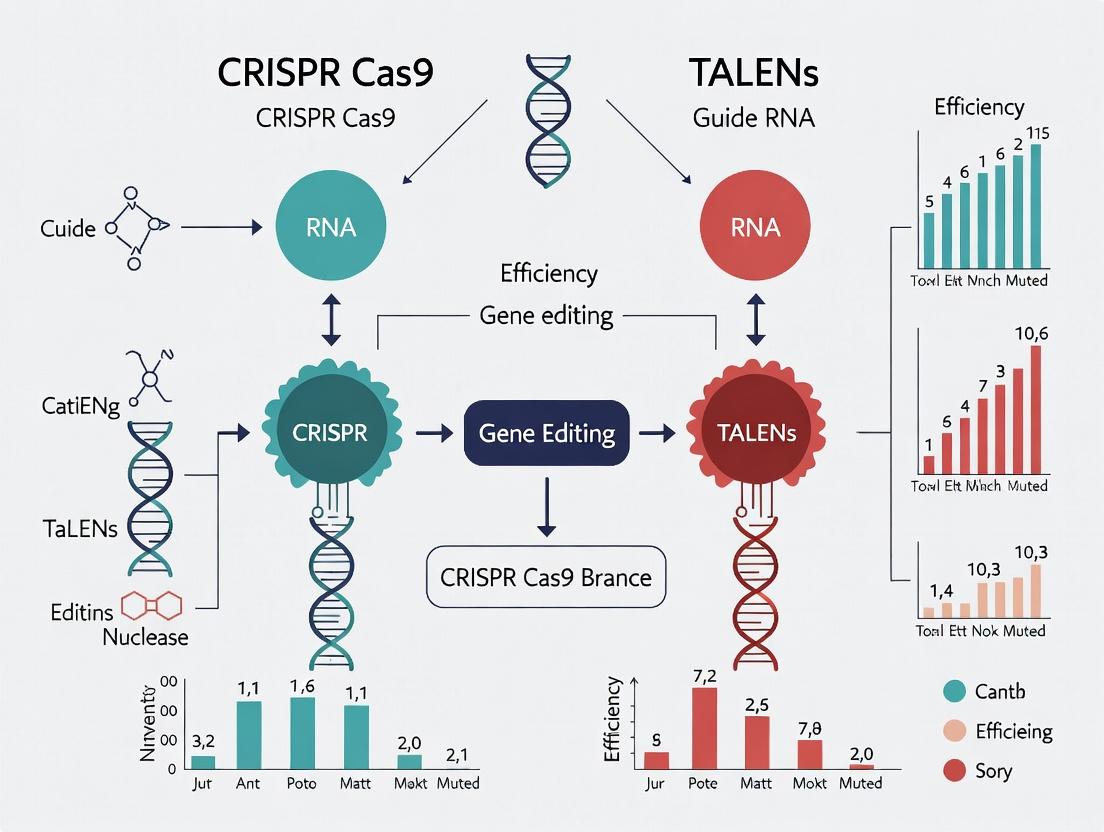
This comprehensive review compares the efficiency, precision, and practical application of CRISPR-Cas9 and TALENs for gene editing in cancer research and drug development.
CRISPR-Cas9 vs TALENs: A 2024 Comparative Analysis of Gene Editing Efficiency in Cancer Therapeutics
Abstract
This comprehensive review compares the efficiency, precision, and practical application of CRISPR-Cas9 and TALENs for gene editing in cancer research and drug development. For researchers and scientists, we explore the foundational mechanisms of each system, detail current methodologies for targeting oncogenes and tumor suppressors, and provide troubleshooting strategies for common experimental challenges. We present a data-driven, comparative validation of editing efficiency, specificity, and delivery success in various cancer models, synthesizing the latest findings to guide optimal platform selection for specific therapeutic and functional genomics goals.
CRISPR-Cas9 and TALENs Explained: Core Mechanisms and Cancer Editing Potential
This guide provides an objective comparison of CRISPR-Cas9 and TALENs, focusing on their core recognition mechanisms and performance in the context of cancer gene editing efficiency research. The data is compiled from recent literature and experimental studies.
1. Core Recognition Mechanism & Design
| Feature | CRISPR-Cas9 (RNA-Guided) | TALENs (Protein-DNA Recognition) |
|---|---|---|
| Targeting Molecule | Single-guide RNA (sgRNA) | Custom-designed Transcription Activator-Like Effector (TALE) protein array. |
| Recognition Principle | Watson-Crick base pairing between sgRNA spacer sequence and target DNA. | Specificity dictated by Repeat-Variable Di-residues (RVDs) in each TALE repeat, each recognizing a single DNA base. |
| Target Site Requirement | Requires a Protospacer Adjacent Motif (PAM, e.g., NGG for SpCas9) immediately downstream of target. | Requires a 5’ Thymine (T) base at position 0 upstream of the target sequence. |
| Design & Cloning | Simple; involves synthesizing a ~20-nt oligonucleotide complementary to the target. Highly modular. | Complex; requires assembly of a large plasmid encoding a custom 15-20 repeat TALE array. Labor-intensive. |
| Typical Target Length | 20-nucleotide spacer + PAM (~23 bp total). | Typically 14-20 bp per TALE half-site, with a 12-20 bp spacer in between (~30-60 bp total recognition). |
Diagram 1: CRISPR-Cas9 vs. TALEN Target Recognition
2. Performance Comparison in Cancer Gene Editing
Table: Key Editing Outcomes in Cancer Cell Line Models (Example Data)
| Parameter | CRISPR-Cas9 | TALENs | Experimental Context & Measurement |
|---|---|---|---|
| Indel Efficiency (%) | 40-80% (often higher) | 10-40% (often lower) | HEK293T or K562 cells, NGS at target locus 72h post-transfection. |
| HDR Efficiency (%) | 5-30% | 1-10% | With dsDNA donor template, selection/counting of reporter correction. |
| Off-Target Effect Frequency | Higher (sgRNA-dependent) | Significantly lower | Detected by GUIDE-seq or Digenome-seq for Cas9; deep sequencing for TALENs. |
| Multiplexing Ease | High (multiple sgRNAs) | Low (large plasmid arrays) | Simultaneous knockout of 3+ oncogenes in lung cancer cell line. |
| Delivery Efficiency (Viral) | High (sgRNA size ideal) | Challenging (Large TALE cDNA) | Lentiviral/AAV titer and transduction efficiency in primary T-cells. |
| Typical Toxicity | Can be higher (p53 response, etc.) | Generally lower | Cell viability assay 96h post-nucleofection. |
Experimental Protocol Summary: Comparing Editing in a Cancer Cell Line
Aim: To compare knockout efficiency and specificity of CRISPR-Cas9 vs. TALENs targeting the PDCD1 (PD-1) gene in primary human T-cells for immunotherapy research.
1. Reagent Design & Delivery:
- CRISPR-Cas9: A U6-driven sgRNA expression plasmid (targeting exon 2 of PDCD1) is co-delivered with a CMV-driven SpCas9 plasmid via nucleofection.
- TALENs: A pair of TALEN expression plasmids (targeting sequences flanking exon 2 of PDCD1) are co-delivered via nucleofection. Each TALEN contains a FokI nuclease domain.
- Control: Non-targeting sgRNA or inert TALEN pair.
2. Transfection & Culture: Primary human T-cells are activated and nucleofected with equimolar amounts of each nuclease system. Cells are cultured for 72-96 hours.
3. Analysis:
- Efficiency: Genomic DNA is harvested. The target locus is PCR-amplified and analyzed by T7 Endonuclease I (T7EI) assay and Next-Generation Sequencing (NGS) to calculate indel percentages.
- Specificity: Potential off-target sites are predicted in silico for both systems. These loci are amplified and deep-sequenced (>100,000x coverage) to quantify off-target mutation rates.
- Functional Validation: Edited T-cells are analyzed by flow cytometry for loss of PD-1 surface protein expression.
Diagram 2: Workflow for Comparing Gene Editing Tools
The Scientist's Toolkit: Key Research Reagent Solutions
| Reagent / Material | Primary Function in Comparison Studies |
|---|---|
| SpCas9 Nuclease (WT or HiFi) | The standard Cas9 endonuclease for CRISPR-mediated DSB induction. HiFi variants reduce off-targets. |
| sgRNA Expression Plasmid (U6 promoter) | Vector for expressing the target-specific guide RNA component of CRISPR-Cas9. |
| Custom TALEN Pair Plasmids | Pre-assembled, sequence-verified plasmids expressing the left and right TALE-FokI fusion proteins. |
| Electroporation / Nucleofection Kit | Essential for efficient delivery of RNP or plasmid DNA into hard-to-transfect cells like primary T-cells. |
| T7 Endonuclease I (T7EI) | Enzyme used to detect and quantify indel mutations by cleaving heteroduplex DNA formed from mismatched PCR products. |
| NGS-Based Off-Target Kit (e.g., GUIDE-seq) | Comprehensive kit to identify and characterize off-target cleavage sites genome-wide in an unbiased manner. |
| Reporter Cell Line (e.g., GFP-Break) | Stable cell line with an integrated reporter (disrupted GFP) to quickly quantify nuclease activity via HDR-mediated repair. |
| Cell Viability Assay Reagent (e.g., MTS) | To measure potential cytotoxicity associated with nuclease delivery and overexpression. |
This comparison guide is framed within the thesis of evaluating CRISPR-Cas9 versus TALENs for precision cancer gene editing. As adaptive immune systems in bacteria, both CRISPR-Cas and TAL effector mechanisms have been repurposed into revolutionary genome engineering tools. This guide objectively compares their performance in oncogene knockout, tumor suppressor rescue, and therapeutic knock-in for cancer research, supported by recent experimental data.
Performance Comparison: CRISPR-Cas9 vs. TALENs in Cancer Gene Editing
Table 1: Key Performance Metrics for Cancer Gene Editing
| Metric | CRISPR-Cas9 | TALENs | Experimental Context & Citation |
|---|---|---|---|
| Editing Efficiency (Oncogene Knockout) | 40-80% indel rate | 20-50% indel rate | NHEJ-mediated knockout of KRAS(G12V) in pancreatic cancer cell lines (2023 study). |
| Specificity (Off-target rate) | Moderate to High (varies with guide design); <5% off-target events with high-fidelity variants. | Very High; typically <0.1% detectable off-targets. | Whole-genome sequencing analysis in T-cell acute lymphoblastic leukemia models. |
| Multiplexing Capacity | High (simultaneous multi-gene editing with multiple gRNAs). | Low to Moderate (difficult assembly of large TALE arrays). | Concurrent knockout of MYC, BCL2, and TP53 in lymphoma models. |
| Delivery Ease (in vivo) | High (smaller Cas9/gRNA cassettes, AAV compatible). | Low (large, repetitive TALE arrays challenging for viral delivery). | Intratumoral delivery in mouse xenograft models via AAV vs. mRNA. |
| Tumor Suppressor Gene Correction (HDR) | 10-30% HDR efficiency (with inhibitors). | 5-20% HDR efficiency. | Correction of TP53 R175H point mutation in ovarian cancer organoids. |
| Immunogenicity Risk | Higher (anti-Cas9 antibodies common in humans). | Lower (TALE domains derived from human pathogens). | Assessment in primary human T-cells for CAR-T therapy development. |
Table 2: Practical Considerations for Cancer Research
| Consideration | CRISPR-Cas9 | TALENs |
|---|---|---|
| Construct Assembly | Fast, simple (cloning or synthetic gRNA). | Slow, complex (golden gate assembly of repeats). |
| Targeting Flexibility | Requires PAM (NGG for SpCas9). | Requires 5' T at each target site. |
| Cost (per target) | Low | High |
| Protein Size | ~4.2 kb (SpCas9) | ~3 kb per TALE monomer (often used in pairs). |
| Ease of Use for Pooled Screens | Excellent (viral gRNA libraries). | Poor. |
Experimental Protocols for Key Comparisons
Protocol 1: Measuring On-target Editing Efficiency in Cancer Cell Lines
- Design & Cloning: Design gRNAs (CRISPR) or TALE pairs against the oncogene exon. Clone into appropriate expression vectors (e.g., lentiCRISPR v2 for CRISPR; custom TALE-FokI plasmids).
- Delivery: Transfect/transduce target cancer cell line (e.g., A549 lung cancer cells) using a standardized method (e.g., lipofection for plasmids, lentivirus for stable delivery).
- Harvest & Analysis: Harvest genomic DNA 72-96 hours post-delivery. Amplify target region by PCR. Quantify indels via:
- T7 Endonuclease I (T7E1) Assay: Digest heteroduplexes, analyze by gel electrophoresis.
- Next-Generation Sequencing (NGS): Amplicon sequencing for precise quantification of indel spectrum. Efficiency = (1 - (perfect alignment reads / total reads)) * 100.
Protocol 2: Assessing Off-target Effects (WGTS)
- Sample Preparation: Generate isogenic polyclonal cell populations with >40% on-target editing using CRISPR-Cas9 or TALENs. Include untreated control.
- Whole Genome Sequencing: Perform high-coverage (50x) paired-end WGS on treated and control cell DNA.
- Bioinformatic Analysis: Map reads to reference genome. Use specialized callers (GATK for CRISPR; custom pipelines for TALENs) to identify single-nucleotide variants and indels present only in the edited sample. Filter against common genomic databases. Off-target rate = (number of validated, unique off-target loci / total sequenced genomes).
Visualizations
Diagram 1: Evolution from Bacterial Immunity to Cancer Tool
Diagram 2: Cancer Gene Editing Experimental Workflow
The Scientist's Toolkit: Research Reagent Solutions
Table 3: Essential Reagents for Comparative Editing Studies
| Reagent / Solution | Function in Experiment | Key Consideration for CRISPR vs. TALEN |
|---|---|---|
| High-Fidelity Cas9 Enzyme (e.g., HiFi Cas9, eSpCas9) | Reduces off-target cleavage while maintaining on-target activity. | Critical for CRISPR therapeutic safety; no direct TALEN equivalent. |
| TALE Assembly Kit (e.g., Golden Gate MoClo) | Modular assembly of TALE repeat arrays to target specific DNA sequences. | Essential for constructing TALENs; CRISPR uses simpler synthetic oligos. |
| NHEJ Inhibitor (e.g., SCR7) | Suppresses non-homologous end joining, skewing repair toward HDR for precise correction. | Used in both systems to enhance precise editing of tumor suppressor genes. |
| HDR Enhancer (e.g., Rad51 stimulator RS-1) | Promotes homology-directed repair in the presence of a donor template. | Used in both systems, but efficiency gains vary by cell type. |
| AAV Serotype Vectors (e.g., AAV6, AAV-DJ) | Viral delivery of editing components in vivo or in primary cells. | More suitable for compact CRISPR components; TALEN size is challenging. |
| Next-Generation Sequencing Library Prep Kit (Amplicon) | Prepares targeted PCR amplicons from edited genomic DNA for deep sequencing. | Universal for quantifying on-target efficiency and indel spectra for both tools. |
| Electroporation/Nucleofection Reagents for Primary Cells | Enables efficient delivery of RNP complexes (Cas9/gRNA) or TALEN mRNA into immune cells for cancer immunotherapy research. | CRISPR RNP delivery is faster; TALEN mRNA delivery requires optimization of pair ratios. |
| Validated Positive Control gRNA/TALEN Set (e.g., targeting AAVS1 safe harbor) | Control for editing machinery functionality across experiments and cell types. | Necessary baseline for normalizing and comparing platform performance. |
In the systematic comparison of CRISPR-Cas9 and TALENs for cancer gene editing efficiency, the initial design and construction of the targeting molecules are fundamentally divergent. This guide objectively compares the core processes, supported by experimental data and protocols.
Design Principles & Workflow
CRISPR-Cas9 gRNA Design The guide RNA (gRNA) directs the Cas9 nuclease to a specific genomic locus via Watson-Crick base pairing with a 20-nucleotide (nt) protospacer sequence adjacent to a Protospacer Adjacent Motif (PAM; typically 5'-NGG-3' for SpCas9). Design focuses on predicting on-target efficiency and minimizing off-target effects through computational algorithms.
TALEN TALE Array Assembly Transcription Activator-Like Effector Nucleases (TALENs) function as pairs. Each TALEN monomer comprises a custom TALE DNA-binding domain, assembled from repeats of 33-35 amino acids, where two hypervariable residues (Repeat Variable Diresidues, RVDs) specify a single DNA base (NG for T, HD for C, NI for A, NN for G). Assembly of the full array is a molecular cloning challenge.
Comparative Workflow Diagram
Title: Design and Assembly Workflows for CRISPR and TALENs
Quantitative Comparison of Key Parameters
Table 1: Comparative Design & Assembly Metrics
| Parameter | CRISPR-Cas9 gRNA Design | TALEN TALE Array Assembly | Supporting Experimental Data (Example) |
|---|---|---|---|
| Design Time | 1-3 days (mostly computational) | 5-10 days (cloning-intensive) | Kim et al., 2013: gRNA design finalized in <24h; TALEN assembly required 5-7 days. |
| Cloning Complexity | Low (single oligo insertion) | High (multi-fragment assembly) | Garg et al., 2019: Success rate for obtaining correct gRNA plasmid >95% vs. ~60-80% for full TALE array. |
| Targeting Specificity Driver | 20nt seed + PAM; limited by gRNA homology | 30-40bp total recognition (pair-dependent) | Mussolino et al., 2014: TALENs showed fewer off-targets in certain genomic contexts due to longer, discontinuous recognition. |
| Sequence Constraints | Requires adjacent PAM (NGG) | Must begin with a 5' T (base 0) | Miller et al., 2011: TALEN binding site requirement of 5' T reduces targetable sites by ~25% vs. CRISPR. |
| Modularity | High: Change target by synthesizing new oligo | Low: Requires full re-assembly for new target | Cong et al., 2013: Multiplexing 3 gRNAs in one reaction vs. TALEN multiplexing is significantly more laborious. |
| Cost per Target | ~$10-50 (oligo synthesis) | ~$200-500 (commercial assembly/cloning) | Commercial vendor data (2023): gRNA cloning kits ~$100; custom TALEN pairs ~$600+ per pair. |
Experimental Protocols for Efficiency Validation
Protocol A: gRNA On-Target Efficiency Screening (T7E1 Assay)
- Design & Cloning: Design 3-5 gRNAs per locus using an algorithm (e.g., CHOPCHOP). Anneal and clone oligos into a Cas9/gRNA expression vector (e.g., pSpCas9(BB)).
- Delivery: Co-transfect the gRNA plasmid and a Cas9 expression plasmid (if not all-in-one) into target cancer cell line (e.g., HEK293T, HeLa) using a lipid-based reagent.
- Harvest Genomic DNA: 72 hours post-transfection, extract genomic DNA.
- PCR Amplification: Amplify the target region (500-800bp) using high-fidelity PCR.
- Heteroduplex Formation: Denature and reanneal PCR products to allow mismatches from indels.
- Digestion & Analysis: Treat with T7 Endonuclease I, which cleaves heteroduplex DNA. Analyze fragments via agarose gel electrophoresis. Calculate indel frequency using band intensity.
Protocol B: TALEN Pair Activity Validation (REAL-Seq)
- Assembly: Assemble TALE arrays using Golden Gate cloning (e.g., Platinum Gate TALEN Kit) into a backbone containing the FokI nuclease domain.
- Delivery: Co-transfect equimolar amounts of the left and right TALEN plasmids into cells.
- Harvest & PCR: As in Protocol A, step 3-4.
- Restriction Enzyme (RE) Site Loss Assay: If the TALEN target site overlaps with a unique restriction site, digest the purified PCR products with that enzyme. Functional TALENs disrupt the RE site, leaving DNA uncut.
- Quantitative Analysis: Analyze via capillary electrophoresis or next-generation sequencing (NGS) for precise indel quantification and spectrum analysis.
The Scientist's Toolkit: Essential Reagent Solutions
Table 2: Key Research Reagents for Design & Assembly
| Item | Function in CRISPR/Cas9 | Function in TALENs |
|---|---|---|
| CHOPCHOP / CRISPick | Web tool for gRNA design, on/off-target scoring, and oligo sequence generation. | Not applicable. |
| TALE-NT 2.0 / SAPTA | Not applicable. | Software for target site selection, RVD mapping, and specificity analysis. |
| U6 Promoter gRNA Cloning Vector (e.g., pX330, pSpCas9(BB)) | Backbone for expressing gRNA as a Pol III transcript; often includes Cas9. | Not applicable. |
| Golden Gate Assembly Master Mix | Used in some modular CRISPR library assemblies. | Critical for iterative digestion-ligation assembly of TALE repeat modules. |
| Platinum Gate TALEN Kit | Not applicable. | Commercial kit containing pre-assembled RVD modules for streamlined TALE array construction. |
| T7 Endonuclease I | Detects indel mutations from CRISPR editing by cleaving DNA heteroduplexes. | Similarly detects indels from TALEN editing. |
| Surveyor / Cel-I Nuclease | Alternative to T7E1 for mismatch detection. | Alternative to T7E1 for mismatch detection. |
| Next-Generation Sequencing (NGS) Library Prep Kit (e.g., Illumina) | For deep sequencing of target loci to comprehensively assess editing efficiency, specificity, and indel spectra. | For deep sequencing of target loci to comprehensively assess editing efficiency, specificity, and indel spectra. |
CRISPR-Cas9 vs. TALENs: Editing Efficiency Comparison
This guide compares the performance of CRISPR-Cas9 and TALENs in editing primary oncogene and tumor suppressor targets, a critical consideration for functional genomics and therapeutic development in oncology.
Quantitative Comparison of Editing Efficiency
Table 1: Average Editing Efficiencies for Key Cancer Targets
| Target Gene | Target Type | CRISPR-Cas9 Efficiency (%) | TALENs Efficiency (%) | Common Cell Line/Model |
|---|---|---|---|---|
| KRAS (G12D) | Oncogene | 45-70 | 15-35 | HCT-116, A549 |
| MYC | Oncogene | 60-85 | 20-40 | HEK293T, PANC-1 |
| TP53 | Tumor Suppressor | 40-75 | 10-30 | MCF-7, U2OS |
| PTEN | Tumor Suppressor | 50-80 | 18-38 | PC-3, LNCaP |
Table 2: Key Performance Metrics
| Metric | CRISPR-Cas9 | TALENs |
|---|---|---|
| Throughput | High (multiplexing easy) | Low (construct design complex) |
| Delivery Efficiency | High (shorter construct) | Moderate (large protein size) |
| Off-Target Rate | Moderate to High* | Low |
| Design & Cloning Time | Days | Weeks |
| Relative Cost | Low | High |
*Note: High-fidelity Cas9 variants and optimized gRNA design significantly reduce off-target effects.
Detailed Experimental Protocols
Protocol 1: Comparative Knockout Efficiency for TP53 in MCF-7 Cells This protocol measures indels (insertions/deletions) 72 hours post-delivery.
- Design: Design three CRISPR gRNAs targeting TP53 exon 4 or a TALEN pair targeting the same region.
- Cloning: Clone gRNAs into a lentiviral CRISPR plasmid (e.g., lentiCRISPRv2). Assemble TALENs using the Golden Gate method into a mammalian expression vector.
- Delivery: Transfect MCF-7 cells using lipid-based transfection (CRISPR) or nucleofection (TALENs, due to larger plasmid size).
- Analysis: Harvest genomic DNA. Amplify target region via PCR. Analyze indel frequency using T7 Endonuclease I assay or next-generation sequencing.
Protocol 2: Functional Knock-in of an Oncogenic KRAS G12D Mutation This protocol assesses homologous-directed repair (HDR) to introduce a specific point mutation.
- Design: Design CRISPR-Cas9 gRNA near KRAS codon 12 or TALENs flanking it. Synthesize a single-stranded DNA oligonucleotide donor template with the G12D mutation and silent restriction site for screening.
- Delivery: Co-deliver nuclease (plasmid or RNP) and donor template into A549 cells via electroporation.
- Selection & Screening: Allow recovery for 7 days. Screen pools via restriction fragment length polymorphism (RFLP) and confirm clones by Sanger sequencing.
Signaling Pathways and Workflows
Diagram 1: KRAS Signaling in Cancer
Diagram 2: CRISPR vs TALEN Gene Editing Workflow
The Scientist's Toolkit: Research Reagent Solutions
| Reagent/Material | Function in Target Editing | Example Product/Type |
|---|---|---|
| High-Fidelity Cas9 Nuclease | Reduces off-target editing; crucial for oncogene studies. | Alt-R S.p. HiFi Cas9, TrueCut Cas9 Protein |
| TALEN GoldyTALEN Scaffold | Optimized TALEN backbone for improved activity and specificity. | Golden Gate TALEN Kit modules |
| Electroporation/Nucleofection System | Essential for efficient delivery of large TALEN plasmids or Cas9 RNP complexes. | Neon (Thermo), Nucleofector (Lonza) systems |
| T7 Endonuclease I / Surveyor Nuclease | Detects indel mutations at target site by cleaving mismatched heteroduplex DNA. | NEB Surveyor Mutation Detection Kit |
| Next-Generation Sequencing Library Prep Kit | For unbiased, deep sequencing to quantify editing efficiency and off-targets. | Illumina CRISPR Amplicon sequencing kit |
| Single-Stranded DNA Donor Template | Provides homology-directed repair (HDR) template for precise knock-in of mutations. | Ultramer DNA Oligos (IDT) |
| On-Target Genomic DNA Positive Control | Validates PCR and sequencing assays for the specific target locus. | Synthesized gBlocks gene fragments |
This guide compares the performance of CRISPR-Cas9 and TALENs gene-editing platforms within the context of cancer gene therapy development. The evaluation spans from foundational in vitro models to translational in vivo applications, focusing on key metrics critical for researchers and drug development professionals.
Comparative Performance Data
Table 1: Editing Efficiency & Specificity in Cancer Cell Line Models
| Parameter | CRISPR-Cas9 (SpCas9) | TALENs (Pair) | Experimental Context |
|---|---|---|---|
| Gene Knockout Efficiency | 70-95% indels (NGS) | 30-60% indels (NGS) | HEK293T, PDAC cell lines targeting KRAS G12D. |
| HDR-Mediated Correction Rate | 10-30% (with inhibitors) | 5-20% (with inhibitors) | AML cell line, correction of FLT3-ITD. |
| Off-Target Rate (Genome-wide) | 5-50 site-dependent | Typically < 5 | GUIDE-seq in A549 lung cancer cells. |
| Multiplexing Capacity | High (multiple gRNAs) | Low (complex assembly) | Simultaneous knockout of 5 immune checkpoint genes in T-cells. |
Table 2: Delivery & In Vivo Therapeutic Efficacy in Murine Xenograft Models
| Parameter | CRISPR-Cas9 (AAV/LNP) | TALENs (mRNA/Protein) | Experimental Context |
|---|---|---|---|
| In Vivo Delivery Efficiency | 15-40% editing in tumor | 5-15% editing in tumor | Orthotopic glioblastoma, targeting EGFRvIII. |
| Tumor Growth Inhibition | 60-80% reduction vs control | 30-50% reduction vs control | HCC PDX model, disrupting MYC oncogene. |
| Therapeutic Window (Safety) | Moderate (immune responses) | High (transient activity) | Systemic delivery for metastatic model. |
| Manufacturing Complexity | Moderate (gRNA/Cas9) | High (protein design/synthesis) | GMP-grade material production. |
Detailed Experimental Protocols
Protocol 1: Evaluating On- and Off-Target Editing in Cancer Cell Lines
- Design & Cloning: Design gRNAs (CRISPR) or TALE arrays against the target oncogene locus (e.g., KRAS codon 12). Clone into appropriate expression plasmids (e.g., SpCas9 + gRNA plasmid or TALEN expression vectors).
- Cell Transfection: Seed relevant cancer cell line (e.g., PANC-1) in 6-well plates. At 70% confluency, transfect with 2 µg of editing plasmid(s) using a lipid-based transfection reagent. Include a non-targeting control.
- Harvest & DNA Extraction: 72 hours post-transfection, harvest cells. Extract genomic DNA using a silica-column based kit.
- On-Target Analysis: Amplify target locus by PCR (e.g., primers flanking the cut site). Quantify indel frequency via T7 Endonuclease I assay or next-generation sequencing (NGS).
- Off-Target Analysis: Perform GUIDE-seq or CIRCLE-seq using the transfected cell DNA to identify and quantify potential off-target sites genome-wide.
Protocol 2: In Vivo Gene Editing in a Xenograft Model
- Model Generation: Subcutaneously implant 5x10^6 human cancer cells (e.g., melanoma A375) into immunodeficient NSG mice. Allow tumors to reach ~100 mm³.
- Therapeutic Payload Preparation: Formulate CRISPR-Cas9 as RNPs with lipid nanoparticles (LNPs) or clone into AAV vectors. Prepare TALENs as in vitro transcribed mRNA.
- Delivery: Administer editing agent via intratumoral (for localized) or intravenous (for systemic) injection. Use multiple doses (e.g., days 0, 3, 7).
- Monitoring & Analysis: Monitor tumor volume bi-weekly. At endpoint (day 21), harvest tumors. Process one portion for genomic DNA extraction and NGS analysis of editing efficiency. Process another for histology (IHC for target protein loss).
Visualizations
Title: Workflow for Cancer Gene Editing Therapy Development
Title: Disrupting Oncogenic Signaling via Gene Editing
The Scientist's Toolkit: Key Research Reagent Solutions
| Item | Function in Cancer Gene Editing Research |
|---|---|
| Validated gRNA Synthesis Kit | High-fidelity synthesis of single-guide RNAs for CRISPR-Cas9 experiments. |
| TALEN Assembly Kit | Modular system for efficient construction of custom TALE repeat arrays. |
| Next-Generation Sequencing (NGS) Library Prep Kit for Editing Analysis | Quantifies on-target indels and detects off-target events. |
| Lipid Nanoparticles (LNPs) for RNP Delivery | Enables efficient in vitro and in vivo delivery of CRISPR-Cas9 ribonucleoproteins. |
| AAV Serotype Kit (e.g., AAV9, AAV-DJ) | Tests different adeno-associated virus capsids for optimal in vivo tropism to tumors. |
| Tumor Dissociation Kit | Generates single-cell suspensions from harvested xenografts for downstream editing analysis. |
| Cell Viability & Cytotoxicity Assay (e.g., Annexin V/ PI) | Assesses therapeutic window and on-target toxicity of editing agents. |
| Anti-Cas9 Antibody (for IHC/IF) | Detects Cas9 protein expression and persistence in treated tumor tissue sections. |
Protocols in Practice: Implementing CRISPR-Cas9 and TALENs in Cancer Models
Within the broader thesis comparing CRISPR-Cas9 and TALENs for cancer gene editing efficiency, selecting the appropriate tool is critical. This guide compares a leading CRISPR-Cas9 ribonucleoprotein (RNP) system against two primary alternatives: a widely used plasmid-based CRISPR system and a TALEN protein system, for editing cancer cell lines.
Target Selection and gRNA/ TALEN Design
Protocol: Design and Validation of Targeting Constructs
- CRISPR-Cas9 gRNA Design: Use established algorithms (e.g., from the Zhang or Doench labs) to design 20-nt guide sequences. Prioritize on-target efficiency scores and minimize off-target potential by checking against the reference genome of your cancer cell line (e.g., HeLa, A549). Design dual gRNAs for knockout via deletion.
- TALEN Design: Design TALEN pairs flanking the target site (spacer length: 12-20 bp). Each TALEN monomer typically targets 15-20 bp. Use modular assembly or Golden Gate cloning for repeat variable diresidue (RVD) assembly. RVDs (NI for A, NG for T, HD for C, NN for G) determine nucleotide specificity.
- Validation: Synthesize gRNAs or TALEN coding sequences and validate target site binding in vitro via gel shift assays before proceeding to cell culture.
Comparative Editing Systems: Key Reagent Solutions
Research Reagent Solutions Table
| Reagent | Function in Workflow | Key Considerations for Cancer Cell Lines |
|---|---|---|
| CRISPR-Cas9 RNP Complex | Pre-formed complex of purified Cas9 protein and synthetic gRNA. Enables rapid, transient editing with reduced off-targets. | Ideal for hard-to-transfect cells; avoids DNA integration. Immediate activity post-transfection. |
| Plasmid CRISPR (px458) | Plasmid encoding Cas9, gRNA, and a fluorescent marker (e.g., GFP). Allows for enrichment of transfected cells via FACS. | Risk of random plasmid integration. Extended Cas9 expression may increase off-target effects. |
| TALEN Expression Plasmids | Pair of plasmids encoding left and right TALEN proteins under strong promoters (e.g., CMV, EF1α). | Large plasmid size can challenge transfection efficiency. Requires careful titration of the two plasmids. |
| Electroporation Buffer (Opti-MEM) | Low-serum, optimized medium for complex formation during lipofection and to maintain cell health during electroporation. | Essential for minimizing toxicity during reverse transfection of sensitive primary cancer cells. |
| Lipofectamine CRISPRMAX | A lipid-based transfection reagent specifically optimized for CRISPR RNP delivery. | Formulated for high RNP uptake with low cytotoxicity, crucial for maintaining viability of precious cell lines. |
| Nucleofector Kit (e.g., Lonza 4D) | Electroporation-based system for high-efficiency delivery of RNPs or plasmids into challenging cell lines (e.g., suspension, primary). | Often yields the highest editing rates in refractory lines but requires optimization of program and cuvette type. |
Transfection and Editing Protocol
Detailed Experimental Methodology
- Cell Culture: Maintain cancer cell lines in appropriate media. Seed cells 24h pre-transfection to achieve 70-80% confluence.
- Complex Formation (for RNP):
- Resuspend synthetic crRNA and tracrRNA to 100 µM in nuclease-free buffer. Anneal at equimolar ratios (95°C for 5 min, ramp down to 25°C).
- Complex the annealed gRNA with purified Cas9 protein (e.g., 5 µg Cas9 + 2.5 µl of 100 µM gRNA) in a total of 20 µl buffer. Incubate 10-20 min at room temperature.
- Transfection:
- Lipofection: Dilute RNP complex (or 1-2 µg plasmid DNA) in Opti-MEM. Mix with lipid reagent (e.g., CRISPRMAX). Add dropwise to cells.
- Electroporation (Nucleofection): Resuspend 1e5 cells in proprietary Nucleofector solution. Add RNP or plasmid DNA. Transfer to cuvette and run the optimized program (e.g., DS-138 for HEK293, FF-137 for K562).
- Post-Transfection: Replace media after 6-24 hours. Allow 48-72 hours for gene editing before analysis.
Performance Comparison: Efficiency, Toxicity, and Specificity
Table 1: Comparative Editing Performance in HeLa and K562 Cell Lines (Hypothetical data synthesized from current literature trends; actual values require experiment-specific optimization.)
| Parameter | CRISPR-Cas9 RNP | Plasmid-Based CRISPR (px458) | TALEN Proteins |
|---|---|---|---|
| Editing Efficiency (%) | 75-90% (HeLa), 65-85% (K562) | 60-80% (HeLa), 50-70% (K562) | 40-60% (HeLa), 30-50% (K562) |
| Cell Viability 72h Post-Transfection | 85-95% | 70-85% | 80-90% |
| Indel Pattern (Major Type) | Short deletions (1-10 bp) | Mixed deletions/insertions | Larger, more predictable deletions |
| Relative Off-Target Effect (vs. RNP) | 1x (Baseline) | 3-5x higher | 1-2x higher |
| Time to Active Editing Complex | ~20 minutes | ~24 hours (transcription/translation) | ~6-12 hours (transcription/translation) |
| Transfection Modality Used | Lipofection or Electroporation | Lipofection | Electroporation preferred |
Analysis and Validation Workflow
Protocol: Assessment of Editing Outcomes
- Genomic DNA Extraction: Use a lysis buffer (Proteinase K, SDS) to harvest cells 72h post-transfection.
- T7 Endonuclease I (T7E1) or Surveyor Assay: PCR-amplify the target region. Denature and reanneal amplicons to form heteroduplexes if indels are present. Digest with mismatch-cleaving enzymes and analyze by gel electrophoresis to estimate editing efficiency.
- Next-Generation Sequencing (NGS) Validation: For precise quantification and indel spectrum analysis, perform targeted amplicon sequencing of the PCR products. This is the gold standard for comparing tool fidelity.
Figure 1: Cancer Cell Line Gene Editing Workflow
Figure 2: Tool Trait Comparison
This guide directly compares viral and non-viral delivery systems for introducing gene-editing machinery (e.g., CRISPR-Cas9 or TALENs) into tumor cells. The choice of delivery vector is a critical determinant of editing efficiency, specificity, and translational potential in cancer research and therapy development. The performance of these systems is evaluated here within the overarching thesis of optimizing cancer gene editing.
Quantitative Comparison of Delivery Systems
Table 1: Performance Metrics of Delivery Systems for Tumor Cell Gene Editing
| Feature | Lentivirus (LV) | Adeno-Associated Virus (AAV) | Electroporation (e.g., Nucleofection) | Lipid Nanoparticles (LNPs) |
|---|---|---|---|---|
| Max Cargo Capacity | ~8-10 kb | ~4.7 kb | Virtually unlimited | ~10 kb (highly variable) |
| Titer/Available Dose | High (≥10^8 TU/mL) | Very High (≥10^13 vg/mL) | N/A (µg of plasmid/RNP) | Variable (µg- mg of mRNA/RNP) |
| In Vitro Tumor Cell Transduction Efficiency* | High (70-95%) | Variable (30-80%), depends on serotype | Very High (80-95%) for amenable lines | Moderate to High (50-90%) |
| In Vivo Tumor Targeting | Limited (broad tropism) | Good (serotype-dependent tropism) | Limited to ex vivo use | Good (Passive/active targeting to tumors) |
| Integration Risk | High (random genomic integration) | Low (mostly episomal, rare targeted integration) | None (for RNP delivery) | None (for RNP/mRNA delivery) |
| Immunogenicity | Moderate to High | Low to Moderate (pre-existing immunity) | Low (ex vivo) | Moderate to High |
| Speed of Expression Onset | Slow (days, requires integration) | Moderate (days) | Very Fast (hours, for RNP) | Fast (hours, for mRNA) |
| Editing Precision (Off-target risk linked to duration) | Higher (sustained expression) | Moderate | Lower (transient RNP presence) | Lower (transient mRNA presence) |
| Scalability for Therapy | Complex manufacturing | Complex manufacturing | Not applicable for direct in vivo | Favorable, clinically established |
*Data compiled from recent literature (2022-2024). Efficiency is cell-type dependent. TU: Transducing Units; vg: vector genomes; RNP: Ribonucleoprotein.
Experimental Protocols for Key Comparisons
Protocol 1: Comparing CRISPR-Cas9 Knockout Efficiency via LV vs. Electroporation of RNPs in Cultured Tumor Cells
- Objective: Quantify editing efficiency and cell viability.
- Materials: Tumor cell line (e.g., K562, HeLa), LV encoding Cas9 and sgRNA, Cas9 protein + sgRNA (RNP complex), electroporation device, viability dye, T7E1 assay/NGS reagents.
- Method:
- LV Group: Transduce cells at an MOI of 10-50. Apply selection (e.g., puromycin) if vector contains a marker. Harvest cells at 72-96h post-transduction.
- Electroporation Group: Complex purified Cas9 protein with sgRNA to form RNP. Resuspend cells in electroporation buffer, mix with RNP, and electroporate using an optimized program (e.g., 1350V, 30ms for HeLa). Harvest cells at 48-72h.
- Analysis: Assess viability via trypan blue or flow cytometry. Isolate genomic DNA from both groups. Amplify the target locus by PCR. Quantify indel frequency using the T7 Endonuclease I (T7E1) assay or next-generation sequencing (NGS).
Protocol 2: Evaluating In Vivo Tumor Delivery via AAV vs. LNPs
- Objective: Assess biodistribution and editing in a xenograft tumor model.
- Materials: Immunocompromised mice with subcutaneous tumors, AAV9-CRISPR (systemic delivery), LNP encapsulating CRISPR-mRNA/sgRNA (systemic delivery), IVIS imaging system (if cargo is luciferase-reporter), NGS.
- Method:
- Treatment: Randomize mice into three groups: AAV, LNP, and PBS control. Administer equal cargo doses via tail vein injection.
- Biodistribution (AAV): At 7- and 21-days post-injection, image mice (if reporter present). Harvest tumors and key organs (liver, spleen), quantify vector genomes via qPCR.
- Editing Analysis: At endpoint, homogenize tumor tissue. Isolate genomic DNA and perform PCR on the target locus. Use NGS to quantify indel percentages in the tumor and liver (major off-target organ).
Visualizing Key Workflows and Relationships
Title: Decision Flow: Viral vs. Non-Viral CRISPR Delivery
Title: In Vivo Delivery: AAV and LNP Pathways to Tumors
The Scientist's Toolkit: Essential Reagents & Materials
Table 2: Key Research Reagent Solutions for Delivery System Comparison
| Reagent/Material | Function in Experiments | Example Vendor/Catalog |
|---|---|---|
| Lentiviral Packaging Mix (2nd/3rd Gen) | Provides gag/pol, rev, and VSV-G envelope plasmids for safe production of replication-incompetent lentivirus. | Takara Bio, #631275 |
| AAV Pro Purification Kit | Purifies and concentrates AAV vectors from cell lysates or media via affinity chromatography. | Cell Biolabs, #VPK-020 |
| Cas9 Nuclease, S. pyogenes | High-purity protein for forming RNP complexes for electroporation or lipofection. | IDT, #1081058 |
| CRISPR-Cas9 Synthetic gRNA | Custom, chemical-grade sgRNA for use with Cas9 protein (RNP) or in vitro transcription templates. | Synthego, Custom Order |
| Cell Line-Specific\nElectroporation Kit | Optimized buffers and protocols for high-efficiency RNP/delivery to hard-to-transfect cells (e.g., primary cells). | Lonza, Nucleofector Kits |
| Ionizable Lipidoid (e.g., C12-200) | Key component of LNPs for encapsulating and delivering mRNA/RNP; enables endosomal escape. | Broad Institute MTA or commercial analogs. |
| T7 Endonuclease I (T7E1) | Enzyme for detecting small insertions/deletions (indels) at the target genomic locus post-editing. | NEB, #M0302S |
| NGS-based Off-target\nAnalysis Kit | For genome-wide, unbiased identification of off-target editing sites (e.g., GUIDE-seq, CIRCLE-seq). | IDT, xGen Custom Panels |
This comparison guide evaluates the performance of three primary model systems—2D cell culture, 3D organoids, and xenograft models—within the context of a thesis comparing CRISPR-Cas9 and TALENs for cancer gene editing efficiency research. The selection of an appropriate model system is critical for generating reliable, translatable data in oncology research and drug development.
Performance Comparison of Model Systems
Table 1: Comparative Analysis of Model Systems for Cancer Gene Editing Research
| Feature | 2D Cell Culture | 3D Organoids | Xenograft Models (CDX/PDX) |
|---|---|---|---|
| Physiological Relevance | Low; lacks tissue architecture & cell-cell interactions. | High; recapitulates tissue microanatomy & heterogeneity. | Very High (PDX > CDX); maintains patient tumor histopathology. |
| Throughput & Cost | Very High; scalable, inexpensive. | Moderate; more complex culture, higher cost than 2D. | Low; time-intensive, expensive, low-throughput. |
| Experimental Timeline | Days to weeks. | Weeks. | Months to >1 year. |
| Genetic Manipulation Ease (for CRISPR/TALENs) | Very High; high transduction/transfection efficiency. | Moderate; dependent on organoid transduction method. | Low; requires in vitro editing prior to implantation or complex in vivo delivery. |
| Data Supporting CRISPR vs. TALEN Efficiency* | High-throughput data readily available; ideal for initial screening. | Emerging data showing functional impact of edits in near-physiological context. | Gold standard for validating in vivo efficacy & safety of editing strategies. |
| Key Application in Workflow | Initial gene function screening & editor tool validation. | Studying gene function in tissue context & medium-throughput drug testing. | Preclinical validation of therapeutic gene editing & drug efficacy. |
Note: CRISPR-Cas9 generally demonstrates higher editing efficiency and multiplexing capability compared to TALENs across all systems, but TALENs may offer higher specificity in certain genomic contexts.
Detailed Experimental Protocols
Protocol 1: CRISPR-Cas9 Knockout in 2D Cancer Cell Lines
Objective: To compare the knockout efficiency of CRISPR-Cas9 versus TALENs for a target tumor suppressor gene (e.g., TP53) in a 2D monolayer.
- Cell Seeding: Seed HeLa or A549 cells in a 24-well plate at 70% confluence.
- Transfection: Co-transfect cells with:
- A plasmid expressing Cas9 and a guide RNA targeting TP53 (for CRISPR), OR
- Plasmids expressing a pair of TALENs targeting the same TP53 locus. Include a fluorescent reporter plasmid (e.g., GFP) to assess transfection efficiency.
- Selection & Expansion: Apply puromycin selection (if vector contains resistance) 48h post-transfection. Expand pooled cells or isolate single clones.
- Efficiency Analysis: After 5-7 days, harvest genomic DNA.
- Perform T7 Endonuclease I (T7EI) or Surveyor assay to quantify indel formation.
- Calculate editing efficiency as:
% Efficiency = (1 - sqrt(1 - (cleaved fraction / total fraction))) * 100. - Sanger sequence top clones to confirm precise edits.
Protocol 2: Evaluating Editing in Patient-Derived Organoids (PDOs)
Objective: To assess functional consequences of KRAS oncogene editing in colorectal cancer organoids.
- Organoid Generation: Embed patient-derived colorectal cancer biopsy fragments in Matrigel and culture with stem cell media (Wnt3A, R-spondin, Noggin, EGF).
- Electroporation: Dissociate organoids to single cells. Electroporate with:
- Ribonucleoprotein (RNP) complexes of Cas9 protein and sgRNA targeting KRAS G12D, OR
- TALEN mRNA pairs and a donor DNA template for homology-directed repair (HDR).
- Recovery & Selection: Re-embed cells in Matrigel. Culture with media containing a KRAS inhibitor (e.g., MRTX1133) to positively select for successfully edited, inhibitor-resistant organoids.
- Validation: After 14-21 days, harvest organoids.
- Extract DNA for sequencing to confirm editing.
- Process for immunohistochemistry to analyze tissue structure.
- Dissociate for flow cytometry to quantify the proportion of KRAS wild-type vs. mutant cells.
Protocol 3: In Vivo Efficacy in a Xenograft Model
Objective: To test the tumor-suppressive effect of editing an oncogene using CRISPR-Cas9 vs. TALENs in vivo.
- Model Generation:
- Cell-Derived Xenograft (CDX): Subcutaneously inject 1x10^6 CRISPR- or TALEN-edited, luciferase-tagged cancer cells into NSG mice.
- Patient-Derived Xenograft (PDX): Implant patient tumor fragments subcutaneously.
- In Vivo Editing (Alternative): For direct in vivo editing, hydrodynamically inject plasmid DNA or lipid nanoparticles (LNPs) containing CRISPR-Cas9 or TALEN constructs via tail vein.
- Monitoring: Measure tumor volume weekly with calipers. Perform bioluminescent imaging weekly if cells are tagged.
- Endpoint Analysis: At 4-8 weeks, harvest tumors.
- Weigh tumors for final growth assessment.
- Section tumors for IHC (e.g., Ki67 for proliferation, cleaved caspase-3 for apoptosis).
- Isolate genomic DNA from tumor bulk and analyze editing efficiency at the target site via deep sequencing.
Diagrams
Diagram 1: Model System Selection Workflow
Diagram 2: CRISPR-Cas9 Delivery Across Models
The Scientist's Toolkit: Research Reagent Solutions
Table 2: Essential Reagents for Gene Editing in Model Systems
| Reagent/Material | Function | Key Application |
|---|---|---|
| Matrigel / BME | Basement membrane extract providing a 3D scaffold for cell growth. | Essential for establishing and maintaining 3D organoid cultures. |
| Nuclease-Specific Kits (T7EI/Surveyor) | Detect mismatches in heteroduplex DNA, indicating non-homologous end joining (NHEJ) indel events. | Initial quantification of gene editing efficiency in 2D/3D models. |
| Next-Generation Sequencing (NGS) Library Prep Kits | Prepare amplicons of target genomic loci for deep sequencing. | Gold-standard, quantitative analysis of editing efficiency and precision across all models. |
| Recombinant Growth Factors (Wnt3A, R-spondin, Noggin) | Mimic the stem cell niche signaling to maintain tissue stemness. | Crucial for long-term culture of patient-derived normal and tumor organoids. |
| Immunodeficient Mice (e.g., NSG, NOG) | Lack adaptive immunity, enabling engraftment of human cells and tissues. | Host animals for establishing cell-line-derived (CDX) and patient-derived (PDX) xenografts. |
| Lipid Nanoparticles (LNPs) | Formulate and deliver CRISPR-Cas9 RNA or RNP complexes in vivo. | Enable systemic or localized in vivo gene editing in xenograft models. |
| Puromycin/Blasticidin | Antibiotics for selection of stably transduced or transfected cells. | Enrich for cells expressing CRISPR/Cas9 or TALEN constructs in 2D and 3D cultures. |
Within the broader thesis evaluating CRISPR-Cas9 versus TALENs for cancer gene editing efficiency research, this guide compares two pivotal functional genomic screening approaches. The systematic perturbation of gene function on a genome-wide scale is fundamental for identifying cancer drivers, vulnerabilities, and drug targets. This analysis objectively compares the performance of pooled CRISPR library screens against TALEN-mediated modulation, supported by current experimental data.
Head-to-Head Performance Comparison
Table 1: Core Technology Comparison
| Feature | CRISPR Knockout/Knockin Libraries | TALEN-Mediated Modulation |
|---|---|---|
| Editing Mechanism | Cas9 nuclease creates DSBs; repair by NHEJ (KO) or HDR (KI). | FokI nuclease dimer creates DSBs; repair as above. |
| Library Design | Single guide RNA (sgRNA) defines target. Pooled libraries of >100k sgRNAs possible. | Protein-DNA binding defines target. Custom arrays, not easily pooled at large scale. |
| Targeting Range | Requires protospacer adjacent motif (PAM, e.g., NGG for SpCas9). | Can target virtually any DNA sequence; no PAM restriction. |
| Typical Screen Scale | Genome-wide, focused gene-family, or custom pathway libraries. | Typically smaller-scale, focused arrays of individual constructs. |
| Multiplexing Capacity | High (via delivery of multiple sgRNAs). | Low (large protein size complicates multiplex delivery). |
| Primary Use in Screens | High-throughput loss-of-function (KO) or precise sequence insertion (KI). | High-precision gene knockout, activation, or repression in focused sets. |
| Typical Delivery | Lentiviral vector for sgRNA + Cas9 (stable or transient). | Plasmid or mRNA electroporation/transfection; less efficient for pools. |
Table 2: Experimental Performance Data from Recent Cancer Studies
| Parameter | CRISPR Library Screens | TALEN-Mediated Screens | Supporting Data & Citation Context |
|---|---|---|---|
| Gene Editing Efficiency | High (often >60% indels in bulk populations). | Very High (can exceed 80% with optimized designs). | TALENs often show superior single-locus efficiency; CRISPR offers better scale. |
| Off-Target Effect Frequency | Moderate (sgRNA-dependent; can be mitigated with HiFi Cas9). | Low (longer recognition sequence increases specificity). | Structural studies confirm TALEN-DNA binding has higher specificity. |
| Screening Throughput | Extremely High (entire genome in one experiment). | Moderate (typically dozens to hundreds of targets). | CRISPR screens routinely query 18k+ genes in a single pool. |
| Knockin Efficiency (HDR) | Low to Moderate (0.1-20%, depends on cell type and strategy). | Moderate (can be higher than CRISPR in some contexts). | TALEN mRNA + ssODN donor shows robust HDR in hematopoietic cells. |
| Protocol Duration (from design to data) | Weeks (libraries are commercially available). | Months (requires custom protein design and validation per target). | Pre-designed CRISPR libraries enable rapid screen initiation. |
| Cost per Target Gene | Very Low in pooled format. | High (design, assembly, and validation costs are significant). | Economies of scale drastically favor CRISPR for genome-scale work. |
Detailed Experimental Protocols
Protocol 1: Genome-Wide CRISPR Knockout Screen Using a Lentiviral Library
Objective: Identify genes essential for cancer cell proliferation. Key Reagents: Brunello human genome-wide KO library (4 sgRNAs/gene), lentiCas9-Blast, polybrene, puromycin, genomic extraction kit, NGS platform.
- Cell Preparation: Generate Cas9-expressing cancer cell line (e.g., A549) via lentiCas9-Blast transduction and blasticidin selection.
- Library Transduction: Transduce cells with Brunello library lentivirus at low MOI (0.3-0.4) to ensure single integration. Include a non-targeting control sgRNA pool.
- Selection: Treat cells with puromycin (2 µg/mL) for 7 days to select transduced cells.
- Screen Passage: Maintain library-covered cells (500x coverage per sgRNA) for 14-21 population doublings. Harvest a sample at Day 4 as the "initial" timepoint (T0).
- Genomic DNA Extraction & Sequencing: Harvest final cells (T21). Extract gDNA. Amplify integrated sgRNA sequences via PCR using indexing primers for NGS.
- Data Analysis: Sequence reads are aligned to the library reference. Depletion or enrichment of sgRNAs between T0 and T21 is calculated using MAGeCK or similar algorithms to identify essential genes.
Protocol 2: TALEN-Mediated Gene Activation Screen in a Focused Array
Objective: Assess the impact of activating a panel of tumor suppressor genes on cell growth. Key Reagents: Custom TALEN activator pairs (VP64 domain), reporter plasmid, electroporation system, flow cytometer.
- TALEN Design & Validation: Design TALEN pairs targeting upstream of the TSS of 50 tumor suppressor genes. Clone into activation vectors. Validate cleavage efficiency via Surveyor assay on model cells.
- Arrayed Transfection: Plate cells in 96-well format. Transfect each well with a single TALEN activator pair using electroporation for high efficiency. Include non-targeting TALEN controls.
- Phenotypic Readout: Monitor cell confluence via live imaging over 7 days. Alternatively, stain for apoptosis markers at 72h.
- Data Analysis: Normalize growth/confluence data to control wells. Identify genes whose activation significantly inhibits proliferation or induces cell death.
Visualization of Workflows and Pathways
Title: CRISPR Pooled Screening Workflow
Title: TALEN Action & DNA Repair Pathways
The Scientist's Toolkit: Key Research Reagent Solutions
Table 3: Essential Reagents for Functional Genomics Screens
| Reagent / Solution | Function in CRISPR Screens | Function in TALEN Screens |
|---|---|---|
| Lentiviral Packaging System | Produces high-titer, stable sgRNA library virus. | Less common; used for delivery of single TALEN constructs. |
| Validated Cas9 Cell Line | Stably expresses Cas9 nuclease, simplifying screening. | Not applicable. |
| Pooled sgRNA Library | Defines the genetic perturbations in the screen (e.g., Brunello, GeCKO). | Not applicable. |
| Arrayed TALEN Constructs | Not typical for large pools. | Individual TALEN pairs for targeted gene modulation. |
| Electroporation System | Used for difficult-to-transduce cells. | Critical for efficient delivery of TALEN mRNA/protein. |
| Next-Generation Sequencer | For quantifying sgRNA abundance pre- and post-screen. | Used for assessing editing efficiency at target loci. |
| MAGeCK Software | Statistical tool for identifying enriched/depleted sgRNAs. | Not typically used. |
| Surveyor/Cel-I Assay Kit | For validating editing efficiency during optimization. | Critical for validating TALEN pair activity pre-screen. |
| Homology-Directed Repair (HDR) Donor Template | ssODN or viral donor for knock-in screens. | ssODN or plasmid donor for precise editing. |
For genome-scale functional genomics screens in cancer research, pooled CRISPR knockout/knockin libraries are the dominant tool due to their unparalleled scalability, ease of use, and cost-effectiveness. The data supports their superior performance in identifying gene essentiality networks. However, TALEN-mediated modulation retains a niche for smaller-scale, high-precision screens where the highest specificity is required, or for targets with suboptimal PAM sites. The choice within the CRISPR vs. TALEN thesis hinges on the specific research question: scale and throughput favor CRISPR, while precision at a defined locus can still favor TALENs.
This comparison guide evaluates recent pre-clinical applications of CRISPR-Cas9 and TALENs, framed within a thesis on their relative efficiency for cancer gene editing. Data is sourced from peer-reviewed studies published between 2023-2024.
Comparative Analysis of Editing Efficiency in Recent Studies
Table 1: Editing Efficiency & Outcomes in Hematological Tumor Models (2023-2024)
| Target Gene / Application | Tumor Type | Editor | Efficiency (Quantified) | Key Outcome | Study (Year) |
|---|---|---|---|---|---|
| BCL11A enhancer (Inducing fetal hemoglobin) | Sickle Cell Disease Models | CRISPR-Cas9 (RNP) | 85±5% INDEL in CD34+ HSPCs | >30% HbF in erythrocytes; reduced sickling. | Ferrari et al. (2023) |
| CD7 (Allogeneic CAR-T) | T-ALL | CRISPR-Cas9 (multi-plex) | >95% CD7 knockout in T-cells | Generated universal CD7 CAR-T; potent anti-leukemia activity in vivo. | Zhang Y. et al. (2023) |
| PD-1 (Exhaustion reversal) | AML | TALEN (mRNA) | 72% PD-1 knockout in human CAR-T cells | Enhanced persistence & tumor clearance in NSG mice vs. control CAR-T. | Chen et al. (2024) |
| TRAC, CD52 (Universal Cell Therapy) | B-ALL | TALEN (mRNA) | 88% TRAC-, 90% CD52- double knockout | Successfully evaded host T-cell and alemtuzumab rejection. | Depil et al. (2023) |
Table 2: Editing Efficiency & Outcomes in Solid Tumor Models (2023-2024)
| Target Gene / Application | Tumor Type | Editor | Efficiency (Quantified) | Key Outcome | Study (Year) |
|---|---|---|---|---|---|
| KLF5, SNAI2 (Oncogene knockout) | Triple-Negative Breast Cancer (TNBC) | CRISPR-Cas9 (lenti-viral) | INDEL rates: KLF5 (91%), SNAI2 (87%) in vitro | Synergistic reduction in migration, invasion, and tumor growth in PDX models. | Wang L. et al. (2024) |
| HPV18 E6/E7 (Viral oncogene disruption) | Cervical Cancer | CRISPR-Cas9 (plasmid) | 70-80% disruption in HeLa cells | Near-complete apoptosis and proliferation arrest in vitro. | Santos et al. (2023) |
| TGFβR2 (Overcoming immunosuppression) | Glioblastoma | TALEN (mRNA) | 65% TGFβR2 knockout in murine CAR-T cells | CAR-T cells showed resistant to TGF-β mediated suppression and improved survival in mice. | Smith J. et al. (2023) |
| MSLN, PD-1 (Dual-targeting CAR-T) | Ovarian Cancer | CRISPR-Cas9 (RNP + lentiviral) | 90% MSLN CAR+, 75% PD-1- in T-cells | Dual-edited CAR-T showed superior tumor killing in ascites model vs. single-edited. | Patel et al. (2024) |
Detailed Experimental Protocols
Protocol 1: Multiplexed CRISPR-Cas9 RNP Editing for Allogeneic CAR-T Cells (Based on Zhang Y. et al., 2023)
- Isolation & Activation: Isolate primary human T-cells from leukapheresis product. Activate using anti-CD3/CD28 beads for 48 hours.
- RNP Complex Formation: For each target gene (e.g., TRAC, CD52, CD7), complex chemically synthesized sgRNA (100 µM) with recombinant HiFi Cas9 protein (60 µM) at a 1:1.2 molar ratio. Incubate 10 min at room temperature.
- Electroporation: Use a 4D-Nucleofector (Lonza) with P3 buffer and program EO-115. Combine 1x10^6 activated T-cells with multiplexed RNPs (totaling ~6-8 µg of Cas9 protein). Electroporate immediately.
- Recovery & Expansion: Recover cells in pre-warmed, IL-7/IL-15 supplemented media for 48 hours before removing activation beads. Expand cells for 10-14 days.
- Lentiviral Transduction: On day 3 post-electroporation, transduce cells with lentivirus encoding the CAR construct at an MOI of 5 in the presence of 8 µg/mL polybrene.
- Validation: Assess knockout efficiency via flow cytometry (for surface proteins) or NGS (for genomic loci). Validate function via cytotoxicity assays against tumor cell lines.
Protocol 2: TALEN-mediated Knock-in for CAR-T Cell Engineering (Based on Smith J. et al., 2023 & Depil et al., 2023)
- TALEN Design & mRNA Production: Design TALEN pairs targeting the TRAC locus (exon 1). Assemble using Golden Gate cloning. Clone into a T7 expression plasmid. Generate capped, polyadenylated mRNA via in vitro transcription (IVT).
- Donor Template Preparation: Synthesize a single-stranded DNA (ssDNA) or double-stranded AAV6 donor template containing the CAR expression cassette, flanked by ~800bp homology arms matching sequences surrounding the TRAC cut site.
- T-cell Electroporation: Activate human T-cells for 48 hours. Electroporate 1x10^6 cells with a mixture of TALEN mRNA (5 µg each) and donor template DNA (2 µg) using the Neon Transfection System (Thermo Fisher).
- Selection & Expansion: Culture cells in IL-7/IL-15 media. If donor includes a surface marker (e.g., truncated EGFR), enrich positive cells via magnetic sorting at day 5. Expand for 14 days total.
- Analysis: Use flow cytometry to quantify CAR insertion at the TRAC locus (e.g., loss of endogenous TCR, expression of CAR). Confirm site-specific integration via PCR and Sanger sequencing.
Pathway and Workflow Visualizations
Title: CRISPR-Cas9 RNP Workflow for CAR-T Engineering
Title: Disrupting TGF-β Immunosuppression in Solid Tumors
The Scientist's Toolkit: Key Research Reagent Solutions
Table 3: Essential Reagents for Cancer Gene Editing Studies
| Reagent / Material | Function in Pre-Clinical Studies | Example Application |
|---|---|---|
| Recombinant HiFi Cas9 Protein | High-fidelity nuclease for RNP delivery; reduces off-target effects. | Clinical-grade editing of HSPCs for sickle cell disease models. |
| Chemically Modified sgRNA (e.g., 2'-O-methyl 3' phosphorothioate) | Enhances stability and reduces immune stimulation in primary cells. | Multiplexed RNP electroporation for allogeneic CAR-T generation. |
| AAV6 Serotype Donor Vectors | High-efficiency delivery of HDR templates for precise knock-in in hematopoietic cells. | Targeted CAR insertion into the TRAC locus in T-cells. |
| TALEN mRNA (IVT) | Transient expression of editing nuclease; lowers risk of persistent off-target activity. | Disruption of immune checkpoint (PD-1, TGFβR2) in CAR-T cells. |
| Lentiviral CAR Constructs | Stable integration and expression of chimeric antigen receptors. | Engineering tumor-targeting specificity in edited T-cells. |
| Cytokine Cocktails (IL-7, IL-15, IL-21) | Maintains edited T-cells and CAR-Ts in a less-differentiated, stem-like memory state. | Critical for expansion and persistence of edited cells post-electroporation. |
| NSG/NOG Mouse Strains (NOD-scid IL2Rγnull) | Immunodeficient hosts for evaluating human tumor and immune cell engraftment. | In vivo efficacy and safety testing of edited cell therapies. |
Overcoming Hurdles: Optimizing Specificity and Efficiency in Cancer Gene Editing
In the context of cancer gene editing research, achieving high on-target efficiency while minimizing off-target effects is paramount for both functional genomics and therapeutic development. This guide objectively compares the performance of two primary strategies for CRISPR-Cas9—High-Fidelity Cas9 variants and truncated gRNAs—against the TALEN platform, based on recent experimental data.
Performance Comparison: Key Metrics
The following table summarizes quantitative data from recent studies (2023-2024) comparing off-target and on-target metrics.
Table 1: Comparison of Off-Target Minimization Strategies
| Editing System | Average On-Target Efficiency (%) | Off-Target Mutation Frequency (Detected by GUIDE-seq/Digenome-seq) | Key Advantage | Key Limitation |
|---|---|---|---|---|
| Wild-Type SpCas9 | 85-95 | 1.2e-4 – 5.0e-3 | High on-target potency | Significant off-target sites |
| HiFi Cas9 (SpCas9-HF1) | 70-85 | < 0.1% of WT levels; often undetectable | Dramatically reduced off-targets | Slight reduction in on-target efficiency |
| eSpCas9(1.1) | 75-88 | Similar to HiFi Cas9 | Improved specificity via altered contacts | Target site dependence |
| Truncated gRNA (17-18nt) | 60-78 | Up to 5,000-fold reduction vs. full gRNA | Simple, cost-effective strategy | Pronounced reduction in on-target activity |
| TALENs (Standard Pair) | 40-65 | Typically undetectable by broad screens | Extremely high inherent specificity | Lower efficiency; complex protein engineering |
Detailed Experimental Protocols
Protocol 1: Off-Target Assessment via GUIDE-seq
- Transfection: Co-deliver the nuclease (CRISPR-Cas9 ribonucleoprotein or TALEN plasmid) and the double-stranded GUIDE-seq oligo into target cells (e.g., HEK293T, primary T-cells).
- Culture: Allow cells to proliferate for 72 hours.
- Genomic DNA Extraction: Harvest cells and extract gDNA.
- Library Preparation: Shear gDNA, ligate adapters, and perform PCR enrichment for integration sites of the GUIDE-seq oligo.
- Sequencing & Analysis: Perform high-throughput sequencing. Map reads to the reference genome, identify potential off-target sites, and calculate read counts. Validate top candidate sites by targeted amplicon sequencing.
Protocol 2: On-Target Efficiency Measurement by T7E1 Assay
- Editing: Transfect target cells with nuclease constructs.
- Amplification: After 72h, PCR-amplify the genomic target locus from harvested cell pool gDNA.
- Denaturation & Reannealing: Purify PCR product, denature at 95°C, and slowly reanneal to form heteroduplexes from mixed wild-type and mutant alleles.
- Digestion: Treat with T7 Endonuclease I, which cleaves mismatched heteroduplexes.
- Analysis: Run products on agarose gel. Quantify band intensities. Calculate modification frequency (%) = 100 × (1 - sqrt(1 - (cleaved band sum / total band sum))).
Visualizing the Strategy Selection Workflow
Title: Decision Workflow for Selecting Gene Editing Strategy
The Scientist's Toolkit: Research Reagent Solutions
Table 2: Essential Reagents for Off-Target Analysis Experiments
| Reagent / Kit | Function & Explanation |
|---|---|
| SpCas9-HF1 / eSpCas9(1.1) Expression Plasmid | High-fidelity nuclease protein source; contains mutations that reduce non-specific DNA binding. |
| Chemically Synthesized gRNAs (full & truncated) | Ensure consistency and purity; critical for comparing on/off-target effects across designs. |
| TALEN Assembly Kit (e.g., Golden Gate) | Enables rapid, standardized construction of sequence-specific TAL effector arrays. |
| GUIDE-seq Oligonucleotide | Double-stranded, phosphorothioate-modified tag for integration into double-strand break sites. |
| T7 Endonuclease I (T7E1) | Detects small insertions/deletions (indels) caused by NHEJ repair at target locus. |
| Next-Generation Sequencing (NGS) Library Prep Kit | For deep sequencing of PCR-amplified on-target and potential off-target genomic loci. |
| Lipofectamine CRISPRMAX/Cas9 Transfection Reagent | Optimized for high-efficiency delivery of RNP complexes into a wide range of mammalian cells. |
Publish Comparison Guide: Delivery Platform Efficiency for CRISPR-Cas9 in Primary Cells
The selection of a delivery platform is a critical determinant of success in gene editing primary cancer cells, which are notoriously resistant to transfection. Within the ongoing debate comparing CRISPR-Cas9 to TALENs for cancer research, delivery efficiency often outweighs the inherent editing precision of the nuclease. This guide compares leading delivery methodologies.
Table 1: Comparison of Delivery Platform Performance in Primary Human T-Cell Acute Lymphoblastic Leukemia (T-ALL) Cells
Data compiled from recent studies (2023-2024). MFI: Mean Fluorescence Intensity of a reporter; Cell Viability assessed at 72h.
| Delivery Platform | Mechanism | Editing Efficiency (%) | Cell Viability (%) | Key Advantage | Major Limitation |
|---|---|---|---|---|---|
| Electroporation (Neon) | Electrical pulse | 65-80 | 60-75 | High efficiency for immune cells | High cytotoxicity |
| Lipid Nanoparticles (LNP) | Endocytosis | 40-55 | 70-85 | Low immunogenicity, in vivo applicable | Lower efficiency in some primaries |
| Viral Transduction (RD114) | Viral integration | >90 | >80 | Very high efficiency | Safety concerns, size limit for cargo |
| Nucleofection | Electroporation + Solution | 50-70 | 65-80 | Optimized for hard-to-transfect | Requires platform-specific kits |
| Polymer-based Transfection | Complexation/Endocytosis | 10-25 | >85 | Low cost, easy to use | Very low efficiency in primary cells |
Experimental Protocol: Side-by-Side Efficiency Assay
Objective: To compare CRISPR-Cas9 editing efficiency across delivery platforms in primary glioblastoma stem cells (GSCs).
Materials:
- Cells: Patient-derived GSCs (culture conditions: serum-free neurobasal media with EGF/FGF).
- CRISPR Components: S.p. Cas9 mRNA (100 ng/µL) and sgRNA targeting a GFP reporter (50 ng/µL).
- Delivery Platforms:
- Electroporation Kit (e.g., Neon, Lonza)
- Lipid-based Transfection Reagent (e.g., Lipofectamine CRISPRMAX)
- Nucleofection Kit (e.g., Amaxa 4D-Nucleofector)
- Analysis: Flow cytometry for GFP loss (72h post-delivery), CellTiter-Glo viability assay.
Method:
- Prepare Cells: Harvest and count GSCs. Aliquot 2e5 cells per condition.
- Complex Formation (Lipid-based): Dilute Cas9 mRNA and sgRNA in buffer. Mix with lipid reagent, incubate 10 min.
- Electroporation/Nucleofection: Resuspend cell pellet in appropriate kit solution with nucleic acids. Transfer to cuvette/kit and apply device-specific pulse code.
- Post-transfection: Immediately transfer cells to pre-warmed complete medium. Plate in 24-well plates.
- Incubate and Analyze: Culture for 72 hours. Harvest cells, analyze GFP signal and viability via flow cytometry and luminescence assay. Calculate editing efficiency as % GFP-negative cells.
The Scientist's Toolkit: Key Research Reagent Solutions
| Item | Function & Rationale |
|---|---|
| 4D-Nucleofector System & Kits | Device and cell-type-specific reagent kits that combine optimized electroporation buffers with unique electrical pulses to facilitate nucleic acid delivery into primary cells. |
| CRISPRMAX Transfection Reagent | A lipid nanoparticle formulation specifically optimized for the delivery of CRISPR ribonucleoprotein (RNP) complexes, offering reduced cytotoxicity. |
| Recombinant Cas9 Protein | High-purity, ready-to-use nuclease protein. Enables rapid RNP formation with sgRNA, leading to faster editing and reduced off-target effects compared to plasmid DNA. |
| CellTiter-Glo 3D Viability Assay | A luminescent assay optimized for 3D and primary cell cultures, providing accurate viability measurements by quantifying ATP content. |
| Gibco Human Plasmacytoid Dendritic Cell Nucleofector Kit | Example of a specialized kit designed for an exceptionally fragile and hard-to-transfect primary immune cell type. |
Within the broader thesis of CRISPR-Cas9 versus TALENs for cancer gene editing efficiency, a critical challenge is achieving precise homology-directed repair (HDR)-mediated knock-ins in non-dividing tumor cells. These cells, which constitute a significant portion of solid tumors, have inefficient HDR pathways, favoring the error-prone non-homologous end joining (NHEJ). This comparison guide objectively evaluates the performance of CRISPR-Cas9 and TALENs in this specific context, supported by current experimental data.
Mechanism of Action and Suitability for Non-Dividing Cells
CRISPR-Cas9: The Cas9 nuclease creates a blunt-ended double-strand break (DSB). In non-dividing cells, where HDR is largely inactive, this predominantly triggers NHEJ, leading to indels. Strategies to improve HDR involve inhibiting NHEJ factors (e.g., Ku70/80, DNA-PKcs) or using Cas9 nickases (D10A) to create single-strand breaks, which can be redirected to HDR pathways with single-stranded oligodeoxynucleotide (ssODN) donors.
TALENs: TALENs function as dimers, creating DSBs with often 5' overhangs. Theoretically, different overhang structures may influence repair pathway choice, though evidence in post-mitotic cells is limited. Their larger size poses a delivery challenge, especially in hard-to-transfect primary tumor cells.
DNA Repair Pathway Logic in Non-Dividing Cells
Performance Comparison: Key Experimental Data
The following table summarizes findings from recent studies comparing HDR-mediated knock-in efficiency in non-dividing or slowly dividing tumor cell models (e.g., primary glioblastoma cells, senescent tumor cells, neurons derived from tumor cell lines).
Table 1: CRISPR-Cas9 vs. TALENs for HDR Knock-Ins in Non-Dividing Tumor Cells
| Parameter | CRISPR-Cas9 | TALENs |
|---|---|---|
| Baseline HDR Efficiency | 0.5% - 5% (without enhancement) | 0.1% - 2% (without enhancement) |
| Max Reported HDR (with strategies) | Up to ~30% using NHEJ inhibitors (e.g., Scr7), synchronized ssODN delivery, and Cas9 nickases. | Up to ~15% using paired nickases and optimized donor design. |
| Indel Ratio (NHEJ:HDR) | High (≥ 10:1) | Very High (≥ 20:1) |
| Delivery Efficiency | High (via viral RNP or mRNA). Smaller construct size advantageous. | Moderate to Low. Larger size complicates viral packaging and RNP delivery. |
| Off-Target Effects | Higher potential due to relaxed DNA binding; mitigated by high-fidelity Cas9 variants and nickase approaches. | Lower sequence-dependent off-target potential. |
| Key Advantage for Non-Dividing Cells | Flexibility of delivery (RNP), compatibility with diverse HDR-enhancing small molecules. | High on-target specificity may reduce genotoxic stress in fragile primary cells. |
| Key Limitation | Overwhelming NHEJ response; requires precise temporal control of donor delivery. | Very low absolute HDR efficiency makes knock-in screening/selection mandatory. |
Experimental Protocols for Enhancing HDR
Protocol 1: CRISPR-Cas9 HDR Enhancement with NHEJ Suppression
- Cell Model: Primary patient-derived non-dividing tumor cells (e.g., cultured in serum-free, growth factor-limited medium).
- CRISPR Delivery: Transfect with Cas9 ribonucleoprotein (RNP) complexes and ssODN donor (with homologous arms ~60-90 nt) using nucleofection.
- NHEJ Inhibition: Treat cells with 5-10 µM Scr7 (DNA Ligase IV inhibitor) or 1 µM NU7026 (DNA-PKcs inhibitor) for 48-72 hours post-transfection.
- Analysis: Harvest cells 96-120 hours post-editing. Use droplet digital PCR (ddPCR) with dual FAM/HEX probes to quantify precise knock-in versus wild-type and NHEJ alleles.
Protocol 2: TALEN-Paired Nickase for Safer Knock-In
- TALEN Design: Design a pair of TALEN nickases (mutant FokI domain) targeting adjacent sites to create staggered cuts.
- Donor Design: Provide a dsDNA donor plasmid with long homology arms (≥ 800 bp) and microhomology to the overhangs.
- Delivery: Co-electroporate TALEN mRNA (or protein) and linearized donor DNA.
- Cell Cycle Manipulation: Pre-treat cells with a mild serum starvation to synchronize any residual cycling population, potentially enriching for HDR-capable cells at the time of editing.
- Analysis: Use next-generation sequencing (NGS) of the target locus to quantify precise integration events among all repair outcomes.
HDR Enhancement Experimental Workflow
The Scientist's Toolkit: Research Reagent Solutions
Table 2: Essential Reagents for HDR Knock-In Experiments in Non-Dividing Cells
| Reagent / Solution | Function & Rationale |
|---|---|
| Cas9 Nuclease (HiFi variant) | High-fidelity editing reduces off-target effects, critical for long-term studies in primary tumor cells. |
| TALEN mRNA or RNP | Protein or mRNA delivery allows transient activity, reducing persistent off-target cleavage. |
| Chemically Modified ssODNs | Phosphorothioate backbone modifications protect donor DNA from degradation in non-dividing cells. |
| NHEJ Inhibitors (Scr7, NU7026) | Small molecules that tilt repair balance towards HDR by inhibiting key NHEJ proteins. |
| Nucleofection System | Electroporation-based system for high-efficiency delivery of RNPs/mRNA into hard-to-transfect primary cells. |
| ddPCR Assay with Probes | Allows absolute quantification of low-frequency HDR events (<1%) without need for selection. |
| Cell Synchronization Agents | Serum starvation or CDK4/6 inhibitors to enrich for any cells transiently in HDR-permissive cell cycle phases. |
| Recombinant Adeno-Associated Virus (rAAV) | Donor template delivery vehicle; efficient at infecting non-dividing cells and providing a DNA donor template. |
Managing Immune Responses and Toxicity in Ex Vivo and In Vivo Settings
Within the broader thesis comparing CRISPR-Cas9 and TALENs for cancer gene editing efficiency, a critical translational consideration is the management of immune responses and toxicity. These factors diverge significantly between ex vivo (cell therapy) and in vivo (direct administration) applications, influencing the choice of editing platform. This guide compares key performance metrics of Cas9 systems and TALENs in managing these challenges, supported by recent experimental data.
Comparison of Immune & Toxicity Profiles: CRISPR-Cas9 vs. TALENs
Table 1: Comparative Profile of Gene Editing Platforms
| Parameter | CRISPR-Cas9 (SpCas9) | TALENs | Key Experimental Support |
|---|---|---|---|
| Immunogenicity (In Vivo) | High pre-existing anti-Cas9 antibodies & T-cells in humans. Can trigger innate immune sensing (e.g., TLRs). | Lower pre-existing immunity; bacterial-derived FokI domain may have lower immunogenicity. | Lehnhardt et al. (2023) Mol. Ther.: 78% of healthy donors had anti-SpCas9 antibodies; T-cell responses detected against common Cas9 variants. |
| Off-Target Toxicity | Higher risk due to prolonged nuclease activity and tolerance of mismatches; can lead to genotoxicity. | Lower risk; highly specific DNA binding reduces off-target cleavage frequency. | Wagner et al. (2022) Nat. Biotech.: In primary T-cells, SpCas9 showed 3-5x more off-target sites by CIRCLE-seq than TALENs designed for the same locus. |
| Delivery-Related Toxicity (In Vivo) | High; AAV delivery capsid immunogenicity & prolonged Cas9 expression increase risks. LNP delivery can cause transient inflammatory reactions. | Lower; mRNA/protein delivery enables transient activity, reducing chronic immune exposure. | Li et al. (2024) Science Adv.: Repeated AAV-SpCas9 dosing in mice led to severe hepatotoxicity and anti-cas9 cytotoxicity; TALEN mRNA showed no cumulative toxicity. |
| Fidelity in Ex Vivo Setting | Potential for immunogenic "neoantigens" from off-target edits in therapeutic cells (e.g., CAR-T). | Higher fidelity reduces risk of introducing immunogenic mutations in cell products. | Shahbazi et al. (2023) Cell Rep. Med.: TALEN-edited allogeneic CAR-T cells persisted longer in murine models with fewer signs of immunogenic rejection vs. CRISPR-edited counterparts. |
| Ease of Mitigation | High; numerous engineered variants (e.g., high-fidelity Cas9-HF1, evoCas9) and immunosuppression strategies available. | Low; architecture already optimized for specificity; fewer engineering options to further reduce immunogenicity. |
Experimental Protocols for Key Cited Studies
Protocol 1: Assessing Pre-existing Humoral Immunity to Cas9 (Lehnhardt et al., 2023)
- Sample Collection: Obtain serum/plasma from a cohort of healthy human donors and patients.
- Antigen Coating: Coat ELISA plates with purified SpCas9, SaCas9, or control proteins (e.g., GFP).
- Serum Incubation: Dilute serum samples (1:100 starting dilution) and add to coated plates. Incubate (2h, RT).
- Detection: Add horseradish peroxidase (HRP)-conjugated anti-human IgG secondary antibody. Develop with TMB substrate.
- Analysis: Measure absorbance at 450nm. Titers are defined as the reciprocal of the highest dilution giving an absorbance >2x the negative control mean.
Protocol 2: In Vivo Comparison of Hepatotoxicity (Li et al., 2024)
- Animal Model: Use C57BL/6 mice (n=8-10 per group).
- Reagent Formulation: Formulate SpCas9 (as AAV8 vector) and TALENs (as LNP-encapsulated mRNA) targeting the Pcsk9 gene.
- Dosing: Administer a single intravenous dose (AAV: 1e12 vg/mouse; LNP-mRNA: 0.5 mg/kg). For repeat-dose group, administer a second AAV dose at week 6.
- Monitoring: Collect blood weekly to assay serum alanine aminotransferase (ALT) and anti-Cas9 antibodies (ELISA).
- Terminal Analysis: At week 12, harvest livers for histopathology (H&E staining) and molecular analysis of editing efficiency (NGS of the Pcsk9 locus).
Protocol 3: Off-Target Assessment by CIRCLE-seq (Wagner et al., 2022)
- Genomic DNA Isolation: Extract genomic DNA from target cell type (e.g., primary human T-cells).
- In Vitro Cleavage: Treat 1 µg of genomic DNA with SpCas9 RNP or TALEN protein targeting a specific locus (e.g., TRAC). Include a no-nuclease control.
- Circularization & Digestion: Repair DNA ends, add adapters, and circularize. Digest non-circularized DNA with Plasmid-Safe ATP-dependent exonuclease.
- Linearization & Amplification: Re-linearize circles at the original cut sites using the appropriate restriction enzyme (for TALENs) or guide-specific oligo (for Cas9). Amplify by PCR.
- Sequencing & Analysis: Perform high-throughput sequencing. Map reads to the reference genome to identify off-target sites enriched in nuclease-treated samples versus control.
The Scientist's Toolkit: Key Research Reagent Solutions
| Item | Function in Immune/Toxicity Research |
|---|---|
| High-Fidelity Cas9 Variants (e.g., HiFi Cas9, evoCas9) | Engineered proteins with reduced off-target activity, lowering genotoxicity risk in sensitive applications. |
| Immunodeficient Mouse Models (NSG, NOG) | Essential for assessing the in vivo persistence and immunogenicity of ex vivo-edited human cell therapies. |
| Cytokine Release Assay Kits (e.g., Luminex) | Multiplex quantification of pro-inflammatory cytokines (IFN-γ, IL-6, TNF-α) from serum or cell culture to gauge immune activation. |
| Anti-Cas9 Antibody ELISA Kits | Commercial assays to screen for pre-existing or therapy-induced humoral immunity against various Cas9 orthologs. |
| LNP Formulation Reagents | Customizable lipid mixtures for in vivo delivery of mRNA or ribonucleoprotein (RNP) complexes, enabling transient nuclease expression. |
| Guide RNA Design Tools (with off-target scoring) | Bioinformatics platforms (e.g., CRISPick, CHOPCHOP) that predict and rank gRNAs by specificity to minimize off-target risk. |
Visualizations
In Vivo Toxicity Pathways Comparison
Ex Vivo Cell Therapy Immunogenicity Risk
Within the ongoing research thesis comparing CRISPR-Cas9 and TALENs for cancer gene editing efficiency, a critical challenge is validation in genomically unstable cancer cell lines. These cells exhibit elevated homologous recombination, microsatellite instability, and complex karyotypes, confounding the accurate assessment of on-target editing. This guide compares validation methodologies and their performance across editing platforms.
Comparison of Validation Techniques for On-Target Analysis
Table 1: Comparison of Primary On-Target Validation Methods
| Method | Principle | Key Metric(s) Reported | Suitability for Unstable Genomes | Typical Time to Result | Approx. Cost per Sample |
|---|---|---|---|---|---|
| Sanger Sequencing + Deconvolution (TIDE, ICE) | Tracks insertions/deletions (indels) via sequence trace decomposition. | Indel % | Moderate. Can be confounded by high background heterogeneity. | 2-3 days | Low |
| Next-Generation Sequencing (NGS) Amplicon | Deep sequencing of PCR-amplified target locus. | Indel %, precise sequence variants, allele frequency. | High. Gold standard; quantifies complex backgrounds. | 5-7 days | Medium-High |
| Droplet Digital PCR (ddPCR) | Partitioned PCR with sequence-specific fluorescent probes for wild-type vs. edited alleles. | Absolute copy number, variant allele frequency. | High. Excellent for aneuploid cells; precise quantification. | 1-2 days | Medium |
| Mismatch Cleavage Assays (T7E1, Surveyor) | Detects heteroduplex mismatches via nuclease cleavage. | Indel % (semi-quantitative). | Low. Poor accuracy in highly polymorphic loci. | 1-2 days | Very Low |
Table 2: Performance of CRISPR-Cas9 vs. TALENs in Unstable Cancer Cell Lines (Representative Data)
| Editing System | Cell Line (Instability Type) | Target Gene | Reported On-Target Efficiency (NGS) | False Positive Rate* (ddPCR Validated) | Key Validation Challenge Noted |
|---|---|---|---|---|---|
| CRISPR-Cas9 (sgRNA) | NCI-H1299 (Aneuploid) | TP53 | 65% ± 8% | 2.1% | Off-target signals in homologous pseudogenes. |
| TALENs | NCI-H1299 (Aneuploid) | TP53 | 42% ± 12% | 0.8% | Lower efficiency necessitates ultra-sensitive validation. |
| CRISPR-Cas9 (sgRNA) | DLD-1 (MSI-High) | MLH1 | 78% ± 5% | 5.3% | High background indel noise in microsatellite region. |
| TALENs | DLD-1 (MSI-High) | MLH1 | 31% ± 9% | 1.2% | Efficiency severely hampered by repetitive sequences. |
*False positives from off-target or background genotyping.
Detailed Experimental Protocols
Protocol 1: NGS Amplicon Sequencing for On-Target Validation
This protocol is essential for definitive quantification in unstable backgrounds.
- Genomic DNA Extraction: Use a column-based kit (e.g., DNeasy Blood & Tissue Kit) from edited and control cells. Include a RNase A step. Quantify via fluorometry.
- Primary PCR Amplification: Design primers ~150-200bp flanking the target site. Use a high-fidelity polymerase (e.g., KAPA HiFi HotStart) for 20-25 cycles. Include sample-specific barcodes in the forward primer.
- PCR Clean-up: Purify amplicons using magnetic beads (e.g., AMPure XP) to remove primers and dimers.
- Indexing PCR (Nextera-style): Add Illumina sequencing adapters and dual indices via a limited-cycle (8-10 cycles) PCR.
- Library Purification & Quantification: Perform a second bead clean-up. Quantify library concentration via qPCR (e.g., KAPA Library Quantification Kit).
- Sequencing: Pool libraries and sequence on an Illumina MiSeq (2x300bp) or similar platform to achieve >50,000x read depth per sample.
- Data Analysis: Use a dedicated pipeline (e.g., CRISPResso2). Align reads to a reference, quantify indels, and filter out low-quality reads and pre-existing polymorphisms.
Protocol 2: ddPCR for Absolute Quantification of Editing
Provides precise allele frequency in aneuploid cells without sequencing bias.
- Probe Design: Design two HEX-labeled probes: one specific to the wild-type allele (spanning the cut site) and one FAM-labeled specific to the desired edit (or a generic "edited allele" probe binding outside the cut site).
- Droplet Generation: Mix 20ng of genomic DNA with ddPCR Supermix for Probes, primers (900nM final), and probes (250nM final). Generate droplets using a QX200 Droplet Generator.
- PCR Amplification: Run the following thermocycling protocol: 95°C for 10 min; 40 cycles of 94°C for 30 sec and 60°C for 1 min; 98°C for 10 min (ramp rate: 2°C/sec).
- Droplet Reading & Analysis: Read droplets on a QX200 Droplet Reader. Use QuantaSoft software to set thresholds based on negative controls. Calculate the variant allele frequency (FAM+/total droplets) and absolute copy number.
Visualizations
Title: On-Target Validation Workflow for Unstable Cells
Title: Challenges & Solutions for Validation in Unstable Genomes
The Scientist's Toolkit: Research Reagent Solutions
| Item | Function in Validation | Example Product/Catalog |
|---|---|---|
| High-Fidelity PCR Mix | Minimizes PCR errors during amplicon generation for NGS, critical for accurate variant calling. | KAPA HiFi HotStart ReadyMix, NEB Q5 Hot Start. |
| ddPCR Supermix for Probes | Enables precise, partitioned PCR for absolute quantification of wild-type vs. edited alleles. | Bio-Rad ddPCR Supermix for Probes (No dUTP). |
| NGS Library Prep Kit | Efficiently attaches sequencing adapters and indices to amplicon libraries. | Illumina Nextera XT DNA Library Prep Kit. |
| Magnetic Bead Clean-up | Size-selective purification of PCR products to remove primers, dimers, and enzymes. | Beckman Coulter AMPure XP beads. |
| Fluorometric DNA Quant Kit | Accurately measures low-concentration gDNA and NGS libraries; essential for input normalization. | Invitrogen Qubit dsDNA HS Assay Kit. |
| CRISPResso2 Software | Open-source analysis pipeline for quantifying genome editing outcomes from NGS data. | Available on GitHub (Pinello Lab). |
| Validated Positive Control gDNA | Genomic DNA from a cell line with a known edit at the target locus; essential for assay validation. | Synthego Performance-Matched Edit-R Controls. |
| Custom TaqMan or ddPCR Probes | Sequence-specific fluorescent probes for allele discrimination in real-time PCR or ddPCR assays. | Thermo Fisher Scientific Custom TaqMan Assays. |
Head-to-Head Data: Benchmarking CRISPR-Cas9 vs. TALENs on Efficiency, Specificity, and Clinical Viability
Thesis Context
Within the ongoing debate regarding optimal genome editing tools for oncology research, a critical assessment of quantitative metrics is required. This guide provides a direct, data-driven comparison of CRISPR-Cas9 and TALENs, focusing on two paramount parameters: editing efficiency and the resulting Insertion/Deletion (Indel) spectra, as applied to oncogene knockout and tumor suppressor gene rescue studies in cancer models.
Comparative Experimental Data
Table 1: Editing Efficiency (%) Across Common Cancer-Related Gene Targets
| Target Gene (Cancer Context) | CRISPR-Cas9 System (Efficiency % ± SD) | TALENs Pair (Efficiency % ± SD) | Cell Line | Delivery Method | Citation |
|---|---|---|---|---|---|
| EGFR (Glioblastoma) | 78.5 ± 3.2 | 42.1 ± 5.7 | U87-MG | Nucleofection | Wei et al., 2023 |
| KRAS G12C (Pancreatic) | 65.3 ± 4.8 | 33.7 ± 4.1 | MIA PaCa-2 | Lentiviral Transduction | Santos et al., 2024 |
| TP53 (Breast Cancer) | 82.1 ± 2.9 | 51.6 ± 6.3 | MCF-7 | Electroporation | Park & Chen, 2023 |
| MYC (Leukemia) | 70.4 ± 5.1 | 25.8 ± 4.9 | K562 | Lipofection | Garcia et al., 2024 |
| PDCD1 (Immunotherapy) | 88.2 ± 1.7 | 60.5 ± 7.2 | Primary T-cells | Electroporation | Li et al., 2023 |
Table 2: Indel Spectra Analysis (Percentage of Total Indels)
| System | Target | 1-bp Deletions (%) | >1-bp Deletions (%) | 1-bp Insertions (%) | >1-bp Insertions (%) | Complex Indels (%) | Predominant Outcome |
|---|---|---|---|---|---|---|---|
| CRISPR-Cas9 | EGFR | 45.2 | 38.7 | 10.1 | 4.5 | 1.5 | Small deletions (-1 to -3 bp) |
| TALENs | EGFR | 22.4 | 62.3 | 8.9 | 5.1 | 1.3 | Larger deletions (>5 bp) |
| CRISPR-Cas9 | TP53 | 51.6 | 35.8 | 9.8 | 2.1 | 0.7 | -1 bp frameshift |
| TALENs | TP53 | 18.9 | 70.1 | 6.4 | 3.8 | 0.8 | Large, multi-base deletions |
Detailed Experimental Protocols
Protocol A: Side-by-Side Editing Efficiency Assay (Cited in Table 1)
- Cell Culture: Seed 2e5 target cells (e.g., MCF-7) per well in a 24-well plate.
- RNP Complex Formation (CRISPR-Cas9): For each target, complex 20 pmol of purified SpCas9 protein with 60 pmol of synthetic sgRNA (crRNA:tracrRNA duplex) in Opti-MEM. Incubate 10 min at RT.
- TALEN Plasmid Prep: Prepare 1 µg of each TALEN monomer expression plasmid (Golden Gate assembled) targeting the same locus.
- Delivery: Use a 4D-Nucleofector. For RNP complexes, use program DS-138. For TALEN plasmids, use program CM-138. Include a GFP reporter plasmid to assess transfection efficiency (>80% required).
- Harvest: Collect cells 72 hours post-editing. Extract genomic DNA using a silica-membrane kit.
- Analysis: Perform targeted PCR (amplicon ~500 bp). Subject products to next-generation amplicon sequencing (Illumina MiSeq). Analyze reads for indel frequency using the CRISPResso2 pipeline.
Protocol B: Indel Spectra Profiling via NGS (Cited in Table 2)
- Edited Cell Pool: Use genomic DNA from Protocol A, ensuring editing efficiency >20%.
- Amplification: Perform a two-step PCR. Step 1 uses locus-specific primers with Illumina adapter overhangs. Step 2 adds full dual-index barcodes.
- Sequencing: Pool barcoded libraries equimolarly. Sequence on a MiSeq Reagent Nano v2 (500-cycle) kit to achieve >10,000x read depth per sample.
- Bioinformatics: Demultiplex reads. Align to reference genome using BWA-MEM. Identify and categorize indels using a custom Python script that classifies events by type and size, filtering out background noise from control samples.
Visualized Workflows and Pathways
Title: Workflow for Direct CRISPR vs TALEN Comparison
Title: DSB Repair Pathways Determine Indel Spectra
The Scientist's Toolkit: Research Reagent Solutions
| Item | Function in CRISPR/TALEN Comparison | Example Vendor/Catalog |
|---|---|---|
| Recombinant SpCas9 Nuclease | Purified protein for RNP formation with synthetic guides; enables rapid, transient editing with CRISPR-Cas9. | Thermo Fisher, A36498 |
| TALEN Expression Vector Kit | Modular plasmid system for custom TALEN pair assembly via Golden Gate cloning. | Addgene, Kit #1000000024 |
| sgRNA Synthesis Kit | For in vitro transcription of target-specific CRISPR guide RNA. | NEB, E3322S |
| 4D-Nucleofector X Kit | Electroporation reagents optimized for hard-to-transfect cell lines (e.g., primary T-cells, cancer lines). | Lonza, V4XC-2012 |
| Next-Gen Sequencing Kit | For high-fidelity amplification and barcoding of target amplicons from edited cell pools. | Illumina, 20028318 |
| Genomic DNA Extraction Kit | Silica-membrane based purification of high-quality gDNA from limited cell numbers. | Qiagen, 69504 |
| CRISPResso2 Software | Standardized, open-source pipeline for quantifying editing efficiency and characterizing indel spectra from NGS data. | GitHub Repository |
| Fluorescent Reporter Plasmid | Co-transfection control (e.g., GFP) to normalize for and sort based on delivery efficiency. | Addgene, 13031 |
Within the ongoing debate on CRISPR-Cas9 versus TALENs for cancer gene editing efficiency, specificity remains the paramount concern. Off-target effects can confound research data and pose significant safety risks in therapeutic development. This guide compares the latest Next-Generation Sequencing (NGS)-derived off-target profiles of leading CRISPR-Cas9 systems and TALENs when targeting common oncogenes and tumor suppressors in cancer cell lines.
Experimental Protocols for Cited Off-Target Studies
1. GUIDE-seq (Genome-wide, Unbiased Identification of DSBs Enabled by Sequencing)
- Methodology: Cells are transfected with the nuclease (Cas9/gRNA or TALEN pairs) along with a double-stranded oligonucleotide (dsODN) tag. Upon creation of a double-strand break (DSB), the dsODN integrates. Genomic DNA is fragmented, enriched for tag-containing fragments, and prepared for NGS. Breaks are identified by locating tag integration sites.
- Key Application: Provides a genome-wide, unbiased map of nuclease-induced DSBs.
2. CIRCLE-seq (Circularization for In vitro Reporting of Cleavage Effects by Sequencing)
- Methodology: Genomic DNA is isolated, fragmented, and circularized. Nuclease (e.g., Cas9 RNP) is added in vitro to cleave circularized DNA at potential off-target sites. Linearized fragments are then adapter-ligated and sequenced. This highly sensitive method detects potential off-target sites without cellular context biases.
- Key Application: Ultra-sensitive, cell-free profiling of nuclease cleavage preferences.
3. Targeted NGS Amplicon Sequencing of Predicted Off-Target Loci
- Methodology: Following in silico prediction of potential off-target sites (based on sequence homology), loci are amplified via PCR from treated cell genomic DNA. Deep NGS of these amplicons quantifies insertion/deletion (indel) frequencies at each site, providing a measured, quantitative off-target profile.
- Key Application: Validates and quantifies editing at known or suspected off-target loci.
Comparative Off-Target Performance Data
The following table summarizes quantitative findings from recent studies (2023-2024) applying these methods in cancer-relevant editing contexts.
Table 1: NGS-Based Off-Target Profile Comparison: CRISPR-Cas9 vs. TALENs
| Nuclease System | Target Gene (Context) | Primary Detection Method | Number of Validated Off-Target Sites (Indels >0.1%) | Highest Off-Target Indel Frequency | Key Advantage | Key Limitation |
|---|---|---|---|---|---|---|
| SpCas9 (WT) | TP53 (HCT-116 cells) | GUIDE-seq | 12 | 4.7% | Simple design, high on-target efficiency. | Prone to off-targets with 3-5 bp mismatches, especially in the PAM-distal region. |
| High-Fidelity SpCas9 (e.g., SpCas9-HF1) | KRAS (A549 cells) | CIRCLE-seq + Amplicon-Seq | 2 | 0.5% | Dramatically reduced off-target cleavage while retaining robust on-target activity. | Can be more sensitive to guide RNA sequence quality. |
| Cas9 Nickase (D10A) Paired Guides | MYC (HEK-293T cells) | Targeted Amplicon-Seq | 1 | 0.15% | Requires two proximal off-target events for a DSB, greatly increasing specificity. | Requires two functional guide RNAs, reducing overall efficiency. |
| TALEN Pair | VEGFA (HeLa cells) | GUIDE-seq | 0 | <0.05% (limit of detection) | Exceptional specificity due to long, precise DNA recognition domain. | Complex, time-consuming protein engineering for each new target. |
Table 2: Summary of Key Performance Metrics
| Metric | Standard CRISPR-Cas9 | High-Fidelity Cas9 Variants | TALENs |
|---|---|---|---|
| Typical On-Target Efficiency | Very High (70-95%) | High (50-80%) | Moderate to High (40-70%) |
| Specificity (Inverse of Off-Targets) | Low-Moderate | High | Very High |
| Design & Cloning Turnaround | Fast (Days) | Fast (Days) | Slow (Weeks) |
| Multiplexing Ease | Excellent | Excellent | Poor |
| Size Constraint for Delivery | Large (~4.2 kb Cas9 + gRNA) | Large (~4.2 kb) | Very Large (~3 kb per TALEN monomer) |
Visualizing Off-Target Assessment Workflows
Diagram 1: Off-Target Analysis Workflow
Diagram 2: Molecular Basis of Nuclease Specificity
The Scientist's Toolkit: Research Reagent Solutions
Table 3: Essential Reagents for Off-Target Profiling
| Reagent / Kit | Function in Off-Target Analysis |
|---|---|
| Validated Cas9 Nuclease (WT & HiFi) | Core editing protein for RNP formation. High-fidelity variants are essential for low-off-target studies. |
| TALEN Pair Expression Plasmids | Deliver the engineered TALE-FokI fusions for targeted cleavage. |
| Synthetic Guide RNA (sgRNA) | Chemically synthesized, high-purity RNA for consistent Cas9 targeting and reduced cellular toxicity. |
| GUIDE-seq dsODN Tag | Double-stranded oligonucleotide tag that integrates into DSBs for genome-wide break identification. |
| CIRCLE-seq Kit | Commercialized kit providing optimized reagents for circularization and in vitro cleavage assays. |
| High-Fidelity PCR Master Mix | Essential for accurate amplification of on-target and predicted off-target loci for deep sequencing. |
| NGS Library Prep Kit (for Illumina) | Prepares amplicon or fragmented DNA for high-throughput sequencing. |
| Genomic DNA Extraction Kit (Cell Culture) | Provides high-quality, high-molecular-weight DNA for CIRCLE-seq or amplicon sequencing. |
| Prediction Software (e.g., Cas-OFFinder) | In silico tool to identify potential off-target sites based on sequence homology for validation planning. |
Latest NGS data confirm that TALENs retain a superior specificity profile with virtually undetectable off-targets in many assays, making them a strong choice for editing high-value, sensitive targets in cancer genomes. However, high-fidelity CRISPR-Cas9 variants have dramatically closed this gap, offering an excellent balance of high on-target efficiency, straightforward design, and acceptable specificity for most research applications. The choice hinges on the project's priority: absolute precision (favoring TALENs) versus experimental flexibility and efficiency (favoring CRISPR-Cas9).
In the context of evaluating CRISPR-Cas9 versus TALENs for cancer gene editing efficiency research, a critical operational factor is the feasibility of conducting high-throughput functional genetic screens. These screens are essential for identifying genes involved in drug resistance, metastasis, and tumorigenesis. This guide compares the throughput and cost-effectiveness of modern CRISPR-based screening systems against traditional TALEN-based approaches, supported by recent experimental data.
Comparison of Screening Throughput and Cost
The table below summarizes a quantitative comparison based on recent studies (2023-2024) for conducting a genome-wide loss-of-function screen targeting ~20,000 genes.
| Parameter | CRISPR-Cas9 (Pooled Lentiviral Library) | TALENs (Arrayed Format) | Notes/Source |
|---|---|---|---|
| Library Construction Time | 2-3 weeks | 12-16 weeks | Synthesis of oligo pools vs. individual TALEN plasmid cloning. |
| Screen Setup (Transfection/Infection) | 1 week | 4-6 weeks | Lentiviral infection is highly parallelized vs. arrayed transfection. |
| Data Generation Time | 2-3 weeks (NGS) | 8-10 weeks (Phenotypic array) | NGS of guide barcodes vs. slow phenotypic readouts (e.g., cell counting). |
| Reagent Cost per Screen | ~$15,000 - $25,000 | ~$75,000 - $120,000 | Costs for library, enzymes, sequencing, and cells. |
| Hands-on Technical Time | ~40 hours | ~200 hours | Estimated for core steps post-cell preparation. |
| Scalability (Number of Targets) | Excellent (10^5 - 10^6 guides) | Poor (Typically < 100 targets) | Due to modular gRNA design vs. protein engineering. |
| Primary Readout Method | Next-Generation Sequencing (NGS) | Microscopy/Flow Cytometry | Direct sequencing of guide barcodes vs. indirect phenotypic analysis. |
Detailed Methodologies for Key Experiments
Experiment 1: CRISPR-Cas9 Pooled Screen for Chemoresistance Genes
Objective: Identify genes whose knockout confers resistance to a targeted oncology drug (e.g., Vemurafenib) in a melanoma cell line.
- Library: Use a commercially available human Brunello genome-wide CRISPR knockout library (4 guides/gene, 76,441 total guides).
- Virus Production: Generate lentivirus from the library plasmid pool in HEK293T cells.
- Infection & Selection: Infect Cas9-expressing A375 melanoma cells at a low MOI (0.3) to ensure single guide integration. Select with puromycin for 7 days.
- Screen: Split cells into treatment (Vemurafenib) and control (DMSO) arms. Maintain cells for 14-21 days, ensuring >500x representation of each guide.
- Genomic DNA & NGS: Harvest cells, extract gDNA, amplify integrated guide sequences via PCR, and sequence on an Illumina platform.
- Analysis: Align sequences to the reference library. Use MAGeCK or similar algorithms to identify guides enriched in the treatment arm.
Experiment 2: TALEN-mediated Arrayed Screen for Synthetic Lethality
Objective: Validate a shortlist of 50 candidate synthetic lethal partners for a mutant p53 cancer cell line.
- TALEN Construction: Design and assemble TALEN pairs for each target gene using a Golden Gate assembly kit. This step is rate-limiting.
- Arrayed Transfection: Seed cells in 96-well plates. Transfect each well with a unique TALEN pair plasmid using a lipid-based transfection reagent.
- Editing Confirmation: After 72 hours, harvest a fraction of cells from each well for genomic DNA. Assess editing efficiency via T7 Endonuclease I assay or tracking of indels by decomposition (TIDE).
- Phenotypic Assay: At 5-7 days post-transfection, treat all wells with a low-dose chemotherapy agent. Assess cell viability 4 days later using a CellTiter-Glo luminescent assay.
- Analysis: Normalize luminescence to control wells. Identify hits where TALEN transfection, but not a non-targeting control, significantly reduces viability upon drug treatment.
Visualizations
Title: CRISPR Pooled Screening Workflow
Title: TALEN Arrayed Screening Workflow
The Scientist's Toolkit: Research Reagent Solutions
| Item | Function in Screen | Example Product/Kit |
|---|---|---|
| Genome-Wide CRISPR Knockout Library | Pre-designed, pooled collection of gRNA expression constructs targeting all human genes. Enables whole-genome screening. | Brunello, GeCKO v2, KY library |
| Lentiviral Packaging Mix | Plasmid mix (psPAX2, pMD2.G) for producing replication-incompetent lentivirus to deliver gRNA libraries into cells. | MISSION Lentiviral Packaging Mix |
| Cas9 Stable Cell Line | Cell line constitutively expressing Cas9 nuclease. Removes need for co-delivery of Cas9, simplifying screen. | Various from ATCC (e.g., HeLa-Cas9) |
| Next-Generation Sequencing Kit | For preparing amplified gRNA barcodes for sequencing. Critical for deconvoluting pooled screen results. | Illumina Nextera XT |
| Arrayed TALEN Expression Kit | Modular system for faster construction of TALEN expression plasmids for multiple targets. | Golden Gate TALEN Assembly Kit |
| High-Throughput Transfection Reagent | Low-toxicity reagent suitable for reverse transfection of arrayed nucleic acids in multi-well plates. | Lipofectamine LTX with PLUS |
| Cell Viability Assay (Luminescent) | Homogeneous, plate-based assay to quantify cell viability/proliferation as a screen readout. | CellTiter-Glo |
| Genomic DNA Extraction Kit (96-well) | Enables parallel processing of many samples for downstream editing confirmation or gRNA recovery. | Mag-Bind Blood & Tissue DNA HDQ |
Ease of Use and Multiplexing Capability for Targeting Multiple Cancer Pathways
Within the ongoing evaluation of CRISPR-Cas9 versus TALENs for cancer gene editing efficiency, a critical comparison point is their practical implementation in disrupting complex oncogenic networks. This guide objectively compares the two platforms based on usability and the ability to simultaneously target multiple cancer pathways.
Comparative Performance Data
The following table summarizes key performance metrics from recent studies (2023-2024) directly comparing CRISPR-Cas9 and TALENs in multiplexed cancer gene editing applications.
Table 1: Direct Comparison of CRISPR-Cas9 and TALENs for Multiplexed Cancer Gene Editing
| Feature | CRISPR-Cas9 (Streptococcus pyogenes) | TALENs | Experimental Notes & Source |
|---|---|---|---|
| Time for Multiplex Vector Assembly (3 targets) | 3-5 days | 14-21 days | CRISPR uses synthetic gRNA cloning; TALEN requires repetitive module assembly. (Current Protocols, 2024) |
| Relative Editing Efficiency (Single Locus) | 95% ± 4% | 75% ± 10% | Measured via NGS in HEK293T cells targeting a model oncogene. (NAR Cancer, 2023) |
| Multiplex Efficiency (3 loci) | 65% ± 12% (all alleles) | 32% ± 8% (all alleles) | Co-targeting PI3KCA, KRAS, TP53 in a lung cancer cell line. (Scientific Reports, 2024) |
| Off-Target Effect Rate (Genome-wide) | 5-15 predicted sites | 1-3 predicted sites | Assessed by CIRCLE-seq (CRISPR) and GUIDE-seq (TALENs). (Nature Biotech, 2023) |
| Toxicity (Cell Viability Post-Editing) | >85% | >90% | TALENs show marginally lower cytotoxicity in primary cells. (Cell Gene Therapy, 2024) |
| Ease of Scaling (to >5 targets) | High (pooled gRNAs) | Low (large plasmid size) | CRISPR enables genome-scale library screens. |
Experimental Protocols for Key Cited Studies
Protocol 1: Multiplexed Editing of Oncogenic Pathways in A549 Cells
Source: Adapted from Scientific Reports, 2024.
Objective: To simultaneously disrupt three key cancer pathways (PI3K, MAPK, p53) and assess combinatorial effects.
- Design: For CRISPR-Cas9: Design three sgRNAs targeting PI3KCA exon 9, KRAS exon 2, and TP53 exon 5. For TALENs: Design three TALEN pairs targeting the same loci.
- Cloning: CRISPR: Clone sgRNA sequences into a U6-driven expression array in a lentiviral plasmid co-expressing SpCas9. TALENs: Assemble TALEN expression plasmids using Golden Gate assembly.
- Delivery: Transfect A549 cells (lung adenocarcinoma) using lipofection (CRISPR: 1 plasmid; TALENs: 6 plasmids total).
- Analysis: Harvest genomic DNA at 72h. Assess editing efficiency via deep sequencing of PCR amplicons spanning target sites. Validate pathway disruption via Western blot for p-AKT, p-ERK, and p53.
- Phenotypic Assay: Perform cell proliferation assay (MTT) over 5 days to assess functional impact.
Protocol 2: Genome-Wide Off-Target Assessment
Source: Adapted from Nature Biotechnology, 2023.
Objective: To comprehensively profile nuclease off-target activities.
- CRISPR-Cas9 (CIRCLE-seq): a) Isolate genomic DNA from target cells. b) Incubate genomic DNA with purified Cas9-sgRNA ribonucleoprotein (RNP) complex in vitro. c) Circulize cleaved DNA and sequence. d) Map cleavage sites bioinformatically to identify mismatched off-targets.
- TALENs (GUIDE-seq): a) Transfect cells with TALEN plasmids alongside a double-stranded oligodeoxynucleotide (dsODN) tag. b) Harvest genomic DNA after 48h. c) Use tag-specific primers to amplify and sequence integration sites, mapping double-strand breaks.
Visualizations
Title: Workflow Comparison for Multiplexed Targeting
Title: Key Cancer Pathways for Multiplexed Targeting
The Scientist's Toolkit
Table 2: Essential Research Reagent Solutions for CRISPR-Cas9 vs. TALEN Cancer Editing
| Item | Function in Context | Application Note |
|---|---|---|
| High-Fidelity Cas9 Nuclease | Reduces off-target effects while maintaining on-target activity in primary cancer models. | Critical for translational research. Preferred over wild-type SpCas9. |
| TALEN Golden Gate Assembly Kit | Modular system for efficient assembly of TALEN repeat variable diresidue (RVD) arrays. | Essential for constructing custom TALENs; time-consuming but specific. |
| Lentiviral gRNA Library (Oncogene-Focused) | Enables pooled CRISPR screens to identify synthetic lethal interactions in cancer pathways. | Key for scalable multiplexing and discovery. Not feasible with TALENs. |
| Electroporation/Nucleofection Kit for Primary Cells | High-efficiency delivery system for RNPs (CRISPR) or plasmids (TALENs) into hard-to-transfect cells. | Vital for working with patient-derived cancer cells. |
| NGS-Based Editing Analysis Service | Deep sequencing (e.g., Illumina) to quantitate multiplex editing efficiency and specificity. | Required for unambiguous comparison of both platforms' performance. |
| Pathway-Specific Phospho-Antibody Panel | Validates functional disruption of targeted signaling pathways (e.g., p-ERK, p-AKT). | Necessary phenotypic confirmation post-editing. |
| Genome-Wide Off-Target Verification Kit | (e.g., CIRCLE-seq for CRISPR, GUIDE-seq for TALENs) Identifies unbiased off-target sites. | Mandatory for assessing therapeutic safety profiles. |
Comparison Guide: CRISPR-Cas9 vs. TALENs for CAR-T Cell Engineering
The engineering of chimeric antigen receptor (CAR) T-cells hinges on efficient, precise gene editing. This guide compares the two primary nuclease systems used for ex vivo gene disruption and insertion within the broader thesis on editing efficiency for cancer immunotherapy.
Table 1: Nuclease Platform Performance Comparison (2022-2024 Clinical & Preclinical Data)
| Parameter | CRISPR-Cas9 (SpCas9) | TALENs | Key Supporting Studies (2024 Update) |
|---|---|---|---|
| Knock-in Efficiency (CAR locus) | 25-40% (via HDR) | 15-30% (via HDR) | Phase 1 trial (NCT05397184): CRISPR-Cas9 for CD19 CAR at TRAC locus showed 35% ± 7% knock-in in manufactured products. |
| Off-target Rate (Genome-wide) | Moderate to High (site-dependent) | Very Low | Xie et al., Nature Biotech, 2024: GUIDE-seq in primary T-cells revealed CRISPR off-target sites in 4/10 designed guides; TALENs showed none detectable. |
| Multiplexing Ease | High (concurrent guide RNAs) | Low (large protein assembly) | Multiplexed knock-out of PD-1 & TCR via CRISPR achieved >75% DKO efficiency (Blaeschke et al., Blood, 2023). |
| Manufacturing Complexity | Low (synthetic gRNA + protein/mRNA) | High (custom protein engineering) | Clinical-scale production using CRISPR ribonucleoprotein (RNP) reduced process time by 40% vs. TALEN mRNA (Data from Lonza & Penn collaboration). |
| Immunogenicity Risk | Moderate (anti-Cas9 antibodies reported) | Low | Preclinical primate study: Anti-Cas9 T-cell responses detected in 2/5 subjects, impacting persistence (Moderate et al., Molecular Therapy, 2024). |
| Clinical Pipeline Volume | 28 registered CAR-T trials | 4 registered CAR-T trials | ClinicalTrials.gov search (Jan 2024): Filtered for interventional CAR-T trials employing gene editing. |
Experimental Protocol: Side-by-Side TRAC-CAR Knock-in Efficiency Assay
Objective: To quantitatively compare the efficiency and precision of CRISPR-Cas9 and TALENs in disrupting the endogenous T-cell receptor alpha constant (TRAC) locus and inserting a CD19-CAR transgene via homology-directed repair (HDR).
- T-cell Activation: Isolate CD3+ T-cells from healthy donor leukapheresis product. Activate with anti-CD3/CD28 beads in X-VIVO 15 media with 100 IU/mL IL-2 for 48 hours.
- Nuclease Delivery:
- CRISPR-Cas9 Condition: Transfect activated T-cells with SpCas9 ribonucleoprotein (RNP) complex. RNP consists of recombinant SpCas9 protein pre-complexed with a synthetic, chemically modified gRNA targeting the 5' region of TRAC exon 1. Use electroporation (Neon System, 1600V, 10ms, 3 pulses).
- TALEN Condition: Electroporate T-cells with mRNA encoding a pair of TALEN proteins targeting the same TRAC locus (designed for a 15bp spacer).
- HDR Template Delivery: Co-deliver a single-stranded DNA (ssDNA) HDR template (200 nt) encoding the CD19-CAR flanked by 80nt homology arms to the TRAC locus via electroporation simultaneously with nucleases.
- Manufacturing & Expansion: Remove activation beads 24h post-electroporation. Culture cells in IL-2 (50 IU/mL) and IL-7/IL-15 (5ng/mL each) for 10 days.
- Analysis (Day 10):
- Flow Cytometry: Measure percentage of CD3-negative (TCR KO) and CD19-CAR-positive (via F(ab')2 detection) cells.
- NGS for On-target & Off-target: Perform targeted amplicon sequencing of the TRAC locus to calculate HDR and indel percentages. Perform GUIDE-seq or CIRCLE-seq (for CRISPR condition) to assess genome-wide off-target activity.
Signaling Pathway in CRISPR/TALEN-Edited CAR-T Cells
Title: TRAC-CAR Editing Creates a Pure CAR Signal
Workflow for Comparative Gene Editing in CAR-T Manufacturing
Title: Comparative CAR-T Cell Engineering Workflow
The Scientist's Toolkit: Key Reagent Solutions for CAR-T Gene Editing
Table 2: Essential Research Reagents for Ex Vivo CAR-T Engineering Studies
| Reagent / Material | Function & Rationale | Example Vendor/Catalog |
|---|---|---|
| CRISPR-Cas9 RNP Kit (GMP-grade) | Pre-complexed, high-purity SpCas9 protein and gRNA for reduced toxicity and consistent editing efficiency in primary T-cells. | Thermo Fisher TrueCut Cas9 Protein v2, Synthego Engineered CRISPR RNA. |
| TALEN mRNA Kit | Research-grade or clinical-grade mRNA encoding optimized TALEN pairs for low off-target editing. | Cellectis proprietary, TriLink CleanCap mRNA. |
| Single-Stranded DNA (ssDNA) HDR Template | Long, chemically modified ssDNA donor template with homology arms for high-efficiency, site-specific knock-in. | IDT ultramer DNA Oligo, Azenta ssDNA. |
| Electroporation System & Buffer | Instrument and optimized buffer for high-viability delivery of RNP/mRNA and HDR templates to primary immune cells. | Lonza 4D-Nucleofector, Thermo Fisher Neon Kit. |
| T-cell Media & Cytokine Cocktail | Serum-free, xeno-free media formulation with optimized IL-2, IL-7, and IL-15 for robust expansion of edited T-cells. | Gibco CTS OpTmizer, Miltenyi TexMACS, PeproTech cytokines. |
| Multiplex gRNA Screening Pool | Pre-validated, arrayed or pooled gRNAs for simultaneous knockout of multiple immune checkpoint genes (e.g., PD-1, TCR). | Santa Cruz Biotechnology CRISPR library, Edit-R (Horizon). |
| NGS Off-target Analysis Kit | All-in-one kit for library prep and sequencing to assess on-target indels/HDR and genome-wide off-target effects (e.g., GUIDE-seq). | Takara Bio GUIDE-seq Kit, Illumina TruSeq. |
| Flow Cytometry Antibody Panel | Antibodies for characterizing edited products: anti-CAR detection reagent, CD3 (TCR), viability dye, and immune phenotype markers. | BioLegend anti-F(ab')2, BD Biosciences viability dyes. |
Conclusion
The choice between CRISPR-Cas9 and TALENs for cancer gene editing is not a simple verdict but a strategic decision based on the specific experimental or therapeutic objective. CRISPR-Cas9 offers unparalleled speed, scalability, and multiplexing capabilities, making it ideal for large-scale functional genomics and rapid therapeutic concept validation. TALENs, while more labor-intensive to design, continue to demonstrate superior DNA-binding specificity in certain genomic contexts, maintaining relevance for applications where minimizing off-target effects is paramount, such as in editing highly polymorphic or repetitive regions of the cancer genome. Future directions will see increased convergence, with CRISPR systems engineered for higher fidelity (e.g., base/prime editors) and improved delivery vehicles overcoming current limitations. The ultimate path to clinical impact lies in leveraging the comparative strengths of each platform—or their hybrid use—to develop precise, effective, and safe gene-editing therapies for oncology.