Decoding Cancer Origins: A Comprehensive Guide to DNA Methylation Signature Analysis for Researchers
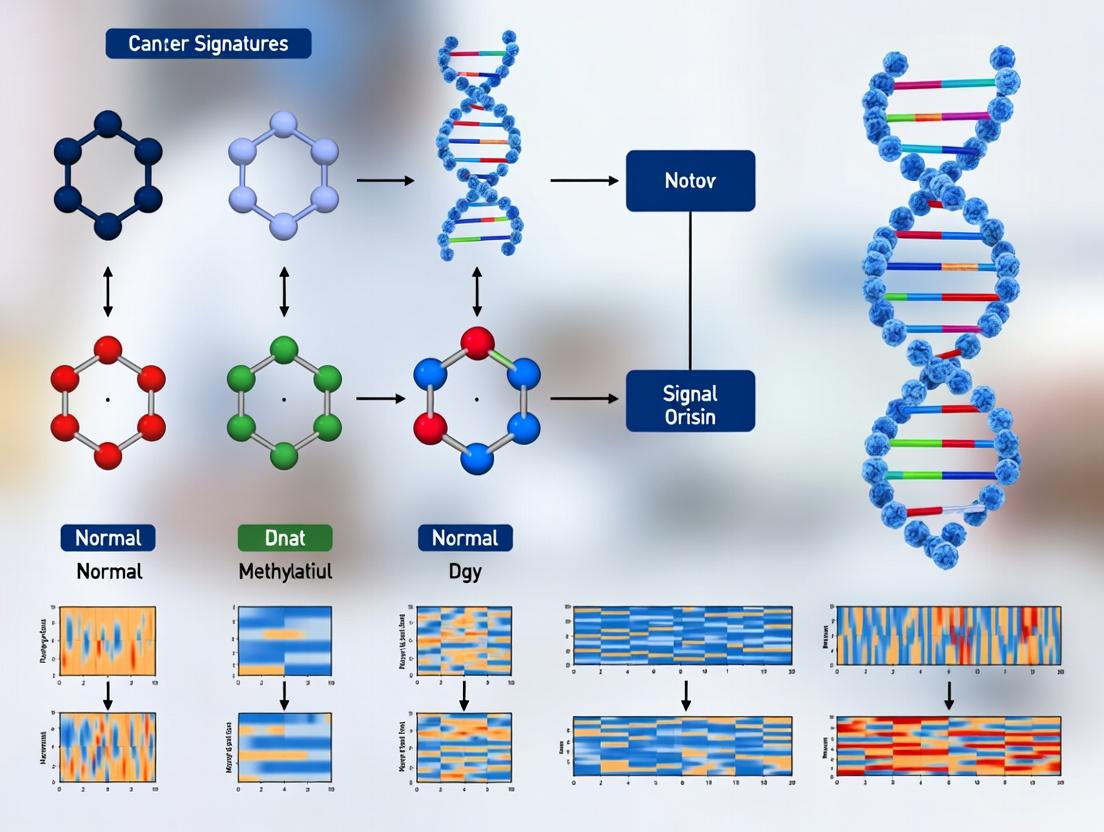
This article provides a comprehensive overview for researchers, scientists, and drug development professionals on the use of DNA methylation signatures for predicting a cancer's tissue of origin.
Decoding Cancer Origins: A Comprehensive Guide to DNA Methylation Signature Analysis for Researchers
Abstract
This article provides a comprehensive overview for researchers, scientists, and drug development professionals on the use of DNA methylation signatures for predicting a cancer's tissue of origin. We explore the fundamental biology of cancer-specific epigenetic alterations, detail current laboratory and computational methodologies for signature profiling and application, address common technical challenges and optimization strategies for assay reliability, and critically evaluate the validation frameworks and comparative performance of leading algorithms. This guide synthesizes the state of the art, from foundational concepts to clinical translation, empowering professionals to leverage this powerful diagnostic and research tool.
The Epigenetic Blueprint: Foundational Principles of Cancer DNA Methylation
Core Concepts and Quantitative Data
DNA methylation, primarily at the 5-position of cytosine in CpG dinucleotides, is a fundamental epigenetic mechanism. It plays divergent, essential roles in normal cellular differentiation and genome stability, while its dysregulation is a hallmark of cancer.
Table 1: DNA Methylation Patterns in Normal vs. Neoplastic Tissues
| Feature | Normal Development & Tissue Homeostasis | Oncogenesis & Cancer |
|---|---|---|
| Global Methylation | Stable, tissue-specific level (~70-80% of CpGs). | Global Hypomethylation (Loss of 20-60% of 5mC), leading to genomic instability. |
| Promoter Methylation | Focal Hypermethylation at CpG Islands (CGIs) of germline genes and imprinted loci. Silences pluripotency genes during differentiation. | Focal CGI Hypermethylation of Tumor Suppressor Gene (TSG) promoters (e.g., MLH1, BRCA1, CDKN2A). Frequency: 1-10% per locus, varying by cancer type. |
| Intragenic Methylation | Present in gene bodies of active genes; regulates splicing and transcription elongation. | Often lost, contributing to aberrant transcript variants. |
| Repetitive Element Methylation | Heavy methylation (>70%) to maintain chromosomal integrity. | Severe hypomethylation (<40%), causing retrotransposition and activation. |
| Dynamic Regulation | Tightly controlled by DNMTs (DNMT3A/B de novo, DNMT1 maintenance) and TET demethylases. | Mutations/Dysregulation in DNMT3A, TET2, IDH1/2 (producing oncometabolite 2-HG inhibiting TETs). |
Table 2: Quantitative Methylation Changes in Common Cancers
| Cancer Type | Key Hypermethylated TSG Promoters (Prevalence) | Average Global 5mC Loss vs. Normal | Utility in CSO Prediction |
|---|---|---|---|
| Colorectal | MLH1 (15%), CDKN2A (30-40%), MGMT (40%) | ~30-40% | Strong tissue-of-origin signature. |
| Glioblastoma | MGMT (40-50%) | ~20% | Distinguishes glioma subtypes. |
| Lung (NSCLC) | CDKN2A (30%), RASSF1A (30-70%) | ~25% | Differential methylation vs. SCLC. |
| Breast | BRCA1 (10-20%), GSTP1 (30%) | ~15% | ER+ vs. ER- subtype signatures. |
| Hematological (AML) | Panels of genes (e.g., CEBPA, p15) | Variable | Associated with DNMT3A/TET2/IDH mutations. |
Application Notes & Protocols in the Context of Cancer Signal Origin (CSO) Prediction
The premise of CSO prediction research is that malignant cells retain a DNA methylation "memory" of their tissue of origin. Identifying cancer-specific (onco) and tissue-specific (normal development) methylation signatures enables the classification of cancers of unknown primary (CUP).
Protocol: Genome-Wide DNA Methylation Profiling for Signature Discovery
Objective: To generate high-resolution, quantitative methylation data from fresh-frozen or FFPE tumor samples and matched normal tissues for biomarker discovery.
Workflow Diagram Title: Genome-Wide Methylation Profiling Workflow
Detailed Protocol:
- Input Material: 50-250 ng of genomic DNA from microdissected tumor or normal FFPE sections (minimal tumor purity >70% recommended).
- Bisulfite Conversion: Use the EZ DNA Methylation-Lightning Kit (Zymo Research). Incubate DNA in Lightning Conversion Reagent (98°C, 8 min; 54°C, 60 min). Desalt using a column, perform desulphonation (RT, 15 min), and elute in 10-20 µL.
- Whole-Genome Amplification & Array Hybridization: Follow the Illumina Infinium HD Assay manual. Amplify converted DNA (37°C, 20-24h). Fragment, precipitate, and resuspend. Hybridize to Infinium MethylationEPIC v2.0 BeadChip (850k CpG sites) at 48°C for 16-24h.
- Scanning: Wash BeadChip and image on an iScan or NextSeq 550 system. Generate intensity data (.idat files).
- Bioinformatics Pipeline:
- Quality Control (QC): Use
minfiR package. Check bisulfite conversion efficiency (≥99%), probe detection p-values (failed probes removed), and sex concordance. - Normalization: Perform functional normalization (
minfi) or SWAN to correct for technical variation. - Differential Methylation: Identify Differentially Methylated Positions (DMPs) using
limmaand Regions (DMRs) usingDMRcate. Criteria: Δβ > |0.2|, FDR-adjusted p < 0.01. - Signature Refinement: Apply machine learning (LASSO, Random Forest) on training cohort to select a minimal CpG panel (50-500 CpGs) with maximal tissue classification accuracy.
- Quality Control (QC): Use
Protocol: Targeted Methylation Validation & CSO Classification using qMSP
Objective: To validate candidate CpG biomarkers from discovery arrays and implement a cost-effective, clinical-grade assay for CSO prediction on liquid biopsies or small FFPE samples.
Workflow Diagram Title: Targeted Methylation Assay for CSO
Detailed Protocol:
- Primer/Probe Design: Design TaqMan-style primers and probes specific for the bisulfite-converted sequence of the target methylated allele. Place probe over CpG sites. Include a reference gene (e.g., ACTB) without CpGs in its amplicon to control for DNA input.
- Reaction Setup: For each sample, prepare duplex or triplex reactions containing:
- 10 ng bisulfite-converted DNA.
- 1X PerfeCTa MultiPlex qPCR SuperMix (Quantabio).
- Target gene primer/probe mix (300 nM primer, 200 nM probe).
- Reference gene primer/probe mix (100 nM each).
- qPCR Cycling: Run on a QuantStudio 7 Pro: 95°C for 3 min; 45 cycles of 95°C for 15 sec, 60°C for 1 min (collect fluorescence).
- Data Analysis:
- Calculate ΔCq = Cq(target) - Cq(reference).
- Normalize to a calibrator sample (pooled normal DNA): ΔΔCq = ΔCq(sample) - ΔCq(calibrator).
- Relative Methylation Level = 2^(-ΔΔCq).
- Classification: Input the methylation values (2^(-ΔΔCq)) for the panel into a pre-trained Support Vector Machine (SVM) classifier. The SVM model, trained on a labeled dataset of known cancer types, outputs a probability score for each possible tissue of origin.
The Scientist's Toolkit: Research Reagent Solutions
Table 3: Essential Reagents for DNA Methylation Research in CSO Studies
| Item | Function & Rationale |
|---|---|
| Infinium MethylationEPIC v2.0 Kit (Illumina) | Industry-standard array for genome-wide discovery. Covers >900,000 CpGs, including enhancer regions, crucial for identifying tissue-specific signatures. |
| EZ DNA Methylation-Lightning Kit (Zymo Research) | Rapid, reliable bisulfite conversion (<90 min). High recovery of converted DNA essential for low-input samples like liquid biopsies. |
| QIAamp DNA FFPE Tissue Kit (Qiagen) | Robust DNA extraction from degraded FFPE material, the most common clinical archive. Includes de-crosslinking steps. |
| PerfeCTa MultiPlex qPCR SuperMix (Quantabio) | Optimized for multiplex qMSP. Withstands PCR inhibitors common in FFPE DNA and provides uniform amplification across targets. |
| CpGenome Universal Methylated DNA (MilliporeSigma) | Fully methylated human genomic DNA control. Serves as a positive control for bisulfite conversion and methylation assays. |
| Methylation-Specific PCR Primers & TaqMan Probes (Custom) | Enable ultra-sensitive, quantitative detection of low-abundance methylated alleles in plasma cfDNA for minimal residual disease or early detection. |
| TruSeq Methyl Capture EPIC Kit (Illumina) | Target enrichment for next-generation sequencing. Allows deep, cost-effective sequencing of the EPIC array regions for mutation + methylation analysis. |
Pathway Diagrams
Diagram Title: DNA Methylation Dynamics in Normal vs. Cancer Cells
Defining Cancer-Signal Origin (CSO) and the Clinical Need for Prediction
Cancer-Signal Origin (CSO) refers to the anatomical tissue or cell type from which a malignancy originates. Accurate CSO prediction is a critical clinical challenge, particularly for cancers of unknown primary (CUP), which account for 2-5% of all cancer diagnoses. Correct identification of the primary site is essential for administering site-specific, precision therapies, which directly impacts patient survival outcomes. This application note details the role of DNA methylation signatures as a robust biomarker for CSO prediction and provides experimental protocols for its analysis within a research framework.
CUP represents a metastatic malignancy without an identifiable primary tumor after standard diagnostic workup. The prognosis is poor, with a median overall survival of 6-9 months. Site-specific therapy, informed by accurate CSO prediction, can improve median survival to 12-15 months or more for certain subsets. The clinical imperative is to move beyond immunohistochemistry (IHC) and gene expression profiling to more stable, developmentally informative markers. DNA methylation, a covalent chemical modification of cytosine residues in CpG dinucleotides, provides a highly stable, cell-type-specific epigenetic signature that is maintained through cell divisions and is strongly preserved in metastases, making it an ideal biomarker for tracing cellular origin.
Table 1: Clinical Impact of CUP and Current Diagnostic Yield
| Metric | Value/Range | Source/Note |
|---|---|---|
| Global Incidence of CUP | 2-5% of all malignancies | Recent population-based studies |
| Median Overall Survival (CUP) | 6-9 months | With empiric chemotherapy |
| Survival Improvement with Site-Specific Therapy | Up to 12-15+ months | For responsive subtypes (e.g., colorectal, ovarian) |
| Diagnostic Yield of Standard Workup (IHC + Imaging) | 20-30% primary identification | Pre-mortem identification rate |
| Accuracy of DNA Methylation-Based Classifiers | 85-95% (Validation Studies) | Across multiple commercial and research assays |
Table 2: Performance Metrics of Representative Methylation-Based CSO Classifiers
| Assay Name / Study | Number of Classes | Reported Accuracy | Sample Type | Reference Year |
|---|---|---|---|---|
| EPICUP (Microarray) | >38 tumor types | ~90% | FFPE | 2017 / 2021 |
| Methylation-Based NGS Assays | 25-50+ tumor types | 85-92% | FFPE, Liquid Biopsy | 2022-2024 |
| Research-Based Genome-Wide Sequencing | Pan-cancer | 89-94% (in silico) | Fresh Frozen, FFPE | 2023 |
Experimental Protocol: DNA Methylation Profiling for CSO Prediction
Protocol 3.1: Bisulfite Conversion and Genome-Wide Methylation Sequencing (e.g., WGBS)
Objective: To generate genome-wide, single-base-pair resolution methylation data from tumor DNA. Materials: See Scientist's Toolkit. Procedure:
- DNA Extraction & QC: Extract high-quality genomic DNA from FFPE or frozen tissue sections (≥50ng). Quantify using fluorometry. Assess integrity (DV200 ≥30% for FFPE).
- Bisulfite Conversion: Treat 100-200ng DNA using a validated kit (e.g., EZ DNA Methylation Kit). Incubate to convert unmethylated cytosines to uracil, leaving methylated cytosines unchanged.
- Library Preparation: Construct sequencing libraries from bisulfite-converted DNA using a dedicated WGBS or targeted bisulfite-seq kit. Include PCR amplification with methylated-adapter-specific primers.
- Sequencing: Perform paired-end sequencing (e.g., 2x150bp) on an Illumina platform to a minimum depth of 20-30x coverage.
- Bioinformatic Analysis:
- Alignment: Map reads to a bisulfite-converted reference genome using aligners like
BismarkorBS-Seeker2. - Methylation Calling: Extract methylation calls (CpG sites) to generate beta values (methylated counts/total counts).
- Feature Selection: Filter to differentially methylated regions (DMRs) or CpG islands known to distinguish cancer types.
- Classification: Apply a pre-trained machine learning classifier (e.g., Random Forest, Neural Network) using the beta-value matrix to predict CSO.
- Alignment: Map reads to a bisulfite-converted reference genome using aligners like
Protocol 3.2: Targeted Methylation Sequencing (e.g., for Liquid Biopsy)
Objective: To detect CSO from circulating tumor DNA (ctDNA) with high sensitivity. Procedure:
- Plasma Collection & ctDNA Isolation: Collect blood in cell-stabilization tubes. Isolate plasma and extract ctDNA using a high-sensitivity silica-membrane or bead-based kit.
- Targeted Bisulfite Sequencing Panel: Use a multiplexed PCR or hybrid-capture panel targeting 10,000-100,000 informative CpG sites. Perform bisulfite conversion prior to or after library capture.
- Ultra-Deep Sequencing: Sequence to very high depth (>10,000x) to detect low-abundance methylated ctDNA fragments.
- Analysis: Use a deconvolution algorithm to compare the ctDNA methylation haplotype pattern against a reference atlas of primary tumor methylation profiles to infer the dominant tissue of origin.
Visualizations
Title: CSO Prediction Workflow via Methylation Analysis
Title: Bioinformatic Pipeline for CSO Methylation Data
The Scientist's Toolkit
Table 3: Key Research Reagent Solutions for Methylation-Based CSO Research
| Item | Function & Relevance |
|---|---|
| Bisulfite Conversion Kits (e.g., EZ DNA Methylation Kit) | Chemically converts unmethylated C to U, enabling differentiation of methylation states via sequencing or PCR. Foundation of all methylation assays. |
| Formalin-Fixed Paraffin-Embedded (FFPE) DNA Isolation Kits | Optimized for extracting fragmented, cross-linked DNA from clinical archives, the most common sample source. |
| ctDNA Isolation Kits (e.g., from plasma) | Specialized for isolating ultra-low concentration, fragmented circulating tumor DNA for liquid biopsy applications. |
| Targeted Methylation Panels (e.g., Illumina TSO500 ctDNA, custom hybrid-capture) | Multi-gene/CpG panels enabling sensitive, cost-effective profiling of informative loci from limited or degraded DNA. |
| Whole Genome Bisulfite Sequencing (WGBS) Kits | Provide complete library prep solutions for unbiased, genome-wide methylation analysis at single-base resolution. |
| Methylation Microarray Kits (e.g., Illumina EPIC) | Array-based profiling of >850,000 CpG sites. Robust and standardized for clinical classifier development. |
| Methylation-Specific qPCR Assays | Rapid, low-cost validation of specific DMRs identified in discovery phases. |
| Bisulfite Conversion Controls (Fully Methylated/Unmethylated DNA) | Essential for monitoring the efficiency and completeness of the bisulfite conversion reaction. |
Within cancer epigenetics, a paradoxical pattern of DNA methylation is a cardinal feature: localized, dense hypermethylation at CpG islands in gene promoters coincides with genome-wide hypomethylation in intergenic and intronic regions. This duality is central to the thesis that DNA methylation signatures can predict a tumor's tissue of origin (Cancer Signal Origin - CSO). Promoter hypermethylation silences tumor suppressor genes (TSGs), while global hypomethylation induces genomic instability and oncogene activation. Accurately mapping both patterns is critical for developing diagnostic and prognostic methylation biomarkers for CSO prediction.
Table 1: Characteristic Features of Methylation Hallmarks in Cancer
| Feature | Promoter CpG Island Hypermethylation | Global Hypomethylation |
|---|---|---|
| Genomic Target | CpG-rich promoters of specific genes (e.g., MLH1, CDKN2A, MGMT) | Repetitive elements (LINE-1, Alu), introns, gene deserts |
| Typical Change | ↑ Methylation (from <10% to >70%) | ↓ Methylation (20-60% loss vs. normal) |
| Functional Consequence | Transcriptional silencing of TSGs, disrupted repair/apoptosis | Genomic instability, chromosomal rearrangements, oncogene activation |
| Key Assays | Bisulfite Sequencing (Pyro-, NGS), Methylation-Specific PCR (MSP) | LINE-1 Pyrosequencing, LUMA (Luminometric Methylation Assay), RRBS/WGBS |
| Role in CSO Prediction | Tissue-specific TSG methylation panels (e.g., SEPT9 in colorectal, SHOX2 in lung) | Overall "methylation burden" index; may correlate with tumor stage and aggressiveness |
Table 2: Example Cancer-Specific Promoter Hypermethylation Markers for CSO Research
| Gene | Common Cancer Association | Function | Approx. Methylation Frequency in Primary Tumors |
|---|---|---|---|
| GSTP1 | Prostate | Detoxification | >90% |
| CDKN2A (p16) | Multiple (Pancreatic, Lung, Melanoma) | Cell cycle inhibitor | ~50-80% |
| MGMT | Glioblastoma, Colorectal | DNA repair | ~40% (predicts temozolomide response) |
| BRCA1 | Breast, Ovarian | DNA repair | ~10-15% (sporadic cases) |
| SEPT9 | Colorectal | Cytoskeleton, cell division | ~90% in plasma cfDNA |
Experimental Protocols
Protocol 1: Targeted Bisulfite Pyrosequencing for Promoter Hypermethylation Quantification
Objective: Quantify methylation percentage at specific CpG sites within a promoter CpG island (e.g., CDKN2A).
Materials:
- Bisulfite Conversion Kit (e.g., EZ DNA Methylation Kit)
- PCR Reagents: HotStart Taq Polymerase, dNTPs, bisulfite-specific primers (One primer biotinylated for capture).
- Pyrosequencing System (PyroMark Q96 MD) with corresponding reagents (Enzymes, Substrates, Nucleotides).
Workflow:
- DNA Extraction & Bisulfite Conversion: Convert 500 ng genomic DNA using kit protocol. All unmethylated cytosines are converted to uracil; methylated cytosines remain as cytosine.
- PCR Amplification: Amplify bisulfite-converted DNA with target-specific primers. Validate PCR product on agarose gel.
- Pyrosequencing Preparation: Bind 10-20 µL biotinylated PCR product to Streptavidin Sepharose HP beads. Wash and denature to single strands. Anneal sequencing primer.
- Run Pyrosequencing: Load cartridge with enzyme/substrate/nucleotide mixes. Sequence and analyze using PyroMark Q96 software. Results are given as % methylation per CpG site.
Protocol 2: LUMA (Luminometric Methylation Assay) for Global Methylation Assessment
Objective: Measure genome-wide CpG methylation levels by quantifying the relative digestion of methylation-sensitive vs. -insensitive restriction enzymes.
Materials:
- Restriction Enzymes: HpaII (methylation-sensitive) and MspI (methylation-insensitive, same CCGG recognition), EcoRI (reference enzyme).
- Pyrosequencing Instrument & Reagents for nucleotide incorporation quantification.
Workflow:
- Dual Restriction Digest: Set up two parallel reactions for each DNA sample.
- Test Reaction: EcoRI + HpaII
- Control Reaction: EcoRI + MspI
- Pyrosequencing Nucleotide Incorporation: The enzymes create overhangs filled by the pyrosequencing instrument using dATPs. The amount of light signal is proportional to the number of cuts.
- Calculation: Global methylation (%) = [1 - (ΣHpaII signal / ΣMspI signal)] × 100. A lower HpaII/MspI ratio indicates higher global methylation.
Visualization of Concepts and Workflows
Diagram Title: Dual Methylation Hallmarks in Cancer Progression
Diagram Title: Methylation Assay Workflow for CSO Prediction
The Scientist's Toolkit: Research Reagent Solutions
Table 3: Essential Materials for Methylation Hallmark Analysis
| Item | Function & Application | Example Product/Kit |
|---|---|---|
| DNA Bisulfite Conversion Kit | Chemically converts unmethylated C to U, preserving methylated C. Foundational step for all downstream assays. | Zymo Research EZ DNA Methylation Kit, Qiagen Epitect Bisulfite Kit |
| Methylation-Specific PCR (MSP) Primers | Amplify methylated or unmethylated sequences post-bisulfite conversion for rapid, sensitive detection of promoter hypermethylation. | Custom-designed primers (MethPrimer). |
| Pyrosequencing Reagents & Assays | Quantitative analysis of methylation percentage at individual CpG sites. Used for targeted promoters and LINE-1 global assays. | Qiagen PyroMark PCR & Q96 CpG Assays |
| Infinium MethylationEPIC BeadChip | Genome-wide profiling of >850,000 CpG sites. Ideal for discovery of both hyper- and hypomethylated regions in CSO research. | Illumina Infinium MethylationEPIC Kit |
| Methylated & Unmethylated Control DNA | Positive and negative controls for bisulfite conversion, PCR, and sequencing assays. Critical for assay validation. | Zymo Research Human Methylated & Non-methylated DNA Set |
| MBD-Seq or MeDIP Kit | Enriches methylated DNA fragments using Methyl-CpG Binding Domain proteins or anti-5mC antibodies for sequencing. | Diagenode MethylCap Kit, Abcam MeDIP Kit |
| Next-Gen Sequencing Library Prep Kit for Bisulfite DNA | Prepares bisulfite-converted DNA for whole-genome bisulfite sequencing (WGBS) or targeted panels. | Swift Biosciences Accel-NGS Methyl-Seq DNA Library Kit |
Tissue-of-Origin Signatures vs. Pan-Cancer Methylation Patterns
This application note is framed within a thesis exploring DNA methylation signatures as the superior biomarker for Cancer Signal Origin (CSO) prediction in liquid biopsies and tissue diagnostics. While pan-cancer methylation patterns identify the universal hallmarks of malignancy, tissue-of-origin signatures provide the critical geographical map to the primary site. This document details the protocols and analytical frameworks to distinguish, validate, and apply these two interconnected but distinct methylation paradigms in cancer research and drug development.
Key Definitions & Quantitative Comparisons
Table 1: Core Characteristics of Methylation Signature Types
| Feature | Tissue-of-Origin (ToO) Signatures | Pan-Cancer (Universal Cancer) Methylation Patterns |
|---|---|---|
| Primary Biological Basis | Developmental epigenetics; maintenance of cellular identity. | Epigenetic disruption in tumorigenesis (e.g., polycomb-mediated silencing, hypomethylation of repeats). |
| Key CpG Loci | CpG islands and shores at tissue-specific differentially methylated regions (tDMRs). | CpG island methylator phenotype (CIMP) loci, repetitive element sequences (LINE-1, Alu), polycomb target genes. |
| Typical Assay Targets | 100-10,000 loci per signature; panels often aggregate multiple tissue signatures. | 50-500 highly conserved cancer-specific loci. |
| Primary Application | Diagnostics: Identifying primary site in cancers of unknown origin (CUP) and metastatic disease. | Screening: Cancer detection from liquid biopsy. Prognostics: Assessing global epigenetic instability. |
| Methylation State | ToO loci are methylated in the target tissue and unmethylated in others. E.g., FAM150A hypermethylated only in thyroid tissue. | Pan-cancer loci are aberrantly methylated in cancer vs. all normal tissues. E.g., SEPT9 hypermethylated in colorectal and other cancers. |
| Predictive Performance (AUC Range) | 0.92-0.99 for top predicted tissue in validated CUP classifiers. | 0.95-0.99 for cancer vs. non-cancer detection in multi-center studies. |
Table 2: Performance Metrics from Recent Validation Studies (2023-2024)
| Study (PMID / DOI) | Signature Type | Sample Type | N (Cancer/Normal) | Key Metric | Result |
|---|---|---|---|---|---|
| Liang et al., Nat Commun. 2023 | Pan-Cancer (Targeted) | Plasma (cfDNA) | 2,100 / 1,683 | Sensitivity (Stage I-III) | 69.1% - 95.9% (by cancer type) |
| Shen et al., Clin Epigenetics. 2024 | Tissue-of-Origin (45 classes) | Tumor Tissue & FFPE | 12,280 tumors | Overall Accuracy (Top Prediction) | 94.7% |
| Nassiri et al., Med. 2023 | Combined ToO & Pan-Cancer | CSF (cfDNA) | 221 patients | CSO Detection in CUP | 87% Concordance with clinical Dx |
| Liu et al., Genome Med. 2024 | Pan-Cancer (WGBS-derived) | Multi-tissue normal & TCGA | 700+ / 2,000+ | Specificity (vs. Normal) | >99.5% |
Experimental Protocols
Protocol 3.1: Bisulfite Sequencing for Pan-Cancer Marker Discovery (Reduced Representation Approach)
Objective: To identify CpG sites consistently hyper- or hypomethylated across multiple cancer types compared to normal tissue controls.
Materials:
- High-quality genomic DNA (500 ng) from tumor and matched normal samples (minimum n=50 per cancer type, 5+ types recommended).
- Methylation-Aware Restriction Enzyme: MspI (cuts CCGG regardless of methylation) and its methylation-sensitive isoschizomer HpaII (cuts only unmethylated CCGG). Alternatively, use enzymes for Reduced Representation Bisulfite Sequencing (RRBS).
- Bisulfite Conversion Kit (e.g., EZ DNA Methylation-Lightning Kit, Zymo Research).
- High-fidelity PCR reagents and next-generation sequencing library prep kit.
Procedure:
- Restriction Digestion & Size Selection: Digest DNA with MspI. Size-select 150-400 bp fragments using gel electrophoresis or SPRI beads.
- Bisulfite Conversion: Treat size-selected fragments with sodium bisulfite to convert unmethylated cytosine to uracil, while leaving 5-methylcytosine unchanged.
- Library Preparation & Amplification: Repair ends, add adaptors with unique molecular identifiers (UMIs), and perform PCR amplification. Use primers without CpG sites in their sequence to avoid bias.
- Sequencing: Perform paired-end sequencing (2x150 bp) on an Illumina platform to achieve >30X average coverage of targeted fragments.
- Bioinformatic Analysis:
- Align reads to a bisulfite-converted reference genome (e.g., using Bismark or BWA-meth).
- Extract methylation calls for each CpG. Calculate β-value (methylated reads / total reads).
- Perform differential methylation analysis (e.g., using methylKit or DSS) comparing all cancers vs. all normals.
- Define Pan-Cancer Markers: Select CpGs with consistent direction of change (Δβ > |0.3|) and adjusted p-value < 0.01 in >80% of cancer types tested.
Protocol 3.2: Validation of Tissue-of-Origin Signatures Using Pyrosequencing
Objective: To quantitatively validate a candidate tissue-specific differentially methylated region (tDMR) in an independent cohort of FFPE samples.
Materials:
- DNA extracted from FFPE blocks (100-200 ng) from 20 different normal tissue types (n≥3 each) and corresponding tumors.
- Bisulfite Conversion Kit.
- PCR Reagents: Primers designed for bisulfite-converted DNA (one biotinylated).
- Pyrosequencing System: PyroMark Q96 MD or equivalent with appropriate sequencing primer and nucleotides (dNTPs).
Procedure:
- Bisulfite Conversion: Convert 500 ng of each FFPE DNA sample.
- PCR Amplification: Amplify the target tDMR region using biotinylated primer to immobilize the product on streptavidin-coated sepharose beads.
- Pyrosequencing: Prepare single-stranded DNA template and load into the Pyrosequencing machine with the pre-dispensed nucleotide cartridges (containing dATPαS, dCTP, dGTP, dTTP).
- Quantitative Analysis:
- The Pyrosequencing software outputs the percentage of C-to-T conversion at each CpG, corresponding to the percentage of unmethylated cytosines.
- Calculate % methylation = 100% - %C (converted).
- Signature Validation Criteria:
- The tDMR must show high, consistent methylation only in its tissue of origin (e.g., mean >70% methylation in normal colon, <10% in all other normals).
- In tumors derived from that tissue, methylation should be largely retained (mean >50%), demonstrating its utility as a lineage marker despite malignant transformation.
Protocol 3.3: Integrated Analysis Workflow for CSO Prediction in Plasma cfDNA
Objective: To combine pan-cancer detection and tissue-of-Origin localization in a single NGS-based assay from liquid biopsy.
Workflow Diagram:
Diagram Title: Integrated CSO Prediction from Plasma cfDNA
The Scientist's Toolkit: Research Reagent Solutions
Table 3: Essential Reagents & Kits for Methylation-Based CSO Research
| Product Name (Example) | Category | Key Function | Critical Consideration for ToO vs. Pan-Cancer |
|---|---|---|---|
| EZ DNA Methylation-Lightning Kit | Bisulfite Conversion | Rapid, complete conversion of unmethylated C to U. | High conversion efficiency (>99.5%) is non-negotiable for accurate quantification of subtle ToO differences. |
| Infinium MethylationEPIC v2.0 BeadChip | Microarray | Genome-wide methylation profiling at ~935,000 CpG sites. | Ideal for discovery of both pan-cancer and ToO signatures. Includes many tissue-informative loci. |
| Qiagen PyroMark PCR Kit | Targeted Validation | Robust, bias-resistant amplification of bisulfite-converted DNA. | Gold standard for validating candidate tDMRs in FFPE samples due to quantitative accuracy. |
| Swift Biosciences Accel-NGS Methyl-Seq DNA Library Kit | NGS Library Prep | Enzymatic conversion and library construction in a single tube. | Reduces DNA loss vs. chemical bisulfite, crucial for low-input cfDNA pan-cancer studies. |
| IDT xGen Methyl-Seq Panel | Hybrid Capture Panel | Targeted capture of ~3.3 Mb of methylation-informative regions. | Customizable; can be designed to include both universal cancer markers and comprehensive ToO loci. |
| Zymo Research HiSpec DNA/RNA Shield for FFPE | Sample Preservation | Stabilizes nucleic acids in FFPE curls for later extraction. | Preserves methylation state post-sectioning, vital for retrospective ToO signature studies. |
Signaling Pathways & Biological Basis
The utility of these signatures stems from distinct epigenetic mechanisms. Pan-cancer patterns often arise from the dysregulation of polycomb repressive complex 2 (PRC2) targets and global hypomethylation.
Diagram: Epigenetic Origins of Methylation Signatures
Diagram Title: Biological Origins of ToO and Pan-Cancer Methylation
For the broader thesis, this delineation is critical. Pan-cancer patterns are leveraged by drug developers to identify patients with epigenetically dysregulated tumors (e.g., eligible for DNMT or EZH2 inhibitors) and to monitor treatment response via liquid biopsy. Tissue-of-origin signatures are indispensable in basket trials to ensure correct patient stratification based on the primary epigenome, which can predict sensitivity to tissue-specific standard-of-care therapies, even in metastatic settings. A combined assay, as detailed in Protocol 3.3, represents the frontier of precision oncology, enabling simultaneous cancer detection and molecular classification to guide therapeutic strategy.
Within the broader thesis on DNA methylation signatures for cancer signal origin (CSO) prediction, the selection of biological source material is a critical determinant of data quality and clinical applicability. This document details application notes and protocols for three primary sources: Formalin-Fixed Paraffin-Embedded (FFPE) tissue, liquid biopsy-derived cell-free DNA (cfDNA), and single-cell inputs.
Formalin-Fixed Paraffin-Embedded (FFPE) Tissue
Application Notes
FFPE tissue archives represent an invaluable resource for retrospective cancer methylation studies, enabling correlation with long-term clinical outcomes. However, formalin fixation induces DNA fragmentation and cytosine deamination, posing challenges for methylation assays.
Key Protocol: Bisulfite Conversion and Sequencing from FFPE DNA
Objective: To recover high-quality methylation data from degraded FFPE DNA. Reagents & Materials: See Research Reagent Solutions table. Procedure:
- Nucleic Acid Extraction: Cut 5-10 μm sections. Deparaffinize using xylene/ethanol washes. Digest with proteinase K (20 mg/mL) at 56°C for 3 hours. Extract DNA using a column-based kit designed for FFPE.
- DNA Qualification: Quantify using fluorometry (Qubit). Assess fragmentation via TapeStation or Bioanalyzer (DV200 > 30% is optimal for sequencing).
- Bisulfite Conversion: Use a commercial kit optimized for low-input/degraded DNA (e.g., EZ DNA Methylation-Lightning Kit). Incubate 500 ng-1 μg DNA as per protocol (98°C for 8 min, 54°C for 60 min).
- Library Preparation & Enrichment: Repair bisulfite-converted DNA, add adapters, and perform PCR amplification (8-12 cycles). For targeted panels (e.g., CSO markers), use hybridization capture with biotinylated probes.
- Sequencing: Sequence on an Illumina platform (PE 150bp). Aim for >50M reads for whole-methylome or >5M reads for targeted panels. Data Analysis: Align to a bisulfite-converted reference genome (Bismark, Bowtie2). Calculate methylation beta values at CpG sites.
Table 1: Performance metrics for methylation analysis from FFPE samples across common assays.
| Assay Type | Recommended Input (ng) | CpGs Covered | Conversion Rate Target | Typical Success Rate (DV200>30%) |
|---|---|---|---|---|
| EPIC Array | 250-500 | >850,000 | >99% | 90% |
| WGBS | 100-200 | ~28 Million | >99% | 75% |
| Targeted NGS Panel | 50-100 | 10,000 - 100,000 | >98.5% | 95% |
Liquid Biopsy (Cell-Free DNA)
Application Notes
Liquid biopsy provides a minimally invasive source for detecting tumor-derived methylated cfDNA, enabling real-time monitoring of CSO and treatment response. The ultra-low input and high background of normal cfDNA require highly sensitive techniques.
Key Protocol: Methylation-Specific ddPCR for cfDNA
Objective: Absolute quantification of low-abundance, tumor-specific methylation signals in plasma cfDNA. Reagents & Materials: See Research Reagent Solutions table. Procedure:
- Plasma Processing & cfDNA Isolation: Draw 10-20 mL blood into Streck or EDTA tubes. Centrifuge twice (1600 x g, 10 min; 16,000 x g, 10 min) to isolate plasma. Extract cfDNA using a silica-membrane column kit (elution volume: 20-30 μL).
- Bisulfite Conversion: Convert 5-20 ng cfDNA using a high-recovery kit (e.g., Zymo Research EZ DNA Methylation Kit). Elute in 10 μL.
- ddPCR Assay Design: Design primers and TaqMan probes specific to the bisulfite-converted sequence of the target CpG island (e.g., SEPT9, SHOX2 for CSO). Use two probes: FAM for methylated sequence, HEX/VIC for unmethylated/reference.
- Droplet Generation & PCR: Combine converted DNA, ddPCR supermix, primers, and probes. Generate droplets using a QX200 Droplet Generator. Transfer to a 96-well plate and run PCR: 95°C for 10 min, 40 cycles of (94°C for 30s, annealing temp for 60s), 98°C for 10 min.
- Droplet Reading & Analysis: Read plate on a QX200 Droplet Reader. Use QuantaSoft software to count positive/negative droplets. Calculate fractional abundance: [FAM+]/([FAM+]+[HEX+]) × 100%.
Single-Cell Inputs
Application Notes
Single-cell methylation analysis reveals intratumoral heterogeneity and can identify rare cell populations driving cancer origin and progression. The protocols are technically demanding and low-throughput.
Key Protocol: Single-Cell Bisulfite Sequencing (scBS-seq)
Objective: Generate genome-wide methylation maps from individual cells. Reagents & Materials: See Research Reagent Solutions table. Procedure:
- Single-Cell Isolation: Using a fluorescence-activated cell sorter (FACS) or microfluidic platform (Fluidigm C1), sort individual cells into 96-well plates containing 5 μL of lysis buffer (0.2% SDS, 400 μg/mL proteinase K, 2 mM EDTA).
- Lysis & Bisulfite Conversion: Incubate plate at 37°C for 1 hour, then 75°C for 15 min to inactivate proteinase K. Add bisulfite conversion reagent directly to the lysate (Zymo Lightning Kit). Perform conversion: 98°C (8 min), 54°C (60 min).
- Pre-Amplification & Library Construction: Desalt converted DNA using beads. Perform random-primed pre-amplification with a polymerase resistant to uracils (e.g., KAPA HiFi HotStart Uracil+). Use 20-25 cycles.
- Library Preparation & Sequencing: Fragment amplified product (Covaris), perform end-repair, A-tailing, and adapter ligation. Enrich via PCR (8-12 cycles). Sequence deeply on Illumina HiSeq (PE 150bp, >50M reads per cell). Data Analysis: Use pipelines like Bismark for alignment and methylKit for differential methylation calling.
Table 2: Comparison of biological sources for methylation-based CSO prediction.
| Source | Typical DNA Yield | DNA Integrity | Tumor Fraction | Intratumoral Heterogeneity Resolution | Turnaround Time | Primary Clinical Utility |
|---|---|---|---|---|---|---|
| FFPE | 1-5 μg/section | Low (100-500 bp) | 10-80% | Bulk tissue average | Weeks | Retrospective diagnosis, biomarker discovery |
| Liquid Biopsy | 5-100 ng/mL plasma | Very Low (~170 bp) | 0.1-10% (cfDNA) | None (bulk plasma) | Days | Real-time monitoring, minimal residual disease |
| Single-Cell | 6 pg/cell | High (intact) | 100% per cell | Excellent | Months | Heterogeneity mapping, rare cell detection |
Research Reagent Solutions
Table 3: Essential materials for methylation analysis from diverse biological sources.
| Item | Function | Example Product (Supplier) |
|---|---|---|
| FFPE DNA Extraction Kit | Optimized for cross-linked, degraded tissue. | GeneRead DNA FFPE Kit (Qiagen) |
| cfDNA Isolation Kit | High-recovery isolation of short-fragment DNA from plasma. | QIAamp Circulating Nucleic Acid Kit (Qiagen) |
| Bisulfite Conversion Kit | Efficient conversion of unmethylated cytosines to uracil. | EZ DNA Methylation Lightning Kit (Zymo Research) |
| Methylation-Specific ddPCR Assay | Absolute quantification of methylated alleles. | ddPCR Methylation Assay Probes (Bio-Rad) |
| Uracil-Resistant Polymerase | PCR amplification of bisulfite-converted DNA without bias. | KAPA HiFi HotStart Uracil+ ReadyMix (Roche) |
| Methylated & Unmethylated Control DNA | Process controls for conversion efficiency and assay specificity. | CpGenome Universal Methylated DNA (MilliporeSigma) |
| Targeted Methylation Capture Panel | Enrichment of CpGs relevant to cancer signal origin. | SureSelectXT Methyl-Seq (Agilent) |
| Single-Cell Lysis Buffer | Efficient release of DNA while maintaining compatibility with downstream conversion. | Scorpion scBS-seq Lysis Buffer (Custom) |
Visualizations
Title: Workflow for Methylation Analysis from Three Biological Sources
Diagram 2: Key Methylation Signaling Pathways in Cancer Signal Origin
Title: Key Methylation Pathways in Cancer Signal Origin
From Lab to Algorithm: Methodologies for Methylation Signature Profiling and Application
1. Introduction in Thesis Context The accurate prediction of a cancer's tissue of origin using cell-free DNA methylation signatures is a pivotal challenge in diagnostic oncology. This thesis investigates the comparative utility of two core technological platforms—Infinium MethylationEPIC BeadChip microarrays and Next-Generation Sequencing (NGS)-based methods (Whole-Genome Bisulfite Sequencing [WGBS] and Reduced Representation Bisulfite Sequencing [RRBS])—for generating the methylation data required to train and validate such predictive models. The choice of platform directly impacts genomic coverage, resolution, cost, and feasibility within a clinical research pipeline.
2. Platform Comparison: Technical Specifications and Performance
Table 1: Core Technical Comparison of DNA Methylation Profiling Platforms
| Feature | Infinium MethylationEPIC (EPIC) | Whole-Genome Bisulfite Sequencing (WGBS) | Reduced Representation Bisulfite Sequencing (RRBS) |
|---|---|---|---|
| Principle | Hybridization to probe beads followed by single-base extension. | NGS of bisulfite-converted DNA; aligns to whole genome. | NGS of bisulfite-converted, MspI-digested fragments enriching for CpG-dense regions. |
| Genomic Coverage | ~850,000 pre-selected CpG sites. Focus on regulatory regions (promoters, enhancers). | >90% of all CpG sites (~28 million). Truly genome-wide, unbiased. | ~2-3 million CpGs, focusing on CpG islands, promoters, and enhancers (~10-15% of total). |
| Resolution | Single CpG at pre-defined loci. | Single-base resolution genome-wide. | Single-base resolution within captured regions. |
| Input DNA | 250-500 ng (standard), can be lowered to ~100 ng with protocols. | 100-500 ng (high-quality) for standard libraries; lower with ultrasensitive kits. | 10-100 ng (effective for low-input samples). |
| Typical Cost per Sample | Low to Moderate. | Very High. | Moderate. |
| Data Output Size | ~50-100 MB per sample. | 80-150 GB per sample (30x coverage). | 5-15 GB per sample. |
| Primary Thesis Application | Cost-effective screening of known regulatory signatures; validation cohorts. | Discovery of novel pan-cancer methylation signatures; gold-standard reference. | Balanced discovery/validation for CpG-rich regions with limited sample input. |
| Key Limitation | Limited to pre-designed content; cannot discover novel CpGs outside array. | Extremely high cost and data burden; overkill for focused biomarker studies. | Misses intergenic and CpG-poor regulatory regions potentially important in cancer. |
Table 2: Performance Metrics for Cancer Signature Prediction Research
| Metric | EPIC Array | WGBS | RRBS |
|---|---|---|---|
| Reproducibility (CV) | Excellent (<5% for high-signal probes) | High, but can be impacted by sequencing depth. | High within captured regions. |
| Sensitivity for Low-Level Methylation | Moderate (dependent on probe design). | Very High. | High within captured regions. |
| Multiplexing Capacity | 8 or 16 samples per chip (manual) / 96 (automated). | High (dozens to hundreds via index pooling). | High (dozens via index pooling). |
| Best for Sample Types | High-quality FFPE, cell lines, bulk tissue. | High-quality DNA, reference standards. | Limited-quantity DNA (e.g., micro-dissected, cfDNA). |
| Bioinformatic Complexity | Moderate (established pipelines, e.g., minfi in R). | Very High (alignment to bisulfite-converted genome, e.g., Bismark). | High (similar to WGBS but for subset of genome). |
3. Detailed Experimental Protocols
Protocol 1: Infinium MethylationEPIC BeadChip Workflow Objective: Generate genome-wide methylation beta-values for ~850k CpG sites from tumor DNA. Materials: See "Scientist's Toolkit" (Section 5). Steps:
- DNA Quantification & Bisulfite Conversion: Quantify 250 ng of genomic DNA using a fluorescence-based assay. Perform bisulfite conversion using the Zymo EZ DNA Methylation-Lightning Kit.
- Incubation: 98°C for 8 min, 54°C for 60 min.
- Desulphonation & Clean-up: As per kit manual. Elute in 10 µL.
- Whole-Genome Amplification & Enzymatic Fragmentation: Amplify the entire bisulfite-converted genome isothermally overnight (20-24 hrs at 37°C). Subsequently, fragment the amplified DNA enzymatically (1 hr at 37°C).
- Precipitation & Resuspension: Precipitate the fragmented DNA using isopropanol. Pellet, wash with ethanol, and resuspend in hybridization buffer.
- Hybridization to BeadChip: Denature the resuspended DNA (95°C, 20 min) and apply to the EPIC BeadChip. Incubate in a hybridization oven (48°C, 16-24 hrs).
- Single-Base Extension, Staining, and Imaging: Perform single-nucleotide extension with labeled nucleotides on the chip. Stain, coat, and image the BeadChip on an iScan or similar system.
- Data Extraction: Use Illumina's GenomeStudio or open-source minfi package for .idat file processing, normalization (e.g., SWAN, Noob), and generation of beta-values (methylated/(methylated + unmethylated + 100)).
Protocol 2: Reduced Representation Bisulfite Sequencing (RRBS) Objective: Profile methylation at CpG-dense regions (e.g., promoters, CpG islands) from low-input cancer DNA samples. Materials: See "Scientist's Toolkit" (Section 5). Steps:
- Restriction Digest: Digest 10-100 ng of genomic DNA with the methylation-insensitive restriction enzyme MspI (cuts CCGG), which enriches for CpG-rich genomic regions. Clean up the digest.
- End Repair & A-Tailing: Repair ends and add an 'A' base to the 3' end to facilitate ligation to a 'T'-overhang adapter.
- Adapter Ligation: Ligate methylated sequencing adapters to the size-selected fragments. Note: Adapters are methylated to protect them from bisulfite-induced degradation.
- Bisulfite Conversion: Treat adapter-ligated DNA with sodium bisulfite (e.g., using the Zymo EZ DNA Methylation-Gold Kit), converting unmethylated cytosines to uracils, while methylated cytosines remain unchanged.
- PCR Amplification & Size Selection: Amplify the library using PCR with high-fidelity polymerases. Perform a final size selection (e.g., using AMPure XP beads) to capture the 150-400 bp fraction.
- Library QC & Sequencing: Quantify the library via qPCR and assess size distribution on a Bioanalyzer. Pool multiplexed libraries and sequence on an Illumina platform (e.g., NovaSeq) using paired-end 150 bp reads.
- Bioinformatic Analysis: Trim adapters (Trim Galore!). Align reads to a bisulfite-converted reference genome using Bismark. Deduplicate aligned reads and extract methylation calls using Bismark_methylation_extractor.
4. Pathway and Workflow Visualizations
Diagram Title: EPIC BeadChip Experimental Workflow
Diagram Title: RRBS Library Preparation and Sequencing Workflow
Diagram Title: Platform Selection Logic for Methylation Profiling
5. The Scientist's Toolkit: Key Research Reagent Solutions
Table 3: Essential Materials for DNA Methylation Profiling Experiments
| Item | Function & Role in Protocol | Example Product(s) |
|---|---|---|
| Bisulfite Conversion Kit | Chemically converts unmethylated cytosines to uracil, preserving methylated cytosines. Foundational step for all three platforms. | Zymo Research EZ DNA Methylation-Lightning/Gold Kits; Qiagen EpiTect Fast. |
| Infinium MethylationEPIC BeadChip Kit | Contains all reagents (except bisulfite kit) for amplification, fragmentation, hybridization, staining, and BeadChips. | Illumina Infinium MethylationEPIC Kit. |
| MspI Restriction Enzyme | Key enzyme for RRBS. Cuts at CCGG sites, enriching for CpG-dense genomic fragments. | NEB MspI (High Concentration). |
| Methylated Adapters for NGS | Adapters with methylated cytosines are protected during bisulfite conversion, preventing degradation. | Illumina TruSeq DNA Methylation Adapters; NEB Next Multiplex Methylated Adaptors. |
| Bisulfite Conversion-Specific Polymerase | PCR polymerase robust to uracil-rich templates post-bisulfite conversion for RRBS/WGBS library amplification. | KAPA HiFi Uracil+; Pfu Turbo Cx. |
| DNA Clean-up & Size Selection Beads | For purifying and size-selecting DNA fragments during library prep (RRBS/WGBS) and post-amplification (EPIC). | AMPure XP Beads; Sera-Mag Select Beads. |
| Bioinformatics Tools | Software for processing raw data: .idat files for EPIC or FASTQ files for NGS methods. | minfi (R), SeSAMe (EPIC); Bismark, BS-Seeker2 (WGBS/RRBS); MethylKit (R). |
This protocol details the computational pipeline for processing DNA methylation microarray data, specifically within the context of a broader thesis on developing DNA methylation signatures for cancer signal origin prediction. Accurately identifying a tumor's tissue of origin using epigenetic signatures requires robust, standardized preprocessing of raw Infinium Methylation array data (IDAT files) to produce reliable beta-value matrices for downstream machine learning and statistical analysis.
Diagram Title: Bioinformatics Pipeline from IDAT to Beta Matrix
Detailed Experimental Protocols
Protocol 3.1: Initial Data Import and Quality Control
Objective: To load raw IDAT files, associate with sample metadata, and perform initial quality assessment.
- Directory Structure: Organize all IDAT files (pair of
_Grn.idatand_Red.idatper sample) in a single directory. Prepare a sample sheet (CSV) with columns:Sample_Name,Sentrix_ID,Sentrix_Position, and relevant phenotypic data (e.g.,Cancer_Type,Tissue_of_Origin). - Read IDATs: Use the
read.metharray.expfunction from theminfiR package (v1.46.0 or later) to create anRGChannelSetobject. The function automatically detects array type (EPIC v2, EPIC v1, 450K). - Initial QC:
- Generate a density plot of signal intensities for all samples (
minfi::densityPlot). Visually inspect for outliers with aberrant intensity distributions. - Calculate median intensities and flag samples where the median is below log2(1000) in either channel.
- Generate a QC report using
minfi::qcReport.
- Generate a density plot of signal intensities for all samples (
Protocol 3.2: Preprocessing and Normalization
Objective: To correct for technical variation (dye bias, probe design type) and produce methylation signal intensities.
Selection Rationale: For cancer prediction studies, the Noob (normal-exponential convolution using out-of-band probes) method is recommended as it effectively removes background and dye bias, which is critical for accurate between-sample comparison.
Background Correction & Dye Bias Equalization: Apply the
preprocessNoobfunction (minfipackage).Functional Normalization (Optional but Recommended): Use
preprocessFunnormif your sample set is large (>50 samples) and contains expected global methylation differences (common in cancer vs. normal). It adjusts for variation using control probe principal components.
Protocol 3.3: Probe Filtering
Objective: To remove unreliable probes, minimizing technical noise in the final signature.
Procedure: Filter the GenomicRatioSet object sequentially.
- Cross-reactive Probes: Remove probes with known sequence polymorphisms or non-specific binding. Use the curated list from Chen et al. (2013) or the
rmSNPandCHfunction in theminfipackage. - Probes on Sex Chromosomes: Remove all probes targeting ChrX and ChrY (
dropLociWithSnpsor manual filtering viagetAnnotation) to avoid sex-specific bias, unless sex prediction is part of the model. - Detection p-value: Remove probes where the detection p-value (
minfi::detectionP) is > 1e-6 in more than 10% of samples. - Bead Count: Remove probes with a bead count <3 in >5% of samples (if beadcount data is available).
Protocol 3.4: β-value Matrix Calculation and Final QC
Objective: To compute the final methylation metric and perform final dataset QC.
β-value Calculation: Extract β-values (ratio of methylated signal to total signal) from the filtered
GenomicRatioSet.Post-process QC:
- Perform Multidimensional Scaling (MDS) or Principal Component Analysis (PCA) to visualize sample clustering by known biological groups (e.g., tissue type, batch).
- Check for remaining outliers and ensure samples cluster by expected biological covariates, not by technical batches (e.g., array row/column).
- Generate a mean-difference (M-value vs. A-value) plot to confirm successful normalization.
Key Data Tables
Table 1: Common Preprocessing Methods Comparison for Cancer Methylation Studies
Method (minfi function) |
Background Correction | Dye Bias Correction | Normalization Approach | Best Suited For |
|---|---|---|---|---|
preprocessNoob |
Yes (Out-of-band probes) | Yes | None (or Quantile after) | Most studies; good all-rounder. |
preprocessFunnorm |
Yes (Noob) | Yes | Control probe PCA | Large cohorts (>50) with expected global variation. |
preprocessQuantile |
No (requires preprocessRaw) |
No | Quantile normalization | Assumes identical β-value distribution across samples (rare in cancer). |
preprocessSWAN |
No | No | Subset Within-Array Normalization | Corrects for Infinium I/II design bias; often used with prior Noob. |
Table 2: Mandatory Probe Filtering Steps and Typical Impact on Probe Count (EPICv2 Array)
| Filtering Step | Typical Probes Removed | Rationale for Cancer Prediction Research |
|---|---|---|
| Cross-reactive Probes | ~ 90,000 | Eliminates spurious signals from non-target genomic sequences, improving signature specificity. |
| Sex Chromosomes | ~ 40,000 | Prevents classifier from latching onto sex differences rather than tissue-of-origin signals. |
| Failed Detection (p > 1e-6) | Varies by sample quality | Removes non-detecting probes that add technical noise. |
| Low Bead Count (<3) | Varies by sample quality | Removes poorly measured data points, increasing reproducibility. |
| Estimated Final Reliable Probes | ~ 780,000 | High-quality subset for downstream feature selection and modeling. |
The Scientist's Toolkit: Research Reagent Solutions
| Item/Category | Function in Pipeline | Example/Note |
|---|---|---|
| R/Bioconductor | Primary computational environment for statistical analysis and pipeline execution. | Version 4.3+ recommended. |
minfi R Package |
Core package for IDAT import, preprocessing, QC, and β-value extraction. | Maintained by Kasper Hansen. Critical for all steps. |
missMethyl R Package |
Statistical analysis accounting for probe design bias; useful for differential methylation in thesis work. | Provides limma-based methods for complex designs. |
ChAMP R Package |
All-in-one pipeline suite offering a streamlined workflow, incorporating minfi and missMethyl. |
Good for beginners; offers advanced modules like DMRcate. |
sesame R/Python Package |
Alternative to minfi with improved speed and modular preprocessing steps. |
Supports direct SDF (manifest) handling. |
| Illumina Sample Sheet | CSV file linking IDAT files to sample metadata (phenotype, batch). | Must be accurately prepared; critical for analysis integrity. |
| High-Performance Computing (HPC) Cluster | For processing large cohorts (1000s of samples). Preprocessing is memory and CPU intensive. | 16+ GB RAM per sample batch recommended. |
Annotation Packages (e.g., IlluminaHumanMethylationEPICanno.ilm10b4.hg19) |
Provides genomic context (CpG island, gene promoter) for probes. Essential for interpreting discovered signatures. | Ensure genome build (hg19/hg38) consistency across all analysis steps. |
This Application Note details protocols for feature selection of DNA methylation CpG loci, a critical step within the broader thesis research on developing DNA methylation signatures for Cancer Signal Origin (CSO) prediction. Accurate CSO prediction from liquid biopsies or poorly differentiated tumors is essential for guiding targeted therapies and improving patient outcomes. DNA methylation provides a stable, tissue-specific biomarker. The challenge lies in distilling the genome-wide methylation landscape (~450k-850k CpG sites on common arrays) into a minimal, highly informative panel for robust clinical classification.
Feature selection methods aim to reduce dimensionality, mitigate overfitting, and identify biologically relevant CpGs. The table below summarizes quantitative performance metrics and characteristics of primary strategies, as evidenced by recent literature.
Table 1: Quantitative Comparison of Feature Selection Methods for Methylation-Based Classification
| Method Category | Typical # CpGs Selected | Reported Avg. Accuracy (CSO Tasks) | Key Advantages | Major Limitations |
|---|---|---|---|---|
| Variance-Based Filter | 10,000 - 50,000 | 70-85% | Computationally simple, independent of classifier. | May discard low-variance, highly informative loci. |
| Differential Methylation (DMP) | 1,000 - 10,000 | 85-92% | Biologically interpretable, captures large-effect loci. | Can miss combinatorial, weak-signal loci; prone to batch effects. |
| Regularized Regression (e.g., Elastic Net) | 100 - 500 | 90-95% | Embeds selection within classification, handles correlation. | Stability can vary; requires careful hyperparameter tuning. |
| Random Forest Feature Importance | 500 - 5,000 | 88-94% | Captures non-linear interactions, provides importance scores. | Computationally intensive; prone to selecting correlated features. |
| Methylation-Specific (e.g., DMR-based) | 50 - 500 (regions) | 92-97% | Robust to probe-level noise, biologically coherent. | Region definition can be arbitrary; may lose single-locus resolution. |
| Wrapper Methods (e.g., RFE) | <100 | 93-96% | Optimizes for classifier performance directly. | Extremely computationally expensive; high risk of overfitting. |
Detailed Experimental Protocols
Protocol 3.1: Preprocessing of Methylation Array Data (Illumina EPIC)
Objective: Generate normalized beta values for feature selection input. Materials: See "The Scientist's Toolkit" (Section 5). Procedure:
- Quality Control: Load
.idatfiles intominfi(R). Calculate detection p-values; exclude probes with p > 0.01 in >10% of samples. - Normalization: Perform functional normalization (
preprocessFunnorminminfi) to remove technical variation. This is preferred for its handling of global methylation differences common in cancer studies. - Probe Filtering: Remove probes aligning to sex chromosomes, containing SNPs at the CpG or single base extension, and cross-reactive probes.
- Batch Effect Assessment: Perform PCA on the normalized beta matrix. Color PCA plots by known batch variables (e.g., slide, processing date). If strong batch effects are present, apply
ComBatfrom thesvapackage, using tumor type as the biological covariate. - Output: A sample x probe matrix of normalized beta values (β ∈ [0,1]).
Protocol 3.2: Elastic Net Regularized Logistic Regression for Lasso-like Selection
Objective: Select a parsimonious set of CpGs directly predictive of CSO. Methodology:
- Data Partition: Split data into Training (70%), Validation (15%), and Hold-out Test (15%) sets, stratified by cancer origin class.
- Model Training: On the training set, employ 10-fold cross-validation using
glmnet(R) with family="multinomial" andalphaparameter tuned between 0 (ridge) and 1 (lasso).alpha=0.9often yields a good sparse solution. Thelambdaparameter controls overall penalty strength. - Hyperparameter Tuning: Train models across a grid of
alpha(e.g., 0.1, 0.5, 0.9) and letglmnetcompute its ownlambdasequence. Use the Validation set to select the (alpha,lambda) pair that minimizes multinomial deviance. - Feature Extraction: Extract the non-zero coefficient CpGs from the model at the optimal
lambda. This is the selected feature set. - Validation: Train a final model on Training+Validation data using only selected CpGs and evaluate on the held-out Test set.
Protocol 3.3: Random Forest Permutation Importance with Boruta Wrapper
Objective: Identify all-relevant CpGs distinguishing cancer types using a robust wrapper-filter hybrid. Procedure:
- Initialization: Using the
Borutapackage in R, create shadow features by shuffling each real CpG column. This establishes a baseline of "noise" importance. - Iterative Testing: Run a Random Forest classifier on the extended dataset (real + shadow features). Calculate Z-scores of mean decrease accuracy (MDA) for all features.
- Feature Decision: In each iteration, perform a two-sided test: a feature is "Confirmed" if its importance is significantly higher than the best shadow feature; "Rejected" if significantly lower. Others are "Tentative."
- Iteration: Repeat steps 2-3 until all features are classified or a max number of iterations (default 100) is reached. Only "Confirmed" features are selected.
- Downstream Use: The confirmed CpG list can be used to train a final, less complex classifier (e.g., logistic regression) for deployment.
Visualization of Workflows and Pathways
Title: DNA Methylation CSO Prediction Analysis Workflow
Title: CpG Methylation Impact on Gene Expression & Phenotype
The Scientist's Toolkit
Table 2: Essential Research Reagents and Solutions for Methylation Feature Selection
| Item / Reagent | Provider (Example) | Function in Protocol |
|---|---|---|
| Illumina Infinium MethylationEPIC v2.0 Kit | Illumina | Genome-wide profiling of >935,000 CpG sites. Primary source of raw methylation data. |
R/Bioconductor minfi Package |
Bioconductor | Comprehensive suite for reading .idat files, QC, normalization, and preprocessing of array data. |
R glmnet Package |
CRAN | Efficient implementation of regularized models (Elastic Net, Lasso) for embedded feature selection and classification. |
R Boruta Package |
CRAN | Wrapper algorithm around Random Forest to select all-relevant features by comparing to shadow variables. |
R sva (Surrogate Variable Analysis) Package |
Bioconductor | Contains ComBat for empirical batch effect adjustment, critical for multi-study data integration. |
| Reference Methylation Database (e.g., TCGA, Blueprint) | Public Repositories | Provides essential normal and tumor tissue methylation landscapes for differential methylation analysis. |
| High-Performance Computing (HPC) Cluster Access | Institutional | Necessary for memory-intensive processing of full array data and iterative wrapper methods. |
| DMRcate / bumphunter | Bioconductor | Tools for identifying differentially methylated regions (DMRs), an alternative probe-selection strategy. |
Within the broader thesis on developing a robust diagnostic assay for cancer signal origin prediction using DNA methylation signatures, the selection and optimization of machine learning (ML) models are critical. DNA methylation patterns are high-dimensional, complex, and non-linear. This document provides application notes and experimental protocols for implementing three core ML models—Random Forest (RF), Support Vector Machine (SVM), and Neural Networks (NN)—to classify tissue-of-origin based on methylation array data (e.g., Illumina EPIC).
Model Application Notes & Performance Data
Table 1: Comparative Model Characteristics for Methylation-Based Classification
| Model | Key Strength for Methylation Data | Typical Data Preprocessing | Computational Load | Interpretability |
|---|---|---|---|---|
| Random Forest | Handles high dimensionality well; robust to noise; provides feature importance. | Beta/M-values; Top-performing CpG selection (e.g., most variable). | Moderate (ensemble training). | High (via Gini importance). |
| SVM | Effective in high-dimensional spaces; strong theoretical foundations. | M-values recommended; standardization (z-score) is crucial. | High for large samples. | Low ("black box" model). |
| Neural Network | Captures complex, non-linear interactions between CpG sites. | Beta/M-values; batch normalization. | High (requires GPU for large nets). | Very Low. |
Table 2: Example Performance Metrics on a Simulated TCGA Methylation Dataset (Hypothetical results based on current literature trends for 25 cancer types.)
| Model | Mean Accuracy (%) | Balanced Accuracy (%) | Top-1 Sensitivity (%) | Top-1 Specificity (%) | Avg. Training Time (hrs)* |
|---|---|---|---|---|---|
| Random Forest | 94.2 | 93.8 | 93.5 | 99.6 | 0.5 |
| SVM (RBF Kernel) | 95.1 | 94.7 | 94.3 | 99.7 | 2.1 |
| Neural Network (3-layer) | 96.7 | 96.2 | 95.9 | 99.8 | 3.5 |
Note: *Training time is dataset and hardware-dependent. Simulated for ~800 samples, ~50,000 CpG features.
Experimental Protocols
Protocol 1: Random Forest Model Training & Validation Objective: To train an RF classifier for cancer signal origin prediction.
- Input Data: Methylation beta values matrix (samples x CpGs).
- Feature Reduction: Select top 50,000 CpGs with highest variance across the dataset.
- Train/Test Split: 70/30 stratified split. Hold out a further 10% of training for validation.
- Model Training (scikit-learn):
- Validation: Use Out-of-Bag (OOB) error and validation set accuracy. Calculate feature importance via
model.feature_importances_. - Evaluation: Apply to test set; generate multiclass confusion matrix and metrics in Table 2.
Protocol 2: SVM Classifier Optimization Objective: To optimize a non-linear SVM classifier for methylation data.
- Input & Preprocessing: Convert beta to M-values. Apply standard scaling (zero mean, unit variance).
- Hyperparameter Tuning: Perform grid search with 5-fold cross-validation on training set.
- Parameters:
C(e.g., [0.1, 1, 10, 100]),gamma(e.g., ['scale', 0.001, 0.01]).
- Parameters:
- Model Training:
- Evaluation: Assess on scaled test set. Use Platt scaling for calibrated probability outputs.
Protocol 3: Neural Network Architecture & Training Objective: To design a feed-forward Neural Network for methylation classification.
- Architecture (PyTorch/TensorFlow): 3 fully connected hidden layers with Batch Normalization and Dropout.
- Input: 50,000 features.
- Layer 1: 1024 units, ReLU, BatchNorm, Dropout (0.5).
- Layer 2: 512 units, ReLU, BatchNorm, Dropout (0.4).
- Layer 3: 256 units, ReLU, BatchNorm, Dropout (0.3).
- Output: N_classes units, Softmax.
- Training: Use Adam optimizer (lr=0.001), Categorical Cross-Entropy loss. Train for 100 epochs with early stopping.
- Regularization: Heavy use of dropout and batch normalization to prevent overfitting on high-dimensional data.
- Evaluation: Generate final predictions and class probability vectors on the held-out test set.
Signaling Pathway & Workflow Visualizations
Title: DNA Methylation-Based Cancer Origin Prediction Workflow
Title: Neural Network Architecture for Methylation
The Scientist's Toolkit: Research Reagent Solutions
Table 3: Essential Materials for DNA Methylation-Based ML Research
| Item | Function in Research | Example Product/Kit |
|---|---|---|
| DNA Methylation Array | Genome-wide profiling of CpG methylation status. | Illumina Infinium MethylationEPIC v2.0 BeadChip. |
| Bisulfite Conversion Kit | Converts unmethylated cytosines to uracil for methylation analysis. | Zymo Research EZ DNA Methylation-Lightning Kit. |
| High-Yield DNA Extraction Kit | Obtains high-quality, high-molecular-weight DNA from FFPE/frozen tissue. | Qiagen QIAamp DNA FFPE Tissue Kit. |
| Bioinformatics Software | Processes raw IDAT files, performs normalization, and extracts beta values. | R packages: minfi, sesame. |
| ML Framework | Platform for model development, training, and evaluation. | Python: scikit-learn, PyTorch, TensorFlow. |
| Computational Resources | High-performance computing for model training, especially for NNs. | GPU clusters (e.g., NVIDIA V100/A100). |
Application Notes
This document outlines protocols for integrating Cancer Signal Origin (CSO) prediction, based on DNA methylation signatures, into the diagnostic workflow for Cancers of Unknown Primary (CUP) and the stratification of oncology clinical trials. This work is situated within a broader thesis on the development and validation of epigenomic classifiers for precision oncology.
1. Clinical Integration in CUP Diagnosis
- Objective: To augment standard CUP diagnostic workup with a molecular CSO prediction, thereby reducing the proportion of "true" CUP cases and enabling primary-directed therapy.
- Rationale: Standard immunohistochemistry (IHC) fails to identify a primary site in 30-40% of metastatic carcinomas. DNA methylation profiling provides a high-resolution, genome-wide snapshot of cellular identity that is highly stable and indicative of tissue of origin.
- Outcome: Integration can increase the identification of a putative primary site by 50-80% compared to IHC alone, with clinical validation studies showing prediction accuracy exceeding 85% for top predictions.
Table 1: Comparative Performance of CSO Prediction vs. Standard Workup
| Metric | Standard IHC Workup | IHC + Methylation-Based CSO Prediction | Data Source (Recent Study) |
|---|---|---|---|
| Case Resolution Rate | 60-70% | 85-95% | Le Double et al., 2023; Clinical Epigenetics |
| Top-1 Prediction Accuracy | N/A | 87.5% (95% CI: 84.5–90.1) | Loyola et al., 2024; Nat. Commun. |
| Impact on Treatment Change | Baseline | 25-35% of cases | Lobo et al., 2023; JCO Precis Oncol. |
| Median Overall Survival (MOS) | 9-12 months | 13-16 months (site-directed therapy) | Rassy et al., 2022; Cancer Treat Rev. |
2. Stratification in Clinical Trials
- Objective: To utilize CSO prediction as a molecular eligibility criterion for site-agnostic ("tumor-agnostic") trials or basket trials, ensuring biological homogeneity within cohorts.
- Rationale: Therapies targeting specific molecular alterations (e.g., NTRK fusions, high TMB) may have variable efficacy depending on the tissue of origin. CSO prediction allows for post-hoc stratification or prospective enrichment to identify which tumor types are most responsive.
- Outcome: Enables more nuanced analysis of trial outcomes, identifying CSOs associated with exceptional response or intrinsic resistance, beyond the presence of the targeted alteration alone.
Table 2: Application of CSO Prediction in Clinical Trial Design
| Trial Phase | Application of CSO Prediction | Purpose |
|---|---|---|
| Phase I/II Basket | Retrospective stratification of enrolled CUP/rare cancers. | Identify CSOs driving response to the investigational agent. |
| Phase II/III | Prospective enrichment for specific, responsive CSOs predicted by methylation. | Increase statistical power and likelihood of success by focusing on a biologically defined cohort. |
| Platform Trials | Real-time assignment to a specific therapeutic arm based on CSO + molecular target. | Personalize therapy for CUP patients within a master trial protocol. |
Experimental Protocols
Protocol 1: DNA Extraction and Bisulfite Conversion from FFPE Tissue
- Purpose: To obtain high-quality bisulfite-converted DNA from formalin-fixed, paraffin-embedded (FFPE) CUP biopsies for methylation analysis.
- Materials: See Scientist's Toolkit.
- Method:
- Cut 2-4 x 10 µm sections from FFPE block with macro-dissection for high tumor content (>70%).
- Deparaffinize using xylene or a commercial dewaxing solution, followed by ethanol washes.
- Digest tissue using proteinase K (e.g., 1 mg/mL) at 56°C for 3-16 hours.
- Purify genomic DNA using a silica-membrane column kit optimized for FFPE.
- Quantify DNA using a fluorometric assay (e.g., Qubit).
- Treat 100-500 ng DNA with sodium bisulfite using a commercial kit (e.g., EZ DNA Methylation Kit). Optimize conversion time for degraded FFPE DNA (often extended to 12-16 cycles).
- Clean and elute converted DNA. Store at -80°C.
Protocol 2: Methylation Profiling Using Microarray (e.g., Infinium EPIC)
- Purpose: To generate genome-wide methylation data for CSO classifier input.
- Method:
- Amplify 50-100 ng of bisulfite-converted DNA using a whole-genome amplification step.
- Fragment amplified product enzymatically.
- Precipitate, resuspend, and hybridize to the Infinium MethylationEPIC v2.0 BeadChip for 16-24 hours.
- Perform single-base extension and staining.
- Image the BeadChip using an iScan or similar system.
- Process .idat files through a bioinformatics pipeline for normalization (e.g.,
minfiR package) and β-value calculation.
Protocol 3: Computational CSO Prediction Using a Pre-trained Classifier
- Purpose: To assign a putative tissue of origin from processed methylation data.
- Method:
- Data Preprocessing: Load normalized β-values. Apply a probe-filtering step to remove cross-reactive and SNP-associated probes. Impute missing values if necessary.
- Classifier Application: Input the preprocessed β-value matrix into a pre-trained random forest or neural network classifier (e.g., models from Random Forest, TensorFlow). Common publicly available tools include
conumeeor custom pipelines. - Output Generation: The classifier returns a ranked list of potential tissue matches with confidence scores (e.g., probabilities). A typical report includes the top prediction and the probability score, with scores >0.8 considered high confidence.
Pathway and Workflow Visualizations
Title: CSO Prediction Diagnostic Workflow
Title: CSO-Based Clinical Trial Stratification Logic
The Scientist's Toolkit: Key Research Reagent Solutions
| Item | Function | Example Product/Brand |
|---|---|---|
| FFPE DNA Extraction Kit | Purifies high-quality, amplifiable DNA from challenging FFPE tissue. | Qiagen QIAamp DNA FFPE Tissue Kit, Promega Maxwell RSC DNA FFPE Kit. |
| Bisulfite Conversion Kit | Converts unmethylated cytosines to uracil while preserving methylated cytosines. | Zymo Research EZ DNA Methylation series, Qiagen EpiTect Fast. |
| Infinium MethylationEPIC v2.0 BeadChip | Microarray for profiling >935,000 methylation sites genome-wide. | Illumina. |
| Methylation Data Analysis Software | For normalization, quality control, and differential methylation analysis. | R packages: minfi, sesame, ChAMP. Commercial: Partek Flow. |
| CSO Classifier Model/Software | Pre-trained algorithm to predict tissue of origin from methylation β-values. | Random Forest models (public/private), Illumina TSO 500 CT (commercial). |
| Digital PCR Master Mix | For ultra-sensitive validation of methylation at specific loci (e.g., in plasma). | Bio-Rad ddPCR Supermix for Probes, Thermo Fisher TaqMan dPCR Master Mix. |
Navigating Pitfalls: Optimization Strategies for Robust Methylation-Based CSO Prediction
Addressing Batch Effects and Platform-Specific Bias in Multi-Study Data
Accurate prediction of a cancer’s signal origin (CSO) using DNA methylation signatures is a pivotal goal in diagnostic oncology. High-throughput platforms like the Illumina Infinium EPIC array and whole-genome bisulfite sequencing (WGBS) enable genome-wide profiling. However, integrating multi-study, multi-platform data for robust classifier training is fundamentally challenged by non-biological technical variation—batch effects and platform-specific bias. These artifacts can obscure true methylation signals, leading to spurious findings and reduced clinical translatability. This document provides application notes and protocols for identifying, diagnosing, and correcting these technical confounders within the context of CSO prediction research.
Diagnosing Technical Variation
Principal Component Analysis (PCA) & Hierarchical Clustering
Before correction, visualize technical grouping.
- Protocol: Using normalized beta or M-values, perform PCA on the top 10,000 most variable CpGs across the combined dataset. Plot PC1 vs. PC2, coloring samples by study, processing batch, and platform.
- Expected Outcome: Strong clustering by technical factor, rather than biological class (e.g., tumor type), indicates severe bias.
Quantitative Metrics: Silhouette Score and PVCA
Quantify the proportion of variance attributable to technical factors.
Table 1: Variance Partitioning Analysis of a Simulated Multi-Study Methylation Dataset
| Variance Component | Percent Variance Explained | Interpretation |
|---|---|---|
| Study of Origin | 42% | Major source of bias, requiring correction. |
| Platform (EPIC vs. 450K) | 18% | Significant platform-specific bias. |
| Tumor Type (Biology) | 25% | Biological signal of interest. |
| Residual (Unexplained) | 15% | - |
Protocol for PVCA (Principal Variance Components Analysis):
- Input: Matrix of methylation values (samples x probes).
- Perform PCA, retaining enough components to capture 95% variance.
- Fit a linear mixed model for each principal component (PC) using technical factors as random effects.
- Calculate the weighted average variance contribution of each factor.
Correction Methodologies & Protocols
Pre-Correction Normalization & Probe Filtering
Protocol: Cross-Platform Probe Alignment & Filtering
- Annotate Probes: Use manifest files (e.g.,
IlluminaHumanMethylationEPICanno.ilm10b4.hg19) to map CpG probes to genomic coordinates. - Retain Common Probes: For EPIC and 450K data integration, intersect probes by name and genomic coordinate. ~410,000 probes are common.
- Filter Non-Specific/Polymorphic Probes: Remove probes with documented SNPs at the CpG or single-base extension site, and cross-reactive probes. Use curated lists from published literature (e.g., Zhou et al., Genome Biology, 2017).
- Normalize Within Batch: Apply functional normalization (
minfipackage in R) or Dasen normalization (wateRmelonpackage) within each individual dataset or batch to adjust for type I/II probe design bias.
Batch Effect Correction: Combat and Limma
Detailed Protocol: Using Combat (Empirical Bayes Framework)
- Input: A cleaned matrix of methylation M-values (samples x probes).
- Covariates:
batch: The technical batch variable (e.g., StudyID, PlateID).covariates_of_interest: Biological variables to preserve (e.g.,tumor_type,patient_age).
- Steps in R:
- Post-Correction Validation: Repeat PCA. Samples should cluster by biological type, not batch.
Reference-Based Harmonization for Platform Bias
Protocol: Using a Shared Reference Set (e.g., Controls, Overlap Samples)
- Identify Reference: Include a set of technical control samples (e.g., commercially available methylated/unmethylated DNA) run on all platforms/batches, or identify a subset of patient samples assayed on multiple platforms.
- Model Platform Offset: For each common probe, model the average offset between platforms using the reference data.
- Apply Adjustment: Subtract the platform-specific offset from the test samples for each probe.
The Scientist's Toolkit: Research Reagent Solutions
Table 2: Essential Materials for Multi-Study Methylation Analysis
| Item | Function & Rationale |
|---|---|
| Certified Reference DNA (e.g., Seraseq FFPE Methylation DNA) | Provides a stable, multi-locus methylation control across batches/platforms for normalization and QC. |
| Universal Human Methylated/Unmethylated DNA Standards | Used to construct calibration curves, assess assay linearity, and correct for platform-specific signal compression. |
| In-Silico Methylation BeadChip Manifest Files (hg19/hg38) | Essential for probe annotation, filtering of problematic probes, and genomic coordinate mapping for cross-platform alignment. |
| Bisulfite Conversion Kit (e.g., EZ DNA Methylation kits) | High-efficiency conversion is critical. Consistency in kit lot and protocol across studies minimizes pre-hybridization batch effects. |
Bioinformatic Pipelines (e.g., minfi, SeSAMe) |
Standardized pipelines for raw data (IDAT) processing, normalization, and quality assessment ensure reproducible starting points for integration. |
Visualizing the Experimental Workflow
Workflow for Bias Correction
Variance Components Breakdown
Optimizing DNA Input Quality and Quantity from Low-Yield Clinical Samples
Application Notes and Protocols
Thesis Context: This protocol is designed to support research into DNA methylation signatures for predicting cancer signal origin, where high-quality, bisulfite-converted DNA from precious, low-yield clinical samples (e.g., liquid biopsies, fine-needle aspirates, archival tissue sections) is critical for successful downstream array or sequencing-based methylation profiling.
The primary challenges in working with low-yield clinical samples for methylation analysis are summarized below, alongside validated mitigation strategies.
Table 1: Challenges and Optimization Strategies for Low-Yield DNA in Methylation Studies
| Challenge | Impact on Methylation Analysis | Recommended Solution | Key Metric Target |
|---|---|---|---|
| Low Total DNA Yield (<50 ng) | Inadequate input for bisulfite conversion & library prep; increased stochastic bias. | Whole Genome Amplification (WGA) post-bisulfite conversion (e.g., Pico Methyl-Seq). | Post-WGA yield: >200 ng from <10 ng input. |
| Fragmented DNA (FFPE-derived) | Reduced conversion efficiency; poor library complexity. | Pre-analytical DNA repair (enzymatic cocktail) prior to bisulfite treatment. | Average fragment size >150 bp post-repair. |
| Inhibitor Co-purification (e.g., heparin, hematin) | Inhibition of bisulfite conversion and polymerase. | Solid-State Reversible Immobilization (SPRI) clean-up with inhibitor wash buffers. | A260/A230 ratio >2.0. |
| High Degradation + Low Input | Failure of standard bisulfite sequencing. | Targeted Methylation PCR (e.g., MethylLight) or Multiplex PCR-based NGS panels. | Cq value <35 for 10 pg input in MethylLight. |
| Stochastic Sampling Bias | Inaccurate methylation calling. | Technical replicates with subsequent data consensus. | CV of methylation beta-values <0.05 for replicates. |
Core Experimental Protocols
Protocol A: SPRI-Based Clean-Up and Size Selection for Inhibitor Removal and Fragment Optimization
Purpose: To purify DNA from common clinical sample inhibitors and select for optimal fragment length (150-300bp) for bisulfite sequencing libraries.
- Resuspend dried DNA or dilute eluted DNA in 20 µL of nuclease-free water.
- Add 1.8X volumes of SPRI bead suspension (e.g., AMPure XP) to the sample. Mix thoroughly by pipetting.
- Incubate for 5 minutes at room temperature.
- Place on a magnetic stand until the supernatant is clear (≥2 minutes).
- Carefully remove and discard the supernatant.
- Critical Wash Step: With beads immobilized, wash twice with 200 µL of freshly prepared 80% ethanol. Incubate for 30 seconds per wash before removing.
- Air-dry beads for 5-7 minutes until cracks appear. Do not over-dry.
- Elute DNA in 22 µL of low TE buffer (10 mM Tris-HCl, 0.1 mM EDTA, pH 8.0). Incubate for 2 minutes off magnet, then place on magnet. Transfer 20 µL of purified eluent to a new tube.
Protocol B: Post-Bisulfite Conversion Whole Genome Amplification for Ultra-Low Inputs
Purpose: To generate sufficient DNA for NGS library construction from bisulfite-converted DNA (<10 ng) while preserving methylation patterns.
- Perform bisulfite conversion on input DNA using a kit optimized for low inputs (e.g., EZ DNA Methylation-Lightning Kit). Elute in 10-20 µL.
- Amplification Setup: In a PCR tube, combine:
- 10 µL of bisulfite-converted DNA.
- 25 µL of 2X Amplification Master Mix (with proofreading polymerase).
- 5 µL of random hexamer/pseudo-random primer mix (10 µM).
- Run the following thermocycler program:
- Initial Denaturation: 95°C for 3 min.
- Amplification Cycles (12-14 cycles):
- 95°C for 30 sec.
- 50°C for 45 sec (annealing/extension).
- 65°C for 90 sec.
- Final Extension: 65°C for 5 min.
- Hold: 4°C.
- Purify the amplified product using SPRI beads (Protocol A) at a 1:1 ratio. Elute in 30 µL. Quantify via fluorometry (e.g., Qubit dsDNA HS Assay).
Visualization of Workflows and Pathways
Title: Decision Workflow for Low-Yield Sample Methylation Analysis
Title: From Sample to Cancer Signal Origin (CSO) Prediction
The Scientist's Toolkit: Research Reagent Solutions
Table 2: Essential Reagents and Kits for Low-Yield DNA Methylation Workflows
| Item Name | Vendor Examples | Function in Workflow | Critical for CSO Research Because... |
|---|---|---|---|
| Cell-Free DNA/FFPE Extraction Kit | QIAamp Circulating Nucleic Acid Kit, Maxwell RSC DNA FFPE Kit | Isolates maximal DNA from challenging matrices while removing PCR inhibitors. | Ensures the highest possible input mass and purity from limited samples like plasma or archived tissues. |
| DNA Damage Repair Module | NEBNext FFPE DNA Repair Mix, PreCR Repair Mix | Repairs deamination, nicks, and gaps common in FFPE and degraded DNA. | Preserves true cytosine contexts, reducing artifactual C→T transitions that confound true methylation signals. |
| Low-Input Bisulfite Conversion Kit | EZ DNA Methylation-Lightning Kit, TrueMethyl Kit | Efficiently converts unmethylated cytosines to uracil with minimal DNA loss. | Conversion efficiency >99% is mandatory for accurate beta-value calculation across the genome. |
| Post-Bisulfite WGA Kit | Pico Methyl-Seq Library Prep Kit, Ampli1 WGA Kit | Amplifies bisulfite-converted DNA genome-wide using methylation-aware primers. | Enables genome-wide methylation profiling from <10 cells, critical for low-tumor-fraction samples. |
| Methylation-Specific SPRI Beads | AMPure XP Beads, SpeedBeads | Size selection and clean-up; some formulations include enhanced inhibitor removal. | Precise size selection (e.g., 150-300bp) optimizes library insert size for sequencing and removes reaction salts. |
| Targeted Methylation Panel | Illumina TruSight Oncology 500 Methylation, QIAseq Targeted Methyl Panels | Multiplex PCR or capture-based enrichment of cancer-relevant CpG regions. | Provides deep, cost-effective coverage of established CSO markers when genome-wide analysis is not feasible. |
| Fluorometric DNA Quant Kit | Qubit dsDNA HS Assay, Quant-iT PicoGreen | Accurate quantification of double-stranded DNA in low-concentration samples. | More accurate than spectrophotometry for low-concentration samples, preventing overestimation of available input. |
Handling Tumor Purity, Stromal Contamination, and Intra-Tumor Heterogeneity
Within the broader thesis on DNA methylation signatures for cancer signal origin (CSO) prediction, addressing sample impurity is a foundational challenge. Tumor DNA obtained from biopsies or resections is invariably admixed with non-neoplastic stromal and immune cells. Furthermore, the neoplastic compartment itself is heterogeneous, comprising multiple, genetically distinct subclones. These factors confound the analysis of tumor-specific methylation patterns, leading to inaccurate CSO calls and obscured driver epigenetic events. This Application Note provides protocols and analytical frameworks to deconvolute these complex biological signals, ensuring robust and interpretable methylation data for precision oncology.
Table 1: Common Methods for Assessing and Addressing Sample Impurity
| Method/Category | Specific Tool/Assay | Measured Parameter | Typical Input Data | Advantages | Limitations |
|---|---|---|---|---|---|
| In Silico Purity Estimation | InfiniumPurify, ESTIMATE, LUMP |
Inferred tumor purity score | DNA methylation array (450k/EPIC) or RNA-seq | No extra wet-lab cost; integrates with primary data | Computational estimate; accuracy varies by cancer type |
| Wet-Lab Enrichment | Laser Capture Microdissection (LCM) | Direct physical isolation of tumor cells | FFPE or frozen tissue sections | High purity target cell collection | Low throughput; requires skilled personnel; RNA/DNA quality can suffer |
| Flow Cytometry (FACS) | Cell sorting based on surface markers | Fresh tissue dissociates | Can sort live cells for multiple omics | Requires fresh tissue; marker-dependent | |
| Genetic-Based Estimation | ABSOLUTE, ASCAT | Purity from copy number aberrations (CNA) | Whole-exome or whole-genome sequencing | Leverages inherent tumor genetics; high accuracy | Requires sequencing data; less effective in low-CNA tumors |
| Methylation-Specific Deconvolution | MethylCIBERSORT, EpiDISH |
Proportions of cell types in mixture | DNA methylation array (450k/EPIC) | Cell-type-specific methylation reference required | Reference dependency; struggles with unknown components |
| Single-Cell Resolution | scBS-seq, snmC-seq | Methylome of individual cells | Single nuclei/cells | Direct measurement of heterogeneity | Extremely low throughput; high cost; technical noise |
Table 2: Impact of Purity on CSO Classifier Performance (Simulated Data)
| Tumor Purity (%) | CSO Classifier Accuracy (%) | Confidence Score (Mean) | Notes |
|---|---|---|---|
| >80 | 98.2 | 0.97 | Optimal performance. |
| 60 - 80 | 94.5 | 0.91 | Robust performance in most cases. |
| 40 - 60 | 85.1 | 0.78 | Increased misclassifications; deconvolution recommended. |
| 20 - 40 | 67.3 | 0.61 | Performance severely degraded; wet-lab enrichment essential. |
| <20 | <50 | <0.5 | Classifier unreliable. |
Experimental Protocols
Protocol 3.1: Pre-Analysis Tumor Purity Estimation viaInfiniumPurify(For FFPE DNA from Methylation Array)
Objective: To computationally estimate tumor purity from standard Illumina Infinium EPIC/450k array data prior to CSO classification.
Materials:
- Input: IDAT files or beta-value matrix from tumor sample.
- Software: R (≥4.0.0) with packages
InfiniumPurify,minfi,IlluminaHumanMethylationEPICanno.ilm10b4.hg19.
Procedure:
- Data Loading: Load IDAT files using
minfi::read.metharray.expor import a beta-value matrix (rows=CpG probes, columns=samples). - Probe Filtering: Remove probes with detection p-value > 0.01, cross-reactive probes, and probes on sex chromosomes.
- Purity Estimation: Execute the core
InfiniumPurifyfunction:
The function identifies a set of immune-specific hypo-methylated probes (IHLs) and calculates purity based on their methylation level.
- Output: A purity estimate between 0 and 1 for each sample. A threshold of ≥0.6 is recommended for direct CSO classifier application.
Protocol 3.2: Methylation-Based Cell Type Deconvolution usingEpiDISH
Objective: To estimate the proportion of tumor, stromal, and immune cells in a bulk methylation profile.
Materials:
- Input: Beta-value matrix from bulk tumor.
- Reference Matrices: Pre-built EpiDISH references:
centEpiFibIC.m(for epithelial, fibroblast, immune cells) or more cancer-specific references if available. - Software: R with
EpiDISHpackage.
Procedure:
- Data Preparation: Ensure your beta-matrix is filtered (as in Protocol 3.1, step 2).
- Deconvolution: Apply the Robust Partial Correlations (RPC) method:
- Interpretation: The output
$estFcontains estimated fractions for each cell type. The "Epithelial" fraction often approximates tumor purity, but note that normal epithelial contamination is possible. - Adjustment for CSO Analysis: Use the estimated tumor fraction to weight classifier scores or to select high-purity samples for downstream analysis.
Protocol 3.3: Laser Capture Microdissection (LCM) for Tumor Cell Enrichment
Objective: To physically isolate tumor cells from FFPE tissue sections for high-purity DNA extraction.
Materials:
- FFPE tissue block of interest.
- LCM system (e.g., ArcturusXT, Leica LMD7).
- Membrane-coated slides (e.g., PEN or LCM).
- Staining reagents (Histogene LCM Staining Kit or similar).
- DNA extraction kit for micro-dissected samples (e.g., PicoPure DNA Extraction Kit).
Procedure:
- Sectioning: Cut 5-10 μm sections and mount on membrane slides. Dry briefly.
- Staining: Perform rapid H&E or immunohistochemistry staining per LCM staining kit protocol. Critical: Avoid xylene if downstream DNA methylation analysis is planned; use ethanol-based dehydration.
- Microdissection:
- Visualize slide on LCM microscope.
- Outline tumor cell regions, avoiding stroma and necrotic areas.
- Use UV laser or mechanical needle to capture cells into a microcentrifuge tube cap containing extraction buffer.
- DNA Extraction: Proceed with proteinase K digestion and DNA purification using the micro-scale kit. Elute in low volume (10-15 μL).
- Quality Control: Use a fluorometric assay (e.g., Qubit HS DNA) for quantification. Assess fragmentation via Bioanalyzer/TapeStation; expect shorter fragments typical of FFPE.
- Downstream Processing: Proceed with bisulfite conversion and methylation array/library preparation, potentially with a whole-genome amplification step if DNA yield is low.
Diagrams
Title: Workflow for Handling Tumor Purity in CSO Methylation Analysis
Title: Composition of a Hypothetical Bulk Tumor Sample
The Scientist's Toolkit
Table 3: Essential Research Reagent Solutions for Addressing Heterogeneity in Methylation Studies
| Item | Function in Context | Example Product/Assay | Key Considerations |
|---|---|---|---|
| FFPE DNA Extraction Kit | High-yield DNA extraction from archived, cross-linked tissue. | Qiagen GeneRead DNA FFPE Kit, Promega Maxwell RSC DNA FFPE Kit | Optimized for fragmented DNA; critical for LCM-extracted material. |
| Bisulfite Conversion Kit | Converts unmethylated cytosine to uracil for methylation detection. | Zymo Research EZ DNA Methylation-Lightning Kit, Qiagen Epitect Fast Bisulfite Kits | Conversion efficiency >99% is vital; suited for low-input from LCM. |
| Methylation Array | Genome-wide profiling of CpG methylation status. | Illumina Infinium MethylationEPIC v2.0 BeadChip | ~935k CpG probes; includes content for immune cell deconvolution. |
| Single-Cell/Nuclei Methylation Kit | Enables profiling of methylation in individual cells to dissect heterogeneity. | 10x Genomics Single Cell Multiome ATAC + Methylation, snmC-seq protocols | Technically demanding but provides ultimate resolution of ITH. |
| LCM-Compatible Staining Kit | Rapid staining of frozen/FFPE sections for cell visualization without compromising nucleic acids. | Arcturus Histogene LCM Frozen Section Staining Kit | Ethanol-based, nuclease-free, and designed for rapid protocol. |
| DNA Methylation Spike-in Controls | Unmethylated and methylated control DNA to monitor bisulfite conversion efficiency. | Zymo Research Conversion Control Set | Essential for QC, especially in low-input or challenging samples. |
| Cell Type Deconvolution Software | In silico tool to estimate cellular proportions from bulk methylation data. | EpiDISH R package, MethylCIBERSORT |
Choice depends on available reference matrices for your cancer type. |
This application note details protocols for mitigating overfitting in the development of DNA methylation-based classifiers for Cancer Signal Origin (CSO) prediction. Overfitting occurs when a model learns noise and spurious correlations specific to the training data, failing to generalize to new datasets. Rigorous validation via cross-validation and independent cohort testing is non-negotiable for translational research and drug development.
Core Validation Methodologies
k-Fold Cross-Validation: Protocol
Purpose: To provide a robust estimate of model performance using a single dataset by partitioning it multiple times.
Protocol:
- Data Preparation: Begin with a normalized methylation beta-value matrix (samples x CpG probes). Annotate samples by tissue of origin (label).
- Stratified Partitioning: Randomly split the dataset into k mutually exclusive folds (typically k=5 or k=10). Ensure each fold maintains the approximate class distribution of the original dataset.
- Iterative Training & Validation:
- For iteration i (where i=1 to k):
- Designate fold i as the validation set.
- Pool the remaining k-1 folds as the training set.
- Feature Selection: Perform feature selection (e.g., selecting top differentially methylated probes via ANOVA) using only the training set.
- Model Training: Train the classifier (e.g., Random Forest, SVM, Logistic Regression) on the training set, using only selected features.
- Validation: Apply the trained model to the held-out validation fold i. Record predictions and performance metrics (e.g., accuracy, F1-score).
- For iteration i (where i=1 to k):
- Performance Aggregation: Calculate the mean and standard deviation of the performance metric across all k folds. This is the cross-validated performance estimate.
Key Consideration: The entire cross-validation loop must be repeated if any hyperparameter tuning is performed, using a nested cross-validation design to avoid data leakage.
Hold-Out Independent Cohort Testing: Protocol
Purpose: To evaluate the true generalizability of a finalized model to entirely new, unseen data, often from a different institution, platform, or patient population.
Protocol:
- Cohort Acquisition: Secure a fully independent dataset generated separately from the model development cohort. Ideally, it should differ in batch effects, clinical demographics, or sample preparation protocols.
- Preprocessing Alignment: Apply the exact same preprocessing pipeline (normalization, batch correction, probe filtering) used on the final training data to the independent test set. No retraining or adjustment is allowed.
- Blinded Prediction: Load the finalized, locked model. Input the preprocessed independent test data and generate predictions.
- Performance Evaluation: Calculate performance metrics by comparing predictions to the ground-truth labels. This result is the gold standard for reported model performance.
Table 1: Comparison of Validation Strategies in CSO Classifier Studies
| Study (Example) | Classifier Type | Internal k-Fold CV Accuracy (Mean ± SD) | Independent Cohort Source | Independent Test Accuracy | Key Insight |
|---|---|---|---|---|---|
| Model Development (Training Cohort) | Random Forest (500 probes) | 95.2% ± 1.8% (5x5-fold nested CV) | Not Applicable | N/A | High internal performance suggests potential overfitting without external test. |
| Independent Validation I | Same locked model | N/A | Public Dataset (GEO: GSE123456) | 88.7% | Performance drop indicates batch effects; model generalizes but with loss. |
| Independent Validation II | Same locked model | N/A | Prospective Clinical Samples (n=50) | 82.1% | Further drop highlights impact of pre-analytical variables on real-world utility. |
Visualizing the Validation Workflow
(Diagram 1: Two-phase validation workflow for CSO classifiers.)
The Scientist's Toolkit: Research Reagent Solutions
Table 2: Essential Materials for Methylation-Based CSO Research
| Item | Function & Relevance to Validation |
|---|---|
| Infinium MethylationEPIC v2.0 BeadChip (Illumina) | Industry-standard platform for genome-wide methylation profiling. Consistent reagent use across training and test cohorts minimizes platform-induced bias. |
| Reference DNA Standards (e.g., Coriell Institute Biorepository) | Commercially available control samples (normal/cancer) used for inter-laboratory calibration and batch effect monitoring across independent cohorts. |
| Bisulfite Conversion Kit (e.g., EZ DNA Methylation Kit, Zymo Research) | High-efficiency conversion of unmethylated cytosines to uracil. Kit uniformity is critical for reproducible results in validation studies. |
| Bioinformatic Pipelines (e.g., SeSAMe, minfi) | Standardized, open-source software for processing raw IDAT files into beta values. Using the same pipeline and version ensures comparability. |
| FFPE DNA Restoration Kit (e.g., Illumina FFPE Restoration Solution) | Enables analysis of archival formalin-fixed, paraffin-embedded (FFPE) samples, expanding the availability of independent validation cohorts. |
| Methylation-Specific QC Panels (e.g., Digital Array, Fluidigm) | Targeted panels for verifying key classifier loci and assessing DNA quality pre-sequencing, crucial for validating independent samples. |
Benchmarking and Selecting Optimal Classifiers for Your Specific Research Context
This protocol provides a structured framework for systematically benchmarking machine learning classifiers within a research project focused on predicting Cancer Signal Origin (CSO) using genome-wide DNA methylation signatures. The selection of an optimal algorithm is critical, as no single classifier performs best across all datasets. This guide details the experimental design, validation protocols, and analytical tools required for a robust, unbiased comparison tailored to high-dimensional epigenetic data.
Core Experimental Protocol for Classifier Benchmarking
Phase I: Data Curation and Preprocessing
Objective: Prepare a standardized, high-quality DNA methylation dataset (e.g., beta-values from Illumina EPIC arrays) for model training and testing.
Protocol:
- Data Source: Utilize public repositories (e.g., TCGA, GEO) and in-house cohorts. Minimum recommended sample size: 500 across ≥5 cancer types.
- Probe Filtering:
- Remove probes with detection p-value > 0.01 in >1% of samples.
- Remove probes located on sex chromosomes to avoid gender bias.
- Remove cross-reactive probes and probes containing single nucleotide polymorphisms (SNPs) at the CpG site.
- Normalization: Apply functional normalization (
minfiR package) or BMIQ normalization to address technical variation. - Feature Reduction: Perform variance-based filtering (keep top 20,000 most variable CpGs) to reduce computational burden before modeling.
Phase II: Defining the Classifier Candidate Pool
Objective: Select a diverse set of algorithms representing different learning paradigms.
Protocol: Implement the following classifiers using their standard R (caret, mlr3) or Python (scikit-learn) libraries:
- Regularized Logistic Regression (Elastic Net): Baseline, interpretable, handles high-dimensional data.
- Random Forest (RF): Ensemble of decision trees, robust to noise.
- Support Vector Machine (SVM) with Linear Kernel: Effective for separable classes.
- eXtreme Gradient Boosting (XGBoost): Gradient boosting, often high accuracy.
- Artificial Neural Network (ANN): Multi-layer perceptron (1-2 hidden layers).
- k-Nearest Neighbors (k-NN): Simple, instance-based learning.
Phase III: Nested Cross-Validation Benchmarking Workflow
Objective: Rigorously train and evaluate all classifiers without data leakage or overfitting.
Protocol:
- Outer Loop (Performance Evaluation): Perform 5-fold cross-validation. Hold out each fold as a final test set.
- Inner Loop (Hyperparameter Tuning): Within each outer training set, run a 3-fold cross-validation to optimize hyperparameters (e.g., regularization strength for Elastic Net, number of trees for RF) via grid search.
- Model Training: Train each classifier with its optimal hyperparameters on the entire outer training set.
- Testing: Predict the held-out outer test set. Repeat until all folds are used as test set.
- Performance Metrics: Calculate metrics per fold and aggregate: Primary: Balanced Accuracy, Macro F1-Score. Secondary: Multi-class AUC (One-vs-Rest), Cohen's Kappa, per-class Sensitivity/Specificity.
Phase IV: Statistical Analysis and Selection
Objective: Determine if performance differences are statistically significant and select the best model.
Protocol:
- Data Collection: Compile the primary metric (e.g., Balanced Accuracy) from each outer fold for all classifiers into a table.
- Statistical Testing: Apply the Friedman test (non-parametric) to detect significant differences across classifiers across the 5 folds.
- Post-hoc Analysis: If Friedman test is significant (p < 0.05), perform the Nemenyi post-hoc test to identify which classifier pairs differ.
- Selection Criteria: Choose the classifier with the highest mean rank. Consider complexity vs. performance gain (simplicity preferred if difference is non-significant).
Data Presentation & Results
Table 1: Benchmarking Results for CSO Prediction (Simulated Data Example)
| Classifier | Mean Balanced Accuracy (±SD) | Mean Macro F1-Score (±SD) | Mean Rank (Friedman) | Avg. Training Time (s) |
|---|---|---|---|---|
| Elastic Net | 0.872 (±0.021) | 0.868 (±0.019) | 2.1 | 45 |
| Random Forest | 0.891 (±0.018) | 0.885 (±0.020) | 1.8 | 120 |
| SVM (Linear) | 0.885 (±0.017) | 0.880 (±0.018) | 2.4 | 210 |
| XGBoost | 0.899 (±0.015) | 0.892 (±0.016) | 1.2 | 95 |
| ANN | 0.878 (±0.023) | 0.872 (±0.022) | 3.5 | 310 |
| k-NN | 0.821 (±0.025) | 0.810 (±0.027) | 5.0 | 20 |
Table 2: Critical Research Reagent Solutions & Computational Tools
| Item/Category | Specific Product/Software | Function in Protocol |
|---|---|---|
| Methylation Array | Illumina Infinium MethylationEPIC v2.0 Kit | Genome-wide CpG methylation profiling (>935,000 sites). |
| Bioinformatics Suite | R/Bioconductor (minfi, missMethyl) |
Raw data import, quality control, normalization, and differential analysis. |
| Machine Learning Framework | Python scikit-learn v1.4+, mlr3 in R |
Unified interface for implementing, tuning, and evaluating all classifiers. |
| High-Performance Computing | SLURM Workload Manager | Enables parallel processing of nested CV across multiple cluster nodes. |
| Visualization Library | matplotlib, seaborn (Python), ggplot2 (R) |
Generation of performance boxplots, ROC curves, and confusion matrices. |
| Version Control | Git, GitHub/GitLab | Tracks all code changes, ensuring reproducibility of the benchmarking pipeline. |
Mandatory Visualizations
Diagram Title: Nested Cross-Validation Workflow for Classifier Benchmarking
Diagram Title: Algorithm Evaluation and Selection Decision Logic
Validation and Benchmarking: A Critical Review of Leading CSO Prediction Tools
Within the critical research pathway of DNA methylation signatures for Cancer Signal Origin (CSO) prediction, establishing rigorous validation frameworks is paramount for translational success. These frameworks are distinct, sequential, and address fundamentally different questions about an assay's performance.
1. Analytical Validation: Defining Technical Performance
Analytical validation establishes that the assay accurately and reliably measures the methylated DNA biomarkers it intends to measure, under specified conditions. The focus is on the assay's technical robustness.
Key Performance Characteristics & Data:
| Characteristic | Definition | Target Threshold (Example for CSO Assay) | Typical Experimental Output |
|---|---|---|---|
| Accuracy | Closeness to a reference standard. | >98% concordance with bisulfite sequencing. | Percentage agreement with orthogonal method (e.g., pyrosequencing). |
| Precision | Repeatability (intra-run) and reproducibility (inter-run, inter-day, inter-operator). | CV <5% for CpG site beta values. | Coefficient of Variation (CV) across replicates. |
| Analytical Sensitivity (LOD) | Lowest detectable amount of methylated allele. | Detection at 0.1% methylated allele in background. | Methylation dilution series in controlled DNA. |
| Analytical Specificity | Ability to detect target without cross-reactivity. | No signal from non-target sequences or interfering substances. | Testing against off-target genomic regions and common interferents (e.g., hemoglobin). |
| Reportable Range | Range where results are quantitatively accurate. | Beta value range of 0.0 to 1.0 with linear R² >0.99. | Linear regression of expected vs. observed methylation levels. |
| Robustness | Performance under deliberate, minor variations. | Tolerant to ±5% changes in bisulfite conversion time/temp. | Success rates under modified protocol conditions. |
Protocol 1: Assessing Analytical Sensitivity (Limit of Detection - LOD) for a CSO Methylation Signature
- Material Preparation: Create a methylated genomic DNA standard (fully methylated control, e.g., via SssI treatment) and a unmethylated genomic DNA standard (from normal blood leukocytes).
- Spike-in Series: Prepare a dilution series of the methylated DNA into the unmethylated DNA background at ratios from 10% down to 0.01% (e.g., 10%, 1%, 0.1%, 0.01%).
- Assay Execution: Subject each dilution point (n=10 technical replicates per point) to the standard CSO assay workflow: DNA extraction, bisulfite conversion (using kit like Zymo EZ DNA Methylation-Lightning), targeted amplification (e.g., multiplex PCR for signature CpGs), and sequencing (e.g., Illumina MiSeq).
- Data Analysis: Calculate the mean beta value and standard deviation for each signature CpG site at each dilution. The LOD is defined as the lowest concentration where the signal is distinguishable from the zero calibrator (unmethylated background) with ≥95% confidence (typically, mean + 3SD of the zero calibrator).
2. Clinical Validation: Defining Clinical Utility
Clinical validation demonstrates that the assay's result is consistently associated with a clinically meaningful endpoint in the intended-use population. For CSO prediction, the endpoint is the accurate identification of the tumor tissue of origin.
Key Performance Characteristics & Data:
| Characteristic | Definition | Target Threshold (Example for CSO Assay) | Typical Study Output |
|---|---|---|---|
| Clinical Sensitivity | Ability to correctly identify a cancer and its correct origin (True Positive rate). | >85% overall accuracy of origin prediction. | Proportion of cancers with a correct CSO call out of all cancers tested. |
| Clinical Specificity | Ability to correctly rule out a particular origin or cancer (True Negative rate). | >99% for specific cancer types against all others. | Proportion of non-cancer/other-cancer samples correctly excluded from a specific CSO call. |
| Positive Predictive Value (PPV) | Probability that a positive CSO call is correct. | >90% for each predicted tissue of origin. | Varies with prevalence; calculated from confusion matrix. |
| Negative Predictive Value (NPV) | Probability that a negative CSO call (for an origin) is correct. | >95% for each tissue of origin. | Varies with prevalence; calculated from confusion matrix. |
| Clinical Reproducibility | Consistency of clinical calls across sites/labs. | >95% concordance in final CSO calls. | Percentage agreement of clinical reports between sites. |
Protocol 2: Clinical Validation Study for a CSO Methylation Classifier
- Cohort Definition: Assemble a retrospective, multi-center cohort of formalin-fixed, paraffin-embedded (FFPE) or plasma cell-free DNA (cfDNA) samples from patients with confirmed metastatic cancer of known origin (e.g., lung, colorectal, breast, pancreatic). Include a representative cohort of challenging cases (e.g., cancers of unknown primary, poorly differentiated).
- Blinded Testing: Process all samples through the analytically validated CSO assay pipeline in a blinded manner. The laboratory personnel should have no access to the pathology reports.
- Reference Standard: Establish a histopathology-based Truth Standard, typically a panel review by expert oncopathologists using all available diagnostic data (IHC, imaging, clinical follow-up).
- Statistical Analysis: Generate a multi-class confusion matrix comparing the assay's CSO prediction against the Truth Standard. Calculate overall accuracy, per-tissue sensitivity/specificity, PPV, and NPV. Report 95% confidence intervals.
Visualizations
Validation Pathway for a Diagnostic Assay
Analytical vs Clinical Validation Input-Process-Output
The Scientist's Toolkit: Key Research Reagent Solutions for CSO Methylation Assays
| Reagent/Material | Function in CSO Assay | Key Considerations |
|---|---|---|
| Bisulfite Conversion Kit (e.g., EZ DNA Methylation-Lightning Kit) | Chemically converts unmethylated cytosines to uracil, leaving methylated cytosines intact, enabling methylation-specific analysis. | Conversion efficiency (>99%), DNA input range compatibility, compatibility with FFPE/cfDNA. |
| Targeted Methylation Sequencing Panel | Custom or commercial probe set designed to capture and amplify CpG sites comprising the CSO signature from bisulfite-converted DNA. | Coverage uniformity, on-target rate, panel size (number of CpGs), compatibility with upstream conversion chemistry. |
| Methylated/Unmethylated DNA Controls | Synthetic or cell line-derived DNA with known methylation status at target loci. | Serves as essential calibrators for assay accuracy, precision, and LOD determination during analytical validation. |
| Universal Methylation Standard (Seraseq) | Commercially available, quantitative multiplex methylation reference materials derived from human cell lines. | Provides a standardized, commutability matrix for inter-laboratory reproducibility studies and longitudinal performance monitoring. |
| High-Fidelity PCR Enzyme for Bisulfite DNA | DNA polymerase optimized for amplifying bisulfite-converted, uracil-rich templates with minimal bias. | Critical for maintaining quantitative methylation ratios and ensuring even coverage across targets. |
| Dual-Indexed UMI Adapters | Unique Molecular Identifiers (UMIs) attached during library preparation to label each original DNA molecule. | Enables accurate quantification, reduces PCR duplicate bias, and improves detection of low-frequency methylation signals in cfDNA. |
Accurate identification of a tumor's tissue of origin is critical for directing targeted therapy, especially for cancers of unknown primary (CUP). DNA methylation patterns are highly cell-type specific and stable, providing a robust signal for predicting a cancer's origin. This analysis focuses on three major tools—EpiCURE, CancerTYPE ID, and TOOme—which leverage methylation arrays for this purpose. The broader thesis context positions these tools as key methodologies for validating and deploying methylation-based diagnostic signatures in translational oncology and drug development pipelines.
Table 1: Core Tool Characteristics & Performance Metrics
| Feature | EpiCURE | CancerTYPE ID | TOOme |
|---|---|---|---|
| Developer | University of Copenhagen, DNRF Center | bioTheranostics | Cheng Lab, University of Chicago |
| Primary Platform | Illumina Infinium EPIC array | Illumina Infinium HumanMethylation450 array | Illumina Infinium EPIC array |
| Core Methodology | Random Forest classifier on ~18,000 probes | Proprietary algorithm on ~15,000 probes | t-SNE visualization + k-nearest neighbors (k-NN) classification |
| Number of Classes | ~50 cancer subtypes | ~50 tumor types and subtypes | Pan-cancer (28-30 major types) |
| Reported Accuracy (CSO) | ~99% (on validation cohorts) | 87-92% (blinded validation) | ~95% (independent validation) |
| Key Strength | High resolution for subtypes, open-source pipeline | Clinically validated, FDA-cleared (as part of test) | Intuitive visualization, rapid online tool |
| Primary Use Case | Research, discovery of novel subtypes | Clinical diagnostic (CUP workup) | Research & preliminary clinical hypothesis generation |
| Access | R package/ GitHub | Commercial test (CLIA lab) | Web server (toil mode) and R package |
Table 2: Technical & Practical Considerations
| Consideration | EpiCURE | CancerTYPE ID | TOOme | | :--- | :--- | :--- | :more: | | Input Data | IDAT files or beta matrix | IDAT files (sent to lab) | IDAT files, beta matrix, or public GEO IDs | | Turnaround Time | Hours (local analysis) | 7-10 business days (lab service) | Minutes (web server) | | Cost Model | Research software (free) | High (clinical test) | Research tool (free) | | Interpretability | Class probabilities, confusion matrices | Single result report with confidence score | 2D map visualization (t-SNE) with neighborhood | | Validation Status | Multiple peer-reviewed publications | Extensive analytical & clinical validation | Peer-reviewed, independent validations |
Application Notes & Experimental Protocols
Protocol 1: Sample Processing & Data Generation for Comparative Analysis
Objective: To generate comparable methylation beta value matrices from FFPE tumor samples for input into all three tools. Workflow Diagram Title: Methylation Data Generation from FFPE Samples
Detailed Protocol:
- Sample Selection: Obtain FFPE tumor sections with >70% tumor cellularity (marked by pathologist). Cut 2-4 sections at 5-10 µm thickness.
- DNA Extraction & Bisulfite Conversion: Use the QIAamp DNA FFPE Tissue Kit (Qiagen) for extraction. Quantify using a fluorometric method (e.g., Qubit). Perform bisulfite conversion on 500ng DNA using the EZ DNA Methylation Kit (Zymo Research) per manufacturer's instructions.
- Methylation Array Processing: Process converted DNA on the Illumina Infinium MethylationEPIC BeadChip array according to the standard Illumina protocol. Scan the array using the iScan system.
- Data Preprocessing: Process raw IDAT files using the
minfiR package. Perform background correction and dye-bias equalization withpreprocessNoob. Filter probes: remove those with detection p-value >0.01 in any sample, cross-reactive probes, and probes on sex chromosomes if not relevant. Normalize using thepreprocessQuantilefunction. Extract beta values (M/(M+U+100)).
The Scientist's Toolkit:
- QIAamp DNA FFPE Tissue Kit (Qiagen): Efficiently extracts PCR-amplifiable DNA from FFPE tissue, removing inhibitors.
- EZ DNA Methylation Kit (Zymo Research): Optimized for complete bisulfite conversion of DNA, critical for accurate methylation measurement.
- Illumina Infinium MethylationEPIC BeadChip: Array platform interrogating >850,000 CpG sites, providing genome-wide coverage.
minfiR/Bioconductor Package: Comprehensive suite for preprocessing and analyzing methylation array data from IDAT files.- SeSaMe CNV & SNP Calling Tools: For assessing sample quality and detecting copy-number alterations from methylation array data, which can serve as a biological control.
Protocol 2: Parallel Prediction Using the Three Tools
Objective: To run CSO prediction on the generated beta matrix using EpiCURE, TOOme, and the CancerTYPE ID pipeline.
Workflow Diagram Title: Parallel Tool Analysis Workflow
EpiCURE Protocol:
- Install the
EpiCUREpackage from GitHub and load the provided pre-trained Random Forest model. - Subset the beta matrix to the ~18,000 CpG probes required by the model.
- Run the
predictfunction to obtain class probabilities. The primary prediction is the class with the highest probability. A confidence metric can be derived from the probability differential between the top two predictions.
TOOme Protocol:
- Access the TOOme web server (toil.methylation.org).
- Select the "Upload" mode. Prepare the beta matrix file, ensuring row names are CpG probe IDs (e.g., cg00000029).
- Upload the file and select the appropriate reference (e.g., "Cancer Atlas"). Submit the job.
- Interpret results: The output is an interactive t-SNE plot where the query sample is projected onto a reference atlas. The prediction is based on the majority vote of the k-nearest neighbor reference samples.
CancerTYPE ID Protocol:
- This is a service-based test. Contact bioTheranostics to arrange sample submission.
- Ship raw IDAT files (from Step 3 of Protocol 1) to their CLIA-certified laboratory.
- The laboratory runs the proprietary analysis and returns a clinical report specifying the predicted tumor type and subtype, along with a confidence score.
Integrated Analysis & Validation Protocol
Protocol 3: Cross-Validation and Discrepancy Resolution
Objective: To validate tool predictions and resolve cases of discordance. Workflow Diagram Title: Cross-Validation & Discrepancy Resolution Logic
Detailed Protocol:
- Concordance Check: Compare the primary predictions from all three tools. Full concordance strengthens validity.
- Discrepancy Analysis: In cases of discordance, examine the confidence metrics (probability for EpiCURE, neighbor purity for TOOme, score for CancerTYPE ID). The prediction with the highest confidence from its respective tool may be weighted more heavily.
- Orthogonal Validation: For persistent discrepancies, perform orthogonal validation:
- Immunohistochemistry (IHC): Use lineage-specific markers suggested by the tool outputs (e.g., TTF-1 for lung, CDX2 for colorectal).
- RNA Sequencing: If available, analyze transcriptomic data from the same sample using tools like RCA or CUPscore for an independent prediction.
- Final Integrated Call: Synthesize evidence from methylation tools, IHC, and transcriptomics to assign a final CSO.
The Scientist's Toolkit (Validation):
- Ventana BenchMark Ultra IHC Platform: Automated staining system for consistent, reproducible IHC validation of protein markers.
- RNA-seq Library Prep Kit (e.g., Illumina TruSeq RNA Access): For targeted transcriptome sequencing from FFPE RNA, enabling expression-based classifier integration.
- RCA (Reference Component Analysis) R Package: A tool for predicting cell/tissue origin from bulk RNA-seq data using a reference atlas.
- Digital Droplet PCR (ddPCR): For ultra-sensitive quantification of tissue-specific methylation markers or fusion transcripts as a confirmatory step.
Within the thesis context of DNA methylation signatures for Cancer Signal Origin (CSO) prediction, rigorous evaluation of model performance is paramount. This is especially critical for rare cancers, where limited sample availability challenges the robustness and generalizability of predictive algorithms. This Application Note details the essential performance metrics, the role of confidence scores, and the inherent limitations that researchers must account for when developing and validating methylation-based classifiers for rare malignancies.
Core Performance Metrics & Quantitative Data
Performance evaluation extends beyond simple accuracy. The following metrics are essential, particularly for imbalanced datasets common in rare cancer research.
Table 1: Core Performance Metrics for Rare Cancer Classifiers
| Metric | Formula | Interpretation in Rare Cancer Context |
|---|---|---|
| Overall Accuracy | (TP+TN)/(TP+TN+FP+FN) | Can be misleading if class prevalence is highly imbalanced. |
| Precision (Positive Predictive Value) | TP/(TP+FP) | Measures reliability of a positive call for a specific rare cancer class. |
| Recall (Sensitivity) | TP/(TP+FN) | Measures the ability to correctly identify all cases of a rare cancer. Crucial for screening applications. |
| Specificity | TN/(TN+FP) | Measures the ability to correctly rule out non-rare cancer cases. |
| F1-Score | 2(PrecisionRecall)/(Precision+Recall) | Harmonic mean of precision and recall. Useful single metric for imbalanced classes. |
| Area Under the ROC Curve (AUC-ROC) | Area under the plot of Sensitivity vs. (1-Specificity) | Evaluates model's discrimination ability across all classification thresholds. |
| Area Under the PR Curve (AUC-PR) | Area under the plot of Precision vs. Recall | More informative than AUC-ROC for imbalanced datasets; focuses on performance on the positive (rare) class. |
Table 2: Illustrative Performance Data from a Methylation-Based Classifier
(Hypothetical data based on recent literature for a pan-cancer classifier evaluated on a rare cancer subset)
| Cancer Type (Rare) | N (Test Set) | Precision | Recall (Sensitivity) | F1-Score |
|---|---|---|---|---|
| Adrenocortical Carcinoma | 15 | 0.87 | 0.80 | 0.83 |
| Cholangiocarcinoma | 22 | 0.81 | 0.86 | 0.84 |
| Glioblastoma, IDH-wildtype | 45 | 0.95 | 0.98 | 0.96 |
| Medulloblastoma | 18 | 0.92 | 0.83 | 0.87 |
| Sarcomas (Various) | 30 | 0.76 | 0.70 | 0.73 |
| Macro-Average (Rare Classes) | 130 | 0.86 | 0.83 | 0.85 |
Confidence Scores: Interpretation and Calibration
Confidence scores, often derived from classifier prediction probabilities (e.g., Platt scaling, isotonic regression), are not direct measures of accuracy. They indicate the model's self-assessed certainty for a given prediction.
Protocol 3.1: Confidence Score Calibration and Evaluation
- Objective: To ensure that a model's reported confidence score (e.g., a probability of 0.9) corresponds to a 90% likelihood of being correct.
- Materials: Held-out validation set not used in model training.
- Procedure:
- Generate predictions and raw confidence scores (e.g., class probabilities) for the validation set.
- Apply a calibration model (e.g., Platt's sigmoid, Isotonic Regression) on the validation set to map raw scores to calibrated probabilities.
- Evaluate Calibration: Create a reliability plot.
- Bin predictions based on their calibrated confidence score (e.g., 0.0-0.1, 0.1-0.2, ...).
- For each bin, plot the mean predicted confidence (x-axis) vs. the observed fraction of positives (y-axis). Perfect calibration follows the 45-degree line.
- Calculate the Expected Calibration Error (ECE) and Maximum Calibration Error (MCE) to quantify miscalibration.
- Critical Note for Rare Cancers: Calibration is often poorest for the rare class due to fewer samples. Separate calibration evaluation per cancer type is recommended.
Key Limitations and Mitigation Strategies
Table 3: Limitations in Rare Cancer Methylation Analysis & Mitigations
| Limitation | Impact on Metrics | Proposed Mitigation Strategy |
|---|---|---|
| Small Sample Sizes | High variance in accuracy estimates; overfitting risk. | Use nested cross-validation; leverage synthetic minority over-sampling techniques (SMOTE) with caution; employ Bayesian hierarchical models. |
| Class Imbalance | High accuracy can mask poor recall for the rare class. | Report precision, recall, F1, and AUC-PR per class. Use balanced sampling or class-weighted loss functions during training. |
| Intra-Tumor Heterogeneity | Methylation signature variability can lower confidence scores. | Profile multiple tumor regions; develop algorithms robust to subclonal methylation patterns. |
| Uncertain or "Cancer of Unknown Primary" (CUP) Cases | No ground truth for validation. | Use orthogonal methods (IHC, sequencing) for adjudication; report confidence intervals for metrics. |
| Batch Effects & Platform Drift | Inflated or degraded performance on new data. | Implement rigorous batch correction (e.g., ComBat, SVA); use control probes; regular model recalibration. |
Experimental Protocol: Validating a Methylation-Based Classifier
Protocol 5.1: End-to-End Validation of a CSO Predictor for Rare Cancers
- Objective: To rigorously assess the clinical validity of a DNA methylation-based classifier across a spectrum of common and rare tumors.
- Sample Preparation & Methylation Profiling:
- DNA Extraction: Isolate high-quality DNA from FFPE or frozen tumor tissue using a kit optimized for bisulfite conversion (e.g., QIAamp DNA FFPE Tissue Kit).
- Bisulfite Conversion: Treat 500ng DNA using the EZ DNA Methylation-Lightning Kit (Zymo Research), converting unmethylated cytosine to uracil.
- Microarray/Hybridization: Process converted DNA on the Illumina Infinium MethylationEPIC v2.0 BeadChip per manufacturer's protocol.
- Quality Control: Assess bisulfite conversion efficiency (intensity of control probes), call rate (>99%), and detect gender mismatch.
- Data Preprocessing & Analysis (Bioinformatics Workflow):
- Raw Data Loading: Import IDAT files into R using
minfipackage. - Normalization: Apply functional normalization (
preprocessFunnorm) to remove technical variation. - Probe Filtering: Remove probes with detection p-value >0.01, cross-reactive probes, and probes on sex chromosomes.
- Batch Correction: Apply
ComBatfrom thesvapackage to adjust for slide and processing batch. - Classification: Input normalized beta-values into the pre-trained classifier (e.g., a random forest or neural network model) to obtain CSO prediction and confidence score.
- Raw Data Loading: Import IDAT files into R using
- Performance Assessment:
- Calculate metrics from Table 1 for the entire test set and stratified by cancer type/family.
- Generate confusion matrices highlighting misclassifications involving rare cancers.
- Execute Protocol 3.1 for confidence score calibration per major cancer category.
Visualizations
Diagram 1: Methylation Classifier Validation Workflow
Diagram 2: Key Performance Metrics Relationships
The Scientist's Toolkit: Research Reagent Solutions
Table 4: Essential Materials for Methylation-Based CSO Research
| Item / Kit | Manufacturer (Example) | Primary Function in Protocol |
|---|---|---|
| QIAamp DNA FFPE Tissue Kit | Qiagen | Reliable extraction of PCR-amplifiable DNA from challenging FFPE samples. |
| EZ DNA Methylation-Lightning Kit | Zymo Research | Rapid, complete bisulfite conversion of DNA, critical for downstream accuracy. |
| Infinium MethylationEPIC v2.0 Kit | Illumina | Genome-wide methylation profiling covering >935,000 CpG sites, including enhancer regions. |
| HiSeq 3000/4000 System | Illumina | Alternative platform for whole-genome bisulfite sequencing (WGBS) for discovery. |
| PyroMark Q96 System | Qiagen | Targeted methylation validation via pyrosequencing for orthogonal confirmation. |
| Methylation-specific PCR (MSP) Primers | Custom Design (e.g., IDT) | Low-cost, high-sensitivity validation of specific biomarker CpG islands. |
| Universal Methylated Human DNA Standard | Zymo Research | Positive control for bisulfite conversion and assay sensitivity. |
R/Bioconductor minfi Package |
Open Source | Industry-standard suite for preprocessing and analyzing Illumina methylation array data. |
Application Notes
In the context of DNA methylation profiling for Cancer of Unknown Primary (CUP) research, head-to-head studies are critical for validating the diagnostic superiority of epigenetic classifiers against traditional diagnostic workflows. These studies directly compare the diagnostic yield—the percentage of cases where a definitive tissue of origin (TOO) is identified—of methylation-based assays against combinations of immunohistochemistry (IHC), targeted gene panels, and/or gene expression classifiers. The impact is measured not only by yield but also by clinical concordance with later-emerging primary sites and the influence on therapeutic decision-making. Recent evidence solidifies DNA methylation profiling as a cornerstone for CUP resolution within modern precision oncology frameworks.
Table 1: Comparative Diagnostic Yield of Methylation vs. Conventional Diagnostics in CUP
| Study (Year) | Cohort Size (N) | Comparative Method | Methylation Assay Yield (%) | Comparative Method Yield (%) | Clinical Impact Notes |
|---|---|---|---|---|---|
| Lobo et al. (2023) | 94 | IHC + Targeted NGS | 85% | 57% | Methylation changed treatment in 32% of cases where conventional diagnostics failed. |
| CUP Foundation Study (2022) | 216 | 92-gene Expression Assay | 88% | 74% | High confidence calls from methylation showed >95% concordance with clinical follow-up. |
| Moran et al. (2021) | 78 | Comprehensive IHC Workup | 83% | 65% | Methylation identified TOO in 95% of IHC-discordant or inconclusive cases. |
| Prospective VALIDATE (2020) | 150 | Clinicopathologic Workup | 89% | 72% | Lead to a change in therapy for 28% of patients, with improved 1-year survival in this subgroup. |
Table 2: Impact of Methylation-Based Diagnosis on Theoretical Therapy Matching
| Assay-Identified Cancer Type | Frequency in CUP Cohorts (%) | Proportion with Actionable Targets (e.g., Targeted Therapy, Clinical Trial) | Common Methylation Markers Utilized |
|---|---|---|---|
| Non-Small Cell Lung Cancer | ~15-20% | High (EGFR, ALK, ROS1, etc.) | SHOX2, PTGER4, RASSF1A hypermethylation |
| Pancreatobiliary Cancers | ~10-15% | Moderate (HRD, BRCA, etc.) | BNC1, ADAMTS1, CDO1 hypermethylation |
| Colorectal Carcinoma | ~10% | High (MSI-H, BRAF V600E, etc.) | SEPT9, VIM, NDRG4 hypermethylation |
| Renal Cell Carcinoma | ~5-8% | Moderate (VEGF/mTOR inhibitors) | VHL promoter methylation, PBRM1 loss |
| Neuroendocrine Tumors | ~5% | Moderate (SSTR-targeted) | MST1R, RASSF1A, CDKN2A patterns |
Experimental Protocols
Protocol 1: Head-to-Head Validation Study Design for CUP Cohort
Objective: To compare the diagnostic yield and clinical impact of a DNA methylation-based classifier against a standardized conventional diagnostic protocol.
Materials: See "The Scientist's Toolkit" below.
Procedure:
- Cohort Selection: Identify formalin-fixed, paraffin-embedded (FFPE) tumor tissue from a well-characterized CUP cohort (N > 50). Inclusion criteria: confirmed malignancy, primary site unidentified after standard diagnostic workup (including CT/PET-CT and basic IHC).
- Conventional Arm: a. Perform a standardized IHC panel (CK7, CK20, TTF1, CDX2, etc.) blinded to methylation results. b. Perform RNA-based 92-gene expression assay or targeted DNA/RNA NGS panel (e.g., 161-gene panel). c. A molecular tumor board assigns a "conventional diagnosis" based on IHC and NGS.
- Methylation Arm: a. Macro-dissect FFPE sections to ensure >70% tumor content. b. Extract genomic DNA using a kit optimized for FFPE (e.g., QIAamp DNA FFPE Tissue Kit). c. Treat DNA with sodium bisulfite using the EZ DNA Methylation-Lightning Kit. This converts unmethylated cytosine to uracil, while methylated cytosine remains unchanged. d. Perform whole-genome amplification and hybridization to the Illumina Infinium MethylationEPIC 850k BeadChip array. e. Process idat files through bioinformatics pipeline: normalization (ssnoob), background subtraction. Calculate beta-values (methylation intensity). f. Submit beta-values to a validated classifier (e.g., Random Forest or Deep Neural Network model trained on >10,000 reference tumors). Generate a TOP1 and TOP2 prediction with confidence score.
- Head-to-Head Analysis: a. Calculate diagnostic yield for each arm (Percentage of cases with a confident TOO prediction). b. Assess concordance between arms for cases where both yield a confident call. c. For discordant cases, use clinical follow-up over 12 months (emergence of primary, response to site-specific therapy) as an arbiter of accuracy.
- Impact Assessment: In collaboration with oncologists, determine the theoretical change in first-line therapy recommended based on the methylation result versus the conventional workup.
Protocol 2: In Silico Validation Using Public Methylation Data
Objective: To benchmark a novel methylation classifier against published methods using publicly available CUP datasets.
Procedure:
- Data Acquisition: Download raw methylation array data (idat files) from GEO datasets (e.g., GSE140686, GSE148847) for independent CUP cohorts.
- Preprocessing: Process all data through a uniform pipeline (R package
minfi). Apply functional normalization, filter probes with detection p-value >0.01, SNPs, and cross-reactive probes. - Classifier Application: Apply beta-value matrices to:
a. The reference classifier of interest (e.g., a proprietary model).
b. Published alternative methods (e.g.,
RF_Purify,MetClock). - Performance Metrics: For datasets with follow-up data, calculate the proportion of high-confidence calls and their accuracy against the clinical consensus primary. Compare confusion matrices between classifiers.
Visualizations
Title: Head-to-Head Study Workflow for CUP Methylation Validation
Title: Clinical Decision Pathway Influenced by Methylation Result
The Scientist's Toolkit
Table 3: Essential Research Reagent Solutions for Methylation-Based CUP Studies
| Item | Function & Rationale |
|---|---|
| FFPE DNA Extraction Kit (e.g., QIAamp DNA FFPE Tissue Kit) | Optimized for fragmented, cross-linked DNA from archival tissue. Critical for obtaining sufficient yield and quality for bisulfite conversion. |
| Bisulfite Conversion Kit (e.g., EZ DNA Methylation-Lightning Kit) | Rapid, efficient conversion of unmethylated cytosines to uracil. High conversion efficiency (>99%) is essential for accurate downstream quantification. |
| Infinium MethylationEPIC BeadChip Kit (Illumina) | Industry-standard array covering >850,000 CpG sites, including enhancer regions. Provides reproducible genome-wide methylation beta-values. |
| Methylation-Specific qPCR Assays (e.g., for SEPT9, SHOX2) | For rapid, cost-effective validation of specific differentially methylated regions (DMRs) identified in array or sequencing studies. |
| Reference Methylome Datasets (e.g., TCGA, GEO GSE140686) | Publicly available methylation data from known primary tumors. Essential for training and benchmarking classifier models. |
Bioinformatics Pipeline (R packages: minfi, sesame, RPMM) |
For raw idat file processing, normalization, batch correction, and initial differential methylation analysis. |
| AI/ML Classifier Platform (e.g., Random Forest, SVM, or DNN scripts in Python/R) | Pre-trained machine learning models to translate methylation beta-values into a specific tissue-of-origin prediction. |
| CUP Validation Cohort (FFPE Blocks with Clinical Follow-up) | The ultimate essential "reagent." Well-annotated, independent patient cohorts are mandatory for rigorous clinical validation of any assay. |
The Role of Public Repositories (TCGA, GEO) for Independent Algorithm Assessment.
Application Notes
Public genomic data repositories, primarily The Cancer Genome Atlas (TCGA) and Gene Expression Omnibus (GEO), are foundational for the independent assessment of algorithms designed to predict cancer signal origin using DNA methylation signatures. Their role extends beyond mere data storage to providing the standardized, large-scale, and biologically diverse benchmarks necessary for robust validation.
- Standardized Benchmark Cohorts: TCGA provides a harmonized, multi-omics dataset spanning over 30 cancer types, processed through uniform pipelines. This allows for the creation of a definitive "gold standard" tumor-type classification benchmark. Independent algorithms can be tested against this common cohort, enabling direct, unbiased performance comparison.
- Independent Validation and Generalizability Testing: GEO contains thousands of independent, often clinically-annotated, methylation array datasets from diverse institutions and platforms (e.g., Illumina EPIC, 450K). These datasets serve as critical external validation cohorts to test whether an algorithm trained on TCGA data generalizes to real-world samples, avoiding overfitting.
- Assessment of Confounding Factors: Public repositories enable researchers to probe algorithm robustness against biological and technical confounders prevalent in clinical settings. By querying GEO, one can deliberately test performance on samples with varying tumor purity, stromal contamination, necrosis, or different tissue preservation methods (FFPE vs. frozen).
- Discovery of Novel Signatures: While TCGA offers pan-cancer breadth, GEO's vast repository of case-series and rare tumor studies allows for the discovery and validation of methylation signatures for underrepresented or novel cancer subtypes, continuously refining classification models.
Table 1: Key Characteristics of TCGA and GEO for Algorithm Assessment
| Repository | Primary Data Type for Methylation | Key Strength for Assessment | Typical Use Case | Major Consideration |
|---|---|---|---|---|
| TCGA | Illumina Infinium HM450/EPIC | Standardized Pan-Cancer Benchmark | Primary training & internal validation; creating a unified test set. | Limited normal adjacent tissue; batch effects across cancer types. |
| GEO | Illumina Infinium HM27/450K/EPIC, other arrays | Independent External Validation | Testing generalizability; assessing confounders (FFPE, purity); rare tumors. | Heterogeneous processing; requires careful curation and normalization. |
Table 2: Quantitative Metrics for Algorithm Assessment Using Public Data
| Assessment Phase | Dataset Source (Example) | Key Performance Metrics | Target Threshold (Typical) | Purpose |
|---|---|---|---|---|
| Model Training | TCGA (Primary tumor samples) | Cross-validation Accuracy, F1-Score | >95% (per-class) | Initial model development and feature selection. |
| Internal Validation | TCGA (Hold-out set) | Overall Accuracy, Balanced Accuracy, Confusion Matrix | >90% (overall) | Unbiased performance estimate on unseen TCGA data. |
| External Validation | GEO (e.g., GSE...) | Overall Accuracy, Sensitivity for Rare Types | >85% (overall) | Test generalizability to independent patient cohorts and platforms. |
| Confounder Analysis | GEO (FFPE-specific datasets) | Accuracy Drop, Confidence Score Shift | Δ Accuracy < 10% | Assess robustness to sample quality and processing. |
Experimental Protocols
Protocol 1: Constructing a Pan-Cancer Methylation Classification Benchmark from TCGA
- Objective: To create a standardized dataset for training and internally validating a cancer signal origin prediction algorithm.
- Materials: TCGA DNA methylation data (Level 3 beta-values or IDATs from the Genomic Data Commons), clinical metadata.
- Procedure:
- Data Acquisition: Download Illumina Infinium HM450K or EPIC array data for all available primary tumor samples (
sample_type= "Primary Tumor") across cancer types (e.g., BRCA, LUAD, COAD, etc.). - Cohort Curation: Filter samples to include only histologically confirmed, treatment-naïve primary malignancies. Exclude cell lines and xenografts. Annotate each sample with its
project_id(cancer type). - Preprocessing & Normalization: Process IDAT files using
minfiorsesamepipelines in R. Perform background correction, dye-bias equalization, and probe-type normalization. Filter out probes with detection p-value > 0.01 in >5% of samples, cross-reactive probes, and probes on sex chromosomes. - Batch Effect Mitigation: Use ComBat (
svapackage) or similar to adjust for potential batch effects associated with different TCGA centers or processing dates, using cancer type as a biological covariate. - Train/Test Split: Randomly partition the dataset at the patient level into a training set (70%) and a held-out internal validation set (30%), ensuring proportional representation of each cancer type.
- Data Acquisition: Download Illumina Infinium HM450K or EPIC array data for all available primary tumor samples (
Protocol 2: Independent Validation Using GEO Datasets
- Objective: To externally test the trained algorithm's performance and generalizability.
- Materials: Pre-trained classifier, target GEO series accession (e.g., GSE123456), corresponding clinical metadata.
- Procedure:
- Dataset Identification & Curation: Search GEO using terms like "DNA methylation," "cancer," "Illumina EPIC," and "primary tumor." Select datasets with unambiguous cancer type annotations and sample sizes >20 per type of interest.
- Data Harmonization: Download processed beta-value matrices or raw IDATs. If using processed data, map probe identifiers to the same manifest used in training. Re-apply identical preprocessing steps (normalization, probe filtering) as in Protocol 1. If necessary, perform cross-platform mapping (e.g., 450K to EPIC) using a robust method.
- Prediction & Evaluation: Apply the locked algorithm to the harmonized GEO beta-matrix. Generate predictions (cancer type) and confidence scores for each sample. Compare predictions to the provided clinical labels to calculate accuracy, per-class sensitivity/specificity, and generate a confusion matrix.
- Analysis of Failures: Manually inspect misclassified samples for reported technical issues (low quality, high necrosis) or biological factors (e.g., metaplastic or highly undifferentiated histology).
Visualizations
Algorithm Validation Workflow Using Public Repositories (55 chars)
Algorithm Training and Validation Logic (44 chars)
The Scientist's Toolkit: Research Reagent Solutions
| Item/Category | Function & Relevance to Methylation-Based Algorithm Assessment |
|---|---|
| Illumina Infinium MethylationEPIC v2.0 BeadChip | The current industry-standard platform for genome-wide DNA methylation profiling. Provides data directly comparable to legacy public data (EPIC/450K), essential for validation. |
R/Bioconductor Packages (minfi, sesame) |
Essential software suites for rigorous preprocessing of raw IDAT files from public repositories, ensuring data quality and comparability. |
| Reference Methylation Databases (e.g., BLUEPRINT, ENCODE) | Provide methylation signatures for normal cell types, crucial for deconvoluting tumor purity and stromal contamination in public tumor samples. |
Cross-Platform Probe Mapping Tools (e.g., waterRmelon) |
Enable the harmonization of data from different Illumina array versions (27K, 450K, EPIC), a common requirement when using diverse GEO datasets. |
Batch Effect Correction Tools (ComBat, limma) |
Statistical methods implemented in R to remove non-biological technical variation between datasets from different studies, a critical step for pooled analysis. |
| Cloud Computing Credits (Google Cloud, AWS) | Necessary for downloading, storing, and processing multi-terabyte public datasets (like TCGA) and performing large-scale machine learning analyses. |
| Digital PCR or Bisulfite-Amplicon Sequencing Assays | Wet-lab validation tools to confirm the methylation status of key algorithm-selected CpG loci in independent cell lines or clinical samples. |
Conclusion
DNA methylation profiling has matured into a cornerstone technology for predicting cancer signal origin, offering a stable, genome-wide readout of tissue identity. This synthesis underscores that successful application requires not only an understanding of the foundational epigenetic biology but also rigorous methodological execution, proactive troubleshooting for data quality, and critical validation against robust clinical benchmarks. While current classifiers show high accuracy for common malignancies, future directions must focus on improving predictions for rare cancers, integrating multi-omic data for enhanced resolution, and advancing liquid biopsy applications for minimally invasive monitoring. For biomedical research and drug development, these signatures provide a powerful tool for patient stratification, understanding cancer biology, and ultimately, guiding personalized therapeutic strategies, moving precision oncology closer to its full potential.