Disrupting the Fortress: Cutting-Edge Strategies to Target the Adenosine Pathway in the Tumor Microenvironment for Cancer Immunotherapy
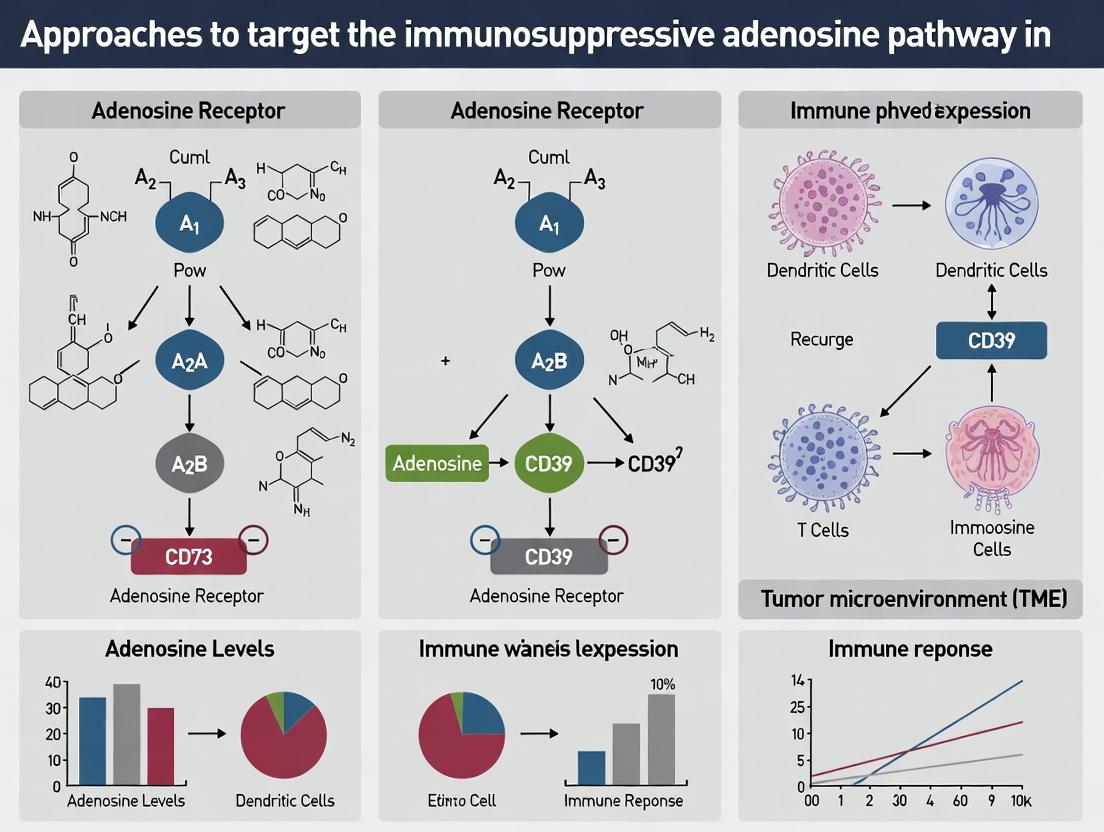
This article provides a comprehensive overview of the latest advances in targeting the immunosuppressive adenosine pathway within the tumor microenvironment (TME).
Disrupting the Fortress: Cutting-Edge Strategies to Target the Adenosine Pathway in the Tumor Microenvironment for Cancer Immunotherapy
Abstract
This article provides a comprehensive overview of the latest advances in targeting the immunosuppressive adenosine pathway within the tumor microenvironment (TME). We explore the foundational biology of adenosine generation via CD39/CD73 and signaling through A2A and A2B receptors, which establishes a potent barrier to anti-tumor immunity. The core of the review details current methodological approaches, including small molecule inhibitors, antibodies, and combination therapies with immune checkpoint blockade. We critically analyze challenges in clinical translation, such as metabolic compensation and on-target toxicity, and present strategies for patient stratification and biomarker development. By comparing the efficacy and limitations of various therapeutic modalities, this article serves as a critical resource for researchers and drug developers aiming to overcome this key resistance mechanism and enhance the success of next-generation immunotherapies.
Adenosine in the TME: Decoding the Immunosuppressive Axis from Basics to Biology
Technical Support Center: Troubleshooting Adenosine Pathway Assays
This technical support center provides solutions for common experimental challenges in studying the CD39-CD73-adenosine axis within the Tumor Microenvironment (TME), supporting research aimed at targeting this immunosuppressive pathway.
Frequently Asked Questions & Troubleshooting
Q1: In my flow cytometry experiment, the CD73 (NT5E) signal is weak or inconsistent in tumor-infiltrating lymphocyte (TIL) populations. What could be the cause? A: Weak CD73 staining often stems from enzyme activity or epitope masking. Implement this protocol:
- Pre-treatment: Use a gentle enzyme-free cell dissociation buffer for tissues to preserve surface epitopes. Avoid prolonged trypsinization.
- Antibody Selection: Validate clones (e.g., AD2, 7G2). Titrate on positive control cells (e.g., activated Tregs, A549 cell line).
- Blocking: Incubate cells with an Fc receptor blocking reagent for 10 min on ice before staining.
- Fixation: If required, use 1-2% PFA for a short time (10-15 min); avoid over-fixation.
- Positive Control: Always include a known CD73+ cell line in your staining panel.
Q2: My HPLC/MS measurement of extracellular adenosine shows high background or degradation of standards. How do I stabilize samples? A: Adenosine is rapidly metabolized. Follow this precise workflow:
- Immediate Inhibition: Upon collecting cell culture supernatant, add a cocktail of enzyme inhibitors: 1) EHNA (10 µM) to inhibit adenosine deaminase (ADA), 2) α,β-methylene-ADP (APCP, 100 µM) to inhibit CD73, and 3) ARL67156 (50 µM) to inhibit CD39.
- Rapid Processing: Immediately place samples on dry ice, then transfer to -80°C.
- Protein Precipitation: Prior to analysis, deproteinize samples using ice-cold methanol or acetonitrile (3:1 v/v sample:solvent), vortex, and centrifuge at 14,000 g for 10 min at 4°C. Use the clarified supernatant for injection.
- Standard Curve: Prepare fresh adenosine standards in the same matrix (e.g., culture medium) treated with inhibitors.
Q3: The enzymatic activity assay for CD39 shows low dynamic range. How can I optimize it? A: Low dynamic range is typically due to substrate (ATP) depletion or inadequate detection sensitivity. Use this optimized protocol:
- Reaction Setup:
- Buffer: 50 mM Tris, 5 mM CaCl2, pH 7.5.
- Substrate: Prepare a 10 mM ATP stock in buffer. Use a final reaction concentration of 500 µM (within the Km range).
- Cells/Protein: Use 1-5 x 10^5 cells or 1-10 µg of protein lysate per 100 µL reaction.
- Incubation: 37°C for 15-60 minutes (establish linear range).
- Detection Method (Malachite Green Phosphate Assay):
- Stop the reaction with an equal volume of Malachite Green reagent (e.g., Millipore Sigma).
- Incubate for 20-30 min at room temperature, protected from light.
- Measure absorbance at 620-650 nm.
- Include Controls: No-enzyme control (background phosphate), no-substrate control, and a phosphate standard curve (0-100 nmol).
- Inhibition Control: Validate with a CD39 inhibitor (e.g., POM-1, 100 µM) to confirm signal specificity.
Q4: When testing a dual CD39/CD73 inhibitor in a co-culture assay, how do I differentiate off-target effects on cell viability? A: Implement a tiered viability and specificity assessment.
- Baseline Viability: Treat target (e.g., cancer cells) and immune cells (e.g., T cells) separately with the inhibitor across your concentration range (e.g., 0.1-100 µM) for the duration of your co-culture experiment (e.g., 72h).
- Assays: Measure viability using two distinct methods:
- Metabolic Activity: MTT or Resazurin assay.
- Membrane Integrity: Trypan Blue exclusion or flow cytometry with a live/dead fixable dye (e.g., Zombie NIR).
- Specificity Rescue: In your functional co-culture, include "rescue" conditions with stable adenosine receptor agonists (e.g., CGS21680 for A2aR) or exogenous adenosine (with EHNA to prevent degradation) to see if they reverse the inhibitor's effect, confirming on-target activity.
Key Experimental Protocols
Protocol 1: Measuring CD73 Ecto-5'-Nucleotidase Activity via Colorimetric Method Principle: Converts AMP to adenosine, releasing inorganic phosphate (Pi) detected by Malachite Green. Steps:
- Plate Cells: Seed target cells (e.g., 2x10^4/well) in a 96-well plate. Adhere overnight.
- Wash: Gently wash cells twice with warm, serum-free RPMI or assay buffer (20 mM HEPES, 140 mM NaCl, 5 mM KCl, 2 mM MgCl2, 1 mM CaCl2, pH 7.4).
- Reaction: Add 100 µL/well of 400 µM AMP (in assay buffer). Include wells with 100 µM APCP (CD73 inhibitor) for specificity and blank (buffer only).
- Incubate: 37°C, 5% CO2 for 30-60 min (optimize for linearity).
- Pi Detection: Transfer 80 µL of supernatant to a new plate. Add 20 µL of Malachite Green detection reagent. Incubate 20 min (RT, dark).
- Read: Measure A620 nm. Calculate activity by subtracting inhibitor control values and interpolating from a phosphate standard curve. Normalize to cell count or protein.
Protocol 2: Flow Cytometry for Co-expression of CD39 and CD73 on Immune Cell Subsets Principle: Multiplex surface staining to identify CD39+CD73+ populations (e.g., immunosuppressive Tregs). Steps:
- Prepare Single Cell Suspension: From tumor/dissociated tissue or PBMCs. Use 70 µm strainer.
- Viability Stain: Resuspend up to 10^7 cells in 1 mL PBS. Add 1 µL of a fixable viability dye (e.g., Zombie Aqua). Incubate 15 min, RT, in the dark.
- Fc Block: Wash with FACS buffer (PBS + 2% FBS). Resuspend in 100 µL buffer with human/mouse Fc block (1:50). Incubate 10 min on ice.
- Surface Stain: Add antibody cocktail directly. Typical Panel: anti-human CD3 (BV785), CD4 (BV605), CD25 (APC-Cy7), CD39 (PE-Cy7), CD73 (PE), CD45 (BV711). Titrate antibodies. Incubate 30 min on ice, dark.
- Wash & Fix: Wash twice with cold FACS buffer. Fix with 1-2% PFA for 15 min on ice if needed (otherwise, resuspend in buffer for immediate acquisition).
- Acquisition: Run on a flow cytometer. Use FMO (Fluorescence Minus One) controls for CD39 and CD73 to set positive gates.
Table 1: Common Inhibitors for Adenosine Pathway Enzymes
| Target | Compound Name | Typical Working Concentration | Key Mechanism / Note |
|---|---|---|---|
| CD39 (ENTPD1) | POM-1 (Polymyxin B nonapeptide) | 10 - 100 µM | Non-selective, competitive inhibitor of NTPDases. |
| CD39 | ARL67156 | 50 - 200 µM | ATP analog, competitive inhibitor. Moderate potency. |
| CD73 (NT5E) | α,β-methylene-ADP (APCP) | 100 - 500 µM | Non-hydrolyzable AMP analog, potent and selective. |
| CD73 | AB680 (Clinical Compound) | 0.1 - 10 nM | Potent, reversible, competitive inhibitor with sub-nM Ki. |
| Dual/Adenosine Receptor | Caffeine/Theophylline | 100 - 1000 µM | Non-selective AR antagonists (mainly A1, A2A). |
Table 2: Quantitative Expression of CD39 and CD73 Across Human Cell Types (Representative Ranges)
| Cell Type (Human) | CD39 Expression (MFI/%) | CD73 Expression (MFI/%) | Functional Context in TME |
|---|---|---|---|
| Regulatory T cells (Tregs) | High (60-90%+) | Variable (10-50%) | Major immunosuppressive subset; CD39+CD73+ generate adenosine. |
| Conventional CD4+ T cells | Low (<5%) | Low/Intermediate | Can upregulate upon chronic activation/exhaustion. |
| CD8+ Tumor-Infiltrating Lymphocytes (TILs) | Variable (10-40%) | Variable (5-30%) | Associated with an exhausted/dysfunctional phenotype. |
| Myeloid-Derived Suppressor Cells (MDSCs) | High (70%+) | High (70%+) | Potent adenosine producers; key immunosuppressive players. |
| Tumor-Associated Macrophages (M2) | Intermediate-High | Intermediate-High | Contribute to immunosuppressive niche. |
| Endothelial Cells | Low | High (Constitutive) | Acts as a barrier, converting circulating nucleotides to adenosine. |
| Many Carcinoma Cells (e.g., Breast, Lung) | Variable | High (Constitutive) | Direct immunosuppression and autocrine signaling. |
The Scientist's Toolkit: Key Research Reagent Solutions
| Reagent | Vendor Examples (Catalog #) | Primary Function in Assays |
|---|---|---|
| Anti-human CD39 (ENTPD1) Antibody, clone A1 | BioLegend (328210), eBioscience (25-0399) | Flow cytometry, blocking/neutralization studies. |
| Anti-human CD73 (NT5E) Antibody, clone AD2 | BioLegend (344006), BD Biosciences (561254) | Flow cytometry, immunohistochemistry, functional blocking. |
| Recombinant Human CD73/NT5E Protein | R&D Systems (5795-CY), Sino Biological (10394-H08H) | Positive control for enzymatic assays, inhibitor screening. |
| Adenosine 5′-Triphosphate (ATP) Disodium Salt | Sigma-Aldrich (A2383) | Substrate for CD39 (ENTPD1) enzymatic activity assays. |
| Adenosine 5′-Monophosphate (AMP) Sodium Salt | Sigma-Aldrich (A1752) | Substrate for CD73 (NT5E) ecto-5'-nucleotidase assays. |
| Malachite Green Phosphate Assay Kit | Sigma-Aldrich (MAK307), Cayman Chemical (10009325) | Colorimetric detection of inorganic phosphate from enzyme activity. |
| EHNA Hydrochloride (Erythro-9-Amino-β-hexyl-α-methyl-9H-purine-9-ethanol) | Tocris (1290), Sigma-Aldrich (E114) | Potent adenosine deaminase (ADA) inhibitor; stabilizes adenosine. |
| Zombie NIR Fixable Viability Kit | BioLegend (423106) | Flow cytometry viability stain for use prior to fixation. |
| POM-1 | Tocris (4697) | Potent inhibitor of ecto-nucleoside triphosphate diphosphohydrolases (NTPDases; CD39 family). |
| APCP (α,β-Methylene-ADP) | Tocris (1288) | Potent, specific, and non-hydrolyzable competitive inhibitor of CD73. |
Pathway & Workflow Diagrams
Adenosine Generation Cascade and Immunosuppressive Effects
Workflow for CD39/CD73 Co-expression Analysis by Flow Cytometry
Therapeutic Strategies to Target the Adenosine Pathway in TME
Technical Support Center: Troubleshooting Adenosine Receptor Research
Troubleshooting Guides
Issue 1: Poor Cell Surface Receptor Detection via Flow Cytometry
- Problem: Weak or no signal for A2A or A2B receptors on immune cells (e.g., T cells, macrophages).
- Potential Causes & Solutions:
- Cause 1: Receptor internalization upon ligand binding.
- Solution: Incubate cells at 4°C during staining and use a phosphate-buffered saline (PBS) wash containing a low dose of a broad-spectrum adenosine receptor antagonist (e.g , 10µM theophylline) to block ambient adenosine.
- Cause 2: Inadequate antibody specificity.
- Solution: Validate antibodies using receptor-transfected cell lines and knockout cells as controls. Consider using an intracellular staining protocol with permeabilization to detect total receptor protein.
- Cause 3: Low basal receptor expression.
- Solution: Pre-stimulate cells with an activating agent (e.g., anti-CD3/CD28 for T cells, LPS for macrophages) for 16-24 hours, as inflammation can upregulate receptor expression.
- Cause 1: Receptor internalization upon ligand binding.
Issue 2: Inconsistent Functional Assay Results (e.g., cAMP Accumulation)
- Problem: High variability in cAMP response after agonist (e.g., CGS-21680 for A2A, BAY 60-6583 for A2B) stimulation.
- Potential Causes & Solutions:
- Cause 1: Fluctuating endogenous adenosine levels in culture.
- Solution: Include a control with a stable ecto-enzyme like CD73 or treat cultures with adenosine deaminase (ADA, 1 U/mL) to degrade ambient adenosine and establish a baseline. Always use a specific antagonist (e.g., SCH-58261 for A2A, PSB-603 for A2B) as a negative control.
- Cause 2: Desensitization or cross-talk from other GPCRs.
- Solution: Reduce pre-experiment handling stress. Use a phosphodiesterase (PDE) inhibitor (e.g., IBMX, 100µM) in the assay buffer to prevent cAMP degradation and amplify signal.
- Cause 3: Off-target effects of pharmacological agents.
- Solution: Use multiple, chemically distinct agonists/antagonists to confirm phenotype. Correlate with genetic knockdown (siRNA/shRNA) data.
- Cause 1: Fluctuating endogenous adenosine levels in culture.
Issue 3: Differentiating A2A vs. A2B Receptor Contribution in Mixed Cultures
- Problem: Difficulty attributing observed immunosuppression (e.g., reduced T cell cytokine production) to a specific receptor subtype.
- Potential Causes & Solutions:
- Cause: Overlapping agonist/antagonist affinities and co-expression.
- Solution: Employ a tiered pharmacological approach:
- Use a pan-AR antagonist (e.g., Caffeine, Theophylline) to see if the effect is adenosine-receptor-dependent.
- Use a high-affinity A2A-specific agonist (CGS-21680, <100 nM) to isolate A2A effect.
- Use a selective A2B agonist (BAY 60-6583, ≥100 nM) in the presence of a selective A2A antagonist (SCH-58261) to isolate A2B effect.
- Confirm with genetic tools (conditional knockout cells, CRISPRi) for each receptor.
- Solution: Employ a tiered pharmacological approach:
- Cause: Overlapping agonist/antagonist affinities and co-expression.
Frequently Asked Questions (FAQs)
Q1: Under hypoxic TME conditions, which receptor—A2A or A2B—is more critical to target? A: Data suggests a kinetic and contextual division of labor. A2A, with its high affinity for adenosine (Ki ~150 nM), is dominant under milder or early hypoxia. A2B, a low-affinity receptor (Ki ~1-10 µM), becomes the dominant immunosuppressive driver under severe/prolonged hypoxia where adenosine concentrations surge. A dual-targeting strategy may be most effective for robust TME inhibition.
Q2: What are the best practices for measuring adenosine concentration in my in vitro TME model? A: Use a validated biochemical assay (e.g., mass spectrometry, ELISA-based kits like from Cell Biolabs). Critically, sample collection must involve immediate enzymatic quenching (e.g., with EHNA/DPCPX to inhibit ADA and adenosine uptake) and rapid deproteinization. Always generate a standard curve in your specific cell culture medium.
Q3: My in vivo tumor model shows no response to an A2A antagonist alone. Does this mean the pathway is irrelevant? A: Not necessarily. The adenosine pathway often exhibits significant redundancy with other checkpoints (e.g., PD-1/PD-L1). Combination therapy is frequently required. Furthermore, assess A2B receptor expression in your model, as it may be compensating. Also, verify that your tumor model generates sufficient extracellular adenosine (high CD39/CD73 expression, hypoxia).
Q4: Are there species-specific differences in A2A/A2B receptor pharmacology I should consider? A: Yes. Notably, the common A2B antagonist MRS-1754 is highly selective for the human receptor but has much lower affinity for murine A2B. Always confirm the selectivity profile of your compounds for the species used in your study. PSB-603 is a high-affinity antagonist for both human and mouse A2B.
Table 1: Key Pharmacological Properties of A2A and A2B Adenosine Receptors
| Property | A2A Receptor (Human) | A2B Receptor (Human) | Key Implications |
|---|---|---|---|
| Adenosine Affinity | High (Ki ~70-150 nM) | Low (Ki ~1-10 µM) | A2A is tonically active; A2B activates in high [Ado] (e.g., TME). |
| Primary G-protein | Gs (some Golf) | Gs and Gq | Both increase cAMP; A2B also signals via PLC/PKC/Ca2+. |
| Selective Agonist | CGS-21680 (EC50 ~15 nM) | BAY 60-6583 (EC50 ~3 nM) | Use low nM for A2A; BAY 60-6583 is potent but check A2A cross-reactivity at high dose. |
| Selective Antagonist | SCH-58261 (Ki ~2 nM) | PSB-603 (Ki ~1 nM) | PSB-603 preferred over MRS-1754 for mouse studies. |
| Immune Cell Expression | T cells, Tregs, NK cells, Macrophages | Macrophages, Dendritic Cells, Mast cells, some T cells | Target cell profile differs; A2B key on myeloid cells in TME. |
Table 2: Functional Outcomes of A2A vs. A2B Activation on Key Immune Cells
| Immune Cell Type | A2A Receptor Activation Effect | A2B Receptor Activation Effect |
|---|---|---|
| Effector CD4+/CD8+ T Cells | Inhibits TCR signaling, IL-2, IFN-γ, TNF-α production. Promotes anergy. | Inhibits proliferation & cytokine production. Synergizes with A2A. |
| Regulatory T Cells (Tregs) | Enhances suppressive function and stability. | Promotes differentiation and IL-10 production. |
| Macrophages (M1 phenotype) | Inhibits pro-inflammatory cytokine (TNF-α, IL-12) release. | Drives shift to M2-like, pro-angiogenic phenotype (VEGF, IL-10). |
| Myeloid-Derived Suppressor Cells (MDSCs) | Enhances suppressive function (Arg1, iNOS). | Promotes expansion and recruitment. Key driver in hypoxic TME. |
| Dendritic Cells | Reduces antigen presentation, co-stimulation (CD80/86), IL-12. | Inhibits maturation, promotes tolerogenic state. |
Experimental Protocols
Protocol 1: Assessing cAMP Accumulation in Immune Cells via ELISA
- Objective: Quantify GPCR-mediated cAMP production upon A2A/B activation.
- Materials: Cells, HBSS/HEPES buffer, adenosine receptor agonists/antagonists, PDE inhibitor (IBMX), 96-well plate cAMP ELISA kit (e.g., from Cayman Chemical or Enzo), microplate reader.
- Method:
- Cell Preparation: Harvest and wash cells 2x in serum-free, ADA-containing (1 U/mL) assay buffer. Resuspend at 1x10^6 cells/mL in buffer containing 100µM IBMX.
- Stimulation: Aliquot 90µL cell suspension per well in a V-bottom plate. Pre-incubate with antagonists for 15 min at 37°C. Add 10µL of agonist at 10X desired final concentration. Incubate for exactly 15 min at 37°C.
- Lysis & Detection: Immediately lyse cells per ELISA kit instructions (typically with HCl/Detergent). Neutralize lysate. Transfer acetylated samples to ELISA plate, proceed with assay protocol.
- Analysis: Calculate cAMP concentration from standard curve. Normalize to protein content or cell number.
Protocol 2: Co-culture Suppression Assay (T cell Function)
- Objective: Measure the suppression of effector T cell function by adenosine-producing or receptor-expressing stromal/myeloid cells.
- Materials: Effector T cells (e.g., OT-I CD8+), target suppressive cells (e.g., Tregs, MDSCs, cancer cells), anti-CD3/CD28 beads, CFSE, cytokine (IFN-γ) ELISA kit.
- Method:
- Labeling: Label effector T cells with 2.5µM CFSE for 10 min at 37°C. Quench with serum.
- Co-culture: Plate suppressive cells in a U-bottom 96-well plate. Add CFSE-labeled T cells at desired ratio (e.g., 1:1, 1:0.5 suppressor:T cell). Add anti-CD3/CD28 beads (1 bead per 2 T cells). Include conditions with adenosine receptor antagonists (e.g., 100nM SCH-58261, 100nM PSB-603) or ADA (1 U/mL).
- Incubation: Culture for 72-96 hours.
- Analysis: Harvest cells for flow cytometry analysis of CFSE dilution (proliferation). Collect supernatant for IFN-γ ELISA.
Signaling Pathway & Workflow Diagrams
Diagram Title: A2A and A2B Receptor Signaling to Immune Suppression
Diagram Title: Adenosine Receptor Experiment Workflow & Decision Points
The Scientist's Toolkit: Research Reagent Solutions
| Reagent / Material | Function & Application | Example (Vendor Neutral) |
|---|---|---|
| Selective A2A Agonist (CGS-21680) | Activates A2A at low nM concentrations; used to isolate A2A-specific effects in functional assays. | Useful for cAMP assays, T cell suppression studies. |
| Selective A2B Agonist (BAY 60-6583) | Potent A2B agonist; used to study A2B function, especially under high-adenosine/hypoxia mimicry. | Critical for studying A2B-driven IL-10 production, angiogenesis. |
| Selective A2A Antagonist (SCH-58261, Istradefylline/KW-6002) | Blocks A2A signaling. Used to reverse A2A-mediated suppression and validate target engagement. | Key for in vivo tumor immunity studies and combination therapies. |
| Selective A2B Antagonist (PSB-603) | High-affinity antagonist for human and mouse A2B. Superior to MRS-1754 for murine studies. | Essential for dissecting A2B-specific roles in hypoxic TME models. |
| Adenosine Deaminase (ADA) | Enzyme that degrades adenosine to inosine. Used to establish baseline by removing ambient adenosine in cultures. | Critical control for any in vitro assay to prevent tonic receptor activation. |
| Ecto-Enzyme Inhibitors (APCP for CD73, ARL 67156 for NTPDase) | Inhibit adenosine generation from ATP/ADP (via CD39/CD73 pathway). Used to probe source of immunosuppressive adenosine. | Important in co-culture or tumor-conditioned media experiments. |
| cAMP ELISA/FRET Kit | For quantitative measurement of intracellular cAMP, the primary second messenger for A2A/B receptors. | Gold-standard for confirming receptor activation/blockade. |
| Hypoxia Chamber/Inducers | To create physiologically relevant low-oxygen conditions (1-2% O2) that upregulate HIF-1α, CD73, and adenosine production. | Necessary for studying the A2B-dominated high-adenosine TME niche. |
Technical Support & Troubleshooting Center
Troubleshooting Guide: Common Issues in Extracellular ATP Measurement & Manipulation
Issue 1: Inconsistent or Low ATP Measurements in Hypoxic Cell Culture Models.
- Q: "I am using a luciferase-based assay to measure eATP from cancer cells in a hypoxic chamber (1% O2). My readings are consistently low and variable, unlike published data. What could be wrong?"
- A: This is a common pitfall. The luciferase reaction itself requires oxygen. In hypoxic samples, the assay sensitivity is drastically reduced.
- Solution: Transfer a small aliquot of your conditioned medium to a normoxic environment immediately before adding the luciferase reagent and measuring. Minimize delay to prevent rapid ATP degradation by ectonucleotidases. Consider using a bioluminescent ATP assay optimized for low-oxygen environments or stopping ectonucleotidase activity with ARL67156 (an ecto-ATPase inhibitor) prior to collection.
Issue 2: Distinguishing ATP Release from Primary Necrosis vs. Regulated Processes.
- Q: "My treatment is supposed to induce immunogenic cell death with ATP release, but I suspect it's causing simple necrosis. How can I tell the difference?"
- A: You need complementary assays to determine the mechanism of release.
- Solution:
- Membrane Integrity: Use simultaneous staining with PI (passes through leaky membranes) and a viability dye like DAPI (only enters dead cells). Early, regulated release (e.g., via pannexin-1 channels) often occurs before loss of membrane integrity.
- Inhibition: Use specific inhibitors. 10 Panx (pannexin-1 inhibitor) or carbenoxolone can block regulated release but not passive leakage from necrosis.
- Marker Analysis: Assess release of pure intracellular proteins (e.g., LDH) versus ATP. High LDH correlates strongly with necrosis, while ATP can be released without significant LDH leak in regulated processes.
- Solution:
Issue 3: Stromal Cell Contamination in Tumor Cell ATP Secretion Experiments.
- Q: "I sorted tumor cells from a disaggregated tumor, but my ATP measurements might be confounded by residual stromal cells. How can I purify or account for this?"
- A: Stromal cells (like cancer-associated fibroblasts or endothelial cells) are potent ATP secretors. Improved sorting is key.
- Solution: Implement a more stringent sorting protocol using a combination of negative (CD45-, CD31-) and positive (epithelial-specific marker) selection. Follow sorting with a short-term (6-12 hour) culture to allow recovery but not overgrowth, then re-validate purity by flow cytometry before the ATP secretion assay. Always include sorted stromal cells as a control group.
Issue 4: Rapid Degradation of Extracellular ATP in Co-culture Systems.
- Q: "In my T cell-tumor cell co-culture, I can't detect elevated eATP despite expecting it. I think it's being degraded too fast."
- A: The tumor microenvironment (TME) is rich in ectonucleotidases (CD39, CD73). Your observation is likely correct.
- Solution: Include ectonucleotidase inhibitors in your assay buffer.
- ARL67156 (6-N,N-Diethyl-β-γ-dibromomethylene-D-adenosine-5-triphosphate): A relatively stable ecto-ATPase inhibitor.
- POM-1 or ARL 80754X: Potent and selective CD39 inhibitors.
- Note: Pre-treat cells and include inhibitors throughout the experiment. Validate inhibitor efficacy by checking for accumulation of ADP/AMP and reduction of adenosine downstream.
- Solution: Include ectonucleotidase inhibitors in your assay buffer.
Frequently Asked Questions (FAQs)
Q1: What is the best method to measure real-time extracellular ATP dynamics in a 3D tumor spheroid model? A: Genetically encoded ATP indicators (e.g., GRABATP sensors) are optimal for real-time, spatial tracking in live 3D cultures. For endpoint measurements, plate-reader compatible bioluminescent assays on spheroid supernatants are standard, but ensure spheroids are settled to avoid background from intracellular ATP.
Q2: Which hypoxia mimetic is most suitable for studying ATP release—chemical inducers (CoCl2, DFO) or a physical hypoxia chamber? A: A physical hypoxia chamber (or workstation) is always superior for ATP studies. Chemical inducers like CoCl2 (cobalt chloride) or DFO (deferoxamine) stabilize HIF-α but do not replicate the metabolic stress (e.g., mitochondrial dysfunction) that is a major trigger for ATP release from hypoxic cells. Use them only for preliminary HIF-specific signaling studies, not for ATP secretion work.
Q3: How can I specifically block stromal (CAF)-derived ATP without affecting tumor cells? A: Use a conditional knockdown/knockout approach in stromal cells prior to co-culture. For human cells, use siRNA/shRNA targeting pannexin-1 or connexin channels in isolated CAFs. In murine systems, consider using transgenic mice with floxed Panx1 alleles crossed with fibroblast-specific (e.g., FSP1-Cre) drivers to generate CAF-specific knockouts for your tumor models.
Q4: What are the key controls for an experiment linking hypoxia-induced eATP to adenosine generation in the TME? A: Your experimental setup must account for the entire pathway:
- Hypoxia Control: Normoxic cells + inhibitor.
- ATP Release Control: Hypoxic cells + pannexin-1/connexin inhibitor.
- ATP Degradation Control: Hypoxic cells + CD39 inhibitor (e.g., POM-1).
- Adenosine Generation Control: Hypoxic cells + CD73 inhibitor (e.g., APCP).
- Final Readout Control: Hypoxic cells + adenosine receptor antagonist (e.g., PSB-1115 for A2AR). Measure intermediates: eATP, ADP/AMP, and adenosine.
Table 1: Measured Concentrations of Extracellular ATP in Different Contexts
| Source / Condition | Typical eATP Concentration Range | Key Measurement Method | Primary Release Mechanism |
|---|---|---|---|
| Normal Cell Basal Secretion | 1-10 nM | Luciferase-based assay | Constitutive exocytosis, vesicular release. |
| Hypoxic Tumor Cells (in vitro) | 100 nM - 1 µM | Microplate assay, HPLC | Pannexin-1 channels, vesicular release, passive leak from severe stress. |
| Necrotic Cell Lysate | 10 - 100 µM (local, transient) | Luciferase assay on lysate | Passive diffusion from damaged plasma membrane. |
| Activated Cancer-Associated Fibroblasts (CAFs) | 500 nM - 5 µM | Real-time biosensor (GRABATP) | Connexin/pannexin channels, exocytosis of autophagic vesicles. |
| Tumor Interstitial Fluid (in vivo) | 100 nM - 10 µM* | Microdialysis, luciferase assay | Composite of all sources + degradation. (*Highly variable) |
Table 2: Common Pharmacological Tools for Modulating Extracellular ATP
| Reagent Name | Target | Common Use Concentration | Function in Experiment |
|---|---|---|---|
| ARL67156 | Ecto-ATPases (CD39 mainly) | 50-100 µM | Inhibits degradation of eATP, allowing its accumulation for measurement. |
| 10 Panx | Pannexin-1 Channels | 100-200 µM | Blocks ATP release via pannexin-1 hemi-channels. |
| Carbenoxolone | Pannexin-1 / Connexin GJs | 50-100 µM | Broad gap junction/hemi-channel blocker. |
| Brefeldin A | Golgi Transport | 5-10 µM | Inhibits vesicular ATP release pathway. |
| POM-1 | CD39 (NTPDase1) | 10-100 µM | Potent and selective inhibitor of the primary ATP→ADP conversion step. |
Detailed Experimental Protocols
Protocol 1: Measuring ATP Release from Hypoxic Tumor Cells with Degradation Blockade Objective: To accurately quantify ATP released from tumor cells under hypoxia, minimizing degradation.
- Cell Preparation: Seed cells in a 24-well plate. Allow to adhere overnight.
- Hypoxia Induction: Place cells in a pre-equilibrated hypoxia chamber (1% O2, 5% CO2, 94% N2) for 4-24 hours. Include normoxic controls in a standard incubator.
- Inhibitor Pre-treatment: 30 minutes before medium collection, add ARL67156 (final conc. 100 µM) to the assay medium (e.g., plain DMEM).
- Sample Collection: At time point, quickly place plate on ice. Gently collect conditioned medium. Centrifuge at 500xg for 5 min at 4°C to remove cells/debris. Aliquot supernatant and freeze at -80°C or assay immediately.
- ATP Measurement: Thaw samples on ice. Use a commercial luciferase ATP assay kit per manufacturer's instructions. Use a plate reader with injectors for consistent timing. Generate a standard curve with each run.
Protocol 2: Differentiating Necrotic vs. Regulated ATP Release Using Inhibitors Objective: To determine the contribution of pannexin-1 channels to total ATP release.
- Experimental Groups: Prepare cells in four conditions:
- Group A: Vehicle control (Normoxia)
- Group B: Hypoxia (1% O2)
- Group C: Hypoxia + 10 Panx (200 µM, added at start of hypoxia)
- Group D: Induced Necrosis (e.g., 3 freeze-thaw cycles)
- Treatment: Place Groups B & C in hypoxia chamber for 6 hours. Maintain Groups A & D in normoxia.
- Collection & Measurement: Collect conditioned medium from Groups A-C. For Group D, lyse cells directly in assay buffer. Process all samples with ATP assay as in Protocol 1.
- Data Interpretation: Compare ATP in B vs. C. The reduction in Group C represents pannexin-1-mediated release. Compare levels in Group C to Group D (pure necrosis). Similar levels suggest treatment primarily causes necrosis.
Visualization: Pathways and Workflows
Diagram 1: Major Sources of eATP in TME and Conversion to Adenosine
Diagram 2: Experimental Workflow to Dissect eATP Sources
The Scientist's Toolkit: Essential Research Reagents
Table 3: Key Reagent Solutions for Targeting the ATP-Adenosine Pathway
| Item | Function in Research | Example Product / Cat. No. (for reference) |
|---|---|---|
| ATP Bioluminescence Assay Kit | Quantifies extracellular ATP concentration with high sensitivity. | Sigma-Aldrich FLAA, Promega Vialight. |
| CD39 (POM-1) Inhibitor | Selective inhibitor of the primary ATP-degrading enzyme in TME. | Tocris Bioscience (POM-1, Cat. 3957). |
| CD73 (APCP) Inhibitor | Competitive inhibitor of AMP-to-adenosine conversion. | Sigma-Aldrich (α,β-methylene-ADP). |
| Pannexin-1 Inhibitor (10 Panx) | Peptide blocker of Panx1 channels for mechanistic studies. | Tocris Bioscience (Cat. 5141). |
| Adenosine A2A Receptor Antagonist | Blocks immunosuppressive adenosine signaling on immune cells. | SCH58261, Preladenant (Tocris). |
| Recombinant Human CD39/E-NTPDase1 | Positive control for ATP degradation assays. | R&D Systems (Cat. 4399-EN). |
| Hypoxia Chamber/Workstation | Creates physiologically relevant low-oxygen environment. | Billups-Rothenberg, Coy Labs, Baker Ruskinn. |
| GRABATP Sensor Plasmid | Genetically encoded sensor for real-time, spatial ATP imaging. | Addgene (various constructs). |
| ARL67156 | Ecto-ATPase inhibitor to stabilize eATP in assays. | Tocris Bioscience (Cat. 3862). |
Troubleshooting & FAQs
FAQ 1: My in vitro T cell suppression assay shows inconsistent results when adding adenosine or an A2AR agonist. What could be the cause?
- Answer: Inconsistent suppression often stems from variable expression levels of adenosine receptors (particularly A2AR) on your T cell population. This is influenced by activation status and prior cytokine exposure.
- Troubleshooting Steps:
- Confirm Receptor Expression: Use flow cytometry to measure A2AR surface expression on your activated CD8+ T cells prior to the assay. Low receptor levels will result in minimal cAMP response.
- Check Adenosine Degradation: Ensure you are using a stable analogue (e.g., NECA) or include an ectonucleotidase inhibitor (e.g., APCP for CD73) if generating adenosine from AMP/ADP/ATP precursors to prevent rapid metabolic clearance.
- Control for Media Components: Fetal bovine serum contains high levels of adenosine deaminase (ADA). Use dialyzed FBS or ADA inhibitors (e.g., Pentostatin) to maintain consistent adenosine levels.
- Troubleshooting Steps:
FAQ 2: When I treat myeloid-derived suppressor cells (MDSCs) with an A2BR antagonist, I do not see the expected reduction in their suppressive capacity. Why?
- Answer: A2BR has a lower affinity for adenosine and is typically engaged in high adenosine environments like the TME. In vitro conditions may not replicate sufficient adenosine concentration.
- Troubleshooting Steps:
- Increase Adenosine: Co-treat with a CD73 agonist or exogenous adenosine (e.g., 10-100µM) to simulate TME levels and engage A2BR.
- Verify Target Engagement: Use a cAMP assay. A2BR antagonism should block cAMP elevation specifically in MDSCs under high adenosine. Confirm your antagonist's selectivity for A2BR over A2AR in your system.
- Check MDSC Purity & Viability: Ensure your isolated population is not contaminated with other suppressive cells (e.g., Tregs) that may compensate via A2AR signaling.
- Troubleshooting Steps:
FAQ 3: My NK cell cytotoxicity assay fails to show recovery when using an A2AR/A2BR dual antagonist, contrary to literature. What should I check?
- Answer: NK cell inhibition via adenosine is complex and involves both direct signaling and indirect effects via dampened IL-2/IL-15 responsiveness.
- Troubleshooting Steps:
- Confirm Cytokine Presence: Ensure your assay includes relevant cytokines (IL-2, IL-15, or IL-12) at physiological levels. Antagonists may only restore function in a cytokine-dependent context.
- Assay Duration: Adenosine's effect on NK cell metabolism can be delayed. Extend your cytotoxicity measurement timeline (e.g., 18-24 hours).
- Evaluate Metabolic State: Check for glycolytic suppression via Seahorse or similar. The antagonist should rescue glycolysis. If not, the issue may be upstream of receptor signaling.
- Troubleshooting Steps:
Table 1: Adenosine Receptor Expression and Affinity
| Receptor | Primary Cell Types Expressing | Adenosine Binding Affinity (Kd) | Key Inhibitory Effector Function Impact |
|---|---|---|---|
| A2AR | Activated CD8+ T cells, NK cells, Tregs | High (~10-100 nM) | Strongly inhibits IFN-γ, TNF-α production; reduces cytotoxicity |
| A2BR | Macrophages, MDSCs, Dendritic Cells | Low (~1-10 µM) | Promotes IL-10, VEGF production; enhances MDSC function |
| A1R | Some T cell subsets | High (~0.1-1 nM) | Modulates Ca2+ signaling; role in T cell inhibition less defined |
Table 2: Efficacy of Pharmacological Agents in Preclinical Models
| Agent Class | Example Compound | Target | Observed Effect (In Vivo Model) | Key Readout (Change vs. Control) |
|---|---|---|---|---|
| A2AR Antagonist | SCH58261 | A2AR | Delayed tumor growth, increased TIL function | +40% CD8+ TIL IFN-γ, -25% tumor volume |
| A2BR Antagonist | PSB1115 | A2BR | Reduced metastasis, decreased MDSC infiltration | -50% lung metastases, -30% Treg accumulation |
| CD73 Inhibitor | AB680 (small molecule) | CD73 | Enhanced anti-PD-1 efficacy, increased NK activity | Tumor clearance in 60% of combo vs. 20% anti-PD-1 alone |
| Dual A2AR/A2BR Antagonist | AB928 (Etrumadenant) | A2AR/A2BR | Synergy with chemotherapy & immunotherapy | +70% overall survival, increased M1/M2 macrophage ratio |
Experimental Protocols
Protocol 1: Measuring cAMP Induction in T Cells via A2AR Signaling
- Objective: Quantify proximal signaling of adenosine receptor engagement.
- Method:
- Cell Preparation: Isolate human or mouse CD8+ T cells. Activate with anti-CD3/CD28 beads for 48-72 hours.
- Stimulation: Wash cells and resuspend in assay buffer. Pre-treat with or without A2AR antagonist (e.g., ZM241385, 1µM) for 30 min.
- cAMP Induction: Stimulate with adenosine (10µM) or selective agonist (CGS21680, 100nM) for 15 min at 37°C.
- Lysis & Detection: Lyse cells and measure cAMP levels using a commercial ELISA or HTRF-based cAMP assay kit. Normalize to total protein.
- Key Controls: Unstimulated cells, cells treated with forskolin (positive control for cAMP).
Protocol 2: Assessing Functional NK Cell Suppression by Adenosine
- Objective: Evaluate the impact of adenosine on NK cell cytotoxicity.
- Method:
- NK Cell Isolation: Isolate primary human NK cells from PBMCs using negative selection.
- Target Cell Labeling: Label K562 or other target cells with a fluorescent dye (e.g., CFSE).
- Co-culture: Co-culture NK and target cells at varying E:T ratios in the presence of:
- Vehicle control.
- Adenosine (100µM) ± CD73 (to generate adenosine from AMP).
- Adenosine + A2AR antagonist.
- Cytotoxicity Measurement: After 4-6 hours, add a viability dye (e.g., propidium iodide) and analyze by flow cytometry. Calculate specific lysis:
(% killed targets in test - % spontaneous death) / (100 - % spontaneous death) * 100.
Diagrams
Title: Adenosine Signaling in Immune Cells
Title: In Vitro Suppression Assay Workflow
The Scientist's Toolkit: Research Reagent Solutions
| Reagent / Material | Primary Function in Adenosine Pathway Research | Example Product/Catalog |
|---|---|---|
| Recombinant Human/Mouse CD73 (ecto-5'-nucleotidase) | Generate physiologically relevant adenosine levels from AMP in vitro for functional assays. | R&D Systems, Cat# 5795-EN |
| Selective A2AR Agonist (CGS21680) | Specifically activate A2AR signaling to study its isolated effects on cAMP, T cell function, and NK cytotoxicity. | Tocris, Cat# 1063 |
| A2AR/A2BR Dual Antagonist (AB928/Etrumadenant) | Block both high and low-affinity adenosine receptors to fully evaluate pathway impact in complex co-cultures or in vivo. | MedChemExpress, Cat# HY-103705 |
| cAMP Gs Dynamic Kit (HTRF) | Measure real-time, intracellular cAMP accumulation as the direct readout of A2AR/A2BR engagement. | Cisbio, Cat# 62AM4PEC |
| Anti-human CD39/A2AR/A2BR Antibodies (for flow cytometry) | Quantify receptor surface expression on immune cell subsets to correlate with functional responses. | BioLegend (e.g., A2AR: Cat# 372602) |
| Adenosine Deaminase (ADA) Inhibitor (Pentostatin) | Prevent degradation of endogenous or exogenous adenosine in culture, stabilizing its concentration. | Sigma-Aldrich, Cat# SML0508 |
| CD73 Inhibitor (Small Molecule - AB680) | Potently inhibit enzymatic production of adenosine to dissect source-specific effects in the TME model. | MedChemExpress, Cat# HY-114346 |
| cAMP Analog (8-Bromo-cAMP) | Directly activate PKA downstream of receptors to bypass signaling and confirm effector cell inhibition mechanisms. | Tocris, Cat# 1140 |
Technical Support Center
This technical support center addresses common experimental challenges in studying the hypoxia-adenosinergic axis within the tumor microenvironment (TME). Our guidance is framed within the thesis: Approaches to target immunosuppressive adenosine pathway in TME research.
Troubleshooting Guides & FAQs
Q1: In my in vitro TME co-culture model, I observe inconsistent adenosine accumulation measured by LC-MS/MS. What are the key factors to control? A: Inconsistent adenosine levels are often due to variable ectonucleotidase activity or rapid cellular reuptake/metabolism.
- Check 1: Enzyme Stability. Ensure consistent handling of CD73 (NT5E) and CD39 (ENTPD1). These enzymes are sensitive to freeze-thaw cycles. Use fresh aliquots of recombinant proteins or verify cell surface expression via flow cytometry at experiment start.
- Check 2: Inhibition Controls. Include well-characterized pharmacological inhibitors in parallel setups:
- CD73 Inhibitor: APCP (α,β-methylene ADP), 100 µM.
- CD39 Inhibitor: ARL 67156, 100 µM.
- Adenosine Deaminase Inhibitor: EHNA, 10 µM (to prevent degradation).
- Failure of these inhibitors to reduce adenosine suggests non-canonical pathways or assay interference.
- Check 3: Sample Processing. Quench metabolism instantly by transferring culture supernatant to ice-cold HPLC vials containing an equal volume of 0.1M HCl to stabilize adenosine. Immediate snap-freezing in liquid N₂ is also effective.
Q2: When establishing hypoxia (1% O₂) to induce CD39/CD73 on my cancer cell lines, how do I differentiate between true hypoxia response and artifact from nutrient depletion or medium acidification? A: This is a critical control. Implement the following protocol: 1. Medium Pre-equilibration: Pre-equilibrate fresh culture medium in the hypoxic chamber for 24 hours before adding to cells. This prevents acute pH shifts from dissolved CO₂. 2. Nutrient & pH Monitoring: Use a blood gas analyzer or specialized sensors to measure glucose, lactate, and pH in the spent medium at the endpoint. Compare to normoxic controls. 3. Hypoxia Mimetic Control: Treat normoxic cells with 100 µM Dimethyloxalylglycine (DMOG), a PHD inhibitor that stabilizes HIF-1α. If DMOG replicates the CD39/CD73 upregulation seen in your 1% O₂ experiment, it strongly supports a HIF-mediated response. 4. Genetic Confirmation: Perform HIF-1α/HIF-2α knockdown via siRNA prior to hypoxia exposure. Loss of phenotype confirms specificity.
Q3: My in vivo experiment testing an anti-CD73 monoclonal antibody shows reduced tumor growth but no increase in tumor-infiltrating lymphocytes (TILs) by flow cytometry. How should I interpret this? A: Disconnect between growth and TILs suggests alternative mechanisms.
- Investigation Path A: Check Adenosine Receptor Blockade. The antibody may block enzymatic activity but not all immunosuppressive functions. Administer a selective A2A receptor antagonist (e.g., SCH 58261, 5 mg/kg) alongside your antibody. A synergistic effect points to residual adenosine signaling.
- Investigation Path B: Analyze Other Immune Compartments.
- Perform IHC for markers of vascular normalization (e.g., CD31, α-SMA). CD73 inhibition can improve perfusion, indirectly slowing growth without altering TIL numbers.
- Analyze myeloid-derived suppressor cells (MDSCs; CD11b⁺Gr-1⁺) and tumor-associated macrophages (TAMs; F4/80⁺CD206⁺). The primary effect may be on innate immune suppression.
- Technical Check: Ensure your tumor dissociation protocol is optimized for lymphocyte recovery. Validate with spike-in controls of known T cell numbers.
Key Experimental Protocols
Protocol 1: Measuring Extracellular Adenosine Flux in Real-Time
- Method: Use the bioluminescent sensor AdoSensor (PmeLUC).
- Steps:
- Seed target cells (e.g., cancer cells, T cells) in a white, clear-bottom 96-well plate.
- Transfect with AdoSensor plasmid or use stable reporter cell line.
- Prior to assay, add D-luciferin potassium salt (final 150 µg/mL).
- Initiate adenosine production by adding AMP substrate (final 500 µM).
- Immediately measure bioluminescence (kinetic mode, 1-5 min intervals for 60-120 min) using a plate reader.
- Quantification: Generate a standard curve with known adenosine concentrations. Express results as nM adenosine/min/10⁶ cells.
Protocol 2: Validating HIF-1α Dependency of CD73 Upregulation
- Method: CRISPR-Cas9 Knockout + Hypoxia Exposure.
- Steps:
- Design sgRNAs targeting the HIF1A gene (or EPAS1 for HIF-2α).
- Transfect cells with Cas9/sgRNA ribonucleoprotein complex via electroporation.
- Single-cell clone and validate knockout via western blot (normoxic vs. hypoxic, using CoCl₂ 150 µM, 24h as positive control).
- Subject WT and KO clones to 1% O₂ or normoxia (21% O₂) for 48 hours.
- Analyze CD73 surface expression via flow cytometry (Anti-CD73-APC, clone AD2).
- Key Control: Include a non-targeting sgRNA control clone.
Table 1: Efficacy of Pharmacological Inhibitors Targeting the Hypoxia-ADORA Axis
| Target | Example Inhibitor | IC₅₀ / Kᵢ | Common In Vivo Dose | Key Off-Target Effects to Consider |
|---|---|---|---|---|
| CD73 (NT5E) | AB680 (Ciforadenant) | 0.05 nM (Enzymatic) | 10 mg/kg, QD | High specificity; minimal reported. |
| CD39 (ENTPD1) | ARL 67156 | ~10 µM (Competitive) | 5 mg/kg, BID | Also inhibits other NTPDases at high conc. |
| A2A Receptor | SCH 58261 | 1.3 nM (Binding) | 5 mg/kg, QD | Potential CNS penetration. |
| A2B Receptor | PSB 603 | 0.553 nM (Binding) | 2.5 mg/kg, BID | Highly selective over other AR subtypes. |
| HIF-1α (PHD) | Roxadustat (FG-4592) | 1-5 µM (Cellular) | 10 mg/kg, TID | Pan-HIF inducer; affects erythropoiesis. |
Table 2: Impact of Hypoxia on Adenosine Pathway Components in Common Cell Lines
| Cell Line | Hypoxia Condition | HIF-1α Fold Change | CD73 (MFI Fold Change) | Extracellular Adenosine (Fold Change) |
|---|---|---|---|---|
| MCA205 (Fibrosarcoma) | 1% O₂, 24h | 8.5 ± 1.2 | 4.2 ± 0.7 | 5.8 ± 1.1 |
| B16-F10 (Melanoma) | 0.5% O₂, 48h | 12.1 ± 2.3 | 6.5 ± 1.0 | 9.3 ± 2.0 |
| 4T1 (Breast CA) | 1% O₂, 24h | 5.7 ± 0.9 | 3.1 ± 0.5 | 4.5 ± 0.8 |
| Primary Human CAFs | 1% O₂, 48h | 6.9 ± 1.5 | 8.8 ± 1.4* | 12.4 ± 2.5* |
Note: CAFs often show stronger hypoxic induction. Data are representative means from published studies.
Visualizations
Diagram 1: Hypoxia-ADORA Core Signaling Cycle
Title: Core Hypoxia-Adenosine Immunosuppressive Cycle
Diagram 2: Experimental Workflow for Target Validation
Title: Hypoxia-ADORA Target Validation Workflow
The Scientist's Toolkit: Research Reagent Solutions
| Reagent / Material | Function & Application | Example Vendor/Cat# |
|---|---|---|
| Hypoxia Chamber (Modular) | Creates precise, controllable low-oxygen (0.1-5% O₂) environments for cell culture. | Baker Ruskinn InvivO₂ 400 |
| Adenosine Bioluminescent Assay Kit | Sensitive, homogenous measurement of adenosine in culture supernatants or serum. | Promega Adenosne-Glo |
| Recombinant Human CD73 (NT5E) | Positive control for enzyme activity assays; standard for inhibitor IC₅₀ determination. | R&D Systems 5795-ZN |
| Anti-Human CD73 (Clone AD2), APC | Flow cytometry antibody for detecting surface CD73 expression on human cells. | BioLegend 344006 |
| SCH 58261 (A2AR Antagonist) | High-affinity, selective A2A receptor antagonist for in vitro and in vivo studies. | Tocris 2270 |
| AB680 (Ciforadenant) | Potent, small-molecule competitive inhibitor of CD73 enzymatic activity. | MedChemExpress HY-111558 |
| HIF-1α ELISA Kit | Quantifies HIF-1α protein levels in cell lysates, more sensitive than WB for low-abundance samples. | Abcam ab234979 |
| CD39/CD73 Double-Knockout HEK293 Cells | Engineered background for clean transfection/rescue studies of ectonucleotidases. | GenoCopoeia CPG2023 |
| PSB 603 (A2BR Antagonist) | Highly selective A2B receptor antagonist to dissect receptor-specific effects. | Sigma-Aldorb SML 1760 |
Therapeutic Arsenal: From Preclinical Models to Clinical Trial Modalities Targeting the Adenosine Pathway
Troubleshooting Guide & FAQs for Experimental Research
This technical support center addresses common challenges encountered while investigating A2AR/A2BR antagonists in the context of targeting the immunosuppressive adenosine pathway in the Tumor Microenvironment (TME).
FAQ 1: My cell-based assay shows high non-specific binding with ciforadenant. How can I improve signal specificity?
- Answer: Ciforadenant has moderate lipophilicity. To mitigate non-specific binding:
- Use a validated buffer: Include a low concentration (0.01-0.1%) of bovine serum albumin (BSA) or heat-inactivated fetal bovine serum (FBS) in your assay buffer to compete for non-specific sites.
- Optimize wash steps: Implement stringent wash steps with buffers containing 0.01% Tween-20 or similar mild detergent. Increase the number of washes (3-5x) post-incubation.
- Validate with a control compound: Always run parallel experiments with a structurally unrelated A2AR antagonist (e.g., ZM241385) to distinguish target-mediated effects from non-specific artifacts.
FAQ 2: I observe inconsistent IC50 values for my istradefylline analog in cAMP inhibition assays across different T cell subsets. What could be the cause?
- Answer: Variability often stems from differential receptor expression and basal adenosine levels.
- Characterize Receptor Density: Quantify A2AR surface expression on your specific T cell subsets (e.g., CD8+ vs. Tregs) via flow cytometry. Normalize your functional data to receptor number.
- Control for Ambient Adenosine: Always include an adenosine deaminase (ADA, 0.5-1 U/mL) in your assay medium to degrade baseline adenosine, which can cause receptor desensitization and variable baseline cAMP.
- Check PKA Feedback: In some immune cells, cAMP/PKA signaling can create feedback loops. Consider a short pre-incubation (30 min) with a low-dose PKA inhibitor (e.g., H-89, 1 µM) to stabilize responses, but include proper controls for inhibitor specificity.
FAQ 3: My in vivo efficacy study with an A2BR inhibitor shows lack of tumor growth inhibition despite positive in vitro data. How should I troubleshoot?
- Answer: This disconnect often relates to pharmacokinetics (PK) or compensatory pathways in the TME.
- Verify Target Engagement: Ex vivo analysis is crucial. Isolate tumor-infiltrating lymphocytes (TILs) at the end of treatment and measure cAMP levels or phospho-PKA/CREB directly to confirm pathway inhibition.
- Assess Adenosine Flux: The TME has high ectonucleotidase (CD39/CD73) activity. Measure intratumoral adenosine levels via LC-MS/MS to ensure your inhibitor dose sufficiently overcomes the local adenosine gradient.
- Check for Redundancy: Inhibiting A2BR alone may upregulate A2AR signaling. Perform co-staining for both receptors on TILs and consider a dual or combination approach.
Detailed Experimental Protocol: Assessing A2AR Antagonist Function on Human T Cells
Objective: To evaluate the potency of a small molecule antagonist (e.g., ciforadenant) in blocking A2AR-mediated suppression of T cell activation.
Materials:
- Isolated human CD8+ T cells.
- Complete RPMI-1640 medium.
- Anti-CD3/CD28 activation beads.
- Ciforadenant (test compound), ZM241385 (control antagonist), CGS21680 (A2AR agonist).
- Adenosine deaminase (ADA).
- cAMP ELISA or HTRF detection kit.
- Flow cytometry antibodies: CD8, CD69, IFN-γ.
Procedure:
- T Cell Preparation: Isolate CD8+ T cells from PBMCs using a negative selection kit. Rest cells overnight in complete medium.
- Pre-treatment: Resuspend cells at 1x10^6 cells/mL. Pre-treat with a dose range of ciforadenant (e.g., 1 nM – 10 µM) or DMSO vehicle for 30 minutes. Include 1 U/mL ADA in all conditions.
- Agonist Challenge & Activation: Add the selective A2AR agonist CGS21680 (100 nM final concentration) to appropriate wells. Immediately stimulate cells with anti-CD3/CD28 beads (bead:cell ratio 1:1).
- Incubation: Incubate cells for 48h at 37°C, 5% CO2 for activation marker (CD69) analysis, or 6h (with protein transport inhibitor added for final 4h) for intracellular IFN-γ analysis.
- cAMP Measurement: For a parallel cAMP assay, after pre-treatment and CGS21680 challenge, lyse cells at 20 minutes post-agonist addition using the kit's lysis buffer. Quantify cAMP via ELISA/HTRF.
- Analysis: Acquire cells via flow cytometry. Plot % of CD69+ or IFN-γ+ cells vs. log[antagonist concentration] to determine IC50.
Table 1: Selected A2AR/A2BR Antagonists in Clinical/Preclinical Development
| Compound Name | Primary Target | Clinical Stage (as of 2024) | Key Indication Focus | Reported IC50 (A2AR) | Reported IC50 (A2BR) |
|---|---|---|---|---|---|
| Ciforadenant (CPI-444) | A2AR | Phase II (completed) | Renal Cell Carcinoma, Prostate Cancer | ~1-5 nM | >10,000 nM |
| Istradefylline (KW-6002) | A2AR | Approved (Parkinson's), Phase II (Cancer) | NSCLC, Comb. with Pembrolizumab | ~10-20 nM | >1,000 nM |
| PBF-509 / NIR178 | A2AR | Phase II | NSCLC, Comb. with PDR001 | ~50 nM | Not selective |
| AZD4635 | A2AR | Phase II | Prostate Cancer, Solid Tumors | ~1.7 nM | ~200 nM |
| AB928 (Etrumadenant) | A2AR / A2BR | Phase II | Colorectal, Prostate, Pancreatic Cancer | ~1-2 nM (A2AR) | ~1-2 nM (A2BR) |
Table 2: Common In Vitro Assays for Characterizing Antagonists
| Assay Type | Readout | Key Controls Required | Typical Cell System | Troubleshooting Tip |
|---|---|---|---|---|
| cAMP Inhibition | cAMP accumulation (HTRF/ELISA) | Forskolin (max cAMP), CGS21680 (agonist), ZM241385 (ref. antag.) | HEK293 overexpressing hA2AR, Jurkat T cells | Include adenosine deaminase to remove ambient adenosine. |
| T Cell Activation Rescue | CD69, IFN-γ, IL-2 (Flow Cytometry) | DMSO vehicle, Isotype controls, Unstimulated cells | Primary human/murine CD8+ T cells | Titrate agonist (CGS21680/NECA) to establish ~80% suppression. |
| Radioligand Binding | Ki, Kd (Scintillation) | Cold competitor for non-specific binding | Cell membranes expressing target | Use appropriate filter plates to separate bound/free ligand rapidly. |
| β-Arrestin Recruitment | BRET / PathHunter | Vehicle control, Reference agonist/antagonist | Engineered cell line with tagged receptor | Confirm compound does not quench the optical signal (test in untagged cells). |
The Scientist's Toolkit: Key Research Reagent Solutions
| Item | Function/Application | Example Product/Catalog # (for reference) |
|---|---|---|
| Recombinant Human ADA | Degrades ambient adenosine in in vitro assays to establish clean baseline. | Sigma A5286 |
| Selective A2AR Agonist (CGS21680) | Positive control to induce receptor-mediated cAMP production and T cell suppression. | Tocris 1063 |
| Reference A2AR Antagonist (ZM241385) | Well-characterized, selective tool compound for assay validation and comparison. | Tocris 1036 |
| cAMP Hunter eXpress Kit | Homogeneous, non-wash HTRF assay for quantifying intracellular cAMP levels. | DiscoverX 90-0075SM |
| Cell Dissociation Buffer (Enzyme-free) | Gentle harvesting of adherent cells (e.g., cancer cell lines) for co-culture assays without damaging surface receptors. | Gibco 13151014 |
| Human CD8+ T Cell Isolation Kit | High-purity negative selection of primary T cells from PBMCs for functional assays. | Miltenyi Biotec 130-096-495 |
| Fluorescent Adenosine Analog (ABEA) | Probe for visualizing adenosine uptake and competition studies in the TME. | Jena Bioscience NU-1618 |
| CD73/Ecto-5'-nucleotidase Inhibitor (APCP) | Tool to block adenosine generation at source in co-culture or tumor models. | Sigma A2650 |
Pathway & Workflow Diagrams
Diagram 1: Adenosine-Mediated Immunosuppression in TME & Antagonist Blockade
Diagram 2: Workflow for In Vitro T Cell Rescue Assay
Technical Support Center: Troubleshooting & FAQs
Frequently Asked Questions (FAQs)
Q1: Our anti-CD39 monoclonal antibody shows high background binding in flow cytometry on human PBMCs. What could be the cause and how can we resolve it? A: High background is often due to Fc receptor-mediated binding. Pre-incubate cells with an Fc receptor blocking reagent for 15 minutes at 4°C before adding the primary antibody. Alternatively, use a Fab or F(ab')2 fragment format of your antibody. Ensure proper titration of the antibody—over-concentration is a common cause.
Q2: We are developing a bispecific anti-CD39/CD73 antibody. In vitro adenosine production inhibition assays show variable results. How can we standardize the assay? A: Variability often stems from inconsistent ectonucleotidase expression on target cells. Use a stable cell line overexpressing human CD39 and CD73 (e.g., HEK293T transfected) as a positive control. Standardize the substrate (ATP/AMP) concentration and incubation time. Include the following controls in every run: 1) No cells (background), 2) Isotype control, 3) A well-characterized small molecule inhibitor (e.g., ARL67156 for CD39, APCP for CD73).
Q3: Our in vivo tumor model shows no therapeutic benefit with a CD73-blocking mAb despite strong in vitro data. What should we check? A: First, verify target engagement in the tumor microenvironment (TME). Perform immunohistochemistry or flow cytometry on treated tumors to confirm antibody penetration and CD73 saturation. Check for compensatory upregulation of CD39 or alternative adenosine-generating pathways. Consider using a bispecific CD39/CD73 format to achieve more comprehensive pathway blockade. Monitor adenosine levels directly in TME interstitial fluid using microdialysis if feasible.
Q4: When using a bispecific antibody in a co-culture T cell killing assay, we observe unexpected T cell inhibition. What troubleshooting steps are recommended? A: This could indicate unintended cross-linking and activation of inhibitory receptors. Characterize the bispecific antibody for any aggregate formation (via SEC-HPLC) which can cause non-specific effects. Run a control with a combination of two monospecific antibodies instead of the bispecific. Also, perform a checkpoint control: stain T cells for activation (CD69, CD25) and exhaustion (PD-1, LAG-3) markers to see if the bispecific format is inducing an unintended phenotype.
Troubleshooting Guide: Common Experimental Issues
| Issue | Potential Cause | Recommended Solution |
|---|---|---|
| Poor antibody binding in IHC | Epitope masking due to formalin fixation | Employ antigen retrieval methods (heat-induced, pH 6.0 citrate buffer). Validate with a knockout tissue control. |
| Low yield in recombinant protein production | Poor expression of bispecific format in mammalian system | Optimize transfection conditions, use a different host cell line (e.g., CHO vs. HEK293), or switch to a different bispecific platform (e.g., knob-into-hole, CrossMab). |
| No synergy in combination therapy | Redundant pathway blockade or off-target effects | Perform dose-matrix analysis to find optimal ratios. Use transcriptomics to analyze downstream pathway effects. |
| High non-specific toxicity in vitro | Antibody-dependent cellular cytotoxicity (ADCC) by Fc region | Use a low-fucose or aglycosylated Fc variant (Fc silent) to minimize effector function. |
Table 1: Comparison of Monoclonal vs. Bispecific Antibodies Targeting Adenosine Pathway
| Parameter | Anti-CD39 mAb (Example: AZD3965) | Anti-CD73 mAb (Example: Oleclumab) | Bispecific Anti-CD39/CD73 (Example: LY#) |
|---|---|---|---|
| IC50 for Target Enzymatic Inhibition | 5-10 nM | 1-5 nM | 0.5-2 nM (for both targets) |
| Binding Affinity (KD) | ~0.3 nM (CD39) | ~0.1 nM (CD73) | ~0.2 nM (CD39), ~0.15 nM (CD73) |
| Half-life (in vivo, mouse) | ~7 days | ~10 days | ~5-7 days |
| Tumor Growth Inhibition (in syngeneic model) | 40-60% | 50-70% | 70-90% |
| Key Immune Phenotype Observed | Increased CD8+ T cell infiltration, reduced Tregs | Reduced myeloid-derived suppressor cells (MDSCs) | Synergistic increase in Teff/Treg ratio, NK cell activation |
Table 2: Common Experimental Readouts for Pathway Blockade
| Assay Type | Measured Output | Technology Platform | Typical Expected Fold-Change with Effective Blockade |
|---|---|---|---|
| Adenosine Quantification | [Adenosine] in supernatant | LC-MS/MS or ELISA | Decrease by 60-80% |
| T Cell Function | IFN-γ production | ELISpot or flow cytometry | Increase by 3-5 fold |
| Target Occupancy | % CD73/CD39 bound on cell surface | Flow cytometry with competitive binding | >85% at Cmin (trough concentration) |
| Metabolite Profiling | ATP/ADP/AMP/ADO levels | Metabolomics (Mass Spec) | Increased ATP/AMP, decreased ADO |
Experimental Protocols
Protocol 1: In Vitro Adenosine Production Assay Purpose: To measure the functional inhibition of CD39 and/or CD73 enzymatic activity by antibodies. Materials: Target cells (e.g., CD39/CD73+ tumor cells), assay medium (RPMI-1640, 1% FBS), substrate (500 µM ATP or AMP), test antibodies, adenosine detection kit (e.g., ELISA from BioVision), 96-well plate. Steps:
- Seed cells at 2x10^4 cells/well in 80 µL assay medium. Incubate overnight.
- Pre-treat cells with serial dilutions of monoclonal or bispecific antibodies (10 µL/well) for 30 minutes at 37°C.
- Initiate reaction by adding 10 µL of substrate solution (ATP for CD39/CD73 cascade; AMP for CD73-only) to a final concentration of 50 µM.
- Incubate plate for 60 minutes at 37°C.
- Centrifuge plate (300 x g, 5 min). Transfer 50 µL of supernatant to a new plate.
- Quantify adenosine concentration per the detection kit instructions.
- Calculate % inhibition relative to untreated control wells (cells + substrate).
Protocol 2: T Cell Proliferation and Function Co-culture Assay Purpose: To evaluate the functional consequence of adenosine pathway blockade on T cell activity. Materials: Human PBMCs or isolated CD3+ T cells, target tumor cells, anti-CD3/CD28 activation beads, test antibodies, IL-2, CFSE or CellTrace Violet, flow cytometry antibodies for CD8, CD4, IFN-γ, TNF-α. Steps:
- Label T cells with 5 µM CellTrace Violet for 20 minutes at 37°C. Quench with complete medium.
- Co-culture labeled T cells with irradiated tumor cells at a 5:1 ratio (T cell:tumor) in a 96-well U-bottom plate. Include anti-CD3/CD28 beads as a positive control stimulant.
- Add titrated doses of anti-CD39, anti-CD73, or bispecific antibodies. Include isotype control.
- Add IL-2 (50 IU/mL). Culture for 5 days.
- Harvest cells, stain for surface markers (CD4, CD8, CD25), and fix/permeabilize for intracellular cytokine staining (IFN-γ, TNF-α).
- Analyze by flow cytometry for proliferation (dye dilution) and cytokine production.
The Scientist's Toolkit: Key Research Reagent Solutions
| Item | Function & Application | Example Product/Catalog # |
|---|---|---|
| Recombinant Human CD39 Protein | Positive control for enzymatic assays; for antibody binding kinetics (SPR, BLI). | Sino Biological #10249-H08H |
| Recombinant Human CD73 (Ecto-5'-Nucleotidase) | Substrate for CD73 inhibition assays; validating antibody specificity. | R&D Systems #5765-ZN-010 |
| Adenosine ELISA Kit | Quantifying adenosine levels in cell culture supernatants and biological fluids. | BioVision #K327-100 |
| Potent Small Molecule Inhibitors (ARL67156, APCP) | Tool compounds for benchmarking antibody efficacy; validating assay systems. | Tocris #2680 (ARL67156), #3870 (APCP) |
| Fluorogenic ATP/AMP Analog (e.g., MANT-ATP) | For real-time, homogenous enzymatic activity assays of CD39/CD73. | Jena Bioscience #NU-931 |
| CD39/CD73 Double-Knockout Cell Line | Critical negative control for antibody specificity in functional assays. | Available via CRISPR engineering (e.g., from Synthego). |
| Low-Fucose (Fc Silent) Isotype Control mAb | Critical control for antibodies with engineered Fc regions to minimize ADCC/CDC. | Bio X Cell #BE0352 |
| Mouse/Rat Fc Block (Anti-CD16/32) | Essential for reducing non-specific antibody binding in flow cytometry with murine cells. | BD Biosciences #553142 |
Visualization: Diagrams
Diagram 1: Adenosine Generation Pathway in TME
Diagram 2: Experimental Workflow for Antibody Validation
Diagram 3: Bispecific Antibody Modes of Action
Technical Support Center
Troubleshooting Guide & FAQs
Q1: In our mouse model, combining anti-PD-1 and anti-CTLA-4 antibodies led to severe toxicity (colitis, hepatitis). How can we manage this while still assessing efficacy?
A: Immune-related adverse events (irAEs) are a significant challenge in dual checkpoint blockade. Consider the following steps:
- Dose Optimization: Implement a staggered or reduced-dose regimen. For example, administer a lower dose of anti-CTLA-4 (e.g., 5 mg/kg) before introducing anti-PD-1 (10 mg/kg), rather than concurrent full doses.
- Prophylactic Corticosteroids: Administer low-dose dexamethasone (1 mg/kg) at the time of treatment initiation to preemptively dampen excessive immune activation without completely abrogating anti-tumor efficacy, as shown in some preclinical models.
- Monitoring Biomarkers: Collect serum weekly for ALT/AST (liver) and LDH (general inflammation) and monitor fecal consistency/weight loss. Establish an early stopping criteria (e.g., >15% weight loss).
- Alternative Targeting: Consider using bispecific antibodies targeting both pathways, which may offer a more controlled pharmacokinetic profile than antibody combinations.
Q2: Our in vitro T-cell activation assay shows no additive effect from combining PD-1 and CTLA-4 blockade. What could be wrong with the experimental setup?
A: Lack of synergy in vitro often stems from suboptimal co-stimulation or an incorrect T-cell state.
- Check Antigen Presentation: Ensure your antigen-presenting cells (APCs) express sufficient levels of both B7-1/B7-2 (for CTLA-4 engagement) and PD-L1 (for PD-1 engagement). You may need to transfect APCs or use professional APCs like mature dendritic cells.
- Verify T-Cell Status: Use truly exhausted or chronically stimulated T-cells. Naïve T cells may not express high enough levels of PD-1 to show a combination effect. Isolate tumor-infiltrating lymphocytes (TILs) or generate exhausted T-cells via repeated antigen stimulation over 7-10 days.
- Confirm Antibody Function: Validate that your inhibitory antibodies are blocking, not just binding. Use a functional assay like a Jurkat reporter cell line expressing PD-1 and a NFAT-response element driving luciferase, co-cultured with PD-L1 expressing cells.
Q3: How do we effectively analyze the tumor immune microenvironment (TME) following dual PD-1/CTLA-4 blockade to understand mechanism of action?
A: A multi-omics, high-parameter approach is recommended.
- Spatial Context: Use multiplex immunohistochemistry (mIHC) or imaging mass cytometry (IMC) to map the spatial relationships between CD8+ T cells, Tregs (FOXP3+), and checkpoint ligand expression (PD-L1, B7). Key metric: change in CD8+/Treg ratio and proximity of CD8+ T cells to tumor cells.
- Single-Cell Transcriptomics: Perform scRNA-seq on dissociated tumors. Focus on changes in T-cell exhaustion signatures, differentiation states (e.g., progenitor vs. terminal exhaustion), and myeloid compartment reprogramming.
- Flow Cytometry Panel: Include at minimum: Live/Dead, CD45, CD3, CD4, CD8, FOXP3, PD-1, CTLA-4, TIM-3, LAG-3, Ki-67, and cytokines (intracellular IFNg, TNFa).
Detailed Experimental Protocol: Assessing Synergy in a Murine Tumor Model
Title: In Vivo Evaluation of Anti-PD-1 + Anti-CTLA-4 Combination Therapy
Objective: To quantitatively assess the synergistic anti-tumor efficacy and immune correlates of combined PD-1 and CTLA-4 blockade.
Materials: See "Research Reagent Solutions" table below.
Procedure:
- Tumor Inoculation: Subcutaneously inject 5x10^5 MC38 colon carcinoma cells (or relevant syngeneic model) into the right flank of C57BL/6 mice (n=10 per group).
- Randomization & Treatment: When tumors reach ~50-75 mm³ (Day 7 post-inoculation), randomize mice into four groups: a) IgG Isotype control (200 µg, i.p., twice weekly), b) anti-PD-1 (RMP1-14, 200 µg, i.p., twice weekly), c) anti-CTLA-4 (9D9, 100 µg, i.p., twice weekly), d) combination (both antibodies at above doses).
- Monitoring: Measure tumor dimensions with calipers 3x weekly. Calculate volume = (length x width²)/2. Monitor body weight for toxicity.
- Endpoint Analysis: On Day 21, or when tumors in control group reach endpoint (1500 mm³):
- Euthanize mice and harvest tumors/spleens.
- Weigh tumors.
- Process tumors for single-cell suspensions using a mouse Tumor Dissociation Kit and gentleMACS dissociator.
- Stain cells for flow cytometry analysis (see panel in Q3 above).
- Preserve part of the tumor in RNAlater for bulk RNA-seq or in formalin for IHC.
- Data Analysis: Calculate tumor growth inhibition (TGI) = [1 - (ΔT/ΔC)] x 100%, where ΔT and ΔC are the final–initial tumor volumes for treatment and control groups, respectively. Statistical synergy can be assessed using the Bliss Independence model.
Data Presentation
Table 1: Representative Efficacy Data from MC38 Syngeneic Model (Day 21)
| Treatment Group | Avg. Tumor Volume (mm³) ± SEM | Tumor Growth Inhibition (TGI) | Complete Responders (CR) | Median Survival (Days) |
|---|---|---|---|---|
| Isotype Control | 1250 ± 145 | - (Reference) | 0/10 | 24 |
| Anti-PD-1 | 680 ± 90 | 46% | 1/10 | >45 |
| Anti-CTLA-4 | 550 ± 75 | 56% | 2/10 | >45 |
| Anti-PD-1 + CTLA-4 | 210 ± 50 | 83% | 4/10 | >45 (60% long-term) |
Table 2: Key Immune Cell Changes in TME Post-Treatment (Flow Cytometry)
| Immune Population | Control (% of CD45+) | Anti-PD-1 | Anti-CTLA-4 | Combination |
|---|---|---|---|---|
| CD8+ T cells | 12.5 ± 2.1 | 18.3 ± 3.0 | 15.8 ± 2.7 | 32.4 ± 4.5 |
| CD8+ T cells (PD-1+TIM-3+) | 8.1 ± 1.5 | 6.0 ± 1.2 | 7.5 ± 1.4 | 2.1 ± 0.8 |
| Tregs (CD4+FOXP3+) | 8.8 ± 1.2 | 9.0 ± 1.3 | 5.1 ± 0.9 | 4.5 ± 0.8 |
| CD8+/Treg Ratio | 1.42 | 2.03 | 3.10 | 7.20 |
| Dendritic Cells (CD11c+MHC-IIhi) | 4.2 ± 0.8 | 5.1 ± 0.9 | 4.8 ± 0.7 | 7.9 ± 1.2 |
Diagrams
Title: PD-1 and CTLA-4 Inhibitory Signaling Pathways
Title: Experimental Workflow for In Vivo Combination Study
The Scientist's Toolkit: Research Reagent Solutions
Table 3: Essential Reagents for PD-1/CTLA-4 Combination Studies
| Reagent | Example Product/Catalog # | Function & Application | Key Note |
|---|---|---|---|
| Anti-Mouse PD-1 (Blocking) | Bio X Cell, Clone RMP1-14 | In vivo blockade of PD-1 pathway in syngeneic mouse models. | Use ultrapure, low-endotoxin, azide-free format for in vivo studies. |
| Anti-Mouse CTLA-4 (Blocking) | Bio X Cell, Clone 9D9 | In vivo blockade of CTLA-4 pathway. | Often used at a lower dose (50-100 µg) than anti-PD-1 due to toxicity risk. |
| Recombinant Mouse PD-L1 Fc | R&D Systems, 1019-B7 | To validate PD-1/PD-L1 interaction and blocking efficiency in in vitro assays. | Used in SPR or plate-based binding assays with anti-PD-1. |
| Mouse Exhausted T-Cell Induction Kit | Thermo Fisher Scientific | Generates consistent populations of exhausted CD8+ T cells for in vitro synergy assays. | Includes antigens and cytokines; critical for meaningful in vitro testing. |
| Multiplex IHC Panel | Akoya Biosciences, OPAL 7-Color Kit | Simultaneous detection of CD8, FOXP3, PD-L1, PD-1, CTLA-4, Keratin, DAPI on one FFPE section. | Enables analysis of spatial relationships and co-expression in the TME. |
| Mouse Tumor Dissociation Kit | Miltenyi Biotec, 130-096-730 | Generates high-viability single-cell suspensions from solid tumors for flow/seq. | GentleMACS dissociator protocol is standardized and reproducible. |
| Live/Dead Fixable Viability Dye | Thermo Fisher Scientific, eFluor 506 | Accurate exclusion of dead cells in high-parameter flow cytometry. | Essential for clean analysis of rare immune populations in digested tumors. |
Technical Support Center: Troubleshooting Guide & FAQs
Adenosine-Deploying Enzymes (PEGylated ADA)
FAQ 1: My recombinant PEGylated ADA shows reduced enzymatic activity in vitro compared to theoretical values. What could be the cause?
- Answer: This is commonly due to the PEGylation process itself. Potential issues include:
- Over-PEGylation: Excessive PEG chains can sterically hinder the enzyme's active site.
- Incomplete Conjugation Buffer Removal: Residual cyanuric chloride or other coupling agents from the conjugation kit can inhibit enzyme activity.
- Solution: Run an SDS-PAGE to confirm the PEGylation ratio (size shift). Use a standard ADA activity assay (e.g., via adenosine deamination to inosine, measured at 265 nm) with a non-PEGylated control. Ensure thorough dialysis or buffer exchange post-conjugation.
FAQ 2: How do I optimize the dosing schedule for PEGylated ADA in my murine tumor model?
- Answer: PEGylation extends half-life but optimal schedules vary. Start with published protocols (e.g., 2.5-5 U/g, IP or IV, twice weekly) and monitor:
- Plasma adenosine/inosine levels via LC-MS/MS pre- and post-dose.
- Tumor growth and intratumoral immune cell infiltration (flow cytometry).
- Potential off-target effects like weight loss or behavioral changes. Adjust frequency based on the pharmacodynamic response.
Experimental Protocol: Measuring PEG-ADA Efficacy in a Co-culture System
- Setup: Plate human cancer cells (e.g., A549, high CD73 expression) and activate human PBMCs (with anti-CD3/28) in a 1:5 ratio in RPMI-1640.
- Treatment: Add 1mM AMP (adenosine precursor) to the medium. Add your PEGylated ADA preparation (0.1 - 10 U/mL range).
- Control: Include wells with: AMP only, AMP + non-PEGylated ADA, no AMP.
- Incubate: 72 hours at 37°C, 5% CO2.
- Assay: Measure T-cell proliferation (CFSE dilution via flow cytometry) and cytokine production (IFN-γ ELISA in supernatant).
Research Reagent Solutions: PEGylated ADA Studies
| Reagent | Function & Key Consideration |
|---|---|
| Recombinant ADA (e.g., from E. coli) | Core enzyme for PEGylation. Check specific activity (U/mg). |
| mPEG-Succinimidyl Succinate (mPEG-NHS) | Common PEGylation reagent. Linker length affects half-life and activity. |
| Size-Exclusion Chromatography (SEC) Columns | Critical for separating PEGylated isoforms from unreacted species. |
| Anti-Adenosine A2A/B Receptor Antibodies | For validating pathway inhibition via Western blot or IHC. |
| ZM241385 (A2AR antagonist) | Small molecule control to compare enzyme effect vs. receptor blockade. |
Gene Therapy (Targeting Adenosine Pathway)
FAQ 3: My AAV vector for CD73 knockdown shows low transduction efficiency in tumor cells in vivo.
- Answer: Key troubleshooting steps:
- Serotype: AAV serotypes have different tropisms. For many solid tumors, AAV8 or AAVrh.10 often show better transduction than AAV2. Screen serotypes in vitro first.
- Promoter: Use a strong, ubiquitous promoter (CAG, CMV) or a tumor-specific promoter (e.g., Survivin) if targeting is needed.
- Titer: Confirm viral titer via qPCR. In vivo doses often require >1e11 vg/mouse.
- Route of Administration: Intratumoral injection typically yields highest local transduction. For systemic delivery, consider using tumor-penetrating peptides.
FAQ 4: How do I confirm on-target and off-target effects of my adenosine pathway-targeting shRNA?
- Answer: Employ a multi-modal validation:
- qRT-PCR: Measure mRNA levels of target (e.g., CD73, CD39, A2AR) 48-72h post-transduction.
- Flow Cytometry/Western Blot: Confirm reduction at the protein level.
- Functional Assay: For CD73, measure ectonucleotidase activity (AMP to adenosine conversion via Malachite Green phosphate assay).
- RNA-seq: For comprehensive off-target profiling, though expensive.
Experimental Protocol: In Vivo Efficacy of AAV-shCD39
- Vector Prep: Produce high-titer AAV8 particles encoding shRNA against mouse Entpd1 (CD39) under a U6 promoter. Include a scramble shRNA control.
- Mouse Model: Implant syngeneic tumors (e.g., MC38 or B16-F10) subcutaneously in C57BL/6 mice.
- Administration: When tumors reach ~50 mm³, inject 50 µL of AAV (1e11 vg) intratumorally at 2-3 sites.
- Monitoring: Measure tumor volume every 2-3 days.
- Endpoint Analysis (Day 21): Harvest tumors, process into single-cell suspension. Analyze by:
- Flow cytometry for CD39 expression on Tregs and MDSCs.
- Intratumoral adenosine quantification (LC-MS/MS).
- Immune profiling (CD8+ T cells, IFN-γ+ cells).
AAV-shCD39 Gene Therapy Workflow
PROTACs for Adenosine Receptor Degradation
FAQ 5: My A2A/B-PROTAC shows good degradation in vitro but no efficacy in my tumor model.
- Answer: This points to pharmacokinetic (PK) challenges.
- Bioavailability: PROTACs often have poor solubility and permeability. Reformulate using cyclodextrins or liposomal nanoparticles for in vivo delivery.
- Rapid Clearance: Monitor plasma PK. The heterobifunctional structure can lead to high clearance. Consider optimizing the linker or E3 ligase ligand (e.g., from VHL to Cereblon).
- Target Engagement: Confirm intratumoral A2AR degradation by Western blot from treated tumors.
FAQ 6: How do I rule out "hook effect" or off-target degradation with my PROTAC?
- Answer:
- Hook Effect: Test a wide concentration range (e.g., 1 nM to 10 µM) in your cellular degradation assay. Optimal degradation occurs at a specific molar ratio; too high a concentration saturates the E3 ligase and prevents ternary complex formation, reducing degradation.
- Off-targets: Use a proteomics approach (e.g., TMT or SILAC) to quantify global protein changes. Always include an inactive PROTAC control (with mismatched or warped E3 ligand).
Experimental Protocol: PROTAC Degradation Assay for A2AR
- Cell Line: Use a cell line with endogenous A2AR (e.g., activated human T-cells, Jurkat) or stably overexpressing FLAG-tagged A2AR.
- Treatment: Plate cells at 60% confluency. Treat with PROTAC (dose curve from 10 nM to 3 µM) for 16-24 hours. Include DMSO control and an equimolar concentration of the parent A2AR inhibitor (warhead) as a control.
- Harvest: Lyse cells in RIPA buffer with protease/phosphatase inhibitors.
- Detection: Run Western blot using anti-A2AR antibody. Normalize to β-actin. Use anti-Ubiquitin antibody in parallel to confirm poly-ubiquitination.
- Rescue: Co-treat with excess E3 ligase inhibitor (e.g., MLN4924 for NAE) or proteasome inhibitor (MG-132) to confirm degradation mechanism.
Research Reagent Solutions: Adenosine Pathway PROTACs
| Reagent | Function & Key Consideration |
|---|---|
| A2A/B Antagonist "Warhead" (e.g., Istradefylline derivative) | Binds target protein. Affinity and linker attachment point are critical. |
| E3 Ligase Ligand (VHL ligand, CRBN ligand like Pomalidomide) | Recruits the ubiquitin machinery. Choice affects tissue specificity & PK. |
| Inactive/Parent Control Compounds | Essential controls to separate degradation effects from inhibition. |
| Proteasome Inhibitor (MG-132) & E1 Inhibitor (MLN4924) | Used in mechanistic rescue experiments. |
| Nano-LC/MS/MS System | For definitive proof of target degradation and off-target profiling. |
PROTAC Mechanism for A2AR Degradation
Table 1: Comparison of Novel Modalities for Targeting the Adenosine Pathway
| Modality | Example Agent | Key Mechanism | Primary Challenge | Typical In Vivo Dose (Murine) | Readout for Efficacy |
|---|---|---|---|---|---|
| PEGylated Enzyme | PEGylated ADA | Catalyzes adenosine removal | Balancing activity & half-life | 2.5 - 5 U/g, 2x/week | Plasma [Ado] ↓, T-cell IL-2 ↑ |
| Gene Therapy | AAV-shCD73 | Knockdown of adenosine producer | Delivery efficiency & specificity | 1e11 - 1e12 vg, intratumoral | Tumor [Ado] ↓, CD73 MFI ↓ |
| PROTAC | A2AR-PROTAC | Targeted protein degradation | Pharmacokinetics & "hook effect" | 10 - 50 mg/kg, daily (formulated) | Tumor A2AR protein ↓ by WB |
Considerations for Drug Delivery and Pharmacokinetics in the Complex TME
Technical Support Center
Troubleshooting Guides & FAQs
Q1: Our anti-CD73 antibody-drug conjugate (ADC) shows excellent target binding in vitro but fails to inhibit tumor growth in our syngeneic mouse model. What could be wrong? A: This is a common issue related to the TME's physical barriers. The ADC's large size (~150 kDa) may prevent adequate penetration into the tumor core. The high interstitial fluid pressure (IFP) and dense extracellular matrix (ECM) in solid tumors can limit distribution.
- Troubleshooting Steps:
- Quantify Tumor Distribution: Use fluorescently labeled ADC and perform quantitative fluorescence imaging of tumor sections. Compare signal intensity at the periphery vs. the core.
- Measure IFP: Use a wick-in-needle or micropressure system to confirm high IFP (>10 mmHg) in your model.
- Modify Approach: Consider priming the TME with an ECM-degrading agent (e.g., PEGylated hyaluronidase) or a vasodilator (e.g., losartan) 24-48 hours prior to ADC administration. Repeat the distribution study.
Q2: We are testing a small molecule adenosine A2A receptor (A2AR) inhibitor. Despite good plasma PK, pharmacodynamic (PD) markers in the TME (like cAMP levels) show a very short duration of effect. How can we improve this? A: This indicates a rapid clearance from the TME, which is typical for many small molecules. The issue is likely due to efficient efflux or metabolic instability within the TME.
- Troubleshooting Steps:
- Analyze TME PK: Perform microdialysis or serial tumor homogenization to directly measure intratumoral drug concentrations over time. Compare the area under the curve (AUC) in tumor vs. plasma.
- Check for Efflux Pumps: Perform IHC for efflux transporters (e.g., P-glycoprotein) on your tumor samples. If positive, co-administer a transient efflux pump inhibitor or reformulate the drug into a nanoparticle to bypass efflux.
- Consider Prodrugs: Develop a prodrug that is activated specifically in the acidic or hypoxic conditions of the TME to enhance local retention.
Q3: Our nanoparticle carrying an adenosine pathway inhibitor seems to be sequestered by Tumor-Associated Macrophages (TAMs) instead of reaching cancer cells. How can we redirect delivery? A: This is a recognized challenge as nanoparticles are often taken up by the mononuclear phagocyte system (MPS) within the TME.
- Troubleshooting Steps:
- Confirm Uptake: Use flow cytometry on dissociated tumors to quantify nanoparticle co-localization with cell-specific markers (F4/80 for TAMs, EpCAM for cancer cells).
- Surface Functionalization: Modify the nanoparticle surface with "self" peptides (e.g., CD47 mimetics) to minimize phagocytosis, or use specific targeting ligands (e.g., anti-EGFR Fab fragments) to engage cancer cells.
- Leverage Uptake: If TAM uptake is dominant, consider it a feature. Switch your payload to a drug that repolarizes TAMs from an M2 to an M1 phenotype, creating a combination therapy within the same carrier.
Q4: In our orthotopic model, systemically administered drugs seem to have variable exposure between primary tumor and metastatic sites. How should we account for this? A: Different tumor microenvironments (primary vs. metastatic niche) have distinct vascularization, stromal content, and immune cell infiltration, leading to variable PK.
- Troubleshooting Steps:
- Conduct Comparative PK/PD Studies: Measure drug concentration and a key PD biomarker (e.g., extracellular adenosine levels) in the primary tumor and at least one major metastatic site at multiple time points.
- Adjust Dosing Strategy: The data may support the need for a different dosing regimen or a delivery system optimized for the metastatic site characteristics (e.g., bone vs. liver metastasis).
Experimental Protocols
Protocol 1: Measuring Intratumoral Pharmacokinetics using Microdialysis Objective: To continuously sample unbound drug concentrations in the interstitial fluid of a solid tumor in vivo. Materials: Rodent with subcutaneous tumor (100-300 mm³), microdialysis system (pump, probe, fraction collector), stereotaxic frame, isoflurane anesthesia. Procedure:
- Anesthetize the animal and fix it in a stereotaxic frame.
- Insert a sterilized microdialysis probe (e.g., 4 mm membrane) into the center of the tumor.
- Perfuse the probe with a physiologically compatible solution (e.g., Ringer's) at a low flow rate (1 µL/min).
- Allow a 60-minute equilibration period post-implantation.
- Administer the drug candidate via the intended route (IV, IP).
- Collect dialysate fractions every 15-30 minutes for up to 8 hours.
- Analyze drug concentration in each fraction using LC-MS/MS.
- Perform in vitro probe recovery calibration to calculate actual interstitial concentrations.
Protocol 2: Evaluating Tumor Distribution via Quantitative Fluorescence Imaging Objective: To spatially quantify the distribution of a fluorescently labeled therapeutic agent within the tumor architecture. Materials: Tumor-bearing mouse, fluorescently labeled drug/nanoparticle, optimal cutting temperature (OCT) compound, cryostat, fluorescence microscope with quantitative analysis software. Procedure:
- Administer the fluorescent agent to the mouse.
- At predetermined time points (e.g., 1, 4, 24 hours), euthanize the animal and excise the tumor.
- Embed the tumor in OCT compound and snap-freeze in liquid nitrogen-cooled isopentane.
- Section the tumor (10-20 µm thickness) using a cryostat. Take sequential sections from the periphery to the core.
- Image the sections using a fluorescence microscope with consistent exposure settings across all samples.
- Use image analysis software (e.g., ImageJ) to measure fluorescence intensity as a function of distance from the nearest perfused blood vessel (identified by CD31 co-staining) or from the tumor rim.
- Calculate the penetration distance (e.g., distance at which intensity falls to 50% of the maximum).
Data Presentation
Table 1: Comparative Pharmacokinetic Parameters of Different Drug Formats Targeting the Adenosine Pathway
| Drug Format | Example Agent | Approx. Molecular Weight (kDa) | Typical Plasma Half-life (Mouse) | Key TME Delivery Challenge | Potential Mitigation Strategy |
|---|---|---|---|---|---|
| Small Molecule | A2AR Inhibitor (e.g., Istradefylline) | 0.4 | 2-4 hours | Rapid clearance, off-target effects | Prodrugs, controlled-release implants |
| Monoclonal Antibody | Anti-CD73 mAb (e.g., Oleclumab) | 150 | 5-10 days | Poor penetration, high IFP | Co-admin with ECM-modifying agents |
| Antibody-Drug Conjugate | Anti-CD73-ADC | ~150 | 4-8 days | Heterogeneous target expression, MPS uptake | Linker optimization, combination priming |
| Lipid Nanoparticle | siRNA against ENT1 | ~3,000 (particle) | 6-12 hours | Serum instability, TAM sequestration | Surface PEGylation, active targeting ligands |
Table 2: Impact of TME-Modulating Priming Agents on Drug Delivery Efficacy
| Priming Agent (Dose) | Target/Mechanism | Administration Time Before Main Drug | Observed Effect on Anti-Adenosine Therapy PK/PD | Key Measurement |
|---|---|---|---|---|
| PEGylated Hyaluronidase (10 µg/g) | Degrades hyaluronan in ECM | 24-48 hours | Increased tumor AUC of mAb by 3.5x; enhanced inhibition of adenosine production. | Tumor drug concentration (µg/g), HA levels by IHC |
| Losartan (10 mg/kg/day) | Reduces collagen I, lowers IFP | 5-7 days | Improved nanoparticle penetration depth by 2-fold; synergistic effect with A2AR inhibitor. | IFP (mmHg), penetration distance (µm) |
| Anti-VEGF (Bevacizumab, 5 mg/kg) | Normalizes tumor vasculature | 3-5 days | Reduced hypoxia, but may decrease overall tumor uptake of large molecules. Variable outcome. | Vessel perfusion, hypoxia marker (pimonidazole), tumor drug AUC |
Diagrams
The Scientist's Toolkit: Research Reagent Solutions
| Item | Function/Benefit in Adenosine Pathway & TME PK Research |
|---|---|
| Recombinant PEGylated Human Hyaluronidase (PEGPH20) | Priming agent to degrade hyaluronan in the ECM, reducing IFP and improving macromolecule diffusion into tumors. |
| Fluorescent Dye-Labeled Dextrans (e.g., 70 kDa FITC-Dextran) | Used as tracers to visually quantify vascular permeability and interstitial diffusion rates in tumor models. |
| CD73 (NT5E) Recombinant Protein & Inhibitor Screening Kit | For in vitro enzymatic activity assays to evaluate potential CD73 inhibitors before moving to complex in vivo models. |
| Adenosine ELISA Kit (Extracellular) | Measures adenosine concentrations in tumor homogenate or cell culture supernatant, a critical PD biomarker. |
| Hypoxia Probe (Pimonidazole HCl) | Forms protein adducts in hypoxic regions (<10 mmHg O₂); detectable by IHC to map tumor areas where drug activity may be altered. |
| CD31/PECAM-1 Antibody | Standard endothelial cell marker for immunohistochemistry to visualize and quantify tumor vasculature. |
| Cryostat | Essential for preparing thin, consistent frozen sections of tumors for spatial distribution analysis (fluorescence/IHC). |
| LC-MS/MS System | Gold standard for quantifying drug and metabolite concentrations in small-volume biological samples (plasma, tumor homogenate, dialysate). |
Navigating Roadblocks: Overcoming Resistance, Toxicity, and Patient Selection Hurdles
Mechanisms of Primary and Acquired Resistance to Adenosine Pathway Inhibition.
Technical Support Center
Troubleshooting Guide
Issue 1: Lack of Efficacy in In Vivo Models Despite Target Engagement
- Problem: Your anti-CD73/anti-A2aR/A2bR agent shows good binding and enzymatic inhibition in vitro, but fails to inhibit tumor growth or improve survival in mouse models.
- Possible Causes & Solutions:
- Cause A: Upregulation of Alternative Adenosine-Generating Enzymes.
- Check: Measure protein/mRNA levels of CD39, prostatic acid phosphatase (PAP), or alkaline phosphatases in treated vs. control tumors via IHC/Western/RNA-seq.
- Solution: Consider combination therapy with a CD39 inhibitor or a broad-spectrum ectonucleotidase inhibitor (e.g., ARL 67156).
- Cause B: Compensation via Hypoxia-Inducible Factor (HIF)-1α.
- Check: Assess HIF-1α stabilization (IHC) and transcript levels of its target genes (e.g., VEGFA, CD73) in treated tumors.
- Solution: Combine adenosine pathway inhibition with HIF-1α inhibitors (e.g., Acriflavine) or anti-angiogenics.
- Cause C: Infiltration of Myeloid-Derived Suppressor Cells (MDSCs).
- Check: Perform flow cytometry on tumor digests for CD11b⁺Gr-1⁺ populations post-treatment.
- Solution: Test combination with anti-CSF1R, CXCR2 inhibitors, or MDSC-depleting agents.
- Cause A: Upregulation of Alternative Adenosine-Generating Enzymes.
Issue 2: Loss of Response Over Time (Acquired Resistance)
- Problem: Initial tumor regression or stasis is followed by relapse during prolonged therapy.
- Possible Causes & Solutions:
- Cause A: Selection of Tumor Cell Clones with Intrinsic Resistance.
- Check: Sequence or profile pre- and post-relapse tumors for mutations in pathways like MAPK, PI3K/AKT, or Wnt/β-catenin.
- Solution: Develop sequential or concurrent combination strategies targeting the upregulated survival pathway.
- Cause B: Transcriptional Rewiring and Epigenetic Adaptation.
- Check: Perform ATAC-seq or ChIP-seq for chromatin accessibility marks/HIF-1α binding at the NT5E (CD73) or ADORA2A promoters.
- Solution: Explore combination with epigenetic modifiers (e.g., HDAC or BET inhibitors).
- Cause A: Selection of Tumor Cell Clones with Intrinsic Resistance.
Issue 3: Off-Target Effects or Toxicity in Primary Immune Cells
- Problem: Your inhibitor adversely affects the viability or function of healthy donor T cells or other immune cells in vitro.
- Possible Causes & Solutions:
- Cause A: Inhibition of Non-Targeted Adenosine Receptors.
- Check: Use selective antagonists for A1R or A3R to see if the toxicity phenotype is replicated. Test on cells with known expression of these receptors (e.g., cardiomyocytes for A1R).
- Solution: Re-evaluate inhibitor specificity via binding assays (SPR, Radioligand) against all four AR subtypes. Optimize compound design.
- Cause B: Interference with Essential Metabolic Pathways.
- Check: Perform metabolomics (LC-MS) on treated T cells to assess changes in purine salvage or glycolysis pathways.
- Solution: Supplement culture media with adenosine deaminase (ADA) or key metabolites (e.g., inosine).
- Cause A: Inhibition of Non-Targeted Adenosine Receptors.
Frequently Asked Questions (FAQs)
Q1: What are the most validated in vitro assays for screening adenosine pathway inhibitors? A: A combination of biochemical and functional assays is recommended.
- Biochemical Assay: For CD39/CD73, use malachite green phosphate detection or MSD-based ATP/AMP/ADO quantification kits.
- Binding/Functional Assay: For A2aR/A2bR, use cAMP accumulation assays (HTRF or AlphaScreen) with NECA (agonist) and your inhibitor.
- Functional Immune Assay: Co-culture activated human T cells with CD73-expressing tumor cells or adenosine analogs. Measure T-cell proliferation (CFSE dilution) and cytokine production (IFN-γ ELISA) with/without your inhibitor.
Q2: Which mouse model is best for studying resistance mechanisms? A: It depends on the hypothesis.
- For Primary Resistance: Use a "cold" tumor model (e.g., B16-F10 melanoma, 4T1 breast carcinoma) known for high adenosine signatures. Treat immediately after implantation.
- For Acquired Resistance: Use a syngeneic model initially sensitive to treatment (some MC38 clones). Treat until relapse, then harvest primary tumor for re-implantation or ex vivo analysis ("derived resistant" line).
- Genetically Engineered Mouse Models (GEMMs): Models like KPC (pancreatic) or TRAMP (prostate) are valuable for studying resistance in an intact, evolving tumor microenvironment.
Q3: How do I distinguish between A2aR and A2bR-mediated effects, given their low selectivity in many pharmacological agents? A: A multi-pronged approach is essential.
- Use Selective Chemical Probes: Employ highly selective antagonists (e.g., preladenant for A2aR; PSB-603 for A2bR) as comparators.
- Genetic Knockdown/Knockout: Use siRNA/shRNA or CRISPR-Cas9 to selectively deplete one receptor in your target cell type (e.g., macrophages, T cells).
- Check Expression Levels: Confirm relative receptor expression via qPCR or flow cytometry in your specific model system, as A2bR is often lowly expressed except under hypoxia/inflammation.
Q4: What are the key biomarkers for monitoring resistance in preclinical and clinical studies? A: See the summarized table below.
Table 1: Key Biomarkers for Resistance to Adenosine Pathway Inhibition
| Biomarker Category | Specific Biomarkers | Detection Method | Interpretation |
|---|---|---|---|
| Pathway Upregulation | CD39, CD73, ADA protein levels | IHC, Flow Cytometry | Increased expression suggests compensatory enzymatic activity. |
| Receptor Switching | A2bR:A2aR mRNA ratio, HIF-1α target genes | RNA-seq, Nanostring | Increased ratio indicates hypoxia-driven adaptive resistance. |
| Immune Contexture | CD8⁺ T cell to Treg/MDSC ratio | Multiplex IHC, Flow Cytometry | Decreased ratio indicates suppressive microenvironment persistence. |
| Metabolite Levels | [ADO]/[ATP] ratio, [Inosine] | Mass Spec, ELISA | Elevated [ADO]/[ATP] ratio indicates pathway not fully blocked. |
| Genomic Alterations | Mutations in PIK3CA, KRAS, CTNNB1 | WES, Targeted Panel | Suggests selection for tumor-intrinsic survival pathways. |
Experimental Protocols
Protocol 1: Measuring Adaptive Upregulation of Ectonucleotidases via Flow Cytometry Objective: To quantify changes in CD39 and CD73 surface expression on tumor and immune cells post-treatment with an A2aR antagonist.
- Tumor Processing: Harvest tumors from treated/control mice. Create single-cell suspension using a mouse Tumor Dissociation Kit and gentleMACS Octo Dissociator.
- Staining: Block Fc receptors with anti-CD16/32. Stain cells with fluorescent antibodies: CD45 (immune cell marker), CD3 (T cells), CD11b (myeloid cells), EpCAM (tumor cells), CD39, CD73. Include viability dye.
- Acquisition & Analysis: Run on a flow cytometer. Gate on live, single cells. Analyze MFI (Mean Fluorescence Intensity) of CD39/CD73 on specific populations (e.g., CD45⁺EpCAM⁻ immune cells vs. CD45⁻EpCAM⁺ tumor cells) between treatment groups.
Protocol 2: In Vitro T-cell Suppression Assay with Adenosine Pathway Components Objective: To test the functional rescue of T-cell activity by your inhibitor.
- Prepare Suppressor Cells: Plate γ-irradiated CD73⁺ tumor cells (e.g., MDA-MB-231) or stable overexpression line in a 96-well U-bottom plate.
- Activate T Cells: Isolate human PBMCs via Ficoll gradient. Label CD3⁺ T cells with CFSE (proliferation dye).
- Co-culture: Add CFSE-labeled T cells (stimulated with anti-CD3/CD28 beads) to the tumor cell plate. Add your adenosine pathway inhibitor at a range of concentrations. Include controls with adenosine deaminase (ADA, positive control) and vehicle.
- Readout: After 72-96 hours, harvest cells. Analyze CFSE dilution by flow cytometry to measure proliferation. Collect supernatant for IFN-γ measurement by ELISA.
Pathway Diagrams
Diagram 1: Core Adenosine Signaling and Resistance Nodes
Diagram 2: Experimental Workflow for Resistance Study
The Scientist's Toolkit
Table 2: Essential Research Reagents for Adenosine Pathway Studies
| Reagent / Material | Supplier Examples | Function / Application |
|---|---|---|
| Selective Antagonists | Tocris, Sigma-Aldrich | Pharmacological tools to dissect receptor-specific roles (e.g., SCH58261 (A2aR), PSB-603 (A2bR)). |
| Recombinant ADA | Sigma-Aldrich, R&D Systems | Positive control to degrade adenosine in in vitro functional assays. |
| MSD/UPLC-MS Kits | Meso Scale Discovery, Agilent | Quantify ATP, ADP, AMP, and adenosine with high sensitivity in biofluids/tissue lysates. |
| cAMP Assay Kits | Cisbio, PerkinElmer | Measure A2aR/A2bR functional activity via HTRF or AlphaLISA technology. |
| Phosphate Assay Kit | Abcam, Sigma (Malachite Green) | Colorimetric detection of inorganic phosphate for CD39/CD73 enzyme activity. |
| Validated Antibodies for IHC/Flow | Cell Signaling, BioLegend, R&D Systems | Detect expression of CD39, CD73, A2aR, HIF-1α, and immune cell markers. |
| Hypoxia Chamber / Mimetics | Billups-Rothenberg, Sigma (CoCl₂) | Induce hypoxic conditions in vitro to study HIF-1α-mediated regulation. |
| CD73-Expressing Cell Lines | ATCC, or generate via lentiviral transduction | Provide a consistent source of adenosine for suppression assays (e.g., HEK293T-hCD73). |
Technical Support Center: Troubleshooting Adenosine Pathway Targeting
Frequently Asked Questions (FAQs)
Q1: We are using an A2AR antagonist in our in vivo tumor model, but we see only an initial reduction in tumor growth followed by rapid progression. What could be the cause? A1: This is a classic sign of metabolic compensation. The immunosuppressive tumor microenvironment (TME) utilizes multiple, redundant pathways. Blocking adenosine signaling via A2AR may lead to the upregulation of alternative immunosuppressive mechanisms, such as:
- Upregulation of CD73 (NT5E) or CD39 (ENTPD1) activity, increasing adenosine production.
- Increased activity of the kynurenine pathway (Indoleamine 2,3-dioxygenase, IDO1).
- Elevated levels of other immunosuppressive metabolites (e.g., lactate, prostaglandin E2).
- Recruitment of alternative immunosuppressive cells like M2 macrophages or regulatory T cells (Tregs).
Troubleshooting Guide:
- Monitor Alternative Pathways: Post-treatment, analyze tumor lysates or serum for kynurenine/tryptophan ratio, lactate, and PGE2 levels.
- Profile Immune Cells: Use flow cytometry to check for increases in Tregs (CD4+CD25+FoxP3+) or M2 macrophages (CD206+).
- Consider Combination Therapy: Design an experiment combining your A2AR antagonist with an IDO1 inhibitor or a CD73-blocking antibody.
Q2: Our in vitro T-cell suppression assay shows that adding an A2AR inhibitor only partially restores T-cell proliferation. Why isn't the rescue complete? A2: Partial rescue indicates the presence of additional, concurrent suppression mechanisms in your assay system. Troubleshooting Guide:
- Check Your Co-culture Components:
- Antigen-Presenting Cells (APCs): Are your dendritic cells or monocytes potentially expressing IDO1 or PD-L1?
- Tumor Cell Conditioned Medium: If used, it contains a mix of factors. Test the medium alone for suppression.
- T-cell Activation Level: Suboptimal activation makes T-cells more susceptible to multiple suppression pathways.
- Systematically Add Inhibitors: Perform a factorial experiment adding inhibitors for A2AR, IDO, and PD-1 individually and in combination to quantify the contribution of each pathway.
Q3: When we genetically knock out CD73 in our tumor cell line, we still detect significant adenosine in the TME in vivo. What are the sources? A3: CD73 is expressed broadly within the TME. Tumor cell CD73 is only one source. Troubleshooting Guide:
- Identify Alternative Cellular Sources: In your model, check for CD73 expression on:
- Cancer-Associated Fibroblasts (CAFs)
- Endothelial cells
- Host immune cells (e.g., a subset of Tregs, myeloid-derived suppressor cells)
- Assess Enzymatic Redundancy: Verify if other ectonucleotidases (like tissue-nonspecific alkaline phosphatase, TNAP) are being upregulated to compensate.
- Experimental Control: Confirm successful CD73 knockout at the protein and functional (enzyme activity) level in your tumor cells.
Key Experimental Protocols
Protocol 1: Profiling Immunosuppressive Metabolites in the TME Post-Treatment Objective: Quantify changes in key metabolites (adenosine, kynurenine, lactate) after targeting the adenosine pathway. Methodology:
- Sample Collection: Harvest tumor tissue from treated and control cohorts. Weigh and homogenize in ice-cold PBS.
- Deproteinization: Centrifuge homogenate at 10,000 x g for 10 min at 4°C. Filter supernatant through a 10 kDa molecular weight cutoff filter.
- Metabolite Analysis:
- Adenosine/Lactate: Use commercial ELISA kits or liquid chromatography-mass spectrometry (LC-MS).
- Kynurenine/Tryptophan: Analyze via high-performance liquid chromatography (HPLC) with UV detection. Calculate the Kyn/Trp ratio as a marker of IDO activity.
- Data Normalization: Normalize metabolite concentrations to total tumor weight or protein content.
Protocol 2: High-Parameter Immune Profiling by Flow Cytometry for Compensation Analysis Objective: Identify expansion of alternative immunosuppressive cell populations following A2AR blockade. Panel Design Example:
- Live/Dead: Fixable Viability Dye
- Tumor/Myeloid Lineage: CD45, CD11b, Ly6G, Ly6C, F4/80
- T-cells & Tregs: CD3, CD4, CD8, CD25, FoxP3 (intracellular)
- Activation/Exhaustion: PD-1, Tim-3, LAG-3
- M2 Macrophage Marker: CD206
- Ectoenzyme Expression: CD39, CD73 (surface stain)
Staining Procedure:
- Generate single-cell suspension from tumors (using mechanical dissociation and a tumor dissociation enzyme kit).
- Stain surface antigens for 30 min at 4°C in the dark.
- Fix and permeabilize cells using a FoxP3/Transcription Factor Staining Buffer Set.
- Stain intracellular antigens (FoxP3) for 30 min at 4°C.
- Acquire data on a flow cytometer capable of detecting ≥12 colors. Analyze using software like FlowJo.
Table 1: Common Compensatory Pathways Upon Adenosine Signaling Inhibition
| Targeted Pathway | Common Compensatory Mechanism | Typical Readout Change | Magnitude of Change (Reported Range) |
|---|---|---|---|
| A2A Receptor (Antagonist) | Upregulation of IDO1 activity | Increase in Kynurenine/Tryptophan ratio | 1.5 - 4.0 fold |
| CD73 (Antibody/KO) | Upregulation of CD39 activity | Increase in AMP/ATP ratio | 2.0 - 5.0 fold |
| Dual A2AR/CD73 Blockade | Recruitment of M2 Macrophages | Increase in %CD206+ of TAMs | 25% - 60% absolute increase |
| Adenosine Pathway | Upregulation of PD-L1 expression | Increase in MFI of PD-L1 on tumor cells | 1.8 - 3.2 fold |
Table 2: Efficacy of Monotherapy vs. Combination Therapy in Preclinical Models
| Therapy | Tumor Growth Inhibition (TGI) | Complete Response Rate | Increase in Tumor-Infiltrating CD8+ T-cells |
|---|---|---|---|
| Anti-PD-1 monotherapy | 40-60% | 0-10% | 2-3 fold |
| A2AR antagonist monotherapy | 30-50% | 0-5% | 1.5-2.5 fold |
| CD73 inhibitor monotherapy | 20-40% | 0% | 1.2-2.0 fold |
| A2AR antagonist + Anti-PD-1 | 70-90% | 20-40% | 5-8 fold |
| CD73 inhibitor + Anti-PD-1 | 60-80% | 15-30% | 4-7 fold |
| A2AR antag. + CD73 inhib. + Anti-PD-1 | >95% | 40-70% | 8-12 fold |
Pathway & Workflow Visualizations
Diagram Title: Adenosine Pathway Inhibition and Compensatory Mechanisms
Diagram Title: Troubleshooting Guide for Metabolic Compensation
The Scientist's Toolkit: Key Research Reagent Solutions
Table 3: Essential Reagents for Investigating Adenosine Pathway Compensation
| Reagent / Material | Supplier Examples | Primary Function in Experiments |
|---|---|---|
| A2AR Antagonists (e.g., SCH58261, ZM241385) | Tocris, Sigma-Aldrich | Pharmacological blockade of adenosine A2A receptor signaling in vitro and in vivo. |
| Anti-CD73 Functional Blocking Antibodies | BioLegend, R&D Systems | Inhibit ecto-5'-nucleotidase (CD73) activity on cell surface, blocking AMP to adenosine conversion. |
| IDO1 Inhibitors (e.g., Epacadostat, INCB024360) | MedChemExpress, Selleckchem | Target the kynurenine pathway to prevent compensatory immunosuppression upon adenosine blockade. |
| Recombinant CD39 (ENTPD1) Enzyme | R&D Systems, Sino Biological | Positive control for ATP/ADP hydrolysis assays; used to calibrate activity measurements. |
| Adenosine ELISA Kit | Abcam, Cell Biolabs | Quantify extracellular adenosine concentrations in cell culture supernatants or tissue homogenates. |
| Kynurenine/Tryptophan HPLC Assay Kit | Immundiagnostik, Chromsystems | Measure IDO activity by calculating the ratio of kynurenine to tryptophan. |
| FoxP3 / Transcription Factor Staining Buffer Set | Thermo Fisher, BioLegend | Permeabilize and intracellularly stain for Treg marker FoxP3 and other nuclear proteins for flow cytometry. |
| Tumor Dissociation Kit (e.g., GentleMACS) | Miltenyi Biotec | Generate single-cell suspensions from solid tumors for downstream immune cell profiling. |
| Fluorogenic AMP/ATP Analog Substrates | Abcam, Jena Bioscience | Measure real-time CD73/CD39 enzymatic activity in live cells or tissue sections. |
| Pan-Phosphatase Inhibitor (e.g., Levamisole) | Sigma-Aldrich | Control for interference from tissue-nonspecific alkaline phosphatase (TNAP) in CD73 activity assays. |
Troubleshooting Guide & FAQ
This technical support center addresses common issues encountered when developing therapies targeting the immunosuppressive adenosine pathway in the Tumor Microenvironment (TME), with a focus on managing cardiovascular, neurological, and inflammatory toxicities.
FAQ 1: During in vivo studies of an A2A receptor (A2AR) antagonist, we observe significant tachycardia and hypertension in our mouse model. Is this an on-target effect and how can we confirm it?
- Answer: Yes, adenosine exerts direct vasodilation and negative chronotropic/dromotropic effects in the heart primarily via A1 and A2A receptors. Antagonism of A2AR can lead to increased heart rate and blood pressure. To confirm on-target causality:
- Dose-Response Correlation: Establish if cardiovascular parameters change in a dose-dependent manner with your therapeutic.
- Biomarker Analysis: Measure plasma catecholamines (norepinephrine, epinephrine). A2AR blockade can increase sympathetic outflow.
- Pharmacodynamic (PD) Marker: Concurrently measure a PD marker like cAMP levels in immune cells (e.g., T cells) from the TME and peripheral blood. If both immunosuppression (desired effect) and tachycardia (toxicity) correlate with cAMP modulation, it strongly suggests an on-target mechanism.
- Control Experiment: Use a selective A1R agonist (e.g., CCPA) to see if it can mitigate the tachycardia, confirming the effect is due to adenosine signaling disruption.
FAQ 2: Our CD73 inhibitor is showing efficacy in reducing tumor growth but is associated with increased pro-inflammatory cytokines (e.g., IL-6, TNF-α) and signs of neuroinflammation in CNS studies. How do we differentiate desired immune activation from a deleterious cytokine release syndrome (CRS)-like effect?
- Answer: This is a critical balance in adenosine pathway blockade. Use this multi-parameter monitoring protocol:
FAQ 3: We see off-target neurological effects (seizures) with a novel adenosine receptor antagonist. How can we determine if this is due to A1R vs. A2AR cross-reactivity or an unrelated mechanism?
- Answer: A1R antagonism in the brain lowers the seizure threshold, while A2AR antagonism is generally considered pro-cognitive and not pro-convulsant. Perform these experiments:
- In Vitro Binding/Functional Assay: Re-test your compound's affinity (Ki) and functional activity (IC50/EC50) for human A1R and A2AR in a cell-based cAMP assay. A selectivity ratio (A1/A2A) <50 is suspect.
- In Vivo Rescue with Selective Agonist: Pre-treat animals with a selective, brain-penetrant A1R agonist (e.g., N6-Cyclopentyladenosine, CPA) at a sub-sedative dose. If seizures are prevented, it implicates A1R cross-reactivity.
- EEG Monitoring: Implement electroencephalography (EEG) in a subset of animals to objectively quantify seizure activity and correlate it with drug plasma/brain concentrations.
FAQ 4: Our combination therapy (anti-PD-1 + A2BR antagonist) is causing exacerbated cardiac inflammation in a model of pre-existing mild myocarditis. What specific biomarkers and histopathology should we prioritize?
- Answer: Adenosine, via A2BR, can have anti-inflammatory effects in stressed cardiac tissue. Blockade may unmask/subvert this protective mechanism. Implement this focused analysis:
- Serum Biomarkers: High-sensitivity Troponin I/T (direct myocyte injury), BNP/NT-proBNP (wall stress), CRP (systemic inflammation).
- Immune-Phenotyping of Cardiac Infiltrate: By flow cytometry on digested heart tissue: quantify CD45+ leukocytes, CD3+ T cells (especially IFN-γ+ CD8+), F4/80+ macrophages, and Ly6G+ neutrophils.
- Histopathology Scoring: Focus on H&E and Masson's Trichrome stains. Use a standardized myocarditis score (e.g., 0-4 scale) assessing the extent of inflammatory infiltrate, myocyte necrosis, and fibrosis.
Key Experimental Protocols
Protocol 1: Simultaneous Monitoring of Anti-Tumor Efficacy and Cardiovascular Parameters in Real-Time.
- Objective: To correlate tumor growth inhibition with hemodynamic changes induced by adenosine pathway-targeted therapy.
- Materials: Mouse tumor model, telemetry system (e.g., DSI), ECG/BP transmitters, calipers or IVIS for tumor volume.
- Method:
- Implant telemetry probes for continuous ECG and blood pressure monitoring.
- After recovery, implant tumor cells.
- At tumor volume ~100 mm³, administer therapy (e.g., A2AR antagonist).
- Data Collection: Continuously record heart rate, HR variability (RMSSD), systolic/diastolic BP for 72h post-dose. Measure tumor volume and animal activity daily.
- Analysis: Plot hemodynamic parameters against tumor growth curves and survival. Calculate the therapeutic index (maximum tolerated dose / efficacious dose based on hemodynamic stability).
Protocol 2: Differentiating Central vs. Peripheral Inflammatory Toxicity.
- Objective: To ascertain if neuroinflammatory symptoms are driven by peripheral cytokine spillover or direct CNS drug action.
- Materials: CD73 inhibitor, paired blood and cerebrospinal fluid (CSF) micro-sampling techniques, multiplex cytokine array.
- Method:
- Treat tumor-bearing mice.
- At predetermined timepoints (e.g., 6h, 24h), collect paired blood (serum) and CSF via cisterna magna puncture under anesthesia.
- Measure identical cytokine panels (IL-6, TNF-α, IL-1β, IFN-γ) in both serum and CSF using multiplex immunoassay.
- Calculate CSF:Serum ratio for each cytokine. A ratio consistently << 1 suggests peripheral origin with possible barrier disruption. A ratio ~1 or increasing over time may suggest direct CNS production.
- Correlate findings with IBA-1 (microglia) and GFAP (astrocyte) immunohistochemistry in brain sections.
Signaling Pathway & Workflow Diagrams
Adenosine Pathway Signaling and Key Toxicity Risks
Integrated Workflow for Efficacy and Toxicity Profiling
The Scientist's Toolkit: Key Research Reagent Solutions
| Reagent / Tool | Primary Function in Adenosine Toxicity Research | Example / Vendor |
|---|---|---|
| Selective A2AR Antagonist | Gold-standard control for confirming on-target cardiovascular effects (tachycardia). | SCH 58261, Istradefylline (KW-6002) |
| Selective A1R Agonist | Rescue agent to test if neurological toxicity is A1R-mediated. | N6-Cyclopentyladenosine (CPA) |
| Ectonucleotidase Inhibitor | Tool to block adenosine generation upstream, comparing toxicity profile to receptor antagonists. | AB680 (CD73i), POM-1 (CD39i) |
| cAMP ELISA/Glo Assay | Core PD assay to confirm target engagement in immune cells and correlate with toxicity. | cAMP-Glo Max Assay (Promega) |
| High-Sensitivity Cardiac Troponin ELISA | Critical biomarker for detecting subclinical drug-induced cardiac myocyte injury. | Mouse/Rat hs-cTnI ELISA kits (Life Diagnostics) |
| Multiplex Cytokine Panel (Mouse) | For profiling systemic inflammatory response and CRS-like toxicity. | LEGENDplex (BioLegend), V-PLEX (Meso Scale) |
| Telemetry System (DSI) | Gold-standard for continuous, unrestrained cardiovascular monitoring (ECG, BP, activity). | HD-X11 transmitters (Data Sciences Int.) |
| Microsampling Kits | Enables serial PK/PD and cytokine sampling from a single mouse, reducing inter-animal variability. | Mitra Clamshell (Neoteryx) |
Troubleshooting Guides & FAQs
FAQ 1: What are the most common causes of high background noise in my adenosine ELISA assay, and how can I resolve them?
- A: High background is often due to non-specific binding or incomplete washing. Ensure:
- Proper blocking with 5% BSA in TBST for 2 hours.
- Thorough plate washing (5x with 300 µL wash buffer per well) with a calibrated plate washer.
- Fresh preparation of substrate solution. If the issue persists, titrate your primary antibody and detection reagent to optimal concentrations.
FAQ 2: My qPCR results for adenosine pathway genes (e.g., CD73/NT5E, CD39/ENTPD1) are inconsistent between technical replicates. What steps should I check?
- A: Inconsistent replicates typically point to pipetting errors or degraded reagents. Follow this protocol:
- RNA Integrity: Confirm RNA Integrity Number (RIN) > 8.5 using a Bioanalyzer.
- cDNA Synthesis: Use a high-fidelity reverse transcriptase and consistent input RNA mass (e.g., 1 µg per reaction).
- qPCR Master Mix: Prepare a single, large-volume master mix for all replicates of a given gene to minimize pipetting variance. Include no-template controls (NTC) and no-reverse-transcription controls (NRT).
FAQ 3: When performing multiplex IHC for CD39 and CD73, I am experiencing antibody cross-reactivity or weak signal. How can I optimize this?
- A: Multiplex IHC requires stringent validation. Use a sequential staining protocol with antibody stripping:
- Stain for the first target (e.g., CD39) using a Tyramide Signal Amplification (TSA) system and develop with DAB.
- Subject the slide to a gentle heat-mediated antibody elution step (e.g., pH 6.0 citrate buffer at 95°C for 20 min).
- Validate complete removal of 1st Ab by applying only the secondary Ab/HRP and a chromogen.
- Proceed to stain for the second target (e.g., CD73) using a different TSA fluorophore or chromogen.
FAQ 4: Our in vitro T-cell suppression assay is not showing the expected rescue with an A2aR antagonist. What could be wrong?
- A: The issue likely lies in adenosine generation or T-cell activation. Follow this validated workflow:
- Generate Adenosine: Plate CD39/CD73+ tumor cells or transfected cells. Add AMP (e.g., 100 µM) and incubate for 2 hours to allow conversion to adenosine.
- T-cell Activation: Use pre-activated human PBMCs or isolated CD8+ T-cells stimulated with anti-CD3/CD28 beads at a proper cell:bead ratio (e.g., 1:1).
- Co-culture: Use a transwell or direct co-culture system with a minimum 1:2 effector:target ratio.
- Control: Always include a control with the addition of exogenous adenosine deaminase (ADA, 1 U/mL) to confirm adenosine-specific suppression.
FAQ 5: How do I interpret spatial transcriptomics data to define an "Active Adenosine Signature" region in the TME?
- A: Analysis requires a bioinformatics pipeline focusing on co-localization. Key steps:
- Gene Signature: Create a composite score from NT5E, ENTPD1, ADORA2A, and ENPP1 expression.
- Spatial Clustering: Use Seurat or SPATA2 for spot-based clustering.
- Neighborhood Analysis: Calculate the signature score per spot and identify hotspots (top 20th percentile). Overlay with cell deconvolution data to confirm proximity to immunosuppressive cell types.
Experimental Protocols
Protocol 1: Quantifying Extracellular Adenosine in Tumor Cell Supernatant via LC-MS/MS
- Sample Prep: Seed 1x10^6 tumor cells in a 6-well plate. At 80% confluency, replace media with 2 mL serum-free, phenol-red-free media. Incubate 4 hours. Collect supernatant, centrifuge at 2000 x g for 10 min to remove debris. Add internal standard (e.g., 13C10-adenosine).
- Metabolite Extraction: Mix 100 µL supernatant with 400 µL cold (-20°C) 80% methanol. Vortex for 30 sec, incubate at -80°C for 1 hour. Centrifuge at 18,000 x g, 20 min at 4°C. Transfer supernatant to a new tube and dry in a speed vacuum.
- LC-MS/MS Analysis: Reconstitute in 50 µL H2O. Inject 10 µL onto a HILIC column (e.g., BEH Amide). Use a gradient with 10mM ammonium acetate in water (A) and acetonitrile (B). Quantify using MRM transitions (adenosine: 268→136; internal standard: 278→146). Use a standard curve for absolute quantification.
Protocol 2: Flow Cytometry for Surface Ectonucleotidases on Immune Cells
- Cell Harvest: Process human tumor digest or mouse tumor single-cell suspension. Pass through a 70 µm filter.
- Staining: Use 1x10^6 cells per tube. Block Fc receptors with human/mouse Fc block for 15 min on ice. Stain with surface antibody cocktail in brilliant stain buffer for 30 min at 4°C in the dark. Include: CD45-APC/Cy7, CD3-BV510, CD8-PerCP/Cy5.5, CD4-FITC, CD73-PE/Dazzle594, CD39-BV421, Live/Dead-NIR.
- Analysis: Acquire on a 3-laser flow cytometer. Gate on single, live, CD45+ lymphocytes. Analyze CD39 and CD73 expression on T-cell subsets (CD4+, CD8+). Use fluorescence-minus-one (FMO) controls to set positive gates.
Data Tables
Table 1: Correlation of Adenosine Signature Score with Clinical Parameters in NSCLC (Hypothetical Cohort, n=150)
| Parameter | Low Signature (n=75) | High Signature (n=75) | p-value (Chi-square) |
|---|---|---|---|
| Stage III/IV (%) | 45% | 82% | <0.001 |
| Median CD8+ TIL Density (cells/mm²) | 285 | 112 | <0.01 |
| Mean Serum Adenosine (nM) | 18.5 ± 4.2 | 67.3 ± 12.8 | <0.001 |
| Objective Response to Anti-PD1 (%) | 40% | 12% | <0.01 |
Table 2: Key Research Reagent Solutions for Adenosine Pathway Profiling
| Reagent / Kit | Vendor Examples | Primary Function |
|---|---|---|
| Adenosine ELISA Kit | Abcam, Cell Biolabs | Quantifies total adenosine concentration in biological fluids and cell supernatants. |
| CD73 (NT5E) Monoclonal Antibody | BioLegend, Cell Signaling Tech | Detects CD73 protein expression for flow cytometry, IHC, or Western blot. |
| A2aR (ADORA2A) Antagonist (SCH58261) | Tocris, Sigma-Aldrich | Selective pharmacological inhibitor used in functional assays to block adenosine signaling. |
| Recombinant Human CD39 Protein | R&D Systems | Positive control for enzymatic activity assays and substrate competition studies. |
| AMPCP (α,β-methylene-ADP) | Tocris | Non-hydrolyzable CD73 inhibitor used as a negative control in adenosine generation assays. |
| Liquid Chromatography Mass Spec Grade Solvents | Fisher Chemical, Honeywell | Essential for sensitive and accurate detection of adenosine and related metabolites via LC-MS/MS. |
Diagrams
Diagram 1: Adenosine Generation & Signaling Pathway in TME
Diagram 2: Experimental Workflow for Adenosine Signature Stratification
Optimizing Combination Therapy Sequencing and Dosing Schedules
Technical Support Center: Troubleshooting Guides & FAQs
FAQ 1: In Vivo Efficacy - Why is my adenosine receptor antagonist + chemotherapy combination failing to show synergistic antitumor activity despite promising in vitro data?
Answer: This is a common issue often related to pharmacokinetic (PK)/pharmacodynamic (PD) mismatch or the compensatory upregulation of alternative immunosuppressive pathways.
- Troubleshooting Steps:
- Validate Target Engagement: Measure interstitial adenosine levels in the tumor microenvironment (TME) via microdialysis or adenosine sensor probes at multiple time points post-dosing to confirm your antagonist is effectively reducing adenosine signaling in vivo.
- Check Dosing Schedule: The timing of administration is critical. Administer the adenosine pathway inhibitor (e.g., A2aR antagonist) prior to or concurrently with chemotherapy to pre-condition the TME. Administering it after chemotherapy may miss the window of maximal immunogenic cell death.
- Monitor Alternative Pathways: Use flow cytometry to check for upregulation of other checkpoint markers (e.g., PD-1, LAG-3, TIM-3) on tumor-infiltrating lymphocytes (TILs). Sequential or triple therapy may be required.
FAQ 2: How do I determine the optimal dose sequence for an anti-CD73 antibody combined with an anti-PD-1 therapy?
Answer: The goal is to deplete immunosuppressive adenosine before engaging the PD-1/PD-L1 axis.
- Recommended Protocol: Initiate treatment with the anti-CD73 antibody for 1-2 cycles (e.g., days 1, 4, and 7) to degrade extracellular AMP and reduce adenosine production. Then, introduce the anti-PD-1 antibody (e.g., starting day 8). This sequence allows for T-cell "priming" by alleviating adenosine-mediated suppression before releasing the PD-1 brake.
- Key Assay: Use a pharmacodynamic assay measuring the adenosine/AMP ratio in tumor homogenates at different time points to confirm pathway inhibition before PD-1 blockade begins.
FAQ 3: What are the critical controls for experiments testing the sequencing of CD39 inhibition with radiotherapy?
Answer:
- Monotherapy Controls: Radiotherapy alone, CD39 inhibitor alone.
- Sequencing Controls: CD39 inhibitor → Radiotherapy (optimal sequence), Radiotherapy → CD39 inhibitor (suboptimal sequence).
- Isotype Control: For antibody-based CD39 inhibitors.
- Endpoint Measurements: Must include ATP/adenosine levels in TME (HPLC-MS), T-cell infiltration (IHC for CD8), and functional readouts (IFN-γ ELISpot on re-stimulated TILs).
FAQ 4: How can I manage increased toxicity when combining an A2bR inhibitor with an anti-angiogenic agent?
Answer: Toxicity often stems from overlapping effects on vasculature and inflammation.
- Mitigation Strategy:
- Staggered, Lower Dosing Start: Begin with a lower dose of the anti-angiogenic agent (e.g., 50-75% of MTD) and introduce the A2bR inhibitor at a moderate dose after the first cycle, once the initial vascular response is assessed.
- Close Monitoring: Monitor blood pressure, renal function, and circulating cytokine levels (e.g., IL-6, TNF-α) weekly.
- Dose Interruption: Protocol should include clear guidelines for holding the anti-angiogenic agent upon signs of grade 2+ hypertension or proteinuria, resuming at a reduced dose after resolution.
Table 1: Efficacy of Different Sequencing Regimens in Murine CT26 Model (A2aR Antagonist + Anti-PD-L1)
| Therapy Sequence | Tumor Volume Inhibition (Day 21) | CD8+ TILs (cells/mm²) | Adenosine in TME (nM) | Survival Increase (%) |
|---|---|---|---|---|
| Concurrent Admin | 65% | 450 | 110 | 40 |
| A2aR Antagonist → Anti-PD-L1 (3-day lead) | 82% | 720 | <50 | 75 |
| Anti-PD-L1 → A2aR Antagonist (3-day lead) | 58% | 380 | 210 | 30 |
| Monotherapy: A2aR Antagonist | 35% | 310 | 90 | 15 |
| Monotherapy: Anti-PD-L1 | 45% | 410 | 190 | 25 |
Table 2: Pharmacokinetic Parameters for Common Adenosine Pathway Inhibitors
| Reagent (Class) | Half-life (in vivo, mouse) | Tmax (hr) | Key Drug-Drug Interaction (DDI) Risk |
|---|---|---|---|
| A2aR Antagonist (Small Molecule) | 3.5 hr | 1.5 | Metabolized by CYP3A4; monitor with CYP3A4 inducers/inhibitors. |
| Anti-CD73 mAb (Biologic) | 120 hr | 24 | Low DDI risk. |
| CD39 Inhibitor (Small Molecule) | 2.8 hr | 0.8 | Substrate of P-glycoprotein. |
Detailed Experimental Protocols
Protocol 1: Evaluating Optimal Sequencing in a Syngeneic Mouse Model Objective: To compare concurrent vs. sequential administration of an A2aR antagonist and chemotherapy.
- Mouse Model: Implant C57BL/6 mice subcutaneously with MC38 colon adenocarcinoma cells (1x10^6 cells/mouse).
- Grouping (n=10/group):
- G1: Vehicle control.
- G2: A2aR antagonist (e.g., SCH58261, 3 mg/kg, IP, QD).
- G3: Chemotherapy (e.g., Oxaliplatin, 5 mg/kg, IV, weekly).
- G4: Concurrent: A2aR antagonist (Day 1+) + Chemo (Day 1).
- G5: Sequential - Lead: A2aR antagonist (Days 1-3) → Chemo (Day 4).
- G6: Sequential - Lag: Chemo (Day 1) → A2aR antagonist (Days 2-4).
- Endpoint Analysis (Day 15):
- Harvest tumors. Weigh and record volume.
- Split tumor: one part snap-frozen for adenosine/ATP quantification via LC-MS, another part digested for flow cytometry (CD45+, CD3+, CD8+, CD4+, FoxP3+).
- Perform IFN-γ ELISpot on splenocytes re-stimulated with MC38 tumor lysate.
Protocol 2: Measuring Adenosine Flux in Tumor Interstitial Fluid Objective: To pharmacodynamically validate target engagement of an adenosine pathway inhibitor.
- Microdialysis Probe Implantation: Anesthetize tumor-bearing mouse. Stereotactically implant a CMA/7 microdialysis probe (1 mm membrane) into the tumor core.
- Perfusion: Perfuse probe with sterile Ringer's solution at 1 µL/min using a microinfusion pump. Allow 60-min equilibration.
- Sample Collection: Collect dialysate into microvials placed on ice every 30 minutes for 6 hours post-drug administration.
- Analysis: Quantify adenosine concentration in dialysate samples using a commercial competitive ELISA or HPLC-MS/MS. Normalize to pre-dose baseline levels.
Signaling Pathway & Experimental Workflow Diagrams
Title: Adenosine Pathway in TME and Therapeutic Blockade Points
Title: In Vivo Sequencing Optimization Workflow
The Scientist's Toolkit: Key Research Reagent Solutions
| Reagent / Material | Supplier Examples | Function in Adenosine Pathway Research |
|---|---|---|
| Recombinant Mouse CD73 (nt5e) | R&D Systems, Sino Biological | Positive control for enzymatic assays; immunization for antibody generation. |
| A2aR Antagonist (SCH58261) | Tocris Bioscience, Sigma-Aldrich | Well-characterized small molecule tool for in vitro and in vivo proof-of-concept studies. |
| Anti-Human CD73 (AD2) mAb | BioLegend, BD Biosciences | Flow cytometry and IHC for CD73 expression profiling on human immune cell subsets. |
| Adenosine ELISA Kit | Cell Biolabs, Abcam | Quantifies adenosine levels in cell culture supernatants or tissue homogenates. |
| Liquid Chromatography-Mass Spectrometry (LC-MS) | N/A (Service) | Gold-standard for simultaneous quantitation of ATP, ADP, AMP, and adenosine in TME samples. |
| Microdialysis Probes (CMA/7) | Harvard Apparatus, CMA Microdialysis | For continuous sampling of interstitial fluid from tumors to measure analyte flux in vivo. |
| Zombie NIR Fixable Viability Kit | BioLegend | Distinguishes live/dead cells in immune phenotyping panels by flow cytometry post-TME digestion. |
| Recombinant ADA (Adenosine Deaminase) | Sigma-Aldrich | Control enzyme to deplete adenosine in culture; validates adenosine-specific effects. |
Bench to Bedside Analysis: Comparing Preclinical Efficacy with Emerging Clinical Trial Data
Technical Support Center: Troubleshooting Guide & FAQs
FAQs on Target Selection & Experimental Design
Q1: In a syngeneic mouse model, targeting which adenosine pathway component (CD39, CD73, or A2AR) shows the strongest monotherapy efficacy, and what are the key metrics? A1: Efficacy is highly context-dependent (tumor type, baseline adenosine levels). Recent in vivo studies generally rank monotherapy efficacy as: A2AR inhibition ≥ CD73 inhibition > CD39 inhibition. CD39 targeting can be less potent alone due to alternative ATP hydrolysis pathways. Key quantitative metrics from recent preclinical studies are summarized below.
Table 1: Comparative Preclinical Efficacy of Adenosine Pathway Targets in Syngeneic Models (Monotherapy)
| Target | Example Agent | Primary Model(s) | Key Efficacy Metric (vs. Control) | Notes on Immune Profiling |
|---|---|---|---|---|
| CD73 | Anti-CD73 mAb (e.g., Oleclumab) | 4T1 (Breast), EMT6 (Breast) | ~40-60% Tumor Growth Inhibition (TGI) | Increased tumor-infiltrating CD8+ T cells; reduced Treg suppressive function. |
| A2AR | A2AR antagonist (e.g., AZD4635) | CT26 (Colon), MC38 (Colon) | ~50-70% TGI, occasional complete regressions | Enhanced IFN-γ production by CD8+ T and NK cells; reduced exhaustion markers. |
| CD39 | Anti-CD39 mAb (e.g., SRF617) | B16-F10 (Melanoma), Renca (Renal) | ~20-40% TGI | Modest increase in CD8+/Treg ratio; reduced intratumoral ATP depletion. |
Q2: My flow cytometry data shows no change in tumor-infiltrating lymphocyte populations after anti-CD73 treatment. What could be wrong? A2: This is a common issue. Follow this troubleshooting checklist:
- Verify Target Engagement: Confirm CD73 enzymatic activity in tumor homogenates is inhibited (>80% reduction in AMP→adenosine conversion) using a colorimetric adenosine assay.
- Check Adenosine Levels: Measure intratumoral adenosine via LC-MS. If levels remain high, compensatory upregulation of CD39 or alternative pathways (e.g., ALP, Prostatic acid phosphatase) may be occurring.
- Timing of Analysis: Optimize the time point for tumor harvest. Peak immune cell infiltration may occur 7-14 days after treatment initiation.
- Model Selection: Some "cold" tumor models have low baseline T-cell infiltration; consider combining with a T-cell engager (e.g., anti-PD-1) or using a more immunogenic model.
Q3: When combining an A2AR antagonist with anti-PD-1, I see increased toxicity in some models. How can I investigate this? A3: This may indicate immune-related adverse events (irAEs). Implement these protocols:
- Protocol: Monitoring for Colitis: Treat mice (C57BL/6) with combo therapy. Monitor weight daily. At endpoint, score colitis histologically (H&E of colon): assess immune cell infiltration, crypt damage. Compare to single-agent and control groups.
- Protocol: Systemic Cytokine Analysis: Collect serum at time of sacrifice. Use a LEGENDplex mouse Th cytokine panel to quantify IFN-γ, IL-2, IL-6, IL-17A, and TNF-α. A pronounced increase in multiple pro-inflammatory cytokines may correlate with observed toxicity.
- Investigate Mechanism: A2AR signaling also modulates peripheral immune cells. Use flow cytometry to analyze T cell activation (CD44, CD69) and Treg frequency in the spleen and mesenteric lymph nodes.
Detailed Experimental Protocols
Protocol 1: Assessing Intratumoral Adenosine and Nucleotide Levels Objective: Quantify the metabolic impact of CD39, CD73, or A2AR targeting. Materials: Tumor tissue, liquid nitrogen, 0.6M perchloric acid, KOH, adenosine/ATP assay kit (colorimetric/fluorometric), LC-MS system (optional for direct adenosine measure). Steps:
- Snap-freeze tumors in liquid nitrogen. Pulverize tissue using a cryomill.
- Homogenize powder in 0.6M perchloric acid (10% w/v) on ice. Centrifuge at 12,000g, 4°C, for 10 min.
- Neutralize supernatant with cold KOH. Centrifuge to remove KClO₄ precipitate.
- Use supernatant for:
- Adenosine Assay: Follow kit instructions (e.g., Adenosyltransferase-coupled enzymatic assay).
- ATP Assay: Use luciferase-based assay kit.
- LC-MS: For absolute quantification of AMP, adenosine, inosine, hypoxanthine.
Protocol 2: In Vivo Efficacy Study with Immune Profiling Objective: Evaluate antitumor activity and correlated immune changes. Materials: Syngeneic cells (e.g., MC38), appropriate mouse strain (C57BL/6), therapeutic antibodies/compounds, flow cytometry antibodies (CD45, CD3, CD8, CD4, FoxP3, PD-1, TIM-3). Steps:
- Inoculate mice subcutaneously with 0.5-1x10^6 cells. Randomize into groups (n=8-10) when tumors reach ~50-100 mm³.
- Administer treatments (e.g., anti-CD73, 10 mg/kg, IP, biweekly; A2AR antagonist, 10 mg/kg, oral, daily).
- Measure tumor volume (calipers) and body weight 2-3 times weekly.
- At study endpoint, harvest tumors, process into single-cell suspensions using a tumor dissociation kit.
- Perform surface and intracellular staining for flow cytometry. Analyze CD8+/Treg ratio, activation/exhaustion markers.
The Scientist's Toolkit: Key Research Reagent Solutions
Table 2: Essential Reagents for Adenosine Pathway Research
| Reagent/Category | Example Product/Assay | Primary Function |
|---|---|---|
| CD73 Inhibitors | Oleclumab (anti-human CD73 mAb), AB680 (small molecule) | Block ecto-5'-nucleotidase (CD73) enzymatic activity, preventing AMP→adenosine conversion. |
| A2AR Antagonists | AZD4635, SCH58261, Preladenant | Competitively inhibit adenosine binding to A2AR, reversing cAMP-mediated immunosuppression in T/NK cells. |
| CD39 Inhibitors | SRF617 (anti-human CD39 mAb), POM-1 (polyoxometalate) | Inhibit ectonucleotidase CD39, blocking ATP/ADP→AMP hydrolysis, preserving immunogenic extracellular ATP. |
| Adenosine Detection | Adenosyltransferase-based Fluorometric Assay Kit, LC-MS/MS | Quantify adenosine levels in tumor homogenates, plasma, or cell culture supernatant. |
| ATP Detection | CellTiter-Glo Luminescent Assay | Measure extracellular ATP as a marker of immunogenic cell death and CD39 activity. |
| cAMP Detection | cAMP-Glo Max Assay | Quantify intracellular cAMP levels in immune cells to confirm A2AR signaling modulation. |
Pathway & Workflow Visualizations
Diagram 1: Immunosuppressive Adenosine Pathway in the TME
Diagram 2: Preclinical Efficacy & Mechanism of Action Workflow
Immunosuppressive adenosine signaling within the TME remains a critical therapeutic target in oncology. The adenosine pathway, primarily mediated by CD73 (ecto-5'-nucleotidase) and the A2A/A2B receptors, attenuates anti-tumor T-cell and NK-cell activity. This review analyzes the 2024 Phase I/II clinical trial data for leading candidates targeting this axis, providing a technical support framework for researchers conducting related in vitro and in vivo experiments.
Table 1: Summary of Leading Candidates Targeting the Adenosine Pathway (2024 Data)
| Candidate Name (Company) | Target(s) | Phase | Key Indication(s) | Primary Efficacy Endpoint (Objective Response Rate - ORR) | Key Safety Finding (Grade ≥3 TRAE Rate) |
|---|---|---|---|---|---|
| NZV930 (Novartis) | Anti-CD73 mAb | I/II | NSCLC, Colorectal Cancer | 18% (monotherapy, NSCLC cohort, n=22) | 25% (immune-related hepatitis) |
| AB928-001 (Arcus/GSK) | Dual A2A/A2B Receptor Antagonist (Etrumadenant) + Chemo/IO | II | Prostate Cancer (mCRPC) | Composite Response Rate: 42% (n=85) | 15% (Fatigue, GI toxicity) |
| LY3475070 (Eli Lilly) | CD73 inhibitor + Anti-PD-1 | II | Ovarian Cancer | 31% (n=39) | 33% (Infusion-related reactions) |
| SRF617 (Surface/GSK) | Anti-CD39 mAb | I/II | Various Solid Tumors | 11% (monotherapy, n=45); 29% (combo w/ pembrolizumab, n=21) | 18% (Anemia) |
| CPI-006 (Corvus) | Anti-CD73 Agonist mAb (Immunomodulatory) | I/II | NSCLC, RCC | 24% (as monotherapy, RCC cohort n=17) | High (≥40%) incidence of cytokine release syndrome (managed) |
Technical Support Center: Troubleshooting Adenosine Pathway Assays
FAQs and Troubleshooting Guides
Q1: In our in vitro T-cell suppression assay, the expected reversal of suppression with an A2A receptor antagonist is not observed. What could be wrong? A: This is often related to adenosine source or receptor saturation.
- Troubleshooting Steps:
- Verify Adenosine Source: Ensure your system (e.g., co-culture with CD73+ tumor cells or exogenous AMP/ADP) is generating sufficient adenosine. Confirm using a commercial adenosine ELISA or mass spectrometry kit (see Toolkit).
- Check Antagonist Specificity/Potency: Validate the antagonist's activity in a canonical cAMP accumulation assay using cells overexpressing human A2A receptor.
- Assay Media: Fetal Bovine Serum (FBS) contains high levels of adenosine deaminase (ADA). Use heat-inactivated FBS or ADA inhibitors to control the adenosine degradation rate.
- Protocol (cAMP Accumulation Assay for A2A Antagonist Validation):
- Seed HEK-293 cells stably expressing human A2A receptor in 96-well plates.
- Pre-treat cells with your antagonist (dose range) for 30 min.
- Stimulate with 100nM CGS-21680 (A2A agonist) for 15 min in the presence of a phosphodiesterase inhibitor (e.g., IBMX).
- Lyse cells and measure intracellular cAMP using a HTRF or ELISA kit.
- Calculate IC50 for antagonist potency verification.
Q2: Our flow cytometry data for surface CD73 expression on tumor cell lines is inconsistent with literature. A: CD73 expression is highly regulated and sensitive to culture conditions.
- Troubleshooting Steps:
- Cell Confluence & Starvation: CD73 is upregulated by hypoxia and cell density. Harvest cells at a consistent, sub-confluent state (70-80%). Consider 24-hour serum starvation before analysis.
- Antibody Clone & Buffer: Use a validated clone (e.g., 7G2, AD2). Include an Fc block. Use a buffer containing 10mM EDTA to prevent CD73 shedding.
- Enzymatic Activity vs. Protein: Confirm functional activity via a malachite green phosphate detection assay measuring conversion of AMP to adenosine.
- Protocol (Functional CD73 Activity Assay):
- Plate tumor cells in a 96-well plate.
- Wash with PBS and add reaction buffer containing 100µM AMP.
- Incubate at 37°C for 1 hour.
- Transfer supernatant to a new plate and quantify inorganic phosphate release using a malachite green assay kit. Measure absorbance at 620nm.
Q3: In our syngeneic mouse model, a CD39 inhibitor shows no efficacy despite strong in vitro data. A: The in vivo pharmacokinetic (PK) and tumor penetration of the inhibitor are likely insufficient. The compensatory role of other ectonucleotidases (like CD38) may also be a factor.
- Troubleshooting Steps:
- PK/PD Analysis: Measure drug concentration in plasma and tumor homogenate at various time points post-dosing via LC-MS to confirm exposure.
- Biomarker Analysis: Isolate tumor-infiltrating lymphocytes (TILs) and tumor cells post-treatment. Assess changes in activation markers (CD69, CD25 on T-cells) and adenosine levels in tumor interstitial fluid (using microdialysis if available).
- Combination Check: Consider combination with anti-CD73 or A2A antagonism to block redundant pathways.
The Scientist's Toolkit: Key Research Reagent Solutions
Table 2: Essential Reagents for Adenosine Pathway Research
| Reagent/Solution | Function & Application | Example Vendor/Product |
|---|---|---|
| Recombinant Human CD73 (ecto-5'-nucleotidase) | Positive control for enzymatic assays; coating for inhibitor screening. | R&D Systems, Cat# 5795-ZN |
| A2A Receptor Antagonist (SCH58261) | Tool compound for in vitro and in vivo proof-of-concept studies. | Tocris, Cat# 2270 |
| Adenosine ELISA Kit | Quantifies adenosine concentration in cell culture supernatants, plasma, or tissue lysates. | BioVision, Cat# K3277 |
| Malachite Green Phosphate Assay Kit | Measures inorganic phosphate release for functional CD39/CD73/NT5E activity. | Sigma-Aldrich, Cat# MAK307 |
| Anti-Human CD73 Antibody, Clone 7G2 | Gold-standard for flow cytometry detection of surface CD73 protein. | BD Biosciences, Cat# 564415 |
| CGS-21680 hydrochloride | Selective A2A receptor agonist for control stimulation in cAMP assays. | Hello Bio, Cat# HB0020 |
| ADA (Adenosine Deaminase) from Bovine Spleen | Used to deplete adenosine in control conditions to confirm pathway specificity. | Sigma-Aldrich, Cat# A6685 |
Visualizations: Signaling Pathways and Experimental Workflows
Title: Adenosine Generation & Immunosuppression in TME
Title: Workflow for Evaluating Adenosine-Targeting Agents
Technical Support Center: Troubleshooting Adenosine Pathway-Targeting Experiments
FAQ & Troubleshooting Guide
Q1: Our in vitro assay shows successful A2A receptor blockade with our antagonist, but we see no T-cell proliferation or cytokine release enhancement in our tumor co-culture system. What could be the cause?
A: This is a common setback, often indicating compensatory immunosuppression. Key causative factors to investigate:
- Redundant Pathways: Blocking adenosine may upregulate other immunosuppressive mechanisms (e.g., PD-L1, IDO, TGF-β). Check their expression post-treatment.
- Extracellular ATP Depletion: The pro-inflammatory ATP→ADP→AMP→Adenosine cascade requires sufficient initial ATP. Tumor-derived ectonucleotidases (CD39/CD73) may rapidly deplete ambient ATP. Supplement your culture with stable ATP analogs (e.g., ATPγS) or inhibit CD39.
- T-cell Exhaustion: Isolated T-cells may be terminally exhausted. Check exhaustion markers (PD-1, TIM-3, LAG-3) and consider using less-differentiated T-cells.
Q2: Our CD73 inhibitor shows potent enzyme inhibition in biochemical assays but fails to reduce adenosine levels or show efficacy in our in vivo syngeneic model. How do we troubleshoot?
A: This discrepancy points to in vivo-specific pharmacokinetic (PK) and pharmacodynamic (PD) hurdles.
Table: Quantitative Analysis of Potential Causes for In Vivo CD73 Inhibitor Failure
| Potential Causative Factor | Typical Data to Collect | Comparison Benchmark for Success |
|---|---|---|
| Poor Tumor Penetration | Tumor/Plasma concentration ratio at trough. | Ratio >0.3 is often targeted. |
| Target Engagement | Ex vivo CD73 activity assay on isolated tumor cells post-dosing. | >80% enzyme inhibition at tumor site. |
| Redundant Adenosine Production | Measure tumor levels of adenosine, inosine, and hypoxanthine. | Adenosine reduction >50%; check if inosine rises (alternative pathway via CD38/CD203a/CD73). |
| Immunosuppressive Off-Target Effects | Flow cytometry for myeloid-derived suppressor cells (MDSCs) & Tregs. | No significant increase in MDSC/Treg infiltration vs. control. |
Experimental Protocol: Assessing In Vivo Target Engagement of a CD73 Inhibitor
- Dosing: Treat tumor-bearing mice with your CD73 inhibitor at your therapeutic regimen.
- Tumor Processing: At a defined timepoint (e.g., 2h post-last dose), harvest tumors. Create a single-cell suspension.
- Ex Vivo Activity Assay: Plate 1x10^5 tumor cells/well in a 96-well plate. Add AMP (100µM) in PBS. Incubate (37°C, 30 min).
- Adenosine Detection: Use a commercial adenosine luciferase assay or MSD/ELISA kit to measure adenosine generated in the supernatant.
- Analysis: Compare adenosine generation from cells of treated vs. vehicle-treated mice. Normalize to cell count.
Q3: We combined an adenosine pathway inhibitor (A2AR antagonist) with an anti-PD-1, but saw increased T-cell apoptosis and accelerated tumor growth in a subset of mice. What happened?
A: This severe setback suggests a potential hyper-progression or cytokine-related toxicity event.
- Investigate T-cell Activation Overload: Unchecked TCR signaling during dual blockade can lead to activation-induced cell death (AICD). Measure cleaved caspase-3 in TILs.
- Cytokine Storm Risk: Check sera for IL-6, IFN-γ, and TNF-α spikes. The adenosine pathway provides a feedback brake on excessive inflammation.
- Tumor-Intrinsic Factors: Analyze if accelerated growth correlates with high baseline phosphorylation of STAT3 or ERK in the tumor, which might be exacerbated by inflammatory cytokines.
The Scientist's Toolkit: Research Reagent Solutions for Adenosine Pathway Research
Table: Essential Materials for Key Experiments
| Reagent / Material | Function / Application | Key Consideration |
|---|---|---|
| PSB-0777 (A2AR agonist) | Positive control for in vitro immunosuppression assays; validates assay sensitivity. | High selectivity over A1, A2B, A3 receptors. |
| ZM-241385 (A2AR antagonist) | Tool compound for proof-of-concept A2AR blockade studies in vitro. | Well-characterized, but suboptimal pharmacokinetics for in vivo use. |
| AMP-CPP (α,β-methylene-ADP) | Stable, hydrolysis-resistant CD73 substrate. Used to measure ecto-5'-nucleotidase activity. | Distinguishes CD73-mediated hydrolysis from other phosphatases. |
| Anti-Human CD39 (ENTPD-1) mAb (e.g., clone A1) | Flow cytometry to characterize immune cell subsets expressing CD39. | Critical for identifying Tregs and tumor-infiltrating CD8+ T-cell exhaustion status. |
| Adenosine ELISA/Luciferase Assay Kit | Quantifying extracellular adenosine concentrations in cell supernatants or tissue homogenates. | Choose kits with high sensitivity (nM range) and specificity (low cross-reactivity with ADP/AMP). |
| Hypoxia-Inducible Factor (HIF-1α) Stabilizer (e.g., CoCl₂) | Mimics tumor hypoxia to upregulate CD39/CD73 expression in vitro for mechanistic studies. | Use at non-cytotoxic concentrations; validate via HIF-1α western blot. |
Visualizations
Diagram 1: Adenosine Generation & Signaling in TME
Diagram 2: Troubleshooting Workflow for Failed In Vivo Efficacy
Comparative Safety Profiles Across Different Therapeutic Classes
Technical Support Center
This technical support center addresses common experimental challenges encountered when profiling the safety of different therapeutic classes targeting the immunosuppressive adenosine pathway within the Tumor Microenvironment (TME). Our resources are designed to support the overarching thesis on "Approaches to target the immunosuppressive adenosine pathway in TME research."
Troubleshooting Guides & FAQs
FAQ 1: Assay Interference & Validation
Q: In my in vitro T-cell proliferation assay, I observe high background suppression even in control wells without adenosine pathway inhibitors. What could be causing this, and how do I validate my assay?
A: High background suppression often stems from endogenous adenosine accumulation or metabolite interference.
- Primary Cause: Cell culture media components (e.g., serum) contain enzymes like ectonucleotidases (CD39/CD73) that convert ATP/ADP/AMP to adenosine. Activated immune cells themselves can produce adenosine.
- Troubleshooting Steps:
- Validate with Scavenger: Add adenosine deaminase (ADA, 1-2 U/mL) to control wells. If proliferation normalizes, endogenous adenosine is the culprit.
- Check Metabolites: Use HPLC-MS to quantify adenosine levels in your culture supernatant over time.
- Optimize Media: Use dialyzed serum or defined, serum-free media for critical experiments to reduce exogenous enzymatic activity.
- Positive Control: Always include a well-characterized adenosine receptor antagonist (e.g., PSB-1115 for A2BR) as a control for assay responsiveness.
FAQ 2:In VivoToxicity Profiling
Q: When testing small-molecule A2A receptor antagonists in vivo, we see variable hepatotoxicity between compounds in the same class. How can we systematically profile and compare this off-target effect?
A: Hepatotoxicity can arise from metabolite formation or target expression in hepatic stellate cells.
- Systematic Profiling Protocol:
- Biomarker Panel: Measure serum ALT, AST, ALP, and total bilirubin at 24h and 7 days post-dose.
- Histopathological Scoring: Perform H&E staining on liver sections. Use a standardized scoring system (e.g., 0-4 scale) for necrosis, inflammation, and steatosis by a blinded pathologist.
- CYP450 Inhibition Screening: Test compounds against major CYP isoforms (3A4, 2D6, 2C9, 1A2, 2C19) in vitro using fluorogenic or LC-MS/MS assays to predict drug-drug interaction risks.
- Mechanistic Follow-up: For compounds showing toxicity, perform RNA-seq on liver tissue to identify dysregulated pathways (e.g., oxidative stress, bile acid metabolism).
FAQ 3: Differentiating On-Target from Off-Target Immune Effects
Q: Our dual A2A/A2B receptor inhibitor shows potent anti-tumor efficacy but also induces a pronounced cytokine release syndrome (CRS)-like phenotype in mice. How do we determine if this is an on-target immune activation or an off-target effect?
A: This requires a multi-pronged approach to deconvolute the mechanism.
- Experimental Workflow:
- Genetic vs. Pharmacologic Control: Compare results in Adora2a/Adora2b conditional knockout mice versus wild-type mice treated with your inhibitor. If the phenotype disappears in KOs, it's likely on-target.
- Cytokine Profiling: Use a multiplex Luminex assay to profile serum cytokines (IFN-γ, TNF-α, IL-6, IL-2, IL-10) at 2, 6, and 24h post-dose. On-target effects typically show a specific early (2-6h) pro-inflammatory signature.
- Selective Receptor Profiling: Test your compound against a broad panel of unrelated GPCRs, kinases, and immune checkpoints (e.g., via Eurofins Cerep or similar service) to identify potential off-target interactions that could drive CRS.
FAQ 4: Comparing Safety of Therapeutic Classes
Q: We are comparing antibody-based CD73 inhibitors, small molecule CD73 inhibitors, and small molecule A2AR antagonists. What are the key safety assays for a cross-class comparison relevant to clinical translation?
A: Each class has distinct safety considerations. A comparative table of key profiling assays is below.
Table 1: Key Safety Assays for Different Therapeutic Classes Targeting the Adenosine Pathway
| Therapeutic Class | Primary Safety Concern | Key In Vitro Assays | Key In Vivo Endpoints |
|---|---|---|---|
| Anti-CD73 mAb | Infusion reactions, Immune complex deposition, target-mediated drug disposition (TMDD). | FcγR binding (SPR), complement activation (C3a/C5a ELISA), platelet aggregation. | Serum cytokine storm panel, renal function (BUN/Creatinine), histology of joints/kidneys for immune complexes. |
| Small Molecule CD73i | Off-target metalloenzyme inhibition, hepatotoxicity, drug-drug interactions. | Selectivity panel vs. other ectonucleotidases & metalloenzymes (e.g., MMPs), CYP450 inhibition. | Liver enzymes (ALT/AST), plasma exposure (PK) relative to efficacy dose, cardiovascular monitoring (QT interval). |
| Small Molecule A2ARi | Cardiovascular effects (vasodilation, tachycardia), CNS penetration (anxiety, tremors), rebound hyperinflammation. | hERG channel inhibition (patch clamp), A1R selectivity (>100x), brain penetration assay (PAMPA-BBB). | Telemetry (heart rate, BP), locomotor activity (open field), detailed immune cell profiling in blood & spleen. |
Experimental Protocols
Protocol 1:In VitroT-cell Suppression Reversal Assay
Purpose: To evaluate the efficacy and specificity of adenosine pathway inhibitors in reversing adenosine-mediated T-cell suppression. Materials: Human PBMCs, anti-CD3/CD28 activation beads, recombinant human CD73 enzyme, adenosine, test inhibitors, adenosine deaminase (ADA), [3H]-thymidine or CFSE. Method:
- Isolate CD3+ T-cells from PBMCs using negative selection.
- Pre-treat T-cells (1e5 cells/well) with either: a) Vehicle, b) Test inhibitor, c) ADA (1 U/mL) as a control, for 30 minutes.
- Add soluble anti-CD3 (1 µg/mL) and anti-CD28 (2 µg/mL) for activation.
- Induce suppression by adding 100 nM adenosine + 0.5 U/mL recombinant CD73 to generate a sustained adenosine flux.
- Culture for 72 hours. Pulse with [3H]-thymidine for the final 16h or analyze CFSE dilution by flow cytometry.
- Calculate % reversal of suppression:
[(Inhibitor cpm - Adenosine cpm) / (ADA cpm - Adenosine cpm)] * 100.
Protocol 2:In VivoHepatotoxicity & Efficacy Co-Profiling
Purpose: To concurrently assess anti-tumor efficacy and treatment-induced hepatotoxicity in a syngeneic mouse model. Materials: MC38 or CT26 tumor-bearing mice, test compound, vehicle control, serum collection tubes, ALT/AST assay kit. Method:
- Implant syngeneic tumor cells subcutaneously. Randomize mice into treatment groups (n=8-10) when tumors reach ~100 mm³.
- Administer compound at the proposed efficacious dose and at a 3x higher dose via the intended route (e.g., oral gavage, IP).
- Measure tumor volume bi-weekly using calipers.
- At day 7 and at study endpoint, collect blood via retro-orbital bleed.
- Isolate serum, and quantify ALT/AST levels using a colorimetric commercial kit.
- At endpoint, harvest livers, weigh them, and preserve in formalin for H&E staining. Correlate liver enzyme levels with histopathology scores and tumor growth inhibition.
Pathway & Workflow Visualizations
Title: Extracellular Adenosine Generation in TME
Title: Integrated Safety & Efficacy Profiling Workflow
The Scientist's Toolkit: Research Reagent Solutions
Table 2: Essential Reagents for Adenosine Pathway Safety Research
| Reagent/Category | Example Product/Model | Primary Function in Safety Profiling |
|---|---|---|
| Recombinant Enzymes | Human Recombinant CD73 (NT5E), Soluble CD39 (ENTPD1) | To reconstitute the adenosine-generation pathway in vitro for controlled assay validation and compound screening. |
| Selective Pharmacologic Tools | PSB-1115 (A2BR antagonist), SCH58261 (A2AR antagonist), AB680 (CD73 inhibitor) | Critical positive controls to benchmark on-target efficacy and expected phenotypic outcomes versus novel compounds. |
| Metabolite Detection | Adenosine/Inosine/HPLC-MS Kit, AMP/Glo Assay | Quantify pathway metabolites in cell supernatants or serum to confirm target engagement and monitor metabolic shifts. |
| CYP450 Inhibition Panel | P450-Glo CYP Assay Kit | Standardized high-throughput screening to assess potential for drug-drug interactions, a key small-molecule safety concern. |
| Multiplex Cytokine Array | Mouse/Ruman ProcartaPlex Panels | Profile broad cytokine release to identify CRS or hyperinflammatory risks associated with immune activation. |
| hERG Channel Assay | Predictor hERG Fluorescent Polarization Assay | Early in vitro screening for potassium channel blockade, a predictor of cardiovascular (QT prolongation) risk. |
| Syngeneic Tumor Models | MC38 (colon), CT26 (colon) | Immunocompetent in vivo models to study efficacy and immune-mediated toxicities in a relevant TME context. |
Technical Support Center: Troubleshooting Adenosine Pathway & TME Research
Framed within the broader thesis: "Approaches to target the immunosuppressive adenosine pathway in TME research."
FAQs & Troubleshooting Guides
Q1: In our murine syngeneic model, treatment with an anti-CD73 monoclonal antibody shows no reduction in tumor growth, despite in vitro data confirming enzyme inhibition. What are potential causes? A: This is a common translational issue. Consider the following troubleshooting steps:
- Check TME Adenosine Source Redundancy: CD39 (ecto-nucleoside triphosphate diphosphohydrolase-1) may be compensating. Measure AMP and adenosine levels in tumor interstitial fluid via microdialysis. If levels remain high, a CD39 inhibitor or combination therapy may be required.
- Verify Target Engagement in TME: Perform IHC on treated tumors for CD73 occupancy using a proprietary anti-idiotype antibody or via competitive binding assay on fresh tumor digests.
- Assess Immune Cell Infiltration: The antibody may be effective but lacking effector function (if not engineered). Run flow cytometry panels for intratumoral CD8+ T cells, Tregs, and myeloid-derived suppressor cells (MDSCs).
Q2: When evaluating A2a receptor (A2aR) blockade, our flow cytometry data shows inconsistent changes in intracellular cAMP in tumor-infiltrating lymphocytes (TILs). How can we improve assay reliability? A: cAMP measurement in primary TILs is challenging due to rapid kinetics and cellular heterogeneity.
- Protocol Fix: Use a FRET-based cAMP biosensor (e.g., EPAC-based) expressed in tumor-specific T cells adoptively transferred in vivo. This allows real-time, single-cell measurement in the live TME.
- Alternative Method: Halt cAMP degradation immediately ex vivo. Process tumors in buffer containing 1mM IBMX (a phosphodiesterase inhibitor) and lyse cells within 2 minutes of sacrifice using a cold RIPA buffer with IBMX and protease inhibitors. Use a high-sensitivity ELISA kit.
Q3: We are identifying predictive biomarkers for an A2aR antagonist. Which analytes should be prioritized in baseline patient tumor samples? A: Prioritize multiplex spatial analysis of the "adenosine signature" and its context.
- Primary IHC/IF Panel: CD73, CD39, A2aR, CD8, and Pan-CK (for tumor margin delineation). Use an automated quantitation platform.
- Key Quantitative Thresholds (Emerging from recent trials):
- High CD73 membrane H-score on tumor cells (>150) and/or immune cells.
- Spatial proximity: CD8+ T cells within <20µm of a CD73+ cell cluster.
- Co-expression: High frequency of A2aR+ CD8+ TILs.
- Genetic Biomarker: Check for NT5E (CD73) gene amplification via FISH or NGS.
Q4: Our adaptive trial design for a dual CD73/A2aR inhibitor includes a biomarker-driven interim analysis. What are critical statistical and operational considerations? A:
- Pre-specify & Blind: The adaptive algorithm (e.g., biomarker-positive enrichment) must be exhaustively pre-specified in the statistical charter. The interim analysis team must be independent and blinded to clinical outcomes.
- Logistical Feasibility: Ensure the turnaround time (TAT) for the central lab biomarker assay (e.g., RNA-seq signature) is shorter than the patient recruitment rate for the interim cohort. A typical maximum feasible TAT is 4-6 weeks.
- Gatekeeping Strategy: Use a hierarchical testing strategy to control family-wise error rate across multiple interim looks and potential population adaptations.
Quantitative Data Summary
Table 1: Key Predictive Biomarkers for Adenosine Pathway Inhibitors (Compiled from Recent Clinical Precedents)
| Biomarker | Assay Method | Proposed Positive Threshold | Associated Agent Class | Clinical Trial Phase (Example) |
|---|---|---|---|---|
| CD73 Membrane Expression (H-score) | IHC / Digital Pathology | ≥ 150 | Anti-CD73 mAb | Phase II (Oleclumab, MEDI9447) |
| Adenosine Signature (12-gene) | RNA-seq (NanoString) | ≥ 75th Percentile | A2aR/A2bR Antagonists | Phase I/II (Ciforadenant, AB928) |
| CD8+ T cell Proximity to CD73+ cells | Multiplex IF / Spatial Biology | < 20µm distance | All Adenosine Pathway | Multiple Phase I Basket Trials |
| Plasma sCD73 (Pre-treatment) | ELISA (pg/mL) | > 12.5 ng/mL | Anti-CD73 mAb | Phase I (IPH5301) |
Table 2: Common Adaptive Trial Designs Applicable to Adenosine Pathway Trials
| Design Type | Primary Adaptation | Interim Trigger | Key Advantage | Statistical Complexity |
|---|---|---|---|---|
| Biomarker-Enrichment | Restrict enrollment to biomarker-positive patients | Futility in biomarker-negative cohort | Increases effect size, reduces required N | Medium |
| Population-Selection | Choose between 2+ pre-specified sub-populations | Superiority of one subgroup's endpoint | Identifies responsive population | High |
| Dose-Dropping | Discontinue ineffective or toxic dose arms | Bayesian predictive probability of success < 10% | Efficient resource use, patient safety | Medium |
| Seamless Phase I/II | Transition from dose-finding (DLT) to expansion (efficacy) | RP2D identified & safety confirmed | Accelerates timeline, continuous learning | Very High |
Experimental Protocols
Protocol 1: Measurement of Adenosine in Tumor Interstitial Fluid (TIF) via Microdialysis
- Anesthetize tumor-bearing mouse and stabilize.
- Implant a CMA 20 microdialysis probe (4mm membrane) into the tumor core.
- Perfuse with sterile Ringer's solution at 1 µL/min using a microinfusion pump. Allow 60-min equilibration.
- Collect dialysate over 60-min intervals into vials pre-loaded with 10 µL of 50mM EDTA and 100 µM EHNA (an adenosine deaminase inhibitor) on ice.
- Analyze using liquid chromatography-tandem mass spectrometry (LC-MS/MS). Use a stable isotope-labeled adenosine (e.g., 13C5-adenosine) as an internal standard.
- Normalize adenosine concentration to total protein from adjacent tumor tissue homogenate.
Protocol 2: Spatial Profiling of the Adenosine Niche via Multiplex Immunofluorescence (mIF)
- Section FFPE tumor blocks at 4µm.
- Stain using an automated system (e.g., Akoya Biosciences Phenocycler or Vectra Polaris) with the following 7-plex panel: Anti-CD8 (clone D8A8Y), Anti-CD73 (clone D7F9A), Anti-CD39 (clone E5G7N), Anti-A2aR (clone EPR16556), Anti-Pan-Cytokeratin, Anti-α-SMA (for stroma), DAPI.
- Image Acquisition: Scan entire tumor section at 20x magnification.
- Image Analysis: Use informatics software (e.g., HALO, QuPath).
- Train a cell classifier based on marker expression.
- Quantify densities of all cell phenotypes.
- Run spatial analysis: Calculate "nearest neighbor" distances between CD8+ T cells and the nearest CD73+ cell (tumor or stromal).
Signaling Pathway & Workflow Visualizations
Diagram Title: Adenosine Generation Pathway & Therapeutic Inhibition
Diagram Title: Biomarker-Adaptive Trial Design Workflow
The Scientist's Toolkit: Research Reagent Solutions
| Reagent / Material | Supplier Examples | Function in Adenosine Pathway Research |
|---|---|---|
| Recombinant Human CD73 (NT5E) | R&D Systems, Sino Biological | Positive control for enzymatic assays; immunization for antibody generation. |
| Adenosine ELISA Kit (for cell supernatants) | Abcam, BioVision | Quantifies functional output of CD73/CD39 activity in vitro. |
| Selective A2aR Antagonist (SCH58261) | Tocris Bioscience | Gold-standard tool compound for in vitro and in vivo proof-of-concept studies. |
| Anti-Human CD73 (Clone AD2) | BioLegend, Flow Cytometry | High-affinity antibody for blocking studies, flow cytometry, and IHC. |
| cAMP Hunter eXpress Kit | DiscoverX | Cell-based, non-radioactive assay for A2aR functional activation/inhibition. |
| EHNA (Erythro-9-(2-hydroxy-3-nonyl)adenine) | Sigma-Aldrich | Potent adenosine deaminase inhibitor; prevents adenosine breakdown in ex vivo samples. |
| Murine Syngeneic Model: MC38 colon carcinoma | Charles River, JAX | Widely used CD73-high model responsive to adenosine pathway targeting. |
| Multiplex IHC/IF Antibody Panels (Opal) | Akoya Biosciences | Pre-validated panels for simultaneous detection of adenosine-related proteins and immune markers. |
Conclusion
Targeting the adenosine pathway represents a pivotal and evolving frontier in immuno-oncology, offering a promising strategy to reprogram the immunosuppressive TME. As outlined, foundational research has elucidated a complex but druggable axis, leading to a diverse methodological pipeline. However, clinical translation necessitates a sophisticated approach to overcome redundancy, resistance, and optimize patient selection through robust biomarkers. The comparative analysis of current agents highlights that no single modality may be universally sufficient, emphasizing the need for rational, biomarker-guided combinations. Future directions must focus on integrating adenosine pathway inhibitors into broader therapeutic regimens, deepening our understanding of TME context-dependency, and advancing novel agents with improved selectivity and pharmacokinetics. Success in this arena will significantly expand the proportion of patients who benefit from immunotherapy, moving us closer to durable responses across a wider range of malignancies.