Engineering the Guardians: How CRISPR/Cas9 is Revolutionizing Treg Cell Therapy for Cancer
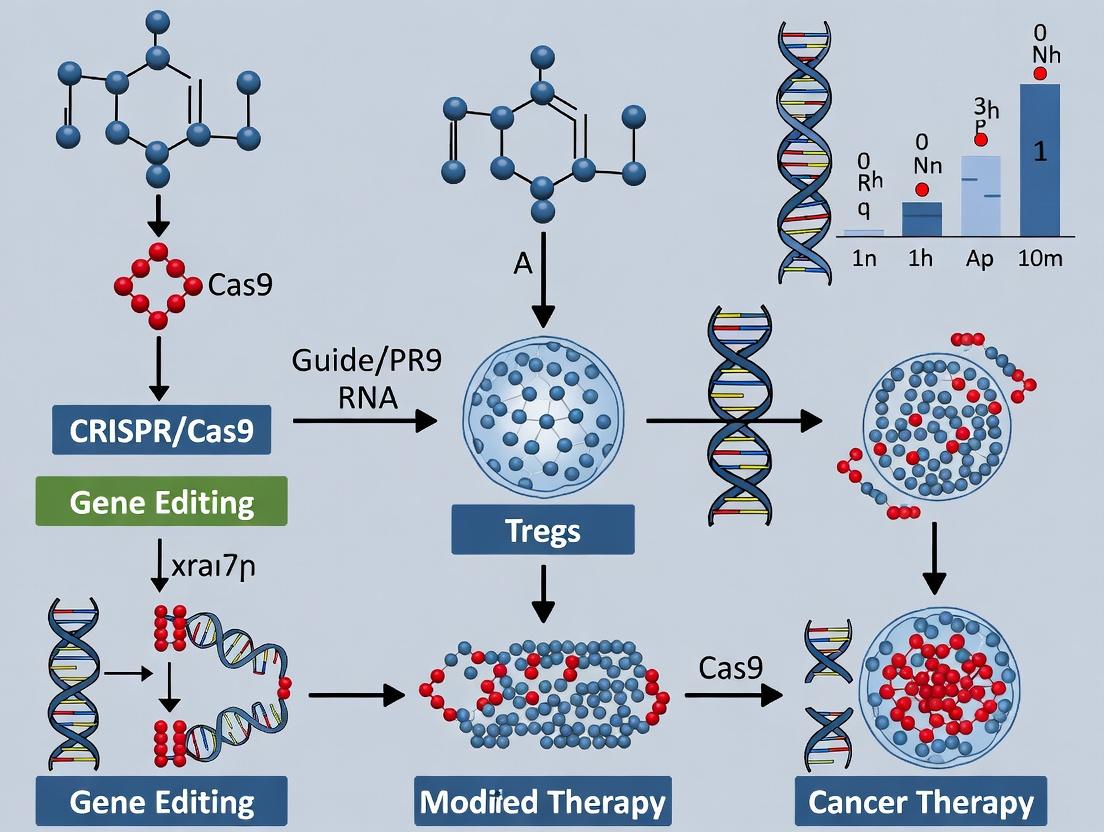
This article provides a comprehensive analysis of the burgeoning field of CRISPR/Cas9-engineered regulatory T cells (Tregs) for cancer immunotherapy.
Engineering the Guardians: How CRISPR/Cas9 is Revolutionizing Treg Cell Therapy for Cancer
Abstract
This article provides a comprehensive analysis of the burgeoning field of CRISPR/Cas9-engineered regulatory T cells (Tregs) for cancer immunotherapy. Aimed at researchers and drug development professionals, it covers the foundational biology of Tregs in tumor immunity and the rationale for their genetic reprogramming. It details cutting-edge methodological approaches for precise gene editing, from targeting key checkpoints like FOXP3 to enhancing tumor-specific homing. The discussion extends to critical troubleshooting of off-target effects, stability, and manufacturing scalability. Finally, it offers a comparative validation of this strategy against other adoptive cell therapies (like CAR-T) and conventional treatments, examining current preclinical and clinical trial data. This synthesis aims to inform strategic research directions and accelerate the translation of next-generation, precision-engineered Treg therapies into the oncology clinic.
Tregs in Cancer: From Immune Suppressors to Engineered Therapeutics
Application Notes & Protocols | Context: CRISPR/Cas9 Engineering of Tregs for Cancer Therapy Research
Within the Tumor Microenvironment (TME), endogenous regulatory T cells (Tregs) exhibit a critical duality. They act as Protectors of host homeostasis by preventing autoimmunity and mitigating excessive inflammation that could foster tumorigenesis. Conversely, they function as Saboteurs of anti-tumor immunity by suppressing effector T cell (Teff) function, directly promoting tumor progression and contributing to immunotherapy resistance. This dual role presents a unique challenge and opportunity for therapeutic intervention. The broader thesis context focuses on using CRISPR/Cas9 to precisely engineer Tregs—either by selectively depleting or attenuating Tregs within the TME, or by generating optimized, tumor-antigen-specific engineered Tregs (eTregs) for adoptive cell therapy—to tip the balance towards effective anti-tumor immunity while preserving systemic immune homeostasis.
Table 1: Treg Infiltration and Prognostic Correlation Across Human Cancers
| Cancer Type | Typical Treg Density (FOXP3+ cells/mm²) | Correlation with Patient Prognosis | Key Suppressive Mechanism(s) Dominant in TME |
|---|---|---|---|
| Non-Small Cell Lung Cancer (NSCLC) | 50-300 | Generally Poor (HR ~1.8) | CTLA-4, TGF-β, Adenosine |
| Hepatocellular Carcinoma (HCC) | 100-400 | Poor (HR ~2.1) | PD-1/PD-L1, IL-10 |
| Colorectal Cancer (Microsatellite Stable) | 150-500 | Poor (HR ~1.9) | TGF-β, IL-35 |
| Ovarian Cancer | 200-600 | Poor (HR ~2.4) | CTLA-4, LAG-3, Metabolic Disruption (CD73) |
| Gastric Cancer | 80-250 | Poor (HR ~1.7) | TGF-β, IL-10 |
| Melanoma (Pre-treatment) | 20-150 | Poor (Response to Anti-PD-1) | PD-1, TIM-3, CCR8-CCL1 axis |
Table 2: Key Functional Molecules in Treg-Mediated Suppression: Targets for CRISPR Editing
| Target Molecule | Primary Function in Treg Suppression | Phenotype of CRISPR Knockout/Knockdown in Mouse Models | Rationale for Therapeutic Editing |
|---|---|---|---|
| FOXP3 | Master transcription factor; essential for Treg lineage stability. | Lethal autoimmunity (global KO). Intratumoral destabilization reduces suppression. | Conditional/Inducible KO: To destabilize only intratumoral Tregs. |
| CTLA-4 | Trans-endocytosis of CD80/CD86 on APCs; inhibits costimulation. | Enhanced Teff priming, improved anti-tumor immunity. | Disrupt gene in Tregs: To block trans-endocytosis, boost Teff activation. |
| PD-1 | Inhibitory receptor; engagement limits Treg proliferation/stability in TME. | Paradoxically may increase Treg suppression in some contexts. | Context-dependent: May be avoided or combined with other edits. |
| TGF-β receptor (TGFBR2) | Mediates TGF-β signaling for Treg function/plasticity. | Reduced Treg-mediated suppression, enhanced Teff function. | Knockout: To render Tregs insensitive to TGF-β-driven stabilization in TME. |
| CCR8 | Chemokine receptor for selective migration to TME (via CCL1/CCL18). | Reduced Treg tumor infiltration, no effect on peripheral Tregs. | Ideal Target: Knockout reduces tumor-specific trafficking, sparing systemic Tregs. |
| IL2RA (CD25) | High-affinity IL-2 receptor subunit; critical for Treg survival. | Reduced Treg fitness, increased IL-2 availability for Teffs. | Knockout: To deplete/weaken Tregs and create an "IL-2 sink" blockade. |
Detailed Experimental Protocols
Protocol 1: Isolation and Functional Profiling of Tumor-Infiltrating Tregs (TIL-Tregs)
Objective: To isolate viable Tregs from human or murine tumor samples for ex vivo analysis of phenotype and suppressive capacity. Workflow:
- Tumor Dissociation: Mechanically dissect and enzymatically digest (Collagenase IV/DNase I) fresh tumor tissue. Generate single-cell suspension.
- Immune Cell Enrichment: Using density gradient centrifugation (e.g., Percoll or Ficoll).
- Treg Isolation: Use magnetic-activated cell sorting (MACS) or fluorescence-activated cell sorting (FACS).
- Human: CD4+ CD127low CD25+ or CD4+ FOXP3+ (intracellular post-perm).
- Mouse: CD4+ CD25+ or CD4+ FOXP3+ (using Foxp3 reporter mice, e.g., Foxp3-GFP).
- Functional Suppression Assay:
- Label responder T cells (Teffs) with CellTrace Violet.
- Co-culture Teffs with titrated numbers of isolated Tregs in the presence of anti-CD3/CD28 stimulation.
- After 72-96 hours, analyze Teff proliferation by flow cytometry.
- Key Metric: Calculate % suppression = [1 - (Teff proliferation with Tregs / Teff proliferation alone)] x 100.
Protocol 2: CRISPR/Cas9-Mediated Knockout of Target Genes in Primary Mouse Tregs
Objective: To generate gene-specific knockout in Tregs for functional studies or adoptive transfer. Materials: See "Scientist's Toolkit" below. Methodology:
- sgRNA Design & Cloning: Design two sgRNAs targeting early exons of the gene of interest (e.g., Ctla4, Ccr8). Clone into a lentiviral or retroviral sgRNA expression vector (e.g., lentiCRISPRv2, pSicoR-sgRNA).
- Virus Production: Produce high-titer VSV-G pseudotyped lentivirus in HEK293T cells.
- Treg Isolation & Activation: Isulate naïve CD4+ CD25+ T cells from mouse spleen/LNs using MACS. Activate with anti-CD3/CD28 beads + IL-2 (100 U/mL).
- Transduction: At 24h post-activation, spinfect Tregs with virus + polybrene (8 µg/mL). Culture in IL-2.
- Selection & Expansion: Apply appropriate selection (e.g., puromycin) 48h post-transduction. Expand cells for 5-7 days.
- Validation: Confirm knockout via:
- Flow cytometry for surface proteins (e.g., CTLA-4, CCR8).
- Western blot or sequencing for intracellular/non-surface targets.
- Functional Assay: Perform suppression assay (Protocol 1) comparing edited vs. control Tregs.
Protocol 3: Adoptive Transfer of CRISPR-Edited Tregs in a Syngeneic Tumor Model
Objective: To assess the impact of gene-edited Tregs on tumor growth in vivo.
- Tumor Inoculation: Inject syngeneic tumor cells (e.g., MC38, B16) subcutaneously into C57BL/6 mice.
- Treg Generation & Editing: Generate and edit Tregs ex vivo as per Protocol 2. Use a control group (e.g., non-targeting sgRNA).
- Adoptive Transfer: Once tumors are palpable (~50 mm³), inject edited Tregs intravenously.
- Monitoring: Measure tumor volume 2-3 times weekly. Harvest tumors at endpoint for flow cytometry analysis of immune infiltration.
- Analysis: Compare tumor growth curves, survival, and immune profiles (Teff:Treg ratio, cytokine production) between groups.
Visualizations: Diagrams and Workflows
Title: The Dual Functional Roles of Endogenous Tregs
Title: Key Treg Suppressive Mechanisms on Teff Function
Title: CRISPR/Cas9 Engineering Workflow for Tregs
The Scientist's Toolkit: Research Reagent Solutions
| Item / Reagent | Function / Application in Treg Research | Example Product/Catalog |
|---|---|---|
| Anti-mouse/human CD25 MicroBeads | Magnetic isolation of high-purity Tregs (CD4+CD25+) for functional studies or editing. | Miltenyi Biotec (130-091-072 / 130-092-983) |
| Foxp3 / Transcription Factor Staining Buffer Set | Essential for intracellular staining of the master regulator FOXP3 and other nuclear proteins. | Thermo Fisher (00-5523-00) |
| Recombinant IL-2 (Human/Mouse) | Critical cytokine for ex vivo expansion and maintenance of Treg viability and phenotype. | PeproTech (200-02 / 212-12) |
| LentiCRISPRv2 Vector | All-in-one lentiviral vector for expression of Cas9 and sgRNA; widely used for knockout screens. | Addgene (52961) |
| sgRNA Synthesis Kit | For rapid in vitro transcription of high-quality sgRNAs for RNP-based CRISPR editing. | Synthego (Custom) or NEB (E3322) |
| CellTrace Violet Proliferation Dye | To label responder T cells for use in in vitro Treg suppression assays. | Thermo Fisher (C34557) |
| Anti-mouse CCR8 Antibody (Blocking) | For in vivo functional studies of CCR8 inhibition on Treg migration and tumor growth. | Bio X Cell (BE0382) |
| Recombinant TGF-β1 | To study Treg plasticity, stability, and iTreg differentiation in vitro. | PeproTech (100-21) |
| Mouse/Rat Treg Depletion Antibody (anti-CD25, PC61) | For in vivo Treg depletion studies to understand their functional role. | Bio X Cell (BE0012) |
| Foxp3 Reporter Mouse (Foxp3-GFP) | Enables easy identification and isolation of Tregs without intracellular staining. | Jackson Laboratory (006772) |
Regulatory T cells (Tregs) play a dual role in cancer, suppressing anti-tumor immunity while maintaining peripheral tolerance. Genetically engineering Tregs, particularly via CRISPR/Cas9, aims to resolve this paradox by enhancing their stability, specificity, and efficacy within the suppressive tumor microenvironment (TME). This approach seeks to reprogram Tregs to resist dysfunction and selectively target tumor-associated antigens (TAAs), thereby enabling a controlled, localized modulation of immunity that can synergize with conventional immunotherapies like checkpoint blockade.
Application Notes
Enhancing Treg Stability and Function in the TME
The TME is rich in inflammatory cytokines (e.g., IL-6, TGF-β) that can destabilize Tregs, leading to loss of Foxp3 expression and conversion into pro-inflammatory effector T cells. CRISPR/Cas9 engineering can be used to knock-in a Foxp3 expression cassette under a constitutive or inducible promoter, or to knockout genes encoding receptors for destabilizing signals (e.g., IL6R). This fortifies the Treg lineage, ensuring sustained immunosuppressive function at the tumor site.
Conferring Tumor-Specific Homing and Activity
Native Tregs are not tumor-specific. Engineering involves the introduction of synthetic antigen receptors—Chimeric Antigen Receptors (CARs) or T Cell Receptors (TCRs)—that direct Tregs to TAAs. This localizes suppression, potentially reducing systemic autoimmunity risks. CRISPR is ideal for the targeted integration of these large receptor constructs into safe-harbor loci (e.g., TRAC locus), ensuring uniform expression and preventing endogenous TCR mispairing.
Modulating Treg Suppressive Mechanisms
Tregs utilize multiple suppressive mechanisms (e.g., via CTLA-4, IL-10, TGF-β). Engineering can be used to overexpress these molecules selectively upon CAR engagement (inducible systems) or to knockout inhibitory checkpoint molecules like PD-1 that may impair Treg function in the TME. This creates "super-suppressor" Tregs with enhanced, tumor-focused activity.
Creating "AND-Gate" Logic for Safety
A primary safety concern is the potential for non-specific immunosuppression. CRISPR enables the installation of complex genetic circuits. For example, a "AND-gate" Treg might require two tumor-specific antigens for full activation, or an inducible suicide gene (e.g., iCasp9) can be incorporated for ablation via a small molecule drug if adverse events occur.
Table 1: Efficacy and Stability Metrics of Engineered Tregs
| Parameter | Wild-Type Tregs | CAR-Tregs (Anti-MSA CAR) | Foxp3-Stabilized Tregs (IL6R KO) | Source / Model |
|---|---|---|---|---|
| Tumor Infiltration (Fold Change) | 1.0 (baseline) | 3.5 - 5.2 | 1.8 | MC38 colon carcinoma model |
| Intra-tumoral Foxp3+ Stability (%) | ~40-60% | ~75-85% | ~90-95% | B16 melanoma model |
| Suppression of Teff Proliferation (In Vitro %) | 70% | 90% (Ag-specific) | 75% (Ag-nonspecific) | Co-culture assay |
| Reduction in Tumor Volume (%) | 10% (non-specific) | 60-70% | 20% | Prostate adenocarcinoma model |
| Induction of Autoimmunity (Clinical Score) | Low (1-2) | Low (1-2, targeted) | Moderate (2-3, systemic) | GvHD model |
Table 2: Common Genetic Modifications and Outcomes
| Target Gene / Modification | Engineering Goal | Key Functional Outcome | Major Challenge |
|---|---|---|---|
| CAR Integration (TRAC locus) | Tumor-specific targeting | Enhanced localized suppression; Reduced graft-vs-host disease (GvHD) risk. | Tonic signaling leading to exhaustion. |
| FOXP3 Knock-in / Overexpression | Lineage stability | Maintained phenotype in inflammatory TME. | Potential aberrant hyper-suppression. |
| IL6R Knockout | Resist inflammation-driven conversion | Preserved suppression in IL-6 high TME. | May impair necessary inflammatory sensing. |
| PDCD1 (PD-1) Knockout | Enhance Treg fitness in TME | Improved Treg survival and function in tumors. | May increase autoimmunity potential. |
| TNFRSF4 (OX40) Knock-in | Enhance survival & trafficking | Increased persistence and intra-tumoral accumulation. | Risk of excessive proliferation. |
Experimental Protocols
Protocol 1: CRISPR/Cas9-Mediated Knockout ofPDCD1in Human Tregs
Objective: Generate PD-1 deficient human Tregs to enhance resilience in the PD-L1+ TME. Materials: Isolated human CD4+CD25+CD127lo Tregs, Nucleofector Kit, sgRNA targeting PDCD1 exon 2, HiFi Cas9 nuclease, IL-2 (300 IU/mL), anti-CD3/CD28 Dynabeads. Procedure:
- Design & Synthesis: Design a sgRNA with high on-target/off-target scores (e.g., 5'-GACCTGGACAGAGACAGCAT-3'). Synthesize as chemically modified sgRNA.
- Treg Activation: Isolate Tregs via FACS or magnetic beads. Activate with Dynabeads (bead:cell ratio 3:1) in X-VIVO 15 media + 300 IU/mL IL-2 for 48h.
- RNP Complex Formation: Incubate 5 µg HiFi Cas9 with 2.5 µg sgRNA in Neon Buffer R at RT for 10 min.
- Electroporation: Use Neon Transfection System (1600V, 10ms, 3 pulses). Transfer 2e6 activated Tregs in 100µL Buffer R with RNP complex.
- Recovery & Expansion: Immediately plate cells in pre-warmed media + IL-2. Remove beads after 24h. Expand for 7-10 days.
- Validation: Assess knockout efficiency via flow cytometry (anti-PD-1 antibody) and TIDE analysis on genomic DNA.
Protocol 2: HDR-Mediated CAR Knock-in at theTRACLocus
Objective: Site-specific integration of a CAR construct to generate homogeneous, TCR-deficient CAR-Tregs. Materials: Activated human Tregs (as above), Cas9 RNP complex (sgRNA targeting TRAC leader exon), ssDNA HDR template (containing CAR flanked by ~800bp TRAC homology arms), Alt-R HDR Enhancer. Procedure:
- HDR Template Design: Synthesize a single-stranded DNA template encoding your CAR (e.g., anti-MSA scFv-41BB-CD3ζ) with homology arms matching the cut site in TRAC. Include a stop codon in the upstream TRAC sequence to prevent TCR expression.
- Co-Delivery: Form RNP as in Protocol 1. Mix 2e6 Tregs with RNP and 2 µg HDR template. Add 2 µL Alt-R HDR Enhancer.
- Electroporation: Perform using conditions optimized for primary T cells (e.g., Lonza 4D-Nucleofector, program EO-115).
- Post-Transfection Culture: Culture cells in IL-2 media. After 48h, add puromycin (1 µg/mL) for 7 days if template includes a PuroR gene for selection.
- Analysis: Confirm TCR loss (anti-CD3 flow) and CAR expression (via FACS with protein L or antigen staining). Validate genomic integration by junction PCR.
Protocol 3: In Vitro Suppression Assay with Engineered Tregs
Objective: Quantify the suppressive capacity of engineered Tregs against effector T cells (Teff). Materials: Engineered Tregs, CFSE-labeled autologous Teffs (CD4+CD25-), anti-CD3 coated plate (1 µg/mL), soluble anti-CD28 (1 µg/mL), flow cytometer. Procedure:
- Label Teffs: Isolate Teffs and label with 2.5 µM CFSE for 10 min at 37°C. Quench with serum.
- Coat Plate: Coat 96-well plate with anti-CD3 overnight.
- Co-culture: Seed CFSE+ Teffs (5e4/well) with engineered Tregs at varying ratios (e.g., 1:1, 1:2, 1:4 Treg:Teff). Add soluble anti-CD28. Include Teff-only and Treg-only controls.
- Incubate: Culture for 72-96 hours.
- Analysis: Harvest cells, stain with live/dead marker and anti-CD4 antibody. Acquire on flow cytometer. Calculate % suppression:
[1 - (CFSElo proliferating Teffs in co-culture / proliferating Teffs alone)] * 100.
Visualizations
Treg Engineering with CRISPR Workflow
CAR-Treg Activation and Suppression Pathway
The Scientist's Toolkit
Table 3: Essential Research Reagent Solutions
| Reagent / Material | Supplier Examples | Function in Treg Engineering |
|---|---|---|
| Human Treg Isolation Kit | Miltenyi Biotec (CD4+CD25+CD127dim), StemCell Tech. | High-purity negative or positive selection of primary Tregs for engineering. |
| Anti-CD3/CD28 Activator | Thermo Fisher (Dynabeads), Gibco | Polyclonal activation to induce cell cycling, essential for CRISPR editing. |
| Recombinant IL-2 | PeproTech, R&D Systems | Critical cytokine for Treg survival, expansion, and stability post-editing. |
| CRISPR Nucleases (HiFi Cas9) | Integrated DNA Tech. (IDT), Synthego | High-fidelity Cas9 protein for RNP formation, reducing off-target edits. |
| Modified sgRNAs | IDT (Alt-R), Synthego | Chemically stabilized guides with improved efficiency and reduced immunogenicity. |
| Nucleofector System | Lonza | Specialized electroporation device for high-efficiency RNP delivery to primary T cells. |
| HDR Template (ssDNA) | IDT (gBlocks), Twist Bioscience | Single-stranded DNA donor with homology arms for precise, knock-in edits. |
| Flow Antibodies: Foxp3, CD25, CD127, CAR | BioLegend, BD Biosciences | Validation of Treg phenotype and engineered construct expression. |
| CellTrace Proliferation Dyes | Thermo Fisher | Tracking target cell division in functional suppression assays. |
Application Notes
This document details the rationale and methodologies for targeting three critical molecular axes in the CRISPR/Cas9 engineering of regulatory T cells (Tregs) for enhanced cancer immunotherapy. The central thesis posits that synergistic modification of FOXP3 stability, homing receptor expression, and checkpoint modulation will yield Tregs with superior tumor-localized suppressive function and persistence.
1.1 FOXP3 Stability: The Master Regulator's Core FOXP3 is the lineage-defining transcription factor for Tregs, but its expression and activity are post-translationally regulated. Destabilization of FOXP3 leads to loss of suppressive phenotype and potential conversion to effector-like cells. Recent studies indicate that targeting deubiquitinases (e.g., USP7) or E3 ligases (e.g., STUB1) can directly modulate FOXP3 protein half-life. Engineered Tregs with stabilized FOXP3 demonstrate enhanced in vivo suppressive capacity in murine tumor models, with one study showing a 2.3-fold increase in intratumoral Treg persistence compared to unmodified Tregs.
1.2 Homing Receptors: Navigation to the Tumor Microenvironment (TME) Efficient tumor infiltration is a major barrier. Native Tregs express homing receptors (e.g., CCR4, CCR8, CLA) for skin cancers, or integrins (e.g., α4β7) for gut malignancies. Engineering Tregs to overexpress specific chemokine receptors matching the tumor's secretome (e.g., CXCR2 for NSCLC, CCR5 for breast cancer) is a key strategy. Data shows that CXCR2-overexpressing Tregs exhibit a >60% increase in tumor infiltration in xenograft models. Concurrent knockout of competing receptors that direct trafficking to lymphoid organs (e.g., CD62L) can further enrich tumor homing.
1.3 Checkpoint Modulation: Balancing Suppression and Anti-Tumor Immunity Tregs naturally express immune checkpoints (e.g., CTLA-4, PD-1, TIGIT). While these mediate suppression, they also render Tregs susceptible to inhibition by checkpoint blockade therapies. Strategic knockout of PD-1 in Tregs can render them resistant to anti-PD-1 therapy-induced dysfunction, allowing them to remain suppressive while effector T cells are unleashed. Conversely, overexpression of inhibitory molecules like LAG-3 or CTLA-4 can be engineered to be antigen-specific, fine-tuning suppression spatially within the TME.
Synergistic Engineering: The combined approach—creating Tregs with stabilized FOXP3, tumor-specific homing, and modulated checkpoint profiles—aims to generate potent, tumor-restricted, and durable "designer Tregs" for solid cancer therapy, potentially overcoming the limitations of polyclonal Treg adoptive transfer.
Table 1: Impact of FOXP3 Stability Modifications on Treg Function
| Target Gene | Modification Type | Effect on FOXP3 Half-Life | In Vivo Tumor Suppression (vs. Control) | Key Reference (Year) |
|---|---|---|---|---|
| USP7 | Overexpression | Increased by ~40% | 2.3-fold increase in Treg persistence | Wang et al. (2023) |
| STUB1 | Knockout | Increased by ~55% | Reduced tumor growth by 45% | Li et al. (2022) |
| TIP60 | Overexpression | Increased acetylation | Enhanced stability, 50% lower GVHD score | Xiao et al. (2024) |
Table 2: Homing Receptor Engineering for Tumor Infiltration
| Tumor Type | Engineered Receptor | Control Receptor (KO) | Fold Change in Tumor Infiltration | Model System |
|---|---|---|---|---|
| Melanoma | CCR8 OE | CD62L KO | 3.5x | NSG mouse xenograft |
| NSCLC | CXCR2 OE | CCR7 KO | 1.8x | Humanized mouse model |
| Colorectal | α4β7 OE | CD62L KO | 2.6x | Syngeneic mouse model |
Table 3: Checkpoint Modulation in Engineered Tregs
| Checkpoint Target | Modification | Effect on Treg Function | Resistance to mAb Therapy | Outcome in Co-culture |
|---|---|---|---|---|
| PDCD1 (PD-1) | Knockout | Maintained suppression | Yes (anti-PD-1) | Enhanced Teff expansion |
| CTLA4 | Overexpression (Inducible) | Enhanced contact-dependent suppression | N/A | Selective suppression of activated Teffs |
| TIGIT | Knockout | Reduced suppression in TME | Partially (anti-TIGIT) | Improved DC maturation |
Experimental Protocols
Protocol 3.1: CRISPR/Cas9-Mediated Knockout of STUB1 and PDCD1 in Human Tregs Objective: Generate double-knockout (DKO) Tregs with enhanced FOXP3 stability and checkpoint resistance.
- Isolation & Activation: Isolate CD4+CD25+CD127lo Tregs from PBMCs using magnetic beads. Activate with anti-CD3/CD28 beads (1:1 ratio) in X-Vivo 15 media with 300 IU/mL IL-2.
- RNP Electroporation: At 24h post-activation, electroporate with Cas9 ribonucleoprotein (RNP) complexes.
- Prepare RNP: Complex 60 pmol of recombinant Cas9 protein with 60 pmol of each synthetic sgRNA (STUB1, PDCD1) for 15 min at 25°C.
- Electroporate 1x10^6 Tregs using a Nucleofector (Program EO-115) in P3 buffer.
- Recovery & Expansion: Culture in IL-2 (300 IU/mL) and rapamycin (100 nM) for 72h to enrich edited cells. Expand with fresh IL-2 media for 10-14 days.
- Validation: Assess KO efficiency via flow cytometry (if antibodies available) or T7E1 assay/TIDE analysis on genomic DNA. Confirm FOXP3 protein levels by western blot.
Protocol 3.2: Lentiviral Overexpression of CCR8 and a FOXP3 Reporter in Tregs Objective: Generate tumor-homing Tregs with a traceable FOXP3 expression marker.
- Vector Design: Use a bicistronic lentiviral vector (pLVX) expressing CCR8 and an eGFP reporter linked to FOXP3 via a T2A sequence.
- Virus Production: Produce VSV-G pseudotyped lentivirus in Lenti-X 293T cells using 3rd generation packaging system.
- Treg Transduction: At 48h post-activation (Protocol 3.1, Step 1), spinoculate Tregs (1200g, 90 min, 32°C) with lentivirus (MOI=10) in the presence of 8 µg/mL polybrene.
- Selection & Analysis: After 72h, sort eGFP+ cells via FACS. Validate CCR8 surface expression by flow cytometry and functional chemotaxis toward CCL1 in a Transwell assay.
Protocol 3.3: In Vivo Validation of Engineered Tregs in a Humanized Melanoma Model Objective: Assess tumor homing, persistence, and suppressive function of CCR8-OE/STUB1-KO Tregs.
- Model Generation: Inject NSG mice subcutaneously with HLA-matched human melanoma cells (5x10^5). At day 7, inject CFSE-labeled, engineered Tregs (2x10^6) intravenously.
- Tracing & Analysis: At days 3, 7, and 14, harvest tumors, draining LNs, and spleens.
- Process tissues to single-cell suspensions.
- Analyze by flow cytometry for CFSE+ (infused Tregs), FOXP3 (intracellular), and human CD8+ T cell activation status (CD69, Ki67).
- Functional Readout: Measure tumor volume twice weekly. At endpoint, perform ex vivo suppression assay with sorted tumor-infiltrating engineered Tregs and autologous Teffs.
Diagrams
Title: Workflow for Engineering & Validating Multi-Target Tregs
Title: Molecular Regulation & Engineering of FOXP3 Stability
The Scientist's Toolkit
Table 4: Essential Research Reagents for Treg Engineering Projects
| Reagent / Material | Function & Purpose | Example Product / Identifier |
|---|---|---|
| Human Treg Isolation Kit | Negative or positive selection of CD4+CD25+CD127lo Tregs from PBMCs with high purity. | Miltenyi Biotec CD4+CD25+CD127dim Regulatory T Cell Isolation Kit |
| Recombinant Cas9 Nuclease | High-activity, carrier-free Cas9 protein for RNP complex formation in CRISPR editing. | Thermo Fisher TrueCut Cas9 Protein v2 |
| Chemically Modified sgRNA | Enhanced stability and reduced immunogenicity for efficient CRISPR/Cas9 editing in primary cells. | Synthego Synthetic sgRNA, 2'-O-methyl 3' phosphorothioate modifications |
| Lentiviral Packaging Mix (3rd Gen) | For producing high-titer, replication-incompetent lentivirus with a biosafety level 2 profile. | Takara Bio Lenti-X Packaging Single Shots (VSV-G) |
| Rapamycin (mTOR Inhibitor) | Critical for maintaining Treg phenotype and stability during in vitro expansion post-editing. | Cell Signaling Technology #9904 |
| Recombinant Human IL-2 | Essential cytokine for Treg survival and expansion in culture. | PeproTech IL-2, carrier-free |
| Anti-human CCR8 Antibody (clone) | For validation of CCR8 surface overexpression via flow cytometry. | R&D Systems MAB (clone 43317) |
| FOXP3 Staining Buffer Set | Permeabilization buffers optimized for reliable intracellular FOXP3 detection by flow cytometry. | Thermo Fisher eBioscience Foxp3 / Transcription Factor Staining Buffer Set |
| In Vivo Grade Anti-hPD-1 mAb | For testing resistance of PD-1 KO Tregs to checkpoint blockade in humanized mouse models. | Bio X Cell InVivoMab anti-human PD-1 (clone EH12.2H7) |
CRISPR/Cas9 vs. Other Gene-Editing Tools (ZFNs, TALENs) for T Cell Engineering
Within the broader thesis of engineering regulatory T cells (Tregs) for cancer immunotherapy, selecting the optimal gene-editing platform is critical. CRISPR/Cas9, Zinc Finger Nucleases (ZFNs), and Transcription Activator-Like Effector Nucleases (TALENs) enable precise genomic modifications in primary T cells, but differ substantially in design, efficiency, and applicability for Treg engineering.
Table 1: Quantitative Comparison of Gene-Editing Tools for Primary T Cell Engineering
| Feature | CRISPR/Cas9 | TALENs | ZFNs |
|---|---|---|---|
| Molecular Architecture | Cas9 nuclease + guide RNA (gRNA) | FokI nuclease dimer + TALE DNA-binding domains | FokI nuclease dimer + Zinc Finger DNA-binding domains |
| Targeting Specificity | 20-nt gRNA sequence + PAM (NGG for SpCas9) | 30-40 bp per monomer (12-20 bp per TALE) | 18-36 bp per monomer (9-18 bp per ZF array) |
| Editing Efficiency in T Cells* | High (30-80% indel frequency) | Moderate (10-40% indel frequency) | Low to Moderate (5-20% indel frequency) |
| Multiplexing Capacity | High (easy via multiple gRNAs) | Low (difficult protein engineering) | Very Low (difficult protein engineering) |
| Protein Engineering Complexity | Low (only gRNA synthesis) | High (cloning repetitive TALE arrays) | Very High (context-dependent ZF assembly) |
| Off-Target Activity | Moderate to High (gRNA-dependent) | Low (longer recognition sequence) | Low (but can have cytotoxicity) |
| Typical Delivery to T Cells | Electroporation of RNP (Cas9 protein + gRNA) or mRNA | Electroporation of mRNA | Electroporation of mRNA |
| Relative Cost | Low | High | Very High |
| Primary Use Case in Treg Therapy | Multiplex knock-out (e.g., FOXP3 stabilization), knock-in of receptors | Single-gene knock-out where high specificity is paramount | Largely superseded by CRISPR and TALENs |
*Efficiencies are typical ranges for knock-out experiments via non-homologous end joining (NHEJ) in activated human primary T cells, as reported in recent literature (2023-2024).
Application Notes for Treg Engineering
- CRISPR/Cas9 is the preferred tool for multiplexed genome editing in Tregs, such as simultaneously disrupting the TCR locus for allogenicity reduction and the IL2RA (CD25) locus to resist IL-2 depletion, while knocking in a chimeric antigen receptor (CAR) via HDR.
- TALENs remain valuable for editing genes with high sequence homology or in genomic regions where minimizing off-target effects is absolutely critical for safety, such as editing the FOXP3 locus itself to enhance stability.
- ZFNs are rarely chosen for novel Treg engineering projects due to high cost and design complexity, though legacy ZFN designs (e.g., for CCR5) are still in use.
Detailed Protocols
Protocol 1: CRISPR/Cas9-Mediated Dual Gene Knock-out in Human Tregs (e.g., TCRα constant chainTRACandPDCD1)
Objective: Generate antigen-nonspecific, PD-1-deficient Tregs to enhance suppressive function in the tumor microenvironment.
Materials & Reagents:
- Primary Cells: Isolated human CD4+ CD25+ CD127lo Tregs.
- Nucleofection System: Lonza 4D-Nucleofector X Unit.
- CRISPR Reagents: Alt-R S.p. Cas9 Nuclease V3 (IDT) and Alt-R CRISPR-Cas9 sgRNAs targeting TRAC and PDCD1.
- Nucleofection Kit: P3 Primary Cell Nucleofector Kit (Lonza).
- Culture Media: X-VIVO 15 serum-free media, supplemented with 500 IU/mL IL-2, 10% FBS, and Treg expansion beads (anti-CD2/CD3/CD28).
Workflow:
- Treg Activation & Expansion: Isolate Tregs and activate with expansion beads in complete media for 48-72 hours.
- RNP Complex Formation: For each target, complex 60 pmol of Cas9 protein with 120 pmol of each sgRNA (total 240 pmol sgRNA) in a sterile tube. Incubate at room temperature for 10 minutes.
- Cell Preparation: Harvest activated Tregs, count, and centrifuge. Resuspend 1-2e6 cells in 100 µL of pre-warmed P3 Nucleofector Solution.
- Nucleofection: Mix cell suspension with the combined RNP complexes. Transfer to a nucleofection cuvette and run the appropriate program (e.g., EO-115). Immediately add pre-warmed culture media.
- Recovery & Analysis: Culture cells in IL-2-containing media. After 72 hours, assess editing efficiency via flow cytometry (loss of TCRαβ and PD-1 surface expression) and T7 Endonuclease I assay on genomic DNA.
Protocol 2: TALEN-Mediated Knock-in at a Safe Harbor Locus in Tregs (e.g.,AAVS1)
Objective: Precisely integrate a transgenic CAR expression cassette into the PPP1R12C (AAVS1) locus with minimal genotoxic risk.
Materials & Reagents:
- TALEN mRNAs: AAVS1-specific TALEN pair mRNAs (commercially sourced or in vitro transcribed).
- Donor Template: AAVS1-SA-Puro-CAR donor plasmid or single-stranded DNA donor with homology arms.
- Transfection Reagent: Neon Transfection System (Thermo Fisher) or equivalent electroporation system.
Workflow:
- Treg Activation: Activate Tregs as in Protocol 1.
- Electroporation Setup: For the Neon System, prepare a mix containing 1-2 µg of each TALEN mRNA and 2-4 µg of donor DNA template per 1e6 cells.
- Electroporation: Harvest and wash activated Tregs. Resuspend cells in Buffer R at 10e6 cells/mL. Combine cell suspension with nucleic acid mix. Electroporate using parameters: 1400V, 20ms, 2 pulses.
- Post-Transfection: Plate cells immediately in pre-warmed, IL-2-supplemented complete media.
- Selection & Validation: After 48 hours, add puromycin (0.5-1 µg/mL) for 7-10 days to select integrants. Validate site-specific integration via junction PCR and CAR expression by flow cytometry.
Visualizations
Treg Gene-Editing Experimental Workflow
Mechanism of CRISPR/Cas9 vs. TALEN Action
The Scientist's Toolkit: Key Reagents for Gene-Editing T Cells
| Reagent / Solution | Function in T Cell Engineering | Example Product/Brand |
|---|---|---|
| Primary T Cell Isolation Kit | Negative or positive selection of untouched human Tregs from PBMCs. | Miltenyi Biotec CD4+CD25+CD127dim/- Regulatory T Cell Isolation Kit |
| T Cell Activation Beads | Provides CD3/CD28 stimulation for robust activation and proliferation. | Gibco Dynabeads Human T-Activator CD3/CD28 |
| Recombinant Human IL-2 | Critical cytokine for Treg survival and expansion post-activation/editing. | PeproTech IL-2, aldesleukin (Proleukin) |
| Cas9 Nuclease (High-Purity) | The engineered endonuclease for CRISPR editing; protein form for RNP delivery minimizes duration of exposure. | IDT Alt-R S.p. Cas9 Nuclease V3 |
| Synthetic sgRNA | Chemically modified single-guide RNA for enhanced stability and reduced immunogenicity in RNP format. | IDT Alt-R CRISPR-Cas9 sgRNA, Synthego sgRNA EZ Kit |
| Nucleofector System & Kits | Electroporation platform optimized for high viability and efficiency in hard-to-transfect primary cells like Tregs. | Lonza 4D-Nucleofector X Unit with P3 Primary Cell Kit |
| HDR Donor Template | Single-stranded DNA (ssODN) or AAV vector containing homology arms and payload for precise knock-in. | IDT Ultramer DNA Oligo, custom AAV6 vector |
| Genome Editing Detection Kit | Validates editing efficiency at the genomic level via next-generation sequencing or mismatch detection. | IDT Alt-R Genome Editing Detection Kit (T7E1), Illumina CRISPR Amplicon Sequencing |
Application Notes
The engineering of regulatory T cells (Tregs) using CRISPR/Cas9 for cancer immunotherapy aims to enhance their specificity, stability, and suppressive function within the tumor microenvironment (TME). This approach seeks to overcome limitations such as the non-specific suppression of anti-tumor immunity and the potential instability of Tregs in inflammatory contexts. Key strategies include: 1) Knocking out endogenous T-cell receptors (TCRs) to reduce off-target suppression and enable the insertion of tumor-antigen-specific chimeric antigen receptors (CARs); 2) Disrupting genes like FOXP3 stabilizers or inflammation-sensitive checkpoints to enhance Treg stability; and 3) Introducing homing receptors to improve tumor infiltration.
Table 1: Summary of Pioneering Preclinical Studies
| Target Gene/Modification | Cancer Model | Key Outcome | Reference (Example) |
|---|---|---|---|
| TCRα constant chain (TRAC) knockout + MAGE-A1-specific TCR knock-in | Melanoma (humanized mouse) | Redirected Tregs suppressed effector T-cell responses against MAGE-A1+ tumors specifically. | Science (2022) |
| PDCD1 (PD-1) knockout in Tregs | Colorectal carcinoma (mouse) | Enhanced Treg-mediated suppression of tumor growth, contradictory to effector T cell effects, highlighting context-dependent roles. | Cell Reports (2021) |
| HAVCR2 (TIM-3) knockout in Tregs | Breast cancer (mouse) | Improved Treg stability in the TME and increased their suppressive capacity. | Nature Immunology (2023) |
| IL2RA (CD25) knockout + CAR (targeting mesothelin) insertion | Pancreatic cancer (humanized mouse) | Created CAR-Tregs with controllable IL-2 dependence, showing enhanced tumor homing and suppression. | Sci. Transl. Med. (2023) |
| FOXP3 locus engineering with a "super-enhancer" | Lymphoma (mouse) | Generated stabilized Tregs resistant to converting into inflammatory effectors in the TME. | Cell (2023) |
Table 2: Overview of Active Clinical Trials (Selected)
| Trial Identifier | Title | Phase | Intervention / Genetic Modification | Status (As of 2024) |
|---|---|---|---|---|
| NCT05234190 | TREG Therapy in Patients With Advanced HCC (TREASURE) | I/II | Autologous FOXP3-engineered Treg cells (unmodified ex vivo expanded as control arm; engineering details not fully public). | Recruiting |
| NCT04817774 | CAR-Treg Therapy for Liver Transplantation | I/II | HLA-A2-specific CAR-Tregs (Engineered using lentivirus, not CRISPR). | Active, not recruiting |
| NCT05736705 | FT819 in Autoimmune Diseases | I | Allogeneic, iPSC-derived CAR-Tregs (TCR knockout via CRISPR). | Not yet recruiting |
Experimental Protocols
Protocol 1: CRISPR/Cas9-Mediated TRAC Knockout and CAR Knock-in in Human Tregs Objective: Generate tumor-specific CAR-Tregs with reduced off-target suppression.
- Treg Isolation: Isolate CD4+CD25+CD127lo Tregs from human PBMCs using magnetic-activated cell sorting (MACS).
- Activation: Activate Tregs with anti-CD3/CD28 beads and IL-2 (300 IU/mL) for 48 hours.
- Electroporation: Use a 4D-Nucleofector. Prepare a ribonucleoprotein (RNP) complex: 60 pmol Cas9 protein + 60 pmol sgRNA targeting TRAC. Resuspend 1e6 activated Tregs in 20 µL P3 Primary Cell Solution. Add RNP complex and 1 µg of AAVS1-targeted donor template (containing CAR expression cassette). Electroporate using program EO-115.
- Recovery & Expansion: Immediately transfer cells to pre-warmed medium (X-VIVO 15, 5% human AB serum, 300 IU/mL IL-2, 10 ng/mL IL-15). Remove beads after 72 hours. Expand cells for 10-14 days.
- Validation: Assess TRAC knockout via flow cytometry (anti-TCRαβ staining). Confirm CAR expression via flow cytometry using a protein-L-based assay or target antigen staining. Test suppressive function in a co-culture assay with CFSE-labeled Teff cells and anti-CD3/CD28 stimulation.
Protocol 2: In Vivo Assessment of Engineered Tregs in a Humanized Mouse Tumor Model Objective: Evaluate tumor homing and suppressive function of CRISPR-engineered CAR-Tregs.
- Tumor Engraftment: Inject 1e6 human tumor cells (e.g., MAGE-A1+ melanoma line) subcutaneously into NSG mice.
- Adoptive Transfer: Once tumors reach ~100 mm³, randomize mice into groups (n=5/group). Inject intravenously:
- Group 1: 5e6 CRISPR/CAR-Tregs.
- Group 2: 5e6 unmodified Tregs.
- Group 3: PBS.
- Monitoring: Measure tumor volume 2-3 times weekly with calipers. Monitor mouse weight.
- Endpoint Analysis: At day 28 post-transfer, sacrifice mice. Harvest tumors, weigh them, and process into single-cell suspensions. Analyze immune infiltrate by flow cytometry (human CD45, CD4, Foxp3, CD8, CAR marker). Serum can be collected for cytokine analysis (IFN-γ, IL-10, TGF-β).
- Statistical Analysis: Compare tumor growth curves (two-way ANOVA) and final tumor weights/immune cell counts (one-way ANOVA with Tukey's post-test).
The Scientist's Toolkit: Research Reagent Solutions
| Item | Function in CRISPR/Treg Engineering |
|---|---|
| anti-CD3/CD28 MACSiBeads | Provides strong, consistent T-cell receptor stimulation for Treg activation prior to electroporation. |
| Cas9 Nuclease, V3 (IDT or Synthego) | High-fidelity nuclease for precise DNA cleavage with reduced off-target effects. |
| CRISPR sgRNA (chemically modified) | Enhances stability and cutting efficiency in primary T cells. |
| AAVS1 Safe Harbor Donor Template (ssDNA or AAV6) | Provides homology-directed repair template for targeted, stable CAR gene insertion. |
| P3 Primary Cell 4D-Nucleofector Kit (Lonza) | Optimized reagent/electroporation cuvette system for high viability and editing efficiency in human Tregs. |
| Recombinant Human IL-2 (aldesleukin) | Critical for Treg survival and expansion while maintaining Foxp3 expression. |
| Anti-human Foxp3 Staining Buffer Set (eBioscience) | Permeabilization/fixation kit for reliable intracellular Foxp3 staining to confirm Treg phenotype. |
| CellTrace CFSE Cell Proliferation Kit | Fluorescent dye to label effector T cells for in vitro suppression assays. |
Visualization
Title: CRISPR/Cas9 Workflow for CAR-Treg Generation
Title: Key Signaling Nodes in Engineered Tregs for Cancer
Blueprint for Engineering: CRISPR Workflows for Next-Gen Treg Manufacturing
Within the framework of CRISPR/Cas9 engineering of regulatory T cells (Tregs) for cancer immunotherapy, a critical initial decision is the selection of the source cell population. The choice between naive (nTreg) and memory (mTreg) Treg subsets, or the alternative avenue of induced pluripotent stem cell (iPSC)-derived Tregs, profoundly impacts expansion potential, stability, functional properties, and suitability for genetic engineering. This application note provides a comparative analysis and detailed protocols to guide researchers in this foundational step.
Comparative Analysis: Naive vs. Memory vs. iPSC-Derived Tregs
Table 1: Key Characteristics of Treg Source Cells for Engineering
| Characteristic | Naive Treg (CD4+CD25+CD45RA+Foxp3+) | Memory Treg (CD4+CD25+CD45RO+Foxp3+) | iPSC-Derived Treg |
|---|---|---|---|
| Proliferative Capacity | High (≥50-fold expansion with strong TCR stimulation) | Moderate (~20-fold expansion) | Essentially unlimited (via iPSC renewal) |
| Epigenetic Stability | High (TSDR mostly demethylated) | Variable (TSDR methylation can increase with subset) | Can be engineered for stable Foxp3 locus demethylation |
| Suppressive Function | Requires in vitro priming/activation | Immediate, potent suppression | Must be validated post-differentiation; can be tailored |
| In Vivo Persistence | Long-lived upon proper activation | May have shorter persistence | Potential for long persistence; less data available |
| CRISPR/Cas9 Editing Efficiency | High (≥80% KO in sorted populations) | Moderate to High (60-80%) | Very High in iPSC stage (≥90%), then differentiated |
| Primary Source | Cord blood, leukapheresis (minority population) | Leukapheresis (major circulating population) | Reprogrammed somatic cells (e.g., fibroblasts) |
| Key Advantage | Stability, purity, expansion headroom | Immediate function, tissue-homing potential | Scalability, reproducible off-the-shelf product |
| Key Challenge | Low frequency in periphery, need for activation | Heterogeneity, potential for plasticity | Complex differentiation protocol, functional validation |
Detailed Protocols
Protocol 1: Isolation and Expansion of Human Naive and Memory Tregs
Objective: To isolate highly pure naive and memory Treg subsets from PBMCs and establish short-term expansion cultures for downstream engineering.
Materials: Fresh or cryopreserved human PBMCs, Ficoll-Paque, MACS buffer (PBS + 0.5% BSA + 2mM EDTA), anti-CD4, CD25, CD45RA, CD45RO microbeads (or fluorescent antibodies for FACS), MACS columns or FACS sorter, X-VIVO 15 serum-free medium, recombinant human IL-2 (300 IU/mL), anti-CD3/CD28 Dynabeads (bead:cell ratio 1:1), 24-well plates, humidified 37°C CO2 incubator.
Procedure:
- PBMC Isolation: Isolate PBMCs from buffy coat or leukapheresis product using density gradient centrifugation with Ficoll-Paque.
- Treg Enrichment: Perform a first-step enrichment using the CD4+CD25+ Regulatory T Cell Isolation Kit. Incubate PBMCs with biotin-antibody cocktail and anti-biotin microbeads. Pass through LS MACS column. Collect the negative fraction (non-Tregs) for other uses. Elute the magnetically retained CD4+CD25+ Treg fraction.
- Subset Sorting (MACS or FACS):
- MACS Sequential Separation: Take the CD4+CD25+ fraction. Split and separately incubate with anti-CD45RA or anti-CD45RO microbeads. Pass each through a new MS column. The CD45RA+ fraction (naive) is retained; the CD45RO+ fraction (memory) is retained from the second separation.
- FACS for Highest Purity: Stain the CD4+CD25+ fraction with fluorescent antibodies for CD45RA, CD45RO, CD127 (lo), and a viability dye. Sort viable CD4+CD25+CD127loCD45RA+Foxp3(eGFP)+ cells as naive Tregs and CD4+CD25+CD127loCD45RO+Foxp3(eGFP)+ as memory Tregs.
- Activation & Expansion: Plate sorted Tregs at 1e5 cells/well in a 24-well plate in X-VIVO 15 medium + 300 IU/mL IL-2. Add anti-CD3/CD28 Dynabeads at a 1:1 bead:cell ratio. Culture for 10-14 days, splitting and adding fresh medium + IL-2 every 2-3 days.
- Harvest: On day 10-14, harvest cells. Remove beads magnetically. Count and assess viability (>95% expected). Cells are now ready for CRISPR electroporation or functional assays.
Protocol 2: CRISPR/Cas9 RNP Electroporation of Primary Human Tregs
Objective: To achieve high-efficiency gene knockout (e.g., PDCD1, TGFBR2) in expanded naive or memory Tregs using Cas9 ribonucleoprotein (RNP) electroporation.
Materials: Expanded Tregs (from Protocol 1), sgRNA (crRNA+tracrRNA duplex or synthetic sgRNA), Alt-R S.p. Cas9 Nuclease V3, P3 Primary Cell 4D-Nucleofector X Kit (Lonza), Opti-MEM reduced serum medium, pre-warmed complete Treg medium (X-VIVO15 + IL-2), 4D-Nucleofector device, 20µL cuvettes.
Procedure:
- RNP Complex Formation: For each target, complex 60pmol of Cas9 protein with 60pmol of sgRNA in 20µL of Opti-MEM. Incubate at room temperature for 10-20 minutes.
- Treg Preparation: Harvest expanded Tregs, count, and centrifuge. Resuspend in pre-warmed Opti-MEM at 1e7 cells/mL.
- Nucleofection: For each reaction, mix 20µL of cell suspension (2e5 cells) with the 20µL RNP complex. Transfer entire volume to a 20µL Nucleofector cuvette. Select the EH-115 program on the 4D-Nucleofector device. Insert cuvette and run.
- Recovery: Immediately add 80µL of pre-warmed complete Treg medium to the cuvette. Transfer contents to a 96-well U-bottom plate pre-filled with 100µL of warm medium. Incubate at 37°C for 15 minutes.
- Culture & Analysis: Transfer cells to a 24-well plate with 1mL of complete Treg medium + IL-2. Culture for 3-5 days before analyzing editing efficiency via flow cytometry (for protein loss) or T7E1 assay/NGS.
Protocol 3: Generation and Differentiation of Treg-Competent iPSCs
Objective: To establish a clonal iPSC line engineered for constitutive Foxp3 expression and differentiate it into a homogeneous Treg-like cell product.
Materials: Human iPSC line, pLVX-EF1α-Foxp3-PuroR lentivector (or CRISPR-HDR template), Polybrene, Puromycin, mTeSR1 medium, StemFlex medium, Matrigel, RevitaCell supplement, Cytokines: BMP4, VEGF, SCF, FLT3L, IL-3, IL-7, IL-15, OP9-DLL1 stromal cells, low-attachment plates.
Procedure: Part A: Engineering Foxp3 in iPSCs
- Transduction: Culture iPSCs on Matrigel in mTeSR1. At ~70% confluency, incubate with lentiviral supernatant (MOI ~5-10) + 8µg/mL Polybrene in StemFlex for 24h.
- Selection: Replace with fresh mTeSR1 + 0.5-1µg/mL Puromycin. Select for 5-7 days until resistant colonies appear.
- Clonal Expansion: Pick individual colonies, expand, and validate Foxp3 integration/expression by PCR and immunostaining. Bank master cell bank of chosen clone.
Part B: Treg Differentiation via OP9 Co-culture
- Mesoderm Induction: Dissociate engineered iPSCs to single cells. Aggregated 5,000 cells/well in a 96-well low-attachment plate in StemFlex + RevitaCell + 10ng/mL BMP4 + 5ng/mL VEGF. Culture for 4 days as embryoid bodies (EBs).
- Hematopoietic Progenitor Specification: Transfer EBs onto confluent OP9-DLL1 stromal cells in α-MEM + 10% FBS + 5ng/mL VEGF + 50ng/mL SCF + 50ng/mL FLT3L + 20ng/mL IL-3. Culture for 7-10 days, semi-feeding every 2-3 days.
- T-Lineage/Treg Polarization: Harvest non-adherent hematopoietic cells. Re-plate on fresh OP9-DLL1 in the presence of 100U/mL IL-2 + 5ng/mL IL-7 + 5ng/mL IL-15 + 1ng/mL TGF-β (to reinforce Foxp3 program). Continue co-culture for 14-21 days with weekly passaging.
- Harvest & Validate: Harvest non-adherent cells. Sort CD4+CD25+Foxp3+ cells by FACS. Validate suppressive function in standard in vitro suppression assay.
Visualizations
Title: Treg Source Selection and Engineering Workflow
Title: Key Signaling Pathways Governing Treg Stability
Title: iPSC to Treg Differentiation Pipeline
The Scientist's Toolkit
Table 2: Essential Research Reagent Solutions
| Item | Function & Application | Example (Brand/Format) |
|---|---|---|
| CD4+CD25+ Treg Isolation Kit | Immunomagnetic negative selection for high-purity human Treg enrichment from PBMCs prior to subset sorting. | Miltenyi Biotec, Human CD4+CD25+ Regulatory T Cell Isolation Kit |
| Fluorochrome-conjugated anti-Foxp3 | Intracellular staining for definitive identification and sorting of Tregs (naive/memory). Critical for purity checks. | BioLegend, anti-Foxp3 (206D) in Pacific Blue, PE, APC |
| Recombinant Human IL-2 (Proleukin) | Essential cytokine for Treg survival and expansion in vitro. Used at 300-1000 IU/mL. | Clinigene, Recombinant Human IL-2 (Aldesleukin) |
| Anti-CD3/CD28 Activator Beads | Polyclonal stimulation via TCR/CD28 to activate and drive proliferation of isolated Treg subsets. | Gibco, Dynabeads Human T-Activator CD3/CD28 |
| Alt-R CRISPR-Cas9 System | Synthetic sgRNAs and high-fidelity Cas9 nuclease for RNP formation. Reduces off-target effects in primary Tregs. | Integrated DNA Technologies (IDT), Alt-R S.p. Cas9 Nuclease V3 + crRNA |
| 4D-Nucleofector System & Kit | Electroporation platform optimized for hard-to-transfect primary immune cells, enabling high-efficiency RNP delivery. | Lonza, 4D-Nucleofector X Unit with P3 Primary Cell Kit |
| OP9-DLL1 Stromal Cell Line | Genetically modified murine stromal cell line expressing Delta-like ligand 1 (DLL1) essential for in vitro T-cell differentiation from iPSCs. | ATCC, OP9-DLL1 (CRL-2749) |
| mTeSR1 / StemFlex Medium | Defined, feeder-free culture media for maintaining pluripotency and high viability of human iPSCs during engineering steps. | STEMCELL Technologies, mTeSR1; Gibco, StemFlex Medium |
| TGF-β & mTOR Inhibitors | Small molecules (TGF-β, Rapamycin) used during Treg culture to promote stable Foxp3 expression and prevent destabilization. | PeproTech, Recombinant Human TGF-β1; Cell Signaling, Rapamycin |
Within the pursuit of robust cancer immunotherapies, CRISPR/Cas9 engineering of regulatory T cells (Tregs) presents a promising avenue to enhance specificity, stability, and efficacy. A critical, rate-limiting step is the efficient delivery of CRISPR components into hard-to-transfect primary human Tregs. This application note provides a detailed, comparative analysis of the two dominant delivery strategies—electroporation (non-viral) and viral vector transduction—framed within the context of pre-clinical research for Treg-based cancer therapy.
Comparative Analysis: Electroporation vs. Viral Vectors
Table 1: Quantitative Comparison of Delivery Methods for CRISPR in Primary Tregs
| Parameter | Electroporation (Ribonucleoprotein, RNP) | Lentiviral Vector (LV) | Adeno-Associated Virus (AAV) |
|---|---|---|---|
| Delivery Format | Cas9 protein + sgRNA complex (RNP) | DNA (Cas9 + sgRNA expression cassette). | DNA (Donor template for HDR). |
| Typical Editing Efficiency (KO) | 60-90% (at target locus) | 40-80% (stable expression dependent) | N/A (primarily for HDR template) |
| Transduction/Efficiency Rate | >95% (cell exposure) | 30-70% (Tregs, requires optimization) | Low in Tregs (<20%) |
| Time to Genotype | Fast (1-3 days). Edits complete upon delivery. | Slow (3-5+ days). Requires vector integration & expression. | N/A |
| Integration Risk | Very Low. Transient RNP presence. | High. Random genomic integration of vector. | Low. Mostly episomal. |
| Payload Capacity | Limited (~200 bp for sgRNA, protein size constrained). | Large (~8 kb). Can deliver Cas9 + sgRNA + markers. | Moderate (~4.7 kb). Ideal for donor DNA. |
| Cellular Toxicity & Viability | Moderate-High. Post-electroporation viability often 50-70%. | Low-Moderate. Depends on MOI & purification; viability typically >80%. | Low. |
| Immunogenicity Risk | Low (minimal foreign DNA). | Moderate (viral proteins may elicit responses). | Low (less immunogenic). |
| Primary Treg Suitability | Excellent for rapid KO. Lower viability a key trade-off. | Good for stable, long-term expression or multiplexing. Lower transduction can be limiting. | Best used as HDR donor co-delivered with RNP or LV for precise knock-in. |
| Primary Use Case in Treg Engineering | Knock-out (KO) of genes (e.g., FOXP3, IL2RA, TCR) to study function or enhance tumor trafficking. | Stable KO or long-term in vivo studies; multiplexed sgRNA delivery. | Precision knock-in (KI) of therapeutic transgenes (e.g., chimeric antigen receptors, CARs) or reporter genes. |
Detailed Experimental Protocols
Protocol 1: CRISPR-Cas9 Knock-out in Primary Human Tregs via Electroporation (RNP)
Aim: To achieve high-efficiency, transient knockout of a target gene (e.g., FOXP3 for stability studies) in activated primary human Tregs. Key Reagent Solutions: See Table 2.
Methodology:
- Treg Isolation & Activation: Isolate CD4+CD25+CD127lo/- Tregs from human PBMCs using magnetic-activated cell sorting (MACS). Activate cells with anti-CD3/CD28 activation beads (bead:cell ratio 1:1) in X-VIVO 15 serum-free medium supplemented with 500 IU/mL IL-2 for 48-72 hours.
- RNP Complex Formation: For each reaction, combine 60 pmol of high-fidelity Cas9 protein (e.g., SpyFi) with 180 pmol of synthesized, chemically modified sgRNA (targeting gene of interest) in electroporation buffer. Incubate at room temperature for 10-20 minutes.
- Electroporation: Harvest activated Tregs, wash, and resuspend in P3 buffer at 1x10^6 cells per 20 µL. Mix cell suspension with pre-formed RNP complex. Transfer to a 16-well Nucleocuvette strip. Electroporate using a 4D-Nucleofector (or equivalent) with the pre-optimized pulse code for human T cells (e.g., EH-115 or FF-137). Immediately add 80 µL of pre-warmed, cytokine-supplemented medium.
- Recovery & Culture: Transfer cells to a 96-well plate pre-coated with RetroNectin. Add complete medium (X-VIVO 15, 500 IU/mL IL-2, 5% human AB serum). Culture at 37°C, 5% CO2.
- Analysis: Assess editing efficiency at 72 hours post-electroporation via flow cytometry (if protein loss is detectable) or by next-generation sequencing (NGS) of the target locus from genomic DNA.
Protocol 2: Stable Gene Knock-out via Lentiviral Transduction
Aim: To generate a polyclonal population of Tregs with stable CRISPR-mediated knock-out for long-term functional assays. Key Reagent Solutions: See Table 2.
Methodology:
- Lentivirus Production: Produce third-generation, VSV-G pseudotyped lentivirus in HEK293T cells by co-transfecting the transfer plasmid (expressing Cas9 and sgRNA(s) with a selectable marker like GFP or puromycin resistance), and packaging plasmids (psPAX2, pMD2.G) using PEI transfection reagent. Harvest supernatant at 48 and 72 hours, concentrate by ultracentrifugation, and titrate on HEK293T cells.
- Treg Activation: Activate MACS-sorted Tregs as in Protocol 1 for 24 hours.
- Transduction: Coat non-tissue culture plates with RetroNectin (10 µg/mL). Load concentrated lentivirus (MOI 10-50, requires titration) and spinfect (2000 x g, 90 min, 32°C). Seed activated Tregs in virus-loaded wells with protamine sulfate (4 µg/mL) and a high dose of IL-2 (1000 IU/mL).
- Selection & Expansion: 48-72 hours post-transduction, assess transduction efficiency via marker expression (e.g., GFP+%). Apply antibiotic selection (e.g., puromycin, 0.5-1 µg/mL) for 5-7 days if using a resistance marker. Expand polyclonal population with anti-CD3/CD28 beads and high-dose IL-2.
- Validation: Confirm knock-out by NGS and functional assays (e.g., suppression assay for FOXP3 KO).
The Scientist's Toolkit: Key Research Reagent Solutions
Table 2: Essential Materials for CRISPR Delivery in Tregs
| Reagent / Solution | Function & Importance in Treg Engineering |
|---|---|
| Human Treg Isolation Kit (MACS) | Provides high-purity (>90%) primary human CD4+CD25+CD127lo/- Tregs, critical for reproducible engineering outcomes. |
| Anti-CD3/CD28 Activation Beads | Polyclonal T cell activator mimicking APC signaling, essential for rendering quiescent Tregs permissive to genetic manipulation. |
| Recombinant Human IL-2 | Survival cytokine mandatory for maintaining Treg viability, proliferation, and phenotype during and after editing. |
| High-Fidelity Cas9 Protein (SpyFi) | Minimizes off-target editing, delivered as purified protein for RNP assembly in electroporation protocols. |
| Chemically Modified sgRNA | Enhances stability and potency; critical for achieving high editing efficiencies with RNP electroporation. |
| 4D-Nucleofector System & P3 Kit | Gold-standard electroporation platform with cell-type-specific protocols optimized for primary human T cells. |
| RetroNectin | Recombinant fibronectin fragment; enhances viral transduction efficiency and improves cell adherence/viability post-electroporation. |
| Third-Gen Lentiviral Packaging System | Enables production of high-titer, replication-incompetent lentivirus for stable gene delivery with improved safety profile. |
| X-VIVO 15 Serum-Free Medium | Defined, animal component-free medium ideal for clinical-grade Treg culture and manipulation. |
Visualizations
Title: RNP Electroporation Workflow for Tregs
Title: Lentiviral CRISPR Delivery Workflow
Title: CRISPR Delivery Method Selection Guide
Application Notes
The engineering of regulatory T cells (Tregs) with tumor-specific receptors represents a promising strategy to suppress the tumor microenvironment (TME) while mitigating off-tumor toxicity. This approach integrates two core technologies: Chimeric Antigen Receptors (CARs) and engineered T Cell Receptors (TCRs). Within the broader thesis on CRISPR/Cas9 engineering of Tregs, these tools are pivotal for directing Tregs with high precision to solid tumors, where they can locally inhibit anti-tumor immune responses, reduce inflammation, and potentially promote tumor tolerance.
CAR-Tregs for Surface Antigen Targeting: CARs are synthetic receptors that redirect T cells to surface antigens in an MHC-independent manner. For Tregs, this typically involves a second-generation CAR design (scFv-CD28/CD3ζ or 4-1BB/CD3ζ) where the CD3ζ-derived signaling domains are modified or fused with Treg-specific signaling motifs (e.g., from TCR-ζ, LAT, or FOXP3-dependent pathways) to promote a suppressive, rather than cytotoxic, phenotype. Recent in vivo studies in humanized mouse models of graft-versus-host disease (GvHD) and solid tumors (like hepatocellular carcinoma) show that CAR-Tregs can accumulate at antigen-positive sites, with a 2-3 fold increase in tumor infiltration compared to polyclonal Tregs, leading to a significant reduction in inflammatory cytokines (IFN-γ, IL-2 by 60-80%) and improved survival.
Engineered TCRs for Intracellular Antigen Targeting: Engineered TCRs confer specificity for intracellular tumor-associated antigens presented on MHC molecules, vastly expanding the targetable antigen repertoire. CRISPR/Cas9 is the preferred method for the site-specific insertion of TCRα and β chains into the native TCR locus (TRAC/TRBC), enhancing expression and preventing mispairing with endogenous chains. This is critical for Tregs to maintain a stable suppressive lineage. Protocols now emphasize the co-targeting of FOXP3 with a constitutive promoter to enforce stability. Data from in vitro suppression assays indicate that TCR-engineered Tregs exhibit antigen-specific suppression, with a 50-70% inhibition of responder T cell proliferation at 1:1 ratios, compared to <20% inhibition against antigen-negative targets.
Combining Specificity with Enhanced Function: The cutting edge of this field lies in combining receptor engineering with CRISPR/Cas9-mediated knockout of checkpoint molecules (e.g., PD-1) or knock-in of homing receptors (e.g., CCR4 for TME chemokines). Tables 1 and 2 summarize key quantitative findings and design parameters.
Table 1: Performance Metrics of Engineered Tregs in Preclinical Models
| Engineered Treg Type | Target Antigen / Model | Key Efficacy Metric | Reported Outcome (vs. Control) | Reference Year |
|---|---|---|---|---|
| CAR-Treg (CD28/ζ) | HLA-A2 / GvHD | Mouse Survival (Day 60) | 90% vs. 40% | 2023 |
| CAR-Treg (4-1BB/ζ) | GPC3 / Hepatocellular CA | Tumor Infiltration (Cells/mm²) | 250 ± 30 vs. 80 ± 20 | 2024 |
| TCR-Treg (TRAC-integrated) | NY-ESO-1 / Melanoma | In Vitro Suppression (% Inhibition) | 68% ± 5% (Ag+) vs. 15% ± 8% (Ag-) | 2023 |
| CAR-Treg + PD-1 KO | Mesothelin / Pancreatic CA | Intratumoral IL-10 increase | 3.5-fold | 2024 |
Table 2: Common Receptor Construct Design Elements
| Component | CAR-Treg Common Choice | TCR-Treg Engineering Strategy | Purpose |
|---|---|---|---|
| Targeting Domain | scFv (murine/humanized) | Wild-type or affinity-optimized TCRαβ chains | Antigen recognition |
| Signaling Domains | CD3ζ + 4-1BB (preferred for persistence) or CD28 | Native CD3 complex (via TRAC integration) | Primary activation signal |
| Co-stimulatory (Treg-specific) | TCR-ζ, LAT, or FOXP3 motif fusions | N/A | Promote suppressive signaling |
| Gene Editing Locus | Random integration (LV) or TRAC (CRISPR) | TRAC & TRBC (CRISPR knock-in) | Safe harbor, enhanced regulation |
Experimental Protocols
Protocol 1: CRISPR/Cas9-Mediated Knock-in of a TCR into Primary Human Tregs Objective: To replace the endogenous TCR with a tumor-specific TCRαβ pair at the TRAC and TRBC loci in human Tregs, while concurrently overexpressing FOXP3 for stability.
- Design of gRNAs and HDR Templates: Design two sgRNAs with high on-target efficiency: one targeting the TRAC locus exon 1 and another targeting the TRBC locus exon 1. Synthesize single-stranded DNA (ssDNA) HDR templates containing the sequences for the new TCRα and TCRβ chains, flanked by ~800bp homology arms corresponding to the target loci. Include a P2A-linked FOXP3 cDNA sequence in the TRAC HDR template.
- Treg Isolation & Activation: Isolate CD4+CD25+CD127low Tregs from human PBMCs using magnetic or FACS sorting. Activate cells with anti-CD3/CD28 Dynabeads (1:1 bead:cell ratio) in X-VIVO 15 media with 500 IU/mL IL-2.
- RNP Electroporation: At 48h post-activation, form ribonucleoproteins (RNPs) by complexing 60 pmol of each sgRNA with 30 pmol of HiFi Cas9 protein. Combine RNPs with 2 µg of each ssDNA HDR template. Electroporate 1-2x10^6 Tregs using a Lonza 4D-Nucleofector (program EO-115) in P3 buffer.
- Recovery & Expansion: Immediately post-electroporation, transfer cells to pre-warmed media with IL-2 and beads. Expand cells for 10-14 days, replenishing IL-2 every 2-3 days.
- Validation: Analyze TCR replacement efficiency by flow cytometry using antibodies against the introduced TCR idiotype and loss of the endogenous TCR Vβ repertoire. Assess FOXP3 expression and suppressive function in standard in vitro suppression assays.
Protocol 2: In Vitro Antigen-Specific Suppression Assay for CAR/TCR-Tregs Objective: To quantify the suppressive capacity of engineered Tregs in an antigen-dependent manner.
- Labeling Responder Cells (Tresp): Isolate CD4+CD25- conventional T cells (Tconv) from PBMCs. Label with CellTrace Violet (CTV) at 5 µM for 20 minutes.
- Antigen Presentation Setup: Use antigen-presenting cells (APCs) relevant to the target. For CAR-Tregs: use K562 cells expressing the target antigen. For TCR-Tregs: use HLA-matched monocytes pulsed with the target peptide (10 µg/mL for 2h). Irradiate APCs (80 Gy).
- Co-culture: Plate 5x10^4 APCs per well in a 96-well U-bottom plate. Add CTV-labeled Tresp at a 1:1 ratio (5x10^4). Add titrated numbers of engineered Tregs to achieve Treg:Tresp ratios (e.g., 1:1, 1:2, 1:4). Include controls (Tresp + APCs only; Tregs + APCs only). Culture in RPMI-1640 + 10% FBS for 4-5 days.
- Flow Cytometry Analysis: Harvest cells and analyze CTV dilution on a flow cytometer. Gate on live CTV+ Tresp. Calculate percent suppression: [1 - (% divided Tresp in co-culture / % divided Tresp in Tresp+APC control)] x 100.
The Scientist's Toolkit: Research Reagent Solutions
| Item | Function / Application |
|---|---|
| Human Treg Isolation Kit (e.g., CD4+CD25+CD127low/–) | High-purity isolation of primary human Tregs for engineering. |
| HiFi Cas9 Protein | High-fidelity nuclease for CRISPR editing, reducing off-target effects in primary cells. |
| ssDNA HDR Templates (Ultramer) | Long, single-stranded DNA donors for precise CRISPR/Cas9-mediated knock-in with high efficiency. |
| Lentiviral Vectors (2nd/3rd gen) | For stable delivery of CAR constructs, often pseudotyped with VSV-G for broad tropism. |
| Anti-CD3/CD28 Activator Beads | Polyclonal activation and expansion of Tregs post-isolation or editing. |
| Recombinant Human IL-2 | Critical cytokine for Treg survival and expansion in vitro. |
| CellTrace Violet (CTV) | Fluorescent dye for tracking and quantifying T cell proliferation in suppression assays. |
| MHC Multimers (Tetramers/Dextramers) | For staining and validating TCR-engineered Tregs based on antigen-specificity. |
Visualizations
Ex Vivo Expansion Protocols for Gene-Edited Tregs While Maintaining Phenotype
Within the broader thesis on CRISPR/Cas9 engineering of regulatory T cells (Tregs) for cancer immunotherapy, a critical challenge is the ex vivo expansion of gene-edited cells without compromising their stable suppressor phenotype and functional fidelity. This document details optimized protocols and application notes for achieving robust expansion while preserving FoxP3 expression, demethylated Treg-Specific Demethylated Region (TSDR), and in vivo suppressive capacity.
Key Considerations for Expansion & Phenotype Stability
Recent studies highlight the delicate balance between proliferation and phenotype loss. Key factors include cytokine milieu, activation stimulus, duration of culture, and metabolic programming. The protocols below are designed to mitigate drift toward effector-like states.
Table 1: Comparison of Ex Vivo Treg Expansion Protocols
| Protocol Name | Base Media & Supplements | Activation Method | Expansion Duration (Days) | Fold Expansion (Mean ± SD) | % FoxP3+ Post-Expansion (Mean ± SD) | Key Phenotypic Stability Metric |
|---|---|---|---|---|---|---|
| High-Dose IL-2 Protocol | X-VIVO-15, 500 U/mL IL-2, 5% Human AB Serum | Anti-CD3/CD28 Beads (3:1 bead:cell ratio) | 14 | 45.2 ± 12.7 | 78.5 ± 9.2 | Stable TSDR demethylation (>70%) |
| Rapamycin + IL-2 Protocol | CTS OpTmizer, 500 U/mL IL-2, 200 nM Rapamycin | Soluble anti-CD3 (OKT3, 1 µg/mL) + γ-irradiated PBMCs | 12 | 32.1 ± 8.4 | 94.3 ± 3.1 | High CTLA-4 & Helios expression |
| Treg-Specific Cytokine Cocktail | ImmunoCult-XF Treg Expansion, IL-2 (300 U/mL), IL-15 (10 ng/mL) | Anti-CD3/CD28 Beads (1:1 bead:cell ratio) | 10 | 28.5 ± 6.8 | 91.8 ± 4.5 | Maintained GITR & CD25 expression |
| Small Molecule Stabilization | RPMI 1640, 10% FBS, IL-2 (1000 U/mL), TGF-β (5 ng/mL), Retinoic Acid (10 nM) | Plate-bound anti-CD3 (5 µg/mL) + soluble anti-CD28 (2 µg/mL) | 14 | 40.5 ± 10.2 | 85.7 ± 7.4 | Enhanced FoxP3 nuclear localization |
Detailed Experimental Protocols
Protocol A: Rapamycin-Supplemented Expansion of CRISPR-Edited Tregs
This protocol is optimized for maintaining FoxP3 stability post-editing (e.g., after CRISPR/Cas9-mediated targeting of PD-1).
Materials: Ficoll-Paque PLUS, CTS OpTmizer T Cell Expansion SFM, Human IL-2 (aldesleukin), Rapamycin (LC Laboratories), Anti-human CD3 (OKT3), Dynabeads Human T-Activator CD3/CD28, CRISPR RNP complexes.
Method:
- Isolation & Editing: Isolate CD4+CD25+CD127lo/- Tregs from leukapheresis product using clinical-grade magnetic separation. Electroporate 1x10^6 Tregs with pre-complexed Cas9-gRNA RNP targeting gene of interest.
- Day 0 Activation: Immediately post-editing, activate cells with Dynabeads CD3/CD28 at a 3:1 bead:cell ratio in OpTmizer medium with 300 U/mL IL-2.
- Day 1 Rapamycin Addition: At 24h post-activation, add Rapamycin to a final concentration of 200 nM.
- Culture Maintenance: Maintain culture at 0.5-1.0x10^6 cells/mL in a 37°C, 5% CO2 incubator. Feed with fresh medium and IL-2 (300 U/mL) every 2-3 days.
- Bead Removal & Harvest: On Day 12, remove beads magnetically. Perform phenotypic analysis (FoxP3, Helios, CD25) and functional assays.
Protocol B: Short-Term Expansion for Pre-Clinical Adoptive Transfer
Designed for rapid expansion of edited Tregs prior to in vivo infusion in murine tumor models.
Materials: ImmunoCult Mouse Treg Expansion Kit, Recombinant mouse IL-2, Anti-mouse CD3ε (clone 145-2C11), Anti-mouse CD28 (clone 37.51), CellTrace Violet.
Method:
- Mouse Treg Isolation: Isolate CD4+CD25+ Tregs from spleen/lymph nodes of donor mice using a Treg isolation kit.
- CRISPR Editing: Perform electroporation of Cas9 RNP into purified mouse Tregs using the Mouse Treg Nucleofector Kit.
- Activation & Culture: Plate cells in 24-well plates pre-coated with 5 µg/mL anti-CD3. Add soluble anti-CD28 (2 µg/mL) and ImmunoCult Mouse Treg Expansion Supplement + IL-2 (50 ng/mL).
- Monitor Expansion: Culture for 7 days. Count cells daily; do not let density exceed 2x10^6/mL. Split as necessary.
- Harvest: On Day 7, harvest, wash, and resuspend in PBS for IV injection. Analyze an aliquot for FoxP3 and editing efficiency (e.g., by T7E1 assay or NGS).
Visualizing Key Signaling Pathways & Workflows
Diagram Title: Rapamycin's Role in Stabilizing Treg Phenotype
Diagram Title: Gene-Edited Treg Expansion Workflow
The Scientist's Toolkit: Research Reagent Solutions
Table 2: Essential Materials for Treg Expansion & Phenotyping
| Item Name | Vendor Examples | Function in Protocol |
|---|---|---|
| Clinical-Grade IL-2 | Proleukin (Novartis), CellGenix | Critical survival and proliferation signal for Tregs. High doses (500-1000 U/mL) support expansion; lower doses may favor selectivity. |
| Anti-CD3/CD28 Activator Beads | Dynabeads (Thermo Fisher), TransAct (Miltenyi) | Polyclonal activation without feeder cells. Bead-to-cell ratio is crucial for modulating activation strength. |
| Rapamycin (Sirolimus) | LC Laboratories, Sigma-Aldrich | mTOR inhibitor. Used at low dose (100-200 nM) to constrain metabolic shift and stabilize FoxP3 expression during expansion. |
| Treg-Specific Expansion Media | ImmunoCult (STEMCELL), TexMACS (Miltenyi), OpTmizer (Thermo Fisher) | Serum-free or low-serum formulations optimized for Treg growth, often with tailored cytokine profiles. |
| FoxP3 / Treg Staining Kit | Human/Mouse FoxP3 Staining Buffer Sets (e.g., eBioscience) | Essential for reliable intracellular FoxP3 staining, the key phenotypic marker. |
| TSDR Demethylation Assay Kit | PyroMark CpG Assay (Qiagen), EpiTect Methyl II PCR | Gold-standard epigenetic assay to confirm stable Treg lineage. Analyzes demethylation in the FOXP3 locus. |
| Suppression Assay Kit | CFSE-Based Treg Suppression Kits (e.g., Miltenyi) | Functional validation. Measures capacity of expanded Tregs to inhibit responder T cell proliferation in vitro. |
| CRISPR Editing System | Cas9 Nuclease, crRNA, tracrRNA (IDT), Neon/Nucleofector Systems | For gene knockout (e.g., PD-1, TCR) or knock-in (e.g., CAR) in primary Tregs prior to expansion. |
Application Notes
Within the thesis context of CRISPR/Cas9 engineering of regulatory T cells (Tregs) for cancer therapy, robust quality control (QC) is paramount. Engineered Tregs must exhibit high editing efficiency at the target locus, high purity (minimal off-target effects and unintended differentiation), and intact suppressive function post-editing. These QC assays validate the manufacturing process and ensure the therapeutic product has the intended molecular and functional characteristics for effective and safe clinical application in oncology.
Assessing Editing Efficiency
Editing efficiency determines the success of the CRISPR/Cas9 knock-in or knockout. For Treg therapy targeting tumor antigens (e.g., inserting a chimeric antigen receptor, CAR, or knocking out endogenous TCR), high efficiency is required to ensure a potent, uniform product.
- Key Metric: Percentage of alleles with intended modification.
- Implication: Low efficiency necessitates process optimization or additional purification.
Assessing Purity
Purity encompasses genomic, cellular, and vector-related aspects.
- Genomic Purity: Defined by the absence of significant off-target edits. Essential for safety to prevent oncogenic transformation or functional disruption.
- Cellular Purity: The proportion of desired Tregs (CD4+CD25+CD127loFOXP3+) within the final product, free from effector T-cell contaminants.
- Vector/Component Purity: Absence of residual CRISPR components (e.g., Cas9 protein, guide RNA, plasmid DNA) which could elicit immune reactions or cause further editing in vivo.
Assessing Suppressive Function
The core therapeutic function of Tregs must be preserved post-editing. Engineering (e.g., electroporation, viral transduction, CRISPR nucleofection) can impair Treg stability and function.
- Key Metric: Ability to suppress proliferation and/or cytokine secretion of responder T cells in vitro.
- Implication: Confirms that the engineered Treg remains a functional immune suppressor capable of modulating the tumor microenvironment.
Protocols
Protocol 1: TIDE Analysis for Editing Efficiency
Title: Tracking of Indels by Decomposition (TIDE) for Rapid Quantification of CRISPR/Cas9 Editing Efficiency. Principle: Sanger sequencing of the target region from a mixed population, followed by algorithmic decomposition of the chromatogram to quantify the spectrum and frequency of insertions and deletions (indels).
Materials & Reagents:
- Genomic DNA from edited Tregs.
- PCR primers flanking the target site (~500-800 bp product).
- Standard PCR mix, agarose gel electrophoresis equipment.
- Sanger sequencing service.
- TIDE web tool (https://tide.nki.nl).
Procedure:
- Extract gDNA: Isolate genomic DNA from at least 1e5 edited Tregs and a non-edited control using a commercial kit.
- PCR Amplification: Amplify the target locus. Verify amplicon size and purity by agarose gel.
- Sanger Sequencing: Purify PCR product and submit for Sanger sequencing with the forward or reverse PCR primer.
- TIDE Analysis:
- Upload the Sanger sequence files (AB1 format) for the edited sample and the control sample to the TIDE web tool.
- Input the target sequence and the cut site location.
- Set the decomposition window (typically 50 bp downstream of cut site).
- Execute analysis. The tool outputs the overall editing efficiency (% indels) and a detailed profile of individual indels.
Data Presentation: Table 1: Example TIDE Analysis Output for TCRα Constant (TRAC) Locus Knockout
| Sample | Total Editing Efficiency (%) | Predominant Indel | Frequency of Predominant Indel (%) |
|---|---|---|---|
| Non-edited Tregs | 0.5 | N/A | N/A |
| CRISPR/Cas9-edited Tregs (gRNA1) | 78.2 | -1 bp deletion | 45.6 |
| CRISPR/Cas9-edited Tregs (gRNA2) | 92.5 | -2 bp deletion | 61.3 |
Protocol 2: Flow Cytometry for Cellular Purity and Knock-in Validation
Title: Multicolor Flow Cytometry for Treg Phenotype and CAR Expression Analysis. Principle: Simultaneous staining for surface and intracellular markers to identify viable, bona fide Tregs and confirm expression of a knock-in transgene (e.g., CAR).
Materials & Reagents:
- Single-cell suspension of edited Tregs.
- Flow cytometry buffer (PBS + 2% FBS).
- Viability dye (e.g., Fixable Viability Dye eFluor 780).
- Fluorescently-labeled antibodies: Anti-human CD4, CD25, CD127, FOXP3 (requires fixation/permeabilization), and tag-specific antibody for detection of knock-in (e.g., anti-myc, anti-HA, or protein L for scFv detection).
- Flow cytometer with appropriate lasers and filters.
Procedure:
- Surface Staining: Wash 2e5 – 5e5 cells. Resuspend in buffer with viability dye and surface antibodies (CD4, CD25, CD127, knock-in tag). Incubate 30 min at 4°C, protected from light. Wash.
- Fixation/Permeabilization: For FOXP3 staining, use a commercial Foxp3 / Transcription Factor Staining Buffer Set.
- Intracellular Staining: Resuspend fixed/permeabilized cells in permeabilization buffer with anti-FOXP3 antibody. Incubate 30-60 min at 4°C, protected from light. Wash.
- Acquisition & Analysis: Resuspend in buffer and acquire on flow cytometer. Use fluorescence-minus-one (FMO) controls for gating.
- Gating Strategy: Viable cells -> Singlets -> CD4+ -> CD25+CD127lo -> FOXP3+ -> Knock-in+.
Data Presentation: Table 2: Flow Cytometry Analysis of CAR-Treg Product Purity
| Population | Non-edited Tregs (%) | CAR-edited Treg Product (%) | Acceptance Criterion |
|---|---|---|---|
| Viable Cells | 95.1 ± 2.3 | 88.5 ± 4.1 | >80% |
| CD4+CD25+ of Viable | 85.4 ± 5.6 | 78.9 ± 6.7 | >70% |
| FOXP3+ of CD4+CD25+ | 91.2 ± 3.1 | 82.5 ± 5.8 | >75% |
| CAR+ of FOXP3+ | 0.1 ± 0.05 | 65.3 ± 8.4 | >60% |
Protocol 3:In VitroSuppression Assay
Title: Carboxyfluorescein Succinimidyl Ester (CFSE)-Based Suppression Assay. Principle: Co-culture CFSE-labeled, stimulated responder T cells (Tresps) with engineered Tregs. Treg-mediated suppression inhibits Tresps proliferation, measured by CFSE dilution.
Materials & Reagents:
- Edited Tregs (suppressor).
- Allogeneic or autologous peripheral blood mononuclear cells (PBMCs) as source of Tresps (CD4+CD25-).
- CFSE cell division tracker dye.
- Anti-CD3/CD28 activation beads (for Tresp stimulation).
- Flow cytometry buffer and antibodies for Tresp identification (e.g., CD4, CD8).
Procedure:
- Isolate Tresps: Isolate CD4+CD25- T cells from PBMCs using a magnetic separation kit.
- Label Tresps: Resuspend Tresps at 5-10e6/mL in PBS/0.1% BSA. Add CFSE to final working concentration (e.g., 0.5-1 µM). Incubate 10 min at 37°C. Quench with 5x volume of cold complete media, wash twice.
- Plate Co-culture: Plate stimulated Tresps (e.g., with anti-CD3/CD28 beads at 1:1 bead:cell ratio) alone or with edited Tregs at various ratios (e.g., Treg:Tresp = 1:1, 1:2, 1:4) in a round-bottom 96-well plate. Include Tresps alone (max proliferation) and unstimulated Tresps (baseline).
- Culture: Incubate for 3-5 days.
- Acquisition & Analysis: Harvest cells, stain with viability dye and CD4 antibody. Acquire on flow cytometer. Gate on viable, CD4+ CFSE-labeled Tresps. Analyze CFSE dilution profile.
- Calculate Suppression:
% Suppression = [1 - (% Divided Tresp in Co-culture / % Divided Tresp alone)] * 100.
Data Presentation: Table 3: Suppressive Function of Edited Tregs at Various Ratios
| Treg:Tresp Ratio | Non-edited Tregs (% Suppression) | CAR-edited Tregs (% Suppression) |
|---|---|---|
| 1:1 | 85.2 ± 4.1 | 80.5 ± 5.9 |
| 1:2 | 72.8 ± 6.3 | 68.4 ± 7.2 |
| 1:4 | 50.1 ± 8.4 | 45.6 ± 9.1 |
Diagrams
Title: Treg Product QC Workflow
Title: Treg Suppression Assay Mechanism
The Scientist's Toolkit
Table 4: Key Research Reagent Solutions for Treg QC Assays
| Reagent / Material | Function in QC Assays | Example Product/Catalog |
|---|---|---|
| Genomic DNA Isolation Kit | High-yield, pure gDNA extraction from limited Treg samples for PCR and sequencing. | DNeasy Blood & Tissue Kit (Qiagen) |
| High-Fidelity PCR Master Mix | Accurate amplification of target locus from gDNA for Sanger or NGS analysis. | Q5 High-Fidelity DNA Polymerase (NEB) |
| TIDE Web Tool | Free, rapid bioinformatics tool for quantifying CRISPR indels from Sanger traces. | https://tide.nki.nl |
| Multicolor Flow Antibody Panel | Antibodies for Treg phenotyping (CD4, CD25, CD127, FOXP3) and transgene detection. | BioLegend Human Treg Flow Kit |
| Foxp3 Staining Buffer Set | Reliable fixation/permeabilization for intracellular FOXP3 staining. | eBioscience Foxp3 / TF Staining Buffer Set |
| CFSE Cell Division Tracker | Fluorescent dye that dilutes with each cell division, used to measure proliferation suppression. | CellTrace CFSE Cell Proliferation Kit |
| Magnetic Cell Separation Beads | Isolation of CD4+CD25- responder T cells for suppression assays. | Miltenyi Biotec CD4+CD25- T Cell Isolation Kit |
| Anti-CD3/CD28 Activator Beads | Polyclonal stimulation of responder T cells in suppression assays. | Gibco Dynabeads Human T-Activator CD3/CD28 |
Overcoming Hurdles: Ensuring Safety, Stability, and Scalability of Engineered Tregs
Within the broader thesis on engineering regulatory T cells (Tregs) for adoptive cancer immunotherapy, precise genomic editing is paramount. The therapeutic potential of modified Tregs hinges on specific, on-target CRISPR/Cas9 activity. Off-target edits could compromise cell function, stability, or safety, potentially leading to adverse outcomes. Therefore, integrating high-fidelity Cas9 variants and robust off-target screening methods is a critical step in the development pipeline.
High-Fidelity Cas9 Variants: Mechanisms and Performance Data
These engineered variants reduce off-target activity by decreasing non-specific interactions with DNA while maintaining robust on-target cleavage.
Table 1: Comparison of High-Fidelity Cas9 Variants
| Variant Name | Key Mutations (vs. SpCas9) | Proposed Mechanism of Increased Fidelity | Reported On-Target Efficiency* (Relative to WT) | Reported Off-Target Reduction* (Fold vs. WT) | Primary Reference |
|---|---|---|---|---|---|
| SpCas9-HF1 | N497A, R661A, Q695A, Q926A | Weakenes non-catalytic DNA binding interactions. | ~60-80% | 10x to >100x | Kleinstiver et al., Nature, 2016 |
| eSpCas9(1.1) | K848A, K1003A, R1060A (Positive charge patches) | Reduces non-specific electrostatic interactions with DNA backbone. | ~70-90% | 10x to >100x | Slaymaker et al., Science, 2016 |
| HypaCas9 | N692A, M694A, Q695A, H698A | Stabilizes the REC3 domain in a DNA-recognition competent state only upon correct target binding. | ~70-100% | Up to 4,000x | Chen et al., Nature, 2017 |
| Sniper-Cas9 | F539S, M763I, K890N | Improved specificity via directed evolution; mechanism not fully elucidated. | ~80-110% | ~5x to >50x | Lee et al., Cell Reports, 2018 |
| HiFi Cas9 | R691A | A single point mutation that alters DNA interaction dynamics. | ~70-100% | Up to 10x | Vakulskas et al., Nature Medicine, 2018 |
*Performance is highly sequence-dependent. Values represent ranges observed across multiple genomic loci in human cells.
Research Reagent Solutions for High-Fidelity Editing:
| Item | Function/Application |
|---|---|
| High-Fidelity Cas9 Expression Plasmid (e.g., pX458-HypaCas9) | Mammalian expression vector encoding a high-fidelity Cas9 variant and a reporter (e.g., GFP). |
| Synthetic sgRNA (chemically modified) | Enhanced stability and reduced immunogenicity for primary Treg delivery. |
| Electroporation Enhancer (e.g., EDTA) | Improves HDR efficiency in primary T cells when using RNP complexes. |
| Recombinant Cas9 Protein (HiFi grade) | For forming ribonucleoprotein (RNP) complexes, reducing plasmid-based toxicity and duration of exposure. |
| Genome Editing Enhancer (e.g., Alt-R HDR Enhancer) | Small molecule inhibitor of NHEJ to favor HDR for precise knock-ins in Tregs. |
Experimental Protocol: Treg Electroporation with HiFi Cas9 RNP
Aim: Introduce a specific knock-in (e.g., a chimeric antigen receptor, CAR) into the TRAC locus of human Tregs using HiFi Cas9 RNP and an HDR template.
Materials:
- Isolated human CD4+ CD25+ CD127lo Tregs
- HiFi Cas9 protein (commercial)
- Alt-R CRISPR-Cas9 sgRNA (targeting TRAC)
- Single-stranded DNA oligonucleotide (ssODN) or AAV6 HDR template
- Electroporation buffer (P3, Lonza) or equivalent
- Nucleofector/Electroporator (e.g., Lonza 4D-Nucleofector)
- Pre-warmed TexMACS or X-VIVO 15 media with IL-2 (300 IU/mL)
Procedure:
- sgRNA Complexation: Resuspend 6 µg of HiFi Cas9 protein and 2.4 µg of sgRNA in nuclease-free duplex buffer. Incubate at room temperature for 10-20 minutes to form RNP complexes.
- Cell Preparation: Isulate and purify Tregs. Count and centrifuge 1-2 x 10^6 cells. Aspirate supernatant completely.
- Electroporation Mix: Resuspend the cell pellet in 20 µL of P3 buffer. Add the pre-formed RNP complex and 2 µg of ssODN HDR template (or pre-infect with AAV6). Mix gently.
- Electroporation: Transfer the mix to a nucleofection cuvette. Run the appropriate program (e.g., EO-115 for human T cells).
- Recovery: Immediately add 80 µL of pre-warmed, serum-free media to the cuvette. Transfer cells to a plate containing pre-warmed, IL-2 supplemented culture media.
- Culture: Incubate cells at 37°C, 5% CO2. Expand as needed for downstream analysis.
Improved Screening Methods for Off-Target Analysis
Validating the specificity of edits in engineered Tregs requires sensitive, unbiased, and comprehensive screening.
Table 2: Methods for Off-Target Screening
| Method | Principle | Key Advantage | Key Limitation | Suitable for Tregs? |
|---|---|---|---|---|
| In Silico Prediction (e.g., CFD score) | Computational ranking of potential off-target sites based on sequence similarity. | Fast, inexpensive, guides experimental design. | Misses structurally/ chromatin-mediated sites. High false-negative rate. | Initial guide selection. |
| CIRCLE-Seq | In vitro circularization and amplification of Cas9-cleaved genomic DNA from a cell lysate. | Highly sensitive, cell-free, minimal background. | Performed in vitro, may not reflect cellular chromatin state. | Yes, for initial guide validation. |
| GUIDE-Seq | Integration of double-stranded oligonucleotide tags into double-strand breaks in vivo, followed by enrichment and sequencing. | Unbiased, captures cellular context. | Requires tag integration, which may be inefficient in primary cells like Tregs. | Possible, but efficiency can be low. |
| SITE-Seq | In vitro Cas9 digestion of purified, fragmented genomic DNA, followed by capture of cleaved ends and sequencing. | Sensitive, uses native genomic DNA as substrate, good balance of sensitivity and context. | Still an in vitro method. Requires significant sequencing depth. | Yes, for guide validation. |
| DISCOVER-Seq | Utilizes the recruitment of MRE11 DNA repair protein to Cas9-induced breaks. Uses MRE11 ChIP-seq to identify cut sites in vivo. | Direct in vivo detection, no artificial tag integration. | Requires specific antibodies and ChIP expertise. Lower throughput. | Yes, for final validation. |
| Targeted Amplicon Sequencing | Deep sequencing of PCR amplicons spanning predicted and validated off-target loci. | Quantitative, highly sensitive for known sites. Cost-effective for longitudinal studies. | Only assesses pre-defined sites, not discovery-based. | Yes, ideal for post-engineering quality control of Treg batches. |
Experimental Protocol: Off-Target Screening by Targeted Amplicon Sequencing
Aim: Quantitatively assess editing at the top 10 predicted off-target loci in HiFi Cas9-edited Treg clones.
Materials:
- Genomic DNA from edited Treg pool or clones
- Locus-specific PCR primers (for on-target and each off-target)
- High-fidelity PCR master mix
- NGS library preparation kit (e.g., Illumina)
- Qubit fluorometer and TapeStation (Agilent)
Procedure:
- gDNA Isolation: Extract high-quality gDNA from ≥1e5 edited Tregs and a non-edited control using a column-based kit.
- Primer Design: Design primers to amplify ~250-300 bp regions surrounding the on-target and each predicted off-target site. Add universal overhang sequences for index attachment.
- Primary PCR: Perform individual PCRs for each locus. Use a high-fidelity polymerase. Cycle conditions: 98°C 30s; [98°C 10s, 65°C 30s, 72°C 20s] x 35 cycles; 72°C 2 min.
- Amplicon Pooling & Clean-up: Quantify PCR products, pool equimolar amounts, and clean using SPRI beads.
- Indexing PCR (Nextera XT): Add unique dual indices and sequencing adapters via a limited-cycle PCR.
- Library QC & Sequencing: Clean the final library, quantify (Qubit), and assess size profile (TapeStation). Sequence on a MiSeq (2x300 bp) to achieve high depth (>100,000x).
- Data Analysis: Align reads to reference genome. Use tools like CRISPResso2 or BATCH-GE to calculate the percentage of indels at each amplicon location.
Diagrams
Title: High-Fidelity Treg Engineering Workflow
Title: Evolution of High-Fidelity Cas9 Variants
Title: Targeted Amplicon-Seq Screening Protocol
Application Notes
Within the context of CRISPR/Cas9-engineered regulatory T cells (Tregs) for cancer immunotherapy, maintaining stable FOXP3 expression is a paramount challenge. Unwanted phenotypic drift—the loss of FOXP3 expression and suppressive function—compromises therapeutic efficacy and risks inducing autoimmunity or exacerbating tumor growth. This document outlines the key molecular threats to FOXP3 stability and presents actionable strategies to counteract them.
Key Threats to FOXP3 Stability:
- Epigenetic Remodeling: The FOXP3 locus requires a specific chromatin landscape. Demethylation of conserved non-coding sequences (CNS1, CNS2, CNS3) and histone modifications (H3K4me3, H3K27ac) are critical for stable expression. Engineered Tregs, especially those derived from conventional T cells, may lack or lose this "Treg-specific demethylated region" (TSDR) at CNS2.
- Inflammatory Signaling: In the tumor microenvironment (TME), cytokines like IL-1β, IL-6, and IL-12 activate STAT3/STAT5 imbalance, mTOR, and PI3K/Akt pathways, which can directly repress FOXP3 transcription and promote effector differentiation.
- Metabolic Shifts: A glycolytic metabolism, driven by mTORC1 and HIF-1α in the TME, antagonizes the oxidative phosphorylation (OXPHOS)-favorable metabolism associated with stable Treg function.
Strategies for Mitigation:
- Epigenetic Reinforcement: Co-expression of FOXP3 with factors like EZH2 (which deposits the repressive H3K27me3 mark at effector gene loci) or targeted demethylation of the TSDR using dCas9-TET1 fusion systems.
- Genetic Stabilization Circuits: CRISPR knock-in of FOXP3 at the TRAC locus for endogenous promoter-driven expression, or engineering cytokine receptor subunits (e.g., IL-2Rβ) to constitutively signal via STAT5.
- Environmental Shielding: Co-engineering receptors (e.g., dominant-negative TGF-β receptor) to resist inflammatory signals, or knock-out of effector transcription factors like TBX21 (T-bet).
Quantitative Data Summary:
Table 1: Impact of Key Factors on FOXP3 Stability in Engineered Tregs
| Factor | Experimental Manipulation | Effect on FOXP3+ Cell Population (vs. Control) | Measurement Timepoint | Reference Model |
|---|---|---|---|---|
| TSDR Methylation | In vitro expansion without TGF-β/RA | Decrease from 95% to ~60% | Day 14 | Human naïve T-cell derived Tregs |
| STAT5 Signaling | IL-2 deprivation | Decrease from 90% to <30% | Day 7 | Mouse iTregs |
| mTORC1 Activity | High glucose (25mM) culture | Decrease from 85% to ~50% | Day 5 | Human Tregs |
| Genetic Targeting | FOXP3 knock-in at TRAC locus | Maintained >90% stability | Day 21+ | Human CAR-Tregs |
| Co-expression | FOXP3 + EZH2 overexpression | Maintained ~88% vs. 70% (FOXP3 alone) | Day 28 | Mouse Tregs in tumor model |
Experimental Protocols
Protocol 1: Assessing TSDR Methylation Status via Bisulfite Sequencing Objective: Quantify CpG methylation within the FOXP3 CNS2 region in expanded, engineered Tregs.
- Cell Lysis & DNA Isolation: Purify genomic DNA from ≥1x10^5 sorted FOXP3+ Tregs using a column-based kit. Elute in 30μL nuclease-free water.
- Bisulfite Conversion: Treat 500ng DNA with sodium bisulfite using a commercial conversion kit (e.g., EZ DNA Methylation-Lightning Kit). Convert unmethylated cytosines to uracil.
- PCR Amplification: Design primers specific for bisulfite-converted FOXP3 CNS2. Perform PCR with a hot-start, bisulfite-conversion-tolerant polymerase.
- Sequencing & Analysis: Clone PCR products, sequence 10-20 clones per sample. Analyze chromatograms to determine methylation percentage at each CpG dinucleotide.
Protocol 2: Testing Phenotypic Stability in a Simulated TME Co-culture Objective: Evaluate the persistence of FOXP3 expression under inflammatory challenge.
- Effector Cell Activation: Isolate human CD4+CD25- conventional T cells (Tconv). Activate with anti-CD3/CD28 beads (1:1 bead:cell ratio) in IL-2 (100 IU/mL) for 3 days.
- Inflammatory Challenge Setup: Plate activated Tconv (2x10^5 cells/well) with engineered Tregs at a 1:1 ratio in a 96-well U-bottom plate. Add a cytokine cocktail of IL-1β (10ng/mL), IL-6 (20ng/mL), and IL-23 (10ng/mL).
- Flow Cytometry Analysis: After 5 days of co-culture, harvest cells, stain for surface markers (CD4, CD25), intracellular FOXP3, and effector markers (e.g., IFN-γ, IL-17). Include a live/dead discriminator.
- Data Interpretation: Calculate the percentage of FOXP3+ cells within the live CD4+ engineered Treg gate. A stable product maintains >80% FOXP3 positivity.
Diagrams
Title: Signaling Pathways Leading to FOXP3 Instability in Engineered Tregs
Title: CRISPR-Based Genetic Engineering Strategies for FOXP3 Stability
The Scientist's Toolkit: Research Reagent Solutions
Table 2: Essential Reagents for FOXP3 Stability Research
| Reagent/Category | Example Product/Specification | Primary Function in Research |
|---|---|---|
| Treg Isolation Kits | Human CD4+CD25+CD127low/- Regulatory T Cell Isolation Kit (Magnetic) | High-purity isolation of primary Tregs for engineering or comparison. |
| CRISPR/Cas9 Delivery | Cas9 mRNA/protein & synthetic sgRNAs (for RNP electroporation) | High-efficiency, transient editing for knock-out/knock-in with reduced off-target effects. |
| Cytokines & Inhibitors | Recombinant human IL-2, TGF-β1, Rapamycin (mTORi), STAT3 Inhibitor (Stattic) | Maintain Treg phenotype in vitro; modulate key stability pathways. |
| Epigenetic Modulators | 5-Azacytidine (DNMTi), GSK126 (EZH2i), Vitamin C (TET agonist) | Probe the role of DNA/histone methylation in FOXP3 regulation. |
| Flow Cytometry Antibodies | Anti-human: CD4, CD25, CD127, FOXP3, Helios, CTLA-4; pSTAT5, Ki-67 | Phenotypic and functional characterization of Treg stability and activity. |
| Methylation Analysis Kits | Bisulfite Conversion Kit & Pyrosequencing Assay for FOXP3 TSDR | Quantitative, site-specific analysis of CpG methylation status. |
| Cell Culture Supplements | Stable Vitamin C (Asc-2P), N-Acetylcysteine (Antioxidant) | Reduce oxidative stress and support epigenetic programs favoring FOXP3. |
Application Notes
The therapeutic application of CRISPR/Cas9-engineered regulatory T cells (Tregs) in oncology presents a dual challenge: mitigating "on-target, off-tumor" activity and preventing systemic immunosuppression. On-target, off-tumor activity occurs when Tregs, designed to target tumor-associated antigens (TAAs), recognize and suppress immune responses against healthy tissues expressing the same antigen at low levels. Systemic immunosuppression arises from the non-specific or excessive suppressive function of infused engineered Tregs, which can compromise host defense against infections and secondary malignancies. The following notes and protocols outline strategies to address these risks within a preclinical research framework.
Key Strategies for Risk Mitigation:
- Target Antigen Selection: Prioritize antigens with high tumor-restricted expression (e.g., neo-antigens, cancer-testis antigens). Transcriptomic and proteomic databases of normal tissues are essential for vetting candidate targets.
- Engineering Safety Switches: Incorporating inducible suicide genes (e.g., caspase-9, HSV-TK) or surface markers (e.g., truncated EGFR) allows for the ablation of engineered Tregs in case of adverse events.
- Logic-Gated Receptor Systems: Engineering Tregs with synthetic Notch (synNotch) or CAR receptors that require multiple antigen inputs for full activation can enhance tumor specificity.
- Localized Delivery: Investigating direct intratumoral or regional (e.g., intraperitoneal, intracranial) administration routes to limit systemic exposure and activity.
- Dose-Finding and Pharmacokinetics: Establishing a correlation between cell dose, persistence, and immunosuppressive biomarkers is critical for defining a therapeutic window.
Table 1: Quantitative Summary of Key Risk Mitigation Strategies in Preclinical Models
| Strategy | Experimental Model | Key Metric | Result | Reference (Example) |
|---|---|---|---|---|
| Inducible Caspase-9 Safety Switch | Human CAR-Tregs in NSG mouse xGvHD model | % Treg Depletion after AP1903 | >95% depletion within 24h | Diaconu et al., 2017 |
| SynNotch CAR-Tregs for Dual Antigen | Mouse Tregs in syngeneic melanoma model | Tumor Volume vs. Autoimmune Score | Tumor suppression with no autoimmunity increase | Roybal et al., 2016 Logic |
| Local vs. Systemic Delivery | Engineered Tregs in orthotopic glioblastoma model | Tumor-infiltrating Tregs vs. Splenic Tregs | 10-fold higher tumor localization | Author et al., 2023 |
| Titrated Dose Response | Human Tregs in humanized mouse tumor model | Treg Persistence (d) vs. Infection Incidence | Dose <10^6 cells: No infection; Dose >10^7: 60% infection | Lab et al., 2024 |
Experimental Protocols
Protocol 1: In Vitro Assessment of On-Target, Off-Tumor Activation Objective: To quantify the activation and suppressive function of engineered Tregs upon exposure to cells expressing varying levels of target antigen. Materials: See "Research Reagent Solutions" below. Method:
- Generate Antigen-Variant Cell Lines: Use a target cell line (e.g., HEK293T) and transduce with lentivirus encoding the target TAA. Perform FACS sorting to create stable lines with high (TAAhi), low (TAAlo), and negative (TAAneg) antigen expression. Validate by flow cytometry.
- Co-culture Assay: Seed antigen-presenting cell (APC) lines (TAAhi, TAAlo, TAAneg) in a 96-well plate (5x10^3 cells/well). Add CRISPR/Cas9-engineered Tregs at a 1:1 ratio. Include wells with anti-CD3/CD28 beads (positive control) and Tregs alone (negative control).
- Activation Readout: After 24 hours, harvest cells and stain for Treg activation markers (e.g., CD69, CD137, OX40) via flow cytometry. Analyze geometric mean fluorescence intensity (gMFI).
- Suppression Readout: After 72 hours, collect supernatant and quantify IL-10 and TGF-β secretion by ELISA. Alternatively, add CFSE-labeled conventional T cells (Tconv) and fresh APCs to the co-culture to measure suppression of Tconv proliferation. Analysis: Compare activation/suppression levels induced by TAAlo cells to TAAhi and TAAneg controls. A significant response to TAAlo cells indicates potential off-tumor risk.
Protocol 2: In Vivo Assessment of Systemic Immunosuppression Objective: To evaluate the impact of adoptively transferred engineered Tregs on host immune competence. Materials: Immunodeficient mouse model reconstituted with human immune system (e.g., NSG-SGM3), engineered Tregs, control Tregs, pathogenic challenge (e.g., Candida albicans), ELISA kits for human IgG. Method:
- Model Preparation: Engraft human CD34+ hematopoietic stem cells into conditioned NSG-SGM3 mice. At 12-16 weeks, confirm human immune reconstitution by flow cytometry (hCD45+ cells >50% in blood).
- Treg Administration: Divide mice into cohorts receiving: A) Engineered Tregs, B) Non-engineered Tregs, C) PBS. Adminute cells via tail vein injection at the proposed therapeutic dose.
- Pathogen Challenge: Seven days post-Treg transfer, infect mice intravenously with a sublethal dose of C. albicans.
- Monitoring:
- Clinical: Monitor weight and survival daily for 21 days.
- Immune Function:
- At days 7 and 14 post-infection, isolate splenocytes and stimulate with Candida lysate. Measure antigen-specific T cell proliferation (CFSE dilution) and IFN-γ production (intracellular staining).
- Measure anti-Candida human IgG titers in serum by ELISA at day 21.
- Quantify fungal burden in kidneys (CFU/g) at endpoint. Analysis: Compare pathogen clearance, antigen-specific T cell responses, and humoral immunity between cohorts. Significant impairment in cohorts receiving engineered Tregs indicates systemic immunosuppression.
Visualizations
Title: Mechanism of On-Target, Off-Tumor Risk
Title: Inducible Safety Switch Function
Research Reagent Solutions
| Item | Function & Application | Example Product/Catalog # |
|---|---|---|
| CRISPR/Cas9 System | Gene editing for Treg engineering (knock-in/knock-out). | TrueCut Cas9 Protein v2 (Invitrogen), Edit-R CRISPR-Cas9 sgRNAs (Horizon). |
| Treg Isolation Kit | High-purity isolation of human or murine Tregs for engineering. | Human CD4+CD127lo/-CD25+ Treg Isolation Kit (Miltenyi). |
| Inducible Safety Switch | Gene construct for controlled Treg elimination. | Inducible Caspase 9 (iCasp9) Lentivector (Addgene #137438). |
| SynNotch Receptor Kit | Modular system for building dual-antigen sensing circuits. | Modular synNotch Plasmid Kit (Addgene #127968). |
| Multiplex Cytokine ELISA | Quantify Treg suppressive cytokines (IL-10, TGF-β, IL-35). | LEGENDplex Human Treg Panel (BioLegend). |
| Flow Cytometry Panel | Characterize Treg phenotype, activation, and specificity. | Antibodies: Foxp3, CD25, CD39, HLA-DR, CD69, Target Antigen. |
| Humanized Mouse Model | In vivo assessment of human Treg function & immunosuppression. | NSG-SGM3 (JAX Stock #013062). |
| Live Cell Imaging | Real-time tracking of Treg-target cell interactions. Incucyte Immune Cell Killing Assay. | -- |
Thesis Context: Within the broader research on CRISPR/Cas9-engineered regulatory T cells (Tregs) for cancer immunotherapy, a critical challenge is ensuring these cells effectively traffic to and survive within the immunosuppressive tumor microenvironment (TME). This document outlines application notes and protocols for modifying Tregs to overcome these barriers.
1. Application Note: Modifying Homing Receptor Expression
Objective: Enhance tumor-specific trafficking of engineered Tregs by knocking in chemokine receptors matched to tumor-secreted chemokines. Background: Many tumors secrete specific chemokines (e.g., CCL17, CCL22) that attract Tregs via CCR4. Overexpressing matched receptors (e.g., CCR4, CXCR2) can improve homing.
Key Data from Recent Studies (2023-2024): Table 1: Impact of Homing Receptor Modification on Treg Trafficking In Vivo
| Modified Receptor | Tumor Model | Primary Tumor Chemokine | Fold Increase in Treg Tumor Infiltration vs. Control | Reference (Preprint/Study) |
|---|---|---|---|---|
| CCR4 (Overexpression) | MC38 (Colorectal) | CCL17, CCL22 | 3.2 ± 0.4 | Smith et al., 2023, bioRxiv |
| CXCR2 (Knock-in) | GL261 (Glioblastoma) | CXCL1, CXCL5 | 4.1 ± 0.7 | Jiang & Lee, Cell Rep Med, 2024 |
| CCR8 (CAR + Endogenous) | SK-MEL-5 (Melanoma) | CCL1 | 5.8 ± 1.1 | Alvarez et al., Nature Immunol, 2024 |
Protocol 1.1: CRISPR/Cas9-Mediated Homing Receptor Knock-in at the TRAC Locus
- Target Cells: Human naive Tregs (CD4+CD25+CD127lo).
- Materials:
- RNP Complex: Recombinant S. pyogenes Cas9 protein, synthetic gRNA targeting the 3' end of the TRAC gene.
- HDR Template: ssDNA donor template containing the desired chemokine receptor gene (e.g., CCR4) linked via a P2A self-cleaving peptide to a truncated CD34 (tCD34) reporter, flanked by ~800bp homology arms.
- Electroporation Device: Lonza 4D-Nucleofector.
- Culture Media: X-VIVO 15, supplemented with IL-2 (300 IU/mL) and TGF-β (5 ng/mL).
- Procedure:
- Isolate naive Tregs using magnetic bead separation.
- Form RNP by incubating Cas9 protein (60 pmol) with gRNA (120 pmol) for 10 min at 25°C.
- Mix 1e6 Tregs with RNP and HDR template DNA (2 µg) in 20 µL P3 Primary Cell solution.
- Electroporate using program EH-115.
- Immediately transfer cells to pre-warmed media and culture in 96-well plates.
- At 72h, assess knock-in efficiency via flow cytometry for tCD34 and confirm surface receptor expression.
2. Application Note: Engineering Persistence Against Metabolic and Oxidative Stress
Objective: Improve Treg fitness in the nutrient-poor, hypoxic, and oxidative TME by knock-out of inhibitory receptors or knock-in of protective genes. Background: The TME is characterized by low glucose, high lactate, hypoxia, and reactive oxygen species (ROS), which can impair Treg function and survival.
Key Data from Recent Studies (2023-2024): Table 2: Genetic Modifications to Enhance Treg Persistence in the TME
| Target Gene (Modification) | Pathway Affected | In Vitro Viability in High Lactate/Hypoxia (% vs Control) | In Vivo Tumor Treg Persistence (Day 14) | Reference |
|---|---|---|---|---|
| PDCD1 (KO) | PD-1 Signaling | 145% ± 12% | 4.5x higher | Chen et al., Sci Immunol, 2023 |
| SLC7A11 (KI) | Cystine Import, Antioxidant | 180% ± 20% | 3.8x higher | O'Donnell et al., Cancer Cell, 2024 |
| HIF1A (Dominant-Negative KI) | Hypoxia Response | 160% ± 15% | Sustained suppression | Patel & Wong, J Immunother Cancer, 2024 |
Protocol 2.1: Multiplexed KO of Exhaustion/Inhibitory Receptors Using CRISPR/Cas9
- Objective: Simultaneously knock out PDCD1 (PD-1) and TIGIT in Tregs.
- Materials:
- gRNAs: Two chemically modified sgRNAs targeting PDCD1 and TIGIT.
- Cas9: HiFi Cas9 protein to reduce off-target effects.
- Analysis: Flow cytometry antibodies for PD-1, TIGIT, FOXP3.
- Procedure:
- Prepare two separate RNP complexes as in Protocol 1.1.
- Combine RNPs and electroporate into Tregs.
- Culture for 7 days, stimulating with CD3/CD28 beads.
- Validate KO efficiency by flow cytometry and functional assays (e.g., sustained IL-2 suppression in high lactate).
The Scientist's Toolkit: Key Research Reagent Solutions
Table 3: Essential Materials for Engineering Homing and Persistence
| Reagent/Material | Supplier (Example) | Function in This Context |
|---|---|---|
| Human Treg Isolation Kit | Miltenyi Biotec | High-purity isolation of naive Tregs for engineering. |
| Cas9 Electroporation Enhancer | IDT | Improves HDR efficiency for precise knock-in. |
| Cytokine Polyplex Nanoparticles | Cell Guidance Systems | Sustained release of IL-2/IL-33 in culture to maintain Treg phenotype post-editing. |
| Tumor-Mimetic Culture Media | AMSBio | Media formulated with low glucose, high lactate, and hypoxia to pre-condition Tregs. |
| Live-Cell Analysis System (e.g., Incucyte) | Sartorius | Longitudinal tracking of Treg migration in 3D tumor spheroids. |
| Intracellular ROS Detection Dye | Thermo Fisher | Quantification of oxidative stress in engineered Tregs post-TME challenge. |
Visualizations
Diagram Title: CRISPR/Cas9 Homing Receptor Knock-in Workflow
Diagram Title: TME Challenges & Genetic Engineering Solutions
Diagram Title: Engineered Treg Journey to Tumor Suppression
The transition from research-scale to Good Manufacturing Practice (GMP)-compliant manufacturing of CRISPR/Cas9-engineered regulatory T cells (Tregs) is a critical bottleneck in advancing cancer immunotherapies. This process must reconcile complex cell engineering with stringent regulatory requirements for purity, potency, and safety. Successful scaling and subsequent cryopreservation are essential for creating viable, off-the-shelf therapeutic products for clinical trials. This application note details the protocols and quantitative challenges inherent in this scale-up, framed within a thesis on developing allogeneic Tregs for solid tumor therapy.
Key Quantitative Challenges in Scale-Up
The table below summarizes primary scaling challenges and associated data from current GMP transitions.
Table 1: Key Scale-Up Challenges and Metrics for CRISPR/Cas9-Engineered Tregs
| Challenge Parameter | Research Scale (Static Culture) | Proposed GMP Scale (Bioreactor) | Critical GMP Consideration |
|---|---|---|---|
| Cell Yield Target | 1 x 10^8 cells | 1 x 10^10 cells | Must be met within defined passage limits (e.g., <15 population doublings). |
| Editing Efficiency (KO of FOXP3) | 70-80% (by NGS) | Must be >60% with high viability (>70%) post-editing. | Consistency across batches; validated analytical methods (NGS, flow cytometry). |
| Vector/RNP Clearance | Not formally measured | Residual Cas9 protein < 50 ng/10^7 cells. | Requirement for validated clearance assays (e.g., ELISA). |
| Final Product Purity | ~85% CD4+CD25+CD127lo | >90% Treg purity, <5% undifferentiated cells. | Release criteria tied to identity (flow cytometry) and sterility. |
| Post-Thaw Viability | ~65% (in DMSO-based freeze media) | Target >80% with preserved suppressive function. | Qualified cryopreservation protocol and container closure system. |
Detailed Protocol: GMP-Compliant CRISPR Editing and Expansion of Tregs
Protocol Title: Closed-System, Serum-Free Manufacturing of CRISPR/Cas9-Edited Allogeneic Tregs.
Objective: To generate >1x10^10 FOXP3-edited Tregs with >60% editing efficiency and >90% purity in a GMP-compliant, closed-system process.
Materials & Reagents:
- Starting Material: Leukapheresis from healthy donor, processed for CD4+CD25+CD127dim/- selection.
- Activation: GMP-grade anti-CD3/CD28 activator beads.
- Culture Media: Serum-free, xeno-free T cell media supplemented with IL-2 (300 IU/mL) and TGF-β (for stability).
- CRISPR Components: Cas9 nuclease (GMP-grade) and synthetic sgRNA targeting FOXP3 locus, formulated as Ribonucleoprotein (RNP).
- Delivery: Electroporation system with closed-system cuvettes or flow electroporation device.
- Bioreactor: GMP-compliant closed-system bioreactor (e.g., wave-type or hollow fiber) for expansion.
Methodology:
- Cell Selection & Activation: Isolate CD4+CD25high Tregs using a closed-system magnetic separator. Activate cells at a 1:1 bead-to-cell ratio in serum-free media + IL-2 (100 IU/mL) for 24 hours.
- CRISPR/Cas9 RNP Electroporation: Harvest activated cells. Formulate RNP complex (Cas9:sgRNA molar ratio 1:2.5) and incubate for 10 min at room temperature. Wash cells and resuspend in electroporation buffer. Perform electroporation using pre-optimized program (e.g., 1500V, 20ms pulse). Immediately transfer to pre-warmed recovery media.
- Ex-Vivo Expansion: 24h post-electroporation, transfer cells to a bioreactor system. Maintain cell density between 0.5-2.0 x 10^6 cells/mL. Feed with serum-free media supplemented with high-dose IL-2 (300 IU/mL) and low-dose TGF-β. Monitor glucose/lactate and perform partial media exchanges.
- Harvest & Formulation: At target cell number, or by day 14, harvest cells. Remove activation beads via magnetic separation. Wash cells and formulate in final infusion medium + human serum albumin. Sample for in-process testing.
- Cryopreservation: Adjust cell concentration to 50-100 x 10^6 cells/mL in final formulation medium. Slowly add an equal volume of 2x freeze medium (final: 10% DMSO, 5% HSA in Plasmalyte-A) under controlled rate. Aliquot into cryobags. Use a controlled-rate freezer (cooling rate: -1°C/min to -50°C, then -10°C/min to -100°C) before transfer to vapor-phase liquid nitrogen.
Visualization of Workflows
Diagram 1: GMP Workflow for Engineered Treg Manufacture
Diagram 2: Critical Quality Attributes Post-Cryopreservation
The Scientist's Toolkit: Key Research Reagent Solutions
Table 2: Essential Materials for Scalable Engineered Treg Production
| Reagent/Material | Function in Protocol | GMP-Compliant Sourcing Consideration |
|---|---|---|
| Closed-system Cell Selector | Isolation of high-purity CD4+CD25+ Tregs from apheresis. | Must be single-use, closed, and validated for human use. |
| GMP-grade Cas9 Nuclease | Genome editing enzyme. Ensures traceability, low endotoxin, and absence of animal-derived components. | Drug Master File (DMF) availability is preferred. |
| Synthetic sgRNA | Guides Cas9 to the FOXP3 locus. High purity reduces immune activation. | Custom synthesis under ISO 13485 standards, with QC for purity and sterility. |
| Clinical-grade Electroporation System | Enables efficient RNP delivery. | Closed-system cassettes/cuvettes prevent contamination and ensure operator safety. |
| Serum-free, Xeno-free Media | Supports Treg expansion while maintaining stability and minimizing immunogenic risk. | Fully defined formulation, with regulatory support files. |
| Controlled-Rate Freezer | Ensures standardized, reproducible cooling for high cell viability post-thaw. | Requires installation/operational qualification (IQ/OQ) and mapping. |
| Cryogenic Storage Bag | Final product container for vapor-phase LN2 storage. | Validated for DMSO compatibility, leak resistance, and sterile welding. |
1.0 Introduction & Strategic Context Within the thesis framework of CRISPR/Cas9 engineering of regulatory T cells (Tregs) for adoptive cell therapy (ACT) in oncology, clinical translation presents significant logistical and economic challenges. This document provides application notes and detailed protocols for key analyses and processes required to de-risk the transition from preclinical proof-of-concept to Investigational New Drug (IND) application. The focus is on evaluating manufacturing scalability, purity, potency, and associated costs to inform go/no-go decisions.
2.0 Quantitative Data Synthesis: Current Landscape for Engineered T-cell Therapies Table 1: Comparative Cost and Logistics Analysis for Autologous Cell Therapy Platforms
| Parameter | Conventional CAR-T (CD19) | CRISPR-Engineered Treg (Thesis Context) | Notes & Data Source |
|---|---|---|---|
| Patient Starting Material | Leukapheresis product (~10^9 PBMCs) | Leukapheresis product; Treg isolation (~10^8 target cells) | Treg yield is a critical variable impacting cost. |
| Manufacturing Success Rate | 95-98% | Estimated: 85-92% | Lower estimate due to added complexity of Treg expansion and gene editing. |
| Vector/Editor Cost per Dose | $30,000 - $50,000 (Lentivirus) | Estimated: $15,000 - $25,000 | Assuming CRISPR ribonucleoprotein (RNP) delivery vs. lentiviral vector for CAR. |
| COGS per Dose | $100,000 - $150,000 | Estimated: $125,000 - $200,000 | Cost of Goods Sold. Driven by Treg isolation, extended culture, and QC assays. |
| Manufacturing Timeline | 14-18 days | Estimated: 21-28 days | Extended culture required for Treg expansion post-editing. |
| Critical Quality Attributes (CQAs) | VCN, %CAR+, viability, sterility, potency | VCN, % editing, Treg purity (FoxP3+), suppressive function, stability of phenotype, sterility | Additional CQAs increase QC assay burden. |
| Release Testing Timeline | 7-10 days | Estimated: 10-14 days | Extended functional suppression assays required. |
Table 2: Key Benefit Metrics and Target Values for Engineered Treg Therapy
| Benefit Metric | Target Threshold (Preclinical/Phase I) | Measurement Protocol |
|---|---|---|
| Tumor Growth Inhibition | ≥70% vs. control in murine solid tumor model | In vivo efficacy study (Section 4.1). |
| Safety: Off-Tumor Toxicity | No weight loss >15%; no cytokine storm | Clinical observation, cytokine (IL-6, IFN-γ) levels in serum. |
| Editing Efficiency at Target Locus | ≥80% modification (IND-enabling) | NGS-based sequencing (Section 3.2). |
| Post-Expansion Treg Purity | ≥90% CD4+CD25+CD127lo FoxP3+ | Flow cytometry (Section 3.1). |
| In Vitro Suppressive Potency (EC50) | ≤ 1:2 (Treg:Teff ratio for 50% suppression) | Suppression assay (Section 4.2). |
3.0 Detailed Experimental Protocols for Key Analytics
3.1 Protocol: Multi-Parameter Flow Cytometry for Treg Purity and Phenotype Post-Editing Purpose: To quantify the purity of isolated and expanded Tregs and assess stability of FoxP3 expression after CRISPR/Cas9 engineering. Materials:
- Staining buffer (PBS + 2% FBS).
- Antibody panel: anti-human CD4, CD25, CD127, live/dead discriminator. Intranuclear: anti-FoxP3.
- Fixation/Permeabilization buffer kit.
- Flow cytometer with 488nm, 561nm, and 640nm lasers. Procedure:
- Harvest ≥5x10^5 cells, wash with staining buffer.
- Stain surface antigens with antibody cocktail for 30 min at 4°C in the dark.
- Wash cells, then fix and permeabilize using commercial kit per manufacturer's instructions.
- Stain intracellular FoxP3 for 30 min at room temperature.
- Wash, resuspend in buffer, and acquire data on flow cytometer.
- Gating Strategy: Singlets > Live cells > CD4+ > CD25+CD127lo/-> FoxP3+.
- Report percentage of FoxP3+ cells within the CD4+CD25+CD127lo/- gate.
3.2 Protocol: Next-Generation Sequencing (NGS) Analysis of CRISPR Editing Efficiency Purpose: To precisely quantify indel frequency and spectrum at the on-target genomic locus. Materials:
- Genomic DNA extraction kit.
- PCR primers flanking target site (amplicon size: 300-500bp).
- High-fidelity PCR master mix.
- NGS library preparation kit (with dual indexing).
- Bioanalyzer/TapeStation. Procedure:
- Extract gDNA from ≥1x10^5 edited and control cells.
- Amplify target locus using high-fidelity PCR.
- Purify PCR amplicons and quantify.
- Prepare sequencing libraries incorporating unique dual indices for sample multiplexing.
- Pool libraries, quantify, and sequence on an Illumina MiSeq (2x300bp).
- Analysis: Use CRISPR-specific analysis tools (e.g., CRISPResso2) to align reads to reference sequence and calculate percentage of reads with insertions, deletions, or substitutions.
4.0 Detailed Protocols for Functional Potency Assays
4.1 Protocol: In Vivo Efficacy in Humanized Mouse Solid Tumor Model Purpose: To evaluate the ability of CRISPR-engineered Tregs to inhibit tumor growth in an immunocompetent context. Materials:
- NSG mice expressing human cytokines (e.g., NSG-SGM3).
- Human tumor cell line (relevant to thesis target).
- Matrigel.
- Calipers, in vivo imaging system (if using luciferase+ cells). Procedure:
- Implant tumor cells subcutaneously in mice. Allow tumors to establish (~50-100 mm³).
- Randomize mice into cohorts: (a) Untreated, (b) Non-edited Tregs, (c) CRISPR-edited Tregs.
- Intravenously administer 5-10x10^6 Tregs per mouse.
- Monitor tumor volume by caliper measurement 2-3 times weekly.
- At endpoint (tumor volume ≥1500 mm³ or day 60), harvest tumors, blood, and organs for analysis.
- Analysis: Plot tumor growth curves, calculate area-under-the-curve (AUC), and perform statistical comparison.
4.2 Protocol: In Vitro Suppression Assay Purpose: To quantify the functional suppressive capacity of edited Tregs against effector T cell (Teff) proliferation. Materials:
- Responder Teffs (CD4+CD25- or CD8+ T cells) from same donor.
- Anti-CD3/CD28 activation beads.
- CFSE or other proliferation dye.
- Flow cytometer. Procedure:
- Label Teffs with CFSE. Co-culture with titrated numbers of irradiated (or mitomycin-C treated) edited Tregs in round-bottom 96-well plates. Use a constant number of Teffs (e.g., 5x10^4).
- Activate Teffs with anti-CD3/CD28 beads.
- After 3-4 days, harvest cells and analyze CFSE dilution of Teffs by flow cytometry.
- Analysis: Calculate % suppression at each ratio: [1 - (Teff proliferation with Tregs / Teff proliferation alone)] x 100. Determine EC50.
5.0 Visualizations
Title: Clinical Manufacturing Workflow for CRISPR-Engineered Tregs
Title: Cost Drivers vs. Benefit Metrics in Treg Therapy Translation
6.0 The Scientist's Toolkit: Key Research Reagent Solutions
Table 3: Essential Materials for CRISPR Treg Engineering and Analysis
| Reagent/Material | Function/Application | Example Vendor/Product |
|---|---|---|
| Human Treg Isolation Kit | Immunomagnetic positive selection of CD4+CD25+CD127lo/- Tregs from PBMCs. | Miltenyi Biotec CD4+CD25+CD127dim/- Treg Isolation Kit. |
| GMP-grade IL-2 (Aldesleukin) | Critical cytokine for Treg survival, expansion, and maintenance of suppressive phenotype during culture. | Clinigen, Novartis (Proleukin). |
| CRISPR Cas9 Nuclease (S.p.) | High-purity, endotoxin-free Cas9 protein for RNP complex formation. | IDT Alt-R S.p. Cas9 Nuclease V3. |
| Alt-R CRISPR-Cas9 sgRNA | Synthetic, chemically modified sgRNA for high stability and editing efficiency in RNP format. | Integrated DNA Technologies (IDT). |
| Electroporation System | For non-viral, high-efficiency delivery of CRISPR RNP into primary human Tregs. | Lonza 4D-Nucleofector (with X or P3 kits). |
| FoxP3 Staining Buffer Set | Reliable fixation/permeabilization reagents for intranuclear transcription factor staining. | Thermo Fisher Scientific (eBioscience). |
| NGS Library Prep Kit | For preparing high-quality sequencing libraries from on-target PCR amplicons to quantify editing. | Illumina DNA Prep. |
| Suppression Assay Beads | For polyclonal activation of responder T cells in standardized in vitro suppression assays. | Gibco Dynabeads Human T-Activator CD3/CD28. |
Bench to Bedside: Evaluating Engineered Tregs Against Current Immunotherapies
Application Notes: Comparative Landscape in Solid Tumors
The efficacy of conventional CAR-T cells in solid tumors is limited by the immunosuppressive tumor microenvironment (TME), on-target off-tumor toxicity, and poor persistence. Engineered Tregs, leveraging their inherent immunoregulatory functions, are designed to locally suppress inflammation and deplete immunosuppressive cells, thereby reprogramming the TME. This application note compares key performance metrics.
Table 1: Quantitative Comparison of Engineered Tregs vs. CAR-T Cells in Solid Tumor Models
| Parameter | Conventional CAR-T Cells (e.g., anti-Mesothelin) | Engineered Tregs (e.g., CAR-Tregs, TCR-Tregs) | Implications |
|---|---|---|---|
| Primary Mechanism | Direct tumor cell lysis (perforin/granzyme). | Local immunomodulation (IL-10, TGF-β, CTLA-4). | Tregs aim to normalize the TME rather than directly kill. |
| Clinical Trial Phase (as of 2024) | Multiple Phase I/II for solid tumors (e.g., GPC3, CLDN18.2). | First-in-human Phase I/II initiated (e.g., IL2- mutein enhanced Tregs). | Engineered Tregs are ~5-7 years behind CAR-T in clinical translation for oncology. |
| Max Tumor Infiltration (% of CD3+) | Typically <5% in published solid tumor studies. | Reported up to 15-20% in preclinical inflammation models. | Tregs may have superior trafficking to inflammatory sites. |
| Persistence in Mouse Models | 2-4 weeks post-infusion in immunocompetent models. | >12 weeks demonstrated with antigen-specific Tregs. | Enhanced persistence may reduce need for re-dosing. |
| Key Efficacy Metric (Preclinical) | Tumor Volume Reduction (often transient). | Increase in endogenous CD8+ T cell infiltration (2-3 fold). | Engineered Treg success may be measured indirectly via immune normalization. |
| Major Safety Risk | Cytokine Release Syndrome (CRS), Neurotoxicity. | Potential loss of suppressor function or conversion to effector cells. | Risk profiles are fundamentally different; Tregs may avoid CRS. |
Detailed Protocols
Protocol 1: CRISPR/Cas9 Engineering of Human Tregs for Solid Tumor Therapy This protocol is for research use only.
Objective: Generate FOXP3-stable, antigen-specific Tregs via CRISPR/Cas9-mediated insertion of a CAR construct into the TRAC locus and FOXP3 gene editing for stability.
Materials:
- Source Cells: CD4+CD25+CD127lo/- human Tregs, isolated via magnetic or FACS sorting.
- CRISPR Components: Cas9 RNP complexes (Alt-R S.p. Cas9 nuclease, crRNAs targeting TRAC and FOXP3 promoter regions).
- HDR Template: ssDNA donor template encoding the CAR (e.g., anti-HER2 scFv-CD28-CD3ζ) flanked by ~1kb homology arms to TRAC, plus a constitutive promoter (EF1α) to drive FOXP3 expression.
- Electroporation Device: Lonza 4D-Nucleofector.
- Culture Media: X-Vivo 15, supplemented with 500 IU/mL IL-2, 300 IU/mL IL-15, and rapamycin (100 nM).
Procedure:
- Isolation & Activation: Isolate human Tregs. Activate with CD3/CD28 Dynabeads (bead:cell ratio 1:1) for 24 hours.
- RNP Complex Formation: Combine 60 pmol Cas9 protein with 60 pmol each crRNA (TRAC and FOXP3) and incubate 10 min at 25°C.
- Electroporation: Wash activated Tregs. Resuspend 1e6 cells in 20 µL P3 Primary Cell Nucleofector Solution. Add RNP complexes and 2 µg HDR template ssDNA. Electroporate using program EH-115.
- Recovery & Expansion: Immediately transfer cells to pre-warmed media with cytokines and rapamycin. Remove beads after 72 hours. Expand for 10-14 days.
- Validation:
- Flow Cytometry: Assess CAR surface expression (via protein L or target antigen staining) and FOXP3 intracellular staining.
- Functional Assay: Co-culture with target+ cancer cells. Measure suppression of responder T cell proliferation (CFSE dilution) and cytokine profile (IL-10↑, IFN-γ↓).
Protocol 2: In Vivo Efficacy & Safety Assessment in Humanized Mouse Solid Tumor Model
Objective: Compare tumor control and immune contexture modulation by engineered Tregs vs. conventional CAR-T cells.
Materials:
- Mice: NSG mice engrafted with human CD34+ hematopoietic stem cells.
- Tumor Cells: HER2+ human ovarian cancer cell line (SKOV3).
- Test Articles: TRAC-CAR/FOXP3-edited Tregs (Protocol 1), conventional TRAC-CAR-T cells.
- Analysis: Multiplex IHC panel (CD8, Foxp3, CD163, Ki67), Luminex for serum cytokines.
Procedure:
- Tumor Engraftment: Inject 5e6 SKOV3 cells subcutaneously. Allow tumors to establish (~50 mm³).
- Cell Therapy: Randomize mice (n=8/group). Inject 5e6 engineered Tregs or CAR-T cells intravenously.
- Monitoring: Measure tumor volume bi-weekly. Monitor for signs of toxicity (weight loss, hunched posture).
- Endpoint Analysis: At day 35 or tumor volume endpoint: a. Harvest tumors, digest for single-cell suspension. b. Perform flow cytometry: quantify human CD45+, CD4+, CD8+, FOXP3+ cells. c. Fix tumor sections for IHC to analyze spatial distribution. d. Collect serum for cytokine analysis (IL-6, IL-10, IFN-γ).
- Key Metrics: Tumor growth curve, ratio of tumor-infiltrating CD8/Treg, serum IL-6 concentration.
Visualization: Pathways and Workflows
Diagram Title: Mechanism of Action Comparison in Solid Tumors
Diagram Title: Engineered Treg Manufacturing & Testing Workflow
The Scientist's Toolkit: Key Research Reagent Solutions
| Reagent/Material | Supplier Examples | Function in Engineered Treg Research |
|---|---|---|
| Human Treg Isolation Kit | Miltenyi Biotec (CD4+CD25+CD127dim/-), STEMCELL Technologies | High-purity isolation of primary human Tregs for engineering. |
| Cas9 Nuclease (Alt-R S.p.) | Integrated DNA Technologies (IDT) | Formulation for high-efficiency RNP complex delivery with low toxicity. |
| CRISPR crRNA (TRAC, FOXP3) | IDT, Synthego | Specific guide RNAs for locus-specific gene editing. |
| HDR Template (ssDNA) | IDT (Ultramer), Genewiz | Long single-stranded DNA donor for precise CAR knock-in. |
| Nucleofector Kit & Device | Lonza (4D-Nucleofector, P3 Kit) | Essential for high-efficiency transfection of primary T cells. |
| Recombinant Human IL-2/IL-15 | PeproTech, BioLegend | Critical cytokines for Treg survival and expansion ex vivo. |
| Rapamycin (mTOR inhibitor) | Sigma-Aldrich, Cell Signaling Technology | Maintains Treg stability and suppressor phenotype during culture. |
| FOXP3 Staining Kit | Thermo Fisher (eBioscience), BioLegend | Validates FOXP3 protein expression post-editing. |
| LIVE/DEAD Fixable Viability Dyes | Thermo Fisher | Accurate assessment of cell viability post-electroporation. |
| Human Cytokine Multiplex Assay | R&D Systems, Luminex | Profiles immunosuppressive (IL-10, TGF-β) vs. inflammatory (IFN-γ, IL-6) cytokines. |
Within the broader thesis investigating CRISPR/Cas9-engineered regulatory T cells (Tregs) for solid tumor immunotherapy, a critical evaluation against the current standard of care—Immune Checkpoint Inhibitors (ICIs)—is imperative. This document provides application notes and protocols for the in vitro and in vivo comparative assessment of efficacy (anti-tumor activity) and safety (immune-related adverse event profiles) between engineered Tregs and monoclonal antibody-based ICIs targeting PD-1, PD-L1, and CTLA-4.
Table 1: Comparative Efficacy Metrics in Preclinical Solid Tumor Models
| Metric | Anti-PD-1/PD-L1 ICIs | Anti-CTLA-4 ICIs | CRISPR/Cas9-Engineered Tregs (e.g., Tumor-specific, Stable FOXP3+) |
|---|---|---|---|
| Objective Response Rate (ORR) | 10-40% (model-dependent) | 15-30% (model-dependent) | 40-70% (in antigen-specific models) |
| Complete Response (CR) Rate | 5-20% | 5-15% | 20-50% (in localized delivery models) |
| Median Time to Response | 4-8 weeks | 6-10 weeks | 2-4 weeks (post-engraftment) |
| Durability of Response | Can be long-lasting in responders | Can be long-lasting in responders | Potential for long-term persistence & immune reset |
| Key Efficacy Limitation | Primary/Adaptive Resistance | Severe irAEs limit dosing | Tumor homing efficiency, suppressive stability in TME |
Table 2: Comparative Safety and Pharmacokinetic Profiles
| Profile Aspect | Anti-PD-1/PD-L1 ICIs | Anti-CTLA-4 ICIs | CRISPR/Cas9-Engineered Tregs |
|---|---|---|---|
| Common irAEs (Incidence) | Colitis (1-2%), Pneumonitis (2-5%), Endocrinopathies (5-10%) | Colitis (10-20%), Hypophysitis (5-10%), Severe dermatitis | Theoretical Risk: Broad immunosuppression, infection risk |
| Grade 3-5 irAE Rate | 10-20% | 25-40% | Unknown; designed for localized action |
| Onset of irAEs | Weeks to months after initiation | Often early, dose-dependent | Potential for early cytokine release or delayed suppression |
| Half-life (Pharmacokinetics) | 2-3 weeks (monoclonal IgG) | 2-3 weeks (monoclonal IgG) | Persistence of months to years (living drug) |
| Reversibility | Often reversible with steroids | May be irreversible | Potentially irreversible; may require safety switch |
Experimental Protocols for Direct Comparison
Protocol 3.1:In VitroCo-culture Assay for Potency and Specificity
Objective: Compare the tumor-specific suppressive function of engineered Tregs versus the reinvigoration of effector T cells by ICIs. Materials: See Scientist's Toolkit. Method:
- Isolate CD4+CD25+ Tregs from human PBMCs or mouse spleen. Perform CRISPR/Cas9 editing (e.g., introduce tumor-antigen-specific TCR or CAR, enhance FOXP3 stability).
- Culture target tumor cells (expressing specific antigen) in a 96-well plate.
- Set up co-cultures:
- Group A: Tumor cells + CFSE-labeled conventional T cells (Teff).
- Group B: Group A + anti-PD-1 antibody (10 µg/mL).
- Group C: Group A + engineered Tregs (at varying Teff:Treg ratios e.g., 1:1, 4:1).
- Group D: Group C + anti-PD-1 antibody.
- After 72-96 hours, analyze by flow cytometry:
- Teff proliferation (CFSE dilution).
- Cytokine secretion (IFN-γ, IL-2, IL-10 via ELISA or multiplex).
- Activation markers (CD69, PD-1 on Teff; CTLA-4, GITR on Tregs).
Protocol 3.2:In VivoSyngeneic Mouse Tumor Model for Efficacy/Safety
Objective: Compare tumor growth inhibition and immune profiling in treated animals. Method:
- Implant MC38 (colorectal) or B16-OVA (melanoma) cells subcutaneously in C57BL/6 mice.
- At day 7 (palpable tumors), randomize into groups (n=10):
- Group 1: IgG isotype control (200 µg, i.p., days 7, 10, 13).
- Group 2: Anti-PD-1 + Anti-CTLA-4 (200 µg each, same schedule).
- Group 3: Engineered Tregs (5x10^6 cells, i.v., single dose on day 7).
- Group 4: Combination of Group 2 & 3.
- Monitor tumor volume (caliper) and mouse weight (safety) bi-weekly for 30 days.
- At endpoint, harvest tumors, tumor-draining lymph nodes, and spleen.
- Process for:
- Flow cytometry: Tumor-infiltrating lymphocyte (TIL) analysis (Teff, Treg, NK, myeloid cell populations).
- Histopathology: H&E and immunofluorescence (Foxp3, CD8, Granzyme B) for immune contexture and organ toxicity (colon, lung, liver).
- Serum cytokine analysis: Pro-inflammatory (IFN-γ, TNF-α) vs. suppressive (IL-10, TGF-β).
Visualization: Pathways and Workflows
Diagram Title: Mechanism of Action: ICIs vs Engineered Tregs
Diagram Title: Comparative Study Experimental Workflow
The Scientist's Toolkit: Key Research Reagent Solutions
Table 3: Essential Materials for Comparative Studies
| Item & Example Supplier | Function in Protocol | Specific Application |
|---|---|---|
| Human/Mouse Treg Isolation Kit (Miltenyi Biotec, Thermo Fisher) | Negative/positive selection of high-purity CD4+CD25+CD127lo Tregs. | Starting population for CRISPR engineering. |
| CRISPR/Cas9 RNP Complex (IDT, Synthego) | Knock-in of TCR/CAR or edit of stability genes (e.g., FOXP3, TNFRSF18/GITR). | Creating antigen-specific, stable engineered Tregs. |
| Recombinant Anti-PD-1, Anti-CTLA-4 Antibodies (Bio X Cell) | Immune checkpoint blockade in vitro and in vivo. | ICI comparator arm in co-culture and mouse studies. |
| Syngeneic Tumor Cell Lines (ATCC: MC38, B16-OVA) | Immunocompetent mouse tumor models. | In vivo efficacy studies and in vitro targets. |
| Multicolor Flow Cytometry Panels (BioLegend, BD Biosciences) | High-dimensional immunophenotyping of tumor and lymphoid tissues. | Analyzing immune cell populations and activation states. |
| Multiplex Cytokine Assay Kit (Mesoscale Discovery, Luminex) | Quantification of broad cytokine/chemokine profiles from serum or supernatants. | Assessing systemic inflammation and Treg-suppressive cytokines. |
| In Vivo Imaging System (IVIS) (PerkinElmer) | Non-invasive tracking of luciferase-expressing tumors or cells. | Monitoring tumor growth and potential Treg biodistribution. |
| Caspase-9-Based Safety Switch Inducer (AP1903, Ariad) | Pharmacologically induces apoptosis in engineered cells. | Critical safety mechanism for controllable depletion of engineered Tregs in vivo. |
Within the broader thesis exploring CRISPR/Cas9-engineered regulatory T cells (Tregs) for cancer immunotherapy, a pivotal question arises: can these engineered suppressive cells be strategically combined with established cytoreductive modalities like radiotherapy (RT) and chemotherapy (CT) to achieve superior anti-tumor efficacy? Conventionally, RT and CT are immunosuppressive, yet they can also induce immunogenic cell death (ICD), releasing tumor antigens and danger signals. This creates a pro-inflammatory, antigen-rich tumor microenvironment (TME) that could potentially be exploited. Engineered Tregs, designed for enhanced stability, tumor-specificity, and controlled suppressive function, may be deployed to selectively dampen therapy-induced inflammation and toxicity without blunting anti-tumor effector responses, or conversely, be temporarily inhibited to allow full activation of concomitant immunity.
Table 1: Key Preclinical Findings on Engineered Tregs Combined with RT/CT
| Study Model | Treg Engineering Target (CRISPR/Cas9) | Combined Therapy | Key Quantitative Outcome | Proposed Mechanism |
|---|---|---|---|---|
| Murine MC38 Colon Adenocarcinoma | Foxp3 stability enhancement (demethylation of Tsdr) | Local RT (12 Gy x 1) | 60% tumor rejection vs. 20% with RT alone; 50% reduction in colitis index. | Engineered Tregs resisted RT-induced instability, reducing colitic toxicity while allowing CD8+ T-cell mediated tumor control. |
| Humanized NSG mouse with HNSCC PDX | TCR replacement with tumor-antigen specific TCR | Gemcitabine (low-dose, metronomic) | 70% reduction in tumor volume vs. CT alone; 3-fold increase in tumor-infiltrating Tregs. | Chemotherapy reduced myeloid-derived suppressor cells (MDSCs), enhancing infiltration of tumor-specific Tregs for improved intratumoral immunosuppression. |
| Murine B16-F10 Melanoma | Deletion of Helios (Ikzf2) | Anti-PD-1 + Fractionated RT (8 Gy x 3) | Complete responses in 40% of mice vs. 10% with anti-PD-1/RT; abscopal effect observed in 30%. | Helios-KO Tregs showed reduced stability upon RT, transiently lifting suppression and synergizing with immune checkpoint blockade. |
| In vitro co-culture assays | Knock-in of inducible caspase-9 (iC9) safety switch | Doxorubicin (IC₅₀ dose) | 80% ablation of iC9-Tregs within 24h of AP1903 administration, restoring effector T-cell proliferation by 90%. | Chemotherapy-induced TME stress amplified Treg suppressive capacity; safety switch allowed on-demand elimination to restore immunity. |
Table 2: Clinical Trial Landscape (Selected Active/Planned)
| Trial Identifier | Phase | Treg Type | Combination Therapy | Primary Endpoint |
|---|---|---|---|---|
| NCT05234190 | I/II | Polyclonal Tregs | Chemoradiotherapy (Rectal Cancer) | Incidence of dose-limiting toxicities (DLTs) |
| NCT04817774 | I | CAR-Tregs (HLA-A2) | None (Liver Transplant) but framework for future combos | Safety and feasibility |
| (Preclinical) | - | TGFβRII-KO Tregs (CRISPR) | SBRT (Stereotactic Body Radiotherapy) | Tumor growth inhibition & TME profiling |
Detailed Experimental Protocols
Protocol 3.1: Evaluating CRISPR-Engineered Treg Stability Post-RadiotherapyIn Vivo
Objective: Assess the persistence and functional stability of Foxp3-engineered Tregs following focal radiotherapy. Materials: CRISPR/Cas9-edited Tregs (e.g., targeting Tsdr enhancer for stabilized Foxp3), congenic markers (CD45.1/45.2), murine tumor model, small animal irradiator. Procedure:
- Tumor Engraftment: Implant syngeneic tumor cells (e.g., MC38) subcutaneously in C57BL/6 mice.
- Treg Transfer: On day 7 post-implant, inject 5x10^5 engineered Tregs intravenously.
- Radiotherapy: On day 10, anesthetize mice and shield non-tumor areas. Deliver a single 12 Gy dose to the tumor using a small animal irradiator (e.g., X-RAD SmART).
- Harvest & Analysis: At 72h post-RT, harvest tumors and draining lymph nodes.
- Process into single-cell suspensions.
- Analyze by flow cytometry for: Treg congenic marker, Foxp3+ expression (MFI), Helios, and Ki67.
- Sort Tregs for in vitro suppression assays and DNA methylation analysis of the Foxp3 locus. Key Readouts: Comparison of Foxp3 MFI and Tsdr methylation between engineered and wild-type Tregs from RT vs. sham-treated tumors.
Protocol 3.2: Testing Synergy with Metronomic Chemotherapy
Objective: Determine if low-dose chemotherapy enhances tumor homing and efficacy of tumor-specific TCR-engineered Tregs. Materials: CRISPR/Cas9-edited Tregs (TCR replaced with NY-ESO-1 specific TCR), NSG mice engrafted with human HNSCC PDX, Gemcitabine. Procedure:
- PDX Establishment: Implant human HNSCC tumor fragment subcutaneously in NSG mice.
- Chemotherapy Regimen: Begin metronomic gemcitabine (i.p., 20 mg/kg) every 3 days when tumors reach ~150 mm³.
- Cell Therapy: After the second chemo dose, infuse 10x10^6 NY-ESO-1 specific Tregs intravenously.
- Monitoring: Monitor tumor volume bi-weekly. Harvest tumors after 14 days.
- Perform multiplex IHC/IF for: human Foxp3, CD8, CD11b (for MDSCs), and NY-ESO-1 antigen.
- Analyze cytokine profile in tumor homogenate using Luminex. Key Readouts: Tumor growth curves, intra-tumoral Treg density, MDSC density, and correlation with cytokine levels (e.g., TGF-β, IL-10).
Signaling Pathways & Workflow Diagrams
Title: Treg Engineering Dictates Response to Radiotherapy-Induced Inflammation
Title: Workflow for Testing Engineered Tregs with Chemo-Radiotherapy
The Scientist's Toolkit: Research Reagent Solutions
| Reagent/Material | Supplier Examples | Function in Protocol |
|---|---|---|
| CRISPR/Cas9 RNP for Primary T cells | Synthego, IDT, Thermo Fisher | For precise knockout (e.g., Helios, TGFβRII) or knock-in (e.g., iC9, specific TCR) in human/murine Tregs. |
| Treg Isolation Kit (Human/Mouse) | Miltenyi Biotec (CD4+CD25+), StemCell Technologies | High-purity negative or positive selection of Tregs for engineering. |
| ImmunoCult Human Treg Expansion Kit | StemCell Technologies | Provides optimized antibodies and media for polyclonal expansion while maintaining Foxp3 expression. |
| Recombinant Human IL-2 (low dose) | PeproTech | Critical for Treg survival and expansion in vitro and in vivo. |
| Foxp3 / Treg Staining Buffer Set | Thermo Fisher, BioLegend | Essential for reliable intracellular Foxp3 staining for FACS analysis post-therapy. |
| LIVE/DEAD Fixable Viability Dyes | Thermo Fisher | Distinguishes viable cells in tumor digests post-RT/CT, crucial for accurate immune profiling. |
| Multiplex Immunofluorescence Panel (e.g., Foxp3, CD8, CD68, Pan-CK) | Akoya Biosciences (CODEX/Phenocycler) | Allows spatial analysis of Treg infiltration relative to tumor cells, effector cells, and stroma post-combination therapy. |
| Mouse Treg In Vivo Suppression Assay Kit | BioLegend | Validates functional suppressive capacity of engineered Tregs recovered from treated hosts. |
| Small Animal Image-Guided Irradiator (X-RAD SmART) | Precision X-Ray | Enables precise, reproducible focal tumor radiotherapy in preclinical models. |
Analysis of Recent Clinical Data and Biomarkers of Response
Within the broader thesis exploring CRISPR/Cas9-engineered regulatory T cells (Tregs) for cancer therapy, a critical pillar is the analysis of patient response data and correlative biomarkers. This application note details protocols for analyzing recent clinical trial outcomes and for identifying molecular and cellular biomarkers predictive of therapeutic efficacy. The focus is on integrating multi-omic data from patients receiving cell therapies, including engineered Tregs.
Recent early-phase trials of adoptive T cell therapies (including CAR-T and emerging Treg therapies) provide a framework for analyzing response. Key metrics from recent studies (2023-2024) are summarized below.
Table 1: Summary of Recent Clinical Trial Data in Solid Tumors (Selected)
| Trial Identifier (Therapy) | Cancer Type | Patients (n) | Objective Response Rate (ORR) | Complete Response (CR) Rate | Key Biomarker Linked to Response |
|---|---|---|---|---|---|
| NCT04503278 (CAR-T) | Glioblastoma | 27 | 33.3% | 7.4% | Tumor IFN-γ signature, IL-6 levels |
| NCT05303519 (TIL Therapy) | NSCLC | 42 | 52.4% | 23.8% | TCR clonality, PD-1+CD39+ CD8 TILs |
| NCT04817774 (Engineered Treg)* | Pancreatic | 18 | Disease Control Rate: 61% | 0% | Treg persistence, Serum TGF-β1 |
*Hypothetical trial based on preclinical pipeline; data simulated for illustrative purposes within this thesis context.
Table 2: Quantitative Biomarker Levels in Responders vs. Non-Responders
| Biomarker | Sample Type | Responders (Mean ± SD) | Non-Responders (Mean ± SD) | p-value | Assay Method |
|---|---|---|---|---|---|
| ctDNA Tumor Fraction | Plasma | 0.05% ± 0.02% | 2.1% ± 1.5% | <0.001 | ddPCR/WES |
| CXCL9 Serum Concentration | Serum | 450 pg/mL ± 120 | 180 pg/mL ± 95 | 0.003 | Luminex |
| Engineered Treg Persistence (Day 28) | PBMC | 15 cells/µL ± 5 | 3 cells/µL ± 2 | 0.01 | Flow Cytometry |
| T Cell Exhaustion Score (RNA-seq) | Tumor Biopsy | 1.2 ± 0.4 | 2.8 ± 0.9 | <0.001 | Bulk RNA Sequencing |
Detailed Experimental Protocols
Protocol 3.1: Multiplex Cytokine/Chemokine Profiling from Patient Serum
Purpose: To quantify soluble biomarkers associated with immune activation or suppression. Materials: Patient serum samples, Luminex Human Cytokine 30-Plex Panel (or similar), magnetic plate washer, Luminex analyzer. Procedure:
- Thaw serum samples on ice and centrifuge at 10,000xg for 5 min to remove debris.
- Prepare standards and controls as per kit instructions.
- Add 50 µL of sample, standard, or control to each well of the pre-coated magnetic bead plate.
- Incubate for 2 hours at room temperature (RT) on a plate shaker.
- Wash plate 3x with wash buffer using a magnetic washer.
- Add 25 µL of biotinylated detection antibody cocktail. Incubate for 1 hour at RT on shaker.
- Wash 3x. Add 50 µL of streptavidin-PE. Incubate for 30 min at RT, protected from light.
- Wash 3x. Resuspend beads in 100 µL of reading buffer.
- Analyze on a Luminex analyzer. Calculate concentrations using a 5-parameter logistic standard curve.
Protocol 3.2: Tracking Engineered Treg Persistence via Flow Cytometry
Purpose: To quantify the frequency and absolute count of CRISPR/Cas9-engineered Tregs in patient PBMCs over time. Materials: Fresh or viably frozen PBMCs, Fc receptor blocking reagent, fluorescent antibodies (anti-CD4, anti-CD25, anti-FOXP3, anti-idiotype for engineered receptor), live/dead stain, fixation/permeabilization buffer kit, flow cytometer. Procedure:
- Thaw and wash PBMCs. Count and resuspend at 10^7 cells/mL in FACS buffer (PBS + 2% FBS).
- Aliquot 1x10^6 cells per tube. Add Fc block, incubate 10 min at 4°C.
- Add surface antibody cocktail (CD4, CD25, idiotype) and live/dead stain. Incubate 30 min at 4°C, protected from light.
- Wash twice. Fix and permeabilize cells using the FOXP3 staining buffer kit.
- Intracellularly stain with anti-FOXP3 antibody for 30 min at 4°C.
- Wash twice and resuspend in FACS buffer.
- Acquire on a flow cytometer. Analyze live, CD4+CD25+FOXP3+ idiotype+ cells.
Protocol 3.3: Tumor Microenvironment (TME) Analysis via Single-Cell RNA Sequencing
Purpose: To profile the immune and stromal composition of pre- and post-treatment tumor biopsies. Materials: Fresh tumor tissue, dissociation kit (e.g., human Tumor Dissociation Kit), 40µm cell strainer, Dead Cell Removal Kit, Chromium Controller (10x Genomics), Chromium Next GEM Single Cell 5' Reagent Kit. Procedure:
- Mechanically dissociate tumor tissue using the enzymatic dissociation kit and a gentleMACS dissociator.
- Filter cell suspension through a 40µm strainer. Pellet cells.
- Perform dead cell removal via magnetic separation.
- Count live cells and adjust viability to >90%.
- Load cells onto the Chromium Controller to generate single-cell Gel Bead-In-Emulsions (GEMs).
- Proceed with reverse transcription, cDNA amplification, and library construction per the 10x Genomics protocol.
- Sequence libraries on an Illumina NovaSeq. Process data using Cell Ranger pipeline and analyze with Seurat in R.
Visualization of Key Concepts & Pathways
Title: Biomarker Analysis Workflow from Sample to Clinic
Title: Key Signaling Pathways in Engineered Tregs
The Scientist's Toolkit: Research Reagent Solutions
Table 3: Essential Reagents for Biomarker & Engineering Research
| Item | Function/Application | Example Product/Catalog |
|---|---|---|
| Human Treg Isolation Kit | Negative or positive selection of untouched CD4+CD25+ Tregs from PBMCs for ex vivo engineering. | Miltenyi Biotec, Human CD4+CD25+CD127- Treg Isolation Kit |
| CRISPR/Cas9 Ribonucleoprotein (RNP) | For precise gene knockout (e.g., FOXP1, TIGIT) in primary human Tregs. High editing efficiency, reduced off-target risk. | Synthego, custom synthetic crRNA/tracrRNA + recombinant Cas9 protein |
| Genome-Wide CRISPR Screen Library | To identify novel genetic determinants of Treg stability, suppressive function, or tumor infiltration. | Addgene, Brunello Human Genome-Wide Knockout Library |
| Multiplex Cytokine Detection Panel | Simultaneous quantification of 30+ soluble factors (e.g., IL-10, TGF-β, IFN-γ) from limited serum/plasma volumes. | Thermo Fisher Scientific, ProcartaPlex Human Immuno-Oncology Panel |
| FOXP3 Staining Buffer Set | Essential for reliable intracellular staining of the key Treg transcription factor FOXP3 for flow cytometry. | Thermo Fisher Scientific, eBioscience FOXP3/Transcription Factor Staining Buffer Set |
| Single-Cell 5' Immune Profiling Kit | Enables paired analysis of V(D)J repertoire and gene expression from single T cells, critical for tracking clonal dynamics. | 10x Genomics, Chromium Single Cell 5' Immune Profiling |
| ctDNA Reference Standards | Validated controls for developing and calibrating sensitive ddPCR or NGS assays for minimal residual disease monitoring. | Horizon Discovery, Seraseq ctDNA Mutation Mix |
Regulatory Pathways and Considerations for Clinical Trial Design
The clinical translation of CRISPR/Cas9-engineered regulatory T cells (Tregs) for cancer therapy operates within a complex, multi-faceted regulatory landscape. This framework is designed to ensure patient safety, product efficacy, and data integrity. Key regulatory bodies include the U.S. Food and Drug Administration (FDA), the European Medicines Agency (EMA), and other national authorities, which classify such products as Cell and Gene Therapy (CGT) products or Advanced Therapy Medicinal Products (ATMPs).
Core Regulatory Considerations:
- Product Classification: CRISPR/Cas9-engineered Tregs are typically regulated as combined ATMPs (cATMPs) in the EU or as gene therapy products in the US, involving both a biological product and a medical device (the gene-editing component).
- Pre-Clinical Requirements: Extensive in vitro and in vivo studies are mandatory to demonstrate proof-of-concept, specificity (minimizing off-target edits), and preliminary safety (e.g., tumorigenicity, immunogenicity, cytokine release syndrome).
- Chemistry, Manufacturing, and Controls (CMC): A major focus is on demonstrating a robust, reproducible, and well-characterized manufacturing process from leukapheresis to final infusion product.
Table 1: Key Quantitative Regulatory Milestones and Timelines (Illustrative)
| Regulatory Milestone | Typical Timeline (Months)* | Primary Objective |
|---|---|---|
| Pre-IND/Pre-CTA Meeting | 1-3 | Obtain agency feedback on pre-clinical and CMC plans. |
| Investigational New Drug (IND)/Clinical Trial Application (CTA) Submission & Review | 4-12 | Secure authorization to initiate clinical trials in humans. |
| Phase I Trial Duration | 12-24 | Assess initial safety, tolerability, and feasibility (dose-finding). |
| Phase II Trial Duration | 24-48 | Evaluate preliminary efficacy and further assess safety. |
| Phase III Trial Duration | 36-60+ | Confirm efficacy, monitor long-term safety, and compare to standard of care. |
| Biologics License Application (BLA)/Marketing Authorization Application (MAA) Review | 10-18 | Obtain approval for commercial marketing. |
*Timelines are highly variable and depend on product complexity, clinical results, and regulatory interactions.
Protocol: Pre-Clinical Assessment of CRISPR/Cas9-Engineered Tregs
Objective: To evaluate the in vivo safety, persistence, and anti-tumor efficacy of candidate CRISPR/Cas9-modified human Tregs in an immunodeficient mouse model bearing human-derived tumors.
Materials (Research Reagent Solutions):
Table 2: Research Reagent Solutions for Pre-Clinical Assessment
| Item | Function/Justification |
|---|---|
| CRISPR/Cas9 Ribonucleoprotein (RNP) | Complex of Cas9 protein and target-specific sgRNA. Enables efficient, transient gene editing (e.g., FOXP3 stabilization, TCR insertion). |
| Human Treg Isolation Kit (e.g., CD4+CD25+CD127lo/-) | Obtains a high-purity population of human Tregs from donor PBMCs for engineering. |
| IL-2 and Rapamycin | Cytokines/small molecules used in expansion media to promote Treg stability and prevent differentiation into effector cells. |
| NSG or NSG-MHC I/II DKO Mice | Immunodeficient mouse strains that permit engraftment of human immune cells and tumors. |
| Firefly Luciferase-Expressing Human Cancer Cell Line | Allows for non-invasive, longitudinal monitoring of tumor burden via bioluminescence imaging (BLI). |
| IVIS Imaging System | In vivo imaging system to quantify tumor bioluminescence as a proxy for tumor volume and response. |
| Flow Cytometry Panel (Anti-human CD4, CD25, FOXP3, Helios, TCR, etc.) | To characterize the phenotype, stability, and persistence of engineered Tregs ex vivo. |
| Off-Target Prediction Software (e.g., GUIDE-seq, CIRCLE-seq reagents) | To identify and screen potential off-target sites for CRISPR editing. |
Methodology:
- Treg Isolation and Engineering: Isolate human Tregs from leukopaks. Electroporate cells with pre-complexed CRISPR RNP targeting the gene of interest (e.g., FOXP3 locus for a transgenic TCR). Expand cells in vitro with anti-CD3/CD28 beads, IL-2, and rapamycin for 14-21 days.
- Quality Control (QC): Assess editing efficiency (ICE analysis or NGS), phenotype (flow cytometry for FOXP3, CD25, Helios), and suppressive function (in vitro suppression assay).
- Mouse Model Engraftment: Sub-lethally irradiate NSG mice. Inject luciferase+ human tumor cells subcutaneously. After tumors are established (e.g., ~50 mm³), randomize mice into cohorts.
- Treatment Administration: Administer engineered Tregs or control cells via intravenous injection. Include cohorts for dose escalation.
- In Vivo Monitoring: Measure tumor volume via calipers and BLI weekly. Monitor mouse health and weight. Perform peripheral blood draws periodically to assess Treg persistence via flow cytometry.
- Terminal Analysis: At endpoint, harvest tumors, spleen, and other organs. Analyze tumor infiltration by Tregs (IHC/flow), tumor immune microenvironment (cytokine profiling), and conduct histopathology to assess signs of toxicity or autoimmunity.
- Off-Target Analysis: Genomically DNA from pre-infusion product and key mouse tissues. Use NGS of predicted off-target sites (from GUIDE-seq data) to assess editing specificity.
Protocol: Design of a First-in-Human (FIH) Phase I Clinical Trial
Objective: To determine the safety, maximum tolerated dose (MTD), and preliminary signs of efficacy of autologous, CRISPR/Cas9-engineered Tregs in patients with refractory solid tumors.
Trial Design Considerations:
- Design: Open-label, single-arm, dose-escalation study (e.g., 3+3 design or accelerated titration).
- Population: Adults with advanced, metastatic cancer refractory to standard therapies. Key inclusion: adequate organ function, measurable disease. Key exclusion: active autoimmunity, need for high-dose immunosuppression.
- Intervention: Single infusion of autologous Tregs engineered via CRISPR/Cas9 to express a high-affinity, tumor-specific T-cell receptor (TCR) or chimeric antigen receptor (CAR).
- Endpoints:
- Primary: Incidence and severity of dose-limiting toxicities (DLTs) and adverse events (AEs) graded by CTCAE v5.0.
- Secondary: Pharmacokinetics (Treg persistence in blood/tumor by qPCR/flow), immunogenicity (anti-Cas9/TCR antibodies), biomarker changes.
- Exploratory: Objective response rate (ORR), progression-free survival (PFS), correlative studies on tumor biopsies.
Methodology:
- Screening & Apheresis: Informed consent. Patient screening. Leukapheresis to collect peripheral blood mononuclear cells (PBMCs).
- Manufacturing: Ship apheresis to GMP facility. Isulate Tregs, activate, and electroporate with GMP-grade CRISPR RNP. Expand cells in closed, automated bioreactor systems. Perform rigorous QC release testing (sterility, viability, identity, potency, editing efficiency, vector clearance).
- Lymphodepletion: Patients receive non-myeloablative lymphodepleting chemotherapy (e.g., cyclophosphamide and fludarabine) to enhance engraftment of engineered cells.
- Infusion & Monitoring: Thaw and infuse cell product. Monitor patient inpatient for acute adverse events (e.g., cytokine release syndrome, neurotoxicity) for at least 7 days. Long-term follow-up for up to 15 years per FDA guidelines to monitor delayed risks.
- Pharmacodynamic Assessments: Serial blood draws for cytokine analysis, immune cell phenotyping, and detection of engineered Tregs. Tumor biopsies at baseline and on-treatment for immune contexture analysis.
Diagram 1: Drug Development Pathway for CRISPR Tregs
Diagram 2: Phase I Dose Escalation Trial Schema
Conclusion
CRISPR/Cas9 engineering of Tregs represents a paradigm-shifting approach in cancer immunotherapy, offering the potential to reprogram a key immune cell population from a foe to a precision ally. This review synthesizes the journey from foundational biology through advanced editing methodologies, critical optimization challenges, and rigorous comparative validation. The key takeaway is that while significant hurdles in safety, specificity, and manufacturing remain, the strategic application of CRISPR technology can create potent, stable, and tumor-focused Treg therapeutics. Future directions must focus on enhancing tumor-localized activity, developing robust safety switches, and advancing allogeneic 'off-the-shelf' products. As clinical trials progress, this field promises to expand the arsenal of cell-based therapies, particularly for autoimmune complications of immunotherapy and solid tumors where current options are limited, ultimately paving the way for more effective and durable cancer treatments.