IHC vs. NGS in Biomarker Testing: A Comprehensive Guide for Precision Oncology Research
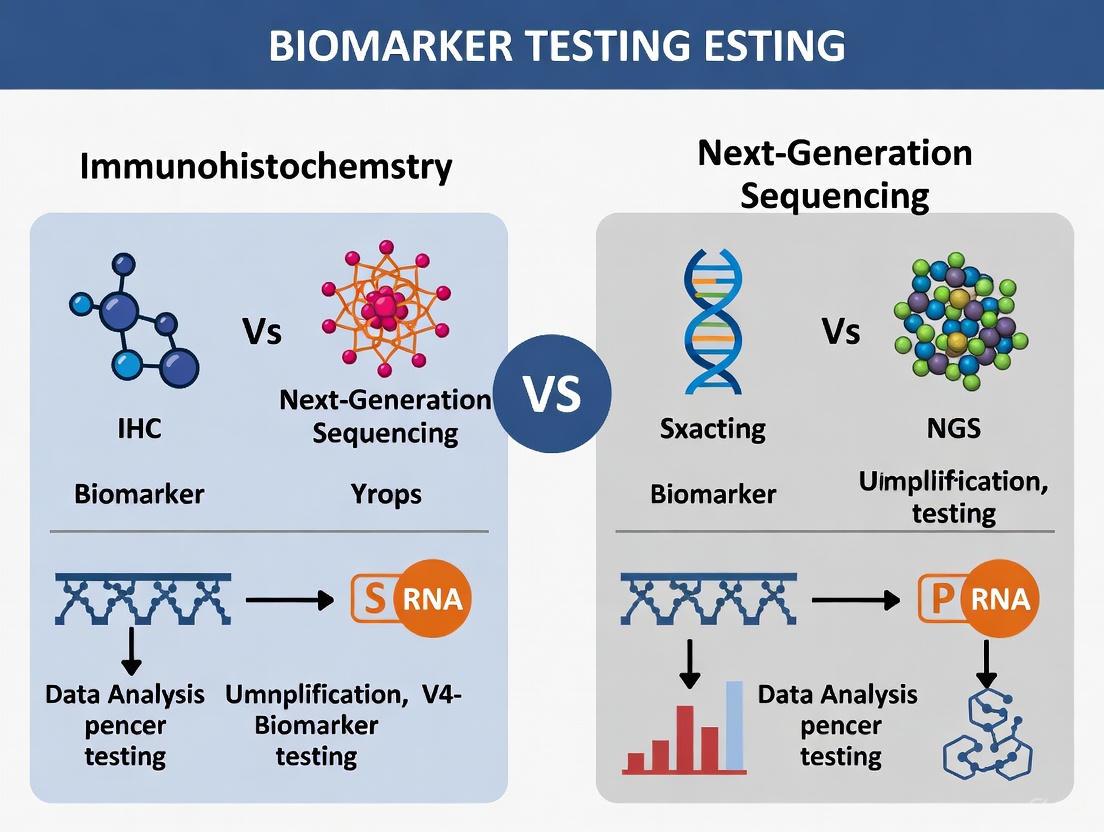
This article provides a systematic comparison of Immunohistochemistry (IHC) and Next-Generation Sequencing (NGS) for biomarker testing in oncology research and drug development.
IHC vs. NGS in Biomarker Testing: A Comprehensive Guide for Precision Oncology Research
Abstract
This article provides a systematic comparison of Immunohistochemistry (IHC) and Next-Generation Sequencing (NGS) for biomarker testing in oncology research and drug development. It explores the foundational principles, technical workflows, and clinical applications of both methods, addressing key challenges like tissue limitations, cost, and assay sensitivity. Drawing on recent real-world evidence and validation studies, it offers a framework for method selection and optimization. The content synthesizes performance metrics, including sensitivity, specificity, and cost-effectiveness, to guide researchers and scientists in making informed decisions that enhance the accuracy and efficiency of biomarker-driven clinical trials and therapeutic development.
Core Principles and Evolving Roles of IHC and NGS in Modern Biomarker Analysis
In the era of precision oncology, accurate biomarker testing has become indispensable for guiding treatment decisions, particularly in non-small cell lung cancer (NSCLC) and other malignancies. Two technologies form the cornerstone of modern biomarker assessment: immunohistochemistry (IHC) and next-generation sequencing (NGS). IHC is a well-established technique that uses antibody-based detection to visualize protein expression and localization within tissue architecture, providing valuable spatial context within the tumor microenvironment. In contrast, NGS represents a high-throughput molecular technology that enables comprehensive genomic profiling by simultaneously sequencing millions of DNA fragments, detecting diverse alterations including single nucleotide variants, insertions/deletions, copy number variations, and gene rearrangements.
The treatment landscape for advanced NSCLC has undergone a paradigm shift toward precision medicine, necessitating robust biomarker testing to identify actionable genomic alterations that predict response to targeted therapies. International guidelines from organizations including the National Comprehensive Cancer Network (NCCN) and the College of American Pathologists/International Association for the Study of Lung Cancer/Association of Molecular Pathology (CAP/IASLC/AMP) now recommend broad molecular profiling to identify targetable oncogenic drivers at diagnosis. Understanding the fundamental mechanisms, capabilities, and limitations of IHC and NGS is therefore critical for researchers, pathologists, and drug development professionals seeking to implement optimal biomarker testing strategies in both clinical trials and routine practice.
Fundamental Principles and Technical Mechanisms
Immunohistochemistry (IHC): Protein Detection in Tissue Context
IHC operates on the principle of antibody-antigen interaction to detect specific protein biomarkers within tissue sections. The technique utilizes enzyme-conjugated antibodies that generate colored precipitates at antigen sites, allowing visualization of protein expression patterns while preserving tissue architecture and cellular morphology. The multi-step process begins with tissue preparation, where formalin-fixed, paraffin-embedded (FFPE) sections are deparaffinized and rehydrated. Antigen retrieval then reverses formaldehyde-induced cross-links that may mask epitopes, typically using heat-induced methods in citrate or EDTA buffers. Following blocking of endogenous peroxidase activity and non-specific binding sites, primary antibodies specific to the target protein (e.g., ALK, ROS1, PD-L1) are applied and incubated.
After washing, enzyme-conjugated secondary antibodies are added, forming a complex with the primary antibodies. Chromogenic substrates such as 3,3'-diaminobenzidine (DAB) are then applied, producing a visible brown precipitate at the antigen site upon enzyme catalysis. Counterstaining with hematoxylin provides nuclear detail, and the stained sections are evaluated microscopically by pathologists using standardized scoring systems. The entire process can be completed with a rapid turnaround time of 1-2 days, making it highly practical for clinical decision-making. For predictive biomarkers like ALK, specific antibody clones such as D5F3 and 5A4 have demonstrated high sensitivity and specificity in detecting rearrangements by identifying aberrant protein expression resulting from gene fusions [1].
Next-Generation Sequencing (NGS): Comprehensive Genomic Profiling
NGS represents a fundamental advancement over Sanger sequencing by enabling massively parallel sequencing of millions of DNA fragments simultaneously. The core principle involves fragmenting genomic DNA, attaching adapter sequences, and immobilizing the fragments on a solid surface or in emulsion droplets. Library preparation begins with DNA extraction from tumor samples (typically FFPE tissue or liquid biopsy), followed by fragmentation and ligation of platform-specific adapter sequences. For targeted NGS approaches commonly used in clinical oncology, hybrid capture or amplicon-based methods enrich for genes of interest, with panels ranging from dozens to hundreds of cancer-related genes.
The sequenced fragments are then amplified clonally to create clusters or polonies, each representing a single template molecule. Various sequencing-by-synthesis chemistries (e.g., Illumina's reversible terminator method) determine nucleotide sequences through iterative cycles of fluorescently-labeled nucleotide incorporation and imaging. Following sequencing, sophisticated bioinformatics pipelines align reads to a reference genome, identify sequence variants, and annotate their potential functional significance. This process enables detection of diverse genomic alterations—including single nucleotide variants (SNVs), small insertions/deletions (indels), copy number variations (CNVs), and gene rearrangements—in a single integrated assay, providing a comprehensive molecular portrait of the tumor [2] [3].
Comparative Performance Data
Analytical Performance Across Genomic Alteration Types
Direct comparative studies reveal distinct performance characteristics between IHC and NGS across different variant classes. For protein expression detection and gene rearrangements with reliable IHC antibodies, both methods demonstrate high concordance, though each has specific strengths and limitations. A comprehensive 2019 study comparing NGS and IHC in 107 NSCLC cases found that NGS could explore various gene mutations and rearrangements with reduced experiment time and lower tumor tissue requirements compared to multiple IHC staining experiments. The study reported that NGS was more informative and reliable than IHC for EGFR gene alterations, particularly in exon 19 regions, and could increase the positive rate of ALK rearrangement while decreasing false positive ROS1 rearrangements detected by IHC [2].
A larger 2017 validation study analyzing 235 clinical specimens demonstrated that for ALK fusion detection, approximately 86% of IHC-identified cases could be identified by targeted NGS, and all ALK fusions detected by NGS were confirmed by IHC. For HER2 amplification, 14 cases identified by targeted NGS were all confirmed by fluorescence in situ hybridization (FISH), and approximately 93.3% of HER2 IHC (3+) cases were identified by targeted NGS. The study established that at a sequencing depth of 500×, maximal sensitivities for detecting single nucleotide variants and small insertions/deletions reached 99% and 98.7%, respectively [3].
Table 1: Performance Comparison of IHC vs. NGS for Different Biomarker Types
| Biomarker Type | Technology | Sensitivity | Specificity | Key Applications | Limitations |
|---|---|---|---|---|---|
| Gene Rearrangements (ALK) | IHC | 75.9-100% [1] | 95.0-100% [1] | ALK with D5F3/5A4 clones; rapid screening | Limited to known protein targets; equivocal cases require confirmation |
| NGS | 86-99% [3] [4] | 98% [4] | Comprehensive fusion detection; unknown partners | May miss complex rearrangements; bioinformatics challenges | |
| Point Mutations | IHC | Variable (mutation-specific) | Variable (mutation-specific) | EGFR L858R, E746-A750del [2] | Limited antibody availability; only specific mutations |
| NGS | 93-99% [3] [4] | 97-99% [4] | Broad mutation profiling; low variant allele frequency | Requires adequate DNA quality/quantity | |
| Amplifications | IHC | 93.3% (HER2 3+) [3] | Variable | HER2 protein overexpression | Semi-quantitative; influenced by pre-analytical factors |
| NGS | 100% (vs FISH) [3] | High | Copy number variations; genome-wide | Requires normalization; threshold determination | |
| Protein Expression | IHC | High for localized expression | High for localized expression | PD-L1; spatial context in tumor microenvironment [5] | Subjective interpretation; antibody validation critical |
| NGS | Not applicable | Not applicable | Not applicable for direct protein detection | Cannot assess protein localization/expression |
Operational Characteristics and Practical Considerations
Beyond analytical performance, operational characteristics significantly influence technology selection in different settings. A 2025 systematic review and meta-analysis of 56 studies involving 7,143 patients with advanced NSCLC found no significant differences in valid result percentages between standard tests and NGS in tissue (85.57% vs. 85.78%; p = 0.99) and liquid biopsy (81.50% vs. 91.72%; p = 0.277). However, liquid biopsy with NGS demonstrated a significantly shorter turnaround time (8.18 vs. 19.75 days; p < 0.001) compared to tissue-based methods [4].
The 2019 comparative study highlighted that NGS could explore various gene mutations and rearrangements with reduced experiment time and lower amounts of tumor tissues than multiple IHC staining experiments, making it particularly valuable for patients with limited tissue availability [2]. For resource-limited settings, expert panels have recommended exclusionary testing strategies, such as initial testing for EGFR mutations and ALK rearrangements along with PD-L1 expression, followed by limited multigene panel testing if initial results are negative [6].
Table 2: Operational Characteristics of IHC vs. NGS in Clinical Practice
| Parameter | IHC | NGS |
|---|---|---|
| Turnaround Time | 1-2 days [1] | 7-20 days (variable by platform) [4] |
| Tissue Requirements | Low (single section) | Moderate (depends on DNA yield) |
| Multiplexing Capability | Limited (sequential staining) | High (hundreds of genes simultaneously) |
| Cost per Biomarker | Low (individual tests) | High (initial investment) |
| Infrastructure Requirements | Standard pathology lab | Specialized sequencing/bioinformatics |
| Personnel Expertise | Pathologist interpretation | Multidisciplinary (lab, bioinformatics, clinical) |
| Reimbursement Landscape | Generally established | Evolving (varies by healthcare system) [6] |
| Guideline Recommendations | ALK, ROS1, PD-L1 testing [1] | Comprehensive genomic profiling [6] |
Experimental Protocols and Validation Data
Representative IHC Protocol for Predictive Biomarkers
Standardized protocols are essential for ensuring reproducible and reliable IHC results. For predictive biomarkers like ALK in NSCLC, the following protocol has demonstrated high sensitivity and specificity in clinical validation studies:
Tissue Processing and Sectioning:
- Tissue specimens are fixed in 10% neutral buffered formalin for 6-72 hours (optimal 12-24 hours)
- Processing through graded ethanol series (70%-100%), xylene clearing, and paraffin embedding
- Sectioning at 4μm thickness using microtome and transfer to charged slides
- Baking slides at 60°C for 30 minutes to enhance adhesion
Deparaffinization and Antigen Retrieval:
- Deparaffinize in xylene (3 changes, 5 minutes each)
- Rehydrate through graded ethanol series (100%-70%) to distilled water
- Perform heat-induced epitope retrieval in citrate buffer (pH 6.0) or EDTA buffer (pH 9.0) using pressure cooker or water bath (95-100°C for 20-40 minutes)
- Cool slides for 20-30 minutes at room temperature
Immunostaining Procedure:
- Quench endogenous peroxidase activity with 3% hydrogen peroxide for 10 minutes
- Block non-specific binding with protein block (serum or protein-free commercial blockers) for 10 minutes
- Apply primary antibody (e.g., ALK D5F3, 1:200 dilution) and incubate for 60 minutes at room temperature or overnight at 4°C
- Apply enzyme-labeled polymer conjugated secondary antibody for 30 minutes
- Develop with chromogen (DAB) for 5-10 minutes with monitoring under microscope
- Counterstain with hematoxylin for 1-2 minutes, differentiate in acid alcohol if needed
- Dehydrate through graded alcohols, clear in xylene, and mount with synthetic resin
Interpretation and Scoring:
- For ALK with D5F3 antibody: Any strong granular cytoplasmic staining in tumor cells is considered positive
- For ROS1 with D4D6 antibody: Moderate to strong cytoplasmic staining in >10% of tumor cells is considered positive [2] [1]
Representative Targeted NGS Protocol for Solid Tumors
Comprehensive NGS protocols enable detection of multiple genomic alteration types from limited clinical samples:
DNA Extraction and Quality Control:
- Extract DNA from FFPE tissue sections using QIAamp DNA FFPE Tissue Kit (Qiagen) or equivalent
- Quantify DNA using fluorometric methods (Qubit dsDNA HS Assay)
- Assess DNA quality via fragment analyzer or similar; DNA with degradation index <7 is preferred
- Minimum input: 10-100ng DNA (depending on panel size and technology)
Library Preparation:
- Fragment DNA to ~200bp using Covaris sonication or enzymatic fragmentation
- End-repair and adenylate 3' ends using KAPA HyperPrep Kit or equivalent
- Ligate platform-specific adapters with unique dual indices for sample multiplexing
- Purify libraries using SPRI bead-based cleanups (0.8-1.0× ratios)
Target Enrichment:
- Hybridize libraries with biotinylated oligonucleotide probes targeting cancer-related genes (e.g., 365-gene panel)
- Capture using streptavidin-coated magnetic beads (Dynabeads M270)
- Wash to remove non-specifically bound fragments
- Amplify captured libraries with limited-cycle PCR (10-12 cycles)
Sequencing and Data Analysis:
- Pool libraries in equimolar ratios and denature
- Load onto sequencing platform (Illumina NextSeq 500/550 or equivalent)
- Sequence with 150bp paired-end reads at minimum 500× average coverage
- Align to reference genome (hg19/GRCh37) using BWA-MEM or similar aligner
- Call variants using specialized algorithms: MuTect2 for SNVs, Pindel for indels, CONTRA for CNVs, and DELLY for rearrangements
- Annotate variants using ENSEMBL Variant Effect Predictor and clinical databases
- Implement quality filters: minimum 5% variant allele frequency, 50× coverage, and strand bias <0.9 [2] [3]
Research Reagent Solutions and Essential Materials
Table 3: Essential Research Reagents for IHC and NGS Platforms
| Reagent Category | Specific Products | Application Function | Key Considerations |
|---|---|---|---|
| IHC Primary Antibodies | ALK (D5F3, Ventana) [1] | Detection of ALK fusion protein | High sensitivity/specificity for rearrangements |
| ROS1 (D4D6, Cell Signaling) [2] | Detection of ROS1 fusion protein | Requires confirmation in weak cases | |
| PD-L1 (multiple clones) [5] | Immune checkpoint expression | Different clones for various therapeutics | |
| IHC Detection Systems | EnVision/Advance (Dako) [1] | Signal amplification | Reduced background; enhanced sensitivity |
| OptiView (Ventana) | Automated staining | Compatible with benchmark platforms | |
| NGS Library Prep Kits | KAPA HyperPrep (Roche) [3] | Fragment library construction | High efficiency for degraded FFPE DNA |
| Illumina DNA Prep | Integrated workflow | Optimized for Illumina platforms | |
| Target Capture Panels | Singlera OncoAim [2] | Lung cancer gene enrichment | Integrated mutation/fusion detection |
| IDT Pan-Cancer Panel [3] | Comprehensive profiling | 365 genes; baits cover exons/introns | |
| NGS Sequencing Kits | NextSeq 500/550 High Output (Illumina) [2] | Massive parallel sequencing | 150bp paired-end; 400M reads |
| NovaSeq 6000 S2/S4 | High-throughput sequencing | Scalable for large sample batches | |
| Bioinformatics Tools | BWA aligner [3] | Sequence alignment | Fast, accurate read mapping |
| Picard/GATK [3] | Variant calling | Industry standard for NGS data | |
| ENSEMBL VEP [2] | Variant annotation | Functional consequence prediction |
Integrated Applications in Cancer Research
Complementary Roles in Biomarker Assessment
Rather than mutually exclusive technologies, IHC and NGS serve complementary roles in comprehensive biomarker assessment strategies. The integration of these platforms provides a more complete understanding of tumor biology by correlating cellular activity, spatial context, and genomic alterations. This combined approach is particularly valuable in immuno-oncology, where FCM reveals immune cell behavior, IHC shows their distribution within the tissue architecture, and NGS uncovers the molecular drivers of treatment response and resistance [5].
Expert recommendations emphasize a multidisciplinary approach for managing patients with NSCLC, with oncologists, pathologists, and molecular biologists working collaboratively to integrate findings from multiple technologies. For resource-optimized testing algorithms, an exclusionary strategy focusing first on the most prevalent biomarkers (EGFR, ALK, PD-L1) followed by broader NGS profiling in negative cases has been proposed as a practical approach in settings with limited resources [6]. This integrated methodology maximizes the value of each patient sample while providing comprehensive molecular characterization to guide therapeutic decisions.
Clinical Validation and Regulatory Considerations
Robust validation is essential for implementing both IHC and NGS in clinical practice. For IHC assays, validation follows Clinical Laboratory Improvement Amendments (CLIA) requirements with additional considerations for predictive biomarkers. Key validation parameters include analytical sensitivity, specificity, precision, reproducibility, and limit of detection. For ALK IHC with D5F3 antibody, studies have demonstrated 75.9-100% sensitivity and 95.0-100% specificity compared to FISH [1]. Similarly, NGS assays require extensive validation covering wet bench procedures, bioinformatics pipelines, and variant interpretation. The 2017 study by Zheng et al. established that at 500× sequencing depth, targeted NGS achieved 99% sensitivity for SNVs and 98.7% for indels, with CNV detection possible in samples with ≥20% tumor cellularity [3].
Regulatory strategies differ significantly between the technologies and across geographic regions. In the United States, IHC companion diagnostics typically follow 510(k) or premarket approval (PMA) pathways, while in the European Union, they are classified as Class C devices under the In Vitro Diagnostic Regulation (IVDR). NGS assays face additional regulatory complexity due to their multi-analyte nature and rapidly evolving bioinformatics components. Successful commercialization requires parallel validation strategies addressing both CLIA and IVDR requirements, with comprehensive documentation of analytical and clinical performance [7].
IHC and NGS represent fundamentally distinct yet complementary technologies for biomarker assessment in cancer research and clinical practice. IHC provides valuable protein expression and spatial information within the tissue microenvironment with rapid turnaround times, making it ideal for initial screening of specific biomarkers like ALK, ROS1, and PD-L1. In contrast, NGS offers comprehensive genomic profiling capable of detecting diverse alteration types across hundreds of genes simultaneously, albeit with longer turnaround times and greater infrastructure requirements. The optimal approach depends on clinical context, resource availability, and specific biomarker requirements, with integrated strategies often providing the most complete molecular characterization. As precision medicine continues to evolve, both technologies will remain essential components of the oncology research toolkit, each contributing unique insights to guide therapeutic development and clinical decision-making.
The field of oncology has witnessed a remarkable transformation in biomarker testing, evolving from targeted analysis of single proteins to comprehensive multi-gene panels. This evolution reflects the growing understanding of cancer's molecular complexity and the need for more sophisticated diagnostic approaches to guide targeted therapies and immunotherapies. Two methodological approaches have emerged as fundamental to modern cancer diagnostics: immunohistochemistry (IHC), which detects protein expression in tissue sections, and next-generation sequencing (NGS), which identifies genomic alterations across hundreds of genes simultaneously [8] [9]. Each technique offers distinct advantages and limitations, creating a nuanced landscape where method selection significantly impacts patient stratification, treatment decisions, and ultimately, clinical outcomes.
The development of precision oncology has been driven by the convergence of technological advancements in molecular profiling and the discovery of numerous clinically actionable biomarkers [9]. This article provides a comprehensive comparison of IHC and NGS methodologies, examining their technical performance, clinical applications, and practical implementation in contemporary cancer research and drug development.
Technical Comparison: IHC versus NGS Methodologies
Fundamental Principles and Analytical Capabilities
Immunohistochemistry (IHC) is an established technique that utilizes antibody-based detection to visualize protein expression and localization within preserved tissue sections. It provides valuable spatial information about protein distribution in the context of tissue architecture and tumor microenvironment [8] [10]. IHC remains widely used for assessing mismatch repair (MMR) proteins (MLH1, MSH2, MSH6, and PMS2) as a surrogate for microsatellite instability status, with complete loss of nuclear staining indicating MMR deficiency [8].
Next-generation sequencing (NGS) encompasses various sequencing platforms that simultaneously analyze numerous genomic alterations, including single nucleotide variants (SNVs), insertions/deletions (indels), copy number variations (CNVs), gene fusions, and microsatellite instability [8] [4] [9]. NGS panels can target specific gene sets (targeted panels) or interrogate the entire exome or genome, providing a comprehensive molecular profile from limited tissue samples.
Table 1: Core Technical Characteristics of IHC and NGS
| Parameter | Immunohistochemistry (IHC) | Next-Generation Sequencing (NGS) |
|---|---|---|
| Analytical Target | Proteins | DNA/RNA (genomic variants) |
| Primary Output | Protein expression and localization | Nucleotide sequence, variant calls |
| Multiplexing Capacity | Limited (typically 1-4 markers per slide) | High (dozens to hundreds of genes) |
| Spatial Context | Preserved (within tissue architecture) | Lost (requires separate analysis) |
| Turnaround Time | 1-2 days | 4-19 days (varies by platform) [11] [12] |
| Tissue Requirements | FFPE tissue sections | DNA/RNA from FFPE or fresh tissue |
| Automation Potential | High (automated stainers) | Moderate to high (library preparation) |
| Key Applications | MMR protein status, PD-L1 expression, HER2 | Mutation profiling, MSI, TMB, gene fusions |
Concordance and Complementary Value
Substantial evidence demonstrates a strong correlation between IHC-based MMR protein assessment and NGS-based MSI detection, though with important exceptions. A 2025 study analyzing 139 tumor samples across multiple cancer types found 8.6% (12 tumors) were classified as MSI-High by NGS [8]. Among these, ten exhibited corresponding MMR protein loss on IHC, while two MSI-High mucinous adenocarcinomas (omental and colon origins) retained MMR protein expression [8]. This discordance highlights how some tumors may exhibit microsatellite instability through mechanisms not detected by IHC, illustrating the complementary nature of these techniques.
For biomarker testing in non-small cell lung cancer (NSCLC), NGS demonstrates high accuracy compared to standard techniques. A systematic review and meta-analysis of 56 studies found NGS achieved 93% sensitivity and 97% specificity for EGFR mutations and 99% sensitivity and 98% specificity for ALK rearrangements in tissue samples [4]. In liquid biopsy applications, NGS showed strong performance for detecting EGFR, BRAF V600E, KRAS G12C, and HER2 mutations but exhibited limited sensitivity for gene rearrangements (ALK, ROS1, RET, NTRK) compared to tissue-based methods [4].
Performance Comparison Across Cancer Types
Solid Tumors: Colorectal, Cholangiocarcinoma, and Beyond
The comparative performance of IHC and NGS varies significantly across cancer types, influenced by the specific biomarkers of clinical interest and their molecular characteristics. In colorectal cancer, both methods effectively identify MMR-deficient tumors, with studies showing strong overall concordance [8]. The exception cases where MSI-H tumors show retained MMR protein expression on IHC demonstrate scenarios where NGS provides additional diagnostic value [8].
In intrahepatic cholangiocarcinoma (ICC), molecular profiling has revealed distinct therapeutic targets that benefit from NGS approaches. FGFR2 fusions occur in 6.6-20% of Chinese ICC patients, particularly in the small duct subtype [13]. International expert consensus recommends RNA-based NGS as the preferred method for detecting FGFR2 fusions/rearrangements due to its ability to identify novel fusion partners and confirm functional transcripts, with DNA-based NGS serving as a complementary approach for simultaneously identifying mutations and amplifications [13]. Similarly, IDH1 mutations present in 4.9-20% of ICC cases are more effectively detected through sequencing approaches [13] [10].
Table 2: Clinical Performance of IHC vs. NGS Across Biomarkers
| Biomarker | Cancer Types | IHC Performance | NGS Performance | Clinical Implications |
|---|---|---|---|---|
| MMR/MSI | Colorectal, endometrial, various | 83% concordance with MSI-NGS [8] | Detects discordant cases (MSI-H with intact MMR) [8] | Immunotherapy eligibility |
| EGFR mutations | NSCLC | Not applicable | 93% sensitivity, 97% specificity (tissue) [4] | TKIs sensitivity |
| ALK fusions | NSCLC | Screening tool, requires confirmation | 99% sensitivity, 98% specificity (tissue) [4] | ALK inhibitor response |
| FGFR2 fusions | Cholangiocarcinoma | Poor concordance with NGS [13] | Gold standard (RNA-NGS preferred) [13] | FGFR inhibitor eligibility |
| HER2 mutations | Various | Protein expression only | 80% sensitivity (liquid biopsy) [4] | HER2-targeted therapies |
| TMB | Multiple | Not feasible | Comprehensive assessment | Immunotherapy response |
Real-World Testing Patterns and Outcomes
Real-world evidence demonstrates increasing adoption of comprehensive biomarker testing in oncology practice. A retrospective cohort study of 8,267 NSCLC patients found 38.9% received biomarker testing, with prevalence increasing with disease stage: stage I (6.9%), stage II (18.0%), stage III (34.8%), and stage IV (71.1%) [12]. Multivariable analysis revealed that NGS testing versus no testing was associated with a 13% decrease in 3-year all-cause mortality, highlighting the clinical impact of comprehensive genomic profiling [12].
Testing rates varied significantly by demographic and clinical factors, with higher prevalence in patients aged <65 years, of Asian race, never smokers, those living in less deprived neighborhoods, and those with non-squamous tumors [12]. These disparities underscore ongoing challenges in equitable implementation of precision oncology approaches.
Experimental Protocols and Methodological Details
Standardized IHC Protocol for MMR Protein Detection
Tissue Preparation: 4-µm thick sections from formalin-fixed, paraffin-embedded (FFPE) tumor samples are mounted on charged slides and dried [8].
Staining Procedure:
- Automated staining systems (e.g., Dako OMNIS) are recommended for consistency
- Primary antibodies against MLH1 (ES05), MSH2 (FE11), MSH6 (EP49), PMS2 (EP51)
- Appropriate detection systems with chromogenic substrates
- Counterstaining with hematoxylin
Interpretation Criteria:
- Retained expression: Nuclear staining in tumor cells comparable to internal non-tumoral controls
- Loss of expression: Complete absence of nuclear staining in tumor cells with intact staining in adjacent normal cells
- Internal positive controls (non-tumoral cells) must be present and appropriately stained
Quality Assurance: Regular validation of antibody performance, appropriate tissue controls, and standardized scoring systems are essential [8].
NGS-Based MSI Detection Methodology
Sample Requirements: DNA extracted from FFPE tissue blocks with quality control measures (e.g., DNA quantification, fragmentation assessment) [8].
Common NGS Platforms:
- VariantPlex Solid Tumor Focus v2: Analyzes 20 cancer-related genes and 108-111 microsatellite loci. MSI classification: >30% unstable loci = MSI-H; <20% = MSS; 20-30% = MSI-Intermediate [8]
- AVENIO Comprehensive Genomic Profiling Kit: Targets 324 genes with proprietary algorithm (threshold ≥0.0124 for MSI-H) [8]
- TruSight Oncology 500: Covers 523 genes and assesses ~130 microsatellite loci (requires ≥40 evaluable loci) [8]
Bioinformatic Analysis:
- Alignment to reference genome
- Microsatellite locus instability assessment
- Threshold application based on validated thresholds
- Simultaneous assessment of TMB, SNVs, CNVs, and fusions
Validation Considerations: Analytical sensitivity/specificity, limit of detection, reproducibility, and validation against orthogonal methods are critical for clinical implementation [8].
Visualizing Testing Workflows and Pathway Interactions
IHC versus NGS Testing Pathways
MMR Pathway and Microsatellite Instability Relationship
Essential Research Reagent Solutions
Critical Laboratory Materials for Biomarker Testing
Table 3: Essential Research Reagents for IHC and NGS Applications
| Reagent Category | Specific Examples | Research Application | Technical Considerations |
|---|---|---|---|
| IHC Primary Antibodies | MLH1 (ES05), MSH2 (FE11), MSH6 (EP49), PMS2 (EP51) [8] | Protein localization and expression quantification | Clone validation, species reactivity, staining optimization |
| NGS Library Prep Kits | VariantPlex Solid Tumor Focus v2, AVENIO CGP Kit, TruSight Oncology 500 [8] | Target enrichment and sequencing library construction | Input DNA requirements, coverage uniformity, panel content |
| Nucleic Acid Extraction | FFPE DNA/RNA extraction kits, blood cfDNA isolation kits | Sample preparation for genomic analysis | Yield, purity, fragmentation assessment, inhibitor removal |
| Sequencing Consumables | Flow cells, sequencing primers, buffer solutions | NGS platform operation | Read length, quality scores, error profiles, output volume |
| Bioinformatic Tools | Alignment algorithms (BWA, Bowtie2), variant callers (GATK, VarScan) | NGS data analysis and interpretation | Sensitivity/specificity thresholds, filtering strategies |
The expanding biomarker landscape in oncology necessitates strategic selection between IHC and NGS methodologies based on specific research objectives, clinical contexts, and practical constraints. IHC remains a cost-effective, accessible approach for analyzing protein expression and localization with rapid turnaround times, making it particularly valuable for high-volume clinical testing and when spatial context is essential [8] [14]. Conversely, NGS provides comprehensive genomic characterization from limited tissue, simultaneously assessing multiple biomarker classes including mutations, fusions, MSI, and tumor mutational burden [8] [4] [9].
The future of biomarker testing lies not in exclusive adoption of either technology but in their strategic integration. Complementary use of both methods can enhance diagnostic accuracy, with IHC serving as an efficient screening tool and NGS providing definitive genomic characterization in complex cases [8] [13]. For drug development professionals, understanding the performance characteristics, limitations, and appropriate applications of each platform is essential for designing robust biomarker-stratified clinical trials and developing effective diagnostic strategies for precision oncology therapeutics.
Emerging approaches including liquid biopsy-based NGS address tissue availability limitations and enable dynamic monitoring of tumor evolution, though sensitivity remains dependent on tumor fraction [15] [4]. As the biomarker landscape continues to expand with novel therapeutic targets and resistance mechanisms, both IHC and NGS will maintain critical roles in advancing cancer research and improving patient outcomes through precision oncology.
In the era of precision oncology, accurate biomarker testing is fundamental for patient stratification, treatment selection, and prognostication. Immunohistochemistry (IHC) and next-generation sequencing (NGS) represent two cornerstone technologies in the molecular pathology landscape, each with distinct strengths, limitations, and applications. IHC provides a visual assessment of protein expression and localization within the tissue architecture, while NGS offers a comprehensive genomic profile by detecting a wide spectrum of DNA and RNA alterations. The choice between these methodologies—or their synergistic combination—has profound implications for research outcomes and clinical translation. This guide objectively compares the performance of IHC and NGS, drawing on recent experimental data and real-world evidence to inform researchers, scientists, and drug development professionals.
Analytical Performance and Technical Comparison
The analytical performance of a testing platform determines its reliability and applicability in both research and clinical settings. Key parameters include sensitivity, specificity, and the types of genomic alterations each method can detect.
Table 1: Analytical Performance and Detection Capabilities of IHC and NGS
| Performance Parameter | Immunohistochemistry (IHC) | Next-Generation Sequencing (NGS) |
|---|---|---|
| Analytical Sensitivity | Varies by antibody and target; semi-quantitative (e.g., H-score) [16] | High; can detect variants at ~0.1%-2.8% mutant allele frequency (for SNVs) [17] [18] |
| Analytical Specificity | High, but dependent on antibody validation and staining interpretation [19] [16] | Very High; reported at 99.99% in validated NGS assays [17] |
| Single-Nucleotide Variants (SNVs) | Indirect inference only (e.g., via loss of protein expression) | Direct detection with high sensitivity [17] [20] |
| Insertions/Deletions (Indels) | Not directly detectable | Direct detection (sensitivity varies by size) [17] |
| Gene Fusions | Can be surrogate for some (e.g., ALK, ROS1); requires specific antibody [20] | Direct detection from RNA; broad panel of fusions possible [17] [20] |
| Copy Number Variations (CNVs) | Semi-quantitative (e.g., HER2 by IHC) | Direct detection and quantification [20] |
| Microsatellite Instability (MSI) | Indirect via MMR protein loss (MLH1, MSH2, MSH6, PMS2) [8] [21] | Direct assessment of microsatellite loci; high concordance with IHC [8] [21] |
| Turnaround Time (TAT) | Short (typically 1-2 days) | Longer (several days to weeks); in-house NGS can reduce to ~4 days [18] [11] |
| Tissue Requirements | Low; can be performed on small biopsies and cytology samples | Higher; requires sufficient DNA/RNA, though input requirements vary [18] |
Key Experimental Findings from Comparative Studies
- MSI/MMR Testing Concordance: A study of 139 tumors found a strong correlation between IHC-based mismatch repair (MMR) protein loss and NGS-based MSI detection. Among MSI-High tumors, 10 of 12 exhibited MMR protein loss, while two mucinous adenocarcinomas retained expression, highlighting potential discordance. The study concluded that IHC remains widely accessible, but NGS offers higher accuracy and broader genomic insights [8].
- Large-Scale NGS-MSI Validation: A retrospective analysis of 35,563 Chinese pan-cancer cases developed a novel NGS-based MSI detector (MSIDRL). The study demonstrated the algorithm's robustness and provided large-scale data on MSI-H prevalence across cancer types, showcasing NGS's capability for high-throughput, pan-cancer biomarker application [21].
- Cost-Efficiency in NSCLC: A global micro-costing study across 10 pathology centers found that the cost-effectiveness of NGS versus single-gene testing (including IHC) depends on the number of biomarkers tested. The "tipping point" for NGS to be more cost-effective was when 10 or more biomarkers required evaluation. Mean per-patient costs were 18-26% lower for NGS compared to sequential single-gene tests in real-world scenarios [22].
Experimental Protocols for Method Validation
To ensure reliable and reproducible results, rigorous validation of both IHC and NGS protocols is essential. The following methodologies are drawn from cited experimental procedures.
Protocol for IHC Validation and Interpretation (e.g., for MTAP)
The following protocol is adapted from a study comparing MTAP IHC for 9p21 deletion detection in diffuse pleural mesotheliomas [19].
- Tissue Sectioning: Cut 4-μm thick sections from formalin-fixed, paraffin-embedded (FFPE) tissue blocks.
- Antibody Staining: Perform automated IHC staining using validated primary antibodies (e.g., MTAP monoclonal antibody 1813 was found superior to EPR6893 due to stronger immunoreactivity and fewer equivocal interpretations).
- Microscopic Evaluation: A pathologist evaluates staining under a microscope. For MTAP, cytoplasmic expression is assessed. The internal positive control (non-tumoral cells) must show intact nuclear staining.
- Interpretation Criteria:
- Retained Expression: Nuclear staining in tumor cells comparable to internal control.
- Loss of Expression: Complete absence of nuclear staining in tumor cells in the presence of intact staining in adjacent normal cells.
- Validation: Compare IHC results with an orthogonal molecular method (e.g., FACETS analysis of 9p21 copy number or FISH) to determine sensitivity, specificity, and accuracy. The cited study reported 96% sensitivity, 86% specificity, and 93% accuracy for MTAP IHC with mAb 1813 [19].
Protocol for Targeted NGS Assay Validation
This protocol summarizes the extensive analytical validation process for the NCI-MATCH trial NGS assay, which serves as a template for clinical-grade NGS validation [17].
Sample Selection and Nucleic Acid Extraction:
- Use archived FFPE clinical tumor specimens and cell line pellets with known variants previously identified by orthogonal methods (e.g., digital PCR, Sanger sequencing).
- Extract DNA and RNA from FFPE sections. The pre-analytical assessment of biopsy samples by a central pathology laboratory is critical for evaluating tumor content and sample quality.
Library Preparation and Sequencing:
- Use the targeted Oncomine Cancer Panel assay with AmpliSeq chemistry on an Ion Personal Genome Machine (PGM) sequencer.
- The assay is designed to detect 4066 predefined genomic variations (SNVs, indels, CNVs, gene fusions) across 143 genes.
Data Analysis:
- Use a locked data analysis pipeline (e.g., Torrent Suite version 4.4.2 and Ion Reporter version 4.4.2) to ensure reproducibility.
- Upload variant calling format (VCF) files to a centralized system for clinical interpretation and reporting.
Analytical Performance Assessment:
- Sensitivity/Specificity: Determine by testing samples with known mutations. The NCI-MATCH assay achieved 96.98% overall sensitivity for 265 known mutations and 99.99% specificity.
- Reproducibility: Assess inter-operator and inter-laboratory concordance. The validation achieved a 99.99% mean inter-operator pairwise concordance across four laboratories.
- Limit of Detection (LOD): Establish for each variant type using dilution series. The LOD was 2.8% for SNVs, 10.5% for small indels, and 6.8% for large indels [17].
Research Reagent Solutions and Essential Materials
Selecting appropriate reagents and platforms is critical for the success of biomarker testing workflows. The following table details key solutions used in the experiments cited in this guide.
Table 2: Essential Research Reagents and Platforms for IHC and NGS
| Item | Function/Application | Example Products / Assays (from search results) |
|---|---|---|
| Primary Antibodies (IHC) | Detect specific protein targets (antigens) in tissue sections. | MTAP (clones 1813, EPR6893) [19]; MMR proteins (MLH1 clone ES05, MSH2 clone FE11, MSH6 clone EP49, PMS2 clone EP51) [8] |
| Automated IHC Staining System | Standardize and automate the IHC staining process to reduce variability. | Dako OMNIS system [8] |
| Targeted NGS Panel | Simultaneously interrogate multiple genes/genomic regions of interest. | Oncomine Precision Assay [18]; ONCOaccuPanel (NGeneBio) [20]; AVENIO CGP Kit (Roche) [8]; TSO-500 (Illumina) [8] |
| dPCR Panel | Highly sensitive, quantitative detection of a defined set of actionable variants. | HDPCR NSCLC Panel (ChromaCode) [18] |
| Nucleic Acid Extraction Kits | Isolve high-quality DNA and RNA from FFPE tissue samples. | QIAGEN AllPrep DNA/RNA FFPE Kit [20]; Maxwell HT FFPE DNA Isolation System (Promega) [18] |
| NGS Sequencer | Perform massively parallel sequencing of prepared libraries. | Ion PGM (Thermo Fisher) [17]; MiSeq (Illumina) [20]; QIAcuity (for dPCR) [18] |
Decision Pathways and Workflow Integration
Choosing between IHC and NGS is not always straightforward and depends on the research question, sample availability, and resource constraints. The following decision pathway visualizes a structured approach to test selection.
Decision Pathway for Selecting IHC vs. NGS
Real-World Clinical Utility and Research Applications
The ultimate value of a testing technology is demonstrated through its impact in real-world research and clinical settings. Evidence from diverse studies highlights the distinct and complementary roles of IHC and NGS.
- Real-World Testing Patterns and Outcomes in NSCLC: A retrospective cohort study of 8,267 NSCLC patients within an integrated healthcare system found that only 38.9% received any biomarker testing. Testing prevalence was highest in stage IV disease (71.1%) and significantly lower in stages I (6.9%), II (18.0%), and III (34.8%). Crucially, the study demonstrated that receiving NGS testing was associated with a 13% decrease in 3-year all-cause mortality compared to no testing, underscoring the survival benefit of comprehensive genomic profiling [23].
- Resolving Diagnostic Dilemmas: NGS can play a pivotal role in diagnosing malignancies of unknown primary origin and identifying rare targetable alterations that other methods miss. In one study, NGS confirmed TPR-ROS1, EGFR-RAD51, and NCOA4-RET fusions, and MET exon 14 skipping mutations, directly guiding targeted therapy. Furthermore, NGS helped resolve cases with discrepant histology and IHC findings, such as identifying BRCA1/TP53 mutations in tumors with endometrioid carcinoma histology [20].
- Complementary Roles in Mesothelioma Diagnosis: A study on diffuse pleural mesothelioma demonstrated that MTAP IHC and molecular assays (NGS/FACETS) are complementary for detecting 9p21 homozygous deletion. While MTAP IHC with a high-quality antibody (clone 1813) showed near-perfect agreement with 9p21 copy number loss (κ = 0.85), the authors noted that IHC is particularly useful for samples with low tumor purity and in low-resource settings [19].
IHC and NGS are not mutually exclusive technologies but rather complementary tools in the modern researcher's arsenal. IHC offers rapid, cost-effective, and morphologically contextual assessment of protein expression, making it ideal for a limited number of targets and when tissue is scarce. In contrast, NGS provides a unparalleled breadth of genomic information from a single test, proving more cost-effective and comprehensive when multiple biomarkers need interrogation. The choice of platform must be driven by the specific research question, the required level of genomic resolution, sample characteristics, and economic considerations. As the field of precision medicine advances, the synergistic integration of both IHC and NGS—leveraging the strengths of each—will be paramount for unlocking deeper biological insights and accelerating drug development.
The advent of precision oncology has fundamentally shifted cancer diagnosis and treatment, making accurate biomarker testing a cornerstone of modern clinical practice. Two methodologies dominate this landscape: immunohistochemistry (IHC) and next-generation sequencing (NGS). IHC, a well-established technique, detects protein expression using antibody-based staining and visualization under a microscope. In contrast, NGS represents a high-throughput molecular approach that enables parallel sequencing of millions of DNA fragments to identify genetic alterations across multiple genes simultaneously. Within the context of biomarker testing for cancer, each platform offers distinct advantages and suffers from inherent limitations that determine their appropriate clinical and research applications. This guide provides an objective, data-driven comparison of these technologies, focusing on their analytical performance, clinical utility, and practical implementation in biomarker assessment to inform researchers, scientists, and drug development professionals.
Platform Fundamentals: Technical Principles and Workflows
Immunohistochemistry (IHC) Workflow
IHC operates on the principle of antigen-antibody recognition to localize specific proteins within tissue sections. The standard workflow begins with formalin-fixed, paraffin-embedded (FFPE) tissue blocks, which are sectioned into thin slices (typically 4-µm thick) and mounted on slides. Following deparaffinization and antigen retrieval to unmask epitopes, primary antibodies specific to the target protein (e.g., ALK, ROS1, PD-L1) are applied. After incubation, visualization systems employing chromogenic substrates generate visible signals that pathologists evaluate microscopically using standardized scoring systems [8] [1] [24].
The critical strength of IHC lies in its ability to provide spatial context within the tumor architecture, preserving morphological information that reveals intratumoral heterogeneity and protein subcellular localization. However, this technique faces challenges related to pre-analytical variables including tissue fixation time, antibody specificity and clone selection, antigen retrieval methods, and interpreter experience, all of which can significantly impact result reproducibility [1] [24].
Next-Generation Sequencing (NGS) Workflow
NGS technologies employ massively parallel sequencing to comprehensively profile genomic alterations. The workflow initiates with nucleic acid extraction (DNA, RNA, or both) from FFPE tissue or fresh frozen specimens. Libraries are prepared through fragmentation, adapter ligation, and—in targeted approaches—hybridization capture or amplicon-based enrichment of genomic regions of interest. Sequencing platforms then perform cyclic sequencing by synthesis, generating millions to billions of short reads that computational pipelines align to reference genomes for variant identification [11] [25] [26].
The principal advantage of NGS lies in its multiplexing capacity, enabling simultaneous detection of diverse variant types—including single nucleotide variants (SNVs), insertions/deletions (indels), copy number variations (CNVs), and gene fusions—across hundreds of genes in a single assay. This comprehensive profiling, however, demands sophisticated bioinformatics infrastructure, specialized technical expertise, and rigorous quality control measures throughout the multi-step process [11] [25] [26].
Comparative Performance Analysis: Analytical Metrics and Clinical Utility
Detection Capabilities and Concordance Rates
Tissue-Agnostic Biomarkers: MSI/dMMR Detection Microsatellite instability (MSI) and mismatch repair deficiency (dMMR) serve as critical pan-cancer biomarkers for immunotherapy response. Traditional IHC evaluates the nuclear expression of four MMR proteins (MLH1, MSH2, MSH6, and PMS2), while NGS directly analyzes instability patterns in microsatellite regions.
A comparative study of 139 tumor samples demonstrated strong correlation between IHC-based MMR assessment and NGS-based MSI detection, with 8.6% (12 tumors) classified as MSI-H. Among these, ten exhibited concordant MMR protein loss, while two MSI-H tumors (a mucinous adenocarcinoma of omental origin and a mucinous colon adenocarcinoma) retained MMR protein expression, highlighting scenarios where these methods may diverge [8]. A much larger retrospective analysis of 35,563 Chinese pan-cancer cases established that NGS-based MSI detection algorithms could achieve robust classification when properly validated, identifying distinct MSI-H prevalence clusters across cancer types [21].
Oncogenic Driver Mutations in NSCLC In non-small cell lung cancer (NSCLC), IHC serves as an effective screening tool for ALK and ROS1 fusions, with specific antibody clones (D5F3 and 5A4 for ALK) demonstrating sensitivities of 75.9-100% and specificities of 95.0-100% compared to fluorescence in situ hybridization (FISH) [1]. However, for comprehensive genomic profiling, a multi-institutional study evaluating 283 NSCLC samples via a 50-gene NGS panel successfully identified 285 relevant variants across different alteration types: 81.1% SNVs/indels, 9.8% CNVs, and 9.1% gene fusions. Notably, NGS detected co-mutations with potential clinical relevance in 20.5% of samples positive for main oncogenic drivers and identified alterations in other relevant genes in 11% of samples wild-type for main drivers [11].
Protein Expression Biomarkers For biomarkers where protein expression directly informs clinical decisions, such as hormone receptors and PD-L1, IHC remains the standard. However, research demonstrates that RNA-seq can strongly correlate with IHC results for key biomarkers including ESR1, PGR, ERBB2, and CD274 (PD-L1), with correlation coefficients ranging from 0.53 to 0.89 across solid tumors. This correlation enables the establishment of RNA-seq thresholds that accurately reflect clinical IHC classifications, offering a quantitative complementary approach [24].
Table 1: Analytical Performance Comparison of IHC and NGS Platforms
| Performance Metric | Immunohistochemistry (IHC) | Next-Generation Sequencing (NGS) |
|---|---|---|
| Detection Spectrum | Protein expression/localization | SNVs, indels, CNVs, fusions, MSI, TMB |
| Sensitivity | Variable by antibody clone (e.g., ALK D5F3: 75.9-100%) [1] | High for SNVs/indels (VAF ≥2%) [26] |
| Specificity | Variable by antibody clone (e.g., ALK D5F3: 95.0-100%) [1] | High (>98.5%) with validated bioinformatics [27] |
| Tissue Requirements | FFPE sections (preserves morphology) | DNA/RNA from FFPE/frozen (consumes tissue) |
| Turnaround Time | 1-2 days [1] | 4-10 days (median 4 days reported) [11] |
| Multiplexing Capacity | Limited (1-8 markers typically with multiplex IHC) | High (dozens to hundreds of genes simultaneously) [11] |
| Spatial Context | Preserved (critical for tumor microenvironment) | Lost (bulk analysis) |
| Success Rate | High (>95% for most markers) | High (99.2% for DNA, 98% for RNA in NSCLC study) [11] |
Economic Considerations and Testing Efficiency
Economic analyses demonstrate that the optimal testing strategy depends heavily on the number of biomarkers required. Single-gene tests (including IHC, FISH, and PCR) initially appear less expensive per test but become economically unfavorable as biomarker numbers increase due to cumulative costs and tissue consumption.
A global micro-costing analysis across 10 pathology centers evaluating 4,491 patients with advanced NSCLC revealed that mean per-patient costs decreased for NGS relative to single-gene testing over time. In real-world models, NGS costs were 18% lower than sequential single-gene testing in the 2021-2022 scenario and 26% lower in the 2023-2024 scenario. The standardized model identified a tipping point of 10 biomarkers, beyond which NGS generated cost savings compared to sequential testing approaches [22]. Another study calculating cost per correctly identified patient (CCIP) reported €1,983 for sequential single-gene testing versus €658 for NGS in nonsquamous NSCLC, reinforcing the economic advantage of comprehensive genomic profiling when multiple biomarkers are clinically indicated [27].
Table 2: Economic and Operational Considerations
| Parameter | Immunohistochemistry (IHC) | Next-Generation Sequencing (NGS) |
|---|---|---|
| Per-Test Cost | Lower | Higher |
| Cost Per Patient (Multiple Biomarkers) | Increases linearly with each additional test | Fixed regardless of number of genes tested |
| Infrastructure Investment | Moderate (standard pathology lab) | High (sequencing instruments, bioinformatics) |
| Expertise Requirements | Pathologist interpretation | Bioinformaticians, molecular biologists |
| Tissue Utilization | Efficient (single section for multiple stains with multiplex IHC) | Can be demanding (50-250ng DNA required) [26] |
| Reimbursement Landscape | Widely established | Expanding but variable globally [22] |
| Economic Advantage | When testing ≤10 biomarkers [22] | When testing >10 biomarkers [22] |
Integrated Testing Approaches in Clinical Research
Complementary Methodologies in Biomarker Strategy
Rather than mutually exclusive technologies, IHC and NGS increasingly function as complementary approaches in comprehensive biomarker assessment. Each method contributes unique dimensions of biological information that, when integrated, provide a more holistic understanding of tumor biology.
The synergy between these platforms is particularly evident in immuno-oncology research, where each technology answers distinct biological questions. IHC provides critical spatial context regarding immune cell distribution within the tumor microenvironment, while NGS enables comprehensive molecular profiling including tumor mutational burden (TMB), microsatellite instability (MSI), and mutational signatures that inform immunotherapy response prediction [5]. This integrated approach allows researchers to correlate cellular activity, spatial organization, and genomic alterations, creating a more complete picture of the immune response over time.
This multidimensional analysis is further enhanced by establishing quantitative correlations between protein expression (IHC) and transcriptomic data (RNA-seq). Research demonstrates strong correlations (coefficients 0.53-0.89) between IHC and RNA-seq for nine key cancer biomarkers including ESR1, PGR, ERBB2, and CD274 across breast, lung, and gastrointestinal carcinomas. These correlations enable the establishment of RNA-seq thresholds that accurately predict IHC classifications, creating opportunities for orthogonal verification of ambiguous results [24].
Implementation Challenges and Quality Considerations
Both platforms face distinct implementation challenges that affect their utility in clinical research and diagnostic settings. IHC contends with issues of antibody validation, inter-observer variability in interpretation, and pre-analytical variables including tissue fixation and processing protocols. The performance of IHC assays varies significantly depending on antibody clones, as exemplified by the superior sensitivity of D5F3 and 5A4 clones for ALK detection compared to the ALK1 clone [1].
NGS methodologies face their own unique challenges, including sequencing artifacts introduced during library preparation, difficulties detecting structural variations in FFPE-derived DNA, and bioinformatics complexities in variant calling and interpretation. Different NGS technologies exhibit inherent sequencing biases and generate technical artifacts that can confound mutational signature analysis if not properly accounted for [25]. Additionally, the tumor microenvironment and purity significantly influence correlation between RNA-seq and IHC data, particularly for biomarkers like PD-L1 where multiple cell types contribute to expression signals [24].
Essential Research Reagent Solutions
Successful implementation of IHC and NGS platforms requires carefully validated reagent systems and analytical tools. The following table outlines essential research reagents and their applications in biomarker testing workflows.
Table 3: Essential Research Reagent Solutions for Biomarker Testing
| Reagent Category | Specific Examples | Research Application |
|---|---|---|
| IHC Primary Antibodies | ALK (D5F3, 5A4 clones), ROS1 (D4D6), PD-L1 (22C3, SP142), MMR proteins (MLH1, MSH2, MSH6, PMS2) | Protein expression detection and localization for predictive biomarkers [1] [24] |
| IHC Detection Systems | Dako ADVANCE system, Leica BOND RX automated stainers, chromogenic substrates | Signal amplification and visualization for target proteins [1] |
| NGS Library Prep Kits | ArcherDx VariantPlex, Roche AVENIO CGP Kit, Illumina TSO-500, Agilent SureSelectXT | Target enrichment and library construction for genomic sequencing [8] [26] |
| NGS Panels | SNUBH Pan-Cancer v2.0 (544 genes), Thermo Fisher Solid Tumor Focus | Targeted sequencing of cancer-related genes with comprehensive coverage [11] [26] |
| NGS Bioinformatics Tools | MSIsensor, CNVkit, LUMPY, Mutect2, Kallisto | Variant calling, MSI detection, CNV analysis, and expression quantification [21] [26] |
| RNA-seq Platforms | SureSelect XT HS2 RNA kit, TruSeq Stranded mRNA Library Prep | Transcriptome profiling and gene expression quantification [24] |
IHC and NGS represent complementary rather than competing technologies in the biomarker testing landscape, each with distinctive strengths and limitations. IHC provides unparalleled spatial context and protein localization information with rapid turnaround times, while NGS offers comprehensive genomic profiling capabilities that capture the molecular complexity of cancer. The decision between platforms depends on multiple factors including clinical context, number of biomarkers required, tissue availability, and economic considerations. For targeted assessment of single biomarkers with established protein-expression correlations, IHC remains efficient and cost-effective. For comprehensive genomic profiling, particularly as the number of clinically relevant biomarkers exceeds 10, NGS demonstrates superior economic and diagnostic value. Future directions in cancer diagnostics point toward integrated approaches that leverage both technologies' strengths, combining IHC's morphological context with NGS's genomic breadth to advance precision oncology and therapeutic development.
Technical Workflows and Practical Implementation in Research and Diagnostics
Immunohistochemistry (IHC) and Next-Generation Sequencing (NGS) represent two fundamental pillars of modern biomarker testing in oncology and research pathology. IHC is a well-established technique that uses antibodies to detect specific protein antigens in tissue sections, providing spatial context within the tissue architecture. In contrast, NGS is a high-throughput genomic technology that enables comprehensive analysis of nucleic acids, identifying DNA or RNA variations across hundreds of genes simultaneously. The selection between these methodologies involves strategic trade-offs: IHC offers rapid turnaround, lower cost, and direct protein visualization, while NGS provides unparalleled genomic breadth and sensitivity for detecting diverse mutation types. Understanding the detailed protocols for both techniques is essential for researchers and drug development professionals seeking to implement robust biomarker testing workflows that generate reliable, reproducible data for diagnostic and therapeutic decision-making.
IHC Experimental Protocol: Detailed Methodology
Sample Preparation and Staining
The IHC protocol begins with sample preparation using formalin-fixed paraffin-embedded (FFPE) tissue sections mounted on slides. The process requires deparaffinization and rehydration through a series of xylene and graded alcohol washes, followed by antigen retrieval to reverse formaldehyde-induced cross-links that mask epitopes. This is typically achieved through heat-induced epitope retrieval using citrate or EDTA-based buffers at specific pH levels. After cooling and rinsing, slides undergo peroxidase blocking to quench endogenous peroxidase activity, followed by protein blocking with serum or protein solutions to prevent non-specific antibody binding [28] [29].
The core staining phase involves sequential application of primary antibodies specific to the target antigen (e.g., HER2, PD-L1), which are incubated for specified durations at optimized concentrations. After washing, secondary antibodies conjugated with enzyme markers (typically horseradish peroxidase or alkaline phosphatase) are applied. For signal detection, chromogenic substrates like DAB (3,3'-diaminobenzidine) are added, producing a colored precipitate at the antigen site. Finally, counterstaining with hematoxylin provides nuclear contrast, followed by dehydration, clearing, and mounting for microscopic evaluation [28].
Analysis and Interpretation
The interpretation of IHC results employs semiquantitative scoring systems specific to the target biomarker. For example, HER2 expression is evaluated using a 0 to 3+ scale based on membrane staining intensity and completeness, while PD-L1 expression is typically scored via Tumor Proportion Score (TPS) indicating the percentage of viable tumor cells showing partial or complete membrane staining. Scoring requires pathologist expertise to ensure accurate assessment, with stringent quality controls including positive and negative control tissues run in parallel to validate staining specificity [28].
NGS Experimental Protocol: Detailed Methodology
Sample Preparation and Library Construction
The NGS workflow initiates with nucleic acid extraction from patient samples, typically FFPE tissue sections or liquid biopsy specimens. For FFPE samples, this involves deparaffinization in xylene, hydration through graded alcohols, and digestion with proteinase K to release DNA and RNA. The quality and quantity of extracted nucleic acids are critically assessed using fluorometric methods (Qubit) and spectrophotometry (NanoDrop), with A260/A280 ratios between 1.7-2.2 indicating acceptable purity. For targeted NGS panels, input requirements typically range from 10-100ng of DNA, with tumor content >20% recommended for reliable variant detection [26] [29].
Library preparation represents the most technically complex phase of NGS workflow. The process begins with DNA fragmentation to optimal sizes (200-500bp) through mechanical, enzymatic, or chemical methods. After fragmentation, end repair and adenylation create blunt-ended fragments with 3'A-overhangs compatible with adapter ligation. Adapter ligation follows, where synthetic oligonucleotides with specific sequences are attached to fragment ends, enabling amplification and sequencing. Libraries are then amplified via PCR using primers complementary to adapter sequences, with careful optimization of cycle numbers to prevent amplification bias. For targeted sequencing, hybridization capture with biotinylated probes specific to genes of interest enriches relevant genomic regions before final amplification and purification using magnetic beads or gel filtration [30].
Sequencing Reaction and Data Analysis
The sequencing phase utilizes massively parallel sequencing technology, with Illumina platforms being most common in clinical applications. The process involves cluster generation through bridge amplification on flow cells, creating millions of clonal clusters from individual library fragments. For sequencing-by-synthesis, fluorescently-labeled nucleotides are incorporated sequentially, with optical detection of emitted wavelengths identifying base identity at each position in real-time. Alternative technologies like Ion Torrent use semiconductor-based detection of hydrogen ions released during nucleotide incorporation. The sequencing depth varies by application, with clinical targeted panels typically achieving 500-1000x mean coverage to ensure sensitive variant detection [30] [26].
Bioinformatic analysis transforms raw sequencing data into interpretable results through multiple computational steps. Base calling converts raw signal data into nucleotide sequences, followed by alignment to reference genomes (e.g., hg19, GRCh38) using tools like BWA or Bowtie. Variant calling identifies mutations against the reference using specialized algorithms (MuTect2 for SNVs/indels, CNVkit for copy number variations, LUMPY for structural variants). Finally, annotation and interpretation determine the clinical significance of identified variants using databases like ClinVar, COSMIC, and OncoKB, with classification according to established guidelines (e.g., AMP/ASCO/CAP tiers) [30] [26].
Table 1: Key Steps in NGS Library Preparation and Sequencing
| Step | Process | Key Techniques | Quality Control Metrics |
|---|---|---|---|
| Nucleic Acid Extraction | Isolation of DNA/RNA from samples | Proteinase K digestion, column-based purification | Concentration >10ng/μL, A260/A280: 1.7-2.2, DNA integrity number >5 |
| Library Preparation | Fragment processing for sequencing | Fragmentation, end repair, A-tailing, adapter ligation | Fragment size: 250-400bp, library concentration >2nM |
| Target Enrichment | Selection of genomic regions of interest | Hybridization capture, amplicon-based approaches | >80% on-target reads, coverage uniformity >90% |
| Sequencing | Massively parallel sequencing | Sequencing-by-synthesis, semiconductor sequencing | >80% bases ≥Q30, cluster density optimal for platform |
| Data Analysis | Variant identification and interpretation | Alignment, variant calling, annotation | Mean coverage >500x, >90% target bases >100x |
Comparative Technical Performance Data
Diagnostic Accuracy and Turnaround Time
Comprehensive meta-analyses of 56 studies involving 7,143 patients provide robust comparative data on IHC and NGS performance characteristics. For detecting point mutations in genes like EGFR, BRAF V600E, KRAS G12C, and HER2, NGS demonstrates excellent sensitivity (80-93%) and specificity (97-99%) in both tissue and liquid biopsy specimens. However, for gene rearrangements involving ALK, ROS1, RET, and NTRK, IHC maintains strong performance as a screening tool, with NGS showing somewhat limited sensitivity for fusion detection in liquid biopsy applications [4].
Turnaround time represents a critical operational metric distinguishing these technologies. IHC protocols typically require 1-2 days from sample receipt to result interpretation, facilitating rapid clinical decision-making. Standard NGS workflows require significantly longer processing times, with studies reporting median turnaround of 19.75 days for tissue-based NGS. However, implementation of reflex testing protocols and in-house NGS platforms has dramatically improved efficiency, reducing median turnaround to 4-5 days in optimized workflows. Liquid biopsy NGS offers further improvements, with average turnaround of 8.18 days, representing a significant advantage over tissue-based sequencing (p<0.001) [31] [11] [4].
Economic Considerations and Testing Efficiency
Economic evaluations across 10 international pathology centers demonstrate that the cost-effectiveness of IHC versus NGS depends heavily on the number of biomarkers required. IHC and single-gene tests remain economically favorable when testing for a limited number of targets (<10 biomarkers). However, as the number of biomarkers increases, NGS becomes increasingly cost-effective due to its multiplexing capabilities. Real-world analyses show NGS costs were 18-26% lower than sequential single-gene testing approaches in current practice environments. This economic advantage continues to grow as biomarker panels expand, with NGS proving particularly efficient for comprehensive genomic profiling that requires interrogation of numerous therapeutic targets [22].
Table 2: Performance Comparison of IHC versus NGS Testing Modalities
| Parameter | IHC | NGS (Tissue) | NGS (Liquid Biopsy) |
|---|---|---|---|
| Turnaround Time | 1-2 days | 4-20 days (median 19.75 days) | 8.18 days (mean) |
| Detection Capability | Protein expression/overexpression | SNVs, indels, CNVs, fusions, TMB, MSI | SNVs, indels, CNVs (limited for fusions) |
| Sensitivity (EGFR) | Not applicable | 93% | 80% |
| Specificity (EGFR) | Not applicable | 97% | 99% |
| Tissue Requirement | 1-2 sections (4-5μm) | 5-10 sections (depending on tumor content) | 10-20mL blood |
| Multiplexing Capacity | Single marker per stain | 100+ genes simultaneously | 100+ genes simultaneously |
| Cost per Patient | Lower for <10 biomarkers | Higher for <10 biomarkers, lower for >10 biomarkers | Higher for <10 biomarkers, lower for >10 biomarkers |
Research Reagent Solutions for IHC and NGS
Successful implementation of IHC and NGS protocols requires specific reagent systems optimized for each technology platform:
Nucleic Acid Extraction Kits (QIAamp DNA FFPE Tissue Kit, Qiagen): Specialized systems for extracting high-quality DNA and RNA from challenging FFPE specimens, incorporating technologies to reverse formaldehyde cross-links and recover fragmented nucleic acids suitable for downstream sequencing applications [26].
Library Preparation Systems (Agilent SureSelectXT, Illumina TruSeq): Hybridization-based target enrichment systems that utilize biotinylated RNA baits to capture genomic regions of interest, with optimized chemistry for efficient pull-down and minimal off-target sequencing [26].
IHC Antibody Clones (Ventana 4B5 for HER2, Dako 22C3 for PD-L1): Validated primary antibodies with demonstrated clinical utility for specific biomarker detection, optimized for use on automated staining platforms with standardized detection systems [28].
Automated Staining Platforms (Dako Omnis, Ventana Benchmark): Integrated systems that standardize pre-analytical and staining procedures through automated deparaffinization, antigen retrieval, antibody incubation, and detection steps, reducing technical variability and improving reproducibility [29].
Targeted Sequencing Panels (Oncomine Comprehensive Assay, SNUBH Pan-Cancer): Commercially available or custom-designed panels targeting specific gene sets relevant to particular cancer types, with optimized coverage and amplification efficiency for reliable variant detection across relevant genomic regions [26] [29].
NGS Platform Reagents (Illumina NextSeq, Ion Torrent): Platform-specific sequencing kits, flow cells, and buffers engineered for the particular sequencing chemistry of each system, ensuring optimal cluster generation, nucleotide incorporation, and signal detection [30] [26].
Workflow Visualization
The comparative analysis of IHC and NGS protocols reveals complementary roles in modern biomarker testing frameworks. IHC remains indispensable for rapid protein detection, spatial tissue context, and cost-effective analysis of single biomarkers, while NGS provides unparalleled comprehensive genomic profiling for therapeutic decision-making. The optimal approach increasingly involves strategic integration of both technologies, leveraging IHC for high-volume screening and triage, with reflexive NGS testing for negative cases or when broader genomic characterization is warranted. Future directions point toward workflow optimization through automated platforms, standardized bioinformatic pipelines, and multiplexed assays that combine proteomic and genomic information from single specimens. As biomarker-driven therapies continue to expand across oncology, mastering both IHC and NGS methodologies remains essential for advancing personalized medicine and therapeutic development.
In the era of precision oncology, accurate biomarker testing is fundamental for patient stratification and treatment selection. Formalin-fixed, paraffin-embedded (FFPE) tissues represent the most widely available resource for such analyses in both research and clinical settings. However, these tissues present significant challenges, including fragmented nucleic acids, chemical modifications, and frequent admixture with non-tumor material that can compromise molecular assay results. The presence of contaminating non-tumor tissues can greatly undermine genomic studies, particularly when tumor content falls below the 60% threshold frequently required for reliable analyses [32] [33].
This comparison guide objectively evaluates two principal biomarker testing methodologies—immunohistochemistry (IHC) and next-generation sequencing (NGS)—within the context of these tissue challenges. We examine their performance characteristics, input requirements, and compatibility with FFPE-derived samples, with particular emphasis on how macrodissection can optimize outcomes for both platforms. By synthesizing current experimental data and technical protocols, this guide aims to equip researchers and drug development professionals with evidence-based strategies for navigating tissue limitations in biomarker research.
Technical Comparison: IHC versus NGS for Biomarker Testing
Performance Characteristics and Detection Capabilities
Table 1: Performance comparison of IHC versus NGS for biomarker detection
| Parameter | Immunohistochemistry (IHC) | Next-Generation Sequencing (NGS) |
|---|---|---|
| Detection Scope | Protein expression and localization; limited to known antigens with available antibodies | Comprehensive genomic profiling: SNVs, indels, CNVs, fusions, MSI, TMB |
| Tissue Requirement | Typically 1-2 sections of 4-5μm thickness | Varies by platform; generally requires more material for DNA/RNA extraction |
| Sensitivity | High for protein detection but subject to interpreter experience | Variable (often 5% variant allele frequency); enhanced with high tumor purity |
| Turnaround Time | ~1-2 days (including staining and interpretation) | 3-7 days (including library prep, sequencing, and bioinformatics) |
| Spatial Context | Preserved (allows visualization in tissue architecture) | Lost (requires homogenization of sampled tissue) |
| Multiplexing Capacity | Limited (typically 1-4 markers simultaneously) | High (dozens to hundreds of genes simultaneously) |
| Platform Variability | Significant (antibody clones, staining platforms, interpretation criteria) | Moderate (different panels and bioinformatics pipelines) |
| Key Advantages | Accessibility, cost-effectiveness, rapid turnaround, spatial information | Comprehensive genomic profile, objective data output, high multiplexing |
Direct comparative studies reveal distinct performance patterns for IHC and NGS platforms. In non-small cell lung cancer (NSCLC) biomarker detection, NGS demonstrated superior reliability for EGFR alterations, particularly in exon 19, and increased the positive rate for ALK rearrangement while decreasing false positives for ROS1 rearrangements compared to IHC [2]. NGS could explore various gene mutations and rearrangements with reduced experiment time and lower amounts of tumor tissues than multiple IHC staining experiments [2].
For microsatellite instability (MSI) assessment, a strong correlation exists between IHC-based mismatch repair (MMR) protein loss and NGS-based MSI detection, though each method has distinct advantages. IHC remains widely used due to its accessibility and cost-effectiveness, whereas NGS offers higher accuracy and broader genomic insights [8]. In endometrial cancer molecular classification, NGS surpassed the ProMisE algorithm (which combines IHC and limited mutation analysis), offering more precise stratification and prognostication [34].
Input Requirements and FFPE Compatibility
Table 2: Input requirements and tissue considerations for IHC and NGS
| Consideration | Immunohistochemistry (IHC) | Next-Generation Sequencing (NGS) |
|---|---|---|
| Minimum Tumor Content | <20% may affect interpretation | Typically >20-60% (varies by assay sensitivity) |
| Sample Type Flexibility | Excellent for small biopsies | Challenged by very limited samples |
| RNA/DNA Quality Demands | Not applicable | Requires adequate quality (DV200 >30% for RNA) |
| FFPE Compatibility | Excellent (standard methodology) | Good (with specialized protocols) |
| Tissue Consumption | Lower (single sections often sufficient) | Higher (may require multiple sections for extraction) |
| Degradation Tolerance | High (protein epitopes often preserved) | Moderate (fragmentation affects library prep) |
Both methodologies are compatible with FFPE tissues, though with different considerations. IHC is exceptionally robust for FFPE samples, as protein epitopes remain detectable even in suboptimally fixed tissues. For NGS, FFPE-derived nucleic acids present greater challenges due to fragmentation and cross-linking, though specialized library preparation kits have significantly improved success rates [35]. The amount of nucleic acid obtained from FFPE samples varies considerably, with reports showing averages of 127 ng/μL from a single 5μm section, with a wide range (25-374 ng/μL) [35].
For NGS, samples with DV200 values (percentage of RNA fragments >200 nucleotides) below 30% are generally considered too degraded, though values above this threshold are often usable with appropriate protocols [35]. DNA integrity is equally important, with a total mass of more than 20 ng and most fragments above 500 bp being suitable for NGS experiments [2].
Macrodissection: Enhancing Tumor Content for Superior Molecular Analysis
Protocol and Technical Implementation
Macrodissection is a method designed to augment the percentage tumor content of a tissue specimen by removing unwanted tissue prior to performing downstream nucleic acid extractions [32]. This technique critically relies upon expert pathological review, wherein the tumor region is identified and circled on a freshly generated hematoxylin and eosin (H&E) stained tissue section by a board-certified pathologist [32] [33].
The standard macrodissection protocol involves several key stages. First, FFPE blocks are sectioned at 4-5μm thickness and mounted on slides. A representative section is H&E stained and reviewed by a pathologist who identifies and marks tumor regions. Unstained serial sections are then deparaffinized using agents like d-Limonene or xylene, followed by ethanol washes. The pathological markings from the H&E slide are traced onto the deparaffinized slides, which are then dipped in 3% glycerol solution to facilitate tissue scraping. The targeted tumor tissue is carefully scraped using a clean razor blade and transferred to digestion buffer for nucleic acid extraction [32] [33].
This technique is particularly valuable for NGS applications, where high tumor purity enhances mutation detection sensitivity. For IHC, macrodissection may be beneficial in limited samples where ensuring evaluation of representative tumor areas is crucial.
Impact on Assay Performance
Experimental evidence demonstrates that macrodissection significantly improves molecular assay performance. In Diffuse Large B-Cell Lymphomas (DLBCL), macrodissection changed the subtype or BCL2 translocation status calls in 60% of samples examined when compared to non-dissected samples [32] [33]. The procedure can substantially increase tumor content, with documented fold increases ranging from 1.7 to 5.0 in various sample types [32].
Macrodissection enables successful NGS profiling even in samples with initially low tumor content. One study emphasized that all samples subjected to NGS analysis had at least 20% tumor purity, a threshold often achieved through macrodissection [34]. The technique is particularly valuable for samples where tumor content falls below the 60% threshold often required for genomic analyses [32].
The following workflow illustrates the macrodissection procedure and its role in the broader context of biomarker testing:
Macrodissection Workflow in Biomarker Testing
Experimental Data: Comparative Studies of IHC and NGS
NSCLC Biomarker Detection Study
A 2019 study directly compared NGS and IHC for biomarker detection in 107 NSCLC cases [2]. The researchers integrated detection of EGFR mutations, ALK rearrangement, ROS1 rearrangement, and alterations of nine other lung cancer-related genes into a single NGS platform. Simultaneously, hot spots including EGFR L858R, EGFR E746-A750Del mutations and gene rearrangement of ALK and ROS1 were detected by IHC staining.
The results demonstrated that NGS could explore various gene mutations and gene rearrangements with reduced experiment time and lower amounts of tumor tissues than multiple IHC staining experiments. Specifically, NGS results were more informative and reliable than IHC for EGFR gene alterations, especially for the exon 19 region. NGS could also increase the positive rate of ALK rearrangement and decrease the false positive results of ROS1 rearrangements detected by IHC staining [2].
This study highlighted the particular advantage of NGS in situations with limited tissue availability, as multiple biomarkers could be assessed from a single extraction rather than requiring sequential sections for different IHC assays.
MSI/MMR Detection Across Multiple Cancers
A 2025 study investigating 139 tumor samples provides insightful comparison data for MSI detection [8]. The cohort included colorectal carcinoma (n=51), pancreatic ductal adenocarcinoma (n=22), cholangiocarcinoma (n=9), non-small cell lung carcinoma (n=6), and several other tumor types.
Twelve tumors (8.6%) were classified as MSI-High by NGS. Among them, ten exhibited MMR protein loss by IHC, whereas two MSI-High tumors (a mucinous adenocarcinoma of omental origin and a mucinous colon adenocarcinoma) retained MMR protein expression. No MMR-deficient tumors were identified as MSI-Low [8].
The study reported a strong correlation between IHC-based MMR loss and NGS-based MSI detection, confirming both methods as viable approaches. IHC offers advantages in accessibility and cost-effectiveness, while NGS provides higher accuracy and broader genomic insights. With its ability to detect multiple alterations simultaneously, NGS is particularly valuable when tissue is scarce [8].
Predictive Biomarker Assay Comparison for Immunotherapy
A comprehensive systematic review and network meta-analysis compared different predictive biomarker testing assays for PD-1/PD-L1 checkpoint inhibitor response [36]. The analysis included 144 diagnostic index tests in 49 studies covering 5,322 patients, evaluating seven biomarker testing approaches.
Multiplex IHC/immunofluorescence (mIHC/IF) exhibited the highest sensitivity (0.76), while MSI had the highest specificity (0.90) and diagnostic odds ratio (6.79). The study found that mIHC/IF and other IHC approaches demonstrated high predictive efficacy for NSCLC, while PD-L1 IHC and MSI were highly efficacious in predicting effectiveness in gastrointestinal tumors. When PD-L1 IHC was combined with TMB, the sensitivity (0.89) was noticeably improved [36].
This comprehensive analysis suggests that while IHC-based methods remain valuable, particularly for specific cancer types, emerging multiplexed approaches and combination assays may offer enhanced predictive power.
The Scientist's Toolkit: Essential Research Reagents and Materials
Table 3: Essential research reagents and materials for FFPE-based biomarker studies
| Reagent/Material | Function | Application Notes |
|---|---|---|
| FFPE Tissue Sections | Source of biomolecules for analysis | Optimal thickness 4-5μm; requires careful handling to prevent tissue loss |
| d-Limonene | Deparaffinization agent | Less toxic alternative to xylene; yields good quality nucleic acid post extraction |
| Proteinase K | Tissue digestion and nucleic acid liberation | Essential for efficient release of DNA/RNA from FFPE matrix |
| H&E Staining Reagents | Tissue morphology visualization | Critical for pathological review and tumor region identification |
| DNA/RNA FFPE Extraction Kits | Nucleic acid purification | Specialized formulations for fragmented, cross-linked FFPE-derived molecules |
| IHC Antibodies | Protein target detection | Clone selection critical for performance; require validation for FFPE |
| NGS Library Prep Kits | Sequencing library construction | FFPE-compatible kits essential; vary in input requirements and success rates |
| Tumor Dissection Tools | Precision tissue collection | Fine nib markers for tracing; razor blades for scraping; sterile technique |
The choice between IHC and NGS for biomarker testing involves careful consideration of multiple factors, including tissue availability, required biomarker information, and resource constraints. IHC offers advantages in accessibility, cost-effectiveness, and rapid turnaround, making it suitable for high-volume testing of established biomarkers with well-validated antibodies. Its ability to preserve spatial context within tissues provides additional morphological information that can be crucial for interpretation.
NGS provides comprehensive genomic profiling capabilities, detecting diverse alteration types across multiple genes simultaneously from a single assay. This makes it particularly valuable for complex biomarker panels and situations of tissue scarcity. The objective nature of sequencing data reduces interpreter variability, though it requires more sophisticated bioinformatics infrastructure.
Macrodissection serves as a critical sample preparation technique that enhances the performance of both platforms, particularly for samples with low tumor purity or significant heterogeneity. By increasing tumor content through selective tissue collection, researchers can significantly improve assay sensitivity and reliability, maximizing the value of precious FFPE samples in precision medicine research.
Molecular profiling has become a cornerstone of precision oncology, enabling clinicians to match patients with advanced solid tumors to effective targeted therapies and immunotherapies. Two primary methodologies dominate this landscape: immunohistochemistry (IHC), a protein-based technique widely available and cost-effective, and next-generation sequencing (NGS), a comprehensive genomic approach that interrogates multiple gene alterations simultaneously. The selection between these methods carries significant implications for diagnostic accuracy, tissue utilization, and ultimately, patient management. In routine clinical practice, IHC remains the most widely used method for detecting protein expression and loss, serving as an indirect indicator of underlying genomic instability. However, NGS has emerged as a powerful tool that offers broader genomic insights beyond what IHC can provide, including the detection of point mutations, insertions/deletions, copy number variations, and gene rearrangements. This comparison guide examines the performance characteristics of both methodologies across non-small cell lung cancer (NSCLC), colorectal carcinoma (CRC), and other solid tumors through analysis of recent clinical studies, providing researchers and drug development professionals with evidence-based insights for test selection and implementation.
Methodological Comparison: Technical Approaches and Performance Metrics
Fundamental Technical Principles
Immunohistochemistry (IHC) operates on the principle of antigen-antibody binding to detect the presence and distribution of specific proteins in tissue sections. Formalin-fixed, paraffin-embedded (FFPE) tissue samples are sectioned and stained with antibodies targeting proteins of clinical interest, such as mismatch repair proteins (MLH1, MSH2, MSH6, PMS2) or receptor tyrosine kinases (ALK, ROS1). Visualization occurs through chromogenic detection, allowing pathologists to assess protein expression patterns under a light microscope. The technique provides spatial context by preserving tissue architecture and enabling in-situ evaluation of protein localization within the tumor microenvironment.
Next-generation sequencing (NGS) encompasses several sequencing-based approaches that simultaneously analyze numerous genomic regions. Targeted NGS panels utilize hybrid capture or amplicon-based strategies to enrich for specific genes of interest before massive parallel sequencing. This methodology can detect diverse alteration types—including single nucleotide variants (SNVs), insertions/deletions (indels), copy number variations (CNVs), and gene rearrangements—from minimal DNA and/or RNA inputs. NGS bioinformatics pipelines align sequence reads to reference genomes, identify variants against normal controls or population databases, and interpret the functional significance of detected alterations.
Analytical Performance Across Biomarker Categories
Table 1: Performance Characteristics of IHC Versus NGS Across Biomarker Types
| Biomarker Category | IHC Performance | NGS Performance | Key Applications |
|---|---|---|---|
| Protein Expression/Loss | High sensitivity/specificity for MMR protein loss (κ=0.85-1.0) [8] [19] | Indirect assessment via mutation patterns; 96% sensitive, 86% specific for MTAP loss correlating with 9p21 deletion [19] | MMR status for immunotherapy eligibility; MTAP for mesothelioma diagnosis |
| Gene Rearrangements | ALK: Sensitivity 79-100%, Specificity 91-100% [37] [2]; ROS1: Variable specificity (87%) [37] | Identifies specific fusion partners and breakpoints; 100% sensitivity/specificity for ALK when validated by FISH [37] | ALK, ROS1, RET, NTRK fusions in NSCLC |
| Point Mutations | Limited to specific mutations with available antibodies (e.g., EGFR L858R) | Comprehensive detection across gene panels; identifies co-mutations with prognostic significance [38] [39] | EGFR, KRAS, TP53, PIK3CA mutations across solid tumors |
| Microsatellite Instability | Indirect via MMR protein assessment; 83.3% sensitivity for MSI-H detection [8] | Direct assessment of microsatellite regions; 100% sensitivity for MSI-H classification [8] | Pan-cancer immunotherapy biomarker |
Case Studies in Major Solid Tumors
Non-Small Cell Lung Cancer (NSCLC)
In NSCLC, molecular testing guides therapeutic decisions for multiple targetable drivers, including EGFR mutations, ALK rearrangements, ROS1 fusions, and others. A 2019 study comparing IHC and NGS in 107 NSCLC samples revealed critical insights into their relative performance characteristics. For EGFR mutation detection, IHC with mutation-specific antibodies (L858R and E746-A750del) showed strong but incomplete concordance with NGS, particularly for exon 19 deletions where NGS provided more precise characterization of variant boundaries [2]. The limitations of IHC for complex mutation profiling highlight the advantage of NGS in capturing the full mutational spectrum.
For fusion detection, the same study demonstrated that NGS could resolve discordant cases identified by IHC. While ALK IHC (D5F3 antibody) showed good sensitivity, NGS provided confirmation of positive cases and identified specific fusion partners. For ROS1, IHC exhibited false positives that NGS reliably corrected, underscoring the importance of orthogonal confirmation for IHC-positive cases [2]. A 2022 study on 131 cytological samples further quantified these relationships, reporting sensitivity and specificity of 0.79 and 0.91 respectively for ALK ICC compared to NGS, while FISH demonstrated perfect concordance (sensitivity and specificity both at 1.0) [37].
Beyond single biomarkers, NGS enables comprehensive profiling that reveals clinically significant co-mutation patterns. A 2020 study of 100 advanced lung cancer patients found that among EGFR-positive patients receiving tyrosine kinase inhibitors, those with concomitant mutations in PIK3CA-mTOR and/or RAS-RAF-MAPK pathway genes had significantly inferior progression-free survival compared to those with sole sensitizing EGFR mutations (2 months vs. 9.5 months, p=0.015) [39]. This prognostic stratification capability represents a key advantage of NGS over single-analyte IHC testing.
Table 2: Comparison of IHC and NGS Performance in NSCLC Biomarker Detection
| Biomarker | Testing Method | Sensitivity | Specificity | Sample Size (n) | Clinical Implications |
|---|---|---|---|---|---|
| ALK Rearrangement | ICC | 79% [37] | 91% [37] | 131 [37] | False positives require confirmation |
| FISH | 100% [37] | 100% [37] | 131 [37] | Remains gold standard for fusion detection | |
| NGS | 100% [37] | 100% [37] | 131 [37] | Identifies specific fusion partners | |
| ROS1 Rearrangement | ICC | 100% [37] | 87% [37] | 131 [37] | Low specificity necessitates confirmatory testing |
| FISH | 100% [37] | 100% [37] | 131 [37] | Reference standard for rearrangement detection | |
| NGS | 100% [37] | 100% [37] | 131 [37] | Detects rare fusion variants | |
| EGFR Mutation | IHC (L858R, E746-A750del) | 88.89% [39] | 100% [39] | 100 [39] | Limited to specific mutations with available antibodies |
| NGS | 100% [39] | 100% [39] | 100 [39] | Comprehensive mutation profiling across exons | |
| HER2 Status | IHC (protein overexpression) | Not quantified | Not quantified | N/A [40] | Assesses HER2 protein overexpression (IHC 3+) |
| NGS (ERBB2 mutations) | Not quantified | Not quantified | N/A [40] | Detects ERBB2 gene mutations |
Figure 1. NSCLC Biomarker Testing Workflow: IHC and NGS Pathways
Colorectal Cancer (CRC) and Pan-Tumor Applications
In colorectal carcinoma and other solid tumors, biomarker testing focuses heavily on microsatellite instability (MSI) status and mismatch repair (MMR) protein expression, which serve as predictive biomarkers for immunotherapy response. A 2025 study analyzing 139 tumor samples across multiple cancer types (including 51 colorectal carcinomas) demonstrated a strong correlation between IHC-based MMR protein assessment and NGS-based MSI detection [8]. Among the 12 tumors (8.6%) classified as MSI-High by NGS, ten exhibited loss of MMR protein expression by IHC. However, two MSI-High tumors (a mucinous adenocarcinoma of omental origin and a mucinous colon adenocarcinoma) retained MMR protein expression, highlighting a potential limitation of IHC-first testing strategies [8].
This study further illuminated the complementary nature of both methods. IHC benefits from widespread availability, cost-effectiveness, and the ability to provide spatial context within tissue architecture. Conversely, NGS offers superior accuracy and comprehensive genomic profiling from limited tissue, simultaneously assessing MSI, tumor mutational burden (TMB), and specific driver mutations [8]. For laboratories with resource constraints, IHC serves as an effective screening tool, while NGS provides definitive classification in ambiguous cases and identifies rare dMMR tumors with retained protein expression.
The tissue-conserving advantage of NGS becomes particularly valuable in metastatic settings where biopsy material is often limited. A 2025 multi-modal profiling study of 20,645 solid tumor specimens reported success rates exceeding 96% for DNA-based NGS across all result components (short variants, copy number alterations, and genomic signatures), despite challenging sample conditions [41]. This demonstrates the technical robustness of NGS in routine clinical practice and its ability to maximize information yield from precious tissue samples.
Essential Research Reagents and Methodologies
Key Research Reagent Solutions
Table 3: Essential Research Reagents for IHC and NGS Biomarker Testing
| Reagent Category | Specific Examples | Research Application | Technical Considerations |
|---|---|---|---|
| IHC Primary Antibodies | MLH1 (ES05), MSH2 (FE11), MSH6 (EP49), PMS2 (EP51) [8] | MMR protein detection in CRC and other tumors | Nuclear staining pattern interpretation required |
| ALK (D5F3) [2] [39] | ALK rearrangement screening in NSCLC | Cytoplasmic staining indicates positive result | |
| ROS1 (D4D6) [2] | ROS1 rearrangement screening in NSCLC | Confirm positive cases with orthogonal method | |
| MTAP (clone 1813) [19] | 9p21 deletion surrogate in mesothelioma | Superior performance to EPR6893 with 96% sensitivity | |
| NGS Library Preparation Kits | AVENIO Comprehensive Genomic Profiling Kit [8] | Tumor tissue CGP (324 genes) | Integrated MSI, TMB, and genomic LOH assessment |
| TruSight Oncology 500 [8] | Comprehensive genomic profiling (523 genes) | Analyzes ~130 microsatellite loci for MSI status | |
| Oncomine Solid Tumor DNA/Fusion Transcript [39] | Simultaneous DNA and RNA sequencing | Captures SNVs, indels, CNVs, and gene fusions | |
| VariantPlex Solid Tumor Focus v2 [8] | Targeted sequencing (20 genes) | Analyzes 108-111 microsatellite loci | |
| Nucleic Acid Extraction Kits | QIAamp DNA FFPE Tissue Kit [2] | DNA extraction from archival tissue | Optimized for cross-linked, fragmented DNA |
| ReliaPrep FFPE gDNA/RNA Miniprep Systems [39] | Co-extraction of DNA and RNA | Maximizes tissue utilization for multi-omic profiling |
Experimental Protocols for Method Comparison Studies
Standardized IHC Protocol for MMR Protein Detection: Tissue sections (4μm) from FFPE blocks are mounted on charged slides and dried. Deparaffinization and antigen retrieval are performed using appropriate buffers (e.g., EDTA-based, pH 9.0). Primary antibodies against MLH1, MSH2, MSH6, and PMS2 are applied using automated staining systems (e.g., Dako OMNIS) with optimized dilution factors. Detection employs horseradish peroxidase-conjugated secondary antibodies with 3,3'-diaminobenzidine (DAB) chromogen. Internal positive controls (non-neoplastic cells) must demonstrate intact nuclear staining. Interpretation criteria: loss of nuclear staining in tumor cells with preserved staining in internal controls indicates protein deficiency [8].
Targeted NGS Panel Methodology for MSI and Mutation Profiling: DNA is extracted from FFPE tissues using commercial kits with quality control (minimum 20ng DNA, fragment size >500bp). Library preparation utilizes targeted panels (e.g., AVENIO CGP Kit, TSO-500) following manufacturer protocols. Hybrid capture-based enrichment is performed for genomic regions of interest. Sequencing occurs on platforms such as Illumina NextSeq 500 with minimum 500x coverage. Bioinformatic analysis aligns reads to reference genome (hg19/GRCh37), calls variants using validated pipelines (minimum 5% VAF threshold), and assesses MSI status by analyzing instability across microsatellite loci (≥40 evaluable loci required). MSI classification thresholds vary by platform: AVENIO uses a proprietary algorithm (threshold ≥0.0124), while TSO-500 benchmarks against reference datasets [8].
Concordance Statistical Analysis: Percentage agreement and Cohen's kappa coefficient (κ) calculate inter-method reliability. κ values interpreted as: <0.4 poor, 0.4-0.75 moderate, >0.75 strong agreement. Fisher's exact test examines association between MSI classification (MSI-H vs. MSS) and MMR status (dMMR vs. MMR-proficient), with p<0.05 considered statistically significant [8] [2].
Figure 2. NGS Workflow for Comprehensive Genomic Profiling
The evidence from recent comparative studies indicates that both IHC and NGS offer distinct advantages that can be strategically leveraged in research and drug development settings. IHC maintains its position as an accessible, cost-effective method for high-volume protein expression analysis, particularly for established biomarkers with well-characterized antibodies. Its ability to provide spatial context within tissue architecture remains uniquely valuable for understanding tumor heterogeneity. However, NGS increasingly demonstrates superior comprehensiveness, accurately detecting diverse genomic alterations simultaneously while conserving precious tissue resources—a critical consideration in advanced cancer patients with limited biopsy material.
For research applications and clinical trial design, a multimodal approach that utilizes both methodologies maximizes biomarker detection capabilities. IHC serves as an efficient screening tool for common protein abnormalities, while NGS provides definitive classification of ambiguous cases and identifies rare alterations that might be missed by protein-based methods. As the landscape of targeted therapies continues to expand, with emerging biomarkers requiring specific genomic characterization, NGS platforms offer the flexibility to incorporate new targets through bioinformatic pipeline updates rather than extensive reagent redevelopment. This positions NGS as an increasingly central technology in precision oncology research, particularly for basket trials and biomarker discovery efforts where comprehensive genomic profiling is essential for patient stratification and therapeutic targeting.
The paradigm for cancer biomarker testing is shifting from single-modal, tissue-based assays toward integrated, liquid-based, multi-optic approaches. For decades, immunohistochemistry (IHC) has served as a cornerstone technique for biomarker analysis, providing protein expression data directly within the morphological context of tissue architecture [42]. However, the evolving demands of precision oncology, which require comprehensive molecular profiling to guide targeted therapies and immunotherapies, have accelerated the adoption of next-generation sequencing (NGS). NGS offers a high-throughput, multi-genic approach, capable of detecting mutations, copy number variations, and other critical genetic alterations from minimal tissue input [42] [43]. While this comparison often centers on tissue biopsies, a revolutionary addition to the diagnostic arsenal is liquid biopsy, a minimally invasive technique that analyzes tumor-derived components from bodily fluids such as blood [44] [45]. Liquid biopsy primarily focuses on biomarkers like circulating tumor DNA (ctDNA) and circulating tumor cells (CTCs), providing a real-time snapshot of tumor heterogeneity and dynamics [44] [46].
The most significant contemporary advancement lies in the integration of liquid biopsy with multi-omics strategies. This synergy combines the longitudinal, minimally invasive sampling capability of liquid biopsy with the deep, multi-layered molecular profiling of omics technologies—including genomics, transcriptomics, proteomics, and metabolomics [47] [48]. This powerful combination is poised to overcome the limitations of single-assay approaches, addressing critical challenges such as tumor heterogeneity and the need to monitor treatment response and resistance dynamically [43]. This guide objectively compares the performance of IHC and NGS within this evolving context and explores how their application in liquid biopsy and multi-omics frameworks is transforming biomarker discovery and clinical application.
Technical Comparison: IHC vs. NGS for Biomarker Testing
The selection between IHC and NGS involves trade-offs between protein-level spatial context and comprehensive genomic breadth. The table below summarizes their core technical and performance characteristics.
Table 1: Performance Comparison of IHC and NGS in Biomarker Testing
| Feature | Immunohistochemistry (IHC) | Next-Generation Sequencing (NGS) |
|---|---|---|
| Analytical Target | Protein expression and localization [42] | DNA/RNA sequences (mutations, CNVs, fusions) [42] [47] |
| Throughput | Low to medium (single to few markers per assay) [48] | High (dozens to thousands of genes simultaneously) [47] |
| Sensitivity | Variable; generally lower, depends on antibody affinity and abundance [42] | High; can detect variants at 0.1%-5% allele frequency [44] [47] |
| Tissue Requirements | Formalin-fixed, paraffin-embedded (FFPE) sections [42] | FFPE blocks or slides; requires sufficient tumor content and DNA/RNA quality [42] |
| Turnaround Time | Short (hours to 1-2 days) [42] | Longer (several days to weeks) [42] |
| Key Advantage | Preserves tissue morphology and spatial context [42] | Comprehensive, multi-genic profile from minimal sample [47] |
| Primary Limitation | Limited multiplexing without specialized platforms [48] | Lacks morphological context; higher cost per sample [42] |
| Typical Clinical Applications | PD-L1 status, HER2, ER/PR, mismatch repair proteins [42] | Tumor mutational burden (TMB), microsatellite instability (MSI), gene fusions, mutational signatures [47] |
Experimental Protocols and Data Interpretation
IHC Protocol Workflow: A typical IHC staining protocol involves sectioning FFPE tissue, followed by deparaffinization and rehydration. Antigen retrieval is performed using heat or enzymatic methods to unmask epitopes. Sections are then incubated with a primary antibody specific to the target protein (e.g., PD-L1 clone 22C3 [42]), followed by a labeled secondary antibody. Detection is achieved through chromogenic or fluorescent signals, and staining is scored by a pathologist. Scoring can be a binary (positive/negative) or a semi-quantitative assessment (e.g., Tumor Proportion Score for PD-L1, which is the percentage of viable tumor cells showing membrane staining [42]).
NGS Protocol Workflow: For NGS, DNA and/or RNA is extracted from FFPE or liquid biopsy samples. Sequencing libraries are prepared, often using hybrid capture with custom-designed probes targeting a specific gene panel (e.g., 1021-gene panel [42] or whole exome [42]). The libraries are sequenced on a high-throughput platform. Bioinformatic analysis pipelines then align the sequences to a reference genome (e.g., hg19) and call genetic variants such as single nucleotide variants and insertions/deletions [42]. For liquid biopsy, this process is applied to ctDNA isolated from plasma.
The Emergence of Liquid Biopsy and Multi-Omics Integration
Liquid Biopsy: A Minimally Invasive Complement to Tissue Biopsy
Liquid biopsy analyzes circulating tumor-derived components, most notably ctDNA and CTCs, from blood and other bodily fluids [44] [45]. Its clinical utility is rapidly expanding due to key advantages:
- Minimal Invasiveness: Allows for repeated sampling to monitor tumor evolution and treatment response dynamically, which is not feasible with serial tissue biopsies [44] [45].
- Holistic Profiling: Captures a composite snapshot of tumor heterogeneity from multiple tumor sites, overcoming the sampling bias inherent in single-site tissue biopsies [45] [43].
- Early Detection and Monitoring: Enables detection of minimal residual disease and relapse earlier than radiographic imaging [49] [50].
Table 2: Key Biomarkers in Liquid Biopsy
| Biomarker | Description | Primary Clinical Utility |
|---|---|---|
| Circulating Tumor DNA (ctDNA) | Short fragments of cell-free DNA released from apoptotic or necrotic tumor cells into the bloodstream [44]. | Genotyping for actionable mutations (e.g., EGFR in NSCLC), therapy selection, monitoring treatment response, and detecting MRD [44] [49]. |
| Circulating Tumor Cells (CTCs) | Intact tumor cells shed from primary or metastatic sites into the circulation [44]. | Prognostic assessment (e.g., in breast cancer), studying mechanisms of metastasis, and potential for ex vivo culture [44]. |
| Tumor-Educated Platelets (TEPs) | Platelets that have been altered by interactions with tumors, incorporating tumor-derived RNA and proteins [45]. | Emerging biomarker for cancer detection and determining tumor type [45]. |
| Extracellular Vesicles (EVs) | Membrane-bound vesicles (including exosomes) released by cells, carrying proteins, nucleic acids, and lipids from their cell of origin [44] [45]. | Source of RNA, DNA, and proteins for multi-omics analysis; potential for early detection [44] [45]. |
Diagram 1: Liquid biopsy workflow from sample to clinical application.
Multi-Omics Integration: A Systems-View of Cancer Biology
Multi-omics involves the integrated analysis of multiple molecular layers to gain a comprehensive understanding of tumor biology [47]. The convergence of liquid biopsy with multi-omics is a key frontier, as it allows for the longitudinal tracking of these complex molecular layers.
Table 3: Omics Layers and Their Applications in Biomarker Discovery
| Omics Layer | Analytical Target | Key Technologies | Example Biomarker/Application |
|---|---|---|---|
| Genomics | DNA sequence and variation | Whole Exome/Genome Sequencing (WES/WGS), targeted panels [42] [47] | Tumor Mutational Burden (TMB) for immunotherapy response [47] |
| Transcriptomics | RNA expression | RNA Sequencing (RNA-Seq), microarrays [47] | Oncotype DX (21-gene assay) for breast cancer prognosis [47] |
| Proteomics | Protein abundance and modifications | Mass Spectrometry (LC-MS), reverse-phase protein arrays [47] [48] | Functional subtype identification; druggable vulnerabilities [47] |
| Epigenomics | DNA and histone modifications | Whole Genome Bisulfite Sequencing (WGBS), ChIP-seq [47] | MGMT promoter methylation in glioblastoma [47] |
| Metabolomics | Small-molecule metabolites | Mass Spectrometry (LC-MS, GC-MS) [47] | 2-hydroxyglutarate (2-HG) in IDH1/2-mutant gliomas [47] |
Diagram 2: Multi-omics integration for biomarker discovery.
The Scientist's Toolkit: Essential Reagents and Technologies
Successful implementation of liquid biopsy and multi-omics approaches relies on a suite of specialized reagents and platforms.
Table 4: Essential Research Reagent Solutions for Liquid Biopsy and Multi-Omics
| Item | Function | Example Products/Platforms |
|---|---|---|
| ctDNA Extraction Kits | Isolation of high-quality, fragment-specific cell-free DNA from plasma. | QIAamp DNA Mini Kit [42] |
| CTC Enrichment Systems | Immunomagnetic or microfluidic isolation of rare CTCs from whole blood. | CellSearch (FDA-cleared) [44] |
| NGS Library Prep Kits | Preparation of sequencing libraries from low-input or fragmented DNA/RNA. | Illumina TruSeq DNA Library Prep Kits [42] |
| Targeted Hybrid Capture Panels | Enrichment of specific genomic regions of interest for sequencing. | Custom 1021-gene panel, Whole Exome panels [42] |
| Single-Cell RNA-Seq Kits | Barcoding and library preparation for transcriptomic analysis of single cells. | 10x Genomics platforms [48] |
| Spatial Biology Platforms | In-situ analysis of RNA/protein expression within tissue morphology. | 10x Genomics, Akoya Biosciences platforms [48] |
| Mass Spectrometry Systems | High-throughput identification and quantification of proteins and metabolites. | Liquid Chromatography-Mass Spectrometry systems [47] |
The field of cancer biomarker testing is evolving from a reliance on single-marker, tissue-based assays like IHC toward a dynamic, multi-parametric approach. While IHC remains vital for providing spatial and protein-level context, the comprehensive genomic profile offered by NGS is indispensable for modern precision oncology. The integration of these technologies with liquid biopsy and multi-omics strategies represents the future frontier. This synergy enables a systems-level, longitudinal understanding of tumor heterogeneity and evolution, directly addressing the challenges of therapy resistance and disease recurrence. For researchers and drug developers, the imperative is to continue refining the sensitivity and standardization of these integrated approaches and to validate their utility in guiding adaptive clinical trials and personalized treatment strategies [49] [48]. The ultimate goal is a future where cancer management is guided by a continuous, minimally invasive, and holistic molecular dialogue between the clinician and the patient's disease.
Overcoming Practical Challenges and Enhancing Testing Efficiency
In the era of precision oncology, comprehensive biomarker testing is essential for guiding targeted therapies and improving patient outcomes. However, a significant obstacle persists: the frequent limitation of tissue sample quantity and quality obtained from biopsies. This "tissue is the issue" dilemma forces clinicians and researchers to make difficult choices between various testing methodologies, often balancing the desire for comprehensive genomic data against the practical constraints of small specimens.
The challenge is particularly acute in advanced non-small cell lung cancer (aNSCLC), where guidelines recommend testing for numerous biomarkers, including EGFR, ALK, ROS1, BRAF, NTRK, MET, RET, KRAS, and ERBB2/HER2 [22]. Traditional single-gene testing approaches can rapidly deplete limited tissue, potentially preventing complete biomarker assessment [22]. This article provides a comparative analysis of immunohistochemistry (IHC) and next-generation sequencing (NGS) for biomarker testing in tissue-limited scenarios, presenting strategic solutions for maximizing diagnostic information from minimal samples.
Methodological Comparison: IHC vs. NGS for Limited Samples
Technical Workflows and Tissue Requirements
The fundamental differences between IHC and NGS workflows directly impact their suitability for limited tissue samples. The following diagram illustrates the key decision points when dealing with limited samples.
Immunohistochemistry (IHC) relies on antibody-based detection of protein expression in tissue sections. The process involves antigen retrieval, antibody incubation, and visualization, typically performed on single 4-µm thick tissue sections [8]. While multiple biomarkers require sequential sections, each test consumes a relatively small physical amount of tissue. However, the need for multiple sections for multiple biomarkers can quickly exhaust limited blocks.
Next-Generation Sequencing (NGS) utilizes nucleic acid extraction from tissue, followed by library preparation, target enrichment, and massive parallel sequencing. For example, the TTSH-oncopanel requires ≥50 ng of DNA input for reliable performance [51]. A significant advantage is that once nucleic acids are extracted, multiple biomarkers can be assessed simultaneously from a single library preparation, making more efficient use of limited tissue.
Diagnostic Performance and Tissue Efficiency
The following table summarizes key performance characteristics of IHC versus NGS relevant to limited tissue scenarios.
Table 1: Performance Comparison of IHC vs. NGS in Tissue-Limited Settings
| Parameter | Immunohistochemistry (IHC) | Next-Generation Sequencing (NGS) |
|---|---|---|
| Tissue Consumption | Multiple 4-µm sections for multiple biomarkers [8] | Single DNA/RNA extraction for multiple biomarkers [22] |
| Minimum Input | Single 4-µm section | ≥50 ng DNA for validated panels [51] |
| Analytical Sensitivity | High for protein expression | 98.23% sensitivity for unique variants [51] |
| Multiplexing Capacity | Limited (sequential staining) | High (parallel analysis of hundreds of genes) [22] |
| Turnaround Time | 1-2 days | 4 days for in-house panels [51] [11] |
| Failure Rate in Rare Tumors | Not specifically reported | 14.7% (primarily due to insufficient material) [52] |
| Key Advantage in Limited Tissue | Minimal tissue consumption per biomarker | Comprehensive data from single extraction |
Concordance Studies and Discordant Cases
Strong correlation exists between IHC-based MMR protein loss and NGS-based MSI detection, with studies showing high concordance (approximately 97%) in colorectal and endometrial cancers [21]. However, important discordances highlight the complementarity of these methods. In one study, two MSI-High tumors (a mucinous adenocarcinoma of omental origin and a mucinous colon adenocarcinoma) retained MMR protein expression by IHC, suggesting mechanisms that IHC would miss [8].
For gene fusions, NGS demonstrates high reliability for detecting fusions with known partners (89.3% confirmation rate by FISH/IHC) but is less accurate for fusions with unknown partners (only 4.8% confirmation rate) [53]. This indicates that in tissue-limited scenarios where specific fusions are suspected, traditional methods may still play a confirmatory role.
Strategic Implementation for Tissue Conservation
Testing Algorithms and Triage Approaches
Developing institution-specific testing algorithms is crucial for optimizing limited tissue. The following workflow illustrates a strategic approach for prioritizing tests when tissue is limited.
A strategic approach involves prioritizing NGS when multiple biomarkers are needed, as it provides more efficient tissue utilization. One study demonstrated that NGS becomes cost-effective when testing for 10 or more biomarkers [22], making it particularly valuable in NSCLC where guidelines recommend testing for numerous biomarkers.
In-House NGS Implementation: Enhancing Turnaround Time
Establishing in-house NGS testing can significantly reduce turnaround times compared to external laboratory testing. One study reported development of a targeted NGS panel that reduced turnaround time from approximately 3 weeks to just 4 days [51]. Similarly, another multi-institutional study implementing in-house NGS testing achieved a median turnaround time of 4 days from sample processing to molecular report [11]. This accelerated timeline is particularly valuable in advanced cancer settings where treatment decisions are time-sensitive.
Retesting Strategies After Initial Failure
When initial NGS testing fails due to insufficient material quantity or quality, retesting can often overcome this challenge. In rare tumors, the initial NGS failure rate was 14.7%, but repeat testing was successful in 7 out of 8 patients (87.5% success rate) [52]. This suggests that having a protocol for reflex testing can salvage valuable clinical information from limited samples.
Economic Considerations in Testing Selection
Cost-Per-Biomarker Analysis
While individual IHC tests are typically less expensive than NGS, the economic landscape shifts when multiple biomarkers are required. A global micro-costing analysis across 10 pathology centers revealed that the cost per correctly identified patient (CCIP) for nonsquamous NSCLC was €1983 for sequential single-gene testing versus €658 for NGS [27]. Similarly, in advanced squamous NSCLC, the CCIP was €35,259 for sequential SGT versus €21,637 for NGS [27].
The "tipping point" at which NGS becomes more cost-effective than sequential single-gene testing occurs when approximately 10 biomarkers require testing [22]. This economic consideration is particularly relevant for resource-limited settings where optimal utilization of healthcare resources is essential.
Comprehensive Genomic Profiling Value
NGS provides additional value beyond single-gene testing by detecting co-mutations with potential clinical relevance. One prospective study detected such co-mutations in 20.5% of samples positive for the main oncogenic drivers in NSCLC [11]. Additionally, 11% of samples wild-type for the main oncogenic drivers carried alterations in other relevant genes [11], highlighting NGS's ability to identify alternative therapeutic targets that would be missed by focused testing approaches.
Essential Research Reagent Solutions
Successful implementation of biomarker testing strategies for limited samples requires specific research reagents and platforms. The following table details key solutions mentioned in the cited studies.
Table 2: Essential Research Reagent Solutions for Limited Sample Testing
| Reagent/Platform | Primary Function | Application in Limited Samples |
|---|---|---|
| QIAamp DNA FFPE Tissue Kit (Qiagen) | DNA extraction from FFPE tissue | High-quality DNA extraction from small, archived samples [26] |
| SNUBH Pan-Cancer v2.0 Panel | Targeted sequencing (544 genes) | Comprehensive profiling including MSI and TMB from limited DNA [26] |
| Archer VariantPlex Solid Tumor Focus v2 | Targeted sequencing (20 genes, 108-111 MS loci) | Focused profiling with MSI detection from minimal tissue [8] |
| Oncomine Comprehensive Assay Plus | Targeted sequencing (550 genes) | Detects SNVs, CNVs, fusions from low-input samples [52] |
| Illumina TruSight Oncology 500 | Comprehensive genomic profiling (523 genes) | Assesses MSI, TMB, and genomic variants simultaneously [8] |
| AVENIO Tumor Tissue CGP Kit (Roche) | Comprehensive genomic profiling (324 genes) | Evaluates MSI, TMB, and gLOH from limited tissue [8] |
| Sophia DDM Software | Variant analysis and visualization | Machine learning for rapid variant calling in low-quality samples [51] |
Addressing the "tissue is the issue" dilemma requires a nuanced approach that leverages the complementary strengths of both IHC and NGS technologies. For limited tissue scenarios, NGS offers clear advantages in tissue conservation when multiple biomarkers are required, providing comprehensive genomic data from a single nucleic acid extraction. The economic viability of NGS improves as the number of required biomarkers increases, with a tipping point at approximately 10 biomarkers.
Strategic implementation should prioritize in-house NGS testing where feasible to reduce turnaround times, establish reflex testing protocols for initial failures, and utilize validated multi-biomarker panels that maximize information from minimal tissue. IHC remains invaluable for specific clinical scenarios, protein localization assessment, and resolving discordant cases. Through thoughtful integration of these technologies and implementation of the strategies outlined herein, researchers and clinicians can overcome tissue limitations to deliver comprehensive precision oncology even in the most challenging sample scenarios.
Next-generation sequencing (NGS) has transitioned from a research-focused technology to a clinically viable diagnostic tool, challenging traditional methods like immunohistochemistry (IHC) and single-gene testing (SgT). The economic evaluation of NGS reveals a compelling narrative: despite higher initial costs, its comprehensive genomic profiling capability leads to more precise therapeutic decisions, improved patient outcomes, and overall cost savings for the healthcare system. This guide provides an objective, data-driven comparison of the cost-effectiveness of NGS against alternative biomarker testing methods, focusing on applications in oncology to inform researchers, scientists, and drug development professionals.
NGS Cost-Breakdown and Market Context
Understanding the complete financial outlay for NGS requires analyzing both initial capital investment and ongoing operational expenses. The market for NGS is expanding rapidly, valued at USD 6.2 billion in 2024 and projected to reach USD 15.2 billion by 2032, registering a compound annual growth rate (CAGR) of 13.6% [54]. This growth is fueled by the declining cost of sequencing and its increasing integration into clinical diagnostics.
Instrumentation and Capital Costs
The cost of NGS platforms varies significantly based on throughput, scalability, and technology. The table below summarizes the price ranges for popular sequencers from leading manufacturers.
Table 1: Cost Comparison of Popular NGS Platforms [55]
| Manufacturer | Model | Scale | Key Application | Price Range (USD) |
|---|---|---|---|---|
| Illumina | MiSeq | Benchtop | Targeted sequencing, microbiome research | $90,000 - $150,000 |
| Illumina | NextSeq 2000 | Mid-range | Clinical and research labs | ~$335,000 |
| Illumina | NovaSeq X | High-throughput | Large-scale genomics | Starts at $985,000 |
| Pacific Biosciences | Sequel IIe | High-throughput | Long-read sequencing, complex genomes | $350,000 - $500,000 |
| Oxford Nanopore | MinION | Portable | Real-time, small-scale sequencing | ~$1,000 |
| Oxford Nanopore | PromethION | High-throughput | Long-read sequencing, comprehensive analysis | >$200,000 |
| Ion Torrent | Ion S5 | Benchtop | Targeted gene panels | ~$65,000 |
| BGI Genomics | DNBSEQ-T7 | High-throughput | Whole-genome sequencing | $600,000 - $800,000 |
Operational and Indirect Costs
Beyond the instrument price, the total cost of ownership (TCO) includes several critical, ongoing components [56]:
- Consumables and Reagents: This includes costs for library preparation kits, flow cells, and sequencing reagents, which are recurring and depend on the number of samples processed.
- Laboratory Infrastructure: Ancillary equipment is required, such as nucleic acid quantitation instruments, quality analyzers, thermocyclers, and centrifuges.
- Data Analysis and Storage: Significant expenses arise from bioinformatics software licenses, data storage servers, computational resources, and specialized personnel to analyze and interpret the massive datasets generated.
- Labor and Training: Costs associated with skilled technical staff for operating the instruments, preparing libraries, and maintaining the equipment.
The per-genome sequencing cost has plummeted, achieving the "$100 genome" benchmark for reagent costs on ultra-high-throughput platforms like the DNBSEQ-T20x2 [57]. However, it is crucial to note that the total cost, when incorporating the factors above, remains higher.
The Cost-Effectiveness Tipping Point: NGS vs. Single-Gene Testing
The "tipping point" for NGS cost-effectiveness is reached when the long-term clinical and economic benefits outweigh its higher upfront cost compared to sequential single-gene testing (SgT). This is most evident in the management of advanced cancers, such as non-small cell lung cancer (NSCLC).
Key Evidence from a Cost-Utility Model
A 2023 cost-effectiveness analysis conducted from the perspective of Spanish reference centers provides robust, quantitative evidence for this tipping point [58]. The study compared NGS with SgT (where EGFR, ALK, and ROS1 are tested in parallel, followed by sequential testing for other biomarkers) in patients with advanced NSCLC.
Table 2: Key Outcomes of NGS vs. Single-Gene Testing in Advanced NSCLC [58]
| Parameter | Single-Gene Testing (SgT) | Next-Generation Sequencing (NGS) | Incremental Benefit of NGS |
|---|---|---|---|
| Estimated Target Population | --- | --- | 9,734 patients |
| Alterations Detected | Baseline | +1,873 alterations | |
| Clinical Trial Enrollment | Baseline | +82 patients | |
| Quality-Adjusted Life-Years (QALYs) | Baseline | +1,188 QALYs (total population) | |
| Total Incremental Cost (Lifetime Horizon) | --- | --- | €21,048,580 |
| Incremental Cost per QALY Gained (ICER) | --- | --- | €25,895 per QALY |
Interpretation of the Economic Model
- Methodology: The study used a joint model combining a decision tree for the diagnostic phase with partitioned survival models (PSMs) to assess long-term costs and health outcomes over a lifetime horizon. A 3% discount rate was applied to future costs and outcomes, in line with health economic guidelines [58].
- The Tipping Point: The calculated Incremental Cost-Effectiveness Ratio (ICER) of €25,895 per QALY was found to be below standard cost-effectiveness thresholds used in many healthcare systems, including Spain. This formally establishes NGS as a cost-effective strategy compared to SgT in this setting [58].
- Drivers of Value: The economic value of NGS is driven by its ability to simultaneously detect a wider array of targetable genomic alterations. This leads to more patients receiving effective targeted therapies or being enrolled in clinical trials, which in turn results in better survival and quality of life (measured in QALYs). This offsets the initial diagnostic cost.
The following diagram illustrates the logical relationships and outcomes of the decision model from this study.
Comprehensive Biomarker Testing Yields Systemic Cost Savings
Evidence beyond direct cost-utility analysis further supports the economic argument for comprehensive NGS testing over narrower approaches.
Table 3: Studies on Broader Biomarker Testing and Cost Impact
| Study Context | Testing Comparison | Key Economic Finding | Source |
|---|---|---|---|
| Non-Small Cell Lung Cancer (Commercial Payer) | Broad Panel vs. Narrow Panel | ≈$1,200 upfront cost increase, but ≈$8,500 PMPM (Per Member Per Month) savings in total cost of care. | [59] |
| Metastatic NSCLC (Commercial Payer) | NGS vs. Sequential Single-Gene | Substantial cost savings for payers: $3,809 - $250,842 less than sequential or hotspot testing. | [59] |
| Metastatic NSCLC (Health Plan) | Comprehensive Genomic Profiling | Decreased expected testing procedure costs to the health plan by $24,651. | [59] |
The underlying mechanism for these savings is that comprehensive testing efficiently guides patients toward the most effective treatments first, helping them avoid costly and ineffective therapies with potentially adverse side effects [59]. While the cost of subsequent targeted treatments may be high, the value lies in improved survival and the avoidance of futile care.
The Scientist's Toolkit: Essential Research Reagent Solutions
The following table details key materials and reagents essential for conducting NGS experiments, particularly in a research or clinical development setting.
Table 4: Key Research Reagent Solutions for NGS Workflows
| Item | Function | Application in Featured Experiment/Field |
|---|---|---|
| Library Preparation Kit | Fragments DNA/RNA and ligates adapters for sequencing. | A foundational step in all NGS protocols, including the NSCLC cost-effectiveness study which assumed a targeted NGS panel [58]. |
| Custom Capture Probes | Biotinylated oligonucleotides designed to hybridize and enrich specific genomic regions. | Essential for targeted panels and extended WES. Used to cover intronic/UTR regions and mitochondrial genome in the diagnostic yield study [60]. |
| Flow Cell | A glass slide with patterned lanes where bridge amplification and sequencing occur. | A universal consumable for Illumina platforms. Its density and quality directly impact data yield [55]. |
| Sequencing Reagents (SBS) | Contains enzymes, buffers, and fluorescently labelled nucleotides for Sequencing-by-Synthesis. | The core chemistry for platforms like Illumina, generating the raw sequencing data [55]. |
| Bioinformatics Software (e.g., GATK, DRAGEN) | Analyzes raw sequencing data for alignment, variant calling, and annotation. | Critical for data interpretation. The extended WES study used GATK and DRAGEN for variant calling and CNVkit for structural variant detection [60]. |
Experimental Protocols for Key Studies Cited
- Objective: To assess the long-term cost-effectiveness of using NGS versus SgT for detecting genetic subtypes in advanced NSCLC.
- Model Design: A joint model was developed, combining a decision tree (for the diagnostic pathway) with partitioned survival models (PSMs) (for long-term extrapolation of costs and outcomes). A lifetime horizon with monthly cycles was used.
- Data Inputs:
- Clinical Practice Data: Obtained via a two-round consensus panel with 12 Spanish clinical experts (oncologists, pathologists, molecular biologists).
- Efficacy and Utility Data: Sourced from published literature.
- Cost Data: Only direct medical costs (2022 Euros) from Spanish databases were included.
- Analysis: The model calculated incremental costs, incremental QALYs, and the ICER. Deterministic and probabilistic sensitivity analyses were performed to assess uncertainty.
- Outcome Measures: Incremental Cost-Utility Ratio (ICER), measured in cost per QALY gained.
- Objective: To improve the diagnostic yield of WES in a cost-effective manner by expanding target regions beyond conventional protein-coding exons (CDS).
- Probe Design: Custom capture probes were designed to cover:
- Intronic and untranslated regions (UTRs) of 188 genes from a Japanese insurance-covered panel.
- Intronic and UTRs of 81 genes from the ACMG Secondary Findings v3.2 list.
- 70 known disease-associated repeat regions.
- The entire mitochondrial genome.
- Experimental Validation:
- Samples: Patient genomic DNA and reference controls (HG001, HG002).
- Library Prep & Sequencing: Libraries were prepared using a Twist kit and sequenced on an Illumina NextSeq 500 (150bp paired-end).
- Data Analysis: SNVs/indels were called with GATK. Structural variants were detected with DRAGEN and CNVkit. Repeat expansions were analyzed with ExpansionHunter. Performance was benchmarked against GIAB truth sets.
- Outcome Measures: Diagnostic yield, coverage statistics (breadth and depth), and variant detection accuracy (recall, precision, F1 score).
Optimizing Turnaround Time and Workflow for Clinical Trial Enrollments
The efficiency of clinical trial enrollment is a pivotal determinant of success in oncology drug development. Central to this process is biomarker testing, which identifies eligible patients based on the molecular characteristics of their tumors. The choice between immunohistochemistry (IHC) and next-generation sequencing (NGS) directly impacts turnaround times, workflow efficiency, and ultimately, trial enrollment rates. IHC employs antibody-based detection to visualize protein expression in tissue sections, providing spatially resolved data at a relatively low cost. In contrast, NGS utilizes high-throughput sequencing technologies to comprehensively profile genomic alterations—including single nucleotide variants, insertions/deletions, copy number variations, and gene fusions—from DNA or RNA derived from tumor samples.
As precision medicine advances, with an increasing number of targeted therapies and immunotherapies requiring specific biomarker signatures, optimizing these testing methodologies has become imperative. This guide provides an objective comparison of IHC and NGS performance characteristics, supported by experimental data, to inform strategic decisions that can accelerate clinical trial enrollment while maintaining scientific rigor.
Performance Comparison: IHC vs. NGS
Analytical and Operational Metrics
Direct comparison of IHC and NGS across key performance metrics reveals a trade-off between speed/complexity and comprehensiveness. The data below synthesize findings from multiple real-world studies and validation experiments.
Table 1: Direct Performance Comparison of IHC and NGS
| Performance Metric | Immunohistochemistry (IHC) | Next-Generation Sequencing (NGS) |
|---|---|---|
| Analytical Scope | Single-protein detection (e.g., PD-L1) [6] | Multi-gene panels (50-500+ genes); can detect SNVs, INDELs, CNVs, fusions [11] [26] |
| Turnaround Time (TAT) | ~1-2 days [61] | ~4-5 days (in-house) [11] to 2-3 weeks [62] |
| Tissue Requirements | Low; suitable for small biopsies | Higher; requires sufficient tissue for DNA/RNA extraction [26] |
| Success Rate | High (>95%) on adequate FFPE | High; 99.2% for DNA, 98% for RNA in validated labs [11] |
| Concordance with Gold Standard | ~97% with PCR for MSI in colorectal cancer [21] | >99.4% with PCR/IHC in colorectal/endometrial cancer [21] |
| Throughput | Low to medium | High; processes dozens to hundreds of samples simultaneously [5] |
| Key Strengths | Cost-effective, fast, provides spatial context [5] | Comprehensive genomic profile, high throughput, detects co-mutations [11] [26] |
| Main Limitations | Limited multiplexing, protein-level only | Higher cost, longer TAT, complex data analysis [26] |
Clinical Utility and Impact on Patient Stratification
Beyond technical performance, the impact of these technologies on patient management and trial stratification is a critical differentiator. Real-world data from a study of 990 patients with advanced solid tumors demonstrated that NGS testing identified Tier I (strong clinical significance) variants in 26.0% of cases, with 13.7% of those patients subsequently receiving NGS-guided therapy. Among patients with measurable lesions who received this matched therapy, 37.5% achieved a partial response and 34.4% achieved stable disease [26].
For IHC, its clinical value remains strong for specific, established biomarkers. For example, PD-L1 expression testing by IHC is a standard companion diagnostic for multiple immune checkpoint inhibitors [6]. However, a key limitation emerges in complex cases; IHC cannot easily identify the specific resistance mechanisms that arise after targeted therapy failure, whereas NGS can comprehensively profile these alterations [61].
Table 2: Clinical Utility and Impact on Trial Enrollment
| Parameter | Immunohistochemistry (IHC) | Next-Generation Sequencing (NGS) |
|---|---|---|
| Actionable Findings Rate | High for specific biomarkers (e.g., PD-L1) | 86.8% of patients harbor Tier I/II variants [26] |
| Impact on Treatment | Guides therapies for single markers (e.g., immunotherapy) | 10.7% of lung cancer patients received NGS-based therapy [26] |
| Trial Screening Efficiency | Efficient for single-biomarker trials | Identifies patients for multiple trial arms simultaneously |
| Detection of Co-alterations | Not possible | Detected in 20.5% of oncogenic driver-positive samples [11] |
| Handling Tumor Heterogeneity | Limited to sampled region | Provides broader genomic landscape |
Experimental Protocols and Methodologies
IHC for PD-L1 Expression Testing
Protocol Overview: This standard protocol for detecting PD-L1 protein expression in formalin-fixed paraffin-embedded (FFPE) non-small cell lung cancer tissue sections is based on established clinical methods [6] [5].
Detailed Workflow:
- Sectioning and Deparaffinization: Cut FFPE tissue blocks into 4-μm sections and mount on charged slides. Deparaffinize slides using xylene and hydrate through a graded alcohol series.
- Antigen Retrieval: Perform heat-induced epitope retrieval using a citrate-based or EDTA-based buffer (pH 6.0 or 9.0) in a pressurized decloaking chamber or water bath at 95-100°C for 20-40 minutes.
- Blocking and Primary Antibody Incubation:
- Block endogenous peroxidase activity with 3% hydrogen peroxide for 10 minutes.
- Apply species-appropriate protein block for 5-10 minutes to reduce nonspecific binding.
- Incubate with primary anti-PD-L1 antibody (e.g., clone 22C3, 28-8, or SP142) for 30-60 minutes at room temperature. The specific clone used must be documented as it impacts scoring criteria.
- Detection and Visualization:
- Apply horseradish peroxidase (HRP)-conjugated secondary antibody for 20-30 minutes.
- Visualize using 3,3'-diaminobenzidine (DAB) chromogen substrate, resulting in a brown precipitate at the antigen site.
- Counterstaining and Analysis:
- Counterstain with hematoxylin to visualize cell nuclei.
- Score by a qualified pathologist using the approved scoring algorithm (e.g., Tumor Proportion Score for clone 22C3 or Combined Positive Score for 22C3 in some indications) [6].
Quality Control Measures: Include positive and negative control tissues in each run. Staining should show appropriate membrane localization for PD-L1. Specificity is validated by consistent staining patterns and comparison to known standards.
Targeted NGS Using an In-House Pan-Cancer Panel
Protocol Overview: This detailed protocol for targeted NGS from FFPE samples is adapted from multi-institutional validation studies [11] [26] and reflects a robust, clinically applicable workflow.
Detailed Workflow:
- Sample Selection and DNA/RNA Extraction:
- Select FFPE tumor blocks with >20% tumor cell nuclei, confirmed by histopathological evaluation [63].
- Cut 10-μm sections. Deparaffinize in xylene and hydrate through graded alcohols.
- Digest tissue sections with proteinase K overnight at 56°C.
- Extract nucleic acids using automated purification systems (e.g., Ion Torrent Genexus) or kits (e.g., QIAamp DNA FFPE Tissue kit). Quantify DNA/RNA concentration using fluorometric methods (e.g., Qubit dsDNA HS Assay) and assess purity (A260/A280 ratio 1.7-2.2) [26].
- Library Preparation and Target Enrichment:
- Use 10-20 ng of input DNA/RNA (minimum) for library preparation.
- For amplicon-based approaches (e.g., Oncomine Comprehensive Assay v3): Generate libraries using a single-tube, multiplex PCR reaction targeting the desired gene panel (e.g., 50-161 genes) [11] [63].
- For hybrid capture-based approaches (e.g., SNUBH Pan-Cancer v2): Fragment DNA, ligate adapters, and perform hybridization capture using biotinylated probes (e.g., Agilent SureSelectXT), followed by magnetic bead purification [26].
- Sequencing:
- Clonally amplify library fragments via emulsion PCR (e.g., Ion Torrent) or bridge amplification (e.g., Illumina).
- Sequence on a designated platform (e.g., Illumina NextSeq 550Dx, Ion GeneStudio S5) using manufacturer-specified flow cells and reagents to achieve a minimum mean coverage of 500x [26].
- Bioinformatic Analysis and Reporting:
- Primary Analysis: Demultiplex samples and generate FASTQ files.
- Secondary Analysis: Align reads to the reference genome (e.g., hg19/GRCh37) using optimized aligners (e.g., BWA, Torrent Mapping Alignment Program). Call variants (SNVs/INDELs) using tools like Mutect2; call CNVs with CNVkit; and detect fusions with tools like LUMPY [26].
- Tertiary Analysis & Reporting: Filter variants (e.g., VAF ≥2%, depth ≥200). Annotate variants and classify them into tiers (Tier I: strong clinical significance, Tier II: potential clinical significance, etc.) based on guidelines from the Association for Molecular Pathology [26]. Report includes all actionable genomic alterations and relevant biomarkers like MSI and TMB.
Quality Control Measures: The sequencing success rate in validated laboratories exceeds 99% for DNA and 98% for RNA [11]. Monitor metrics like average read depth, uniformity of coverage, and sensitivity for variant detection. Include positive control samples with known mutations in each run.
Workflow Optimization and Strategic Integration
Visualizing Testing Pathways and Operational Workflows
The following diagram illustrates the critical decision points and operational workflows for implementing IHC and NGS in a clinical trial setting, highlighting opportunities to optimize turnaround time.
Biomarker Testing Workflow for Trial Enrollment
Multidisciplinary Collaboration and Process Optimization
Successful implementation requires a coordinated multidisciplinary team (MDT) approach. Studies show that collaboration between pathologists, oncologists, and pulmonologists is essential for timely testing [62]. Key operational strategies include:
- Reflex Testing Protocols: Implementing automatic NGS test orders upon NSCLC diagnosis eliminates delays from manual ordering, standardizing the process and ensuring results are available before adjuvant therapy decisions [62].
- Integrated Tissue Management: Close collaboration between specimen handling teams and clinical teams prevents tissue degradation and ensures sample adequacy for NGS, which typically requires >20% tumor cellularity [63] [62].
- Molecular Tumor Boards: Regular multidisciplinary meetings facilitate the interpretation of complex NGS results and translate them into actionable trial enrollment decisions [62].
- In-house NGS Implementation: Establishing in-house NGS testing capabilities significantly reduces turnaround time compared to send-out tests. One study demonstrated a median TAT of 4 days from sample processing to final report with in-house testing [11].
Essential Research Reagent Solutions
The following reagents and tools are critical for establishing robust IHC and NGS workflows in a clinical trial context.
Table 3: Essential Research Reagent Solutions for Biomarker Testing
| Reagent / Tool | Primary Function | Application Context |
|---|---|---|
| Anti-PD-L1 Antibody Clones | Detect PD-L1 protein expression via IHC | Patient stratification for immunotherapy trials [6] [5] |
| FFPE DNA/RNA Extraction Kits | Isolve nucleic acids from archived tissue | Sample preparation for NGS; critical for quality and yield [26] [63] |
| Targeted NGS Panels | Simultaneously interrogate multiple genes | Comprehensive genomic profiling for multi-biomarker trials [11] [26] |
| Hybrid Capture Reagents | Enrich target genomic regions prior to NGS | Ensure uniform coverage of genes of interest [26] |
| MSI Analysis Software | Determine microsatellite instability status from NGS data | Identify patients for immunotherapy trials [21] |
The choice between IHC and NGS is not mutually exclusive but should be guided by trial design and enrollment goals. For trials targeting a single, well-defined biomarker measurable by protein expression (e.g., PD-L1), IHC offers unmatched speed and cost-efficiency. However, for complex trials investigating novel targets or requiring patient stratification into multiple arms, upfront NGS testing is more efficient and comprehensive.
To optimize trial enrollment workflows, a hybrid, integrated approach is recommended. This involves using IHC for rapid assessment of the most critical biomarkers while leveraging NGS for broader patient characterization and identification of resistance mechanisms. Implementing in-house NGS capabilities and establishing reflex testing protocols within a multidisciplinary framework can significantly reduce turnaround times, thereby accelerating clinical trial enrollment and advancing the development of novel oncology therapeutics.
Immunohistochemistry (IHC) and next-generation sequencing (NGS) represent two foundational methodologies in modern precision oncology, each with distinct advantages and limitations for biomarker detection. IHC provides a well-established, cost-effective method for visualizing protein expression and localization within the context of tissue architecture, making it invaluable for assessing biomarkers such as mismatch repair (MMR) proteins, hormone receptors, and various oncogenic drivers [8] [64]. Conversely, NGS offers a comprehensive genomic approach, enabling simultaneous assessment of multiple alteration types—including single nucleotide variants (SNVs), insertions/deletions (indels), copy number variations (CNVs), and gene rearrangements—across hundreds of genes from limited tissue input [2] [65]. While both techniques are crucial for therapeutic decision-making, each presents unique challenges regarding diagnostic accuracy. IHC is susceptible to false positives due to antibody cross-reactivity, interpretive subjectivity, and pre-analytical variables, whereas NGS faces limitations in reliably detecting low-frequency variants amid background noise and sequencing artifacts [2] [24]. Understanding these limitations and implementing robust mitigation strategies is essential for optimizing biomarker testing accuracy in cancer research and drug development.
False positive results in IHC primarily stem from antibody non-specificity, interpretive subjectivity, and technical artifacts. Antibody cross-reactivity represents a significant challenge, where antibodies bind to epitopes unrelated to the target antigen. For example, in ROS1 IHC testing, non-specific staining can occur, necessitating confirmation by molecular methods like NGS to avoid false-positive targeted therapy assignments [2]. Similarly, ALK IHC may demonstrate cytoplasmic staining patterns that require careful validation against FISH or NGS results to ensure accuracy [2]. Interpretive variability among pathologists introduces another layer of complexity, particularly for biomarkers with continuous expression patterns like Ki-67 or those with heterogeneous staining distribution. Technical artifacts including edge artifacts, drying effects, and endogenous biotin activity can further compromise result interpretation, potentially leading to erroneous conclusions [24].
Experimental Evidence of IHC Limitations
Comparative studies consistently highlight scenarios where IHC demonstrates limitations compared to molecular methods. A 2019 study comparing IHC and NGS for lung cancer biomarker testing revealed that NGS provided more reliable and comprehensive mutation profiling, particularly for EGFR exon 19 deletions, where IHC's limited antibody repertoire restricted its detection capabilities [2]. Additionally, the same study found that NGS increased the positive detection rate for ALK rearrangements while decreasing false positives for ROS1 rearrangements compared to IHC alone [2]. Research on microsatellite instability (MSI) testing demonstrated discordant cases where MSI-High tumors identified by NGS retained MMR protein expression by IHC, suggesting potential false negatives by IHC or alternative mechanisms driving MSI [8] [64]. These findings underscore the necessity of orthogonal confirmation for ambiguous IHC results.
Mitigation Protocols for IHC False Positives
Implementing standardized protocols and validation procedures significantly enhances IHC reliability. The following table summarizes key experimental protocols for mitigating IHC false positives based on recent studies:
Table 1: Mitigation Protocols for IHC False Positives
| Mitigation Strategy | Experimental Protocol | Validation Metrics | Supporting Evidence |
|---|---|---|---|
| Antibody Validation | Use validated antibodies with appropriate controls; verify specificity using knockdown/knockout cell lines | Concordance with molecular methods; minimal background staining | ROS1 IHC requires NGS confirmation due to specificity issues [2] |
| Automated Interpretation | Implement digital pathology with quantitative image analysis | Inter-observer concordance; reproducibility across laboratories | QuPath algorithm for nuclear stains (ER, PR, AR, Ki-67) reduces subjectivity [24] |
| Pre-analytical Control | Standardize fixation (10% NBF, <24hrs), processing, and antigen retrieval | Consistency across batches; tissue quality indicators | MSK-IMPACT success improvements with optimized pre-analytical processing [65] |
| Orthogonal Confirmation | Confirm ambiguous IHC results with complementary methods (NGS, PCR, FISH) | Concordance rate between methods; resolution of discrepant cases | ALK/ROS1 IHC positives require NGS confirmation; MSI/MMR discordance resolved by NGS [8] [2] |
| Scoring System Standardization | Implement validated scoring systems with pathologist training | Inter-laboratory reproducibility; clinical correlation | PD-L1 scoring following clinical guidelines (TPS/CPS); HER2 consensus guidelines [24] |
Advanced mitigation approaches include leveraging RNA sequencing as a complementary tool. A 2025 study demonstrated strong correlations between RNA-seq data and IHC scores for nine biomarkers (ESR1, PGR, AR, MKI67, ERBB2, CD274, CDX2, KRT7, and KRT20), with correlation coefficients ranging from 0.53 to 0.89 [24]. Establishing RNA-seq thresholds that accurately reflect clinical IHC classifications provides an objective, quantitative method to verify IHC results and reduce interpretive subjectivity. This integrated approach is particularly valuable for biomarkers like PD-L1, where the correlation was moderate (0.63), potentially influenced by tumor microenvironment factors and tumor purity [24].
Low-Frequency Variants in NGS: Challenges and Solutions
Technical Challenges in Detecting Low-Frequency Variants
NGS detection of low-frequency variants presents multiple technical challenges that can compromise result accuracy. Low tumor purity and subclonal heterogeneity represent fundamental biological constraints, as variants present in only a subset of tumor cells may fall below detection thresholds [65]. Sequencing artifacts caused by formalin-fixed, paraffin-embedded (FFPE) tissue processing—including cytosine deamination and DNA fragmentation—can mimic true variants and increase background noise [65]. Cross-contamination during sample processing, particularly in cell block preparations, represents another significant concern, with one comprehensive study reporting clinically relevant non-patient DNA contamination (≥2%) in 5.2% of cases [65]. Additionally, low DNA input and suboptimal library preparation can skew variant representation and reduce detection sensitivity for mutations present at low variant allele frequencies (VAFs).
Experimental Data on NGS Performance Limitations
Performance validation studies reveal specific limitations in NGS detection capabilities across different genomic contexts. Analysis of 4,871 prospectively sequenced clinical cytology samples demonstrated that success rates and variant detection sensitivity were directly influenced by tumor purity, with failed cases showing significantly lower tumor content (median 10% vs. 30% in successful cases) [65]. For microsatellite instability testing, NGS-based approaches analyzing 108-130 microsatellite loci demonstrated superior resolution compared to traditional methods, though interpretation challenges remained for intermediate cases (20-30% unstable loci) [8]. The same study highlighted two MSI-High tumors (a mucinous adenocarcinoma of omental origin and a mucinous colon adenocarcinoma) that retained MMR protein expression by IHC, potentially representing scenarios where NGS provided additional insight beyond protein-based assessment [8] [64].
Optimization Strategies for Enhanced Variant Detection
Implementing rigorous technical and bioinformatic approaches significantly improves the accuracy of low-frequency variant detection. The following table summarizes key optimization strategies derived from recent studies:
Table 2: Optimization Strategies for NGS Low-Frequency Variant Detection
| Optimization Strategy | Experimental Implementation | Performance Improvement | Supporting Evidence |
|---|---|---|---|
| Tumor Enrichment | Macro-dissection or flow sorting to increase tumor purity | 93% success rate with tumor purity >30% vs. 77% with lower purity | MSK-IMPACT success correlation with tumor purity [65] |
| Unique Molecular Identifiers (UMIs) | Incorporate UMIs during library preparation to correct PCR errors and duplicates | Enabled detection of variants at 0.02% VAF in ctDNA MRD assays | CanCatch Bespoke and Surf technologies for ultra-sensitive detection [66] |
| Bioinformatic Filtering | Implement algorithms to distinguish true variants from artifacts | Reduced false positive calls from FFPE damage and sequencing errors | LossFinder algorithm for PTEN homozygous deletion detection [66] |
| Input DNA Optimization | Adjust minimum input requirements (30-50ng) while maintaining coverage | 98% success rate with 30ng input, comparable to 50ng protocols | MSK-IMPACT validation with reduced input requirements [65] |
| Contamination Prevention | Use dual indexing, separate pre-PCR areas, and STR monitoring | Reduced cross-contamination from 4.7% to negligible levels | External CB samples showed higher contamination than internal samples [65] |
Innovative computational approaches further enhance variant detection accuracy. The LossFinder algorithm, specifically designed to detect PTEN homozygous deletions, demonstrated 95% positive percent agreement when tumor purity was ≥30%, effectively identifying both complete and partial exon deletions [66]. For liquid biopsy applications, the STELLA methylation-based MRD detection method achieved exceptional sensitivity, detecting tumor fractions as low as 0.02% while maintaining a 97.9% negative predictive value [66]. These advanced bioinformatic tools enable more reliable detection of low-frequency variants across both tissue and liquid biopsy specimens.
Comparative Analytical Performance Data
Direct Method Comparison Studies
Head-to-head comparisons provide valuable insights into the relative strengths and limitations of IHC and NGS across various biomarker classes. A 2019 study of 107 NSCLC cases directly compared IHC and NGS for detecting EGFR mutations and ALK/ROS1 rearrangements [2]. For EGFR detection, NGS demonstrated superior capability in identifying diverse mutation types, particularly in exon 19, where IHC's limited antibody repertoire restricted its detection capacity. For fusion detection, NGS confirmed all IHC-positive ALK cases while additionally identifying two ALK fusions missed by IHC, and importantly, corrected false-positive ROS1 IHC results through molecular confirmation [2]. The concordance between methods, as measured by Cohen's κ, was strong for EGFR L858R (κ≥0.75) but more variable for other biomarkers, highlighting context-dependent performance characteristics.
For MSI/MMR testing, a 2025 study of 139 tumor samples demonstrated strong correlation between IHC-based MMR protein assessment and NGS-based MSI detection [8] [64]. Among 12 tumors classified as MSI-High by NGS, 10 exhibited corresponding MMR protein loss by IHC, while two MSI-High cases (a mucinous adenocarcinoma of omental origin and a mucinous colon adenocarcinoma) retained MMR protein expression [8] [64]. This discordance pattern suggests scenarios where NGS may provide complementary information to standard IHC testing, potentially identifying non-canonical mechanisms of MMR deficiency.
Tissue Utilization and Success Rate Comparisons
Tissue conservation and procedural success rates represent practical considerations in biomarker testing selection. Comprehensive profiling of cytology samples reveals that optimized NGS protocols can achieve success rates up to 93% with adequate tumor purity [65]. The integration of supernatant cell-free DNA (ScfDNA) from residual cytology fluids as a rescue material boosted overall success rates from 77% to 81% in cases where cellular material was limited [65]. For IHC, success rates are generally high when tissue is adequate, but indeterminate results due to heterogeneous staining or suboptimal tissue preservation necessitate repeat testing or orthogonal confirmation, potentially consuming additional tissue resources.
The following diagram illustrates the decision pathway for selecting and validating biomarker testing methods to maximize accuracy:
Integrated Testing Approaches and Reagent Solutions
Complementary Testing Algorithms
The most robust biomarker testing approaches strategically integrate both IHC and NGS methodologies to leverage their complementary strengths. For MMR/MSI testing, initiating with IHC provides a cost-effective screening method that identifies specific protein deficiencies and guides subsequent genetic testing, while NGS offers a comprehensive genomic profile that captures both MSI status and additional relevant alterations [8] [64]. For fusion-driven cancers such as NSCLC, implementing reflexive testing pathways where positive IHC results are confirmed by NGS optimizes both resource utilization and accuracy, as demonstrated by the superior specificity of NGS for ROS1 fusions [2]. In resource-limited settings or when tissue is scarce, prioritizing NGS testing maximizes information yield from minimal material, providing simultaneous assessment of multiple biomarker classes in a single assay [65].
Leveraging liquid biopsy-based NGS approaches represents an emerging strategy for serial monitoring and tissue-free assessment. The CanCatch Surf platform, a tissue-agnostic blood test utilizing methylation patterns, demonstrated sensitivity for detecting tumor fractions as low as 0.004-0.02% across lung, colorectal, and hepatocellular carcinomas [66]. Similarly, the BEACON study validated a 520-gene panel for minimal residual disease monitoring in NSCLC, with MRD-positive patients showing significantly shorter disease-free survival (HR=21.83, P<0.001) and a median lead time of 295 days before radiographic recurrence [66]. These liquid-based approaches provide complementary information to tissue-based IHC and NGS, enabling dynamic biomarker assessment throughout the disease course.
Essential Research Reagent Solutions
Implementing robust biomarker testing requires carefully selected reagents and platforms optimized for both IHC and NGS applications. The following table details key research reagent solutions and their functions based on cited experimental studies:
Table 3: Essential Research Reagent Solutions for Biomarker Testing
| Reagent Category | Specific Examples | Experimental Function | Performance Considerations |
|---|---|---|---|
| IHC Antibodies | MLH1 (ES05), MSH2 (FE11), MSH6 (EP49), PMS2 (EP51) [8] [64] | Detection of MMR protein expression in FFPE tissues | Required internal positive controls; nuclear staining interpretation |
| IHC Antibodies | EGFR L858R (43B2), E746-A750del (6B6) [2] | Mutation-specific protein detection | Limited to known epitopes; >10% tumor cells staining threshold |
| IHC Antibodies | ALK (D5F3), ROS1 (D4D6) [2] | Fusion protein detection | Moderate to strong cytoplasmic staining; requires molecular confirmation |
| NGS Panels | MSK-IMPACT [65] | Comprehensive genomic profiling (SNVs, indels, CNVs, fusions) | 89-93% success with optimization; requires tumor-normal pairing |
| NGS Panels | TruSight Oncology 500 (TSO-500) [8] | MSI, TMB, and genomic alteration assessment | ~130 microsatellite loci; requires ≥40 evaluable loci |
| NGS Panels | AVENIO CGP Kit [8] | Comprehensive genomic profiling | 324 genes; proprietary MSI algorithm threshold ≥0.0124 |
| NGS Panels | VariantPlex Solid Tumor Focus v2 [8] | Targeted sequencing with MSI assessment | 108-111 microsatellite loci; MSI-H if >30% unstable loci |
| DNA Extraction | QIAamp DNA FFPE Tissue Kit [2] [65] | Nucleic acid extraction from FFPE specimens | Minimum 20ng DNA mass; fragments >500bp optimal |
| RNA Extraction | RNeasy FFPE Kit [2] | RNA extraction for fusion detection | Concentration >20ng/μL; OD260/280 1.9-2.0 |
| Library Preparation | SureSelect XT HS2 RNA Kit [24] | RNA-seq library preparation | Target enrichment for expression analysis |
| Automated Staining | Dako OMNIS [8] [64] | Automated IHC staining platform | Standardized protocol implementation |
Quality Control and Validation Procedures
Implementing rigorous quality control measures is essential for both IHC and NGS platforms. For IHC, regular validation using known positive and negative controls ensures antibody specificity and staining consistency [24]. Incorporating cell line microarrays with characterized expression patterns provides systematic assessment of staining performance across batches. For NGS, monitoring sequencing metrics including coverage uniformity (median >500x), base quality scores, and contamination rates (<2%) maintains analytical validity [65]. Utilizing reference materials with known variant allele frequencies, such as serially diluted cell lines or synthetic DNA blends, enables ongoing verification of detection sensitivity and specificity across the reportable range.
Bioinformatic quality control represents a critical component of NGS validation. The LossFinder algorithm for detecting PTEN homozygous deletions exemplifies specialized computational approaches that address specific technical challenges, achieving 95% detection rate when tumor purity exceeded 30% [66]. For liquid biopsy applications, the STELLA methylation-based MRD detection method demonstrated exceptional specificity with 0% false positive rate across 72 healthy controls, highlighting the importance of establishing appropriate thresholds for different sample types and analytical contexts [66].
The following workflow diagram illustrates an integrated testing approach that maximizes accuracy through complementary methodologies:
Accurate biomarker detection requires meticulous attention to the distinct limitations of both IHC and NGS methodologies. IHC remains vulnerable to false positives stemming from antibody cross-reactivity, interpretive subjectivity, and technical artifacts, while NGS struggles with reliable detection of low-frequency variants amid sequencing noise and biological heterogeneity. The experimental evidence and mitigation strategies presented provide researchers and drug development professionals with practical frameworks for optimizing testing accuracy. Employing orthogonal verification, implementing robust quality control measures, and leveraging integrated testing algorithms significantly enhances result reliability. As precision oncology continues to evolve, the strategic combination of these complementary approaches—supplemented by emerging technologies like liquid biopsy and methylation profiling—will be essential for generating the robust biomarker data necessary to drive therapeutic innovation and improve patient outcomes.
Performance Metrics, Concordance Analysis, and Data-Driven Decision Making
The advent of precision oncology has fundamentally transformed cancer treatment, creating an urgent need for reliable biomarker detection methods that can guide therapeutic decisions. Two dominant technologies have emerged in clinical diagnostics: immunohistochemistry (IHC) and next-generation sequencing (NGS). IHC, a well-established histopathological technique, detects protein expression patterns in tissue sections using antibody-based staining, providing spatial context within the tumor microenvironment. In contrast, NGS represents a comprehensive molecular approach that simultaneously evaluates numerous genomic alterations across multiple genes, offering a broader genomic landscape from limited tissue input. While IHC benefits from widespread availability, lower cost, and rapid turnaround, NGS provides unparalleled multiplexing capability and the ability to detect novel variants without prior knowledge of their exact position in the genome.
The analytical performance of these platforms varies significantly across different variant types, creating a complex diagnostic landscape. This comparison guide objectively evaluates the head-to-head performance of IHC versus NGS across key biomarker categories—point mutations, gene rearrangements, microsatellite instability, and protein expression—drawing from recent clinical evidence and validation studies. Understanding the specific strengths and limitations of each platform is essential for researchers and drug development professionals seeking to implement robust biomarker testing strategies in both research and clinical settings.
The diagnostic accuracy of IHC and NGS varies substantially across different variant types, with each method demonstrating distinct advantages depending on the biological context and technical requirements. The following tables summarize comprehensive performance metrics derived from multiple clinical studies, providing researchers with evidence-based comparisons for assay selection.
Table 1: Comparative Analytical Performance of IHC vs. NGS by Variant Type
| Variant Type | Testing Method | Sensitivity Range (%) | Specificity Range (%) | Key Applications | Notable Limitations |
|---|---|---|---|---|---|
| Point Mutations (e.g., EGFR) | IHC (mutation-specific antibodies) | 84-93 [2] [4] | 97-100 [2] [4] | Rapid screening for specific hot-spot mutations | Limited to pre-specified mutations; cannot detect novel variants |
| NGS (tissue) | 93-98 [2] [4] | 97-99 [2] [4] | Comprehensive mutation profiling; novel variant discovery | Higher cost; longer turnaround time for some platforms | |
| Gene Rearrangements (e.g., ALK, ROS1) | IHC | 95-100 [2] [4] | 80-95 [2] | High-throughput screening; cost-effective initial testing | Variable specificity; requires confirmation for positive cases |
| NGS (tissue) | 99 [4] | 98 [4] | Definitive fusion identification; partner gene determination | Limited sensitivity in liquid biopsy (60-70%) [4] | |
| MSI/MMR Status | IHC (MMR proteins) | 89-92 [8] [67] | 95-99 [8] [67] | Protein loss pattern identifies affected gene; low cost | Cannot detect non-epitope altering MMR mutations |
| NGS (MSI) | 95-98 [8] [67] | 97-99 [8] [67] | Simultaneous assessment of TMB; no normal tissue needed | Requires bioinformatics expertise; higher cost |
Table 2: Practical Implementation Considerations
| Parameter | IHC | NGS |
|---|---|---|
| Turnaround Time | 1-2 days [68] | 8-20 days [68] [4] |
| Tissue Requirements | Low (small biopsies adequate) | Moderate (requires sufficient DNA/RNA quality) |
| Cost per Sample | Low | High |
| Multiplexing Capability | Limited (typically 1-3 markers/slide) | High (hundreds of genes simultaneously) |
| Instrumentation | Standard pathology equipment | Specialized sequencing infrastructure |
| Personnel Expertise | Pathologist interpretation | Bioinformatician and molecular biologist |
| Applicable Sample Types | FFPE tissue, cytology blocks | FFPE tissue, liquid biopsy, cytology specimens |
The performance disparities highlighted in these tables reflect fundamental methodological differences. IHC excels in detecting specific protein alterations with excellent sensitivity and specificity when high-quality, mutation-specific antibodies are available, particularly for hotspot mutations like EGFR L858R and E746-A750del [2]. However, NGS demonstrates superior performance for comprehensive genomic profiling, especially for gene rearrangements where it reduces false positives compared to IHC alone [2]. For microsatellite instability (MSI) assessment, both methods show strong correlation (κ≥0.75), though rare discordant cases occur where MSI-H tumors retain MMR protein expression [8].
Experimental Protocols: Methodologies for Direct Comparison
Standardized experimental protocols are essential for generating comparable performance data between IHC and NGS platforms. The following section details commonly used methodologies from recent comparative studies, providing researchers with technical frameworks for validation studies.
Immunohistochemistry Protocol for Biomarker Detection
The standard IHC protocol follows a multi-step process beginning with sample preparation and culminating in microscopic interpretation. Representative studies utilize the following methodology [2]:
- Sample Preparation: 4μm sections are cut from formalin-fixed, paraffin-embedded (FFPE) tissue blocks and mounted on adhesive-coated slides. Sections are deparaffinized in xylene and rehydrated through graded alcohols.
- Antigen Retrieval: Slides are heated in Tris-EDTA buffer (pH 9.0) at 98°C for 25 minutes using a microwave oven or commercial decloaking chamber to expose epitopes masked by formalin fixation.
- Antibody Incubation: Sections are incubated with primary antibodies for 90 minutes at room temperature. Commonly used antibodies include EGFR L858R (clone: 43B2, 1:200), EGFR E746-A750del (clone: 6B6, 1:200), ALK (clone: D5F3, 1:200), and ROS1 (clone: D4D6, 1:200) [2]. For MMR protein detection, standard antibodies target MLH1 (ES05), MSH2 (FE11), MSH6 (EP49), and PMS2 (EP51) [8].
- Detection System: Following primary antibody incubation, slides are treated with peroxidase-labeled secondary antibodies for 30 minutes at room temperature. Visualization employs 3-amino-9-ethylcarbazole (AEC) or diaminobenzidine (DAB) chromogens.
- Interpretation Criteria: Staining is evaluated by certified pathologists. For mutation-specific antibodies, positive results typically require moderate to strong staining of the membrane and/or cytoplasm in >10% of tumor cells [2]. For MMR proteins, loss of nuclear staining in tumor cells with intact staining in internal non-neoplastic cells is considered deficient [8].
Next-Generation Sequencing Protocol for Comprehensive Genotyping
NGS methodologies for biomarker detection involve complex workstreams from nucleic acid extraction to bioinformatic analysis. Representative protocols from recent comparative studies include [67] [2]:
- Nucleic Acid Extraction: DNA is extracted from FFPE samples using commercial kits (e.g., QIAamp DNA FFPE Tissue Kit) with quality assessment via fluorometry. For fusion detection, RNA extraction may be performed using RNeasy FFPE kits with quality verification through spectrophotometry (OD260/280 ratio 1.9-2.0).
- Library Preparation: Sequencing libraries are prepared using targeted panels such as Illumina's TruSight Oncology 500 (523 genes) or TruSight Tumor 170. These panels employ hybrid capture-based approaches targeting specific genomic regions. The ArcherDx VariantPlex Solid Tumor Focus v2 analyzes 20 cancer-related genes and 108-111 microsatellite loci for MSI detection [8].
- Sequencing: Libraries are sequenced on platforms such as Illumina NextSeq 500 or similar systems using 150bp paired-end reads with minimum coverage of 500-1000x for somatic variant detection.
- Bioinformatic Analysis: Sequencing data undergoes alignment to reference genome (GRCh37/hg19), variant calling using customized pipelines, and annotation using tools like ENSEMBL Variant Effect Predictor. For MSI detection, specialized algorithms compare microsatellite loci in tumor samples to reference databases, with samples classified as MSI-High when ≥13.8% of loci are unstable [67].
Reference Standard Methodologies
Comparative studies typically employ orthogonal methods as reference standards:
- MSI-PCR: The reference method for MSI detection amplifies 5-6 mononucleotide repeat markers (BAT-25, BAT-26, NR-21, NR-24, MONO-27) with fragment analysis. Instability at ≥2 markers defines MSI-H status [67].
- FISH: Fluorescence in situ hybridization remains the gold standard for gene rearrangement detection in many validation studies, using break-apart probes for genes including ALK, ROS1, and RET [2].
Figure 1: Comparative Workflows for IHC and NGS Biomarker Testing
Research Reagent Solutions: Essential Materials for Biomarker Detection
Successful implementation of biomarker testing protocols requires specific reagent systems and analytical tools. The following table details essential research solutions employed in the referenced comparative studies.
Table 3: Essential Research Reagents and Platforms for Biomarker Detection
| Reagent Category | Specific Products | Research Application | Performance Notes |
|---|---|---|---|
| IHC Primary Antibodies | EGFR L858R (43B2), EGFR E746-A750del (6B6) [2] | Detection of specific EGFR mutations | High specificity (>97%) for targeted mutations [2] |
| ALK (D5F3), ROS1 (D4D6) [2] | Screening for gene rearrangements | High sensitivity but requires confirmation for positive cases [2] | |
| MLH1 (ES05), MSH2 (FE11), MSH6 (EP49), PMS2 (EP51) [8] | Assessment of MMR deficiency | Strong correlation with MSI status (κ≥0.75) [8] | |
| NGS Targeted Panels | TruSight Oncology 500 (Illumina) [8] [67] | Comprehensive genomic profiling (523 genes) | Simultaneously assesses SNVs, indels, fusions, TMB, and MSI [67] |
| AVENIO CGP Kit (Roche) [8] | Tissue comprehensive profiling (324 genes) | Evaluates MSI, TMB, and genomic LOH in single assay [8] | |
| VariantPlex Solid Tumor Focus v2 (ArcherDx) [8] | Focused profiling (20 genes + MSI) | Analyzes 108-111 microsatellite loci for MSI detection [8] | |
| Nucleic Acid Extraction Kits | QIAamp DNA FFPE Tissue Kit (Qiagen) [2] | DNA extraction from archived samples | Maintains DNA integrity despite formalin-induced fragmentation |
| RNeasy FFPE Kit (Qiagen) [2] | RNA extraction for fusion detection | Preserves RNA quality for rearrangement analysis | |
| Analytical Software | Archer Analysis (ArcherDx) [8] | Variant calling and MSI assessment | Proprietary algorithm for MSI classification |
| TruSight Oncology 500 Local App (Illumina) [67] | Comprehensive genomic analysis | Integrated analysis of multiple biomarker classes |
Discussion: Strategic Implementation in Research and Development
The comparative data presented reveals that neither IHC nor NGS universally outperforms the other across all variant types and research scenarios. Instead, the optimal approach depends on specific research objectives, tissue availability, and required throughput. IHC maintains advantages for high-throughput screening of established biomarkers with known protein correlates, particularly in resource-limited settings or when spatial context is essential. Its rapid turnaround time (1-2 days) facilitates quick decision-making in time-sensitive research protocols [68]. However, IHC's limitation to predefined targets restricts its utility in discovery-phase research where novel variants may be present.
NGS demonstrates clear superiority for comprehensive genomic profiling, especially for simultaneous assessment of multiple biomarker classes including point mutations, insertions/deletions, copy number alterations, gene fusions, and genomic signatures like MSI and TMB [67] [4]. This multiplexing capability is particularly valuable when tissue is limited, as it maximizes information yield from small samples. The ability of NGS to detect novel and unexpected variants makes it indispensable for exploratory research and biomarker discovery. However, this comprehensive approach comes with higher costs, longer turnaround times (8-20 days), and greater computational requirements [68] [4].
Strategic implementation of these technologies in drug development programs should consider a complementary approach rather than an exclusive choice. A tiered strategy employing IHC for initial screening followed by NGS confirmation for equivocal cases or expanded profiling may optimize resources while ensuring comprehensive biomarker assessment. As the evidence demonstrates, NGS is particularly crucial for confirming IHC results for gene rearrangements like ALK and ROS1, reducing false positives that could lead to inappropriate treatment recommendations [2]. For MSI/MMR assessment, the strong correlation between methods supports using IHC as an initial screen with NGS reserved for discordant cases or when simultaneous TMB assessment is needed [8] [67].
Future directions in biomarker testing technology will likely focus on integrating these complementary approaches through artificial intelligence-driven digital pathology and expanding liquid biopsy applications for non-invasive monitoring. As targeted therapies continue to evolve, with corresponding biomarkers becoming increasingly complex, the research community's ability to leverage the distinct advantages of both IHC and NGS will be essential for advancing precision oncology.
The advent of precision medicine has revolutionized oncology, making biomarker testing a cornerstone of effective cancer diagnosis and treatment. Immunohistochemistry (IHC) and Next-Generation Sequencing (NGS) represent two foundational technologies in this diagnostic landscape. IHC is a well-established, accessible method that uses antibodies to visually detect protein expression patterns in tissue sections, providing valuable spatial context within the tumor microenvironment [69] [70]. In contrast, NGS offers a comprehensive genomic approach, analyzing DNA or RNA to identify a broad spectrum of genetic alterations—including mutations, rearrangements, and microsatellite instability—simultaneously from a single sample [2]. This guide objectively compares the performance of these two methodologies across four critical biomarkers: MSI/MMR, EGFR, ALK, and ROS1, providing researchers and drug development professionals with evidence-based insights to inform their testing strategies and clinical trial designs.
Comparative Performance Data: IHC vs. NGS
Real-world studies directly comparing IHC and NGS reveal a complex picture of high concordance alongside critical discrepancies that can significantly impact patient management. The following tables summarize quantitative findings from recent clinical studies.
Table 1: Overall Concordance Rates Between IHC and NGS
| Biomarker | Cancer Type | Sample Size | Concordance Rate | Key Discrepancy Notes |
|---|---|---|---|---|
| MSI/MMR [8] | Mixed (139 samples, predominantly colorectal and pancreatic) | 139 | 98.6% (137/139) | 2 MSI-H tumors showed retained MMR protein expression by IHC. |
| EGFR [2] | Non-Small Cell Lung Cancer (NSCLC) | 107 | High (Specific rate not provided) | NGS was more reliable for exon 19 alterations. |
| ALK [2] | NSCLC | 101 | High (Specific rate not provided) | NGS increased positive rate and clarified IHC findings. |
| ROS1 [2] | NSCLC | 92 | High (Specific rate not provided) | NGS decreased false positive results initially detected by IHC. |
Table 2: Advantages and Limitations in Clinical Application
| Biomarker | IHC Performance | NGS Performance | Recommended Use Case |
|---|---|---|---|
| MSI/MMR [8] | Cost-effective, accessible. May miss rare MSI-H cases with retained protein expression. | Higher accuracy, broader genomic insights. Detects MSI regardless of MMR protein expression mechanism. | NGS is valuable for comprehensive profiling, especially with limited tissue. |
| EGFR [2] | Effective for specific hot-spot mutations (e.g., L858R). Less reliable for complex mutations. | More informative and reliable for a wider range of mutations, especially in exon 19. | NGS is superior for comprehensive mutation profiling. |
| ALK [2] | Generally reliable but may have variable interpretation. | Confirms IHC results and increases positive detection rate. | NGS is necessary for confirmation of IHC results. |
| ROS1 [2] | Prone to false positives due to low specificity. | Decreases false positive rates and provides definitive confirmation. | IHC results should be confirmed by NGS or other molecular methods. |
Experimental Protocols and Methodologies
Understanding the experimental workflows is crucial for interpreting concordance data and designing robust studies.
IHC Testing Protocol for MMR Proteins and Gene Fusions
A standard IHC protocol, as used in recent comparative studies, involves several critical steps to ensure accuracy and reliability [2] [8].
- Tissue Preparation: Formalin-fixed, paraffin-embedded (FFPE) tumor tissues are sectioned at a thickness of 4µm.
- Antibody Staining: Sections are stained using automated systems with primary antibodies specific to the target proteins.
- Interpretation: Staining is interpreted by a pathologist. For MMR proteins, the loss of nuclear staining in tumor cells in the presence of intact staining in internal normal controls is scored as deficient (dMMR). For fusion proteins, moderate to strong cytoplasmic staining in >10% of tumor cells is considered positive [2] [8].
- Validation: Rigorous validation is required for clinical use. This includes optimizing antigen retrieval methods (e.g., Heat-Induced Epitope Retrieval) and using appropriate positive and negative control tissues to qualify antibody performance [69].
NGS Testing Protocol for MSI and Gene Alterations
NGS protocols offer a multi-analyte approach from a single platform, as demonstrated in the cited studies [2] [8].
- Nucleic Acid Extraction: DNA is extracted from FFPE samples. A total mass >20 ng with most fragments >500 bp is generally suitable. RNA can also be extracted for fusion detection.
- Library Preparation & Target Capture: Sequencing libraries are prepared. For targeted NGS, panels like the SGI OncoAim Lung Cancer kit or comprehensive panels like Illumina's TSO-500 are used. These panels use probes to capture all exons of relevant genes and regions for fusion and MSI analysis.
- Sequencing & Bioinformatic Analysis: Sequencing is performed on platforms like the Illumina NextSeq 500. Bioinformatics pipelines then perform read mapping, quality control, and variant calling.
- MSI Status: Determined by analyzing instability across dozens to hundreds of microsatellite loci. Samples are classified as MSI-High (unstable) or MSS (stable) based on the fraction of unstable loci [8].
- Mutations & Fusions: Identified by comparing sequence data to a reference genome (e.g., hg19/GRCh37) [2].
The Scientist's Toolkit: Essential Research Reagent Solutions
Successful biomarker testing relies on a suite of validated reagents and tools. The following table details key solutions referenced in the cited studies.
Table 3: Key Research Reagent Solutions for Biomarker Testing
| Reagent / Solution | Function | Examples / Notes |
|---|---|---|
| Primary Antibodies | Detect specific protein targets (antigens) in IHC. | Critical for IHC specificity. Examples: ALK (D5F3), ROS1 (D4D6), MMR proteins (MLH1, MSH2, MSH6, PMS2) [2] [8]. |
| NGS Target Capture Panels | Enrich genomic regions of interest for sequencing. | Panels like SGI OncoAim and Illumina TSO-500 allow simultaneous assessment of mutations, fusions, and MSI [2] [8]. |
| Nucleic Acid Extraction Kits | Isolate high-quality DNA/RNA from FFPE tissue. | Kits must be optimized for degraded FFPE material. Examples: QIAamp DNA FFPE Tissue Kit, RNeasy FFPE Kit [2]. |
| Control Tissues & Cell Lines | Validate assay performance and ensure accuracy. | Positive and negative controls are non-negotiable for both IHC and NGS assay validation [69]. |
| Automated Staining Systems | Standardize IHC staining procedures to reduce variability. | Platforms from Dako, Leica, and Ventana are widely used in clinical and research settings [69] [8]. |
| Bioinformatic Pipelines | Analyze raw NGS data to identify and interpret variants. | Pipelines must be rigorously validated for variant calling, MSI classification, and fusion detection [2] [8]. |
Decision Pathways and Strategic Integration
Choosing between IHC and NGS is not always a binary decision; rather, it involves a strategic evaluation of clinical context, tissue availability, and resource constraints. The following diagram outlines a logical framework for test selection and integration.
The real-world data clearly demonstrates that both IHC and NGS are indispensable tools in the molecular pathology arsenal. For biomarkers like MSI/MMR, the concordance between IHC and NGS is remarkably high, yet NGS can identify rare discordant cases that would be missed by IHC alone [8]. For fusion detection in NSCLC, such as with ALK and ROS1, IHC serves as a rapid screening tool, but NGS is often necessary for confirmation and to reduce false positives [2]. The future of biomarker testing lies in the intelligent integration of these technologies. Emerging trends, such as multiplex IHC which allows for the simultaneous detection of up to eight biomarkers on a single tissue section [70], and the development of even more comprehensive NGS panels, will provide an increasingly detailed map of the tumor microenvironment and genomic landscape. For researchers and drug developers, this synergy enables better patient stratification in clinical trials, identification of novel predictive biomarkers, and ultimately, the delivery of more effective, personalized cancer therapies.
The evolution of precision oncology has established biomarker testing as a cornerstone of cancer diagnosis and treatment selection. Immunohistochemistry (IHC) and next-generation sequencing (NGS) represent two fundamental methodological approaches with distinct technical capabilities, cost structures, and clinical implications. IHC detects protein expression and localization through antibody-based staining, while NGS identifies genomic alterations—including mutations, copy number variations, and structural rearrangements—via high-throughput sequencing. Understanding the correlation between testing modality selection and patient survival outcomes is crucial for optimizing diagnostic pathways and therapeutic strategies in oncology. This review synthesizes current evidence comparing how these testing methodologies impact clinical decision-making and survival across various cancer types.
Technical Comparison of Testing Modalities
Table 1: Fundamental Characteristics of IHC and NGS Testing Modalities
| Characteristic | Immunohistochemistry (IHC) | Next-Generation Sequencing (NGS) |
|---|---|---|
| Analytical Target | Protein expression and localization | DNA/RNA sequences, including mutations, copy number variations, fusions |
| Methodology Principle | Antibody-antigen binding with visual detection | Massive parallel sequencing of fragmented DNA |
| Throughput | Low to medium (single to several markers) | High (dozens to hundreds of genes simultaneously) |
| Turnaround Time | Typically 1-3 days | Typically 7-14 days |
| Cost | Lower | Higher |
| Key Strengths | Widely available, cost-effective, provides spatial context | Comprehensive genomic profiling, detects novel alterations, requires less tissue for multiple biomarkers |
| Key Limitations | Limited multiplexing capability, subjective interpretation | Higher cost, complex bioinformatics requirements, longer turnaround time |
The technical processes underlying IHC and NGS differ substantially. IHC involves tissue fixation, embedding, sectioning, antigen retrieval, antibody incubation, and visualization through chromogenic or fluorescent detection [71]. This process preserves tissue architecture, allowing pathologists to assess protein expression within specific cellular compartments and tumor regions.
NGS methodology encompasses nucleic acid extraction, library preparation, parallel sequencing, and complex bioinformatic analysis [30]. Library preparation involves fragmenting DNA, attaching adapters, and amplifying fragments to create sequencing libraries. The core NGS advantage lies in its massively parallel sequencing capability, enabling simultaneous assessment of numerous genetic alterations from limited tissue material [30]. Target enrichment strategies—including whole-genome, whole-exome, or targeted panel sequencing—offer flexibility in balancing comprehensiveness with depth of coverage and cost.
Clinical Outcome Comparisons Across Malignancies
Hematologic Malignancies: TP53 Mutational Analysis
A 2025 observational study directly compared IHC and NGS for detecting TP53 mutations in myelodysplastic neoplasms (MDS) and acute myeloid leukemia (AML), with significant implications for prognostic stratification [71].
Table 2: Performance Characteristics of IHC Versus NGS for TP53 Mutation Detection in MDS/AML
| Parameter | IHC Performance | NGS Performance |
|---|---|---|
| Overall Sensitivity | 76.3% | 100% (reference standard) |
| Overall Specificity | 96.3% | 100% (reference standard) |
| Specificity in MDS | 95.5% | 100% |
| Specificity in AML | 100% | 100% |
| Positive Predictive Value for Multihit TP53 (at 7% threshold) | 100% | Not applicable |
| Correlation with Variant Allele Frequency | R² = 0.228 | Not applicable |
The study revealed critical correlations between testing modality and survival outcomes. Patients with p53 IHC staining <7% demonstrated significantly longer median overall survival (14.63 months) compared to those with staining >7% (4.50 months; p<0.001) [71]. Similarly, a 20% IHC staining threshold stratified patients with median overall survival of 9.11 months versus 3.83 months (p=0.0071), while a 40% threshold further discriminated outcomes (9.35 months vs. 2.53 months; p<0.001) [71].
Methodologically, this study utilized retrospective analysis of 145 samples from patients with TP53-disrupted MDS or AML diagnosed between 2014-2025 [71]. IHC testing involved p53 staining in blasts with positive defined as >1% staining, while NGS defined TP53 mutational status according to International Consensus Classification criteria. Survival analysis excluded patients alive with <1 year follow-up, and statistical analyses included Kaplan-Meier curves with appropriate significance testing.
Despite strong correlation, investigators noted IHC limitations in detecting certain TP53 mutation types. All sole nonsense or frameshift mutations led to false-negative IHC results despite detection by NGS, while 85.7% of missense mutations were detected by IHC [71]. This underscores the complementary nature of both modalities for comprehensive molecular characterization.
Non-Small Cell Lung Cancer: Biomarker Testing and Survival
In NSCLC, testing modality selection significantly influences treatment pathways and survival outcomes. A 2025 retrospective cohort study of 8,267 NSCLC patients within a large integrated healthcare system demonstrated that only 38.9% received biomarker testing, with prevalence increasing with disease stage: stage I (6.9%), stage II (18.0%), stage III (34.8%), and stage IV (71.1%) [12].
Multivariable regression analysis revealed that NGS testing versus no testing was associated with a significant 13% decrease in 3-year all-cause mortality after adjusting for covariates including age, stage, histology, and smoking status [12]. This real-world evidence underscores the survival advantage associated with comprehensive genomic profiling in NSCLC.
The methodology for this study involved linking cancer registry data with electronic health records from a healthcare system serving 4.6 million members [12]. Biomarker testing encompassed both non-NGS methods (IHC, FISH, PCR) and NGS testing. Cox proportional hazards regression models were used to evaluate associations between testing type and 3-year all-cause mortality, with follow-up measured from 90 days after diagnosis until death, health plan disenrollment, or 1,095 days.
Real-World Implementation and Targeted Therapy Outcomes
A 2025 real-world study at a tertiary hospital in South Korea evaluated the clinical implementation of NGS testing and genomically-matched therapies in 990 patients with advanced solid tumors [26]. Using the Association for Molecular Pathology variant classification system, 26.0% of patients harbored tier I variants (strong clinical significance), and 86.8% carried tier II variants (potential clinical significance) [26].
Among patients with tier I variants, 13.7% received NGS-based therapy, with varying rates across cancer types: thyroid cancer (28.6%), skin cancer (25.0%), gynecologic cancer (10.8%), and lung cancer (10.7%) [26]. Of 32 patients with measurable lesions who received NGS-based therapy, 12 (37.5%) achieved partial response and 11 (34.4%) achieved stable disease, with a median treatment duration of 6.4 months [26]. The median overall survival was not reached, indicating substantial clinical benefit in this molecularly-selected population.
This study implemented the SNUBH Pan-Cancer v2.0 Panel targeting 544 genes, with microsatellite instability and tumor mutational burden reported [26]. Samples were sequenced on Illumina NextSeq 550Dx with a mean depth of 677.8×, and variants with ≥2% allele frequency were included. NGS-based therapy was specifically defined as genomically-matched treatment selected based on novel information obtained from NGS tests, excluding therapies identifiable through conventional molecular tests.
Integrated Analysis and Pathway Mapping
The relationship between testing modalities, clinical decision-making, and patient outcomes follows a complex pathway influenced by technical, clinical, and logistical factors.
The p53 signaling pathway represents a clinically relevant model for understanding how different testing modalities contribute to cancer diagnosis and prognostic stratification.
The Scientist's Toolkit: Essential Research Reagents
Table 3: Essential Research Reagents for IHC and NGS Methodologies
| Reagent Category | Specific Examples | Research Function |
|---|---|---|
| IHC-Specific Reagents | Anti-p53 antibodies, MMR protein antibodies (MLH1, MSH2, MSH6, PMS2), HER2/neu antibodies | Target protein detection and localization through specific antibody-antigen binding |
| NGS Library Preparation | DNA extraction kits (QIAamp DNA FFPE Tissue Kit), library preparation kits (Agilent SureSelectXT), quantification assays (Qubit dsDNA HS Assay) | Nucleic acid isolation, fragment processing, and sequencing library construction |
| Sequencing Consumables | Illumina sequencing flow cells, sequencing primers, buffer solutions | Facilitating massive parallel sequencing reactions |
| Bioinformatic Tools | Variant callers (MuTect2), annotation tools (SnpEff), copy number analysis (CNVkit), alignment algorithms | Processing raw sequencing data, variant identification, and biological interpretation |
The correlation between testing modality and survival outcomes demonstrates a complex interplay between diagnostic comprehensiveness, clinical utility, and practical implementation. NGS provides unparalleled genomic profiling capability, with demonstrated survival benefits in real-world NSCLC populations (13% decrease in 3-year mortality) and substantial clinical benefit in molecularly-selected advanced solid tumor patients (37.5% response rate in NGS-guided therapy) [12] [26]. IHC maintains crucial roles in specific clinical contexts, particularly for TP53 mutational screening in hematologic malignancies where staining thresholds (7%) effectively stratify survival outcomes (14.63 vs. 4.50 months median overall survival) with superior accessibility and cost-effectiveness [71].
The evolving diagnostic landscape suggests a complementary rather than competitive relationship between these methodologies. IHC serves as an efficient screening tool with rapid turnaround and spatial context preservation, while NGS provides comprehensive genomic characterization essential for guiding targeted therapies. Future directions include standardized implementation protocols, validated algorithmic approaches integrating both methodologies, and ongoing technical advancements to improve accessibility, reduce costs, and enhance interpretive accuracy across both testing platforms.
In the era of precision oncology, accurate biomarker assessment is the cornerstone of effective therapy selection. Immunohistochemistry (IHC) and next-generation sequencing (NGS) have emerged as two fundamental technologies for biomarker detection, yet a false dichotomy often positions them as competing rather than complementary modalities [8] [64]. The synergy model reconceptualizes their relationship, advocating for an integrated approach that leverages the unique strengths of each platform to optimize patient stratification and biomarker identification.
Current clinical practice faces significant challenges in biomarker testing, including tissue limitations, turnaround time pressures, and the expanding repertoire of clinically actionable biomarkers [72] [31]. While IHC provides cost-effective, spatially resolved protein expression data, NGS offers comprehensive genomic profiling from limited tissue [8] [64]. This review systematically compares the technical performance, clinical applications, and practical implementation of IHC and NGS through the lens of contemporary research, providing an evidence-based framework for their complementary use in oncology biomarker assessment.
Technical Comparison: Methodological Foundations and Performance Characteristics
Core Principles and Analytical Capabilities
Immunohistochemistry (IHC) operates on the principle of antibody-antigen recognition, enabling visualization of protein expression within the spatial context of tissue architecture. It remains the gold standard for assessing protein expression patterns, cellular localization, and tumor microenvironment composition [73]. The technique is particularly valuable for detecting loss of protein expression, as in mismatch repair (MMR) deficiency screening, where absence of nuclear staining for MLH1, MSH2, MSH6, or PMS2 indicates dMMR status [8] [64].
Next-generation sequencing (NGS) utilizes massively parallel sequencing to simultaneously evaluate numerous genomic alterations across multiple genes from minimal DNA input. Modern NGS panels can detect single nucleotide variants (SNVs), insertions/deletions (indels), copy number variations (CNVs), gene fusions, and genomic signatures including microsatellite instability (MSI) and tumor mutational burden (TMB) from a single assay [21] [74]. This comprehensive approach is particularly valuable when tissue is scarce, as NGS allows broad molecular characterization from limited specimens [8] [74].
Comparative Performance Data
Table 1: Comparative Performance of IHC and NGS in Biomarker Detection
| Parameter | Immunohistochemistry (IHC) | Next-Generation Sequencing (NGS) |
|---|---|---|
| Analytical Target | Protein expression | DNA/RNA sequence alterations |
| Key Biomarkers | PD-L1 (CPS), MMR proteins (MLH1, MSH2, MSH6, PMS2) [75] [8] | MSI, TMB, gene mutations (EGFR, KRAS, etc.), fusions [21] [74] |
| Turnaround Time | ~1-2 days [31] | ~2-3 weeks [31] |
| Tissue Requirements | Higher tissue consumption for multiple single-plex assays [72] | Tissue-efficient for comprehensive profiling [8] [74] |
| Concordance with Reference | 83-96% for MSI/MMR status compared to NGS [8] [64] | ~97% for MSI status compared to PCR [21] |
| Cost Considerations | Cost-effective for single biomarkers [8] [64] | Higher initial cost but comprehensive [72] |
| Spatial Context | Preserved (can assess tumor and microenvironment) [5] | Lost (bulk analysis) [5] |
Table 2: Clinical-Grade Performance of Advanced Testing Modalities
| Test Type | Cancer Type | Biomarker | Performance | Study Details |
|---|---|---|---|---|
| AI-Predicted IHC | Gastrointestinal cancers | Multiple biomarkers (P40, Pan-CK, Desmin, P53, Ki-67) | AUC: 0.90-0.96 [76] | 134 whole slide images, 415,463 tiles [76] |
| Dual-Modality AI | Colorectal Cancer | MSI/MMRd | AUROC >0.97 [75] | Transformer-based model on H&E and IHC WSIs [75] |
| Dual-Modality AI | Breast Cancer | PD-L1 | AUROC >0.96 [75] | 15,173 cases for BRCA PD-L1 cohort [75] |
| NGS-MSI | Pan-cancer (35,563 cases) | MSI | High concordance with PCR [21] | 7 MS loci suitable for pan-cancer detection [21] |
Experimental Protocols and Methodologies
Reflex Testing Protocol for NSCLC
Background: The implementation of reflex testing protocols, where pathologists automatically initiate biomarker testing upon cancer diagnosis, represents a significant advancement in operational efficiency. A recent study demonstrated that reflex testing for NGS and PD-L1 IHC in NSCLC clinical stage 1B and greater significantly improved turnaround times [31].
Methodology:
- Study Design: Comparison of TAT before and after implementing reflex protocol
- Cohort: 492 lung cancer NGS cases (351 pre-implementation, 141 post-implementation)
- Intervention: Automatic NGS and PD-L1 IHC testing for NSCLC ≥ stage 1B
- Primary Endpoint: Time from procedure date to NGS sign-out
- Statistical Analysis: Mann-Whitney U test comparing median TAT intervals
Results: The reflex protocol reduced median TAT from 22 days (range: 11-70 days; IQR: 9) to 20 days (range: 13-54 days; IQR: 4.5), achieving statistical significance (P < .000103). This improvement was attributed to eliminating delays between pathological diagnosis and oncologist test ordering [31].
NGS-Based MSI Detection Algorithm Development
Background: NGS-based MSI detection methods have gained prominence due to their ability to analyze hundreds of microsatellite loci simultaneously. A large-scale retrospective study of 35,563 Chinese pan-cancer cases developed and validated a novel NGS-MSI algorithm termed MSIDRL [21].
Methodology:
- Algorithm Development: Initially selected 500 most robust noncoding MS loci from colorectal ctDNA whole-exome sequencing assays
- Training Set: 105 pan-cancer FFPE samples (31 MSI-H, 74 MSI-L/MSS) with PCR-defined MSI status
- Feature Selection: For each locus, defined a "diacritical repeat length" (DRL) maximizing read count differences between MSI-H and MSS samples
- Panel Optimization: Selected top 100 most sensitive MS loci forming final panel (non-overlapping with traditional PCR loci)
- Classification Metric: Unstable locus count (ULC) with cutoff determined through pan-cancer validation
Performance: The resulting algorithm demonstrated robust MSI classification across diverse cancer types, with optimal ULC cutoff of 11 determined through analysis of bimodal distribution patterns in the pan-cancer cohort [21].
Dual-Modality AI for Biomarker Prediction
Background: Artificial intelligence approaches that integrate both H&E and IHC whole slide images represent a cutting-edge methodology for biomarker prediction. The DuoHistoNet framework utilizes a transformer-based model to synergistically analyze both image types [75].
Methodology:
- Architecture: Dual-modality transformer-based model processing H&E and IHC whole slide images
- Training Cohort: 20,820 cases for CRC MMR, 20,879 for CRC MSI, 15,173 for BRCA PD-L1
- Preprocessing: Tissue segmentation using QuPath pixel classification, control tissue detection via YOLO framework
- Feature Extraction: Transformer-based feature aggregation for slide-level prediction
- Validation: Survival outcomes analysis using time-on-treatment (TOT) and overall survival (OS) from insurance claims
Performance: The model achieved clinical-grade performance with AUROC >0.97 for MSI/MMRd prediction in CRC and >0.96 for PD-L1 prediction in breast cancer. Patients with biomarker-positive predictions demonstrated significantly prolonged TOT and OS when treated with pembrolizumab, with the model's predictions outperforming conventional PD-L1 IHC in stratifying patients with improved outcomes [75].
Integrated Testing workflows and Synergy Models
Complementary Testing Algorithm
The following workflow illustrates a strategic approach for integrating IHC and NGS testing based on clinical scenario and tissue availability:
Operational Implementation Framework
Successful integration of IHC and NGS testing requires careful operational planning. Reflex testing protocols have demonstrated significant improvements in turnaround times by establishing predetermined testing algorithms [31]. One study implementing NGS and PD-L1 IHC reflex testing for NSCLC stages 1B and greater reduced median turnaround time from procedure to NGS sign-out from 22 days to 20 days (P < .000103), primarily by eliminating delays between pathological diagnosis and test initiation [31].
The multidisciplinary team (MDT) plays a crucial role in defining reflex testing protocols, ensuring that all patients receive optimal biomarker evaluation according to locally agreed-upon guidelines [72]. This approach standardizes testing pathways, reduces variability in test ordering, and addresses tissue stewardship concerns by prioritizing testing based on specimen adequacy and clinical needs.
Essential Research Reagent Solutions
Table 3: Essential Research Reagents for IHC and NGS Integration
| Reagent Category | Specific Examples | Research Function | Application Notes |
|---|---|---|---|
| IHC Antibody Clones | PD-L1 22C3 pharmDx; MMR clones (MLH1 M1, MSH2 G2191129, MSH6 44, PMS2 EPR3947) [75] [8] | Protein expression detection | Clone selection affects scoring thresholds; requires validation |
| NGS Library Prep Kits | AVENIO CGP Kit; TruSight Oncology 500; VariantPlex Solid Tumor Focus v2 [8] [64] | Target enrichment & library construction | Vary in gene content, microsatellite loci, and input requirements |
| Nucleic Acid Stabilizers | GM tube (ammonium sulfate-based) [74] | Preserve nucleic acids in cytology specimens | Enable NGS from liquid-based cytology; critical for paucicellular samples |
| Automated Staining Systems | Dako OMNIS; Ventana platforms [8] [64] | Standardized IHC staining | Essential for reproducible results across laboratories |
| DNA/RNA Extraction Kits | Maxwell RSC Blood DNA/RNA kits; FFPE-specific kits [74] | Nucleic acid purification | Quality critical for NGS success; FFPE requires specialized protocols |
| Targeted NGS Panels | Lung Cancer Compact Panel; Oncomine Dx Target Test [74] | Multigene mutation profiling | Balance between coverage and sensitivity; validated for specific sample types |
Discordance Analysis and Resolution Strategies
Despite generally high concordance between IHC and NGS methodologies, discordant cases provide valuable insights into the complementary nature of these platforms. A comparative analysis of 139 tumor samples found 12 tumors (8.6%) classified as MSI-H by NGS, among which two MSI-H tumors (a mucinous adenocarcinoma of omental origin and a mucinous colon adenocarcinoma) retained MMR protein expression by IHC [8] [64]. This discordance rate of approximately 16.7% (2/12) highlights scenarios where NGS provides additional detection capability beyond IHC.
The reverse discordance pattern (MMR protein loss with MSS by NGS) was not observed in this cohort, suggesting high specificity of IHC for detecting MMR deficiency [64]. However, other studies have reported cases where non-truncating mutations in MMR genes result in loss of protein function while retaining antigenicity, leading to false negative IHC results [21]. These biological nuances underscore the importance of understanding mechanism-based limitations for each platform.
Resolution strategies for discordant cases should consider:
- Biological plausibility - Non-truncating mutations may explain retained IHC staining despite functional deficiency [21]
- Technical factors - Tissue heterogeneity, sample adequacy, and analytical performance variations [8]
- Clinical context - Tumor type-specific performance characteristics [21]
- Orthogonal validation - Using additional methodologies to resolve discrepancies [64]
The evolving landscape of biomarker-driven oncology demands a sophisticated approach to diagnostic testing that transcends simplistic either/or decisions between IHC and NGS. The synergy model recognizes that these platforms answer fundamentally different but complementary biological questions: IHC assesses protein expression within morphological context, while NGS evaluates genomic alterations comprehensively.
Evidence from recent studies indicates that strategic integration of both modalities, guided by clinical scenario, tissue availability, and biomarker priorities, optimizes patient stratification [75] [31]. Reflex testing protocols that automatically initiate appropriate testing pathways demonstrate measurable improvements in operational efficiency without compromising diagnostic accuracy [72] [31].
Future directions in biomarker testing will likely see increased incorporation of artificial intelligence methodologies that can extract additional predictive information from standard tissue sections [75] [76], as well as continued refinement of integrated workflows that maximize diagnostic yield from precious tissue specimens. Through deliberate implementation of complementary IHC and NGS testing strategies, the oncology community can advance toward more personalized, biomarker-driven care for cancer patients.
Conclusion
The comparison between IHC and NGS is not about declaring a single winner, but about strategically deploying each technology to maximize research and clinical impact. IHC remains a rapid, cost-effective, and accessible tool for high-prevalence protein biomarkers, while NGS offers unparalleled comprehensiveness, sensitivity, and efficiency for profiling multiple genomic alterations simultaneously, especially as the number of actionable biomarkers grows. The future of biomarker testing lies in integrated, patient-centric approaches. This includes the broader adoption of liquid biopsies to overcome tissue limitations, the application of AI for automated data interpretation, and the development of highly sensitive, validated assays suitable for global clinical trials. For researchers and drug developers, a nuanced understanding of both technologies is paramount for designing robust studies, accurately identifying patient cohorts, and ultimately accelerating the development of personalized therapies.
References
- 1. Immunohistochemistry for predictive biomarkers in non- ... [https://pmc.ncbi.nlm.nih.gov/articles/PMC5653529/]
- 2. Comparison of next-generation sequencing and ... [https://pmc.ncbi.nlm.nih.gov/articles/PMC6988007/]
- 3. High performance of targeted next generation sequencing on ... [https://jeccr.biomedcentral.com/articles/10.1186/s13046-017-0591-4]
- 4. Diagnostic accuracy of next-generation sequencing (NGS) ... [https://link.springer.com/article/10.1007/s12094-025-04040-7]
- 5. Combining Flow Cytometry, IHC, and NGS in Immuno- ... [https://www.cerbaresearch.com/article/blog-post-combining-flow-cytometry-ihc-and-ngs-in-immuno-oncology-the-essential-trio-for-biomarker-assessment-success/]
- 6. Expert recommendations for biomarker evaluation of ... [https://pmc.ncbi.nlm.nih.gov/articles/PMC12337075/]
- 7. Optimizing Immunohistochemistry Validation and ... [https://www.precisionformedicine.com/blog/optimizing-ihc-validation-regulatory-strategies]
- 8. Comparative Analysis of Next-Generation Sequencing and ... [https://pmc.ncbi.nlm.nih.gov/articles/PMC12527557/]
- 9. Precision Oncology: Current Landscape, Emerging Trends ... [https://www.mdpi.com/2073-4409/14/22/1804]
- 10. Biomarkers of intrahepatic cholangiocarcinoma: diagnosis ... [https://www.imrpress.com/journal/FBL/27/3/10.31083/j.fbl2703085/htm]
- 11. Impact and Reproducibility of In-House Targeted Next ... [https://www.sciencedirect.com/science/article/pii/S152515782500042X]
- 12. Differences in biomarker testing in non-small cell lung cancer [https://pmc.ncbi.nlm.nih.gov/articles/PMC12631373/]
- 13. an international expert consensus | Clinical Cancer Bulletin [https://link.springer.com/article/10.1007/s44272-025-00036-0]
- 14. The Cost Effectiveness of Genomic Medicine in Cancer Control [https://pmc.ncbi.nlm.nih.gov/articles/PMC12053027/]
- 15. The Diagnostic Accuracy of Next-Generation Sequencing ... [https://www.sciencedirect.com/science/article/pii/S2950195425000414]
- 16. Predicting ADC Efficacy Using IHC and NGS [https://blog.championsoncology.com/blog/predicting-adc-efficacy-using-ihc-and-ngs]
- 17. Analytical Validation of the Next-Generation Sequencing ... [https://pmc.ncbi.nlm.nih.gov/articles/PMC5397672/]
- 18. Analytical Performance and Concordance with Next ... [https://pmc.ncbi.nlm.nih.gov/articles/PMC10650055/]
- 19. Comparison of Immunohistochemistry, Next-generation ... [https://www.sciencedirect.com/science/article/pii/S0893395223003253]
- 20. Clinical Utility of Next-generation Sequencing in Real-world ... [https://pmc.ncbi.nlm.nih.gov/articles/PMC9087115/]
- 21. Applying next-generation sequencing to detect ... [https://www.nature.com/articles/s41698-025-01096-0]
- 22. Costs of biomarker testing in advanced non‐small cell lung ... [https://pmc.ncbi.nlm.nih.gov/articles/PMC11886603/]
- 23. Differences in biomarker testing in non-small cell lung cancer [https://www.frontiersin.org/journals/surgery/articles/10.3389/fsurg.2025.1632360/full]
- 24. RNA sequencing and immunohistochemistry jointly ... [https://www.nature.com/articles/s41598-025-12780-3]
- 25. Significance and limitations of the use of next-generation ... [https://pmc.ncbi.nlm.nih.gov/articles/PMC9478565/]
- 26. Clinical implementation of next-generation sequencing ... [https://www.nature.com/articles/s41598-024-84909-9]
- 27. NGS Testing More Cost-Effective Than SGT in Oncology [https://www.jons-online.com/web-exclusives/ngs-testing-more-cost-effective-than-sgt-in-oncology]
- 28. Immunohistochemistry, next generation sequencing (NGS) ... [https://pubmed.ncbi.nlm.nih.gov/41092695/]
- 29. Clinical Impact of a Next-Generation Sequencing Approach ... [https://www.mdpi.com/2072-6694/17/5/744]
- 30. Next-generation sequencing in cancer diagnosis and ... [https://pmc.ncbi.nlm.nih.gov/articles/PMC12009796/]
- 31. Implementation of a next-generation sequencing and PD ... [https://pubmed.ncbi.nlm.nih.gov/41048009/]
- 32. Enhancing Tumor Content through Tumor Macrodissection [https://pmc.ncbi.nlm.nih.gov/articles/PMC10448995/]
- 33. Enhancing Tumor Content through Tumor Macrodissection [https://www.jove.com/t/62961/enhancing-tumor-content-through-tumor-macrodissection]
- 34. Next-generation sequencing outperforms Proactive ... [https://www.nature.com/articles/s44276-025-00145-2]
- 35. Comparative analysis of library preparation approaches for ... [https://www.nature.com/articles/s41598-025-12992-7]
- 36. Comparison of different predictive biomarker testing assays ... [https://www.frontiersin.org/journals/immunology/articles/10.3389/fimmu.2023.1265202/full]
- 37. Comparison between Immunocytochemistry, FISH and NGS ... [https://pmc.ncbi.nlm.nih.gov/articles/PMC9502752/]
- 38. Comparison of targeted next generation sequencing ... [https://pmc.ncbi.nlm.nih.gov/articles/PMC11655926/]
- 39. for advanced lung cancer by next-generation... Biomarker testing [https://appliedcr.biomedcentral.com/articles/10.1186/s41241-020-00089-8]
- 40. HER2 IHC Testing Updates for mNSCLC [https://www.her2know.com/newsletter/her2-ihc-testing-mnsclc-jan-2025-update.html]
- 41. Utilization of a Multi-modal Comprehensive Genomic and ... [https://pubmed.ncbi.nlm.nih.gov/40482003/]
- 42. Frontiers | Multi - omics analysis revealed potential use of... [https://www.frontiersin.org/journals/immunology/articles/10.3389/fimmu.2025.1668537/full]
- 43. of Integration - multi approaches in exploring intra-tumoral... omics [https://cancerci.biomedcentral.com/articles/10.1186/s12935-025-03944-2]
- 44. Liquid biopsy in cancer: current status, challenges and ... [https://www.nature.com/articles/s41392-024-02021-w]
- 45. Liquid biopsy – a narrative review with an update on current ... [https://pmc.ncbi.nlm.nih.gov/articles/PMC12333414/]
- 46. Liquid biopsy in cancer management: Integrating ... [https://www.sciencedirect.com/science/article/pii/S2352551724000921]
- 47. Multi-omics strategies for biomarker discovery and application ... [https://pmc.ncbi.nlm.nih.gov/articles/PMC12638490/]
- 48. Insights from Biomarkers & Precision Medicine 2025 [https://www.signifyresearch.net/insights/biomarkers-billions-and-breakthroughs-insights-from-biomarkers-precision-medicine-2025/]
- 49. SABCS 2025 to highlight dynamic landscape of liquid biopsy [https://www.sabcsmeetingnews.org/sabcs-2025-to-highlight-dynamic-landscape-of-liquid-biopsy/]
- 50. Cancer in a drop: Liquid biopsy highlights from the ... [https://www.sciencedirect.com/science/article/pii/S2950195425000360]
- 51. A targeted next-generation sequencing panel for ... [https://www.nature.com/articles/s41598-025-08039-6]
- 52. Next‑generation sequencing failure rates in rare tumors [https://pmc.ncbi.nlm.nih.gov/articles/PMC11956127/]
- 53. The role of next-generation sequencing in detecting gene ... [https://www.sciencedirect.com/science/article/abs/pii/S0046817722000363]
- 54. Clinical Next Generation Sequencing Market Trends and ... [https://finance.yahoo.com/news/clinical-next-generation-sequencing-market-143500497.html]
- 55. How Much Does a Next-Generation Sequencer Cost? [https://www.excedr.com/blog/how-much-does-a-next-generation-sequencer-cost]
- 56. Cost of NGS | Comparisons and budget guidance [https://www.illumina.com/science/technology/next-generation-sequencing/beginners/ngs-cost.html]
- 57. Next-Generation Sequencing Costs: The Sub $100 Genome [https://www.completegenomics.com/next-generation-sequencing-costs/]
- 58. Cost-Effectiveness of Next-Generation Sequencing Versus ... [https://pmc.ncbi.nlm.nih.gov/articles/PMC10309530/]
- 59. Biomarker Testing and Cost Savings [https://www.fightcancer.org/news/biomarker-testing-and-cost-savings-1]
- 60. Augmenting cost-effectiveness in clinical diagnosis using ... [https://www.nature.com/articles/s10038-025-01403-4]
- 61. Upon Progression: Impact of Molecular Testing and ... [https://www.onclive.com/view/upon-progression-impact-of-molecular-testing-and-identification-of-met-amplification]
- 62. Optimizing Molecular Testing, Diagnosis, and Workflow in ... [https://www.onclive.com/view/optimizing-molecular-testing-diagnosis-and-workflow-in-early-stage-nsclc-through-multidisciplinary-collaboration]
- 63. Clinical Impact of a Next-Generation Sequencing Approach for ... [https://pmc.ncbi.nlm.nih.gov/articles/PMC11898826/]
- 64. Comparative Analysis of Next-Generation Sequencing and ... [https://www.turkjpath.org/doi.php?doi=10.5146/tjpath.2025.14079]
- 65. Maximizing the clinical utility and performance of cytology ... [https://www.nature.com/articles/s41467-024-55456-8]
- 66. 2025 AACR丨燃石医学最新临床研究壁报集锦 - ByDrug [https://bydrug.pharmcube.com/news/detail/2af520e2d3ee27ae1efd740c2d2de55e]
- 67. Real-World Evaluation of Microsatellite Instability Detection ... [https://www.mdpi.com/1422-0067/26/15/7138]
- 68. Real-world biomarker testing patterns: clinical-pathological ... [https://pmc.ncbi.nlm.nih.gov/articles/PMC11304136/]
- 69. From Biomarker to Clinical Trial Assay [https://www.precisionformedicine.com/blog/immunohistochemistry-precision-medicine-biomarker-clinical-trial-assay]
- 70. How to integrate IHC biomarkers for more effective clinical ... [https://www.clinicaltrialsarena.com/sponsored/how-to-integrate-ihc-biomarkers-for-more-effective-clinical-development-in-immuno-oncology/]
- 71. IHC Testing Could Serve as Surrogate to NGS for Early ... [https://www.onclive.com/view/ihc-testing-could-serve-as-surrogate-to-ngs-for-early-detection-of-tp53-mutant-mds-aml]
- 72. Pathologist-initiated reflex testing for biomarkers in non- ... [https://pmc.ncbi.nlm.nih.gov/articles/PMC10485396/]
- 73. Current advances in prognostic and diagnostic biomarkers ... [https://www.sciencedirect.com/science/article/pii/S0753332221012749]
- 74. Prospective multicenter validation of a next-generation ... [https://bmccancer.biomedcentral.com/articles/10.1186/s12885-025-14770-0]
- 75. Synergistic H&E and IHC image analysis by AI predicts ... [https://www.nature.com/articles/s43856-025-01045-9]
- 76. Development and clinical validation of deep learning ... [https://pmc.ncbi.nlm.nih.gov/articles/PMC12211442/]