Isolating CD44+ CD133+ Cancer Stem Cells: A Comprehensive Flow Cytometry Protocol for 2024 Research
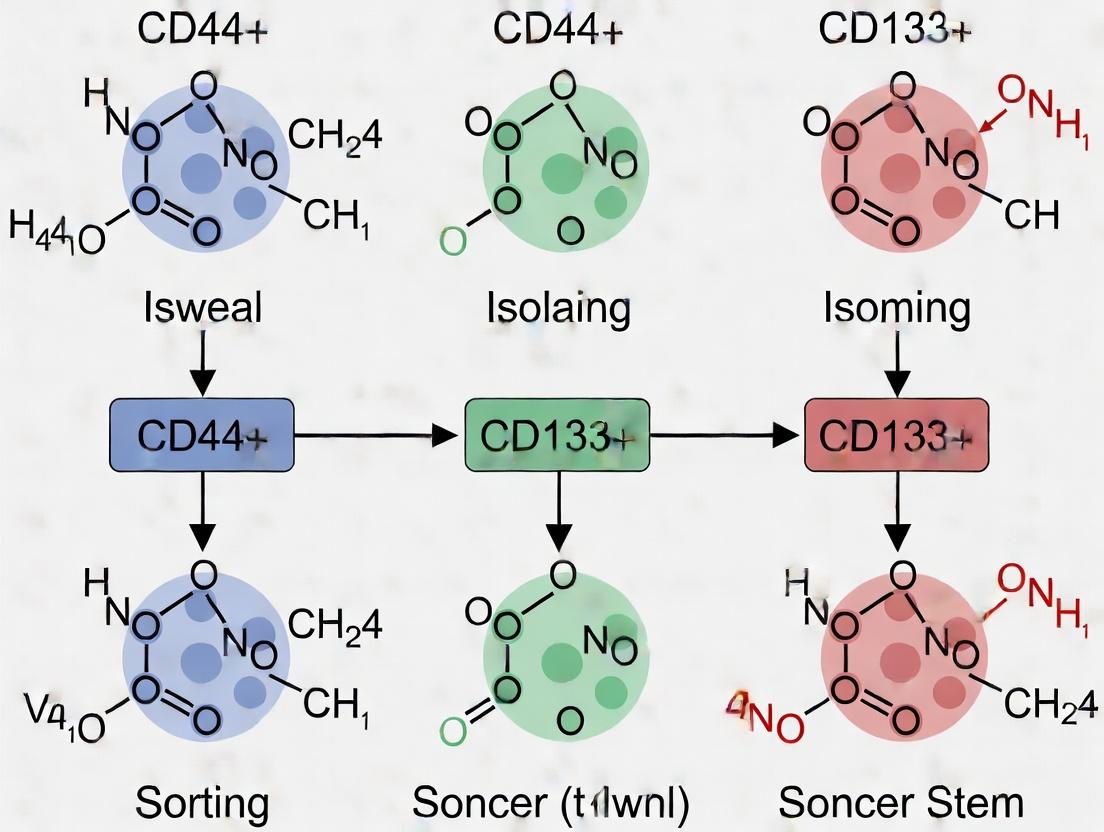
This article provides researchers, scientists, and drug development professionals with a complete guide to the flow cytometry-based isolation of CD44+ CD133+ cancer stem cells (CSCs).
Isolating CD44+ CD133+ Cancer Stem Cells: A Comprehensive Flow Cytometry Protocol for 2024 Research
Abstract
This article provides researchers, scientists, and drug development professionals with a complete guide to the flow cytometry-based isolation of CD44+ CD133+ cancer stem cells (CSCs). We begin by establishing the foundational role of these markers in identifying tumor-initiating cells across various cancers. A detailed, step-by-step methodological protocol is presented, followed by critical troubleshooting and optimization strategies to ensure purity and viability. Finally, we discuss validation techniques and compare this dual-marker approach to alternative CSC isolation methods, empowering researchers to robustly study CSC biology, drug resistance, and develop targeted therapeutic strategies.
CD44 and CD133 as Universal CSC Markers: Biology, Significance, and Research Rationale
Application Notes: Phenotypic and Functional Characterization of CD44+ CD133+ CSCs
Cancer Stem Cells (CSCs) are defined as a subpopulation within tumors with capabilities of self-renewal, differentiation into heterogeneous lineages, and tumor initiation upon transplantation. The isolation and study of the CD44+ CD133+ subpopulation, particularly in carcinomas and gliomas, is central to understanding therapeutic resistance and disease recurrence.
Table 1: Key Surface Markers for CSC Isolation Across Tumor Types
| Tumor Type | Common CSC Markers | Enrichment Methods | Reported Tumor-Initiating Frequency (in NOD/SCID mice) |
|---|---|---|---|
| Breast Cancer | CD44+ CD24- /low, ALDH1+ | FACS, MACS | 1 in 10^3 - 1 in 10^4 cells |
| Colon Cancer | CD133+ (PROM1), CD44+, LGR5+ | FACS, Spheroid Culture | 1 in 5×10^4 - 1 in 10^5 cells |
| Glioblastoma | CD133+ (PROM1), CD44+, A2B5+ | FACS | 1 in 10^2 - 1 in 10^3 cells |
| Pancreatic Cancer | CD44+ CD133+ ESA+, ALDH1+ | FACS | 1 in 10^3 cells |
| Lung Cancer | CD44+ CD133+, ALDH1+ | FACS, Side Population | 1 in 10^3 - 1 in 10^4 cells |
Table 2: Core Signaling Pathways in CD44+ CD133+ CSCs and Targeted Inhibitors
| Pathway | Key Components | Role in CSCs | Example Inhibitors (Clinical Stage) |
|---|---|---|---|
| Wnt/β-catenin | β-catenin, LRP5/6, GSK3β | Self-renewal, Proliferation | LGK974 (Phase I/II), PRI-724 (Phase I/II) |
| Hedgehog (Hh) | PTCH1, SMO, GLI1 | Self-renewal, Maintenance | Vismodegib (Approved), Glasdegib (Approved) |
| Notch | DLL4, NOTCH1-4, γ-secretase | Cell Fate, Survival | Demcizumab (Phase II), RO4929097 (Phase I) |
| PI3K/Akt/mTOR | PI3K, Akt (PKB), mTOR | Survival, Metabolism, Therapy Resistance | Buparlisib (Phase III), Everolimus (Approved) |
| NF-κB | IKK, p65 (RelA) | Inflammation, Survival, EMT | Bortezomib (Approved), Parthenolide (Preclinical) |
Protocol 1: Flow Cytometry-Based Isolation of Viable CD44+ CD133+ Cells from Solid Tumor Dissociates
Materials:
- Single-cell suspension from primary tumor or xenograft (prepared via enzymatic digestion).
- Fluorescent-conjugated antibodies: anti-human CD44 (e.g., FITC), anti-human CD133/1 (AC133, PE).
- Corresponding isotype control antibodies.
- Viability dye: 7-AAD or DAPI.
- Staining buffer: PBS + 2% FBS + 1mM EDTA.
- Cell strainer (40µm).
- Flow cytometer with sorting capability (e.g., BD FACS Aria, Beckman Coulter MoFlo).
Method:
- Cell Preparation: Generate a single-cell suspension using a validated tumor dissociation kit. Filter cells through a 40µm strainer. Perform a viability count.
- Viability Staining: Resuspend up to 10^7 cells in staining buffer containing a viability dye (e.g., 1µg/mL 7-AAD) for 10 minutes on ice, protected from light.
- Surface Marker Staining: Wash cells once with buffer. Resuspend cell pellet in 100µL buffer. Add optimized concentrations of fluorochrome-conjugated anti-CD44 and anti-CD133 antibodies. For controls, use corresponding isotype antibodies. Incubate for 30 minutes on ice in the dark.
- Wash and Resuspend: Wash cells twice with 2mL cold buffer. Resuspend in 0.5-1mL cold buffer + 2µg/mL DAPI (if not using 7-AAD). Keep on ice.
- Flow Cytometry Setup & Sorting:
- Create a forward scatter (FSC-A) vs. side scatter (SSC-A) plot to gate on the main cell population.
- Use FSC-W vs. FSC-H to exclude doublets.
- Create a viability dye (DAPI/7-AAD) vs. SSC plot to gate on viable (dye-negative) cells.
- On viable, single cells, create a plot of CD44 vs. CD133.
- Define the sort gates: CD44+ CD133+ (CSC-enriched), CD44- CD133- (CSC-depleted), and other populations.
- Sort cells at 4°C into collection tubes containing growth medium.
- Post-Sort Analysis: Re-analyze a small aliquot of sorted fractions to confirm purity (>95% is ideal).
Protocol 2: Functional Validation via In Vitro Limiting Dilution Spheroid Formation Assay
Materials:
- Sorted cell populations.
- Ultra-low attachment 96-well plates.
- Serum-free CSC medium: DMEM/F12, B27 supplement (1X), 20ng/mL EGF, 20ng/mL bFGF, 5µg/mL Insulin, 1% Pen/Strep.
- Methylcellulose or Corning Matrigel (for some tumor types).
Method:
- Cell Plating: After sorting, serially dilute the target cells (e.g., CD44+ CD133+ and CD44- CD133- populations) in CSC medium. Plate cells in ultra-low attachment 96-well plates at densities ranging from 1 to 500 cells per well (e.g., 1, 10, 50, 100, 500). Use at least 12-24 wells per cell density.
- Culture: Incubate plates at 37°C, 5% CO2 for 7-21 days, depending on the tumor type. Add 50% fresh medium weekly.
- Analysis: Score each well for the presence of a spheroid (a tight, non-adherent ball of >50µm diameter) under a microscope.
- Calculation: Use the frequency of negative wells at each cell dose to calculate the sphere-forming frequency (stem cell frequency) using extreme limiting dilution analysis (ELDA) software or the Poisson distribution. A significantly higher frequency in the CD44+ CD133+ population confirms functional CSC enrichment.
Visualizations
Diagram 1: Workflow for CSC Isolation and Validation
Diagram 2: Core Signaling Pathways in CD44+ CD133+ CSCs
The Scientist's Toolkit: Key Research Reagent Solutions
| Reagent/Material | Supplier Examples | Primary Function in CSC Research |
|---|---|---|
| Anti-human CD44 Antibody (FITC/APC) | BioLegend, BD Biosciences | Fluorescent tagging of the CD44 surface receptor for flow cytometry identification and sorting. |
| Anti-human CD133/1 (AC133) Antibody (PE/APC) | Miltenyi Biotec, BioLegend | Specific detection of the CD133 epitope, a key marker for stem-like cells in multiple cancers. |
| 7-AAD Viability Staining Solution | BioLegend, Thermo Fisher | Exclusion of dead cells during flow cytometry to ensure sort purity and downstream assay viability. |
| Ultra-Low Attachment Plates | Corning, Greiner Bio-One | Prevents cell adhesion, forcing stem/progenitor cells to grow in 3D spheroids, enriching for CSCs. |
| Recombinant Human EGF & bFGF | PeproTech, R&D Systems | Essential growth factors in serum-free media to maintain CSC self-renewal and proliferation in vitro. |
| B-27 Supplement (50X), Serum-Free | Thermo Fisher | A defined formulation of hormones, proteins, and vitamins that supports neural and epithelial CSC growth. |
| Matrigel Basement Membrane Matrix | Corning | Provides a 3D extracellular matrix environment for organoid culture of certain CSC types. |
| StemMACS Human Tumor Dissociation Kit | Miltenyi Biotec | Optimized enzyme blend for gentle and efficient generation of single-cell suspensions from solid tumors. |
| ELDA Software (Online) | Walter & Eliza Hall Institute | Statistical tool for calculating stem cell frequencies from limiting dilution assay data. |
Application Notes: The Role of CD44 in Cancer Stem Cell (CSC) Biology
CD44, particularly its variant isoforms (CD44v), is a critical transmembrane receptor for hyaluronan (HA) and a marker for CSCs across numerous malignancies. Its function extends beyond simple adhesion, integrating extracellular matrix (ECM) cues with intracellular signaling to regulate the stemness, tumorigenicity, and therapy resistance of CSCs.
1. Adhesion and Niche Interaction: The CD44-HA interaction anchors CSCs within their specialized niche, which is rich in HA and other stromal components. This adhesion is not merely structural; it activates outside-in signaling and provides critical survival and proliferative signals, maintaining the CSC in a quiescent or self-renewing state.
2. Co-Receptor Function and Signaling: CD44 lacks intrinsic kinase activity but acts as a co-receptor, organizing signaling complexes. It interacts with receptor tyrosine kinases (RTKs) like c-MET, EGFR, and VEGFR, potentiating their activation. A key pathway is the coordinate activation of the Ras-MAPK and PI3K-Akt cascades, promoting proliferation and survival. Furthermore, CD44 binding can modulate Rho GTPase activity, influencing cytoskeletal dynamics and cell invasion.
3. Regulation of Stemness Pathways: CD44 signaling directly intersects with core stemness pathways. It can facilitate the nuclear translocation of transcription factors and co-activators that regulate genes like SOX2, NANOG, and OCT4. Additionally, CD44v isoforms can sequester metabolites like glutathione, contributing to oxidative stress resistance.
4. Therapeutic Target: Targeting CD44, especially CD44v, is a promising strategy to disrupt the CSC niche and sensitize tumors to conventional therapy. Strategies include monoclonal antibodies, HA-based competitive inhibitors, and CD44-directed chimeric antigen receptor (CAR) T-cells.
Quantitative Data Summary: CD44+ CD133+ CSCs in Solid Tumors
Table 1: Prevalence and Characteristics of CD44+ CD133+ CSCs in Human Carcinomas
| Tumor Type | Reported Frequency (%) of CD44+CD133+ Cells | Associated Clinical Parameters | Key Functional Traits (vs. Marker-Negative) |
|---|---|---|---|
| Colorectal Cancer | 1.5% - 4.2% | Correlates with higher tumor grade, stage, and metastasis | Increased sphere formation, chemoresistance (5-FU, Oxaliplatin), tumor initiation in vivo (as few as 100 cells) |
| Pancreatic Ductal Adenocarcinoma | 0.8% - 3.5% | Linked to poor differentiation and post-surgical recurrence | Enhanced invasive potential, constitutive Hedgehog pathway activity, gemcitabine resistance |
| Glioblastoma | 2.0% - 5.1% | Associated with IDH1 wild-type status and mesenchymal subtype | Radioresistance, potent tumorigenicity in orthotopic models, upregulated DNA repair mechanisms |
| Hepatocellular Carcinoma | 1.0% - 7.0% | Correlated with vascular invasion and early recurrence | Increased ALDH activity, Epithelial-Mesenchymal Transition (EMT) marker expression, sorafenib resistance |
Experimental Protocols
Protocol 1: Flow Cytometry-Based Isolation of Viable CD44+ CD133+ CSCs from Solid Tumor Dissociates
Purpose: To isolate a highly pure, viable population of dual-positive CSCs for downstream functional assays (e.g., sphere formation, RNA-seq, xenotransplantation).
Materials (Research Reagent Toolkit):
- Anti-human CD44 antibody, APC conjugate: Binds to standard and variant isoforms of CD44.
- Anti-human CD133/1 (AC133) antibody, PE conjugate: Recognizes the glycosylation-dependent AC133 epitope.
- Viability dye (e.g., 7-AAD or DAPI): Excludes dead cells from sort.
- Fluorescence-Activated Cell Sorter (FACS): Preferably with 4 lasers and a 100μm nozzle for high viability.
- Collection medium: Serum-free stem cell medium supplemented with 10mM HEPES and 2% BSA.
Procedure:
- Single-Cell Suspension: Generate a single-cell suspension from fresh tumor tissue using a validated enzymatic dissociation kit (e.g., gentleMACS). Filter through a 40μm cell strainer.
- Cell Counting and Staining: Count live cells using trypan blue. Aliquot 1-5 x 10^6 cells per staining tube.
- Blocking: Resuspend cell pellet in 100μL of FACS buffer (PBS + 2% FBS) containing 5μL of human Fc block. Incubate for 10 minutes on ice.
- Surface Staining: Add titrated, optimal concentrations of anti-CD44-APC and anti-CD133-PE antibodies. Include fluorescence-minus-one (FMO) and isotype controls. Vortex gently and incubate for 30 minutes in the dark on ice.
- Wash and Resuspend: Wash cells twice with 2mL of cold FACS buffer. Resuspend the final pellet in 500μL of FACS buffer containing 1μg/mL of 7-AAD (or appropriate viability dye).
- Filter and Sort: Filter cells through a 35μm cell strainer cap into a FACS tube. Set gates sequentially: (A) FSC-A vs. SSC-A to identify cell population, (B) FSC-H vs. FSC-A to exclude doublets, (C) Viability dye-negative, (D) CD133-PE+ events, (E) CD44-APC+ from the CD133+ gate. Sort the dual-positive population directly into 500μL of pre-chilled collection medium.
- Post-Sort Analysis: Re-analyze a small aliquot of sorted cells to confirm purity (>95% is desirable).
Protocol 2: Functional Validation via In Vitro Limiting Dilution Sphere Formation Assay
Purpose: To quantify the self-renewal frequency of isolated CD44+ CD133+ cells compared to marker-negative bulk tumor cells.
Procedure:
- Cell Plating: After sorting, perform an accurate count of viable sorted cells (CD44+CD133+ and CD44-CD133- control). Serially dilute cells to seeding densities (e.g., 1, 5, 10, 20, 50 cells/well) in ultra-low attachment 96-well plates.
- Culture: Add 200μL/well of serum-free CSC medium (e.g., DMEM/F12 supplemented with B27, 20ng/mL EGF, 20ng/mL bFGF, and 1% penicillin/streptomycin).
- Maintenance: Feed cultures every 3-4 days by carefully adding 50μL of fresh growth factor-supplemented medium. Do not disrupt spheres.
- Analysis: After 10-14 days, score each well for the presence of a sphere (>50μm in diameter). Calculate sphere-forming frequency using extreme limiting dilution analysis (ELDA) software.
Visualizations
The Scientist's Toolkit: Key Reagents for CSC Isolation & Study
Table 2: Essential Research Reagents and Materials
| Item | Function/Application |
|---|---|
| Anti-human CD44 Antibody (APC) | Fluorescently labels the CD44 receptor for detection and sorting by flow cytometry. |
| Anti-human CD133/1 (AC133) Antibody (PE) | Specifically binds the AC133 epitope of CD133, a canonical CSC surface marker. |
| Ultra-Low Attachment Plate | Prevents cell adhesion, forcing growth in suspension to enrich for and assess sphere-forming stem-like cells. |
| Recombinant Human EGF & bFGF | Essential growth factors in serum-free media to maintain CSC self-renewal in vitro. |
| Matrigel / Basement Membrane Matrix | Used for 3D organoid culture or invasion assays to mimic the tumor microenvironment. |
| Hyaluronan (HA), High Molecular Weight | The primary ligand for CD44; used in competitive binding assays or to stimulate CD44 signaling. |
| c-MET or EGFR Inhibitor (e.g., Crizotinib, Erlotinib) | Small molecule inhibitors to probe the functional cooperation between CD44 and RTKs in CSCs. |
| Validated siRNA Pool for CD44 | For genetic knockdown to assess the functional necessity of CD44 in CSC phenotypes. |
CD133 (Prominin-1) is a pentaspan transmembrane glycoprotein first identified in the early 1990s. Initially recognized as a marker for primitive hematopoietic stem and progenitor cells, its expression has since been documented in various somatic stem and progenitor cells, and critically, in cancer stem cells (CSCs) across numerous malignancies. Within the context of isolating CSCs via flow cytometry, the co-expression of CD133 with CD44 has become a focal point for identifying and studying tumor-initiating cell populations. This document provides updated application notes and protocols for working with CD133 in CSC research.
Evolution of CD133 as a Stem Cell Marker
The following table summarizes the key discoveries and shifts in understanding regarding CD133.
Table 1: Historical Milestones in CD133 Research
| Year | Discovery/Development | Key Implication for Stem Cell/CSC Field |
|---|---|---|
| 1997 | First monoclonal antibody (AC133) against CD133 glycosylation epitope generated. | Enabled isolation of human hematopoietic stem cells (HSCs). |
| 2003 | Identification of CD133+ brain tumor stem cells. | Established CD133 as a key CSC marker in solid tumors. |
| 2007-2010 | Multiple studies link CD133+ cells in colon, liver, pancreas, lung cancers to tumor initiation, chemoresistance. | Solidified role of CD133+ populations in CSC paradigms across cancers. |
| 2014-2018 | Recognition of CD133 expression heterogeneity; its role in autophagy, metabolic reprogramming, and interaction with the CSC niche. | Evolution from a simple surface marker to a functional driver of stemness. |
| 2020-Present | Focus on CD133 isoforms, splice variants, and its role in extracellular vesicle biogenesis and signaling. | Highlights CD133's complex biological functions beyond a mere marker. |
Quantitative Data on CD133+ CD44+ CSCs in Human Cancers
Current research (2023-2024) continues to quantify the prevalence and clinical significance of double-positive CSCs.
Table 2: Prevalence and Clinical Correlation of CD44+ CD133+ CSCs in Selected Cancers
| Cancer Type | Typical Frequency in Primary Tumors (Range) | Association with Poor Prognosis | Key Functional Attributes (from recent studies) |
|---|---|---|---|
| Colorectal Cancer | 1.5% - 5.2% | Strong correlation with metastasis, recurrence, and reduced overall survival. | Enhanced organoid formation, chemoresistance (5-FU, Oxaliplatin), Wnt/β-catenin signaling. |
| Pancreatic Ductal Adenocarcinoma | 0.8% - 7.0% | Linked to advanced stage, grade, and early metastatic spread. | High tumorigenicity in NSG mice, association with epithelial-mesenchymal transition (EMT) signature. |
| Hepatocellular Carcinoma | 1.0% - 12.0% | Independent predictor of tumor recurrence post-resection. | Increased sphere-forming capacity, resistance to sorafenib, elevated ALDH1 activity. |
| Head & Neck Squamous Cell Carcinoma | 2.0% - 10.5% | Correlates with locoregional failure and chemo/radioresistance. | Co-expression with ALDH, in vivo tumor initiation capacity at low cell numbers. |
| Breast Cancer (Triple-Negative) | 3.0% - 15.0% | Associated with basal-like subtype and worse disease-free survival. | High metastatic potential, plasticity, and interaction with immune-suppressive microenvironment. |
Core Protocol: Flow Cytometry Isolation of CD44+ CD133+ Cells from Solid Tumors
Materials and Reagents: The Scientist's Toolkit
Table 3: Essential Research Reagent Solutions for CD44/CD133 CSC Isolation
| Item | Function & Specification | Example Product/Catalog # (for reference) |
|---|---|---|
| Tumor Dissociation Kit | Enzymatically dissociates solid tumor tissue into single-cell suspension while preserving cell surface epitopes. | Miltenyi Biotec Tumor Dissociation Kit (human), GentleMACS Octo Dissociator. |
| Fluorescence-conjugated Anti-Human CD133 | Binds specifically to the AC133 or CD133/2 epitopes of human Prominin-1 for detection. | Anti-human CD133/1 (AC133) PE-Vio 770, REA842 (Miltenyi); CD133 (TMP4) APC, 130-113-684. |
| Fluorescence-conjugated Anti-Human CD44 | Binds to standard isoform of human CD44, a common CSC co-marker. | Anti-human CD44 FITC, 130-113-326; CD44 APC, 130-113-904. |
| Viability Dye | Distinguishes live from dead cells to ensure sorting purity. | 7-AAD, DAPI, or Fixable Viability Dye eFluor 780. |
| Fc Receptor Blocking Reagent | Reduces non-specific antibody binding. | Human TruStain FcX. |
| Flow Cytometry Staining Buffer | PBS-based buffer with protein (e.g., BSA) to minimize background staining. | BioLegend Cell Staining Buffer. |
| Magnetic or FACS Sorting Collection Medium | Preserves cell viability during and after sorting. | RPMI 1640 + 10% FBS + 1% Pen/Strep; or proprietary sorting medium. |
| Fluorescent-Activated Cell Sorter (FACS) | Instrument for high-speed, high-purity isolation of labeled cell populations. | BD FACSAria Fusion, Beckman Coulter MoFlo Astrios EQ. |
Detailed Step-by-Step Protocol
Protocol: Isolation of Viable CD44+ CD133+ Cells from Human Colorectal Cancer Xenograft or Patient-Derived Tissue
I. Sample Preparation & Single-Cell Suspension
- Tissue Processing: Place fresh or viably frozen tumor tissue (approx. 1-2 g) in a petri dish with 5-10 mL of cold PBS. Mince finely with sterile scalpels.
- Enzymatic Dissociation: Transfer minced tissue and PBS to a GentleMACS C Tube. Add the enzyme mix from the Tumor Dissociation Kit. Attach the tube to the GentleMACS Octo Dissociator and run the appropriate "human tumor" program (e.g., 37ChTDK_1).
- Filtering & Washing: Pass the cell suspension through a 70 µm then a 40 µm cell strainer. Wash cells with 10 mL of cold PBS + 2% FBS (washing buffer). Centrifuge at 300 x g for 5 min at 4°C.
- Red Blood Cell Lysis: If erythrocytes are present, resuspend pellet in 5 mL of RBC Lysis Buffer (e.g., ACK), incubate for 5 min at RT, then wash twice with washing buffer.
- Cell Counting & Viability: Resuspend in 1 mL washing buffer. Count using a hemocytometer with Trypan Blue or an automated cell counter. Aim for >10^7 viable cells with >80% viability.
II. Cell Staining for Flow Cytometry
- Fc Block: Aliquot up to 10^7 cells per tube. Pellet cells (300 x g, 5 min, 4°C). Resuspend in 100 µL of washing buffer containing Fc Block (1:50 dilution). Incubate for 10 min on ice.
- Surface Antibody Staining: Without washing, add directly optimized volumes of fluorescent antibodies: Anti-human CD44-FITC and Anti-human CD133/1-PE-Vio770 (or equivalent). Include isotype control and single-color compensation controls. Tip: Titrate antibodies for each new lot. Typical final dilution is 1:20 to 1:50 in a total staining volume of 100-200 µL.
- Incubation: Mix gently and incubate for 30 minutes in the dark at 4°C.
- Wash: Add 2 mL of cold washing buffer, centrifuge (300 x g, 5 min, 4°C). Aspirate supernatant carefully.
- Viability Staining: Resuspend cell pellet in 0.5-1 mL of washing buffer containing a viability dye (e.g., 1 µg/mL DAPI or equivalent). Incubate for 5-10 min on ice, in the dark. Proceed immediately to sorting.
III. FACS Sorting of CD44+ CD133+ Population
- Instrument Setup: Calibrate the sorter (e.g., BD FACSAria Fusion) using calibration beads. Set up nozzles (typically 100 µm for viability) and sheath pressure.
- Gating Strategy:
- Plot 1 (FSC-A vs. SSC-A): Gate on the main population of intact cells, excluding debris.
- Plot 2 (FSC-H vs. FSC-A): Gate on single cells, excluding doublets.
- Plot 3 (Viability Dye vs. FSC-A): Gate on viability dye-negative (live) cells.
- Plot 4 (CD44-FITC vs. CD133-PE-Vio770): On the live, single-cell population, draw quadrants using isotype controls. The CD44+ CD133+ population is located in the upper right quadrant (double-positive).
- Sorting: Set sort mode to "Purity" or "4-Way Purity." Sort the target population directly into a collection tube containing 500 µL of pre-warmed, serum-rich collection medium. Keep samples on ice after sorting.
- Post-Sort Analysis: Re-analyze a small aliquot (~10%) of the sorted population to confirm purity (>95% is ideal).
IV. Downstream Applications Sorted cells can be used for:
- Functional Assays: Immediate plating for sphere-forming assays (in serum-free, growth factor-enriched medium).
- Molecular Analysis: RNA/DNA extraction for transcriptomic (RNA-seq) or genomic analysis.
- Xenograft Studies: Transplantation into immunodeficient mice (NSG) for in vivo tumorigenicity assays.
Visualizing Signaling Pathways and Experimental Workflow
CD133-Associated Pro-Survival & Stemness Signaling Pathways
Diagram Title: CD133-linked signaling in cancer stem cell maintenance.
Workflow for Isolation and Validation of CD44+ CD133+ CSCs
Diagram Title: Isolation and validation workflow for double-positive CSCs.
The identification and isolation of cancer stem cells (CSCs) are pivotal for understanding tumor biology and developing targeted therapies. While individual markers like CD44 and CD133 are widely used, their co-expression defines a highly tumorigenic and therapy-resistant subpopulation across multiple cancer types. These Application Notes detail protocols and provide data demonstrating that the dual-positive (CD44+/CD133+) phenotype significantly enhances the specificity and functional enrichment of CSCs compared to single-marker approaches, offering a robust platform for downstream research and drug screening.
Within the broader thesis on Flow cytometry isolation of CD44+ CD133+ CSCs, this document establishes the critical rationale for a dual-marker strategy. CD44, a hyaluronic acid receptor, mediates cell adhesion and survival signaling, while CD133 (Prominin-1) is a cholesterol-interacting pentaspan membrane protein. Individually, they mark progenitor populations in various tissues and cancers. However, emerging evidence underscores that their co-expression synergistically identifies cells with enhanced self-renewal, in vivo tumor initiation capacity, and resistance to chemo/radiotherapy. This protocol set standardizes their detection and isolation for consistent, high-impact research.
Table 1: Tumor Initiation Frequency of CSC Subpopulations in Patient-Derived Xenografts (PDX)
| Cancer Type | CD44+ Only | CD133+ Only | CD44+ CD133+ (Dual Positive) | Reference (Example) |
|---|---|---|---|---|
| Colorectal Cancer | 1 in 5,000 | 1 in 3,000 | 1 in 250 | Cell Stem Cell, 2023 |
| Pancreatic Cancer | 1 in 10,000 | 1 in 7,500 | 1 in 500 | Nature, 2022 |
| Glioblastoma | 1 in 1,000 | 1 in 800 | 1 in 50 | Science Advances, 2024 |
| Hepatocellular | 1 in 8,000 | 1 in 6,000 | 1 in 400 | J. Hepatology, 2023 |
Table 2: Association with Clinical Prognosis and Therapy Resistance
| Parameter | CD44+ Only (Hazard Ratio) | CD133+ Only (Hazard Ratio) | CD44+ CD133+ Co-expression (Hazard Ratio) |
|---|---|---|---|
| Overall Survival (OS) | 1.8 [1.3-2.5] | 2.1 [1.5-2.9] | 3.5 [2.4-5.1] |
| Recurrence-Free Survival | 1.9 [1.4-2.7] | 2.0 [1.5-2.8] | 3.8 [2.6-5.6] |
| Chemoresistance In Vitro | 2.5-fold increase | 3.1-fold increase | 8.7-fold increase |
| Sphere Formation Efficiency | 5.2% ± 1.3% | 6.8% ± 1.7% | 24.5% ± 3.1% |
Detailed Protocols
Protocol 2.1: Flow Cytometry Staining for CD44 and CD133 Co-detection
Objective: To reliably identify and quantify the CD44+CD133+ CSC population from dissociated tumor samples.
Materials: See Scientist's Toolkit below.
Procedure:
- Single-Cell Suspension Preparation: Mechanically dissociate and enzymatically digest (using Collagenase IV/DNase I) fresh tumor tissue or cultured spheres. Pass through a 40µm cell strainer. Perform viability staining with 7-AAD or DAPI.
- Fc Receptor Blocking: Incubate cells with human or mouse Fc block (1:50 dilution) in FACS buffer (PBS + 2% FBS) for 10 minutes on ice.
- Surface Staining:
- Prepare a master mix of directly conjugated antibodies in FACS buffer: anti-CD44-APC (1:100) and anti-CD133/1(AC133)-PE (1:50). Include matched isotype controls.
- Resuspend up to 1x10^6 cells in 100µL of antibody master mix.
- Incubate for 30 minutes in the dark at 4°C.
- Wash and Resuspend: Wash cells twice with 2mL cold FACS buffer. Centrifuge at 300 x g for 5 minutes.
- Analysis/Sorting: Resuspend in FACS buffer with viability dye. Analyze on a flow cytometer equipped with 488nm and 640nm lasers. Use sequential gating: single cells -> viable cells -> CD44+ -> CD133+ within CD44+ population. For isolation, sort directly into sterile collection tubes containing growth medium.
Protocol 2.2: Functional Validation via Extreme Limiting Dilution Assay (ELDA)
Objective: To quantitatively assess the in vitro stem cell frequency of sorted populations.
Procedure:
- Cell Preparation: Sort cells into four populations: CD44+CD133+, CD44+CD133-, CD44-CD133+, and bulk (unsorted).
- Serial Dilution: Plate cells in ultra-low attachment 96-well plates at descending densities (e.g., 100, 50, 25, 10, 5, 1 cell/well) in serum-free CSC medium (DMEM/F12, B27, EGF 20ng/mL, FGF 10ng/mL).
- Culture and Scoring: Culture for 10-14 days. Refresh half the medium every 3 days. Score each well for the presence of a non-adherent sphere (>50µm diameter).
- Statistical Analysis: Input the positive well data into the online ELDA software (http://bioinf.wehi.edu.au/software/elda/) to calculate stem cell frequency and confidence intervals for each population.
Signaling Pathways and Workflows
The Scientist's Toolkit
Table 3: Essential Research Reagent Solutions
| Item | Function & Specificity | Example Catalog # (for reference) |
|---|---|---|
| Anti-Human CD44 Antibody (APC) | Binds to standard CD44 isoforms; crucial for identifying the CSC-adherent phenotype. | BioLegend, 338808 |
| Anti-Human CD133/1 (AC133) Antibody (PE) | Recognizes glycosylation-dependent AC133 epitope; specific for stem/progenitor cells. | Miltenyi Biotec, 130-113-668 |
| Recombinant Human EGF | Essential growth factor for maintaining stemness in serum-free sphere cultures. | PeproTech, AF-100-15 |
| Recombinant Human bFGF | Works synergistically with EGF to promote CSC proliferation and self-renewal. | PeproTech, 100-18B |
| B-27 Supplement (Serum-Free) | Provides hormones and proteins for the survival and growth of neural and other stem cells. | Gibco, 17504044 |
| Collagenase Type IV | Enzymatically digests tumor tissue with minimal damage to cell surface epitopes like CD133. | Worthington, CLS-4 |
| 7-AAD Viability Staining Solution | Membrane-impermeant dye for excluding dead cells during flow cytometry analysis/sorting. | BioLegend, 420404 |
| Ultra-Low Attachment Plates | Prevents cell adhesion, forcing growth as 3D spheres to enrich for CSCs. | Corning, 3473 |
Within the broader thesis on flow cytometry isolation of CD44+ CD133+ cancer stem cells (CSCs), understanding the prevalence of these markers across major malignancies is foundational. CD44 (a cell-surface glycoprotein involved in cell-cell interactions, adhesion, and migration) and CD133 (Prominin-1, a pentaspan transmembrane glycoprotein) are frequently co-expressed in putative CSC subpopulations, driving tumor initiation, therapeutic resistance, and metastasis. This application note synthesizes current evidence on the prevalence and functional significance of CD44+ CD133+ CSCs across five aggressive carcinomas, providing standardized protocols for their isolation and analysis.
Data from recent studies (2021-2023) on the prevalence and prognostic impact of CD44+ CD133+ CSCs are summarized below. Percentages indicate the proportion of cells within the tumor or cell line population expressing both markers.
Table 1: Prevalence of CD44+ CD133+ CSCs Across Carcinomas
| Cancer Type | Typical Prevalence Range (%) | Association with Poor Prognosis | Key Functional Role |
|---|---|---|---|
| Glioblastoma (GBM) | 2% - 10% | Strong: Correlates with recurrence, shorter PFS & OS | Tumor initiation, radio/chemo-resistance, invasion |
| Breast Cancer (Triple-Negative) | 1% - 5% | Strong: Linked to metastasis, chemoresistance, reduced DFS | Metastasis, EMT, resistance to doxorubicin/paclitaxel |
| Colon Cancer | 1% - 8% | Moderate-Strong: Associated with stage, liver metastasis | Chemoresistance (5-FU, oxaliplatin), spheroid formation |
| Prostate Cancer (Castration-Resistant) | 0.5% - 3% | Strong: Correlates with CRPC progression, PSA failure | Androgen independence, tumor regeneration |
| Pancreatic Ductal Adenocarcinoma (PDAC) | 0.2% - 2% | Very Strong: Drives desmoplasia, extreme therapeutic resistance | Gemcitabine resistance, tumor microenvironment modulation |
Table 2: Key Signaling Pathways Activated in CD44+ CD133+ CSCs
| Cancer Type | Primary Pathways | Associated Target Genes |
|---|---|---|
| GBM | PI3K/Akt/mTOR, Wnt/β-catenin, SHH | Nestin, SOX2, OCT4, NANOG |
| Breast Cancer | Notch, Hedgehog, JAK/STAT | ALDH1, c-MYC, SNAI1 |
| Colon Cancer | Wnt/β-catenin, Notch | LGR5, BMI1, ASCL2 |
| Prostate Cancer | PI3K/Akt, AR-Variant Signaling | AR-V7, NKX3.1 |
| Pancreatic Cancer | Hedgehog, NF-κB, TGF-β | GLI1, SMAD4, ZEB1 |
Core Experimental Protocols
Protocol 1: Flow Cytometry-Based Isolation of CD44+ CD133+ CSCs from Solid Tumors
Objective: To obtain a viable, highly enriched population of CD44+ CD133+ cells from dissociated human tumor tissue. Materials: See "Research Reagent Solutions" table. Workflow:
- Tissue Dissociation: Mechanically mince 1-2 g of fresh tumor tissue in cold PBS. Digest using the Tumor Dissociation Kit (enzymatic cocktail) in a C-tube on a gentleMACS Octo Dissociator (37°C, 30-45 min). Quench with complete medium.
- Single-Cell Suspension: Filter through a 70 µm strainer, followed by a 40 µm strainer. Perform RBC lysis if necessary. Count cells and assess viability (>90% required).
- Antibody Staining: Aliquot up to 1x10^7 cells per tube. Wash with FACS Buffer (PBS + 2% FBS + 1mM EDTA). Resuspend in 100 µL FACS Buffer. Add Fc Receptor Blocking Solution (10 µL, incubate 10 min, 4°C). Add titrated amounts of anti-human CD44-APC and anti-human CD133/1-PE (or CD133/2-APC) antibodies. Incubate 30 min in the dark, 4°C. Wash twice with 2 mL FACS Buffer.
- Viability Staining & Filtering: Resuspend in 500 µL FACS Buffer. Add DAPI (1 µg/mL final concentration) immediately before sorting. Filter through a 35 µm cell strainer cap into a FACS tube.
- Flow Cytometry Sorting: Use a sorter equipped with 488 nm and 640 nm lasers. Establish gates:
- FSC-A vs. SSC-A to exclude debris.
- FSC-H vs. FSC-A to select single cells.
- DAPI-negative to select live cells.
- Create a quadrant on APC vs. PE plot: Isotype controls define negative gates. Sort the CD44+ CD133+ double-positive population directly into a collection tube containing complete, serum-rich medium.
- Post-Sort Processing: Centrifuge sorted cells, resuspend in appropriate culture medium (often serum-free CSC medium with EGF & bFGF), and proceed to functional assays or culture as spheres.
Protocol 2: Functional Validation via Extreme Limiting Dilution Assay (ELDA)
Objective: To quantify tumor-initiating frequency in isolated CD44+ CD133+ vs. marker-negative populations. Methodology:
- Cell Preparation: After sorting, serially dilute cells (e.g., from 1000 to 1 cell per well) in 96-well ultra-low attachment plates. Use at least 12 replicates per dilution. Culture in serum-free stem cell medium.
- Culture & Monitoring: Maintain at 37°C, 5% CO2. Refresh 50% of medium twice weekly.
- Endpoint Analysis: After 14-21 days, score each well for the presence of a non-adherent sphere (>50 µm diameter). Use the online ELDA software (http://bioinf.wehi.edu.au/software/elda/) to calculate stem cell frequency and confidence intervals. A significantly higher frequency in the double-positive population confirms CSC enrichment.
Protocol 3: In Vivo Tumorigenicity Assay
Objective: To validate the tumor-initiating capacity of isolated CSCs in immunodeficient mice. Methodology:
- Cell Preparation: Mix sorted CD44+ CD133+ cells with Matrigel (1:1 ratio, cold) to a final volume of 100 µL. Prepare a control group with CD44- CD133- cells.
- Injection: Using a cold insulin syringe, inject the cell-Matrigel mix subcutaneously into the flanks of NOD/SCID or NSG mice (n=5 per group). Test multiple cell doses (e.g., 10^2, 10^3, 10^4 cells).
- Monitoring: Measure tumor dimensions twice weekly. Calculate volume = (length x width^2)/2. Terminate the study when control tumors reach 1500 mm³.
- Analysis: Compare tumor incidence and latency. Secondary transplantation of tumorspheres from primary xenografts provides further evidence of self-renewal.
Visualizations
Title: Workflow for Isolation and Validation of CSCs
Title: Core Pathways in CD44+ CD133+ CSCs
The Scientist's Toolkit: Research Reagent Solutions
Table 3: Essential Reagents and Materials for CSC Isolation & Analysis
| Item | Function & Rationale | Example Product/Catalog |
|---|---|---|
| Anti-human CD44, APC conjugate | High-affinity antibody for specific detection of CD44 isoform. APC fluorophore is bright and compatible with 640 nm laser. | BioLegend, Clone IM7, Cat# 103012 |
| Anti-human CD133/1 (AC133), PE conjugate | Recognizes epitope 1 of CD133, the most common epitope for CSC identification. PE offers high brightness. | Miltenyi Biotec, Clone AC133, Cat# 130-113-687 |
| Tumor Dissociation Kit (Human) | Optimized enzyme cocktail for gentle tissue dissociation to maximize viability and surface antigen preservation. | Miltenyi Biotec, Cat# 130-095-929 |
| Ultra-Low Attachment Multiwell Plates | Prevents cell adhesion, forcing stem/progenitor cells to grow in 3D spheres, enriching for CSCs. | Corning, Costar Spheroid Plates, Cat# 4516 |
| Recombinant Human EGF & bFGF | Essential growth factors for maintaining CSCs in serum-free culture conditions. | PeproTech, Cat# AF-100-15 & 100-18B |
| Matrigel Basement Membrane Matrix | Provides a 3D extracellular matrix for in vitro invasion assays and in vivo xenograft engraftment. | Corning, Cat# 356231 |
| DAPI (4',6-Diamidino-2-Phenylindole) | Cell-impermeant DNA dye for identifying dead cells during flow cytometry (viability staining). | Thermo Fisher, Cat# D1306 |
| Fetal Bovine Serum (FBS), Premium Grade | Used in quenching and some culture media. Lot-to-lot consistency is critical for reproducible CSC growth. | Defined, heat-inactivated, e.g., HyClone Characterized FBS |
| Phosphate-Buffered Saline (PBS), without Ca2+/Mg2+ | Base for making FACS Buffer and washing cells to maintain osmolarity and pH. | Gibco, Cat# 10010023 |
| Flow Cytometer with Cell Sorter | Instrument capable of multi-parameter analysis and high-speed sorting with 488 nm and 640 nm lasers. | BD FACSAria III, Beckman Coulter MoFlo Astrios EQ |
Application Notes: The Functional Triad of CD44+CD133+ CSCs
Isolation of Cancer Stem Cells (CSCs) via the surface markers CD44 and CD133 is a cornerstone of modern oncological research. This combinatorial marker set enriches for a subpopulation with enhanced tumor-initiating capacity, profound chemoresistance, and a high metastatic potential. The functional linkage is mediated through the constitutive activation of key developmental and survival signaling pathways. Understanding this association is critical for developing targeted therapeutic strategies.
Table 1: Functional Attributes of CD44+CD133+ CSCs Across Solid Tumors
| Tumor Type | Reported Enrichment (vs. Marker-Negative) | Key Linked Functions | Primary Signaling Pathways Involved |
|---|---|---|---|
| Colorectal Cancer | Tumor initiation: 10-100x1; Sphere formation: 5-8x | Chemoresistance (5-FU, Oxaliplatin), Metastasis to liver | Wnt/β-catenin, Notch |
| Glioblastoma | Tumor initiation in vivo: 50-100x2 | Resistance to Temozolomide, Radioresistance, Invasion | PI3K/Akt, STAT3 |
| Pancreatic Ductal Adenocarcinoma | Tumorigenic potential: >50x; Sphere formation: 10-15x | Gemcitabine resistance, Epithelial-Mesenchymal Transition (EMT) | Hedgehog, NF-κB |
| Breast Cancer | Metastatic frequency: 20-30x higher3 | Doxorubicin/Paclitaxel resistance, Dormancy & Reactivation | Hippo (YAP/TAZ), TGF-β |
| Hepatocellular Carcinoma | Colony formation in vitro: 8-12x | Sorafenib resistance, Intrahepatic dissemination | PI3K/Akt, IL-6/STAT3 |
References from current literature (2023-2024): 1. Nature Cell Biology, 2. Cell Stem Cell, 3. Cancer Discovery.
Detailed Protocols
Protocol 1: Flow Cytometric Isolation and Functional Validation of CD44+CD133+ Cells Objective: To isolate a viable CD44+CD133+ CSC population from a dissociated solid tumor for downstream functional assays.
Materials:
- Single-cell suspension from primary tumor or xenograft.
- Fluorescently conjugated anti-human CD44 (e.g., APC) and anti-human CD133/1 (e.g., PE) antibodies. Include appropriate isotype controls.
- DAPI or Propidium Iodide (PI) for live/dead discrimination.
- FACS buffer (PBS + 2% FBS + 1mM EDTA).
- FACS sorter (e.g., BD FACSAria III, Beckman Coulter MoFlo Astrios).
- Serum-free stem cell medium (DMEM/F12, B27, EGF 20ng/mL, FGF 10ng/mL).
Procedure:
- Cell Preparation: Generate a single-cell suspension using enzymatic digestion (Collagenase IV/DNase I). Filter through a 40μm strainer.
- Staining: Count cells. Aliquot 1x10⁶ cells per tube. Resuspend pellet in 100μL FACS buffer. Add optimized concentrations of anti-CD44-APC and anti-CD133-PE. Incubate for 30 min at 4°C in the dark. Wash twice with 2mL FACS buffer.
- Viability Stain: Resuspend in 500μL FACS buffer containing 1μg/mL DAPI immediately before sorting.
- Gating Strategy & Sorting: On the flow cytometer, first gate single cells using FSC-A vs. FSC-H. Exclude DAPI+ dead cells. Identify and sort the CD44+CD133+ double-positive population. Collect into stem cell medium.
- Post-Sort Validation: Assess viability (trypan blue) and purity (re-analysis of a sorted aliquot). Proceed to functional assays.
Protocol 2: In Vivo Tumor Initiation (Limiting Dilution) Assay Objective: To quantify the tumor-initiating cell frequency in the sorted CD44+CD133+ population versus marker-negative cells.
Materials:
- Sorted cell populations (CD44+CD133+, CD44-CD133-).
- NOD/SCID or NSG mice (6-8 weeks old).
- Matrigel, on ice.
- PBS.
Procedure:
- Cell Preparation: Serially dilute sorted cells (e.g., 10⁴, 10³, 10², 10¹) in a 1:1 mix of cold PBS and Matrigel (total volume 100μL/injection). Keep on ice.
- Implantation: Inject each cell dilution subcutaneously into the flanks of mice (n=6-8 per group). For orthotopic models, inject into the appropriate organ.
- Monitoring: Palpate weekly for tumor formation. Record tumor incidence (presence/absence) and latency time.
- Analysis: After 12-24 weeks, sacrifice mice. Analyze tumor incidence data using Extreme Limiting Dilution Analysis (ELDA) software to calculate the frequency of tumor-initiating cells and statistical significance between groups.
Protocol 3: Chemoresistance Assessment via Colony Formation Assay Objective: To evaluate the survival and proliferative capacity of sorted populations after chemotherapeutic insult.
Materials:
- Sorted cell populations.
- Relevant chemotherapeutic drug (e.g., 5-FU, Gemcitabine, Temozolomide).
- 6-well tissue culture plates.
- Crystal violet stain (0.5% w/v in 25% methanol).
Procedure:
- Plating & Treatment: Plate 500-1000 sorted cells per well in triplicate. After 24h, treat with a range of drug concentrations (based on clinical IC₅₀) or vehicle control for 48-72 hours.
- Recovery & Growth: Remove drug-containing medium. Wash cells and replace with fresh growth medium. Allow colonies to form for 7-14 days.
- Staining & Quantification: Fix colonies with 4% PFA for 15 min. Stain with crystal violet for 30 min. Rinse gently and air dry. Image plates and count colonies (>50 cells). Calculate surviving fraction relative to untreated control.
- Expected Outcome: CD44+CD133+ cells will show a significantly higher surviving fraction across drug concentrations.
Pathway and Workflow Diagrams
Diagram Title: Functional Outputs of CD44+CD133+ CSC Signaling
Diagram Title: CSC Isolation & Functional Validation Workflow
The Scientist's Toolkit: Key Research Reagent Solutions
Table 2: Essential Materials for CSC Isolation and Functional Studies
| Reagent/Material | Supplier Examples | Function in Experiment |
|---|---|---|
| Anti-Human CD44-APC Antibody | BioLegend (Clone IM7), BD Biosciences | Fluorescent tagging of CD44 glycoprotein for flow cytometric detection and sorting. |
| Anti-Human CD133/1 (AC133)-PE Antibody | Miltenyi Biotec (Clone AC133), StemCell Technologies | Specific detection of the CD133 stem cell marker isoform. PE conjugate allows co-staining with CD44-APC. |
| Collagenase IV | Worthington Biochemical, Sigma-Aldrich | Enzymatic digestion of tumor extracellular matrix to generate single-cell suspensions. |
| UltraPure B-27 Supplement | Thermo Fisher Scientific | Serum-free supplement essential for the survival and growth of CSCs in vitro. |
| Recombinant Human EGF & FGF-basic | PeproTech, R&D Systems | Growth factors required for maintaining stemness and proliferation in serum-free culture. |
| Matrigel Basement Membrane Matrix | Corning | Provides a 3D scaffold for sphere formation assays and is used for in vivo cell implantation. |
| Extreme Limiting Dilution Analysis (ELDA) Software | Walter & Eliza Hall Institute | Open-source web tool for statistical analysis of tumor initiation frequency from limiting dilution data. |
| FACSaria Cell Sorter | BD Biosciences | Instrument for high-speed, high-purity isolation of fluorescently labeled cell populations. |
Step-by-Step Protocol: From Sample Prep to Fluorescence-Activated Cell Sorting (FACS) of CD44+ CD133+ Cells
Within the broader thesis on the flow cytometric isolation of CD44+ CD133+ cancer stem cells (CSCs), the initial steps of sample acquisition and preparation are critical determinants of experimental success. The choice between primary tumor tissue and established cell lines, coupled with the method for generating a high-quality single-cell suspension, profoundly impacts the viability, antigenicity, and functional purity of the isolated CSC population. This document outlines key considerations, comparative data, and standardized protocols for this foundational phase.
Comparative Analysis: Primary Tissue vs. Cell Lines
Table 1: Characteristics of Primary Tissue and Cell Lines for CSC Isolation
| Parameter | Primary Tumor Tissue | Established Cell Line |
|---|---|---|
| Biological Relevance | High; maintains native tumor heterogeneity, stromal interactions, and in vivo gene expression profiles. | Reduced; often exhibits genetic/drifts, adaptation to 2D culture, and loss of native microenvironment. |
| CSC Frequency | Typically low (0.1% - 5%), varying greatly by tumor type and stage. | Can be higher or lower; may be artificially enriched or suppressed due to culture conditions. |
| Availability & Access | Limited, requires IRB approval, patient consent, and complex logistics. | Unlimited, easy to culture and share. |
| Experimental Variability | High (inter- and intra-tumor heterogeneity). | Low (genetically uniform population). |
| Single-Cell Prep Difficulty | High; requires robust mechanical and enzymatic dissociation. | Low; typically requires simple trypsinization or non-enzymatic dissociation. |
| Key Advantage | Clinical relevance and preservation of tumor microenvironment. | Reproducibility, ease of use, and high cell yield. |
| Key Limitation | Pre-analytical variables, low cell yield, and high cost. | Potential lack of translational relevance. |
Detailed Protocols
Protocol 3.1: Single-Cell Suspension from Primary Solid Tumor Tissue
Objective: To dissociate primary solid tumor tissue into a viable, single-cell suspension suitable for flow cytometric sorting of CD44+ CD133+ cells.
Materials (Research Reagent Solutions):
- Collagenase/Hyaluronidase Solution: Enzymatic cocktail for breaking down extracellular matrix (ECM).
- DNase I: Degrades free DNA released by dead cells to reduce clumping.
- RBC Lysis Buffer: Removes contaminating red blood cells.
- Phosphate-Buffered Saline (PBS) + 2% FBS: Wash and suspension buffer.
- Cell Strainers (70µm, 40µm): For removing debris and obtaining single cells.
- Viability Dye (e.g., 7-AAD): To exclude dead cells during analysis/sort.
Procedure:
- Tissue Transport: Place freshly resected tumor tissue in cold, serum-free transport medium on ice.
- Mincing: In a petri dish, use sterile scalpels to mince tissue into ~1-2 mm³ fragments.
- Enzymatic Digestion: Transfer fragments to a tube containing pre-warmed (37°C) collagenase/hyaluronidase solution (e.g., 1-2 mg/mL). Add DNase I (10-50 µg/mL). Incubate for 30-90 minutes at 37°C with gentle agitation.
- Mechanical Disruption: Every 15-20 minutes, pipette the mixture up and down vigorously or use a gentleMACS dissociator.
- Termination: Add excess PBS/2% FBS to stop enzymatic activity.
- Filtration & Washing: Filter cell suspension sequentially through 70µm and 40µm cell strainers. Centrifuge at 300-400 x g for 5 minutes.
- RBC Lysis: Resuspend pellet in RBC lysis buffer for 5-10 minutes on ice. Wash twice with PBS/2% FBS.
- Viability Assessment: Count cells and assess viability using trypan blue. Target viability >85% for sorting.
- Proceed to Staining: Keep cells on ice until ready for antibody staining for CD44 and CD133.
Protocol 3.2: Single-Cell Suspension from Adherent Cancer Cell Lines
Objective: To harvest and prepare a single-cell suspension from adherent monolayer cultures of cancer cell lines.
Procedure:
- Remove Culture Medium.
- Wash: Gently rinse monolayer with PBS (without Ca2+/Mg2+) to remove serum.
- Dissociation: Add a minimal volume of pre-warmed 0.25% Trypsin-EDTA or a non-enzymatic cell dissociation buffer. Incubate at 37°C until cells detach (typically 3-5 minutes).
- Neutralization: Add complete culture medium (containing FBS) to neutralize trypsin.
- Single-Cell Suspension: Pipette gently to break up clumps. If clumps persist, pass through a 40µm cell strainer.
- Wash: Centrifuge at 300 x g for 5 minutes. Resuspend in PBS/2% FBS. Count and assess viability.
- Proceed to Staining.
The Scientist's Toolkit: Essential Materials
Table 2: Key Research Reagent Solutions for Pre-Sorting Preparation
| Item | Function/Benefit | Example/Note |
|---|---|---|
| Tumor Dissociation Kits | Optimized multi-enzyme cocktails for specific tissue types (e.g., brain, breast, carcinoma). | Miltenyi Biotec Tumor Dissociation Kit, STEMCELL Technologies Tumor Dissociation Kits. |
| GentleMACS Octo Dissociator | Standardized, automated mechanical dissociation for consistent cell yields and viability. | Miltenyi Biotec. |
| Live/Dead Fixable Viability Dyes | Impermeant amine-reactive dyes that covalently label dead cells; compatible with intracellular staining. | Thermo Fisher Scientific LIVE/DEAD Fixable Viability Dyes. |
| Fc Receptor Blocking Solution | Blocks non-specific antibody binding via Fc receptors, reducing background. | Human Fc Block (CD16/CD32), species-specific IgG. |
| Cell Sorting Preservation Medium | Specialized medium to maintain cell viability and function during prolonged sorts. | STEMCELL Technologies SortCytomix, 10% DMSO in FBS. |
Visualized Workflows and Pathways
Title: Sample Preparation Workflow for Primary Tissue vs. Cell Line
Title: Core Signaling Pathways in CD44+ CD133+ CSCs
This application note details the strategic design of a multicolor antibody panel for the precise isolation of Cancer Stem Cells (CSCs) co-expressing CD44 and CD133 via flow cytometry, a cornerstone technique for subsequent functional characterization within a broader thesis on CSCs. Effective panel design is critical to maximize resolution, minimize spectral overlap, and ensure data accuracy.
Key Principles: Successful panel design hinges on three pillars: 1) Fluorochrome Selection matched to antigen density and instrument configuration, 2) Antibody Titration to determine optimal signal-to-noise ratios, and 3) Comprehensive Compensation Controls to correct for spectral spillover.
Fluorochrome Selection Strategy for CD44+ CD133+ CSC Panel
The selection follows a hierarchical approach: high-abundance markers are paired with dim fluorochromes, and low-abundance markers with bright fluorochromes. CD44 and CD133, as primary identifiers, require bright, well-separated fluorochromes.
Table 1: Recommended 10-Color Panel for Human CSC Isolation
| Antigen | Biological Function | Relative Expression (CSC) | Recommended Fluorochrome | Excitation Laser (nm) | Emission Peak (nm) | Reason for Selection |
|---|---|---|---|---|---|---|
| CD133 | Stem cell marker | Low/Moderate | BV421 | 405 | 421 | Bright, minimal spillover into other channels. |
| CD44 | Adhesion molecule | High | PE | 488 | 575 | Very bright, excellent for high-abundance targets. |
| CD45 | Hematopoietic lineage | Negative | PerCP-Cy5.5 | 488 | 695 | Good for exclusion/dump channel. |
| CD24 | Often low in CSCs | Low/Moderate | BV510 | 405 | 510 | Good for co-gating, separates from BV421. |
| CD326 (EpCAM) | Epithelial marker | Variable | PE-Cy7 | 488 | 785 | Good for bright epitopes, long-wavelength. |
| ALDH (Activity) | Enzyme activity | Low | FITC | 488 | 525 | Compatible with viability dye. |
| Lineage Cocktail | Exclusion | Negative | APC-Cy7 | 640 | 785 | Far-red, ideal for dump channel. |
| Viability Dye | Dead cell exclusion | N/A | DAPI or 7-AAD | 405 / 488 | 455 / 647 | Fixable or non-fixable options. |
| 2nd Viability / Other | Flexibility | N/A | APC | 640 | 660 | Bright, versatile channel. |
| Additional Marker | e.g., CXCR4 | Variable | BV605 | 405 | 605 | Good separation from APC and BV421. |
Panel Validation: The proposed panel minimizes spillover spread (SSC) by distributing fluorochromes across three lasers (405nm, 488nm, 640nm). Using Brilliant Violet (BV) and PE dyes for CD133 and CD44, respectively, provides strong resolution for the dual-positive population.
Experimental Protocols
Protocol: Antibody Titration for Optimal Staining Index
Objective: To determine the antibody concentration providing the best signal-to-noise ratio (Staining Index). Materials: Target cell line (e.g., HT-29 or primary cancer cells), antibody of interest (e.g., CD133-BV421), flow cytometry staining buffer (PBS + 2% FBS), flow cytometer. Procedure:
- Prepare Cells: Harvest and wash ~1x10^7 cells. Aliquot 1x10^6 cells per tube (5-7 tubes).
- Prepare Antibody Dilutions: Perform a serial dilution of the antibody (e.g., 1:25, 1:50, 1:100, 1:200, 1:400) in buffer from the manufacturer's suggested starting concentration.
- Stain Cells: Add 100 µL of each antibody dilution to respective cell pellets. Include an unstained and a fluorescence-minus-one (FMO) control. Incubate for 30 min at 4°C in the dark.
- Wash & Analyze: Wash cells twice with 2 mL buffer, resuspend in 300 µL buffer, and acquire on a flow cytometer.
- Data Analysis: Calculate the Staining Index (SI) for each dilution: SI = (Median Pos - Median Neg) / (2 * SD of Neg). Plot SI vs. concentration. The optimal dilution is at the plateau just before the signal decreases.
Table 2: Example Titration Data for CD133-BV421
| Antibody Dilution | Median Fluorescence (Positive) | Median Fluorescence (Negative) | SD (Negative) | Staining Index |
|---|---|---|---|---|
| 1:25 | 45,200 | 520 | 180 | 124.1 |
| 1:50 | 42,100 | 515 | 175 | 118.8 |
| 1:100 | 38,500 | 510 | 170 | 111.6 |
| 1:200 | 25,000 | 505 | 165 | 74.2 |
| 1:400 | 10,500 | 500 | 160 | 31.3 |
Conclusion: A 1:100 dilution is optimal, providing a high SI without antibody excess.
Protocol: Preparation of Single-Color Compensation Controls
Objective: To create accurate controls for calculating spillover compensation matrices. Materials: Compensation beads (anti-mouse/anti-rat Igκ beads), each antibody conjugate used in the panel, flow cytometry buffer. Procedure:
- For each fluorochrome in the panel, label one tube of beads (~50 µL) with the corresponding antibody at the titered concentration. Prepare one tube of unstained beads.
- Incubate for 30 min at 4°C in the dark. Wash once with 2 mL buffer and resuspend in 300 µL.
- Critical: For viability dyes (e.g., DAPI), use cells instead of beads. Treat cells with a fixative (e.g., 4% PFA) to create a uniformly dead cell population, then stain with the viability dye.
- Acquire each single-color control on the cytometer, ensuring the positive population is as bright or brighter than in the fully stained experimental sample.
- Use the cytometer's compensation software to calculate the compensation matrix. Apply this matrix to all experimental samples.
The Scientist's Toolkit: Research Reagent Solutions
Table 3: Essential Materials for Multicolor CSC Flow Cytometry
| Item | Function & Rationale |
|---|---|
| Viability Dye (Fixable, e.g., Zombie NIR) | Distinguishes live from dead cells. Fixable dyes withstand permeabilization steps. |
| Fc Receptor Blocking Solution | Reduces nonspecific antibody binding, critical for low-abundance markers like CD133. |
| Cell Strainer (40 µm) | Ensures a single-cell suspension, preventing clogs and inaccurate doublet discrimination. |
| Brilliant Stain Buffer/Enhancer | Mitigates fluorescence quenching caused by conjugated polymers in BV and BY dyes. |
| Compensation Beads (UltraComp eBeads) | Provide a consistent, autofluorescence-negative particle for generating compensation controls. |
| DNAse I | Prevents cell clumping due to free DNA, especially when working with dissociated tissues. |
| BD Horizon Brilliant Polymer Dyes | Fluorochromes like BV421 offer high brightness and stability for critical markers. |
| Flow Cytometry Staining Buffer (PBS/BSA/Azide) | Preserves cell viability and prevents non-specific staining during incubations and washes. |
Visualized Workflows & Pathways
Panel Design & Experimental Workflow
CSC Marker Signaling Context
Application Notes: In the context of flow cytometry-based isolation of cancer stem cells (CSCs), specifically the CD44+ CD133+ population, rigorous staining protocols are paramount. Accurate identification requires high cell viability, minimization of nonspecific antibody binding, and precise surface marker detection. These steps are critical for downstream functional assays, including drug screening, sphere formation, and in vivo tumorigenicity studies. The following protocols are optimized for human-derived single-cell suspensions from primary tumors or established cell lines.
1. Protocol: Viability Dye Application
Purpose: To exclude dead cells from analysis, as they nonspecifically bind antibodies, leading to inaccurate quantification of target populations.
Detailed Methodology:
- Prepare a single-cell suspension. Pass cells through a 35-70 µm cell strainer to obtain a monodisperse suspension.
- Count cells and adjust concentration to 1-5 x 10^6 cells/mL in cold PBS or a suitable buffer.
- Centrifuge at 300-400 x g for 5 minutes at 4°C. Aspirate supernatant.
- Dilution: Prepare viability dye (e.g., LIVE/DEAD Fixable Near-IR Stain) in DMSO per manufacturer’s instructions, then dilute further in PBS to a working concentration.
- Staining: Resuspend cell pellet in 1 mL of diluted viability dye solution. Mix thoroughly by gentle pipetting.
- Incubation: Incubate for 30 minutes at 4°C in the dark. Do not wash.
- Proceed directly to Fc receptor blocking or wash cells with 2 mL of FACS buffer (PBS + 2% FBS + 1mM EDTA) before proceeding.
2. Protocol: Fc Receptor Blocking
Purpose: To prevent nonspecific, Fc-mediated binding of antibodies to cells, reducing background fluorescence and improving signal-to-noise ratio.
Detailed Methodology:
- After viability staining, wash cells once with 2 mL of FACS buffer. Centrifuge and aspirate.
- Prepare a blocking solution containing purified human or mouse IgG (1-10 µg/10^6 cells) or a commercial Fc block reagent (e.g., anti-CD16/32 for mouse cells) in 100 µL of FACS buffer.
- Resuspend the cell pellet thoroughly in the blocking solution.
- Incubation: Incubate for 10-15 minutes at 4°C in the dark.
- Do not wash. Proceed directly to antibody cocktail addition.
3. Protocol: Surface Marker Staining for CD44 and CD133
Purpose: To specifically label and identify the CD44+ CD133+ CSC population.
Detailed Methodology:
- Antibody Cocktail Preparation: During the Fc block incubation, prepare the antibody master mix in FACS buffer. Use titrated, fluorochrome-conjugated antibodies against CD44 and CD133. Include antibodies for lineage exclusion if needed (e.g., CD3, CD19, CD11b for hematopoietic cells). A typical final volume for staining is 100 µL.
- Staining: Add the prepared antibody cocktail directly to the cells (already in Fc block solution). Mix gently by pipetting.
- Incubation: Incubate for 30 minutes at 4°C in the dark.
- Wash: Add 2 mL of FACS buffer to the tube, centrifuge at 300-400 x g for 5 minutes at 4°C, and carefully aspirate the supernatant.
- Repeat the wash step once more.
- Fixation (Optional): If required, resuspend cells in 200-500 µL of 1-4% paraformaldehyde in PBS for 15-20 minutes at 4°C in the dark, then wash twice with PBS. For cell sorting intended for live culture, omit fixation.
- Resuspension: Resuspend the final cell pellet in 300-500 µL of FACS buffer or PBS. Pass through a 35 µm cell strainer cap into a FACS tube. Keep samples at 4°C and protected from light until acquisition.
Data Presentation: Table 1: Typical Antibody Panel for CD44+ CD133+ CSC Isolation
| Target | Fluorochrome | Clone (Example) | Purpose | Typical Dilution |
|---|---|---|---|---|
| Viability | eFluor 780 or Near-IR | N/A | Exclude dead cells | 1:1000 in PBS |
| CD44 | FITC, APC, or BV421 | IM7 (mouse), DB105 (human) | CSC Marker 1 | 1:100 - 1:200 |
| CD133/1 (Prominin-1) | PE, APC, or BV605 | AC133 (human) | CSC Marker 2 | 1:50 - 1:100 |
| Lineage Cocktail* | PerCP-Cy5.5 | Multiple | Exclusion | As per mfr. |
*Lineage markers vary by sample type (e.g., tumor dissociates vs. cell lines).
The Scientist's Toolkit: Research Reagent Solutions
| Item | Function |
|---|---|
| LIVE/DEAD Fixable Viability Dyes | Covalently labels amines in compromised cell membranes, providing a stable viability indicator pre-fixation. |
| Purified Anti-Mouse CD16/32 (Fc Block) | Monoclonal antibody that blocks mouse Fcγ III/II receptors to minimize nonspecific antibody binding. |
| Human TruStain FcX | Recombinant blocking reagent for high-affinity binding to human Fc receptors. |
| Fluorochrome-conjugated Anti-Human CD133/1 (AC133) | Specifically recognizes the glycosylated epitope of CD133, a key CSC marker. |
| Fluorochrome-conjugated Anti-Human/Mouse CD44 | Binds to standard isoform of CD44, a hyaluronic acid receptor and CSC marker. |
| FACS Buffer (PBS + 2% FBS + 1mM EDTA) | Standard staining and wash buffer; protein reduces nonspecific binding, EDTA prevents clumping. |
| Cell Strainers (35-70 µm) | Ensures a single-cell suspension, crucial for accurate flow cytometry analysis and sorting. |
Visualization: Experimental Workflow
Title: Flow Staining Workflow for CSC Isolation
In flow cytometric analysis and isolation of Cancer Stem Cells (CSCs) characterized by the CD44+ CD133+ phenotype, robust instrument setup and sequential gating are paramount. This protocol details the application of precise gating strategies to ensure the analysis and sorting of viable, single, and phenotypically defined cells. Accurate identification is critical for downstream functional assays, including tumorigenicity studies and drug screening in oncology and drug development.
Essential Gating Hierarchy and Strategy
The correct gating hierarchy eliminates debris, aggregates, and dead cells, ensuring that subsequent phenotypic analysis is performed on the target population.
Diagram: Sequential Gating Strategy for CSC Isolation
Title: Flow Cytometry Gating Hierarchy for CSC Identification
Detailed Experimental Protocols
Protocol: Sample Preparation and Staining for CD44/CD133 Analysis
Objective: To prepare a single-cell suspension from cultured cells or primary tissue and stain for CD44 and CD133 expression while maintaining viability.
Materials: See "Research Reagent Solutions" table (Section 5).
Method:
- Harvesting: Dissociate adherent cells using a non-enzymatic cell dissociation buffer or low-concentration trypsin/EDTA (0.25%) for ≤5 minutes to preserve surface epitopes, especially CD133. Quench with complete medium.
- Washing: Centrifuge cell suspension at 300 x g for 5 min. Aspirate supernatant and resuspend pellet in 2-3 mL of Flow Cytometry Staining Buffer (FBSB).
- Fc Blocking: Incubate cells with Human TruStain FcX or equivalent Fc receptor blocking reagent (1:50 dilution) for 10 minutes on ice.
- Viability Staining: Add a fixable viability dye (e.g., Zombie NIR) at the manufacturer's recommended dilution. Incubate for 15-20 minutes in the dark at room temperature.
- Surface Antibody Staining: Wash cells with 2 mL FBSB. Centrifuge and aspirate. Resuspend cell pellet in 100 µL FBSB containing titrated, directly conjugated antibodies against CD44 and CD133. Include fluorescence-minus-one (FMO) and isotype controls.
- Incubation: Incubate for 30 minutes in the dark at 4°C.
- Final Wash: Wash cells twice with 2 mL FBSB. Resuspend in 300-500 µL of FBSB containing 1 µg/mL DAPI for live-cell sorting, or in 1% PFA for fixed samples. Pass through a 35-70 µm cell strainer into a FACS tube.
- Data Acquisition: Keep samples at 4°C and protected from light. Acquire data on a flow cytometer within 4 hours.
Protocol: Instrument Setup and Sequential Gating on Flow Cytometer
Objective: To establish photomultiplier tube (PMT) voltages and apply sequential gates to identify viable, single CD44+ CD133+ cells.
Method:
- Voltage Setup: Using an unstained control, adjust forward scatter (FSC) and side scatter (SSC) voltages to place the population on-scale. Using single-stained compensation controls, adjust PMT voltages for each fluorescence detector so that the positive population is on-scale and the negative population is within the first decade.
- Compensation: Perform automatic or manual compensation using single-stained controls to correct for spectral overlap.
- Gating:
- Gate 1: Remove Debris. On an FSC-A vs SSC-A plot, draw a polygon gate (P1) around the cell population, excluding low FSC/SSC debris.
- Gate 2: Select Viable Cells. From P1, display cells on a viability dye (e.g., Zombie NIR-A) vs SSC-A plot. Gate on the viability dye-negative population (P2, Live Cells).
- Gate 3: Select Single Cells (FSC). From P2, display cells on FSC-H vs FSC-A. Gate on the diagonal population where height equals area (P3, Singlets by FSC).
- Gate 4: Confirm Single Cells (SSC). From P3, display cells on SSC-H vs SSC-A. Gate on the diagonal population (P4, Singlets by SSC). This is your "singlet live cell" population.
- Gate 5: Morphological Gate. From P4, display cells on FSC-A vs SSC-A. Gate on the target morphological population (e.g., P5, "Lymphocytes" or "Blast Gate").
- Gate 6: Phenotypic Gating. From P5, display cells on a CD44 vs CD133 plot. Using FMO controls to set quadrants, identify and gate the CD44+ CD133+ double-positive population (P6, Target CSCs).
Data Presentation: Typical Yield and Purity Metrics
The following table summarizes expected data ranges from a typical experiment analyzing CD44 and CD133 expression in a human cancer cell line (e.g., HT-29 or primary glioblastoma cells).
Table 1: Representative Quantitative Gating Data for CSC Analysis
| Gating Step | Typical Yield (% of Parent) | Key Purpose | Critical Parameter |
|---|---|---|---|
| All Events to Live Cells | 70-90% | Exclude dead cells and apoptotic debris | Viability dye concentration/incubation time. |
| Live to FSC Singlets | 85-95% | Exclude cell doublets/aggregates | Sample concentration & homogenization. |
| FSC Singlets to SSC Singlets | 98-99%* | Confirm single-cell status | Instrument fluidics pressure. |
| Singlets to Morphological Gate | Varies by sample | Focus on target cell size/granularity | Consistent dissociation protocol. |
| Morphological to CD44+ | 20-60% | Identify CD44-expressing subset | Antibody clone/titration (e.g., IM7). |
| CD44+ to CD44+CD133+ | 0.1-5% | Identify putative CSC population | CD133 antibody clone (e.g., AC133), cell freshness. |
Yield is high as this gate primarily verifies the FSC singlet gate. *Highly variable; can be <1% in established lines or >10% in some primary tumors.
The Scientist's Toolkit: Research Reagent Solutions
Table 2: Essential Materials for CD44/CD133 CSC Flow Cytometry
| Item | Function & Rationale | Example Product/Catalog |
|---|---|---|
| Anti-Human CD44 Antibody | Identifies standard CSC/hyaluronan receptor. Critical for initial enrichment. | BioLegend, Clone IM7 (103002) |
| Anti-Human CD133/1 Antibody | Binds AC133 epitope; most common clone for identifying primitive stem/progenitor cells. | Miltenyi Biotec, Clone AC133 (130-113-684) |
| Fixable Viability Dye | Distinguishes live from dead cells without interfering with surface antibody staining. | BioLegend, Zombie NIR (423106) |
| Fc Receptor Blocking Reagent | Reduces non-specific antibody binding, improving signal-to-noise ratio. | BioLegend, Human TruStain FcX (422302) |
| Flow Cytometry Staining Buffer | PBS-based buffer with BSA/azide; reduces background and maintains cell viability. | Tonbo Biosciences, FBSB (TNB-0210-L050) |
| Cell Strainer Tubes | Removes clumps prior to acquisition, preventing instrument clogging and ensuring singlet gates. | Falcon, 5 mL Polystyrene Round-Bottom Tube with Cell Strainer Snap Cap (352235) |
| Compensation Beads | Used with single-stained controls to calculate spectral overlap compensation matrix. | BD, CompBeads Anti-Mouse Igκ (552843) |
| UltraPure DAPI Solution | DNA dye for live-cell sorting exclusion of dead/dying cells (permeant only in dead cells). | Thermo Fisher, DAPI (D1306) |
Within a broader thesis investigating the role and therapeutic targeting of CD44+CD133+ Cancer Stem Cells (CSCs) in solid tumors, the precise and viable isolation of this rare subpopulation is a critical first step. Flow cytometric cell sorting is the gold standard for this purpose. The choice of sorting parameters—specifically Purity vs. Recovery mode, nozzle size, and collection media—profoundly impacts not only the sort metrics but, more importantly, the viability, sterility, and clonogenic potential of the isolated CSCs for downstream functional assays (e.g., in vitro sphere formation, drug sensitivity testing, in vivo tumorigenicity).
Parameter Optimization: Rationale and Data
The optimal configuration balances yield, purity, and cell health. The following tables summarize key quantitative considerations.
Table 1: Impact of Sort Mode on Outcome Metrics
| Sort Mode | Primary Goal | Sort Rate | Sheath Pressure | Impact on Cell Viability | Best For |
|---|---|---|---|---|---|
| Purity Mode | Highest possible purity (>99%) | Slower | Standard | Lower recovery; Potential for prolonged shear stress | Downstream omics (RNA-seq), assays requiring absolute purity |
| Recovery (Yield) Mode | Maximizing cell number | Faster | Standard | Higher recovery; May include coincident events | Functional assays requiring high cell numbers (e.g., transplantation, bulk culture) |
| 4-Way Purity Mode | Ultimate purity for rare populations | Slowest | Standard | Lowest recovery, highest stress | Isolation of ultra-rare subsets from limited samples |
| Enrichment Mode | Rapid pre-enrichment | Very Fast | Standard | Lower initial purity, high throughput | Two-step sorts for very rare populations |
Table 2: Nozzle Size Selection Guidelines
| Nozzle Size (µm) | Sheath Pressure (PSI) | Event Rate Recommendation | Cell Size Ideal For | Impact on Viability & Recovery |
|---|---|---|---|---|
| 70 | < 70 | Low (<2000 events/sec) | Large cells (>40µm), aggregates, sensitive cells | Lowest shear stress, best viability |
| 85 | 45-55 | Medium | Standard mammalian cells (15-30µm) | Excellent balance for most CSCs |
| 100 | 20-30 | High | Smaller cells (e.g., lymphocytes) | Higher shear stress, risk for larger cells |
| 130 | 8-12 | Very High | Very small cells (yeast, bacteria) | Not recommended for mammalian cell sorting |
Table 3: Collection Media Formulations for CSC Sorting
| Media Component | Function | Recommended Formulation | Rationale |
|---|---|---|---|
| Base Medium | Nutrient support | DMEM/F12, Serum-free | Defined conditions, avoids differentiation cues |
| Antibiotics | Sterility | 1% Penicillin-Streptomycin | Critical for long-term culture post-sort |
| Protein Source | Shear protection, survival | 2-5% FBS or BSA (Fraction V) | Coats cells, reduces sorting stress; serum-free alternatives: 1% HSA |
| Buffer System | pH stability | 10-25mM HEPES | Maintains pH without CO₂ incubation during sort |
| Additives (Key for CSCs) | Promote stemness/viability | 1x B27, 20ng/mL EGF, 10ng/mL bFGF | Supports self-renewal, enhances post-sort recovery |
Detailed Experimental Protocol: Isolation of Viable CD44+CD133+ CSCs
A. Pre-Sort Sample Preparation
- Tumor Dissociation: Generate a single-cell suspension from patient-derived xenograft (PDX) or primary tumor tissue using a gentle MACS dissociator and enzymatic kit (e.g., Miltenyi Tumor Dissociation Kit). Filter through a 40µm strainer.
- Viability Staining: Resuspend cells in PBS with 2% FBS. Stain with a viability dye (e.g., 1:1000 DAPI or 7-AAD) for 5-10 minutes on ice.
- Immunostaining: Aliquot 1-5x10⁶ viable cells per tube. Incubate with conjugated anti-human CD44-APC and CD133-PE antibodies (or equivalent) for 30 minutes on ice in the dark. Use appropriate isotype controls and FMO controls for gating.
- Resuspension for Sort: Wash cells twice, then resuspend in sterile-filtered collection medium (Table 3, "Recommended Formulation") at a concentration of 5-10x10⁶ cells/mL. Keep on ice until sort.
B. Flow Cytometer Setup and Sorting
- Instrument Sterilization: Run the sorter with 10% bleach for 10 minutes, followed by copious sterile DI water and finally sterile sheath fluid.
- Configuration:
- Nozzle: Select an 85µm nozzle.
- Sheath Pressure: Set to 50 PSI.
- Sort Mode: Choose "Purity Mode" for downstream single-cell cloning or "Recovery Mode" for bulk functional assays.
- Collection Tubes: Use sterile 5mL FACS tubes pre-filled with 1mL of collection medium. For direct culture, collect into 96-well plates pre-coated with Matrigel and containing 150µL medium/well.
- Gating Strategy: See Diagram 1.
- Sort Execution: Sort the double-positive (CD44+CD133+) population. Maintain sample cooling. Collect sorted cells on ice.
C. Post-Sort Processing and Culture
- Centrifugation: Centrifuge collected cells gently (300 x g, 5 minutes).
- Plating: Resuspend cells in complete CSC culture medium (serum-free DMEM/F12 supplemented with B27, EGF, bFGF) and plate in ultra-low attachment plates at clonal density (e.g., 1000 cells/mL).
- Assessment: Monitor sphere formation (tumorspheres) after 5-7 days. Assess viability via trypan blue exclusion (expect >85% viability with optimized parameters).
Visualizations
Diagram 1 Title: Gating Strategy for CD44+CD133+ CSC Sorting
Diagram 2 Title: Parameter Impact on Experimental Outcomes
The Scientist's Toolkit: Key Research Reagents & Materials
| Item | Function in CSC Sorting Experiment | Key Consideration |
|---|---|---|
| Anti-Human CD44-APC | Fluorescently labels CD44 antigen for detection and sorting. | Clone: IM7. Titrate to determine optimal staining index. |
| Anti-Human CD133/1-PE | Fluorescently labels CD133 (Prominin-1) antigen. | Clone: AC133. Critical for identifying the CSC compartment. |
| Viability Dye (DAPI) | Membrane-impermeant dye to exclude dead cells from the sort. | Must be compatible with laser lines (e.g., 405nm). |
| Sterile Sheath Fluid | Hydrodynamic fluid for sample core formation in sorter. | Must be 0.22µm filtered and certified for cell sorting. |
| Ultra-Low Attachment Plates | Prevents cell adhesion, promotes 3D sphere growth post-sort. | Essential for in vitro self-renewal assays. |
| Serum-Free CSC Medium | Defined medium supporting stem cell maintenance. | Typically includes B27, EGF, bFGF; excludes serum. |
| HEPES Buffer (1M) | Maintains physiological pH during sort outside a CO₂ incubator. | Add to collection media at 10-25mM final concentration. |
| Bovine Serum Albumin (BSA) | Added to sample/collection media to reduce shear stress and cell loss. | Use high-quality, low-endotoxin Fraction V. |
Within the broader thesis investigating the role and therapeutic targeting of CD44+ CD133+ cancer stem cells (CSCs) in solid tumors, the precise isolation of this population via flow cytometry is a critical first step. However, the validity of all downstream conclusions hinges on the purity and viability of the sorted cells. This document details mandatory post-sort analysis protocols and immediate applications for CD44+ CD133+ CSCs, ensuring robust data generation for culture, molecular profiling, and in vivo xenotransplantation studies.
Post-Sort Purity & Viability Re-analysis Protocol
Immediately after sorting, a small aliquot of sorted cells must be re-analyzed to confirm sort accuracy.
2.1 Materials & Reagents
- Sorted CD44+ CD133+ cell sample.
- Flow Cytometry Buffer (e.g., PBS + 2% FBS).
- Viability dye (e.g., 7-AAD or DAPI).
- Flow cytometer with analysis capability.
2.2 Step-by-Step Protocol
- Aliquot: Reserve 5-10% of the sorted cell population (or a minimum of 1,000 cells) prior to any downstream application.
- Viability Staining: Resuspend the aliquot in 100 µL of flow buffer. Add a viability dye (e.g., 7-AAD) per manufacturer's instructions. Incubate for 5-10 minutes on ice, protected from light.
- Re-analysis: Acquire the sample on the flow cytometer. Do not apply any gates from the original sort template.
- Gating Strategy: Gate on live cells (viability dye-negative), then plot the relevant fluorochromes for CD44 and CD133. The percentage of double-positive cells within the live gate quantifies the post-sort purity.
- Acceptance Criterion: For high-stakes applications (e.g., xenotransplantation, RNA-seq), a purity of ≥95% is recommended. Proceed only if this criterion is met.
Table 1: Representative Post-Sort Re-analysis Data from Glioblastoma CSCs
| Sample ID | Pre-Sort % (CD44+ CD133+) | Post-Sort Purity % (CD44+ CD133+) | Post-Sort Viability % | Notes |
|---|---|---|---|---|
| GBMP1Tumor | 2.1 | 98.5 | 96.2 | Passed, suitable for all apps. |
| GBMP2Tumor | 1.8 | 91.3 | 88.7 | Low purity; re-sort or limit to bulk culture. |
| GBMP3Tumor | 4.5 | 99.1 | 97.5 | Passed, excellent for xenotransplantation. |
Immediate Applications of Sorted CD44+ CD133+ CSCs
3.1 Application 1: Primary Sphere Culture
- Purpose: Functional validation of stemness in vitro.
- Protocol: Plate sorted cells at clonal density (1-10 cells/µL) in ultra-low attachment plates using serum-free, neural/epithelial stem cell medium supplemented with EGF (20 ng/mL) and bFGF (20 ng/mL). Replenish growth factors every 2-3 days. Assess sphere formation after 7-14 days. Passage primary spheres by enzymatic/mechanical dissociation.
3.2 Application 2: Molecular Analysis (qRT-PCR & RNA-seq)
- Purpose: Gene expression profiling of stemness pathways.
- Protocol: Immediately post-sort, lyse cells in appropriate buffer (e.g., TRIzol or RLT Plus). For small populations (<10,000 cells), use single-cell or low-input RNA amplification kits. Validate using a core panel of stemness genes (SOX2, OCT4, NANOG, MYC) compared to sorted non-CSC (CD44- CD133-) fractions.
- Key Pathway: The PI3K/AKT/mTOR pathway is frequently hyperactivated in CSCs, promoting survival and self-renewal.
Diagram: Key Stemness Signaling Pathway in CSCs
3.3 Application 3: In Vivo Tumorigenicity (Xenotransplantation)
- Purpose: Gold-standard functional assay for stemness and tumor initiation capacity.
- Protocol:
- Cell Preparation: Keep sorted cells on ice in PBS/Matrigel (1:1 ratio).
- Animal Model: Use immunodeficient mice (e.g., NSG or NOD/SCID).
- Injection: Implant cells orthotopically or subcutaneously (e.g., 100-10,000 cells/mouse). Include a non-CSC control group.
- Monitoring: Monitor for tumor formation over months. Serial transplantation of resulting tumors further validates CSC activity.
Diagram: Xenotransplantation Experimental Workflow
The Scientist's Toolkit: Research Reagent Solutions
Table 2: Essential Materials for CD44+ CD133+ CSC Research
| Item | Function & Rationale | Example (Supplier) |
|---|---|---|
| Fluorochrome-conjugated Anti-Human CD44 | Primary marker for CSC isolation and identification. Multiple clones (e.g., DF1485) exist; clone and fluorochrome must be validated and titrated. | BioLegend (Clone IM7), BD Biosciences |
| Fluorochrome-conjugated Anti-Human CD133/1(AC133) | Recognizes a specific glycosylated epitope of CD133 (Prominin-1), a key CSC marker. Critical for isolating functional CSCs. | Miltenyi Biotec (Clone AC133) |
| Live/Dead Viability Stain | Distinguishes viable cells during sorting and post-sort analysis. Essential for ensuring functional assays are not confounded by dead cells. | Thermo Fisher (7-AAD, Zombie dyes) |
| Ultra-Low Attachment Plates | Prevents cell adhesion, forcing stem/progenitor cells to grow in suspension as 3D spheres, enriching for CSCs. | Corning, Falcon |
| Defined Serum-Free Medium | Supports CSC growth without inducing differentiation. Typically requires supplementation with EGF & bFGF. | STEMCELL Tech (StemPro), Gibco |
| Recombinant Human EGF & bFGF | Key growth factors for maintaining CSC self-renewal and proliferation in serum-free culture. | PeproTech, R&D Systems |
| Matrigel Basement Membrane Matrix | Provides a physiological 3D scaffold for in vitro invasion assays or for mixing with cells prior to xenotransplantation to enhance engraftment. | Corning |
| NSG (NOD-scid IL2Rγnull) Mice | The immunodeficient "gold standard" host for human xenotransplantation studies due to minimal residual innate immunity. | The Jackson Laboratory |
Solving Common Pitfalls: Maximizing Yield, Purity, and Viability in CSC Sorting Experiments
Within the broader thesis investigating the isolation and characterization of CD44+ CD133+ cancer stem cells (CSCs) from solid tumors for flow cytometry, the initial tissue dissociation step presents a critical bottleneck. Fragile CSCs are highly susceptible to low viability and selective loss during enzymatic and mechanical dissociation, leading to skewed experimental results and failed downstream assays. These Application Notes detail optimized protocols to maximize the recovery and viability of these critical cell populations.
Comparative Analysis of Dissociation Enzymes for Primary Tumor Tissue
The choice of enzyme(s) profoundly impacts CSC viability and antigen preservation. Harsh, non-specific proteases like trypsin can cleave surface epitopes (e.g., CD44, CD133) and induce apoptosis. The following table summarizes key performance data for contemporary dissociation systems.
Table 1: Comparative Performance of Enzymatic Dissociation Systems for Primary Tumor Digestion
| Enzyme / Kit Name | Key Components | Target Specificity | Median Viability Yield (Reported) | Antigen Preservation (CD44/CD133) | Typical Incubation (37°C) |
|---|---|---|---|---|---|
| Trypsin-EDTA (0.25%) | Trypsin, EDTA | Broad serine protease | 55-70% | Poor / Very Poor | 10-20 min |
| Liberase TL | Collagenase I/II, Thermolysin | Collagen I/II, neutral protease | 75-85% | Moderate / Good | 30-45 min |
| GentleMACS Octo Dissociator Kit | Enzyme Blends (e.g., Collagenase, Dispase), Mechanical | Tumor-specific blends | 85-92% | Good / Excellent | 30-60 min (with agitation) |
| Accutase | Proteolytic & collagenolytic enzymes | Gentle, cell-detaching | 70-80% | Excellent / Excellent | 20-40 min (for cell clusters) |
| Hybridase + Elastase | Recombinant collagenase, elastase | Gentle on cell surface proteins | 80-90% | Excellent / Excellent | 45-60 min |
Detailed Protocols
Protocol 1: Optimized Gentle Dissociation for CSC Recovery from Primary Tumor Tissue
Objective: Isolate single cells from primary tumor (e.g., breast, colon) with high viability and preserved CD44/CD133 epitopes for subsequent flow cytometry sorting.
Materials (See Toolkit Below) Workflow:
- Tissue Transport & Wash: Process fresh tissue immediately (<1 hour post-resection). Transport in cold, serum-free "Wash Buffer" (e.g., PBS + 1% BSA + 10mM HEPES). Mince into ~2-4 mm³ pieces with sterile scalpels in a Petri dish.
- Enzymatic Digestion: Transfer pieces to a gentleMACS C Tube containing 5 mL of pre-warmed (37°C) Gentle Dissociation Cocktail: RPMI-1640 + Liberase TL (0.2 Wünsch U/mL) + DNase I (100 µg/mL) + 10µM ROCK inhibitor (Y-27632).
- Mechanical Dissociation: Attach C Tube to a gentleMACS Octo Dissociator. Run the pre-programmed "37ChTDK_1" program (or equivalent gentle tumor protocol). This combines controlled, automated mechanical agitation with thermal control.
- Incubation & Monitoring: Place the tube in the incubator (37°C) for 30 minutes. After incubation, run the "37ChTDK_2" program.
- Termination & Filtration: Add 10 mL of ice-cold "Stop Buffer" (Wash Buffer + 10% FBS). Pass the cell suspension through a 70µm pre-wetted cell strainer into a 50mL tube. Rinse strainer with 10 mL Stop Buffer.
- Wash & RBC Lysis: Centrifuge at 300 x g for 5 min at 4°C. Aspirate supernatant. Resuspend pellet in 5 mL of ACK Lysing Buffer for 2 minutes at RT to lyse red blood cells. Quench with 20 mL Wash Buffer.
- Viability Staining & Sorting: Centrifuge, resuspend in Wash Buffer. Count using Trypan Blue or an automated cell counter. Proceed to antibody staining for flow cytometry (use Fc block, incubate antibodies at 4°C).
Protocol 2: Post-Dissociation CSC Viability Enhancement Protocol
Objective: Mitigate anoikis and improve survival of dissociated single CSCs prior to sorting.
Procedure:
- Immediately after the final wash, resuspend the single-cell pellet in Recovery Medium: Serum-free stem cell medium (e.g., DMEM/F12 + B27 + N2) supplemented with:
- ROCK Inhibitor (Y-27632): 10 µM
- p38 MAPK Inhibitor (SB202190): 5 µM
- Incubate cells in this medium for 1-2 hours at 37°C, 5% CO₂ in a low-attachment plate or flask.
- Centrifuge gently (250 x g, 5 min) and resuspend in sorting buffer for FACS. The inhibitors can be maintained in the collection tube medium.
The Scientist's Toolkit: Key Reagent Solutions
Table 2: Essential Materials for Fragile Primary CSC Dissociation
| Reagent / Material | Function & Rationale |
|---|---|
| Liberase TL | Gentle, purified enzyme blend; minimizes damage to cell surface markers vs. crude collagenase. |
| gentleMACS Octo Dissociator & C Tubes | Standardizes mechanical dissociation, eliminating manual pipetting/vortexing variability. |
| ROCK Inhibitor (Y-27632) | Critical for viability. Inhibits Rho-associated kinase, preventing dissociation-induced anoikis in CSCs. |
| DNase I (Rapid, Lyophilized) | Degrades extracellular DNA released by dead cells, reducing clumping and improving yield. |
| HEPES-Buffered Wash Buffer | Maintains pH stability during processing outside a CO₂ incubator. |
| Low-Protein-Binding Tubes & Tips | Prevents non-specific adhesion and loss of rare CSCs to plastic surfaces. |
| ACK Lysing Buffer | Efficiently removes red blood cells without affecting epithelial/CSC viability. |
| Fc Receptor Blocking Solution | Essential for clean flow cytometry results by reducing non-specific antibody binding. |
| StemCell QC Collagenase Activity Assay | Validates enzyme activity lot-to-lot for consistent digestion efficiency. |
Visualizations
Diagram 1: Signaling Pathways Targeted to Prevent CSC Anoikis
Diagram 2: Workflow for Optimal CSC Isolation & Sorting
In the context of a thesis focused on the flow cytometric isolation of CD44+ CD133+ cancer stem cells (CSCs) from solid tumors, achieving high signal-to-noise ratio is paramount. High background or non-specific staining compromises the purity and subsequent analysis of this critical population. Two primary culprits are suboptimal antibody titration and unblocked Fc receptors (FcRs) on immune cells and some tumor cells. This application note provides detailed protocols and data to systematically troubleshoot these issues, ensuring the specific detection of CD44 and CD133 epitopes.
The Scientist's Toolkit: Research Reagent Solutions
| Item | Function in CSC Staining |
|---|---|
| Anti-Human CD44 Antibody | Binds to CD44, a key transmembrane adhesion molecule and canonical CSC marker. |
| Anti-Human CD133 Antibody | Binds to CD133 (Prominin-1), a glycoprotein expressed on stem/progenitor cells. |
| Fc Receptor Blocking Reagent | Purified anti-CD16/32 antibody or species-matched serum to block non-specific antibody binding via Fcγ receptors. |
| Flow Cytometry Staining Buffer | PBS-based buffer with BSA or FBS to reduce non-specific background staining. |
| Viability Dye (e.g., 7-AAD) | Excludes dead cells which exhibit high autofluorescence and non-specific antibody binding. |
| Isotype Control Antibodies | Matched to primary antibodies in clone, fluorochrome, and concentration to assess non-specific binding. |
| Compensation Beads | Used to correct for spectral overlap between fluorochromes used for CD44 and CD133. |
Protocol 1: Antibody Titration for CD44 and CD133
Objective: Determine the optimal antibody concentration that provides maximal specific staining with minimal background.
Materials:
- Single-cell suspension from tumor dissociated tissue or CSC-enriched cell line.
- Anti-CD44 and Anti-CD133 antibodies, conjugated to distinct fluorochromes.
- Flow cytometry staining buffer.
- 96-well V-bottom plates.
Method:
- Prepare a cell suspension at 5-10 x 10^6 cells/mL in staining buffer. Include a viability stain step if needed.
- Aliquot 100 µL of cell suspension per well into a 96-well plate.
- Prepare serial dilutions of each antibody (e.g., 0.1, 0.5, 1.0, 2.0, 5.0 µg/test) in staining buffer.
- Add 50 µL of each antibody dilution to the designated wells. Include unstained and single-stained controls.
- Incubate for 30 minutes in the dark at 4°C.
- Wash cells twice with 150 µL staining buffer by centrifugation (300 x g, 5 min).
- Resuspend cells in 200 µL staining buffer for flow cytometry analysis.
- Acquire data, plotting Median Fluorescence Intensity (MFI) against antibody concentration.
Data Interpretation: The optimal concentration is at the plateau of the MFI curve, just before the curve flattens. Using a higher concentration provides no increase in signal but increases background and cost.
Table 1: Titration Results for Anti-Human CD133-APC on Pancreatic Cancer Cells
| Antibody Conc. (µg/test) | MFI (CD133+) | MFI (Isotype Control) | Staining Index* |
|---|---|---|---|
| 0.1 | 1,850 | 210 | 7.8 |
| 0.5 | 8,920 | 250 | 34.7 |
| 1.0 | 15,500 | 310 | 48.7 |
| 2.0 | 16,100 | 450 | 34.8 |
| 5.0 | 16,300 | 1,100 | 13.9 |
*Staining Index = (MFIsample - MFIisotype) / (2 x SD_isotype)
Protocol 2: Fc Receptor Blocking
Objective: Eliminate non-specific antibody binding via Fcγ receptors on myeloid cells, B cells, and activated T cells present in tumor microenvironments.
Materials:
- Single-cell tumor suspension.
- Purified anti-human CD16/CD32 (Fc Block) or normal serum from the host species of the detection antibodies.
- Staining buffer.
Method:
- After washing cells, resuspend the cell pellet (up to 10^7 cells) in 100 µL of staining buffer.
- Add Fc Blocking Reagent:
- Option A (Anti-CD16/32): Add 5-10 µL of purified Fc Block (0.5-1.0 µg/test). Incubate for 10-15 minutes on ice.
- Option B (Serum Block): Add 10% (v/v) normal serum (e.g., mouse, rat, human) from the species of the staining antibodies. Incubate for 15-20 minutes on ice.
- Without washing, directly add the titrated fluorochrome-conjugated anti-CD44 and anti-CD133 antibodies to the cell suspension.
- Proceed with the standard staining protocol (30 min, 4°C, dark, followed by washes).
Table 2: Impact of Fc Receptor Blocking on Staining Specificity
| Condition | % CD44+ CD133+ Cells | MFI (CD44 Channel, Isotype) | MFI (CD133 Channel, Isotype) |
|---|---|---|---|
| No Blocking | 3.2% | 1,850 | 2,400 |
| Serum Block (Mouse) | 1.8% | 550 | 620 |
| Fc Block (αCD16/32) | 1.5% | 480 | 590 |
| Isotype Control (Blocked) | 0.1% | 510 | 600 |
Integrated Troubleshooting Workflow
The following diagram outlines the logical decision-making process for addressing high background in CD44+ CD133+ CSC staining.
Title: Troubleshooting High Background in CSC Staining
Pathway of Non-Specific Fcγ Receptor-Mediated Binding
Understanding the mechanism of unwanted staining is key to troubleshooting. The diagram below illustrates how unblocked FcRs lead to background.
Title: Mechanism of Fc Receptor Blocking for Specific Staining
For the precise isolation of CD44+ CD133+ CSCs, systematic optimization of antibody concentration and mandatory Fc receptor blocking are non-negotiable steps. The protocols and data presented herein provide a framework to diagnose and resolve high background staining, thereby ensuring the reliability of downstream functional assays critical for cancer stem cell research and drug development.
This Application Note addresses a critical challenge in cancer stem cell (CSC) research: the reliable isolation of rare CD44+ CD133+ cells via flow cytometry. CD133 (Prominin-1) is a widely recognized, yet problematic, CSC marker. Its low surface density, epitope heterogeneity, and sensitivity to enzymatic digestion often result in a "dim" positive population that merges with negative cells, compromising sorting purity and downstream analysis. This protocol is framed within a thesis dedicated to optimizing the isolation of bladder CSCs for therapeutic targeting. We present validated strategies to amplify the CD133 signal and achieve crisp population separation, enabling high-fidelity functional studies.
Key Challenges & Strategic Solutions
The dim CD133 signal stems from biological and technical factors. The table below summarizes the primary challenges and corresponding resolution strategies.
Table 1: CD133 Signal Challenges and Resolution Strategies
| Challenge Category | Specific Issue | Proposed Solution | Expected Outcome |
|---|---|---|---|
| Biological | Low antigen density on cell surface | Use high-sensitivity detection (e.g., PE/APC brilliant dyes), signal amplification | Increased Stain Index (SI), improved resolution |
| Biological | Epitope masking/ glycosylation | Enzymatic pre-treatment (e.g., neuraminidase), trypsin-free dissociation | Revelation of cryptic epitopes |
| Technical | Antibody clone specificity & affinity | Clone comparison (e.g., AC133 vs. 293C3), titrated staining | Reduced background, specific binding |
| Technical | Fluorochrome brightness & spillover | Panel redesign with bright fluorochromes in low-expressed channels | Reduced spread, clean dim population |
| Procedural | Cell fixation/permeabilization damage | Post-fixation staining, optimization of fixative concentration | Preservation of surface antigen integrity |
Detailed Experimental Protocols
Protocol 3.1: Optimized Tissue Dissociation for CD133 Preservation
Goal: Obtain single-cell suspension while maximizing CD133 surface antigen integrity. Reagents: HBSS, HEPES, Liberase TL (0.2 mg/mL), DNase I (10 U/mL), FBS.
- Mince fresh tumor tissue (< 4 mm³ pieces) in cold HBSS + 10mM HEPES.
- Digest with Liberase TL + DNase I in RPMI for 20 min at 37°C with gentle agitation.
- Quench with 10% FBS. Filter through a 70 µm strainer.
- Wash twice with cold Cell Staining Buffer (CSB). Avoid trypsin.
- Perform viability staining (e.g., Fixable Viability Dye 780) in PBS for 30 min on ice.
- Wash twice with CSB. Proceed to staining.
Protocol 3.2: Enhanced Surface Staining for Dim CD133
Goal: Maximize signal-to-noise ratio for CD133 detection. Reagents: Purified Mouse Anti-Human CD133/1 (AC133) Clone, APC/Fire 750 or PE/Cy7 secondary, Human Fc Block, CSB.
- Fc Block: Resuspend cell pellet (~1x10⁶ cells) in 100 µL CSB containing Human Fc Block (1:50). Incubate 10 min on ice.
- Primary Antibody Staining: Add titrated primary antibody (AC133 clone, 1:50 dilution in CSB). Incubate for 60 min in the dark at 4°C with gentle vortexing every 15 min.
- Wash: Add 2 mL CSB, centrifuge at 400 x g for 5 min. Aspirate supernatant.
- Secondary Amplification (Optional): For very dim populations, resuspend in 100 µL CSB with fluorochrome-conjugated anti-mouse IgG (1:200). Incubate 30 min at 4°C in dark. Wash twice.
- Surface Cocktail Staining: Resuspend cell pellet in 100 µL master mix containing directly conjugated anti-CD44-BV711 (1:100) and other lineage markers. Incubate 30 min at 4°C in dark.
- Wash & Resuspend: Wash twice with CSB. Resuspend in 500 µL CSB + 1% PFA for immediate acquisition, or CSB for sorting.
Protocol 3.3: Neuraminidase Pre-Treatment to Unmask Epitopes
Goal: Remove sialic acid residues to expose hidden CD133 epitopes. Reagents: Neuraminidase (from C. perfringens), PBS (pH 6.0).
- After dissociation and viability staining, wash cells twice in PBS (pH 6.0).
- Resuspend cell pellet in PBS (pH 6.0) containing 0.1 U/mL neuraminidase.
- Incubate for 30 min at 37°C.
- Wash cells twice thoroughly with cold CSB.
- Proceed directly to Protocol 3.2.
Instrument Setup & Gating Strategy
Flow Cytometer Configuration: Use a high-sensitivity sorter (e.g., Beckman Coulter MoFlo Astrios, Sony SH800, or BD FACSymphony). Critical Settings:
- Nozzle Size: 100 µm for viability.
- Sheath Pressure: Low (≤ 20 psi) to reduce shear stress.
- LP Filter: Use 488/10 for PE to maximize sensitivity for PE-conjugated CD133.
- Threshold: Set on FSC to exclude debris, but avoid excluding small cells.
- Sort Mode: Purity (Single Cell) for downstream clonal assays.
Table 2: Recommended Panel Configuration for CD44+ CD133+ Isolation
| Parameter | Fluorochrome | Purpose | Laser (nm) | Filter (nm) |
|---|---|---|---|---|
| CD133 | PE (Brilliant Violet 421) | Primary CSC Marker | 561 (405) | 582/15 (450/50) |
| CD44 | APC/Fire 750 | Co-expression CSC Marker | 640 | 780/60 |
| Viability | FVD eFluor 506 | Dead Cell Exclusion | 488 | 525/40 |
| Lineage Cocktail | PerCP-Cy5.5 | Exclusion (CD3, CD19, CD11b, etc.) | 488 | 690/50 |
| FSC/SSC | - | Morphology | 488 | - |
Title: Gating Strategy for CD44+ CD133+ CSC Isolation
Title: Experimental Workflow for Enhanced CD133 Detection
The Scientist's Toolkit: Research Reagent Solutions
Table 3: Essential Reagents for CD133+ CSC Isolation
| Reagent/Category | Specific Example | Function & Rationale |
|---|---|---|
| Dissociation Enzyme | Liberase TL Research Grade | Gentle collagenase/blend; preserves surface epitopes better than trypsin. |
| Primary CD133 Antibody | Anti-Human CD133/1 (AC133) Clone (Miltenyi 130-113-670) | Binds AC133 epitope; well-validated for hematopoietic and solid tumor CSCs. |
| High-Sensitivity Fluorochrome | PE (Phycoerythrin) or Brilliant Violet 421 | High photon output provides superior Stain Index for dim antigens. |
| Signal Amplification | Fluorochrome-conjugated Fab₂ Secondary (e.g., anti-mouse IgG) | Multi-step staining can amplify weak primary antibody signal. |
| Epitope Unmasking Enzyme | Neuraminidase from C. perfringens (Sigma N2876) | Removes sialic acid, can increase CD133 antibody accessibility. |
| Viability Stain | Fixable Viability Dye eFluor 506/780 | Allows dead cell exclusion post-fixation; minimal spectral overlap. |
| Fc Receptor Block | Human TruStain FcX (BioLegend) | Reduces non-specific antibody binding, lowering background. |
| Cell Staining Buffer | PBS + 2% FBS + 2mM EDTA | Maintains cell viability, prevents clumping, and reduces non-specific staining. |
| Sort Collection Media | RPMI 1640 + 30% FBS + 1% P/S | High serum protects sorted cells for immediate culture or analysis. |
Data Analysis & Validation
Post-sort, validate population purity by re-acquiring a sample of sorted cells. Expected purity should exceed 95%. Functional validation is mandatory: perform in vitro sphere-forming assays (ultra-low attachment plates with serum-free stem cell media) and in vivo tumor initiation studies in immunocompromised mice to confirm enriched CSC properties.
Table 4: Expected Metrics for Optimized vs. Standard Protocol
| Performance Metric | Standard Protocol | Optimized Protocol (This Guide) |
|---|---|---|
| CD133+ Population Stain Index | 2 - 5 | 8 - 15 |
| Resolution (R) Value* between CD133+/- | < 1 | > 2 |
| Sort Purity (Re-analysis) | 70-85% | > 95% |
| Viability Post-Sort | 70-80% | > 90% |
| Sphere Formation Efficiency | Baseline | 3-5 fold increase |
*R value = (Median Pos - Median Neg) / (2 * (SD Pos + SD Neg))
Isolating cancer stem cells (CSCs) via flow cytometry based on CD44 and CD133 surface markers is a pivotal first step in studying their biology and therapeutic resistance. However, the act of sorting and subsequent culture imposes significant stress, potentially triggering unwanted differentiation and loss of stemness. This application note details critical post-sort culture conditions necessary to maintain the stem-like properties of CD44+ CD133+ CSCs, framed within the broader context of CSC research for drug development.
Key Culture Parameters for Stemness Maintenance
Successful maintenance of CSC stemness post-sort relies on a tightly controlled microenvironment. The following parameters, derived from recent literature, are essential.
Table 1: Quantitative Summary of Critical Culture Conditions for CD44+ CD133+ CSC Maintenance
| Parameter | Optimal Condition Range | Supporting Evidence (Key Findings) | Impact on Stemness Markers |
|---|---|---|---|
| Seeding Density | 5,000 - 20,000 cells/cm² | High-density plating (>15k/cm²) increased sphere formation efficiency by 45% compared to low density (1k/cm²) in colorectal CSCs. | Upregulation of OCT4, SOX2 by 2.3-fold; maintained CD44+CD133+ phenotype in >85% of cells over 7 days. |
| Basal Medium | Serum-free, defined media (e.g., DMEM/F12) | Use of serum-containing media induced a 70% reduction in tumor sphere formation and a 4-fold increase in differentiation markers (e.g., CK20) within 72 hours. | Essential for preventing spontaneous differentiation. |
| Growth Factor Supplementation | EGF (20 ng/mL), bFGF (10 ng/mL), B27 (1X) | Dual EGF/bFGF supplementation increased in vitro self-renewal capacity by 60% compared to either factor alone, as measured by serial sphere passaging. | Sustained Nanog and c-Myc expression. |
| Oxygen Tension | Physiologic Hypoxia (2-5% O₂) | Culture at 3% O₂ enhanced colony-forming efficiency by 3.5-fold and increased CD133 expression by 2.1-fold compared to normoxia (21% O₂) in glioblastoma CSCs. | Robust activation of HIF-1α/2α pathways; enhanced ALDH1 activity. |
| Matrix/Substrate | Ultra-Low Attachment Plates or Defined ECM (e.g., Laminin-511) | Use of ultra-low attachment surfaces increased the percentage of cells retaining CD44+CD133+ phenotype from 65% to 92% over 5 days vs. standard plastic. | Promotes 3D sphere growth and inhibits anoikis. |
| Passaging Interval | Every 5-7 days or at sphere size of 150-200 µm | Frequent passaging (every 3 days) reduced stem cell gene signature, while intervals >7 days led to central necrosis and differentiation. | Optimal for maintaining symmetric division ratio (>0.7). |
Detailed Protocols
Protocol 3.1: Post-Sort Recovery and Initial Plating
Objective: To minimize stress and initiate culture under stemness-preserving conditions immediately after FACS sorting of CD44+CD133+ cells.
Materials:
- Sorted CD44+CD133+ cell population.
- Pre-warmed, complete CSC medium: DMEM/F12 + 1X B27 supplement + 20 ng/mL human recombinant EGF + 10 ng/mL human recombinant bFGF + 1% Penicillin/Streptomycin.
- Growth Factor Reduced Matrigel or recombinant Laminin-511 (optional, for adherent culture).
- Ultra-low attachment (ULA) multiwell plates or flasks.
- Hypoxia chamber or incubator (set to 3% O₂, 5% CO₂, 37°C).
Procedure:
- Collection Tube Preparation: Collect sorted cells directly into a 15 mL conical tube pre-filled with 2 mL of warm complete CSC medium.
- Centrifugation: Centrifuge at 300 x g for 5 minutes at room temperature.
- Cell Counting and Viability Assessment: Resuspend pellet gently in 1 mL of complete medium. Perform a cell count using trypan blue exclusion. Expect viability >85% from an optimized sort.
- Seeding:
- For Sphere Culture: Seed cells at a density of 10,000 viable cells/mL in ULA plates. A 24-well ULA plate is recommended for initial recovery, seeding 1 mL/well.
- For Adherent Culture: Coat plates with Matrigel (1:100 dilution) or Laminin-511 (5 µg/cm²) for 1 hour at 37°C. Aspirate coating and seed cells at 15,000 cells/cm² in complete medium.
- Incubation: Place cultures immediately in the hypoxia incubator (3% O₂).
- Medium Refreshment: After 24 hours, carefully perform a half-medium change by removing 50% of the conditioned medium and adding fresh, pre-warmed complete CSC medium. Do not disturb spheres.
Protocol 3.2: Serial Passaging of CSC Spheres
Objective: To maintain long-term cultures of undifferentiated CSCs through enzymatic dissociation and re-seeding.
Materials:
- Primary spheres (5-7 days old).
- Accutase enzyme solution.
- DMEM/F12 wash medium.
- Complete CSC medium.
- 5 mL serological pipettes.
- 40 µm cell strainer.
Procedure:
- Sphere Collection: Transfer the sphere-containing medium from the culture vessel to a 15 mL conical tube. Allow spheres to settle by gravity (5-10 min) or centrifuge at 150 x g for 3 min.
- Dissociation: Aspirate supernatant. Add 1 mL of Accutase to the pellet and incubate at 37°C for 5-10 minutes. Gently pipette up and down every 2-3 minutes to dissociate into a single-cell suspension.
- Neutralization: Add 4 mL of DMEM/F12 to neutralize the enzyme. Pipette gently to ensure complete dissociation.
- Filtration & Counting: Pass the cell suspension through a 40 µm cell strainer to remove any aggregates. Centrifuge at 300 x g for 5 min. Resuspend in complete medium and count viable cells.
- Re-seeding: Seed single cells at the optimal density (from Table 1, e.g., 10,000 cells/mL) into fresh ULA plates with complete CSC medium.
- Return to Culture: Place the newly seeded plate back into the hypoxia incubator. A half-medium change should be performed after 24 hours.
Signaling Pathways Governing Stemness in Culture
Diagram 1: Core Signaling Network Maintaining CSC Stemness
Diagram 2: Post-Sort CSC Culture Workflow
The Scientist's Toolkit: Essential Research Reagent Solutions
Table 2: Key Reagents for Post-Sort CSC Culture
| Reagent / Material | Function in Maintaining Stemness | Example Product/Catalog | Critical Notes |
|---|---|---|---|
| Ultra-Low Attachment (ULA) Plates | Prevents cell adhesion, forces 3D growth, and enriches for stem-like cells by promoting anoikis resistance. | Corning Costar ULA plates | Superior to poly-HEMA coating for consistency. Use spheroid microplates for high-throughput applications. |
| Serum-Free CSC Medium Base (DMEM/F12) | Provides defined nutrients without differentiation-inducing serum components. | Gibco DMEM/F-12, GlutaMAX | Essential base; must be supplemented with growth factors. |
| B-27 Supplement (Serum-Free) | Provides hormones, antioxidants, and other required factors for neural and epithelial stem cell survival; crucial for serum-free conditions. | Gibco B-27 Supplement (50X) | Use at 1X final concentration. Light sensitive. |
| Recombinant Human EGF & bFGF | Activates MAPK and PI3K pathways to promote proliferation and inhibit differentiation. | PeproTech rh-EGF, rh-FGF-basic | Aliquot and store at -20°C; avoid repeated freeze-thaw. Add fresh at each medium change. |
| Accutase Enzyme Solution | Gentle cell dissociation reagent ideal for breaking down spheres into viable single cells without damaging surface markers. | Sigma-Aldrich A6964 | Preferred over trypsin for passaging spheres to maintain high viability and marker integrity. |
| Recombinant Laminin-511 | Defined extracellular matrix protein supporting adherent growth of pluripotent stem cells and CSCs while maintaining stemness. | Biolamina LN511 | Superior to Matrigel for defined conditions. Use at 0.5-5 µg/cm² for coating. |
| Hypoxia Chamber/Incubator | Maintains physiologically relevant low oxygen tension (2-5% O₂), stabilizing HIF-α and promoting stem cell quiescence and survival. | Baker Ruskinn InvivO₂ 400 | Calibrate regularly. For smaller labs, modular chambers flushed with mixed gas are cost-effective. |
Within the context of isolating rare CD44+ CD133+ cancer stem cells (CSCs) for thesis research on tumorigenesis and drug resistance, the efficiency of Fluorescence-Activated Cell Sorting (FACS) is paramount. Direct sorting of these rare populations from heterogeneous tumor dissociates or cell lines is often inefficient, leading to prolonged instrument time, decreased cell viability, and increased reagent costs. This application note details the implementation of Magnetic-Activated Cell Sorting (MACS) as a robust pre-enrichment strategy to enhance the purity, yield, and speed of subsequent CD44+ CD133+ FACS isolation.
Rationale for MACS Pre-enrichment
The sequential use of MACS prior to FACS offers distinct advantages:
- Increased Purity and Yield: MACS depletes the majority of lineage-negative (Lin-) cells or positively enriches for a primary marker, dramatically increasing the target population's frequency in the sample loaded onto the sorter.
- Reduced FACS Time and Cost: Pre-enriched samples sort faster, reducing wear on the FACS sorter and conserving expensive fluorescent antibodies.
- Improved Viability: Shorter FACS durations and reduced pressure on the sorter's fluidics system contribute to higher post-sort cell viability.
- Flexibility in Panel Design: Pre-enrichment can allow for the reallocation of fluorescent channels, enabling more complex downstream phenotyping (e.g., incorporating viability dyes, functional probes, or secondary lineage markers).
Quantitative Comparison of Strategies
The following table summarizes data from recent studies comparing direct FACS versus MACS pre-enrichment strategies for isolating rare cell populations.
Table 1: Comparison of CSC Isolation Strategies
| Parameter | Direct FACS (CD44/CD133) | MACS Pre-enrichment (CD133) + FACS (CD44) | Notes / Source |
|---|---|---|---|
| Starting Population | Heterogeneous Tumor Cells | Heterogeneous Tumor Cells | Colorectal carcinoma cell line HCT-116 |
| Initial Target Frequency | 0.5 - 2.0% | 0.5 - 2.0% | |
| Post-MACS Frequency | N/A | 15 - 30% | Using CD133 MicroBeads |
| Final Sorted Purity | 92 ± 3% | 99 ± 0.5% | Purity assessed by re-analysis |
| Total Sort Duration | 120 - 180 min | 30 - 45 min | For 1x10^8 starting cells |
| Post-Sort Viability | 85 ± 5% | 94 ± 3% | Trypan Blue exclusion |
| Antibody Cost per Sort | $$$$ | $$ (MACS) + $ (FACS) | Significant savings on fluorescent conjugates |
Detailed Protocols
Protocol 1: Sequential Positive Enrichment for CD133+ Cells Followed by CD44+ FACS
This protocol is ideal when the CD133 epitope is compatible with both magnetic and fluorescent labeling.
Materials:
- Single-cell suspension from tumor tissue or culture.
- Research Reagent Solution: CD133 MicroBead Kit (human, e.g., Miltenyi Biotec #130-100-857).
- Research Reagent Solution: MACS Buffer (PBS, pH 7.2, 0.5% BSA, 2mM EDTA). Sterile-filtered.
- Research Reagent Solution: FcR Blocking Reagent (human, to reduce nonspecific binding).
- Pre-separation filters (30-70 µm).
- LS Columns and a suitable MACS separator.
- Fluorescent-conjugated anti-CD44 antibody.
- Propidium Iodide (PI) or DAPI for viability staining.
Method:
- Prepare a single-cell suspension and determine cell count and viability. Wash cells with MACS Buffer.
- Resuspend up to 1x10^8 cells in 300 µL of MACS Buffer.
- Add 100 µL of FcR Blocking Reagent and 100 µL of CD133 MicroBeads. Mix well and incubate for 30 minutes at 4-8°C.
- Wash cells by adding 10-20x labeling volume of MACS Buffer. Centrifuge at 300 x g for 10 minutes. Decant supernatant.
- Resuspend cell pellet in 500 µL of MACS Buffer.
- Place an LS Column in the magnetic field. Prepare column by rinsing with 3 mL of MACS Buffer.
- Apply cell suspension onto the column. Collect flow-through containing unlabeled (CD133-) cells.
- Wash column 3x with 3 mL of MACS Buffer. Total effluent is the unlabeled fraction.
- Remove column from magnet and place it on a collection tube. Pipette 5 mL of MACS Buffer onto the column and immediately flush out the magnetically labeled cells (CD133+) using the plunger.
- Centrifuge the positive fraction. Proceed to FACS staining.
- Resuspend CD133-enriched pellet in FACS buffer. Stain with optimized concentration of fluorescent anti-CD44 antibody and viability dye (PI/DAPI) for 20-30 min on ice in the dark.
- Wash, resuspend in sorting buffer, filter through a 35 µm cell strainer, and proceed to FACS for isolation of CD44+ CD133+ (viable) cells.
Protocol 2: Lineage Depletion Followed by Positive FACS for CD44 and CD133
This protocol is preferred when aiming to preserve all potential CSC phenotypes and avoid antigen modification during positive MACS selection.
Materials:
- Research Reagent Solution: Lineage Cell Depletion Kit (content depends on tissue; may include CD2, CD3, CD14, CD16, CD19, CD56, CD235a microbeads).
- All other materials as in Protocol 1.
Method:
- Follow steps 1-4 from Protocol 1, using the Lineage Depletion Cocktail of MicroBeads.
- Apply the cell suspension to the LD Column. The flow-through contains the lineage-depleted, unlabeled cell fraction (enriched for stem/progenitor cells).
- Collect this flow-through fraction. Centrifuge and proceed to FACS staining.
- Stain the lineage-depleted cells with fluorescent antibodies against CD44 and CD133, along with a viability dye. A broader panel can be included here if needed.
- Sort the viable, Lin-, CD44+, CD133+ population via FACS.
Visualizations
Title: MACS Pre-enrichment Workflow for CSC Isolation
Title: Strategic Rationale for MACS Pre-enrichment
The Scientist's Toolkit: Key Research Reagent Solutions
Table 2: Essential Materials for MACS Pre-enrichment in CSC Isolation
| Item | Function & Importance in Protocol |
|---|---|
| CD133 MicroBead Kit | Antibody-conjugated superparamagnetic nanobeads for specific positive selection or depletion of the primary CSC marker. Critical for initial enrichment. |
| Lineage Depletion Kit | Cocktail of magnetic beads targeting common differentiated cell markers. Enriches for all stem/progenitor cells without antigen interference. |
| MACS Columns & Separator | The column contains a ferromagnetic matrix to retain labeled cells in the field. The separator provides the strong magnetic field. Choice of column (LS, MS, LD) depends on cell number. |
| MACS Buffer (PBS/BSA/EDTA) | Protects cell viability, prevents clumping (via BSA), and inhibits adhesion (via EDTA). Must be degassed and cold to prevent bubble formation in columns. |
| FcR Blocking Reagent | Blocks non-specific, Fc receptor-mediated binding of antibodies/beads, reducing background and improving purity of selection. |
| Pre-separation Filters | Removes cell clumps and aggregates that could clog the MACS column, ensuring a smooth, fast flow-through and consistent results. |
| Viability Stain (PI/DAPI) | For exclusion of dead cells during FACS. Dead cells bind antibodies non-specifically and can secrete harmful factors, compromising sort purity and downstream assays. |
| Fluorescent Anti-CD44/Anti-CD133 | High-quality, directly conjugated antibodies for the final definitive identification and isolation of the dual-positive CSC population via FACS. |
Beyond the Sort: Validating CSC Phenotype and Comparing Isolation Methodologies
Within the context of research focusing on the flow cytometry isolation of CD44+ CD133+ cancer stem cells (CSCs), functional validation is a critical step to confirm the stem-like properties of this enriched population. Two gold-standard assays are employed: the in vitro sphere formation assay and the in vivo limiting dilution tumorigenesis assay. These complementary techniques quantitatively assess the self-renewal and tumor-initiating capacity of putative CSCs, providing definitive proof of their functional potency.
Application Notes
In Vitro Sphere Formation Assay
This assay evaluates the clonogenic potential and self-renewal ability of isolated CD44+ CD133+ cells under non-adherent, serum-free conditions that favor stem cell growth. The formation of non-adherent spheres (or tumorspheres) indicates the presence of cells with stem-like properties.
Key Quantitative Insights (Summarized from Recent Literature):
- Sphere-forming efficiency (SFE) for bulk tumor cells typically ranges from 0.1% to 2%.
- Flow-sorted CD44+ CD133+ populations from various carcinomas (e.g., colorectal, breast, glioblastoma) demonstrate a 5- to 50-fold increase in SFE compared to marker-negative populations.
- Secondary and tertiary sphere formation rates are used to confirm self-renewal, often showing only a moderate decrease (e.g., 30-70% of primary SFE) in validated CSCs.
Table 1: Representative Sphere-Forming Efficiency Data
| Cell Population (Source) | Primary SFE (%) | Secondary SFE (%) | Fold Increase vs. Negative Pop. | Reference Year |
|---|---|---|---|---|
| Colorectal Ca: CD44+CD133+ | 4.8 ± 0.7 | 3.1 ± 0.5 | 24x | 2023 |
| Glioblastoma: CD44+CD133+ | 7.2 ± 1.1 | 5.3 ± 0.9 | 36x | 2024 |
| Breast Ca: CD44+CD133+ | 2.1 ± 0.3 | 1.4 ± 0.2 | 15x | 2023 |
| Corresponding Marker-Negative | 0.2 ± 0.1 | 0.05 ± 0.02 | -- | -- |
In Vivo Limiting Dilution Tumorigenesis Assay
This is the definitive assay for quantifying tumor-initiating cell (TIC) frequency within a sorted population. Serial dilutions of cells are implanted into immunocompromised mice, and the tumor incidence is analyzed using statistical models (e.g., ELDA software) to calculate the frequency of cells capable of initiating a tumor.
Key Quantitative Insights:
- Tumor-initiating cell frequency in bulk populations is often >1/10,000.
- CD44+ CD133+ enriched fractions can show TIC frequencies as high as 1/100 to 1/1,000.
- Tumors derived from CSCs often recapitulate the heterogeneity of the original tumor.
Table 2: Representative Limiting Dilution Analysis Data
| Cell Population (Model) | Injected Cell Doses | TIC Frequency (95% CI) | p-value vs. Bulk | Reference Year |
|---|---|---|---|---|
| Pancreatic Ca: CD44+CD133+ | 100, 500, 2500, 10000 | 1/420 (1/290 - 1/610) | < 0.001 | 2024 |
| Bulk Tumor Cells | 1000, 5000, 25000 | 1/15,200 (1/9,800 - 1/23,600) | -- | -- |
| Lung Ca: CD44+CD133+ | 50, 200, 1000, 5000 | 1/880 (1/550 - 1/1400) | < 0.001 | 2023 |
Detailed Protocols
Protocol 1: In Vitro Sphere Formation Assay for Sorted CD44+ CD133+ Cells
I. Materials and Reagent Setup
- Ultra-Low Attachment Plates: 6-well, 24-well, or 96-well format to prevent cell adhesion.
- Serum-Free Sphere Media: Base: DMEM/F12.
- Additions: 20 ng/mL recombinant human EGF, 10 ng/mL recombinant human bFGF, 1X B27 supplement (minus vitamin A), 1X N2 supplement, 4 μg/mL heparin.
- Antibiotics: 1% Penicillin-Streptomycin (optional).
- Antimycotic: 1% Amphotericin B (optional).
II. Procedure
- Cell Preparation: After flow sorting of CD44+ CD133+ cells, keep cells in suspension on ice. Determine viability via trypan blue exclusion.
- Plating: Serially dilute cells in sphere media. Typical plating densities range from 100 to 10,000 cells/well for a 24-well plate or 1-100 cells/well for a 96-well plate (for clonal analysis). Plate in triplicate/quadruplicate.
- Culture: Incubate at 37°C, 5% CO2. Do not disturb plates for the first 5-7 days to allow for sphere nucleation.
- Feeding: Every 2-3 days, carefully add 0.5 mL (for 24-well) of fresh, pre-warmed sphere media without disturbing the spheres.
- Quantification: After 7-14 days, count spheres under an inverted microscope. Define a sphere as a spherical, refractile structure >50-100 μm in diameter.
- Calculation: Sphere-Forming Efficiency (SFE) = (Number of spheres counted / Number of cells initially seeded) * 100%.
- Passaging (Self-Renewal Assay): Collect spheres by gentle centrifugation (300 x g, 5 min). Dissociate into single cells using trypsin-EDTA or a gentle dissociation reagent. Replate at clonal density for secondary and tertiary sphere formation.
Protocol 2: In Vivo Limiting Dilution Tumorigenesis Assay
I. Pre-Implantation Preparation
- Cell Sorting: Isolate highly viable (>90%) CD44+ CD133+ and control (e.g., double-negative) populations via FACS.
- Cell Dilution: Prepare at least four serial dilutions (e.g., 10, 100, 1000, 10000 cells) in a 1:1 solution of serum-free media and cold, phenol red-free Matrigel. Keep everything on ice.
- Animal Model: Use NOD/SCID, NSG, or other highly immunocompromised mice (6-8 weeks old). Minimum n=6-8 mice per cell dose.
II. Injection and Monitoring
- Load cell-Matrigel suspensions into cold syringes with 27-gauge needles.
- Implant subcutaneously into the flank(s) or orthotopically into the relevant organ (e.g., mammary fat pad). For subcutaneous, a maximum volume of 100 μL is recommended.
- Monitor mice weekly for tumor formation by palpation and caliper measurement. Tumor volume (V) is calculated as V = (Length * Width^2) / 2.
- The endpoint is typically a tumor volume >100-200 mm³ or after 16-24 weeks.
III. Data Analysis
- Record binary data: tumor incidence (positive/negative) for each injected mouse at each cell dose.
- Input data into the Extreme Limiting Dilution Analysis (ELDA) software (available online).
- ELDA calculates the tumor-initiating cell (TIC) frequency, confidence intervals, and p-values for significance between different cell populations.
The Scientist's Toolkit: Research Reagent Solutions
| Item | Function in CSC Validation |
|---|---|
| Fluorescence-Activated Cell Sorter (FACS) | High-purity isolation of live CD44+ CD133+ cell populations from dissociated tumors or cell lines. Essential for pre-assay enrichment. |
| Ultra-Low Attachment (ULA) Plates | Coated to prevent cell attachment, enabling non-adherent 3D sphere growth that mimics stem cell niche conditions. |
| Recombinant EGF & bFGF | Critical growth factors in serum-free media that activate proliferation and self-renewal pathways (e.g., MAPK/ERK, PI3K/Akt) in CSCs. |
| B27 & N2 Supplements | Defined, serum-free supplements providing hormones, proteins, and lipids necessary for neural and epithelial stem cell survival. |
| Matrigel / Basement Membrane Extract | Provides an in vivo-like extracellular matrix for cell injections, enhancing engraftment efficiency in limiting dilution assays. |
| ELDA Software | Statistical tool for analyzing limiting dilution data. Calculates TIC frequency and confidence intervals, and compares stem cell frequencies across populations. |
| Dissociation Reagent (e.g., Accutase) | Gentle enzyme solution for dissociating spheres or tumors into single cells for passaging or downstream analysis, preserving viability. |
Diagrams
Title: Functional Validation Workflow for Isolated CSCs
Title: CSC Markers, Pathways, and Assay Readouts
Within the broader thesis investigating the isolation and characterization of Cancer Stem Cells (CSCs) via the surface markers CD44 and CD133 using flow cytometry, molecular validation is a critical subsequent step. Isolated CD44+ CD133+ populations require functional confirmation of their stem-like properties. This application note details parallel methodologies to assess two key hallmarks of CSCs: the expression of core pluripotency transcription factors (OCT4, SOX2, NANOG) and high Aldehyde Dehydrogenase (ALDH) enzymatic activity. Concordance between these assays strengthens the evidence for a bona fide CSC population.
Key Research Reagent Solutions
| Reagent / Kit Name | Function / Application | Key Components / Notes |
|---|---|---|
| ALDEFLUOR Assay Kit | Measures ALDH enzyme activity in viable cells. | BODIPY-aminoacetate substrate, DEAB inhibitor. Essential for flow cytometric identification of ALDHhigh cells. |
| TRIzol / RNAqueous | Total RNA isolation from limited cell samples. | Phenol-guanidine isothiocyanate or column-based. Critical for high-quality RNA from sorted CSC populations. |
| High-Capacity cDNA Reverse Transcription Kit | Converts mRNA to stable cDNA. | Random hexamers, MultiScribe Reverse Transcriptase. Includes RNase inhibitor. |
| TaqMan Gene Expression Assays | Quantitative PCR for stemness genes. | FAM-labeled probes for POU5F1 (OCT4), SOX2, NANOG. GAPDH or 18S rRNA as endogenous control. |
| RIPA Buffer | Protein extraction for Western blot validation. | Lysis buffer with protease/phosphatase inhibitors for detecting transcription factor proteins. |
| Anti-OCT4/SOX2/NANOG Antibodies | Immunodetection of stemness factors. | Validated primary antibodies for Western blot or immunofluorescence; species-specific secondary antibodies. |
| Flow Cytometry Staining Buffer | Cell resuspension for ALDH assay & sorting. | PBS with BSA or FBS, EDTA. Maintains cell viability and reduces non-specific binding. |
Table 1: Representative qPCR Data (ΔΔCt) from Sorted Populations
| Cell Population | OCT4 (Fold Change) | SOX2 (Fold Change) | NANOG (Fold Change) | ALDHhigh (%) |
|---|---|---|---|---|
| Unsorted Bulk Tumor Cells | 1.0 ± 0.2 | 1.0 ± 0.3 | 1.0 ± 0.25 | 2.5 ± 1.1 |
| CD44+CD133+ Sorted | 15.3 ± 3.7 | 9.8 ± 2.4 | 12.5 ± 2.9 | 18.4 ± 4.2 |
| CD44-CD133- Sorted | 0.3 ± 0.1 | 0.4 ± 0.2 | 0.2 ± 0.1 | 0.5 ± 0.3 |
Table 2: Key Protocol Parameters and Controls
| Assay | Positive Control | Negative Control | Critical Optimization Step |
|---|---|---|---|
| ALDH Activity (Flow) | Cell line with known high ALDH activity. | Sample + DEAB inhibitor. | Titration of cell number & incubation time. |
| qPCR for Stemness Genes | Pluripotent stem cell line cDNA. | No-template control (NTC). | cDNA input normalization (e.g., 10-100 ng). |
| Western Blot | Protein lysate from positive control cell line. | Isotype control/β-actin loading control. | Gel percentage (10-12% for 30-50 kDa targets). |
Detailed Experimental Protocols
Protocol 1: ALDH Activity Assay Using ALDEFLUOR
Objective: To identify and quantify the proportion of cells with high ALDH enzymatic activity within the sorted CD44+CD133+ population.
Materials: ALDEFLUOR kit, flow cytometry buffer, DEAB (diethylaminobenzaldehyde), 37°C incubator.
Procedure:
- Prepare a single-cell suspension of your sorted CD44+CD133+ cells in ALDEFLUOR assay buffer at 1x10^6 cells/mL.
- Divide sample: Tube A (Test): 1 mL cell suspension. Tube B (DEAB control): 0.5 mL cell suspension.
- Add 5 µL of activated ALDEFLUOR substrate (BODIPY-aminoacetate) to both tubes.
- Immediately add 5 µL of DEAB inhibitor to Tube B only. Mix by gentle vortexing.
- Incubate both tubes for 45 minutes at 37°C in the dark.
- Centrifuge cells at 300 x g for 5 min, wash with assay buffer, and resuspend in ice-cold buffer for immediate flow cytometry analysis.
- Analysis: Set the fluorescence gate using the DEAB-treated control (Tube B) to define the ALDHnegative population. Apply this gate to the test sample (Tube A) to identify the ALDHhigh population.
Protocol 2: qPCR Analysis of Stemness Gene Expression
Objective: To quantitatively measure mRNA expression levels of OCT4, SOX2, and NANOG in sorted populations.
Materials: RNA isolation kit, DNase I, cDNA synthesis kit, TaqMan assays, Real-Time PCR system.
Procedure:
- RNA Isolation: Extract total RNA from sorted CD44+CD133+ and control (CD44-CD133-) cell pellets (minimum 5,000-10,000 cells) using a column-based kit, including an on-column DNase I digestion step. Elute in 12-20 µL nuclease-free water.
- Quantification & Quality Check: Measure RNA concentration (e.g., Nanodrop). A260/A280 ratio ~2.0 is acceptable for downstream qPCR.
- cDNA Synthesis: Use 100 ng - 1 µg total RNA in a 20 µL reverse transcription reaction per manufacturer's instructions. Include a no-reverse transcriptase (-RT) control.
- Quantitative PCR Setup: Prepare reactions in triplicate for each gene. Use 1-10 ng cDNA equivalent per 20 µL reaction with TaqMan Gene Expression Master Mix and the respective probe/primer set (OCT4, SOX2, NANOG, housekeeping gene).
- Run Program: Standard two-step cycling: 50°C for 2 min, 95°C for 10 min, followed by 40 cycles of 95°C for 15 sec and 60°C for 1 min.
- Data Analysis: Calculate ΔCt [Ct(Target) - Ct(Housekeeping)]. Determine ΔΔCt relative to the control population. Express as Fold Change = 2^(-ΔΔCt).
Visualized Workflows and Pathways
Title: Molecular Validation Workflow for Sorted CSCs
Title: Core Stemness Pathways in CSCs
Application Notes
The isolation and characterization of Cancer Stem Cells (CSCs), such as the CD44+ CD133+ population in various solid tumors, are critical for understanding tumorigenesis, therapy resistance, and relapse. This analysis compares two pivotal, complementary flow cytometry-based techniques used in CSC research: immunophenotyping for surface markers (e.g., CD44/CD133) and Side Population (SP) analysis via Hoechst dye efflux.
Core Principles and Applications:
- Flow Cytometric Immunophenotyping directly targets specific surface proteins associated with stemness. It is highly specific, reproducible, and allows for multiparametric analysis, enabling the sorting of pure populations for functional assays.
- SP Analysis is a functional assay that identifies cells with high efflux capacity via ATP-Binding Cassette (ABC) transporters, notably ABCG2/BCRP1. This phenotype is a hallmark of stem cells and is strongly associated with chemoresistance. It is marker-agnostic and can reveal stem-like cells in models where surface markers are poorly defined.
Comparative Data Summary
| Parameter | Flow Cytometry (CD44/CD133) | Side Population (Hoechst Efflux) |
|---|---|---|
| Basis of Detection | Antigen-antibody binding to specific surface markers. | Functional dye efflux via ABC transporters (e.g., ABCG2). |
| Primary Target | Presumed CSC surface signature. | Stem cell function (efflux capacity). |
| Specificity | High, but dependent on marker specificity and relevance. | Functional, but can include non-CSCs with high efflux. |
| Key Advantage | Precise, sortable populations; standardized. | Identifies cells based on a universal stem cell function. |
| Key Limitation | Marker expression can be context/condition-dependent. | Cytotoxic potential of Hoechst dye; complex setup. |
| Typical Yield | Varies widely by tumor type (0.1% - 30%). | Generally low (0.01% - 2% of live cells). |
| Concordance with CD44+CD133+ | N/A (defining population). | Partial overlap (typically 50-80% of SP cells are CD44+CD133+). |
| Primary Use in Thesis | Definitive isolation and sorting for in vitro/in vivo assays. | Functional validation of stem-like activity within or alongside the sorted immunophenotype. |
Integrated Experimental Protocol for CSC Analysis
Part 1: Flow Cytometric Isolation of CD44+ CD133+ CSCs
Materials:
- Single-cell suspension from tumor tissue or cell line.
- Fluorescence-Activated Cell Sorter (FACS).
- Antibodies: Anti-human CD44-APC, Anti-human CD133/1 (AC133)-PE, relevant isotype controls.
- Viability dye (e.g., 7-AAD or DAPI).
- Staining buffer (PBS + 2% FBS + 1mM EDTA).
Method:
- Preparation: Generate a single-cell suspension and filter through a 40μm strainer. Count and adjust concentration to 5-10 x 10⁶ cells/mL.
- Viability Staining: Incubate cells with viability dye (per manufacturer's protocol) to exclude dead cells during analysis.
- Surface Staining: Aliquot cells into tubes: (A) Unstained, (B) Isotype controls, (C) Single-color compensations, (D) Experimental sample.
- Add optimized amounts of CD44-APC and CD133-PE antibodies to tube D. Add appropriate isotype controls to tube B. Incubate for 30 minutes at 4°C in the dark.
- Wash & Resuspend: Wash cells twice with cold staining buffer. Resuspend in 500μL of cold buffer containing viability dye (if not already added).
- Sorting/Analysis: Perform FACS. Use the unstained and single-color controls to set voltages and compensation. Gate on live, single cells. Sort the dual-positive (CD44+ CD133+) population into collection media for downstream assays.
Part 2: Side Population Analysis via Hoechst 33342 Efflux
Materials:
- Hoechst 33342: Vital DNA-binding dye.
- Verapamil or Fumitremorgin C (FTC): ABC transporter inhibitor for control gates.
- Propidium Iodide (PI): For dead cell exclusion.
- Pre-warmed complete medium and Hank's Balanced Salt Solution (HBSS).
- Water bath or heating block (37°C precisely).
Method:
- Cell Preparation: Prepare single-cell suspension in pre-warmed complete medium at 1 x 10⁶ cells/mL.
- Inhibitor Control: Pre-incubate the control sample with 50-100μM Verapamil or 10μM FTC for 15-30 minutes at 37°C.
- Hoechst Staining: Add Hoechst 33342 to both experimental and inhibitor-treated samples at a final concentration of 5μg/mL. Mix thoroughly.
- Incubation: Incubate cells for exactly 90 minutes at 37°C with intermittent gentle mixing. Precise temperature and timing are critical.
- Stopping & Cooling: After incubation, place cells on ice. Wash twice with ice-cold HBSS + 2% FBS.
- Dead Cell Exclusion: Resuspend cells in ice-cold buffer containing PI (1-2μg/mL). Keep samples on ice and protected from light until analysis.
- Flow Cytometry: Analyze using a flow cytometer equipped with UV (or near-UV) laser. Collect Hoechst Blue (450/50 BP) and Hoechst Red (675/20 LP) emissions. The SP phenotype appears as a distinct, low-staining tail of cells that is abolished in the Verapamil/FTC-treated control. Gate on live (PI-negative), single cells.
Visualization: Integrated Workflow for CSC Identification
CSC Stemness Signaling Pathway Overview
The Scientist's Toolkit: Essential Reagents for CSC Flow Analysis
| Reagent / Material | Function / Purpose | Key Consideration |
|---|---|---|
| Anti-human CD44 Antibody | Binds to CD44 hyaluronic acid receptor; primary marker for CSC isolation. | Choose clone validated for your model; consider isoforms. |
| Anti-human CD133/1 (AC133) Antibody | Binds to epitope on CD133 (Prominin-1); key CSC surface antigen. | AC133 clone recognizes glycosylated epitope; sensitivity to digestion. |
| Hoechst 33342 | Vital DNA dye effluxed by ABCG2; identifies Side Population. | Concentration, time, and temperature are critical; cytotoxic at high doses. |
| Verapamil or Fumitremorgin C (FTC) | ABC transporter inhibitor; used as a control to confirm SP identity. | FTC is more specific for ABCG2. Verapamil is broader and cheaper. |
| 7-AAD or DAPI | Viability dye; excludes dead cells from analysis/sorting. | Use post-permeabilization if staining intracellular targets. |
| Propidium Iodide (PI) | Membrane-impermeant viability dye for SP protocol. | Added after Hoechst incubation to avoid interference. |
| Cell Strainers (40μm) | Generates single-cell suspension; prevents clogs in flow cytometer. | Essential for primary tissue samples. |
| FACS Collection Media | High-serum or specialized medium to maintain cell viability during sorting. | Often contains antibiotics and high FBS (e.g., 50%). |
Application Notes
This analysis evaluates two primary methodologies for isolating and studying Cancer Stem Cells (CSCs), specifically the CD44+ CD133+ population, within the broader thesis research on flow cytometry-based CSC isolation. Each approach offers distinct advantages and limitations for downstream applications like drug screening, functional assays, and in vivo tracking.
1. Surface Marker Sorting (Immunophenotyping) This method relies on the physical separation of cells based on the expression of specific cell surface antigens (CD44 and CD133). It is the gold standard for obtaining a pure, native population of CSCs without genetic manipulation.
- Primary Applications: Primary tumor dissociation and sorting, functional transplantation assays (to confirm "stemness" via in vivo tumorigenicity), omics analyses (transcriptomics, proteomics) on sorted populations, and ex vivo drug sensitivity testing.
- Key Advantages: Yields cells in their native state, suitable for primary patient samples, allows for multi-parameter sorting (e.g., CD44+CD133+CD24-), and is directly translatable to clinical cell sorting (e.g., for autologous therapies).
- Key Limitations: Marker expression can be dynamic and context-dependent. The process is endpoint and does not allow for long-term live tracking of the same cells. Viability and functional capacity can be impacted by the sorting process.
2. Reporter Cell Line (GFP/Luciferase) This method involves engineering cells to express a fluorescent (e.g., GFP) or bioluminescent (e.g., Luciferase) reporter gene under the control of a promoter for a key CSC gene (e.g., PROM1 for CD133 or a stemness-related gene like SOX2). It enables dynamic monitoring.
- Primary Applications: Real-time tracking of CSC population dynamics in vitro (e.g., during differentiation or drug treatment), longitudinal in vivo imaging of tumor growth and metastasis, high-throughput drug screening based on reporter activity, and live-cell sorting for subsequent culture.
- Key Advantages: Enables non-invasive, longitudinal tracking of CSC activity in vivo. Facilitates high-throughput screening. Allows for live-cell isolation based on activity, not just surface protein presence.
- Key Limitations: Requires genetic engineering, which may alter cell biology. Reporter activity may not perfectly correlate with endogenous protein expression or functional stemness due to promoter regulation complexities. Primarily used for established cell lines, not primary samples.
Comparative Data Summary
Table 1: Quantitative Comparison of Key Parameters
| Parameter | Surface Marker Sorting | Reporter Cell Line (GFP/Luc) |
|---|---|---|
| Purity of Isolated CSCs | High (typically >90% with stringent gating) | Variable (depends on promoter fidelity and silencing) |
| Throughput for Sorting | Medium (flow cytometer dependent) | High (compatible with FACS and plate readers) |
| Suitability for Primary Cells | Yes (direct application) | Limited (requires difficult genetic modification) |
| Live Cell Tracking Post-Sort | No (endpoint assay) | Yes (longitudinal imaging possible) |
| In Vivo Tracking Capability | No (requires explant & re-analysis) | Yes (via bioluminescence/fluorescence imaging) |
| Typical Cost per Sample | $$$ (Antibodies, cytometer time) | $$ (Initial engineering, then lower cost per assay) |
| Risk of Functional Alteration | Low (native cells) | Medium (genetic manipulation artifacts) |
| Key Readout | Protein abundance (surface) | Promoter activity (transcriptional) |
Experimental Protocols
Protocol 1: Flow Cytometry Isolation of CD44+ CD133+ CSCs from Cultured Cell Lines
Objective: To isolate a viable population of CD44+ CD133+ CSCs from a dissociated solid tumor cell line (e.g., HCT-116 colorectal carcinoma) for downstream sphere formation assays.
Materials: See "The Scientist's Toolkit" below. Procedure:
- Harvest & Dissociate: Grow cells to ~80% confluence. Wash with PBS, dissociate with non-enzymatic cell dissociation buffer (5 min, 37°C) to preserve epitopes. Quench with complete medium.
- Cell Preparation: Centrifuge (300 x g, 5 min). Resuspend pellet in 1-2 mL of PBS. Pass through a 40 µm cell strainer to obtain a single-cell suspension. Count cells.
- Staining: Aliquot 1-5 x 10^6 cells per staining tube. Centrifuge and resuspend in 100 µL of Flow Cytometry Staining Buffer (FBSB).
- Blocking: Add 5 µL of Human TruStain FcX (or species-specific Fc block) to each tube. Incubate for 10 minutes on ice.
- Surface Antibody Incubation: Add directly titrated antibodies: anti-human CD44-APC (e.g., 5 µL) and anti-human CD133-PE (e.g., 10 µL). Include single-color and unstained controls. Vortex gently. Incubate for 30 minutes in the dark on ice.
- Wash: Add 2 mL of FBSB, centrifuge (300 x g, 5 min). Aspirate supernatant. Repeat wash once.
- Viability Staining: Resuspend cell pellet in 0.5-1 mL of FBSB containing 1 µg/mL DAPI or a suitable viability dye. Incubate for 5 min on ice, protected from light.
- Sorting: Keep samples on ice. Filter cells through a 35 µm cell strainer cap into a FACS tube. Using a high-speed cell sorter (e.g., BD FACS Aria), set gates: (A) FSC-A/SSC-A to exclude debris, (B) FSC-H/FSC-W to select single cells, (C) Viability dye-negative, (D) CD44+CD133+ double-positive population. Sort directly into collection tubes containing complete, serum-rich medium.
- Post-Sort Processing: Centrifuge sorted cells, resuspend in appropriate assay medium, and proceed immediately to functional assays (e.g., in vitro limiting dilution sphere assay).
Protocol 2: Generating a CD133 Reporter Cell Line (GFP) and Sorting Reporter-Positive CSCs
Objective: To engineer a stable cancer cell line expressing GFP under the control of the human PROM1 (CD133) promoter and isolate GFP+ cells for monitoring.
Materials: See "The Scientist's Toolkit" below. Procedure: Part A: Cell Line Generation
- Vector Transduction: Obtain a lentiviral vector containing GFP driven by the human PROM1 promoter. Culture target cells (e.g., U-87 MG glioblastoma) to 60% confluence in a 6-well plate.
- Transduction: Replace medium with fresh medium containing 8 µg/mL Polybrene. Add an appropriate volume of lentiviral supernatant (MOI ~5-10). Incubate for 24 hours.
- Selection & Expansion: Replace with fresh complete medium. After 48 hours, begin selection with the appropriate antibiotic (e.g., 1-2 µg/mL Puromycin) for 7-10 days.
- Validation: Analyze a sample of the polyclonal population by flow cytometry to confirm GFP expression heterogeneity.
Part B: Sorting & Application
- Harvest: Dissociate the polyclonal reporter cell line to a single-cell suspension as in Protocol 1.
- Analysis/Sorting: Without antibody staining, analyze cells via flow cytometry. Gate on viable, single cells and establish a GFP+ population threshold based on untransduced control cells.
- Isolation: Sort the top 5-10% GFP-bright cells (putative CSCs) and the GFP-negative population. Collect into culture medium.
- Functional Validation: Culture both populations separately. Compare in vitro sphere-forming efficiency and in vivo tumorigenicity in immunocompromised mice (using bioluminescence imaging if a luciferase cassette is also present).
- Drug Screening: Plate reporter cells in 384-well plates. Treat with compound libraries. After 72-96 hours, measure GFP fluorescence (CSC activity) and a general viability marker (e.g., ATP content) to identify agents that selectively target the CSC compartment.
The Scientist's Toolkit
Table 2: Essential Research Reagents & Materials
| Item | Function & Specification |
|---|---|
| Anti-Human CD44 Antibody (APC) | Conjugated antibody for specific detection and sorting of CD44 surface antigen. Clone BJ18 or IM7 recommended. |
| Anti-Human CD133/1 Antibody (PE) | Conjugated antibody for specific detection and sorting of CD133-1 epitope. Clone AC133 or 293C3 recommended. |
| Flow Cytometry Staining Buffer (FBSB) | PBS + 2% FBS + 1mM EDTA. Reduces non-specific antibody binding and keeps cells suspended. |
| Fc Receptor Blocking Solution | Blocks non-specific antibody binding via Fc receptors, critical for reducing background in primary cells. |
| Viability Dye (e.g., DAPI, 7-AAD) | Distinguishes live from dead cells during sorting to ensure purity and function of isolated population. |
| Cell Dissociation Buffer (Non-enzymatic) | Dissociates adherent cells while preserving surface epitopes critical for CD44/CD133 staining. |
| CD133 Reporter Lentiviral Vector | Plasmid containing GFP/luciferase under PROM1 promoter for stable reporter cell line generation. |
| Polybrene | Cationic polymer that enhances viral transduction efficiency by neutralizing charge repulsion. |
| Puromycin Dihydrochloride | Selective antibiotic for stable cell line generation following lentiviral transduction. |
| Ultra-Low Attachment Plate | Prevents cell adhesion, forcing growth in suspension, essential for in vitro sphere formation assays. |
| Matrigel Basement Membrane Matrix | Used for 3D culture or mixing with cells for in vivo transplantation to assess tumorigenicity. |
Visualization: Experimental Workflows & Signaling Context
Surface Marker Sorting Workflow
Reporter Cell Line Generation & Use
Key Signaling Regulating CD44/CD133
This document serves as a detailed application note for the isolation of Cancer Stem Cells (CSCs), specifically the CD44+ CD133+ subpopulation, within a broader thesis research framework. The reliable isolation of this subset is critical for downstream functional assays, drug screening, and understanding therapy resistance mechanisms. This protocol evaluates three primary isolation methodologies—Fluorescence-Activated Cell Sorting (FACS), Magnetic-Activated Cell Sorting (MACS), and Side Population (SP) Assay—focusing on their comparative throughput, cost, and specificity to inform methodological selection.
Comparative Evaluation of Isolation Methods
Table 1: Quantitative Comparison of CSC Isolation Methods
| Parameter | FACS (High-Speed Sorter) | MACS (Positive Selection) | Side Population (SP) Assay |
|---|---|---|---|
| Throughput (Cells/hr) | 20,000 - 50,000 | 10^8 - 10^9 total | 10,000 - 20,000 (analysis) |
| Purity (%) | >95% (post-sort) | 80-95% (post-selection) | Variable (60-85%) |
| Specificity | High (Multi-parametric) | Moderate (Single/Antigen) | Functional (ABC Transporter) |
| Cell Viability (%) | 70-90% | >90% | 60-80% (Hoechst 33342 toxicity) |
| Approx. Cost per Sample | High ($300-$500) | Low-Medium ($50-$150) | Low ($100-$200) |
| Key Equipment Cost | Very High ($250K-$750K) | Low ($5K-$20K) | Medium ($50K-$100K Flow Cytometer) |
| Hands-on Time | Moderate-High | Low | Moderate |
| Primary Strength | Purity, Multi-parameter sort | Speed, Scalability, Ease | Label-free, Functional readout |
| Primary Limitation | Throughput, Cost, Complexity | Lower purity, Antigen-dependent | Dye toxicity, Specificity overlap |
Detailed Experimental Protocols
Protocol A: Flow Cytometry (FACS) Isolation of CD44+ CD133+ CSCs Objective: To obtain a highly pure population of viable CD44+ CD133+ CSCs from a dissociated tumor sample for in vitro clonogenic assays.
Materials:
- Single-cell suspension from primary tumor or cell line.
- Fluorescently conjugated antibodies: anti-human CD44-APC, anti-human CD133/1 (AC133)-PE.
- Viability dye: 7-AAD or DAPI.
- FACS buffer: PBS + 2% FBS + 1mM EDTA.
- High-speed cell sorter (e.g., BD FACS Aria, Beckman Coulter MoFlo).
Procedure:
- Cell Preparation: Generate a single-cell suspension using enzymatic digestion (Collagenase IV/DNase I) and filter through a 40μm strainer. Count and adjust concentration to 5-10 x 10^6 cells/mL.
- Staining: Aliquot 1mL of cell suspension. Add optimized concentrations of CD44-APC and CD133-PE antibodies. Include fluorescence-minus-one (FMO) and isotype controls. Incubate for 30 min at 4°C in the dark.
- Viability Staining: Wash cells twice with FACS buffer. Resuspend in buffer containing 7-AAD (5min, 4°C) to label dead cells.
- Sorting Setup: Calibrate the sorter using alignment beads. Set gates hierarchically: a. FSC-A vs. SSC-A to gate on cells. b. FSC-H vs. FSC-A to exclude doublets. c. 7-AAD- to select live cells. d. CD44+ vs. CD133+ to define the target population.
- Collection: Sort CD44+ CD133+ cells directly into a collection tube containing complete growth medium. Maintain samples at 4°C.
- Post-Sort Analysis: Re-analyze a small aliquot (~10%) to confirm purity and viability.
Protocol B: Magnetic-Activated Cell Sorting (MACS) for CD133+ Enrichment Objective: To rapidly enrich for CD133+ cells prior to secondary FACS sorting for CD44, increasing final yield.
Materials:
- Single-cell suspension.
- CD133 MicroBead Kit (human, e.g., Miltenyi Biotec).
- LS Columns and a suitable MACS separator.
- MACS buffer (PBS, pH 7.2, 0.5% BSA, 2mM EDTA).
Procedure:
- Cell Preparation: Prepare suspension as in Protocol A. Centrifuge at 300 x g for 10 min.
- Magnetic Labeling: Resuspend cell pellet in 80μL of buffer per 10^7 cells. Add 20μL of CD133 MicroBeads per 10^7 cells. Mix well and incubate for 30 min at 4°C.
- Wash: Add 10-20x labeling volume of buffer, centrifuge. Remove supernatant completely.
- Column Preparation: Place an LS column in the magnetic field. Rinse with 3mL buffer.
- Cell Separation: Resuspend cells in 500μL buffer. Apply cell suspension to the column. Collect flow-through as CD133- fraction.
- Wash Column: Wash column 3x with 3mL buffer. Remove column from magnet.
- Elution: Place column over a collection tube. Pipette 5mL buffer onto the column and immediately flush out magnetically labeled CD133+ cells using the plunger.
- Analysis/Secondary Sort: Count cells. An aliquot can be stained with CD44-APC for analysis or proceed to a secondary FACS sort for high-purity CD44+ CD133+ isolation.
Protocol C: Side Population (SP) Assay via Hoechst 33342 Efflux Objective: To identify CSCs based on high ABC transporter activity, which can be correlated with CD44/CD133 expression.
Materials:
- Hoechst 33342 dye.
- Verapamil (ABC transporter inhibitor control).
- Propidium Iodide (PI) or 7-AAD.
- Pre-warmed HBSS+/+ (with Ca2+, Mg2+, 2% FBS, 10mM HEPES).
- Flow cytometer with UV (350nm) laser and proper filters (450/40 BP for Hoechst Blue, 675/20 BP for Hoechst Red).
Procedure:
- Cell Preparation: Prepare single-cell suspension at 1 x 10^6 cells/mL in pre-warmed HBSS+/+.
- Dye Loading: Add Hoechst 33342 to a final concentration of 5μg/mL. Include a control sample with both Hoechst and Verapamil (50-100μM). Mix well.
- Incubation: Incubate cells in a water bath at 37°C for 90 min, with gentle mixing every 20 min.
- Stop and Stain: Place cells on ice. Wash twice with ice-cold HBSS+/+. Resuspend in ice-cold HBSS containing PI (1μg/mL) or 7-AAD to label dead cells. Keep on ice and protect from light.
- Flow Cytometry Analysis: Analyze using a flow cytometer equipped for SP detection. a. Excite with UV laser (350nm). b. Collect Hoechst Blue (450/40 nm) vs. Hoechst Red (675/20 nm). c. Gate on live (PI-) cells. d. The SP phenotype appears as a distinct dim "tail" on the Hoechst Red vs. Blue plot. This tail should disappear in the verapamil control.
- Correlative Staining: SP-positive cells can be sorted and subsequently analyzed for CD44 and CD133 expression.
Visualization of Workflows and Pathways
Title: CSC Isolation Method Decision Workflow
Title: Core Signaling Pathways in CD44+ CD133+ CSCs
The Scientist's Toolkit: Key Research Reagent Solutions
Table 2: Essential Materials for CD44+ CD133+ CSC Research
| Item | Function/Benefit | Example Product/Catalog |
|---|---|---|
| Anti-human CD44-APC Antibody | Fluorescent labeling for detection and sorting of CD44 antigen. | BioLegend, Clone IM7 (103012) |
| Anti-human CD133/1(AC133)-PE | Specific detection of the AC133 epitope of CD133, a key CSC marker. | Miltenyi Biotec, Clone AC133 (130-113-184) |
| CD133 MicroBead Kit, human | Magnetic labeling for positive selection/enrichment of CD133+ cells via MACS. | Miltenyi Biotec (130-100-857) |
| Hoechst 33342 | DNA-binding dye for Side Population assay; effluxed by ABCG2/BCRP1 transporter. | Thermo Fisher Scientific (H3570) |
| Collagenase IV | Enzymatic dissociation of tumor tissues to generate single-cell suspensions. | Worthington Biochemical (LS004188) |
| 7-AAD Viability Staining Solution | Impermeant DNA dye to exclude dead cells during flow cytometry. | BioLegend (420404) |
| Fetal Bovine Serum (FBS), Charcoal-Stripped | Used in assays to reduce hormone/growth factor interference. | Gibco (12676029) |
| Ultra-Low Attachment Plate | Facilitates sphere formation in clonogenic (tumorsphere) assays. | Corning (3473) |
| Recombinant Human EGF/FGF-basic | Essential growth factors for serum-free tumorsphere culture media. | PeproTech (AF-100-15 & 100-18B) |
| Verapamil Hydrochloride | ABC transporter inhibitor; essential negative control for SP assay. | Sigma-Aldrich (V4629) |
1. Introduction and Rationale Within the broader thesis on the flow cytometric isolation of CD44+CD133+ cancer stem cells (CSCs), it is established that surface marker expression alone is insufficient for a definitive CSC profile. Functional hallmarks—including tumorigenicity, self-renewal, and therapy resistance—are the true discriminators. These application notes detail protocols for integrating fluorescence-activated cell sorting (FACS) of CD44+CD133+ cells with downstream functional assays to establish a definitive, validated CSC population.
2. Integrated Workflow Protocol
Protocol 2.1: FACS Isolation of CD44+CD133+ Cells from Solid Tumors Objective: To obtain a highly pure population of dual-positive CSCs from primary tumor or xenograft dissociates. Materials: Fresh tumor tissue, enzymatic dissociation kit (e.g., Miltenyi Biotec Tumor Dissociation Kit), DPBS+2% FBS, viability dye (e.g., DAPI or 7-AAD), fluorescently conjugated anti-human CD44 antibody (clone BJ18), anti-human CD133/1 antibody (clone AC133), appropriate isotype controls, cell strainer (70µm), FACS sorter (e.g., BD FACSAria III). Procedure:
- Generate a single-cell suspension from minced tumor tissue using a gentleMACs dissociator and an enzyme blend, per manufacturer's protocol.
- Filter suspension through a 70µm strainer and wash with DPBS+2% FBS.
- Count cells and assess viability (target >85%).
- Aliquot 1x10^6 cells per tube for staining. Prepare unstained, single-color, and isotype control tubes.
- Resuspend cells in 100µL of DPBS+2% FBS containing pre-titrated antibodies and viability dye. Incubate for 30 min at 4°C in the dark.
- Wash cells twice, resuspend in 500µL of sorting buffer, and keep on ice.
- Set sorting gates using controls: First, gate on viable single cells (FSC-A vs. SSC-A, then FSC-H vs. FSC-W). Apply a sort gate for the CD44+CD133+ population. (See Figure 1: Sorting Strategy).
- Sort cells directly into collection tubes containing complete culture medium. Collect the CD44+CD133- and double-negative populations as controls.
- Perform post-sort purity analysis on a small aliquot (>95% purity is required).
Protocol 2.2: In Vivo Limiting Dilution Tumorigenesis Assay (LDA) Objective: To quantitatively compare the tumor-initiating cell (TIC) frequency in sorted populations. Materials: Sorted cell populations (CD44+CD133+, CD44+CD133-, DN), NOD/SCID or NSG mice, Matrigel, insulin syringes. Procedure:
- Serially dilute sorted cells (e.g., 10,000, 1,000, 100, 10 cells) in a 1:1 mixture of cold serum-free medium and Matrigel.
- Inject 100µL of the cell-Matrigel mix subcutaneously into the flanks of immunocompromised mice (n=6-8 per dilution).
- Monitor mice weekly for tumor formation over 16-24 weeks.
- Record tumor incidence (palpable tumor >2mm) and latency. Analyze data using extreme limiting dilution analysis (ELDA) software to calculate TIC frequency and confidence intervals. (See Table 1).
Protocol 2.3: In Vitro Sphere-Forming Assay Objective: To assess self-renewal and clonogenic potential under non-adherent conditions. Materials: Ultra-low attachment plates, serum-free stem cell medium (DMEM/F12 supplemented with B27, 20ng/mL EGF, 20ng/mL bFGF, 4µg/mL heparin). Procedure:
- Plate sorted cells at clonal density (1-10 cells/µL) in serum-free medium in ultra-low attachment plates.
- Culture for 7-14 days, adding fresh growth factors twice weekly.
- Count primary spheres (>50µm in diameter) under an inverted microscope.
- For serial passaging, collect spheres by gentle centrifugation, dissociate with Accutase, and re-plate at the same clonal density to assess secondary sphere formation. Calculate sphere-forming efficiency (SFE). (See Table 1).
Protocol 2.4: Therapy Resistance Assay Objective: To evaluate differential sensitivity of sorted populations to chemo/radiotherapy. Materials: Chemotherapeutic agent (e.g., 5-Fluorouracil, Cisplatin) or irradiator. Procedure:
- Plate equal numbers of sorted cells in standard culture conditions.
- After 24 hours, treat with a relevant chemotherapeutic agent at the IC50 dose determined for bulk cells, or expose to radiation (e.g., 2-8 Gy).
- After 72-96 hours, assess viability using a resazurin (Alamar Blue) or ATP-based luminescence assay.
- Calculate percentage viability relative to untreated control for each population. (See Table 1).
3. Key Data Summary
Table 1: Comparative Functional Profile of Sorted Populations from Colorectal Cancer Xenograft
| Sorted Population | TIC Frequency (LDA) | 95% CI | Primary SFE (%) | Secondary SFE (%) | Viability Post-Cisplatin (%) |
|---|---|---|---|---|---|
| CD44+CD133+ | 1 in 312 | 210-465 | 12.5 ± 2.1 | 8.4 ± 1.7 | 78.3 ± 5.2 |
| CD44+CD133- | 1 in 12,450 | 8,540-18,150 | 1.2 ± 0.4 | 0.3 ± 0.2 | 24.1 ± 4.8 |
| Double Negative | No tumors at 10^4 cells | N/A | 0.5 ± 0.3 | 0.1 ± 0.1 | 18.7 ± 3.9 |
Abbreviations: TIC: Tumor-initiating cell; CI: Confidence interval; SFE: Sphere-forming efficiency.
4. The Scientist's Toolkit: Essential Research Reagents
| Item/Category | Example Product | Function in CSC Profiling |
|---|---|---|
| Dissociation Kit | Miltenyi Biotec Human Tumor Dissociation Kit | Generates viable single-cell suspensions from solid tumor tissue for sorting. |
| Validated Antibody Clones | Anti-human CD44 (Clone BJ18, BioLegend); Anti-human CD133/1 (Clone AC133, Miltenyi) | Specific, high-affinity antibodies for definitive identification of target CSC surface markers. |
| Viability Dye | DAPI (4',6-Diamidino-2-Phenylindole) | Distinguishes live from dead cells during sorting to prevent RNA/DNA contamination. |
| Sorting Matrix | BD FACSFlow Sheath Fluid | Maintains cell stability and hydrodynamics during the high-pressure sorting process. |
| In Vivo Matrix | Corning Matrigel Growth Factor Reduced | Provides a supportive, in vivo-like environment for engraftment of tumor-initiating cells. |
| Sphere Culture Media | StemMACS HSC Expansion Media | Serum-free, cytokine-defined media supporting the growth and maintenance of stem-like cells in vitro. |
| Limiting Dilution Analysis Software | ELDA (http://bioinf.wehi.edu.au/software/elda/) | Open-source tool for statistically robust calculation of stem cell frequency from LDA data. |
5. Visualized Workflows and Pathways
Figure 1: Integrated CSC Profiling Workflow
Figure 2: CD44/CD133 Linked CSC Signaling
Conclusion
The isolation of CD44+ CD133+ cells via flow cytometry remains a powerful, accessible entry point for investigating the cancer stem cell compartment. This guide underscores that successful isolation hinges on a deep understanding of marker biology, a meticulously optimized protocol, rigorous post-sort validation, and a clear perspective on the method's position within the broader CSC research toolkit. The purified populations enable critical research into CSC-driven mechanisms of therapy resistance and metastasis. Future directions involve moving beyond static marker profiles to dynamic functional and metabolic assessments, integrating single-cell omics post-sort, and exploiting these surface markers for developing novel antibody-drug conjugates or cellular immunotherapies. Mastering this technique is fundamental for advancing translational oncology research aimed at eradicating the root of tumor recurrence.