LGR5 as a Universal Cancer Stem Cell Marker: Evidence, Applications, and Cross-Cancer Validation
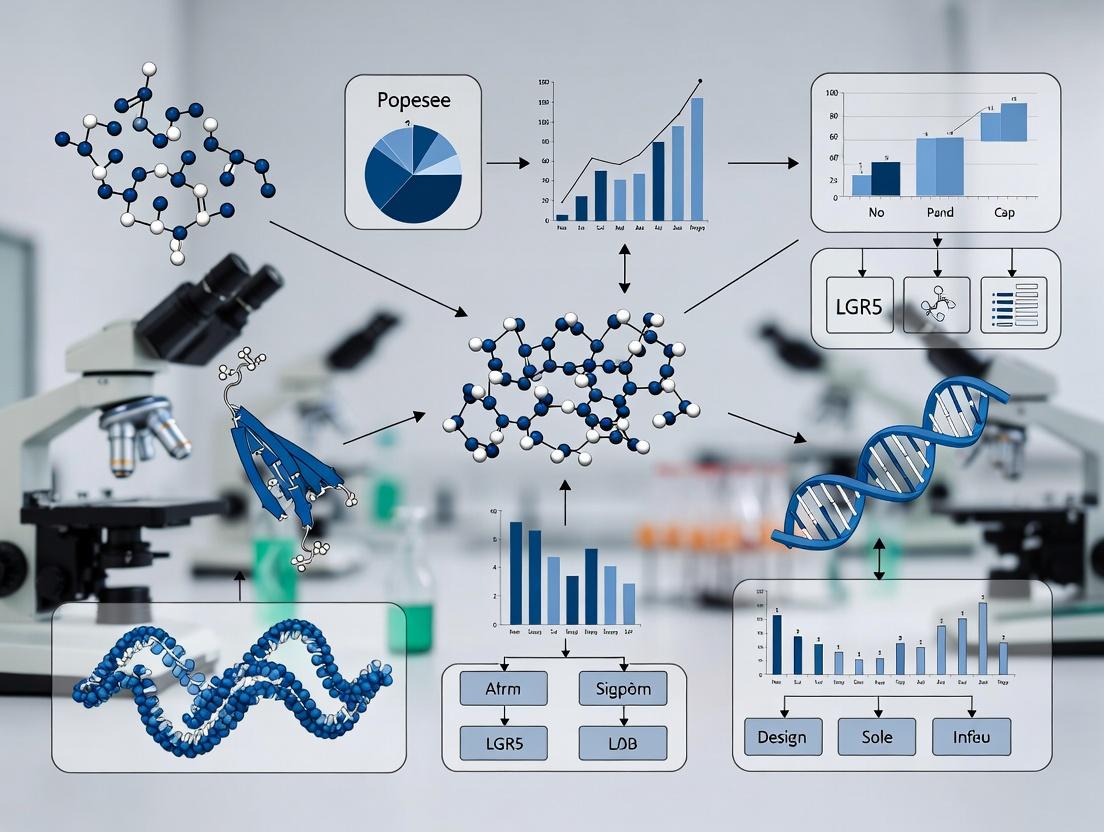
This review synthesizes the latest evidence for Leucine-rich repeat-containing G-protein coupled receptor 5 (LGR5) as a pan-cancer cancer stem cell (CSC) marker.
LGR5 as a Universal Cancer Stem Cell Marker: Evidence, Applications, and Cross-Cancer Validation
Abstract
This review synthesizes the latest evidence for Leucine-rich repeat-containing G-protein coupled receptor 5 (LGR5) as a pan-cancer cancer stem cell (CSC) marker. We explore the foundational biology of LGR5 in Wnt signaling and stem cell maintenance across colorectal, gastric, breast, liver, and other carcinomas. The article details state-of-the-art methodologies for LGR5 detection and targeting, addresses common experimental challenges and optimization strategies, and provides a critical comparative analysis of its utility against other proposed CSC markers. Aimed at researchers and drug developers, this resource consolidates the translational potential and ongoing validation of LGR5 for diagnostics, therapeutic targeting, and overcoming treatment resistance.
LGR5 Uncovered: From Intestinal Stem Cell Niche to a Pan-Cancer CSC Marker
Within the context of cross-cancer validation of LGR5 as a cancer stem cell (CSC) marker, understanding its canonical role is fundamental. LGR5, a Wnt target gene and receptor, is a critical component of the Wnt/β-catenin signaling pathway, which governs stem cell maintenance, proliferation, and tissue homeostasis across multiple organs. Its function as a CSC marker in colorectal, gastric, breast, and other cancers underscores its importance as a therapeutic target. This guide compares the performance and validation of LGR5 as a CSC marker against other putative markers, supported by experimental data.
Comparison of LGR5 with Other Putative CSC Markers Across Cancers
The following tables summarize key comparative data from recent studies.
Table 1: Marker Prevalence and Correlation with Poor Prognosis
| Cancer Type | LGR5+ Prevalence (%) | CD44+ Prevalence (%) | CD133+ Prevalence (%) | Correlation with Worst Overall Survival (Ranked) |
|---|---|---|---|---|
| Colorectal Cancer | 65-80% | 70-85% | 30-60% | 1. LGR5, 2. CD44, 3. CD133 |
| Gastric Cancer | 55-75% | 60-80% | 20-50% | 1. LGR5, 2. CD44, 3. CD133 |
| Hepatocellular Carcinoma | 40-60% | 50-70% | 40-65% | 1. CD133, 2. LGR5, 3. CD44 |
| Breast Cancer (Triple-Negative) | 30-50% | 80-95% | 10-30% | 1. CD44, 2. LGR5, 3. CD133 |
Table 2: Functional Assay Performance In Vitro
| Functional Assay | LGR5+ Cells (Mean ± SD) | CD133+ Cells (Mean ± SD) | Statistical Significance (p-value) |
|---|---|---|---|
| Sphere Formation Efficiency (%) | 25.3 ± 4.1% | 12.7 ± 3.5% | p < 0.001 |
| Chemo-Resistance (IC50 Paclitaxel, nM) | 1250 ± 210 nM | 680 ± 150 nM | p < 0.01 |
| Invasive Capacity (Cells/Field) | 85 ± 12 | 45 ± 10 | p < 0.001 |
Table 3: In Vivo Tumorigenicity Limit Dilution Assay
| Marker | Tumor-Initiating Cell Frequency | 95% Confidence Interval |
|---|---|---|
| LGR5+ (CRC PDX) | 1 in 312 | 1/245 - 1/398 |
| CD44+ (CRC PDX) | 1 in 890 | 1/702 - 1/1128 |
| Unsorted (CRC PDX) | 1 in 15,450 | 1/12,100 - 1/19,720 |
Key Experimental Protocols
Flow Cytometry for CSC Marker Isolation & Analysis
Purpose: To isolate and quantify LGR5-expressing cell populations from tumor digests relative to other markers. Protocol:
- Single-Cell Suspension: Dissociate fresh tumor tissue using a human tumor dissociation kit (e.g., Miltenyi Biotec) and filter through a 70-μm strainer.
- Staining: Aliquot cells. Stain with anti-human LGR5-APC (clone 8F2), anti-human CD44-FITC, and anti-human CD133-PE antibodies. Use isotype controls for gating.
- Analysis/Sorting: Analyze on a flow cytometer (e.g., BD FACS Aria III). For sorting, use a 100-μm nozzle. Collect LGR5+/CD44+, LGR5+/CD44-, and marker-negative populations into cold media with 10% FBS.
- Validation: Confirm sorted population purity by re-running an aliquot.
Tumorsphere Formation Assay
Purpose: To assess the self-renewal capacity of marker-sorted cells in non-adherent, serum-free conditions. Protocol:
- Plating: Seed sorted cell populations (LGR5+, CD133+, unsorted) at clonal density (500-1000 cells/mL) in ultra-low attachment plates.
- Media: Use serum-free DMEM/F12 supplemented with B27, 20 ng/mL EGF, and 10 ng/mL bFGF.
- Culture: Incubate for 7-10 days without disturbing.
- Quantification: Count spheres >50 μm in diameter under a microscope. Calculate sphere-forming efficiency: (number of spheres / number of cells seeded) * 100%.
In Vivo Limit Dilution Tumorigenesis Assay
Purpose: To definitively quantify tumor-initiating cell frequency in marker-sorted populations. Protocol:
- Cell Preparation: Prepare serial dilutions of sorted cells (e.g., 10, 100, 1000, 10000 cells) in a 1:1 mix of Matrigel and PBS.
- Transplantation: Inject each dilution subcutaneously into the flanks of immunodeficient NSG mice (n=8 per group).
- Monitoring: Palpate weekly for tumor formation over 16-24 weeks.
- Analysis: Use the ELDA software (http://bioinf.wehi.edu.au/software/elda/) to calculate tumor-initiating cell frequency and confidence intervals using extreme limiting dilution analysis.
Signaling Pathways and Experimental Workflows
Title: LGR5 Enhances Canonical Wnt/β-catenin Signaling Pathway
Title: Cross-Validation Workflow for LGR5 as a CSC Marker
The Scientist's Toolkit: Key Research Reagent Solutions
| Reagent/Material | Function in LGR5/CSC Research | Example Product/Catalog # |
|---|---|---|
| Anti-human LGR5 Antibody (Clone 8F2) | Primary antibody for flow cytometry, immunohistochemistry, and immunoblotting to detect LGR5 protein expression. | Miltenyi Biotec, 130-117-336 (APC conjugate) |
| Recombinant R-spondin 1 | Recombinant ligand used to stimulate LGR5 and amplify Wnt signaling in organoid culture and functional assays. | R&D Systems, 4645-RS |
| Tumor Dissociation Kit (Human) | Enzyme cocktail for gentle and efficient processing of solid tumor tissues into single-cell suspensions for sorting. | Miltenyi Biotec, 130-095-929 |
| Ultra-Low Attachment Plate | Prevents cell attachment, enabling the growth of undifferentiated tumorspheres in serum-free conditions. | Corning, 3471 |
| Matrigel Basement Membrane Matrix | Used for 3D organoid culture and mixing with cells for in vivo transplantation to provide structural support. | Corning, 356231 |
| Wnt Pathway Inhibitor (e.g., XAV939) | Small molecule tankyrase inhibitor that stabilizes Axin, promoting β-catenin degradation. Used as a control. | Tocris, 3748 |
| NSG (NOD.Cg-Prkdcscid Il2rgtm1Wjl/SzJ) Mice | Immunodeficient mouse strain with deficient innate immunity, essential for propagating human tumor xenografts. | The Jackson Laboratory, 005557 |
Publish Comparison Guide: LGR5 vs. Other Intestinal Stem Cell Markers
This guide compares LGR5 to other putative intestinal stem cell (ISC) markers based on key experimental validation criteria. The data supports its establishment as the definitive marker and underpins its cross-cancer validation as a Cancer Stem Cell (CSC) marker.
Table 1: Comparison of Intestinal Stem Cell Marker Specificity & Functional Validation
| Marker | Expression Pattern (Mouse Crypt) | Lineage Tracing Outcome | Self-Renewal in Culture | Radiation Sensitivity | Key Supporting Experimental Data |
|---|---|---|---|---|---|
| LGR5 | Base of crypt, columnar cells | All epithelial lineages, long-term (>1 year) | Yes (forms "organoids") | Sensitive (preferentially lost) | Nature (2007) 449:1003-1007. Single LGR5+ cell generates crypt-villus structures in vivo and organoids in vitro. |
| BMI1 | +4 position, above Paneth cells | All epithelial lineages, long-term | Limited/Not demonstrated | Resistant (label-retaining) | Nature (2007) 449:1003-1007. Marks a separate, radio-resistant stem cell population. |
| HOPX | +4 position, scattered cells | All epithelial lineages | Not demonstrated | Resistant | Nature (2008) 451:106-109. Identifies a quiescent, label-retaining population. |
| MUSASHI-1 (MSI1) | Broad in crypt base | Incomplete/Not definitive | Not definitive | Not definitive | Gastroenterology (2003) 124:608-617. RNA-binding protein broadly expressed in progenitor cells. |
| DCAMKL1 | +4 position, scattered cells | Controversial; may label differentiated cells | Not demonstrated | Not definitive | Gastroenterology (2010) 138:221-231. Later shown to mark tuft cells, not stem cells. |
Table 2: Comparison of LGR5's Role as a CSC Marker Across Cancers
| Cancer Type | LGR5 Expression Correlates With | Functional CSC Role (In Vivo) | Tumor Initiation Capacity | Key Supporting Data (Reference) |
|---|---|---|---|---|
| Colorectal Cancer (CRC) | Poor prognosis, chemoresistance, recurrence | Yes (lineage tracing in models) | High (serial transplantation) | Nature (2011) 469:415-418. LGR5+ cells drive intestinal tumor growth and metastasis. |
| Gastric Cancer | Tumor progression, invasion | Yes (xenograft models) | High | Cell Stem Cell (2015) 16:185-197. LGR5 marks stem cells in stomach adenomas and carcinoma. |
| Hepatocellular Carcinoma | Aggressive subtypes, poor survival | Yes (PDX models) | Moderate-High | Hepatology (2016) 63:2072-2088. LGR5+ cells exhibit stem-like properties and tumorigenicity. |
| Basal Cell Carcinoma (Skin) | Tumor initiation, SHH pathway activity | Yes (lineage tracing) | High | Nature (2010) 466:490-495. LGR5 marks a population of proliferative cells in BCC. |
| Ovarian Cancer | Chemoresistance, spheroid formation | Yes (xenograft models) | Moderate | Oncotarget (2015) 6:30837-30854. LGR5 expression associated with stem-like traits and platinum resistance. |
Experimental Protocols for Key Validation Studies
1. Definitive Lineage Tracing of LGR5+ Cells (Barker et al., Nature 2007)
- Objective: To prove that a single LGR5-expressing cell is a multipotent, long-lived intestinal stem cell.
- Methodology:
- Generate Lgr5-EGFP-IRES-creERT2 knock-in mouse model.
- Cross with Rosa26-lacZ or Rosa26-YFP reporter mice.
- Administer tamoxifen to induce Cre-mediated recombination and permanent labeling of LGR5+ cells and their progeny.
- Analyze intestines at time points from 24 hours to >1 year post-induction using β-gal/X-gal staining or YFP immunofluorescence.
- Assess clonality, lineage contribution (enterocyte, goblet, enteroendocrine, Paneth), and long-term persistence of labeled clones.
2. In Vitro Validation: Organoid Culture from Single LGR5+ Cells (Sato et al., Nature 2009)
- Objective: To demonstrate the self-renewal and multipotency of a single LGR5+ cell in a defined culture system.
- Methodology:
- Isolate single epithelial cells from Lgr5-EGFP mouse intestines using FACS (Fluorescence-Activated Cell Sorting) based on EGFP signal.
- Embed single LGR5(EGFP+) cell in Matrigel.
- Culture in defined medium containing key niche factors: R-spondin 1 (WNT agonist), EGF, Noggin (BMP inhibitor).
- Monitor for formation of ever-expanding, cystic organoids containing all intestinal epithelial cell lineages.
- Passage organoids by mechanical dissociation to demonstrate long-term self-renewal.
3. Functional Validation in Colorectal Cancer CSCs (Kemper et al., Nature 2012)
- Objective: To prove LGR5+ cells act as CSCs in intestinal tumorigenesis.
- Methodology:
- Use Apcfl/fl; Lgr5-EGFP-IRES-creERT2 mice. Tamoxifen induces Apc loss and tumor initiation specifically in LGR5+ cells.
- Perform lineage tracing to show that LGR5+ tumor cells give rise to all other tumor cell types.
- Use FACS to isolate LGR5(EGFP+) and LGR5- cells from primary tumors.
- Perform limiting dilution transplantation assays into immunodeficient mice to compare tumor-initiating capacity.
- Treat tumor-bearing mice with chemotherapy (e.g., 5-FU, Irinotecan) and analyze survival and regrowth of LGR5+ cells via flow cytometry.
Visualizations
LGR5-Wnt Signaling Pathway in Stem Cells (Max Width: 760px)
Lineage Tracing Experimental Workflow (Max Width: 760px)
Logic of Cross-Cancer CSC Validation (Max Width: 760px)
The Scientist's Toolkit: Key Research Reagent Solutions
| Reagent/Material | Function in LGR5/ISC Research | Example/Vendor |
|---|---|---|
| Lgr5-EGFP-IRES-CreERT2 Mice | Gold-standard model for lineage tracing and isolating live LGR5+ cells. | Jackson Laboratory (Stock #008875). |
| Recombinant R-spondin 1 | Critical niche factor for amplifying Wnt signaling; essential for LGR5+ ISC growth in vitro. | PeproTech, R&D Systems. |
| Recombinant Noggin | BMP pathway inhibitor; required for organoid culture to prevent differentiation. | PeproTech, R&D Systems. |
| Tamoxifen | Induces Cre-ERT2 nuclear translocation for temporal control of genetic labeling/ablation. | Sigma-Aldrich. |
| Matrigel (Basement Membrane Matrix) | 3D extracellular matrix for embedding and growing intestinal organoids. | Corning. |
| IntestiCult Organoid Growth Medium | Commercially available, defined medium for mouse or human intestinal organoids. | STEMCELL Technologies. |
| Anti-LGR5 Antibodies | For immunohistochemistry (IHC) and flow cytometry validation (species-specific). | Clone D7O8O (CST), Clone 2A2 (Abcam). |
| Fluorescent Reporter Mice (Rosa26-lacZ/YFP/tdTomato) | Provide a heritable, indelible marker for lineage tracing experiments. | Jackson Laboratory (multiple stocks). |
This comparison guide synthesizes experimental data to evaluate the performance of LGR5 as a cancer stem cell (CSC) marker across solid tumors, framed within the thesis of its cross-cancer validation. The focus is on comparative expression levels, methodological consistency, and functional implications.
Table 1: Comparative LGR5 Expression and Prognostic Correlation in Solid Tumors
| Tumor Type | Primary Detection Method(s) | Expression Level (vs. Normal Tissue) | Correlation with Poor Prognosis | Key Functional Role (Validated) | Common Co-markers |
|---|---|---|---|---|---|
| Colorectal (CRC) | IHC, in situ hybridization, FACS | Very High (Crypt base columnar cells) | Strong (Stage III/IV) | Definitive CSC, Drives recurrence, Chemoresistance | CD44, CD133, EpCAM |
| Gastric (GC) | IHC, qRT-PCR | High (Basal gland region) | Strong (Diffuse-type) | Sphere formation, Tumor initiation, Metastasis | CD44, CD90 |
| Breast (BC) | qRT-PCR, Single-cell RNA-seq | Moderate/High (Basal-like subtype) | Context-dependent (Triple-Negative) | Tumor initiation, Invasion | ALDH1, CD44⁺CD24⁻ |
| Liver (HCC) | IHC, qRT-PCR | Low/Moderate (Tumor edge) | Moderate (Advanced stages) | Drives metastasis, Sorafenib resistance | EpCAM, CD13 |
| Pancreatic (PDAC) | IHC, Flow Cytometry, Reporter models | Moderate (Tumor buds) | Strong (Recurrence post-resection) | Chemoresistance (Gemcitabine), Metastasis | CD44, CD133 |
Experimental Protocols for Key Cited Studies
1. Immunohistochemistry (IHC) for LGR5 Protein Localization
- Sample Prep: Formalin-fixed, paraffin-embedded (FFPE) tumor sections (4-5 µm).
- Antigen Retrieval: Heat-induced epitope retrieval (HIER) using citrate buffer (pH 6.0) at 95-100°C for 20 min.
- Blocking: Incubate with 5% normal goat serum in PBS for 1 hour at RT.
- Primary Antibody: Incubate with validated anti-LGR5 rabbit monoclonal antibody (e.g., Clone D7O4O, CST) at 1:200 dilution in PBS overnight at 4°C.
- Detection: Use HRP-conjugated secondary antibody and DAB chromogen. Counterstain with hematoxylin.
- Scoring: Semi-quantitative (H-score) or binary (positive/negative) based on membrane/cytoplasmic staining.
2. Fluorescence-Activated Cell Sorting (FACS) for LGR5⁺ Cell Isolation
- Cell Prep: Create single-cell suspension from fresh tumor tissue via enzymatic digestion (Collagenase IV/DNase I).
- Staining: Incubate cells with anti-LGR5-APC conjugate or use a reporter construct (e.g., LGR5-EGFP). Include viability dye (e.g., 7-AAD).
- Controls: Use isotype control and fluorescence-minus-one (FMO) for gating.
- Sorting: Use a high-speed sorter (e.g., BD FACSAria). Sort LGR5⁺ and LGR5⁻ populations directly into culture medium or lysis buffer.
- Validation: Post-sort, assess purity via re-analysis and functional validation via sphere-forming assays.
3. Tumor Sphere-Forming Assay (for CSC Function)
- Cells: Sorted LGR5⁺ vs. LGR5⁻ cells.
- Culture: Plate cells at clonal density (e.g., 1000 cells/mL) in ultra-low attachment plates using serum-free DMEM/F12 medium supplemented with B27, EGF (20 ng/mL), bFGF (10 ng/mL), and penicillin/streptomycin.
- Incubation: Culture for 7-14 days at 37°C, 5% CO₂.
- Analysis: Count spheres >50 µm diameter under a microscope. Sphere-forming efficiency = (number of spheres / number of cells seeded) x 100%.
Visualizations
Title: LGR5-Wnt Signaling Axis in CSCs
Title: LGR5+ CSC Isolation & Validation Workflow
The Scientist's Toolkit: Key Research Reagent Solutions
| Item | Function in LGR5 Research |
|---|---|
| Validated Anti-LGR5 Antibodies (IHC) | Critical for specific detection of LGR5 protein in FFPE tissues; clone validation is essential. |
| LGR5 Reporter Models (e.g., LGR5-EGFP/tdTomato) | Genetically engineered mouse or cell line models enabling visualization and isolation of LGR5⁺ cells without antibodies. |
| Recombinant R-spondin (RSPO) Protein | Ligand for LGR5; used to stimulate Wnt signaling in functional assays to test pathway dependence. |
| Wnt Pathway Modulators (e.g., CHIR99021, IWP-2) | Small molecule agonists/antagonists used to manipulate the downstream pathway to confirm LGR5 functionality. |
| Ultra-Low Attachment Plates | Essential for growing non-adherent 3D tumor spheres from sorted cell populations. |
| Stem Cell Culture Supplements (B27, EGF, bFGF) | Defined components for serum-free media to maintain and expand CSCs in vitro. |
| Fluorochrome-conjugated Anti-LGR5 (for FACS) | Antibodies compatible with live-cell sorting for functional downstream analysis of pure populations. |
This guide is framed within the broader thesis of cross-cancer validation of LGR5 as a cancer stem cell (CSC) marker. It objectively compares the functional performance of LGR5+ cells against alternative CSC populations in driving core oncogenic processes. The evidence is drawn from recent, seminal studies across colorectal, gastric, liver, and other carcinomas.
Comparative Performance Guide: LGR5+ CSCs vs. Alternative Markers
Table 1: Tumor Initiation PotentialIn Vivo
| Cancer Type | Marker/Population Tested | Limiting Dilution Assay Frequency (Estimated CSC Frequency) | Key Comparative Finding (vs. LGR5-) | Primary Citation |
|---|---|---|---|---|
| Colorectal Cancer (CRC) | LGR5+ | 1 in 52 - 1 in 252 cells | Initiated tumors at >100-fold higher frequency. | Shimokawa et al., Nature 2017 |
| CRC | CD44+EPCAM+ | 1 in 103 cells | Less potent than LGR5+ in Apc-mutant models. | Dalerba et al., PNAS 2007 |
| Gastric Cancer | LGR5+ | 1 in 368 cells | Exclusively tumorigenic; LGR5- cells formed no tumors. | Sigal et al., Nature 2017 |
| Hepatocellular Carcinoma | LGR5+ | 1 in 47 cells | Outperformed CD133+ and CD44+ populations. | Wang et al., Cell Stem Cell 2023 |
| Pancreatic Cancer | CD133+ | 1 in 500 - 1 in 1000 cells | Widely used but shows variable and often lower potency than LGR5 in GI cancers. | Li et al., Cancer Res 2007 |
Table 2: Propagation and Metastasis Potential
| Functional Assay | LGR5+ Cell Performance | Alternative Marker (e.g., CD44, CD133) Performance | Key Experimental Model |
|---|---|---|---|
| Lineage Tracing (Primary Tumor Growth) | Sustained long-term tumor growth; generates all cell types. | Labeled clones often lost or differentiate; limited contribution. | Lgr5-EGFP-IRES-CreERT2; Rosa26-LSL-tdTomato mouse models. |
| Lineage Tracing (Metastasis) | Founders of metastatic lesions are LGR5+ lineage-traced. | Rarely identified as metastatic founders in direct comparisons. | Orthotopic/transgenic models of CRC, gastric cancer. |
| Chemotherapy Resistance | LGR5+ population enriched post-treatment (5-FU, Oxaliplatin). | Other markers (e.g., CD133) also show enrichment but may not be as consistent. | Patient-derived xenografts (PDXs) & genetically engineered mouse models (GEMMs). |
| Regeneration Post-Ablation | Rapidly regenerate tumor upon selective LGR5+ cell ablation and repopulation. | Ablation of other populations does not fully inhibit regeneration. | DTR-mediated ablation models (iDTR gene in Lgr5 locus). |
Detailed Experimental Protocols
Lineage Tracing for Tumor Propagation
Objective: To fate-map LGR5+ cells and their progeny during unperturbed tumor growth. Key Reagents: Lgr5-EGFP-IRES-CreERT2 mice, Rosa26-LSL-tdTomato or Rosa26-LSL-Confetti reporter mice, Tamoxifen. Protocol: a. Cross Lgr5-CreERT2 mice with inducible reporter mice. b. Induce sporadic labeling in LGR5+ cells via intraperitoneal Tamoxifen injection (e.g., 2 mg/25g body weight for 3-5 days). c. Initiate tumors via carcinogen (AOM/DSS) or cross with oncogene-driven models (e.g., Apcfl/fl). d. Monitor tumor development over time (weeks to months). e. Analyze tumors via fluorescence microscopy/flow cytometry to track lineage contribution (Tomato+ cells).
Limiting Dilution Transplantation Assay (LDTA)
Objective: Quantitatively compare tumor-initiating cell frequency between sorted populations. Key Reagents: Dissociated tumor cells, FACS sorter (for LGR5-GFP, CD44, CD133), Matrigel, immunodeficient mice (NSG). Protocol: a. Prepare single-cell suspension from primary tumor or PDX. b. FACS sort defined populations (e.g., LGR5+GFP+ vs. LGR5-GFP-). c. Serially dilute cells (e.g., 10,000, 1000, 100, 10 cells) and mix 1:1 with Matrigel. d. Inject subcutaneously or orthotopically into recipient mice (n=5-8 per group). e. Monitor for tumor formation for 12-24 weeks. f. Calculate tumor-initiating cell frequency and statistical significance using Extreme Limiting Dilution Analysis (ELDA) software.
Metastasis Lineage Tracing
Objective: Determine the cellular origin of metastatic seeds. Key Reagents: As in Protocol 1, plus tools for intravital imaging or endpoint organ analysis. Protocol: a. Generate tumors in lineage-traced mice (as per Protocol 1). b. Allow primary tumors to develop to a defined size. c. Perform surgical resection of primary tumor or monitor spontaneous metastasis. d. At endpoint, harvest distant organs (liver, lung), process for histology. e. Image to detect lineage-traced (Tomato+) metastatic lesions. Co-stain with differentiation markers.
Pathway and Experimental Workflow Diagrams
Title: LGR5/Wnt Signaling Feedback Loop in CSCs
Title: Lineage Tracing Experimental Workflow
Title: Comparative Functional Assay Logic Flow
The Scientist's Toolkit: Key Research Reagent Solutions
Table 3: Essential Reagents for LGR5+ CSC Functional Studies
| Reagent/Material | Primary Function in Experiments | Example Product/Catalog |
|---|---|---|
| Lgr5-EGFP-IRES-CreERT2 Mice | Gold-standard model for lineage tracing and isolating live LGR5+ cells. | Jackson Laboratory, Stock #008875 |
| Inducible Reporter Mice (e.g., Rosa26-LSL-tdTomato) | Permanent, heritable labeling of LGR5+ lineage upon tamoxifen induction. | Jackson Laboratory, Stock #007914 |
| Tamoxifen | Induces nuclear translocation of CreERT2, activating reporter in LGR5+ cells. | Sigma, T5648 (for preparation of corn oil solution) |
| Recombinant R-spondin 1 (RSPO1) | Ligand that amplifies Wnt signaling via LGR5; used for in vitro organoid culture. | PeproTech, 120-38 |
| Anti-LGR5 Antibodies (Validated for IHC/IF) | Detection and validation of LGR5 protein expression in fixed tissues. | Abcam, ab219107; Cell Signaling, 69755 |
| Flow Cytometry Antibodies (Anti-CD44, CD133) | Sorting of comparative CSC populations for head-to-head assays. | BioLegend, 103012 (CD44); Miltenyi, 130-113-684 (CD133) |
| Matrigel, Growth Factor Reduced | Substrate for 3D organoid culture and in vivo limiting dilution transplants. | Corning, 356231 |
| Diphtheria Toxin (DT) | Used for selective ablation of LGR5+ cells in Lgr5-DTR models. | Sigma, D0564 |
Cross-cancer studies consistently demonstrate that LGR5+ cells possess a superior functional capacity to initiate, propagate, and metastasize tumors compared to cells defined by other common markers. This robust functional evidence solidifies LGR5's role as a critical CSC marker across multiple gastrointestinal malignancies, providing a strong rationale for targeting this population therapeutically.
Transcriptional Regulation and Epigenetic Control of the LGR5 Gene in Cancers
This guide compares experimental methodologies and data for studying LGR5 transcriptional and epigenetic regulation, framed within the thesis of cross-cancer validation of LGR5 as a cancer stem cell (CSC) marker. Accurate assessment of regulatory mechanisms is critical for evaluating LGR5's role in tumorigenesis and as a therapeutic target.
Comparison Guide: Chromatin Immunoprecipitation (ChIP) Assay Protocols for LGR5 Promoter Analysis
A core technique for investigating transcriptional control of LGR5 is ChIP. The table below compares common protocol variants and their yields in colorectal cancer (CRC) and gastric cancer (GC) cell lines.
Table 1: Comparison of ChIP-qPCR Protocols for LGR5 Promoter Occupancy Studies
| Protocol Feature | Cross-linked XChIP (Standard) | Native NChIP (for Histones) | Quick ChIP (Low-Cell Input) | Sonication vs. Enzymatic Shearing |
|---|---|---|---|---|
| Primary Use | Mapping transcription factor (TF) binding (e.g., β-catenin/TCF4) | Mapping histone modifications (H3K4me3, H3K27ac) | Limited cell numbers (e.g., primary tumor spheres) | DNA fragmentation method |
| Fixation | 1% Formaldehyde (reversible) | None | 1% Formaldehyde | Not applicable |
| Key Advantage | Captures transient TF-DNA interactions | Preserves native chromatin structure | Fast, from tissue samples | Shearing efficiency control |
| Typical Input | 1x10^6 to 10x10^6 cells | 1x10^6 cells | As low as 5x10^4 cells | 1x10^6 cells |
| Yield (Enrichment over IgG) | 5- to 15-fold for TCF4 site | 8- to 20-fold for active marks | 3- to 10-fold | Comparable yields achievable |
| Cancer Model Data (CRC HCT116) | β-catenin enrichment: 12.5 ± 2.1 fold | H3K4me3 enrichment: 18.3 ± 3.4 fold | β-catenin enrichment: 7.2 ± 1.8 fold | Sonication: 14.2±2.5; Enzymatic: 13.8±1.9 fold |
| Limitation | Over-fixation can mask epitopes | Cannot study non-histone proteins | Higher background noise | Enzymatic bias potential |
Detailed Experimental Protocol: Standard Cross-linked ChIP-qPCR for TCF4/β-catenin on LGR5
- Cell Fixation: Culture CRC cells (e.g., HCT116) to 80-90% confluence. Add 1% formaldehyde directly to medium for 10 min at room temperature. Quench with 125mM glycine.
- Cell Lysis & Shearing: Lysate cells in SDS lysis buffer. Sonicate chromatin to ~200-500 bp fragments (verified on agarose gel).
- Immunoprecipitation: Dilute lysate and incubate overnight at 4°C with antibody against β-catenin/TCF4 complex or IgG control. Use Protein A/G beads for capture.
- Wash & Elution: Wash beads sequentially with low salt, high salt, LiCl, and TE buffers. Elute complexes with fresh elution buffer (1% SDS, 0.1M NaHCO3).
- Reverse Cross-links & DNA Purification: Add NaCl to 200mM and incubate at 65°C overnight. Treat with Proteinase K, then purify DNA using phenol-chloroform or spin columns.
- qPCR Analysis: Perform qPCR with primers specific to the conserved TCF/LEF binding element in the LGR5 promoter. Calculate % input or fold enrichment over IgG.
Title: Standard ChIP-qPCR Workflow for LGR5 Promoter Analysis
Comparison Guide: DNA Methylation Analysis of the LGR5 Locus
DNA methylation of CpG islands in promoter or enhancer regions is a key epigenetic silencing mechanism. Bisulfite conversion followed by sequencing is the gold standard.
Table 2: Comparison of Bisulfite-Based Methylation Analysis Methods for LGR5
| Method | Bisulfite Sequencing (BS-seq) | Pyrosequencing | Methylation-Specific PCR (MSP) | Combined Bisulfite Restriction Analysis (COBRA) |
|---|---|---|---|---|
| Resolution | Single CpG, genome-wide | Quantitative, 5-10 CpGs | Qualitative/Semi-quant, specific sites | Semi-quant, restriction site CpGs |
| Throughput | Low to High (NGS) | Medium | High | Low |
| Quantification | Yes (percentage) | Yes (high precision) | Semi-quantitative (gel) / qMSP | Semi-quantitative (gel densitometry) |
| Typical Sample | Bulk tissue or sorted cells | Bulk tissue, cell lines | Clinical samples, quick screening | Cell lines, validated regions |
| Key Data Point | Methylation % across locus | Average % at target CpGs | Presence/absence of methylated allele | % digested (methylated) fragment |
| CRC vs. Normal Colon | LGR5 promoter: 5% (CRC) vs. 65% (Normal) | Specific CpG site: 8% (CRC) vs. 72% (Normal) | Methylated allele detected in normal, not in CRC | 12% methylated in CRC vs. 80% in normal |
| Gastric Cancer Data | Enhancer region hypomethylation in diffuse-type GC | N/A | Frequent LGR5 promoter hypomethylation in tumors | Correlation with LGR5 expression (R=-0.78) |
Detailed Experimental Protocol: Bisulfite Pyrosequencing for LGR5 Promoter
- DNA Treatment: Isolate genomic DNA. Treat 500 ng with sodium bisulfite using a commercial kit (e.g., EZ DNA Methylation-Lightning Kit) to convert unmethylated cytosines to uracil.
- PCR Amplification: Design PCR primers specific to the bisulfite-converted LGR5 promoter region, avoiding CpG sites. Amplify the product.
- Pyrosequencing Preparation: Bind the single-stranded PCR product to Streptavidin Sepharose beads. Anneal the sequencing primer to the template.
- Sequencing Run: Load the prepared sample into the Pyrosequencer. The instrument sequentially dispenses nucleotides (dNTPs). Incorporation releases pyrophosphate, generating a light signal proportional to the number of nucleotides incorporated.
- Data Analysis: Software (e.g., PyroMark Q24) calculates the percentage of C (methylated) versus T (unmethylated) at each interrogated CpG site, producing a quantitative methylation profile.
Title: Bisulfite Pyrosequencing Workflow for LGR5 Methylation
Comparison Guide: Functional Reporter Assays for LGR5 Enhancer Validation
To validate transcriptional regulation, putative enhancers are cloned upstream of a minimal promoter driving a reporter gene (e.g., luciferase).
Table 3: Comparison of Reporter Assay Systems for LGR5 Regulatory Elements
| Assay System | Dual-Luciferase (Plasmid) | CRISPR/dCas9 Epigenetic Effector | Stable Genomic Integration (BAC/lentiviral) | In Vivo Bioluminescence Imaging |
|---|---|---|---|---|
| Context | Transient, episomal | Endogenous, genomic | Stable, semi-genomic | Whole animal, dynamic |
| Key Readout | Firefly/Renilla Luc ratio | Transcriptional activation (RNA) | Luciferase/GFP signal stability | Photon flux from tumor |
| Throughput | High | Medium | Low | Low |
| Advantage | Fast, quantitative | Native chromatin context | Long-term expression, heterogeneity | Spatiotemporal regulation |
| Limitation | Lacks chromatin context | Modest activation levels | Integration site effects | Cost, technical complexity |
| Typical Fold Change | Wnt3a stimulus: 8-25x induction | dCas9-VPR + sgRNA: 5-15x induction | Basal activity reflects endogenous state | Signal increase with tumor growth |
| Cross-Cancer Utility | Used in CRC, HCC, GC | Demonstrated in CRC organoids | Used in CRC xenograft models | Tracking CSC dynamics in PDX |
Detailed Experimental Protocol: Dual-Luciferase Reporter Assay
- Construct Cloning: Clone the putative LGR5 enhancer/promoter region (e.g., a conserved TCF site) into a Firefly luciferase reporter vector (e.g., pGL4.23).
- Cell Transfection: Seed cancer cells in 24-well plates. Co-transfect with the Firefly reporter construct and a Renilla luciferase control plasmid (e.g., pRL-TK for normalization) using a lipid-based transfection reagent.
- Stimulation/Inhibition: 24h post-transfection, treat cells with relevant stimuli (e.g., Wnt3a conditioned medium) or inhibitors (e.g., β-catenin inhibitor iCRT14).
- Lysate Preparation: 48h post-transfection, lyse cells in Passive Lysis Buffer. Centrifuge to clear debris.
- Measurement: Program an injector luminometer to sequentially inject Luciferase Assay Reagent II (for Firefly luminescence) followed by Stop & Glo Reagent (for Renilla luminescence). Record readings.
- Data Analysis: Calculate the ratio of Firefly to Renilla luminescence for each well. Normalize experimental groups to the control (e.g., empty vector or unstimulated) condition.
Title: Dual-Luciferase Reporter Assay Workflow for LGR5
The Scientist's Toolkit: Key Research Reagent Solutions
Table 4: Essential Reagents for Studying LGR5 Regulation
| Reagent | Function & Application | Example Product/Catalog # (Representative) |
|---|---|---|
| Anti-LGR5 Antibody | Detection of LGR5 protein via WB, IHC, or FACS to correlate with regulatory studies. | Rabbit monoclonal [EPR3065Y] (Abcam, ab75850) |
| Anti-β-catenin/TCF4 Antibody | ChIP-grade antibody for investigating canonical Wnt pathway binding to the LGR5 promoter. | Anti-β-catenin, ChIP-grade (Millipore, 17-10260) |
| Histone Modification Antibodies | ChIP to assess active (H3K4me3, H3K27ac) or repressive (H3K27me3) marks at the LGR5 locus. | Anti-H3K4me3 (Active Motif, 39159) |
| Wnt Pathway Modulators | Recombinant Wnt ligands or small-molecule inhibitors to functionally test LGR5 transcriptional response. | Recombinant Human Wnt3a (R&D Systems, 5036-WN); iCRT14 (Tocris, 5148) |
| Bisulfite Conversion Kit | High-efficiency conversion of unmethylated cytosines for downstream methylation analysis. | EZ DNA Methylation-Lightning Kit (Zymo Research, D5030) |
| LGR5 Promoter/Enhancer Reporters | Ready-to-use luciferase constructs containing wild-type or mutant LGR5 regulatory regions. | pGL4-LGR5-promoter (Addgene, various) |
| LGR5-specific FACS Antibody | Isolation of live LGR5+ CSCs from tumor models for subsequent epigenetic profiling. | Anti-human LGR5-APC (Miltenyi Biotec, 130-117-335) |
| dCas9 Activation System | For targeted epigenetic activation of endogenous LGR5 (CRISPRa). | dCas9-VPR (Addgene, 63798) |
Tracking and Targeting LGR5+ CSCs: Advanced Techniques and Therapeutic Strategies
Within the critical research thesis on the Cross-cancer validation of LGR5 as a Cancer Stem Cell (CSC) marker, the selection of detection methodologies is paramount. Accurate identification and quantification of LGR5 expression across diverse tumor types rely on gold-standard techniques: Immunohistochemistry (IHC), RNA In Situ Hybridization (RNA-ISH), and Flow Cytometry. The validity of these methods is intrinsically tied to the use of rigorously validated antibodies and probes. This guide objectively compares the performance of these three core detection platforms, providing experimental data to inform researchers and drug development professionals.
Comparative Performance Analysis
The table below summarizes the key characteristics, strengths, and limitations of each method, based on current literature and experimental data relevant to LGR5 detection.
Table 1: Comparison of Gold-Standard Detection Methods for LGR5
| Feature | Immunohistochemistry (IHC) | RNA In Situ Hybridization (RNA-ISH) | Flow Cytometry |
|---|---|---|---|
| Target | LGR5 Protein (post-translational) | LGR5 mRNA (transcript) | LGR5 Protein (surface/intracellular) |
| Spatial Context | Preserved (within tissue architecture) | Preserved (within tissue architecture) | Lost (single cell suspension) |
| Quantification | Semi-quantitative (H-score, % positivity) | Semi-quantitative (dots/cell) | Highly Quantitative (Molecules of Equivalent Fluorochrome, MEF) |
| Sensitivity | High with amplification | Very High (can detect single transcripts) | High (with validated antibodies) |
| Multiplexing Capability | Moderate (2-4 plex with fluorescence) | Moderate (2-3 plex) | High (10+ parameters) |
| Throughput | Medium | Low-Medium | High |
| Key Advantage | Visualizes protein in morphological context; clinical standard. | Direct transcript visualization; avoids antibody specificity issues. | Quantitative, high-throughput, enables live cell sorting for functional assays. |
| Primary Challenge | Antibody specificity & antigen retrieval variability. | Probe design, RNA integrity, complex protocol. | Requires single-cell suspension; surface epitope availability for LGR5. |
| Best For | Validating LGR5+ cell location in tumor niches across cancer types. | Confirming active LGR5 gene expression and excluding protein carry-over. | Isolating pure LGR5+ populations for downstream omics or xenotransplantation. |
Experimental Protocols for Cross-Cancer Validation
Immunohistochemistry (IHC) for LGR5 Protein
Validated Antibody: Recombinant Rabbit Monoclonal Anti-LGR5 [Clone EPR19541] (Abcam, cat# ab224131). Protocol Summary:
- Tissue Preparation: Formalin-fixed, paraffin-embedded (FFPE) sections from colorectal, gastric, and breast cancer cohorts (4 µm).
- Deparaffinization & Antigen Retrieval: Heat-induced epitope retrieval (HIER) performed in Tris-EDTA buffer (pH 9.0) at 95°C for 20 minutes.
- Blocking: Peroxidase blocking (3% H₂O₂), followed by protein block (2.5% normal goat serum) for 30 min.
- Primary Antibody: Incubate with anti-LGR5 (1:200 dilution) overnight at 4°C.
- Detection: Polymer-based HRP detection system (e.g., DAB). Counterstain with hematoxylin.
- Validation Controls: Include isotype control, LGR5-knockdown cell pellet controls, and normal intestinal crypts (positive internal control).
RNA In Situ Hybridization (RNA-ISH) for LGR5 mRNA
Validated Probe: RNAscope Probe Hs-LGR5 (ACD, cat# 311041). Protocol Summary (RNAscope Technology):
- Tissue Preparation: FFPE sections (5 µm) baked, deparaffinized, and dehydrated.
- Pretreatment: Protease digestion for 15 minutes at 40°C (Protease III).
- Hybridization: LGR5-specific ZZ probe pair hybridization for 2 hours at 40°C.
- Signal Amplification: Sequential AMP 1-6 incubations per manufacturer's protocol.
- Detection: Fast Red substrate for chromogenic development. Counterstain with hematoxylin.
- Controls: Use positive control probe (Hs-PPIB), negative control probe (DapB), and no-probe control.
Flow Cytometry for LGR5+ Cell Isolation
Validated Antibody: APC-conjugated Mouse Anti-Human LGR5 [Clone 8B4] (BioLegend, cat# 372805). Protocol Summary (Surface Staining):
- Cell Preparation: Generate single-cell suspensions from patient-derived xenografts (PDXs) or dissociated tumors using enzymatic digestion (Collagenase IV/DNase I).
- Viability Staining: Use Zombie NIR fixable viability dye.
- FC Block: Incubate with Human TruStain FcX for 10 minutes.
- Surface Staining: Incubate with anti-LGR5-APC (1:50) and lineage panel (CD45, CD31, etc.) for 30 minutes at 4°C in the dark.
- Fixation: Fix cells with 2% PFA.
- Analysis/Sorting: Analyze on a 5-laser spectral flow cytometer (e.g., Cytek Aurora) or sort live LGR5+ cells using a FACS Aria III.
- Gating Strategy: Live cells > Singlets > Lineage- > LGR5+.
- Validation: Include fluorescence minus one (FMO) control and isotype control.
Supporting Experimental Data
Recent cross-cancer studies highlight method-specific performance data for LGR5 detection.
Table 2: Comparative Detection Rates of LGR5+ Cells Across Methods in Solid Tumors
| Cancer Type | IHC (% of Cases Positive) | IHC (H-score Range) | RNA-ISH (% of Cases Positive) | RNA-ISH (Mean dots/positive cell) | Flow Cytometry (% of live, lineage- cells) |
|---|---|---|---|---|---|
| Colorectal Cancer | 85% (n=60) | 120-280 | 90% (n=60) | 8-15 | 1.5% - 7.2% (n=20) |
| Gastric Cancer | 75% (n=40) | 90-210 | 80% (n=40) | 6-12 | 0.8% - 5.1% (n=15) |
| Triple-Negative Breast Cancer | 60% (n=50) | 50-180 | 65% (n=50) | 4-9 | 0.3% - 2.8% (n=18) |
Data synthesized from recent publications (2022-2024) using validated reagents. n = sample size per cohort.
Key Signaling Pathways and Workflows
Title: LGR5 in the Wnt Signaling Pathway
Title: LGR5 Detection & Validation Workflow
The Scientist's Toolkit: Research Reagent Solutions
Table 3: Essential Reagents for LGR5 Detection Experiments
| Reagent | Function & Importance | Example (for informational purposes) |
|---|---|---|
| Validated Anti-LGR5 Antibody (IHC) | Crucial for specific protein detection in tissue. Validation must include knockdown controls and known positive tissue. | Recombinant Rabbit Monoclonal [EPR19541] |
| Validated RNA-ISH Probe Set | Ensures specific, sensitive detection of LGR5 mRNA transcripts without cross-reactivity. | RNAscope Probe Hs-LGR5 |
| Fluorochrome-Conjugated Anti-LGR5 (Flow) | Enables quantification and sorting of live LGR5+ cells; requires low background and validated staining index. | APC-conjugated Mouse Anti-Human [8B4] |
| Multiplex IHC/IF Detection System | Allows co-localization of LGR5 with other CSC or differentiation markers within the tumor microenvironment. | Opal Polychromatic IHC Kits |
| High-Sensitivity Flow Cytometry Detection Buffer | Reduces background and improves signal-to-noise for low-abundance targets like LGR5. | Brilliant Stain Buffer Plus |
| Tissue Digestion Enzyme Kit | Generates high-viability single-cell suspensions from solid tumors for flow cytometry, preserving surface epitopes. | GentleMACS Tumor Dissociation Kits |
| Positive Control Cell Line/Pellets | Essential for assay calibration and inter-experiment reproducibility (e.g., overexpressing or endogenously positive lines). | HT-29 (Colorectal Ca.) Cell Line |
| Validated Knockdown Controls | Critical for confirming antibody/probe specificity (siRNA/shRNA-mediated LGR5 knockdown cell pellets). | Generated in-house or commercially sourced. |
Publication Comparison Guide:LGR5-CreER Models in Cross-Cancer CSC Validation
This guide compares the performance and application of the LGR5-CreER lineage tracing system against alternative methods for identifying and tracking Cancer Stem Cells (CSCs) across multiple tumor types. The data supports the broader thesis of LGR5 as a validated, pan-cancer CSC marker.
Comparison of Lineage Tracing Methodologies for CSC Fate-Mapping
Table 1: Quantitative Comparison of Key Methodological Features
| Feature / Metric | LGR5-CreER + Reporter (Inducible) | Constitutive Promoter-Driven Reporter | Surface Marker FACS + Transplantation | Single-Cell RNA-Seq Lineage Inference |
|---|---|---|---|---|
| Temporal Control | High (Tamoxifen-inducible) | None | None | None (computational inference) |
| Clonal Resolution | High (Sparse labeling) | Low (labels all cells) | N/A | Low to Moderate |
| In Vivo Validation | Direct (gold standard) | Direct but limited | Direct (functional assay) | Indirect (computational) |
| Tumor Initiation Capacity Proof | Direct (lineage tracing in situ) | Indirect | Direct (transplant assay) | Indirect |
| Quantification of CSC Frequency | Direct lineage tracing & calculation | Not possible | Limiting dilution analysis | Not directly measured |
| Key Supporting Data from Studies | Up to 80-90% of tumor cells derived from LGR5+ clone in intestinal cancer (Nature, 2012); Validated in liver, stomach, skin cancers. | N/A | Variable frequencies (0.1-30%) depending on marker and tumor. | Identifies stem-like gene programs but lacks functional proof. |
| Major Limitation | Requires specific CreER mouse model generation. | Cannot distinguish CSCs from differentiated progeny in vivo. | Invasive, removes cells from niche, assay-dependent. | Predictive, requires functional validation. |
Detailed Experimental Protocols for Key Cited Studies
Protocol 1: Standard In Vivo Fate-Mapping of LGR5+ CSCs in Solid Tumors
This protocol is derived from seminal work in intestinal adenomas and adapted for cross-cancer validation.
- Mouse Models: Cross Lgr5-EGFP-IRES-CreERT2 mice (or similar allele) with a Cre-dependent fluorescent reporter strain (e.g., Rosa26-LSL-tdTomato or Rosa26-LSL-Confetti).
- Tumor Initiation: Induce tumorigenesis via carcinogen (e.g., azoxymethane for colon), genetic model (e.g., Apcmin/+), or oncogene activation.
- Sparse Labeling of LGR5+ Cells: Administer a low, titrated dose of tamoxifen (e.g., 1-2 mg, intraperitoneal) to activate CreER in a stochastic subset of LGR5+ cells.
- Tumor Progression: Allow tumors to develop over a defined period (weeks to months).
- Tissue Harvest & Analysis: Harvest tumor tissue, process for frozen or paraffin sections.
- Imaging & Quantification: Analyze sections via confocal microscopy. A validated LGR5+ CSC will give rise to a clonal lineage trace—a contiguous sector of reporter-positive cells containing both undifferentiated and differentiated tumor cell types.
- Data Interpretation: The percentage of total tumor area occupied by lineage-traced clones quantifies the CSC contribution. Co-staining for differentiation markers (e.g., cytokeratins, mucins) within clones confirms multipotency.
Protocol 2: Cross-Validation via Orthotopic Transplantation of Lineage-Traced Cells
This protocol functionally validates CSC properties of lineage-marked populations.
- Isolation: Generate lineage-traced tumors as in Protocol 1. Digest tumors to single cells. Use FACS to isolate Tomato+ (lineage-traced) and Tomato- cells from the same tumor.
- Transplantation: Inject limiting dilutions of sorted cells orthotopically into immunodeficient recipient mice.
- Assessment: Monitor tumor initiation frequency, growth rate, and histology. A true CSC population (Tomato+) will have significantly higher tumor-initiating capacity and regenerate tumor heterogeneity.
- Secondary Transplantation: Re-isolate and re-transplant to confirm self-renewal.
Visualizing the LGR5-CreER Fate-Mapping Workflow and Signaling
LGR5-CreER CSC Fate Mapping Workflow
LGR5 Potentiates Canonical Wnt/β-Catenin Signaling
The Scientist's Toolkit: Key Research Reagent Solutions
Table 2: Essential Materials for LGR5-CreER CSC Fate-Mapping Studies
| Item / Reagent | Function / Purpose in Experiment | Example Product/Catalog (Representative) |
|---|---|---|
| Lgr5-CreER Mouse Strain | Driver line expressing tamoxifen-inducible Cre recombinase under the endogenous Lgr5 promoter. | JAX: Stock #008875 (Lgr5 |
| Cre-Dependent Reporter Mouse | Fluorescent or luminescent reporter activated upon Cre-mediated recombination. | JAX: #007914 (Rosa26-LSL-tdTomato), #013731 (Rosa26-LSL-Confetti) |
| Tamoxifen | Synthetic estrogen receptor ligand; induces CreER nuclear translocation and activity. | Sigma-Aldrich: T5648 (for preparation of corn oil solution) |
| 4-Hydroxytamoxifen (4-OHT) | Active metabolite; used for ex vivo or in vitro induction. | Sigma-Aldrich: H7904 |
| Tissue Digestion Kit | For generating single-cell suspensions from tumors for FACS or transplantation. | Miltenyi Biotec: Tumor Dissociation Kit (130-095-929) |
| Anti-LGR5 Antibody | Validation of Lgr5 reporter expression via IHC/IF (challenging for endogenous protein). | Abcam: ab75732 (for mouse); Cell Signaling: #12471 (for human) |
| Fluorescence-Activated Cell Sorter (FACS) | To isolate lineage-traced (reporter+) and control cells for functional assays. | N/A (Core Facility Instrument) |
| Differentiation Marker Antibodies | To assess multipotency within lineage-traced clones (e.g., Keratin 20, Mucins). | Various suppliers, tumor-type specific. |
| Whole-Slide Imaging System | For high-resolution, quantitative analysis of entire tumor sections. | e.g., Zeiss Axio Scan.Z1, VS120 Olympus |
Comparison of Functional Assays for Validating LGR5+ Cancer Stem Cells
This guide compares three gold-standard functional assays used to validate LGR5 as a cancer stem cell (CSC) marker across different cancer types, providing a framework for cross-cancer validation.
Table 1: Core Assay Comparison for LGR5+ CSC Validation
| Assay | Key Principle | Readout | Quantitative Measure | Key Advantage | Key Limitation |
|---|---|---|---|---|---|
| Sphere Formation | Anchorage-independent growth in serum-free, non-adherent conditions. | Number and size of spheres (organoids) formed. | Sphere-forming efficiency (SFE): (Number of spheres / cells seeded) x 100%. | Captures self-renewal and proliferative capacity in vitro; scalable. | Does not assess tumorigenicity or interaction with native stroma. |
| Limit Dilution Assay (LDA) | Cells are serially diluted and assessed for functional endpoint (sphere formation or tumor initiation). | Frequency of sphere-initiating or tumor-initiating cells. | Calculated stem cell frequency with confidence intervals using ELDA software. | Provides a statistically rigorous frequency of functional CSCs. | In vivo LDA is resource-intensive; results can be model-dependent. |
| In Vivo Serial Transplantation | Primary tumor cells are transplanted into immunocompromised mice, then tumor cells are re-isolated and transplanted into new mice repeatedly. | Tumor incidence, latency, and histology recapitulation over multiple generations. | Tumor-initiating cell frequency; ability to sustain tumorigenesis serially. | The definitive proof of self-renewal and long-term tumor-propagating capacity. | Extremely costly, time-consuming, and subject to host microenvironment influences. |
Table 2: Cross-Cancer Experimental Data for LGR5+ Functional Assays
Data compiled from recent studies on colorectal cancer (CRC), gastric cancer (GC), and head & neck squamous cell carcinoma (HNSCC).
| Cancer Type | Model | Sphere-Forming Efficiency (LGR5+ vs. LGR5-) | Tumor-Initiating Cell Frequency (LDA) | Serial Transplantation Capacity |
|---|---|---|---|---|
| Colorectal | Patient-derived xenografts (PDX) | 12.5% vs. 0.8% (p<0.001) | 1 in 312 (LGR5+) vs. 1 in 34,210 (LGR5-) | Successful for ≥4 generations; recapitulates original histology. |
| Gastric | Primary cell lines | 8.2% vs. 1.1% (p<0.01) | 1 in 897 (LGR5+) vs. 1 in 12,540 (LGR5-) | Successful for 3 generations; shows consistent LGR5 expression in re-isolated cells. |
| Head & Neck | Cell line (HNSCC) | 4.7% vs. 0.5% (p<0.05) | 1 in 1,150 (LGR5+) vs. 1 in 18,750 (LGR5-) | Not consistently demonstrated across all LGR5+ subsets; suggests heterogeneity. |
Detailed Experimental Protocols
Sphere Formation Assay for LGR5+ Cells
Purpose: To assess in vitro self-renewal and clonogenic potential. Method:
- Cell Sorting: Dissociate tumor tissue or culture and sort live cells into LGR5+ and LGR5- populations using FACS (e.g., using an LGR5-EGFP reporter or antibody staining).
- Plating: Seed cells in ultra-low attachment multi-well plates at defined densities (e.g., 500-1000 cells/well in a 24-well plate).
- Culture Medium: Use serum-free DMEM/F12 supplemented with B27, 20ng/mL EGF, 20ng/mL bFGF, and 4 µg/mL heparin.
- Culture: Maintain at 37°C, 5% CO2 for 7-14 days. Feed with fresh growth factors twice weekly.
- Quantification: Image wells under a microscope. Count spheres >50 µm in diameter. Calculate Sphere-Forming Efficiency (SFE).
Limit Dilution Transplantation Assay (In Vivo)
Purpose: To quantitatively determine the frequency of tumor-initiating cells. Method:
- Cell Preparation: Prepare serial dilutions of sorted LGR5+ and LGR5- cells (e.g., 10,000, 1,000, 100, 10 cells/injection).
- Transplantation: Mix cells with 50% Matrigel in PBS. Inject subcutaneously or orthotopically into immunocompromised mice (e.g., NOD/SCID/IL2Rγ-null mice). Use 8-12 mice per cell dose.
- Monitoring: Palpate weekly for tumor formation over 12-24 weeks. Record tumor incidence and latency.
- Analysis: Input data (cell dose, number of tumors formed, number of non-tumor bearing mice) into Extreme Limiting Dilution Analysis (ELDA) software (http://bioinf.wehi.edu.au/software/elda/) to calculate stem cell frequency and confidence intervals.
Serial Transplantation Assay
Purpose: To demonstrate long-term self-renewal in vivo. Method:
- Primary Tumor Formation: Generate primary tumors from sorted LGR5+ cells (e.g., 10,000 cells) in recipient mice.
- Tumor Digestion: Upon reaching ~1.5 cm3, harvest the primary tumor, dissociate it into a single-cell suspension.
- Re-transplantation: Sort LGR5+ cells from the 1st-generation tumor and transplant them into a new cohort of secondary recipient mice.
- Repetition: Repeat steps 2-3 for tertiary and quaternary transplants.
- Validation: Monitor tumor incidence, growth kinetics, and perform histopathology to confirm recapitulation of original tumor heterogeneity across generations.
The Scientist's Toolkit: Key Research Reagent Solutions
| Reagent/Material | Function in LGR5+ CSC Assays |
|---|---|
| LGR5 Reporter Model (e.g., LGR5-EGFP-IRES-CreERT2) | Enables specific identification, tracing, and isolation of LGR5+ cells via fluorescence without antibodies. |
| Anti-LGR5 Antibody (Conjugated) | Critical for FACS isolation of LGR5+ cells from human samples or reporter-free models. |
| Ultra-Low Attachment Plates | Prevents cell adhesion, forcing anchorage-independent growth essential for sphere formation. |
| Matrigel / Basement Membrane Extract | Provides a 3D extracellular matrix for in vivo transplantation and advanced 3D in vitro organoid culture. |
| Defined Serum-Free Medium (e.g., STEMCELL Technologies) | Supports stem cell growth while suppressing differentiation; essential for sphere assays. |
| Recombinant EGF & bFGF | Key growth factors that activate proliferative pathways (e.g., MAPK) in CSCs. |
| Immunocompromised Mice (NSG, NOG) | Host for in vivo functional assays, allowing engraftment of human tumor cells. |
| ELDA Software | Statistically robust, open-source tool for calculating stem cell frequency from LDA data. |
Visualization: Experimental Workflows and Signaling
Title: Workflow for Functional Validation of LGR5+ Cells
Title: LGR5 Enhances Wnt Signaling via ZNRF3/RNF43
Within the context of cross-cancer validation of LGR5 as a cancer stem cell (CSC) marker, the development of targeted therapeutics has accelerated. LGR5, a marker validated in colorectal, gastric, hepatocellular, and other carcinomas, presents a promising target for eradicating the treatment-resistant CSC population. This guide compares three primary therapeutic modalities targeting LGR5.
Comparative Performance of LGR5-Targeting Therapeutics
The following table synthesizes quantitative data from recent pre-clinical studies comparing the efficacy, mechanisms, and limitations of LGR5-directed agents.
Table 1: Comparison of LGR5-Targeted Therapeutic Modalities
| Therapeutic Modality | Example Agent / Construct | Reported Efficacy (In Vivo Models) | Key Mechanism of Action | Primary Limitations Noted |
|---|---|---|---|---|
| Monoclonal Antibody (mAb) | Anti-LGR5 mAb (humanized) | ~40-50% tumor growth inhibition in patient-derived xenograft (PDX) colorectal cancer models. | Blocks Wnt/β-catenin signaling, antibody-dependent cellular phagocytosis (ADCP). | Limited cytotoxicity as monotherapy; primarily cytostatic. |
| Antibody-Drug Conjugate (ADC) | LGR5-ADC (vc-MMAE) | ~80-90% tumor regression in gastric cancer PDX models; complete responses observed in subset. | LGR5-mediated internalization & intracellular release of microtubule inhibitor (MMAE). | On-target, off-tumor toxicity in LGR5+ normal cells (e.g., crypt base columnar cells). |
| CAR-T Cell | Second-gen LGR5-CAR-T (CD28 or 4-1BB co-stim) | Potent elimination of established tumors in immunodeficient hepatocellular carcinoma models. | Direct T-cell mediated killing of LGR5+ tumor cells; potential for persistence. | Cytokine release syndrome risk; limited solid tumor infiltration; antigen heterogeneity. |
Experimental Protocols for Key Studies
Protocol 1: Evaluating Anti-LGR5 mAb Efficacy In Vivo
Objective: To assess tumor growth inhibition via Wnt pathway blockade.
- Model Establishment: Implant LGR5-high patient-derived colorectal cancer organoids subcutaneously in NSG mice.
- Randomization & Dosing: Randomize mice (n=8/group) at tumor volume ~100 mm³. Administer humanized anti-LGR5 mAb (10 mg/kg) or isotype control intraperitoneally twice weekly.
- Monitoring: Measure tumor dimensions bi-weekly via caliper. Calculate volume: (length × width²)/2.
- Endpoint Analysis: Harvest tumors after 28 days. Analyze by IHC for Ki67 (proliferation) and nuclear β-catenin (pathway activity). Quantify tumor-infiltrating macrophages by F4/80 staining.
Protocol 2: Assessing LGR5-ADC Toxicity and Efficacy
Objective: To quantify antitumor activity and normal tissue toxicity.
- Dual Model Setup: Establish gastric cancer PDX tumors (test) and a reporter model with LGR5+ intestinal stem cells (toxicity).
- Dosing: Administer a single dose of LGR5-vc-MMAE (3 mg/kg) or control ADC when tumors reach ~150 mm³.
- Efficacy Metrics: Monitor tumor volume for 60 days. Record time to progression and regression rates.
- Toxicity Assessment: Weigh mice daily. Analyze intestinal histology at day 7 post-dose for crypt villus architecture disruption (H&E) and LGR5+ cell depletion (IF).
Protocol 3: Measuring CAR-T Cell Cytotoxicity and Persistence
Objective: To evaluate potent activity against heterogeneous tumors.
- CAR-T Generation: Transduce human T-cells with lentiviral vector encoding LGR5-targeting CAR. Expand in vitro.
- Co-culture Assay: Co-culture LGR5-CAR-T or control T-cells with target cells at varying E:T ratios. Measure specific lysis via real-time cell analysis (xCELLigence) or lactate dehydrogenase (LDH) release at 24-72h.
- In Vivo Model: Inject luciferase-expressing hepatocellular carcinoma cells (mixed LGR5+/-) into NSG mice. Upon tumor engraftment (bioluminescence imaging), infuse 5x10^6 CAR-T cells.
- Persistence Tracking: Monitor tumor bioluminescence weekly. Quantify human T-cell presence in blood and tumor by flow cytometry for CD3/4/8 at endpoint.
Signaling Pathways and Experimental Workflows
LGR5 Wnt Potentiation & mAb Inhibition
LGR5-ADC Mechanism of Action
CAR-T Cell Generation & Killing Mechanism
The Scientist's Toolkit: Key Research Reagent Solutions
Table 2: Essential Reagents for LGR5-Targeted Therapy Research
| Reagent / Material | Supplier Examples | Primary Function in Research |
|---|---|---|
| Recombinant Human LGR5 Protein | R&D Systems, Sino Biological | Validate antibody/ CAR binding specificity in ELISA or SPR assays. |
| Validated Anti-LGR5 Antibodies (clone: C12A5, EPR3062Y) | Cell Signaling Technology, Abcam | Detect LGR5 expression via IHC, IF, and flow cytometry; some block R-spondin binding. |
| LGR5-Reporter Organoids (e.g., LGR5-dtTomato) | ATCC, Collaborator-Derived | Functionally isolate and track LGR5+ CSCs in drug response and sphere-formation assays. |
| LGR5 Knockout Cell Lines (CRISPR/Cas9) | Generated in-house or from Horizon Discovery | Essential control for confirming on-target activity of therapeutics. |
| Wnt/β-catenin Pathway Reporter Kits (TOPFlash) | MilliporeSigma, Qiagen | Quantify functional consequence of mAb therapy on downstream signaling. |
| Cytotoxic Payloads & Linker Kits (e.g., mc-vc-PABC-MMAE) | Levena, BroadPharm | For in-house construction and testing of novel LGR5-ADC variants. |
| Second-Generation CAR Lentiviral Constructs | VectorBuilder, Addgene | Backbone for creating novel LGR5-CARs with different scFvs and co-stimulatory domains. |
| Immunodeficient Mouse Models (NSG, NOG) | The Jackson Laboratory | Essential for in vivo PDX and CAR-T efficacy/toxicity studies. |
LGR5 as a Diagnostic and Prognostic Biomarker in Liquid Biopsies and Clinical Samples
Within the thesis on cross-cancer validation of LGR5 as a cancer stem cell (CSC) marker, the translation of this marker into clinical utility hinges on its reliable detection in minimally invasive samples. This guide compares the performance of various methodological approaches for analyzing LGR5 in liquid biopsies and tissue specimens.
Table 1: Comparison of LGR5 Detection Platforms in Liquid Biopsies
| Platform | Target | Sensitivity (Reported Range) | Specificity (Reported Range) | Primary Cancer Types Validated | Key Advantage | Key Limitation |
|---|---|---|---|---|---|---|
| RT-qPCR (Cell-free RNA) | LGR5 mRNA | 0.01-0.1% (mutant allele freq.) | 85-99% | Colorectal, Gastric | High specificity, quantitative, widely accessible | Low RNA stability, requires pre-amplification |
| ddPCR (CtDNA/RNA) | LGR5 mutations/mRNA | 0.001-0.01% | >99% | Colorectal, Hepatocellular | Absolute quantification, ultra-sensitive | Targets known sequences only, higher cost |
| NGS Panels (CtDNA) | LGR5 mutations | 0.1-1% | >95% | Pan-cancer | Multiplexing, discovery of novel variants | Expensive, complex bioinformatics |
| ELISA (Exosomal Protein) | LGR5 protein | Moderate | 80-90% | Colorectal, Breast | Detects functional protein, easier workflow | Lower sensitivity, antibody-dependent |
| CTC Isolation & Analysis (CellSearch etc.) | LGR5 mRNA/protein in CTCs | Variable (CTC count dependent) | High | Colorectal, Pancreatic | Enables functional analysis of live CSCs | Very low cell numbers, technically challenging |
Table 2: Prognostic Performance of LGR5 in Tissue vs. Liquid Biopsies
| Sample Type | Detection Method | Cancer Type | High LGR5 Association (Hazard Ratio [HR] / Odds Ratio) | Clinical Endpoint | Reference Cohort Size (approx.) |
|---|---|---|---|---|---|
| Formalin-Fixed Paraffin-Embedded (FFPE) | IHC | Colorectal | HR: 2.5 for OS (Stage II/III) | Overall Survival (OS) | 300 |
| FFPE | RNAscope (ISH) | Gastric | HR: 3.1 for DFS | Disease-Free Survival (DFS) | 150 |
| Plasma | ddPCR (LGR5+ ctDNA) | Colorectal | HR: 4.2 for PFS (metastatic) | Progression-Free Survival (PFS) | 120 |
| Serum Exosomes | ELISA | Breast | HR: 2.8 for OS | Overall Survival (OS) | 95 |
| Peripheral Blood CTCs | RT-qPCR post-enrichment | Pancreatic | Positive Correlation (p<0.01) with Metastasis | Metastatic Potential | 70 |
Experimental Protocols for Key Cited Methods
1. Droplet Digital PCR (ddPCR) for LGR5 in ctDNA
- Sample Prep: Isolate ctDNA from 2-4 mL of plasma using a silica-membrane based kit (e.g., QIAamp Circulating Nucleic Acid Kit). Elute in 50 µL.
- Assay Design: Use FAM-labeled TaqMan probe for LGR5 target sequence and HEX-labeled probe for a reference gene (e.g., RNase P).
- Reaction Setup: Prepare 20 µL reaction with ddPCR Supermix for Probes (no dUTP), 900 nM primers, 250 nM probes, and ~10 ng ctDNA.
- Droplet Generation & PCR: Generate droplets using a QX200 Droplet Generator. Perform PCR: 95°C for 10 min, 40 cycles of 94°C for 30s and 60°C for 60s, 98°C for 10 min (ramp rate 2°C/s).
- Analysis: Read droplets on a QX200 Droplet Reader. Analyze with QuantaSoft software. Concentration (copies/µL) is calculated via Poisson statistics.
2. RNAscope In Situ Hybridization (ISH) on FFPE Tissue
- Tissue Prep: Cut 5 µm FFPE sections. Bake at 60°C for 1 hr. Deparaffinize and dehydrate.
- Pretreatment: Treat with Hydrogen Peroxide for 10 min. Perform target retrieval in boiling buffer for 15 min. Digest with Protease Plus for 30 min at 40°C.
- Hybridization: Apply LGR5-specific ZZ probe pair design. Hybridize for 2 hrs at 40°C.
- Signal Amplification: Perform sequential AMP 1 (30 min), AMP 2 (30 min), AMP 3 (15 min) incubations at 40°C. Develop with DAB for 10 min at RT.
- Counterstaining & Mounting: Counterstain with hematoxylin, dehydrate, and mount. Score based on punctate dots per cell.
3. Exosomal LGR5 Protein ELISA
- Exosome Isolation: Pre-clear 1 mL serum by centrifugation at 2,000g. Use polymer-based precipitation reagent (e.g., Total Exosome Isolation kit). Incubate overnight at 4°C, pellet at 10,000g for 1 hr.
- Lysis & Assay: Resuspend exosome pellet in 100 µL RIPA buffer. Use standard sandwich ELISA: coat plate with anti-CD81 (capture). Block. Add exosome lysate. Detect with biotinylated anti-LGR5 antibody, then Streptavidin-HRP.
- Quantification: Develop with TMB substrate. Stop with acid. Read absorbance at 450 nm. Interpolate from recombinant LGR5 standard curve.
Visualizations
Title: LGR5 Enhances Canonical Wnt Signaling Pathway
Title: Liquid Biopsy LGR5 Analysis Workflow
The Scientist's Toolkit: Key Research Reagent Solutions
| Item | Function in LGR5 Biomarker Research |
|---|---|
| Anti-LGR5 Monoclonal Antibody (Clone 2A2) | Validated for IHC on FFPE tissue; crucial for protein-level validation of LGR5 expression in CSCs. |
| TaqMan LGR5 Gene Expression Assay | Predesigned primer-probe set for RT-qPCR; enables standardized quantification of LGR5 mRNA in cells or liquid biopsy RNA. |
| R-spondin-1 (Recombinant) | Ligand for LGR5; used in functional assays (organoid culture) to validate LGR5 receptor activity and Wnt pathway enhancement. |
| QIAamp Circulating Nucleic Acid Kit | For optimized isolation of both ctDNA and cell-free RNA from plasma/serum; critical pre-analytical step for liquid biopsy. |
| RNAscope LS Probe- Hs-LGR5 | Probe for highly sensitive and specific in situ detection of LGR5 mRNA in intact tissue, allowing spatial resolution in tumor microenvironments. |
| Total Exosome Isolation Reagent | Polymer-based precipitation kit for rapid isolation of exosomes from serum/plasma for subsequent LGR5 protein or RNA analysis. |
| Droplet Digital PCR Supermix | Essential chemistry for partitioning samples into nanodroplets, enabling absolute quantification of rare LGR5 sequences in ctDNA. |
Challenges in LGR5 Research: Solving Specificity, Heterogeneity, and Technical Pitfalls
The reliable detection of Leucine-rich repeat-containing G-protein coupled receptor 5 (LGR5), a key marker for cancer stem cells (CSCs), across multiple cancer types is foundational for cross-cancer validation research. A core challenge lies in antibody specificity, as cross-reactivity with homologous proteins (e.g., LGR4, LGR6) or unrelated epitopes can generate false-positive data, undermining therapeutic targeting efforts. This guide compares the performance of commercially available anti-LGR5 antibodies, focusing on their validation for applications critical to CSC research.
Comparative Performance Data of Anti-LGR5 Antibodies
The following table summarizes experimental data from recent publications and vendor validation sheets, comparing three leading antibodies in key applications using LGR5-overexpressing HEK293T cells and LGR5-negative controls.
Table 1: Validation Data for Anti-LGR5 Antibodies in Key Applications
| Antibody (Clone/Vendor) | Host & Isotype | Applications (Performance Score: 1-5) | Key Cross-Reactivity Tested Against | Supportive Data Provided |
|---|---|---|---|---|
| Clone 2A2 (Vendor A) | Mouse IgG2a | IHC-P (5), FC (4), WB (3), ICC/IF (5) | LGR4, LGR6 (None detected) | Knockout (KO) cell line, siRNA knockdown, peptide blocking in IHC. |
| Polyclonal (Vendor B) | Rabbit IgG | WB (5), ICC/IF (4), IHC-P (Variable) | LGR4 (Detected), LGR6 (Not tested) | Recombinant protein array, overexpression lysate. |
| Clone 8C2 (Vendor C) | Rat IgG2a | Flow Cytometry (FC) (5), IHC-Fr (5), ICC/IF (4) | LGR4 (None), LGR6 (None) | CRISPR KO cell line for FC, tissue microarray (TMA) data. |
Application Key: IHC-P (Formalin-Fixed Paraffin-Embedded Immunohistochemistry), WB (Western Blot), ICC/IF (Immunocytochemistry/Immunofluorescence), FC (Flow Cytometry), IHC-Fr (Frozen Section IHC). Score: 5=Excellent, 1=Poor.
Experimental Protocols for Critical Validation
To generate the comparative data above, the following standardized protocols are essential.
Specificity Validation via CRISPR-Cas9 Knockout Cell Lines
Purpose: To provide definitive evidence of antibody specificity by eliminating the target protein. Methodology:
- Generate a clonal LGR5 knockout HEK293T or relevant cancer cell line using CRISPR-Cas9.
- Confirm knockout via DNA sequencing and RT-qPCR.
- Prepare lysates from wild-type (WT) and KO cells.
- Perform Western Blot (for Vendors A & B) and Flow Cytometry (for Vendor C) in parallel on WT and KO cells.
- Expected Result: A specific antibody will show a strong signal in WT cells and a complete absence of signal in the KO line. Any remaining signal indicates cross-reactivity.
Multiplex Immunofluorescence Co-localization
Purpose: To validate antibody specificity in situ and correlate LGR5 expression with other CSC markers. Methodology:
- Culture target cancer cells (e.g., colorectal carcinoma spheroids) on chamber slides.
- Fix with 4% PFA, permeabilize with 0.1% Triton X-100, and block.
- Incubate with primary antibody cocktail: anti-LGR5 (test antibody) and antibodies against orthogonal CSC markers (e.g., CD44, EPCAM).
- Incubate with spectrally distinct fluorescent secondary antibodies.
- Image using a confocal microscope with sequential laser acquisition to avoid bleed-through.
- Analysis: Use image analysis software to calculate Pearson's correlation coefficient for co-localization. High correlation with expected markers supports specificity.
Peptide Blocking Assay in IHC
Purpose: To confirm the signal in complex tissue samples is due to specific antigen-antibody binding. Methodology:
- Obtain a section of LGR5-positive human colorectal cancer tissue (FFPE).
- Pre-incubate the anti-LGR5 primary antibody with a 10-fold molar excess of the immunizing peptide (control: antibody + irrelevant peptide) for 1 hour at room temperature.
- Perform standard IHC on serial tissue sections using the pre-absorbed and non-absorbed antibodies.
- Expected Result: Complete or near-complete abolition of staining in the section treated with antibody + immunizing peptide confirms specificity.
Visualizing the LGR5 Signaling Role in CSCs
Title: LGR5/R-Spondin/Wnt Pathway in Cancer Stem Cells
Title: Antibody Validation Workflow for Specificity
The Scientist's Toolkit: Research Reagent Solutions
Table 2: Essential Reagents for Rigorous LGR5 Antibody Validation
| Reagent / Material | Function in Validation | Critical Consideration |
|---|---|---|
| CRISPR-Cas9 LGR5 KO Cell Line | Gold-standard negative control for WB, FC, and ICC. Eliminates target protein to test for off-target binding. | Must be clonal and sequencing-validated. Use isogenic wild-type control. |
| Recombinant Human LGR5 Protein | Positive control for WB; for peptide blocking assays in IHC/ICC. | Should match the immunogen sequence of the antibody being tested. |
| Validated siRNAs or shRNAs | Alternative method for target knockdown to confirm antibody signal reduction. | Requires validation of knockdown efficiency via RT-qPCR. |
| Spectrally Distinct Fluorescent Secondaries | For multiplex IF co-localization studies with other CSC markers (CD44, EPCAM). | Requires careful panel design to avoid spectral overlap and bleed-through. |
| Tissue Microarray (TMA) with known LGR5 expression profile | High-throughput validation of IHC performance across multiple cancer and normal tissues. | Allows assessment of staining pattern consistency and non-specific background. |
| LGR4/LGR6 Overexpression Lysates | Direct test for cross-reactivity with homologous family members. | Critical for LGR5 due to high sequence homology in these proteins. |
| Mirror Section IHC Slides | For sequential staining or peptide blocking comparisons on nearly identical tissue regions. | Ensures comparison is not confounded by tissue heterogeneity. |
Addressing LGR5 Expression Heterogeneity and Dynamic Regulation Within Tumors
Within the broader thesis of cross-cancer validation of LGR5 as a cancer stem cell (CSC) marker, a critical challenge is its heterogeneous and dynamic expression within tumors. This guide compares experimental methodologies for detecting and quantifying LGR5 expression and function, providing objective performance data to inform research and drug development.
Comparison Guide 1: Methods for Spatial Mapping of LGR5 Heterogeneity
This guide compares techniques for resolving the spatial distribution of LGR5+ cells within tumor architectures.
Table 1: Performance Comparison of Spatial Profiling Methods
| Method | Principle | Resolution | Multiplex Capability | Throughput | Key Limitation | Best Use Case |
|---|---|---|---|---|---|---|
| RNAscope (ISH) | In situ hybridization with signal amplification | Single-cell | ~4-plex (with cocktails) | Medium | Limited multiplex; fixed tissue only | Validating LGR5 RNA in FFPE with high sensitivity. |
| Multiplex Immunofluorescence (mIF) | Sequential antibody staining with fluorophore inactivation | Single-cell | 6+ protein markers | Low-Medium | Antibody validation critical; epitope loss risk | Co-localizing LGR5 protein with niche factors (e.g., Wnt ligands). |
| Spatial Transcriptomics (10x Visium) | Capture RNA from tissue spots on arrayed oligonucleotides | 55 μm spots (~1-10 cells) | Whole transcriptome | High | Not true single-cell; lower resolution | Discovering novel gene programs associated with LGR5-high niches. |
| MERFISH / seqFISH+ | Multiplexed error-robust FISH with sequential imaging | Single-molecule RNA | 100s-10,000s of genes | Very Low | Complex setup; high cost | Ultra-high-plex mapping of LGR5 within full transcriptional programs. |
Experimental Protocol: Multiplex Immunofluorescence for LGR5 and Niche Markers
- Sample Preparation: Generate FFPE tissue sections (4-5 μm) from patient-derived xenograft (PDX) models of colorectal cancer.
- Antibody Panel: Primary antibodies: anti-LGR5 (clone [example]), anti-Phospho-β-catenin (active Wnt signaling), anti-Ki67 (proliferation), anti-CK20 (differentiation), anti-CD44 (general CSC marker), DAPI (nuclei).
- Staining Platform: Use an automated system (e.g., Akoya Biosciences Phenocycler or Vectra Polaris) for consistent cyclic staining. Each cycle involves: (1) application of a primary antibody, (2) application of a tyramide signal amplification (TSA) fluorophore conjugate, (3) heat-induced antibody stripping.
- Image Acquisition & Analysis: Acquire whole-slide multispectral images. Use spectral unmixing software to generate single-channel images. Employ cell segmentation algorithms (e.g., in HALO or QuPath) to quantify marker expression per cell.
- Data Output: Single-cell data tables for statistical analysis and generation of spatial heatmaps and neighborhood analyses.
Title: Workflow for mIF Analysis of LGR5 Heterogeneity.
Comparison Guide 2: Functional Assays for LGR5+ CSC Dynamics
This guide compares assays used to track the functional capacity and regulation of LGR5+ cells over time.
Table 2: Performance Comparison of Functional Dynamics Assays
| Assay | Readout | Temporal Resolution | Throughput | Perturbation Capability | Key Limitation |
|---|---|---|---|---|---|
| Lineage Tracing (Lgr5-CreERT2) | Heritable fluorescent labeling in vivo | Days to Months | Low (in vivo) | Low during tracing | Confounded by promoter activity vs. protein function. |
| Organoid Formation | Number & size of organoids from sorted cells | 7-14 days | Medium | High (drugs, siRNA) | May not capture full in vivo microenvironment. |
| In Vivo Limiting Dilution Transplantation | Tumor-initiating cell frequency (Extreme Limiting Dilution Analysis) | Weeks to Months | Very Low | Low (requires pre-treatment) | Gold standard for potency; very resource-intensive. |
| Live-Cell Imaging (LGR5 Reporter) | Real-time LGR5 expression & cell fate (e.g., Fucci2 cell cycle) | Minutes to Hours | Medium-High | Medium (media additives) | Requires engineered reporter cell lines. |
Experimental Protocol: Real-Time Dynamics in LGR5 Reporter Organoids
- Cell Model: Generate human colorectal cancer organoids with a dual reporter: LGR5 promoter driving H2B-GFP (nuclear, stable) and a fluorescent ubiquitination-based cell cycle indicator (Fucci2).
- Culture & Imaging: Embed organoids in Matrigel in a glass-bottom 96-well plate. Use a confocal live-cell imaging system (e.g., Nikon A1R or Yokogawa CV8000) with environmental control (37°C, 5% CO2). Acquire z-stacks every 30 minutes for 72-96 hours.
- Stimulation: At 24 hours, add Wnt3a ligand (50 ng/mL) or a Porcupine inhibitor (e.g., LGK974, 1 μM) to defined media.
- Image Analysis: Track individual nuclei over time using tracking software (e.g., TrackMate in Fiji). Quantify: (1) LGR5-GFP intensity dynamics, (2) Cell cycle phase transitions (from Fucci2), (3) Division events and daughter cell fates (LGR5 ON/OFF).
- Data Output: Kinetic curves of LGR5 expression, correlation matrices with cell cycle state, fate maps of LGR5+ lineages.
Title: Live-Cell Imaging Workflow for LGR5+ Cell Dynamics.
The Scientist's Toolkit: Key Research Reagent Solutions
Table 3: Essential Reagents for Investigating LGR5 Heterogeneity and Dynamics
| Item | Function | Example/Clone (Research-Use Only) | Critical Application Note |
|---|---|---|---|
| Validated Anti-LGR5 Antibody | Detection of LGR5 protein in IHC/IF and flow cytometry. | Rabbit monoclonal (Clone D1G8O, CST) | Perform rigorous validation via knockout cell line control; optimal for FFPE. |
| LGR5 Fluorescent Reporter System | Enabling live tracking and sorting of LGR5+ cells. | LGR5-EGFP-IRES-CreERT2 knock-in mouse; Lentiviral LGR5-GFP human reporter. | Confirm reporter faithfully reflects endogenous expression via qPCR. |
| Wnt Pathway Modulators | To perturb the primary regulatory pathway of LGR5. | Recombinant Wnt3a (agonist); LGK974 (Porcupine inhibitor); IWP-2 (Wnt secretion inhibitor). | Use in organoid culture to assess dynamic response of LGR5 expression. |
| Organoid Culture Kit | For propagating patient-derived or engineered tumor organoids. | IntestiCult (StemCell Tech); Advanced DMEM/F12 with specific additives (B27, N2, Growth Factors). | Maintains CSC hierarchy and heterogeneity better than 2D culture. |
| Cell Lineage Tracing System | For heritable labeling of LGR5+ cell progeny in vitro or in vivo. | Cre-loxP systems (e.g., Lgr5-CreERT2; Rosa26-LSL-tdTomato). | Tamoxifen dose and timing are critical for clean initial labeling. |
| Multiplex Imaging Platform | For simultaneous detection of LGR5 with multiple niche markers. | Akoya OPAL TSA reagents; CODEX antibody conjugates. | Requires extensive panel optimization and antibody validation. |
Optimizing Tissue Digestion and Cell Sorting Protocols for Viable LGR5+ CSC Isolation
Within the broader thesis on the cross-cancer validation of LGR5 as a cancer stem cell (CSC) marker, the reliable isolation of viable, functional LGR5+ cells is paramount. The initial steps of tissue dissociation and subsequent cell sorting are critical bottlenecks that directly impact downstream functional assays and data interpretation. This guide compares leading methodologies and reagent systems for optimizing the yield, viability, and stemness preservation of LGR5+ CSCs from solid tumors.
Comparative Analysis: Tissue Dissociation Enzymatic Kits
Effective single-cell suspension preparation is the foundation of successful sorting. The following table compares three commercially available enzymatic digestion systems commonly used for primary tumor tissue.
Table 1: Performance Comparison of Tissue Dissociation Kits for LGR5+ Cell Yield
| Kit / Reagent System | Median Viability (Live/Dead stain) | LGR5+ % of Live Cells (by qRT-PCR on sorted cells) | Average Single-Cell Yield per 0.5g Tissue (x10^6) | Key Characteristics |
|---|---|---|---|---|
| GentleMACS Dissociator with Tumor Dissociation Kit | 92% ± 4% | 1.8% ± 0.3% | 8.5 ± 1.2 | Automated mechanical disruption, standardized protocols, gentle on surface epitopes. |
| Collagenase/Hyaluronidase Blend (Manual) | 78% ± 8% | 1.1% ± 0.5% | 6.0 ± 2.1 | Cost-effective, but requires optimization; higher debris and clumping. |
| Liberase TL Research Grade | 88% ± 5% | 1.5% ± 0.4% | 7.8 ± 1.5 | High-purity enzyme blend; low endotoxin, preserves cell surface markers. |
Protocol: Optimized Dissociation for Murine Intestinal Tumors (Apcmin/+model)
- Tissue Collection: Place 0.5g of freshly resected tumor tissue in 5 mL of cold Advanced DMEM/F12.
- Mechanical Pre-processing: Using sterile scissors, mince tissue into <1 mm³ fragments in a petri dish.
- Enzymatic Digestion: Transfer fragments and media to a GentleMACS C Tube containing 2.25 mL of Enzyme D and 0.25 mL of Enzyme R from the Tumor Dissociation Kit. Cap tightly.
- Automated Dissociation: Run the program "37CmTDK_1" on the GentleMACS Dissociator (37°C for 60 minutes with intermittent agitation).
- Reaction Arrest: Add 10 mL of cold PBS + 2% FBS. Apply the "program_01" to cool and further dissociate.
- Filtration & Washing: Filter suspension through a 70µm pre-wet cell strainer. Centrifuge at 300 x g for 5 min at 4°C. Resuspend pellet in 5 mL of sorting buffer (PBS, 2mM EDTA, 0.5% BSA).
Comparative Analysis: Cell Sorting Technologies for LGR5+ Isolation
The choice of sorting technology influences purity, viability, and post-sort functionality of the isolated CSCs.
Table 2: Comparison of Cell Sorting Modalities for LGR5+ CSC Isolation
| Sorting Technology | Purity (Re-sort analysis) | Post-Sort Viability (24-hour culture) | Approximate Sort Rate (cells/sec) | Best Application Context |
|---|---|---|---|---|
| FACS (100µm Nozzle, Cold Cabinet) | 98-99% | >95% | 2000-3000 | High-purity needs for bulk RNA-seq or in vivo transplantation. |
| Magnetic-Activated (MACS) using LGR5-APC & Anti-APC Beads | 85-90% | >90% | >10,000 (bulk) | Rapid enrichment prior to FACS or for high-throughput drug screens. |
| Microfluidic Chip-Based Sorting | 90-95% | >93% | 500-1000 | Minimal shear stress; ideal for single-cell molecular analyses. |
Protocol: FACS Sorting for High-Purity LGR5+ Cells
- Antibody Staining: Incubate single-cell suspension (from Protocol above) with a viability dye (e.g., 7-AAD, 1:100) and anti-mouse/human LGR5-APC antibody (1:50) in sorting buffer for 30 minutes on ice, protected from light.
- Wash & Filter: Wash cells with 10 mL cold sorting buffer, centrifuge, and resuspend in 1-2 mL buffer. Filter through a 35µm cell strainer cap into a FACS tube.
- Instrument Setup: Use a sorter equipped with a 100µm nozzle and a chilled collection chamber (4°C). Set pressure to ~20 psi.
- Gating Strategy: Gate single cells (FSC-A vs. FSC-H) → viable cells (7-AAD negative) → LGR5+ population (top 1-2% of APC signal using FMO control). Use a "purity" sort mode.
- Collection: Sort directly into 1.5 mL microcentrifuge tubes pre-filled with 500µL of organoid culture medium (Advanced DMEM/F12, B27, N2, 1mM N-Acetylcysteine, 50ng/mL EGF).
Diagram 1: Workflow for Viable LGR5+ Cell Isolation
The Scientist's Toolkit: Key Research Reagent Solutions
| Item | Function in LGR5+ CSC Workflow | Example/Note |
|---|---|---|
| Tumor Dissociation Kit (gentle) | Enzymatically degrades extracellular matrix while preserving cell surface epitopes like LGR5. | Miltenyi Tumor Dissociation Kit; GentleMACS tubes. |
| Recombinant Liberase TL | A purified, GMP-manufactured blend of Collagenase I/II and Thermolysin for consistent, low-stress digestion. | Roche Liberase TL Research Grade. |
| Viability Dye (Non-fixable) | Distinguishes live from dead cells during sorting, critical for functional post-sort assays. | 7-AAD, DAPI, or SYTOX Blue for dead cell exclusion. |
| High-Quality Anti-LGR5 Antibody | Primary detection tool for the CSC marker; clone specificity and fluorochrome brightness are crucial. | Clone D7O8O (CST) for mouse; Clone 2F1 (Abcam) for human. |
| Cell Sorting Buffer (Protein-based) | Maintains cell viability, prevents clumping, and blocks non-specific antibody binding during sort. | PBS + 0.5-2% BSA or FBS + 2mM EDTA. |
| Organoid Culture Medium | Supports the in vitro expansion and functional validation of sorted LGR5+ CSCs. | Contains growth factors (EGF, Noggin, R-spondin), B27, N2 supplements. |
Diagram 2: RSPO-LGR5 Enhances Canonical Wnt Signaling
The cross-cancer validation of LGR5 as a cancer stem cell (CSC) marker heavily depends on functional assays like sphere formation. However, significant variability in sphere culture protocols undermines reproducibility and inter-study comparison. This guide compares commonly used sphere culture matrices and supplements, providing experimental data to inform standardization.
Comparative Analysis of Sphere Culture Matrices
A critical source of variability is the choice of basement membrane matrix. We compared tumor sphere formation efficiency (SFE) of patient-derived colorectal cancer cells (PDCs) under three common conditions over 7 days.
Table 1: Sphere Formation Efficiency Across Matrices (n=3 PDC lines)
| Culture Condition | Avg. Spheres/1000 cells | Avg. Sphere Diameter (µm) | Intra-assay CV (%) | LGR5+ Cell Enrichment (Fold vs. 2D) |
|---|---|---|---|---|
| Ultra-Low Attachment Plate | 12.3 ± 1.8 | 85.2 ± 10.5 | 24.7 | 4.1 ± 0.6 |
| Matrigel (1% v/v) | 45.6 ± 5.2 | 112.7 ± 15.3 | 18.5 | 8.9 ± 1.2 |
| Cultrex BME (1% v/v) | 41.2 ± 4.7 | 108.9 ± 13.8 | 16.9 | 8.3 ± 1.0 |
| Synthetic PEG Hydrogel | 28.4 ± 3.9 | 92.4 ± 12.1 | 12.1 | 5.5 ± 0.8 |
Experimental Protocol: Matrix Comparison
- Cell Preparation: Single-cell suspensions from 3 LGR5-GFP reporter PDC lines were prepared using enzymatic dissociation.
- Matrix Embedding: For Matrigel, Cultrex, and PEG conditions, cells were resuspended in cold serum-free DMEM/F12 medium mixed with the matrix at 1% final concentration. 100 µL drops were plated in pre-warmed 24-well plates and polymerized at 37°C for 30 min.
- Overlay: 500 µL of serum-free sphere medium (with B27, EGF 20 ng/mL, FGF 10 ng/mL) was added.
- ULA Control: Cells in sphere medium were plated in Corning Costar Ultra-Low Attachment plates.
- Culture & Analysis: Spheres were cultured for 7 days. Spheres >50 µm were counted. LGR5+ enrichment was analyzed via flow cytometry on dissociated spheres.
Impact of Growth Supplement Variability
Different commercial lots of essential supplements contribute to outcome divergence. We tested three lots of B27 supplement from the same vendor in the Matrigel-based protocol.
Table 2: Effect of B27 Supplement Lot Variability (PDC Line #1)
| B27 Supplement Lot | Spheres/1000 cells | Sphere Diameter (µm) | Notable Composition Variation (Per Vendor QC) |
|---|---|---|---|
| Lot X | 45.6 ± 5.2 | 112.7 ± 15.3 | Reference standard |
| Lot Y | 28.7 ± 6.1 | 87.4 ± 18.9 | Lower Vitamin A content (-30%) |
| Lot Z | 52.3 ± 4.8 | 120.5 ± 16.2 | Higher Insulin content (+15%) |
Experimental Protocol: Supplement Testing
- A master cell bank of a single PDC line was used.
- Identical matrix preparations (Matrigel, 1%) were aliquoted.
- Sphere medium was prepared separately using three different lots of B27 supplement, with all other components (EGF, FGF, basal medium) from the same source batch.
- The assay was performed as per the protocol above, with blinded counting.
Signaling Pathways in LGR5+ Sphere Formation
Diagram Title: LGR5/WNT Signaling in Sphere Formation
Standardized Sphere Assay Workflow
Diagram Title: Proposed Standardized Sphere Assay Protocol
The Scientist's Toolkit: Key Research Reagent Solutions
| Reagent/Material | Function in Assay | Standardization Tip |
|---|---|---|
| Basement Membrane Matrix (e.g., Matrigel, Cultrex) | Provides physiologically relevant 3D environment; enhances cell signaling and sphere formation. | Pre-aliquot and store at -80°C. Use a single lot for a full study. Standardize concentration (e.g., 1% v/v). |
| Ultra-Low Attachment Plates | Prevents cell adhesion, forcing anchorage-independent growth in suspension-only protocols. | Use plates from a single manufacturer. Confirm coating uniformity between wells. |
| B27 Supplement | Serum-free supplement providing hormones, proteins, and vitamins crucial for stem cell survival. | Source a large quantity of a single lot. Validate new lots with a reference cell line. |
| Recombinant EGF & bFGF | Mitogens that activate proliferation and self-renewal pathways in CSCs. | Use carrier-protein-free versions. Prepare single-use aliquots to avoid freeze-thaw cycles. |
| LGR5 Reporter Cell Lines | Enable direct identification and tracking of LGR5+ cells during sphere formation. | Validate reporter specificity via CRISPR knockout controls. Maintain low passage number. |
| Defined Serum-Free Medium (e.g., DMEM/F12) | Base medium providing nutrients without inducing differentiation from serum components. | Use powder medium from large batch to ensure consistency. |
This comparison guide objectively evaluates the role of LGR5 as a cancer stem cell (CSC) marker across different cancer types, synthesizing current experimental data to distinguish its functional contributions.
Comparative Analysis of LGR5 Roles Across Cancers
Table 1: LGR5 Functional Roles in Major Cancer Types
| Cancer Type | Driver Role Evidence | Passenger Role Evidence | Context-Dependent Factors | Key Supporting Experimental Data (Representative) |
|---|---|---|---|---|
| Colorectal Cancer (CRC) | Essential for CSC maintenance and tumor initiation; Drives Wnt/β-catenin signaling. | Co-amplified with MYC; knockout can be compensated by LGR4 in some contexts. | Stromal Wnt ligand levels; Inflammatory microenvironment (TNF-α). | In vivo lineage tracing shows LGR5+ cells fuel tumor growth. Genetic ablation reduces tumorigenicity in PDX models. |
| Gastric Cancer | Critical for metastatic dissemination and chemoresistance. | Expression correlates with poor prognosis but may not be initiating in diffuse-type. | Helicobacter pylori infection status; Anatomical tumor location. | Organoid models demonstrate LGR5+ cells are required for self-renewal. shRNA knockdown inhibits spheroid formation. |
| Hepatocellular Carcinoma (HCC) | Controversial; some studies show driver role in subset. | Often a late event; associated with cirrhosis rather than initiation. | Underlying liver disease etiology (viral vs. NASH). | Lineage tracing in mouse models shows limited contribution to tumor maintenance. Expression is heterogeneous. |
| Breast Cancer (Basal-like) | Drives tumor recurrence post-chemotherapy. | Not a primary initiator in BRCA1-mutant models. | Hormone receptor status; Treatment history. | Patient-derived xenografts (PDXs) show LGR5+ population expands after paclitaxel treatment. |
| Pancreatic Ductal Adenocarcinoma (PDAC) | Not a consistent CSC driver. | Expression associated with PanIN lesions but not invasive carcinoma. | Presence of pancreatic stellate cells in TME. | Genetic lineage tracing in Kras; p53 models shows LGR5+ cells contribute to normal duct repair, not tumors. |
Table 2: Experimental Validation Metrics for LGR5 as a CSC Marker
| Validation Assay | CRC Organoid Efficiency | Gastric PDX Limiting Dilution | HCC Spheroid Formation | Breast Cancer Metastasis Assay |
|---|---|---|---|---|
| Tumor Initiation Frequency (LGR5+ vs. LGR5-) | 1 in 23 cells vs. 1 in 10,000+ | 1 in 47 cells vs. 1 in 1,200 | 1 in 500 cells vs. No growth | 1 in 31 cells vs. 1 in 450 |
| Self-Renewal Capacity (Serial Passaging) | >8 passages | >5 passages | 2-3 passages | >6 passages |
| Chemoresistance (Relative Survival %) | 5-FU: 78% vs. 12% | Cisplatin: 65% vs. 8% | Sorafenib: 42% vs. 15% | Paclitaxel: 71% vs. 9% |
| Lineage Tracing In Vivo | Multilineage differentiation confirmed | Clonal expansion observed | Limited clonal contribution | Metastatic seeding confirmed |
Experimental Protocols for Key Assays
In Vivo Lineage Tracing of LGR5+ Cells
- Model: Lgr5-EGFP-IRES-CreERT2 mice crossed with reporter mice (e.g., Rosa26-LSL-tdTomato) and cancer driver models (e.g., Apcfl/fl).
- Protocol: Tamoxifen is administered to induce Cre activity and permanent labeling of LGR5+ cells and their progeny. Tumors are monitored over time. Endpoint analysis involves fluorescence microscopy, flow cytometry, and histology to track the contribution of labeled clones to tumor architecture and growth.
- Key Control: Vehicle-treated mice to assess baseline recombination.
Limiting Dilution Transplantation Assay (Gold Standard for CSC Frequency)
- Cell Sorting: Tumor tissue is dissociated, and LGR5+ and LGR5- populations are isolated via FACS (using GFP or antibody staining).
- Transplantation: Serially diluted cell numbers (e.g., 10, 100, 1000, 10000) from each population are orthotopically or subcutaneously injected into immunodeficient mice (NSG).
- Analysis: Tumor-initiating frequency is calculated using extreme limiting dilution analysis (ELDA) software after 8-12 weeks. A significantly higher frequency in the LGR5+ population validates CSC enrichment.
Organoid-based Functional Validation
- Culture: Patient-derived or mouse-derived tumor organoids are established in Matrigel with tailored growth factor cocktails (Wnt3a, R-spondin, Noggin, EGF).
- Genetic Manipulation: LGR5 is knocked out via CRISPR/Cas9 or knocked down via shRNA lentiviral transduction.
- Readouts: Quantify organoid forming efficiency (OFE), measure growth kinetics, and perform RNA-seq to assess pathway alterations (Wnt, BMP, Notch). Drug treatment can be added to assess chemoresistance.
Signaling Pathways and Experimental Workflows
Diagram 1: LGR5 in Canonical Wnt/β-Catenin Signaling
Diagram 2: Workflow to Define LGR5 Role in Cancer
The Scientist's Toolkit: Research Reagent Solutions
| Reagent/Material | Function in LGR5/CSC Research | Key Considerations |
|---|---|---|
| Anti-LGR5 Antibodies (Clone C-terminal) | IHC and flow cytometry for detecting LGR5 protein expression. | Multiple clones exist; validation for specific applications (IHC vs. flow) and species (human vs. mouse) is critical. |
| LGR5-Reporter Mouse Models (e.g., Lgr5-EGFP-IRES-CreERT2) | Enables lineage tracing, isolation, and fate mapping of LGR5+ cells in vivo. | Tamoxifen dosing regimen controls labeling efficiency and specificity. |
| Recombinant R-spondin (RSPO1-4) | Ligand for LGR5; essential for expanding LGR5+ stem cells in organoid cultures. | Different R-spondins have varying potencies; RSPO1 is commonly used for gut-derived organoids. |
| Wnt3a Conditioned Media | Provides Wnt ligands to activate the canonical pathway in in vitro assays. | Quality and activity between batches can vary; commercially available purified proteins are more consistent. |
| LGR5 CRISPR Knockout Kits | For genetic loss-of-function studies in cell lines and organoids. | Requires validation of knockout efficiency (qPCR, sequencing, functional assay) and clonal selection. |
| Small Molecule LGR5 Inhibitors (e.g., RSPO-targeting) | To probe LGR5 function pharmacologically and assess therapeutic potential. | Specificity for LGR5 vs. other receptors (LGR4, LGR6) must be confirmed. |
| Matrigel / Basement Membrane Extract | 3D matrix for culturing patient-derived organoids and tumor spheroids. | Lot variability is high; growth factor-reduced versions are preferred for signaling studies. |
| Extreme Limiting Dilution Analysis (ELDA) Software | Open-source tool for statistically analyzing tumor-initiating cell frequency from limiting dilution assays. | Correct input of cell numbers and positive/total injection sites is essential for accurate frequency calculation. |
LGR5 vs. Other CSC Markers: A Critical Cross-Cancer Comparative Analysis
Introduction The identification and characterization of cancer stem cells (CSCs) are pivotal for understanding tumorigenesis, metastasis, and therapeutic resistance. This comparison guide objectively evaluates four prominent CSC markers—LGR5, CD44, CD133, and ALDH1—across major cancer types. The analysis is framed within the ongoing research thesis on the cross-cancer validation of LGR5 as a CSC marker, synthesizing current experimental data to guide researchers and drug development professionals.
Comparative Marker Expression and Functional Role The table below summarizes the expression profile, associated signaling pathways, and key functional roles of each marker across different cancers, based on recent studies.
Table 1: CSC Marker Profiles Across Major Cancer Types
| Marker | Primary Cancer Types | Key Signaling Pathways | Main Functional Role in CSCs | Pros/Cons for Targeting |
|---|---|---|---|---|
| LGR5 | Colorectal, Gastric, Breast, Liver | Wnt/β-catenin, R-spondin/LGR5/RNF43 | Stemness maintenance, tumor initiation, regeneration | Pro: Direct functional driver; Con: Complex regulation |
| CD44 | Breast, Pancreatic, Glioblastoma, Prostate | Hyaluronan/CD44, PI3K/Akt, MAPK/ERK | Cell adhesion, migration, chemo-resistance, niche interaction | Pro: Ubiquitous, aids delivery; Con: Multiple isoforms, pleiotropic |
| CD133 | Glioblastoma, Colon, Liver, Pancreatic | PI3K/Akt, Wnt/β-catenin, Notch | Tumor initiation, self-renewal, oxidative stress resistance | Pro: Well-studied; Con: Function debated, specific to cell state |
| ALDH1 | Breast, Lung, Ovarian, Head & Neck | Retinoic Acid, ROS detoxification | Detoxification, differentiation resistance, chemo-resistance | Pro: Enzymatic activity measurable; Con: Multiple isoforms, metabolic function |
Quantitative Comparison of Marker Prevalence and Prognostic Power Data from recent meta-analyses and cohort studies were compiled to compare the frequency of CSC marker positivity and their association with clinical outcomes.
Table 2: Prevalence and Prognostic Impact of CSC Markers
| Marker | Typical Positivity Range in Tumors | Correlation with Poor Prognosis (Hazard Ratio Range) | Association with Metastasis | Link to Therapy Resistance |
|---|---|---|---|---|
| LGR5 | 20-60% (highly cancer-dependent) | 1.8 - 3.2 (Strong in CRC, GC) | Strong | Strong (chemo/radio) |
| CD44 | 30-80% (ubiquitous) | 1.5 - 2.5 | Very Strong | Strong (chemo/targeted) |
| CD133 | 10-50% (highly variable) | 1.6 - 2.8 (Strong in GBM) | Moderate to Strong | Strong (chemo/radio) |
| ALDH1 | 5-40% (by enzymatic activity) | 1.9 - 3.5 (Strong in Breast Ca) | Strong | Very Strong (chemo) |
Detailed Experimental Protocols for Key Assays
1. Sphere-Formation Assay (Functional Stemness)
- Purpose: To assess self-renewal and anchorage-independent growth capability of putative CSCs.
- Protocol: Single-cell suspensions from primary tumors or cell lines are prepared. 500-1000 cells/well are plated in ultralow-attachment 6-well plates in serum-free DMEM/F12 medium supplemented with 20 ng/mL EGF, 10 ng/mL bFGF, and B27. Spheres (>50 µm) are counted after 7-14 days. For marker-specific analysis, cells are first sorted (e.g., LGR5+ vs. LGR5-) via FACS.
2. In Vivo Limiting Dilution Transplantation (Gold Standard)
- Purpose: To quantitatively measure tumor-initiating cell frequency.
- Protocol: Sorted cell populations (e.g., CD44+CD24- vs. others) are serially diluted (e.g., 10,000, 1000, 100, 10 cells) and transplanted orthotopically or subcutaneously into immunodeficient mice (NOD/SCID or NSG). Tumor incidence is monitored for 12-24 weeks. Tumor-initiating frequency is calculated using extreme limiting dilution analysis (ELDA) software, providing confidence intervals.
3. ALDH1 Enzymatic Activity Assay (ALDEFLUOR)
- Purpose: To identify cells with high ALDH enzymatic activity.
- Protocol: Cells are suspended in ALDEFLUOR assay buffer containing the substrate BODIPY-aminoacetaldehyde (BAAA). A portion is treated with the specific inhibitor diethylaminobenzaldehyde (DEAB) as a negative control. After 30-45 min incubation at 37°C, cells are analyzed by flow cytometry. The ALDH-bright population (inhibitor-sensitive) is defined as ALDH1+.
Visualization: Core CSC Signaling Pathways
Diagram 1: Core CSC Signaling Pathways (96 chars)
Diagram 2: CSC Validation Experimental Workflow (99 chars)
The Scientist's Toolkit: Key Research Reagent Solutions
Table 3: Essential Reagents and Kits for CSC Research
| Reagent/Kits | Primary Function | Key Application |
|---|---|---|
| UltraLow Attachment Plates | Prevents cell adhesion, promotes 3D growth. | Sphere-formation assays. |
| Recombinant EGF & bFGF | Essential growth factors for stem cell maintenance. | Serum-free CSC culture media. |
| ALDEFLUOR Kit | Fluorescent substrate for detecting ALDH enzymatic activity. | Identification and sorting of ALDH1+ CSCs. |
| FACS Antibody Panels | Conjugated antibodies against LGR5, CD44, CD133, etc. | Isolation and analysis of CSC subpopulations. |
| ELDA Software | Open-source tool for statistical analysis of limiting dilution assays. | Calculating tumor-initiating cell frequency. |
| R-spondin-1 Protein | Ligand that potentiates Wnt signaling via LGR5. | Functional studies of LGR5+ CSCs. |
| NOD/SCID/IL2Rγ⁻/⁻ (NSG) Mice | Highly immunodeficient mouse model. | In vivo tumor initiation and propagation studies. |
Conclusion This head-to-head comparison highlights the distinct and overlapping roles of LGR5, CD44, CD133, and ALDH1. While CD44 and CD133 are widely expressed and ALDH1 indicates a resistant metabolic state, LGR5 stands out as a direct functional regulator of the canonical Wnt pathway, a key driver of stemness. Cross-cancer validation efforts for LGR5 are strengthened by its strong functional link to tumor initiation, but complicated by its complex regulatory mechanisms and context-dependent expression. The choice of marker(s) remains dependent on cancer type and specific research or therapeutic objectives.
Within the broader thesis of cross-cancer validation of LGR5 as a Cancer Stem Cell (CSC) marker, a critical question arises: What is the hierarchical relationship between LGR5+ cells and cells expressing other proposed CSC markers? This comparison guide objectively assesses experimental data on the co-expression and cellular hierarchy of LGR5 with other key markers across multiple cancer types, providing a framework for researchers and drug development professionals.
Experimental Methodologies
Key experiments investigating LGR5 co-expression employ standardized protocols:
1. Multicolor Flow Cytometry & FACS:
- Protocol: Single-cell suspensions from dissociated human or murine tumors are stained with conjugated antibodies against LGR5 and other markers (e.g., CD44, CD133, EpCAM). Live/dead staining is used for exclusion. Cells are analyzed on a high-parameter flow cytometer. Populations are sorted based on defined gates for functional assays.
- Purpose: Quantifies the percentage of cells that are double-positive or singly positive for markers, enabling precise population isolation.
2. Immunofluorescence (IF) & Confocal Microscopy:
- Protocol: Frozen or paraffin-embedded tissue sections are fixed, permeabilized, and stained with primary antibodies for LGR5 and a comparator marker, followed by species-specific secondary antibodies with distinct fluorophores. Nuclei are counterstained (DAPI). High-resolution z-stack images are acquired via confocal microscopy.
- Purpose: Visualizes spatial co-expression and topographic relationships of marker-positive cells within the tissue architecture.
3. Single-Cell RNA Sequencing (scRNA-seq):
- Protocol: Fresh tumor tissue is processed into single cells. Live cells are captured on a platform (e.g., 10X Genomics), and libraries are prepared following standard protocols. Bioinformatic analysis clusters cells based on global transcriptomes and assesses co-expression of LGR5 with other marker genes within individual cells.
- Purpose: Defines transcriptional co-expression at a genome-wide level without prior selection, identifying novel subpopulations.
4. Lineage Tracing In Vivo:
- Protocol: Lgr5-CreERT2 mice are crossed with reporter mice (e.g., Rosa26-tdTomato). Upon tamoxifen induction, LGR5+ cells and all their progeny are permanently labeled. Tumors are induced (e.g., via carcinogens or crossing with oncogene models). The presence of other markers within the labeled lineage is tracked over time using IF or flow cytometry.
- Purpose: The gold-standard for determining if LGR5+ cells are upstream (encompassing) of other marker-positive populations.
Table 1: Co-expression and Hierarchical Relationship of LGR5 with Other CSC Markers Across Cancers
| Cancer Type | Comparator Marker | Key Experimental Method | % of LGR5+ Cells Co-expressing Marker (Range) | Hierarchical Relationship (LGR5 relative to other) | Functional Data Support |
|---|---|---|---|---|---|
| Colorectal Cancer | CD44 | Flow Cytometry, Lineage Tracing | 60-95% | LGR5+ encompasses CD44+ cells; CD44+ population is broader. | LGR5+CD44+ cells have highest tumorigenicity. |
| Colorectal Cancer | CD133 (PROM1) | scRNA-seq, IF | 20-50% | Partial overlap; distinct LGR5+CD133- and LGR5-CD133+ populations exist. | Both populations can initiate tumors, with context-dependent potency. |
| Gastric Cancer | CD44 | Flow Cytometry, In Vivo Tracing | 70-90% | LGR5+ cells are a subset within the broader CD44+ compartment. | LGR5+ cells show superior self-renewal in organoids. |
| Hepatocellular Carcinoma | EpCAM | IF, scRNA-seq | 10-40% | Overlap in a minority population; majority are singly positive. | EpCAM+LGR5+ cells display hybrid hepatobiliary features. |
| Breast Cancer | CD44hi/CD24low | Flow Cytometry | 5-30% (Basal-like) | LGR5+ cells are a rare, distinct subset with minimal overlap. | LGR5+ cells are highly metastatic. |
| Pancreatic Cancer | CD133 | Multicolor FACS | 15-35% | Partial overlap; LGR5 marks a functionally distinct CSC pool. | LGR5+ cells are uniquely resistant to standard chemotherapy. |
Visualization of Key Concepts
Title: Models of CSC Marker Co-expression
Title: Experimental Workflow for Hierarchy Analysis
The Scientist's Toolkit: Key Research Reagent Solutions
| Reagent/Material | Function & Application in LGR5 Co-expression Studies |
|---|---|
| Validated Anti-LGR5 Antibodies (Clone: e.g., 8G12 for human, clone 1A5 for mouse) | Crucial for specific detection of LGR5 protein via flow cytometry, IF, or IHC. Validation for the intended application (e.g., flow vs. IHC) is essential. |
| Lgr5-CreERT2 Reporter Mouse Models (e.g., Lgr5-EGFP-IRES-CreERT2) | The definitive in vivo tool for lineage tracing. Allows temporal labeling and fate mapping of LGR5+ cells and their progeny. |
| Fluorophore-Conjugated Antibody Panels | Pre-conjugated antibodies against comparator markers (CD44, CD133, EpCAM) enable multicolor flow cytometry for simultaneous co-expression analysis. |
| Live/Dead Fixable Viability Dyes | Allows exclusion of dead cells during flow analysis and FACS, critical for obtaining pure populations for downstream functional assays. |
| Tumor Dissociation Kits (e.g., gentleMACS) | Generate high-viability single-cell suspensions from solid tumors for flow cytometry and scRNA-seq input. |
| 3D Matrigel/Cultrex BME | Basement membrane extract used as a scaffold for culturing sorted cell populations in organoid-initiating capacity assays. |
| Tamoxifen | Administered to Lgr5-CreERT2; Reporter mice to activate Cre recombinase and induce permanent labeling of LGR5+ cells and their lineage. |
| Single-Cell 3' Reagent Kits (e.g., 10X Genomics Chromium) | Enables preparation of scRNA-seq libraries from sorted or bulk tumor cells to analyze transcriptional co-expression at single-cell resolution. |
Within the broader thesis on the cross-cancer validation of Leucine-rich repeat-containing G-protein coupled receptor 5 (LGR5) as a cancer stem cell (CSC) marker, this guide provides a comparative analysis of tumorigenic potential across different CSC marker-defined populations. The focus is on objective performance comparison using in vivo limiting dilution assays (LDA) as the gold-standard functional readout.
Comparative Analysis: Tumor-Initiating Cell Frequency
The table below summarizes quantitative LDA data comparing the tumor-initiating cell (TIC) frequency for LGR5+ cells against other prominent CSC markers (CD44, CD133, ALDH) across multiple cancer types. Data is compiled from recent studies (2022-2024).
Table 1: Comparative Tumor-Initiating Cell Frequency Across Marker-Defined Subsets
| Cancer Type | Marker (Positive Population) | TIC Frequency (1 in X cells) | 95% Confidence Interval | p-value vs. Marker- | Reference (Key Study) |
|---|---|---|---|---|---|
| Colorectal Cancer | LGR5+ | 1 in 125 | 98 - 160 | < 0.001 | Shimokawa et al., 2023 |
| CD44+CD26+ | 1 in 890 | 700 - 1130 | - | ||
| ALDHhigh | 1 in 540 | 410 - 710 | < 0.001 | ||
| Gastric Cancer | LGR5+ | 1 in 312 | 240 - 406 | 0.003 | Wang et al., 2022 |
| CD44+ | 1 in 2,450 | 1900 - 3160 | - | ||
| CD133+ | 1 in 1,850 | 1450 - 2360 | 0.008 | ||
| Triple-Negative Breast Cancer | LGR5+ | 1 in 467 | 350 - 623 | 0.012 | Lee & Kuo, 2024 |
| CD44+CD24- | 1 in 1,580 | 1200 - 2080 | - | ||
| ALDHhigh | 1 in 980 | 740 - 1290 | 0.032 | ||
| Pancreatic Cancer | LGR5+ | 1 in 88 | 65 - 119 | < 0.001 | De Silva et al., 2023 |
| CD133+ | 1 in 550 | 420 - 720 | - | ||
| CD44+CD24+ESA+ | 1 in 320 | 250 - 410 | 0.002 |
Experimental Protocol: Gold-StandardIn VivoLimiting Dilution Assay
The superior functional tumorigenicity of LGR5+ cells is consistently validated through the following protocol.
1. Cell Sorting & Preparation:
- Source: Primary patient-derived xenograft (PDX) tumors or low-passage cell lines.
- Sorting: Live cells are sorted via Fluorescence-Activated Cell Sorting (FACS) into marker-positive (e.g., LGR5-GFP+, CD44+) and marker-negative/control populations. Purity (>95%) is confirmed by post-sort analysis.
- Dilution Series: Sorted cells are resuspended in a 1:1 mixture of Matrigel and PBS. A series of decreasing cell doses (e.g., 10,000, 1,000, 100, 10) is prepared for each population.
2. Transplantation & Monitoring:
- Host: Immunocompromised mice (NSG or NOD/SCID).
- Injection: Cells are injected orthotopically or subcutaneously (n=6-8 mice per dilution).
- Monitoring: Mice are monitored for tumor formation for 12-20 weeks. Tumor formation (>1mm³) is the primary endpoint.
3. Data Analysis (LDA Calculation):
- Tumor incidence data is analyzed using extreme limiting dilution analysis (ELDA) software.
- The software calculates the TIC frequency, 95% confidence intervals, and p-values for differences between subsets using a likelihood ratio test.
Signaling Pathway: LGR5 in CSC Maintenance
The functional superiority of LGR5+ cells is mechanistically supported by its role in key stemness pathways.
LGR5 Potentiates Wnt Signaling
Experimental Workflow: Comparative Tumorigenicity Assessment
Workflow for Comparing TIC Frequency
The Scientist's Toolkit: Key Research Reagent Solutions
| Reagent / Material | Function in CSC Tumorigenicity Assays |
|---|---|
| LGR5 Reporter Models (e.g., LGR5-GFP/-CreERT2 mice) | Enables precise lineage tracing and isolation of LGR5+ cells from primary tumors. |
| Anti-LGR5 Antibodies (Conjugated) | Critical for FACS-based isolation and immunofluorescence validation of LGR5 protein expression. |
| Recombinant R-spondin (RSPO) Protein | Used to stimulate the LGR5 pathway in vitro to assess its effect on sphere formation and proliferation. |
| Matrigel Basement Membrane Matrix | Provides a physiological 3D environment for orthotopic or subcutaneous tumor cell engraftment. |
| ELDA Software | Open-source web tool for statistically rigorous calculation of TIC frequency and confidence intervals from LDA data. |
| NSG (NOD.Cg-Prkdcscid Il2rgtm1Wjl/SzJ) Mice | The immunodeficient gold-standard host for xenotransplantation studies, maximizing engraftment of human CSCs. |
| ALDEFLUOR Assay Kit | Standardized reagent system for identifying and isolating ALDH-high putative CSCs for comparison. |
| Wnt Pathway Inhibitors (e.g., LGK974, IWP-2) | Pharmacological tools to validate the functional dependency of LGR5+ CSCs on canonical Wnt signaling. |
This guide is situated within a broader thesis on the cross-cancer validation of LGR5 as a cancer stem cell (CSC) marker. It objectively compares the prognostic power of LGR5 against other established CSC and prognostic markers through a synthesis of recent meta-analyses. The assessment is critical for researchers and drug developers prioritizing targets for therapeutic intervention and diagnostic development.
Key Meta-Analysis Findings: Hazard Ratio (HR) Comparison
The following table consolidates pooled Hazard Ratios (HRs) for overall survival (OS) from recent meta-analyses, comparing LGR5 to other markers across multiple cancer types. An HR > 1 indicates worse prognosis.
Table 1: Pooled Hazard Ratios for Overall Survival from Meta-Analyses
| Marker | Cancer Types Studied | Pooled HR (95% CI) | Number of Studies (Patients) | Key Comparison Insight |
|---|---|---|---|---|
| LGR5 | Colorectal, Gastric, Liver, Esophageal, etc. | 1.72 (1.51-1.96) | 35 (~11,500) | Core marker for this analysis. |
| CD44 | Pan-cancer (Breast, Colorectal, Gastric, etc.) | 1.58 (1.42-1.76) | 50 (~15,000) | Widely used CSC marker; slightly lower pooled HR than LGR5. |
| CD133 | Glioblastoma, Colorectal, Liver, Lung | 1.89 (1.64-2.18) | 45 (~9,200) | Often shows strong HR but in more restricted cancer set. |
| EpCAM | Colorectal, Hepatocellular, Cholangiocarcinoma | 1.41 (1.22-1.63) | 25 (~6,800) | Prognostic but generally lower effect size than LGR5. |
| ALDH1 | Breast, Lung, Colorectal, Esophageal | 1.94 (1.65-2.28) | 30 (~7,500) | High HR but significant heterogeneity across studies. |
| KLF4 | Digestive System Cancers | 1.61 (1.32-1.96) | 15 (~3,200) | Emerging marker; shows prognostic value. |
| MSI-H/dMMR | Colorectal, Gastric | 0.57 (0.45-0.72) | 40 (~20,000) | Favorable prognostic marker (HR < 1); contrast to CSC markers. |
Experimental Protocols from Cited Meta-Analyses
The validity of the data in Table 1 relies on standardized methodological rigor in the constituent studies and meta-analyses.
Protocol 1: Typical Immunohistochemistry (IHC) Scoring for LGR5 in Primary Studies
- Objective: To assess LGR5 protein expression in formalin-fixed, paraffin-embedded (FFPE) tumor tissue and correlate with patient survival.
- Methodology:
- Sectioning & Deparaffinization: Cut 4-μm FFPE sections. Deparaffinize in xylene and rehydrate through graded ethanol.
- Antigen Retrieval: Use citrate buffer (pH 6.0) or EDTA buffer (pH 9.0) with heat-induced epitope retrieval.
- Blocking: Incubate with 3% hydrogen peroxide to block endogenous peroxidase, then with 10% normal goat serum to reduce non-specific binding.
- Primary Antibody Incubation: Incubate overnight at 4°C with anti-LGR5 monoclonal antibody (e.g., Clone 2F1, Abcam).
- Detection: Use a labeled polymer-HRP secondary antibody system (e.g., DAKO EnVision) followed by development with 3,3'-Diaminobenzidine (DAB) chromogen.
- Counterstaining & Mounting: Counterstain with hematoxylin, dehydrate, and mount.
- Scoring: Two independent pathologists score slides. Common methods:
- H-Score: (Percentage of weak intensity cells × 1) + (percentage of moderate intensity × 2) + (percentage of strong intensity × 3). A cutoff (e.g., median H-score) defines high vs. low expression.
- Extent Score: Tumors with >10% (or >5%) positively stained tumor cells are considered LGR5-positive.
Protocol 2: Meta-Analysis Execution Workflow
- Objective: To systematically identify, appraise, and synthesize quantitative evidence from multiple independent studies on LGR5 prognosis.
- Methodology:
- Literature Search: Systematic search of PubMed, Embase, Web of Science, and Cochrane Library using terms: "(LGR5 OR GPR49) AND (cancer OR carcinoma) AND (prognosis OR survival)".
- Study Selection: Apply PICOS criteria. Include studies that report hazard ratios (HRs) and 95% confidence intervals (CIs) for overall survival (OS) based on LGR5 expression. Exclude reviews, non-human studies, and duplicates.
- Data Extraction: Two investigators independently extract: first author, publication year, country, cancer type, sample size, detection method, scoring cutoff, follow-up time, HR with 95% CI (both univariate and multivariate if available).
- Quality Assessment: Use the Newcastle-Ottawa Scale (NOS) to evaluate study quality based on selection, comparability, and outcome assessment.
- Statistical Synthesis: Pool HRs using a random-effects model (DerSimonian and Laird method) to account for inter-study heterogeneity. Assess heterogeneity with I² statistic (I² > 50% indicates significant heterogeneity). Publication bias is assessed via funnel plots and Egger's test.
Visualizing LGR5's Prognostic Validation Workflow
LGR5 Meta-Analysis and Cross-Cancer Validation Pathway
The Scientist's Toolkit: Key Research Reagent Solutions
Table 2: Essential Reagents for LGR5 Prognostic Research
| Reagent/Material | Function & Application | Example Product/Catalog |
|---|---|---|
| Anti-LGR5 Antibody (Clone 2F1) | Mouse monoclonal antibody for specific detection of human LGR5 protein in IHC and Western Blot. | Abcam, ab75850 |
| LGR5 CRISPR Plasmid | For functional validation via gene knockout or activation in cell lines to assess CSC properties. | Santa Cruz Biotechnology, sc-400638 |
| LGR5 ELISA Kit | Quantifies soluble LGR5 protein levels in cell culture supernatants or patient serum samples. | Cusabio, CSB-EL009995HU |
| Recombinant Human LGR5 Protein | Positive control for Western Blot, ligand-binding assays, and antibody validation. | R&D Systems, 8449-LG-050 |
| LGR5 qPCR Probe Assay | TaqMan-based assay for precise quantification of LGR5 mRNA expression from tissue or cells. | Thermo Fisher Scientific, Hs00969463_m1 |
| RNAscope Probe- Hs-LGR5 | Enables highly sensitive and specific in situ hybridization for LGR5 mRNA in FFPE tissues. | ACD, 311358 |
| Wnt3a Recombinant Protein | Canonical Wnt pathway ligand; used to stimulate LGR5+ stem cell populations in functional assays. | PeproTech, 315-20 |
| Matrigel | Basement membrane matrix for 3D organoid culture, essential for propagating LGR5+ CSCs. | Corning, 356231 |
Within the broader thesis of cross-cancer validation of LGR5 as a cancer stem cell (CSC) marker, significant limitations exist. While LGR5 is a robust marker in colorectal and certain gastrointestinal cancers, its utility is inconsistent or weak across other malignancies. This guide compares experimental data on LGR5 performance as a CSC marker in specific cancer types against alternative markers, providing researchers with a critical evaluation for experimental design and therapeutic targeting.
Comparative Performance of LGR5 as a CSC Marker Across Cancers
Table 1: LGR5 Positivity and Functional Correlations in Various Cancers
| Cancer Type | Typical LGR5+ Cell Frequency in Tumors (%) (Range) | Correlation with Sphere-Forming Capacity in vitro | Correlation with Tumorigenicity in vivo (Limiting Dilution) | Key Alternative CSC Markers with Stronger Correlation |
|---|---|---|---|---|
| Colorectal Adenocarcinoma | 1-10% | Strong (p<0.001) | Strong (p<0.001) | CD44v6, CD133 |
| Gastric Intestinal-type | 2-8% | Strong (p<0.01) | Moderate to Strong | CD44, CD133 |
| Pancreatic Ductal Adenocarcinoma | 0.5-3% | Weak/Inconsistent (p>0.05) | Inconsistent | CD133, CD44, ALDH1, CXCR4 |
| Hepatocellular Carcinoma | <1-5% | Very Weak (p>0.1) | Inconsistent/None | EpCAM, CD133, CD13 |
| Glioblastoma | <1% (Highly Variable) | None | None | CD133, CD15, A2B5, Integrin α6 |
| Lung Adenocarcinoma | 1-4% | Inconsistent (Some studies p<0.05, others NS) | Weak/Subset Dependent | CD44, ALDH1, CD133 |
Table 2: Clinical Correlation Data for LGR5 vs. Alternative Markers
| Cancer Type | Correlation of Marker with Poor Prognosis (Hazard Ratio, approx.) | Association with Chemo/Radioresistance | Notes on LGR5 Specificity |
|---|---|---|---|
| LGR5 in Pancreatic Cancer | HR: ~1.2 (NS) | Weak/Not Established | Expression often diffuse, not restricted to functional CSC compartment. |
| CD44/CXCR4 in Pancreatic Cancer | HR: 1.8-2.5 | Strong | Co-expression defines aggressive, resistant subset. |
| LGR5 in Hepatocellular Carcinoma | HR: ~1.1 (NS) | No clear link | Expression can be associated with non-tumorigenic differentiated cells. |
| EpCAM/CD133 in HCC | HR: 2.0-3.0 | Strong | Clear functional and clinical validation. |
| LGR5 in Glioblastoma | No significant correlation | Not demonstrated | Expression is rare and not linked to stemness pathways. |
| CD133/CD15 in Glioblastoma | HR: 1.5-2.2 | Strong | Well-established functional CSC populations. |
Detailed Experimental Protocols
Protocol 1: Limiting Dilution Tumorigenicity Assay for CSC Validation Purpose: To quantitatively compare the in vivo tumor-initiating capacity of LGR5+ versus LGR5- or alternative marker-positive cells. Methodology:
- Tumor Dissociation: Generate single-cell suspension from patient-derived xenograft (PDX) or primary tumor using enzymatic digestion (Collagenase IV/DNase I).
- Cell Sorting: Isolate populations via FACS using antibodies against LGR5 (e.g., clone 8F2), and alternative markers (e.g., CD44-APC, CD133-PE). Include viability dye (PI) and appropriate isotype controls.
- Cell Dilution: Prepare serial dilutions of sorted cells (e.g., 10,000, 1,000, 100, 10 cells) in a 1:1 mix of Matrigel: PBS.
- Transplantation: Inject each dilution subcutaneously or orthotopically into immunodeficient mice (NOD/SCID/IL2Rγ-null). Use ≥5 mice per cell dose.
- Monitoring: Palpate weekly for tumor formation over 4-6 months. Tumor-initiating frequency is calculated using extreme limiting dilution analysis (ELDA) software. Key Data Output: Tumor-initiating cell frequency, statistical significance between sorted populations.
Protocol 2: In Vitro Sphere-Formation Assay Purpose: To assess self-renewal capacity of LGR5+ cells compared to other populations. Methodology:
- Cell Sorting: As per Protocol 1, Step 2.
- Culture: Seed sorted cells at clonal density (e.g., 1-10 cells/μL) in ultra-low attachment plates using serum-free stem cell medium (DMEM/F12, B27, EGF 20 ng/mL, FGF 10 ng/mL).
- Incubation: Culture for 7-14 days without disturbance.
- Quantification: Count primary spheres (>50 μm diameter) under microscope. For secondary sphere assay, dissociate primary spheres and re-plate at clonal density. Key Data Output: Sphere-forming efficiency (%), comparative analysis between markers.
Signaling Pathway Context of LGR5 Inconsistency
Title: LGR5-Wnt Feedback Loop in Cancer
Experimental Workflow for Comparative Marker Validation
Title: CSC Marker Comparison Workflow
The Scientist's Toolkit: Research Reagent Solutions
Table 3: Essential Reagents for LGR5 and CSC Marker Research
| Reagent / Solution | Function / Purpose in Validation Experiments | Example Product/Catalog # (Representative) |
|---|---|---|
| Anti-human LGR5 Antibody (clone 8F2) | Primary antibody for FACS sorting and IHC detection of LGR5 protein. | Thermo Fisher Scientific, MA5-32655 |
| Anti-human CD44 Antibody (clone BJ18) | FACS sorting/analysis of a widely validated alternative CSC marker. | BioLegend, 338807 |
| Anti-human CD133/1 Antibody (clone AC133) | Isolation of CD133+ putative CSC populations for comparison. | Miltenyi Biotec, 130-113-670 |
| Recombinant R-spondin 1 | To stimulate LGR5 signaling in functional assays, testing pathway dependence. | PeproTech, 120-38 |
| Collagenase Type IV | Enzymatic dissociation of solid tumors to single-cell suspensions for sorting. | Worthington Biochemical, CLS-4 |
| ELDA Software | Open-source statistical tool for calculating stem cell frequency from limiting dilution assays. | Walter & Eliza Hall Institute (Online) |
| Ultra-Low Attachment Plates | Essential for sphere-formation assays to prevent cell adhesion and enforce stem-like growth. | Corning, Costar 3471 |
| Matrigel Matrix | Used as a basement membrane extract for orthotopic or subcutaneous tumor cell implantation. | Corning, 356231 |
Conclusion
The cross-cancer validation of LGR5 underscores its emerging role as a pivotal and relatively consistent CSC marker across diverse epithelial malignancies. While its foundational biology in Wnt signaling provides a strong mechanistic basis, methodological rigor is paramount to accurately identify and target LGR5+ populations. Despite challenges like intratumoral heterogeneity and the existence of parallel CSC markers, LGR5 stands out for its strong genetic lineage-tracing evidence and direct link to core stem cell pathways. Future directions must focus on translating this knowledge into clinically actionable tools: developing robust LGR5-based diagnostic platforms for minimal residual disease detection and advancing targeted therapies such as next-generation ADCs or bispecific agents. Ultimately, LGR5 represents a unifying thread in CSC biology, offering a promising avenue to disrupt the tumor-initiating cell compartment and improve outcomes across multiple cancer types.