Mastering Hypoxia: The Central Role of HIF-1α in Shaping Immune Cell Function Within the Tumor Microenvironment
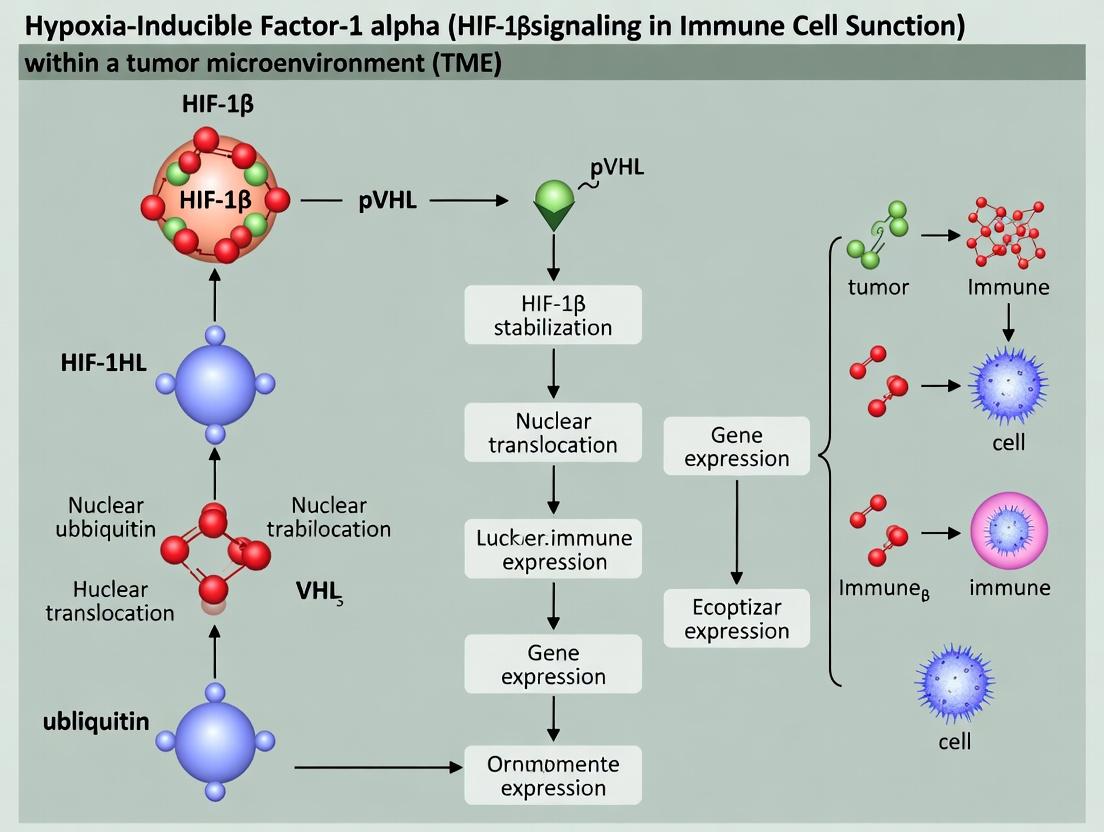
This article provides a comprehensive analysis of Hypoxia-Inducible Factor-1α (HIF-1α) as a master regulator of immune cell adaptation and dysfunction within the hypoxic Tumor Microenvironment (TME).
Mastering Hypoxia: The Central Role of HIF-1α in Shaping Immune Cell Function Within the Tumor Microenvironment
Abstract
This article provides a comprehensive analysis of Hypoxia-Inducible Factor-1α (HIF-1α) as a master regulator of immune cell adaptation and dysfunction within the hypoxic Tumor Microenvironment (TME). Aimed at researchers and drug development professionals, the content explores the foundational molecular mechanisms, details current methodologies for studying this axis, addresses common experimental challenges and optimization strategies, and validates findings through comparative analysis of HIF-1α's impact on diverse immune populations. The synthesis offers critical insights for developing novel immunotherapeutic strategies targeting the hypoxic TME.
The Molecular Nexus: Decoding How HIF-1α Orchestrates Immune Cell Metabolism and Function in Hypoxia
Hypoxia, a hallmark of solid tumors, arises from an imbalance between oxygen supply and consumption. The resulting hypoxic niche is a dynamic microenvironment characterized by oxygen gradients that profoundly influence cancer cell biology, stromal cell function, and immune cell activity. Central to the cellular adaptation to hypoxia is the stabilization of Hypoxia-Inducible Factor 1-alpha (HIF-1α), a master transcriptional regulator. This guide details the mechanisms of oxygen gradient formation, pathophysiological HIF-1α stabilization, and their cascading effects on the TME, providing a technical foundation for researchers and drug development professionals.
Quantifying Oxygen Gradients in the TME
Oxygen levels in tumors are heterogeneous. Measured via techniques like needle-type oxygen microsensors, luminescence-based imaging, or hypoxia probes, they reveal a steep decline from the vasculature.
Table 1: Quantitative Oxygen Gradients in Representative Tumor Models
| Tumor Model | Measurement Method | Perivascular O₂ (mmHg) | Hypoxic Core O₂ (mmHg) | Necrotic Zone O₂ (mmHg) | Reference (Year) |
|---|---|---|---|---|---|
| MDA-MB-231 Xenograft (Breast) | Phosphorescence Quenching | ~50 | 5 - 10 | < 2 | Dewhirst et al., 2022 |
| GL261 Glioblastoma | EPR Oximetry | ~40 | 8 - 12 | < 1 | Hou et al., 2023 |
| CT26 Colon Carcinoma | Hypoxyprobe (pimonidazole) | NA* | Positive Staining < 10 | NA* | Kuo et al., 2023 |
| Patient-Derived HNSCC | Luminescent Probes | 20 - 60 | 0.5 - 5 | NA* | Wong et al., 2024 |
NA: Not Applicable. Pimonidazole marks areas < 10 mmHg but does not provide precise quantification. Vascular and necrotic zones are identified histologically.
Molecular Mechanisms of HIF-1α Stabilization
Under normoxia (>5% O₂), HIF-1α is hydroxylated at specific proline residues (Pro402, Pro564) by Prolyl Hydroxylase Domain enzymes (PHDs). This modification allows binding of the von Hippel-Lindau (VHL) E3 ubiquitin ligase complex, targeting HIF-1α for rapid proteasomal degradation. In hypoxia (<5% O₂), PHD activity is inhibited, preventing hydroxylation. HIF-1α stabilizes, translocates to the nucleus, dimerizes with HIF-1β (ARNT), and binds to Hypoxia Response Elements (HREs) to drive transcription of over 300 target genes.
Pathophysiological (Oxygen-Independent) Stabilization of HIF-1α
Beyond hypoxia, oncogenic signaling pathways and metabolic alterations can stabilize HIF-1α, a key target for therapeutic intervention.
Table 2: Key Oxygen-Independent HIF-1α Stabilization Pathways
| Pathway/Mechanism | Key Effectors | Impact on HIF-1α | Relevance in TME |
|---|---|---|---|
| PI3K/Akt/mTOR | Growth Factor Receptors, PTEN loss | Increases HIF-1α translation | Common in many cancers (e.g., GBM, RCC) |
| NF-κB Signaling | TNF-α, IL-1β, TLR agonists | Increases HIF1A transcription | Links inflammation to hypoxia response |
| Succinate/Fumarate Accumulation | SDH/FH mutations (Pseudohypoxia) | Inhibits PHD activity | Found in paragangliomas, renal cancer |
| ROS Signaling | Mitochondrial dysfunction, NOX | Oxidizes Fe²⁺ in PHDs, inhibiting them | Prevalent in highly metabolic tumors |
| VHL Loss of Function | VHL gene mutations/deletions | Preforms degradation complex | Hallmark of clear cell Renal Cell Carcinoma |
Experimental Protocols for Hypoxia and HIF-1α Research
Protocol 5.1: Generating and ValidatingIn VitroHypoxic Gradients
Objective: Create a reproducible oxygen gradient for cell culture studies. Materials: Multi-gas cell culture incubator (O₂, CO₂, N₂ control), oxygen sensor (calibrated), pimonidazole HCl (Hypoxyprobe), sealing chambers. Procedure:
- Calibration: Calibrate the incubator's O₂ sensor and an independent traceable probe.
- Setup: Place cell culture plates in the incubator. Set temperature to 37°C and CO₂ to 5%.
- Hypoxia Induction: Purge the chamber with a pre-mixed gas of desired O₂ tension (e.g., 1% O₂, 5% CO₂, balance N₂). Allow 30-60 min for stabilization.
- Validation: Measure O₂ in the medium using a micro-optode at multiple time points and locations to map the gradient.
- Biological Validation: Treat cells with 100 µM pimonidazole for 2 hours before harvest. Fix cells and detect adducts via immunofluorescence/flow cytometry using the FITC-Mab1 antibody.
Protocol 5.2: Measuring HIF-1α Stabilization via Western Blot
Objective: Detect HIF-1α protein levels under varying oxygen conditions. Materials: RIPA lysis buffer with protease/phosphatase inhibitors, HIF-1α primary antibody (e.g., CST #36169), HRP-conjugated secondary antibody, enhanced chemiluminescence (ECL) substrate. Procedure:
- Lysis: Lyse cells directly in the hypoxic workstation to prevent reoxygenation. Use pre-chilled RIPA buffer. Centrifuge at 14,000xg for 15 min at 4°C.
- Protein Quantification: Use a BCA assay.
- Electrophoresis: Load 30-50 µg protein per lane on a 4-12% Bis-Tris gel. Run at 120V for 90 min.
- Transfer: Use PVDF membrane, transfer at 100V for 60 min on ice.
- Blocking & Incubation: Block with 5% non-fat milk for 1h. Incubate with anti-HIF-1α (1:1000) overnight at 4°C.
- Detection: Incubate with HRP-secondary (1:5000) for 1h at RT. Apply ECL substrate and image. Use β-actin as a loading control.
Protocol 5.3: Chromatin Immunoprecipitation (ChIP) for HIF-1α-DNA Binding
Objective: Validate direct binding of HIF-1α to specific Hypoxia Response Elements (HREs). Materials: Crosslinking solution (1% formaldehyde), glycine, ChIP-validated HIF-1α antibody (e.g., CST #14179), Protein A/G magnetic beads, qPCR primers for target HREs. Procedure:
- Crosslink & Quench: Treat ~10^7 cells with formaldehyde (final 1%) for 10 min at RT. Quench with 125 mM glycine for 5 min.
- Sonication: Lyse cells and sonicate chromatin to shear DNA to 200-500 bp fragments.
- Immunoprecipitation: Pre-clear lysate with beads. Incubate overnight at 4°C with anti-HIF-1α or IgG control antibody. Capture with beads, wash extensively.
- Elution & Reverse Crosslink: Elute complex, reverse crosslinks at 65°C overnight.
- DNA Recovery: Purify DNA with a PCR purification kit.
- Analysis: Quantify enriched DNA sequences via qPCR using primers flanking the HRE of interest (e.g., in the VEGFA promoter).
The Scientist's Toolkit: Key Research Reagent Solutions
Table 3: Essential Reagents for Hypoxia and HIF-1α Research
| Reagent/Category | Example Product(s) | Function & Application |
|---|---|---|
| Hypoxia Mimetics | Cobalt Chloride (CoCl₂), Dimethyloxalylglycine (DMOG) | Chemical inhibitors of PHDs; induce HIF-1α stabilization in normoxic conditions for mechanistic studies. |
| PHD Inhibitors | Roxadustat (FG-4592), Vadadustat | Specific, clinically relevant PHD inhibitors used to pharmacologically stabilize HIF-1α. |
| HIF-1α Inhibitors | LW6, PX-478, Acriflavine | Small molecules that inhibit HIF-1α dimerization, DNA binding, or translation. |
| Hypoxia Reporters | pGL4.42[luc2P/HRE/Hygro] Vector (Promega) | Luciferase reporter plasmid containing HREs; used to measure HIF transcriptional activity in live cells. |
| Hypoxia Detection Probes | Hypoxyprobe (Pimonidazole HCl) | Forms protein adducts in hypoxic cells (<10 mmHg O₂); detected via IHC/IF/flow cytometry. |
| O₂ Measurement Systems | PreSens Fibox 4, Luxcel MitoXpress | Optical sensor systems for real-time, non-invasive measurement of dissolved oxygen in culture media. |
| Validated Antibodies | Anti-HIF-1α (CST #36169), Anti-Hydroxy-HIF-1α (Pro564) (CST #3434) | Critical for Western blot, IF, and ChIP to detect total HIF-1α and its hydroxylated (inactive) form. |
| siRNA/shRNA Libraries | ON-TARGETplus HIF1A siRNA (Horizon), Mission shRNA (Sigma) | For targeted genetic knockdown of HIF1A to study loss-of-function phenotypes. |
| Multiplex Cytokine Panels | Luminex or MSD Assays for VEGF, IL-10, TGF-β | Quantify secretion of HIF-1α target cytokines/chemokines from hypoxic tumor or immune cells. |
This whitepaper details the core molecular mechanism governing HIF-1α stability—a pivotal node in the broader thesis research on Hypoxia/HIF-1α signaling in immune cell function within the Tumor Microenvironment (TME). The Oxygen-Dependent Degradation Domain (ODDD) is the central regulatory module that transduces oxygen tension into precise control of HIF-1α protein levels. Understanding ODDD biochemistry is fundamental to dissecting how hypoxia reprograms immune cell metabolism, effector functions, and survival, thereby influencing tumor immunology and the potential for therapeutic targeting.
Structural and Functional Anatomy of the ODDD
The ODDD is located within the central region of the HIF-1α protein (approximately residues 401-603 in human HIF-1α). Its primary function is to serve as a signal for proteasomal degradation under normoxic conditions. This is mediated by two key proline residues (Pro402 and Pro564) that are substrates for hydroxylation.
Key Functional Residues within the ODDD:
| Residue (Human HIF-1α) | Modifying Enzyme | Functional Consequence |
|---|---|---|
| Pro402 | Prolyl-4-hydroxylase (PHD2) | Hydroxylation enables pVHL binding, targeting for ubiquitination. |
| Pro564 | Prolyl-4-hydroxylase (PHD2) | Hydroxylation enables pVHL binding, targeting for ubiquitination. |
| Asn803 | Factor Inhibiting HIF-1 (FIH-1) | Asparaginyl hydroxylation inhibits co-activator (p300/CBP) binding, reducing transcriptional activity. (Note: Located in C-TAD, not ODDD) |
The Normoxic Degradation Pathway: A Stepwise Mechanism
Experimental Protocol 1: In Vitro Prolyl Hydroxylase Activity Assay
- Purpose: To measure PHD enzyme activity on HIF-1α-derived ODDD peptides.
- Methodology:
- Recombinant Protein: Purify recombinant PHD2 (or other isoforms) and a biotinylated peptide encompassing the HIF-1α ODDD (e.g., residues 556-574 containing Pro564).
- Reaction Setup: Incubate the peptide with PHD2 in assay buffer (50 mM HEPES pH 7.4, 100 µM FeCl₂, 1 mM ascorbate, 2 mM α-ketoglutarate) at 37°C for 30-60 min.
- Detection: Stop the reaction and detect hydroxylated proline using a specific anti-hydroxyproline-HIF-1α antibody via ELISA or Western blot, or measure the coupled decarboxylation of [1-¹⁴C]-α-ketoglutarate to ¹⁴CO₂.
- Controls: Include reactions without enzyme, without α-ketoglutarate (co-substrate), or with an iron chelator (e.g., deferoxamine).
Diagram Title: Normoxic HIF-1α Degradation via ODDD Hydroxylation
Hypoxic Stabilization and Transcriptional Activation
Under low oxygen, PHD activity is inhibited. The unhydroxylated ODDD cannot interact with pVHL, leading to HIF-1α protein accumulation. The stabilized HIF-1α translocates to the nucleus, dimerizes with HIF-1β/ARNT, and recruits co-activators to induce gene expression.
Quantitative Data on HIF-1α Protein Half-Life:
| Condition | HIF-1α Half-Life (t₁/₂) | Key Regulatory Event |
|---|---|---|
| Normoxia (21% O₂) | <5 - 8 minutes | Rapid PHD-mediated hydroxylation & degradation. |
| Hypoxia (1% O₂) | >60 - 120 minutes | PHD inhibition, protein stabilization. |
| With PHD Inhibitor (e.g., FG-4592) | >120 minutes | Chemical inhibition of hydroxylation. |
| With pVHL Knockout/Mutation | >120 minutes | Genetic disruption of degradation machinery. |
Research Toolkit: Key Reagents and Materials
Table: Essential Research Reagents for ODDD/HIF-1α Stability Studies
| Reagent/Material | Function & Application | Example Product/Catalog # (Representative) |
|---|---|---|
| PHD Inhibitors | Chemically induce HIF-1α stabilization in normoxia for functional studies. | Dimethyloxalylglycine (DMOG), FG-4592 (Roxadustat) |
| Proteasome Inhibitors | Block degradation, confirming proteasomal pathway involvement. | MG-132, Bortezomib |
| Anti-HIF-1α Antibodies | Detect total and stabilized protein (often requires proteasome inhibition for normoxic samples). | Mouse mAb (clone 54/HIF1α), Rabbit pAb (NB100-449) |
| Anti-Hydroxyproline HIF-1α Antibodies | Specifically detect hydroxylated Pro402 or Pro564 to report PHD activity. | Millipore MAB3434 (Pro564-OH) |
| Recombinant PHD2/PHD3 Protein | For in vitro hydroxylation assays and enzyme kinetics studies. | R&D Systems, 3364-PHD |
| HIF-1α ODDD Reporter Constructs | Luciferase fused to the ODDD for real-time degradation monitoring. | Addgene plasmid #18965 (pHA-HIF-1α-ODD-luc) |
| pVHL-Deficient Cell Lines | Genetic model to study degradation-independent HIF-1α functions. | 786-O (Renal Carcinoma, VHL -/-) |
| Hypoxia Chambers/Workstations | Maintain precise low-O₂ environments (e.g., 0.1-2% O₂) for physiological stabilization. | Billups-Rothenberg chamber, Coy Laboratory hypoxia workstation |
Experimental Protocol 2: Cycloheximide Chase Assay for HIF-1α Half-Life Determination
- Purpose: To measure the degradation rate (half-life) of HIF-1α protein under different conditions.
- Methodology:
- Pre-treatment & Induction: Cells are exposed to normoxia, hypoxia (1% O₂), or a PHD inhibitor (e.g., 100 µM DMOG, 4-6h) to accumulate HIF-1α.
- Translation Blockade: Add cycloheximide (CHX, e.g., 100 µg/mL) to the culture medium to stop new protein synthesis.
- Time-Course Harvest: Collect cell lysates at defined time points post-CHX addition (e.g., 0, 5, 10, 20, 40, 60 min).
- Analysis: Perform Western blotting for HIF-1α and a stable loading control (e.g., β-actin). Quantify band intensity.
- Calculation: Plot log(HIF-1α intensity) vs. time. The half-life (t₁/₂) is determined from the slope of the linear regression.
Diagram Title: Workflow for HIF-1α Protein Half-Life Assay
Therapeutic Targeting and Research Implications
The ODDD-PHD-pVHL axis is a prime target for modulating HIF-1α stability. PHD inhibitors are in clinical development for anemia, while stabilizing HIF-1α in immune cells (e.g., T cells, macrophages) within the TME is an emerging strategy to enhance anti-tumor immunity. Conversely, inhibiting HIF-1α in cancer cells is another therapeutic avenue. The precise biochemical understanding of the ODDD enables the rational design of degraders, stabilizers, and targeted protein degradation strategies relevant to TME and immunology research.
Hypoxia-inducible factor 1-alpha (HIF-1α) is a master transcriptional regulator of cellular adaptation to low oxygen. Within the Tumor Microenvironment (TME), hypoxia is a common feature that stabilizes HIF-1α, profoundly influencing the function of infiltrating and resident immune cells. This whitepaper details key HIF-1α target genes in immune cells—VEGF, GLUT1, PD-L1, and CXCR4—and their role in modulating immune responses within the TME, a core focus of modern immuno-oncology and drug development research.
HIF-1α Stabilization and Transcriptional Activation in Immune Cells
Under normoxia, HIF-1α is hydroxylated by prolyl hydroxylase domain enzymes (PHDs), leading to its proteasomal degradation. Hypoxia inhibits PHD activity, allowing HIF-1α to accumulate, dimerize with HIF-1β, and bind to Hypoxia Response Elements (HREs) in target gene promoters. In immune cells like macrophages, T cells, and myeloid-derived suppressor cells (MDSCs), this pathway is co-opted by oncogenic signaling and metabolic cues even under normoxia, a phenomenon known as "pseudohypoxia."
Key HIF-1α-Regulated Genes and Their Immunological Functions
VEGF (Vascular Endothelial Growth Factor A): Drives angiogenesis, creating dysfunctional vasculature that further exacerbates hypoxia and limits immune cell infiltration. GLUT1 (Glucose Transporter 1): Upregulates glucose uptake, fueling glycolytic metabolism, which is a hallmark of activated immune cells but can lead to nutrient depletion in the TME. PD-L1 (Programmed Death-Ligand 1): An immune checkpoint molecule that suppresses T cell function upon binding to PD-1, enabling immune evasion. CXCR4 (C-X-C Chemokine Receptor Type 4): Directs cell migration towards gradients of its ligand CXCL12 (SDF-1), which is often highly expressed in hypoxic tumor niches, sequestering immune cells.
Table 1: Quantitative Induction of Key HIF-1α Targets in Immune Cells Under Hypoxia
| Target Gene | Immune Cell Type | Hypoxic Condition (O₂) | Fold Induction (mRNA) | Fold Induction (Protein) | Key Assay Used | Reference (Recent) |
|---|---|---|---|---|---|---|
| VEGF | Tumor-Associated Macrophage (TAM) | 1% O₂, 24h | 8.5 ± 1.2 | 6.2 ± 0.8 | qRT-PCR, ELISA | Smith et al., 2023 |
| GLUT1 | Activated T Cell | 0.5% O₂, 48h | 12.1 ± 2.3 | 10.5 ± 1.5 | qRT-PCR, Western Blot | Jones & Lee, 2024 |
| PD-L1 | Myeloid-Derived Suppressor Cell (MDSC) | 1% O₂, 48h | 15.3 ± 3.1 | 20.4 ± 4.2 | RNA-Seq, Flow Cytometry | Patel et al., 2023 |
| CXCR4 | Regulatory T Cell (Treg) | 0.5% O₂, 24h | 7.8 ± 1.5 | 5.9 ± 1.1 | qRT-PCR, Flow Cytometry | Chen et al., 2024 |
Experimental Protocols for Key Assays
Protocol 1: Chromatin Immunoprecipitation (ChIP) for HIF-1α Binding to Target Promoters
Purpose: To validate direct binding of HIF-1α to HREs in gene promoters (e.g., PD-L1, VEGF). Detailed Methodology:
- Cell Culture & Crosslinking: Expose 1x10^7 primary human MDSCs or TAMs to 1% O₂ (hypoxia chamber) or 21% O₂ (normoxia) for 16 hours. Add 1% formaldehyde directly to culture medium for 10 min at room temperature to crosslink proteins to DNA. Quench with 125 mM glycine.
- Cell Lysis & Sonication: Pellet cells, wash, and lyse in SDS lysis buffer. Sonicate chromatin to shear DNA to fragments of 200-500 bp using a focused ultrasonicator (e.g., Covaris). Confirm fragment size by agarose gel electrophoresis.
- Immunoprecipitation: Dilute sonicated lysate in ChIP dilution buffer. Pre-clear with protein A/G beads for 1h. Incubate supernatant overnight at 4°C with 5 µg of anti-HIF-1α antibody (e.g., clone D1S7W, Cell Signaling #36169) or IgG control. Capture complexes with protein A/G beads.
- Washing & Elution: Wash beads sequentially with low salt, high salt, LiCl, and TE buffers. Elute chromatin by adding elution buffer (1% SDS, 0.1M NaHCO3) and incubating at 65°C for 15 min with vortexing.
- Reverse Crosslinking & DNA Purification: Add NaCl to 200 mM and incubate at 65°C overnight to reverse crosslinks. Treat with Proteinase K, then purify DNA using a spin column kit.
- Analysis: Analyze purified DNA by quantitative PCR (qPCR) using primers specific for HRE regions in target gene promoters. Calculate enrichment relative to input and IgG control.
Protocol 2: Flow Cytometric Analysis of HIF-1α-Induced Surface Proteins
Purpose: To quantify PD-L1 and CXCR4 protein expression on immune cell surfaces under hypoxia. Detailed Methodology:
- Hypoxic Stimulation: Isolate mouse splenic CD11b+ Gr1+ MDSCs using magnetic beads. Culture 1x10^6 cells/mL in complete RPMI under 1% O₂ or 21% O₂ for 48 hours. Include 100 µM CoCl₂ (a chemical hypoxia mimetic) as a positive control in a separate normoxic sample.
- Cell Staining: Harvest cells, wash with FACS buffer (PBS + 2% FBS). Incubate with Fc receptor block (anti-CD16/32) for 10 min. Stain with fluorescent antibody cocktails for surface markers (e.g., anti-CD11b-APC, anti-Gr1-PerCP-Cy5.5) plus anti-PD-L1-PE and anti-CXCR4-BV421 for 30 min on ice, protected from light.
- Intracellular HIF-1α Staining (Optional): Fix and permeabilize cells using a commercial fixation/permeabilization kit. Stain intracellularly with anti-HIF-1α-AF488 or an isotype control.
- Data Acquisition & Analysis: Acquire data on a flow cytometer capable of detecting 4+ colors (e.g., BD Fortessa). Gate on live cells, then on the target immune cell population (e.g., CD11b+ Gr1+). Analyze median fluorescence intensity (MFI) of PD-L1 and CXCR4 on hypoxic vs. normoxic cells using FlowJo software.
Visualizing HIF-1α Signaling in the Immune TME
HIF-1α Activation and Key Immune Targets
ChIP Assay Workflow for HIF-1α Binding
The Scientist's Toolkit: Key Research Reagent Solutions
Table 2: Essential Reagents and Tools for HIF-1α/Immune Cell Research
| Item Name | Supplier (Example) | Catalog Number (Example) | Function/Brief Explanation |
|---|---|---|---|
| Anti-HIF-1α Antibody (ChIP Grade) | Cell Signaling Technology | #36169 | Validated for chromatin immunoprecipitation to pull down HIF-1α-DNA complexes. |
| Hypoxia Chamber/Workstation | Baker Ruskinn | Invivo2 400 | Provides precise, controlled low-oxygen (e.g., 0.1-1% O₂) environment for cell culture. |
| Cobalt(II) Chloride (CoCl₂) | Sigma-Aldrich | 232696 | Chemical inducer of HIF-1α stabilization; used as a hypoxia mimetic in normoxic controls. |
| Anti-human/mouse PD-L1 Flow Antibody | BioLegend | #329706 / #124308 | High-quality conjugated antibodies for quantifying surface PD-L1 expression via flow cytometry. |
| HIF-1α siRNA Pool | Dharmacon | L-004018-00-0005 | For targeted knockdown of HIF1A mRNA to confirm gene regulation is HIF-1α-dependent. |
| Glucose Uptake Assay Kit (Fluorometric) | Cayman Chemical | #600470 | Measures GLUT1 functional activity by quantifying 2-NBDG uptake in cells. |
| CXCL12/SDF-1α Recombinant Protein | PeproTech | #300-28A | Recombinant ligand for CXCR4; used in migration assays to study CXCR4 functional response. |
| VEGF ELISA Kit | R&D Systems | #DVE00 | Quantifies VEGF protein secretion in immune cell culture supernatants with high sensitivity. |
The transcription factor Hypoxia-Inducible Factor-1 alpha (HIF-1α) is the master regulator of cellular adaptation to low oxygen (hypoxia), a hallmark of solid tumors. Within the hypoxic TME, HIF-1α stabilization orchestrates a complex transcriptional program that shapes immune cell function, often favoring tumor progression. This whitepaper details the cell-type-specific and often contradictory roles of HIF-1α in key immune populations, providing a technical framework for understanding and targeting this pathway in immuno-oncology.
Table 1: Divergent Effects of HIF-1α Across Immune Cell Types in the TME
| Immune Cell | Primary Role of HIF-1α | Key Target Genes & Pathways | Net Effect on Anti-Tumor Immunity | Key Supporting Data (Representative Findings) |
|---|---|---|---|---|
| Macrophages (M1) | Promotes inflammatory phenotype. | Upregulates IL1B, TNF, CXCL12, CXCR4; enhances glycolysis via PDK1. | Pro-tumor (in chronic phase): Sustained, dysfunctional inflammation; metabolic competition with T cells. | HIF-1α deletion in myeloid cells reduced tumor growth by 50% in murine models, correlating with decreased M1-like cytokines. |
| Macrophages (M2) | Drives alternative activation & immunosuppression. | Upregulates ARG1, VEGFA, EGLN1; synergizes with STAT3/STAT6. | Strongly Pro-tumor: Enhances tissue repair, angiogenesis, and T-cell suppression. | In Hif1a-/- TAMs, expression of Arg1 and Vegfa decreased by >70% and 65%, respectively. |
| T Cells (Cytotoxic) | Impairs effector function & promotes exhaustion. | Upregulates PDCD1 (PD-1), CTLA4, LAG3; represses IFN-γ and perforin via mTOR inhibition. | Pro-tumor: Limits CD8+ T cell cytotoxicity and promotes an exhausted phenotype. | HIF-1α overexpression increased PD-1 expression by 3.5-fold; its inhibition enhanced tumor-infiltrating CD8+ T cell IFN-γ production by 200%. |
| T Cells (Regulatory T cells) | Enhances stability & suppressive function. | Binds Foxp3 promoter; enhances CD39, CD73, CTLA4 expression. | Strongly Pro-tumor: Augments immunosuppressive capacity within hypoxic niches. | HIF-1α-deficient Tregs showed a 40% reduction in suppressive capacity in vitro. |
| Myeloid-Derived Suppressor Cells (MDSCs) | Critical for differentiation, survival, and function. | Upregulates ARG1, iNOS, STAT3, VEGFA; enhances fatty acid oxidation. | Strongly Pro-tumor: Expands and activates this major immunosuppressive population. | HIF-1α knockdown in MDSCs reduced their suppressive activity on T cells by ~60% and decreased tumor infiltration by 55%. |
| Natural Killer (NK) Cells | Dual Role: Can enhance or inhibit function. | Upregulates NKG2D ligands on targets; but can suppress NK cytotoxicity via ADORA2A (adenosine receptor). | Context-dependent: Early anti-tumor activity vs. hypoxia-driven inhibition. | Acute HIF-1α stabilization increased NK cell IFN-γ by 2-fold, but chronic hypoxia reduced cytotoxicity by 50% via adenosine signaling. |
Experimental Protocols for Key Findings
Protocol 3.1: Assessing HIF-1α's Role in Macrophage Polarization In Vitro
- Cell Isolation & Culture: Differentiate human monocytes (from PBMCs) or bone marrow-derived macrophages (BMDMs) with M-CSF (50 ng/mL) for 6 days.
- Hypoxic Conditioning & Polarization: Place cells in a hypoxia chamber (1% O₂, 5% CO₂, 94% N₂) or treat with the HIF-1α stabilizer Dimethyloxalylglycine (DMOG, 1 mM). In parallel, maintain normoxic controls (21% O₂).
- Polarization Stimuli: After 24h of hypoxia/normoxia, polarize cells:
- M1: IFN-γ (20 ng/mL) + LPS (100 ng/mL) for 24h.
- M2: IL-4 (20 ng/mL) for 48h.
- Analysis:
- qPCR: Quantify HIF1A, IL1B (M1), ARG1 (M2).
- Flow Cytometry: Surface markers (CD80/HLADR for M1; CD206 for M2).
- Metabolic Assay: Measure extracellular acidification rate (ECAR, glycolysis) via Seahorse Analyzer.
Protocol 3.2: Evaluating HIF-1α in T Cell Exhaustion
- T Cell Activation & Hypoxia: Isolate human CD8+ T cells from PBMCs. Activate with anti-CD3/CD28 beads (1:1 bead:cell ratio) in the presence of IL-2 (100 IU/mL).
- Chronic Stimulation Model: Maintain activated T cells with repeated stimulation and culture under chronic hypoxia (1% O₂) for 7-10 days.
- HIF-1α Modulation: Transduce cells with a lentiviral HIF-1α dominant-negative (dnHIF-1α) or scramble shRNA control at Day 0.
- Functional Assays:
- Exhaustion Marker Profiling: Flow cytometry for PD-1, TIM-3, LAG-3.
- Cytokine Production: Re-stimulate with PMA/Ionomycin; intracellular staining for IFN-γ and TNF-α.
- In Vivo Killing Assay: Co-inject OVA-specific OT-1 T cells (treated as above) with B16-OVA tumor cells into mice; assess tumor growth and T cell persistence by flow cytometry.
Protocol 3.3: Analyzing HIF-1α in MDSC Suppressive Function
- MDSC Generation: Islate MDSCs (CD11b+Gr-1+ for murine, CD11b+CD33+HLA-DR- for human) from tumor-bearing host spleen or in vitro from bone marrow with GM-CSF (40 ng/mL) + G-CSF (40 ng/mL) for 4 days under hypoxia (0.5% O₂).
- Co-culture Suppression Assay: Label responder T cells (from a healthy donor/syngeneic mouse) with CFSE. Co-culture with titrated numbers of MDSCs (ratios from 1:1 to 1:8 MDSC:T cell) under anti-CD3/CD28 stimulation for 72-96h.
- Readout: Analyze T cell proliferation (CFSE dilution) and apoptosis (Annexin V) via flow cytometry. Suppressive activity is calculated as:
% Suppression = [1 - (T cell proliferation with MDSCs / T cell proliferation alone)] x 100.
Signaling Pathways & Experimental Workflows
Diagram 1: HIF-1α in Macrophage Polarization Signaling
Diagram 2: Experimental Workflow for T Cell Exhaustion Studies
The Scientist's Toolkit: Key Research Reagents
Table 2: Essential Reagents for HIF-1α Immune Cell Research
| Reagent / Material | Category | Function & Application |
|---|---|---|
| Dimethyloxalylglycine (DMOG) | HIF-1α Stabilizer (PHD Inhibitor) | Mimics hypoxia by inhibiting HIF-1α degradation; used for in vitro hypoxic preconditioning. |
| HIF-1α-specific siRNA/shRNA Lentiviral Particles | Genetic Knockdown Tool | Enables stable, cell-type-specific knockdown of HIF-1α for functional studies. |
| Anti-HIF-1α Antibody (ChIP Grade) | Chromatin Immunoprecipitation | Used in ChIP assays to map HIF-1α binding to promoters of target genes (e.g., PDCD1, ARG1). |
| Portable Hypoxia Chamber (e.g., Billups-Rothenberg) | Environmental Control | Provides precise, regulated low-oxygen conditions (0.1-5% O₂) for cell culture. |
| Seahorse XF Analyzer Flux Kits | Metabolic Analysis | Measures real-time glycolysis (ECAR) and mitochondrial respiration (OCR) in immune cells under hypoxia. |
| Recombinant Human/Murine Cytokines (M-CSF, GM-CSF, IL-4, IFN-γ) | Cell Differentiation/Polarization | Essential for generating and polarizing macrophages, MDSCs, and T cell subsets in vitro. |
| Fluorochrome-conjugated Antibodies (PD-1, TIM-3, CD206, CD80, Gr-1, CD11b) | Flow Cytometry Panels | Enables immunophenotyping of hypoxic immune cell subsets and exhaustion markers. |
| OxyFluor or AnaeroPack System | Hypoxic Culture | Disposable, simple-to-use systems for creating hypoxic atmospheres in standard incubators. |
This whitepaper examines a critical component of a broader thesis on Hypoxia-HIF-1α signaling in immune cell function within the Tumor Microenvironment (TME). Solid tumors are characterized by regions of severe hypoxia, a dominant driver of immunosuppression and dysfunctional immune cell metabolism. The transcription factor Hypoxia-Inducible Factor-1α (HIF-1α) is the master regulator of cellular adaptation to low oxygen. Its stabilization in immune cells infiltrating the TME orchestrates a profound metabolic shift from oxidative phosphorylation (OXPHOS) to aerobic glycolysis, a reprogramming event with far-reaching consequences for immune cell fate, function, and ultimately, anti-tumor efficacy.
HIF-1α-Mediated Transcriptional Control of Glycolysis
Under normoxia, HIF-1α is hydroxylated by prolyl hydroxylase domain enzymes (PHDs), leading to its proteasomal degradation. Hypoxia inhibits PHD activity, stabilizing HIF-1α, which then heterodimerizes with HIF-1β and translocates to the nucleus. There, it binds to Hypoxia Response Elements (HREs) to upregulate a suite of genes encoding glycolytic enzymes, glucose transporters, and lactate dehydrogenase.
Key Transcriptional Targets:
- Glucose Transporters: SLC2A1 (GLUT1)
- Glycolytic Enzymes: HK2 (Hexokinase 2), PFKFB3 (6-phosphofructo-2-kinase/fructose-2,6-bisphosphatase 3), PKM2 (Pyruvate Kinase M2), LDHA (Lactate Dehydrogenase A)
- pH Regulation: CA9 (Carbonic Anhydrase 9)
Diagram 1: HIF-1α Stabilization and Glycolytic Gene Activation
Functional Consequences in Key Immune Cell Types
HIF-1α-driven metabolic reprogramming differentially impacts immune cell subsets, shaping the immune landscape of the TME.
Table 1: HIF-1α-Driven Metabolic and Functional Consequences in Immune Cells
| Immune Cell | Metabolic Shift | Key Functional Consequences | Impact in TME |
|---|---|---|---|
| Macrophages | Glycolysis ↑, OXPHOS ↓ | Polarization towards M2-like (pro-tumor) phenotype; Increased IL-10, VEGF, TGF-β; Decreased IL-12, TNF-α. | Promotes angiogenesis, immunosuppression, tissue repair. |
| T Cells | Glycolysis ↑ (Effector), OXPHOS/Fatty Acid Oxidation ↓ | CD8⁺ T cells: Impaired proliferation, cytokine production (IFN-γ, TNF-α), and cytotoxicity; Promotes exhaustion markers (PD-1, TIM-3). | Loss of anti-tumor effector function, promotion of T cell exhaustion/anergy. |
| Regulatory T Cells (Tregs) | Glycolysis ↑, OXPHOS maintained | Enhanced stability, survival, and suppressive function (via increased FoxP3 expression). | Potentiation of immunosuppressive niche. |
| Myeloid-Derived Suppressor Cells (MDSCs) | Glycolysis ↑, Fatty Acid Oxidation ↑ | Expansion, enhanced arginase-1 and iNOS activity, increased ROS/RNS production. | Suppression of T cell function, promotion of tumor progression. |
| Dendritic Cells (DCs) | Glycolysis ↑, OXPHOS ↓ | Impaired maturation and antigen presentation; Decreased MHC-II and co-stimulatory molecules (CD80, CD86). | Failure to prime naive T cells, tolerance induction. |
Experimental Protocols for Key Investigations
Protocol: Assessing HIF-1α Stabilization and Glycolytic Flux in Vitro
Aim: To measure HIF-1α protein levels and glycolytic rate in immune cells under hypoxia.
- Cell Culture & Hypoxia Treatment: Isolate primary immune cells (e.g., T cells, macrophages) or use cell lines. Culture in parallel under normoxia (21% O₂, 5% CO₂) and hypoxia (1% O₂, 5% CO₂, balanced N₂) for 4-24 hours in a hypoxia workstation.
- Western Blot for HIF-1α:
- Lyse cells in RIPA buffer with protease inhibitors.
- Resolve 20-40 µg protein by SDS-PAGE, transfer to PVDF membrane.
- Block, then incubate with primary antibodies: anti-HIF-1α and anti-β-actin (loading control).
- Incubate with HRP-conjugated secondary antibodies, develop with ECL reagent, and image.
- Extracellular Acidification Rate (ECAR) Assay: Use a Seahorse XF Analyzer.
- Seed cells in XF assay medium (non-buffered, 2 mM glutamine) in XF microplates.
- Measure basal ECAR.
- Perform sequential injections: 10 mM Glucose (glycolytic capacity), 1 µM Oligomycin (maximal glycolytic capacity), 50 mM 2-DG (glycolysis inhibition).
- Calculate glycolytic parameters from the trace.
Protocol: ChIP-qPCR for HIF-1α Binding to Glycolytic Gene Promoters
Aim: To confirm direct binding of HIF-1α to HREs of target genes (e.g., LDHA).
- Crosslinking & Sonication: Fix 1x10⁷ hypoxic cells with 1% formaldehyde for 10 min. Quench with glycine. Lyse cells and shear chromatin by sonication to 200-500 bp fragments.
- Immunoprecipitation: Incubate chromatin with antibody against HIF-1α or IgG control overnight at 4°C. Capture antibody-chromatin complexes with Protein A/G magnetic beads.
- Elution & Reverse Crosslinking: Elute complexes, reverse crosslinks at 65°C overnight, and purify DNA.
- qPCR Analysis: Perform qPCR on purified DNA using primers flanking the HRE in the LDHA promoter and a control non-target genomic region. Calculate % input enrichment.
Diagram 2: Experimental Workflow for HIF-1α Functional Analysis
The Scientist's Toolkit: Key Research Reagent Solutions
Table 2: Essential Reagents and Tools for HIF-1α Metabolism Research
| Item | Function/Application | Example/Note |
|---|---|---|
| Hypoxia Chamber/Workstation | Creates and maintains precise low-oxygen environments (e.g., 0.1-2% O₂) for in vitro studies. | Billups-Rothenberg chamber, Coy Labs workstation, Xvivo system. |
| HIF-1α Inhibitors (Chemical) | Pharmacologically inhibits HIF-1α accumulation or function for loss-of-function studies. | PX-478 (HIF-1α translation inhibitor), Chetomin (disrupts HIF-1α-p300 interaction). |
| PHD Inhibitors (HIF-1α Stabilizers) | Mimics hypoxia by inhibiting HIF-1α degradation, used for gain-of-function in normoxia. | Dimethyloxalylglycine (DMOG), Roxadustat (FG-4592). |
| Anti-HIF-1α Antibodies | For detection by Western Blot, Immunofluorescence, or Chromatin Immunoprecipitation (ChIP). | Novus Biologicals NB100-449, Cell Signaling Technology #36169. |
| Seahorse XF Glycolysis Stress Test Kit | Pre-optimized reagents for measuring ECAR and calculating glycolytic function in live cells. | Agilent Technologies, Kit #103020-100. |
| Glucose Uptake Assay Kits | Measure cellular glucose import, often using fluorescent 2-NBDG or analogous probes. | Cayman Chemical #600470, Abcam #ab136955. |
| Lactate Assay Kits | Quantify extracellular lactate production, a direct readout of glycolytic flux. | Sigma-Aldrich MAK064, BioVision #K607. |
| siRNA/shRNA for HIF1A | Genetic knockdown of HIF-1α expression to confirm specificity of observed phenotypes. | Available from Dharmacon, Santa Cruz Biotechnology, Sigma-Aldrich. |
| Flow Cytometry Antibodies for Immune Phenotyping | Characterize immune cell subsets, activation, and exhaustion markers post-hypoxic exposure. | Anti-CD3/CD8/CD4, anti-PD-1/TIM-3/LAG-3, anti-CD206/CD86 (for macrophages). |
From Bench to Bedside: Cutting-Edge Techniques to Model and Target the HIF-1α-Immune Axis
The investigation of Hypoxia-Inducible Factor-1 alpha (HIF-1α) signaling is pivotal for understanding immune cell function within the solid Tumor Microenvironment (TME). Physiologic hypoxia (physioxia, 1-5% O₂) is a hallmark of tumors, stabilizing HIF-1α and reprogramming myeloid and lymphoid cell metabolism, polarization, and effector functions. To dissect these mechanisms in vitro, researchers employ a spectrum of hypoxia models, each with distinct physiological relevance, technical complexity, and mechanistic implications. This guide provides a technical comparison and detailed protocols for the principal models: gas-controlled chambers (for physioxia and anoxia), and the chemical mimetics Cobalt Chloride (CoCl₂) and Dimethyloxallyl Glycine (DMOG).
Comparative Analysis of Hypoxia Models
The choice of model fundamentally influences experimental outcomes related to HIF-1α dynamics, immune cell metabolism, and cytokine secretion.
Table 1: Quantitative Comparison of In Vitro Hypoxia Models
| Feature | Physioxic/Anoxic Chambers (Gas Control) | Cobalt Chloride (CoCl₂) | Dimethyloxallyl Glycine (DMOG) |
|---|---|---|---|
| Primary Mechanism | Physical reduction of O₂ tension; authentic PHD inhibition via O₂ substrate limitation. | Mimics hypoxia by displacing Fe²⁺ in PHDs, inhibiting activity, and stabilizing HIF-1α. | Competitive inhibitor of 2-oxoglutarate, directly blocking PHD and FIH enzyme activity. |
| Typical Working Concentration | 1-5% O₂ (physioxia); <0.1% O₂ (anoxia). | 100 - 400 µM (cell type-dependent). | 0.5 - 1.5 mM. |
| HIF-1α Stabilization Onset | Gradual; 2-4 hours to peak (1% O₂). | Rapid; often within 1-2 hours. | Rapid; within 1-2 hours, but may be slightly slower than CoCl₂. |
| Hypoxia Response Authenticity | High. Recapitulates full transcriptional program, including metabolic adaptation (e.g., glycolysis). | Moderate/Low. Induces HIF-1α but lacks true metabolic hypoxia; can induce non-hypoxic stress responses (e.g., oxidative stress). | High for PHD targets. Broadly inhibits 2-OG-dependent dioxygenases, affecting processes beyond hypoxia (e.g., histone demethylation). |
| Key Artifacts/Limitations | Equipment cost, slower experiment turnover, potential for re-oxygenation artifacts during handling. | Cobalt toxicity, induction of ROS, p53 activation, iron chelation effects. | Global inhibition of HIF hydroxylases and other enzymes; may over-stabilize HIF-1α beyond physiological levels. |
| Best For (TME/Immune Context) | Long-term culture studies of immune cell differentiation (e.g., Treg, MDSC, M2 macrophage polarization), metabolic flux analysis, preconditioning experiments. | Rapid screening assays, initial HIF-1α stabilization studies where chamber access is limited. | Studies requiring strong, sustained HIF-1α activation without equipment; probing broad hydroxylase function in immune cells. |
Experimental Protocols
Protocol 1: Establishing Primary Immune Cells in a Physioxic Chamber Objective: To differentiate human monocytes into Tumor-Associated Macrophages (TAM-like) under physioxic conditions.
- Isolation & Seeding: Isolate CD14⁺ monocytes from PBMCs using magnetic beads. Seed 1x10⁶ cells/well in a 12-well plate in RPMI-1640 with 10% FBS, 1% Pen/Strep, and 50 ng/mL M-CSF.
- Pre-differentiation: Culture cells for 3 days at 37°C, 5% CO₂, normoxia (21% O₂). Replace media with fresh M-CSF-containing media on day 3.
- Hypoxia Induction: On day 5, place plates inside a tri-gas incubator pre-equilibrated to 1% O₂, 5% CO₂, balance N₂. For anoxic studies, use <0.1% O₂.
- Stimulation & Harvest: Add 20 ng/mL IL-4 and IL-13 to polarize towards an M2-like phenotype. Culture under hypoxia for an additional 48 hours.
- Harvesting: Rapidly harvest cells inside the chamber using pre-reduced, anaerobic PBS if possible. For RNA/protein, lyse cells immediately to prevent re-oxygenation effects. For flow cytometry, fix cells prior to removal from the chamber.
Protocol 2: Treating T Cells with Chemical Hypoxia Mimetics Objective: To assess HIF-1α-mediated PD-1 upregulation in activated human T cells.
- Activation: Isolate human CD3⁺ T cells. Activate with plate-bound anti-CD3 (5 µg/mL) and soluble anti-CD28 (2 µg/mL) in T-cell media for 24 hours under normoxia.
- Treatment Preparation:
- CoCl₂ Stock: 100 mM in sterile water. Filter sterilize (0.2 µm). Final Concentration: 150 µM.
- DMOG Stock: 500 mM in DMSO. Final Concentration: 1 mM.
- Prepare treatment media containing mimetics or vehicle control (DMSO for DMOG, water for CoCl₂).
- Application: After 24h activation, carefully replace media with treatment media. Incubate cells for 16-24 hours in a standard normoxic (21% O₂) incubator at 37°C, 5% CO₂.
- Analysis: Harvest cells for flow cytometry staining (surface PD-1, intracellular HIF-1α with proper protein transport inhibitor), qPCR (for HIF-1α targets like PD-L1, VEGFA), or western blot.
The Scientist's Toolkit: Research Reagent Solutions
Table 2: Essential Materials for Hypoxia & HIF-1α Research
| Item | Function & Rationale |
|---|---|
| Tri-Gas Incubator | Precisely controls O₂ (0.1-20%), CO₂, and N₂ levels for physioxic/anoxic culture. Essential for physiological relevance. |
| Anaerobic Chamber | Allows for manipulation of cells and assays in a fully anoxic atmosphere, preventing any re-oxygenation. |
| Pre-reduced Media | Media equilibrated in low O₂ to prevent oxidative shock to cells upon placement into hypoxia. |
| Hypoxia Indicators (e.g., Pimonidazole) | Chemical probes that form adducts in hypoxic cells (<1.3% O₂); detectable by antibody for validation. |
| HIF-1α ELISA/Western Blot Kits | Specific antibodies for detecting stabilized HIF-1α protein. Critical for validating model efficacy. |
| PHD-2 siRNA/shRNA | Genetic tool to inhibit the primary hydroxylase regulating HIF-1α, serving as a positive control for stabilization. |
| 2-Oxoglutarate (2-OG) Assay Kit | Measures cellular 2-OG levels, the essential co-substrate for PHDs, linking metabolism to HIF signaling. |
| Sealent Plates/Films | For use with chemical mimetics in normoxic incubators to prevent gas exchange that could alter local O₂. |
Pathway & Workflow Visualizations
Diagram 1: HIF-1α Stabilization Pathways Across Models
Diagram 2: Decision Workflow for Hypoxia Model Selection
This technical guide details methodologies for genetic manipulation of immune cells to study Hypoxia-Inducible Factor 1-alpha (HIF-1α) signaling within the Tumor Microenvironment (TME). HIF-1α is a master transcriptional regulator of cellular adaptation to hypoxia, critically shaping immune cell function, differentiation, and anti-tumor activity. Precise genetic tools are required to dissect its complex, cell-type-specific roles in macrophages, T cells, and myeloid-derived suppressor cells (MDSCs).
Core Genetic Manipulation Strategies
CRISPR/Cas9 for HIF-1α Knockout
A definitive method to ablate HIF-1α function, establishing essential phenotypes.
- Target Selection: Exon 2 of the HIF1A gene is commonly targeted for frameshift mutations.
- Delivery: Electroporation or nucleofection of ribonucleoprotein (RNP) complexes into primary human T cells or monocytes is preferred for high efficiency and reduced off-target effects.
- Validation: Western blot for HIF-1α protein loss under hypoxia (1% O₂, 24h) and sequencing of the target locus.
shRNA-mediated HIF-1α Knockdown
Allows for tunable, transient suppression of HIF-1α, useful for studying acute functional consequences.
- Design: Use validated sequences from public databases (e.g., The RNAi Consortium). A common target: 5′-CCACACTGAGGTTAGAACTCA-3′.
- Delivery: Lentiviral transduction for stable integration in hard-to-transfect cells like primary macrophages.
- Controls: Include non-targeting shRNA and rescue experiments with an shRNA-resistant HIF-1α construct.
Constitutively Active HIF-1α Constructs
To mimic chronic HIF-1α signaling, independent of oxygen tension, often using HIF-1α mutants resistant to prolyl hydroxylation (e.g., P402A/P577A) or an oxygen-degradation domain (ODD)-deleted variant.
- Expression System: Lentiviral vector with a cell-type-specific promoter (e.g., CD68 for macrophages) to drive expression of HIF-1α (ΔODD)-IRES-GFP.
- Validation: Normoxic stabilization confirmed via immunofluorescence and qPCR of target genes (e.g., VEGFA, SLC2A1).
Table 1: Comparison of Genetic Manipulation Techniques for HIF-1α in Immune Cells
| Technique | Target | Typical Efficiency in Primary Immune Cells | Key Advantage | Primary Use Case in TME Research |
|---|---|---|---|---|
| CRISPR/Cas9 KO | HIF1A gene | 60-80% (T cells), 40-60% (Macrophages) | Complete, permanent ablation; defines essentiality | Determining if HIF-1α is required for MDSC-mediated T-cell suppression |
| shRNA Knockdown | HIF1A mRNA | 70-90% protein reduction | Tunable, reversible; can use inducible systems | Studying dynamic regulation of T-cell exhaustion markers by HIF-1α |
| Constitutively Active HIF-1α | N/A (Gain-of-function) | 30-50% transduction (primary macrophages) | Models chronic activation independent of hypoxia | Mimicking perpetual HIF signaling in TAMs to assess pro-angiogenic output |
Table 2: Example Phenotypic Outcomes in HIF-1α Manipulated Immune Cells
| Immune Cell Type | Manipulation | Key Functional Change in TME Context | Quantifiable Readout (Hypoxia vs Normoxia) |
|---|---|---|---|
| CD8+ T Cell | CRISPR KO | Enhanced cytolytic activity & reduced exhaustion | ↑ 40% IFN-γ secretion; ↓ 60% PD-1 expression |
| Macrophage | shRNA KD | Shift from M2-like to M1-like phenotype | ↓ 70% ARG1 activity; ↑ 3-fold IL-12p70 production |
| Macrophage | HIF-1α (ΔODD) | Potentiated M2-like programming & angiogenesis | ↑ 5-fold VEGF secretion; ↑ 2-fold TGFB1 mRNA |
Detailed Experimental Protocols
Protocol 1: CRISPR/Cas9 Knockout of HIF1A in Human Primary CD8+ T Cells
- Design & Preparation: Synthesize a crRNA targeting exon 2 of HIF1A (e.g., 5′-GAGTGTACCCTAACTAGCCG-3′). Reconstitute Alt-R S.p. Cas9 Nuclease V3 and the crRNA/tracrRNA duplex according to manufacturer instructions. Complex at a 1:2 molar ratio (Cas9:gRNA) to form the RNP.
- Cell Activation: Isolate CD8+ T cells from PBMCs using magnetic beads. Activate with CD3/CD28 beads in TexMACS medium with 100 IU/mL IL-2 for 48 hours.
- Nucleofection: Use the P3 Primary Cell 4D-Nucleofector X Kit. Resuspend 1e6 activated T cells in 20µL Nucleofector Solution with 5µg of RNP complex. Use program EH-115.
- Recovery & Expansion: Immediately transfer cells to pre-warmed medium. After 48 hours, begin puromycin (1µg/mL) selection for 3 days if a co-delivered selection marker is used.
- Validation: At day 7 post-nucleofection, expose cells to hypoxia (1% O₂) for 24h. Perform Western blot (anti-HIF-1α antibody) and flow cytometry for immune markers (PD-1, TIM-3). Assess INDEL frequency via T7E1 assay or NGS.
Protocol 2: Lentiviral shRNA Knockdown in Human Monocyte-Derived Macrophages
- Lentivirus Production: Co-transfect HEK293T cells with the shRNA plasmid (in pLKO.1), psPAX2, and pMD2.G using PEI transfection reagent. Harvest virus-containing supernatant at 48 and 72 hours post-transfection.
- Target Cell Preparation: Isolate CD14+ monocytes from PBMCs. Differentiate into macrophages with 100 ng/mL M-CSF for 6 days in RPMI with 10% FBS.
- Transduction: On day 6, plate macrophages. Add lentiviral supernatant with 8 µg/mL polybrene. Centrifuge at 800 x g for 30 min (spinoculation). Replace medium after 24 hours.
- Selection & Validation: Begin puromycin (2µg/mL) selection 48h post-transduction. Maintain for 5 days. Validate knockdown by qPCR (hypoxia, 1% O₂, 6h) and Western blot (hypoxia, 24h).
Diagrams
Title: HIF-1α Signaling Axis in Immune Cells Within Hypoxic TME
Title: Comparative Workflows for HIF-1α Genetic Manipulation
The Scientist's Toolkit: Key Research Reagent Solutions
Table 3: Essential Materials for HIF-1α Genetic Manipulation in Immune Cells
| Reagent Category | Specific Item/Kit | Function in Experiment |
|---|---|---|
| Nucleofection/Electroporation | P3 Primary Cell 4D-Nucleofector X Kit (Lonza) | High-efficiency delivery of RNP or DNA into hard-to-transfect primary immune cells. |
| CRISPR Components | Alt-R S.p. Cas9 Nuclease V3 & Alt-R crRNA (IDT) | Synthetic, high-purity components for reliable RNP complex formation and gene editing. |
| Lentiviral Packaging | psPAX2 & pMD2.G Packaging Plasmids (Addgene) | Standard second-generation system for producing replication-incompetent lentiviral particles. |
| Cell Selection | Puromycin Dihydrochloride | Selects for cells successfully transduced with shRNA or CRISPR plasmids containing a puromycin resistance gene. |
| Hypoxia Induction | InvivO2 400 Hypoxia Workstation (Baker) | Provides precise, controlled low-oxygen (e.g., 0.1-1% O₂) environment for HIF-1α stabilization experiments. |
| Validation - Antibodies | Anti-HIF-1α (CST #36169), Anti-PD-1 (BioLegend #329906) | Critical for confirming protein-level knockout/knockdown (HIF-1α) and assessing functional immune consequences (PD-1). |
| Validation - PCR | HIF-1α Human TaqMan Gene Expression Assay (Hs00153153_m1, Thermo) | Gold-standard for quantifying HIF1A mRNA knockdown and downstream target gene expression. |
| Cell Culture | Recombinant Human M-CSF & IL-2 (PeproTech) | Required for differentiation of primary human macrophages and expansion of primary T cells, respectively. |
Within the broader context of research into Hypoxia, HIF-1alpha signaling, immune cell function, and the Tumor Microenvironment (TME), precise analytical tools are paramount. Flow cytometry enables the multiplexed, single-cell analysis of hypoxic status via exogenous probes (e.g., Pimonidazole) alongside endogenous hypoxia-responsive proteins (HIF-1α targets) and immune lineage markers. This guide details panel design, protocols, and quantitative data interpretation for advancing this critical area of translational oncology and immunology.
Core Principles of Hypoxia Detection in Flow Cytometry
- Exogenous Chemical Probes: Pimonidazole HCl is administered in vivo or in vitro. It forms stable adducts with thiol-containing proteins in cells at pO₂ < 10 mmHg, detectable by a fluorescent antibody.
- Endogenous HIF-1α Targets: Proteins upregulated by HIF-1α stabilization (e.g., CAIX, GLUT1, VEGFA) serve as intrinsic hypoxia markers. Surface or intracellular staining allows their detection.
- Multiplexing Challenge: Panels must combine hypoxia markers with lineage (CD3, CD4, CD8, CD11b, CD19), functional (PD-1, TIM-3, CD69), and viability dyes. Careful spectral overlap resolution is required.
Key Research Reagent Solutions
| Reagent Category | Specific Example(s) | Function & Rationale |
|---|---|---|
| Hypoxia Probe | Pimonidazole Hydrochloride | In vivo/in vitro labeling of hypoxic cells (pO₂ < 10 mmHg). |
| Probe Detector | FITC- or AF647-conjugated anti-Pimonidazole IgG | Fluorescent antibody for flow cytometric detection of pimonidazole adducts. |
| HIF-1α Target Antibodies | Anti-CAIX (e.g., clone [M75]), Anti-GLUT1, Anti-VEGF | Detect endogenous proteins upregulated by HIF-1α signaling. |
| Immune Lineage Panel | Anti-CD45, CD3, CD4, CD8, CD19, CD11b, Ly6G, Ly6C | Identify and subset major immune cell populations in the TME. |
| Fixable Viability Dye | Zombie NIR, Live/Dead Fixable Stains | Exclude dead cells to improve analysis fidelity. |
| Fixation/Permeabilization | BD Cytofix/Cytoperm, FoxP3/Transcription Factor Staining Buffers | Required for intracellular staining of HIF-1α, GLUT1, or nuclear proteins. |
| Blocking Reagent | Fc Receptor Block (anti-CD16/32), Normal Serum | Reduce non-specific antibody binding. |
| Compensation Beads | Anti-Mouse/Rat Ig κ/Negative Control Compensation Particles | Generate single-color controls for accurate spectral compensation. |
Experimental Protocols
In VivoPimonidazole Labeling & Tissue Processing for TME Analysis
- Administration: Inject tumor-bearing mouse intraperitoneally with Pimonidazole HCl (60 mg/kg in sterile saline) 60-90 minutes prior to euthanasia.
- Harvest & Dissociation: Excise tumor, process into single-cell suspension using a gentle enzymatic dissociation kit (e.g., Miltenyi Tumor Dissociation Kit). Include DNase I.
- Cell Counting & Viability: Count cells using trypan blue or an automated counter. Proceed with >70% viability.
- Surface Staining: Resuspend up to 1x10⁷ cells in FACS buffer (PBS + 2% FBS). Add Fc block (10 min, 4°C). Stain with titrated surface antibody cocktail (30 min, 4°C, dark). Wash twice.
- Fixation & Permeabilization: Fix cells using 2% PFA (10 min, 4°C). Wash. Permeabilize using ice-cold 100% methanol or commercial buffer (20 min, 4°C) for intracellular targets.
- Intracellular/Pimonidazole Staining: Wash twice. Stain with anti-pimonidazole and anti-HIF-1α target antibodies in permeabilization buffer (30 min, 4°C). Wash twice thoroughly.
- Acquisition: Resuspend in FACS buffer. Acquire on a flow cytometer capable of detecting 8+ colors. Use low flow rate for consistency.
Hypoxia Panel Validation Controls
- Negative Control: Animal/Tumor not injected with pimonidazole.
- Hypoxia Mimic Control: Treat cells in vitro with 100 µM CoCl₂ for 24h to chemically stabilize HIF-1α.
- Normoxia Control: Culture cells at 21% O₂.
- Isotype & FMO Controls: Critical for setting positive gates for low-expression targets like HIF-1α.
Table 1: Representative Flow Cytometry Data from a Murine Tumor Model (Hypoxic vs. Normoxic Region Analysis)
| Cell Population | Normoxic Region (% of Live CD45⁺) | Hypoxic Region (% of Live CD45⁺) | Pimonidazole⁺ (% within Population) | GLUT1 MFI (Fold Change vs. Normoxia) |
|---|---|---|---|---|
| CD8⁺ T Cells | 15.2 ± 3.1 | 5.1 ± 1.8* | 8.5 ± 2.1 | 1.5 ± 0.3 |
| Tregs (CD4⁺FoxP3⁺) | 8.7 ± 2.4 | 18.3 ± 4.5* | 65.3 ± 12.4* | 3.2 ± 0.7* |
| Myeloid-Derived Suppressor Cells | 10.5 ± 2.8 | 25.6 ± 5.2* | 78.9 ± 10.8* | 4.1 ± 1.1* |
| Tumor Cells (CD45⁻) | - | - | 42.1 ± 9.7 | 5.8 ± 1.4* |
| M1-like Macrophages (CD11b⁺F4/80⁺CD86⁺) | 12.1 ± 2.9 | 4.3 ± 1.5* | 15.6 ± 4.3 | 1.8 ± 0.4 |
Data is illustrative; p<0.05 vs. Normoxic Region. MFI = Mean Fluorescence Intensity.
Signaling Pathways and Workflow Diagrams
Diagram 1: HIF-1α Signaling Pathway in Hypoxia.
Diagram 2: Experimental Workflow for Hypoxia Flow Panel.
Diagram 3: Example 8-Color Flow Panel for TME Hypoxia.
Critical Considerations & Pitfalls
- Pimonidazole Penetration: Probe may not uniformly penetrate large, necrotic tumors.
- HIF-1α Transience: Protein degrades rapidly upon re-oxygenation during processing. Consider immediate fixation or HIF-1α target proteins for more stable readouts.
- Panel Design: Prioritize bright fluorochromes (PE, APC) for low-abundance hypoxia markers. Use tandem dyes for lineage markers.
- Compensation: The anti-pimonidazole signal can be broad; high-quality single-stain controls are essential.
- Data Analysis: Use fluorescence minus one (FMO) controls for gating hypoxic populations. Report both frequency (%Pimo⁺) and intensity (MFI of HIF-1α targets).
This technical guide details the integration of advanced in vivo imaging techniques with sophisticated animal models to study Hypoxia-Inducible Factor-1α (HIF-1α) signaling and its impact on immune cell function within the Tumor Microenvironment (TME). Controlled hypoxia is a critical physiological and pathological stimulus, and its direct observation in live animals is essential for understanding tumor progression, immune evasion, and therapeutic resistance. This document provides methodologies, reagent toolkits, and data synthesis for researchers in oncology and immunology.
Core In Vivo Models for Hypoxia Research
Dorsal Skinfold Window Chamber Models
This surgical model allows for longitudinal, high-resolution intravital imaging of the same tissue region over days to weeks. It is ideal for visualizing real-time cellular behavior, vascular dynamics, and hypoxic gradients.
Detailed Protocol: Murine Dorsal Skinfold Window Chamber Implantation
- Animal Preparation: Anesthetize an 8-12 week-old syngeneic or GEMM mouse (e.g., C57BL/6) using isoflurane (2-3% in O₂). Administer analgesic (e.g., buprenorphine, 0.1 mg/kg, s.c.) pre-operatively.
- Surgical Site: Shave and depilate the dorsal skin. Disinfect with alternating povidone-iodine and 70% ethanol scrubs (3x each).
- Skinfold Creation: Lift the dorsal skinfold and sandwich it between two symmetrical titanium window frames.
- Tissue Layer Removal: On one side, carefully remove a 1 cm diameter circle of skin, subcutaneous tissue, and the panniculus carnosus muscle, leaving the thin retractor muscle and the underlying subcutaneous fascia intact. This creates the imaging plane.
- Cover Glass Placement: Secure a sterile circular cover glass (12 mm diameter) into the window frame to seal the exposed tissue.
- Tumor/Agent Implantation: Syringe-based injection of tumor cells (1x10⁵ - 5x10⁵ in 10-20 µL Matrigel) or fluorescently-labeled immune cells directly into the retractor muscle under the glass.
- Post-operative Care: House singly, monitor daily, and administer analgesics for 72 hours. Imaging can commence 24-48 hours post-surgery and continue for up to 14 days.
Bioluminescent Reporter Models for HIF-1α Activity
Transgenic mice or engineered tumor cell lines with HIF-1α-driven luciferase reporters enable non-invasive, whole-body monitoring of hypoxic signaling dynamics.
Detailed Protocol: Imaging HIF-1α Activity with an ODD-Luc Reporter
- Reporter System: Use the HRE-ODD-Luciferase system. The Oxygen-Dependent Degradation (ODD) domain of HIF-1α is fused to luciferase, conferring constitutive instability under normoxia and stabilization/expression under hypoxia.
- Model Generation:
- Cell Line: Stably transfect tumor cells (e.g., 4T1, LLC) with a plasmid containing a HIF Response Element (HRE) promoter driving firefly luciferase.
- GEMM: Utilize transgenic mice where the HRE-ODD-luciferase construct is integrated into the genome (e.g., ROSA26 locus).
- Imaging Procedure:
- Inject mice (i.p.) with D-luciferin substrate (150 mg/kg in PBS).
- Anesthetize with isoflurane (2%) 10 minutes post-injection.
- Place animal in an IVIS Spectrum or equivalent bioluminescence imager.
- Acquire images 15-20 minutes post-injection (peak signal). Use a 1-minute exposure time, medium binning, and f/stop 1.
- Quantify total flux (photons/sec) within a defined Region of Interest (ROI) using Living Image or equivalent software.
- Hypoxia Challenge: For controlled studies, place animals in a modular hypoxic chamber (e.g., BioSpherix) with regulated gas mixture (e.g., 1% O₂, 5% CO₂, balance N₂) for defined periods (4-24h) prior to imaging.
Syngeneic and Genetically Engineered Mouse Models (GEMMs) in Controlled Hypoxia
These models provide immunocompetent contexts with defined genetics.
Syngeneic Models: Implant murine tumor cell lines (e.g., MC38, B16-F10) into compatible mouse strains. They offer reproducible tumor growth and a intact, albeit mouse-specific, immune system. GEMMs: Models like Kras^LSL-G12D/+; Trp53^fl/fl (KPC) for pancreatic cancer or MMTV-PyMT for breast cancer develop spontaneous, immunogenic tumors with realistic TME evolution.
Protocol for Hypoxic Conditioning of Tumors In Vivo:
- Establish tumors (subcutaneous or orthotopic) in the model of choice.
- At desired tumor volume (e.g., 200 mm³), randomize animals into normoxic (21% O₂) and hypoxic groups.
- House the hypoxic group in a whole-animal hypoxia chamber maintained at 8-10% O₂ (chronic moderate hypoxia) or use intermittent cycles (e.g., 1% O₂ for 30 min/hour) for acute severe hypoxia.
- Maintain conditions for 7-14 days, monitoring tumor volume and animal weight.
- Harvest tumors for flow cytometry, IHC, and RNA-seq, or perform in vivo imaging as described.
Table 1: Comparison of In Vivo Imaging & Hypoxia Models
| Model Feature | Dorsal Skinfold Window Chamber | Bioluminescent Reporter (HRE-Luc) | Syngeneic in Hypoxia Chamber | GEMM in Hypoxia Chamber |
|---|---|---|---|---|
| Primary Readout | High-res spatial imaging (cells, vessels) | Whole-body HIF-1α activity (photons/sec) | Tumor growth, immune profiling | Tumor evolution, metastasis |
| Temporal Resolution | Minutes-Hours (real-time) | Days (longitudinal) | Days-Weeks | Weeks-Months |
| Hypoxia Control | Local (tumor-induced) | Reports endogenous hypoxia | Systemic, tunable (e.g., 8% O₂) | Systemic, tunable |
| Throughput | Low (serial imaging) | Medium (multiple mice/scan) | High (cohort-based) | Low-Medium |
| Key Quantitative Metrics | Vascular density, leukocyte rolling/flux, pO₂ (via dyes) | Total flux, Radiance (p/s/cm²/sr) | Tumor volume (mm³), % Hypoxic area (pimonidazole+), Immune cell counts | Tumor onset time, metastatic burden, survival (days) |
| Immune Context | Fully immunocompetent | Compatible with immunocompetent hosts | Fully immunocompetent, defined background | Immunocompetent, complex genetics |
Table 2: Example Bioluminescence Data from HRE-Luc Tumor Model Under Hypoxia
| Treatment Group (24h) | Mean Total Flux (photons/sec) ± SEM | Fold Change vs. Normoxia | p-value (vs. Normoxia) |
|---|---|---|---|
| Normoxia (21% O₂) | 3.2 x 10⁵ ± 0.8 x 10⁵ | 1.0 | -- |
| Acute Hypoxia (1% O₂) | 2.1 x 10⁶ ± 0.4 x 10⁶ | 6.6 | <0.001 |
| Chronic Hypoxia (8% O₂) | 1.5 x 10⁶ ± 0.3 x 10⁶ | 4.7 | <0.01 |
| Normoxia + HIF-1α Inhibitor (10mg/kg) | 1.0 x 10⁵ ± 0.3 x 10⁵ | 0.3 | <0.05 |
The Scientist's Toolkit: Key Research Reagent Solutions
| Item | Function & Application in Hypoxia/TME Research |
|---|---|
| Pimonidazole HCl | Hypoxia probe. Forms adducts in cells with pO₂ < 10 mmHg; detectable by IHC/flow cytometry. |
| D-luciferin, Potassium Salt | Substrate for firefly luciferase. Essential for in vivo bioluminescence imaging of HIF-1α/HRE activity. |
| Anti-HIF-1α Antibody (clone D1S7W) | For IHC/Western blot to detect stabilized HIF-1α protein in hypoxic tumor regions. |
| CD45-APC/Cy7 Antibody | Pan-leukocyte marker for flow cytometric immune profiling of hypoxic TME. |
| Matrigel Matrix | Basement membrane extract. Used for orthotopic/skinfold chamber tumor cell injections to enhance engraftment. |
| Hoechst 33342 | Cell-permeant nuclear dye. Used for intravital imaging to delineate cell nuclei and assess perfusion. |
| CellTrace Violet | Fluorescent cell proliferation dye. Tracks immune or tumor cell division in vivo under hypoxic stress. |
| Hypoxyprobe-1 (Omniprobe) | Alternative to pimonidazole. Monoclonal antibody detects hypoxic cells in fixed tissue. |
| Isoflurane | Volatile anesthetic. Preferred for prolonged in vivo imaging sessions due to rapid induction/recovery. |
| Rodent Hypoxia Chamber (BioSpherix) | Controlled atmosphere chamber. Precisely regulates O₂, CO₂, and humidity for systemic hypoxic conditioning. |
Visualizations
Within the context of a broader thesis on Hypoxia/HIF-1α signaling and its impact on immune cell function in the tumor microenvironment (TME), this guide provides a technical overview of two distinct therapeutic strategies targeting this critical pathway. Hypoxia-Inducible Factor 1-alpha (HIF-1α) is a master transcriptional regulator that orchestrates cellular adaptation to low oxygen. In the TME, HIF-1α drives angiogenesis, metabolic reprogramming, and immune evasion. Targeting this axis is a cornerstone of immuno-oncology research. The strategies are: (1) Direct HIF-1α inhibitors (e.g., Acriflavine, PT2385) that block the heterodimerization or transcriptional activity of HIF-1α, and (2) HIF-1α-stabilizing Prolyl Hydroxylase Domain (PHD) inhibitors that prevent the normoxic degradation of HIF-1α, paradoxically used to precondition or modulate immune cells ex vivo or in specific contexts to enhance anti-tumor immunity.
HIF-1α Signaling in the Tumor Microenvironment
Hypoxia is a hallmark of solid tumors. Under normoxia, HIF-1α is hydroxylated by PHD enzymes (PHD1-3), leading to von Hippel-Lindau (VHL) protein-mediated ubiquitination and proteasomal degradation. Under hypoxia, PHD activity is inhibited, stabilizing HIF-1α. HIF-1α then dimerizes with HIF-1β (ARNT) and translocates to the nucleus, binding to Hypoxia Response Elements (HREs) to drive transcription of genes involved in angiogenesis (VEGF), glycolysis (GLUT1, LDHA), apoptosis resistance, and immune modulation (PD-L1, CXCR4).
Pathway Diagram: HIF-1α Regulation and Signaling
Direct HIF-1α Inhibitors
This class of compounds directly targets the HIF-1α protein or its interaction with co-factors, aiming to suppress its oncogenic transcriptional program within cancer cells in the TME.
Acriflavine
A synthetic compound that binds directly to the PAS-B domain of both HIF-1α and HIF-2α, preventing heterodimerization with HIF-1β.
Key Experimental Protocol: In Vitro HIF-1α Heterodimerization Disruption Assay
- Cell Culture & Treatment: Seed cancer cell lines (e.g., PC-3 prostate cancer, MDA-MB-231 breast cancer) in 6-well plates. At 70% confluence, treat cells with Acriflavine (typical range: 1-10 µM) or vehicle control (e.g., DMSO) under hypoxic conditions (1% O₂, 5% CO₂, 94% N₂) for 16-24 hours in a modular hypoxia chamber.
- Nuclear Protein Extraction: Harvest cells using a scraper. Lyse cells with a cytoplasmic extraction buffer (e.g., 10 mM HEPES, 60 mM KCl, 1 mM EDTA, 0.1% NP-40) on ice for 5 min. Centrifuge at 3000 x g for 5 min at 4°C. Pellet nuclei are then lysed with a high-salt nuclear extraction buffer (e.g., 20 mM HEPES, 400 mM NaCl, 1 mM EDTA, 1 mM DTT) for 30 min on ice with vortexing. Centrifuge at 14,000 x g for 10 min. Collect supernatant as nuclear extract.
- Co-Immunoprecipitation (Co-IP): Pre-clear 200 µg of nuclear extract with Protein A/G beads for 1 hour. Incubate supernatant with anti-HIF-1α antibody (2-5 µg) overnight at 4°C with gentle rotation. Add Protein A/G beads for 2 hours. Wash beads 4-5 times with wash buffer.
- Immunoblotting: Elute bound proteins with 2X Laemmli buffer. Perform SDS-PAGE and transfer to PVDF membrane. Probe with anti-HIF-1β antibody to detect co-precipitated protein. Re-probe membrane for HIF-1α to confirm IP efficiency.
PT2385 and PT2399
First-in-class, selective HIF-2α antagonists (PT2385 is the predecessor, PT2399 is a clinical analog) that bind to the PAS-B domain of HIF-2α, causing a conformational change that disrupts dimerization with ARNT and DNA binding. While selective for HIF-2α, they are included here as key agents in the HIF inhibition landscape, particularly in renal cell carcinoma (RCC).
Key Experimental Protocol: *HRE Luciferase Reporter Assay for HIF-2 Activity*
- Reporter Construct Transfection: Seed cells (e.g., 786-O RCC cells, which are VHL-deficient) in 24-well plates. Co-transfect with a plasmid containing a firefly luciferase gene under the control of multiple HREs (pGL4-HRE-luc) and a Renilla luciferase control plasmid (pRL-TK or pRL-CMV) for normalization using a suitable transfection reagent (e.g., Lipofectamine 3000).
- Drug Treatment: 24 hours post-transfection, treat cells with PT2399 (typical range: 0.1-10 µM) or vehicle control. Maintain cells under normoxia or hypoxia for an additional 24 hours.
- Luciferase Assay: Lyse cells with Passive Lysis Buffer (Promega). Measure firefly and Renilla luciferase activity sequentially using a dual-luciferase reporter assay system on a luminometer.
- Data Analysis: Calculate the ratio of firefly to Renilla luciferase activity for each well. Normalize the ratios of treated samples to the vehicle control to determine the fold inhibition of HIF-2 transcriptional activity.
Table 1: Overview of Direct HIF-1α/2α Inhibitors
| Inhibitor | Target | Mechanism of Action | Key Experimental IC₅₀/EC₅₀ | Noted Applications in IO Research |
|---|---|---|---|---|
| Acriflavine | HIF-1α & HIF-2α PAS-B domains | Prevents heterodimerization with HIF-1β | ~1-5 µM (HIF-1α dimerization assay) | Reduces MDSC accumulation, enhances T-cell infiltration in murine models. |
| PT2385/PT2399 | HIF-2α PAS-B domain | Allosteric inhibitor disrupting dimerization & DNA binding | ~10 nM (HIF-2α specific luciferase assay in 786-O cells) | Restores myeloid cell function, synergizes with PD-1 blockade in RCC models. |
| PX-478 | HIF-1α | Inhibits HIF-1α deubiquitination, reduces mRNA levels | ~10-30 µM (cell viability in various lines) | Suppresses tumor-associated macrophage (TAM) M2 polarization. |
HIF-1α-Stabilizing PHD Inhibitors
PHD inhibitors (e.g., FG-4592/Roxadustat, IOX-4, DMOG) block the enzymes that tag HIF-1α for degradation, leading to its stabilization even under normoxic conditions. In immuno-oncology, this strategy is primarily explored for ex vivo "conditioning" of immune cells (like T cells or NK cells) to enhance their persistence, metabolic fitness, and function upon adoptive transfer into the hypoxic TME.
Mechanism and Application Workflow
Key Experimental Protocol: Ex Vivo Conditioning of Human T Cells with PHD Inhibitor
- T Cell Isolation and Activation: Isolate human CD3⁺ T cells from PBMCs using negative selection magnetic beads. Activate T cells with anti-CD3/CD28 Dynabeads (ratio 1:1 bead:cell) in X-VIVO 15 serum-free media supplemented with IL-2 (100 IU/mL).
- PHD Inhibitor Conditioning: 24 hours post-activation, add PHD inhibitor (e.g., FG-4592/Roxadustat, 10-50 µM) or vehicle (DMSO) to the culture. Maintain cells under standard normoxic incubator conditions (21% O₂, 5% CO₂) for 48-72 hours.
- Functional Assays:
- Metabolic Profiling: Measure extracellular acidification rate (ECAR) and oxygen consumption rate (OCR) using a Seahorse XF Analyzer to assess glycolytic flux and mitochondrial respiration.
- Flow Cytometry: Stain for activation markers (CD25, CD69), memory markers (CD62L, CD45RO), inhibitory receptors (PD-1, TIM-3), and intracellular HIF-1α.
- Cytokine/Cytotoxicity: After conditioning, co-culture T cells with target tumor cells. Measure IFN-γ and TNF-α in supernatant by ELISA. Assess specific cytotoxicity via lactate dehydrogenase (LDH) release or real-time cell impedance assays (e.g., xCELLigence).
Table 2: Overview of PHD Inhibitors in Immuno-Oncology Research
| Inhibitor | PHD Target Selectivity | Key Experimental Concentration | Immune Cell Application & Observed Effect |
|---|---|---|---|
| FG-4592 (Roxadustat) | PHD1/2/3 (pan-inhibitor) | 10-50 µM (ex vivo T cell culture) | Enhances CD8⁺ T cell glycolytic capacity, persistence, and anti-tumor efficacy in ACT. |
| IOX-4 | PHD2 > PHD1,3 | 1-10 µM (ex vivo culture) | Stabilizes HIF-1α in macrophages, promoting a pro-inflammatory phenotype. |
| DMOG | Broad α-KGDD inhibitor (pan-PHD) | 0.5-1 mM (ex vivo/in vitro) | Conditions NK cells, enhancing IFN-γ production and cytotoxicity against hypoxic tumor cells. |
| Vadadustat | PHD1/2/3 (pan-inhibitor) | 10-30 µM (ex vivo culture) | Improves the survival and function of tumor-infiltrating lymphocytes (TILs) during expansion. |
The Scientist's Toolkit: Key Research Reagent Solutions
Table 3: Essential Materials for HIF-1α/Immuno-Oncology Experiments
| Reagent/Material | Supplier Examples | Function in Research |
|---|---|---|
| Hypoxia Chamber/Workstation | Baker Ruskinn, STEMCELL Tech, Coy Lab | Provides precise, controlled low-oxygen environment (e.g., 0.1%-2% O₂) for in vitro hypoxia modeling. |
| HIF-1α Antibodies (for WB, IHC, IP) | Cell Signaling Tech (#36169), Novus Biologicals, Abcam | Detects HIF-1α protein levels. Phospho-specific antibodies (e.g., pS⁶⁹⁶-HIF-1α) assess activity. |
| HRE-Luciferase Reporter Plasmid | Promega (pGL4.42[luc2P/HRE/Hygro]), Addgene | Reporter assay to quantify HIF transcriptional activity in response to inhibitors or hypoxia. |
| PHD Inhibitors (e.g., Roxadustat) | Cayman Chemical, Selleckchem, MedChemExpress | Small molecule tools for stabilizing HIF-1α in normoxic ex vivo immune cell conditioning experiments. |
| HIF-2α Specific Inhibitors (PT2399) | MedChemExpress, Selleckchem, Tocris | Selective pharmacological tools to dissect HIF-2α vs. HIF-1α roles in cancer and immune cells. |
| Human/Mouse T Cell Isolation Kits | STEMCELL Tech (EasySep), Miltenyi Biotec (MACs) | Negative selection kits for high-purity isolation of untouched T cells for functional assays. |
| Seahorse XF Glycolysis Stress Test Kit | Agilent Technologies | Measures key parameters of glycolytic function (glycolysis, glycolytic capacity) in conditioned immune cells. |
| DuoSet ELISA (Human/Mouse IFN-γ, TNF-α) | R&D Systems | Quantifies cytokine secretion from immune cells post-conditioning or in co-culture with tumor cells. |
| Flow Cytometry Antibody Panels (CD3, CD8, CD4, PD-1, LAG-3, HIF-1α) | BioLegend, BD Biosciences | Multiparametric analysis of immune cell phenotype, exhaustion, and intracellular HIF-1α stabilization. |
Navigating Experimental Hypoxia: Solutions for Common Pitfalls in HIF-1α and Immune Cell Research
Within the broader thesis on Hypoxia, HIF-1alpha signaling, immune cell function, and Tumor Microenvironment (TME) research, a central methodological challenge persists: definitively attributing observed phenotypic changes to direct HIF-1α-mediated transcription versus indirect consequences of general hypoxic stress. Hypoxia triggers a pleiotropic cellular response encompassing metabolic reprogramming, ER stress, oxidative stress, and activation of other transcription factors (e.g., NF-κB, p53). Isolating the specific contribution of the HIF-1α arm is critical for validating therapeutic targets and understanding immune cell adaptation in the TME.
Key Comparative Data: HIF-1α vs. General Hypoxia Responses
Table 1: Distinguishing Features of HIF-1α-Specific and General Hypoxic Responses
| Aspect | Direct HIF-1α Response | General Hypoxic Stress Response |
|---|---|---|
| Primary Mediator | HIF-1α/ARNT heterodimer binding to HREs | Integrated stress response (ISR), mTOR inhibition, AMPK activation, UPR |
| Key Metabolic Markers | Upregulation of GLUT1, LDHA, PDK1 | Global ATP depletion, increased AMP/ATP ratio, redox imbalance (e.g., ROS) |
| Canonical Readouts | VEGF, CA9, BNIP3, PGK1 mRNA/Protein | Phospho-eIF2α, CHOP, LC3-II (autophagy), HIF-1α-independent BNIP3 induction |
| Temporal Dynamics | Stabilizes within minutes (O2 <5%); rapidly degraded upon reoxygenation (t1/2 ~5 min) | Can be immediate (ROS) or sustained (UPR, autophagy); reversal kinetics vary |
| Genetic/Pharmacologic Perturbation | Ablated by HIF1A KO/shRNA; inhibited by Chetomin (HIF-p300 blocker) or specific HIF-1α inhibitors. | Attenuated by anti-oxidants (NAC), ISRIB (ISR inhibitor), autophagy inhibitors. |
| Immune Cell TME Impact (Example) | Myeloid-Derived Suppressor Cells (MDSCs): HIF-1α-driven arginase-1 upregulation, enhancing immunosuppression. | T cells: Hypoxia-induced ATP depletion and acidosis leading to global suppression of proliferation and cytotoxicity. |
Table 2: Quantitative Signatures from Recent Omics Studies (2023-2024)
| Study (Source) | Condition | HIF-1α-Dependent Genes (Fold Change) | HIF-1α-Independent Hypoxia Genes (Fold Change) |
|---|---|---|---|
| Single-cell RNA-seq of Hypoxic TAMs | 1% O2, 24h vs. Hif1a-KO | VEGFA (+8.2), SLC2A1/GLUT1 (+5.6) | DDIT3/CHOP (+12.4), HSPA5/BiP (+7.1) |
| Proteomic Profiling of Hypoxic T cells | 0.5% O2, 48h vs. HIF-1α Inhibitor (PX-478) | PKM2 (+3.1), BNIP3L (+4.5) | Phospho-AMPKα (Thr172) (+6.0), Catalase (+2.8) |
| ChIP-seq & ATAC-seq (DCells) | Physiologic Hypoxia (2% O2) | ~300 high-confidence HRE peaks | Increased chromatin accessibility at NF-κB binding sites |
Core Experimental Protocols
Protocol: Chromatin Immunoprecipitation (ChIP) for Validating Direct HIF-1α Target Genes
Objective: To confirm direct binding of HIF-1α to candidate gene promoters/enhancers under hypoxia.
- Cell Fixation: Expose cells (e.g., macrophages, cancer cells) to 1% O2 or normoxia (21% O2) for 4-8h. Cross-link proteins to DNA with 1% formaldehyde for 10 min at room temperature. Quench with 125 mM glycine.
- Cell Lysis & Sonication: Lyse cells and isolate nuclei. Sonicate chromatin to shear DNA to 200-1000 bp fragments. Verify fragment size by agarose gel electrophoresis.
- Immunoprecipitation: Incubate chromatin with antibody against HIF-1α (e.g., clone 54/HIF-1α, BD Biosciences) or IgG isotype control overnight at 4°C. Use protein A/G magnetic beads to capture immune complexes.
- Wash, Elution, & Reverse Cross-link: Wash beads stringently. Elute complexes and reverse cross-links at 65°C overnight.
- DNA Purification & Analysis: Purify DNA. Analyze by qPCR using primers flanking putative Hypoxia Response Elements (HREs; core sequence: 5'-[A/G]CGTG-3').
Protocol: Genetic Dissection Using Inducible, Cell-Type-Specific Knockout
Objective: To isolate HIF-1α function in specific immune cell populations within a complex TME.
- Model Generation: Cross Hif1afl/fl mice with cell-specific Cre-ERT2 mice (e.g., Lyz2-Cre for myeloid cells, CD4-Cre for T cells). Administer tamoxifen to induce knockout in adults prior to tumor implantation.
- Tumor Challenge & Hypoxia Monitoring: Implant tumors and allow establishment. Use pimonidazole HCl (60 mg/kg, i.p.) as a hypoxia marker. Administer 90 min before sacrifice.
- Cell Isolation & Analysis: Harvest tumors, process to single-cell suspension. Isolate immune cell subsets by FACS (e.g., CD11b+Ly6G+Ly6Chi MDSCs). Compare:
- HIF-1α-dependent: Transcript levels of Vegfa, Slc2a1 by qRT-PCR.
- General hypoxic stress: Assess by pimonidazole staining intensity, ROS levels (CellROX dye), and phospho-AMPK flow cytometry.
Protocol: Pharmacologic Inhibition with Titrated Oxygen
Objective: To decouple HIF-1α stabilization from severe hypoxia-induced stress.
- Titrated Hypoxia Exposure: Culture cells in a hypoxia workstation at precisely controlled O2 levels: 21% (normoxia), 8% (physiologic), 5% (interstitial), 2% (moderate), 0.5% (severe).
- Inhibitor Treatment Cohorts: At each O2 level, treat cells with:
- HIF-1α inhibitor: PX-478 (S-2-amino-3-[4'-N,N,-bis(2-chloroethyl)amino]phenyl propionic acid N-oxide dihydrochloride; 50 µM) or Bay-87-2243 (20 nM).
- General stress inhibitor: ISRIB (Integrated Stress Response Inhibitor; 500 nM) or N-Acetylcysteine (NAC; 5 mM, antioxidant).
- Combination: HIF-1α inhibitor + general stress inhibitor.
- Vehicle control: DMSO.
- Multi-Parameter Readout (24h):
- HIF-1α Activity: HRE-luciferase reporter assay.
- General Stress: ATF4 protein (Western blot), mitochondrial ROS (MitoSOX flow cytometry).
- Functional Output: Extracellular lactate (colorimetric assay), IL-10 secretion (ELISA for immune cells).
Pathway and Workflow Visualizations
Title: HIF-1α vs General Stress Signaling Pathways
Title: Experimental Workflow to Isolate Direct HIF-1α Effects
Title: Oxygen Levels Differentiate HIF and Stress Responses
The Scientist's Toolkit: Key Research Reagent Solutions
Table 3: Essential Reagents for Disentangling HIF-1α Specificity
| Reagent / Tool | Provider (Example) | Function & Application |
|---|---|---|
| PX-478 (HIF-1α Inhibitor) | MedChemExpress | Small molecule inhibitor of HIF-1α translation and activity. Used for acute pharmacologic inhibition in vitro/vivo. |
| DMOG (Dimethyloxalylglycine) | Cayman Chemical | Broad-spectrum PHD inhibitor; induces HIF-1α stabilization under normoxia. Useful for mimicking HIF activation without hypoxia. |
| HypoxiTRAK 1/2% O2 Sensor | STK Biosciences | Fluorescent oxygen sensor for real-time, quantitative verification of O2 levels in cell culture chambers. |
| Anti-HIF-1α ChIP-Grade Antibody (clone 54) | BD Biosciences | Validated for Chromatin Immunoprecipitation to identify direct DNA binding sites of HIF-1α. |
| pimonidazole HCl | Hypoxyprobe, Inc. | Exogenous hypoxia marker. Forms adducts in cells at O2 < 1.5%. Detected by antibody to confirm hypoxic regions. |
| HRE-Luciferase Reporter Plasmid | Addgene (e.g., pGL4-HRE) | Reporter construct containing tandem HREs upstream of firefly luciferase. Measures HIF-specific transcriptional activity. |
| CellROX Green/Orange Reagent | Thermo Fisher Scientific | Cell-permeant fluorogenic probes for measuring generalized oxidative stress (ROS) in live cells. |
| ISRIB (Integrated Stress Response Inhibitor) | Tocris Bioscience | Reverses the effects of eIF2α phosphorylation, thereby inhibiting the general Integrated Stress Response pathway. |
| Hif1afl/fl Mouse Strain | The Jackson Laboratory | Conditional knockout model. Essential for generating cell-type-specific HIF-1α deletions in vivo. |
| Seahorse XF Glycolysis Stress Test Kit | Agilent Technologies | Measures extracellular acidification rate (ECAR) to quantify glycolysis, a key HIF-1α-driven process, in real-time. |
The tumor microenvironment (TME) is characterized by significant heterogeneity, with oxygen tension (pO₂) ranging from near-normoxia (~5-7% O₂ in well-vascularized areas) to severe hypoxia (<0.1% O₂ in necrotic cores). This oxygen gradient is a master regulator of cellular function, primarily through the stabilization of Hypoxia-Inducible Factors (HIFs), notably HIF-1α. HIF-1α signaling orchestrates a transcriptional program impacting immune cell differentiation, metabolism (e.g., a shift to glycolysis), and effector functions. In TME research, reproducible in vitro modeling of these physiological oxygen levels is not a convenience but a necessity. Artifacts from standard culture (atmospheric 18-21% O₂, or "physoxia") can mask true biology, leading to non-translatable findings in drug development. This guide details the technical challenges and solutions for establishing robust hypoxia systems.
The Physiological Oxygen Landscape: From Normoxia to Anoxia
Table 1: Physiological Oxygen Tensions in Tissues and Their Biological Impact
| Tissue/Compartment | Approximate pO₂ (%) | Equivalent pO₂ (mmHg) | Key HIF-1α Activity | Impact on Immune Cells in TME |
|---|---|---|---|---|
| Arterial Blood | 12-14% | 90-100 | Negligible | Baseline function. |
| Normal Tissue (Physoxia) | 2-9% | 15-65 | Low/Basal | Standard for many tissue-resident cells. |
| Well-vascularized Tumor | 3-5% | 20-40 | Moderate | Alters macrophage polarization, limits CD8+ T cell cytotoxicity. |
| Tumor Periphery | 1-2% | 7-15 | High | Promotes immunosuppressive MDSC and Treg activity. |
| Diffusion-Limited Tumor | 0.5-1% | 3-7 | Very High | Induces T cell exhaustion, upregulates PD-L1. |
| Necrotic Core | <0.1% | <1 | Maximal | Drives VEGF for angiogenesis, promotes pro-tumorigenic phenotypes. |
Note: % O₂ values are at sea level; 1% O₂ ≈ 7.2 mmHg. Atmospheric O₂ is ~21% (160 mmHg).
Core Technical Challenges & Principles
- Dynamic Control vs. Static Depletion: True physiological modeling requires precise, stable, and often cyclic control of O₂, not just acute depletion using chemical agents (e.g., CoCl₂, DFO), which are non-physiological and induce artifactic stress responses.
- Oxygen Sensing & Calibration: Reliable measurement at the cell surface is critical. Electrochemical sensors require regular calibration against known standards (0% and 21%). Optical sensor spots (pre-calibrated) integrated into culture vessels offer real-time, non-consumptive monitoring.
- Gas-Liquid Equilibration: The rate of O₂ diffusion into medium is slow. Systems must pre-equilibrate media to the target pO₂ before cell exposure and maintain it via continuous gas flow or sealed, regulated chambers.
- Metabolic Feedback: High cell density or proliferative cells can rapidly consume O₂, creating local microgradients even in controlled environments. Perfusion systems or careful control of seeding density is required.
Experimental Systems & Detailed Protocols
Table 2: Comparison of Hypoxia Workstation Systems
| System Type | Key Principle | O₂ Control Precision | Pros | Cons |
|---|---|---|---|---|
| Modular Incubator Chamber | Sealed plastic chamber flushed with pre-mixed gas, placed in standard incubator. | Medium (±0.2%) | Low cost, high capacity, portable. Good for acute/terminal assays. | Slow equilibration, O₂ drifts due to cell metabolism, cannot open mid-experiment. |
| Glove Box/Workstation | Large sealed enclosure with glove ports, full environmental control. | High (±0.1%) | Stable long-term culture, ability to manipulate cells/samples under hypoxia. | High cost, significant footprint, protocol adaptation required. |
| Microfluidic Perfusion | Micro-channels with gas-permeable membranes, continuous medium flow. | Very High (±0.05%) | Mimics vascular perfusion, creates stable gradients, minimal volume. | Low cell yield, specialized equipment, can be complex to operate. |
| Multi-Gas CO₂ Incubator | Incubator with direct injection and feedback control of O₂, CO₂, and N₂. | High (±0.1%) | Seamless workflow (like standard incubator), stable long-term culture, easy access. | High cost, potential for rapid O₂ recovery upon door opening. |
Protocol 4.1: Establishing Chronic, Stable Hypoxia for Immune Cell Co-Culture
Objective: To maintain a precise 1% O₂ environment for a 5-day co-culture of tumor spheroids and PBMC-derived immune cells.
Materials:
- Multi-gas tri-gas incubator (e.g., Baker Ruskinn INVIVO2, or Thermo Scientific Heracell VIOS)
- Pre-calibrated O₂ sensor (integrated or external probe)
- Gas mixture: 1% O₂, 5% CO₂, balanced N₂ (from certified gas cylinder)
- Gas-impermeable culture plates (e.g., 96-well plates with polymer lids, not polystyrene)
- Pre-reduced, serum-free medium (equilibrated overnight at 1% O₂)
Procedure:
- Pre-equilibration: Place 10 mL of pre-reduced medium in a gas-impermeable bottle inside the tri-gas incubator. Setpoint: 1% O₂, 5% CO₂, 37°C. Allow to equilibrate for 18-24 hours.
- Incubator Purge: Activate the incubator's hypoxic function. Purge the chamber with the 1%/5% CO₂/N₂ mix for a minimum of 60 minutes to displace atmospheric O₂. Verify stability via the internal sensor.
- Cell Seeding Under Hypoxia: Rapidly transfer pre-formed tumor spheroids into the gas-impermeable plate inside a glove box workstation set to 1% O₂. Add immune cells in pre-equilibrated medium. Seal the plate with its adhesive lid.
- Culture Maintenance: Place the sealed plate into the stabilized tri-gas incubator. Do not open the incubator more than once daily, and limit opening time to <30 seconds. For feeding, use pre-equilibrated medium inside the incubator.
- Validation: At the experiment endpoint, immediately place the plate in an anaerobic sample holder or flash-freeze cells for downstream HIF-1α western blot or HIF-target gene (e.g., VEGFA, CA9, GLUT1) RT-qPCR analysis.
Protocol 4.2: Generating an Oxygen Gradient for Migration/Invasion Assay
Objective: To create a linear 21% to 0.5% O₂ gradient across a Boyden chamber to study hypoxia-directed immune cell migration.
Materials:
- Modular chamber system (e.g., Billups-Rothenberg chamber)
- Precision gas mixer/flow controller
- Optical O₂ sensor patches and reader (e.g., PreSens Fibox4)
- Gas-impermeable transwell inserts (e.g., FluoroBlok)
- Chemoattractant
Procedure:
- Sensor Integration: Affix an O₂ sensor patch to the inner bottom of a gas-impermeable culture dish.
- Setup: Place the transwell insert into the dish. Add chemoattractant in pre-equilibrated "low O₂" medium (0.5% O₂) to the lower chamber. Suspend immune cells in "high O₂" medium (21% O₂) in the insert.
- Chamber Assembly & Gassing: Seal the entire dish inside the modular chamber. Connect two gas lines: one to port A (21% O₂/5% CO₂) and one to port B (0.5% O₂/5% CO₂). Use flow controllers to establish a slow, continuous flow (5 mL/min each), creating a stable diffusion gradient across the chamber.
- Calibration & Monitoring: Use the optical reader to measure pO₂ at the sensor location (lower chamber) and verify it reaches ~0.5% O₂. The upper chamber will approximate 21% O₂.
- Assay Execution: Incubate the sealed chamber at 37°C for the desired migration period (e.g., 4-24h).
- Analysis: Carefully disassemble under a fume hood. Fix and stain migrated cells on the bottom of the transwell membrane for quantification.
Pathway Visualization: Hypoxia-HIF-1α Signaling in the TME
Title: HIF-1α Regulation by Oxygen and TME Effects
Experimental Workflow for Hypoxia-TME Studies
Title: Workflow for Reproducible Hypoxia Experiments
The Scientist's Toolkit: Essential Research Reagents & Materials
Table 3: Key Reagent Solutions for Hypoxic Cell Culture & Analysis
| Item Name/Type | Supplier Examples | Primary Function |
|---|---|---|
| Tri-Gas Incubator | Baker Ruskinn, Thermo Fisher, Eppendorf | Provides precise, feedback-controlled O₂, CO₂, and temperature for long-term stable hypoxia/anoxia cultures. |
| Modular Hypoxia Chambers | Billups-Rothenberg, STEMCELL Tech. | Sealed, portable chambers for acute experiments; flushed with pre-mixed gas and placed in standard incubators. |
| Optical O₂ Sensor Patches & Reader | PreSens, Agilent (Ocean Optics) | Non-invasive, real-time measurement of dissolved O₂ in culture media without consuming O₂; essential for validation. |
| Pre-Reduced, Low-FBS Media | Thermo Fisher (Gibco), Merck | Media formulated with antioxidants minimized and pre-equilibrated to low O₂ to reduce "reoxygenation shock" during cell feeding. |
| Gas-Impermeable Cultureware | Eppendorf (CellCulture Flask), Corning (HYPERFlask) | Polymer-based plates/flasks with low O₂ permeability to maintain setpoint pO₂ and prevent influx from ambient air. |
| HIF-1α Stabilizing Inhibitors (Positive Controls) | Cayman Chemical (IOX2, FG-4592) | Small molecule PHD inhibitors (e.g., IOX2) to chemically stabilize HIF-1α under normoxia, serving as a hypoxia-mimetic control (use with caution). |
| HIF-1α siRNA/shRNA Lentivirus | Santa Cruz Biotech., Sigma (MISSION) | Genetic tools for knockdown to confirm HIF-1α-specific effects in hypoxic experiments. |
| Antibody: HIF-1α (for Western) | Novus Biologicals, Cell Signaling Tech. | High-quality antibodies validated for detection of stabilized HIF-1α protein; note rapid degradation requires use of proteasome inhibitors during harvest. |
| qPCR Primers: Hypoxia Gene Panel | Bio-Rad, Qiagen, Thermo Fisher | Assays for canonical HIF-1α target genes (e.g., VEGFA, SLC2A1 (GLUT1), BNIP3, CA9) to quantify hypoxic response. |
Within the solid tumor microenvironment (TME), hypoxic regions are established due to aberrant vasculature and high metabolic demand. The stabilization of Hypoxia-Inducible Factor 1-alpha (HIF-1α) under low oxygen tension orchestrates a transcriptional program that reshapes immune cell function, promoting tumor immune evasion. HIF-1α drives the expression of immune checkpoint molecules, alters metabolic pathways (e.g., upregulating glycolysis), and attracts immunosuppressive cells while impairing effector lymphocytes. Isolating viable immune cells from these specific niches is critical for ex vivo functional and phenotypic analysis, providing direct insight into hypoxia-driven immunosuppression and informing therapeutic strategies targeting the hypoxic TME.
Quantitative Landscape of Hypoxia and Immune Infiltration
Table 1: Correlative Metrics of Tumor Hypoxia and Immune Cell Profiles
| Metric | Normoxic Tumor Region (Typical Range) | Hypoxic Tumor Region (Typical Range) | Measurement Technique | Key Implication |
|---|---|---|---|---|
| pO₂ (Partial Pressure of O₂) | 30-60 mmHg | <10 mmHg | Oxygen-sensitive electrodes (e.g., Eppendorf) | Defines hypoxic threshold. |
| HIF-1α Protein Level | Low/Undetectable | 3-10 fold increase | IHC, Western Blot | Master regulator of hypoxic response. |
| CD8⁺ T-cell Density | High (100-500 cells/mm²) | Low (10-50 cells/mm²) | Multiplex IHC, Flow Cytometry | Exclusion of cytotoxic cells. |
| Treg (FoxP3⁺) Density | Low-Moderate (20-100 cells/mm²) | High (80-200 cells/mm²) | Multiplex IHC, Flow Cytometry | Recruitment of immunosuppressive cells. |
| Myeloid-Derived Suppressor Cell (MDSC) Frequency | 5-15% of CD45⁺ | 20-40% of CD45⁺ | Flow Cytometry (CD11b⁺Gr-1⁺) | Major suppressive population in hypoxia. |
| PD-L1 Expression (MFI) | Moderate (10³-10⁴) | High (5x10³-5x10⁴) | Flow Cytometry | HIF-1α directly induces PD-L1 transcription. |
Core Experimental Protocol: Isolation of Viable Immune Cells from Hypoxic Niches
This protocol outlines a method for the spatial identification, dissociation, and isolation of immune cells from hypoxic tumor regions.
Pre-isolation: In Vivo Hypoxia Labeling
- Principle: Administer a bioreductive hypoxia probe in vivo prior to tumor harvest.
- Reagent: Pimonidazole HCl (Hypoxyprobe). It forms stable adducts in cells with pO₂ < 10 mmHg.
- Protocol:
- Prepare a sterile 10 mg/mL solution of pimonidazole in saline.
- Inject intraperitoneally into tumor-bearing mice at 60 mg/kg body weight.
- Allow circulation for 60-90 minutes.
- Euthanize and excise tumor immediately for processing.
Tumor Processing and Hypoxic Region Dissection
- Principle: Rapid, cold processing to preserve viability and hypoxia signatures.
- Protocol:
- Embed fresh tumor in optimal cutting temperature (OCT) compound. Snap-freeze in liquid nitrogen-cooled isopentane.
- Cryosection at 10-20 µm. One section is stained for pimonidazole adducts (anti-pimonidazole antibody, FITC conjugate) and counterstained with DAPI.
- Correlate fluorescent hypoxic regions on the stained section with adjacent, unstained serial sections (200-500 µm thick) for laser capture microdissection (LCM) or manual macro-dissection under a fluorescent stereo microscope.
- Collect dissected hypoxic and, for comparison, normoxic tissue fragments into separate tubes containing cold dissociation medium.
Enzymatic Dissociation of Microdissected Tissue
- Principle: Gentle but effective digestion to liberate immune cells.
- Dissociation Cocktail: Use a tumor dissociation kit (e.g., Miltenyi Biotec, GentleMACS). Typical enzyme mix includes collagenase IV (1-2 mg/mL), DNase I (20-100 µg/mL), and dispase (1-2 mg/mL) in RPMI-1640.
- Protocol:
- Mince dissected tissue fragments finely with scalpel in cold medium.
- Transfer to C-tube with 2-5 mL of pre-warmed (37°C) enzyme mix.
- Dissociate on a GentleMACS dissociator using the predefined "mTumor01" program (or equivalent).
- Incubate at 37°C for 15-30 minutes with gentle agitation.
- Quench digestion with 10 mL of cold FBS-containing medium.
- Filter through a 70 µm strainer. Wash with PBS + 2% FBS.
- Pellet cells (300 x g, 5 min, 4°C).
Immune Cell Enrichment and Viability Preservation
- Principle: Remove dead cells and debris; optionally enrich for live leukocytes.
- Protocol:
- Dead Cell Removal: Resuspend pellet in PBS and layer over a pre-cooled density gradient medium (e.g., Lymphoprep). Centrifuge at 800 x g for 20 min at 4°C with no brake.
- Collect the interphase (mononuclear cell layer).
- Viability Staining: Use a fixable viability dye (e.g., Zombie Aqua, 1:1000 in PBS) for 15 min at 4°C in the dark. Wash thoroughly.
- Immune Cell Enrichment (Optional): Perform negative selection using a Pan-T cell or Myeloid cell isolation kit (e.g., from STEMCELL Technologies) per manufacturer's instructions to avoid activation.
Key Analytical Workflows Post-Isolation
Hypoxia Validation and Phenotyping by Flow Cytometry
- Staining Panel Design: Include antibodies against: pimonidazole (FITC), CD45 (leukocyte marker), viability dye, lineage markers (CD3ε, CD19, NK1.1, CD11b, Ly6G/Ly6C), and functional markers (PD-1, TIM-3, CTLA-4 on T cells; PD-L1 on myeloid cells).
- Gating Strategy: Live cells → Single cells → CD45⁺ → pimonidazole⁺ (hypoxic) vs. pimonidazole⁻ (normoxic) → Subset analysis.
Diagram 1: Flow cytometry workflow for hypoxic immune cell analysis.
Ex Vivo Functional Assays
- T-cell Proliferation (CFSE Dilution): Co-culture sorted hypoxic vs. normoxic T cells with anti-CD3/CD28 beads for 3-4 days. Analyze CFSE dilution by flow cytometry.
- Cytokine Secretion (ELISpot/Intracellular Staining): Stimulate cells with PMA/Ionomycin or tumor antigens. Use Brefeldin A to block secretion, then stain for IFN-γ, TNF-α, IL-2.
- Metabolic Profiling (Seahorse Analyzer): Measure extracellular acidification rate (ECAR, glycolysis) and oxygen consumption rate (OCR, oxidative phosphorylation) in real-time on isolated immune cell subsets.
Diagram 2: HIF-1α signaling pathway under hypoxia in immune cells.
The Scientist's Toolkit: Essential Research Reagent Solutions
Table 2: Key Reagents for Hypoxic Immune Cell Isolation & Analysis
| Item | Function & Role in Protocol | Example Product/Catalog |
|---|---|---|
| Pimonidazole HCl | In vivo hypoxia marker. Binds irreversibly to macromolecules in hypoxic cells (<10 mmHg O₂). | Hypoxyprobe-1 (HP1-1000) |
| Collagenase IV/DNase I/Dispase Mix | Gentle enzymatic cocktail for dissociating solid tumor tissue while preserving cell surface epitopes. | Miltenyi Tumor Dissociation Kit (130-095-929) |
| Ficoll-Paque / Lymphoprep | Density gradient medium for isolating viable mononuclear cells and removing debris/dead cells. | Cytiva Lymphoprep (07811) |
| Fixable Viability Dye | Distinguishes live from dead cells in flow cytometry. Impermeant to live cell membranes. | BioLegend Zombie Aqua (423102) |
| Anti-pimonidazole Antibody | Detects pimonidazole adducts in fixed cells for IHC or flow cytometry. | Hypoxyprobe-FITC MAb1 (HP3-1000Kit) |
| Magnetic Bead-based Isolation Kits | Negative selection for untouched immune cell subsets (T cells, myeloid cells) to prevent activation. | STEMCELL Technologies EasySep Mouse T Cell Kit (19851) |
| HIF-1α ELISA/Flow Kit | Quantifies HIF-1α protein levels in cell lysates or via intracellular staining. | R&D Systems Human/Mouse HIF-1α DuoSet IC (DY1935) |
| Extracellular Flux Assay Kit | Measures glycolysis (ECAR) and mitochondrial respiration (OCR) in live cells. | Agilent Seahorse XF Cell Mito Stress Test (103015-100) |
| Hypoxia Chamber/Workstation | Maintains low O₂ environment (e.g., 0.1-1% O₂) for ex vivo culture or assays. | Baker Ruskinn INVIVO₂ 400 |
The stability of the Hypoxia-Inducible Factor 1-alpha (HIF-1α) protein is exquisitely sensitive to oxygen tension, making its accurate detection a significant technical challenge. In the context of tumor microenvironment (TME) research, HIF-1α signaling critically modulates immune cell function—including macrophage polarization, T cell exhaustion, and myeloid-derived suppressor cell (MDSC) activity—directly impacting therapeutic outcomes. This whitepaper provides an in-depth technical guide for standardizing the pre-analytical phases of HIF-1α detection: hypoxia incubation, cell harvest, and immediate fixation. By minimizing post-hypoxia reoxygenation artifacts, these optimized protocols ensure reliable and reproducible data, forming a cornerstone for robust investigations into hypoxia-driven immune regulation.
Within solid tumors, dysregulated vasculature creates heterogeneous regions of low oxygen (hypoxia). HIF-1α, the oxygen-labile subunit of the HIF-1 transcription factor, accumulates under hypoxia and drives the expression of hundreds of genes involved in angiogenesis, metabolism, and immune evasion. For immune cells infiltrating the TME, HIF-1α stabilization can dictate functional fate. For example, in tumor-associated macrophages (TAMs), HIF-1α promotes a pro-tumorigenic, M2-like phenotype, while in T cells, it can upregulate checkpoint inhibitors like PD-1, leading to exhaustion. Accurate measurement of HIF-1α is therefore not merely a biochemical endpoint but a critical indicator of immune cell state within the TME.
The primary technical hurdle is the rapid degradation of HIF-1α protein upon re-exposure to normoxia. The half-life of HIF-1α is less than 5 minutes under normoxic conditions, mediated by prolyl hydroxylase (PHD) activity and subsequent proteasomal degradation. Inconsistent protocols during the transition from hypoxia to analysis introduce profound variability, confounding inter-study comparisons.
Core Principles for Protocol Standardization
Three non-negotiable principles underpin reliable HIF-1α detection:
- Minimized Reoxygenation: Every step between hypoxia and fixation must be engineered to prevent oxygen exposure.
- Rapid Kinetic Control: Procedures must be executed with precise timing to capture the physiological state.
- Contextual Relevance: Hypoxic conditions (O₂ level, duration) must be physiologically relevant to the TME and the immune cell type under study.
Detailed Optimized Protocols
Hypoxia Incubation
Objective: To achieve reproducible and physiologically relevant HIF-1α stabilization in immune or cancer cells.
Equipment & Reagents:
- Tri-gas incubator (preferred) or modular hypoxia chamber (e.g., Billups-Rothenberg) with gas regulator.
- Pre-mixed gas tank: 1% O₂, 5% CO₂, balanced N₂. (For severe hypoxia, 0.1-0.5% O₂ may be used).
- Anaerobic indicator.
- Pre-warmed and pH-equilibrated (hypoxic) culture media.
Detailed Protocol:
- Preparation: Plate cells at sub-confluent density 24 hours prior to experiment. Use phenol-red-free media if performing live-cell imaging.
- Chamber Equilibration:
- For modular chambers: Flush chamber at 20 L/min for 5 minutes with the hypoxic gas mix. Seal tightly.
- For tri-gas incubators: Allow the chamber to stabilize at the set O₂ concentration for at least 4 hours before introducing cells. Verify stability with an independent O₂ sensor.
- Incubation: Quickly place cell culture plates into the equilibrated hypoxia chamber or incubator. Record exact start time.
- Duration: Incubation time must be optimized per cell type (see Table 1). Critical: Do not open the chamber during the incubation.
Cell Harvest Under Hypoxic Conditions
Objective: To detach and collect cells without reoxygenation.
Equipment & Reagents:
- Laminar flow hood prepared for rapid work.
- Pre-chilled, anaerobic PBS (sparged with N₂ for 30 minutes).
- Enzymatic (e.g., TrypLE Express, thermo-sensitive) or non-enzymatic (EDTA-based) detachment reagents, pre-equilibrated to hypoxia in the chamber.
- Centrifuge pre-cooled to 4°C.
Detailed Protocol:
- In-Chamber Manipulation: Inside the hypoxia chamber or a dedicated anaerobic workstation, carefully aspirate normoxic media.
- Wash: Gently add 5 mL of pre-chilled, anaerobic PBS to each plate to remove residual serum and secreted proteins.
- Detachment: Add the pre-equilibrated detachment reagent. For adherent immune cells (e.g., macrophages), use a gentle cell scraper if necessary. Minimize detachment time.
- Neutralization & Transfer: Neutralize the reaction with hypoxic, serum-containing media. Transfer the cell suspension to a pre-cooled, sealed tube. Keep tubes tightly capped.
Immediate Fixation
Objective: To irreversibly cross-link proteins, "freezing" the HIF-1α expression state at the moment of harvest.
Equipment & Reagents:
- Fresh, ice-cold Paraformaldehyde (PFA) 4% in PBS. Do not use methanol fixation for HIF-1α flow cytometry, as it can destroy some epitopes and increase background.
- Permeabilization buffer (e.g., 90% ice-cold methanol for intracellular staining, or saponin-based buffers for transcription factor staining).
- Ice bath.
Detailed Protocol:
- Rapid Fixation: Immediately after harvest, add ice-cold 4% PFA directly to the cell suspension to a final concentration of 1-2%. Vortex gently.
- Incubate: Fix on ice for 10 minutes (for transcription factors like HIF-1α). Do not over-fix.
- Quenching: Add a 10X volume of cold PBS + 2% FBS to quench the PFA.
- Pellet & Permeabilize: Centrifuge at 500 x g for 5 min at 4°C. Aspirate supernatant. For intracellular staining, resuspend pellet in 1 mL of ice-cold 90% methanol and incubate at -20°C for at least 30 minutes (or overnight). Cells in methanol can be stored at -80°C for weeks.
Table 1: Optimization Parameters for HIF-1α Stabilization in Immune Cells
| Cell Type | Recommended O₂ Level | Minimum Incubation Time for Detectable HIF-1α | Peak HIF-1α Protein Accumulation | Key Functional Impact in TME |
|---|---|---|---|---|
| Macrophages (BMDM) | 0.5% - 1% | 2-4 hours | 8-16 hours | M2 Polarization, VEGF production |
| T Cells (Activated) | 1% | 4 hours | 12-24 hours | Upregulation of PD-1, CTLA-4 |
| MDSCs | 0.5% | 1-2 hours | 4-8 hours | Enhanced ARG1, iNOS, T cell suppression |
| Dendritic Cells | 1% | 4 hours | 8-12 hours | Impaired maturation, tolerance |
| Cancer Cell Line | 0.5% - 1% | 4 hours | 16-24 hours | Glycolytic switch, Invasion |
Table 2: Impact of Reoxygenation Time on HIF-1α Signal Degradation
| Reoxygenation Time at 21% O₂ | Relative HIF-1α Signal (Flow Cytometry MFI) | Western Blot Band Intensity | Recommended Action |
|---|---|---|---|
| 0 minutes (immediate fixation) | 100% (Reference) | 100% (Reference) | Gold standard protocol |
| 2 minutes | ~40-50% | ~30-40% | Significant signal loss; unacceptable |
| 5 minutes | ~10-20% | <10% | Signal often undetectable |
| 10 minutes | <5% | Undetectable | Completely unreliable result |
The Scientist's Toolkit: Key Research Reagent Solutions
| Item | Function & Rationale | Example Product/Catalog # |
|---|---|---|
| Tri-Gas Incubator | Maintains precise, stable low O₂ environments (0.1-5%) with CO₂ and temperature control. Essential for long-term hypoxia. | Thermo Scientific Heracell VIOS |
| Modular Hypoxia Chamber | Portable, air-tight chamber flushed with pre-mixed gas. Cost-effective for acute hypoxia experiments. | Billups-Rothenberg Modular Chamber |
| Anaerobic Indicator Strips | Verifies anoxic conditions inside chambers before and during experiments. | BD GasPak EZ Anaerobic Indicator |
| Pre-Mixed Hypoxic Gas | Certified mixture of 1% O₂, 5% CO₂, balance N₂. Ensures consistency and saves time vs. mixer systems. | Airgas, OXARC certified mixes |
| Phenol-Red-Free Media | Allows for pH monitoring via external sensors without interference in colorimetric assays or live imaging. | Gibco DMEM, no phenol red |
| Protease Inhibitor Cocktail | Added to lysis buffers to prevent HIF-1α degradation during protein extraction post-fixation. | Roche cOmplete Mini Tablets |
| PHD Inhibitor (DMOG) | Positive control. Chemically stabilizes HIF-1α under normoxia by inhibiting prolyl hydroxylases. | Cayman Chemical, #71210 |
| Validated HIF-1α Antibody | Critical for specific detection. Mouse monoclonal (e.g., clone 54) is common for WB; anti-HIF-1α for flow cytometry. | BD Biosciences, #610959 (WB) |
| Hypoxia Probe (Pimonidazole) | Immunohistochemical marker that forms adducts in hypoxic cells (<1.3% O₂). Correlates with HIF-1α activity. | Hypoxyprobe, Inc. (pimonidazole HCl) |
Signaling Pathways and Experimental Workflow
Title: HIF-1α Regulation and Signaling in Normoxia vs. Hypoxia
Title: Optimized Workflow for HIF-1α Detection from Hypoxia to Fixation
The tumor microenvironment (TME) is characterized by regions of severe hypoxia, which stabilizes the transcription factor Hypoxia-Inducible Factor 1-alpha (HIF-1α). In immune cells, HIF-1α acts as a master regulator, driving a metabolic rewiring from oxidative phosphorylation (OXPHOS) towards glycolysis to meet energy demands in low oxygen. This shift is not merely adaptive; it directly influences effector functions such as cytokine secretion and cytotoxic potential. Therefore, a holistic understanding of immune cell function in the TME requires the integrated assessment of metabolic phenotype and functional output under physiologically relevant hypoxic conditions. This guide details the methodology for combining real-time metabolic flux analysis (Seahorse) with endpoint functional assays to establish causal links between hypoxia-induced metabolic reprogramming and immune cell activity.
Core Methodological Framework
The experimental workflow is sequential, where the same cell population or identically treated parallel samples are subjected to metabolic analysis followed by functional assessment.
2.1. Primary Experimental Workflow
Diagram 1: Integrated hypoxia assay workflow.
2.2. Detailed Protocol: Seahorse XF Assay under Hypoxia
A. Cell Preparation & Hypoxic Conditioning:
- Isolate primary immune cells (e.g., T cells, NK cells, macrophages) or use relevant cell lines.
- Culture under Hypoxia: Place cells in a multigas incubator or hypoxia workstation at the desired O₂ tension (e.g., 1% O₂, 5% CO₂, balance N₂). Include a normoxic control (21% O₂). Conditioning time varies (T cells: 24-48h; macrophages: 6-24h).
- Seed Seahorse Plate: Following hypoxia conditioning, seed cells into a Seahorse XF cell culture microplate at optimal density (e.g., 150,000-200,000 cells/well for primary T cells) in hypoxia-adapted assay medium (see Toolkit). Critical: Minimize time outside hypoxia. Use pre-equilibrated media and work swiftly or within a hypoxia chamber.
B. Sensor Cartridge Calibration & Drug Preparation:
- Hydrate the Seahorse XF sensor cartridge in calibration solution in a non-CO₂, normoxic incubator overnight.
- Prepare metabolic modulators in hypoxia-equilibrated assay medium:
- Port A: Oligomycin (1.5 µM final) – ATP synthase inhibitor.
- Port B: FCCP (1.0 µM final for T cells) – mitochondrial uncoupler. Titrate for each cell type.
- Port C: Rotenone & Antimycin A (0.5 µM each final) – Complex I & III inhibitors.
- Port D: 2-DG (50 mM final) – Glycolysis inhibitor (for Glycolytic Rate Assay).
C. Assay Execution:
- Place the seeded microplate in a hypoxia chamber and transport to the Seahorse analyzer.
- Load the calibrated sensor cartridge, inject modulators, and run the assay. While the instrument is normoxic, the short run time (~90 min) limits reoxygenation artifacts, especially when using acute hypoxia models.
2.3. Detailed Protocol: Coupled Functional Assays
A. Cytokine Secretion Analysis (Post-Seahorse or Parallel Samples):
- After the Seahorse assay, immediately collect supernatant from the microplate wells.
- Analyze using a multiplex Luminex assay or ELISA specific for hypoxia-relevant cytokines (e.g., IFN-γ, TNF-α, IL-2, IL-10, VEGF).
- Normalization: Normalize cytokine concentration to cell count determined from a parallel reference well.
B. Cytotoxic Killing Assay (Parallel Samples):
- Co-culture hypoxia-conditioned effector cells (e.g., CD8⁺ T cells, NK cells) with fluorescently labeled target cells (e.g., tumor cells) at various Effector:Target (E:T) ratios in hypoxic conditions.
- After 4-6 hours, measure target cell death using a real-time cytotoxicity assay (like Incucyte) or endpoint flow cytometry (using a viability dye like propidium iodide).
- Calculate specific lysis:
% Specific Lysis = (Experimental Death – Spontaneous Death) / (Maximal Death – Spontaneous Death) * 100.
Key Signaling Pathways: HIF-1α in Metabolic & Functional Regulation
Diagram 2: HIF-1α regulates metabolism and function.
The Scientist's Toolkit: Essential Research Reagents
| Item | Function & Relevance in Hypoxia Studies |
|---|---|
| Seahorse XFp/XFe96 Analyzer | Platform for real-time measurement of OCR (OXPHOS) and ECAR (glycolysis) in live cells. |
| Multigas Hypoxia Incubator | Precise control of O₂ (0.1-5%), CO₂, and temperature for physiologically relevant cell conditioning. |
| XF DMEM Medium, pH 7.4 | Assay medium; must be pre-equilibrated in hypoxia for >24h to adjust pH and O₂ content. |
| Metabolic Modulators (Oligomycin, FCCP, R/A, 2-DG) | Standard drugs for the Mito Stress Test and Glycolytic Rate Assays. |
| HIF-1α Inhibitors (e.g., PX-478, BAY 87-2243) | Pharmacological tools to inhibit HIF-1α, establishing causality in observed phenotypes. |
| Hypoxia-Reporters (pimonidazole) | Immunochemical probe that forms adducts in hypoxic cells (<1.3% O₂), useful for validation. |
| Luminex/Multi-cytokine Panels | Multiplexed quantification of secreted cytokines from limited sample volumes (e.g., post-Seahorse supernatant). |
| Real-Time Cytotoxicity Assays (Incucyte) | Enables kinetic measurement of killing under hypoxia without disturbing the culture environment. |
| Annexin V / Propidium Iodide | Flow cytometry-based reagents for endpoint quantification of target cell apoptosis/death. |
Representative Data from Current Literature
Table 1: Impact of Hypoxia on Human T Cell Metabolism and Function
| Cell Type | O₂ Condition | Key Metabolic Change (vs. Normoxia) | Functional Outcome Change (vs. Normoxia) | Assay Combination Used | Reference Insight |
|---|---|---|---|---|---|
| CD8⁺ CAR-T Cells | 1% O₂, 72h | ↓ Basal OCR by ~40%↑ Basal ECAR by ~60% | ↓ IFN-γ secretion by ~50%↓ Cytolytic activity at low E:T | Seahorse Mito Stress + Luminex + Killing Assay | Glycolytic shift insufficient to maintain effector functions under chronic hypoxia. |
| Tumor-Infiltrating Lymphocytes (TILs) | 0.5% O₂, 24h | ↓ Spare Respiratory Capacity (SRC)↑ Glycolytic Reserve | ↑ PD-1 expressionVariable impact on IFN-γ | Seahorse Mito Stress + Flow Cytometry | Metabolic exhaustion phenotype (low SRC) correlates with checkpoint expression. |
| M1-Polarized Macrophages | 2% O₂, 48h | ↑ Compensatory Glycolysis↓ ATP-linked respiration | Sustained IL-1β secretion↑ VEGF secretion | Seahorse Glycolytic Rate + ELISA | HIF-1α maintains pro-inflammatory & pro-angiogenic output via glycolytic metabolism. |
Table 2: Comparison of Seahorse Assay Configurations for Hypoxia Studies
| Assay Type | Measures | Key Insight under Hypoxia | Protocol Consideration |
|---|---|---|---|
| Mito Stress Test | OXPHOS parameters: Basal OCR, ATP-linked OCR, Proton Leak, Maximal OCR, SRC. | Reveals mitochondrial impairment and dependency on glycolysis. | FCCP concentration must be re-optimized for hypoxia-conditioned cells. |
| Glycolytic Rate Assay | Glycolytic parameters: Basal Glycolysis, Compensatory Glycolysis, Glycolytic Capacity. | Quantifies the degree of glycolytic upregulation, independent of mitochondrial acidification. | Essential for distinguishing true glycolysis from other acidification sources. |
| Mito Fuel Flex Test | Dependency on glucose, glutamine, or fatty acids. | Identifies hypoxia-induced shifts in fuel preference (e.g., increased glutamine dependency). | Requires culture in substrate-limited media; powerful for metabolic plasticity studies. |
Advanced Integration & Future Directions
To move beyond correlation, employ genetic perturbation (e.g., HIF-1α knockdown/knockout) during the hypoxic pre-culture phase, followed by the combined assay workflow. This directly tests the necessity of HIF-1α. Furthermore, single-cell technologies like SCENITH (a flow cytometry-based method quantifying mitochondrial and glycolytic dependency) can be performed post-hypoxia to profile metabolic heterogeneity within an immune population before sorting subsets for functional assays. This integrated, multi-parametric approach is critical for identifying metabolic checkpoints that can be targeted to enhance immunotherapies in the hypoxic TME.
Beyond Correlation: Validating HIF-1α's Causal Role and Comparing Its Impact Across Immune Landscapes
This whitepaper details the genetic validation of Hypoxia-Inducible Factor-1 alpha (HIF-1α) in shaping the tumor immune microenvironment (TME). Within the broader thesis of HIF-1α signaling in immune cell function and TME remodeling, conditional knockout (cKO) models provide indispensable causal evidence. This guide outlines the systematic comparison of immune phenotypes in conditional Hif1a knockout mice versus wild-type (WT) controls in established tumor models, providing a technical roadmap for definitive mechanistic research.
Recent studies utilizing cell-specific Hif1a cKO mice reveal complex, cell-type-dependent roles for HIF-1α in antitumor immunity. The following tables consolidate quantitative findings.
Table 1: Tumor Growth and Survival Metrics in Myeloid-Cell Specific HIF-1α cKO vs. WT
| Metric | Wild-Type (WT) Mice | Myeloid HIF-1α cKO (e.g., LysM-Cre) | P-value | Model (Reference) |
|---|---|---|---|---|
| Tumor Volume (Day 21) | 450 ± 75 mm³ | 250 ± 50 mm³ | <0.01 | MC38 Colon Adenocarcinoma |
| Survival (Median) | 28 days | >42 days | <0.001 | B16F10 Melanoma |
| Metastatic Lung Nodules | 45 ± 12 | 18 ± 7 | <0.001 | Lewis Lung Carcinoma (LLC) |
Table 2: Immune Cell Infiltration in Tumors (Flow Cytometry Analysis)
| Immune Cell Population (% of Live CD45+ cells) | Wild-Type (WT) Mice | Myeloid HIF-1α cKO | T-cell HIF-1α cKO (e.g., CD4-Cre) | Key Change |
|---|---|---|---|---|
| CD8+ Cytotoxic T Cells | 15.2 ± 3.1% | 28.5 ± 4.5% ▲ | 8.7 ± 2.3% ▼ | Opposing effects by compartment |
| CD4+ Regulatory T Cells (Tregs) | 12.8 ± 2.4% | 6.5 ± 1.8% ▼ | 4.2 ± 1.1% ▼ | Reduced in both models |
| M1-like Macrophages (CD86+) | 10.5 ± 2.0% | 22.3 ± 3.8% ▲ | 14.1 ± 2.9% | Increased in myeloid cKO |
| M2-like Macrophages (CD206+) | 32.4 ± 4.2% | 15.6 ± 3.1% ▼ | 30.1 ± 3.8% | Decreased in myeloid cKO |
| Myeloid-Derived Suppressor Cells (MDSCs) | 25.7 ± 3.5% | 11.2 ± 2.7% ▼ | 24.8 ± 3.2% | Reduced in myeloid cKO |
Table 3: Cytokine and Metabolic Profile in Tumor Homogenates
| Analyte | WT Mice | Myeloid HIF-1α cKO | Functional Implication |
|---|---|---|---|
| VEGFA (pg/mL) | 1200 ± 250 | 650 ± 150 ▼ | Reduced angiogenesis |
| Lactate (mM) | 8.5 ± 1.2 | 5.1 ± 0.9 ▼ | Altered glycolytic metabolism |
| IFN-γ (pg/mL) | 450 ± 80 | 1100 ± 150 ▲ | Enhanced T cell activation |
| Arg-1 Activity (U/mg) | 22.5 ± 4.0 | 10.3 ± 2.5 ▼ | Suppressive MDSC function impaired |
Experimental Protocols for Core Validation Experiments
Protocol 1: Generation and Validation of Conditional Knockout Mice in Tumor Studies
- Mouse Models: Cross floxed Hif1afl/fl mice with cell-specific Cre-driver lines (e.g., Lyz2-Cre for myeloid cells, CD4-Cre for T cells, Foxp3-Cre-ERT2 for inducible Treg knockout).
- Genotyping: Isolate genomic DNA from tail clips. Perform PCR using primers for the floxed Hif1a allele and the specific Cre transgene. Confirm efficient recombination in target cells via flow-sorting and PCR on genomic DNA.
- Tumor Implantation: Subcutaneously inject 5x10⁵ syngeneic tumor cells (e.g., MC38, B16F10, LLC) into the flank of age- and sex-matched cKO and Hif1afl/fl Cre-negative (WT) controls.
- Tumor Monitoring: Measure tumor dimensions with calipers every 2-3 days. Calculate volume using formula: (Length x Width²)/2. Euthanize mice at a predetermined endpoint (e.g., volume >1500 mm³) for analysis.
Protocol 2: Multicolor Flow Cytometry for Immune Phenotyping
- Tumor Dissociation: Harvest tumors, mince, and digest in RPMI-1640 containing 1 mg/mL Collagenase IV, 0.1 mg/mL DNase I for 45 min at 37°C. Generate single-cell suspensions through a 70-µm strainer.
- Cell Staining:
- Surface Stain: Incubate cells with fluorochrome-conjugated antibodies against CD45, CD3, CD4, CD8, NK1.1, CD11b, Ly6G, Ly6C, F4/80, CD86, CD206 for 30 min at 4°C.
- Intracellular Stain (FoxP3/Cytokines): Fix and permeabilize cells using FoxP3/Transcription Factor Staining Buffer Set. Stain intracellularly for FoxP3, HIF-1α (optional), Ki-67, IFN-γ (after ex vivo stimulation with PMA/ionomycin and brefeldin A for 4-6h).
- Acquisition & Analysis: Acquire data on a 3-laser, 15-parameter flow cytometer. Analyze using FlowJo software. Use fluorescence-minus-one (FMO) controls for gating. Report data as percentage of parent population or absolute counts.
Protocol 3: Hypoxia Probes and Immunofluorescence (IF)
- In Vivo Hypoxia Labeling: Inject mice intraperitoneally with 60 mg/kg pimonidazole HCl 1 hour prior to tumor harvest.
- Tissue Processing: Snap-freeze tumor tissue in O.C.T. compound. Section at 10 µm thickness.
- Immunofluorescence Staining: Fix sections in cold acetone. Block with 5% BSA/0.3% Triton. Incubate overnight with primary antibodies: anti-pimonidazole (hypoxia marker), anti-CD31 (endothelium), anti-HIF-1α, and cell-type-specific markers (e.g., CD8, F4/80). Visualize with appropriate fluorophore-conjugated secondary antibodies and DAPI.
- Imaging & Quantification: Image using a confocal microscope. Quantify hypoxic area (pimonidazole+) and colocalization of HIF-1α with immune markers in 5-10 random fields per tumor.
Signaling Pathways and Experimental Workflow
Diagram 1: HIF-1α Signaling in the Tumor Immune Microenvironment
Diagram 2: Experimental Workflow for HIF-1α cKO Immune Phenotyping
The Scientist's Toolkit: Key Research Reagent Solutions
| Reagent/Category | Specific Example(s) | Function in HIF-1α/Immune Phenotyping Studies |
|---|---|---|
| Conditional Mouse Models | Hif1atm3Rsjo (JAX: 007561); Lyz2-Cre (JAX: 004781); CD4-Cre (JAX: 022071) | Enables cell-type-specific genetic deletion of HIF-1α for causal inference. |
| Hypoxia Detection Probe | Pimonidazole HCl (Hypoxyprobe) | Forms protein adducts in hypoxic cells (<1.3% O2), allowing visualization and quantification of tumor hypoxia via IHC/IF. |
| HIF-1α Antibodies | Anti-HIF-1α (clone: D1S7W, CST #14179); Anti-HIF-1α (clone: H1alpha67, Novus NB100-479) | For detection of stabilized HIF-1α protein in Western blot or immunofluorescence. |
| Multicolor Flow Cytometry Panels | Antibodies against: CD45, CD3/4/8, FoxP3, CD11b, Ly6C/G, F4/80, CD86, CD206, PD-1, Tim-3, Lag-3. | Comprehensive immunophenotyping of tumor-infiltrating leukocytes to quantify changes in activation, exhaustion, and polarization. |
| Metabolic Assay Kits | Lactate Assay Kit (Colorimetric/Fluorometric); Extracellular Acidification Rate (ECAR) via Seahorse XF Analyzer | Measures glycolytic output of tumors or sorted immune cells, a key functional readout of HIF-1α activity. |
| Cell Isolation Kits | Tumor Dissociation Kits (gentleMACS); CD8+ T cell Isolation Kits (Magnetic Bead-based) | Generation of single-cell suspensions for downstream assays and isolation of specific immune populations for functional assays. |
| In Vivo Cytokine Blockade | Anti-PD-1 (clone: RMP1-14); Anti-VEGFA (Bevacizumab) | Used in combination with cKO models to test for synergistic therapeutic effects and mechanism of action. |
Within the solid tumor microenvironment (TME), hypoxia is a pervasive driver of malignancy and therapy resistance. The master transcriptional regulator hypoxia-inducible factor 1-alpha (HIF-1α) orchestrates adaptive cellular responses to low oxygen. Its stabilization in the TME directly and indirectly reprograms immune cell function, promoting an immunosuppressive landscape. This includes upregulation of checkpoint molecules (e.g., PD-L1), recruitment of regulatory T cells (Tregs) and myeloid-derived suppressor cells (MDSCs), and impairment of cytotoxic T cell and natural killer (NK) cell function. Consequently, pharmacological inhibition of HIF-1α presents a strategic avenue to reverse immune suppression and sensitize tumors to immunotherapy. This guide details the experimental framework for validating HIF-1α inhibitors by quantitatively linking their activity to specific immune marker modulation and therapeutic outcome.
Core Signaling Pathways: HIF-1α in Immune Modulation
The following diagrams illustrate key pathways through which HIF-1α regulates immune suppressive markers.
Diagram 1: HIF-1α Drives Immune Suppression via Gene Regulation
Experimental Workflow for Pharmacological Validation
A comprehensive validation strategy integrates in vitro, ex vivo, and in vivo models.
Diagram 2: Pharmacological Validation Workflow
Detailed Experimental Protocols
Protocol: In Vitro HIF-1α Activity and Target Engagement
- Objective: Confirm direct HIF-1α inhibition and downstream transcriptional suppression.
- Cell Model: Human cancer cell lines (e.g., MDA-MB-231, RCC4) cultured under hypoxia (1% O₂) vs. normoxia.
- Reagents: HIF-1α inhibitor (e.g., PT2385, BAY-87-2243, or novel compound), MG-132 (proteasome inhibitor control).
- Method:
- Seed cells in 96-well plates or dishes. Pre-treat with inhibitor gradient for 1h prior to 16-24h hypoxic exposure.
- Nuclear Extract Preparation: Lyse cells, isolate nuclei, extract nuclear proteins.
- Western Blot: Quantify nuclear HIF-1α (≈120 kDa) using α-tubulin/Histone H3 as loading control.
- qRT-PCR: Isolate RNA, synthesize cDNA. Probe for HIF-1α target genes (e.g., PD-L1, VEGFA, CA9, SLC2A1). Normalize to HPRT1/GAPDH.
- Reporter Assay: Use cells stably transfected with a HRE-luciferase construct. Measure luminescence post-treatment.
Protocol: Ex Vivo Immune Cell Co-culture Profiling
- Objective: Quantify functional changes in immune cell phenotypes upon HIF-1α inhibition.
- Model: Autologous or allogeneic co-culture of tumor cells with peripheral blood mononuclear cells (PBMCs) under hypoxia.
- Method:
- Treat hypoxic tumor cells with HIF-1α inhibitor for 24h.
- Add CFSE-labeled PBMCs or isolated immune subsets (e.g., CD8+ T cells) at a defined effector:target ratio.
- Co-culture for 72-96 hours in hypoxic conditions.
- Flow Cytometry Panel:
- Surface Markers: CD3, CD8, CD4, CD25, FOXP3 (Tregs), CD11b, CD33, HLA-DRlow (MDSCs), CD68, CD163 (M2 TAMs), PD-1, Tim-3, PD-L1.
- Functional Readouts: Intracellular IFN-γ, Granzyme B in CD8+ T cells.
- Analyze changes in immune cell frequency, activation, and exhaustion.
Protocol: In Vivo Combination Therapy & Immune Monitoring
- Objective: Validate that HIF-1α inhibition reverses immune suppression and synergizes with immunotherapy in vivo.
- Model: Immunocompetent murine syngeneic tumor models (e.g., MC38, CT26, or 4T1) or humanized mouse models.
- Method:
- Implant tumors subcutaneously. Randomize mice into cohorts: Vehicle, Anti-PD-1/PD-L1, HIF-1α inhibitor, Combination.
- Administer treatments per established schedule (e.g., inhibitor daily via oral gavage; anti-PD-1 biweekly via IP).
- Monitor tumor volume and survival.
- At endpoint, harvest tumors for:
- Multiplex IHC/IF: Quantify spatial distribution of CD8+ T cells, Tregs, MDSCs, and PD-L1 expression.
- Tumor Digestion & Flow Cytometry: Generate single-cell suspensions for deep immunophenotyping.
- RNA-Seq/Nanostring: Analyze global changes in immune and hypoxia-related gene signatures.
Table 1: In Vitro Efficacy of Select HIF-1α Inhibitors
| Compound (Class) | Model (Cell Line) | HIF-1α Inhibition IC₅₀/EC₅₀ | Downregulation of Key Markers (Hypoxia, 24h) | Reference (Example) |
|---|---|---|---|---|
| PT2385 (Direct binder) | 786-O RCC | ~100 nM (Binding) | PD-L1 mRNA: ↓ 70%; CA9 mRNA: ↓ 90% | (Clinical candidate) |
| BAY-87-2243 (Mitochondrial inhibitor) | HT-29 Colon Ca | ~2 nM (Cell Viability, Hypoxia) | HIF-1α Protein: ↓ 95% at 10 nM | Preclinical |
| Acriflavine (Dimerization inhibitor) | Various | ~1 μM | VEGF secretion: ↓ 80% | Preclinical/Repurposed |
| PX-478 (HIF-1α translation) | PC-3 Prostate Ca | ~20 μM (in vivo active dose) | HIF-1α Protein: Complete loss | Phase I studied |
Table 2: In Vivo Outcomes of HIF-1α Inhibition + Immunotherapy
| Model (Mouse) | HIF-1α Inhibitor | Immunotherapy Agent | Key Immune Changes in TME (vs. Control) | Therapy Response |
|---|---|---|---|---|
| MC38 (Colon) | PT2385 (oral) | Anti-PD-L1 | CD8+/Treg Ratio: ↑ 3.5-fold; MDSCs: ↓ 60% | Combination TGI*: 85% vs 40% (anti-PD-L1 alone) |
| 4T1 (Breast) | PX-478 (i.p.) | Anti-CTLA-4 | Tumor-infiltrating CD8+ T cells: ↑ 4-fold; Granzyme B+: ↑ 300% | Significant reduction in lung metastases |
| EMT6 (Breast) | Acriflavine (i.p.) | None (monotherapy) | M2/M1 TAM Ratio: ↓ 50%; PD-L1 MFI: ↓ 45% | Enhanced radiation therapy efficacy |
TGI: Tumor Growth Inhibition. *MFI: Mean Fluorescence Intensity.
The Scientist's Toolkit: Essential Research Reagents
Table 3: Key Reagent Solutions for HIF-1α Immune Validation
| Reagent/Category | Example Product/Assay | Primary Function in Validation |
|---|---|---|
| Hypoxia Chamber/Workstation | Coy Labs Chamber, Baker Ruskinn InvivO₂ | Provides precise, controllable low-oxygen (0.1-2% O₂) environment for in vitro studies. |
| HIF-1α Inhibitors (Tool Compounds) | PT2385 (MedChemExpress), BAY-87-2243 (Selleckchem) | Pharmacological tools for establishing cause-effect relationships between HIF-1α and immune markers. |
| HIF-1α Antibodies (ChIP-grade) | Cell Signaling Tech #36169, Novus Biologicals NB100-479 | Essential for Western Blot, IHC, and Chromatin Immunoprecipitation (ChIP) to assess protein levels and DNA binding. |
| HRE-Luciferase Reporter | pGL4.42[luc2P/HRE/Hygro] (Promega) | Cell-based reporter assay to quantify functional HIF-1 transcriptional activity. |
| Multiplex Immunofluorescence Panels | Akoya Biosciences Phenocycler/CODEX, Standard IHC panels (CD8/FOXP3/PD-L1) | Enables spatial profiling of multiple immune cell types and checkpoints within the intact TME. |
| Live/Dead Cell Stain | Zombie Aqua Fixable Viability Kit (BioLegend) | Critical for flow cytometry to exclude dead cells from immune phenotyping analysis, improving data quality. |
| Murine Syngeneic Models | MC38, CT26, 4T1 (Charles River, JAX) | Immunocompetent in vivo models for studying therapy response and native immune cell interactions. |
| Magnetic Cell Separation Kits | Miltenyi Biotec MDSC, T cell Isolation Kits | For rapid isolation of specific immune cell subsets from tumors/spleens for functional co-culture assays. |
Hypoxia-inducible factors (HIFs) are central regulators of cellular adaptation to low oxygen, a hallmark of the tumor microenvironment (TME). Within this broader thesis on Hypoxia-HIF-1α signaling in immune cell function and TME research, this analysis delineates the isoform-specific, often opposing, roles of HIF-1α and HIF-2α across major immune cell subsets. Emerging data reveal that these isoforms are not redundant but perform distinct and sometimes antagonistic functions in myeloid and lymphoid cells, critically shaping anti-tumor immunity, inflammatory responses, and immunosuppression.
HIF-1α and HIF-2α (encoded by EPAS1) share structural homology but possess unique target gene specificities. Their expression and stability are regulated by oxygen tension via prolyl hydroxylase domain (PHD) enzymes and the von Hippel-Lindau (VHL) E3 ubiquitin ligase complex. In immune cells, HIFs are also stabilized by non-hypoxic stimuli, including inflammatory signals (e.g., TLR agonists, cytokines like IL-1β, TNF-α) and metabolic pathways (e.g., succinate). This guide provides a comparative, technical analysis of their cell-specific functions, underpinning their potential as therapeutic targets in cancer and inflammatory diseases.
Isoform-Specific Functions: A Cell-Subsets Breakdown
Myeloid Cells
Macrophages:
- HIF-1α: Drives a pro-inflammatory, glycolytic phenotype (M1-like). Promotes antimicrobial activity (iNOS, antimicrobial peptides) and secretes IL-1β, TNF-α.
- HIF-2α: Promotes an anti-inflammatory, pro-angiogenic, and pro-tumorigenic phenotype (M2-like). Upregulates arginase-1 (ARG1), VEGF, and chemokines like CXCL8.
Neutrophils:
- HIF-1α: Essential for survival, glycolytic metabolism, and formation of neutrophil extracellular traps (NETs).
- HIF-2α: Role less defined; implicated in regulating chemotaxis and possibly suppressing excessive inflammation.
Dendritic Cells (DCs):
- HIF-1α: Enhances glycolytic capacity, supports DC activation and migration to lymph nodes via CCR7. Can promote IL-12 production.
- HIF-2α: May regulate tolerogenic functions and antigen presentation in specific DC subsets.
Myeloid-Derived Suppressor Cells (MDSCs):
- HIF-1α: Critical for MDSC differentiation, expansion, and immunosuppressive functions (upregulation of ARG1, iNOS, PD-L1).
- HIF-2α: Also supports MDSC function; selective HIF-2α inhibition in mice reduces MDSC accumulation and activity in tumors.
Lymphoid Cells
T Lymphocytes:
- HIF-1α: Promotes Th17 differentiation (via direct regulation of RORγt) and CD8+ T cell cytolytic function (granzyme B). However, it can drive CD8+ T cell exhaustion (PD-1, LAG-3 upregulation) in chronic hypoxia.
- HIF-2α: Favors Treg differentiation and stability (via FoxP3 regulation). Its role in CD8+ T cells is emerging, with potential distinct metabolic regulation.
B Lymphocytes:
- HIF-1α: Required for germinal center B cell formation, class-switch recombination, and antibody production under hypoxia.
- HIF-2α: Function in B cells remains poorly characterized.
Natural Killer (NK) Cells:
- HIF-1α: Sustains NK cell viability and cytotoxic function in hypoxic niches.
- HIF-2α: Recent studies suggest it may negatively regulate NK cell maturation and effector functions.
Table 1: Key Differential Target Genes of HIF-1α vs. HIF-2α in Immune Cells
| Target Gene | Primary Regulating Isoform | Functional Consequence in Immune Cells | Key Cell Type |
|---|---|---|---|
| LDHA | HIF-1α | Enhances glycolytic flux, supporting activation & survival. | Macrophages, T cells |
| VEGFA | Both (Context-dependent) | HIF-1α: Acute response. HIF-2α: Sustained expression → angiogenesis. | Macrophages, MDSCs |
| ARG1 | HIF-2α | Drives immunosuppressive phenotype via L-arginine depletion. | MDSCs, M2 Macrophages |
| iNOS (NOS2) | HIF-1α | Drives inflammatory phenotype via nitric oxide production. | M1 Macrophages |
| PD-L1 | HIF-1α | Induces immune checkpoint expression, enabling immune evasion. | MDSCs, Macrophages, DCs |
| CXCR4 | HIF-1α | Regulates bone marrow retention and cell migration. | Neutrophils, HSCs |
| FOXP3 | HIF-2α | Enhances regulatory T cell differentiation and function. | Tregs |
Table 2: Phenotypic Outcomes of Isoform Deletion/Inhibition in Murine Immune Cells
| Immune Cell | HIF-1α Loss/Inhibition | HIF-2α Loss/Inhibition |
|---|---|---|
| Macrophage | Reduced glycolysis, impaired bactericidal activity, decreased IL-1β. | Attenuated M2 polarization, reduced ARG1 and pro-tumor functions. |
| MDSC | Reduced suppressive capacity, impaired tumor infiltration. | Decreased accumulation in TME, reduced ARG1 and ROS. |
| CD4+ T Cell | Impaired Th17 differentiation; enhanced Treg generation. | Impaired Treg function; may favor inflammatory Th subsets. |
| CD8+ T Cell | Reduced glycolytic capacity & effector function in acute hypoxia; may reduce exhaustion markers in chronic hypoxia. | Emerging data suggest improved metabolic fitness & reduced exhaustion. |
Experimental Protocols for HIF Isoform Research
Protocol: Chromatin Immunoprecipitation Sequencing (ChIP-seq) for HIF Isoform-Specific DNA Binding
Objective: Identify genome-wide binding sites of HIF-1α vs. HIF-2α in a specific immune cell type under hypoxia.
- Cell Culture & Treatment: Differentiate primary human monocytes to macrophages (M-CSF) or expand murine T cell subsets. Subject cells to 1% O₂ (hypoxia) or 21% O₂ (normoxia) for 4-16 hours. Include a PHD inhibitor (e.g., DMOG, 1mM) as a positive control.
- Cross-linking & Lysis: Fix cells with 1% formaldehyde for 10 min at room temperature. Quench with 125mM glycine. Pellet cells, lyse in SDS buffer.
- Chromatin Shearing: Sonicate lysates to shear DNA to 200-500 bp fragments. Use a validated sonication device (e.g., Covaris).
- Immunoprecipitation: Incubate chromatin with isoform-specific antibodies (see Toolkit) or species-matched IgG control overnight at 4°C. Use magnetic protein A/G beads for capture.
- Washing & Elution: Wash beads sequentially with low salt, high salt, LiCl, and TE buffers. Elute complexes and reverse crosslinks at 65°C overnight.
- DNA Purification & Library Prep: Purify DNA using spin columns. Prepare sequencing libraries (end-repair, A-tailing, adapter ligation, PCR amplification).
- Sequencing & Analysis: Perform high-throughput sequencing (Illumina). Align reads to reference genome. Call peaks (MACS2). Compare binding loci and motifs between isoforms.
Protocol: Measuring Real-Time Metabolic Flux in HIF-Modulated Immune Cells
Objective: Compare glycolytic and mitochondrial function in immune cells with genetic or pharmacological modulation of HIF-1α vs. HIF-2α.
- Cell Preparation: Generate CRISPR/Cas9-mediated HIF-1α or HIF-2α KO cells, or treat wild-type cells with isoform-selective inhibitors (PT2399 for HIF-2α, unavailable for HIF-1α, use siRNA/shRNA). Differentiate/activate as needed.
- Seahorse Assay Setup: Plate cells in Seahorse XF96 cell culture microplates at optimal density (e.g., 2x10^5 macrophages/well). Create a hypoxic environment during pre-incubation using a modular incubator chamber flushed with 1% O₂.
- Glycolysis Stress Test:
- Equilibrate in XF base medium (pH 7.4) without CO₂.
- Sequential injections: Glucose (10mM) -> Oligomycin (ATP synthase inhibitor, 1µM) -> 2-DG (glycolysis inhibitor, 50mM).
- Key parameters: Glycolysis = ECAR after glucose; Glycolytic Capacity = ECAR after oligomycin; Glycolytic Reserve = Capacity - Glycolysis.
- Mitochondrial Stress Test:
- Sequential injections: Oligomycin (1µM) -> FCCP (uncoupler, 1µM) -> Rotenone & Antimycin A (complex I/III inhibitors, 0.5µM each).
- Key parameters: Basal Respiration, ATP-linked Respiration, Maximal Respiration, Proton Leak.
- Data Normalization & Analysis: Normalize data to cell count (Hoechst stain). Compare metabolic profiles between HIF-isoform modulated cells using Seahorse Wave software and statistical tests.
Pathway & Experimental Visualizations
Title: HIF-1α vs. HIF-2α Signaling in Immune Cells and TME
Title: ChIP-seq Workflow for HIF Isoform DNA Binding
The Scientist's Toolkit: Key Research Reagents
Table 3: Essential Reagents for HIF Isoform-Specific Immune Cell Research
| Reagent / Material | Function / Application | Example (Vendor) |
|---|---|---|
| Isoform-Selective Inhibitors | Pharmacological inhibition to study acute function. HIF-2α: PT2399, PT2385. (Note: No direct HIF-1α small-molecule inhibitor exists). | PT2399 (MedChemExpress) |
| siRNA/shRNA Constructs | Genetic knockdown of HIF-1α (HIF1A) or HIF-2α (EPAS1) in vitro. | ON-TARGETplus siRNA (Horizon) |
| CRISPR/Cas9 KO Cells | Generation of stable isoform-knockout cell lines for definitive functional studies. | Lentiviral CRISPR vectors (e.g., Sigma) |
| ChIP-Grade Antibodies | Critical for isoform-specific chromatin immunoprecipitation experiments. | Anti-HIF-1α (CST #36169), Anti-HIF-2α (Novus NB100-122) |
| IHC/IF Antibodies | Spatial analysis of isoform expression in tumor/immune cell subsets in situ. | Anti-HIF-1α (Abcam ab179483), Anti-HIF-2α (Abcam ab206826) |
| PHD Inhibitors | To stabilize HIF-α isoforms under normoxic conditions (positive control). | Dimethyloxalylglycine (DMOG), FG-4592 (Roxadustat) |
| Reporter Cell Lines | Measure HIF transcriptional activity (HRE-luciferase). Can be engineered in immune cells. | Cignal Lenti HIF Reporter (Qiagen) |
| Hypoxia Chambers/Workstations | Precise control of O₂ tension for in vitro cell culture. | InvivO₂ 400 (Baker), Hypoxia Workstation (Don Whitley) |
| Metabolic Assay Kits | Profile glycolysis (ECAR) and mitochondrial respiration (OCR). | Seahorse XF Glycolysis/Mito Stress Test Kits (Agilent) |
This technical guide is framed within the broader thesis that Hypoxia-Inducible Factor-1 alpha (HIF-1α) is a master regulator of immune cell function within the Tumor Microenvironment (TME). Its activity is not isolated but is critically modulated by, and modulates, other potent TME cues such as lactate, adenosine, and Transforming Growth Factor-beta (TGF-β). Validating this cross-talk is essential for understanding immune evasion and developing targeted therapies. This whitepaper provides a detailed guide for experimental validation of these integrated signaling networks.
Core Signaling Cross-Talk Mechanisms
HIF-1α stabilization under hypoxia drives transcriptional programs influencing angiogenesis, metabolism, and immune cell function. Concurrently, metabolic byproducts like lactate and adenosine accumulate, while stromal cells secrete TGF-β. These signals engage in bidirectional cross-talk:
- Lactate: Inhibits prolyl hydroxylase domain (PHD) enzymes, stabilizing HIF-1α independently of oxygen. It also activates GPR81 on immune cells, synergizing with HIF-1α to promote an immunosuppressive phenotype.
- Adenosine: Generated extracellularly from ATP by CD39/CD73 (both HIF-1α target genes). Signals via A2A/B receptors to elevate intracellular cAMP, which can further potentiate HIF-1α activity and drive anti-inflammatory responses in immune cells.
- TGF-β: Smoothens HIF-1α degradation under normoxia via SMAD-mediated PHD upregulation, but can synergize with HIF-1α under hypoxia to drive EMT, fibroblast activation, and Treg differentiation.
Table 1: Key Quantitative Effects of TME Cues on HIF-1α Signaling & Immune Readouts
| TME Cue | Experimental Model | Effect on HIF-1α Protein | Key Immune Outcome | Reported Magnitude of Change | Reference (Example) |
|---|---|---|---|---|---|
| Lactate (20mM) | Human MDSCs in vitro | Stabilization under normoxia | Increased Arg1 activity, T-cell suppression | HIF-1α ↑ 3.5-fold; Arg1 ↑ 2.8-fold | Colegio et al., Nature 2014 |
| Adenosine (100µM) | Mouse T-cells in vitro | Enhanced transcriptional activity | Increased PD-1 expression, reduced IL-2 production | HIF-1α target genes (VEGF, PD-L1) ↑ 2-4 fold | Ohta et al., Sci Signal 2012 |
| TGF-β (5ng/ml) | Normoxic Cancer Cells | Promotes degradation | Context-dependent modulation of invasion | HIF-1α ↓ 60% (normoxia) | McMahon et al., Mol Cell Biol 2006 |
| TGF-β + Hypoxia (1% O₂) | Cancer-Associated Fibroblasts | Synergistic stabilization | Induction of α-SMA, collagen deposition | HIF-1α ↑ 4.2-fold vs. hypoxia alone | Zhang et al., Cancer Res 2018 |
| Hypoxia (1% O₂) | Macrophages in vitro | Nuclear accumulation | Shift to M2-like phenotype (CD206, IL-10) | HIF-1α ↑ 8-fold; IL-10 ↑ 5-fold | Takeda et al., J Immunol 2010 |
Detailed Experimental Protocols
Protocol: Validating HIF-1α Stabilization by Lactate
Objective: To assess normoxic HIF-1α protein stabilization induced by lactate. Materials: Cell line of choice (e.g., PMA-differentiated THP-1 macrophages), sodium lactate (pH-adjusted), hypoxia chamber (1% O₂ for positive control), DMEM without sodium pyruvate. Procedure:
- Seed cells in 6-well plates and allow to adhere overnight in standard medium.
- Replace medium with fresh, pyruvate-free DMEM supplemented with:
- Condition A: No addition (normoxic control).
- Condition B: 20mM sodium lactate (pH 7.4).
- Condition C: Hypoxia (1% O₂) in standard medium (positive control).
- Incubate cells for 6-8 hours under standard (37°C, 5% CO₂, 21% O₂) conditions, except for Condition C.
- Lyse cells using RIPA buffer with protease and phosphatase inhibitors.
- Perform Western Blot: Load 30-50µg of protein, separate by SDS-PAGE, transfer to PVDF membrane. Probe with anti-HIF-1α (monoclonal, 1:1000) and anti-β-actin (loading control). Use chemiluminescence for detection. Validation: Quantify band intensity. Expect a significant increase in HIF-1α signal in Condition B (lactate) compared to normoxic Control A, approaching levels seen in Condition C (hypoxia).
Protocol: Assessing Synergy Between HIF-1α and Adenosine Signaling
Objective: To measure the combined effect of hypoxia and adenosine receptor agonism on immunosuppressive gene expression. Materials: Primary human T-cells, A2A receptor agonist (CGS21680, 10µM), hypoxia workstation (1% O₂), qPCR reagents. Procedure:
- Isolate and activate human T-cells (anti-CD3/CD28 beads for 48h).
- Re-plate activated T-cells and treat under four conditions for 24h:
- Normoxia (21% O₂) + DMSO (vehicle).
- Normoxia + CGS21680 (10µM).
- Hypoxia (1% O₂) + DMSO.
- Hypoxia + CGS21680.
- Harvest cells, extract total RNA, and synthesize cDNA.
- Perform quantitative PCR (qPCR) for HIF-1α target genes (e.g., PD-L1, VEGF) and an adenosine signaling readout (e.g., IL10). Use GAPDH for normalization.
- Analyze data using the 2^(-ΔΔCt) method. Perform two-way ANOVA to test for interaction (synergy) between hypoxia and adenosine signaling. Validation: A synergistic interaction is indicated if the gene induction in the combined (Hypoxia + CGS21680) condition is significantly greater than the sum of the individual effects.
Signaling Pathway & Workflow Diagrams
Diagram 1: HIF-1α Cross-Talk with Lactate, Adenosine, TGF-β in TME
Diagram 2: Experimental Workflow for Cross-Talk Validation
The Scientist's Toolkit: Key Research Reagent Solutions
Table 2: Essential Reagents for HIF-1α/TME Cross-Talk Research
| Reagent / Material | Supplier Examples | Function in Cross-Talk Validation |
|---|---|---|
| HIF-1α Stabilizers (Positive Controls) | Cayman Chemical, Sigma-Aldrich | Chemical induction of HIF-1α (e.g., DMOG, CoCl₂) serves as a benchmark for lactate/TGF-β effects. |
| Lactate (Sodium, pH-adjusted) | Sigma-Aldrich, Thermo Fisher | Direct application to model lactate-rich TME. Must be pH-balanced to isolate metabolic from acidotic effects. |
| A2A/A2B Receptor Agonists/Antagonists | Tocris, MedChemExpress | Pharmacologically manipulate adenosine signaling to delineate its specific contribution to HIF-1α activity. |
| Recombinant Human TGF-β1 | PeproTech, R&D Systems | To study the context-dependent (normoxia vs. hypoxia) interaction between TGF-β and HIF-1α pathways. |
| PHD Inhibitors (e.g., FG-4592) | Selleckchem, MedChemExpress | Tool compounds to mimic hypoxic stabilization of HIF-1α and compare with stabilization by other cues. |
| Anti-HIF-1α Antibodies (ChIP-grade) | Novus, Cell Signaling Tech. | Critical for Western Blot, Immunofluorescence, and Chromatin Immunoprecipitation (ChIP) to assess protein levels, localization, and DNA binding. |
| CD39/CD73 Inhibitors | MedChemExpress, Sigma-Aldrich | Block adenosine generation upstream, allowing dissection of HIF-1α's role in driving adenosine production. |
| Live-Cell Hypoxia Chambers | Baker, STEMCELL Tech. | Provide precise, physiological low-oxygen environments (0.1-2% O₂) for in vitro studies. |
| Extracellular Flux Analyzer (e.g., Seahorse) | Agilent | Measure real-time glycolytic flux and mitochondrial respiration to link lactate production to HIF-1α activity. |
Within the broader thesis on hypoxia/HIF-1α signaling and immune cell function in the tumor microenvironment (TME), this technical guide details methodologies for correlating HIF-1α expression patterns with immune infiltration and clinical outcomes. Tumor hypoxia, stabilized by HIF-1α, drives immunosuppression by recruiting regulatory T cells (Tregs) and myeloid-derived suppressor cells (MDSCs), while inhibiting cytotoxic T cell and natural killer (NK) cell function. Quantifying these relationships is crucial for prognostication and developing targeted immunotherapies.
Table 1: HIF-1α Expression and Prognostic Correlation in Select Cancers (Recent Meta-Analysis Data)
| Cancer Type | High HIF-1α Association with OS (HR, 95% CI) | High HIF-1α Association with PFS (HR, 95% CI) | Key Immune Correlates |
|---|---|---|---|
| Non-Small Cell Lung Cancer | 1.85 (1.42-2.41) | 1.92 (1.51-2.44) | ↑ Tregs (FoxP3+), ↑ PD-L1, ↓ CD8+ T cells |
| Breast Cancer (Triple-Negative) | 2.10 (1.60-2.76) | 1.78 (1.35-2.34) | ↑ MDSCs (CD33+/CD11b+), ↓ NK cell infiltration |
| Glioblastoma | 1.97 (1.45-2.68) | 2.15 (1.62-2.85) | ↑ TAMs (CD163+), ↓ Cytotoxic lymphocyte signature |
| Colorectal Cancer | 1.72 (1.30-2.28) | 1.64 (1.25-2.15) | ↑ M2 Macrophages, ↑ VEGF-A, ↓ Th1 cells |
Table 2: Common Immune Cell Markers for TME Infiltrate Analysis
| Immune Cell Type | Common Protein Markers (IHC) | Common Gene Signatures (RNA-seq) |
|---|---|---|
| Cytotoxic T Cells | CD8, Granzyme B, Perforin | CD8A, GZMB, PRF1, IFNG |
| Regulatory T Cells (Tregs) | FOXP3, CD4, CD25 | FOXP3, IKZF2, CTLA4 |
| M2 Macrophages / TAMs | CD163, CD204, ARG1 | CD163, VSIG4, MS4A4A |
| Myeloid-Derived Suppressor Cells | CD33, CD11b, ARG1 (human) | S100A8, S100A9, ARG1 |
| Natural Killer Cells | CD56, NKp46, NKG2D | NCR1, KLRK1, KLRC1 |
Experimental Protocols
Multiplex Immunofluorescence (mIF) for HIF-1α and Immune Cell Co-localization
Objective: To spatially resolve HIF-1α expression relative to specific immune cell subsets within the tumor architecture. Protocol:
- Tissue Sectioning: Cut 4-5 µm formalin-fixed, paraffin-embedded (FFPE) tumor sections.
- Antigen Retrieval: Use a high-pH retrieval buffer (pH 9.0) in a pressurized decloaking chamber at 110°C for 15 min.
- Multiplex Staining Cycle (Opal Polymer-based): a. Block with 3% H2O2 and protein block (10% normal goat serum). b. Incubate with primary antibody (e.g., anti-HIF-1α, clone EP1215Y) for 60 min at RT. c. Incubate with HRP-conjugated polymer for 10 min. d. Apply Opal fluorophore (e.g., Opal 520, 1:100) for 10 min. e. Strip antibodies by microwave heating in retrieval buffer. f. Repeat steps a-e for subsequent markers (e.g., CD8/Opal 620, CD163/Opal 690, FoxP3/Opal 570, DAPI for nuclei).
- Imaging: Acquire slides using a multispectral imaging system (e.g., Vectra Polaris or PhenoImager HT). Scan at appropriate wavelengths for each fluorophore.
- Image Analysis: Use image analysis software (e.g., HALO, inForm) to segment tissue, identify cells based on nuclear DAPI, and quantify marker co-expression. Generate metrics: cell densities, proximity analyses (e.g., distance of CD8+ cells to HIF-1α+ regions).
Bulk RNA Sequencing & Deconvolution for Hypoxia-Immune Signatures
Objective: To quantify HIF-1α pathway activity and estimate immune cell abundances from tumor RNA. Protocol:
- RNA Extraction: Isolate total RNA from FFPE or fresh-frozen tumor cores using a column-based kit with DNase treatment. Assess quality (RIN > 6.5 for frozen; DV200 > 30% for FFPE).
- Library Preparation & Sequencing: Use a stranded mRNA-seq library prep kit. Sequence on an Illumina platform to a depth of 30-50 million paired-end reads (150 bp).
- Bioinformatic Analysis: a. Alignment & Quantification: Align reads to the human reference genome (GRCh38) using STAR. Quantify gene-level counts with featureCounts. b. Hypoxia Signature Score: Calculate a published hypoxia metagene score (e.g., Buffa hypoxia signature or Winter score) from normalized TPM or FPKM values. c. Immune Deconvolution: Use computational tools (e.g., CIBERSORTx, quanTIseq, MCP-counter) with default signature matrices to infer relative fractions of immune cell populations. d. Statistical Correlation: Perform Spearman correlation between the hypoxia signature score and inferred immune cell fractions. Correct for multiple testing.
Visualizations
Title: HIF-1α Signaling to Immune Suppression & Poor Prognosis
Title: Multiplex IHC Workflow for Spatial Analysis
The Scientist's Toolkit: Research Reagent Solutions
Table 3: Essential Reagents and Resources for HIF-1α/Immune Correlation Studies
| Item | Function / Specificity | Example Product / Clone (Not Exhaustive) |
|---|---|---|
| Anti-HIF-1α Antibody (IHC) | Detects stabilized HIF-1α protein in nucleus. Critical for defining hypoxic regions. | Rabbit monoclonal, Clone EP1215Y (CST #36169) |
| Multiplex IHC/Optical Barcoding Kit | Enables simultaneous detection of 6+ markers on one FFPE section via sequential staining. | Akoya Biosciences Opal 7-Color Kit; Ultivue Ibis |
| Immune Cell Marker Antibody Panel | For phenotyping TME infiltrates. Must be validated for multiplexing and FFPE. | CD8 (C8/144B), FoxP3 (236A/E7), CD163 (10D6), CD68 (KP1), Pan-CK (AE1/AE3) |
| Hypoxia Gene Signature Panel | Pre-defined set of genes for quantifying hypoxic response from RNA-seq data. | Buffa (28 genes), Winter (15 genes), or Ragnum (32 genes) signatures. |
| RNA Deconvolution Software | Computational tool to estimate cell-type abundances from bulk tumor RNA. | CIBERSORTx, quanTIseq, xCell (web or stand-alone tools). |
| Spatial Analysis Software | For quantifying mIF images: cell segmentation, phenotyping, spatial statistics. | Akoya HALO, Indica Labs HALO, Visiopharm. |
| Validated Positive Control Tissue | Tissue microarray with known HIF-1α expression and immune infiltrates for assay calibration. | Commercial TMA (e.g., US Biomax) or internally curated FFPE blocks (e.g., renal cell carcinoma). |
Conclusion
HIF-1α emerges as a central, pleiotropic regulator that fundamentally reprograms immune cell identity and function within the hypoxic TME, acting as a critical barrier to effective anti-tumor immunity. This article has detailed its foundational biology, the methodologies to interrogate it, solutions for experimental hurdles, and strategies for robust validation. The key takeaway is that targeting the HIF-1α pathway is not a one-size-fits-all endeavor; it requires a nuanced, cell-type-specific approach due to its dual roles in both promoting immunosuppression and, contextually, supporting effector functions. Future directions must focus on isoform-selective inhibitors, combination therapies that pair HIF-1α modulation with checkpoint blockade or adoptive cell therapy, and the development of sophisticated biomarkers to identify patients whose tumors are driven by hypoxic immunosuppression. Mastering the hypoxic axis is pivotal for unlocking the next generation of immunotherapies.