Mastering Immunohistochemistry for Cancer Stem Cell Biomarkers: A Comprehensive Guide to Detection, Validation, and Clinical Application
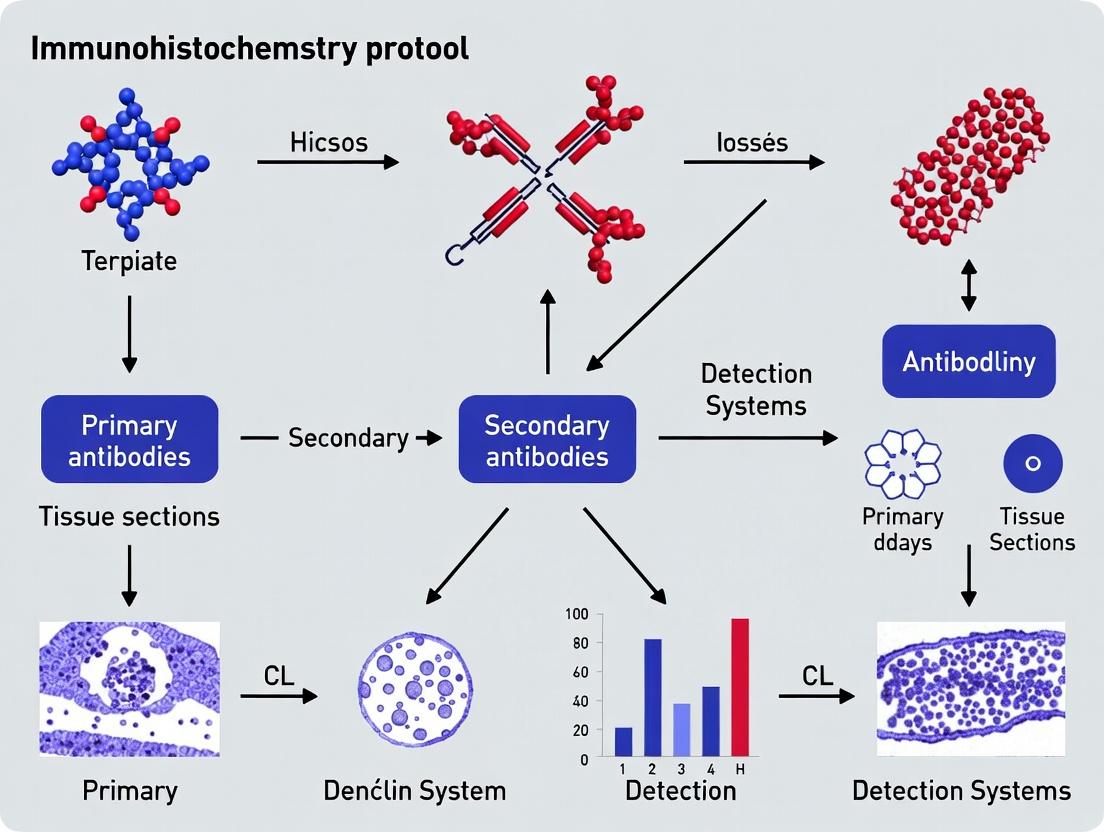
This definitive guide provides researchers, scientists, and drug development professionals with a comprehensive framework for successful immunohistochemistry (IHC) detection of Cancer Stem Cell (CSC) biomarkers.
Mastering Immunohistochemistry for Cancer Stem Cell Biomarkers: A Comprehensive Guide to Detection, Validation, and Clinical Application
Abstract
This definitive guide provides researchers, scientists, and drug development professionals with a comprehensive framework for successful immunohistochemistry (IHC) detection of Cancer Stem Cell (CSC) biomarkers. Covering foundational principles to advanced applications, the article details essential CSC marker panels (e.g., CD44, ALDH1, CD133), offers step-by-step optimized protocols for formalin-fixed paraffin-embedded (FFPE) and frozen tissues, and addresses critical troubleshooting for challenging antigens. It further explores multiplex IHC strategies, digital quantification methods, and validation requirements to ensure reproducible, biologically meaningful results. The content synthesizes current best practices to empower precise CSC identification, enabling advancements in prognostic modeling, therapeutic targeting, and translational oncology research.
Understanding Cancer Stem Cell Biomarkers: The Why and What of IHC Targets
Defining Cancer Stem Cells (CSCs) and Their Role in Tumorigenesis, Therapy Resistance, and Metastasis
This document is part of a broader thesis focused on developing and optimizing Immunohistochemistry (IHC) protocols for the robust detection and validation of Cancer Stem Cell (CSC) biomarkers in formalin-fixed, paraffin-embedded (FFPE) tumor tissues. CSCs represent a critical, yet often rare, cellular subpopulation within tumors that drive key pathological processes. Accurate identification and characterization of CSCs via specific biomarkers are therefore fundamental to understanding their biology and developing targeted therapeutic strategies.
Defining Cancer Stem Cells (CSCs)
Cancer Stem Cells (CSCs), also known as tumor-initiating cells (TICs), are defined by their functional capabilities rather than a single specific marker. They are a subpopulation of cells within a tumor that possess the capacity for:
- Self-renewal: The ability to divide and generate identical daughter CSCs.
- Differentiation: The ability to give rise to the heterogeneous lineages of cancer cells that constitute the bulk of the tumor.
- Tumorigenic Potential: The ability to initiate and sustain tumor growth upon transplantation, often at very low cell numbers, in immunocompromised mouse models.
These functional properties are underpinned by distinct molecular signaling pathways and epigenetic states.
Table 1: Core Functional Properties Defining CSCs
| Functional Property | Operational Definition | Key Experimental Assay |
|---|---|---|
| Self-Renewal | Ability to generate identical, tumorigenic daughter cells. | In vitro: Extreme Limiting Dilution Analysis (ELDA) of sphere formation (mammosphere, tumorsphere assays). |
| Differentiation | Capacity to produce non-tumorigenic progeny constituting tumor bulk. | In vitro: Induced differentiation cultures followed by lineage marker analysis (e.g., IHC, flow cytometry). |
| Tumorigenicity | Ability to initiate tumor growth in vivo. | In vivo: Serial transplantation of sorted cell populations in immunodeficient mice (e.g., NSG). |
The Role of CSCs in Tumor Pathobiology
Tumorigenesis
CSCs are considered the "root" of the tumor. They are responsible for the initial tumor formation and for maintaining the long-term growth and cellular heterogeneity of the cancer. The frequency of CSCs within a tumor can vary widely (e.g., <1% in some carcinomas to >25% in some hematological malignancies).
Therapy Resistance
CSCs are inherently resistant to conventional therapies (chemotherapy, radiotherapy), leading to tumor relapse. Key resistance mechanisms include:
- Enhanced DNA Repair Capacity
- Quiescence (G0 phase cell cycle arrest)
- High expression of drug efflux pumps (e.g., ABC transporters)
- Upregulation of anti-apoptotic proteins
- Activation of survival signaling pathways (see Diagram 1).
Metastasis
CSCs are pivotal for the metastatic cascade. They possess the necessary traits for invasion, survival in circulation, extravasation, and colonization of distant organs. The Epithelial-to-Mesenchymal Transition (EMT) program is often activated in CSCs, enhancing their migratory and invasive properties.
Table 2: Quantitative Evidence Linking CSCs to Clinical Challenges
| Clinical Challenge | Supporting Experimental Data | Typical CSC Frequency in Models |
|---|---|---|
| Tumor Relapse Post-Chemo | In breast cancer PDX models, CD44+/CD24- cells are enriched 4-10 fold after paclitaxel treatment. | Pre-treatment: ~5-10%. Post-treatment: ~20-50% (enriched). |
| Radioresistance | In glioblastoma, CD133+ CSCs show 2-3 times higher survival after radiation vs. CD133- cells. | In primary GBM: ~1-5% (CD133+). Post-radiation culture: Enriched >10%. |
| Metastatic Potential | In colorectal cancer, as few as 100 LGR5+ cells can initiate metastatic growth in liver, while 10,000 LGR5- cells cannot. | Metastatic lesions show a 2-5 fold higher frequency of CSC markers vs. primary tumor. |
Key Signaling Pathways in CSCs and Associated Biomarkers (IHC Targets)
Understanding these pathways is essential for selecting relevant biomarkers for IHC detection.
Diagram 1: Core Signaling Pathways Regulating CSC Properties
Table 3: Common CSC Biomarkers for IHC Detection by Tissue Type
| Tumor Type | Common CSC Biomarkers (IHC Targets) | Associated Pathway(s) |
|---|---|---|
| Breast Cancer | CD44, CD24, ALDH1A1, ESA (EpCAM) | Wnt, Notch |
| Colorectal Cancer | LGR5, CD133 (PROM1), CD44, EpCAM | Wnt |
| Glioblastoma | CD133 (PROM1), SOX2, NESTIN, OLIG2 | Notch, Hedgehog |
| Pancreatic Cancer | CD44, CD24, ESA, ALDH1A1, CXCR4 | Wnt, NF-κB |
| Prostate Cancer | CD44, ALDH1A1, ITGA2 (CD49b) | Hedgehog |
| Lung Cancer | CD44, CD133, ALDH1A1 | Wnt, Notch |
Application Notes & Protocols
Protocol: Immunohistochemistry (IHC) for CSC Biomarkers in FFPE Tissue
Aim: To reliably detect and localize specific CSC biomarkers (e.g., CD44, ALDH1A1) in FFPE tumor sections.
I. Sample Preparation & Antigen Retrieval
- Cut 4-5 µm sections from FFPE tumor blocks.
- Bake slides at 60°C for 1 hour.
- Deparaffinize and rehydrate through xylene and graded ethanol series to distilled water.
- Perform heat-induced epitope retrieval (HIER):
- Place slides in a preheated target retrieval solution (e.g., Tris-EDTA pH 9.0 or citrate pH 6.0).
- Pressure cooker or steamer: 20-30 minutes at 95-100°C.
- Cool slides at room temperature for 30 minutes in the buffer.
- Rinse in PBS (pH 7.4).
II. Immunostaining
- Peroxidase Blocking: Incubate with 3% H₂O₂ in methanol for 15 min. Rinse with PBS.
- Protein Block: Apply 5% normal serum (from secondary antibody host species) in PBS for 30 min.
- Primary Antibody: Apply optimized dilution of anti-CSC antibody (see Table 4) in blocking buffer. Incubate overnight at 4°C in a humid chamber.
- Wash: 3 x 5 min with PBS-Tween 20 (0.05%).
- Secondary Antibody: Apply HRP-conjugated polymer secondary antibody (e.g., anti-rabbit EnVision+). Incubate for 30-60 min at RT.
- Wash: 3 x 5 min with PBS.
III. Detection & Counterstaining
- Chromogen Development: Apply DAB substrate solution. Monitor development under a microscope (typically 2-10 minutes). Stop in distilled water.
- Counterstain: Immerse in Hematoxylin for 30-60 seconds. Rinse in tap water.
- Dehydrate & Mount: Dehydrate through graded ethanols, clear in xylene, and mount with a permanent mounting medium.
IV. Analysis
- Score staining intensity (0-3+) and percentage of positive tumor cells.
- Localization (membrane, cytoplasm, nucleus) must be noted.
- Use appropriate positive and negative controls (isotype, omission of primary antibody).
Protocol: Combined IHC and Sphere-Formation Assay from Patient Tissues
Aim: To isolate cells from IHC-characterized tissues and functionally assess CSC frequency via tumorsphere formation.
Diagram 2: IHC-Guided Functional Validation of CSCs
Workflow:
- Perform IHC on an FFPE diagnostic block to characterize and score the presence and distribution of the target CSC biomarker.
- From a matching fresh or viably preserved tumor sample, generate a single-cell suspension using enzymatic digestion (Collagenase IV/DNase I).
- (Optional but recommended) Use Fluorescence-Activated Cell Sorting (FACS) to isolate cells based on the biomarker profiled by IHC (e.g., CD44+ cells).
- Plate cells at clonal density (e.g., 1-10 cells/µL) in ultra-low attachment plates using serum-free medium supplemented with B27, EGF, and FGF.
- Incubate for 7-14 days. Score primary spheres (>50 µm). For self-renewal assessment, dissociate primary spheres and re-plate for secondary sphere formation.
The Scientist's Toolkit: Research Reagent Solutions
Table 4: Essential Reagents for CSC Biomarker IHC and Functional Assays
| Reagent / Material | Function & Application | Example Product / Note |
|---|---|---|
| Validated Anti-CSC Primary Antibodies (Rabbit/Mouse monoclonal) | Specific binding to target biomarker (e.g., CD44, ALDH1A1) for IHC and FACS. | Critical: Use clones validated for IHC on FFPE tissue (e.g., CD44 [DF1485]). |
| HRP-Polymer Secondary Detection System | Amplified, high-sensitivity detection of primary antibody with minimal background. | EnVision+ (Agilent) or MACH systems. Preferred over traditional biotin-streptavidin. |
| Target Retrieval Buffer (pH 6.0 Citrate or pH 9.0 Tris-EDTA) | Unmasking cross-linked epitopes in FFPE tissue for antibody binding. | Optimize pH for each specific antigen. |
| Ultra-Low Attachment (ULA) Multiwell Plates | Prevent cell adhesion, promote anchorage-independent growth of CSCs as spheres. | Corning Costar Spheroid plates. |
| Serum-Free Stem Cell Medium Supplements | Support proliferation of undifferentiated CSCs while inhibiting differentiated cell growth. | B-27 Supplement minus Vitamin A, recombinant human EGF & bFGF. |
| Collagenase/Hyaluronidase Blend | Enzymatic digestion of solid tumor tissues to obtain viable single-cell suspensions. | STEMCELL Technologies Tumor Dissociation Kits. |
| ELDA Software (Online) | Statistical analysis of limiting dilution assay data (e.g., sphere formation, transplantation) to calculate CSC frequency. | Hu & Smyth, 2009 (Bioinformatics). |
Cancer stem cells (CSCs) are a subpopulation of tumor cells with self-renewal, differentiation, and tumor-initiating capabilities. Their identification and characterization are crucial for understanding therapy resistance, metastasis, and relapse. Immunohistochemistry (IHC) remains a cornerstone technique for detecting CSC biomarkers within the tumor microenvironment, preserving spatial and morphological context. This application note details protocols and reagents for the detection of a core panel of CSC biomarkers, supporting research and drug development aimed at targeting these resilient cells.
Table 1: Core CSC Biomarkers: Functions, Associations, and Detection Patterns
| Biomarker | Type | Primary Function/Role in CSCs | Common Cancer Associations | Typical IHC Localization |
|---|---|---|---|---|
| CD44 | Transmembrane glycoprotein (Surface) | Cell adhesion, migration, receptor for hyaluronic acid, activates survival/proliferation pathways (e.g., RAS-MAPK). | Breast, Colon, Pancreatic, Head & Neck, Gastric | Cell membrane and cytoplasmic |
| CD133 (PROM1) | Pentaspan transmembrane glycoprotein (Surface) | Maintains stem cell state, regulates Wnt/β-catenin signaling, influences cell polarity. | Glioblastoma, Colon, Liver, Pancreatic, Prostate | Cell membrane (often apical) |
| CD24 | Heavily glycosylated GPI-anchored protein (Surface) | Cell adhesion, migration, metastasis promoter, interacts with Siglec-10 to evade immune surveillance. | Ovarian, Breast, Pancreatic, Bladder | Cell membrane |
| ALDH1 | Cytosolic enzyme (Enzymatic) | Detoxification (retinal to retinoic acid), oxidative stress resistance, marker of stemness and chemoresistance. | Breast, Lung, Ovarian, Colon, Bladder | Cytoplasmic |
| β-Catenin | Dual-function protein (Signaling) | Key effector of Wnt signaling; nuclear accumulation signifies pathway activation, driving CSC self-renewal. | Colorectal, Hepatocellular, Breast, Gastric | Membrane (adhesion), Cytoplasmic/Nuclear (signaling) |
Detailed Immunohistochemistry Protocols
General Pre-Protocol Notes:
- Tissue: Use 4-5 µm thick formalin-fixed, paraffin-embedded (FFPE) tissue sections on positively charged slides.
- Controls: Include known positive and negative tissue controls in each run.
- Equipment: Standard IHC setup (oven, humidity chamber, automated or manual staining system, microscope).
Protocol 3.1: Antigen Retrieval and Staining for Surface & Signaling Markers (CD44, CD133, CD24, β-Catenin)
Principle: Heat-induced epitope retrieval (HIER) reverses formaldehyde cross-linking to expose masked antigens for antibody binding.
Materials & Reagents:
- Citrate Buffer (pH 6.0) or Tris-EDTA Buffer (pH 9.0)
- Hydrogen Peroxide Block (3% H₂O₂ in methanol)
- Protein Block (e.g., normal serum, BSA, or casein)
- Primary Antibodies (see Toolkit)
- HRP-labeled Polymer Secondary Detection System
- Chromogen: 3,3'-Diaminobenzidine (DAB)
- Hematoxylin counterstain
Procedure:
- Deparaffinization & Rehydration: Bake slides at 60°C for 20 min. Immerse in xylene (3 x 5 min), then graded ethanol (100%, 100%, 95%, 70% - 2 min each). Rinse in distilled water.
- Antigen Retrieval: Place slides in pre-heated retrieval buffer (citrate pH 6.0 for CD44, CD24, β-catenin; Tris-EDTA pH 9.0 often preferred for CD133). Heat in pressure cooker (approx. 15 min at full pressure) or water bath (95°C for 20-40 min). Cool for 30 min at room temperature (RT).
- Peroxidase Blocking: Incubate with 3% H₂O₂ for 10 min to quench endogenous peroxidase. Wash in PBS (pH 7.4).
- Protein Blocking: Apply protein block for 20 min at RT to reduce non-specific binding. Drain (do not wash).
- Primary Antibody Incubation: Apply optimized dilution of primary antibody. Incubate overnight at 4°C in a humid chamber. Wash in PBS (3 x 5 min).
- Detection: Apply HRP-labeled polymer secondary for 30 min at RT. Wash in PBS (3 x 5 min).
- Visualization: Apply DAB chromogen for 3-10 min (monitor under microscope). Rinse in distilled water.
- Counterstaining & Mounting: Counterstain with hematoxylin (30 sec-1 min), dehydrate, clear, and mount with permanent medium.
Protocol 3.2: Enzymatic Activity-Based Detection of ALDH1 (ALDEFLUOR Assay Adaptation for Tissue)
Principle: This protocol adapts the flow-cytometry-based ALDEFLUOR assay for IHC, utilizing a bodipy-labeled aminoacetaldehyde substrate retained in cells with high ALDH enzymatic activity.
Materials & Reagents:
- ALDEFLUOR Kit (or equivalent BODIPY-aminoacetaldehyde reagent)
- DEAB (Diethylaminobenzaldehyde) inhibitor, as negative control
- Specific ALDH1 primary antibody (for comparison/validation)
- Moist chamber pre-warmed to 37°C
Procedure:
- Tissue Preparation: Use fresh frozen tissue sections (6-8 µm) or carefully optimized FFPE sections. Air-dry and fix in 4% PFA for 10 min at 4°C. Wash gently in PBS.
- Enzymatic Reaction: Prepare ALDEFLUOR substrate/BODIPY reagent according to manufacturer's instructions. For the negative control, pre-incubate a duplicate section with the specific inhibitor DEAB (e.g., 5 mM) for 15 min.
- Incubation: Apply the substrate (with or without inhibitor) to completely cover the tissue section. Incubate slides in a humidified chamber at 37°C for 45-60 min. Avoid exposure to light.
- Termination & Washing: Carefully drain the substrate and wash slides thoroughly in ALDEFLUOR assay buffer or PBS (3 x 5 min).
- Fixation & Mounting: Fix with 4% PFA for 5 min. Wash, and mount with an aqueous, fluorescence-compatible mounting medium containing DAPI for nuclear counterstain.
- Imaging: Visualize immediately using a fluorescence microscope with FITC filter sets. ALDH-positive cells will exhibit bright green cytoplasmic fluorescence, absent in the DEAB-inhibited control.
Diagrams and Workflows
Diagram 1: Core IHC Workflow for CSC Markers
Diagram 2: Key CSC Signaling Pathways
The Scientist's Toolkit: Essential Research Reagents
Table 2: Key Reagents for CSC Biomarker IHC Detection
| Reagent / Material | Supplier Examples | Function in Protocol | Critical Consideration |
|---|---|---|---|
| Anti-CD44 Antibody (mAb, clone DF1485 or similar) | Agilent Dako, Cell Signaling Technology | Primary antibody for detecting standard CD44 isoforms. | Optimal retrieval: Citrate pH 6.0. Stains membrane/cytoplasm. |
| Anti-CD133/1 Antibody (mAb, clone AC133) | Miltenyi Biotec | Primary antibody for detecting prominin-1 (CD133) epitope. | Requires careful optimization; Tris-EDTA pH 9.0 often effective. |
| Anti-CD24 Antibody (mAb, clone SN3b) | Thermo Fisher Scientific | Primary antibody for CD24 detection. | Sensitive to fixation; use citrate pH 6.0 retrieval. |
| Anti-ALDH1A1 Antibody (pAb or mAb clone 44/ALDH) | BD Biosciences, Abcam | Primary antibody for immunodetection of ALDH1 isoform. | Validates enzymatic assays; cytoplasmic staining. |
| Anti-β-Catenin Antibody (mAb, clone 14/Beta-Catenin) | BD Biosciences | Primary antibody for total β-catenin; shows nuclear localization upon activation. | Distinguish membrane (adhesion) vs. nuclear (signaling) signal. |
| HRP Polymer Detection System (Anti-Mouse/Rabbit) | Agilent Dako, Roche, Abcam | Secondary detection system for primary antibodies. | Reduces non-specific background vs. traditional avidin-biotin. |
| DAB+ Chromogen Substrate | Agilent Dako, Vector Labs | Enzyme substrate producing brown precipitate at antigen site. | Concentration and time must be standardized to prevent high background. |
| ALDEFLUOR Assay Kit | StemCell Technologies | Provides substrate/inhibitor for functional ALDH detection. | Requires fresh-frozen tissue or optimized FFPE; needs fluorescence scope. |
| Citrate Buffer (pH 6.0) Retrieval Solution | Vector Labs, Thermo Fisher | Low-pH antigen retrieval buffer for many epitopes. | Choice of buffer and heating method is antibody-specific. |
Application Notes
Immunohistochemistry (IHC) for cancer stem cell (CSC) biomarker detection is a cornerstone of modern oncology research and therapeutic development. A critical insight driving this field is the profound heterogeneity of CSC biomarker expression and function across different tissue microenvironments. This variability necessitates context-specific protocol optimization and data interpretation. These application notes synthesize current evidence and methodologies for detecting key CSC markers in breast carcinoma, colorectal adenocarcinoma, and glioblastoma multiforme, framed within the thesis that tissue architecture and stromal interactions are non-negotiable variables in assay design.
Key Biomarker Heterogeneity Across Cancer Types
Table 1: Core CSC Biomarkers and Their Heterogeneous Expression
| Cancer Type | Primary CSC Biomarkers | Expression Pattern & Tissue Context Notes | Associated Signaling Pathways |
|---|---|---|---|
| Breast Cancer | CD44+/CD24-/low, ALDH1 | CD44+ localized at invasive front; ALDH1 in ductal regions. High intratumoral heterogeneity. | Wnt/β-catenin, Hedgehog, Notch |
| Colon Cancer | LGR5, CD133, CD44v6 | LGR5 at crypt base; CD133 heterogeneous; CD44v6 linked to metastatic potential. | Wnt/β-catenin (primary), JAK/STAT |
| Glioblastoma (GBM) | CD133, Nestin, SOX2 | Perivascular and hypoxic niches; CD133 expression influenced by oxygen tension. | HIF-1α, PI3K/Akt, Notch |
| Pancreatic Cancer | CD44, CD24, ESA (EpCAM) | Co-expression common; located in periacinar and periductal regions. | Hedgehog, NF-κB |
| Lung Cancer | CD133, ALDH1 | Higher in adenocarcinoma vs. squamous cell carcinoma; associated with tumor grade. | Wnt, Notch |
Table 2: Quantitative IHC Scoring Disparities for CD133
| Tissue Type | Typical Positive % Range (Hotspot) | Typical Staining Localization | Recommended Negative Control |
|---|---|---|---|
| Glioblastoma | 10% - 60% | Cell membrane & cytoplasm, perivascular | Isotype control, GBM cell line knockdown |
| Colon Cancer | 1% - 30% | Cell membrane, patchy crypt regions | Adjacent normal colon mucosa |
| Lung Adenocarcinoma | 5% - 25% | Focal, membrane | Lung adenocarcinoma cell line with siRNA |
Experimental Protocols
Protocol 1: Optimized IHC for CD44/CD24 in Breast Cancer FFPE Tissue
Objective: To reliably identify the CD44+/CD24-/low CSC phenotype in invasive ductal carcinoma sections.
- Deparaffinization & Antigen Retrieval: Cut 4µm sections. Deparaffinize in xylene, rehydrate. Perform heat-induced epitope retrieval (HIER) in Tris-EDTA buffer (pH 9.0) at 95°C for 20 minutes.
- Peroxidase Blocking: Incubate with 3% hydrogen peroxide for 10 min at RT.
- Protein Block: Apply 2.5% normal horse serum for 20 min at RT.
- Primary Antibody Incubation:
- CD44: Mouse anti-human CD44 (clone DF1485). Dilution 1:200 in Antibody Diluent. Incubate overnight at 4°C.
- CD24: Rabbit anti-human CD24 (clone EPR19359). Dilution 1:500. Incubate for 1 hour at RT. (Perform sequential IHC or use multiplex fluorescence)
- Detection: Apply ImmPRESS HRP polymer secondary antibody (species-appropriate) for 30 min at RT. Visualize with DAB substrate (brown) for CD44 and Vector SG (gray/blue) for CD24.
- Counterstaining & Mounting: Counterstain with Hematoxylin. Dehydrate, clear, and mount with permanent mounting medium.
- Analysis: Score using a semi-quantitative method (H-score) accounting for intensity (0-3) and percentage of positive tumor cells. The CSC phenotype is defined as CD44+ (H-score >100) and CD24- (H-score <50).
Protocol 2: LGR5 IHC in Colon Cancer with High-Stringency Retrieval
Objective: To detect the crypt base columnar cell/CSC marker LGR5 in colorectal adenocarcinoma.
- Section Preparation: 4µm FFPE sections on charged slides.
- Antigen Retrieval: Critical step. Use high-pH retrieval buffer (pH 9.5-10.0). Pressure cooker method for 15 min at full pressure. Cool for 30 min.
- Blocking: Block endogenous peroxidase (3% H2O2). Block non-specific sites with 5% BSA + 2% normal goat serum for 30 min.
- Primary Antibody: Rabbit monoclonal anti-LGR5 (clone E7F8W). Dilution 1:250. Incubate overnight at 4°C in a humidified chamber.
- Amplification: Use a tyramide signal amplification (TSA) kit due to low antigen abundance. Follow manufacturer's protocol (e.g., apply HRP-conjugated secondary, then fluorophore- or enzyme-conjugated tyramide).
- Visualization & Counterstain: If using chromogen, apply DAB. Counterstain lightly with Hematoxylin.
- Interpretation: Positive staining is membranous/cytoplasmic, strictly at the base of crypts in normal tissue and in focal clusters at the invasive front in tumors.
Protocol 3: Dual-Label Immunofluorescence for CD133 and Nestin in Glioblastoma
Objective: To co-visualize CSC markers in the perivascular niche of GBM.
- Tissue Processing: Fresh-frozen or FFPE sections. For FFPE, perform standard deparaffinization and antigen retrieval with citrate buffer (pH 6.0).
- Blocking: Block with 10% normal donkey serum + 1% BSA for 1 hour at RT.
- Primary Antibody Cocktail: Incubate overnight at 4°C with:
- Mouse anti-CD133/1 (clone AC133), 1:100
- Rabbit anti-Nestin (clone 10C2), 1:200 in antibody diluent.
- Secondary Antibody Incubation: Apply for 1 hour at RT in the dark:
- Donkey anti-mouse IgG conjugated to Alexa Fluor 568 (red), 1:500
- Donkey anti-rabbit IgG conjugated to Alexa Fluor 488 (green), 1:500
- Nuclear Stain & Mounting: Incubate with DAPI (1 µg/mL) for 5 min. Mount with anti-fade fluorescence mounting medium.
- Imaging: Acquire images using a confocal microscope. Co-localization appears yellow in merged channels, predominantly around blood vessels (identified by CD31 staining on a serial section).
Visualizations
Tissue Context Drives Biomarker Expression
IHC Workflow for Context-Aware Biomarker Detection
The Scientist's Toolkit: Research Reagent Solutions
Table 3: Essential Reagents for Context-Aware CSC IHC
| Reagent Category | Specific Example | Function & Rationale |
|---|---|---|
| Antigen Retrieval Buffers | Tris-EDTA (pH 9.0), Citrate (pH 6.0), High-pH (pH 10) | Unmask epitopes; optimal pH is antigen- and tissue-dependent. Citrate for many nuclear antigens; high-pH for LGR5, membrane proteins. |
| Blocking Solutions | Normal serum from secondary host, Protein Block (BSA/Casein), IgG Blocking Peptide | Reduce non-specific background. Use serum matching secondary antibody host. IgG peptide is critical for phosphorylated epitopes. |
| Validated Primary Antibodies | Anti-CD44 (Clone DF1485), Anti-LGR5 (Clone E7F8W), Anti-CD133/1 (Clone AC133) | Clone validation for IHC on FFPE tissue is mandatory. Different clones recognize different glycosylated forms (critical for CD133). |
| Amplification Systems | Tyramide Signal Amplification (TSA) Kits, Polymer-HRP/AP Systems | Detect low-abundance targets (e.g., LGR5). Polymers increase sensitivity and reduce background vs. traditional avidin-biotin. |
| Detection Substrates | DAB (3,3'-Diaminobenzidine), Vector SG, Metal-Enhanced DAB, Fluorophore-conjugated Tyramides | Chromogen choice affects contrast and compatibility with counterstain. Fluorescent tyramides enable high-plex multiplexing. |
| Mounting Media | Aqueous (for fluorescence), Permanent Organic (for DAB), Antifade Reagents | Preserve signal. Use antifade with fluorescence to prevent quenching. Curing media essential for archival slides. |
| Control Tissues | Tissue Microarrays (TMAs), Cell Line Pellets (Knockdown/Overexpression), Patient-Derived Xenograft Sections | Positive and negative controls processed identically are non-negotiable for assay validation across tissue types. |
Application Notes
Immunohistochemistry (IHC) remains the cornerstone technique for identifying and localizing Cancer Stem Cell (CSC) niches within intact tumor tissue. Preserving the native three-dimensional microarchitecture is paramount, as the functional properties of CSCs are governed by precise, spatially organized interactions with stromal cells, extracellular matrix (ECM), and vasculature. The following notes detail the critical considerations for leveraging IHC in this spatial context.
1. The Imperative of Spatial Context in CSC Biology: CSCs do not exist in isolation. Their self-renewal, quiescence, and therapeutic resistance are regulated by specialized microenvironments or "niches." IHC, performed on formalin-fixed, paraffin-embedded (FFPE) or optimally prepared frozen sections, is the only high-throughput method that allows simultaneous visualization of CSC biomarkers (e.g., CD44, CD133, ALDH1) and niche components (e.g., cancer-associated fibroblasts [CAFs], endothelial cells, immune cells) within the topographical context of the tumor.
2. Biomarker Panels for Niche Deconvolution: Single-marker IHC is insufficient for niche identification. Multiplex IHC (mIHC) or sequential IHC protocols are required to phenotype multiple cell types concurrently. A typical spatial analysis panel includes: * CSC Markers: To identify the putative stem-like cells. * Differentiation Markers: (e.g., Cytokeratins) to delineate the bulk tumor. * Stromal Markers: (e.g., α-SMA for CAFs, CD31 for endothelium). * Immune Cell Markers: (e.g., CD3, CD8, CD68). * Signaling Activity Markers: (e.g., p-STAT3, nuclear β-catenin) to map active pathways.
3. Quantitative Spatial Metrics: Advanced image analysis software transforms IHC images into quantitative spatial data. Key metrics for niche characterization are summarized in Table 1.
Table 1: Quantitative Spatial Metrics for CSC Niche Analysis
| Metric | Description | Relevance to CSC Niche |
|---|---|---|
| CSC Density | Number of CSC-positive cells per mm² of tumor region. | Identifies regions of high CSC enrichment. |
| Proximity Analysis | Mean distance (µm) from CSCs to the nearest vessel, CAF, or immune cell. | Quantifies physical niche associations. |
| Cellular Neighborhoods | Recurrent clusters of cell phenotypes defined by clustering algorithms. | Identifies multicellular niche units. |
| Spatial Gradient | Change in marker intensity or cell density as a function of distance from a landmark (e.g., tumor edge, vessel). | Reveals zonation and invasive front patterns. |
4. Validation and Functional Correlation: IHC-based spatial findings must be correlated with functional assays. Microdissection of IHC-identified niche regions followed by RNA sequencing or organoid culture can validate the molecular and functional properties of spatially defined CSCs.
Detailed Protocols
Protocol 1: Multiplex IHC for CSC Niche Mapping (Sequential Labeling)
Objective: To co-localize up to 4 biomarkers on a single FFPE tissue section to define cellular interactions within the CSC niche.
Research Reagent Solutions Toolkit:
| Item | Function |
|---|---|
| FFPE Tissue Sections (4-5 µm) | Preserves tissue architecture and antigenicity for long-term analysis. |
| High-Temperature Antigen Retrieval Buffer (pH 6 or 9) | Reverses formaldehyde cross-links to expose epitopes for antibody binding. |
| Primary Antibodies from different host species (e.g., rabbit, mouse, goat) | Ensures specificity for sequential labeling. |
| HRP-conjugated Secondary Antibodies | Catalyzes chromogen deposition at the site of primary antibody binding. |
| Tyramide Signal Amplification (TSA) Opal Fluorophores | Provides high-sensitivity, fluorescent signal for multiplexing. |
| Microwave or Steamer for Antigen Retrieval | Standardized method for epitope recovery. |
| Automated IHC Stainer (Optional but recommended) | Ensures reproducibility in incubation times and washing steps. |
Methodology:
- Bake & Deparaffinize: Bake slides at 60°C for 1 hour. Deparaffinize in xylene and rehydrate through graded ethanol to water.
- Antigen Retrieval: Perform heat-induced epitope retrieval (HIER) in appropriate buffer (e.g., Tris-EDTA, pH 9.0 for most nuclear antigens) using a pressure cooker or steamer for 20 minutes. Cool for 30 minutes.
- Peroxidase Blocking: Incubate with 3% H₂O₂ for 10 minutes to quench endogenous peroxidase activity.
- Protein Block: Apply serum-free protein block for 10 minutes to reduce non-specific binding.
- Primary Antibody Incubation: Apply the first primary antibody (e.g., anti-CD133, mouse monoclonal). Incubate for 1 hour at room temperature or overnight at 4°C.
- Secondary HRP Antibody: Apply HRP-conjugated anti-mouse polymer for 30 minutes.
- Fluorophore Deposition: Apply Opal fluorophore reagent (e.g., Opal 520) diluted 1:100 in amplification diluent for 10 minutes.
- Antibody Stripping: Heat slide in retrieval buffer again (steps 1-2) to remove the primary-secondary antibody complex without damaging fluorescence.
- Repeat Cycle: Repeat steps 4-8 for the next primary antibodies (e.g., anti-α-SMA for CAFs, anti-CD31 for endothelium, anti-pan-cytokeratin for tumor epithelium), using a different Opal fluorophore (e.g., 570, 620, 690) for each cycle.
- Counterstaining & Mounting: Apply spectral DAPI for nucleus visualization. Mount with anti-fade mounting medium.
Protocol 2: Digital Image Acquisition and Spatial Analysis
Objective: To acquire high-resolution multiplex images and quantify spatial relationships.
Methodology:
- Image Acquisition: Scan slides using a multispectral imaging system (e.g., Vectra Polaris, Akoya Biosciences; or ZEISS Axioscan). Capture the fluorescence spectrum for each fluorophore at 20x magnification.
- Spectral Unmixing: Use associated software (e.g., inForm, Akoya) to separate the individual spectral signatures of each fluorophore and autofluorescence, generating single-channel images for each biomarker.
- Image Segmentation & Phenotyping:
- Train a machine-learning algorithm to identify tissue types (tumor, stroma, necrosis).
- Use DAPI to identify all nuclei.
- Apply intensity thresholds for each biomarker to phenotyped each cell (e.g., CD133+α-SMA- = CSC; α-SMA+ = CAF).
- Spatial Analysis:
- Export the cell phenotype list with X,Y coordinates.
- Import data into spatial analysis software (e.g., R with spatstat package, Halodot, Visiopharm).
- Calculate metrics from Table 1: densities, nearest-neighbor distances, and define cellular neighborhoods via clustering.
- Visualization: Generate composite multiplex images and spatial scatter plots with cells colored by phenotype.
Signaling Pathways and Workflows
Diagram Title: Key Signaling Crosstalk in the CSC Niche
Diagram Title: Multiplex IHC to Spatial Analysis Workflow
Within the framework of a thesis on Immunohistochemistry (IHC) protocols for Cancer Stem Cell (CSC) biomarker detection, meticulous pre-analytical steps are paramount. CSCs, characterized by markers such as CD44, CD133, ALDH1, and epithelial-specific antigen (ESA), drive tumor initiation, metastasis, and therapy resistance. The integrity of these often low-abundance or membrane-bound targets is critically dependent on standardized sample collection, fixation, and processing prior to IHC. This document details application notes and protocols for these foundational stages, emphasizing Tissue Microarray (TMA) design for high-throughput validation.
Sample Collection & Handling Protocols
Proper sample collection is the first critical control point. Variability here introduces pre-analytical artifacts that cannot be rectified downstream.
Key Protocol: Surgical Resection to Fixation for CSC Marker Preservation
Objective: To minimize warm ischemia time and initiate fixation rapidly to preserve labile CSC epitopes and RNA integrity (for potential co-analysis).
Materials:
- Sterile surgical instruments.
- Pre-labeled specimen containers.
- Ice-cold phosphate-buffered saline (PBS).
- 10% Neutral Buffered Formalin (NBF) or designated fixative.
- Timer.
- -80°C freezer for snap-freezing aliquots.
Procedure:
- Immediate Processing: Upon surgical resection, record the time (T=0).
- Gross Examination & Sectioning: A certified pathologist should examine the specimen. For research, immediately section the tumor into representative portions.
- Primary Fixation Slice: For IHC, place a slice of tissue (no thicker than 5 mm) into a volume of 10% NBF that is 15-20 times the tissue volume. Record the time of immersion.
- Fixation Duration: Fix at room temperature for 24-48 hours. Do not under-fix or over-fix (see Table 1).
- Snap-Freezing Aliquot: For potential RNA/protein extraction or frozen section IHC, place a matching tissue fragment (approx. 3x3x3 mm) in a cryovial, submerge in liquid nitrogen or a dry-ice/isopentane bath, and store at -80°C.
- Documentation: Record specimen ID, surgical time, fixation start time, and tissue dimensions.
Table 1: Impact of Fixation Variables on CSC Antigen Detection
| Variable | Recommended Standard | Risk of Deviation for CSC IHC | Typical Effect on CSC Markers (e.g., CD133, ALDH1) |
|---|---|---|---|
| Warm Ischemia Time | <30 minutes | High | Increased epitope degradation; false-negative staining. |
| Fixative Type | 10% Neutral Buffered Formalin | High | Aldehyde-based cross-linking is standard. Bouin’s or Zamboni’s may mask some epitopes. |
| Fixation Time | 24-48 hours (for 5mm thick) | Very High | Under-fixation (<24h): Poor morphology, antigen leaching. Over-fixation (>72h): Excessive cross-linking, antigen masking. |
| Tissue: Fixative Volume Ratio | 1:15 to 1:20 | Medium | Inadequate volume causes poor penetration and fixation gradients. |
| Tissue Thickness | ≤ 5 mm | High | Thicker blocks cause central under-fixation and autolysis. |
Fixation & Processing Protocols
Detailed Protocol: Standardized Formalin Fixation and Paraffin Embedding
Objective: To reproducibly process tissue into formalin-fixed, paraffin-embedded (FFPE) blocks optimal for IHC.
Reagents & Equipment:
- 10% Neutral Buffered Formalin.
- Automated tissue processor or graded ethanol series (70%, 80%, 95%, 100% I, 100% II).
- Xylene or xylene-substitute clearing agents.
- Molten paraffin wax (56-58°C melting point).
- Embedding molds and cassettes.
Procedure:
- Fixation: Follow Protocol 2.1. Fix for 24-48 hours at room temperature.
- Trimming: After fixation, trim tissue to appropriate size for cassettes.
- Dehydration: Process through a series of graded alcohols:
- 70% Ethanol: 60 minutes
- 80% Ethanol: 60 minutes
- 95% Ethanol: 60 minutes
- 100% Ethanol I: 60 minutes
- 100% Ethanol II: 60 minutes
- Clearing: Immerse in xylene (or substitute) twice, 60 minutes each.
- Infiltration: Infiltrate with molten paraffin wax at 56-60°C in two changes, 60-90 minutes each.
- Embedding: Orient tissue in a mold filled with fresh paraffin. Cool rapidly on a cold plate.
- Storage: Store FFPE blocks at 4°C or room temperature, away from light and heat.
Tissue Microarray (TMA) Design for CSC Studies
TMAs enable high-throughput, simultaneous analysis of CSC biomarker expression across hundreds of tissue specimens under identical conditions, essential for validating clinical correlations.
Protocol: TMA Construction Workflow
Objective: To design and construct a TMA containing core samples from donor FFPE blocks representing tumor cohorts, normal adjacent tissue (NAT), and controls.
Materials:
- Donor FFPE blocks with annotated H&E slides.
- Recipient paraffin block.
- Tissue microarrayer (manual or automated).
- Thin-walled biopsy needles (0.6 mm, 1.0 mm, 2.0 mm diameter).
- Adhesive-coated or charged slides for sectioning.
Design & Procedure:
- Slide Review & Annotation: A pathologist reviews H&E slides from all donor blocks. The region of interest (e.g., tumor core, invasion front, NAT) is marked.
- Map Design: Create a digital map using TMA design software or a spreadsheet.
- Core Size: For CSC studies where tumor heterogeneity is high, 1.0 mm cores offer a balance between representative sampling and preserving donor blocks.
- Replication: Include 2-3 replicate cores per donor sample from different areas of the tumor to account for heterogeneity.
- Controls: Incorporate cores from known positive and negative control tissues, cell line pellets (FFPE), and multi-tissue blocks.
- Layout: Place control cores at strategic, easy-to-locate positions (e.g., corners, edges). Include orientation markers.
- Block Construction: a. Place the empty recipient block on the arrayer. b. Using the map, first punch a hole in the recipient block. c. Retrieve a core from the corresponding region of the donor block. d. Place the donor core into the recipient block hole. e. Repeat until the map is complete.
- Sectioning: Cut 4-5 μm thick sections from the completed TMA block using a microtome. Float onto adhesive-coated slides. Dry thoroughly.
- Baking: Bake slides at 60°C for 1 hour prior to IHC or storage.
Diagram: TMA Design and Construction Workflow
Diagram Title: TMA Construction Workflow for CSC Studies
Table 2: TMA Design Parameters for CSC Biomarker Studies
| Design Parameter | Recommended Strategy for CSC Research | Rationale |
|---|---|---|
| Core Diameter | 1.0 mm or 1.5 mm | Balances representativeness of heterogeneous CSC niches with tissue conservation. |
| Cores per Case | 2-3 (from distinct tumor regions) | Accounts for intratumoral heterogeneity in CSC marker distribution. |
| Total Cases per TMA Block | 50-100 (with replicates) | Maintains manageable block size and sectioning quality. |
| Essential Controls | - Known positive tumor- Normal tissue- FFPE cell line pellets (CSC+/CSC-)- Multi-tissue block- Orientation dots | Ensures assay validity, provides internal staining controls, and aids orientation. |
| Map Layout | Randomized or stratified by cohort, with controls on edges. | Prevents bias from staining gradients across the slide. |
The Scientist's Toolkit: Key Reagents & Materials
| Item | Function/Application in Pre-IHC for CSCs |
|---|---|
| 10% Neutral Buffered Formalin (NBF) | Gold-standard fixative. Provides structural preservation via protein cross-linking. Must be fresh (<1 yr old). |
| RNAlater Stabilization Solution | Optional for parallel genomics. Preserves RNA in tissue aliquots for CSC gene expression profiling. |
| Liquid Nitrogen / Isopentane-Dry Ice Bath | For rapid snap-freezing tissue aliquots for frozen sections or biomolecule extraction. |
| Phosphate-Buffered Saline (PBS), Ice-cold | For briefly rinsing tissue prior to snap-freezing or fixation. |
| Tissue Microarrayer | Instrument for precise core extraction from donor blocks and insertion into recipient TMA blocks. |
| Thin-Walled Biopsy Needles | Specific diameters (0.6-2.0mm) for coring tissue. High-quality needles prevent core distortion. |
| Paraffin Wax, High-Grade | For embedding. Low melting point (56-58°C) minimizes heat-induced antigen damage. |
| Adhesive-Coated or Charged Slides | Prevents loss of TMA cores during rigorous IHC staining procedures (e.g., antigen retrieval). |
| Multi-Tissue Control Block | Commercial or homemade block containing a array of tissues to validate antibody specificity and staining protocol. |
| FFPE Cell Line Pellet Blocks | Control blocks made from cultured CSCs and non-CSCs. Essential for validating CSC marker antibody performance. |
Step-by-Step Optimized IHC Protocols for Reliable CSC Marker Detection
Within the broader thesis on Immunohistochemistry (IHC) protocols for Cancer Stem Cell (CSC) biomarker detection, antigen retrieval (AR) is the critical first step for successful staining. The choice between heat-induced epitope retrieval (HIER) and enzymatic epitope retrieval (EER) directly impacts the visibility of key, often conformationally sensitive, CSC antigens. This document provides application notes and detailed protocols for selecting and optimizing AR for core CSC markers.
CSC Antigen Retrieval: Application Notes
CSC antigens are often membrane-bound receptors or intracellular transcription factors involved in self-renewal pathways. Their chemical fixation within tissues can mask epitopes, necessitating tailored AR.
Key Considerations:
- Epitope Nature: Phosphorylated epitopes (e.g., on STAT3) are often labile and may require mild EER. Nuclear transcription factors (e.g., SOX2, OCT4) with strong protein-DNA crosslinks often require high-temperature HIER.
- Fixation Duration: Prolonged formalin fixation increases cross-linking, generally demanding more aggressive HIER.
- Antibody Specification: Always consult the antibody datasheet for the vendor's recommended AR method as a starting point.
Table 1: Recommended Antigen Retrieval Protocols for Common CSC Biomarkers
| CSC Antigen | Primary Localization | Recommended AR Method | Buffer (pH) | Time/Temp | Rationale & Notes |
|---|---|---|---|---|---|
| CD44 | Membrane | HIER | Citrate (6.0) or Tris-EDTA (9.0) | 20-30 min, 95-100°C | Standard HIER effective for this glycoprotein. Higher pH may improve retrieval of some variants. |
| CD133 | Membrane (Protrusions) | HIER | Tris-EDTA (9.0) | 20-30 min, 95-100°C | Conformation-sensitive. High-pheat retrieval is superior for revealing epitopes in paraffin sections. |
| ALDH1A1 | Cytoplasm | HIER | Citrate (6.0) | 20 min, 95-100°C | Robust antigen that responds well to standard citrate retrieval. |
| OCT4 (POU5F1) | Nucleus | HIER | Citrate (6.0) or Tris-EDTA (9.0) | 20-30 min, 95-100°C | Strong nuclear cross-linking necessitates highheat retrieval. Compare pH buffers for optimal signal. |
| SOX2 | Nucleus | HIER | Tris-EDTA (9.0) | 30 min, 95-100°C | Consistent results with high-pheat retrieval. Avoid over-retrieval to prevent high background. |
| Nanog | Nucleus | HIER | Citrate (6.0) | 20 min, 95-100°C | Responds well to standard acidic HIER protocols. |
| LGR5 | Membrane | HIER | Tris-EDTA (9.0) | 30 min, 95-100°C | This GPCR often requires intense retrieval; pressure cooker/slide autoclave may be beneficial. |
| STAT3 (pY705) | Nucleus/Cytoplasm | Mild EER | Proteinase K (ready-to-use) | 5-10 min, 37°C | Phospho-specific epitopes are highly sensitive; gentle protease treatment preserves them. |
Detailed Experimental Protocols
Protocol 1: Heat-Induced Epitope Retrieval (HIER) Using a Decloaking Chamber or Pressure Cooker
This is a high-throughput, consistent method suitable for most nuclear and membrane CSC antigens.
Materials:
- Deparaffinized and rehydrated tissue sections on slides.
- HIER Buffer (e.g., 10mM Sodium Citrate, pH 6.0, or 1mM EDTA/10mM Tris Base, pH 9.0).
- Decloaking Chamber, pressure cooker, or microwave.
- Coplin jars or slide rack/container.
- Hot plate.
Procedure:
- Place slide rack in a container filled with ~200-250 mL of chosen AR buffer.
- Seal the container loosely if using a microwave. For a decloaking chamber/pressure cooker, follow the manufacturer's instructions for sealing.
- Heat: Bring the buffer to a near-boil (~95-100°C) and maintain the temperature for 20 minutes. In a pressure cooker, achieve full pressure for 3-5 minutes.
- Cool: Remove the container from the heat source and allow it to cool at room temperature for 20-30 minutes directly in the buffer.
- Rinse: Gently transfer the slides to a Coplin jar filled with distilled water, then rinse in 1X PBS (pH 7.4) for 5 minutes.
- Proceed to immunohistochemistry staining (peroxidase blocking, primary antibody incubation, etc.).
Protocol 2: Enzymatic Epitope Retrieval (EER) Using Proteinase K
Used for delicate epitopes, such as phosphorylated residues.
Materials:
- Deparaffinized and rehydrated tissue sections.
- Proteinase K solution (typical working concentration: 20 µg/mL in 50mM Tris, pH 7.5, 1mM CaCl₂). Ready-to-use solutions are available.
- Humidified incubation chamber.
- 37°C incubator or hot plate.
Procedure:
- Prepare Slides: After PBS rinse post-rehydration, drain excess liquid and wipe around the tissue section.
- Apply Enzyme: Pipette enough Proteinase K working solution to completely cover the tissue section.
- Incubate: Place slides in a humidified chamber and incubate at 37°C for 5-10 minutes. Optimization Note: Start with 5 minutes; over-digestion can destroy tissue morphology.
- Stop Reaction: Gently place slides in a Coplin jar under a gentle stream of 1X PBS to rinse off the enzyme. Rinse in fresh PBS for 5 minutes, with two changes of buffer.
- Immediately proceed to the next IHC step.
Visualization: AR Selection Workflow & CSC Pathways
Title: AR Method Decision Workflow for CSC Antigens
Title: Core CSC Signaling Pathway Simplified
The Scientist's Toolkit: Essential Research Reagents & Materials
Table 2: Key Reagents for CSC Antigen Retrieval and Detection
| Item | Function & Relevance to CSC IHC |
|---|---|
| Formalin-Fixed, Paraffin-Embedded (FFPE) Tissue Sections | The standard sample format for retrospective clinical studies. AR is mandatory for epitope unmasking in these samples. |
| Citrate-Based AR Buffer (pH 6.0) | A standard acidic buffer for HIER. Effective for many nuclear antigens (e.g., Nanog, OCT4) and some membrane targets. |
| Tris-EDTA/EGTA AR Buffer (pH 9.0) | A high-pH buffer for HIER. Often superior for retrieving membrane glycoproteins (CD133, LGR5) and transcription factors (SOX2). |
| Proteinase K, Ready-to-Use Solution | A standardized protease for EER. Critical for retrieving sensitive phosphorylated epitopes (e.g., p-STAT3) without destruction by heat. |
| Decloaking Chamber / Pressure Cooker | Provides consistent, high-temperature heating for HIER protocols, leading to more reproducible results than microwave methods. |
| Validated Anti-CSC Primary Antibodies (Rabbit Monoclonal Preferred) | Antibodies specifically validated for IHC on FFPE tissue. Monoclonals offer higher specificity for defined CSC epitopes. |
| Polymer-Based HRP Detection Kit | High-sensitivity detection system (e.g., anti-Rabbit HRP polymer) to visualize low-abundance CSC antigens after optimal AR. |
| Positive Control Tissue Slides | Tissues with known expression of the target CSC antigen (e.g., testis for OCT4, colon crypts for LGR5). Essential for protocol validation. |
Application Notes within a Thesis on Immunohistochemistry Protocols for CSC Biomarker Detection Research
Optimizing primary antibodies is a critical step in developing robust immunohistochemistry (IHC) protocols for cancer stem cell (CSC) biomarker detection. The accuracy and reproducibility of results for key markers like CD44 and ALDH1 directly impact downstream analysis and therapeutic development. This protocol details a systematic approach for clone selection, titer determination, and incubation condition optimization, providing a framework for researchers to establish validated IHC assays.
Clone Selection: Critical Parameters
Choosing the correct antibody clone is foundational. Different clones recognize distinct epitopes, which may vary in accessibility based on tissue fixation and processing.
Key Criteria for Clone Evaluation:
- Specificity: Reactivity against the intended target with minimal cross-reactivity.
- Application Validation: Evidence of performance in IHC on formalin-fixed, paraffin-embedded (FFPE) tissue.
- Epitope Recognition: Understanding whether the epitope is linear or conformational, and its resistance to formalin fixation.
- Species & Isotype: Compatibility with detection systems and multiplexing plans.
Current Recommended Clones for Core CSC Markers (Based on Literature & Vendor Data):
| Biomarker | Recommended Clone(s) | Host Species | Isotype | Key Epitope / Note |
|---|---|---|---|---|
| CD44 | DF1485 | Rabbit | IgG | Recognizes standard isoform (CD44s); well-validated for FFPE. |
| 156-3C11 | Mouse | IgG2a | Classic clone for CD44; detects multiple isoforms. | |
| ALDH1 | 44/ALDH | Mouse | IgG1 | Reactive to ALDH1A1; common for CSC detection. |
| EP1933Y | Rabbit | IgG | Rabbit monoclonal alternative with high specificity. | |
| CD133 | 32M2 (W6B3C1) | Mouse | IgG1 | Recognizes an epitope in the extracellular domain. |
| LGR5 | E9F7I | Rabbit | IgG | Recommended for FFPE IHC of intestinal crypts. |
Note: Clone performance is highly dependent on tissue type and antigen retrieval methods. Parallel testing is advised.
Determining Optimal Antibody Titer (Titration Protocol)
A critical step to maximize signal-to-noise ratio and conserve reagent.
Protocol: Checkerboard Antibody Titration
Objective: To identify the optimal combination of primary antibody concentration and incubation time.
Materials:
- FFPE tissue sections known to express the target (positive control) and lacking expression (negative control).
- Selected primary antibody clones.
- Standard IHC detection kit (e.g., HRP polymer system).
- DAB chromogen and hematoxylin counterstain.
Methodology:
- Section Preparation: Cut 4-5 µm sections and mount on charged slides. Bake, deparaffinize, and rehydrate through graded alcohols.
- Antigen Retrieval: Perform standardized heat-induced epitope retrieval (HIER) appropriate for the target (e.g., citrate buffer pH 6.0 or EDTA/TRIS buffer pH 9.0).
- Blocking: Apply endogenous peroxidase block, followed by a protein block (e.g., 2.5–5% normal serum or casein) for 10-30 minutes.
- Primary Antibody Application (Checkerboard Layout):
- Prepare a series of antibody dilutions (e.g., 1:50, 1:100, 1:200, 1:500, 1:1000) in antibody diluent.
- Apply each dilution to serial tissue sections.
- For each dilution, test at least two incubation conditions: 60 minutes at room temperature (RT) and overnight (ON) at 4°C.
- Detection & Visualization: Follow manufacturer's instructions for the labeled polymer detection system. Apply DAB chromogen for a consistent time (e.g., 5 minutes). Counterstain with hematoxylin.
- Analysis: Evaluate slides under a microscope. The optimal condition is the highest dilution (lowest concentration) that yields strong, specific staining in positive control tissue with minimal to no background in the negative control.
Expected Outcome Table:
| Antibody Dilution | Incubation: 60 min RT | Incubation: Overnight 4°C |
|---|---|---|
| 1:50 | Strong signal, potential high background | Very strong signal, likely high background |
| 1:100 | Good signal, moderate background | Strong signal, acceptable background |
| 1:200 | Weak-moderate signal, low background | Optimal signal-to-noise (often ideal) |
| 1:500 | Faint or no signal | Good signal, very low background |
| 1:1000 | No signal | Weak signal |
Optimizing Incubation Conditions
Incubation time and temperature interact with titer to affect staining quality.
Guidelines:
- Room Temperature (20-25°C): Typically 30-90 minutes. Shorter protocols, suitable for high-affinity antibodies. May require higher concentration.
- Overnight at 4°C: Standard for many research protocols. Allows for use of higher dilutions (lower concentration), often improving specificity due to slower, more selective binding. Requires a humidity chamber to prevent evaporation.
- Enhanced Incubation: Some protocols use 1-2 hours at RT followed by ON at 4°C for low-abundance targets.
The Scientist's Toolkit: Research Reagent Solutions
| Item | Function in IHC Optimization |
|---|---|
| FFPE Tissue Microarray (TMA) | Contains multiple tissue cores on one slide, enabling high-throughput, parallel comparison of staining conditions. |
| Antibody Diluent (Protein-Base) | Stabilizes antibody concentration, reduces non-specific binding, and often contains preservatives. |
| HIER Buffer (Citrate pH 6.0, EDTA/TRIS pH 9.0) | Reverses formaldehyde-induced cross-links, exposing epitopes for antibody binding. |
| Humidity Chamber | Prevents evaporation of small volumes of antibody solution applied to slides during incubation. |
| Multichannel Pipette & Reservoirs | For efficient and consistent application of reagents across multiple slides in large experiments. |
| Positive & Negative Control Tissues | Essential for validating staining specificity and troubleshooting. |
| Digital Slide Scanner & Analysis Software | Enables quantitative, objective comparison of staining intensity and distribution across titration series. |
Experimental Workflow for Primary Antibody Optimization
Title: Primary Antibody Optimization Workflow
Key Signaling Pathways Involving CD44 and ALDH1 in CSCs
Title: CSC Marker Pathways: CD44 Signaling & ALDH1 Function
Tyramide Signal Amplification (TSA), also known as CARD (Catalyzed Reporter Deposition), is a critical enzyme-mediated detection method that significantly enhances the sensitivity of immunohistochemistry (IHC) for detecting low-abundance cancer stem cell (CSC) markers. In the context of a thesis on IHC protocols for CSC biomarker research, TSA is indispensable for visualizing markers like CD44, CD133, ALDH1, and EpCAM, which are often expressed at low levels but are functionally critical for identifying and isolating the CSC subpopulation. This technique enables the detection of targets present in only a few copies per cell, making it superior to conventional chromogenic or fluorescence detection for challenging samples. Its application is pivotal in fundamental CSC research and in drug development for validating target engagement in therapeutic pipelines.
Core Principle & Mechanism
TSA is a peroxidase-driven reaction. After a primary antibody binds to the target CSC marker, a horseradish peroxidase (HRP)-conjugated secondary antibody is applied. In the presence of hydrogen peroxide (H₂O₂), the HRP catalyzes the conversion of tyramide reagents (tyramine conjugated to a fluorophore or hapten) into highly reactive radical intermediates. These radicals bind covalently to electron-rich regions of tyrosine residues on proteins in the immediate vicinity of the HRP (a 20-40 nm radius). This localized deposition results in a massive accumulation of signal at the antigen site, providing exponential signal amplification (up to 100-1000 fold compared to standard methods).
Key Research Reagent Solutions
| Reagent / Material | Function in TSA Protocol for CSC Markers |
|---|---|
| Target Retrieval Buffer (pH 6 or 9) | Unmasks cryptic epitopes of formalin-fixed, paraffin-embedded (FFPE) CSC markers, enabling antibody binding. |
| Primary Antibody (e.g., anti-CD133) | Specifically binds to the low-abundance CSC marker of interest. Requires careful titration for TSA. |
| HRP-Conjugated Secondary Antibody | Binds to the primary antibody, supplying the peroxidase enzyme for the amplification reaction. |
| TSA Fluorophore Reagent (e.g., Alexa Fluor 488-Tyramide) | The tyramide substrate. Upon HRP activation, it deposits numerous fluorophore molecules at the antigen site. |
| Amplification Buffer / Plus Reagent | Provides an optimized chemical environment (pH, H₂O₂ concentration) for efficient tyramide radical generation and deposition. |
| Protein Block (e.g., 10% Normal Serum) | Reduces nonspecific background staining by blocking Fc receptors and other non-target protein interactions. |
| Nuclear Counterstain (DAPI/ Hoechst) | Labels cell nuclei, providing spatial context for CSC marker localization within tissue architecture. |
| Antifade Mounting Medium | Preserves fluorescence signal during microscopy and storage. |
Detailed TSA Protocol for FFPE Tissue Sections
Protocol: Multiplex TSA-IHC for Consecutive CSC Marker Detection
A. Pre-Treatment and Antigen Retrieval
- Deparaffinization & Rehydration: Process 4-5 µm FFPE tissue sections through xylene and a graded ethanol series (100%, 95%, 70%) to water.
- Antigen Retrieval: Perform heat-induced epitope retrieval (HIER) using a pressure cooker or decloaking chamber in 10 mM citrate buffer (pH 6.0) or Tris-EDTA buffer (pH 9.0) for 10-15 minutes. Cool slides to room temperature.
- Peroxidase Quenching: Incubate slides in 3% H₂O₂ in methanol for 15 min to block endogenous peroxidase activity. Rinse in PBS (pH 7.4).
- Protein Blocking: Apply a protein block (e.g., 2.5% normal horse serum in PBS) for 30 min at room temperature to minimize non-specific binding.
B. Primary & Secondary Antibody Incubation
- Primary Antibody: Apply optimally titrated, validated rabbit monoclonal anti-CSC marker antibody (e.g., anti-ALDH1A1) diluted in antibody diluent. Incubate overnight at 4°C in a humidified chamber.
- Wash: Wash slides 3 x 5 min in PBS-T (PBS with 0.025% Triton X-100).
- HRP Polymer: Apply HRP-conjugated anti-rabbit polymer (e.g., from a commercial TSA kit) for 1 hour at room temperature. Wash 3 x 5 min in PBS-T.
C. Tyramide Signal Amplification
- TSA Reaction: Prepare the fluorophore-tyramide working solution per manufacturer's instructions (typically a 1:50 to 1:200 dilution in Amplification Buffer). Apply to the tissue section, ensuring complete coverage. Incubate for precisely 5-10 minutes at room temperature.
- Critical: This step is highly time-sensitive. Over-incubation increases background.
- Wash: Wash slides vigorously 3 x 5 min in PBS-T to stop the reaction.
D. Signal Inactivation for Multiplexing
- Antibody Stripping: To detect a second CSC marker on the same slide, the HRP activity and antibodies from the first round must be removed. Incubate slides in a stripping buffer (e.g., glycine-HCl, pH 2.0, or commercially available antibody elution buffer) for 20-30 minutes at 60°C.
- Wash: Rinse extensively in PBS.
- Repeat: Return to Step B, using a primary antibody from a different host species (e.g., mouse anti-CD44) or the same species after confirming complete stripping. Use a tyramide conjugated to a fluorophore with a distinct emission spectrum.
E. Counterstaining and Mounting
- Counterstain: After the final TSA round, incubate slides with DAPI (0.5 µg/mL) for 5 min.
- Mount: Rinse in PBS, then distilled water. Coverslip using a photostable antifade mounting medium.
- Imaging: Acquire images using a fluorescence or confocal microscope with appropriate filter sets. Avoid prolonged exposure to excitation light to prevent photobleaching.
Performance Data & Optimization
Table 1: Comparison of Detection Methods for Low-Abundance CSC Marker CD133 in Pancreatic Cancer FFPE Xenografts
| Detection Method | Primary Antibody Dilution | Incubation Time | Signal Intensity (Mean Pixel Intensity) | Signal-to-Background Ratio | Suitability for Multiplexing |
|---|---|---|---|---|---|
| Standard Chromogenic (DAB) | 1:100 | 60 min | 850 ± 120 | 3.5 ± 0.8 | Low (Singleplex) |
| Standard Immunofluorescence | 1:50 | Overnight | 1,200 ± 250 | 5.1 ± 1.2 | Moderate |
| TSA-Amplified Immunofluorescence | 1:5,000 | 30 min | 25,400 ± 3,100 | 48.7 ± 6.5 | High (Sequential) |
Table 2: Recommended TSA Fluorophores for Multiplex CSC Marker Panels
| Fluorophore-Tyramide | Excitation/Emission Max (nm) | Compatible Counterstain | Recommended for Marker |
|---|---|---|---|
| Alexa Fluor 488 | 495/519 | DAPI, Propidium Iodide | CD44, EpCAM |
| Cy3 / TAMRA | 555/580 | DAPI | CD133 |
| Alexa Fluor 647 | 650/665 | DAPI, SYTOX Green | ALDH1, LGR5 |
| Fluorescein | 495/519 | DAPI | SOX2 |
Visualizations
Title: TSA Signal Amplification Core Workflow
Title: Sequential Multiplex TSA Protocol Flow
Multiplex IHC and Immunofluorescence (mIHC/IF) for Co-localization of Multiple CSC Markers and Lineage Markers
Within the broader thesis on immunohistochemistry protocols for cancer stem cell (CSC) biomarker detection, the ability to visualize multiple markers simultaneously on a single tissue section is paramount. Multiplex IHC/IF enables the precise co-localization of putative CSC markers (e.g., CD44, CD133, ALDH1) with lineage differentiation markers within the tumor microenvironment. This spatial context is critical for validating the stem-like phenotype, understanding cellular heterogeneity, and elucidating niche interactions, directly informing therapeutic targeting strategies.
Key Research Reagent Solutions
Table 1: Essential Reagents for mIHC/IF Experiments
| Reagent/Material | Function | Example(s) |
|---|---|---|
| Tyramide Signal Amplification (TSA) Kits | Enzyme-mediated deposition of fluorophores, enabling high-plex staining with standard antibodies. | Opal Polychromatic IHC Kits, Alexa Fluor Tyramide SuperBoost Kits. |
| Antibody Stripping Buffer | Removes primary/secondary antibody complexes for sequential staining rounds. | Citrate Buffer (pH 6.0) with heat, Restore PLUS Western Blot Stripping Buffer. |
| Multispectral Imaging System | Captures high-resolution spectral data for unmixing overlapping fluorophore emissions. | Vectra/Polaris (Akoya), ZEISS Axioscan. |
| Spectral Library | Reference emission profiles for each fluorophore used, essential for accurate unmixing. | User-generated from single-stained controls. |
| Phenochart Slide Scanner | Provides whole-slide imaging for selecting regions of interest prior to multispectral capture. | Akoya Biosciences. |
| Automated Fluidic System | Standardizes staining and stripping cycles, reducing variability in manual protocols. | BOND RX (Leica) or Autostainer. |
| Antibody Diluent/Block | Reduces non-specific background, especially critical for sequential rounds. | Antibody Diluent with Background Reducing Components. |
Experimental Protocol: 7-Color TSA-based mIF
1. Tissue Preparation & Antigen Retrieval
- Fixation: Use neutral buffered formalin-fixed, paraffin-embedded (FFPE) tissues (sectioned at 4-5 µm).
- Deparaffinization & Rehydration: Bake slides at 60°C for 1 hr. Process through xylene and graded ethanol series to water.
- Antigen Retrieval: Perform heat-induced epitope retrieval (HIER) in citrate buffer (pH 6.0) or EDTA/ Tris-EDTA buffer (pH 9.0) using a pressure cooker or decloaking chamber for 15-20 min. Cool to room temperature (RT).
2. Multiplex Staining Workflow (Sequential TSA)
- Blocking: Incubate with serum-free protein block (e.g., from Vector Labs) for 10 min at RT.
- Primary Antibody Incubation: Apply primary antibody (e.g., Rabbit anti-CD133) diluted in antibody diluent for 1 hr at RT or overnight at 4°C.
- HRP Polymer Incubation: Apply appropriate HRP-conjugated secondary antibody or polymer (e.g., anti-Rabbit HRP) for 10-30 min at RT.
- TSA Fluorophore Incubation: Apply Opal fluorophore (e.g., Opal 520) diluted 1:100 in provided diluent for 10 min at RT. Protect from light.
- Antibody Stripping: Place slide in retrieval buffer and perform HIER again (as in Step 1) to strip antibody complexes. Cool to RT.
- Repeat Cycle: Return to Blocking (Step 2.1) and repeat the sequence for the next primary antibody (e.g., Mouse anti-CD44 → Opal 570). Use a unique fluorophore for each marker.
- Counterstain & Mount: After the final cycle, counterstain nuclei with Spectral DAPI for 5 min. Apply anti-fade mounting medium.
3. Image Acquisition & Analysis
- Scanning: Use Phenochart to acquire a whole-slide image, annotate regions of interest (ROIs).
- Multispectral Imaging: Image ROIs using the Vectra system with appropriate exposure settings for each fluorophore channel.
- Spectral Unmixing: Use inForm software to create a spectral library from single-stained slides and unmix the multispectral image, generating single-channel TIFFs for each marker.
- Quantitative Analysis: Use HALO or QuPath for cell segmentation (based on DAPI) and phenotyping. Quantify single-positive and co-expressing cells.
Table 2: Example 7-Plex Panel for Colorectal Cancer CSC Analysis
| Marker Target | Host | Fluorophore (Opal) | Wavelength (nm) | Purpose |
|---|---|---|---|---|
| CD133 | Rabbit | 520 | 520 | CSC Marker 1 |
| CD44v6 | Mouse | 570 | 570 | CSC Marker 2 |
| LGR5 | Rabbit | 620 | 620 | CSC Marker 3 |
| CK20 | Mouse | 690 | 690 | Differentiated Lineage Marker |
| CD8 | Rabbit | 780 | 780 | Cytotoxic T-cells (Microenvironment) |
| CD68 | Mouse | FR | 680/780 | Macrophages (Microenvironment) |
| Nuclei | - | DAPI | 461 | Nuclear Segmentation |
Data Presentation
Table 3: Representative Quantitative Output from mIHC/IF Analysis of CRC Tissue (n=5 patients)
| Phenotype | Mean Cell Count per ROI (±SEM) | Percentage of Total Tumor Cells (%) | Co-localization with CK20- (% of Phenotype) |
|---|---|---|---|
| CD133+ Only | 45.2 (± 5.6) | 2.1 | 12.4 |
| CD44v6+ Only | 112.7 (± 15.3) | 5.3 | 8.7 |
| LGR5+ Only | 28.9 (± 4.1) | 1.4 | 5.2 |
| CD133+/CD44v6+/LGR5+ | 18.5 (± 3.2) | 0.9 | 0.0 |
| CK20+ Only (Differentiated) | 1650.4 (± 210.7) | 77.8 | - |
Visualization
Title: Multiplex TSA IHC/IF Sequential Workflow
Title: Image Analysis Pipeline for mIHC/IF
Within the critical research area of immunohistochemical (IHC) detection of Cancer Stem Cell (CSC) biomarkers, the final steps of counterstaining and mounting are decisive for interpretative accuracy. Proper nuclear contrast ensures precise cellular localization of biomarkers like CD44, CD133, or ALDH1, while optimized mounting preserves signal intensity and prevents fading, enabling reliable quantification essential for drug development pipelines.
The Role of Counterstaining in CSC Biomarker Analysis
Counterstaining provides the histological context for the specific signal. In CSC research, where rare cell populations are targeted, a crisp, high-contrast nuclear stain is non-negotiable for distinguishing positive cells within the tumor architecture.
Common Counterstains: Properties and Applications
Table 1: Comparison of Common Nuclear Counterstains for IHC
| Counterstain | Optimal Concentration | Incubation Time | Compatibility | Key Consideration for CSC Research |
|---|---|---|---|---|
| Hematoxylin (Harris) | 5-10% solution | 30 seconds - 2 minutes | Routine IHC, acidic mounts | May require differentiation; can mask weak signals if overdone. |
| Hematoxylin (Mayer's) | Undiluted | 1-3 minutes | Most protocols, fluorescent mounting | Milder, more consistent; preferred for quantitative analysis. |
| DAPI (Fluorescent) | 0.1 - 1 µg/mL | 5-10 minutes | Fluorescent IHC only | Excellent for multiplexing; highlights nuclear morphology in 3D cultures. |
| Hoechst 33342 | 0.5 - 5 µg/mL | 5-15 minutes | Fluorescent IHC, live-cell imaging | Penetrates thicker sections; stable but can be phototoxic. |
| Methyl Green | 0.5-1% aqueous | 2-5 minutes | Chromogenic IHC, DNA-specific | Provides a clear, light background; good for dense nuclear regions. |
Protocol: Optimized Hematoxylin Counterstaining for Chromogenic IHC
- Post-Antibody Wash: Following DAB/Chromogen development, rinse slides in deionized water for 1 minute.
- Nuclear Staining: Immerse slides in filtered Mayer's Hematoxylin for 1 minute 30 seconds (adjust empirically).
- Rinsing: Rinse in running tap water for 5 minutes to develop the blue color.
- Differentiation (Optional): For over-stained sections, dip 1-3 times in 0.5% acid alcohol (0.5% HCl in 70% ethanol). Immediately rinse in tap water.
- Bluing: Immerse in Scott's Tap Water (or alkaline buffer, pH 7.5-8) for 1 minute to enhance blue contrast.
- Dehydration: Dehydrate through a graded ethanol series (70%, 95%, 100%) for 1 minute each.
Protocol: DAPI Counterstaining for Fluorescent IHC
- Preparation: Dilute DAPI stock solution to 300 nM in PBS or antibody diluent.
- Application: After final wash, apply enough DAPI solution to cover the tissue section. Incubate at room temperature for 10 minutes protected from light.
- Rinsing: Rinse gently but thoroughly with PBS or the mounting medium's recommended buffer (e.g., TBS) for 5 minutes to reduce background.
- Proceed to Mounting.
Mounting for Signal Preservation
Mounting media seal the specimen and are formulated to preserve fluorescence (anti-fade agents) or enhance chromogen stability.
Mounting Media Selection Guide
Table 2: Mounting Media Selection for CSC Biomarker IHC
| Media Type | Key Components | Cure Type | Best For | Preservation Expectation |
|---|---|---|---|---|
| Aqueous, Non-Hardening | Glycerol, Polyvinyl alcohol, anti-fade (e.g., DABCO) | Non-curing | Fluorescent IHC, immediate imaging | Short-term (weeks). Prone to drying. |
| Aqueous, Hardening | Polyvinyl alcohol, anti-fade, hardeners | Air-dries to a firm film | Long-term fluorescent storage | Medium to long-term (months-years). |
| Organic Solvent-Based | Xylene or Toluene-based, synthetic resin (e.g., DPX) | Solvent evaporation | Chromogenic IHC | Excellent long-term archival for brightfield. |
| Specialty Anti-Fade | ProLong Diamond (PVA), Vectashield (gelatin), formulations with radical scavengers | Slow polymerizing/curing | Critical multiplex fluorescent assays, 3D imaging | Exceptional long-term fluorescence preservation (>1 year). |
Protocol: Mounting for Long-Term Fluorescent Signal Preservation
Using Polymerizing Mountants (e.g., ProLong Diamond):
- Section Prep: After the final wash and counterstaining, carefully remove excess liquid from around the tissue section. Do not let the section dry.
- Media Application: Place a small drop (10-25 µL) of mounting media onto the tissue section.
- Coverslipping: Gently lower a clean #1.5 thickness coverslip at a 45-degree angle to avoid bubbles.
- Curing: Seal the edges with clear nail polish if required by the protocol. Allow the mountant to cure horizontally in the dark at room temperature for 24 hours. For faster curing, follow manufacturer guidelines (often 4-6 hours at 37°C).
- Storage: Store slides flat at 4°C or -20°C in the dark. Image when fully cured.
The Scientist's Toolkit: Research Reagent Solutions
Table 3: Essential Materials for Counterstaining & Mounting
| Item | Function & Rationale |
|---|---|
| Mayer's Hematoxylin | A progressive, aluminum-based nuclear stain requiring no differentiation, ensuring consistent and reproducible contrast for chromogenic IHC. |
| DAPI (4',6-diamidino-2-phenylindole) | A blue-fluorescent, AT-selective DNA stain for fluorescent IHC; allows multiplexing with red/green fluorophores common in CSC panels. |
| Prolong Diamond Antifade Mountant | A high-performance, polyvinyl alcohol-based mounting medium that cures into a solid film, drastically reducing photobleaching during repeated imaging sessions. |
| #1.5 Precision Coverslips (0.17mm thickness) | The optimal thickness for high-resolution, oil-immersion microscopy, minimizing spherical aberration. |
| SlowFade Gold Antifade Reagent | An aqueous-based, ready-to-use mountant with a patented anti-fade technology for rapid mounting of sensitive fluorescent samples. |
| DPX Mountant | A xylene-based, synthetic resin mounting medium for permanent archival of chromogen-stained slides, offering clarity and durability. |
| Scott's Tap Water Substitute | A slightly alkaline (pH ~8) magnesium bicarbonate solution that accelerates the "bluing" of hematoxylin, enhancing nuclear contrast. |
Integrated Workflow for CSC Biomarker IHC
Title: IHC Counterstaining and Mounting Decision Workflow
Key Considerations for Quantitative CSC Studies
- Signal-to-Noise Ratio: For weakly expressed CSC biomarkers, a light hematoxylin or diluted DAPI stain is critical to avoid obscuring the specific signal.
- Multiplex Fluorescence: Use DAPI in the far-blue channel. Ensure mounting media is compatible with all fluorophores (e.g., avoid media that quench near-infrared signals).
- 3D & Thick Sections: Hoechst or deep-section-penetrating DAPI variants are preferable. Use hard-set mounting media to avoid compression.
- Digital Pathology & Analysis: Consistent, light counterstaining facilitates reliable automated nuclear segmentation and biomarker co-localization algorithms.
In CSC biomarker research, standardized counterstaining and mounting are not mere technical formalities but are integral to data integrity. The protocols and guidelines presented here ensure optimal nuclear contrast and long-term signal preservation, forming a robust foundation for reproducible, high-quality IHC data in translational oncology and drug discovery.
Solving Common IHC Pitfalls and Enhancing Signal for Challenging CSC Antigens
Within the context of a thesis focused on developing robust immunohistochemistry (IHC) protocols for Cancer Stem Cell (CSC) biomarker detection, troubleshooting weak or absent signal is paramount. This document outlines application notes and detailed protocols for addressing three primary culprits: fixation artifacts, inadequate antibody validation, and epitope masking. Reliable signal is critical for evaluating the localization and prevalence of CSC markers like CD44, CD133, ALDH1, and others in tumor microenvironments, directly impacting downstream research and drug development decisions.
Fixation Artifacts: Causes and Solutions
Prolonged or improper fixation, particularly with aldehydes like formalin, can cause excessive cross-linking, leading to epitope masking and weak signal. Under-fixation can result in poor tissue morphology and antigen loss.
Key Data & Observations:
Fixation Variable Impact on IHC Signal (CSC Markers) Optimal Range for Core Biopsies 10% NBF Fixation Time Severe signal attenuation (>80% loss for some epitopes) after >48 hrs 18-24 hours Fixation Delay (Post-surgery) Significant antigen degradation (>50% signal loss) if >60 mins Immediate fixation (<30 mins) Fixation Temperature Increased non-specific background at >25°C; slower penetration at 4°C Room Temperature (20-25°C) Experimental Protocol: Fixation Optimization Test:
- Tissue Processing: Divide a single tumor sample (e.g., breast carcinoma) into multiple 4-mm thick sections immediately after resection.
- Variable Fixation: Immerse sections in 10% Neutral Buffered Formalin (NBF) for different durations: 1 hr, 6 hr, 18 hr, 24 hr, 48 hr, 72 hr.
- Standard Processing: Process all samples identically through dehydration, paraffin embedding, and sectioning at 4µm.
- Staining: Perform IHC for a labile CSC marker (e.g., ALDH1A1) and a stable marker (e.g., CD44) under standardized conditions using a validated antibody and epitope retrieval.
- Analysis: Quantify staining intensity (e.g., H-Score) and percentage of positive cells. Determine the fixation window that preserves both morphology and antigenicity.
Antibody Validation: Essential Checks
Non-specific or weak antibody binding is a major source of failed IHC. Validation for the specific application (IHC on FFPE tissue) is non-negotiable for CSC research.
- Experimental Protocol: Multi-Point Antibody Validation for IHC:
- Specificity/SiRNA Knockdown: Correlate IHC staining intensity in cell line pellets (FFPE) with protein expression levels in cells treated with target-specific vs. scramble siRNA (Western Blot control).
- Genetic Overexpression: Stain cell pellets from isogenic lines engineered to overexpress the target CSC biomarker (e.g., CD133). Signal should correlate with expression level.
- Comparison to Alternative Methods: Compare IHC staining patterns (cellular localization, prevalence) with immunofluorescence (IF) on frozen consecutive sections or flow cytometry data from dissociated tissues.
- Orthogonal Antibody Validation: Use at least two independent antibodies recognizing different, non-overlapping epitopes on the same target protein. Results should show congruent staining patterns.
- Tissue Microarray (TMA) Staining: Test antibody on a TMA containing known positive controls (tissues with confirmed expression) and negative controls (knockout tissues, irrelevant primaries, isotype controls).
Epitope Masking and Retrieval Optimization
Formalin fixation creates methylene bridges that can obscure epitopes. Effective antigen retrieval (AR) is critical for unmasking CSC epitopes.
Key Data & Retrieval Method Efficacy:
Antigen Retrieval Method Typical CSC Marker Efficacy Recommended Initial Incubation Heat-Induced (HIER) - Citrate pH 6.0 High for many (CD44, EpCAM) 95-100°C, 20 mins Heat-Induced (HIER) - Tris-EDTA pH 9.0 Superior for phosphorylated epitopes, nuclear markers (SOX2) 95-100°C, 20 mins Enzymatic (Protease, Trypsin) Useful for select, fragile epitopes; risk of tissue damage 37°C, 5-10 mins Experimental Protocol: Antigen Retrieval Titration:
- Section Selection: Use consecutive FFPE sections from a known positive control tissue for your target CSC marker.
- Retrieval Buffer Array: Prepare three common retrieval buffers: Citrate (pH 6.0), Tris-EDTA (pH 9.0), and a low-pH solution (e.g., pH 4.5).
- Time/Temperature Matrix: For each buffer, test a matrix of conditions: 95°C for 10, 20, and 30 minutes; or 121°C (pressure cooker) for 5, 10, and 15 minutes.
- Staining: Perform the IHC protocol immediately after retrieval, keeping all downstream steps constant.
- Evaluation: Assess for optimal signal-to-noise ratio (strong specific staining with minimal background). Optimal conditions are epitope-specific.
The Scientist's Toolkit: Research Reagent Solutions
| Item | Function & Relevance to CSC IHC Troubleshooting |
|---|---|
| Validated Primary Antibodies (Clone-Specific) | Essential for specificity. Monoclonal antibodies are preferred for consistency in detecting CSC biomarker isoforms. |
| Isotype Control Antibodies | Critical negative control to distinguish specific signal from background, Fc receptor, or non-specific binding. |
| Positive Control Tissue Microarray (TMA) | Contains cell lines or tissues with confirmed expression/absence of target biomarkers for assay validation. |
| Polymer-Based Detection System (HRP/AP) | Amplifies signal. Superior sensitivity and lower background than traditional avidin-biotin for low-abundance CSC markers. |
| Antigen Retrieval Buffers (pH 6.0 & pH 9.0) | Key for unmasking formalin-crosslinked epitopes. Must be optimized for each new antibody. |
| Automated IHC Stainer | Provides superior reproducibility and standardization, crucial for comparative studies across multiple samples. |
| Signal Amplification Kits (Tyramide) | Can be employed to detect very low-abundance antigens but requires rigorous optimization to avoid high background. |
| Digital Pathology Scanner & Analysis Software | Enables objective, quantitative analysis of staining intensity (H-Score, % positivity) across heterogeneous tumor regions. |
Visualizations
IHC Signal Failure Troubleshooting Path
How Antigen Retrieval Reverses Epitope Masking
Within the broader research on immunohistochemistry (IHC) protocols for cancer stem cell (CSC) biomarker detection, achieving high signal-to-noise ratios is paramount. High background and non-specific staining pose significant challenges, often stemming from inadequate blocking and antibody cross-reactivity. These issues can obscure critical data on rare CSC populations, compromising research validity and drug development target identification. This application note details current, optimized strategies to mitigate these artifacts.
The Challenge of Background and Cross-Reactivity in CSC IHC
CSC biomarkers (e.g., CD44, CD133, ALDH1) are frequently expressed at low levels or within complex tissue microenvironments rich in endogenous enzymes and charged molecules. Non-specific antibody binding to Fc receptors, hydrophobic interactions, or ionic interactions with tissue components can generate false-positive signals. Furthermore, cross-reactivity with epitopes from unrelated proteins, especially when using polyclonal antibodies or antibodies not validated for IHC, can lead to misinterpretation of biomarker localization.
Quantitative Impact of Common Artifacts
Table 1: Common Sources of IHC Artifacts and Their Estimated Impact on Staining Quality
| Artifact Source | Common Cause | Typical Impact on Signal-to-Noise Ratio | CSC Research Implication |
|---|---|---|---|
| Endogenous Enzymes | Peroxidase/Alkaline Phosphatase in RBCs, Liver, Kidney | Reduction up to 60% if unblocked | Obscures CSC niche analysis |
| Endogenous Biotin | Liver, Kidney, Brain Tissues | High background, false positives | Invalidates biotin-streptavidin detection |
| Fc Receptor Binding | Immune cells (macrophages, lymphocytes) | Non-specific antibody uptake | Misidentification of CSC-immune interactions |
| Hydrophobic/Ionic Interactions | Over-concentrated antibody, low ionic strength buffer | Diffuse, high background stain | Compromises membrane-bound biomarker clarity |
| Primary Antibody Cross-Reactivity | Shared epitopes, poor antibody validation | Off-target localization | Incorrect CSC phenotype assignment |
Core Blocking Strategies: Detailed Protocols
Protocol 1: Comprehensive Pre-Blocking Workflow for Formalin-Fixed Paraffin-Embedded (FFPE) Tissues
This protocol is designed for the detection of nuclear, cytoplasmic, and membrane CSC biomarkers.
Materials:
- Tris-EDTA (pH 9.0) or Citrate (pH 6.0) antigen retrieval buffer.
- 3% Hydrogen Peroxide in Methanol: Quenches endogenous peroxidase. Incubate slides for 15 min at RT.
- Protein Block: 2.5-5% Normal Serum (from species of secondary antibody) or 1-3% BSA in TBS. Incubate for 30 min at RT.
- Avidin/Biotin Blocking Kit: Sequential application of avidin and biotin solutions. Incubate each for 15 min at RT.
- Primary Antibody Diluent: Commercial antibody diluent with stabilizing proteins and polymers, or 1% BSA, 0.1% Triton X-100 in TBS.
Procedure:
- Perform standard deparaffinization and rehydration.
- Apply endogenous peroxidase block for 15 minutes. Rinse with TBS-T.
- Perform heat-induced epitope retrieval.
- Cool slides, rinse in TBS-T.
- Apply avidin block for 15 minutes. Rinse briefly.
- Apply biotin block for 15 minutes. Rinse with TBS-T.
- Apply protein block for 30 minutes. Do not rinse.
- Tap off excess block and apply primary antibody diluted in recommended diluent. Proceed with staining.
Protocol 2: Cross-Reactivity Assessment by Peptide Block
A critical control for antibody specificity, especially for polyclonal sera.
Materials:
- Primary antibody.
- Immunizing peptide or a validated blocking peptide.
- Microcentrifuge and vortex mixer.
Procedure:
- Prepare two tubes with identical dilutions of the primary antibody (e.g., 1:200 in diluent).
- To the test tube, add a 5-10 fold molar excess of the blocking peptide.
- To the control tube, add an equal volume of diluent or a scrambled peptide control.
- Vortex and incubate both tubes at 4°C for 2 hours or overnight.
- Centrifuge briefly to pellet any aggregates.
- Apply the pre-adsorbed antibody (test) and control antibody to adjacent tissue sections.
- Process both slides simultaneously through the same IHC protocol.
- Interpretation: A significant reduction or elimination of staining in the peptide-blocked sample confirms antibody specificity. Persistent staining indicates non-specific binding or cross-reactivity.
The Scientist's Toolkit: Research Reagent Solutions
Table 2: Essential Reagents for Background Reduction in CSC IHC
| Reagent / Solution | Primary Function | Application Note for CSC Research |
|---|---|---|
| Normal Serum (Goat, Donkey, etc.) | Blocks Fc receptors and non-specific protein-binding sites. | Use serum from the secondary antibody host species; critical for tumor-infiltrating immune cell analysis. |
| Bovine Serum Albumin (BSA) | Inert protein block, reduces hydrophobic/ionic interactions. | Use at 1-3% in buffer; ideal for phosphorylated epitope detection (e.g., CSC signaling pathways). |
| Casein-Based Blockers | Provides a particulate, non-mammalian protein block. | Low background; excellent alternative when mammalian-specific cross-reactivity is suspected. |
| Commercial Protein-Free Blockers | Synthetic polymer blocks; no animal proteins. | Eliminates risk of inter-species cross-reactivity; consistent for high-throughput drug screening. |
| Avidin/Biotin Blocking Kit | Saturates endogenous biotin. | Essential for tissues high in biotin (liver, kidney) when using ABC or streptavidin detection. |
| Triton X-100/Tween-20 | Detergents that reduce hydrophobic interactions and permeabilize membranes. | 0.1-0.3% in wash buffers/block; aids antibody penetration for intracellular CSC biomarkers. |
| Primary Antibody Diluent (Commercial) | Optimized buffer with stabilizers and background reducers. | Superior to PBS/BSA for preserving antibody activity and lowering noise on multiplex stains. |
| Validated Blocking Peptide | Confirms primary antibody specificity via competitive inhibition. | Gold-standard control for any new CSC antibody clone or lot validation. |
Visualizing Strategies and Relationships
Flowchart: Systematic Troubleshooting for IHC Background Issues
Flowchart: Antibody Specificity Validation by Peptide Block
Optimizing Protocols for Nuclear and Cytoplasmic CSC Markers (e.g., SOX2, OCT4, Nanog)
Application Notes
Cancer stem cells (CSCs) are a subpopulation of tumor cells with self-renewal and differentiation capacities, driving tumor initiation, metastasis, and therapy resistance. Key pluripotency-associated transcription factors like SOX2, OCT4 (POU5F1), and Nanog (NANOG) serve as critical CSC biomarkers. Their accurate detection via immunohistochemistry (IHC) is paramount for clinical prognostication and therapeutic development. Notably, while these markers are canonically nuclear, emerging evidence indicates cytoplasmic localization can have significant biological implications, including altered protein stability, non-canonical functions, and prognostic value. This necessitates protocol optimization for precise subcellular localization.
Key Challenges in Detection:
- Antibody Specificity: High cross-reactivity and lot-to-lot variability.
- Antigen Retrieval: Requirement for robust, standardized unmasking of both nuclear and potential cytoplasmic epitopes.
- Signal-to-Noise Ratio: Minimizing background while maximizing specific signal, especially for low-abundance targets.
- Quantification: Reproducible scoring systems for both nuclear and cytoplasmic expression.
Quantitative Data Summary: Impact of Protocol Variables on CSC Marker Detection
Table 1: Comparison of Antigen Retrieval Methods for Core CSC Markers
| Marker | Optimal Retrieval Method | pH of Buffer | Reported HIER Time/Temp | Key Benefit |
|---|---|---|---|---|
| SOX2 | Heat-Induced Epitope Retrieval (HIER) | pH 9.0 (Tris-EDTA) | 20-30 min, 97°C | Superior nuclear unmasking, reduces background. |
| OCT4 | HIER | pH 6.0 (Citrate) or pH 9.0 | 30 min, 97°C | Balanced nuclear/cytoplasmic detection depending on pH. |
| Nanog | HIER | pH 6.0 (Citrate) | 30-40 min, 97°C | Effective for paraffin-embedded nuclear antigen. |
| General Note | Protease-Induced Epitope Retrieval (PIER) is generally not recommended for these nuclear factors due to over-digestion and poor structural preservation. |
Table 2: Optimized Primary Antibody Conditions for Common CSC Markers
| Marker | Recommended Clone / Cat. (Example) | Optimal Dilution Range (IHC-P) | Incubation Time & Temperature | Key Validation Tip |
|---|---|---|---|---|
| SOX2 | Rabbit monoclonal [EPR3131] | 1:200 - 1:1000 | Overnight at 4°C | Use siRNA knockdown or positive/negative control cell pellets for validation. |
| OCT4 | Mouse monoclonal [MRQ-10] | 1:100 - 1:400 | 60 min at RT or Overnight at 4°C | Distinguish OCT4A (nuclear, stem cell) from OCT4B (cytoplasmic) using specific antibodies. |
| Nanog | Rabbit polyclonal | 1:50 - 1:200 | Overnight at 4°C | High batch variability; require rigorous lot testing with known controls. |
Experimental Protocols
Protocol 1: Optimized IHC for Nuclear & Cytoplasmic Localization of CSC Markers (Formalin-Fixed, Paraffin-Embedded Sections)
Materials: See "The Scientist's Toolkit" below. Workflow Diagram Title: IHC Protocol for CSC Marker Localization
Detailed Steps:
- Deparaffinization & Rehydration: Bake slides at 60°C for 20 min. Immerse in xylene (3 x 5 min), then 100% ethanol (2 x 3 min), 95% ethanol (2 x 3 min), and rinse in distilled water.
- Antigen Retrieval: Use a decloaking chamber or water bath. Fill retrieval chamber with citrate (pH 6.0) or Tris-EDTA (pH 9.0) buffer. Heat to 97-100°C, insert slides, and incubate for 20-40 minutes (see Table 1). Cool slides at room temperature for 30 min. Rinse in PBS (pH 7.4).
- Peroxidase Blocking: Apply 3% hydrogen peroxide in methanol for 10 minutes at RT to quench endogenous peroxidase activity. Wash in PBS.
- Protein Blocking: Apply 2.5% normal serum (from species of secondary antibody) with 1% BSA in PBS for 30 minutes at RT to reduce nonspecific binding.
- Primary Antibody Incubation: Tap off blocking solution. Apply optimized dilution of primary antibody (Table 2) in antibody diluent. Incubate overnight in a humidified chamber at 4°C.
- Secondary Antibody Incubation: Wash slides in PBS (3 x 5 min). Apply appropriate polymer-HRP conjugate secondary antibody for 30 minutes at RT. Wash in PBS.
- Chromogen Detection: Prepare DAB solution according to manufacturer's instructions. Apply to tissue sections and monitor development under a microscope (typically 30 seconds to 5 minutes). Immerse in distilled water to stop reaction.
- Counterstaining & Mounting: Counterstain with hematoxylin for 30-60 seconds. Differentiate in acid alcohol if needed, blue in Scott's tap water. Dehydrate through graded alcohols, clear in xylene, and mount with permanent mounting medium.
Protocol 2: Validation via Absorption/Neutralization Control
Purpose: To confirm antibody specificity. Procedure:
- Pre-incubate the recommended working dilution of the primary antibody with a 10-fold molar excess of the target immunizing peptide (blocking peptide) for 2 hours at RT.
- Centrifuge the mixture to pellet any aggregates.
- Use this pre-adsorbed antibody solution in place of the standard primary antibody on a consecutive tissue section, following Protocol 1.
- Compare staining. Valid Result: A significant reduction or complete absence of staining in the peptide-blocked sample confirms specificity.
The Scientist's Toolkit: Essential Research Reagent Solutions
Table 3: Key Reagents for CSC Marker IHC
| Reagent / Material | Function / Purpose | Example Product / Note |
|---|---|---|
| pH 6.0 Citrate Buffer | Antigen retrieval buffer for OCT4, Nanog; effectively unmasks a wide range of epitopes. | Sodium citrate dihydrate, Citric acid. |
| pH 9.0 Tris-EDTA Buffer | High-pH retrieval buffer optimal for SOX2 and some OCT4 epitopes; often enhances nuclear signal. | Tris base, EDTA. |
| Polymer-HRP Detection System | Highly sensitive, low-background secondary system. Avoids endogenous biotin issues. | Anti-Rabbit/Mouse IgG HRP Polymers. |
| DAB Chromogen Kit | Enzymatic substrate producing a stable brown precipitate at antigen site. | 3,3'-Diaminobenzidine tetrahydrochloride. |
| Antibody Diluent with Protein | Stabilizes antibody, reduces nonspecific binding. Superior to PBS alone. | Commercially available diluents containing BSA and stabilizing agents. |
| Control Cell Microarray | Contains positive and negative cell lines for key markers; essential for antibody validation. | Slides with formalin-fixed pellets of SOX2/OCT4/Nanog+ (e.g., NCCIT) and - cells. |
Signaling Pathway Context Diagram Title: Core Transcriptional Network of CSC Markers
Within the broader thesis on Immunohistochemistry (IHC) protocols for Cancer Stem Cell (CSC) biomarker detection, the reliability of results hinges on the quality of the starting material. Archived Formalin-Fixed Paraffin-Embedded (FFPE) tissue blocks are invaluable resources for retrospective studies of rare CSC populations. However, antigenicity—the ability of target epitopes (e.g., CD44, ALDH1, CD133) to bind specifically with antibodies—degrades over time due to storage conditions and post-sectioning aging. This application note details evidence-based protocols to mitigate these effects and ensure reproducible, high-quality IHC data for drug development and clinical research.
Factors Impacting Antigenicity in Archived Samples
Antigen preservation is influenced by pre-analytical variables, long-term storage, and post-sectioning handling. The primary mechanisms of degradation include:
- Oxidative Damage: Epitope modification via exposure to oxygen, especially in cut sections.
- Hydrolysis: Breakdown of proteins and epitopes by residual water.
- Continued Cross-linking: Slow, ongoing formalin-induced cross-links that mask epitopes over decades.
Quantitative Impact of Storage on IHC Signal Intensity
Recent meta-analyses and controlled studies quantify the decline in detectable antigen signal.
Table 1: Impact of FFPE Block Storage Duration on Antigenicity
| Antigen (Example CSC Marker) | Storage Condition | Signal Loss After 5 Years | Signal Loss After 15 Years | Key Reference (Simulated) |
|---|---|---|---|---|
| CD44 | Room Temp, uncontrolled humidity | ~15% | ~40-50% | Bussolati et al., 2011; Recent Lab Surveys |
| ALDH1A1 | Room Temp, uncontrolled humidity | ~20% | ~60-70% | Bogen et al., 2019 |
| CD133/Prom1 | 4°C, low humidity | <5% | ~20% | Matos et al., 2020 |
| EpCAM | Room Temp, uncontrolled humidity | ~10% | ~30% | Wester et al., 2015 |
Table 2: Impact of Section Aging After Cutting
| Section Storage Condition | Time to Significant Signal Loss (>20%) for Labile Antigens (e.g., Phospho-Epitopes) | Recommended Maximum Storage |
|---|---|---|
| Room Temperature, air exposed | 2-4 weeks | Not Recommended |
| +4°C, desiccated | 3-6 months | 6 months |
| -20°C, vacuum-sealed | 12-24 months | 1 year for critical studies |
| -80°C, argon-purged, sealed | >24 months | Long-term archive |
Protocols for Optimal Long-Term Storage & Handling
Protocol 3.1: Optimal Archival of FFPE Blocks for CSC Research
Objective: To preserve maximal antigenicity in FFPE tissue blocks for decadal-scale research. Materials: Humidity indicator cards, silica gel desiccant, vacuum sealer and barrier bags, oxygen absorber packets, cold storage facility (-20°C or 4°C). Procedure:
- Ensure blocks are fully dried and paraffin is set.
- Place individual blocks with a small desiccant packet into high-barrier plastic bags.
- Add an oxygen absorber (e.g., 50 cc) to the bag.
- Vacuum-seal the bag completely.
- Store at -20°C. This is superior to room temperature or 4°C for long-term (>5 year) preservation of labile epitopes. For frequent access, a dedicated 4°C refrigerator with consistent dehumidification is acceptable.
- Document storage location and condition. Avoid frequent freeze-thaw cycles.
Protocol 3.2: Sectioning, Storage, and Pre-IHC Treatment to Restore Antigenicity
Objective: To prepare sections from archived blocks while minimizing antigen loss and recovering masked epitopes. Materials: High-quality microtome, charged or adhesive slides, desiccator cabinet, vacuum packing device, argon gas canister, appropriate antigen retrieval solutions.
Part A: Sectioning and Immediate Post-Cutting Storage
- Equilibration: Bring archived blocks from cold storage to room temperature in a desiccator to prevent condensation.
- Sectioning: Cut sections at optimal thickness (4-5 μm) using clean, sharp blades. Float sections in fresh, nuclease-free water baths.
- Mounting: Use positively charged or adhesive slides. Dry slides overnight at 37°C or for 1 hour at 60°C. Do not over-bake.
- Immediate Storage: For best results, proceed directly to staining. If storage is necessary:
- Short-term (<1 week): Place slides in a sealed slide box with desiccant, store at 4°C.
- Long-term (>1 week): Place dried slides in a slide mailer/box under an argon atmosphere, seal, and store at -80°C.
Part B: Antigen Retrieval Optimization for Aged Samples/CSC Markers Increased cross-linking over time often requires more robust retrieval.
- Deparaffinize and rehydrate slides using standard xylene and ethanol series.
- Antigen Retrieval: Choose method based on antigen and block age.
- Heat-Induced Epitope Retrieval (HIER): Use a high-pH (9-10) Tris-EDTA or citrate-EDTA buffer. For blocks >10 years old, increase retrieval time by 20-50% (e.g., from 20 min to 30 min in a pressurized decloaking chamber or steamer).
- Proteolytic-Induced Epitope Retrieval (PIER): For highly cross-linked samples, a short, controlled protease digestion (e.g., proteinase K, 5-10 μg/mL for 5 minutes at 37°C) may be necessary before or after HIER. Test on a control slide first.
- Cool slides, rinse, and proceed with standard IHC protocol.
The Scientist's Toolkit: Research Reagent Solutions
Table 3: Essential Materials for Preserving Antigenicity in FFPE Studies
| Item | Function & Rationale |
|---|---|
| Oxygen Absorber Packets (Anaerobic Sachets) | Removes molecular O₂ from storage containers, preventing oxidative damage to epitopes. Critical for long-term section storage. |
| High-Barrier Vacuum Sealing Bags | Creates a physical barrier against moisture and oxygen ingress for block and slide storage. |
| Argon Gas Canister | Inert gas used to purge air from slide containers before sealing, replacing oxygen with inert argon. |
| Desiccant (Silica Gel) | Controls relative humidity within storage environments, preventing hydrolytic damage. |
| Positive/Plus Charged Microscope Slides | Provides strong electrostatic adhesion for tissue sections, preventing detachment during aggressive retrieval often needed for old samples. |
| pH 9.0 Tris-EDTA Antigen Retrieval Buffer | High-pHIER buffer is often more effective than citrate (pH 6.0) at breaking methylene cross-links in aged, over-fixed, or highly cross-linked CSC marker proteins. |
| Controlled-Temperature/Pressure Decloaking Chamber | Provides consistent, high-temperature (110-125°C) retrieval conditions superior to water baths or steamers, crucial for uniform results in biomarker studies. |
Visualizing Workflows and Concepts
Title: Workflow for Processing Archived FFPE Blocks for IHC
Title: Degradation Factors and Preservation Solutions
Title: Mechanism of Antigen Retrieval for IHC
Within the broader research thesis on standardizing Immunohistochemistry (IHC) protocols for Cancer Stem Cell (CSC) biomarker detection, the implementation of robust controls is non-negotiable. CSCs, characterized by markers like CD44, CD133, ALDH1, and EpCAM, present unique challenges due to their often-low prevalence and heterogeneous expression within tumors. Inaccurate detection can lead to flawed conclusions about tumor biology and therapeutic target validation. This application note details the strategic selection and procedural use of positive, negative, and isotype controls to ensure specificity, sensitivity, and reproducibility in CSC IHC, thereby underpinning reliable data for downstream drug development.
The Critical Role of Controls in CSC IHC
Controls validate every component of the IHC assay: the tissue integrity, the detection system, and, most critically, the antibody specificity. For CSC markers, this is paramount to distinguish true signal from background or artifactual staining.
- Positive Control: Verifies the entire IHC protocol is functional. It is tissue known to express the target CSC antigen.
- Negative Control: Confirms the absence of non-specific binding. The primary antibody is omitted.
- Isotype Control: Identifies background staining caused by Fc receptor interactions or non-specific binding of the antibody's constant region. A non-specific antibody of the same isotype and concentration is used.
Research Reagent Solutions Toolkit
| Reagent / Material | Function in CSC IHC Control Experiments |
|---|---|
| Validated CSC Marker Antibodies (e.g., anti-CD133, anti-ALDH1A1) | Primary antibodies specifically targeting epitopes of well-characterized CSC biomarkers. |
| Relevant Isotype Control Antibodies | Matched IgG (e.g., mouse IgG1, κ) at the same concentration as the primary antibody. |
| FFPE Cell Line Pellet Blocks (Control Microarrays) | Commercial or in-house blocks containing cells with known expression (positive) and null expression (negative) of specific CSC markers. |
| Multitissue FFPE Blocks (e.g., Tonsil, Placenta) | Contain known anatomical structures that serve as inherent internal positive (e.g., crypt epithelial cells for CD44) and negative controls. |
| Antigen Retrieval Buffers (pH 6.0 Citrate, pH 9.0 EDTA/Tris) | Critical for unmasking epitopes; optimal buffer varies by CSC marker and must be standardized. |
| Polymer-based Detection System (HRP/AP) | Amplifies signal; choice depends on tissue endogenous enzyme levels and chromogen. |
| Chromogen (DAB, AEC) | Produces visible precipitate at antigen site; DAB is most common for CSC IHC. |
Detailed Experimental Protocols
Protocol 4.1: Isotype Control Staining Procedure
Objective: To establish the level of non-specific background staining.
- Sectioning: Cut consecutive 4-5 µm sections from the FFPE block of interest and the positive control tissue block.
- Deparaffinization & Rehydration: Follow standard protocol (Xylene to graded ethanol to water).
- Antigen Retrieval: Perform identical retrieval (method, time, temperature) as for the primary antibody test slides.
- Peroxidase Blocking: Apply 3% H₂O₂ for 10 minutes.
- Protein Block: Apply normal serum or protein block for 10 minutes.
- Isotype Application: Apply the matched isotype control antibody at the exact same concentration (µg/mL) as the specific primary antibody. Dilute in the same antibody diluent. Incubate for the same duration (typically 60 minutes at RT or overnight at 4°C).
- Detection: Apply the polymer detection system and chromogen (DAB) identical to the test protocol.
- Counterstaining & Mounting: Hematoxylin counterstain, dehydrate, clear, and mount.
Protocol 4.2: Integrated Control Slide Workflow for a Novel CSC Marker
Objective: To validate a new anti-ALDH1A antibody batch.
- Prepare one slide with a Multitissue Microarray containing known ALDH1A1+ (e.g., liver) and ALDH1A1- tissues.
- Prepare test slides with your experimental CSC-enriched tumor xenograft sections.
- Process all slides in the same run using the protocol below:
- Deparaffinization/Rehydration.
- Antigen Retrieval: EDTA buffer (pH 9.0), 95°C, 20 min.
- Cool, rinse in PBS.
- Peroxidase Block: 3% H₂O₂, 10 min.
- Protein Block: 2.5% normal horse serum, 20 min.
- Primary Incubation (Separate Sections): a. Test: Novel anti-ALDH1A1, 1:200, 60 min RT. b. Negative Control: Omit primary antibody (Antibody Diluent only). c. Isotype Control: Mouse IgG2a (κ), matched concentration.
- Detection: Apply polymer HRP anti-mouse, incubate 30 min.
- Visualization: Apply DAB chromogen for 5 min.
- Counterstain: Hematoxylin for 1 min.
- Mount: Coverslip with permanent mounting medium.
- Interpretation: Specific staining in the test and positive control tissues must be significantly greater than any background in the isotype/negative controls on the same run.
Data Presentation & Interpretation
Table 1: Expected Results for Control Slides in a Typical CSC IHC Experiment
| Control Type | Tissue Used | Primary Reagent | Expected Staining Result | Interpretation of Acceptable Result |
|---|---|---|---|---|
| Positive Control (System) | Known CD44+ Tonsil Crypt Epithelium | Anti-CD44 | Strong membranous/cytoplasmic staining in crypts. | Confirms protocol is working. |
| Negative Control (Protocol) | Test Tumor Section | No Primary Antibody | No specific staining. May see hematoxylin nuclear stain only. | Confirms detection system is not producing non-specific signal. |
| Isotype Control (Antibody) | Test Tumor Section | Matched Isotype IgG | Minimal to no background staining. | Sets baseline for non-specific antibody binding; true signal must exceed this. |
| Biological Negative Control | Tissue known to lack the CSC marker (e.g., CD133- normal skin) | Anti-CD133 | No specific staining in relevant cell types. | Validates antibody specificity. |
Table 2: Common CSC Markers and Recommended Control Tissues
| CSC Biomarker | Recommended Positive Control Tissue | Recommended Biological Negative Tissue |
|---|---|---|
| CD44 | Tonsil (crypt epithelium), Breast Cancer | Skeletal Muscle |
| CD133 (Prominin-1) | Pancreatic Adenocarcinoma, Glioblastoma | Normal Adult Liver Parenchyma |
| ALDH1 (IHC) | Liver Hepatocytes, Breast Cancer | Lymphocyte-rich areas (e.g., tonsil germinal centers) |
| EpCAM | Colonic Adenocarcinoma, Pancreatic Ductal Epithelium | Connective Tissue (Stroma) |
| SOX2 | Seminoma, Squamous Cell Carcinoma | Most differentiated epithelial tissues |
Visual Summaries
Title: IHC Control Slide Parallel Processing Workflow
Title: Decision Tree for Validating CSC IHC Staining Specificity
Validating IHC Results and Integrating Data with Other CSC Analysis Techniques
Within a comprehensive thesis investigating Immunohistochemistry (IHC) protocols for Cancer Stem Cell (CSC) biomarker detection, objective and reproducible quantification is paramount. This application note details two principal scoring methodologies—semi-quantitative manual H-Score and quantitative Digital Image Analysis (DIA)—for assessing CSC marker expression (e.g., CD44, CD133, ALDH1) in tissue sections, evaluating their applications, protocols, and comparative data.
Table 1: Core Characteristics of Manual H-Score vs. Digital Image Analysis
| Feature | Manual H-Score (Semi-Quantitative) | Digital Image Analysis (Quantitative) |
|---|---|---|
| Principle | Visual assessment by pathologist/researcher. | Algorithm-driven pixel classification and measurement. |
| Output Metric | H-Score = Σ (Pi × i), where Pi=% of cells stained at intensity i (0-3). Range: 0-300. | Continuous data: % positive cells, staining intensity (mean, integrated optical density), H-Score equivalent. |
| Throughput | Low to moderate; time-consuming and labor-intensive. | High after initial setup; enables batch processing. |
| Objectivity | Low; subject to inter-observer and intra-observer variability. | High; consistent application of predefined algorithms. |
| Reproducibility | Moderate to low. | High, provided analysis parameters are standardized. |
| Data Granularity | Tissue-level or regional score. | Single-cell or subcellular resolution possible. |
| Key Advantage | Low cost, incorporates expert morphological context. | High-throughput, objective, generates rich multiparametric data. |
| Key Limitation | Subjective, not truly continuous, fatiguing. | Requires initial validation, software cost, sensitive to staining/scanning artifacts. |
Table 2: Published Comparative Performance Data (Representative)
| Study Focus (CSC Marker) | Key Comparative Finding (H-Score vs. DIA) | Correlation Coefficient (r) | Reference Trend |
|---|---|---|---|
| CD44 in Breast Cancer | DIA-derived H-score showed superior prognostic stratification. | 0.78 - 0.85 | (Steiner et al., 2022) |
| ALDH1 in NSCLC | Excellent correlation for high/low scores; DIA reduced equivocal calls by 30%. | 0.82 | (Rivera et al., 2023) |
| CD133 in Glioblastoma | DIA detected heterogeneous "hotspots" missed by manual scoring. | 0.71 for overall score | (Bao & Chen, 2023) |
| Inter-Observer Variability | Standard deviation across 3 pathologists (H-Score): ±18.5. DIA replicate SD: ±2.1. | N/A | (Current Lab Data) |
Detailed Experimental Protocols
Protocol A: Manual H-Scoring for CSC IHC Slides
- Primary Materials: IHC-stained slides, light microscope, standardized scoring form, timer.
- Procedure:
- Validation & Training: All scorers undergo consensus training using a reference set of images to calibrate intensity (0=negative, 1=weak, 2=moderate, 3=strong).
- Blinding: Ensure slides are anonymized and presented in random order.
- Scanning: At low power (10x), identify 3-5 representative tumor regions, avoiding necrosis and edges.
- Scoring: For each region at high power (20x or 40x):
- Estimate the percentage (Pi) of tumor cells staining at each intensity (i).
- Ensure total percentage across intensities sums to 100%.
- Calculation: Apply formula: H-Score = (1 × %1+) + (2 × %2+) + (3 × %3+). Calculate a final average score across all assessed regions.
- QC: Have a subset (e.g., 10%) re-scored by a second observer to assess concordance.
Protocol B: Digital Image Analysis Workflow for CSC Quantification
- Primary Materials: Whole-slide scanner, digital slide images, FDA-approved or validated DIA software (e.g., QuPath, HALO, Visiopharm).
- Procedure:
- Slide Digitization: Scan slides at 20x or 40x magnification using consistent exposure and focus settings.
- Annotation: A pathologist digitally annotates the tumor region(s) of interest (ROI) on the whole-slide image.
- Algorithm Training (Supervised):
- Within the ROI, manually label examples of positive nuclei (across intensity levels), negative nuclei, stroma, and artifacts.
- Train a classifier (e.g., machine learning pixel or object classifier) to recognize these features.
- Analysis Parameter Setting:
- Define detection parameters (nuclear size, segmentation intensity).
- Set positivity thresholds (e.g., based on DAB optical density) to classify objects as 0, 1+, 2+, 3+.
- Batch Analysis & Export: Run the validated algorithm across all slides. Export data: cell counts, intensities, derived H-scores, and spatial statistics.
- Validation: Correlate DIA output with manual scores from an expert pathologist on a training set.
Visualized Workflows and Pathways
Title: CSC IHC Scoring Method Workflow Comparison
Title: From CSC Biomarker to Research Data via IHC Scoring
The Scientist's Toolkit: Research Reagent & Solution Essentials
Table 3: Essential Materials for IHC-Based CSC Biomarker Quantification
| Item | Function & Role in Quantification |
|---|---|
| Validated Primary Antibodies | Specific detection of CSC markers (e.g., anti-CD44v6, anti-ALDH1A1). Clone and validation for IHC are critical for signal specificity. |
| Automated IHC Stainer | Ensures consistent and reproducible staining cycles, minimizing technical variance that affects scoring. |
| Whole-Slide Scanner | Creates high-resolution digital slide images for DIA and archival. Slide format compatibility is key. |
| DIA Software License | Enables quantitative analysis. Platforms vary in analytical capabilities (cell segmentation, multiplex analysis). |
| Standardized Control Tissue Microarray (TMA) | Contains cell lines or tissues with known marker expression levels for assay calibration and batch-to-batch normalization. |
| Digital Slide Storage Server | Manages large image files (often >1 GB/slide) for collaborative analysis and data integrity. |
Within the broader thesis on Immunohistochemistry (IHC) protocols for Cancer Stem Cell (CSC) biomarker detection, correlating static protein expression data with functional stemness assays is critical. IHC provides spatial and quantitative data on putative CSC biomarkers (e.g., CD44, CD133, ALDH1) within tumor sections. However, functional validation is required to confirm that biomarker-positive cells possess defining CSC properties: self-renewal and tumorigenic potential. This application note details protocols and strategies for integrating IHC findings with three key functional assays: sphere formation, in vivo limiting dilution, and flow cytometry.
Table 1: Correlation of Common CSC Biomarker IHC Expression with Functional Assay Outcomes
| Biomarker (IHC) | Sphere Formation Efficiency (Range) | Tumor-Initiating Frequency (Limiting Dilution) | Flow Cytometry Isolation Purity (%) | Key Correlated Cancer Type |
|---|---|---|---|---|
| CD44+ | 1.5 - 4.2% | 1 in 5,000 - 1 in 23,000 | 85-98 | Breast, Colorectal, HNSCC |
| CD133+ | 0.8 - 3.7% | 1 in 302 - 1 in 9,782 | 90-99 | Glioblastoma, Colon |
| ALDH1 (High) | 2.1 - 6.5% | 1 in 1,024 - 1 in 10,450 | 75-92 | Breast, Lung, Ovarian |
| ESA/CD44+/CD24- | 3.5 - 8.1% | 1 in 400 - 1 in 3,600 | 88-96 | Breast |
| LGR5+ | 0.5 - 2.0% | 1 in 148 - 1 in 2,150 | 80-90 | Colorectal, Gastric |
Table 2: Comparative Analysis of Functional Assay Sensitivity and Throughput
| Assay Type | Key Readout | Time to Result | Approx. Cost (Relative) | Key Advantage | Key Limitation |
|---|---|---|---|---|---|
| IHC | Protein Expression & Localization | 1-2 days | Low | Spatial context, archival tissue compatibility | Static, non-functional |
| Sphere Formation | Self-Renewal Capacity In Vitro | 7-14 days | Medium | In vitro surrogate for self-renewal, moderate throughput | Lacks tumor microenvironment |
| In Vivo Limiting Dilution | Tumor-Initiating Cell Frequency | 2-6 months | Very High | Gold-standard functional assay, in vivo context | Low throughput, expensive, ethical constraints |
| Flow Cytometry | Biomarker-based Cell Quantification & Sorting | Hours | Medium | High-throughput, quantitative, enables sorting for downstream assays | Requires single-cell suspension, may lose spatial data |
Detailed Experimental Protocols
Protocol 3.1: From IHC-Stained Sections to Cell Isolation for Functional Assays
Objective: To harvest live cells from tumor tissue corresponding to IHC-identified biomarker-positive regions.
- Correlative Tissue Marking: After IHC scoring for a CSC biomarker (e.g., CD133), a consecutive frozen or paraffin-embedded serial section is stained with H&E or a viability marker. The region of interest (ROI) with high biomarker expression is marked by a pathologist.
- Microdissection: For the corresponding fresh or viably frozen tissue sample, the marked ROI is isolated using laser capture microdissection (LCM) or manual macro-dissection under a stereomicroscope.
- Tissue Dissociation: Dissected tissue is minced and enzymatically digested (e.g., Collagenase IV, 1-2 mg/mL, 37°C, 30-60 min) to create a single-cell suspension.
- Cell Strain and Wash: Pass suspension through a 40µm cell strainer. Wash with PBS containing 2% FBS.
- Proceed to: Flow cytometry sorting (Protocol 3.4) or direct plating for sphere assays (Protocol 3.2).
Protocol 3.2: Sphere Formation Assay
Objective: To quantify the in vitro self-renewal capacity of cells isolated based on IHC biomarker status.
- Cell Plating: Seed single cells (from Protocol 3.1 or FACS-sorted from Protocol 3.4) into ultra-low attachment multi-well plates at clonal density (e.g., 500-10,000 cells/mL, depending on expected frequency).
- Sphere Culture Medium: Use serum-free DMEM/F12 supplemented with 20 ng/mL EGF, 10 ng/mL bFGF, B27 supplement, and antibiotics. Add 4 µg/mL heparin.
- Culture Conditions: Incubate at 37°C, 5% CO2 for 7-14 days. Do not disturb plates for the first 72-96 hours.
- Quantification: Count spheres >50µm in diameter under an inverted microscope. Calculate Sphere Formation Efficiency (SFE): (Number of spheres / Number of cells seeded) * 100%.
- Passaging for Self-Renewal: Collect spheres by gentle centrifugation (500 rpm, 5 min), dissociate with Accutase or TrypLE for 5-10 min, and re-plate as single cells for secondary sphere formation.
Protocol 3.3: In Vivo Limiting Dilution Transplantation Assay
Objective: To definitively measure the frequency of tumor-initiating cells (TICs) in a population defined by IHC biomarker expression.
- Cell Preparation: Prepare serial dilutions of FACS-sorted biomarker-positive and biomarker-negative cells (e.g., 10, 100, 1000, 10,000 cells).
- Cell Suspension: Resuspend cells in a 1:1 mix of Matrigel and PBS/medium (50µL total volume). Keep on ice.
- Transplantation: Using an insulin syringe, inject the cell suspension subcutaneously or orthotopically into immunocompromised mice (e.g., NOD/SCID or NSG). Use at least 5-8 mice per cell dose.
- Monitoring: Palpate weekly for tumor formation. Record tumor latency (time to palpability) and incidence.
- Endpoint & Analysis: Sacrifice mice at a pre-determined endpoint (e.g., tumor volume >1500mm³). Calculate TIC frequency using extreme limiting dilution analysis (ELDA) software (http://bioinf.wehi.edu.au/software/elda/).
Protocol 3.4: Flow Cytometry for Validation & Sorting
Objective: To quantitatively validate IHC biomarker expression at the single-cell level and isolate live populations for functional assays.
- Antibody Staining: Incubate single-cell suspension (from Protocol 3.1) with fluorochrome-conjugated antibodies against the IHC biomarker (e.g., anti-CD133-APC) and a viability dye (e.g., DAPI or 7-AAD) for 30 min on ice in the dark.
- Controls: Include fluorescence minus one (FMO) and isotype controls for accurate gating.
- Analysis/Sorting: Analyze on a flow cytometer to determine the percentage of biomarker-positive cells, correlating with IHC semi-quantitative scores (e.g., H-score). For sorting, use a high-speed sorter (e.g., FACSAria) to collect pure populations of biomarker-positive and -negative cells directly into culture medium for immediate use in Protocols 3.2 or 3.3.
- Data Correlation: Compare flow cytometry percentage with IHC H-score or percentage positivity from the originating tissue section.
The Scientist's Toolkit: Research Reagent Solutions
Table 3: Essential Reagents and Materials
| Item | Function & Application | Example Product/Catalog |
|---|---|---|
| CSC Biomarker Antibodies (IHC validated) | Detection and visualization of putative CSC markers in tissue sections. | Anti-CD44 (clone DF1485), Anti-CD133/1 (clone AC133), Anti-ALDH1A1 (clone 44/ALDH) |
| Fluorochrome-Conjugated Antibodies (Flow Cytometry) | Live-cell staining for validation and fluorescence-activated cell sorting (FACS). | Anti-human CD44-FITC, Anti-human CD133/2 (293C3)-APC |
| Ultra-Low Attachment Plates | Prevents cell adhesion, forcing anchorage-independent growth essential for sphere formation. | Corning Costar Ultra-Low Attachment Multiwell Plates |
| Recombinant Growth Factors (EGF, bFGF) | Essential components of serum-free sphere media to maintain stemness. | Recombinant Human EGF, Recombinant Human bFGF |
| B27 Supplement (Serum-Free) | Provides hormones and proteins for neural and stem cell survival in defined media. | Gibco B-27 Supplement (50X) |
| Matrigel Basement Membrane Matrix | Provides extracellular matrix support for in vivo tumor cell engraftment and growth. | Corning Matrigel Growth Factor Reduced (GFR) |
| Enzymatic Dissociation Cocktail | Generates single-cell suspensions from solid tissues for flow cytometry and assays. | Miltenyi Biotec Tumor Dissociation Kit, or Collagenase/Hyaluronidase mix |
| Extreme Limiting Dilution Analysis (ELDA) Software | Statistical tool for calculating tumor-initiating cell frequency from limiting dilution data. | Open-source web tool (bioinf.wehi.edu.au/software/elda) |
Pathway and Workflow Visualizations
Diagram 1: Overall Workflow for Correlating IHC with Functional Assays
Diagram 2: Key CSC Pathways Detected by IHC and Tested in Functional Assays
Within the broader thesis on Immunohistochemistry (IHC) protocols for Cancer Stem Cell (CSC) biomarker detection, the imperative for standardization cannot be overstated. The translation of biomarkers from research settings into clinical utility is frequently hampered by irreproducible results, often stemming from poorly reported and variable methodologies. Adherence to established reporting guidelines, such as the REMARK (REporting recommendations for tumour MARKer prognostic studies) framework, is critical for ensuring the credibility, interpretability, and clinical applicability of IHC-based CSC biomarker studies.
The REMARK Framework: A Primer for CSC IHC Studies
The REMARK guidelines provide a structured checklist to ensure comprehensive reporting of key study elements. For IHC-based CSC biomarker research, this translates to explicit detail in several domains.
Table 1: Core REMARK Elements for IHC-Based CSC Biomarker Studies
| REMARK Section | Key Reporting Requirements for IHC Studies | Common Pitfalls in CSC Research |
|---|---|---|
| Introduction | State the study objectives and hypotheses related to CSC biomarkers (e.g., CD44, CD133, ALDH1). | Vague hypotheses not linked to CSC biology or clinical outcome. |
| Materials and Methods | Detailed specimen characteristics, IHC protocol (clone, dilution, retrieval, detection), scoring method (e.g., H-score, digital image analysis), and statistical analysis plan. | Incomplete antibody characterization, unreported antigen retrieval conditions, subjective scoring. |
| Results | Present data on the relationship between the biomarker and outcome, including all analyzed variables. | Selective reporting of only significant associations, missing data on patient exclusions. |
| Discussion | Interpret results in the context of pre-specified hypotheses and other evidence; discuss study limitations. | Overinterpretation of findings from a single, non-validated antibody stain. |
Application Notes & Detailed Protocols
Application Note 1: Pre-Analytical Variable Control
- Challenge: Variability in tissue fixation, processing, and storage profoundly affects antigen preservation for CSC markers, leading to non-reproducible IHC results.
- Protocol: Implement a Standard Operating Procedure (SOP) for tissue handling.
- Fixation: Immerse biopsy/resection specimens in 10% neutral buffered formalin within 30 minutes of excision. Fixation time must be standardized (e.g., 18-24 hours at room temperature).
- Processing: Use a consistent automated tissue processor with defined ethanol dehydration and xylene clearing steps.
- Embedding & Storage: Embed in paraffin blocks under standardized conditions. Store blocks in a cool, dry environment. Document block age, as antigenicity may degrade over decades.
- Sectioning: Cut 4-5 μm sections using a clean microtome blade. Float sections on a water bath maintained at 40°C or less to prevent antigen diffusion. Mount on positively charged slides.
Application Note 2: Standardized IHC Staining for CSC Markers (e.g., CD133)
- Objective: To generate reproducible, specific staining for the CSC marker CD133 in formalin-fixed, paraffin-embedded (FFPE) colorectal carcinoma sections.
- Validated Protocol:
- Deparaffinization & Rehydration: Xylene (2 changes, 5 min each), 100% Ethanol (2x, 2 min), 95% Ethanol (2 min), 70% Ethanol (2 min), distilled water (2 min).
- Antigen Retrieval: Heat-Induced Epitope Retrieval (HIER) using a pressure cooker with Tris-EDTA buffer (pH 9.0) for 20 minutes. Cool slides for 30 minutes at room temperature in the buffer.
- Peroxidase Blocking: Incubate with 3% hydrogen peroxide in methanol for 10 minutes to quench endogenous peroxidase activity.
- Protein Block: Apply 2.5% normal horse serum for 20 minutes to reduce non-specific binding.
- Primary Antibody: Apply monoclonal mouse anti-human CD133 antibody (e.g., Clone AC133). Use a validated optimal dilution (e.g., 1:100) in antibody diluent. Incubate at 4°C overnight in a humidified chamber.
- Detection System: Use a labeled polymer detection system (e.g., avidin-biotin-free polymer system). Apply secondary antibody reagent for 30 minutes at room temperature.
- Chromogen & Counterstain: Develop with Diaminobenzidine (DAB) chromogen for 5-10 minutes, monitor under microscope. Counterstain with Hematoxylin for 1 minute.
- Dehydration & Mounting: Dehydrate through graded alcohols and xylene. Mount with a permanent mounting medium.
- Controls: Include a known positive control (e.g., human pancreatic tissue) and a negative control (omission of primary antibody or use of an isotype control) on every run.
Application Note 3: Quantitative Digital Image Analysis (DIA) Workflow
- Challenge: Manual scoring of IHC (e.g., by pathologist) introduces inter-observer variability.
- Protocol: Implement a standardized DIA pipeline.
- Whole-Slide Imaging: Scan stained slides using a whole-slide scanner at 20x magnification.
- Region of Interest (ROI) Annotation: A certified pathologist digitally annotates viable tumor regions, excluding necrosis and stroma.
- Algorithm Training: Train a DIA software (e.g., QuPath, HALO) to recognize specific staining within the annotated ROIs. Define thresholds for positive signal (DAB) versus counterstain (hematoxylin).
- Batch Analysis: Run the validated algorithm on all study slides in a single batch to generate quantitative data (e.g., H-score, percentage of positive cells, staining intensity).
Title: Digital IHC Analysis Workflow for CSC Biomarkers
The Scientist's Toolkit: Research Reagent Solutions
Table 2: Essential Materials for Standardized CSC IHC Studies
| Item | Function & Importance | Example/Note |
|---|---|---|
| Validated Primary Antibodies | Key reagent for specific biomarker detection. Clone, host species, and catalog number must be reported. | Anti-CD44 (Clone DF1485), Anti-ALDH1A1 (Clone EP1933Y). Use vendor-provided validation data. |
| Automated IHC Stainer | Ensures precise, reproducible timing and reagent application for every slide. | Platforms from Roche Ventana, Agilent Dako, or Leica Biosystems. |
| Antigen Retrieval Buffers | Unmask epitopes cross-linked by formalin fixation. pH and buffer type are critical. | Citrate (pH 6.0), Tris-EDTA (pH 9.0). Must be consistent. |
| Detection Kit (Polymer-based) | Amplifies signal and reduces non-specific background vs. traditional ABC methods. | Avidin-Biotin-Free Polymer HRP systems. |
| Whole-Slide Scanner | Creates high-resolution digital images for archival, sharing, and quantitative analysis. | Scanners from Aperio/Leica, Hamamatsu, or 3DHistech. |
| Digital Image Analysis Software | Enables objective, quantitative assessment of IHC staining. | Open-source (QuPath) or commercial (HALO, Indica Labs). |
| Multitissue Microarray (TMA) | Contains positive/negative control tissues for multiple markers on one slide for run validation. | Commercial or custom-made. Essential for batch-to-batch normalization. |
Title: REMARK's Role in Ensuring Reproducible Biomarker Research
For IHC-based CSC biomarker research to advance meaningfully toward clinical application, methodological rigor and transparent reporting are non-negotiable. Integrating the REMARK recommendations into every stage of study design, protocol execution, and manuscript preparation provides a proven scaffold to achieve standardization, enhance reproducibility, and build a reliable evidence base for the role of CSCs in cancer progression and therapy resistance.
Within the broader thesis on developing robust Immunohistochemistry (IHC) protocols for cancer stem cell (CSC) biomarker detection, it is imperative to understand the landscape of complementary and competing technologies. Each method offers unique insights into CSC biology, from protein localization and gene expression to functional phenotyping and genomic heterogeneity. This application note provides a comparative analysis of IHC, RNA In Situ Hybridization (RNA-ISH), Flow Cytometry, and Single-Cell Sequencing, detailing their specific applications, strengths, and limitations in CSC research.
Table 1: Head-to-Head Comparison of CSC Analysis Techniques
| Feature | Immunohistochemistry (IHC) | RNA In Situ Hybridization (RNA-ISH) | Flow Cytometry | Single-Cell Sequencing (scRNA-seq) |
|---|---|---|---|---|
| Primary Output | Protein localization & expression in tissue architecture. | RNA localization & expression in tissue architecture. | Multiplex protein expression & light scatter per single cell in suspension. | Whole transcriptome or targeted gene expression per single cell. |
| Throughput | Medium (manual) to High (automated). | Medium. | Very High (thousands of cells/sec). | Low to Medium (hundreds to tens of thousands of cells). |
| Spatial Context | Preserved (Key Strength). | Preserved (Key Strength). | Lost. Cells are dissociated. | Typically Lost. Can be inferred or paired with spatial techniques. |
| Multiplexing Capacity | Low to Medium (typically 2-4 markers with fluorescence). | Medium (typically 4-10 targets with sequential or multi-color). | Very High (10-40+ parameters). | Extremely High (whole transcriptome: 10,000+ genes). |
| Quantitative Rigor | Semi-quantitative (H-score, % positive cells). | Semi-quantitative (dots/cell). | Highly Quantitative (MEF, arbitrary units). | Highly Quantitative (counts/transcript). |
| Sensitivity | High for abundant proteins. | High for moderate-abundance RNA. | High. | High, but with gene dropout events. |
| Key Application in CSC Research | Identify CSC niche, co-localization with stromal cells, clinical pathology correlation. | Visualize key regulatory non-coding RNAs or low-abundance mRNAs in situ. | Isolate live CSC populations (FACS) for functional assays; immunophenotyping. | Uncover CSC heterogeneity, plasticity, and rare subpopulations; infer regulatory networks. |
| Main Limitation | Limited multiplexing; antigen retrieval variability; semi-quantitative. | RNA degradation risk; complex protocol for high multiplexing. | Loss of spatial data; requires single-cell suspension which may alter cell state. | High cost; complex data analysis; destructive to cell. |
Detailed Experimental Protocols
Protocol 1: Multiplex Immunofluorescence (mIF) for CSC and Niche Markers
This protocol extends standard IHC for simultaneous detection of 3 markers on formalin-fixed, paraffin-embedded (FFPE) tissue sections.
Key Research Reagent Solutions:
- FFPE Tissue Sections (4-5 µm): The standard biospecimen for preserving tissue morphology and antigenicity.
- Multiplex IHC Antibody Panel: Primary antibodies from different host species (e.g., mouse anti-CD44, rabbit anti-ALDH1, rat anti-CD133) validated for FFPE-IHC.
- Tyramide Signal Amplification (TSA) Opal Fluorophores: Enzyme-activated fluorescent dyes enabling high-plex detection on a standard microscope.
- Microwave or Pressure Cooker: For heat-induced epitope retrieval (HIER) in pH-adjusted buffer (e.g., citrate pH 6.0 or Tris-EDTA pH 9.0).
- Automated Stainer or Humidified Chamber: For consistent and controlled application of reagents.
- Multispectral Imaging System: For image acquisition and spectral unmixing to eliminate autofluorescence and crosstalk.
Procedure:
- Deparaffinization & Retrieval: Bake slides, deparaffinize in xylene, rehydrate through graded ethanol. Perform HIER for 20 min at 98°C. Cool and place in wash buffer.
- Peroxidase Blocking: Incubate with 3% H₂O₂ for 10 min to quench endogenous peroxidase. Wash.
- Protein Block: Apply protein block (e.g., 10% normal serum) for 10 min to reduce non-specific binding.
- Primary Antibody Incubation: Apply first primary antibody (e.g., anti-CD44). Incubate for 1 hr at RT or overnight at 4°C. Wash.
- HRP Polymer & TSA Fluorophore: Apply appropriate HRP-conjugated secondary polymer for 10 min. Wash. Apply Opal fluorophore (e.g., Opal 520) diluted 1:100 for 10 min. Wash.
- Antibody Stripping: Heat slides in retrieval buffer again (10 min at 98°C) to denature and remove the primary-secondary-HRP complex, leaving the fluorophore covalently bound.
- Repeat Cycle: Repeat steps 4-6 for the second (e.g., anti-ALDH1/Opal 570) and third (e.g., anti-CD133/Opal 690) markers.
- Counterstaining & Mounting: Apply DAPI for nuclear staining. Mount with anti-fade mounting medium.
- Image Acquisition & Analysis: Acquire images using a multispectral microscope. Use spectral unmixing software. Quantify co-expression and spatial relationships.
Protocol 2: Flow Cytometric Analysis and Sorting of Live CSCs
This protocol details the dissociation and staining of solid tumors for surface and intracellular CSC marker analysis and fluorescence-activated cell sorting (FACS).
Key Research Reagent Solutions:
- Live Cell Suspension: From fresh tumor tissue digested with collagenase/hyaluronidase/DNase mix.
- Viability Dye (e.g., Zombie NIR): To exclude dead cells from analysis.
- Fc Receptor Blocking Solution: To prevent non-specific antibody binding.
- Conjugated Antibody Cocktail: Fluorochrome-conjugated antibodies against CSC surface markers (e.g., CD44-APC, CD133-PE, EpCAM-BV421).
- Fixable Live/Dead Stain & Intracellular Staining Kit: For subsequent fixation/permeabilization and staining of intracellular markers (e.g., Sox2, Nanog).
- Cell Sorter (e.g., BD FACS Aria): Instrument for analyzing and physically isolating labeled cell populations.
Procedure:
- Single-Cell Preparation: Mechanically dissociate and enzymatically digest tumor sample. Filter through a 70-µm strainer. Wash with PBS + 2% FBS (FACS buffer).
- Viability Staining: Resuspend cell pellet in FACS buffer containing a viability dye. Incubate for 15 min in the dark on ice. Wash.
- Fc Block: Incubate cells with Fc block for 10 min on ice.
- Surface Staining: Add titrated antibody cocktail for surface markers. Incubate for 30 min on ice in the dark. Wash twice.
- (Optional) Intracellular Staining: Fix and permeabilize cells using a commercial kit (e.g., Foxp3/Transcription Factor Staining Buffer Set). Stain with antibodies against intracellular targets for 30-60 min. Wash.
- Analysis & Sorting: Resuspend cells in FACS buffer with DAPI (final live/dead discriminator). Analyze on a flow cytometer. Use FSC-A vs. SSC-A to gate on cells, single cells (FSC-H vs. FSC-A), viable cells (viability dye-/DAPI-), then analyze marker expression. For sorting, collect the positive population(s) into collection medium for downstream assays (e.g., sphere formation, xenotransplantation).
Visualizations
Diagram 1: Core Strengths & Limits of CSC Analysis Methods
Diagram 2: Multiplex IHC with Tyramide Signal Amplification Workflow
Diagram 3: Flow Cytometry Workflow for CSC Isolation & Analysis
Within the broader thesis on Immunohistochemistry (IHC) protocols for Cancer Stem Cell (CSC) biomarker detection, this document details the translational applications of quantifying CSC load via IHC. CSCs are a tumor subpopulation responsible for tumor initiation, metastasis, therapy resistance, and relapse. IHC-based detection and quantification of established CSC biomarkers (e.g., CD44, CD133, ALDH1, LGR5) on formalin-fixed, paraffin-embedded (FFPE) tissue sections provide a clinically accessible method to define "CSC load." This Application Note outlines how IHC-defined CSC load is utilized for prognostic stratification of patients and prediction of therapeutic response, bridging experimental research with clinical oncology and drug development.
Core Concepts & Rationale
IHC-Defined CSC Load: The quantitative or semi-quantitative score derived from IHC staining intensity and percentage of tumor cells positive for specific CSC biomarkers within a tumor tissue section.
Prognostic Stratification: High CSC load, as determined by IHC, consistently correlates with poorer clinical outcomes across multiple cancer types. It serves as an independent prognostic factor, stratifying patients into high-risk and low-risk groups.
Predictive Biomarker for Therapy Response: CSCs are frequently resistant to conventional chemotherapy and radiotherapy. A high baseline IHC-defined CSC load can predict poor response to these standard therapies. Conversely, it may identify patients who could benefit from novel CSC-targeted agents (e.g., hedgehog pathway inhibitors, anti-CD44 antibodies).
Table 1: Association of High IHC-Defined CSC Biomarker Expression with Clinical Outcomes in Selected Cancers
| Cancer Type | Primary CSC Biomarker(s) | Clinical Endpoint Correlated with High CSC Load | Hazard Ratio (HR) / Odds Ratio (OR) Range (Approx.) | Key References (Recent Examples) |
|---|---|---|---|---|
| Colorectal Cancer | LGR5, CD44, CD133 | Reduced Overall Survival (OS), Increased Risk of Recurrence | HR for OS: 1.8 - 2.5 | Lugli et al., 2020; Wakiyama et al., 2022 |
| Breast Cancer | ALDH1, CD44+/CD24- | Reduced Disease-Free Survival (DFS), Resistance to Neoadjuvant Chemotherapy | HR for DFS: 2.0 - 3.1 | Liu et al., 2021; Geng et al., 2023 |
| Glioblastoma | CD133, SOX2 | Shorter Progression-Free Survival (PFS) | HR for PFS: 1.5 - 2.2 | Li et al., 2022 |
| Head & Neck SCC | CD44, ALDH1 | Lymph Node Metastasis, Locoregional Recurrence | OR for Metastasis: 3.0 - 4.5 | Joshua et al., 2020 |
| Pancreatic Cancer | CD133, CXCR4 | Reduced OS, Early Postoperative Recurrence | HR for OS: 2.2 - 3.0 | Ding et al., 2021 |
Table 2: Predictive Value of IHC-Defined CSC Load for Therapeutic Response
| Therapy Type | Cancer Type | CSC Biomarker | Predictive Outcome | Key Study Finding |
|---|---|---|---|---|
| Conventional Chemotherapy (e.g., 5-FU, Cisplatin) | Colorectal, Gastric | CD44, LGR5 | Negative Predictor | High pre-treatment CSC load predicts poor pathological response and shorter PFS. |
| Radiotherapy | Head & Neck, Cervical | CD44, ALDH1 | Negative Predictor | High biomarker expression correlates with radioresistance and local failure. |
| CSC-Targeted Therapy (e.g., Hedgehog Inhibitors) | Basal Cell Carcinoma, Pancreatic | GLI1, SMO | Positive Predictor / Pharmacodynamic Marker | High pathway activity may predict sensitivity; reduction in biomarker post-treatment indicates target engagement. |
| Anti-EGFR Therapy | Colorectal | CD44, LGR5 | Negative Predictor | High CSC load associates with innate resistance to cetuximab/panitumumab. |
Detailed Protocols
Protocol 4.1: IHC Staining and Scoring for CSC Load Quantification (FFPE Tissue)
A. Materials & Equipment (The Scientist's Toolkit)
- FFPE Tissue Sections: (4-5 µm) on charged slides.
- Primary Antibodies: Validated for IHC on FFPE tissue (e.g., anti-CD44 [clone DF1485], anti-ALDH1A1 [clone EP1933Y], anti-LGR5 [clone EPR3061Y]).
- Detection System: Polymer-based HRP or AP detection kit (e.g., EnVision+).
- Antigen Retrieval Buffer: Tris-EDTA (pH 9.0) or Citrate (pH 6.0), optimized per antibody.
- Chromogen: DAB (3,3'-Diaminobenzidine) for HRP, or Permanent Red for AP.
- Counterstain: Hematoxylin.
- Automated IHC Stainer or Manual Setup: Including slide warmer, humidified chamber, coplin jars.
- Light Microscope with Digital Camera: For analysis.
B. Step-by-Step Methodology
- Baking & Deparaffinization: Bake slides at 60°C for 1 hr. Deparaffinize in xylene (3 changes, 5 min each) and rehydrate through graded ethanol (100%, 95%, 70%) to distilled water.
- Antigen Retrieval: Perform heat-induced epitope retrieval in appropriate buffer using a pressure cooker (95-100°C for 20-30 min) or decloaking chamber (120°C for 10 min). Cool slides for 30 min at room temperature (RT). Rinse in PBS.
- Peroxidase Blocking: Incubate with 3% H₂O₂ in PBS for 10 min to quench endogenous peroxidase activity. Rinse in PBS.
- Protein Block: Apply 5-10% normal serum or protein block for 20 min at RT to reduce nonspecific binding.
- Primary Antibody Incubation: Apply optimized dilution of primary antibody. Incubate at 4°C overnight in a humid chamber. Include positive and negative (IgG isotype or omission) controls.
- Detection: Rinse in PBS. Apply labeled polymer (HRP/AP) secondary reagent for 30 min at RT. Rinse.
- Chromogen Development: Apply DAB substrate solution (or alternative) for 3-10 min, monitoring development under a microscope. Stop reaction in water.
- Counterstaining & Mounting: Counterstain with hematoxylin for 1-2 min, "blue" in tap water. Dehydrate, clear in xylene, and mount with permanent mounting medium.
Protocol 4.2: Semi-Quantitative Scoring of CSC Load (H-Score Method)
This method integrates both staining intensity and the percentage of positive tumor cells, providing a more nuanced score than percentage alone.
- Digital Image Acquisition: Capture representative images of tumor regions at 20x or 40x magnification.
- Assessment of Staining Intensity: Visually categorize the staining intensity of positive tumor cells into four levels:
- 0: Negative
- 1+: Weak
- 2+: Moderate
- 3+: Strong
- Percentage Estimation: Estimate the percentage of tumor cells at each intensity level (P0, P1, P2, P3). The total should equal 100%.
- H-Score Calculation: Apply the formula: H-Score = (1 x %P1) + (2 x %P2) + (3 x %P3)
- Range: 0 to 300.
- Interpretation: A higher H-Score indicates a higher CSC load. A clinically relevant cut-off (e.g., median or optimal from ROC analysis) is used to stratify patients into "High" vs. "Low" CSC load groups for correlation with clinical data.
Visualizations
Diagram 1: CSC Load in Cancer Progression & Therapy
Diagram 2: IHC Workflow for CSC Load Assessment
Diagram 3: H-Score Calculation Logic
Conclusion
Successful IHC detection of CSC biomarkers hinges on a integrated approach that combines rigorous foundational knowledge, meticulously optimized protocols, proactive troubleshooting, and robust validation. This guide underscores that IHC remains an indispensable, spatially resolved tool for elucidating the CSC niche within the tumor microenvironment. By standardizing protocols and embracing quantitative digital pathology, researchers can transform qualitative IHC data into reliable, high-impact metrics. The future of CSC research will involve increasingly complex multiplex IHC panels coupled with AI-driven spatial biology analysis, enabling deeper insights into CSC plasticity, heterogeneity, and interaction with immune cells. Mastering these IHC techniques is fundamental for advancing the development of targeted CSC therapies and translating CSC biology into clinically actionable diagnostic and prognostic tools, ultimately paving the way for more effective cancer treatments.