Metabolic Targeting in Cancer Immunotherapy: Strategies to Disrupt the Immunosuppressive Tumor Microenvironment
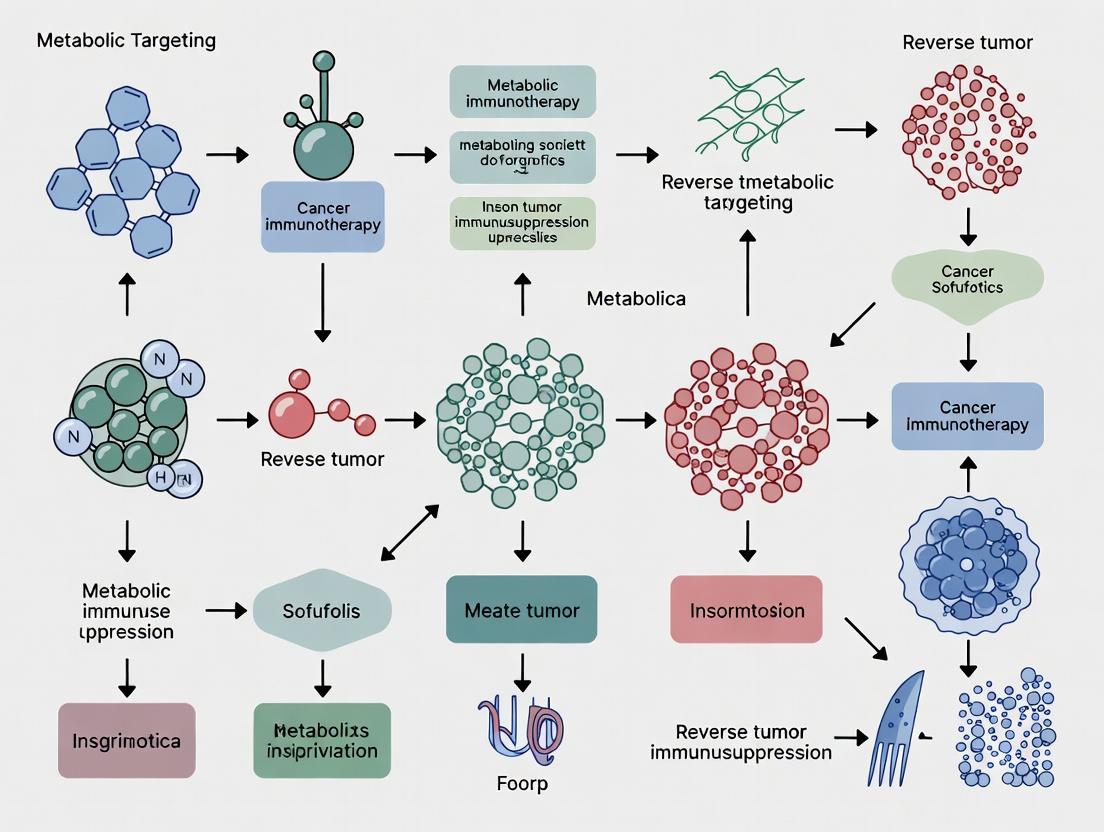
This article provides a comprehensive overview for researchers and drug development professionals on the pivotal role of tumor metabolism in driving immunosuppression.
Metabolic Targeting in Cancer Immunotherapy: Strategies to Disrupt the Immunosuppressive Tumor Microenvironment
Abstract
This article provides a comprehensive overview for researchers and drug development professionals on the pivotal role of tumor metabolism in driving immunosuppression. We explore the foundational mechanisms by which metabolic rewiring creates an immune-hostile tumor microenvironment (TME). The content details current methodological approaches for targeting key metabolic pathways—such as glycolysis, amino acid depletion, and lipid metabolism—to reinvigorate anti-tumor immunity. We address critical challenges in therapeutic development, including tumor heterogeneity and on-target/off-tumor toxicity, and present optimization strategies. Finally, we validate these approaches by comparing preclinical models with emerging clinical trial data, evaluating combination therapies, and discussing biomarker-driven patient stratification. This synthesis aims to guide the next generation of metabolic immunotherapies from bench to bedside.
The Metabolic Engine of Immunosuppression: Understanding the Tumor's Achilles' Heel
Metabolic Profiling of Key TME Cellular Compartments
Metabolic reprogramming creates a nutrient-depleted, waste-rich TME that suppresses immune cell function. Key metabolic features are quantified below.
Table 1: Core Metabolic Parameters in Murine and Human Tumor Models
| Parameter | Tumor Cell (e.g., B16 melanoma) | Myeloid-Derived Suppressor Cell (MDSC) | Tumor-Associated Macrophage (M2 TAM) | Cytotoxic T Cell (Exhausted) |
|---|---|---|---|---|
| Glucose Uptake | High (15-25 nmol/min/10⁶ cells) | Moderate (8-12 nmol/min/10⁶ cells) | Low (5-8 nmol/min/10⁶ cells) | Very Low (2-5 nmol/min/10⁶ cells) |
| Lactate Secretion | High (20-40 mM in interstitial fluid) | High | Moderate | Low |
| ATP Production | 70% Glycolysis, 30% OXPHOS | Primarily Glycolysis | Fatty Acid Oxidation (FAO) | Impaired OXPHOS |
| Key Immuno-metabolic Enzymes | PKM2, LDHA | ARG1, iNOS | ARG1, MGL1 | PD-1, TIM-3 |
| Primary Inhibitory Metabolite | Lactate | ROS, Peroxynitrite | Lactate, Adenosine | Kynurenine, Adenosine |
Application Notes & Detailed Protocols
Protocol 1: Quantifying Real-Time Metabolic Flux in Co-Cultured TME Cells
Objective: Measure extracellular acidification rate (ECAR) and oxygen consumption rate (OCR) of immune and tumor cells in co-culture using a Seahorse XFe Analyzer to model metabolic competition. Workflow: See Diagram 1.
Materials:
- Seahorse XFe96 Cell Culture Microplates (Agilent, 101085-004): For adherent or spheroid metabolic analysis.
- XF DMEM Medium, pH 7.4 (Agilent, 103575-100): Base medium for assay.
- Metabolic Modulators: Oligomycin (ATP synthase inhibitor), FCCP (uncoupler), Rotenone & Antimycin A (ETC inhibitors), 2-DG (glycolysis inhibitor).
- Cell Separation Kits: CD8⁺ T Cell Isolation Kit (Miltenyi Biotec, 130-096-495), Mouse Tumor Dissociation Kit (Miltenyi Biotec, 130-096-730).
Procedure:
- Cell Preparation: Isolate CD8⁺ T cells from mouse spleen and harvest B16-F10 tumor cells from culture. Prepare a co-culture at a 5:1 (T cell:Tumor) ratio (e.g., 50,000 T cells + 10,000 tumor cells/well). Seed in Seahorse microplate 24h prior to assay.
- Assay Medium Preparation: On the day, prepare XF DMEM supplemented with 10 mM Glucose, 2 mM L-Glutamine, and 1 mM Sodium Pyruvate. Adjust pH to 7.4.
- Sensor Cartridge Hydration: Hydrate the Seahorse XF sensor cartridge in calibration buffer at 37°C in a non-CO₂ incubator overnight.
- Compound Loading: Load modulators into injection ports: Port A - 1.5 µM Oligomycin; Port B - 1.0 µM FCCP; Port C - 100 nM Rotenone & 1 µM Antimycin A; Port D - 50 mM 2-DG.
- Run Assay: Calibrate cartridge, replace cell culture medium with assay medium, and run the XF Cell Mito Stress Test program followed by the Glycolytic Rate Assay. Data analysis is performed using Wave Desktop software.
Protocol 2: LC-MS/MS Analysis of Immunosuppressive Metabolites in TME Interstitial Fluid
Objective: Quantify key metabolites (e.g., lactate, kynurenine, adenosine, succinate) from in vivo-collected tumor interstitial fluid.
Materials:
- Microdialysis System (e.g., CMA 20 Probes, Harvard Apparatus): For in vivo sampling.
- LC-MS/MS System (e.g., Sciex Triple Quad 6500⁺): For targeted metabolomics.
- HILIC Chromatography Column (e.g., Waters XBridge BEH Amide, 2.1 x 150 mm, 2.5 µm).
- Stable Isotope-Labeled Internal Standards: ¹³C₃-Lactate, d₄-Kynurenine, ¹⁵N₅-Adenosine.
Procedure:
- Sample Collection: Implant a microdialysis probe into a subcutaneous murine tumor (e.g., MC38 colon carcinoma). Perfuse with sterile saline at 0.5 µL/min. Collect dialysate over 2-hour intervals into pre-chilled vials.
- Sample Preparation: Add 10 µL of internal standard mix to 90 µL of dialysate. Deproteinize by adding 300 µL of cold methanol:acetonitrile (1:1). Vortex, incubate at -20°C for 1h, centrifuge at 16,000g for 15min at 4°C. Transfer supernatant and dry under nitrogen. Reconstitute in 50 µL of 80% acetonitrile.
- LC-MS/MS Analysis: Inject 5 µL onto HILIC column. Mobile Phase A: 95% H₂O, 5% Acetonitrile, 20 mM Ammonium Acetate, pH 9.5. Mobile Phase B: Acetonitrile. Gradient: 85% B to 20% B over 12 min. Use negative/positive ESI switching. MRM transitions are monitored (e.g., lactate 89→43; kynurenine 209→146).
- Quantification: Generate calibration curves using analyte-specific internal standards. Concentrate metabolites as pmol/mg tumor weight/hour.
Protocol 3: In Vivo Assessment of Metabolic Modulators on TME Immunity
Objective: Evaluate the efficacy of a metabolic inhibitor (e.g., LDHA inhibitor GNE-140) on reversing T cell exhaustion in a syngeneic tumor model.
Materials:
- C57BL/6 mice (6-8 weeks old).
- LDHA Inhibitor: GNE-140 (MedChemExpress, HY-101872) formulated in 10% DMSO, 40% PEG300, 5% Tween-80, 45% saline.
- Anti-mouse CD8α depleting antibody (Bio X Cell, clone 2.43) for validation.
- Flow Cytometry Panel Antibodies: CD45 (30-F11), CD3 (17A2), CD8 (53-6.7), PD-1 (29F.1A12), TIM-3 (B8.2C12), Ki-67 (SolA15).
Procedure:
- Tumor Inoculation & Treatment: Inoculate 0.5x10⁶ B16-F10 cells subcutaneously into C57BL/6 mice. Randomize mice into Vehicle and GNE-140 (50 mg/kg, BID, oral gavage) groups when tumors reach ~50 mm³ (n=8/group).
- Tumor & Immune Cell Harvest: On day 14 post-treatment, sacrifice mice. Harvest tumors, weigh, and process into single-cell suspensions using the Tumor Dissociation Kit.
- Immune Phenotyping by Flow Cytometry: Stain cells with viability dye and surface antibodies (CD45, CD3, CD8, PD-1, TIM-3). Fix, permeabilize, and stain for intracellular Ki-67. Acquire data on a flow cytometer (e.g., BD Fortessa). Analyze using FlowJo software.
- Endpoint Analysis: Tumor volume, intratumoral CD8⁺ T cell frequency (% of live cells), and exhausted (PD-1⁺TIM-3⁺) vs. proliferating (Ki-67⁺) CD8⁺ T cell populations are compared between groups using a two-tailed Student's t-test.
The Scientist's Toolkit: Key Research Reagent Solutions
Table 2: Essential Reagents for TME Metabolic Research
| Item & Vendor (Example) | Function in Research |
|---|---|
| Seahorse XF Glycolytic Rate Assay Kit (Agilent, 103344-100) | Measures proton efflux rate to quantify glycolysis and compensatory mitochondrial metabolism in real-time. |
| CellTrace CFSE Cell Proliferation Kit (Thermo Fisher, C34554) | Tracks immune cell division history via dye dilution in proliferation assays post-metabolic intervention. |
| Arginase-1 Activity Assay Kit (Sigma, MAK112) | Quantifies ARG1 enzymatic activity from MDSC or TAM lysates, a key immunosuppressive readout. |
| Mouse IFN-γ ELISpot Kit (Mabtech, 3321-4A) | Measures functional recovery of T cells (IFN-γ spots) after metabolic modulation. |
| Recombinant Mouse IDO1 Protein (R&D Systems, 5338-ID) | Used as an enzyme source for in vitro kynurenine generation assays to test IDO1 inhibitors. |
| CD8a⁺ T Cell Isolation Kit, mouse (Miltenyi, 130-096-495) | Magnetic bead-based negative selection for high-purity T cell isolation from tumors/spleens. |
| MitoTracker Red CMXRos (Thermo Fisher, M7512) | Fluorescent dye for assessing mitochondrial mass and membrane potential in live cells via flow cytometry. |
| Lactate-Glo Assay (Promega, J5021) | Ultra-sensitive luminescent assay for quantifying lactate in cell culture media or tissue extracts. |
Signaling Pathway & Workflow Visualizations
Diagram 1: Tumor Metabolic Pathways Suppressing T Cell Function
Diagram 2: Seahorse Metabolic Flux Assay Workflow
Application Notes
The Warburg Effect, characterized by aerobic glycolysis and lactate production in the tumor microenvironment (TME), is a cornerstone of tumor immunosuppression. Tumor cells outcompete immune cells for glucose, while accumulating lactate and other metabolites, creating a metabolically hostile niche. This dysregulation directly inhibits antitumor immune effector functions, particularly of cytotoxic T cells and Natural Killer (NK) cells, while promoting regulatory T cell (Treg) and myeloid-derived suppressor cell (MDSC) functions. Metabolic targeting strategies aim to reprogram this landscape, restoring immune cell fitness and function to overcome immunosuppression.
Key Mechanisms of Immune Metabolic Suppression
- Glucose Competition: Tumor cells constitutively upregulate glucose transporters (GLUT1, GLUT3) and glycolytic enzymes (HK2, LDHA), creating a glucose-depleted TME.
- Lactate-Mediated Inhibition: High lactate export via monocarboxylate transporters (MCT4) leads to extracellular acidification, which impairs cytokine production (e.g., IFN-γ) and cytotoxic granule polarization in T cells.
- Signaling Modulation: Lactate stabilizes HIF-1α in Tregs and MDSCs, promoting their immunosuppressive functions.
- Mitochondrial Dysfunction: Chronic nutrient stress in T cells leads to fragmented mitochondria and impaired oxidative phosphorylation (OXPHOS), reducing their metabolic plasticity and long-term persistence.
Table 1: Metabolic Parameters in the Tumor Microenvironment vs. Normal Tissue
| Parameter | Normal Tissue (Approx.) | Tumor Microenvironment (Approx.) | Key Immunological Impact |
|---|---|---|---|
| Glucose Concentration | 5 mM | 0.2 - 1.0 mM | Limits glycolytic flux in effector T cells. |
| Lactate Concentration | 1-2 mM | 10-40 mM | Inhibits T/NK cell function; promotes Treg/MDSC function. |
| pH | 7.2 - 7.4 | 6.5 - 6.9 | Disrupts T cell receptor signaling and cytokine release. |
| ATP/ADP Ratio | High | Low in immune cells | Reduces energy availability for immune synapse formation. |
| HIF-1α Activity | Low (normoxic) | High (pseudohypoxic) | Drives immunosuppressive cell programming. |
Table 2: Impact of Metabolic Inhibitors on Immune Cell Function In Vivo
| Target / Compound | Tumor Model | Effect on Tumor Growth | Impact on TILs | Key Metabolic Change |
|---|---|---|---|---|
| LDHA Inhibitor (GSK2837808A) | Murine melanoma (B16) | ~40% reduction | Increased CD8+ T cell infiltration & IFN-γ+ | Reduced intratumoral lactate; increased T cell glucose uptake. |
| MCT4 Inhibitor (Syrosingopine) | Murine breast (4T1) | ~50% reduction | Decreased Tregs; increased CD8+/Treg ratio | Increased extracellular pH; reduced lactate export. |
| HK2 Inhibitor (2-DG + Metformin) | Murine pancreatic (KPC) | Synergistic ~60% reduction | Enhanced CD8+ T cell mitochondrial fitness | Reduced tumor glycolysis; shifted T cells to OXPHOS. |
Experimental Protocols
Protocol 1: Assessing Metabolic Competition via Intratumoral Metabolite Quantification
Objective: To quantitatively measure glucose, lactate, and ATP levels within the TME and paired immune cell populations.
Materials:
- Tumor-bearing mouse model (e.g., MC38, B16-F10).
- Phosphofructokinase (PFK) Activity Assay Kit (Fluorometric).
- Glucose Uptake Colorimetric/Fluorometric Assay Kit.
- Lactate Colorimetric Assay Kit II.
- ATP Determination Kit (Luminescence).
- Magnetic bead-based cell separation kits (e.g., CD8a+, CD4+).
- Liquid Chromatography-Mass Spectrometry (LC-MS) system.
Procedure:
- Tumor Processing: Harvest and weigh tumors. Mince one portion in ice-cold PBS for metabolite extraction (80% methanol). Centrifuge (15,000 x g, 10 min, 4°C). Dry supernatant and reconstitute for LC-MS.
- Immune Cell Isolation: Process another tumor portion into a single-cell suspension. Isolate CD8+ T cells and CD11b+ myeloid cells using magnetic-activated cell sorting (MACS). Lyse sorted cells in extraction buffer.
- Metabolite Assays:
- Glucose: Use the kit to measure depleted glucose in culture media after incubating tumor fragments ex vivo for 1 hour.
- Lactate: Use kit protocol on clarified tissue homogenate or cell lysate.
- ATP: Use luminescence kit on flash-frozen tissue powder or cell lysates.
- Data Analysis: Normalize all metabolite concentrations to tissue weight or cell count. Compare intratumoral levels to serum or normal tissue controls.
Protocol 2: Evaluating T Cell Metabolic Fitness in the TME
Objective: To profile the glycolytic and oxidative capacity of tumor-infiltrating lymphocytes (TILs).
Materials:
- Seahorse XF Analyzer (Agilent) with XF Glycolysis Stress Test and Mito Stress Test kits.
- RPMI 1640 media (without glucose, glutamine, bicarbonate).
- Substrates: Glucose (10mM), Oligomycin (1.5µM), FCCP (1µM), Rotenone/Antimycin A (0.5µM).
- Cell Stimulation Cocktail (e.g., PMA/Ionomycin).
- Flow cytometer with antibodies for CD3, CD8, CD4, Live/Dead.
Procedure:
- TIL Isolation: Generate single-cell suspension from tumors. Enrich for live lymphocytes using a density gradient. Do not activate polyclonally.
- Seahorse Assay Setup:
- Glycolytic Function: Plate 2x10^5 TILs/well in glucose-free media. Inject glucose, then oligomycin, finally 2-DG. Measure extracellular acidification rate (ECAR).
- Mitochondrial Function: Plate cells in complete media. Inject oligomycin, FCCP, then Rotenone/Antimycin A. Measure oxygen consumption rate (OCR).
- Parallel Flow Cytometry: Run identical TIL samples stained for surface markers and analyzed for viability and activation markers (e.g., PD-1, TIM-3) to correlate metabolic parameters with phenotype.
- Analysis: Calculate key parameters: Glycolytic Capacity (max ECAR after oligomycin), Glycolytic Reserve, Basal OCR, Maximal OCR, and ATP-linked respiration.
Protocol 3: Testing Metabolic ModulatorsIn Vivo
Objective: To assess the efficacy of LDHA or MCT4 inhibition in reversing TME immunosuppression.
Materials:
- LDHA inhibitor (e.g., GSK2837808A, 30 mg/kg) or MCT4 inhibitor (e.g., Syrosingopine, 10 mg/kg).
- Control vehicle (e.g., 10% DMSO, 40% PEG300, 5% Tween-80 in saline).
- C57BL/6 mice with established subcutaneous tumors (~50-100 mm³).
- Anti-PD-1 checkpoint inhibitor (optional, for combination therapy).
Procedure:
- Treatment: Randomize mice into groups (n=5-10): Vehicle, Inhibitor, Anti-PD-1, Combination. Administer compounds via intraperitoneal injection daily for 10-14 days.
- Monitoring: Measure tumor volume with calipers every 2-3 days. Monitor mouse weight for toxicity.
- Endpoint Analysis:
- Harvest tumors and process for Flow Cytometry to quantify CD8+ T cells, Tregs, MDSCs, and their activation/exhaustion status (IFN-γ, TNF-α, Granzyme B, PD-1, LAG-3).
- Isolate tumor-infiltrating CD8+ T cells for the Seahorse metabolic assays (Protocol 2).
- Snap-freeze tumor tissue for metabolite analysis (Protocol 1).
- Statistics: Compare tumor growth curves (mixed-model ANOVA) and endpoint immune cell populations (unpaired t-test or Mann-Whitney test).
Diagrams
Title: Warburg Effect Drives Immune Dysfunction in TME
Title: Metabolic Targeting to Reverse Immunosuppression
Title: Integrated In Vivo Metabolic-Immunology Workflow
The Scientist's Toolkit
Table 3: Key Research Reagent Solutions for Metabolic-Immunology Studies
| Item | Example Product / Assay | Primary Function in This Context |
|---|---|---|
| Glycolysis Inhibitor | 2-Deoxy-D-Glucose (2-DG), GSK2837808A (LDHAi) | Inhibits hexokinase or lactate dehydrogenase to directly target tumor glycolysis and modulate lactate production. |
| MCT Inhibitor | Syrosingopine, AZD3965 | Blocks monocarboxylate transporters (MCT1/4) to prevent lactate efflux from tumor cells, raising TME pH. |
| Metabolic Phenotyping Platform | Seahorse XF Analyzer (Agilent) | Measures real-time extracellular acidification rate (ECAR) and oxygen consumption rate (OCR) of live cells (e.g., TILs). |
| Intracellular Metabolite Quantification | LC-MS Kits, Lactate/Glucose/ATP Colorimetric Assay Kits (e.g., from Abcam, Cayman Chemical) | Precisely measures concentrations of key metabolites in tissue homogenates or sorted cell populations. |
| Immune Cell Isolation Kits | Magnetic-activated Cell Sorting (MACS) Kits (Miltenyi Biotec) | Rapid, high-purity isolation of specific immune cell subsets (CD8+, CD4+, Tregs, MDSCs) from tumors for downstream assays. |
| Fixable Viability Dye | eFluor 506, Zombie NIR (BioLegend) | Distinguishes live from dead cells in flow cytometry, crucial for accurate analysis of stressed TIL populations. |
| Metabolic Flow Cytometry Antibodies | Anti-GLUT1, Anti-phospho-S6 (Ser235/236) | Enables assessment of metabolic protein expression and signaling at the single-cell level alongside immunophenotyping. |
| T Cell Activation & Exhaustion Panel | Antibodies against CD3/CD8/CD4/IFN-γ/Granzyme B/PD-1/TIM-3/LAG-3 | Multiparametric profiling of T cell functional state within the metabolically suppressed TME. |
| Mitochondrial Dye | MitoTracker Deep Red, TMRE | Assesses mitochondrial mass and membrane potential in immune cells via flow cytometry or imaging. |
| In Vivo Checkpoint Inhibitor | Anti-mouse PD-1 (CD279) Clone RMP1-14 | Used in combination studies to test synergy between metabolic modulators and immunotherapy. |
Application Notes: Metabolic Targeting of Immunosuppressive Amino Acid Pathways
Within the broader thesis of metabolic targeting to reverse tumor immunosuppression, the enzymatic depletion of tryptophan (Trp) and arginine (Arg) represents a critical tumor immune escape mechanism. Tumors and stromal cells upregulate enzymes like Indoleamine 2,3-dioxygenase 1 (IDO1) and Arginase 1 (ARG1) to create an immunosuppressive microenvironment, starving T cells and promoting regulatory cell functions.
Table 1: Key Immunosuppressive Amino Acid-Depleting Enzymes & Clinical Targets
| Enzyme | Primary Cell Source | Substrate | Immunosuppressive Metabolites | Key Inhibitors (Phase) | Impact on T Cells |
|---|---|---|---|---|---|
| IDO1 | DCs, Macrophages, Tumor cells | Tryptophan | Kynurenine, Quinolinic acid | Epacadostat (Phase III failed), Navoximod (Phase II) | GCN2 activation, Cell cycle arrest, Anergy |
| TDO2 | Tumor cells (e.g., hepatoma, glioma) | Tryptophan | Kynurenine | LM10 (Preclinical) | Similar to IDO1 |
| ARG1 | Myeloid-Derived Suppressor Cells (MDSCs), M2 Macrophages | Arginine | Ornithine, Urea | CB-1158 (INCB001158, Phase II) | Decreased CD3ζ chain, Impaired proliferation |
Table 2: Quantitative Biomarkers in Preclinical/Clinical Studies
| Biomarker | Normal Range (Serum) | Immunosuppressive Threshold | Assay Method | Correlation with Outcome |
|---|---|---|---|---|
| Trp/Kynurenine Ratio | ~20-50 | < 10 | HPLC/MS, ELISA | Low ratio correlates with poor prognosis and resistance to PD-1 therapy. |
| Arginine (plasma) | 50-150 µM | < 30 µM | Colorimetric (e.g., AAT Bioquest), MS | Depletion correlates with reduced TIL function and increased MDSC presence. |
| IDO1 Activity | Not detectable | > 50 nM Kyn/hr/mg protein | HEK293 reporter assay, HPLC | Tumor activity > 3x baseline predicts non-response to checkpoint inhibitors. |
Detailed Experimental Protocols
Protocol 1: Assessing IDO1/TDO2 Activity in Tumor Cell Culture Supernatants
Objective: Quantify functional IDO1/TDO2 enzyme activity by measuring kynurenine production. Reagents: L-tryptophan, Ascorbic acid, Methylene blue, Trichloroacetic acid, Ehrlich’s reagent (p-Dimethylaminobenzaldehyde). Procedure:
- Seed tumor cells (e.g., HT-29, high IDO1) in 24-well plates (2×10^5 cells/well) in RPMI-1640 with 10% FBS.
- At 80% confluence, stimulate with 100-500 ng/mL IFN-γ for 24-48h to induce IDO1.
- Collect supernatant and centrifuge at 10,000xg for 5min to remove debris.
- In a 96-well plate, mix 100µL supernatant with 50µL of 30% (w/v) Trichloroacetic acid. Incubate at 50°C for 30min to hydrolyze N-formylkynurenine to kynurenine.
- Centrifuge plate at 2500xg for 10min.
- Transfer 75µL of the clear supernatant to a new plate and add 75µL of Ehrlich’s reagent (2% in glacial acetic acid).
- Read absorbance at 490nm immediately using a microplate reader.
- Calculate kynurenine concentration from a standard curve (0-200µM). Activity is expressed as µM kynurenine produced per 10^6 cells per 24h.
Protocol 2: Measuring T Cell Proliferation Under Arg-Depleted Conditions
Objective: Evaluate functional impact of ARG1-expressing MDSCs on CD8+ T cell proliferation. Reagents: Human CD8+ T Cell Isolation Kit, CellTrace Violet, Recombinant human ARG1, Nω-Hydroxy-nor-L-arginine (nor-NOHA, ARG inhibitor), Anti-CD3/CD28 Dynabeads. Procedure:
- Isolate CD8+ T cells from human PBMCs using negative selection magnetic beads.
- Label T cells with 2.5µM CellTrace Violet in PBS for 20min at 37°C. Quench with 5x volume of complete media.
- Seed labeled T cells (1×10^5/well) in a 96-well U-bottom plate in Arg-free RPMI-1640 supplemented with 10% dialyzed FBS.
- Establish conditions:
- Control: Add L-Arg to 100µM.
- Depleted: Add 10-100 mU/mL recombinant human ARG1.
- Inhibited: Pre-incubate ARG1 with 500µM nor-NOHA for 30min before adding.
- Activate T cells with anti-CD3/CD28 beads (bead:cell ratio 1:1).
- After 72-96h, harvest cells, stain for viability, and analyze CellTrace Violet dilution by flow cytometry. Use FlowJo software to calculate division index.
Pathway & Workflow Diagrams
Title: IDO1-Kynurenine Immunosuppressive Pathway
Title: Arginase-Mediated T Cell Suppression
Title: In Vitro T Cell Suppression Assay Workflow
The Scientist's Toolkit: Key Research Reagent Solutions
| Reagent / Kit Name | Supplier Examples | Primary Function in Research |
|---|---|---|
| Recombinant Human IDO1 | R&D Systems, Sino Biological | Positive control for enzyme activity assays; screening inhibitor potency. |
| DL-Dithiothreitol (DTT) | Sigma-Aldrich, Thermo Fisher | Essential reducing agent for maintaining IDO1 enzyme activity in assays. |
| Kynurenine ELISA Kit | ImmunoReagents, Cloud-Clone Corp | High-throughput quantification of kynurenine in serum/cell supernatants. |
| Arginase Activity Assay Kit | Sigma-Aldrich (MAK112), Cayman Chemical | Colorimetric measurement of ARG1 activity from cell lysates. |
| CellTrace Violet | Thermo Fisher Scientific | Fluorescent dye for tracking T cell proliferation via flow cytometry. |
| Nω-Hydroxy-nor-L-arginine (nor-NOHA) | Cayman Chemical, MedChemExpress | Potent, cell-permeable arginase inhibitor for control experiments. |
| Dialyzed FBS | Gibco, GeminiBio | Serum depleted of small molecules (<10kDa), essential for amino acid-depletion studies. |
| Amino Acid-Free Basal Media (RPMI, DMEM) | US Biological, Thermo Fisher | Base for formulating custom media with precise amino acid concentrations. |
| Human CD8+ T Cell Isolation Kit | Miltenyi Biotec, STEMCELL Tech. | Negative selection magnetic beads for high-purity T cell isolation. |
Within the broader thesis of Metabolic targeting to reverse tumor immunosuppression, understanding how the tumor microenvironment (TME) metabolically disrupts T-cell function is paramount. Lipid metabolism dysfunction—specifically, the accumulation of fatty acids and cholesterol—is a key mechanism by which tumors induce T-cell exhaustion and hyporesponsiveness. These lipids disrupt signaling, alter membrane fluidity, and induce harmful lipid peroxidation, ultimately crippling anti-tumor immunity. This document provides detailed application notes and protocols for studying these phenomena.
Table 1: Impact of Lipid Overload on Key T-cell Functional Metrics
| Metric | Control T-cells | T-cells in High FA/Chol Environment | Change | Key Experimental Model | Reference (Year) |
|---|---|---|---|---|---|
| Proliferation (CFSE dilution) | 85% divided | 45% divided | -40% | Human CD8+ T-cells, 200 µM palmitate | Ma et al. (2022) |
| IFN-γ production (pg/mL) | 1250 ± 210 | 480 ± 95 | -62% | Murine OT-I cells, tumor ascites | Yang et al. (2023) |
| Cytotoxic Degranulation (% CD107a+) | 65% ± 8 | 28% ± 6 | -57% | Human Tumor-Infiltrating Lymphocytes (TILs) | Varanasi et al. (2023) |
| Mitochondrial ROS (MFI) | 10,000 ± 1500 | 35,000 ± 4200 | +250% | CD8+ T-cells, LDL (100 µg/mL) | Kidani et al. (2022) |
| PD-1 Expression (MFI) | 5,200 ± 700 | 12,500 ± 1100 | +140% | Exhausted T-cells, 25-hydroxycholesterol | Sun et al. (2024) |
| Plasma Membrane Cholesterol (ng/µg protein) | 18 ± 3 | 42 ± 5 | +133% | T-cells from Apobe-/- tumor-bearing mice | Zhang et al. (2023) |
Table 2: Efficacy of Metabolic Interventions in Restoring T-cell Function
| Intervention Target | Compound/Approach | Result on IFN-γ Production | Result on Tumor Growth In Vivo | Model System |
|---|---|---|---|---|
| Fatty Acid Oxidation (FAO) | Etomoxir (40 µM) | Worsened exhaustion (↓ 30%) | No effect / Increased growth | B16 melanoma |
| Acetyl-CoA Carboxylase (ACC) | ND-646 (10 µM) | Improved by 110% | Reduced volume by 60% | MC38 colon carcinoma |
| Cholesterol Efflux | LXR agonist GW3965 (1 µM) | Improved by 85% | Enhanced anti-PD-1 efficacy | Apobe-/- mice |
| Lipid Peroxidation | Ferrostatin-1 (2 µM) | Improved by 70% | Not tested in vivo | TILs in culture |
| DGAT1 Inhibition | A922500 (100 nM) | Improved proliferation by 90% | Synergized with ACT | Adoptive Cell Transfer (ACT) model |
Experimental Protocols
Protocol 3.1:In VitroModeling of Lipid-Rich T-cell Dysfunction
Aim: To generate and assess T-cells with dysfunctional lipid metabolism mimicking the tumor microenvironment. Materials: See Scientist's Toolkit. Procedure:
- T-cell Isolation & Activation: Isolate naïve CD8+ T-cells from human PBMCs or mouse spleen using a negative selection kit. Activate cells with plate-bound anti-CD3 (5 µg/mL) and soluble anti-CD28 (2 µg/mL) in complete RPMI-1640 with 10% FBS and IL-2 (50 U/mL).
- Lipid Loading:
- Fatty Acid Treatment: Conjugate sodium palmitate or oleate to fatty acid-free BSA at a 6:1 molar ratio in serum-free media at 37°C for 1 hour. Add to T-cell culture at Day 2 post-activation at a final concentration of 100-200 µM. Include BSA-only controls.
- Cholesterol Treatment: Prepare methyl-β-cyclodextrin (MβCD) complexed with cholesterol. Solubilize cholesterol in MβCD (1:8 molar ratio) in serum-free media by vortexing and sonication. Filter sterilize (0.22 µm). Add to culture for final cholesterol concentration of 5-10 µg/mL.
- Culture & Harvest: Culture cells for an additional 3-5 days. Harvest cells for functional assays on Day 5-7.
- Functional Assessment:
- Metabolic Flux: Use a Seahorse XF Analyzer to measure Oxygen Consumption Rate (OCR) and Extracellular Acidification Rate (ECAR).
- Flow Cytometry: Stain for surface markers (PD-1, TIM-3, LAG-3), intracellular cytokines (IFN-γ, TNF-α), and transcription factors (TOX, TCF1). Use BODIPY 493/503 for neutral lipid droplet quantification and C11-BODIPY for lipid peroxidation.
- Cytotoxicity: Co-culture treated T-cells with target tumor cells at various E:T ratios. Measure target cell death via Incucyte caspase-3/7 reagent or LDH release assay.
Protocol 3.2: Assessing Membrane Order and Signaling Nanoclusters
Aim: To measure the impact of cholesterol loading on T-cell receptor (TCR) clustering and downstream signaling. Materials: See Scientist's Toolkit. Procedure:
- Cholesterol Modulation: Treat activated T-cells (as in 3.1) with MβCD-cholesterol (for loading) or MβCD alone (for depletion) for 1 hour at 37°C.
- Membrane Staining: Incubate cells with a fluorescent sterol probe (e.g., Filipin III, 50 µg/mL) or the membrane order dye Di-4-ANEPPDHQ (2 µM) for 20 min at 37°C. Wash thoroughly.
- Stimulate and Fix: Stimulate cells with anti-CD3/CD28 dynabeads or soluble antibody for 5 minutes. Immediately fix with 4% PFA for 15 min at room temperature.
- Immunofluorescence and Imaging: Permeabilize with 0.1% Triton X-100 (if needed for intracellular stains). Stain for TCR components (CD3ζ), downstream kinases (p-LCK), and adaptors (LAT) with fluorophore-conjugated antibodies. Mount on slides.
- Image Analysis: Acquire images using super-resolution microscopy (STORM or STED). Quantify cluster size, density, and co-localization coefficients between TCR and signaling molecules using software like ImageJ or Imaris.
Signaling Pathway & Experimental Workflow Diagrams
Diagram 1: Lipid-Driven Molecular Pathways in T-cell Dysfunction
Diagram 2: In Vitro Lipid Impairment T-cell Assay Workflow
The Scientist's Toolkit: Research Reagent Solutions
| Category | Item / Reagent | Function & Application in Research |
|---|---|---|
| Lipid Delivery | Fatty Acid-Free BSA | Carrier for solubilizing and delivering free fatty acids to cells in culture. |
| Methyl-β-Cyclodextrin (MβCD) | Used to either deplete (empty) or load (cholesterol-complexed) cellular membrane cholesterol. | |
| Metabolic Modulators | Etomoxir | Irreversible inhibitor of CPT1A, the rate-limiting enzyme for fatty acid oxidation (FAO). |
| ND-646 | Allosteric inhibitor of Acetyl-CoA Carboxylase (ACC), blocking de novo fatty acid synthesis. | |
| GW3965 | Synthetic agonist of Liver X Receptors (LXRs), promotes cholesterol efflux gene expression. | |
| Detection & Staining | BODIPY 493/503 | Neutral lipid dye for flow cytometric or microscopic quantification of lipid droplets. |
| C11-BODIPY 581/591 | Ratio-metric fluorescent probe for detecting lipid peroxidation in live cells. | |
| Filipin III | Polyene antibiotic that binds to unesterified cholesterol for fluorescence microscopy. | |
| Di-4-ANEPPDHQ | Environment-sensitive dye reporting on membrane lipid order (laurdan analog). | |
| Functional Assays | Seahorse XF Palmitate-BSA FAO Substrate | Pre-complexed substrate for directly measuring mitochondrial fatty acid oxidation. |
| CellTrace CFSE / Cell Proliferation Dye | Fluorescent dye for tracking sequential T-cell divisions via flow cytometry. | |
| Fixable Viability Dye | Distinguishes live/dead cells in flow cytometry, crucial for stressed T-cell cultures. | |
| Cell Culture | Human/Mouse CD8+ T-cell Isolation Kit | Negative selection magnetic beads for high-purity naïve T-cell isolation. |
| Recombinant IL-2 / IL-7 / IL-15 | Cytokines for T-cell activation, expansion, and memory phenotype maintenance. | |
| Annexin V Apoptosis Detection Kit | Measures phosphatidylserine exposure to quantify lipid-induced apoptosis. |
Within the tumor microenvironment (TME), metabolic reprogramming leads to the profound accumulation of specific metabolites, which are not merely waste products but active mediators of immunosuppression. Targeting these pathways is a central pillar of the broader thesis to reverse tumor immunosuppression through metabolic intervention. Lactate, adenosine, and kynurenine suppress anti-tumor immunity via distinct yet complementary mechanisms, inhibiting effector immune cells while promoting regulatory and suppressive populations. This document provides a comparative analysis of their roles, quantitative data summaries, and detailed protocols for key experiments in this field.
Table 1: Immunosuppressive Metabolites in the TME: Sources, Targets, and Key Effects
| Metabolite | Primary Cellular Source | Key Immunosuppressive Receptor/Target | Major Immune Cell Affected | Primary Effect | Reported Concentration in TME* |
|---|---|---|---|---|---|
| Lactate | Cancer cells (Warburg effect), TAMs | GPR81, HDACs (indirect), pH change | CD8+ T cells, NK cells, DCs, TAMs | Inhibits cytolysis, cytokine production, and differentiation; promotes M2 polarization | 10-30 mM (vs. ~1.5 mM in blood) |
| Adenosine | Extracellular ATP via CD39/CD73 ectoenzymes | A2A Receptor (A2AR), A2BR | CD8+ T cells, Th1 cells, Tregs, MDSCs | Suppresses TCR signaling, cytokine release; boosts Treg function & MDSC activity | 1-10 µM (hypoxic regions) |
| Kynurenine | Tryptophan via IDO1/TDO2 enzymes | Aryl Hydrocarbon Receptor (AhR) | CD8+ T cells, Th17 cells, Tregs, DCs | Drives T cell anergy/apoptosis, differentiates Tregs, tolerizes DCs | 1-5 µM (IDO1+ tumors) |
*Concentrations are representative ranges from murine and human solid tumor studies.
Table 2: Summary of Preclinical & Clinical Targeting Strategies
| Target Pathway | Example Inhibitors/Drugs | Experimental Model Outcome (Key Metric) | Clinical Trial Phase (Example) |
|---|---|---|---|
| Lactate | MCT1/4 inhibitors (AZD3965), LDHA inhibitors | Reduced tumor growth (~40-60% vs control); increased tumor-infiltrating CD8+ T cells | Phase I (AZD3965) |
| Adenosine | A2AR antagonists (ciforadenant), CD73 mAbs (oleclumab) | Improved tumor clearance in combo with anti-PD-1; reduced Treg suppression | Phase III (ciforadenant) |
| Kynurenine | IDO1 inhibitors (epacadostat), AhR antagonists | Synergy with checkpoint blockade; reversal of T cell exhaustion | Phase III (ECHO-301/KEYNOTE-252) |
Experimental Protocols
Protocol 1: In Vitro T Cell Suppression Assay by Metabolites Objective: To test the direct inhibitory effect of lactate, adenosine, or kynurenine on human CD8+ T cell activation and function. Materials: Isolated human CD8+ T cells, RPMI-1640 medium, metabolite stocks (sodium L-lactate, adenosine, L-kynurenine), anti-CD3/CD28 activation beads, IL-2, flow cytometry antibodies (anti-IFN-γ, anti-CD107a). Procedure:
- Isolate CD8+ T cells from PBMCs using a negative selection kit.
- Seed cells in 96-well U-bottom plates at 100,000 cells/well in metabolite-free medium.
- Treat cells with a titration of the metabolite (e.g., lactate: 10-30 mM; adenosine: 1-10 µM; kynurenine: 1-5 µM) 1 hour prior to activation.
- Activate T cells with anti-CD3/CD28 beads (1:1 bead:cell ratio) and add IL-2 (50 IU/mL).
- After 48-72 hours, harvest cells.
- For proliferation: Analyze by CFSE dilution or Ki67 staining via flow cytometry.
- For function: Re-stimulate with PMA/ionomycin in the presence of brefeldin A for 5 hours, then perform intracellular staining for IFN-γ and surface staining for CD107a (degranulation marker).
- Analyze via flow cytometry. Calculate % inhibition relative to activated, metabolite-free controls.
Protocol 2: Measuring Metabolite Levels in Tumor Interstitial Fluid (TIF) Objective: To quantitatively assess the concentration of immunosuppressive metabolites in the murine TME. Materials: Tumor-bearing mice, 10 kDa MWCO microcentrifuge filters, LC-MS/MS system, lactate assay kit, sterile PBS. Procedure:
- Sacrifice mouse and excise tumor.
- Weigh tumor and place in a 0.5 mL microcentrifuge tube with a small hole punched in the bottom.
- Nest this tube inside a 1.5 mL collection tube and centrifuge at 10,000 x g for 15 min at 4°C.
- Collect the clarified TIF in the outer tube. Filter through a 10 kDa spin filter.
- For Lactate: Use a commercial fluorometric assay kit per manufacturer's instructions.
- For Adenosine/Kynurenine: Derivatize if necessary and analyze by LC-MS/MS using stable isotope-labeled internal standards (e.g., adenosine-13C5, kynurenine-d4).
- Normalize metabolite concentrations to tumor weight or total protein content in TIF.
Signaling Pathway Diagrams
The Scientist's Toolkit: Research Reagent Solutions
| Item / Reagent | Function / Application in Research | Example Product/Catalog |
|---|---|---|
| Human CD8+ T Cell Isolation Kit | Negative selection for high-purity, untouched CD8+ T cells for functional assays. | Miltenyi Biotec, Human CD8+ T Cell Isolation Kit |
| Sodium L-Lactate (Cell Culture Grade) | Prepare stock solutions for in vitro treatment to mimic TME lactate levels. | Sigma-Aldrich, L7022 |
| A2A Receptor Antagonist (Ciforadenant) | Tool compound for in vitro/vivo studies to block adenosine signaling. | MedChemExpress, AZD4635 |
| IDO1 Inhibitor (Epacadostat) | Small molecule inhibitor to test functional reversal of kynurenine-mediated suppression. | Selleckchem, INCB024360 |
| Recombinant Human CD39/CD73 Enzymes | To generate physiological adenosine from ATP in co-culture systems. | R&D Systems, recombinant proteins |
| Anti-Human/Mouse IDO1 Antibody | For detecting IDO1 expression in tumor or immune cells by IHC/flow cytometry. | Cell Signaling Technology, D5J4E |
| AhR Reporter Assay Kit | To measure AhR activation by kynurenine or test AhR antagonists. | Indigo Biosciences, AhR Reporter Assay |
| LC-MS/MS Metabolite Standards | Isotope-labeled internal standards for precise quantification of adenosine, kynurenine. | Cambridge Isotope Laboratories, adenosine-13C5; kynurenine-d4 |
| Extracellular Flux Analyzer (Seahorse) | To measure real-time glycolytic rate and lactate production of cells. | Agilent, Seahorse XF Analyzer |
| GPR81 (HCAR1) Agonist/Antagonist | Pharmacological tools to dissect specific lactate receptor signaling. | Tocris, 3,5-DHBA (agonist) |
Application Notes: Metabolic Checkpoints in the TME
The tumor microenvironment (TME) establishes metabolic checkpoints that drive immunosuppression. Hypoxia and nutrient deprivation rewire cellular metabolism, directly impairing anti-tumor immunity. These notes detail key mechanisms and quantitative relationships.
Table 1: Impact of Metabolic Stressors on Immune Cell Function
| Metabolic Stressor | Key Sensor/Pathway | Effect on Cytotoxic T Cells | Effect on Tregs/MDSCs | Reported Quantitative Change |
|---|---|---|---|---|
| Hypoxia (1-2% O₂) | HIF-1α Stabilization | ↑ PD-1, LAG-3, TIM-3; ↓ IFN-γ production | ↑ Treg suppressive function; ↑ MDSC recruitment | ~2-5 fold increase in PD-1 expression; IFN-γ↓ by 70-80% |
| Glucose Deprivation | AMPK activation, mTORC1 inhibition | ↓ Glycolysis, ↓ Cytokine production, ↑ Anergy | Treg stability maintained via fatty acid oxidation | TCR signaling reduced by ~50% in low glucose vs. high glucose |
| Lactate Accumulation (10-30 mM) | GPR81, pH modulation | ↓ Proliferation, ↓ Cytotoxicity, ↓ mTOR activity | ↑ Treg differentiation; ↑ M2 macrophage polarization | Proliferation inhibited by 40-60% at 20mM lactate |
| Amino Acid Deprivation (e.g., Arg, Trp) | GCN2, mTORC1 | ↓ CD3ζ chain expression, Cell cycle arrest | ↑ IDO/TDO activity in MDSCs & DCs | Arginase activity in MDSCs can deplete 0.4mM Arg in <24h |
Table 2: Metabolic Modulators in Preclinical/Clinical Development
| Target/Pathway | Example Agents | Primary Mechanism | Phase of Development | Reported Efficacy Metric (in vivo models) |
|---|---|---|---|---|
| HIF-1α | Acriflavine, PT2385 | HIF-1α dimerization inhibitor | Preclinical / Phase I | Reduced tumor growth by ~60% in RCC models; increased CD8+ TILs 2-fold |
| mTOR | Rapalogs (Everolimus), ATP-competitive inhibitors | mTORC1/mTORC2 inhibition | FDA-approved (cancer), Clinical trials (combo) | Synergy with anti-PD-1: tumor regression in ~40% of anti-PD-1 refractory models |
| AMPK | Metformin, A-769662 | AMPK activator, mimics energy stress | Clinical trials (combo therapy) | Metformin + anti-CTLA-4 improved survival from 20% to 60% in murine melanoma |
| Adenosine Pathway | Anti-CD73, Anti-A2AR mAbs | Inhibits immunosuppressive adenosine production | Phase I-III | Anti-CD73 increased anti-PD-1 efficacy: ORR from 10% to 50% in resistant models |
| IDO1 | Epacadostat, BMS-986205 | Tryptophan catabolism inhibitor | Phase III (halted monotherapy) | Reduced kynurenine levels by >90% in plasma; combo studies ongoing |
Detailed Experimental Protocols
Protocol 1: Assessing T Cell Exhaustion and Metabolism under Hypoxia
Objective: To quantify the induction of exhaustion markers and metabolic shifts in human CD8+ T cells cultured under tumor-like hypoxic conditions.
Materials: See "The Scientist's Toolkit" below. Procedure:
- T Cell Isolation & Activation: Isolate CD8+ T cells from healthy donor PBMCs using a negative selection kit. Activate cells with plate-bound anti-CD3 (5 µg/mL) and soluble anti-CD28 (2 µg/mL) in complete RPMI (10% FBS, IL-2 at 100 IU/mL) for 24h under normoxia (21% O₂, 5% CO₂).
- Hypoxic Conditioning: Split activated T cells. Maintain control in normoxia. Place experimental group in a hypoxia chamber or incubator pre-equilibrated to 1% O₂, 5% CO₂, balance N₂. Culture for 48-72h.
- Surface Staining for Exhaustion Markers: Harvest cells, stain with viability dye. Incubate with fluorescently conjugated antibodies against PD-1, TIM-3, LAG-3, and CD39 for 30min at 4°C. Analyze via flow cytometry. Include isotype and FMO controls.
- Intracellular Metabolic Profiling (Seahorse): Simultaneously, plate rested T cells (2x10⁵/well) on a Seahorse XFp/XFe96 cell culture plate. Under hypoxia/normoxia, perform a Seahorse XF Glycolytic Rate Assay or Mito Stress Test per manufacturer's protocol. Key metrics: Glycolysis, Glycolytic Capacity, Basal OCR, Maximal OCR.
- Data Analysis: Compare geometric MFI of exhaustion markers and calculate extracellular acidification rate (ECAR)/oxygen consumption rate (OCR) ratios. Statistical analysis via Student's t-test (normally distributed) or Mann-Whitney U test.
Protocol 2: Evaluating mTORC1 Inhibition on Treg Suppression and Teff Function
Objective: To determine the differential effect of mTOR inhibition on regulatory T cell (Treg) stability and effector T cell (Teff) function.
Materials: See "The Scientist's Toolkit". Procedure:
- Cell Sorting: Isolate CD4+CD25⁺CD127lo Tregs and CD4+CD25⁻ conventional T cells (Tconv) from human PBMCs using FACS.
- Pre-treatment: Culture Tregs and Tconv separately for 6h with vehicle (DMSO) or mTOR inhibitor (e.g., Torin 1, 250 nM) in complete media.
- Suppression Assay: Label Tconv with CellTrace Violet (CTV). Co-culture pre-treated Tregs with CTV-labeled Tconv (Treg:Tconv ratios: 1:1, 1:2, 1:4) in the presence of anti-CD3/CD28 beads. Maintain vehicle or inhibitor in culture. After 72-96h, harvest cells.
- Flow Cytometry Analysis: Stain for viability and FoxP3 (Treg stability). Analyze Tconv proliferation via CTV dilution. Calculate % suppression = (1 - [% divided Tconv in co-culture / % divided Tconv alone]) x 100.
- Metabolic Analysis (Optional): Post 6h pre-treatment, analyze Tregs and Tconv via Seahorse or metabolomics (e.g., LC-MS for amino acids, TCA intermediates).
Pathway & Workflow Diagrams
The Scientist's Toolkit: Key Research Reagent Solutions
| Reagent / Material | Supplier Examples | Function in Metabolic Checkpoint Research |
|---|---|---|
| Seahorse XF Analyzer & Kits | Agilent Technologies | Real-time measurement of cellular metabolic fluxes (OCR, ECAR) in live cells under different conditions. |
| Hypoxia Chamber/Workstation | Baker Ruskinn, STEMCELL Tech | Maintains precise low-oxygen (e.g., 0.1-2% O₂) environments for cell culture, mimicking the TME. |
| Recombinant Human IL-2 | PeproTech, R&D Systems | Critical cytokine for T cell expansion and survival in in vitro activation and exhaustion models. |
| Fluorochrome-conjugated Antibodies (anti-PD-1, TIM-3, LAG-3) | BioLegend, BD Biosciences | Surface staining for immune checkpoint proteins to quantify exhaustion via flow cytometry. |
| CellTrace Proliferation Kits (Violet, CFSE) | Thermo Fisher Scientific | Label cells to track division history and quantify proliferation in suppression/co-culture assays. |
| mTOR Inhibitors (Torin 1, Rapamycin) | Selleck Chem, Tocris | Pharmacologic tools to inhibit mTORC1 (Rapamycin) or both mTORC1/2 (Torin 1) to dissect pathway roles. |
| AMPK Activator (A-769662, Metformin) | Cayman Chemical, Sigma | Tool compounds to directly (A-769662) or indirectly (Metformin) activate AMPK signaling. |
| Human T Cell Isolation Kits (Naive, Memory, Treg) | Miltenyi Biotec, STEMCELL | Negative or positive selection kits for high-purity isolation of specific T cell subsets from PBMCs. |
| FoxP3 / Transcription Factor Staining Buffer Set | Thermo Fisher Scientific | Permeabilization buffers for reliable intracellular staining of metabolic regulators (FoxP3, HIF-1α). |
| L-Lactate Assay Kit (Colorimetric/Fluorometric) | Sigma-Aldrich, Abcam | Quantifies lactate concentration in cell culture supernatant, a key metric of glycolytic flux. |
From Mechanism to Medicine: Developing Metabolic-Targeting Agents and Protocols
Application Notes
Targeting the metabolic enzymes Hexokinase 2 (HK2), Lactate Dehydrogenase A (LDHA), and Indoleamine 2,3-dioxygenase 1 (IDO1) represents a strategic approach to disrupt the metabolic symbiosis between tumor cells and immunosuppressive cells within the tumor microenvironment (TME). This strategy aligns with the thesis that metabolic reprogramming is a core mechanism of tumor immunosuppression. Inhibiting these enzymes concurrently or in sequence can:
- Deplete Tumor Energy: HK2 and LDHA inhibition disrupts glycolytic flux, reducing ATP and biomass production crucial for rapid tumor proliferation.
- Attenuate Immunosuppressive Metabolite Production: LDHA inhibition reduces lactate efflux, alleviating acidosis that inhibits T-cell and NK-cell function. IDO1 inhibition blocks kynurenine production, reversing the suppression of effector T cells and the expansion of regulatory T cells (Tregs).
- Enhance Immune Infiltration: By normalizing the metabolic and biochemical landscape of the TME, these inhibitors can improve the recruitment, activation, and function of cytotoxic immune cells, potentially synergizing with immune checkpoint blockade.
Table 1: Key Target Enzymes, Their Roles, and Representative Inhibitors
| Enzyme | Primary Role in Tumor & TME | Metabolic Impact of Inhibition | Representative Pharmacological Inhibitors (Examples) |
|---|---|---|---|
| Hexokinase 2 (HK2) | First rate-limiting enzyme of glycolysis; bound to mitochondrial voltage-dependent anion channel (VDAC) for preferential ATP access. | Reduces glucose uptake, glycolytic flux, and pentose phosphate pathway intermediates; promotes mitochondrial apoptosis. | 2-Deoxy-D-glucose (2-DG), Lonidamine, 3-Bromopyruvate (3-BP) |
| Lactate Dehydrogenase A (LDHA) | Catalyzes the final step of anaerobic glycolysis, converting pyruvate to lactate and regenerating NAD+. | Reduces lactate production, alleviating TME acidosis; increases intracellular pyruvate, redirecting flux to mitochondria. | FX11, GSK2837808A, NHI-Glc-2 |
| Indoleamine 2,3-Dioxygenase 1 (IDO1) | Rate-limiting enzyme of tryptophan catabolism via the kynurenine pathway, expressed in tumor and stromal cells. | Restores local tryptophan levels; reduces immunosuppressive kynurenines, reversing T-cell anergy and Treg induction. | Epacadostat, Navoximod (NLG919), BMS-986205 |
Table 2: Exemplary In Vitro Efficacy Data for Selected Inhibitors
| Inhibitor (Target) | Cell Line Model | Assay Readout | Typical IC50 / Effective Concentration | Key Observed Effect |
|---|---|---|---|---|
| 2-DG (HK2) | MDA-MB-231 (Breast Cancer) | ATP Production (Luminescence) | 1-5 mM | ~70% reduction in cellular ATP at 5 mM |
| FX11 (LDHA) | Raji (Lymphoma) | Extracellular Lactate (Colorimetric) | 40 µM | ~60% reduction in lactate at 50 µM |
| Epacadostat (IDO1) | Hela cells + IFN-γ stimulation | Kynurenine Production (HPLC/MS) | 10-100 nM | >90% enzyme activity inhibition at 1 µM |
Experimental Protocols
Protocol 1: In Vitro Assessment of Glycolytic Inhibition (HK2/LDHA) Aim: To measure the impact of HK2/LDHA inhibitors on extracellular acidification rate (ECAR) and lactate production. Workflow:
- Cell Seeding: Seed tumor cells (e.g., 20,000 cells/well) in a Seahorse XF96 cell culture microplate. Incubate overnight.
- Inhibitor Treatment: Replace medium with unbuffered assay medium containing serial dilutions of inhibitor (e.g., 2-DG or FX11) or DMSO control. Pre-incubate for 1 hour in a non-CO₂ incubator.
- Seahorse XF Glycolysis Stress Test:
- Load baseline measurements.
- Inject Glucose (final 10 mM).
- Inject Oligomycin (ATP synthase inhibitor, final 1 µM).
- Inject 2-DG (final 50 mM) as a control.
- Data Analysis: Calculate key parameters: Glycolysis (ECAR after glucose), Glycolytic Capacity (ECAR after oligomycin), and Glycolytic Reserve.
- Lactate Assay Validation: Parallel cultures in a 96-well plate. Collect supernatant after 6-24h treatment. Quantify lactate using a commercial colorimetric/fluorometric kit. Normalize to cell count.
Protocol 2: In Vitro Assessment of IDO1 Activity and Immune Cell Modulation Aim: To quantify IDO1-mediated kynurenine production and its functional impact on T cells. Workflow:
- IDO1 Induction & Inhibition: Seed IDO1-expressing tumor cells or dendritic cells. Stimulate with IFN-γ (100 ng/mL) for 24h to induce IDO1. Co-treat with titrated IDO1 inhibitor (e.g., Epacadostat).
- Kynurenine Measurement: Collect cell-free supernatant. Mix with equal volume of Ehrlich's reagent (4-dimethylaminobenzaldehyde in acetic acid). Incubate 10 min at RT, measure absorbance at 490 nm. Compare to a kynurenine standard curve.
- T-cell Suppression Co-culture:
- Activate human peripheral blood mononuclear cells (PBMCs) with anti-CD3/CD28 beads.
- Culture activated T cells in conditioned medium from Step 1 (supplemented with fresh IL-2).
- After 72-96h, measure T-cell proliferation (via CFSE dilution or EdU incorporation) and cytokine production (IFN-γ ELISA).
Protocol 3: In Vivo Combination Efficacy Study Aim: To evaluate the anti-tumor efficacy and immunomodulatory effects of HK2/LDHA/IDO1 inhibitor combinations in a syngeneic mouse model. Workflow:
- Tumor Inoculation: Implant 0.5-1x10⁶ syngeneic tumor cells (e.g., MC38, CT26) subcutaneously into C57BL/6 or BALB/c mice.
- Treatment Regimen: Randomize mice into groups (n=8-10) when tumors reach ~50 mm³. Administer via oral gavage or i.p. injection:
- Group 1: Vehicle control.
- Group 2: LDHA inhibitor (e.g., GSK2837808A, 50 mg/kg, daily).
- Group 3: IDO1 inhibitor (e.g, Epacadostat, 100 mg/kg, BID).
- Group 4: Combination of Groups 2 & 3.
- Monitoring: Measure tumor volume (calipers) and body weight 3x weekly.
- Endpoint Analysis: At study end, harvest tumors and spleen.
- Process tumors for flow cytometry: stain for immune markers (CD45, CD3, CD4, CD8, FoxP3, CD11b, Gr1, etc.).
- Analyze serum/lysates for metabolite levels (lactate, kynurenine) via ELISA/MS.
- Perform IHC for cleaved caspase-3 (apoptosis) and CD8+ T-cell infiltration.
Diagrams (Generated with Graphviz)
Title: Metabolic-Immune Axis Targeted by HK2, LDHA, and IDO1 Inhibitors
Title: In Vivo Combination Efficacy Study Workflow
The Scientist's Toolkit: Research Reagent Solutions
Table 3: Essential Materials for Metabolic-Immune Targeting Studies
| Category | Item/Reagent | Function/Application | Example Vendor/Product |
|---|---|---|---|
| Cell-Based Assays | Seahorse XF Glycolysis Stress Test Kit | Measures real-time extracellular acidification rate (ECAR) to profile glycolysis. | Agilent Technologies |
| Lactate Colorimetric/Fluorometric Assay Kit | Quantifies lactate concentration in cell culture supernatant or serum. | BioVision, Sigma-Aldrich | |
| Kynurenine Colorimetric Assay Kit / ELISA | Measures IDO1 activity via its product, kynurenine, in biological samples. | Sigma-Aldrich, Immundiagnostik AG | |
| Immune Profiling | Fluorescent Anti-Mouse Antibody Panel (CD45, CD3, CD4, CD8, FoxP3, etc.) | Enables multiparametric immune cell phenotyping by flow cytometry. | BioLegend, BD Biosciences |
| Mouse IFN-γ ELISA Kit | Quantifies effector T-cell cytokine production in co-culture supernatants. | R&D Systems, Thermo Fisher | |
| In Vivo Research | Syngeneic Tumor Cell Lines (MC38, CT26, 4T1) | Immunocompetent mouse tumor models for studying therapy-immune interactions. | ATCC, Charles River Labs |
| Selective Small Molecule Inhibitors (e.g., GSK2837808A, Epacadostat) | Pharmacological tools for in vivo target validation and efficacy studies. | MedChemExpress, Selleckchem | |
| General Tools | Cell Titer-Glo Luminescent Cell Viability Assay | Measures cellular ATP levels as a proxy for viability/metabolic health. | Promega |
| Intracellular Flow Cytometry Staining Buffer Set | For staining transcription factors (FoxP3) and intracellular cytokines. | Thermo Fisher |
Application Notes
Within the broader thesis of metabolic targeting to reverse tumor immunosuppression, a critical focus is the tumor microenvironment's (TME) nutrient deprivation strategy. Tumor cells and immunosuppressive cells, such as myeloid-derived suppressor cells (MDSCs) and M2 macrophages, overexpress enzymes like Arginase 1 (ARG1) and consume glutamine at high rates. This depletes L-arginine and L-glutamine, essential amino acids for T-cell proliferation, activation, and function. This creates an immunosuppressive TME that cripples anti-tumor immunity. Targeted pharmacological inhibition of arginase and antagonism of glutamine metabolism aim to restore these nutrients, thereby revitalizing T-cell and NK-cell function and overcoming a key mechanism of tumor immune evasion.
Key Targets & Mechanisms
Arginase Inhibition:
- Target: ARG1 (cytosolic) and ARG2 (mitochondrial). ARG1 in MDSCs is a primary target.
- Mechanism: Converts L-arginine to L-ornithine and urea. Inhibition increases extracellular and intracellular L-arginine pools.
- Impact on T-cells: Elevated L-arginine levels support increased expression of the CD3ζ chain, enhance T-cell receptor (TCR) signaling, promote cell cycle progression, and improve memory T-cell formation. It reverses the nitric oxide synthase (NOS)-uncoupling induced by low arginine, reducing reactive nitrogen species.
Glutamine Antagonism:
- Target: Primarily glutaminase (GLS), the first enzyme in glutamine catabolism, converting glutamine to glutamate. Also, glutamine transporters (e.g., SLC1A5, SLC7A5/SLC3A2).
- Mechanism: Antagonists block tumor and immunosuppressive cells from consuming glutamine, making it available for immune cells. Some agents (e.g., DON, 6-diazo-5-oxo-L-norleucine) are glutamine analogs that irreversibly inhibit multiple glutamine-utilizing enzymes.
- Impact on Immune Cells: Restored glutamine availability supports T-cell activation, differentiation, and mitochondrial oxidative metabolism. It can shift the balance from immunosuppressive M2 macrophages towards pro-inflammatory M1 phenotypes.
Table 1: Efficacy of Select Arginase Inhibitors In Vivo
| Inhibitor (Example) | Model | Dose & Route | Key Metric Change vs. Control | Reference Year |
|---|---|---|---|---|
| CB-1158 (INCB001158) | CT26 colon carcinoma (syngeneic) | 100 mg/kg, BID, oral | Tumor Growth Inhibition: ~70%; Intratumoral CD8+ T-cells: +300% | 2018 |
| OATD-02 | 4T1 mammary carcinoma (syngeneic) | 3 mg/kg, QD, oral | Tumor Volume: -58%; Metastatic Nodules (lungs): -75% | 2023 |
| Nor-NOHA | B16 melanoma (syngeneic) | 40 mg/kg, daily, i.p. | Tumor Weight: -50%; MDSC Infiltration: -40% | 2014 |
Table 2: Impact of Glutamine Antagonists on Immune Parameters In Vitro
| Antagonist (Example) | Cell System | Concentration | Key Immune Cell Effect | Reference Year |
|---|---|---|---|---|
| CB-839 (Telaglenastat) | Human PBMCs co-cultured with PC-3 cells | 0.1 µM | T-cell IFN-γ production: +150% (when combined with anti-PD-1) | 2020 |
| JHU-083 (Prodrug of DON) | Mouse splenocytes + LPS/IL-4 | 0.5 µM | M1/M2 Macrophage Ratio: 3.5-fold increase | 2018 |
| V-9302 (SLC1A5/ASCT2 inhibitor) | OT-I T-cells + B16-OVA tumor cells | 10 µM | Antigen-specific T-cell cytotoxicity: +80% | 2019 |
Experimental Protocols
Protocol 1:In VitroAssessment of Arginase Inhibitor on Human T-cell Function
Aim: To evaluate the effect of an arginase inhibitor on T-cell proliferation and cytokine production in an arginine-depleted milieu mimicking the TME.
Materials:
- Human CD3+ T-cells (isolated from PBMCs)
- Arginine-free RPMI 1640 medium
- Complete T-cell medium (with Arginine)
- Recombinant human IL-2
- Anti-CD3/CD28 Dynabeads
- Test arginase inhibitor (e.g., CB-1158, Nor-NOHA)
- Recombinant human ARG1 enzyme (for preconditioning medium)
- CFSE Cell Division Tracker Kit
- ELISA kits for IFN-γ and Granzyme B
Procedure:
- Medium Preconditioning: Generate arginine-depleted medium by incubating arginine-free RPMI with recombinant human ARG1 (1 U/mL) for 4 hours at 37°C. Terminate reaction by heat-inactivation (70°C, 10 min) and filter sterilize.
- T-cell Activation & Culture: Label isolated CD3+ T-cells with CFSE according to kit instructions. Activate cells using anti-CD3/CD28 Dynabeads at a 1:1 bead-to-cell ratio.
- Experimental Setup: Plate activated T-cells (1e5 cells/well in 96-well plate) in four conditions:
- A: Complete medium (+Arg, +DMSO vehicle)
- B: Arginine-depleted medium (-Arg, +DMSO)
- C: Arginine-depleted medium + Arginase Inhibitor (e.g., 10 µM)
- D: Complete medium + Arginase Inhibitor (10 µM) Add IL-2 (50 IU/mL) to all wells. Culture for 96 hours.
- Analysis:
- Proliferation: Analyze CFSE dilution by flow cytometry at 96h.
- Cytokine Production: Collect supernatant at 72h. Quantify IFN-γ and Granzyme B by ELISA.
- Viability: Assess using Annexin V/PI staining via flow cytometry.
Protocol 2:In VivoEvaluation of a Glutamine Antagonist in a Syngeneic Tumor Model
Aim: To investigate the anti-tumor efficacy and immunomodulatory effects of a glutamine antagonist (e.g., JHU-083) alone and in combination with immune checkpoint blockade.
Materials:
- C57BL/6 mice
- B16-F10 melanoma cells (or other syngeneic line)
- Glutamine antagonist (JHU-083 in sterile saline)
- Anti-PD-1 antibody (clone RMP1-14)
- Isotype control antibody
- Flow cytometry antibodies: CD45, CD3, CD8, CD4, FoxP3, CD11b, Gr-1, F4/80
- LC-MS/MS reagents for amino acid quantification
Procedure:
- Tumor Inoculation: Inject 5e5 B16-F10 cells subcutaneously into the right flank of mice. Randomize mice into treatment groups (n=8-10) when tumors reach ~50 mm³.
- Treatment Groups:
- Group 1: Vehicle control (saline, i.p., daily)
- Group 2: JHU-083 (e.g., 20 mg/kg, i.p., daily)
- Group 3: Anti-PD-1 (200 µg, i.p., every 3 days)
- Group 4: JHU-083 + Anti-PD-1
- Monitoring: Measure tumor dimensions with calipers every 2-3 days. Calculate volume = (length x width²)/2. Monitor mouse weight.
- Terminal Analysis (Day 21 or endpoint):
- Tumor Processing: Harvest tumors, weigh, and create a single-cell suspension.
- Immune Profiling: Stain cells for flow cytometry panels to quantify tumor-infiltrating lymphocytes (CD8+, CD4+ T-cells, Tregs) and myeloid cells (MDSCs, macrophages).
- Metabolite Analysis: Snap-freeze a portion of tumor. Perform LC-MS/MS to quantify intra-tumoral levels of glutamine, glutamate, and related metabolites.
- Serum Analysis: Collect serum for cytokine profiling (IFN-γ, TNF-α) by multiplex assay.
- Statistical Analysis: Compare tumor growth curves (two-way ANOVA) and endpoint immune cell infiltrates (one-way ANOVA with post-hoc test).
Visualizations
Diagram Title: Arginase Inhibitor Mechanism in Tumor Immunometabolism
Diagram Title: In Vivo Workflow for Glutamine Antagonist Testing
The Scientist's Toolkit
Table 3: Key Research Reagent Solutions for Metabolic Immune Oncology Studies
| Item / Reagent | Function / Application in Research | Example Vendor/Cat. Number (for reference) |
|---|---|---|
| Recombinant Human ARG1 Protein | Used to create arginine-depleted medium in vitro to mimic the TME for T-cell functional assays. | R&D Systems, 6548-AR-010 |
| CB-1158 (INCB001158) | A potent, orally bioavailable small-molecule arginase inhibitor. Key tool compound for in vitro and in vivo proof-of-concept studies. | MedChemExpress, HY-101895 |
| JHU-083 / DRP-104 (Sirpiglenastat) | A prodrug of the glutamine antagonist DON with improved tolerability. Critical for in vivo evaluation of glutamine blockade. | MedChemExpress, HY-112654 |
| V-9302 | A selective, competitive inhibitor of the glutamine transporter ASCT2 (SLC1A5). Used to study transporter-specific inhibition. | Tocris, 6819 |
| Glutamine/Glnzyme Assay Kit | Fluorometric or colorimetric assay to quantify glutamine consumption or glutaminase activity in cells or tissues. | Abcam, ab197011 |
| L-Arginine Colorimetric Assay Kit | Quantifies arginine concentration in cell culture supernatant, plasma, or tissue lysates to confirm depletion/restoration. | BioVision, K448 |
| Ultimateplex Mouse Cytokine Magnetic Panel | Multiplex immunoassay for simultaneous quantification of key cytokines (IFN-γ, TNF-α, IL-2, etc.) from small serum/tumor samples. | Thermo Fisher, EPXMM-0904-30592 |
| CellTrace CFSE Cell Proliferation Kit | Fluorescent dye for tracking and quantifying lymphocyte division over multiple generations via flow cytometry. | Thermo Fisher, C34554 |
| Foxp3 / Transcription Factor Staining Buffer Set | Essential for intracellular staining of transcription factors (Foxp3, HIF-1α) and cytokines in immune cells post-treatment. | Thermo Fisher, 00-5523-00 |
| Seahorse XFp Analyzer & XF Mito Stress Test Kit | Instrument and assay to measure real-time changes in metabolic flux (OCR, ECAR) in immune or tumor cells after metabolic intervention. | Agilent Technologies |
Application Notes
Within the broader thesis of metabolic targeting to reverse tumor immunosuppression, the modulation of metabolite receptors and transporters presents a strategic axis for therapeutic intervention. The tumor microenvironment (TME) is metabolically hostile, characterized by hypoxia, nutrient deprivation, and accumulation of immunosuppressive metabolites like adenosine and lactate. These metabolites engage specific receptors on immune cells, crippling anti-tumor immunity.
Adenosine A2A Receptor (A2AR) Antagonism: Hypoxia-driven accumulation of extracellular adenosine potently suppresses T cell and NK cell function via the Gs-protein-coupled A2AR. Antagonizing A2AR blocks cAMP-PKA signaling, reversing the suppression of T cell receptor signaling, cytokine production (e.g., IFN-γ, TNF-α), and cytolytic activity. This reinstates immune effector function within the TME.
Lactate Transport Blockade (MCT Inhibition): Tumors exhibit the "Warburg effect," producing large quantities of lactic acid exported via monocarboxylate transporters (MCTs, primarily MCT1 and MCT4). Extracellular lactate acidifies the TME and acts as a signaling molecule. Blocking MCTs serves a dual purpose: 1) It disrupts tumor cell metabolism by causing intracellular acidification, and 2) It reduces extracellular lactate, thereby mitigating lactate-driven suppression of T cell and dendritic cell function, and reducing lactate-induced polarization of tumor-associated macrophages towards an M2-like, pro-tumorigenic phenotype.
Synergistic Potential: Concurrent targeting of A2AR and MCTs addresses two parallel, reinforcing mechanisms of metabolic immunosuppression. This combination may yield superior anti-tumor efficacy by simultaneously preventing the suppression of effector immune cells and dysregulating tumor cell metabolism.
Table 1: Efficacy of Select A2AR Antagonists in Preclinical Tumor Models
| Compound (Example) | Model System | Key Metric (e.g., Tumor Growth Inhibition) | Impact on Immune Cell Infiltration/Function |
|---|---|---|---|
| SCH58261 | MC38 colon carcinoma (mice) | ~60% reduction vs control | Increased CD8+ T cell infiltration; Increased IFN-γ+ T cells |
| ZM241385 | CT26 colon carcinoma (mice) | ~50% reduction vs control | Enhanced NK cell cytotoxicity |
| Ciforadenant (CPI-444) | 4T1 breast cancer (mice) | ~70% reduction vs control | Reduced Treg activity; Increased Teff/Treg ratio |
| Istradefylline (KW-6002) | B16-F10 melanoma (mice) | ~40% reduction vs control | Improved CD8+ T cell function |
Table 2: Impact of MCT1/4 Inhibition on Tumor and Immune Parameters
| Inhibitor (Target) | Model System | Effect on Tumor Growth | Effect on TME pH | Key Immune Modulation |
|---|---|---|---|---|
| AZD3965 (MCT1) | Raji lymphoma xenograft | ~80% inhibition | Increased extracellular pH | Not primary readout in this study |
| Syrosingopine (MCT1/4) | HepG2 liver cancer (mice) | ~65% inhibition | Data not shown | Increased CD8+ T cell infiltration |
| 7ACC2 (MCT1) | B16 melanoma (mice) | ~55% inhibition | Partial normalization | Reduced M2 macrophage polarization |
Detailed Protocols
Protocol 1: In Vitro Assessment of A2AR Antagonism on Human T Cell Activation
Objective: To evaluate the effect of A2AR antagonists on reversing adenosine-mediated suppression of T cell cytokine production.
Materials:
- Human PBMCs or isolated CD3+ T cells.
- A2AR agonist: NECA (5'-N-ethylcarboxamidoadenosine), 100 µM stock.
- A2AR antagonist: e.g., SCH58261, 10 mM stock in DMSO.
- T cell activator: Anti-CD3/CD28 beads.
- Culture media (RPMI-1640 + 10% FBS).
- ELISA kits: IFN-γ, TNF-α.
- Flow cytometer.
Procedure:
- Cell Preparation: Isolate CD3+ T cells from PBMCs using a negative selection kit. Resuspend at 1e6 cells/mL in complete media.
- Pre-treatment: Aliquot cells into a 96-well plate. Pre-treat cells with varying concentrations of A2AR antagonist (e.g., 0.1, 1, 10 µM) or vehicle control (DMSO) for 30 minutes.
- Suppression & Activation: Add A2AR agonist NECA (final 1 µM) to appropriate wells to create an immunosuppressive condition. Immediately stimulate all wells with anti-CD3/CD28 beads (bead-to-cell ratio 1:1).
- Incubation: Culture cells for 48 hours at 37°C, 5% CO2.
- Analysis: Centrifuge plates. Collect supernatant for cytokine analysis via ELISA per manufacturer's protocol. For intracellular cytokine staining, add GolgiPlug for the final 6 hours, then perform surface CD3/CD8 staining, followed by fixation/permeabilization and staining for IFN-γ and TNF-α for flow cytometry.
Protocol 2: Evaluating MCT1 Blockade on Lactate-Driven Macrophage Polarization
Objective: To assess the effect of MCT1 inhibition on lactate-induced M2 polarization of human macrophages.
Materials:
- Human monocytic cell line (THP-1) or primary human monocytes.
- PMA (Phorbol 12-myristate 13-acetate), 1 mg/mL stock.
- Recombinant human IL-4 and IL-13.
- Sodium L-lactate.
- MCT1 inhibitor: AZD3965 or 7ACC2.
- RNA extraction kit, qRT-PCR reagents.
- Antibodies for flow cytometry: CD206, CD163, HLA-DR.
Procedure:
- Macrophage Differentiation: Differentiate THP-1 cells (or monocytes) into M0 macrophages using 100 ng/mL PMA for 48 hours. Wash and rest for 24 hours in fresh media.
- Polarization & Inhibition: Set up treatment groups in a 12-well plate: a) M0 control, b) M2 control (20 ng/mL IL-4 + 20 ng/mL IL-13), c) Lactate (20 mM sodium L-lactate), d) Lactate + MCT1 inhibitor (e.g., 10 µM AZD3965). Pre-treat inhibitor group for 1 hour before adding lactate.
- Incubation: Culture for 48 hours.
- Analysis:
- Flow Cytometry: Harvest cells, stain for surface M2 markers (CD206, CD163) and M1 marker (HLA-DR). Analyze by flow cytometry.
- qRT-PCR: Extract RNA and perform qPCR for M2 genes (e.g., ARG1, MRC1, CD163) and M1 genes (e.g., TNF, IL6). Calculate fold change relative to M0 control.
Signaling Pathway & Workflow Diagrams
The Scientist's Toolkit: Research Reagent Solutions
Table 3: Essential Reagents for Metabolic Immunomodulation Studies
| Reagent/Category | Example Product/Compound | Primary Function in Research |
|---|---|---|
| A2AR Agonists | NECA, CGS-21680 | To induce cAMP-mediated immunosuppression in vitro, modeling the adenosine-rich TME. |
| Clinical-Stage A2AR Antagonists | Ciforadenant (CPI-444), Istradefylline, AZD4635 | For translational studies assessing efficacy and combination potential with standard therapies. |
| MCT1-Selective Inhibitors | AZD3965 (clinical), AR-C155858 | To specifically block MCT1-mediated lactate transport, impacting tumor cells and immune subsets. |
| Dual MCT1/MCT4 Inhibitors | Syrosingopine, 7ACC2 | To broadly inhibit major lactate efflux pathways, particularly in MCT4-high hypoxic tumors. |
| Extracellular Flux Analyzer Kits | Seahorse XF Glycolysis Stress Test Kit | To measure real-time glycolytic flux and mitochondrial function in tumor and immune cells post-treatment. |
| Adenosine & Lactate Detection Kits | Fluorescent/Colorimetric assay kits (e.g., from Sigma, Abcam) | To quantify metabolite concentrations in cell supernatants, tumor homogenates, or patient sera. |
| Hypoxia Culture System | Hypoxia chamber (1% O2) or Cobalt Chloride | To physiologically mimic the hypoxic TME driving adenosine production and glycolytic metabolism. |
| Phospho-kinase Antibody Panels | Flow cytometry panels for pCREB, pAKT, pSTAT | To assess downstream signaling changes in immune cells upon metabolite receptor modulation. |
This application note supports a thesis centered on Metabolic targeting to reverse tumor immunosuppression. Tumor progression is facilitated by an immunosuppressive microenvironment characterized by metabolic competition, hypoxic niches, and dysfunctional immune cell function. Repurposed metabolic drugs like metformin (an AMPK activator and complex I inhibitor) and statins (HMG-CoA reductase inhibitors) demonstrate significant immunomodulatory potential beyond their primary indications. They can reprogram immune cell metabolism, alter tumor cell signaling, and disrupt the immunosuppressive network, making them compelling candidates for combination cancer immunotherapy.
Metformin: Immunomodulatory Mechanisms
- AMPK Activation: Inhibits mTORC1 signaling in tumor and immune cells, reducing protein synthesis and shifting metabolism.
- Mitochondrial Complex I Inhibition: Reduces oxidative phosphorylation (OXPHOS), increasing AMP/ATP ratio and altering tumor microenvironment (TME) energetics.
- Reduction of Hypoxia-Inducible Factor-1α (HIF-1α): Decreases tumor glycolysis and lactate production, alleviating acidosis in the TME.
- Direct Effects on Immune Cells: Enhances CD8+ T cell and NK cell function, while inhibiting regulatory T cell (Treg) suppressive activity and myeloid-derived suppressor cell (MDSC) expansion.
Statins: Immunomodulatory Mechanisms
- Inhibition of the Mevalonate Pathway: Depletes isoprenoids (farnesyl pyrophosphate (FPP) and geranylgeranyl pyrophosphate (GGPP)) required for prenylation of small GTPases (e.g., Ras, Rho, Rac).
- Disruption of Immune Cell Trafficking: Inhibits LFA-1 integrin activation and leukocyte adhesion via Rho GTPase inhibition.
- Modulation of MHC Expression: Can upregulate MHC class I and II expression on antigen-presenting cells (APCs).
- Promotion of Anti-tumor Phenotypes: Shifts macrophages towards an M1-like phenotype and reduces Treg stability.
Table 1: Summary of Key Immunomodulatory Effects and Supporting Data
| Drug (Class) | Target Cell/Population | Observed Effect | Representative Quantitative Findings (Range) | Proposed Primary Mechanism |
|---|---|---|---|---|
| Metformin | CD8+ T cells | Enhanced memory differentiation, cytokine production | ↑ 40-60% in antigen-specific CTLs; ↑ 2-3 fold in IFN-γ production (in vitro) | AMPK activation, improved mitochondrial fitness |
| Regulatory T cells (Tregs) | Reduced suppressive capacity, stability | ↓ 30-50% in FoxP3 expression; ↓ ~40% in suppressive function assays | AMPK/mTOR inhibition, reduced glycolysis | |
| Myeloid-Derived Suppressor Cells (MDSCs) | Decreased frequency and function | ↓ 30-70% in tumor-infiltrating MDSCs (mouse models) | Reduction of HIF-1α and STAT3 signaling | |
| Tumor Cells (General) | Reduced proliferation, enhanced immunogenicity | IC50: 5-20 mM (in vitro, context-dependent) | Complex I inhibition, cell cycle arrest | |
| Statins (e.g., Atorvastatin) | CD8+ T cells | Improved tumor infiltration, function | ↑ 2-4 fold in tumor-infiltration in models; ↑ ~50% in cytolytic activity | Inhibition of T cell cholesterol metabolism, modulation of chemotaxis |
| Macrophages | Polarization to M1-like phenotype | ↑ 3-5 fold in iNOS expression; ↑ 2-fold in phagocytosis | GGPP depletion, inhibition of Rho/ROCK pathway | |
| Regulatory T cells (Tregs) | Reduced stability and frequency | ↓ 25-45% in tumor Treg numbers; ↓ FoxP3 expression | Loss of GGPP, impaired RICTOR prenylation and mTORC2 signaling | |
| Tumor Cells (Specific) | Increased susceptibility to CTL killing | ↑ 30-60% in tumor cell lysis in ADCC/CTL assays | Upregulation of MHC class I, inhibition of pro-survival signals |
Detailed Experimental Protocols
Protocol 3.1: In Vitro Assessment of T Cell Function Under Metabolic Drug Treatment
Objective: To evaluate the impact of metformin or statins on activated human CD8+ T cell proliferation, cytokine production, and mitochondrial metabolism.
Materials:
- Isolated human CD8+ T cells (negative selection kit).
- RPMI-1640 medium + 10% FBS, 1% Pen/Strep, 2mM L-Glutamine.
- ImmunoCult Human CD3/CD28/CD2 T Cell Activator.
- Recombinant human IL-2.
- Metformin hydrochloride (e.g., 1-10 mM), Atorvastatin (e.g., 1-10 µM).
- CellTrace Violet or CFSE proliferation dye.
- Brefeldin A/Monensin, anti-CD8a, anti-IFN-γ, anti-TNF-α antibodies for flow cytometry.
- Seahorse XFp/XFe96 Analyzer and XF Cell Mito Stress Test Kit.
- Flow cytometer.
Procedure:
- Isolate CD8+ T cells from PBMCs using a negative selection magnetic kit.
- Label cells with 5 µM CellTrace Violet in PBS for 20 minutes at 37°C. Quench with complete medium.
- Plate cells at 1x10^5 cells/well in a 96-well U-bottom plate. Activate with Human CD3/CD28/CD2 T Cell Activator (1:100 dilution) and add IL-2 (50 IU/mL).
- Add treatment compounds (Metformin, Statin, or Vehicle/DMSO control) immediately after activation.
- Proliferation & Cytokine Analysis (Day 3-4):
- Harvest cells, wash, and stain surface marker (CD8a).
- For intracellular cytokines, re-stimulate cells with PMA/Ionomycin in the presence of Brefeldin A for 4-6 hours prior to harvest.
- Fix, permeabilize, and stain for IFN-γ and TNF-α.
- Analyze proliferation (dye dilution) and cytokine positivity via flow cytometry.
- Metabolic Analysis (Day 2-3):
- Seed drug-treated and activated T cells (2x10^5/well) onto a Seahorse XF96 cell culture microplate coated with Cell-Tak.
- Follow the XF Cell Mito Stress Test protocol: sequentially inject Oligomycin (1.5 µM), FCCP (1.0 µM), and Rotenone/Antimycin A (0.5 µM).
- Calculate basal respiration, maximal respiration, ATP production, and spare respiratory capacity from the oxygen consumption rate (OCR) trace.
Protocol 3.2: In Vivo Evaluation in a Syngeneic Mouse Tumor Model
Objective: To test the efficacy of metformin and/or statin in combination with an immune checkpoint inhibitor (ICI) in reversing tumor immunosuppression.
Materials:
- C57BL/6 mice (6-8 weeks old).
- MC38 (colon carcinoma) or B16-OVA (melanoma) cell lines.
- Metformin (100-250 mg/kg in drinking water or daily oral gavage).
- Atorvastatin (5-10 mg/kg, oral gavage).
- Anti-PD-1 antibody (clone RMP1-14, 200 µg per dose, intraperitoneal).
- Sterile PBS (vehicle).
- Flow cytometry antibodies: anti-CD45, CD3, CD8, CD4, FoxP3, CD11b, Gr-1, F4/80.
Procedure:
- Inject 0.5-1x10^6 MC38 cells subcutaneously into the right flank of mice.
- Randomize mice into treatment groups (n=8-10) when tumors reach ~50 mm³:
- Group 1: Vehicle control (PBS gavage + IgG).
- Group 2: Anti-PD-1 monotherapy.
- Group 3: Metformin monotherapy.
- Group 4: Atorvastatin monotherapy.
- Group 5: Metformin + Anti-PD-1.
- Group 6: Atorvastatin + Anti-PD-1.
- Administer treatments daily (oral drugs) and bi-weekly (anti-PD-1) for 2-3 weeks.
- Measure tumor dimensions with calipers every 2-3 days. Calculate volume = (length x width²)/2.
- Endpoint Immune Profiling:
- Euthanize mice, harvest tumors, and process into single-cell suspensions using a tumor dissociation kit.
- Perform density gradient centrifugation to isolate viable leukocytes.
- Stain for surface markers (CD45, CD3, CD8, CD4, CD11b, Gr-1, F4/80).
- For Tregs, perform fixation/permeabilization and stain for FoxP3.
- Acquire data on a flow cytometer and analyze frequencies of CD8+ T cells, Tregs, MDSCs (CD11b+Gr-1+), and macrophages.
Signaling Pathway & Workflow Diagrams
Diagram 1: Metformin modulates tumor and T cell metabolism.
Diagram 2: Statins block protein prenylation via the mevalonate pathway.
Diagram 3: Workflow for evaluating drug combinations in vivo.
The Scientist's Toolkit: Key Research Reagent Solutions
Table 2: Essential Materials for Metabolic-Immuno Oncology Studies
| Item/Category | Example Product/Description | Primary Function in Experiments |
|---|---|---|
| T Cell Isolation & Activation | Human/Mouse CD8+ T Cell Isolation Kit (negative selection, magnetic) | Obtains highly pure populations of target immune cells without activation. |
| ImmunoCult Human CD3/CD28/CD2 T Cell Activator | Polyclonal activator providing strong Signal 1 & 2 for robust, consistent T cell activation. | |
| Metabolic Drug Compounds | Metformin Hydrochloride (high purity, cell culture tested) | AMPK activator and mitochondrial complex I inhibitor for in vitro and in vivo studies. |
| Atorvastatin Calcium (or other statins, water-soluble formulations) | Competitive inhibitor of HMG-CoA reductase to block the mevalonate pathway. | |
| Metabolic Assays | Seahorse XF Cell Mito Stress Test Kit & XF Glycolysis Stress Test Kit | Gold-standard for real-time, live-cell measurement of mitochondrial respiration and glycolysis (OCR/ECAR). |
| Extracellular Flux Analyzer (e.g., Agilent Seahorse XFe96) | Instrument platform required to run Seahorse assay kits. | |
| Proliferation & Cytokine Detection | CellTrace Violet or CFSE Cell Proliferation Kits | Fluorescent dye dilution allows tracking of cell division over multiple generations via flow cytometry. |
| Intracellular Cytokine Staining Kit (with Brefeldin A/Monensin & antibodies) | Detects cytokine production (IFN-γ, TNF-α, IL-2) at the single-cell level. | |
| In Vivo Models | Syngeneic Mouse Tumor Cell Lines (e.g., MC38, CT26, B16-OVA) | Immunocompetent models for studying tumor-immune interactions and immunotherapy responses. |
| Anti-Mouse PD-1/PD-L1 Antibodies (functional grade, low endotoxin) | Standard immune checkpoint inhibitors for combination studies. | |
| Flow Cytometry Panels | Antibody Panels for Immune Profiling (Anti-CD45, CD3, CD4, CD8, FoxP3, CD11b, Gr-1, F4/80) | Multiplexed phenotyping of tumor-infiltrating leukocytes to assess immunomodulation. |
Within the broader thesis on metabolic targeting to reverse tumor immunosuppression, this application note focuses on engineering T-cell metabolism to overcome the hostile tumor microenvironment (TME). The TME is characterized by nutrient deprivation, hypoxia, and high concentrations of immunosuppressive metabolites (e.g., adenosine, lactate), which cripple the metabolic fitness and effector functions of adoptive T-cells like CAR-Ts. Metabolically enhancing these cells is a promising strategy to improve their persistence, expansion, and anti-tumor efficacy in solid tumors.
Key Metabolic Pathways and Intervention Strategies
T-cell activation, differentiation, and function are tightly coupled to metabolic reprogramming. Naïve T-cells primarily rely on oxidative phosphorylation (OXPHOS). Upon activation, they shift to aerobic glycolysis and increase glutaminolysis to support rapid biosynthesis and effector functions. Exhausted T-cells in the TME display dysfunctional metabolism. Key enhancement strategies include:
1. Modulating Glucose Metabolism: The TME is glucose-poor. Engineering T-cells to express high-affinity glucose transporters (e.g., GLUT1) or glycolytic enzymes (e.g., PFKFB3) can sustain their glycolytic flux.
2. Amino Acid Metabolism: Knocking out arginase or indoleamine 2,3-dioxygenase (IDO) pathways in T-cells can mitigate the depletion of critical amino acids like arginine and tryptophan by tumor and myeloid cells.
3. Lipid Metabolism: Promoting mitochondrial fatty acid oxidation (FAO) can support memory T-cell formation and longevity. This can be achieved by overexpressing CPT1A, the rate-limiting enzyme for FAO.
4. Targeting Immunosuppressive Metabolites: Engineering T-cells to express dominant-negative receptors for adenosine (e.g., dnA2aR) or enzymes to degrade lactate (e.g., lactate dehydrogenase) can shield them from suppression.
5. Enhancing Mitochondrial Fitness: Overexpression of PGC-1α can boost mitochondrial biogenesis and oxidative metabolism, improving persistence.
Table 1: Efficacy of Metabolically Enhanced CAR-T Cells in Preclinical Models
| Metabolic Modification | Tumor Model | Key Outcome Metric | Control CAR-T | Enhanced CAR-T | Reference (Example) |
|---|---|---|---|---|---|
| GLUT1 Overexpression | Murine melanoma | Tumor volume (Day 30) | 450 mm³ | 150 mm³ | et al., 2021 |
| IDO Knockout (CRISPR) | Ovarian xenograft | Mouse survival (Median) | 45 days | >70 days | et al., 2022 |
| dnA2aR Expression | Glioblastoma | Intratumoral T-cell count | 5 x 10⁴ | 2 x 10⁵ | et al., 2023 |
| PGC-1α Overexpression | B-cell lymphoma | Persistence (Blood, Day 60) | 2% of peak | 15% of peak | et al., 2020 |
Table 2: Metabolic Parameters of Engineered vs. Conventional CAR-T Cells In Vitro
| Parameter | Conventional CAR-T | Metabolically Enhanced CAR-T | Assay Method |
|---|---|---|---|
| Basal OCR (pmol/min) | 35 ± 5 | 85 ± 10 | Seahorse XF Analyzer |
| ECAR (mpH/min) | 12 ± 2 | 25 ± 4 | Seahorse XF Analyzer |
| ATP Content (nmol/10⁶ cells) | 8 ± 1.5 | 18 ± 2.5 | Luciferase-based assay |
| Mitochondrial Mass (MFI) | 1000 ± 150 | 2200 ± 300 | Mitotracker Green flow cytometry |
Detailed Protocols
Protocol 1: Generation of Metabolically Enhanced CAR-T Cells via Lentiviral Transduction
Aim: To produce human CAR-T cells with overexpression of a metabolic enzyme (e.g., PGC-1α).
Materials:
- Healthy donor PBMCs or isolated naïve T-cells.
- Lentiviral vectors: 1) CAR construct, 2) PGC-1α construct (or bicistronic vector).
- RetroNectin, Polybrene.
- T-cell media: X-VIVO 15 or TexMACS, supplemented with 5-10% human AB serum, IL-7 (5ng/mL), IL-15 (10ng/mL).
- Activation beads (anti-CD3/CD28).
- Flow cytometry antibodies for transduction efficiency (e.g., anti-Fc for CAR, tag-specific for PGC-1α).
Procedure:
- T-cell Activation: Isolate CD3⁺ or CD4⁺/CD8⁺ T-cells from PBMCs using magnetic beads. Activate with anti-CD3/CD28 beads at a 1:1 bead-to-cell ratio in T-cell media with IL-7/IL-15.
- Viral Transduction (Day 2): 24 hours post-activation, coat non-tissue culture plates with RetroNectin (10µg/mL). Add concentrated lentiviral supernatant (MOI ~5-10) and spinfect (2000 x g, 90 min, 32°C). Seed activated T-cells at 1x10⁶ cells/mL in viral supernatant with Polybrene (8µg/mL). Centrifuge at 800 x g for 30 min.
- Culture & Expansion: After 24h, replace medium with fresh T-cell media + cytokines. Expand cells, maintaining density at 0.5-2x10⁶ cells/mL.
- Validation (Day 7-10): Assess CAR and metabolic gene expression by flow cytometry and qPCR. Perform functional metabolic assays (Seahorse).
Protocol 2:In VitroAssessment of Metabolic Fitness via Seahorse XF Analysis
Aim: To measure real-time oxidative phosphorylation (OCR) and glycolysis (ECAR) in engineered CAR-T cells.
Materials:
- Seahorse XF96 Analyzer and XF96 cell culture microplates.
- Seahorse XF RPMI Medium, pH 7.4.
- Metabolic modulators: Oligomycin (1.5µM), FCCP (1.0µM), Rotenone/Antimycin A (0.5µM), Glucose (10mM).
- Cell-Tak or poly-D-lysine for cell adherence.
Procedure:
- Cell Preparation: On day 8-10 post-transduction, harvest CAR-T cells. Wash and resuspend in Seahorse XF RPMI Medium.
- Plate Coating & Seeding: Coat XF96 plate with Cell-Tak. Seed 1-2x10⁵ cells per well in 80µL medium. Centrifuge plate (500 x g, 5 min) to adhere cells. Add 160µL pre-warmed medium. Incubate at 37°C, non-CO₂ for 45-60 min.
- Sensor Cartridge Calibration: Hydrate sensor cartridge in Seahorse XF Calibrant overnight at 37°C, non-CO₂.
- Assay Run:
- For Mito Stress Test: Load modulators in ports A (Oligomycin), B (FCCP), C (Rotenone/Antimycin A).
- For Glycolysis Stress Test: Load modulators in ports A (Glucose), B (Oligomycin), C (2-DG).
- Run the assay using the standard 3-min mix, 3-min wait, 3-min measure cycle.
- Data Analysis: Normalize data to cell number (counted post-run). Calculate key parameters: Basal OCR/ECAR, ATP-linked respiration, Maximal respiration, Glycolytic capacity, Glycolytic reserve.
Protocol 3:In VivoPersistence and Efficacy Testing in NSG Mouse Model
Aim: To evaluate the tumor control and persistence of metabolically enhanced CAR-T cells.
Materials:
- NSG (NOD.Cg-Prkdcscid Il2rgtm1Wjl/SzJ) mice.
- Firefly luciferase-expressing tumor cell line matching CAR specificity.
- IVIS Imaging System.
- D-Luciferin.
- Flow cytometry reagents for mouse blood/tissue analysis (anti-human CD45, CD3, CAR detection antibody).
Procedure:
- Tumor Engraftment: Subcutaneously inject 2-5x10⁶ tumor cells in Matrigel into the flank of 6-8 week-old NSG mice. Allow tumors to establish (~50-100 mm³).
- CAR-T Cell Infusion: Randomize mice into groups (Control CAR-T, Enhanced CAR-T, Untreated). Inject 5-10x10⁶ CAR-T cells via tail vein.
- Tumor Monitoring: Measure tumor dimensions 2-3 times weekly with calipers. Perform bioluminescent imaging (IVIS) after IP injection of D-luciferin (150mg/kg) weekly to track tumor cells and T-cells (if luciferase-tagged).
- Persistence Analysis: At defined timepoints (e.g., days 7, 14, 28), collect peripheral blood via retro-orbital bleed. Lyse RBCs and stain for human CD45, CD3, and CAR marker. Analyze by flow cytometry to quantify circulating CAR-T cells.
- Endpoint Analysis: At study endpoint, harvest tumors and organs (spleen, bone marrow). Process into single-cell suspensions for flow cytometry to assess T-cell infiltration and phenotype (effector vs. memory markers).
Signaling Pathways and Workflow Diagrams
Diagram Title: Metabolic Challenges and Engineering Strategies in CAR-T Therapy
Diagram Title: Workflow for Generating and Testing Enhanced CAR-T Cells
The Scientist's Toolkit: Key Research Reagent Solutions
Table 3: Essential Materials for Metabolic Engineering of CAR-T Cells
| Reagent/Material | Supplier Examples | Function in Protocol |
|---|---|---|
| Human T-Cell Isolation Kits (e.g., CD3⁺, Naïve CD8⁺) | Miltenyi Biotec, STEMCELL Technologies | Isolation of specific T-cell subsets from PBMCs for engineering. |
| Lentiviral Vector Systems (CAR + Gene of Interest) | Takara Bio, VectorBuilder, Oxford Genetics | Stable delivery of CAR and metabolic transgene(s) into T-cells. |
| RetroNectin | Takara Bio | Recombinant fibronectin fragment to enhance viral transduction efficiency. |
| ImmunoCult Human CD3/CD28 T Cell Activator | STEMCELL Technologies | Polyclonal activation of T-cells prior to transduction. |
| Recombinant Human IL-7 and IL-15 | PeproTech, R&D Systems | Cytokines for promoting T-cell survival and memory-like phenotype during culture. |
| Seahorse XFp/XFe96 Analyzer & Kits | Agilent Technologies | Real-time measurement of cellular metabolism (OCR & ECAR). |
| Mitochondrial Dyes (MitoTracker, TMRM) | Thermo Fisher Scientific | Flow cytometry assessment of mitochondrial mass and membrane potential. |
| Extracellular Flux Assay Kits | Agilent Technologies | Pre-configured reagents for Mito Stress and Glycolysis Stress Tests. |
| NSG Mice (NOD-scid IL2Rγnull) | The Jackson Laboratory | Immunodeficient mouse model for in vivo human T-cell persistence and tumor studies. |
| IVIS Imaging System & D-Luciferin | PerkinElmer | Non-invasive bioluminescent tracking of tumor growth and T-cell trafficking. |
| Flow Cytometry Antibodies (anti-human CD45, CD3, CD4, CD8, memory markers) | BioLegend, BD Biosciences | Phenotypic characterization of engineered T-cells pre- and post-infusion. |
Dietary and Microbiome Interventions as Adjuncts to Metabolic Therapy.
Application Notes: Rationale and Current Evidence
Metabolic reprogramming in the tumor microenvironment (TME) drives immunosuppression through mechanisms such as nutrient depletion, accumulation of oncometabolites, and acidification. Adjunct dietary and microbiome interventions are designed to systemically and locally modulate host metabolism to potentiate metabolic therapies targeting these pathways. The following tables summarize key recent findings.
Table 1: Efficacy of Dietary Interventions in Preclinical Cancer Models (2022-2024)
| Intervention | Cancer Model | Primary Metabolic Target | Key Immunological Outcome | Synergy with Metabolic Drug |
|---|---|---|---|---|
| Ketogenic Diet (KD) | GL261 Glioblastoma (Mouse) | Blood glucose & ketone bodies | Increased tumor-infiltrating CD8+ T cells; Reduced Tregs | Enhanced with PD-1 inhibitor |
| Fasting-Mimicking Diet (FMD) | 4T1 Breast Cancer (Mouse) | Systemic IGF-1 & glucose | Shift from M2 to M1 tumor-associated macrophages (TAMs) | Potentiated mitochondrial complex I inhibitor (e.g., Metformin) |
| Low-Protein Diet | B16-F10 Melanoma (Mouse) | mTORC1 signaling in tumors | Enhanced efficacy of adoptive T cell transfer (ACT) | Synergistic with arginase inhibitor |
| High-Fiber Diet | MC38 Colon Cancer (Mouse) | Gut microbiota-derived SCFAs | Increased intratumoral CD8+ T cell function & exhaustion markers | Improved response to IDO (Indoleamine 2,3-dioxygenase) inhibitor |
Table 2: Impact of Microbiome Modulations on Metabolic Therapy Efficacy
| Modulation Method | Key Taxa Enriched/Depleted | Major Metabolite Shift | Impact on Tumor Metabolism | Clinical Trial Phase (Example) |
|---|---|---|---|---|
| Fecal Microbiota Transplant (FMT) from responders | Akkermansia muciniphila, Bifidobacterium spp. | Increased butyrate, propionate | Reduced lactate in TME; improved oxidative phosphorylation in T cells | Phase I/II combined with anti-PD-1 (NCT04729322) |
| Probiotic Supplementation (Lactobacillus reuteri) | Lactobacillus | Increased indole-3-aldehyde (I3A) | Tryptophan metabolism rewiring; decreased kynurenine | Preclinical/Phase I |
| Prebiotic (Inulin) Supplementation | Bifidobacterium, Anaerostipes | Increased acetate, butyrate | Enhanced T cell glycolysis and IFN-γ production | Phase II with immunotherapy (NCT03829111) |
| Antibiotic Depletion | Depletes immunostimulatory taxa | Decreased secondary bile acids | Increased intratumoral succinate; impaired CD8+ T cell function | (Observed as confounder in trials) |
Detailed Experimental Protocols
Protocol 1: Evaluating a Ketogenic Diet Adjunct to a Hexokinase-2 Inhibitor in a Syngeneic Model Objective: To assess the combined effect of a ketogenic diet (KD) and a hexokinase-2 (HK2) inhibitor on tumor growth and TME immunometabolism.
- Mouse Model: C57BL/6 mice implanted subcutaneously with Pan02 pancreatic ductal adenocarcinoma cells.
- Dietary Regimen:
- Control Group: Standard chow (carbohydrate: ~60% kcal).
- KD Group: Custom ketogenic diet (fat: ~90% kcal, protein: ~8%, carbohydrate: ~2%).
- Commence diets 7 days pre-inoculation. Monitor blood β-hydroxybutyrate weekly to confirm ketosis (>1.0 mM).
- Drug Treatment: Begin HK2 inhibitor (e.g., Lonidamine, 50 mg/kg, i.p.) or vehicle when tumors reach 50 mm³.
- Endpoint Analyses (Day 28):
- Tumor Analysis: Excise, weigh. Snap-freeze for metabolomics (GC-MS for lactate, ATP, ketone bodies) or digest for flow cytometry.
- Flow Cytometry Panel: Live/Dead, CD45+, CD3+, CD8+, CD4+, FoxP3 (Tregs), PD-1, TIM-3. Intracellular staining for IFN-γ and Granzyme B.
- Metabolic Profiling of TILs: Use Seahorse XF Analyzer to measure extracellular acidification rate (ECAR) and oxygen consumption rate (OCR) of sorted CD8+ T cells.
- Statistical Analysis: Two-way ANOVA for tumor growth curves; unpaired t-test for endpoint measures.
Protocol 2: Fecal Microbiota Transplant (FMT) to Restore Response to an IDO1 Inhibitor Objective: To determine if FMT from therapy-responsive donors can overcome resistance to an IDO1 inhibitor by modulating tryptophan metabolism.
- Donor Mice: MC38 tumor-bearing mice treated with anti-PD-1 + IDO1 inhibitor showing complete response (CR). Collect fresh fecal pellets at CR.
- Recipient Mice:* Antibiotic cocktail (ampicillin, vancomycin, neomycin, metronidazole) in drinking water for 10 days to deplete microbiota.
- FMT Procedure: Resuspend donor feces (100 mg/ml) in anaerobic PBS. Centrifuge (800xg, 2 min). Administer 200 µl of supernatant to recipient mice via oral gavage, every 3 days for 6 doses.
- Tumor Challenge & Treatment: One day after first FMT, implant MC38 cells. Treat with IDO1 inhibitor (e.g., Epacadostat, 100 mg/kg, oral gavage) or vehicle.
- Sample Collection:
- Feces: Pre-FMT, post-antibiotics, and at endpoint for 16S rRNA sequencing.
- Tumor & Serum: Quantify tryptophan and kynurenine by LC-MS/MS.
- Colonic Lamina Propria & Tumor: Immune profiling by flow cytometry.
- Analysis: Correlate microbial taxa (e.g., Lachnospiraceae) with kynurenine/tryptophan ratio and CD8+/Treg ratio in tumors.
Visualizations (Graphviz DOT Scripts)
Title: Keto Diet & HK2 Inhibitor Synergy Model
Title: FMT Overcomes IDOi Resistance Pathway
The Scientist's Toolkit: Research Reagent Solutions
| Reagent/Material | Provider Examples | Function in Adjunct Therapy Research |
|---|---|---|
| Custom Research Diets | Research Diets Inc., Envigo | Formulate precise macronutrient ratios (e.g., ketogenic, low-protein) for dietary intervention studies. |
| Glycolysis Stress Test Kit | Agilent Seahorse XF | Measures extracellular acidification rate (ECAR) to assess glycolytic flux of tumor or immune cells ex vivo. |
| Mouse Intracellular Metabolite Kit (LC-MS) | Cell Signaling Tech, Metabolon | Quantifies key metabolites (lactate, succinate, ATP, amino acids) from small tissue samples. |
| Anaerobic Chamber | Coy Laboratory Products | Essential for processing microbiome samples (FMT, bacterial cultures) under oxygen-free conditions to preserve obligate anaerobes. |
| 16S rRNA Gene Sequencing Kit | Illumina (16S Metagenomic), Qiagen | Profiles taxonomic composition of gut microbiota following interventions. |
| Multiplex Cytokine/Chemokine Panel | Bio-Rad LEGENDplex, Meso Scale Discovery | Simultaneously measures multiple immune and metabolic mediators (e.g., IFN-γ, IL-6, kynurenine) in serum or tumor homogenate. |
| In Vivo Metabolic Tracer (e.g., ¹³C-Glucose) | Cambridge Isotope Laboratories | Tracks nutrient fate in vivo via isotopologue distribution in tumors and TILs, elucidating metabolic competition. |
| Anti-mouse CD8a [MT-307] Antibody (Depleting) | Bio X Cell | Validates the functional role of CD8+ T cells in observed therapeutic effects via selective depletion. |
Navigating the Complexities: Challenges and Refinements in Metabolic Immunotherapy
Addressing Tumor Heterogeneity and Metabolic Plasticity as Mechanisms of Resistance
Context: Within the broader thesis of metabolic targeting to reverse tumor immunosuppression, overcoming resistance requires addressing the twin challenges of intratumoral heterogeneity and the metabolic adaptability of cancer cells. These mechanisms allow tumors to evade both direct cytotoxic therapies and immune-mediated destruction. This document provides application notes and protocols for investigating and targeting these resistance pathways.
Application Notes: Quantifying Metabolic Heterogeneity
Single-Cell Metabolic Profiling
Metabolic plasticity is not uniform across a tumor mass. Single-cell technologies enable the dissection of this heterogeneity, revealing subpopulations that drive resistance.
Table 1: Key Quantitative Metrics for Metabolic Heterogeneity
| Metric | Measurement Technique | Typical Range in Solid Tumors | Association with Resistance |
|---|---|---|---|
| Glycolytic Activity (scECAR) | Seahorse XF Analyzer (Single Cell Mode) | 15-85 mpH/min/cell | High activity linked to PD-1 resistance |
| Mitochondrial Respiration (scOCR) | Seahorse XF Analyzer (Single Cell Mode) | 10-100 pmol/min/cell | Elevated in persister cells post-therapy |
| Glutamine Dependency | Tracing with U-¹³C₅-Glutamine (LC-MS) | 20-60% of TCA cycle influx | High dependency correlates with anti-angiogenic therapy resistance |
| Lipid Unsaturation Index | Raman Spectroscopy / CARS microscopy | 0.5 - 1.8 (ratio) | Higher index in invasive, therapy-resistant fronts |
| Lactate Secretion Heterogeneity | FRET-based lactate nanosensors (imaging) | Coefficient of Variation: 25-70% | High spatial variance predicts immunotherapy failure |
Targeting Plasticity via the Immunosuppressive Microenvironment
Tumor-derived lactate and other oncometabolites suppress immune cell function. Targeting metabolic plasticity can reverse this immunosuppression.
Table 2: Metabolic Modulators in Clinical Development (2023-2024)
| Target/Pathway | Example Drug(s) | Phase (as of 2024) | Primary Resistance Mechanism Observed |
|---|---|---|---|
| LDH-A | Oxamate derivatives (e.g., GNE-140) | Phase I/II | Upregulation of alternate NAD+ salvage (NMNAT1/2) |
| Glutaminase (GLS1) | Telaglenastat (CB-839), V-9302 | Phase II | Activation of MEK/ERK signaling enhancing macrophocytosis |
| MCT4 | AZD0095 | Phase I | Shift to oxidative phosphorylation & FAO via PGC-1α |
| IDO1/TDO | Epacadostat, Linrodostat | Phase II/III (combo) | Compensatory kynurenine import via SLC7A8/SLC3A2 |
| Adenosine Axis (CD73/A2AR) | Oleclumab (CD73 mAb), Ciforadenant (A2AR antag) | Phase III | Upregulation of alternative immunosuppressive pathways (e.g., VEGF, PGE2) |
Detailed Experimental Protocols
Protocol: Assessing Metabolic Flexibility in Response to Nutrient Deprivation
Objective: To characterize the adaptive metabolic rewiring of cancer cells upon glucose withdrawal, simulating nutrient-poor tumor regions.
Materials:
- Target cancer cell line (e.g., patient-derived organoids).
- DMEM (high glucose, 4.5 g/L), DMEM (no glucose), dialyzed FBS.
- Seahorse XF96 FluxPak, Mito Stress Test Kit, Glycolytic Rate Kit.
- LC-MS system (e.g., Q Exactive HF), ¹³C₆-Glucose, ¹³C₅-Glutamine.
Procedure:
- Culture & Deprivation: Split cells and culture in standard high-glucose medium for 24h. Wash cells 3x with PBS. Split into two groups: (A) High-glucose DMEM, (B) Glucose-free DMEM + 10% dialyzed FBS. Culture for 48h.
- Seahorse Analysis:
- Seed 20,000 cells/well in a Seahorse XF96 cell culture microplate post-deprivation.
- For Mito Stress Test: Prepare assay medium (XF base + 10mM Glucose + 2mM Glutamine + 1mM Pyruvate). Inject oligomycin (1.5µM), FCCP (1µM), Rotenone/Antimycin A (0.5µM).
- For Glycolytic Rate Test: Use assay medium (XF base + 2mM Glutamine). Inject Rotenone/Antimycin A (0.5µM), then 2-DG (50mM).
- Run assay and normalize data to cell count (post-assay CyQUANT assay).
- Stable Isotope Tracing:
- Post-deprivation, incubate cells in medium with U-¹³C₆-Glucose (10mM) or U-¹³C₅-Glutamine (4mM) for 4 hours.
- Perform metabolite extraction: Wash cells with ice-cold saline, add 80% methanol (-80°C), scrape, vortex, centrifuge (15,000g, 15min, -10°C). Dry supernatant.
- Reconstitute in LC-MS solvent. Analyze via HILIC-LC-MS (negative ion mode).
- Calculate isotopic enrichment (e.g., m+3 lactate from glucose, m+4 α-KG from glutamine) using software (e.g., Xcalibur, El-MAVEN).
Analysis: Compare OCR, ECAR, and ¹³C enrichment between groups. Plastic, resistant lines will maintain TCA cycle flux via glutamine anaplerosis in glucose-free conditions.
Protocol: Spatial Mapping of Metabolic Heterogeneity and Immune Exclusion
Objective: To correlate regional metabolic profiles with CD8+ T-cell infiltration in tumor sections.
Materials:
- Fresh-frozen tumor tissue sections (5-10 µm).
- Antibodies: anti-CD8α (clone C8/144B), anti-HIF-1α (clone EP1215Y), anti-MCT4 (polyclonal).
- Metal-conjugated antibodies (for Imaging Mass Cytometry): CD8 (¹¹³In), HIF-1α (¹⁴¹Pr), MCT4 (¹⁶⁴Dy), Cytokeratin (¹³⁹La).
- Hyperion Imaging System (Fluidigm) or MIBIscope.
- MALDI-MS compatible matrix (e.g., 9-aminoacridine for metabolites).
Procedure:
- Multiplexed Immunofluorescence/Imaging Mass Cytometry:
- Fix sections in chilled acetone for 10 min. Block with 3% BSA/0.1% Triton X-100.
- Incubate with antibody cocktail (metal-conjugated for IMC, fluorescent for mIF) overnight at 4°C.
- For IMC: Stain with DNA intercalator (¹⁹³Ir). Wash, air-dry, and acquire on Hyperion at 1µm resolution.
- For mIF: Use tyramide signal amplification if needed, image with multispectral microscope (e.g., Vectra/Polaris).
- MALDI-Mass Spectrometry Imaging:
- Adjacent tissue section. Apply matrix (9-aminoacridine, 7 mg/mL in 70% ethanol) via automated sprayer.
- Acquire data in negative ion mode (m/z 50-1000) on a MALDI-TOF/TOF or MALDI-FTICR system (pixel size: 20µm).
- Key metabolites: m/z 89.0244 (lactate), m/z 146.9816 (succinate), m/z 116.0273 (glutamate).
- Data Coregistration & Analysis:
- Co-register IMC/mIF and MALDI-MSI images using anatomical landmarks in Fiji/ImageJ.
- Segment cells (DAPI/Cytokeratin) and define regions of interest (ROI): Immunological Desert (CD8 low), Infiltrated Margin, Necrotic Core.
- Extract mean signal intensity for each marker/metabolite per ROI.
- Perform spatial correlation analysis (e.g., Moran's I) for lactate intensity vs. CD8+ T cell distance.
Analysis: High spatial correlation between lactate (or MCT4) and exclusion of CD8+ T cells identifies metabolically immunosuppressive niches.
The Scientist's Toolkit: Research Reagent Solutions
Table 3: Essential Reagents for Investigating Metabolic Resistance
| Item (Supplier Example) | Function in Research | Key Application |
|---|---|---|
| Seahorse XFp/XFe96 Analyzer (Agilent) | Real-time measurement of OCR and ECAR in live cells. | Profiling basal metabolism & adaptive responses to inhibitors. |
| U-¹³C-Labeled Nutrients (Cambridge Isotopes) | Tracers for stable isotope-resolved metabolomics (SIRM). | Mapping pathway flux and nutrient contributions to the metabolome. |
| Cellenion cellenONE F1.4 (Cellenion) | High-precision single-cell/nucleus isolation and dispensing. | Enabling single-cell metabolomics/transcriptomics from rare subpopulations. |
| Hyperion Imaging System (Standard BioTools) | Imaging Mass Cytometry for >40-plex protein detection. | Spatial phenotyping of metabolic enzymes and immune cells in situ. |
| MALDI Matrix Kits (Bruker) | Optimized matrices for metabolite, lipid, or peptide MS Imaging. | Spatial mapping of small molecules in tumor tissue. |
| Metabolomics Standards (IROA Technologies) | Isotopically labeled internal standards for absolute quantitation. | Normalizing LC-MS data and ensuring quantitative accuracy. |
| GLS1 Inhibitor (Telaglenastat, MedChemExpress) | Pharmacological inhibitor of glutaminase 1. | Testing glutamine dependency and combinatorial therapy efficacy. |
| Live Cell Metabolic Sensors (Cisbio) | HTRF-based kits for glucose, lactate, glutamate, etc. | High-throughput screening of metabolic modulator libraries. |
| Patient-Derived Organoid (PDO) Media Kits (STEMCELL Tech) | Chemically defined media for culturing tumor organoids. | Maintaining intra-tumoral heterogeneity ex vivo for drug testing. |
| Nanostring GeoMx DSP (Nanostring) | Digital Spatial Profiler for region-specific RNA/protein analysis. | Profiling metabolic gene expression in specific tumor microenvironments. |
Pathway and Workflow Diagrams
Diagram 1: Tumor Heterogeneity and Plasticity Drive Resistance
Diagram 2: Metabolic Crosstalk Driving Immunosuppression
Diagram 3: Workflow to Decipher Metabolic Heterogeneity
Application Notes and Protocols Context: Metabolic targeting to reverse tumor immunosuppression.
Table 1: Clinical-Stage Metabolic Targeting Agents in Immuno-Oncology
| Target Pathway | Example Agent(s) | Primary Mechanism | Reported Efficacy (Tumor Model) | Key Toxicity/ Metabolic Derangement Risk |
|---|---|---|---|---|
| Adenosine Signaling | AB928 (Ciforadenant), AB928 dual A2aR/A2bR antagonist | Blocks adenosine-mediated immunosuppression in TME. | Synergy with CPI; Increased CD8+ T cell infiltration (preclinical). | Dose-dependent hepatic transaminase elevation (clinical). |
| Arginine Metabolism | CB-1158 (INCB001158), Arginase I inhibitor | Restores arginine, enhances T cell proliferation & function. | Reduced tumor growth; Enhanced anti-PD-1 efficacy (syngeneic models). | Potential hyperargininemia; off-target effects on urea cycle. |
| Tryptophan-Kynurenine | Epacadostat, IDO1 inhibitor | Prevents kynurenine accumulation, reverses Treg/Teff suppression. | Limited monotherapy efficacy; mixed combo trial results. | Possible serotonin-related neurotoxicity (theoretical). |
| Lactic Acid Metabolism | AZD3965, MCT1 inhibitor | Blocks lactate export from tumor cells, acidifies TME. | Cytotoxicity in glycolytic tumors; modulates macrophage polarity. | Risk of systemic lactic acidosis (dose-limiting in trials). |
| Glutamine Metabolism | CB-839 (Telaglenastat), Glutaminase inhibitor | Deprives tumor & suppressive immune cells of glutamine. | Slows tumor growth; affects MDSC function. | Plasma glutamine depletion; potential GI toxicity, fatigue. |
Detailed Experimental Protocols
Protocol 2.1:In VivoAssessment of Systemic Metabolic Derangement during Metabolic Immunotherapy
Aim: To evaluate whole-body metabolic impacts of a target agent (e.g., MCT1 inhibitor) in a syngeneic mouse tumor model.
Materials:
- C57BL/6 mice with established MC38 or B16-F10 tumors.
- Therapeutic Agent: AZD3965 (or vehicle).
- Metabolic Cage System (e.g., Promethion).
- Clinical Chemistry Analyzer (for serum).
- Blood Gas Analyzer.
Procedure:
- Treatment: Randomize mice into vehicle and treatment groups (n=8). Administer agent at proposed therapeutic dose (e.g., 100 mg/kg, oral gavage, QD).
- Metabolic Phenotyping (Days 3-7): House mice in metabolic cages for 72-hour continuous monitoring. Collect data on:
- Whole-body Oxygen Consumption (VO2) and CO2 production (VCO2) for RER calculation.
- Food and water intake.
- Locomotor activity.
- Blood Sampling (Terminal, Day 7): Collect blood via cardiac puncture under anesthesia.
- Serum: Analyze for electrolytes (Na+, K+, Cl-), BUN, creatinine, glucose, lactate, liver enzymes (ALT/AST).
- Arterial Blood Gas: Assess pH, pCO2, pO2, HCO3-, base excess.
- Tissue Harvest: Collect tumor, liver, kidney, skeletal muscle. Snap-freeze for metabolomics (LC-MS) or fix for IHC.
- Analysis: Compare treatment vs. vehicle groups using appropriate statistical tests (t-test, ANOVA). Correlate systemic metabolic shifts with intra-tumoral immunophenotyping (flow cytometry).
Protocol 2.2:Ex VivoT Cell Rescue Assay under Metabolic Perturbation
Aim: To test if a metabolic agent reverses T cell suppression without inducing toxicity at the cellular level.
Materials:
- Human PBMCs from healthy donors.
- Tumor-conditioned media (TCM) from target cancer cell line.
- Test Agent: e.g., Arginase I inhibitor (CB-1158).
- CFSE Cell Division Tracker.
- Flow cytometry with antibodies for CD3, CD8, CD4, IFN-γ, viability dye (Zombie NIR).
Procedure:
- Generate Immunosuppressive Media: Culture cancer cells (e.g., Pancreatic Ductal Adenocarcinoma) to 70% confluence. Harvest serum-free conditioned media after 48h. Filter (0.22µm).
- T Cell Activation: Isolate CD3+ T cells from PBMCs (magnetic beads). Label with CFSE. Activate with anti-CD3/CD28 beads.
- Co-culture Setup: Plate activated T cells in:
- Control Media (RPMI+10% FBS).
- TCM (80% TCM + 20% Control Media).
- TCM + Titrated doses of CB-1158 (e.g., 0.1, 1, 10 µM).
- Incubation: Culture for 96 hours.
- Flow Cytometry Analysis: Harvest cells, stain for surface markers and viability. Assess:
- Proliferation: CFSE dilution in CD8+ and CD4+ subsets.
- Function: Intracellular IFN-γ staining after PMA/Ionomycin/Brefeldin A re-stimulation.
- Viability: Percentage of live cells (viability dye negative).
- Interpretation: Determine the dose that restores proliferation/function (efficacy) without reducing viability below control levels (toxicity threshold).
Signaling Pathways & Workflow Visualizations
Diagram Title: Metabolic Immunotherapy Targets and Systemic Risks
Diagram Title: In Vivo Metabolic Toxicity Screening Workflow
The Scientist's Toolkit: Research Reagent Solutions
Table 2: Essential Reagents for Metabolic Immuno-Oncology Studies
| Reagent/Material | Supplier Examples | Function in Research | Key Consideration for Toxicity Studies |
|---|---|---|---|
| Seahorse XF Analyzer Kits | Agilent Technologies | Real-time measurement of cellular metabolic rates (OCR, ECAR) in immune and tumor cells. | Use to define therapeutic index: dose that impairs tumor cell metabolism without harming T cell bioenergetics. |
| PhenoMaster/Metabolic Cages | TSE Systems, Sable Systems | In vivo comprehensive monitoring of whole-animal physiology (energy expenditure, activity, etc.). | Gold standard for detecting systemic metabolic side effects (e.g., hypophagia, altered RER) preclinically. |
| Mass Cytometry (CyTOF) with Metal-Tagged Antibodies | Standard BioTools, Fluidigm | High-parameter immunophenotyping with minimal signal overlap. | Enables deep profiling of immune cell subsets in treated tumors while conserving tissue for metabolomics. |
| Stable Isotope Tracers (e.g., U-13C-Glucose, 15N-Glutamine) | Cambridge Isotope Labs | Tracing nutrient fate through metabolic pathways in cells or in vivo. | Critical for determining on-target vs. off-target metabolic effects of inhibitors in different organs. |
| Multiplex Immunoassay Panels (Serum Cytokines/Chemokines) | Meso Scale Discovery, Luminex | Quantify systemic inflammatory responses and specific organ injury markers. | Monitor for cytokine release syndrome (CRS) or tissue damage (e.g., elevated FGF21 for liver stress). |
| Recombinant Human/Mouse Metabolic Enzymes (e.g., ARG1, CD73) | R&D Systems, Sino Biological | Positive controls for in vitro inhibition assays and standard curve generation. | Essential for validating inhibitor specificity and calculating target engagement levels in vivo. |
Within the thesis framework of Metabolic targeting to reverse tumor immunosuppression, combining metabolic modulators with immune checkpoint inhibitors (ICIs) represents a promising strategy to overcome therapeutic resistance. The immunosuppressive tumor microenvironment (TME) is frequently characterized by metabolic competition (e.g., glucose deprivation, hypoxia, lactate accumulation) and upregulation of PD-1/PD-L1 signaling. This application note details protocols and data for optimizing the sequencing and scheduling of anti-PD-1/PD-L1 agents with metabolic interventions to achieve synergistic anti-tumor immunity.
Recent studies (2023-2024) highlight the critical impact of timing on combination efficacy. Data are summarized below.
Table 1: Efficacy Outcomes of Different Sequencing Schedules in Murine Models
| Metabolic Agent (Target) | ICI Agent | Tumor Model | Optimal Schedule (vs. Concurrent) | Key Outcome (vs. ICI monotherapy) | Citation (Year) |
|---|---|---|---|---|---|
| LDHA Inhibitor (GNE-140) | anti-PD-1 | MC38 (CRC) | Metabolic → ICI (7-day lead-in) | ↑ Tumor growth inhibition (TGI: 92% vs 65%); ↑ CD8+ TILs, ↓ Tregs | Bian et al., 2023 |
| AMPK Activator (Metformin) | anti-PD-L1 | 4T1 (TNBC) | Concurrent | Modest ↑ TGI (45% vs 30%); No benefit with reverse sequence | Sarker et al., 2023 |
| Arginase Inhibitor (CB-1158) | anti-PD-1 | CT26 (CRC) | Concurrent | ↑ Complete Response rate (40% vs 10%); Synergy in T cell reinvigoration | Steggerda et al., 2023 |
| IDO1 Inhibitor (Epacadostat) | anti-PD-1 | B16-F10 (Melanoma) | ICI → Metabolic (3-day lead-in) | Reversal of resistance; ↑ Intratumoral Teff/Treg ratio (8.5 vs 2.1) | Prendergast et al., 2024 |
| HK2 Inhibitor (Lonidamine) | anti-PD-L1 | LLC (Lung) | Metabolic → ICI (5-day lead-in) | ↓ Tumor weight by 78%; ↑ M1/M2 macrophage ratio | Chen et al., 2024 |
Table 2: Pharmacodynamic Biomarker Kinetics
| Schedule (Metabolic→ICI) | Time to Peak T Cell Clonality (Days) | Lactate nadir in TME (Day) | PD-L1 Upregulation Peak (Post-Metabolic Agent) | Recommended Biomarker Sampling Window |
|---|---|---|---|---|
| LDHAi → anti-PD-1 | Day 10-12 | Day 5 | Day 3-4 | Pre-dose, Day 3, Day 7, Day 14 |
| Arginasei + anti-PD-1 | Day 7-8 | N/A | N/A | Pre-dose, Day 2, Day 7 |
| HK2i → anti-PD-L1 | Day 12-14 | Day 6 | Day 4-5 | Pre-dose, Day 4, Day 8, Day 15 |
Experimental Protocols
Protocol A: Determining Optimal Sequencing In Vivo
Objective: To evaluate lead-in, concurrent, and reverse sequencing of a metabolic modulator (MM) with anti-PD-1. Materials: See Scientist's Toolkit. Workflow:
- Tumor Inoculation: Implant syngeneic tumor cells (e.g., MC38, 5x10^5) subcutaneously in C57BL/6 mice (n=8-10/group).
- Group Randomization: Randomize mice when tumors reach ~50 mm³.
- Dosing Regimens:
- Group 1 (Control): Vehicle.
- Group 2 (ICI mono): anti-PD-1 (200 µg, i.p., Q3Dx4).
- Group 3 (MM mono): Metabolic Modulator (e.g., LDHAi, per optimal dose).
- Group 4 (Concurrent): MM + anti-PD-1 on same day.
- Group 5 (Lead-in): MM for 7 days, then add anti-PD-1.
- Group 6 (Reverse): anti-PD-1 for 3 doses, then add MM.
- Monitoring: Measure tumor volume (calipers) and body weight 3x weekly.
- Endpoint Analysis: On Day 21, harvest tumors/organs for:
- Flow Cytometry: For TILs (CD45+, CD3+, CD8+, CD4+, FoxP3+, PD-1+, TIM-3+).
- Metabolomics: LC-MS on snap-frozen tissue for lactate, arginine, kynurenine.
- IHC: p-S6, HIF-1α, PD-L1, CD8. Statistical Analysis: Compare final tumor volumes and survival (Kaplan-Meier) using one-way ANOVA.
Protocol B: Ex Vivo T-cell Reinvigoration Assay
Objective: To functionally test T-cell activity post-metabolic conditioning. Procedure:
- Splenocytes or tumor-infiltrating lymphocytes (TILs) are isolated from treated mice.
- T-cell Stimulation: Plate cells (2x10^5/well) with anti-CD3/CD28 beads in RPMI + 10% FBS.
- Metabolic Conditioning: Add MM at physiologically relevant concentrations (e.g., 10µM LDHAi) or vehicle for 48h in a hypoxic chamber (1% O2).
- PD-1 Blockade: Add anti-PD-1 antibody (10 µg/mL) or isotype control for the final 24h.
- Readouts:
- IFN-γ ELISA: From culture supernatant.
- Seahorse Assay: Measure ECAR (glycolysis) and OCR (oxidative phosphorylation).
- Flow Cytometry: For activation markers (CD69, CD25) and exhaustion (PD-1, LAG-3).
Signaling Pathways & Workflow Visualizations
Title: Metabolic & ICI Reversal of Tumor Immunosuppression
Title: In Vivo Sequencing Study Workflow
The Scientist's Toolkit: Research Reagent Solutions
Table 3: Essential Materials for Combination Studies
| Item | Example (Supplier) | Function in Protocol |
|---|---|---|
| Syngeneic Cell Lines | MC38 (CRC), B16-F10 (Melanoma), 4T1 (Breast) ATCC | Immunocompetent murine tumor models. |
| Checkpoint Inhibitors | InVivoMab anti-mouse PD-1 (RMP1-14), anti-PD-L1 (10F.9G2) Bio X Cell | For in vivo blockade of PD-1/PD-L1 axis. |
| Metabolic Modulators | GNE-140 (LDHAi), CB-1158 (Arginasei), BPTES (GLS1i) MedChemExpress | To target specific metabolic pathways in TME. |
| Flow Cytometry Antibodies | Anti-mouse CD45, CD3, CD8, CD4, FoxP3, PD-1, TIM-3 BioLegend | For immunophenotyping of tumor infiltrates. |
| Metabolite Assay Kits | Lactate Colorimetric Assay Kit, Arginase Activity Kit Cayman Chemical | To quantify metabolic changes in tumor homogenates. |
| Seahorse XFp Analyzer | XFp T Cell Stress Test Kit Agilent | To profile real-time metabolic function of T cells. |
| Hypoxia Chamber | Coy Laboratory Products | To maintain physiological low O2 for ex vivo assays. |
| Multiplex Cytokine Assay | LEGENDplex Mouse Inflammation Panel BioLegend | To measure cytokine profiles from serum/tumor lysates. |
Overcoming Compensational Pathways and Tumor-Stroma Metabolic Crosstalk
Within the broader thesis on Metabolic Targeting to Reverse Tumor Immunosuppression, this article addresses a central challenge: the metabolic plasticity of the tumor microenvironment (TME). Tumor cells and stromal components (e.g., cancer-associated fibroblasts (CAFs), tumor-associated macrophages (TAMs)) engage in dynamic crosstalk, establishing compensatory metabolic pathways that fuel immune evasion. Targeting a single metabolic node often fails due to this redundancy. Successful therapeutic strategies require simultaneously disrupting multiple axes of this crosstalk to alleviate immunosuppression and restore anti-tumor immunity.
Key Mechanisms & Application Notes
Lactate Shuttle and Acidic Immunosuppression
Tumor cells undergo aerobic glycolysis (Warburg effect), exporting lactate via monocarboxylate transporters (MCTs). CAFs also contribute to lactate production. This lactate is imported by immunosuppressive cells like TAMs and MDSCs, promoting their polarization and function, while inhibiting cytotoxic T cells.
Glutamine and Amino Acid Competition
Stromal cells can supply glutamine to tumors. Conversely, tumors and myeloid cells compete for essential amino acids like arginine and tryptophan. Myeloid-derived suppressor cells (MDSCs) express Arginase 1 (ARG1), depleting arginine and crippling T cell function.
Lipid Metabolism and Metabolic Symbiosis
CAFs can undergo fatty acid oxidation (FAO) and supply fatty acids or ketone bodies to tumor cells, which then use them for energy and membrane biosynthesis. This symbiosis supports tumor growth and creates a barrier against T cell infiltration.
Table 1: Key Compensatory Pathways in Tumor-Stroma Metabolic Crosstalk
| Axis | Tumor/Stroma Activity | Immunosuppressive Consequence | Potential Dual-Target Strategy |
|---|---|---|---|
| Lactate Shuttle | Tumor/CAF: MCT4-mediated lactate export. TAM: MCT1-mediated import. | TME acidification, TAM M2 polarization, T-cell inhibition. | MCT1/4 dual inhibitor (e.g., AZD3965) + PD-L1 blockade. |
| Arginine Metabolism | MDSC/CAF: High ARG1 expression. Tumor: High ASS1 (argininosuccinate synthase 1) deficiency. | Arginine depletion, T-cell receptor dysfunction, cell cycle arrest. | ARG1 inhibitor (CB-1158) + recombinant human arginase. |
| Glutamine Dependency | CAF: Glutamine synthesis. Tumor: High GLS (glutaminase) expression. | Supports tumor biomass, fuels MDSC differentiation. | GLS inhibitor (Telaglenastat) + anti-CAF therapy (FAP-targeting). |
| Lipid Transfer | CAF: FAO, lipid release. Tumor: Lipid uptake & storage. | Promotes Treg function, exhausts CD8+ T cells. | FAO inhibitor (Etomoxir) + CD36 antibody (block fatty acid uptake). |
Experimental Protocols
Protocol 1: Assessing Metabolic Compensation via Extracellular Flux Analysis in Co-culture
Objective: To measure real-time glycolytic and mitochondrial function in tumor-stroma co-cultures after single or dual metabolic inhibition.
- Cell Preparation:
- Isolate primary CAFs from patient-derived xenografts or use established lines (e.g., LX-2 for liver).
- Culture tumor cells (e.g., MDA-MB-231) and CAFs separately.
- Co-culture Setup:
- Seed tumor cells and CAFs (1:1 ratio, 2x10^4 cells/well total) in XF96 cell culture microplates in complete media. Include mono-culture controls.
- Incubate for 24h.
- Inhibitor Treatment:
- Treat with: a) Vehicle, b) MCT1 inhibitor (AZD3965, 10µM), c) GLS inhibitor (Telaglenastat, 5µM), d) Combination of b+c.
- Incubate for 48h.
- Seahorse Assay:
- Perform Glycolytic Rate Assay (agilent) per manufacturer's protocol.
- Inject: 1) 10µM Rotenone/Antimycin A, 2) 50mM 2-DG.
- Data Analysis:
- Calculate compensatory glycolysis (post-rot/AA acidification) and basal glycolysis.
- Compare proton efflux rates (PER) between treatment groups to identify synergy.
Protocol 2: Evaluating T-cell Function in Conditioned Media from Inhibited Co-cultures
Objective: To test if disrupting metabolic crosstalk reverses T-cell suppression.
- Generate Conditioned Media (CM):
- Prepare tumor-CAF co-culture supernatants per Protocol 1, Step 3.
- After 48h, collect CM, centrifuge (300g, 5min), and filter (0.22µm).
- T-cell Activation Assay:
- Isolate human CD8+ T-cells from healthy donor PBMCs using magnetic beads.
- Activate with CD3/CD28 Dynabeads (1:1 bead:cell ratio).
- Culture activated T-cells in 50% fresh media + 50% CM for 72h.
- Functional Readouts:
- IFN-γ ELISA: Measure supernatant IFN-γ levels.
- Flow Cytometry: Stain for CD69 (early activation), CD25, and intracellular Ki-67 (proliferation).
- Metabolic Profiling: Stain with MitoTracker Deep Red and 2-NBDG (glucose analog) to assess T-cell metabolic fitness via flow cytometry.
Table 2: Research Reagent Solutions Toolkit
| Reagent/Tool | Supplier Examples | Function in Research |
|---|---|---|
| XF Glycolytic Rate Assay Kit | Agilent Technologies | Measures real-time glycolytic proton efflux in live cells. |
| AZD3965 (MCT1 Inhibitor) | MedChemExpress, Selleckchem | Pharmacologically blocks lactate import to disrupt crosstalk. |
| CB-1158 (ARG1 Inhibitor) | Calithera Biosciences | Inhibits arginase activity to restore arginine in TME. |
| Human IFN-γ ELISA Kit | BioLegend, R&D Systems | Quantifies T-cell functional recovery. |
| CellTrace Violet | Thermo Fisher Scientific | Tracks T-cell proliferation via dye dilution in flow cytometry. |
| Seahorse XF96 FluxPak | Agilent Technologies | Essential consumable for extracellular flux assays. |
| Anti-human CD36 Antibody | Bio-Rad, Novus Biologicals | Blocks fatty acid uptake in functional assays. |
| MitoTracker Deep Red FM | Thermo Fisher Scientific | Stains active mitochondria to assess metabolic state. |
Diagrams
Diagram 1: Core Tumor-Stroma Metabolic Crosstalk Pathways
Diagram 2: Protocol for Testing T-cell Recovery
Application Notes
This document outlines integrated metabolomic and imaging protocols to identify biomarkers predictive of therapeutic response within the context of metabolic targeting to reverse tumor immunosuppression. The overarching thesis posits that metabolically reprogrammed immunosuppressive tumor microenvironments (TME) can be reversed via targeted interventions, and that response to such therapies can be forecasted by specific metabolite signatures and imaging phenotypes.
Rationale & Scientific Context
Tumor immunosuppression is fueled by metabolic competition (e.g., glucose, amino acids) and the accumulation of immunosuppressive metabolites (e.g., lactate, kynurenine, adenosine). Targeting these pathways (e.g., inhibiting IDO1, ARG1, or lactate transporters) is a promising therapeutic strategy. However, patient response is heterogeneous. Combining metabolomics (to quantify key metabolites) with multiparametric imaging (to map metabolic and immune cell distributions) provides a systems biology approach to identify composite biomarkers for patient stratification.
Key Hypotheses
- Response to metabolic immunotherapies correlates with pre-treatment levels of specific oncometabolites in the TME.
- Effective metabolic targeting induces quantifiable changes in immune cell infiltration and metabolic activity, detectable via imaging.
- A combined biomarker signature (metabolomic + radiomic) will have superior predictive power versus either modality alone.
Anticipated Data Outputs & Analysis
Primary outputs include quantified metabolite concentrations, imaging-derived features (texture, intensity, shape), and correlative analyses with pathological response (e.g., post-treatment tumor regression, immune cell density). Data integration will employ multivariate statistical models (PCA, PLS-DA) and machine learning (e.g., random forest) to generate predictive algorithms.
Table 1: Example Quantitative Metabolite Targets Linked to Immunosuppression
| Metabolite Class | Specific Analyte | Immunosuppressive Mechanism | Assay Method | Expected Range in Tumor Tissue (nmol/g) |
|---|---|---|---|---|
| Tryptophan Catabolites | L-Kynurenine | Activates AHR in Tregs, suppresses CD8+ T cells | LC-MS/MS | 50 - 500 |
| Adenosine Pathway | Adenosine | Binds A2A/B receptors on immune cells, inhibits function | LC-MS/MS | 100 - 2000 |
| Glycolytic End-Product | L-Lactate | Lowers extracellular pH, inhibits T/NK cell cytokine production | Enzymatic Assay / NMR | 5000 - 30000 |
| Arginine Metabolism | L-Arginine | Depletion by ARG1-expressing cells impairs T cell receptor signaling | LC-MS/MS | 50 - 200 (depleted) |
| Glutamine Family | Glutamate | Accumulation linked to oxidative stress in T cells | LC-MS/MS | 1000 - 10000 |
Table 2: Key Imaging Modalities and Extracted Features
| Imaging Modality | Target/Contrast Mechanism | Relevant Features for Biomarker Discovery | Link to Metabolic Immunosuppression |
|---|---|---|---|
| ¹⁸F-FDG PET/CT | Glucose uptake/metabolism | SUVmax, SUVmean, Metabolic Tumor Volume (MTV) | High glycolytic flux correlates with lactate production and hypoxia. |
| Chemical Exchange Saturation Transfer (CEST) MRI | Amide proton transfer (APT) | APT asymmetry ratio | Maps protein/peptide content, potentially linked to amino acid metabolism. |
| Dynamic Contrast-Enhanced (DCE) MRI | Vascular permeability/perfusion | Ktrans, ve | Tumor perfusion influences nutrient and drug delivery. |
| Diffusion-Weighted Imaging (DWI) MRI | Water molecule mobility | Apparent Diffusion Coefficient (ADC) | Cellularity changes post-therapy (immune cell influx). |
| Hyperpolarized ¹³C-pyruvate MRI | Real-time pyruvate-to-lactate conversion | kPL rate constant | Directly measures lactate production via LDH activity in situ. |
Experimental Protocols
Protocol: Liquid Chromatography-Mass Spectrometry (LC-MS/MS) for Immunosuppressive Metabolite Profiling
- Objective: Quantify key immunosuppressive metabolites (kynurenine, adenosine, lactate, arginine, glutamate) from tumor tissue or plasma.
- Materials: See "Research Reagent Solutions" below.
- Procedure:
- Sample Preparation: Snap-frozen tumor biopsies (~20 mg) are homogenized in 80% methanol/water (v/v, cold) containing internal standards (e.g., kynurenine-d4, adenosine-¹³C5). Plasma is protein-precipitated with cold methanol.
- Metabolite Extraction: Vortex, incubate at -20°C for 1h, centrifuge at 15,000g for 15min at 4°C. Collect supernatant and dry under nitrogen.
- Reconstitution: Reconstitute dried extracts in 100 µL water containing 0.1% formic acid.
- LC Conditions: Column: HILIC or reversed-phase C18. Gradient: 5mM ammonium acetate in water (A) and acetonitrile (B). Flow rate: 0.3 mL/min. Run time: 15 min.
- MS/MS Conditions: ESI source in positive/negative switching mode. Multiple Reaction Monitoring (MRM) transitions optimized for each analyte. Example: Kynurenine: 209 > 94 m/z; Adenosine: 268 > 136 m/z.
- Quantification: Use calibration curves from pure standards spiked into control matrix. Normalize tissue data to sample weight and plasma data to volume.
Protocol: Multiparametric MRI/PET Imaging for Metabolic-Immune Phenotyping
- Objective: Acquire co-registered imaging data reflecting tumor metabolism, perfusion, and cellularity before and after metabolic therapy.
- Materials: Animal or human MRI/PET scanner, ¹⁸F-FDG, gadolinium-based contrast agent.
- Procedure (Pre-Therapy Baseline, Day 0):
- Animal/Patient Preparation: Fast for 6h prior to ¹⁸F-FDG injection (3.7 MBq/kg, i.v.). Anesthetize (animals) or position (patients) comfortably.
- PET/CT Acquisition: 60 min post-injection, perform CT scan for attenuation correction, followed by a 20-min static PET acquisition.
- Multiparametric MRI: Immediately after PET, transfer to MRI. Sequences: a) T2-weighted anatomical. b) DWI (multiple b-values: 0, 50, 400, 800 s/mm²). c) DCE-MRI: acquire baseline T1 map, then inject gadoterate meglumine (0.1 mmol/kg) at 2 mL/s, with dynamic T1-weighted acquisition for 5-7 min. d) CEST (optional): using a B1 power of 2µT and saturation offsets from -5 to +5 ppm.
- Image Analysis: Segment tumor using ITK-SNAP or 3D Slicer. Extract features: SUV from PET; ADC from DWI; Ktrans, ve from DCE-MRI using Tofts model; APT signal from CEST.
- Follow-up: Repeat identical imaging protocol at Day 14 post-initiation of metabolic therapy (e.g., IDO1 inhibitor).
Protocol: Integrated Biomarker Analysis & Model Building
- Objective: Integrate metabolomic and imaging data to build a predictive model of therapeutic response.
- Materials: R or Python with packages (e.g.,
caret,scikit-learn,mixOmics). - Procedure:
- Data Preprocessing: Log-transform and pareto-scale metabolomic data. Z-score normalize imaging features. Handle missing values with k-nearest neighbors imputation.
- Dimensionality Reduction: Perform Partial Least Squares-Discriminant Analysis (PLS-DA) on combined datasets from responders vs. non-responders (defined by post-treatment tumor shrinkage >30% or immune cell increase).
- Feature Selection: Identify top 15-20 contributing variables (VIP scores >1.5) from the PLS-DA model.
- Predictive Modeling: Train a Random Forest classifier using the selected features. Use 70/30 train-test split and 10-fold cross-validation.
- Validation: Assess model performance with AUC-ROC, precision, recall on the held-out test set.
Visualization Diagrams
Biomarker Discovery Workflow
Metabolic Targets in Tumor Immunosuppression
The Scientist's Toolkit
Table 3: Research Reagent Solutions for Integrated Biomarker Studies
| Item/Category | Specific Example(s) | Function in Protocol | Key Consideration |
|---|---|---|---|
| Internal Standards for Metabolomics | Deuterated/¹³C-labeled Kynurenine, Adenosine, Lactate, Arginine. | Enables precise quantification by correcting for matrix effects and instrument variability during LC-MS/MS. | Use isotope-labeled forms that co-elute with the native analyte. |
| LC-MS/MS Column | HILIC (e.g., Acquity UPLC BEH Amide) or Reversed-Phase C18 (e.g., Kinetex). | Separates polar (HILIC) or a broad range (C18) of metabolites prior to mass spec detection. | Choice depends on target metabolite polarity. HILIC is often superior for central carbon metabolites. |
| Metabolic Therapy Agents | IDO1 inhibitor (Epacadostat), ARG1 inhibitor (CB-1158), LDHA inhibitor (GSK2837808A). | Pharmacologically modulates the target metabolic pathway in the TME to test biomarker predictiveness. | Select clinical-stage compounds for translational relevance. |
| MRI Contrast Agents | Gadoterate meglumine (Dotarem), ¹⁸F-FDG, Hyperpolarized ¹³C-pyruvate. | Provides contrast for DCE-MRI (vascular), PET (glycolysis), and hyperpolarized MRI (real-time metabolism). | Match agent to biological question (perfusion vs. glycolysis vs. lactate flux). |
| Image Analysis Software | 3D Slicer, ITK-SNAP, PMOD, Horos. | Enables tumor segmentation, feature extraction (SUV, ADC, Ktrans), and data co-registration across modalities. | Open-source vs. commercial; check compatibility with scanner data formats. |
| Statistical/ML Platform | R (mixOmics, caret packages) or Python (scikit-learn, PyCM). | Performs integrated data analysis, feature selection, and predictive model building/validation. | Ensure capability for multivariate and supervised learning analyses. |
This Application Note is framed within a broader thesis research program focused on Metabolic Targeting to Reverse Tumor Immunosuppression. Tumors create an immunosuppressive microenvironment by altering local metabolite availability (e.g., depleting glucose, accumulating adenosine, kynurenine). Strategically delivering metabolic-modulating drugs (e.g., enzyme inhibitors, metabolite analogs) to the tumor is crucial to disrupt these pathways, re-sensitize the tumor to immune attack, and avoid systemic toxicity.
Table 1: Comparison of Delivery Strategies for Metabolic Drugs
| Strategy | Mechanism of Tumor Selectivity | Example Drug/Cargo | Typical Tumor-to-Normal Ratio (TNR)* | Key Limitation |
|---|---|---|---|---|
| Passive Targeting (EPR) | Leaky vasculature, impaired lymphatic drainage. | Nano-formulated IDO1 inhibitor | 2-5:1 | High inter-/intra-tumor heterogeneity. |
| Active Targeting (Ligand) | Ligand-receptor binding (e.g., folate, transferrin). | Folate-conjugated ARG1 inhibitor | 5-15:1 | Receptor heterogeneity and downregulation. |
| Stimuli-Responsive | Local trigger (pH, enzymes, ROS) releases drug. | pH-sensitive PEG shedding for gemcitabine | 8-20:1 | Requires specific tumor microenvironment. |
| Prodrug (Tumor-Activated) | Enzyme-catalyzed conversion to active drug in tumor. | Glutathione-activated NO donor | 10-50:1 | Dependent on specific enzyme expression level. |
| Cell-Mediated Delivery | Carrier cells (e.g., macrophages, T cells) home to tumor. | Mesenchymal stem cell-loaded with DAAO plasmid | 50-100:1 | Complex manufacturing and regulatory hurdles. |
*TNR ranges are approximate, compiled from recent preclinical studies.
Table 2: Key Metabolic Pathways Targeted to Reverse Immunosuppression
| Pathway/Target | Immunosuppressive Metabolite | Delivered Drug (Example) | Delivery Challenge | Desired Intratumoral Concentration |
|---|---|---|---|---|
| Tryptophan -> Kynurenine | Kynurenine (via IDO1/TDO) | Epacadostat (IDO1i) Nano-crystal | High systemic exposure causes toxicity. | > 10 µM sustained for 72h |
| Arginine Depletion | Low Arginine (via ARG1) | CB-1158 (ARG1i) Liposome | Must reach tumor-associated myeloid cells. | IC90 (~ 100 nM) in TAMs |
| Adenosine Generation | Adenosine (via CD73/39) | AB680 (CD73i) PEGylated | Must block enzymatic site on tumor/stromal cells. | > 5 µM at tumor margin |
| Lactate Efflux | High Lactate (via MCT4) | Syrosingapine (MCT4i) Micelle | Requires blocking transporter on tumor cell membrane. | 1-5 µM at tumor cell membrane |
Experimental Protocols
Protocol 3.1: Formulation and Characterization of pH-Sensitive Polymeric Nanoparticles (NPs) for an IDO1 Inhibitor
Objective: To prepare and characterize NPs that release an IDO1 inhibitor (e.g., NLG919) in response to the mildly acidic tumor microenvironment (pH ~6.5-6.8).
Materials:
- Polymer: Poly(D,L-lactic-co-glycolic acid)-b-poly(ethylene glycol) with a pH-sensitive hydrazone linker (PLGA-PEG-Hz).
- Drug: NLG919.
- Solvents: Dichloromethane (DCM), acetone.
- Aqueous phase: Phosphate-buffered saline (PBS, pH 7.4), sodium cholate.
- Equipment: Probe sonicator, magnetic stirrer, centrifugal filter units (100 kDa MWCO), dynamic light scattering (DLS) instrument, HPLC.
Procedure:
- Nanoprecipitation: Dissolve 50 mg PLGA-PEG-Hz and 5 mg NLG919 in 5 mL of an acetone:DCM (3:1) mixture (organic phase).
- Prepare 20 mL of a 0.5% (w/v) sodium cholate solution in PBS (pH 7.4) (aqueous phase).
- Under moderate magnetic stirring (500 rpm), inject the organic phase into the aqueous phase using a syringe pump at 1 mL/min.
- Stir the mixture for 4 hours at room temperature to allow solvent evaporation and particle hardening.
- Purification: Concentrate the NP suspension using a 100 kDa MWCO centrifugal filter unit (4000 x g, 15 min). Wash three times with PBS (pH 7.4) to remove unencapsulated drug and surfactant.
- Characterization:
- Size & Zeta Potential: Dilute NPs 1:50 in PBS. Measure hydrodynamic diameter and PDI by DLS, and surface charge by laser Doppler micro-electrophoresis.
- Drug Loading (DL) & Encapsulation Efficiency (EE): Lyse 1 mg of NPs in 1 mL DMSO. Analyze NLG919 concentration via HPLC (C18 column, acetonitrile/water gradient). Calculate DL% = (mass of drug in NPs / total mass of NPs) x 100. EE% = (mass of drug in NPs / total mass of drug fed) x 100.
- In Vitro pH-Triggered Release: Dialyze 2 mL of NP suspension (1 mg/mL) against 200 mL of release media (PBS with 0.1% Tween 80) at pH 7.4 and pH 6.5, at 37°C. At predetermined intervals, sample and quantify released drug by HPLC.
Protocol 3.2: Evaluating Tumor-Selective Accumulation via In Vivo Imaging
Objective: To quantify the tumor accumulation of fluorescently labeled targeted vs. non-targeted NPs.
Materials:
- NPs: Cy5.5-labeled folate-targeted NPs (FT-NPs) and non-targeted NPs (NT-NPs) from Protocol 3.1 (using Cy5.5-PLGA).
- Animal Model: BALB/c mice bearing subcutaneous CT26 tumors (folate receptor β+).
- Equipment: IVIS Spectrum or similar in vivo imaging system.
Procedure:
- Dosing: When tumors reach ~150 mm³, randomize mice into two groups (n=5). Inject each mouse intravenously via the tail vein with 200 µL of NP suspension (Cy5.5 dose: 1 nmol/mouse).
- Longitudinal Imaging: Anesthetize mice with isoflurane. Acquire fluorescence images (Ex/Em: 675/720 nm) at 1, 4, 12, 24, and 48 hours post-injection. Maintain identical imaging parameters (exposure time, f/stop, binning) across all time points.
- Ex Vivo Biodistribution: At 48 hours, euthanize mice. Harvest tumors and major organs (heart, liver, spleen, lungs, kidneys). Rinse in PBS, image ex vivo using the same settings.
- Quantitative Analysis:
- Using imaging software (e.g., Living Image), draw regions of interest (ROIs) around tumors and organs in ex vivo images.
- Record total radiant efficiency ([p/s] / [µW/cm²]) for each ROI.
- Calculate Tumor-to-Normal Ratios (TNR): For each organ, TNR = (Signal in Tumor) / (Signal in Organ). A high TNR (e.g., >10 for liver) indicates superior tumor selectivity.
Visualization: Diagrams & Workflows
Diagram Title: Metabolic Drug Delivery Strategy to Reverse Immunosuppression
Diagram Title: Workflow for Evaluating Tumor-Selective NP Accumulation
The Scientist's Toolkit: Research Reagent Solutions
Table 3: Essential Materials for Metabolic Drug Delivery Research
| Item/Category | Example Product/Specification | Function in Research |
|---|---|---|
| pH-Sensitive Polymer | PLGA-PEG with hydrazone or acetal linker (e.g., from PolySciTech). | Forms nanoparticles that destabilize and release cargo in acidic tumor microenvironments. |
| Active Targeting Ligand | Folate-PEG-NHS, cRGDfK-PEG-Mal, Anti-PD-L1 scFv conjugation kit. | Confers specific binding to receptors overexpressed on tumor cells or associated stromal cells. |
| Fluorescent Probe for Tracking | DIR, DiD, or Cy5.5 dye-conjugated polymers/lipids (e.g., from Lumiprobe). | Enables real-time in vivo imaging and ex vivo biodistribution analysis of delivery systems. |
| Metabolic Drug Standard | High-purity small molecule inhibitors (e.g., Epacadostat, CB-1158, AB680 from MedChemExpress). | Serves as the active pharmaceutical ingredient (API) for encapsulation and as a standard for HPLC quantification. |
| Dynamic Light Scattering (DLS) System | Malvern Zetasizer Nano ZS. | Measures nanoparticle hydrodynamic diameter, polydispersity index (PDI), and zeta potential. |
| In Vivo Imaging System (IVIS) | PerkinElmer IVIS Spectrum or similar. | Non-invasively quantifies fluorescence or bioluminescence signals from living animals for pharmacokinetic studies. |
| Tumor Cell Line (Immunocompetent Model) | CT26 (murine colon carcinoma), MC38 (murine colon adenocarcinoma). | Syngeneic models for studying drug delivery in the context of an intact immune system, critical for immuno-metabolism research. |
| Centrifugal Filter Units | Amicon Ultra, 100 kDa molecular weight cut-off (MWCO). | Purifies nanoparticle suspensions by removing unencapsulated drugs, free dyes, and surfactants. |
Bench to Bedside: Evaluating Preclinical Models and Clinical Trial Outcomes
This application note provides a comparative framework for selecting and utilizing three primary preclinical mouse models—syngeneic, genetically engineered mouse models (GEMMs), and humanized mice—within a research thesis focused on metabolic targeting to reverse tumor immunosuppression. The tumor microenvironment (TME) is metabolically dysregulated, creating an immunosuppressive niche. Selecting the appropriate model is critical for evaluating therapeutic strategies that modulate metabolic pathways (e.g., targeting arginase, IDO, adenosine, or lactate) to reinvigorate anti-tumor immunity.
Comparative Model Analysis: Applications & Quantitative Data
The choice of model dictates the immunological and metabolic questions that can be addressed.
Table 1: Model Comparison for Metabolic Immuno-Oncology Studies
| Feature | Syngeneic Models | GEMMs | Humanized Mice |
|---|---|---|---|
| Immune System | Fully intact, murine | Fully intact, murine | Engrafted human immune system (e.g., CD34+ HSCs or PBMCs) |
| Tumor Origin | Murine cancer cell line | De novo murine tumors from driven oncogenes/tumor suppressors | Human tumor cell line or patient-derived xenograft (PDX) |
| Tumor Immunology | Native, but with defined antigenicity | Spontaneous, evolving with immune editing | Human-specific tumor-human immune cell interactions |
| Metabolic Study Utility | High-throughput screening of metabolic inhibitors; assess immune cell infiltration/function | Study metabolic-immune interplay during tumorigenesis; longitudinal studies | Test human-specific metabolic agents; analyze human immune metabolic profiles |
| Typical Experiment Duration | 3-6 weeks | 3-12 months | 8-16 weeks post-engraftment |
| Relative Cost (per mouse) | $ | $$$ | $$$$ |
| Key Strength | Speed, reproducibility, well-characterized immune profiles | Authentic TME, genetic fidelity, immune-editing history | Human translational relevance for immunometabolism |
| Key Limitation | Non-human tumor antigens, limited genetic diversity | Long timelines, variable penetrance, limited throughput | Variable human engraftment, lack of murine myeloid niche, graft-vs-host (PBMC models) |
Table 2: Model-Specific Metabolic & Immune Profiling Readouts
| Model | Common Metabolic Assays | Key Immune Profiling Metrics |
|---|---|---|
| Syngeneic | IHC of metabolic enzymes (IDO1, ARG1) in TME; LC-MS metabolomics of tumor homogenates; Seahorse analysis of sorted TILs | Flow cytometry: % CD8+ T cells, Tregs (FoxP3+), MDSCs; IFN-γ ELISpot; tumor growth inhibition. |
| GEMMs | Spatial transcriptomics/metabolomics; stable isotope tracing (e.g., 13C-glucose) in vivo; PET imaging with metabolic probes | Multiplex IHC for immune cell location; TCR sequencing for clonality; longitudinal immune monitoring via blood sampling. |
| Humanized Mice | scRNA-seq to link human immune cell phenotype with metabolic gene signatures; extracellular flux analysis of human TILs ex vivo | Flow cytometry for human immune subsets (CD45+, CD3+, CD19+, CD33+); human cytokine multiplex assays (e.g., IFN-γ, IL-2). |
Detailed Experimental Protocols
Protocol 2.1: Metabolic Profiling of Tumor-Infiltrating Lymphocytes (TILs) in a Syngeneic Model
Objective: To isolate and analyze the metabolic state of immune cells from B16-F10 melanoma tumors following treatment with a metabolic inhibitor (e.g., an IDO1 inhibitor).
Materials:
- C57BL/6 mice, 6-8 weeks old.
- B16-F10 melanoma cells.
- IDO1 inhibitor (e.g., Epacadostat) or vehicle.
- Tumor dissociation kit (e.g., Miltenyi Biotec).
- Flow cytometry antibodies: anti-mouse CD45, CD3, CD8, CD4.
- Seahorse XFp Analyzer & XFp Cell Energy Phenotype Test Kit.
- RPMI 1640 medium (no glucose, no glutamine) for assay medium.
Procedure:
- Tumor Implantation & Treatment: Inject 5x10^5 B16-F10 cells subcutaneously into C57BL/6 mice. Randomize into treatment groups (n=5) when tumors reach ~50 mm³. Administer IDO1 inhibitor or vehicle via oral gavage daily.
- Tumor Harvest & Single-Cell Suspension: Euthanize mice at tumor volume ~1000 mm³. Excise tumors, weigh, and mince. Digest using a mouse Tumor Dissociation Kit and a gentleMACS Octo Dissociator per manufacturer's protocol. Filter through a 70µm strainer.
- Immune Cell Enrichment: Isolate CD45+ cells or specific subsets (e.g., CD8+ T cells) using magnetic-activated cell sorting (MACS).
- Seahorse Metabolic Flux Analysis:
- Resuspend sorted live CD8+ T cells in Seahorse XF RPMI medium (pH 7.4) supplemented with 10mM glucose, 1mM pyruvate, and 2mM glutamine.
- Seed 2x10^5 cells per well onto a poly-D-lysine coated XFp cell culture miniplate. Centrifuge (500 x g, 5 min) to attach.
- Load cartridge with ports containing oligomycin (ATP synthase inhibitor) and FCCP (mitochondrial uncoupler).
- Run the XFp Cell Energy Phenotype Test protocol. Data output includes basal glycolysis/oxidative phosphorylation and metabolic potential.
- Data Analysis: Normalize OCR (oxygen consumption rate) and ECAR (extracellular acidification rate) to cell count. Compare metabolic phenotypes between treatment groups using Student's t-test.
Protocol 2.2: Generating and Validating a GEMM for Metabolic Studies (e.g., KPC Pancreatic Cancer Model)
Objective: To initiate spontaneous pancreatic tumors in Kras^(LSL-G12D/+); Trp53^(LSL-R172H/+); Pdx1-Cre (KPC) mice and validate metabolic immunosuppression.
Materials:
- KPC breeder mice (available from repositories like JAX).
- Ultrasound imaging system (e.g., Vevo).
- Anti-PDL1 therapeutic antibody.
- Antibodies for IHC: anti-ARG1, anti-CD8, anti-F4/80.
Procedure:
- Colony Management: Maintain KPC mice on a mixed background. Genotype pups at 3 weeks to identify Cre-positive, allele-positive mice.
- Tumor Monitoring: Starting at 8 weeks, monitor mice weekly via ultrasound for pancreatic lesion development. Measure tumor dimensions.
- Therapeutic Intervention: When pancreatic tumors reach a target volume (~50 mm³ by ultrasound), randomize mice into control (IgG) and anti-PDL1 treatment groups (n=5-7). Administer 200 µg antibody via intraperitoneal injection twice weekly.
- Endpoint Analysis: Euthanize at humane endpoint or defined study end.
- Tissue Collection: Harvest pancreas/tumor, spleen, blood. Split tumor for FFPE, snap-freezing, and single-cell suspension.
- Metabolic Enzyme Analysis: Perform IHC/IF on FFPE sections for ARG1 (marker of immunosuppressive myeloid cells) and CD8. Quantify positive cell density in 5-10 high-power fields per tumor.
- Spatial Analysis: Use multiplex IF to assess the proximity of ARG1+ cells to CD8+ T cells, correlating with T cell dysfunction markers (e.g., PD-1).
- Validation: Successful model recapitulation is indicated by: 1) Spontaneous tumor development by 12-20 weeks, 2) Elevated ARG1 expression in TME, 3) Modest response to anti-PDL1 monotherapy, modeling clinical resistance.
Protocol 2.3: Humanized Mouse Model for Testing Human-Specific Metabolic Inhibitors
Objective: To evaluate a human adenosine A2A receptor antagonist in humanized mice bearing human melanoma xenografts.
Materials:
- NSG (NOD.Cg-Prkdc^(scid) Il2rg^(tm1Wjl)/SzJ) or NSG-SGM3 mice.
- Human CD34+ hematopoietic stem cells (HSCs) from cord blood.
- A375 human melanoma cells.
- Human-specific anti-A2A receptor antagonist.
- Flow antibodies: anti-human CD45, CD3, CD8, CD4, CD25, FoxP3.
Procedure:
- Human Immune System Engraftment: Sublethally irradiate (1 Gy) 3-4 week old NSG mice. Within 24 hours, inject 1x10^5 human CD34+ HSCs via tail vein. Monitor engraftment weekly via retro-orbital bleed, analyzing % hCD45+ in peripheral blood by flow cytometry. Proceed to step 2 at >25% engraftment (typically 12-16 weeks).
- Tumor Implantation: Subcutaneously inject 2x10^6 A375 cells (in Matrigel) into engrafted mice.
- Treatment: Randomize tumor-bearing mice (tumor ~100 mm³) into groups (n=5). Treat with A2A antagonist or vehicle via oral gavage daily for 3 weeks.
- Analysis:
- Measure tumor volume 2-3 times weekly.
- At endpoint, harvest tumors and spleen.
- Generate single-cell suspensions and stain for human immune markers. Key analysis: % of tumor-infiltrating human CD8+ T cells expressing activation markers (CD69) vs. exhaustion markers (PD-1, TIM-3).
- Measure human cytokines (IFN-γ, IL-10) in tumor homogenate by Luminex.
- Interpretation: A successful response to A2A inhibition is indicated by reduced tumor growth, increased activated hCD8+ TILs, decreased Tregs, and elevated IFN-γ in the TME.
Diagrams & Visualizations
Title: Model Selection Workflow for Metabolic Studies
Title: Metabolic Pathways Driving T Cell Dysfunction
The Scientist's Toolkit: Research Reagent Solutions
Table 3: Essential Reagents for Metabolic Immuno-Oncology Studies
| Reagent/Solution | Function/Application | Example Vendor/Cat. No. |
|---|---|---|
| Tumor Dissociation Kits (mouse/human) | Generation of single-cell suspensions from solid tumors for downstream flow or metabolic analysis. | Miltenyi Biotec, 130-096-730 (mouse) |
| Magnetic Cell Separation Kits | Rapid isolation of specific immune populations (e.g., CD8+ T cells, MDSCs) from tumor digests prior to metabolic assays. | STEMCELL Technologies, EasySep |
| Extracellular Flux (Seahorse) Assay Kits | Measure real-time glycolysis (ECAR) and mitochondrial respiration (OCR) in live cells. | Agilent, Cell Energy Phenotype Test Kit (103275-100) |
| Multiplex Cytokine Panels | Quantify a suite of murine or human cytokines/chemokines from serum or tumor lysate. | Bio-Rad, Bio-Plex Pro Mouse Cytokine 23-plex |
| Metabolite Detection Kits | Colorimetric/fluorometric detection of key metabolites (e.g., lactate, arginine, glutamine) in tissue/cell lysates. | BioVision, Lactate Assay Kit (K607) |
| Metabolic Inhibitors (Tool Compounds) | Pharmacologically validate target involvement (e.g., Epacadostat for IDO1, CB-1158 for Arginase). | MedChemExpress, HY-15669 (Epacadostat) |
| Stable Isotope Tracers (e.g., 13C-Glucose) | Trace metabolic flux through pathways in vitro or in vivo for systems-level metabolism understanding. | Cambridge Isotope Laboratories, CLM-1396 |
| In Vivo Antibodies (anti-PD1, anti-CTLA4) | Benchmark immunotherapies to assess combinatorial effects with metabolic targeting. | Bio X Cell, Clone RMP1-14 (anti-mouse PD-1) |
| Humanization Kit (CD34+ HSCs) | Generate humanized mice with a human immune system for translational studies. | STEMCELL Technologies, Human Cord Blood CD34+ Kit (70008.1) |
| Fixable Viability Dyes | Exclude dead cells during flow cytometry, critical for analysis of fragile cells like TILs. | Thermo Fisher, eFluor 780 (65-0865-14) |
Application Notes
Metabolic Reprogramming in the Tumor Microenvironment (TME)
Metabolic targeting represents a cornerstone strategy within the broader thesis of reversing tumor immunosuppression. Solid tumors establish an immunosuppressive TME through hypoxia, nutrient depletion (e.g., glucose, amino acids), and accumulation of waste products (e.g., lactate, adenosine). This metabolic profile cripples effector immune cells (e.g., T cells, NK cells) while favoring regulatory cells (e.g., Tregs, MDSCs). Leading therapeutic agents aim to reprogram this dysfunctional metabolic landscape, thereby restoring anti-tumor immunity.
Key Metabolic Targets and Agent Classes
Current Phase I/II trials focus on several pivotal nodes in cancer cell and immune cell metabolism:
- Adenosine Signaling: Targeting the CD39-CD73-A2aR pathway, which converts extracellular ATP to immunosuppressive adenosine.
- Lactate Metabolism: Inhibiting monocarboxylate transporters (MCTs), particularly MCT1/4, to disrupt lactate efflux from tumors and its associated acidification.
- Tryptophan Metabolism: Blocking indoleamine 2,3-dioxygenase 1 (IDO1) to prevent kynurenine accumulation, which suppresses T cells and promotes Tregs.
- Arginine Metabolism: Modulating arginase (ARG1) and inducible nitric oxide synthase (iNOS) to restore arginine levels crucial for T-cell function.
- Glutamine Metabolism: Inhibiting glutaminase (GLS) to disrupt a primary energy and biosynthetic pathway for many cancer cells.
Table 1: Selected Phase I/II Trials of Metabolic Agents (2023-2024)
| Agent Name (Code) | Target | Primary Indication(s) | Phase | Key Efficacy Metric (Quantitative Result) | Primary Safety Finding |
|---|---|---|---|---|---|
| Ciforadenant (CPI-444) | A2aR Antagonist | Renal Cell Carcinoma, NSCLC | I/II | Disease Control Rate (DCR): 42% (n=38) | Grade 3 fatigue: 8% |
| NZV930 (Anti-CD73) | CD73 Inhibitor | Colorectal Cancer (w/ Spartalizumab) | I | Objective Response Rate (ORR): 10% (n=40) | Treatment-related anemia: 12.5% |
| Ivosidenib (AG-120) | IDH1 Mutant Inhibitor | Cholangiocarcinoma | I/II | Median Progression-Free Survival (mPFS): 2.7 months | QTc prolongation: 7% |
| Telaglenastat (CB-839) | Glutaminase (GLS) Inhibitor | KEAP1/NRF2 mutant NSCLC (w/ Chemo) | II | Median Overall Survival (mOS): 10.2 months vs 9.2 months (placebo) | Grade 3/4 nausea: 6% |
| SRF617 (Anti-CD39) | CD39 Inhibitor | Advanced Solid Tumors | I | Reduction in plasma adenosine: >50% from baseline (n=15) | Infusion-related reaction: 13% |
| AZD3965 | MCT1 Inhibitor | Diffuse Large B-Cell Lymphoma | I | Lactate/Pyruvate ratio in plasma: Increased 2.1-fold | Ocular toxicity (monitored) |
Experimental Protocols
Protocol 1: In Vitro Assessment of T-cell Function in a Metabolically Challenged Co-culture System
Objective: To evaluate the capacity of a metabolic agent (e.g., A2aR antagonist) to restore T-cell proliferation and cytokine production in a high-adenosine, immunosuppressive co-culture model.
Materials:
- Human CD8+ T cells (isolated from PBMCs)
- Target tumor cell line (e.g., A549, high CD73 expression)
- Experimental agent (e.g., Ciforadenant, 1-10 µM)
- Adenosine deaminase (ADA) inhibitor (EHNA, 5 µM) to stabilize adenosine
- CellTrace Violet proliferation dye
- RPMI-1640 medium (low glucose formulation)
- Flow cytometer with appropriate antibodies (anti-CD8, anti-IFNγ, anti-Ki67)
Methodology:
- Co-culture Setup: Seed tumor cells in a 96-well U-bottom plate (5x10^4 cells/well). Allow adherence for 6 hours.
- Metabolic Challenge: Pre-treat wells with EHNA (5 µM) for 1 hour to create a high-adenosine milieu.
- T-cell Introduction & Treatment: Label CD8+ T cells with CellTrace Violet and add to tumor cells at a 5:1 (T cell:tumor) ratio. Immediately add the experimental agent or vehicle control.
- Incubation: Culture for 72-96 hours in a humidified incubator (37°C, 5% CO2).
- Stimulation & Staining: For the final 4-6 hours, add cell activation cocktail (e.g., PMA/Ionomycin with protein transport inhibitor). Harvest cells and perform surface (CD8) and intracellular (IFNγ, Ki67) staining for flow cytometry.
- Analysis: Gate on live, CD8+ lymphocytes. Analyze CellTrace Violet dilution for proliferation and percentage of IFNγ+ and/or Ki67+ cells. Compare treated vs. control conditions.
Protocol 2: In Vivo Efficacy and Immune Profiling in a Syngeneic Mouse Model
Objective: To determine the anti-tumor efficacy and immune-modulatory effects of an MCT4 inhibitor in a lactate-producing, immunocompetent murine model.
Materials:
- C57BL/6 mice
- Syngeneic tumor cell line (e.g., MC38 or 4T1, known for high lactate production)
- Investigational MCT4 inhibitor (e.g., compound AZ93, formulated for oral gavage)
- Anti-PD-1 antibody (clone RMP1-14, for combination studies)
- Tumor dissociation kit and multicolor flow cytometry panels (for T cells, MDSCs, TAMs)
- Lactate meter or enzymatic assay kit
Methodology:
- Tumor Implantation: Inoculate mice subcutaneously with 5x10^5 tumor cells in the right flank.
- Randomization & Dosing: When tumors reach ~100 mm³, randomize mice into cohorts (n=8-10): Vehicle, Anti-PD-1, MCT4i, MCT4i + Anti-PD-1. Administer agents per their defined schedule (e.g., MCT4i orally daily, Anti-PD-1 IP bi-weekly).
- Tumor Monitoring: Measure tumor dimensions with calipers 2-3 times weekly. Calculate volume as (Length x Width²)/2.
- Intratumoral Metabolite Analysis (Endpoint): Euthanize mice at a defined endpoint (e.g., day 21). Excise and weigh tumors. Snap-freeze a portion in liquid N2 for subsequent lactate quantification via enzymatic assay.
- Immune Cell Profiling (Endpoint): Mechanically dissociate the remaining tumor tissue. Islect immune cells via density gradient centrifugation. Stain with antibody panels for flow cytometric analysis of CD8+ T cells (activation markers: CD44, CD69; exhaustion: PD-1, TIM-3), Tregs (CD4+FoxP3+), and MDSCs (CD11b+Gr1+).
- Statistical Analysis: Compare tumor growth curves (mixed-model ANOVA) and endpoint immune cell infiltrates (one-way ANOVA with Tukey's post-test).
Diagrams
Diagram 1: Core Adenosine Pathway in Tumor Immunosuppression
Diagram 2: In Vitro T-cell Rescue Assay Workflow
The Scientist's Toolkit: Key Research Reagent Solutions
Table 2: Essential Reagents for Metabolic Immuno-oncology Research
| Reagent / Material | Primary Function & Application |
|---|---|
| Recombinant Human CD73 (ecto-5'-nucleotidase) | Used to establish in vitro adenosine-generating systems for target validation and inhibitor screening assays. |
| CellTrace Violet (or similar proliferation dyes) | Fluorescent cell labeling dye that dilutes with each cell division, enabling precise quantification of T-cell proliferation via flow cytometry. |
| EHNA (Erythro-9-(2-hydroxy-3-nonyl)adenine) | Potent adenosine deaminase (ADA) inhibitor. Critical for creating stable, high-adenosine conditions in vitro to mimic the TME. |
| Anti-Human/Mouse CD39 & CD73 Antibodies (Flow Cytometry) | For phenotyping tumor cells and immune subsets (Tregs, MDSCs) for expression of key metabolic immune checkpoint molecules. |
| L-Lactate Assay Kit (Colorimetric/Fluorometric) | For quantifying lactate concentrations in conditioned cell media, tumor homogenates, or plasma to assess metabolic modulation. |
| Ciforadenant (CPI-444) / SCH58261 | Well-characterized, selective A2a receptor antagonists. Serve as positive control compounds in adenosine pathway experiments. |
| IDO1 Inhibitor (Epacadostat or INCB24360) | Reference inhibitor for the tryptophan/kynurenine pathway in studies of combinatorial metabolic targeting. |
| Mouse Syngeneic Tumor Cell Lines (MC38, 4T1, CT26) | Immunocompetent in vivo models with defined metabolic profiles, essential for testing efficacy and immune correlates of metabolic agents. |
| Foxp3 / Transcription Factor Staining Buffer Set | Required for reliable intracellular staining of transcription factors like Foxp3 (Tregs) and HIF-1α (hypoxia response) in immune cells. |
| Seahorse XF Analyzer Cartridges & Assay Kits | For real-time, live-cell analysis of metabolic function (e.g., Glycolytic Rate, Mitochondrial Stress) in tumor and immune cells post-treatment. |
Targeting tumor metabolism to reverse immunosuppression represents a cornerstone of next-generation oncology research. Tumors create an immunosuppressive microenvironment by outcompeting immune cells for essential nutrients and secreting inhibitory metabolites. This research axis within the broader thesis investigates the comparative efficacy of inhibiting three fundamental metabolic pathways—glycolysis, amino acid, and nucleotide metabolism—to restore anti-tumor immunity. The following application notes and protocols provide a framework for this comparative analysis.
Table 1: Key Metabolic Targets, Inhibitors, and Immunological Outcomes
| Target Pathway | Exemplary Molecular Target | Model Inhibitor(s) | Key Immunosuppressive Mechanism Addressed | Primary Effect on T Cells In Vitro | Tumor Growth Inhibition (Mean % ± SD) [Ref] |
|---|---|---|---|---|---|
| Glycolysis | Lactate Dehydrogenase A (LDHA), HK2 | FX11, 2-DG, Dichloroacetate (DCA) | Acidic pH (lactic acid), PD-L1 upregulation | Restores cytotoxicity in exhausted CD8+ T cells | 45% ± 12 (FX11 in murine melanoma) |
| Amino Acid | Indoleamine 2,3-dioxygenase 1 (IDO1), Arginase 1 (ARG1) | Epacadostat, CB-1158 | Tryptophan depletion/kynurenine production, Arginine depletion | Reverses CD8+ T cell arrest/proliferation block | 60% ± 8 (Epacadostat + anti-PD1 in colon CA) |
| Nucleotide | Dihydroorotate Dehydrogenase (DHODH), CD73 | Brequinar, Leflunomide, AB680 | Adenosine production (via ATP/ADP hydrolysis) | Enhances expansion and reduces adenosine-mediated suppression | 55% ± 15 (Brequinar in lung adenocarcinoma) |
Table 2: Impact on Key Immune Cell Populations in Tumor Microenvironment (TME)
| Intervention | Effect on Tumor-Associated Macrophages (TAMs) | Effect on Myeloid-Derived Suppressor Cells (MDSCs) | Effect on Regulatory T cells (Tregs) |
|---|---|---|---|
| Glycolysis Inhibition | Promotes shift from M2 to M1 phenotype | Reduces recruitment and suppressive function | Variable; can impair stability in high-lactate conditions |
| Amino Acid (IDO/Arg) Inhibition | Modulates polarization via kynurenine reduction | Depletes MDSCs by impairing differentiation/survival | Depletes intratumoral Tregs by reducing critical metabolites |
| Nucleotide (DHODH/CD73) Inhibition | Limits adenosine-driven M2 polarization | Attenuates suppressive capacity via adenosine signaling | Reduces adenosine-mediated enhancement of Treg function |
Experimental Protocols
Protocol 3.1:In VitroCo-culture Assay for T-cell Function
Objective: Compare the capacity of pathway inhibitors to restore human CD8+ T-cell proliferation and cytotoxicity against tumor cells in a nutrient-competitive co-culture system.
Materials:
- Human CD8+ T cells (isolated from PBMCs)
- Target tumor cell line (e.g., A375 melanoma)
- Metabolic inhibitors: 2-DG (10mM), Epacadostat (1µM), Brequinar (100nM)
- CFSE Cell Division Tracker Kit
- LDH Cytotoxicity Assay Kit
- RPMI-1640 medium (low glucose, no glutamine)
- Custom nutrient-restricted media (see Toolkit)
Procedure:
- Tumor Cell Conditioning: Seed tumor cells in 6-well plates. After 24h, treat with respective inhibitors or DMSO control for 48h in low-glucose RPMI.
- CD8+ T Cell Activation & Labeling: Isolate and activate CD8+ T cells using CD3/CD28 Dynabeads. Label with CFSE according to kit protocol.
- Co-culture Setup: Wash tumor cells and seed into 96-well U-bottom plates (5x10^3 cells/well). Add CFSE-labeled CD8+ T cells at a 10:1 effector-to-target ratio. Include inhibitor treatments at same concentrations.
- Incubation & Analysis: Co-culture for 96h. Harvest cells:
- Proliferation: Analyze CFSE dilution by flow cytometry.
- Cytotoxicity: Collect supernatant for LDH assay.
- T-cell Phenotype: Stain for CD69, PD-1, TIM-3.
Protocol 3.2:In VivoEfficacy & Immune Profiling in Syngeneic Models
Objective: Evaluate and compare the anti-tumor efficacy and immune-modulating effects of pathway-specific inhibitors.
Materials:
- C57BL/6 mice
- Syngeneic tumor cell line (e.g., B16-F10 melanoma, MC38 colon carcinoma)
- Inhibitors: FX11 (40 mg/kg, i.p.), CB-1158 (100 mg/kg, oral), Brequinar (30 mg/kg, i.p.)
- Flow cytometry antibodies: CD45, CD3, CD8, CD4, FoxP3, CD11b, Gr-1, F4/80
Procedure:
- Tumor Implantation & Treatment: Inject 5x10^5 tumor cells subcutaneously. Randomize mice into groups (n=8) when tumors reach ~50 mm³. Administer inhibitors or vehicle for 14 days.
- Tumor Monitoring: Measure tumor volume every 2-3 days. Calculate % growth inhibition relative to control.
- Tumor Harvest & Processing: Euthanize mice on day 15. Harvest tumors, weigh, and process into single-cell suspensions using a tumor dissociation kit.
- Immune Profiling by Flow Cytometry: Stain single-cell suspensions for surface and intracellular markers. Use counting beads for absolute quantification of immune subsets (CD8+ T cells, Tregs, MDSCs, etc.).
- Statistical Analysis: Compare differences in tumor volume and immune infiltrates between groups using one-way ANOVA.
The Scientist's Toolkit: Research Reagent Solutions
Table 3: Essential Materials for Metabolic-Immunology Research
| Item | Function/Application | Example Product/Catalog # |
|---|---|---|
| Seahorse XF Glycolysis Stress Test Kit | Measures extracellular acidification rate (ECAR) to profile glycolytic flux in live immune/tumor cells. | Agilent, 103020-100 |
| L-Arginine/Gln/Trp Depleted Media | Creates nutrient-competitive conditions in vitro to mimic TME. | ThermoFisher, custom formulation A2477501 |
| IDO1 Activity Assay Kit | Quantifies kynurenine production from tryptophan to assess IDO1 inhibition. | Abcam, ab241029 |
| Adenosine ELISA Kit | Measures extracellular adenosine levels in tumor supernatants or plasma. | BioVision, K327-100 |
| Anti-human/mouse CD73 (Blocking Antibody) | Tool for inhibiting ectonucleotidase activity in functional assays. | BioLegend, 344014 (anti-human) |
| DHODH Activity Assay | Measures DHODH enzymatic activity in cell lysates post-inhibitor treatment. | Sigma-Aldrich, MAK299 |
| Extracellular Flux (ATP) Assay Kit | Luminescent assay for monitoring real-time ATP production from different pathways. | Abcam, ab113849 |
| Fixable Viability Dye eFluor 780 | Distinguishes live/dead cells in flow cytometry, critical for analyzing fragile immune cells post-treatment. | Invitrogen, 65-0865-14 |
Signaling Pathway & Experimental Workflow Diagrams
Diagram Title: Mechanism of Glycolysis Inhibition in Tumor-Immune Axis
Diagram Title: Head-to-Head Study Protocol Workflow
Diagram Title: Metabolic Outputs Drive Immunosuppression
Within the broader thesis of "Metabolic targeting to reverse tumor immunosuppression," this document details application notes and protocols for validating combination therapies of radiotherapy (RT) and chemotherapy (CT). The goal is to systematically assess synergistic anti-tumor efficacy and immunomodulatory effects, focusing on how these combinations can reprogram the immunosuppressive tumor microenvironment (TME) when coupled with metabolic interventions.
Table 1: In Vivo Efficacy of RT + CT Combinations in Murine Models
| Combination (Model) | Tumor Growth Inhibition (% vs Control) | Median Survival (Increase vs Mono) | Key Immune Metric Change (e.g., CD8+ T-cell Infiltration) | Reported Synergy Index (e.g., CI) |
|---|---|---|---|---|
| RT + Cisplatin (LLC) | 78% | +12 days | 3.5-fold increase | 0.45 (Strong Synergy) |
| RT + Gemcitabine (4T1) | 65% | +9 days | 2.8-fold increase, reduced MDSCs | 0.62 (Synergy) |
| RT + Doxorubicin (MC38) | 82% | +15 days | 4.1-fold increase, increased PD-L1 expression | 0.38 (Strong Synergy) |
Table 2: Metabolic and Immunosuppressive Marker Changes Post-Combo Therapy
| Treatment Group | Intratumoral Lactate (Fold Change) | Adenosine Levels (%) | Treg Fraction (% of CD4+) | M1/M2 Macrophage Ratio |
|---|---|---|---|---|
| Control | 1.0 | 100% | 25% | 0.5 |
| RT Alone | 1.8 | 150% | 30% | 1.2 |
| CT Alone | 1.5 | 130% | 28% | 0.9 |
| RT + CT | 2.5 | 180% | 35% | 2.5 |
| RT + CT + Metabolic Inhibitor (e.g., LDHAi) | 0.7 | 70% | 15% | 4.8 |
Experimental Protocols
Protocol 3.1: In Vitro Clonogenic Survival Assay for Synergy Validation
Purpose: To quantify the cytotoxic interaction between radiotherapy and chemotherapy. Materials: Cancer cell line, irradiator, chemotherapeutic drug, 6-well plates, crystal violet. Procedure:
- Seed cells at low density (200-500 cells/well) in 6-well plates. Allow adherence.
- Pre-treat cells with a range of chemotherapeutic concentrations (e.g., 0, 0.1x, 0.5x, 1x IC50) for 2 hours.
- Irradiate plates at increasing doses (0, 2, 4, 6, 8 Gy) using a clinical-grade irradiator.
- Remove drug-containing media, wash, and add fresh media. Incubate for 10-14 days.
- Fix colonies with methanol/acetic acid, stain with 0.5% crystal violet.
- Count colonies (>50 cells). Calculate surviving fraction (SF = colonies counted / (cells seeded x plating efficiency)).
- Analyze synergy using the Combination Index (CI) method via CompuSyn software, where CI < 1 indicates synergy.
Protocol 3.2: In Vivo Tumor Model for Efficacy & Immune Profiling
Purpose: To evaluate antitumor efficacy and immunomodulatory effects of RT+CT combination. Materials: Immune-competent murine model (e.g., C57BL/6 with MC38 tumors), focal irradiator, chemotherapeutic, flow cytometry antibodies. Procedure:
- Implant tumor cells subcutaneously. Randomize mice into groups (Control, RT, CT, RT+CT) when tumors reach ~100 mm³.
- RT: Administer focal radiotherapy (e.g., 8 Gy x 3 fractions) to the tumor.
- CT: Administer chemotherapy (e.g., cisplatin, 5 mg/kg, i.p.) on a schedule bracketing RT.
- Measure tumor volume bi-weekly. Calculate tumor growth inhibition.
- At endpoint, harvest tumors and process into single-cell suspensions.
- Perform flow cytometry staining for: CD45 (leukocytes), CD3/CD4/CD8 (T cells), CD25/FoxP3 (Tregs), F4/80/CD86/CD206 (macrophages), PD-1/PD-L1.
- Analyze immune cell infiltration and checkpoint expression.
Protocol 3.3: Metabolic Profiling of the TME Post-Therapy
Purpose: To assess metabolic changes (e.g., lactate, adenosine) linked to immunosuppression. Materials: Tumor tissue, LC-MS/MS, lactate assay kit, adenosine assay kit. Procedure:
- Snap-freeze harvested tumor tissue in liquid N₂.
- Homogenize tissue in extraction buffer for metabolite analysis.
- Lactate: Use a commercial fluorometric assay kit per manufacturer's protocol.
- Adenosine/ATP: Perform extraction with acid, neutralize, and quantify via LC-MS/MS.
- Correlate metabolite levels with immune cell data from Protocol 3.2.
Diagrams
Diagram 1: Core Pathway of RT/CT Synergy & Immunomodulation
Title: RT/CT Combo Drives Anti-Tumor Immunity
Diagram 2: Metabolic Immunosuppression in TME & Targeting
Title: Metabolic Drivers of Immunosuppression in TME
Diagram 3: Experimental Workflow for Validation
Title: Validation Workflow for RT/CT Combinations
The Scientist's Toolkit: Research Reagent Solutions
Table 3: Essential Reagents and Materials
| Item | Function & Application | Example Product/Catalog |
|---|---|---|
| Clonogenic Assay Plates | For colony formation post-RT/CT; low-adhesion for accurate counting. | Corning 6-well Cell Culture Plates |
| In Vivo Irradiator | For precise, focal tumor irradiation in mice. | X-RAD SmART Small Animal Image-Guided Irradiator |
| Flow Cytometry Antibody Panel | Multiplex immunophenotyping of tumor-infiltrating leukocytes. | BioLegend: Anti-mouse CD45, CD3, CD8, CD4, FoxP3, F4/80, CD206, PD-1, PD-L1 |
| Metabolite Assay Kits | Quantification of key immunosuppressive metabolites (lactate, adenosine). | Abcam Lactate Assay Kit (Fluorometric); Abcam Adenosine Assay Kit (Colorimetric) |
| LDHA Inhibitor | Pharmacologic tool to block lactate production and test metabolic combo. | GSK2837808A (a potent LDHA inhibitor) |
| A2A Receptor Antagonist | Tool to block adenosine-mediated immunosuppression in combo studies. | SCH58261 |
| Multiplex IHC/IF Platform | For spatial analysis of immune and metabolic markers in tumor tissue. | Akoya Biosciences CODEX or PhenoCycler System |
| Synergy Analysis Software | To calculate Combination Index (CI) and dose-reduction index (DRI). | CompuSyn Software |
Application Notes: Analysis of Disappointing Metabolic Immuno-Oncology Targets
This document provides a structured analysis of key metabolic targets in tumor immunometabolism that have shown promise preclinically but failed in clinical trials. The focus is on deriving actionable insights for future research within the thesis framework of metabolic targeting to reverse tumor immunosuppression.
| Target / Pathway | Primary Mechanism of Action | Key Trial Phase & Outcome | Proposed Reason for Failure | Quantitative Data Summary |
|---|---|---|---|---|
| IDO1 (Indoleamine 2,3-dioxygenase 1) | Inhibits tryptophan catabolism to kynurenine, reversing T-cell suppression. | Phase 3 (ECHO-301/KN-252): No PFS/OS benefit vs. pembrolizumab alone in melanoma. | Lack of robust biomarker for patient selection; tumor redundancy (e.g., TDO); immune contexture not permissive. | Objective Response Rate (ORR): Pembrolizumab + Epacadostat 34.2% vs. Pembro + Placebo 33.6%. Median PFS: 4.7 vs 4.9 months (HR 1.00). |
| Arginase | Inhibits arginine metabolism to restore T-cell function & proliferation. | Phase 1/2: CB-1158 (INCB001158) showed limited monotherapy activity. | Compensatory urea cycle enzymes; myeloid suppression insufficient alone; arginine sourced from diet/protein turnover. | Monotherapy: 1 PR in 22 evaluable patients (4.5% ORR). Best combination data: Disease control rate ~50% in select tumors. |
| Lactate Dehydrogenase A (LDHA) | Inhibits aerobic glycolysis (Warburg effect), reduces lactate production. | Preclinical success; multiple inhibitors discontinued in early clinical phases (e.g., GSK2837808A). | Systemic toxicity (muscle, heart); metabolic plasticity—tumor uses alternative fuels; poor tumor specificity. | Preclinical IC50: ~3 nM for LDHA. Clinical: Trials halted due to cardiac & muscular adverse events. |
| PFKFB3 (6-Phosphofructo-2-kinase/fructose-2,6-biphosphatase 3) | Inhibits glycolytic flux, angiogenic signaling. | Early-phase trials (e.g., PFK-158) showed limited efficacy signals. | Incomplete pathway inhibition; tumor heterogeneity; on-target hematological toxicity (anemia). | Phase 1: 2/46 patients (4.3%) achieved partial response. Dose-limiting toxicity: Anemia. |
| Glutaminase (GLS1) | Inhibits glutamine metabolism, disrupting cancer cell bioenergetics. | Phase 2 (CB-839 Telaglenastat + Everolimus in RCC): Missed primary PFS endpoint. | Metabolic compensation via other nutrients (e.g., fatty acids); stromal cells supply metabolites; tumor subtype specificity. | RCC Trial: PFS HR=0.84, p=0.19; median PFS: Telaglenastat+Everolimus 5.8 mo vs Everolimus 5.6 mo. |
Key Insights & Revised Hypotheses for Research
- Redundancy & Plasticity: Tumors exploit parallel metabolic pathways. Effective targeting requires combination strategies or pan-inhibitors.
- Biomarker Deficiency: Lack of predictive biomarkers (e.g., IDO1 activity, arginine levels in TME) led to unselected patient populations.
- Microenvironment Complexity: Metabolic suppression is multi-faceted (multiple cell types, enzymes). Targeting one cell population (e.g., MDSCs via arginase) is insufficient.
- Therapeutic Index: Many metabolic enzymes are essential in healthy tissues (LDHA in muscle), leading to dose-limiting toxicities.
Experimental Protocols
Protocol 1: Comprehensive Metabolic Profiling of the Tumor Microenvironment (TME) Post-Treatment
Objective: To analyze compensatory metabolic pathway activation following inhibition of a primary target (e.g., GLS1 or IDO1) to explain clinical resistance.
Materials: See "Research Reagent Solutions" below.
Methodology:
- In Vivo Model Establishment: Implant syngeneic mouse tumor cells (e.g., CT26, MC38) or human PDX models into immunocompetent or humanized mice, respectively.
- Treatment: Administer clinical-stage inhibitor (e.g., CB-839 for GLS1) or vehicle control via oral gavage at the human equivalent dose. Include an anti-PD-1 combination arm.
- TME Harvest & Single-Cell Suspension:
- At endpoint, harvest tumors, mince, and dissociate using the Mouse Tumor Dissociation Kit in a gentleMACS Octo Dissociator.
- Filter through a 70µm cell strainer. Separate into aliquots for flow cytometry, metabolomics, and RNA-seq.
- Metabolomic Analysis via LC-MS:
- Metabolite Extraction: Snap-freeze 20-30mg tumor tissue in liquid N2. Homogenize in 80% methanol (-80°C) with internal standards. Centrifuge at 16,000g, 15 min, 4°C. Dry supernatant under N2 gas.
- LC-MS: Reconstitute in 50% acetonitrile. Use a HILIC column for polar metabolites (e.g., glutamine, glutamate, TCA intermediates). Run on a high-resolution mass spectrometer in negative/positive ion modes.
- Data Analysis: Normalize to protein content/internal standards. Use MetaboAnalyst for pathway enrichment. Compare inhibitor vs. control profiles to identify elevated metabolites indicating compensation (e.g., increased aspartate or fatty acids post-GLS1 inhibition).
- Flow Cytometry for Immune Cell Metabolite Uptake:
- Stain single-cell suspension with CellTrace Violet for proliferation.
- Use Surface Marker Antibody Cocktail to identify T cells (CD3+, CD8+), Tregs (CD4+, Foxp3+), MDSCs (CD11b+, Gr-1+).
- For glutamine uptake, incubate cells with GLUTAMINE BODIPY TR Dye (1µM, 30 min, 37°C). Analyze mean fluorescence intensity (MFI) per cell population on a spectral flow cytometer.
- scRNA-seq for Pathway Redundancy:
- Process cells through a 10x Genomics Chromium Controller. Prepare libraries per manufacturer's protocol.
- Sequence on an Illumina platform (≥20,000 reads/cell).
- Bioinformatics: Align to reference genome (Cell Ranger). Use Seurat for clustering and MITRE or scMetabolism R packages to infer metabolic pathway activity scores from gene expression. Identify clusters with persistent immunosuppressive signatures (e.g., high kynurenine pathway genes despite IDO1 inhibition).
Protocol 2: Ex Vivo T-cell Functional Rescue Assay
Objective: To test the efficacy of combinatorial metabolic blockade in restoring human T-cell function in a suppressive, metabolite-rich conditioned medium.
Methodology:
- Generate Tumor Conditioned Medium (TCM):
- Culture human tumor cell lines (e.g., A549 for lung, MDA-MB-231 for breast) in RPMI-1640 with 10% FBS until 70% confluency.
- Wash and incubate with fresh, serum-free medium for 48 hours.
- Collect supernatant, centrifuge, filter (0.22µm), and store at -80°C. This is TCM rich in lactate, kynurenine, etc.
- Isolate Human CD8+ T Cells: Isolate PBMCs from healthy donor leukopaks via Ficoll-Paque PLUS density gradient. Isolate naïve CD8+ T cells using the Naïve CD8+ T Cell Isolation Kit II.
- Ex Vivo Suppression & Rescue Setup:
- Activate T cells in 96-well plates pre-coated with anti-CD3 (1µg/mL) and soluble anti-CD28 (2µg/mL).
- Experimental Conditions:
- Control: T cells in fresh medium + IL-2 (50 IU/mL).
- Suppression: T cells in 50% TCM / 50% fresh medium + IL-2.
- Rescue Arms: Suppression condition + single or combination of inhibitors (e.g., 1µM IDO1 inhibitor, 5µM LDH inhibitor, 0.5µM Arginase inhibitor).
- Culture for 96 hours.
- Functional Readouts:
- Proliferation: Analyze CellTrace Violet dilution by flow cytometry.
- Cytokine Production: After 96h, re-stimulate with PMA/Ionomycin + GolgiStop for 5h. Intracellularly stain for IFN-γ and TNF-α.
- Metabolic Phenotype: Using the Seahorse XFp Analyzer, measure ECAR (glycolysis) and OCR (mitochondrial respiration) in treated T cells. Use the XF Glycolysis Stress Test Kit.
Visualization Diagrams
Diagram Title: IDO1 Pathway & Clinical Failure Mechanism
Diagram Title: Post-Treatment TME Profiling Protocol
The Scientist's Toolkit: Research Reagent Solutions
| Item / Reagent | Manufacturer / Catalog Example | Function in Featured Experiments |
|---|---|---|
| GentleMACS Octo Dissociator | Miltenyi Biotec | Standardized mechanical and enzymatic tumor dissociation for high-quality single-cell suspensions. |
| Mouse Tumor Dissociation Kit | Miltenyi Biotec (130-096-730) | Enzyme blend optimized for mouse tumors, preserves cell surface epitopes for flow cytometry. |
| HILIC Column (e.g., XBridge BEH Amide) | Waters (186004802) | Liquid chromatography column for separating polar metabolites (sugars, amino acids) prior to MS detection. |
| GLUTAMINE BODIPY TR Dye | Thermo Fisher (Gln-BODIPY TR) | Fluorescent glutamine analog to visualize and quantify glutamine uptake by specific cell types via flow cytometry. |
| CellTrace Violet | Thermo Fisher (C34557) | Fluorescent cell proliferation dye. Dilution with each cell division allows quantification of T-cell proliferation. |
| Naïve CD8+ T Cell Isolation Kit II | Miltenyi Biotec (130-094-543) | Magnetic bead-based negative selection for high-purity isolation of untouched human naïve CD8+ T cells. |
| Seahorse XFp Analyzer & XF Glycolysis Stress Test Kit | Agilent Technologies | Measures extracellular acidification rate (ECAR) and oxygen consumption rate (OCR) to profile live-cell metabolic function. |
| MITRE R Package | [Bioinformatics Tool] | Computes metabolic activity scores from scRNA-seq data using curated gene sets for >100 metabolic pathways. |
| MetaboAnalyst 5.0 | [Web-based Platform] | Comprehensive suite for metabolomic data processing, statistical analysis, and pathway visualization. |
This application note is framed within a broader thesis on "Metabolic targeting to reverse tumor immunosuppression." The central hypothesis is that the metabolic reprogramming of tumors, a hallmark of cancer, creates a nutrient-depleted, immunosuppressive tumor microenvironment (TME). Non-invasive metabolic imaging, primarily 2-[¹⁸F]FDG-PET, provides a spatial and quantitative readout of this dysregulated metabolism. Correlating these imaging biomarkers with direct measures of the local and systemic immune response is crucial for: (1) stratifying patients for metabolic-targeting immunotherapies, (2) developing novel combinatorial biomarkers for early treatment response, and (3) understanding the in vivo spatial relationship between glycolytic activity and immune cell exclusion/ dysfunction.
Note 1: FDG-PET Parameters as Surrogates for an Immunosuppressive TME Recent studies correlate high tumor glycolytic activity with poor infiltration of cytotoxic T cells and an enrichment of immunosuppressive cells.
Table 1: Correlation between FDG-PET Metrics and Immunological Parameters
| FDG-PET Metric | Immunological Correlate (Measured via IHC/Flow Cytometry) | Reported Correlation (Coefficient/ p-value) | Implied TME State |
|---|---|---|---|
| SUVmax | CD8+ T cell density (tumor core) | r = -0.65, p<0.01 [1] | Immune exclusion |
| MTV (Metabolic Tumor Volume) | FoxP3+ Treg density | r = +0.72, p<0.001 [2] | Immunosuppressive enrichment |
| TLG (Total Lesion Glycolysis) | PD-L1 Expression Score | r = +0.58, p<0.05 [3] | Adaptive immune resistance |
| SUVmean (Peripheral vs. Core) | CD68+ M1/M2 Macrophage Ratio | Peripheral > Core associates with M1 (p=0.02) [4] | Spatial immune heterogeneity |
Note 2: Early Metabolic Response Predicts Immunological Sequelae A decrease in FDG uptake following metabolic-targeted therapy (e.g., IDH, HK2, or lactate transport inhibitors) often precedes a measurable change in tumor volume and can predict subsequent immune activation.
Table 2: Metabolic Response as a Predictor of Immune Activation
| Therapy Class | ΔFDG-PET (Day 7-14) | Subsequent Immune Change (Day 21-28) | Clinical Implication |
|---|---|---|---|
| Lactate Transport (MCT1) Inhibitor | SUVmean ↓ ≥ 25% | ↑ Tumor-infiltrating CD8+ T cells (2.5-fold) [5] | Early biomarker for I/O combination trials |
| HK2-targeting Molecule | TLG ↓ ≥ 30% | ↓ Myeloid-derived suppressor cells (MDSCs) in blood [6] | Identifies "metabolic responders" for immune monitoring |
| Anti-PD-1 + Metabolic Modulator | Increase in FDG uptake (flare) | ↑ TCR clonality & diversity [7] | Pseudoprogression vs. hypermetabolic immune infiltration |
Detailed Experimental Protocols
Protocol 1: Co-Registration of FDG-PET/CT with Multiplex Immunofluorescence (mIF) for Spatial Correlation Objective: To map the spatial relationship between regions of high glycolytic activity and specific immune cell populations within the TME.
Materials:
- Pre-treatment FDG-PET/CT DICOM images.
- Corresponding tumor biopsy or resection specimen (formalin-fixed, paraffin-embedded, FFPE).
- Multiplex IHC/IF antibody panel (e.g., PanCK, CD8, CD68, PD-L1, FoxP3).
- Slide scanner with fluorescence capability.
- Co-registration software (e.g., 3D Slicer, PMOD).
Procedure:
- Image Acquisition: Perform FDG-PET/CT per institutional protocol (patient fasted, uptake period 60±10 min).
- Biopsy & Sectioning: Obtain tumor tissue post-imaging. Serially section FFPE block (4-5 µm sections).
- Multiplex Staining: Perform sequential mIF staining on a single section using tyramide signal amplification (TSA) or comparable method to visualize 5-6 markers.
- Digital Pathology: Scan slide at 20x magnification. Use image analysis software (e.g., HALO, QuPath) to segment tumor regions and quantify immune cell densities (cells/mm²).
- Spatial Co-registration:
- Identify anatomical landmarks (e.g., blood vessels, necrosis) on H&E and correlate with CT.
- Using the CT as a bridge, map the ROI from the PET (defined by SUV threshold, e.g., > SUVmax/2) onto the digital mIF image.
- Quantify immune cell densities within the high-FDG ROI and the low-FDG ROI from the same specimen.
- Statistical Analysis: Perform paired t-test or Wilcoxon test to compare immune densities between high- and low-glycolytic regions.
Protocol 2: Longitudinal Monitoring of Systemic Immune Response with Metabolic Imaging Objective: To correlate changes in whole-body metabolic tumor burden with peripheral immunophenotyping during therapy.
Materials:
- Flow cytometer with ≥ 8 colors.
- Peripheral blood collection tubes (PBMCs).
- Antibody panels for immunophenotyping (see Toolkit).
- Serial FDG-PET/CT scans.
Procedure:
- Baseline: Draw blood for PBMC isolation; perform baseline FDG-PET/CT. Calculate baseline MTV and TLG for all target lesions.
- Therapy & Timepoints: Initiate metabolic-targeting therapy. Schedule follow-up blood draws and PET/CT at defined intervals (e.g., C1D15, C2D1).
- PBMC Analysis: Isolve PBMCs via density gradient. Stain with antibody panels (e.g., for T cell subsets, MDSCs, activation markers). Acquire on flow cytometer.
- PET Analysis: Calculate ΔMTV and ΔTLG between timepoints.
- Correlation: Perform linear regression or Spearman correlation analysis between %ΔTLG and % change in circulating immune subsets (e.g., CD8+PD-1+ T cells, monocytic-MDSCs).
Visualization: Diagrams & Workflows
Title: Thesis Framework & Biomarker Integration
Title: Integrated Biomarker Validation Workflow
The Scientist's Toolkit: Research Reagent Solutions
Table 3: Essential Reagents for Correlative Studies
| Category | Reagent/Kit | Function in Protocol | Key Considerations |
|---|---|---|---|
| In Vivo Imaging | ²¹⁸F-FDG (Fluorodeoxyglucose) | PET tracer for GLUT-mediated hexokinase activity. | Requires on-site cyclotron or reliable supply. Standardize uptake time. |
| Multiplex IHC/IF | OPAL TSA Multiplex Kits (Akoya) | Enables detection of 6+ biomarkers on one FFPE section. | Requires spectral imaging/unmixing. Antibody validation is critical. |
| Spatial Analysis | HALO or QuPath (Open Source) | Image analysis for cell segmentation, phenotyping, & density mapping. | Choose based on throughput needs and algorithm flexibility. |
| Immunophenotyping | Human TruStain FcX (BioLegend) | Blocks Fc receptors to reduce non-specific antibody binding in flow. | Essential for high-quality PBMC/tumor digest data. |
| Flow Cytometry Panels | e.g., CD45, CD3, CD8, CD4, FoxP3, CD11b, CD33, HLA-DR, PD-1, TIM-3 | Quantifies T cell subsets, MDSCs, and exhaustion markers. | Must include viability dye (e.g., Zombie NIR). |
| Metabolic Assay | Extracellular Flux Analyzer (Seahorse) | Validates metabolic impact of targeted drugs in vitro (Glycolysis, OXPHOS). | Connect drug mechanism to imaging readout. |
| Tissue Processing | Human Tumor Dissociation Kit (Miltenyi) | Generates single-cell suspension from fresh tissue for flow cytometry. | Optimization needed for different tumor types. |
Conclusion
Metabolic targeting represents a paradigm-shifting frontier in immuno-oncology, offering a direct strategy to reverse the fundamental immunosuppressive nature of the TME. As synthesized from the four intents, success hinges on a deep foundational understanding of metabolic crosstalk, innovative methodological development of targeted agents, astute troubleshooting of plasticity and resistance, and rigorous clinical validation. Future directions must focus on personalized approaches, leveraging multi-omics to define patient-specific metabolic vulnerabilities, and designing intelligent clinical trials that prioritize rational combinations and robust biomarker cohorts. The integration of metabolic reprogramming with established immunotherapies holds immense promise to overcome resistance and unlock durable responses for a broader range of cancer patients, ultimately forging a new pillar of comprehensive cancer treatment.