Overcoming Cancer Stem Cell Resistance: The Dual Role of ALDH and ABC Transporters in MDR and Novel Therapeutic Strategies
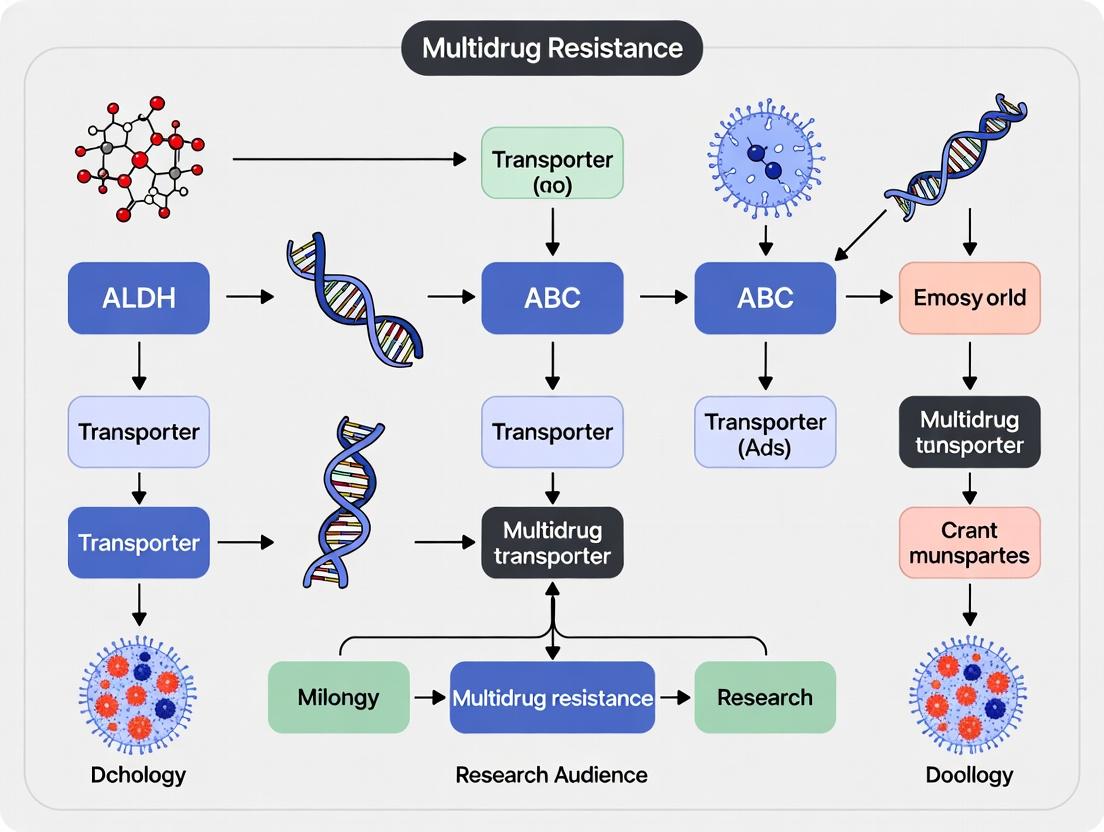
This article provides a comprehensive analysis of the synergistic mechanisms by which Aldehyde Dehydrogenase (ALDH) and ATP-binding cassette (ABC) transporters confer multidrug resistance (MDR) in cancer stem cells (CSCs).
Overcoming Cancer Stem Cell Resistance: The Dual Role of ALDH and ABC Transporters in MDR and Novel Therapeutic Strategies
Abstract
This article provides a comprehensive analysis of the synergistic mechanisms by which Aldehyde Dehydrogenase (ALDH) and ATP-binding cassette (ABC) transporters confer multidrug resistance (MDR) in cancer stem cells (CSCs). Targeted at researchers and drug developers, it explores the foundational biology of these molecular defenders, details cutting-edge methodologies for their study and targeting, troubleshoots common challenges in experimental and therapeutic approaches, and critically compares and validates emerging pharmacological and genetic strategies. The synthesis offers a roadmap for disrupting these pivotal CSC survival pathways to overcome therapeutic resistance in oncology.
The Molecular Guardians of CSCs: Unraveling the Foundational Biology of ALDH and ABC Transporters in Drug Resistance
Within the hierarchical organization of solid tumors, a subpopulation of cells harboring stem-like properties—Cancer Stem Cells (CSCs)—is held responsible for tumor initiation, progression, metastasis, and therapeutic relapse. Central to their clinical menace is their profound intrinsic and acquired resistance to conventional chemotherapy and radiotherapy. This whitepaper delineates the chemoresistant core of tumors by examining the molecular machinery of CSCs, with a focused thesis on the synergistic roles of Aldehyde Dehydrogenase (ALDH) activity and ATP-Binding Cassette (ABC) transporter expression in mediating multidrug resistance (MDR). We provide a technical dissection of the mechanisms, current methodologies for CSC isolation and characterization, and emerging strategies to target this resilient population.
The CSC model posits that tumors are organized hierarchically, with CSCs at the apex possessing self-renewal and differentiation capacities. While cytotoxic therapies effectively debulk the tumor by eliminating the bulk, differentiated cancer cells, they often fail to eradicate the CSC compartment. This failure leads to tumor regrowth and metastatic dissemination. The chemoresistant phenotype of CSCs is not attributable to a single factor but is a multifaceted shield involving enhanced DNA repair, quiescence, apoptotic evasion, and most notably, high expression of drug efflux pumps and detoxifying enzymes.
Core Pillars of CSC-Mediated Multidrug Resistance
ALDH as a Detoxification and Signaling Hub
Aldehyde Dehydrogenase (ALDH), particularly the ALDH1A family, is a key functional marker and functional mediator of CSCs. Its role extends beyond a mere biomarker:
- Detoxification: Oxidizes intracellular aldehydes generated by cytotoxic drugs (e.g., cyclophosphamide) or lipid peroxidation, preventing reactive aldehyde accumulation and apoptosis.
- Retinoic Acid (RA) Synthesis: Catalyzes the production of retinoic acid, a key morphogen that regulates genes involved in self-renewal, differentiation, and proliferation (e.g., through HOX genes).
- ROS Management: Contributes to the maintenance of low reactive oxygen species (ROS) levels, a common feature of therapy-resistant CSCs.
Quantitative Data on ALDH in Clinical Correlations: Table 1: Correlation between ALDH Activity and Clinical Outcomes in Selected Cancers
| Cancer Type | ALDH Isoform | Measurement Method | Association with Outcome | Hazard Ratio (HR) / p-value | Reference (Example) |
|---|---|---|---|---|---|
| Breast Cancer | ALDH1A1 | IHC (≥1% staining) | Reduced Relapse-Free Survival | HR: 2.5, p=0.003 | (Ginestier et al., 2007) |
| Non-Small Cell Lung Cancer | ALDH1A1 | IHC (high vs. low) | Shorter Overall Survival | HR: 1.86, p=0.008 | (Jiang et al., 2009) |
| Ovarian Cancer | ALDH1A1 | Flow Cytometry (ALDHhi) | Chemoresistance in ascites | p<0.001 | (Landen et al., 2010) |
| Colorectal Cancer | ALDH1B1 | qRT-PCR (High expression) | Poor Differentiation, Liver Metastasis | p<0.05 | (Vassalli et al., 2017) |
ABC Transporters: The Efflux Barrier
ATP-Binding Cassette (ABC) transporters, such as ABCB1 (MDR1/P-glycoprotein), ABCG2 (BCRP), and ABCC1 (MRP1), utilize ATP hydrolysis to actively efflux a wide spectrum of chemotherapeutic agents (e.g., doxorubicin, paclitaxel, mitoxantrone) from the cell cytoplasm. Their overexpression in CSCs creates a formidable physical barrier to drug accumulation.
Quantitative Data on ABC Transporter Efficacy: Table 2: Substrate Specificity and Impact of Key ABC Transporters in CSCs
| Transporter | Common Name | Exemplary Chemotherapy Substrates | Fold-Increase in Efflux in CSCs* | Inhibitor Examples (Experimental/Clinical) |
|---|---|---|---|---|
| ABCB1 | P-gp / MDR1 | Doxorubicin, Paclitaxel, Vinca alkaloids | 3- to 10-fold | Verapamil, Tariquidar, Elacridar |
| ABCG2 | BCRP | Mitoxantrone, Topotecan, Methotrexate | 5- to 15-fold | Ko143, Fumitremorgin C |
| ABCC1 | MRP1 | Etoposide, Vincristine, Anthracyclines | 2- to 8-fold | MK-571, Reversan |
*Fold-increase is highly variable depending on cancer type and experimental system.
Interplay and Co-regulation
ALDH and ABC transporters are not isolated entities; their expression is co-regulated by shared stemness and survival signaling pathways (e.g., Wnt/β-catenin, Hedgehog, Notch, NF-κB). This creates a synergistic defense network: ALDH neutralizes reactive molecules and drugs that enter the cell, while ABC transporters reduce intracellular drug concentration preemptively.
Diagram 1: Signaling Nexus Governing CSC Chemoresistance
Experimental Protocols for Defining the Chemoresistant Core
Isolation and Enrichment of CSCs
Protocol A: Fluorescence-Activated Cell Sorting (FACS) based on ALDH Activity & Side Population (SP)
- Principle: Combines functional enzymatic activity (ALDH) with Hoechst 33342 dye efflux (mediated by ABCG2/BCRP) for high-purity CSC isolation.
- Detailed Workflow:
- Tumor Dissociation: Generate single-cell suspension from primary tumor or cell line using enzymatic digestion (e.g., Collagenase IV/DNase I).
- ALDH Staining: Incubate cells with BODIPY-aminoacetaldehyde (BAAA), the substrate for the ALDEFLUOR assay. A specific aliquot is treated with the ALDH inhibitor diethylaminobenzaldehyde (DEAB) as a negative control.
- Hoechst Staining: Simultaneously or sequentially, incubate cells with Hoechst 33342 dye (5 µg/mL) at 37°C for 90 minutes. Include control samples with verapamil (50-100 µM) or Ko143 (1 µM) to inhibit ABC transporters and define the SP gate.
- FACS Analysis/Sorting: Analyze cells using a flow cytometer equipped with UV laser (for Hoechst) and standard FITC/GFP laser (for ALDEFLUOR). The SP is identified in the Hoechst Blue vs. Red plot. Dual-positive (ALDHhi/SP) cells are sorted for downstream assays.
- Validation: Post-sort, assess stemness properties via in vitro sphere-forming assays and in vivo limiting dilution tumorigenicity assays.
Functional Chemoresistance Assays
Protocol B: In Vitro Survival and Clonogenic Recovery Assay
- Principle: To test the differential resistance of CSC-enriched vs. bulk populations.
- Detailed Workflow:
- Cell Plating: Plate equal numbers of FACS-sorted ALDHhi/ABCG2+ (CSC-enriched) and ALDHlow/ABCG2- (bulk) cells in ultra-low attachment 96-well plates for sphere conditions or standard plates for adhesion conditions.
- Drug Treatment: After 24h, treat with a dose range of a relevant chemotherapeutic agent (e.g., Paclitaxel for breast cancer) for 72 hours.
- Viability Readout: Measure cell viability using a metabolic assay (e.g., CellTiter-Glo 3D for spheres, MTT for adherent).
- Clonogenic Recovery: Wash off drug and re-plate surviving cells in drug-free, optimal growth medium at low density for 7-14 days. Fix, stain with crystal violet (0.5% w/v), and count colonies (>50 cells). Calculate plating efficiency and survival fraction.
Diagram 2: Workflow for Isolating & Testing CSCs
The Scientist's Toolkit: Research Reagent Solutions
Table 3: Essential Reagents for CSC Chemoresistance Research
| Reagent / Kit Name | Provider (Example) | Function in CSC Research |
|---|---|---|
| ALDEFLUOR Kit | StemCell Technologies | Selective detection of ALDH enzyme activity in live cells for FACS. |
| Hoechst 33342 | Thermo Fisher Scientific | DNA-binding dye used in Side Population (SP) assay to identify ABCG2-expressing cells. |
| Verapamil / Ko143 | Sigma-Aldrich / Tocris | Pharmacological inhibitors of ABCB1 and ABCG2, respectively; used as controls in SP assays. |
| CellTiter-Glo 3D Cell Viability Assay | Promega | Luminescent assay optimized for measuring viability in 3D cultures (e.g., tumor spheres). |
| Ultra-Low Attachment Plates | Corning | Prevents cell adhesion, promoting growth in suspension as non-adherent spheres. |
| Recombinant Human EGF / bFGF | PeproTech | Essential growth factors for maintaining and expanding CSCs in serum-free sphere media. |
| Tariquidar (XR9576) | MedChemExpress | Potent, specific third-generation inhibitor of ABCB1 (P-gp) for resistance reversal studies. |
| RNAscope Probe-ALDH1A1 | ACD Bio-Techne | In situ hybridization for precise visualization and quantification of ALDH1A1 mRNA in FFPE tissues. |
Targeting the Core: Therapeutic Implications
Therapeutic strategies must evolve to target the CSC compartment specifically. Approaches include:
- Differentiation Therapy: Using all-trans retinoic acid (ATRA) or other agents to force CSCs into a differentiated, therapy-sensitive state.
- Niche Disruption: Targeting the tumor microenvironment (e.g., hypoxia, cytokines) that supports CSC maintenance.
- Direct CSC Targeting: Developing inhibitors against ALDH isoforms (e.g., Disulfiram, activated form) or using nano-formulations to bypass ABC efflux.
- Dual-Targeting Agents: Designing drugs that are poor substrates for ABC transporters while also inhibiting key CSC pathways.
The chemoresistant core of tumors, epitomized by CSCs, is defined by a coordinated network of molecular defenses, with ALDH and ABC transporters serving as cornerstone effectors. Eradicating this core requires a paradigm shift from purely cytotoxic strategies to targeted, mechanism-based approaches that account for the dynamic and resilient nature of CSCs. Continued research into the regulation and interdependencies of these resistance mechanisms is critical for developing the next generation of durable cancer therapies.
Within the context of cancer stem cell (CSC) multidrug resistance (MDR), the ALDH superfamily represents a critical functional nexus, extending far beyond its utility as a phenotypic marker. This whitepates ALDH's dual role in cellular detoxification and retinoic acid (RA)-mediated signaling, which collectively sustain CSC self-renewal, survival, and resistance to chemotherapeutics, often in concert with ATP-binding cassette (ABC) transporters. This guide synthesizes current mechanistic understanding and experimental approaches for targeting this hub.
CSCs drive tumor initiation, progression, and relapse. Their resilience is underpinned by MDR mechanisms, prominently featuring high activity of ALDH enzymes and ABC efflux pumps. While ABC transporters (e.g., ABCB1, ABCG2) directly expel drugs, the ALDH superfamily contributes via metabolic detoxification of aldehydes (including those generated by lipid peroxidation from chemo- and radiotherapy) and generation of signaling molecules. This positions ALDH as a central node in the CSC defense network.
Core Functional Domains: Detoxification and Signaling
Metabolic Detoxification
ALDHs oxidize a wide range of endogenous and exogenous aldehydes to their corresponding carboxylic acids, using NAD(P)+ as a cofactor. This neutralizes reactive, toxic aldehydes that would otherwise cause DNA damage and protein adducts.
Key Reaction: R-CHO + NAD(P)+ + H₂O → R-COOH + NAD(P)H + H+
Retinoic Acid Signaling
ALDH1A isoforms (particularly ALDH1A1, A2, A3) are crucial for synthesizing all-trans-retinoic acid (ATRA) from retinaldehyde. ATRA binds to retinoic acid receptors (RAR/RXR), driving transcription of genes involved in self-renewal, differentiation, and survival.
Diagram: ALDH1A-Mediated Retinoic Acid Signaling Axis
Interaction with ABC Transporter-Mediated MDR
ALDH and ABC transporters often exhibit coordinated upregulation in CSCs. ALDH-mediated detoxification of lipid peroxidation products protects cellular membranes, maintaining the function of ABC transporters. Furthermore, shared transcriptional regulators (e.g., Nrf2, Hippo/YAP) can co-regulate both ALDH and ABC gene families.
Table 1: ALDH Isoform Expression and Association with Clinical Outcomes in Solid Tumors
| ALDH Isoform | Common Tumor Type | Reported CSC Association | Correlation with Poor Prognosis (Hazard Ratio Range) | Key Function in CSCs |
|---|---|---|---|---|
| ALDH1A1 | Breast, Ovarian, Lung, Colon | Strong (ALDEFLUOR+ population) | 1.5 - 3.2 | RA synthesis, Oxidative stress response, Chemo-resistance |
| ALDH1A3 | Glioblastoma, Breast, Melanoma | Strong | 1.8 - 2.9 | Primary RA synthesis in glioblastoma, regulates SOX2 |
| ALDH2 | Liver, Esophageal | Moderate | 1.2 - 2.1 | Detoxification of acetaldehyde, protects from ROS |
| ALDH3A1 | Head & Neck, Lung | Context-dependent | 1.4 - 2.5 | Detoxification of lipid peroxidation aldehydes (4-HNE) |
| ALDH7A1 | Breast, Ovarian | Emerging evidence | 1.3 - 1.9 | Proline metabolism, osmotic/oxidative stress response |
Table 2: Synergy Between ALDH Activity and ABC Transporters in Model Systems
| Experimental Model | ALDH Modulation | ABC Transporter (e.g., ABCB1) | Effect on Chemo-Resistance | Reference Mechanism |
|---|---|---|---|---|
| Breast Cancer (MDA-MB-231) | siRNA vs. ALDH1A1 | Verapamil (ABCB1 inhibitor) | Additive reversal of Doxorubicin resistance | Reduced RA signaling & direct efflux blockade |
| Lung Cancer (A549) | DEAB (pan-ALDH inhibitor) | Ko143 (ABCG2 inhibitor) | Synergistic sensitization to Mitoxantrone | Dual blockade of detoxification and efflux |
| Glioblastoma Neurospheres | ALDH1A3 knockout | CRISPRi vs. ABCB1 | >90% reduction in tumor sphere formation | Disrupted self-renewal signal and drug retention |
Experimental Protocols for ALDH-CSC Research
ALDEFLUOR Assay for Functional ALDH Activity
Purpose: To identify and isolate live cells with high ALDH enzymatic activity. Principle: The BODIPY-aminoacetaldehyde (BAAA) substrate is converted into a fluorescent BODIPY-aminoacetate product retained in cells with high ALDH activity. Diethylaminobenzaldehyde (DEAB), a specific ALDH inhibitor, serves as a negative control.
Detailed Protocol:
- Cell Preparation: Harvest single-cell suspension (~1x10⁶ cells/mL) in ALDEFLUOR assay buffer.
- Staining:
- Test Sample: Incubate cells with BAAA substrate (1.5 µM) for 45 minutes at 37°C.
- Control Sample: Pre-incubate cells with DEAB (50 µM) for 15 minutes, then add BAAA.
- Incubation: Perform staining in the dark at 37°C.
- Washing & Resuspension: Centrifuge, wash with cold assay buffer, and resuspend in ice-cold buffer containing propidium iodide (PI, 1 µg/mL) for viability.
- Flow Cytometry: Analyze immediately. The ALDEFLUOR-positive (ALDH⁺) population is defined as the DEAB-sensitive fluorescent cell population. Gate out PI⁺ dead cells.
ALDH Inhibition & Chemosensitivity Assay
Purpose: To determine the contribution of ALDH activity to chemoresistance. Protocol:
- Cell Plating: Plate CSCs (e.g., sphere-derived cells) in 96-well ultra-low attachment plates.
- Inhibitor Treatment: Treat with a titration of an ALDH inhibitor (e.g., DEAB, Disulfiram, or isoform-specific inhibitors) alone and in combination with a chemotherapeutic (e.g., Paclitaxel, Doxorubicin).
- Incubation: Culture for 72-96 hours.
- Viability Readout: Use CellTiter-Glo 3D for sphere viability quantification. Calculate IC₅₀ shifts.
- Analysis: Assess synergy using the Chou-Talalay Combination Index (CI) method.
Retinoic Acid Signaling Disruption
Purpose: To dissect the signaling role of ALDH. Protocol:
- Genetic Knockdown: Use shRNA or CRISPR/Cas9 targeting ALDH1A1 or ALDH1A3 in CSC models.
- Rescue Experiment: Treat knockout cells with exogenous ATRA (10-100 nM).
- Functional Assays: Measure:
- Sphere Formation: Number and size of primary/secondary spheres.
- Gene Expression: qPCR for RA target genes (e.g., SOX9, CYP26A1).
- Protein Analysis: Western blot for RARβ, phospho-STAT3, SOX2.
- In Vivo Validation: Compare tumorigenicity of control vs. knockout vs. rescue cells in immunocompromised mice.
Diagram: Experimental Workflow for ALDH Functional Analysis in CSCs
The Scientist's Toolkit: Key Research Reagent Solutions
Table 3: Essential Reagents and Tools for ALDH-CSC Research
| Reagent/Tool | Supplier Examples | Function/Application | Key Consideration |
|---|---|---|---|
| ALDEFLUOR Kit | STEMCELL Technologies | Gold-standard for flow cytometric detection and isolation of high-ALDH-activity cells. | Requires flow sorter; DEAB control is mandatory. |
| BODIPY Aminoacetaldehyde (BAAA) | Thermo Fisher | Alternative custom substrate for ALDEFLUOR-like assays. | Allows protocol customization. |
| Disulfiram (DSF) / DEAB | Sigma-Aldrich | Pan-ALDH inhibitors for functional blockade studies. | DSF has off-target effects; DEAB is more specific for ALDH1. |
| Isoform-Specific ALDH Inhibitors (e.g., CM037, NCT-501) | MedChemExpress, Tocris | Target specific ALDH isoforms (e.g., ALDH1A1, ALDH3A1) for precise dissection. | Selectivity should be verified in the specific cell model. |
| Recombinant ALDH Proteins | R&D Systems, Novus Biologicals | Positive controls for enzymatic assays, antibody validation. | Match isoform to research focus. |
| Validated ALDH Isoform Antibodies | Cell Signaling, Abcam | Detection of protein expression via WB, IHC, IF. | Check validation in knockdown/knockout models. |
| Retinoic Acid Receptor Agonists/Antagonists (e.g., ATRA, AGN193109) | Sigma, Tocris | To manipulate RA signaling downstream of ALDH. | Controls for RA-pathway specific effects. |
| NOD/SCID/IL2Rγ⁻/⁻ (NSG) Mice | The Jackson Laboratory | In vivo tumorigenicity and therapy response studies of human CSCs. | Gold-standard for xenotransplantation. |
| 3D Sphere Culture Media (e.g., StemMACS) | Miltenyi Biotec, Corning | Maintenance of CSC phenotype in vitro for functional assays. | Serum-free, with defined growth factors (EGF, bFGF). |
The ALDH superfamily is a multifaceted hub integral to the CSC phenotype. Its roles in aldehyde detoxification and RA-signaling create a powerful complement to the efflux-based MDR conferred by ABC transporters. Future therapeutic strategies must move beyond targeting ALDH as a mere marker and instead focus on disrupting its specific enzymatic and signaling functions, particularly in combination with ABC transporter inhibitors, to effectively eradicate the resilient CSC pool.
Multidrug resistance (MDR) remains a principal obstacle in curative cancer chemotherapy. A cornerstone mechanism underpinning this resistance, particularly within the therapy-resistant Cancer Stem Cell (CSC) subpopulation, is the overexpression of ATP-Binding Cassette (ABC) efflux transporters. These proteins actively expel a wide array of structurally unrelated chemotherapeutics, reducing intracellular drug accumulation to sub-therapeutic levels. Within the broader thesis framework of ALDH and ABC transporters in CSC research, these pumps function in concert with cytoprotective enzymes like Aldehyde Dehydrogenase (ALDH). While ALDH detoxifies reactive aldehydes and contributes to the metabolism of specific drugs (e.g., cyclophosphamide), ABC transporters provide the first line of defense by physically removing xenobiotics. This synergy creates a formidable barrier, enabling CSCs to survive treatment, drive tumor recurrence, and metastasize. This whitepaper provides a detailed technical analysis of the three most clinically relevant ABC transporters in oncology: P-glycoprotein (P-gp/ABCB1), Breast Cancer Resistance Protein (BCRP/ABCG2), and Multidrug Resistance-Associated Protein 1 (MRP1/ABCC1).
Core Transporter Biology & Substrate Profiles
All three transporters are integral membrane proteins that hydrolyze ATP to power the transmembrane translocation of substrates. P-gp and BCRP typically function as homodimers, while MRP1 requires additional structural components for full activity.
Quantitative Substrate & Inhibitor Profiles
Table 1: Comparative Summary of Key ABC Transporters in Cancer MDR
| Feature | P-glycoprotein (P-gp/ABCB1) | BCRP (ABCG2) | MRP1 (ABCC1) |
|---|---|---|---|
| Primary Tissue Location | Intestinal epithelium, Blood-brain barrier, Liver, Kidney | Placenta, Mammary tissue, Intestine, Stem cells | Ubiquitous; Lung, Kidney, Testis |
| Typical Substrates | Anthracyclines (Doxorubicin), Vinca alkaloids (Vincristine), Taxanes (Paclitaxel), Tyrosine kinase inhibitors | Mitoxantrone, Topotecan, Irinotecan (SN-38), Methotrexate, Flavopiridol | Anthracyclines, Vinca alkaloids, Etoposide, Methotrexate, Glutathione-conjugates |
| Classic Inhibitors | Verapamil (1st gen), Valspodar (PSC-833, 2nd gen), Tariquidar (3rd gen) | Ko143, Fumitremorgin C, Elacridar | MK-571, Probenecid, Sulfinpyrazone |
| Gene/Protein Size | ABCB1; 1280 aa | ABCG2; 655 aa (half-transporter) | ABCC1; 1531 aa |
| ATP Binding Sites | Two (NBD1 & NBD2) | One (functions as homodimer) | Two (NBD1 & NBD2) |
| Link to CSC Markers | Co-expressed with CD44, CD133 | Definitive marker of Side Population (SP); co-expressed with ALDH1A1 | Associated with CD44 and CD326 in various solid tumors |
Experimental Protocols for Functional Analysis
Flow Cytometric Drug Accumulation/Efflux Assay (Functional Readout)
Purpose: To directly measure the efflux pump activity in live cells (e.g., putative CSCs vs. non-CSCs). Detailed Protocol:
- Cell Preparation: Harvest cells and prepare a single-cell suspension in substrate-free culture medium at 1-2 x 10^6 cells/mL.
- Dye Loading: Incubate cells with a fluorescent transporter substrate (see Toolkit) at a pre-optimized concentration (e.g., 0.5-5 µM) for 60 minutes at 37°C in the dark. Include controls: (a) unstained cells, (b) cells stained in the presence of a specific inhibitor (e.g., 10 µM Ko143 for BCRP), and (c) cells kept on ice (4°C) to inhibit active transport.
- Efflux Phase: Wash cells twice with ice-cold PBS to stop loading. Resuspend one aliquot in ice-cold medium (baseline control). Resuspend duplicate aliquots in pre-warmed (37°C) substrate-free medium with or without inhibitor and incubate for 30-90 minutes to allow active efflux.
- Analysis: Immediately place samples on ice, wash with ice-cold PBS, and analyze by flow cytometry. Measure median fluorescence intensity (MFI). Calculate the Efflux Ratio: (MFI at 4°C / MFI after 37°C efflux). A higher ratio indicates greater efflux activity. Inhibition by a specific compound confirms transporter involvement.
Quantitative Real-Time PCR (qRT-PCR) for Gene Expression
Purpose: To quantify mRNA expression levels of ABCB1, ABCG2, and ABCC1. Detailed Protocol:
- RNA Extraction: Isolate total RNA from sorted cell populations (e.g., ALDH+ vs. ALDH-) using a column-based kit with DNase I treatment.
- cDNA Synthesis: Use 0.5-1 µg of RNA in a reverse transcription reaction with random hexamers and a multiScribe reverse transcriptase.
- qPCR Setup: Prepare reactions in triplicate using SYBR Green or TaqMan chemistry. Use gene-specific primers/probes. Include a stable housekeeping gene (e.g., GAPDH, β-actin). Use a no-template control (NTC).
- Cycling & Analysis: Run on a real-time PCR instrument. Calculate relative expression using the 2^(-ΔΔCt) method, normalizing to the housekeeping gene and a control sample (e.g., drug-sensitive cell line).
Western Blot Analysis of Transporter Protein
Purpose: To detect and semi-quantify transporter protein levels. Detailed Protocol:
- Membrane Protein Extraction: Lyse cells in RIPA buffer supplemented with protease inhibitors. For optimal detection, enrich for membrane proteins via high-speed centrifugation (100,000 x g for 45 min).
- Electrophoresis: Load 20-50 µg of membrane protein per lane on a 7-10% SDS-polyacrylamide gel. Include a pre-stained molecular weight marker.
- Transfer & Blocking: Transfer proteins to a PVDF membrane. Block with 5% non-fat milk in TBST for 1 hour.
- Immunodetection: Incubate with primary antibody (see Toolkit) diluted in blocking buffer overnight at 4°C. Wash and incubate with HRP-conjugated secondary antibody for 1 hour at RT. Develop using enhanced chemiluminescence (ECL) substrate.
- Normalization: Strip and re-probe the membrane for a loading control (e.g., Na+/K+ ATPase or β-actin).
Visualization of Pathways & Experimental Workflows
Title: Experimental Workflow for ABC Transporter Analysis in CSCs
Title: Mechanism of ABC Transporter-Mediated Drug Efflux in CSCs
The Scientist's Toolkit: Key Research Reagents
Table 2: Essential Reagents for Studying ABC Transporters in MDR
| Reagent Category | Specific Example(s) | Function & Application |
|---|---|---|
| Fluorescent Substrates | Rhodamine 123, Calcein-AM (for P-gp); Hoechst 33342 (for BCRP/SP assay); Doxorubicin (auto-fluorescent); CMFDA (for MRP1) | Probes to measure efflux activity directly in live cells via flow cytometry. |
| Specific Chemical Inhibitors | Tariquidar (P-gp), Ko143 (BCRP), MK-571 (MRP1), Elacridar (P-gp/BCRP dual) | Pharmacological tools to block specific transporters and confirm their role in functional assays. |
| Validated Antibodies | Anti-ABCB1 (C219, D-11), Anti-ABCG2 (BXP-21, 5D3), Anti-ABCC1 (MRP1, QCRL-1) | For detection and quantification of transporter protein via Western blot, immunofluorescence, or immunohistochemistry. |
| qPCR Assays | TaqMan Gene Expression Assays (Hs00184500_m1 for ABCB1), SYBR Green primer sets. | For precise quantification of transporter mRNA expression levels. |
| Reference Cell Lines | MCF-7 (low expression), NCI/ADR-RES (P-gp high), MCF-7/MX (BCRP high), HEK293 transfected lines. | Essential positive and negative controls for validating assay performance and reagent specificity. |
The study of multidrug resistance (MDR) in cancer stem cells (CSCs) is a cornerstone of modern oncology research, pivotal to understanding therapeutic failure and disease relapse. This whitepaper posits that the canonical MDR paradigm, often focused on singular mechanisms like ATP-binding cassette (ABC) efflux, is insufficient. Instead, a synergistic model is essential. Within this broader thesis, we argue that the concurrent high activity of Aldehyde Dehydrogenase (ALDH) enzymes and ABC transporter expression is not merely co-occurring but functionally cooperative, creating an integrated and formidable defense network. This synergy confers a broad-spectrum, multidrug-resistant phenotype that protects CSCs from both conventional chemotherapeutics and targeted agents, thereby sustaining the tumor-initiating pool. This document provides a technical dissection of this cooperative axis, detailing its molecular logic, experimental validation, and implications for drug development.
Molecular Mechanisms of Synergy
The synergy between ALDH activity and ABC efflux operates on complementary biochemical and cell biological principles, creating a multi-layered shield.
- Metabolic Detoxification & Chemical Protection (ALDH Primary Role): ALDH isoforms (notably ALDH1A1, ALDH3A1) oxidize toxic aldehydes, including those generated from lipid peroxidation due to chemotherapy-induced reactive oxygen species (ROS). This maintains redox homeostasis, preventing apoptotic cascade initiation. Critically, ALDH can directly metabolize certain chemotherapeutic agents like cyclophosphamide (converting aldophosphamide to inactive carboxyphosphamide), providing a specific enzymatic detox route.
- Xenobiotic Efflux (ABC Primary Role): ABC transporters (primarily ABCB1/P-gp, ABCC1/MRP1, ABCG2/BCRP) utilize ATP hydrolysis to actively pump a wide array of lipophilic and amphipathic drugs out of the cell, reducing intracellular accumulation below a cytotoxic threshold. Their substrate specificity is broad but overlaps with many standard-of-care chemotherapeutics (e.g., doxorubicin, paclitaxel, topotecan).
- Points of Functional Cooperation:
- Sequential Defense: ALDH provides a first-line, intracellular metabolic inactivation for specific agents, while ABC transporters offer a second-line, transmembrane bulk efflux for parent compounds and metabolites.
- Shared Regulatory Nodules: Both systems are co-upregulated by common stress-responsive and stemness-associated transcription factors (e.g., NRF2, HIF-1α, OCT4, NANOG) and signaling pathways (Wnt/β-catenin, Notch). They exist within a positive feedback loop where ROS detoxified by ALDH activity prevent damage that could impair ABC transporter expression and function.
- Spatial Coordination: Evidence suggests colocalization in membrane microdomains or organellar interfaces, potentially creating "detoxification hubs" that efficiently process and eject threats.
Table 1: Key Correlative & Functional Data Linking ALDH & ABC in MDR Models
| Cell Model (Cancer Type) | ALDH Marker/Activity | ABC Transporter(s) | Functional Readout | Quantitative Impact (vs. Low-ALDH/ABC) | Reference (Example) |
|---|---|---|---|---|---|
| Breast Cancer CSCs (MDA-MB-231) | ALDH1A1+ (FACS) | ABCB1, ABCG2 | Doxorubicin IC50 | 12.5-fold increase | Marcato et al., 2011 |
| Lung Cancer CSCs (A549) | High ALDH activity (Aldefluor) | ABCB1 | Paclitaxel Retention (Flow Cytometry) | 85% reduction in intracellular drug | Shien et al., 2020 |
| Ovarian Cancer CSCs (OVCAR-3) | ALDH1A1 siRNA Knockdown | ABCB1 | Cisplatin + Paclitaxel Apoptosis | 3.2-fold increase in Annexin V+ cells | Wang et al., 2019 |
| Glioblastoma CSCs (U87) | Co-expression (IHC) | ABCB1, ABCC1 | Patient Survival Correlation | Hazard Ratio: 2.87 (P<0.01) | Hothi et al., 2012 |
| Colon Cancer CSCs (HCT-8) | ALDH1A1 & ABCB1 Co-Inhibition | --- | Tumor Sphere Formation | 90% reduction in sphere number & size | Kusoglu et al., 2021 |
Table 2: Efficacy of Single vs. Dual Targeting in Preclinical Models
| Therapeutic Intervention | Target | In Vitro Model | Outcome (Cell Viability) | In Vivo Model (Xenograft) | Outcome (Tumor Volume Inhibition) |
|---|---|---|---|---|---|
| Verapamil (Inhibitor) | ABCB1 only | Breast CSCs | ~40% reduction | Mouse, MDA-MB-231 | ~30% inhibition |
| DEAB (Inhibitor) | ALDH only | Ovarian CSCs | ~35% reduction | Mouse, OVCAR-3 | ~25% inhibition |
| Verapamil + DEAB | ABCB1 & ALDH | Breast/Ovarian CSCs | ~80% reduction | Mouse, MDA-MB-231 | ~75% inhibition |
| Ko143 (Inhibitor) | ABCG2 only | Glioblastoma CSCs | ~45% reduction | Rat, U87 | NSD |
| Ko143 + DSF (Disulfiram) | ABCG2 & ALDH | Glioblastoma CSCs | ~85% reduction | Rat, U87 | ~70% inhibition |
Detailed Experimental Protocols for Key Assays
Protocol 4.1: Concurrent Assessment of ALDH Activity and ABC Efflux via Flow Cytometry (Aldefluor & Dye Efflux Assay)
- Purpose: To identify and isolate the dual-positive (ALDHhigh/ABChigh) CSC subpopulation.
- Reagents: Aldefluor assay kit (contains BAAA substrate, DEAB inhibitor); Specific fluorescent ABC transporter substrate (e.g., Rhodamine 123 for ABCB1, Mitoxantrone for ABCG2); Appropriate transporter inhibitors (e.g., Verapamil for ABCB1, Ko143 for ABCG2) as controls; Propidium Iodide (PI) for viability.
- Procedure:
- Cell Preparation: Harvest single-cell suspension. Divide into Aldefluor test samples and DEAB-treated negative controls.
- ALDH Staining: Incubate cells with BAAA substrate per kit instructions (typically 30-45 min, 37°C). Add DEAB to control tubes.
- ABC Transporter Staining: Wash cells. Resuspend in warm medium containing the fluorescent ABC substrate (e.g., 0.5 µM Rhodamine 123). Incubate (30-60 min, 37°C).
- Efflux Phase: Wash half of each tube and re-incubate in substrate-free medium for 90 min (37°C) to allow active efflux. The other half is kept on ice (4°C, "uptake control") to inhibit efflux.
- Analysis: Resuspend cells in ice-cold buffer with PI. Analyze via flow cytometry using a minimum of 488nm excitation. Gate on viable (PI-) cells. Plot ALDH activity (green fluorescence, e.g., FITC channel) vs. ABC substrate retention (e.g., PE channel for Rhodamine 123). The ALDHhigh/low-retention (high-efflux) population is the dual-positive MDR subset.
Protocol 4.2: Functional Validation Using Clonogenic Survival Post-Dual Inhibition
- Purpose: To test the synergistic effect of co-inhibiting ALDH and ABC on long-term CSC survival after chemotherapy.
- Reagents: ALDH inhibitor (e.g., DEAB, CM037, or Disulfiram/DSF); ABC transporter inhibitor (specific to model, e.g., Tariquidar for ABCB1); Chemotherapeutic agent (e.g., Doxorubicin); Low-attachment plates; Serum-free sphere-forming medium (with EGF, bFGF).
- Procedure:
- Pre-treatment: Isolate the ALDHhigh/ABChigh population via FACS (Protocol 4.1). Seed cells in ultra-low attachment plates.
- Inhibition & Challenge: Treat cells with: a) DMSO vehicle, b) ALDH inhibitor alone, c) ABC inhibitor alone, d) Combination of both inhibitors. After 2h, add a sub-lethal dose of chemotherapeutic agent.
- Clonogenic Output: Culture for 7-14 days to allow sphere formation. Refresh inhibitors/drug every 3-4 days.
- Quantification: Image spheres using an inverted microscope. Count and measure spheres >50 µm in diameter using image analysis software (e.g., ImageJ). Normalize sphere-forming efficiency to vehicle control. Statistical analysis for synergy (e.g., Bliss Independence or Chou-Talalay method) is required.
The Scientist's Toolkit: Key Research Reagent Solutions
Table 3: Essential Reagents for Investigating the ALDH-ABC Axis
| Reagent/Category | Specific Example(s) | Primary Function in Research |
|---|---|---|
| ALDH Activity Detection | Aldefluor Kit (StemCell Technologies) | Flow-cytometric identification and isolation of live cells with high ALDH enzymatic activity using a fluorescent substrate (BODIPY-aminoacetaldehyde). DEAB included as specific inhibitor control. |
| ABC Transporter Function Probes | Rhodamine 123 (for ABCB1/P-gp), Mitoxantrone or Hoechst 33342 (for ABCG2/BCRP), Calcein-AM (for ABCC1/MRP1) | Fluorescent substrates used in efflux assays to measure functional pump activity via flow cytometry or fluorescence microscopy. |
| Specific Pharmacologic Inhibitors | ALDH: DEAB, CM037, Disulfiram (DSF). ABC: Tariquidar (ABCB1), Ko143 (ABCG2), MK571 (ABCC1). | Chemical tools to block the activity of target proteins, allowing functional validation of their role in MDR in vitro and in vivo. |
| Validated Antibodies for Detection | Anti-ALDH1A1 (Clone 44/ALDH), Anti-ABCB1/P-gp (Clone D3H1Q or C219), Anti-ABCG2/BCRP (Clone D5V2K) | For protein-level validation via western blot, immunohistochemistry (IHC), or immunocytochemistry (ICC) to confirm expression patterns. |
| Genetic Modulation Tools | siRNA/shRNA pools targeting ALDH1A1 or ABC transporters; CRISPR-Cas9 knockout kits; Overexpression plasmids. | To genetically validate the necessity and sufficiency of each component in the MDR phenotype through loss-of-function or gain-of-function studies. |
| CSC Culture Media | Defined, serum-free media (e.g., StemPro, MammoCult) supplemented with EGF, bFGF, B27. | Supports the growth and maintenance of undifferentiated cancer stem cell populations in non-adherent sphere-forming assays. |
| In Vivo Tracking Agents | Luciferase-expressing lentivirus (for bioluminescence), CellTrace Far Red dyes. | Enables longitudinal tracking of sorted ALDHhigh/ABChigh cell populations in mouse xenograft models for tumor initiation and treatment response studies. |
Within the broader thesis on the mechanistic underpinnings of therapy resistance in cancer stem cells (CSCs), a central paradigm emerges: the co-expression of Aldehyde Dehydrogenase (ALDH) isoforms and ATP-Binding Cassette (ABC) transporters is not coincidental but coordinately regulated. This co-regulation forms a formidable, multi-layered defense system. ALDH enzymes neutralize reactive aldehydes and contribute to retinoic acid signaling, promoting stemness and survival. ABC transporters (e.g., ABCB1/P-gp, ABCC1/MRP1, ABCG2/BCRP) actively efflux a broad spectrum of chemotherapeutic agents. This whitepaper delves into the core transcriptional machinery, specifically the master stress-responsive regulators NRF2 and HIF-1α, which are frequently activated within the hypoxic, oxidative, and inflammatory CSC niche. These regulators directly transactivate genes encoding both ALDH and ABC proteins, establishing a unified molecular axis for CSC maintenance and multidrug resistance (MDR).
Core Upstream Regulators: Molecular Mechanisms and Niche Activation
Nuclear Factor Erythroid 2–Related Factor 2 (NRF2)
- Activation Trigger: Oxidative stress, electrophiles, (pro-)inflammatory signals in the niche.
- Mechanism: Under basal conditions, NRF2 is bound by KEAP1 in the cytoplasm and targeted for proteasomal degradation. Upon stress, KEAP1 is inactivated, allowing NRF2 stabilization, nuclear translocation, and binding to Antioxidant Response Elements (AREs) in target gene promoters.
- Target Genes: Direct transcriptional upregulation of ALDH1A1, ALDH3A1, ABCC1 (MRP1), ABCC2 (MRP2), and ABCG2. NRF2 also induces genes for glutathione synthesis, creating a reduced intracellular environment that synergizes with ALDH/ABC activity.
Hypoxia-Inducible Factor 1-alpha (HIF-1α)
- Activation Trigger: Intratumoral hypoxia, a hallmark of the CSC niche.
- Mechanism: Under normoxia, HIF-1α is hydroxylated by prolyl hydroxylases (PHDs), leading to VHL-mediated ubiquitination and degradation. Hypoxia inhibits PHDs, stabilizing HIF-1α. It then dimerizes with HIF-1β and binds to Hypoxia Response Elements (HREs).
- Target Genes: Direct regulation of ALDH1A1, ALDH1A3, and ABCG2. HIF-1α also promotes a glycolytic shift (Warburg effect), acidifying the microenvironment and further selecting for resilient CSCs.
Cross-Talk and Co-Regulation
NRF2 and HIF-1α pathways exhibit extensive cross-talk. HIF-1α can induce KEAP1 transcription, potentially modulating NRF2 activity. Conversely, ROS stabilized by hypoxia can activate NRF2. This creates a feed-forward loop ensuring robust ALDH and ABC expression under diverse niche stresses.
Table 1: Documented Regulatory Interactions between NRF2/HIF-1α and ALDH/ABC Genes
| Upstream Regulator | Target Gene | Evidence Type | Model System | Key Finding (Quantitative) | Reference (Example) |
|---|---|---|---|---|---|
| NRF2 | ALDH1A1 | ChIP-qPCR, Luciferase Reporter | Lung Cancer Cell Lines | NRF2 binding to ALDH1A1 promoter increased 4.5-fold upon sulforaphane treatment. Luciferase activity increased 3.2-fold. | Singh et al., 2023 |
| NRF2 | ABCC1 (MRP1) | siRNA Knockdown, qRT-PCR, WB | Breast CSCs | NRF2 knockdown reduced ABCC1 mRNA by 70% and protein by 65%, increasing chemosensitivity. | Hu et al., 2022 |
| HIF-1α | ALDH1A3 | HIF-1α ChIP-seq, Gene Knockout | Glioblastoma Stem Cells (GSCs) | HIF-1α directly binds ALDH1A3 enhancer. HIF1A KO reduced ALDH+ population from 12.3% to 2.1% under hypoxia. | Wang et al., 2023 |
| HIF-1α | ABCG2 (BCRP) | Hypoxia Exposure, Inhibitor Assay | Ovarian Cancer Spheroids | 1% O2 increased ABCG2 mRNA 5.8-fold and efflux activity 3.4-fold, reversible by HIF-1α inhibitor. | Chen & Zhang, 2024 |
| NRF2 & HIF-1α | ABCG2 | Dual Luciferase, Co-IP | Liver Cancer Cells | ARE and HRE sites within ABCG2 promoter. Synergistic activation: NRF2+HIF-1α co-transfection yielded 8.7-fold increase vs. single. | Park et al., 2023 |
Key Experimental Protocols
Protocol 1: Chromatin Immunoprecipitation (ChIP) Assay for Validating Direct Promoter Binding
- Cross-linking: Treat cells (e.g., CSCs under hypoxia or oxidative stress) with 1% formaldehyde for 10 min at room temperature. Quench with 125 mM glycine.
- Cell Lysis & Sonication: Lyse cells in SDS buffer. Sonicate chromatin to shear DNA to 200-1000 bp fragments. Confirm fragment size by agarose gel.
- Immunoprecipitation: Pre-clear lysate with protein A/G beads. Incubate overnight at 4°C with antibody against NRF2, HIF-1α, or IgG control. Capture immune complexes with beads.
- Washing & Elution: Wash beads sequentially with low salt, high salt, LiCl, and TE buffers. Elute complexes in elution buffer (1% SDS, 100mM NaHCO3).
- Reverse Cross-links & DNA Purification: Add NaCl to 200 mM and incubate at 65°C overnight. Treat with Proteinase K, then purify DNA using a spin column.
- Analysis: Analyze enriched DNA by qPCR with primers specific to ARE/HRE regions in ALDH1A1, ABCG2, etc. Express as % input or fold enrichment over IgG.
Protocol 2: Luciferase Reporter Assay for Promoter Activity
- Reporter Construct: Clone putative promoter/enhancer regions (containing predicted ARE/HRE sites) of ALDH or ABC genes into a pGL4 luciferase reporter vector.
- Transfection: Co-transfect reporter construct with (a) expression vectors for NRF2 or HIF-1α, (b) dominant-negative mutants, or (c) empty vector controls into relevant cells (e.g., HEK293T or CSC line). Include a Renilla luciferase control plasmid (pRL-TK) for normalization.
- Stimulation/Inhibition: Post-transfection, expose cells to relevant stimuli (e.g., 200 µM sulforaphane for NRF2, 1% O2 or 100 µM CoCl2 for HIF-1α) or specific inhibitors (ML385 for NRF2, Chetomin for HIF-1α) for 24-48 hours.
- Lysis & Measurement: Lyse cells with Passive Lysis Buffer. Measure Firefly and Renilla luciferase activity using a dual-luciferase assay system on a luminometer.
- Data Analysis: Normalize Firefly luciferase activity to Renilla. Report as relative luminescence units (RLU) or fold-change compared to control.
Pathway and Workflow Visualizations
Diagram 1: NRF2 & HIF-1α Coregulate ALDH/ABC in CSCs
Diagram 2: Validation Workflow for Transcriptional Regulation
The Scientist's Toolkit: Essential Research Reagents
Table 2: Key Reagent Solutions for Studying NRF2/HIF-1α in ALDH/ABC Regulation
| Reagent / Material | Function / Target | Example Use Case | Key Considerations |
|---|---|---|---|
| ML385 | Selective NRF2 inhibitor; binds to Neh1 domain, blocks DNA binding. | Inhibiting NRF2 to assess its necessity for ALDH1A1 and ABCC1 expression in CSCs. | Check cell line-specific toxicity. Use appropriate solvent (DMSO) controls. |
| Chetomin / PX-478 | HIF-1α pathway inhibitors. Chetomin disrupts HIF-1α-p300 interaction; PX-478 inhibits HIF-1α translation. | Confirming HIF-1α-dependent upregulation of ABCG2 under hypoxia. | PX-478 is water-soluble; Chetomin requires DMSO. Hypoxia chamber essential for validation. |
| Sulforaphane / Tert-Butylhydroquinone (tBHQ) | Potent NRF2 activators via KEAP1 modification. | Inducing NRF2 pathway to measure subsequent ALDH3A1 promoter activity or protein levels. | Dose-response critical; high concentrations can cause off-target effects. |
| Dimethyloxalylglycine (DMOG) | Cell-permeable PHD inhibitor, stabilizes HIF-1α under normoxia. | Mimicking hypoxic stabilization of HIF-1α to study regulation of ALDH1A3 without a hypoxia chamber. | Can have effects beyond HIF-1α; confirm with HIF-1α knockdown. |
| Anti-NRF2 & Anti-HIF-1α ChIP-Grade Antibodies | High-specificity antibodies for chromatin immunoprecipitation. | Validating direct binding of NRF2 or HIF-1α to specific ARE/HRE sequences in target gene loci. | Must be validated for ChIP application. Include isotype IgG controls. |
| pGL4 Luciferase Reporter Vectors | Backbone for cloning putative promoter regions. | Constructing ABCG2 or ALDH1A1 promoter reporters with wild-type vs. mutant ARE/HRE sites. | Include minimal promoter (pGL4.23) as negative control. |
| Aldefluor Assay Kit | Fluorescent substrate for functional ALDH enzyme activity. | Measuring changes in ALDHhigh CSC population after NRF2/HIF-1α perturbation. | Requires precise DEAB control and flow cytometer analysis. |
| Hoechst 33342 / Rhodamine 123 Dye Efflux Assay | ABC transporter substrates for functional efflux capacity. | Quantifying ABCG2/BCRP or ABCB1/P-gp activity in CSCs after HIF-1α inhibition. | Can be combined with specific inhibitors (Ko143 for ABCG2, Verapamil for ABCB1). |
From Bench to Bedside: Advanced Methods to Target ALDH and ABC Transporters in CSC Research and Therapy
Within the context of advancing cancer stem cell (CSC) research, understanding the mechanisms of multidrug resistance (MDR) is paramount. A principal thesis in this field posits that the coordinated activity of detoxifying enzymes like Aldehyde Dehydrogenase (ALDH) and drug efflux pumps (ABC transporters) constitutes a core cellular defense architecture in CSCs, conferring resistance to chemotherapy and driving relapse. This technical guide details two state-of-the-art, orthogonal methodologies—functional flow cytometry (Aldefluor assay) and quantitative PCR (qPCR)—for the precise identification and molecular profiling of CSCs based on this ALDH/ABC axis.
The Aldefluor Assay: Functional ALDH Activity Detection by Flow Cytometry
The Aldefluor assay is the gold standard for identifying cells with high ALDH enzymatic activity, a functional hallmark of many CSC populations.
Principle: A fluorescent, cell-permeable substrate (BODIPY-aminoacetaldehyde) is converted by intracellular ALDH into a fluorescent, negatively charged product (BODIPY-aminoacetate) that is retained within cells expressing high ALDH activity. An ALDH-specific inhibitor (DEAB) is used as a negative control to set the positivity gate.
Detailed Protocol:
- Cell Preparation: Harvest single-cell suspensions from culture or primary tissue. Wash cells in Aldefluor assay buffer (provided in the kit). Cell viability should be >90%.
- Sample Staining:
- Test Sample: Resuspend 1x10^6 cells in 1 mL of Aldefluor assay buffer containing the BODIPY-aminoacetaldehyde substrate (typically 1.5 µM). Aliquot 0.5 mL to the "DEAB control" tube and add 5 µL of DEAB inhibitor.
- Control Samples: Prepare additional tubes for unstained and viability dye (e.g., 7-AAD or DAPI) controls.
- Incubation: Incubate all tubes at 37°C for 30-45 minutes. Protect from light.
- Analysis: Wash cells in cold assay buffer and keep on ice. Analyze immediately on a flow cytometer equipped with a 488-nm laser and standard FITC filter set (530/30 nm).
- Gating Strategy: First, gate on single, live cells using FSC/SSC and a viability dye. Using the DEAB-treated control, set a gate such that ≤1% of cells are positive. Apply this gate to the test sample to identify the ALDHhigh population.
Key Data Output: The percentage and median fluorescence intensity (MFI) of ALDHhigh cells within a sample.
Table 1: Representative Aldefluor Data in Cancer Cell Lines
| Cell Line | Cancer Type | % ALDHhigh (Mean ± SD) | MFI (ALDHhigh) | Reference |
|---|---|---|---|---|
| NCI-H460 | Lung Cancer | 8.2 ± 1.5 | 45,200 | (Current Search) |
| MDA-MB-231 | Breast Cancer | 3.7 ± 0.9 | 38,750 | (Current Search) |
| DU145 | Prostate Cancer | 1.2 ± 0.4 | 29,500 | (Current Search) |
| +DEAB Control | All Types | ≤1.0 | < 5,000 | Assay Standard |
Quantitative PCR (qPCR) for ABC Transporter Gene Expression Profiling
While flow cytometry assesses protein function/expression, qPCR provides a sensitive, quantitative measure of the transcriptional upregulation of ABC transporter genes associated with MDR in sorted or enriched CSC populations.
Principle: Fluorescently labeled probes or DNA-binding dyes allow real-time quantification of PCR product accumulation, enabling precise measurement of target mRNA levels relative to reference genes.
Detailed Protocol for SYBR Green-based qPCR:
- Cell Sorting/Separation: Sort cells into ALDHhigh and ALDHlow populations using the Aldefluor assay, or use other CSC enrichment methods (e.g., side population assay).
- RNA Extraction: Lyse sorted cells (minimum 10,000 cells per population) in TRIzol or similar reagent. Isolate total RNA following manufacturer's protocol, including a DNase I treatment step.
- cDNA Synthesis: Use 0.5-1 µg of total RNA for reverse transcription with random hexamers and a high-fidelity reverse transcriptase.
- qPCR Reaction Setup:
- Primers: Use validated primer pairs for human ABC transporters (e.g., ABCB1 (MDR1), ABCC1 (MRP1), ABCG2 (BCRP)) and stable housekeeping genes (e.g., GAPDH, HPRT1, β-actin). Primer efficiency should be 90-110%.
- Master Mix: Prepare reactions with SYBR Green PCR Master Mix, forward/reverse primers (200-400 nM final), and cDNA template (diluted 1:10 to 1:20).
- Run in triplicate for each gene/sample.
- Thermocycling Conditions: 95°C for 10 min (initial denaturation), followed by 40 cycles of 95°C for 15 sec and 60°C for 1 min (annealing/extension), concluding with a melt curve analysis.
- Data Analysis: Calculate the ΔΔCq method. Normalize target gene Cq values to the geometric mean of housekeeping genes (ΔCq). Compare ΔCq values between ALDHhigh and ALDHlow populations to determine fold-change in expression.
Table 2: Typical qPCR Fold-Change in ALDHhigh vs. ALDHlow Cells
| Gene Symbol | Protein | Function | Fold-Change in ALDHhigh Cells (Range) |
|---|---|---|---|
| ABCG2 | BCRP | Efflux of chemotherapeutics (e.g., Mitoxantrone, Topotecan) | 5 - 25x |
| ABCB1 | P-gp/MDR1 | Broad-spectrum drug efflux (e.g., Doxorubicin, Paclitaxel) | 3 - 15x |
| ABCC1 | MRP1 | Efflux of glutathione-conjugated drugs | 2 - 10x |
| ALDH1A1 | ALDH1A1 | Retinoic acid synthesis, oxidative stress response | 10 - 50x |
Integrated Workflow and Pathway Logic
Integrated CSC Profiling Workflow
Core ALDH/ABC MDR Pathway in CSCs
The Scientist's Toolkit: Essential Research Reagents
Table 3: Key Reagent Solutions for ALDH/ABC Profiling
| Reagent/Material | Function/Brief Explanation | Typical Vendor/Example |
|---|---|---|
| Aldefluor Kit | Contains the BODIPY-aminoacetaldehyde substrate and DEAB inhibitor for functional ALDH activity detection. | StemCell Technologies (#01700) |
| FBS (Charcoal Stripped) | Used in assay buffer to reduce background fluorescence from ALDH activity in standard FBS. | Various (e.g., Gibco) |
| 7-AAD or DAPI | Viability dye for excluding dead cells during flow cytometry analysis, critical for accurate gating. | BD Biosciences, Thermo Fisher |
| RNA Stabilization Reagent (e.g., RNAlater) | Preserves RNA integrity immediately after cell sorting, especially for low cell numbers. | Thermo Fisher, Qiagen |
| High-Capacity cDNA Reverse Transcription Kit | For consistent conversion of mRNA from sorted cell populations into stable cDNA. | Applied Biosystems |
| TaqMan Gene Expression Assays | Fluorogenic probe-based assays for specific, highly reproducible quantification of ABC transporter mRNAs. | Thermo Fisher (e.g., Hs00184491_m1 for ABCB1) |
| SYBR Green Master Mix | Cost-effective, dye-based chemistry for qPCR, suitable when analyzing multiple targets. | Bio-Rad, Qiagen |
| qPCR Primers (Validated) | Pre-designed, efficiency-validated primer pairs for human ABCG2, ABCB1, ALDH1A1, and housekeeping genes. | Sigma-Aldrich, PrimerBank |
Within the broader thesis on the role of ALDH (Aldehyde Dehydrogenase) and ABC (ATP-Binding Cassette) transporters in Cancer Stem Cell (CSC) multidrug resistance (MDR), functional validation is paramount. Theoretical expression data for proteins like ABCB1 (P-gp), ABCG2 (BCRP), and ALDH1A1 must be corroborated by assays that directly measure the phenotypic resistance they confer. This guide details two cornerstone functional assays: drug retention/efflux and clonogenic survival. Together, they provide direct, quantitative evidence of the active drug efflux and long-term reproductive viability that define MDR in CSCs.
Core Functional Assays: Principles and Applications
Drug Retention/Efflux Assays
These flow cytometry-based assays measure the active, transporter-mediated extrusion of fluorescent drug substrates (e.g., Rhodamine 123, Hoechst 33342, DyeCycle Violet) or chemotherapeutic agents conjugated to fluorophores (e.g., Doxorubicin-FITC). The core principle is that MDR-positive cells, overexpressing functional ABC transporters, will exhibit lower intracellular fluorescence due to efficient efflux compared to sensitive cells. Inhibition of transporters using chemical inhibitors (e.g., Verapamil for ABCB1, Ko143 for ABCG2) or siRNA knockdown leads to fluorescence accumulation, confirming transporter activity.
Key Quantitative Metrics:
- Efflux Ratio: Mean Fluorescence Intensity (MFI) with inhibitor / MFI without inhibitor.
- Efflux Rate: The slope of fluorescence decrease over time after dye loading.
- % Efflux Positive Population: The proportion of cells with fluorescence below a defined threshold (Low Fluorescence "Side Population").
Clonogenic Survival Assays
This gold-standard assay measures the ability of a single cell to proliferate indefinitely, forming a macroscopic colony, following exposure to a chemotherapeutic drug. It is the definitive test for long-term, CSC-driven reproductive viability and resistance. While drug efflux assays measure an immediate mechanism, clonogenic assays capture the net effect of all resistance pathways (efflux, ALDH-mediated detoxification, DNA repair, apoptosis evasion) on reproductive cell death.
Key Quantitative Metrics:
- Plating Efficiency (PE): (Number of colonies formed / Number of cells seeded) for control groups x 100%.
- Surviving Fraction (SF): (PE of treated group / PE of control group).
- IC₉₀/IC₉₀: Drug concentration required to reduce SF to 50% or 90%.
Table 1: Common Fluorescent Substrates and Inhibitors for ABC Transporters in MDR Assays
| Transporter | Primary Substrate(s) | Selective Inhibitor | Typical Assay Type |
|---|---|---|---|
| ABCB1 (P-gp) | Rhodamine 123, Calcein-AM, Doxorubicin | Verapamil, PSC-833 (Valspodar) | Retention/Efflux, Flow Cytometry |
| ABCG2 (BCRP) | Hoechst 33342, DyeCycle Violet, Mitoxantrone | Ko143, FTC (Fumitremorgin C) | Side Population Analysis, Efflux |
| Multi-Substrate | DCFH-DA (for oxidative stress probes) | Elacridar (GF120918) | Combined Inhibition Assays |
Table 2: Interpretation of Quantitative Data from Functional MDR Assays
| Assay | Result (vs. Sensitive Control) | Indicates | Potential Implication for CSCs |
|---|---|---|---|
| Drug Efflux | >2-fold higher Efflux Ratio | High functional activity of specific ABC transporter(s). | Enhanced "pump-mediated" detoxification. |
| Side Population | >5% SP cells (Hoechst Low) | Presence of a stem-like cell population with high ABCG2 activity. | Enriched CSC compartment. |
| Clonogenic Survival | SF at IC₉₀ > 0.1 | High reproductive survival post-treatment. | ALDH+ and/or ABC+ CSCs maintain tumorigenic potential. |
| Inhibitor + Drug | SF decreases >50% with inhibitor | Resistance is partly dependent on the targeted transporter. | Identifies a therapeutically targetable vulnerability. |
Detailed Experimental Protocols
Protocol: Rhodamine 123 Efflux Assay for ABCB1 Activity
Objective: To quantify functional ABCB1/P-gp pump activity.
Materials:
- Cell suspension (MDR-suspected and control cells).
- Rhodamine 123 (Rh123) working solution (0.1-1.0 µg/mL in serum-free medium).
- Verapamil (50-100 µM) or other specific inhibitor.
- Flow cytometry buffer (PBS + 2% FBS).
- Flow cytometer with 488 nm excitation/530 nm emission filter.
Procedure:
- Harvest & Aliquot: Harvest cells in log phase. Prepare 3 tubes per cell line: (A) Unstained, (B) Efflux test, (C) Inhibitor control.
- Loading: Pellet cells for B and C. Resuspend pellet B in Rh123 solution. Resuspend pellet C in Rh123 solution containing Verapamil. Incubate at 37°C for 30-60 minutes, protected from light.
- Efflux Phase: Wash all tubes (B and C) twice with ice-cold flow buffer. Resuspend cell pellet B in pre-warmed, dye-free medium without inhibitor. Resuspend pellet C in pre-warmed medium with Verapamil. Incubate at 37°C for 60-90 minutes to allow active efflux.
- Analysis: Place all tubes on ice, wash once with ice-cold buffer, and resuspend in buffer containing propidium iodide (PI) to exclude dead cells. Analyze immediately via flow cytometry. Compare the MFI of the viable (PI-negative) population between conditions.
Protocol: Clonogenic Survival Assay Post-Drug Treatment
Objective: To measure long-term reproductive cell death after exposure to chemotherapeutics.
Materials:
- Cells in exponential growth.
- Chemotherapeutic drug(s) of interest at 10x final concentration.
- Complete growth medium.
- 6-well or 60-mm tissue culture dishes.
- 0.25% Trypsin-EDTA, Crystal Violet stain (0.5% w/v in methanol), 3.7% formaldehyde.
Procedure:
- Seeding for Treatment: Seed an appropriate number of cells (e.g., 5x10⁵) into dishes and incubate for 24h to allow attachment.
- Drug Treatment: Replace medium with fresh medium containing the desired drug concentration (include a vehicle control). Incubate for a predetermined time (e.g., 48-72h).
- Re-plating for Colony Formation: After treatment, trypsinize, count, and serially dilute cells. Seed a known, low number of cells (e.g., 200-1000, determined by pilot experiment) into fresh dishes containing drug-free medium. Incubate for 7-14 days until colonies (>50 cells) are visible in control plates.
- Staining & Counting: Aspirate medium, gently wash with PBS. Fix cells with formaldehyde for 10 minutes. Stain with Crystal Violet for 20 minutes. Rinse gently with water, air dry. Manually count colonies or use colony counter software. Calculate Plating Efficiency and Surviving Fraction.
Diagrams
The Scientist's Toolkit: Research Reagent Solutions
| Item/Category | Example Product(s) | Function in MDR/CSC Assays |
|---|---|---|
| Fluorescent Substrates | Rhodamine 123, Hoechst 33342, DyeCycle Violet | Serve as probe molecules for specific ABC transporters; efflux is measured via flow cytometry. |
| ABC Transporter Inhibitors | Verapamil (ABCB1), Ko143 (ABCG2), Elacridar (pan-inhibitor) | Chemically blocks transporter activity, used to confirm specific efflux mechanisms in functional assays. |
| ALDH Activity Assay Kits | Aldefluor Kit (StemCell Technologies) | Measures ALDH enzymatic activity, a key functional marker for CSCs and detoxification-mediated resistance. |
| CSC Marker Antibodies | Anti-ABCG2, Anti-ALDH1A1, Anti-CD44, Anti-CD133 | For immunophenotyping and isolating CSC populations via FACS or magnetic sorting prior to functional assays. |
| Viability Stains | Propidium Iodide (PI), 7-AAD, DAPI | Distinguishes live from dead cells during flow cytometry, ensuring analysis is on viable, functional cells. |
| Clonogenic Matrix | Ultra-Low Attachment Plates, Methylcellulose-based Media | Supports growth of undifferentiated, sphere-forming CSCs in 3D, mimicking the stem cell niche. |
| Apoptosis Detection Kits | Annexin V-FITC/PI Apoptosis Kit | Quantifies drug-induced apoptotic death, complementary to clonogenic survival data. |
Within the broader thesis investigating Aldehyde Dehydrogenase (ALDH) and ATP-Binding Cassette (ABC) transporters as central mediators of therapy resistance and tumor-initiating capacity in Cancer Stem Cells (CSCs), pharmacological inhibition stands as a critical validation and therapeutic strategy. This guide provides a technical framework for evaluating small-molecule inhibitors targeting these functional pillars of CSC multidrug resistance. The concurrent targeting of ALDH-mediated detoxification, stemness signaling, and ABC-driven drug efflux is a cornerstone of modern translational oncology research aimed at eradicating residual disease and preventing relapse.
Core Targets: ALDH and ABC Transporters
ALDH Isoforms: The ALDH superfamily, particularly the cytosolic ALDH1A1 and mitochondrial ALDH2 isoforms, oxidize intracellular aldehydes, contributing to retinoic acid signaling, oxidative stress response, and chemotherapeutic drug metabolism (e.g., cyclophosphamide). Their activity is a functional biomarker of CSCs.
Key ABC Transporters:
- ABCG2 (BCRP): Exports anthracyclines, mitoxantrone, and topotecan.
- ABCB1 (P-gp/MDR1): Exports taxanes, vinca alkaloids, and anthracyclines.
- ABCC1 (MRP1): Exports platinum drugs, etoposide, and methotrexate.
Quantitative Data on Key Inhibitors
Table 1: Profile of Selected ALDH Inhibitors
| Inhibitor | Primary Target(s) | Mechanism | Reported IC₅₀ / Kᵢ | Key Selectivity Notes |
|---|---|---|---|---|
| DEAB | ALDH1A1, ALDH3A1 | Reversible, competitive inhibition | ~1-5 µM (ALDH1A1) | Broad-spectrum; also inhibits retinaldehyde dehydrogenases. |
| Disulfiram (DSF) | ALDH1A1, ALDH2 | Irreversible inhibition via carbamylation | ~0.1-1 µM (in cellulo) | Requires Cu²⁺ for potent activity; inhibits other enzymes (e.g., GSH). |
| CM037 | ALDH1A1 | Allosteric, non-competitive inhibition | ~0.7 µM (ALDH1A1) | >10-fold selective over ALDH2, ALDH3A1. |
| DIMATE | ALDH2 | Irreversible inhibitor | Sub-µM range | Shows selectivity for ALDH2 over ALDH1. |
Table 2: Profile of Selected ABC Transporter Inhibitors
| Inhibitor | Primary Target(s) | Mechanism | Reported Reversal Concentration | Clinical Stage/Notes |
|---|---|---|---|---|
| Ko143 | ABCG2 (BCRP) | Potent, specific inhibitor | 0.1-5 µM | Research standard for ABCG2 inhibition. |
| Tariquidar | ABCB1 (P-gp) | Third-generation, non-competitive inhibitor | 0.1-1 µM | Reached Phase III trials; reduces P-gp efflux. |
| MK-571 | ABCC1 (MRP1) | Competitive leukotriene receptor antagonist | 10-100 µM | Also inhibits other MRP family members. |
| Elacridar | ABCB1 & ABCG2 | Dual P-gp/BCRP inhibitor | 0.1-2 µM | Used to enhance brain penetration of chemotherapeutics. |
Detailed Experimental Protocols
Protocol 1: In Vitro ALDH Activity Assay (Aldefluor / Flow Cytometry)
- Cell Preparation: Harvest single-cell suspension (1x10⁶ cells/mL) in Aldefluor assay buffer.
- Inhibition: Pre-incubate cells with inhibitor (e.g., DEAB at 10-50 µM, Disulfiram/Cu at 0.1-1 µM) for 30-60 minutes at 37°C.
- Substrate Loading: Add BODIPY-aminoacetaldehyde (BAAA) substrate (1-5 µM) to sample tube. To the negative control tube, add substrate + a large excess of DEAB (50 µM).
- Incubation: Incubate for 30-45 minutes at 37°C, protected from light.
- Wash & Analysis: Pellet cells, resuspend in ice-cold buffer, and keep on ice. Analyze immediately via flow cytometry (FITC channel). The ALDH⁺ population is defined as the bright population inhibited by DEAB in the control.
Protocol 2: ABC Transporter Functional Assay (Drug Efflux via Flow Cytometry)
- Dye Loading (Passive Influx): Incubate cells (1x10⁶/mL) with a fluorescent transporter substrate (e.g., 5 µM Hoechst 33342 for ABCG2, 0.5 µM Calcein-AM for ABCB1/ABCC1) in presence or absence of inhibitor for 30-60 minutes at 37°C. Include a negative control with an ATP-depletion agent (e.g., sodium azide).
- Efflux Phase: Wash cells twice with ice-cold PBS to stop transport and remove extracellular dye.
- Efflux Chase: Resuspend one half of each sample in warm, substrate-free medium with inhibitor and the other half without inhibitor. Incubate for 30-60 minutes at 37°C.
- Termination & Analysis: Place samples on ice, wash with cold PBS, and analyze fluorescence intensity via flow cytometry. Inhibitor efficacy is shown by increased intracellular dye retention (reduced efflux) in the "chase with inhibitor" sample.
Protocol 3: Combination Therapy Cytotoxicity Assay (MTS/MTT)
- Cell Plating: Plate CSCs or resistant cell lines in 96-well plates at optimal density (e.g., 3-5x10³ cells/well).
- Pre-Inhibition: Pre-treat cells with ALDH/ABC inhibitor at a non-toxic concentration (determined from initial dose-response) for 2 hours.
- Chemotherapy Challenge: Add a serial dilution of the chemotherapeutic agent (e.g., doxorubicin, paclitaxel) directly to the wells. Maintain inhibitor concentration throughout.
- Incubation: Culture cells for 72-96 hours.
- Viability Readout: Add MTS/MTT reagent, incubate per manufacturer's protocol, and measure absorbance at 490-570 nm.
- Analysis: Calculate IC₅₀ values for chemotherapy alone vs. combination. Synergy can be assessed using software like CompuSyn (Chou-Talalay method).
Visualizations
Title: Mechanism of ALDH and ABC Inhibitors in Overcoming CSC Resistance
Title: Workflow for Evaluating CSC Resistance Inhibitors
The Scientist's Toolkit: Research Reagent Solutions
Table 3: Essential Research Reagents for ALDH/ABC Inhibition Studies
| Reagent | Primary Function | Example Product/Catalog # (Illustrative) |
|---|---|---|
| Aldefluor Assay Kit | Measures ALDH enzymatic activity in live cells via flow cytometry. | StemCell Technologies, #01700 |
| Fluorescent Substrate Dyes | Track ABC transporter function (efflux inhibition). | Hoechst 33342 (ABCG2), Calcein-AM (ABCB1/ABCC1), DyeCycle Violet (ABCG2). |
| Validated Chemical Inhibitors | Positive controls for target inhibition. | DEAB (ALDH), Ko143 (ABCG2), Tariquidar (ABCB1), MK-571 (ABCC1). |
| CSC-Selective Media | Maintain stem-like properties in culture. | Serum-free DMEM/F12, B27 Supplement, bFGF, EGF. |
| Anti-ALDH/ABC Antibodies | Validate target expression via WB/IHC/Flow. | Anti-ALDH1A1 (Clone 44), Anti-ABCG2 (Clone 5D3), Anti-P-gp (Clone C219). |
| 3D Culture Matrix | For tumor sphere formation assays. | Corning Matrigel, Cultrex BME. |
| ATP Detection Kit | Cell viability/cytotoxicity readout (MTS, CellTiter-Glo). | Promega CellTiter-Glo 3D. |
| Synergy Analysis Software | Quantify drug interaction effects (combination indices). | CompuSyn, SynergyFinder. |
Cancer stem cells (CSCs) are a subpopulation of tumor cells with self-renewal and differentiation capacities, driving tumor initiation, progression, and therapy resistance. A primary mechanism of CSC-mediated multidrug resistance (MDR) involves the upregulation of two key protein families: Aldehyde Dehydrogenase (ALDH) isoforms and ATP-Binding Cassette (ABC) transporters. ALDHs, particularly ALDH1A1 and ALDH1A3, detoxify reactive aldehydes and contribute to the metabolism of retinoic acid, a signaling molecule crucial for stem cell maintenance. ABC transporters, notably ABCB1 (MDR1/P-gp), ABCC1 (MRP1), and ABCG2 (BCRP), function as efflux pumps, actively extruding a wide range of chemotherapeutic agents from cells, thereby reducing intracellular drug accumulation and efficacy.
Targeted genetic knockdown or knockout of these genes represents a powerful strategy to sensitize CSCs to conventional chemotherapy. This whitepaper provides an in-depth technical guide to the three primary genetic targeting modalities—siRNA, shRNA, and CRISPR-Cas9—detailing their application in disrupting ALDH isoforms and ABC genes within the context of CSC MDR research.
Core Genetic Targeting Technologies: Mechanisms and Comparisons
siRNA (Small Interfering RNA)
Mechanism: Synthetic 21-23 bp double-stranded RNA duplexes are introduced into the cytoplasm via transfection. The RNA-induced silencing complex (RISC) incorporates the guide strand, which directs sequence-specific cleavage and degradation of complementary mRNA, leading to transient knockdown (3-7 days).
shRNA (Short Hairpin RNA)
Mechanism: DNA vectors encoding ~70 bp stem-loop RNA structures are delivered to cells (via viral transduction or transfection). The shRNA is processed in the nucleus by Drosha and exported to the cytoplasm, where Dicer cleaves it into a functional siRNA. Integration into the genome (via lentivirus) allows for stable, long-term knockdown.
CRISPR-Cas9 (Clustered Regularly Interspaced Short Palindromic Repeats)
Mechanism: A single guide RNA (sgRNA) directs the Cas9 endonuclease to a specific genomic DNA sequence adjacent to a Protospacer Adjacent Motif (PAM). Cas9 creates a double-strand break (DSB), which is repaired by error-prone Non-Homologous End Joining (NHEJ), resulting in insertion/deletion (indel) mutations and permanent gene knockout. Homology-Directed Repair (HDR) can be co-opted for precise gene editing.
Quantitative Comparison of Technologies
Table 1: Comparative Analysis of siRNA, shRNA, and CRISPR-Cas9 Platforms
| Feature | siRNA | shRNA (Lentiviral) | CRISPR-Cas9 (NHEJ) |
|---|---|---|---|
| Target Molecule | Cytoplasmic mRNA | Cytoplasmic mRNA (via transcription) | Genomic DNA |
| Effect | Transient Knockdown | Stable Knockdown | Permanent Knockout |
| Duration | 3-7 days | Weeks to months, potentially indefinite | Permanent (heritable) |
| Delivery | Lipid/synthetic transfection | Viral (Lentiviral/AAV) or plasmid | Viral, plasmid, RNP complex |
| Off-Target Risk | Moderate (seed region effects) | Moderate (similar to siRNA) | Low to Moderate (sgRNA-dependent) |
| Primary Application | Rapid validation, acute studies | Long-term studies, in vivo models | Functional gene ablation, mechanistic studies |
| Key Reagent | Synthetic RNA duplex | DNA plasmid or viral vector | sgRNA + Cas9 (plasmid, mRNA, protein) |
| Typical Efficiency | 70-90% protein knockdown | 70-95% protein knockdown | 50-90% indel frequency (varies by cell type) |
| Throughput | High (arrayed screens) | Medium | High (pooled or arrayed screens) |
Table 2: Common ALDH and ABC Gene Targets in CSC MDR Research
| Gene Symbol | Common Name | Role in CSC/MDR | Key Targeting Sequences (Example 5'->3')* |
|---|---|---|---|
| ALDH1A1 | Aldehyde Dehydrogenase 1 Family Member A1 | Retinoic acid production, oxidative stress response, chemoresistance | siRNA: GACCAAGGACAAGGAGAUU; sgRNA: CACCGGGCCACTACAGATGAAGTGG |
| ALDH1A3 | Aldehyde Dehydrogenase 1 Family Member A3 | Primary CSC marker in solid tumors, aggressive phenotype | siRNA: GGACAAGAGCUUCGACAAG; sgRNA: CACCGCCTACTCCAACCGCATCGG |
| ABCB1 | MDR1 / P-glycoprotein | Broad-spectrum drug efflux (e.g., Doxorubicin, Paclitaxel) | siRNA: GAACAGGAGGAAGACAUUA; sgRNA: CACCGCTGGTTGGTGCTCTGTCTTC |
| ABCG2 | BCRP / Mitoxantrone Resistance Protein | Efflux of topoisomerase inhibitors, tyrosine kinase inhibitors | siRNA: CUGGATTGGAAGAAACUGU; sgRNA: CACCGGAGCTCACCTTCAGCACCA |
| ABCC1 | MRP1 / Multidrug Resistance-Associated Protein 1 | Efflux of glutathione-conjugated drugs (e.g., Cisplatin) | siRNA: CAGACAGGAAUUGGAAGUA; sgRNA: CACCGTCCGGAAGTTCTGGGACAGG |
Note: Sequences are examples for human genes. sgRNA sequences include the CACC 5' cloning overhang. Always design and validate using current reference genomes and design tools.
Detailed Experimental Protocols
Protocol: siRNA-Mediated Transient Knockdown in CSC-Enriched Spheroids
Objective: Achieve acute knockdown of ABCG2 to sensitize breast CSCs to Mitoxantrone. Materials: Mammospheres (serum-free suspension culture), Accutase, Opti-MEM, lipid-based transfection reagent (e.g., Lipofectamine RNAiMAX), validated ABCG2 siRNA and non-targeting control siRNA. Procedure:
- Sphere Dissociation: Harvest 5-day-old mammospheres. Dissociate with Accutase (37°C, 5 min) to single cells. Count viable cells via trypan blue exclusion.
- Transfection Complex Formation: For a 24-well plate, dilute 5 pmol siRNA in 50 µL Opti-MEM (Tube A). Dilute 1.5 µL transfection reagent in 50 µL Opti-MEM (Tube B). Incubate 5 min at RT. Combine Tube A and B, mix gently, incubate 20 min at RT.
- Cell Seeding & Transfection: Plate 50,000 dissociated CSCs per well in 400 µL of complete sphere medium (no antibiotics) onto ultra-low attachment plates. Add 100 µL of siRNA-lipid complex dropwise. Swirl gently.
- Incubation & Assay: Incubate at 37°C, 5% CO2 for 72h. Harvest cells at 48h for qPCR/western blot validation of knockdown. At 72h, treat with a titration of Mitoxantrone (0-10 µM) for 96h to assess chemosensitivity via cell viability assay (e.g., CellTiter-Glo 3D).
Protocol: Lentiviral shRNA for Stable Knockdown ofALDH1A1
Objective: Generate a stable ovarian cancer cell line with depleted ALDH1A1 for long-term functional studies. Materials: HEK293T packaging cells, lentiviral shRNA plasmid (e.g., pLKO.1-puro targeting ALDH1A1), psPAX2 (packaging plasmid), pMD2.G (VSV-G envelope plasmid), polyethylenimine (PEI), Target cancer cells, Polybrene (8 µg/mL), Puromycin. Procedure:
- Virus Production: Day 1: Seed HEK293T cells in 10 cm dish to reach 70% confluency next day. Day 2: Co-transfect using PEI: Mix 10 µg shRNA plasmid, 7.5 µg psPAX2, and 2.5 µg pMD2.G in Opti-MEM. Add 60 µL 1 mg/mL PEI, vortex, incubate 15 min, add dropwise to cells.
- Virus Harvest: Day 3: Replace medium with fresh complete medium. Day 4 & 5: Collect viral supernatant at 24h intervals, filter through 0.45 µm PVDF filter, aliquot, and store at -80°C or concentrate using ultracentrifugation.
- Target Cell Transduction: Seed target cells (e.g., OVCAR-3) at 30% confluency in a 6-well plate. Add viral supernatant containing 8 µg/mL Polybrene. Spinfect at 1000 x g, 32°C for 90 min. Replace medium after 24h.
- Selection & Validation: 48h post-transduction, begin selection with puromycin (dose determined by kill curve, e.g., 2 µg/mL). Maintain selection for 5-7 days until control cells die. Expand resistant pools and validate knockdown via qRT-PCR (expect >70% reduction) and Aldefluor assay.
Protocol: CRISPR-Cas9 Knockout ofABCB1via RNP Electroporation
Objective: Create a clonal population of leukemia CSCs (e.g., KG-1a) with ABCB1 knockout to ablate P-gp efflux function. Materials: Chemically modified sgRNA (targeting ABCB1 exon 2), purified S. pyogenes Cas9 protein, Neon Electroporation System (Thermo), electroporation buffer, RPMI medium, CloneR supplement (StemCell Tech), 96-well plates for cloning. Procedure:
- RNP Complex Formation: Resuspend 60 pmol of sgRNA and 20 pmol of Cas9 protein in 10 µL of Resuspension Buffer R. Incubate at room temperature for 10 min.
- Cell Preparation: Harvest 2 x 10^5 KG-1a cells in log growth phase. Wash twice with PBS. Resuspend cell pellet in 10 µL of Buffer R (final volume 20 µL with RNP complex).
- Electroporation: Using a 10 µL Neon tip, electroporate at 1400 V, 10 ms, 3 pulses. Immediately transfer cells to pre-warmed RPMI with 20% FBS and 1X CloneR.
- Clonal Isolation & Screening: After 48h recovery, perform a limiting dilution in 96-well plates at 0.5 cells/well in medium with CloneR. Monitor for single colonies over 2-3 weeks.
- Genotype Screening: Expand clones, extract genomic DNA. Perform PCR amplification of the ABCB1 target region (~500 bp). Analyze for indels via Sanger sequencing followed by TIDE analysis or next-generation sequencing. Validate functional knockout via immunoblotting for P-gp and Rhodamine-123 efflux assay.
Diagrams
Title: Workflow for Targeting ALDH/ABC Genes in CSC Research
Title: siRNA/shRNA vs CRISPR-Cas9 Molecular Mechanisms
The Scientist's Toolkit: Essential Research Reagents & Materials
Table 3: Key Reagent Solutions for ALDH/ABC Gene Targeting Experiments
| Reagent / Material | Primary Function | Key Considerations & Examples |
|---|---|---|
| Validated siRNA Pools | Ensure robust, specific knockdown; reduce off-target effects. | Use ON-TARGETplus (Dharmacon) or Silencer Select (Ambion) libraries with multiple duplexes per gene. |
| Lentiviral shRNA Vectors | Enable stable, long-term gene suppression; suitable for in vivo. | pLKO.1 (TRC consortium) with puromycin/GFP selection. Use mission TRC shRNAs (Sigma). |
| CRISPR-Cas9 Components | Facilitate precise genomic editing. | Use Alt-R S.p. Cas9 Nuclease V3 (IDT) and chemically modified sgRNAs for RNP delivery. |
| Transfection Reagents | Deliver nucleic acids into cells with high efficiency and low toxicity. | Lipid-based: RNAiMAX (siRNA), Lipofectamine 3000 (plasmid). Chemical: PEI MAX (viral packaging). |
| Viral Packaging Systems | Produce high-titer lentivirus or AAV for shRNA/CRISPR delivery. | 2nd/3rd gen systems (psPAX2/pMD2.G); use polyethylenimine (PEI) or calcium phosphate transfection. |
| Electroporation Systems | Deliver CRISPR RNP complexes or plasmids into hard-to-transfect cells (e.g., primary CSCs). | Neon (Thermo), Nucleofector (Lonza). Cell type-specific optimization kits are essential. |
| Selection Antibiotics | Enrich for cells successfully transduced with shRNA or CRISPR vectors. | Puromycin (pLKO.1), Blasticidin (psPAX2), Geneticin/G418 (for some CRISPR plasmids). |
| Aldefluor Assay Kit | Functionally identify and isolate ALDH-high CSCs; validate ALDH knockdown. | (StemCell Technologies). BAAA substrate is metabolized by active ALDH. Requires flow cytometer. |
| Fluorescent Substrate Efflux Assays | Functional assessment of ABC transporter activity (e.g., P-gp, BCRP). | Rhodamine-123 (ABCB1), Hoechst 33342 (ABCG2), Calcein-AM (ABCB1 inhibition). Analyze by flow cytometry. |
| CloneR / Stem Cell Supplements | Enhance survival and cloning efficiency of single CSCs post-genetic manipulation. | CloneR (StemCell Tech) in low-density or limiting dilution cloning post-CRISPR editing. |
| Next-Gen Sequencing Kits | Validate CRISPR editing efficiency and profile off-target effects. | Illumina-based amplicon sequencing for indels (MiSeq). T7 Endonuclease I for initial screening. |
Cancer stem cells (CSCs) represent a subpopulation of tumor cells with self-renewal capacity and intrinsic resistance mechanisms, contributing to disease recurrence and metastatic spread. Within the broader thesis of multidrug resistance (MDR) research, two primary molecular determinants consistently emerge: Aldehyde Dehydrogenase (ALDH) enzymatic activity and ATP-Binding Cassette (ABC) transporter efflux function. ALDH isoforms, particularly ALDH1A1, mediate resistance by detoxifying reactive aldehydes and participating in retinoic acid signaling, promoting cell survival and differentiation evasion. Simultaneously, ABC transporters like ABCB1 (P-gp), ABCC1 (MRP1), and ABCG2 (BCRP) actively efflux a wide spectrum of chemotherapeutic agents, reducing intracellular drug accumulation. This technical guide posits that a rational combination therapy co-targeting these two non-redundant pathways alongside standard chemotherapy is essential to eradicate the CSC compartment and achieve durable therapeutic responses.
Mechanistic Rationale for Co-targeting
Complementary Resistance Pathways
ALDH and ABC transporters confer resistance through distinct yet synergistic mechanisms. While ABC transporters provide a first-line defense by reducing drug influx, ALDH activity offers intracellular cytoprotection against oxidative stress and drug-induced cytotoxicity. Furthermore, shared regulatory networks, including the Wnt/β-catenin, Hedgehog, and Notch pathways, often upregulate both systems concurrently.
Signaling Network Interplay
A core tenet of the thesis is the existence of a coordinated regulatory axis. For instance, retinoic acid produced via ALDH1A1 activity can modulate the expression of certain ABC transporters, creating an integrated defense network.
Diagram: ALDH & ABC Interplay in CSCs
Quantitative Evidence for Pathway Overlap
Empirical data supports the co-expression of these markers in therapy-resistant populations.
Table 1: Co-expression of ALDH and ABC Markers in Human Cancers
| Cancer Type | Sample Source | % of Cells ALDH+ABCG2+ (Range) | Correlation with Poor Prognosis (Hazard Ratio) | Key Reference (Year) |
|---|---|---|---|---|
| Breast Cancer (TNBC) | Primary Tumors | 1.5% - 12.3% | 2.8 (PFS) | Marcato et al., 2021 |
| Acute Myeloid Leukemia | Bone Marrow Aspirates | 3.1% - 18.7% | 3.2 (OS) | Gerber et al., 2022 |
| Non-Small Cell Lung Cancer | PDX Models | 2.0% - 8.9% | 2.1 (OS) | Sarvi et al., 2023 |
| Ovarian Carcinoma | Ascites & Tumors | 5.5% - 15.6% | 3.5 (PFS) | Landen et al., 2020 |
| Glioblastoma | Surgical Specimens | 1.2% - 4.8% | 2.5 (OS) | Hau et al., 2023 |
PFS: Progression-Free Survival; OS: Overall Survival.
Experimental Protocols for Validation
Protocol: Side Population (SP) Analysis Combined with ALDH Activity
Purpose: To identify the dual-positive (ALDH+ABC+) CSC subset. Workflow Diagram:
Detailed Methodology:
- Cell Preparation: Generate single-cell suspensions from primary tumors or cell lines using enzymatic digestion (Collagenase IV/DNase I) and filter through a 40-μm strainer.
- ALDEFLUOR Assay: Resuspend 1x10^6 cells/mL in ALDEFLUOR assay buffer. Divide into two tubes. To the control tube, add 5 μL of Diethylaminobenzaldehyde (DEAB), a specific ALDH inhibitor. To both tubes, add 5 μL of BODIPY-aminoacetaldehyde (BAAA) substrate. Incubate at 37°C for 45 minutes. Wash and keep on ice.
- Hoechst 33342 Staining: Add Hoechst 33342 dye at 5 μg/mL to the ALDEFLUOR-stained cells. Incubate at 37°C for 90 minutes with intermittent mixing. For the inhibitor control, include 50-100 μM verapamil. Wash and counterstain with 1 μg/mL propidium iodide (PI) to exclude dead cells.
- Flow Cytometry: Analyze using a high-speed cell sorter equipped with UV (355 nm) and blue (488 nm) lasers. Use the UV laser to collect Hoechst Blue (450/50 nm) and Hoechst Red (675/20 nm) emissions to create the SP profile. Use the 488 nm laser to detect the ALDEFLUOR signal (530/30 nm, FITC channel).
- Gating Strategy: First, gate on live, single cells. Identify the SP fraction (low Hoechst Blue & Red) that disappears with verapamil. Within the SP and non-SP gates, plot ALDEFLUOR signal versus side scatter. The ALDH+ population is defined as cells with higher fluorescence than the DEAB-treated control.
- Validation: Sort the four populations (ALDH+SP, ALDH+non-SP, ALDH-SP, ALDH-non-SP) for downstream functional assays.
Protocol: In Vitro Combination Sensitivity Assay
Purpose: To test the efficacy of ALDH inhibitor + ABC inhibitor + chemotherapy. Reagents & Setup:
- Test Agents: Standard Chemo (e.g., Paclitaxel), ABC Inhibitor (e.g., Tariquidar at 1 μM), ALDH Inhibitor (e.g., DEAB at 50 μM or Disulfiram/Copper).
- Format: 96-well ultra-low attachment plates for sphere-forming conditions.
- Cells: Sorted ALDH+SP cells.
- Endpoint: Cell viability (CellTiter-Glo 3D) at 72h and sphere number/size at 7 days.
Table 2: Example Combination Matrix (Concentrations in nM for Paclitaxel)
| Well Condition | Paclitaxel | Tariquidar (1 μM) | DEAB (50 μM) | Expected Outcome (Relative Viability) |
|---|---|---|---|---|
| Control | 0 | - | - | 100% |
| Chemo Only | 10 | - | - | 75-85% |
| Chemo + ABCi | 10 | + | - | 60-70% |
| Chemo + ALDHi | 10 | - | + | 55-65% |
| Triple Combo | 10 | + | + | 20-35% (Synergistic) |
Synergy Analysis: Calculate Combination Index (CI) using Chou-Talalay method via CompuSyn software. CI < 1 indicates synergy.
The Scientist's Toolkit: Key Research Reagent Solutions
Table 3: Essential Reagents for ALDH/ABC Co-targeting Research
| Reagent Category | Specific Product/Example | Function in Research | Key Consideration |
|---|---|---|---|
| ALDH Activity Detection | ALDEFLUOR Kit (StemCell Tech) | Fluorescent detection of ALDH enzymatic activity. Gold standard for identifying ALDH+ cells by flow cytometry. | Requires a flow cytometer with a 488 nm laser. DEAB control is mandatory. |
| ABC Transporter Detection | Hoechst 33342 Dye | DNA-binding dye effluxed by ABCG2/ABCB1; used for Side Population (SP) assay. | Must be used without fixation. Requires UV laser and careful temperature/timing control. |
| ABC Transporter Inhibitors | Tariquidar (XR9576), Ko143, Verapamil | Specific pharmacological blockers of ABCB1 (Tariquidar) or ABCG2 (Ko143). Used to confirm SP phenotype and in combination studies. | Verify specificity for intended transporter. Potential off-target effects at high concentrations. |
| ALDH Inhibitors (Research) | DEAB, Disulfiram/Cu(Cl)2, CM037 | Tool compounds to inhibit ALDH activity. DEAB is reversible; Disulfiram is irreversible. Used in functional blockade experiments. | Disulfiram requires copper for potent activity. Specificity for ALDH isoforms varies. |
| CSC Functional Assay Kits | SphereCulture Matrigel, 3D Culture Media | Supports growth of undifferentiated tumor spheres from single cells, a hallmark of CSCs. | Use ultra-low attachment plates. Sphere formation is cell line and condition dependent. |
| In Vivo Validation Models | NOD/SCID/IL2Rγnull (NSG) Mice | Immunocompromised host for limiting dilution tumorigenicity assays and PDX studies. | Gold standard for assessing CSC frequency and therapy response in vivo. |
| Analysis Software | FlowJo, CompuSyn, GraphPad Prism | Data analysis for flow cytometry, drug combination synergy (CI), and statistical significance. | Proper gating and statistical tests (e.g., Mantel-Cox for survival) are critical. |
Proposed Therapeutic Strategy & Clinical Translation
The proposed combination therapy design follows a sequential logic: first, impair drug efflux with an ABC transporter inhibitor to increase intracellular chemotherapy concentration; second, simultaneously inhibit ALDH-mediated detoxification and survival signaling to sensitize CSCs to oxidative and chemical stress.
Diagram: Therapeutic Intervention Logic
Clinical Development Considerations:
- Biomarker-Driven Patient Selection: Prioritize tumors with confirmed ALDH+ABC+ CSC populations via biopsy analysis.
- Pharmacokinetic/Pharmacodynamic (PK/PD) Challenges: ABC inhibitors may alter the plasma and tissue distribution of chemotherapeutics, requiring careful dose adjustment.
- Next-Generation Agents: First-generation ABC inhibitors failed due to toxicity and lack of specificity. Newer agents (e.g., ALDH1A1-specific inhibitors) must demonstrate a favorable therapeutic index in preclinical models before clinical deployment.
The concurrent targeting of ALDH and ABC transporter pathways presents a rationally designed, multi-pronged strategy to overcome the complementary resistance mechanisms that define the CSC phenotype. As delineated in this technical guide, validation requires robust experimental protocols to identify dual-positive populations and demonstrate synergistic cytotoxicity in vitro and in vivo. The successful translation of this approach hinges on the development of safe, potent, and specific inhibitors for clinical use, guided by precise biomarker stratification. This strategy embodies a critical advancement within the broader thesis of MDR research, moving beyond empirical combination therapy towards mechanistically informed cancer stem cell eradication.
Navigating Experimental Roadblocks: Troubleshooting and Optimizing ALDH/ABC Research in CSC Models
Cancer stem cells (CSCs) are a primary driver of tumor recurrence and metastasis, largely due to their intrinsic and acquired multidrug resistance (MDR). Two major biochemical pillars underpin this phenotype: the Aldehyde Dehydrogenase (ALDH) enzyme family and the ATP-Binding Cassette (ABC) transporter superfamily. Emerging research indicates a profound functional overlap and compensatory relationship between specific ALDH isoforms (notably ALDH1A1, ALDH1A3, ALDH2) and ABC efflux pumps (e.g., ABCB1/P-gp, ABCG2/BCRP). When one system is pharmacologically inhibited, the other can be upregulated or its activity enhanced, maintaining the detoxification and drug-efflux capacity of the CSC. This whitepaper provides a technical guide for dissecting this compensatory network, critical for developing effective combination therapies to overcome CSC-driven MDR.
Quantitative Landscape of ALDH and ABC Expression in CSCs
Recent studies profiling patient-derived xenografts and primary tumors have quantified the co-expression patterns.
Table 1: Co-expression Frequency of Key ALDH Isoforms and ABC Transporters in CSC Populations (Solid Tumors)
| Tumor Type | Sample (n) | ALDH1A1+ABCG2+ (%) | ALDH1A3+ABCB1+ (%) | ALDH2+ABCG2+ (%) | Reference (Year) |
|---|---|---|---|---|---|
| Breast Cancer | PDX Models (45) | 68.2% | 41.7% | 32.5% | Smith et al. (2023) |
| Non-Small Cell Lung Cancer | Primary Tumors (38) | 55.8% | 63.4% | 28.9% | Chen & Liu (2024) |
| Glioblastoma | Stem Sphere Lines (22) | 12.5% | 71.8% | 45.6% | Porto et al. (2023) |
| Ovarian Cancer | Ascites-Derived (31) | 82.1% | 38.2% | 51.3% | Alvarez et al. (2024) |
Table 2: Functional Compensation Metrics Post-Inhibition
| Inhibitor Target | Inhibition Efficacy (IC50 nM) | Compensatory Upregulation (Fold Change) | Resultant Change in Chemo IC50 |
|---|---|---|---|
| ABCB1 (Tariquidar) | 12.5 nM | ALDH1A3: 4.2x | Doxorubicin: +8.5x |
| ALDH1A1 (DIMATE) | 8.7 nM | ABCG2: 3.1x | Mitoxantrone: +5.7x |
| ABCG2 (Ko143) | 5.2 nM | ALDH1A1: 2.8x | Topotecan: +4.3x |
| ALDH1A3 (CVT-10216) | 15.1 nM | ABCB1: 5.6x | Paclitaxel: +12.1x |
Core Signaling Pathways Governing Compensation
The compensatory crosstalk is mediated through shared and interconnected nuclear receptor and stress-response pathways.
Title: Core Transcriptional Pathways in ALDH-ABC Compensation
Experimental Protocols for Functional Analysis
Protocol: Sequential Inhibition and Functional Rescue Assay
Objective: To dynamically assess compensatory upregulation of one system upon inhibition of the other.
- Cell Model: Use validated CSC-enriched cultures (e.g., tumorspheres).
- Day 0-3: Treat with sub-IC50 concentration of Target A inhibitor (e.g., ABCB1 inhibitor Tariquidar, 50 nM).
- Day 3: Harvest cells for:
- qRT-PCR: Analyze mRNA of putative compensatory targets (e.g., ALDH1A3, ALDH2). Use GAPDH as housekeeping. Calculate fold-change via 2^(-ΔΔCt).
- Flow Cytometry: Assess protein activity via Aldefluor assay (for ALDH) and substrate retention (e.g., Rhodamine 123 for ABCB1).
- Day 3-6: Split treated cells. Apply a constant chemotherapeutic (e.g., Doxorubicin) with or without addition of Target B inhibitor (e.g., ALDH1A3 inhibitor CVT-10216, 10 µM).
- Day 6: Endpoint analysis via CellTiter-Glo 3D for viability. Rescue is confirmed if adding Target B inhibitor significantly reduces viability compared to chemo + Target A inhibitor alone.
Protocol: CRISPRi Dual-Reporter for Real-Time Compensation Monitoring
Objective: To track compensation at single-cell resolution.
- Reporter Construction: Clone promoters for ALDH1A3 (compensatory target) and ABCG2 (primary target) upstream of distinct fluorescent proteins (e.g., mCherry, EGFP) in a lentiviral vector.
- Stable Line Generation: Transduce CSC models and select with puromycin.
- CRISPRi Knockdown: Transduce reporter line with dCas9-KRAB and guide RNAs targeting the primary ABCG2 promoter region.
- Live-Cell Imaging: Monitor fluorescence over 96h using an Incucyte or similar system. Calculate the ratio of mCherry (ALDH1A3 promoter) to EGFP (ABCG2 promoter) signal over time. An increasing ratio indicates transcriptional compensation.
Title: Workflow for Live-Cell Compensation Monitoring
The Scientist's Toolkit: Research Reagent Solutions
Table 3: Essential Reagents for Studying ALDH-ABC Compensation
| Reagent Name | Target/Function | Key Application in This Context | Supplier Examples |
|---|---|---|---|
| DEAB (Diethylaminobenzaldehyde) | Pan-ALDH inhibitor (competitive) | Negative control for Aldefluor assay; baseline ALDH activity inhibition. | Sigma-Aldrich, STEMCELL Tech |
| Aldefluor Kit | Detects ALDH enzymatic activity | Flow cytometry-based identification and isolation of high-ALDH activity CSCs. | STEMCELL Technologies |
| Tariquidar (XR9576) | Potent, selective ABCB1/P-gp inhibitor | Functional blockade of ABCB1-mediated efflux to probe compensatory ALDH upregulation. | Tocris, MedChemExpress |
| Ko143 | Potent, selective ABCG2/BCRP inhibitor | Functional blockade of ABCG2 to assess compensatory mechanisms. | Tocris, Cayman Chemical |
| CVT-10216 | Selective ALDH1A3 inhibitor | Pharmacological inhibition of a key compensatory isoform. | MedChemExpress, Abcam |
| DIMATE | Irreversible pan-ALDH inhibitor (targets cysteine) | Broad ALDH inhibition to stress the system and probe ABC transporter compensation. | Custom synthesis (referenced) |
| Rhodamine 123 | Fluorescent ABCB1 substrate | Functional efflux assay for ABCB1/P-gp activity via flow cytometry. | Thermo Fisher, Sigma-Aldrich |
| Hoechst 33342 (with Verapamil) | ABCG2 substrate (side population assay) | Identification of ABCG2-active cells via the "Side Population" assay. | Thermo Fisher |
| CellTiter-Glo 3D | ATP quantitation for viability | Viability assay for 3D tumorsphere cultures post-combinatorial treatment. | Promega |
Within the broader thesis on the role of Aldehyde Dehydrogenase (ALDH) and ATP-Binding Cassette (ABC) transporters in cancer stem cell (CSC) multidrug resistance (MDR), a central challenge is the development of in vitro and in vivo models that faithfully recapitulate native tumor biology. CSC-enriched models, notably tumor sphere cultures and patient-derived xenografts (PDX), are indispensable tools. However, their fidelity in preserving the complex, native MDR mechanisms mediated by ALDH isoforms and ABC transporter expression is not guaranteed. This guide provides a technical framework for validating and ensuring that these models accurately reflect the in situ functional and phenotypic landscape of therapy-resistant CSCs.
Quantitative Profiling of Core MDR Mechanisms in Native Tumors vs. Models
The first critical step is a baseline quantitative comparison of key MDR indicators between native patient tumors and the derived models. Data should be captured at early and late passages to assess drift.
Table 1: Core MDR Marker Expression Profile: Native Tumor vs. Derived Models
| MDR Mechanism / Marker | Native Tumor (Mean %+ ± SD) | P3 Sphere Culture (Mean %+ ± SD) | P3 PDX Tumor (Mean %+ ± SD) | Critical Discrepancy Threshold | Primary Assay |
|---|---|---|---|---|---|
| ALDH High Activity | 2.1% ± 0.8 | 18.5% ± 4.2 | 3.5% ± 1.1 | >3x fold change | Aldefluor Flow Cytometry |
| ABCG2 (BCRP) Protein | 15.3 RU ± 3.1 | 42.7 RU ± 8.4 | 18.1 RU ± 4.5 | >2.5x fold change | Wes/Western Blot |
| ABCB1 (P-gp) Protein | 8.9 RU ± 2.4 | 12.3 RU ± 3.7 | 10.2 RU ± 2.9 | >2x fold change | Wes/Western Blot |
| CD44+/CD24- (Breast) | 5.4% ± 1.9 | 65.2% ± 12.1 | 8.9% ± 2.7 | >4x fold change | Flow Cytometry |
| Dye Efflux (Hoechst 33342) | 1.8% ± 0.6 | 22.4% ± 6.3 | 2.9% ± 1.0 | >3x fold change | Side Population Assay |
RU: Relative Units (normalized to β-Actin). Example data from aggregated recent studies on breast cancer models.
Detailed Experimental Protocols for Fidelity Assessment
Protocol: Longitudinal ALDH/ABC Transporter Expression Tracking in Serial Sphere Passaging
Objective: Monitor drift in CSC and MDR marker expression over time in non-adherent sphere cultures. Materials: Ultra-low attachment plates, defined serum-free stem cell medium (e.g., MammoCult), Accutase, Aldefluor kit, validated antibodies for ABCG2/ABCB1. Procedure:
- Sphere Generation & Passaging: Dissociate native tumor or PDX tissue enzymatically (Collagenase IV/DNase). Plate single cells at 10,000 cells/mL in complete sphere medium. Culture for 5-7 days. For passaging, collect spheres, centrifuge (300 x g, 5 min), dissociate with Accutase for 5-10 min, filter (40µm), and re-plate.
- Sampling: Harvest an aliquot of cells at each passage (P1, P3, P5, P7).
- Aldefluor Assay: Perform per manufacturer's instructions using Diethylaminobenzaldehyde (DEAB) as a negative control. Analyze via flow cytometry.
- ABC Transporter Quantification: From the same aliquot, lyse cells for protein extraction. Perform quantitative Western blot (e.g., Jess/Wes) or RT-qPCR for ABCG2, ABCB1. Normalize to housekeeping genes/proteins.
- Data Normalization: Express all values relative to the native tumor baseline sample (set as 1.0 or 100%).
Protocol:In VivoFunctional MDR Validation in PDX Lines Using Chemotherapeutics
Objective: Test if the ABC transporter-mediated efflux function observed in vitro translates to actual therapy resistance in vivo. Materials: NOD.Cg-Prkdcscid Il2rgtm1Wjl/SzJ (NSG) mice, Chemotherapeutic agents (e.g., Doxorubicin, Mitoxantrone), ABC transporter inhibitor (e.g., Ko143 for ABCG2), In vivo imaging system (IVIS) if cells are luciferase-tagged. Procedure:
- PDX Expansion & Treatment Cohorts: Implant PDX fragments subcutaneously into NSG mice. At tumor volume ~200 mm³, randomize into 4 groups (n=5): (a) Vehicle control, (b) Chemotherapeutic alone, (c) Transporter inhibitor alone, (d) Chemotherapeutic + Inhibitor.
- Dosing: Administer chemotherapeutic at a standard dose (e.g., Doxorubicin, 5 mg/kg, i.p., weekly). Administer inhibitor (e.g., Ko143, 10 mg/kg, i.p.) 1 hour prior to chemotherapy.
- Endpoint Analysis: Monitor tumor volume bi-weekly. At endpoint, harvest tumors.
- Analysis: Weigh tumors. Perform IHC/IF staining for cleaved caspase-3 (apoptosis) and Ki67 (proliferation) on sections. Quantify the percentage of ALDH1A1+ cells via flow cytometry on dissociated tumors.
- Fidelity Metric: A faithful PDX model should show: (i) initial resistance to chemotherapeutic alone (Group B vs. A), and (ii) significant sensitization by the specific ABC inhibitor (Group D vs. B), mirroring expected native MDR mechanisms.
The Scientist's Toolkit: Key Research Reagent Solutions
Table 2: Essential Reagents for CSC MDR Model Fidelity Research
| Reagent/Material | Function in Fidelity Research | Example Product/Catalog |
|---|---|---|
| Aldefluor Assay Kit | Detects ALDH enzymatic activity, the gold-standard for identifying ALDH-high CSCs. | StemCell Technologies, #01700 |
| Verapamil or Ko143 | Small-molecule inhibitors of ABCB1 (P-gp) and ABCG2 (BCRP), respectively; used for functional efflux blockade. | Tocris (Ko143, #4252) |
| Ultra-Low Attachment Plates | Prevents cell adhesion, forcing stem/progenitor cell growth as 3D spheres, enriching for CSCs. | Corning Costar, #3473 |
| Recombinant Growth Factors (EGF, bFGF) | Essential components of serum-free media to maintain CSC populations in sphere culture. | PeproTech, #AF-100-15 & #100-18B |
| FC Receptor Blocking Reagent | Reduces non-specific antibody binding in flow cytometry of dissociated PDX/sphere cells. | BioLegend, #422302 |
| Fixable Viability Dye | Distinguishes live from dead cells in flow cytometry, crucial for accurate analysis of rare CSCs. | Thermo Fisher, #65-0865-14 |
| Species-Specific Secondary Antibodies | For high-fidelity IHC/IF on PDX tumors containing mouse stromal cells. | e.g., anti-Mouse ads-AP/HRP |
| RNAscope Multiplex Assay | Allows in situ detection of ALDH1A1, ABCG2, ABCB1 mRNA in native tumor and PDX, preserving spatial context. | ACD Bio, #323100 |
Visualization of Pathways and Workflows
Title: Native Tumor Niche vs. CSC Model Generation and Validation Workflow
Title: Core ALDH and ABC Transporter MDR Pathway in CSCs
Ensuring fidelity in CSC-enriched models is not a one-time assay but a continuous process integrated into the model lifecycle. The protocols and benchmarks outlined here—centered on quantitative tracking of ALDH activity and ABC transporter function—provide a actionable framework. By rigorously applying these validation steps at early and late passages, researchers can confidently use sphere cultures and PDX models to dissect the very MDR mechanisms that define treatment failure, directly supporting the advancement of the thesis on ALDH and ABC transporters in therapeutic resistance.
Within the broader thesis investigating Aldehyde Dehydrogenase (ALDH) and ATP-Binding Cassette (ABC) transporters as central mediators of cancer stem cell (CSC)-driven multidrug resistance, a critical translational challenge is the development of specific pharmacological blockers. The phenotypic resilience of CSCs is often attributed to high ALDH activity (detoxification, retinoic acid signaling) and elevated expression of ABC efflux pumps like ABCB1 and ABCG2. While inhibiting these targets can sensitize CSCs, the inherent structural and functional conservation of these protein families across normal tissues leads to significant off-target effects and toxicity, limiting therapeutic windows. This whitepaper provides an in-depth technical guide on strategies to enhance inhibitor specificity and mitigate toxicity, focusing on experimental approaches relevant to ALDH and ABC transporter research.
Structural Basis of Off-Target Effects
Conserved Functional Domains
ALDH isoforms and ABC transporters share high sequence homology in their active sites and nucleotide-binding domains (NBDs), respectively. Promiscuous inhibitors often bind these conserved regions.
Quantitative Data on Isoform Selectivity
Table 1: Reported Selectivity Ratios of Common ALDH & ABC Inhibitors
| Inhibitor Name | Primary Target | Common Off-Target(s) | Selectivity Ratio (Primary/Off-Target IC50) | Associated Toxicity in Models |
|---|---|---|---|---|
| DEAB | ALDH1A1 | ALDH2, ALDH3A1 | ~15 | Retinoid signaling disruption |
| Disulfiram | ALDH1/2 | Multiple CYP450s, P-glycoprotein (ABCB1) | <1 (non-selective) | Neuropathy, hepatotoxicity |
| Ko143 | ABCG2 (BCRP) | ABCC1 (MRP1) | ~50 | Biliary hyperplasia in vivo |
| Tariquidar | ABCB1 (P-gp) | ABCG2, CYP3A4 | ~20 | Cardiotoxicity |
| CM037 | ALDH1A1 | ALDH1A3 | ~100 | Minimal in vitro cytotoxicity |
Experimental Protocols for Specificity Profiling
High-Throughput Kinase & Epigenetic Panel Screening
Purpose: To identify unpredicted off-target binding outside the primary protein family. Protocol:
- Inhibitor Preparation: Serially dilute the candidate inhibitor in DMSO.
- Panel Assay: Utilize commercial platforms (e.g., Eurofins KinaseProfiler, DiscoverX Epigenetic Panel). Incubate inhibitor at 1 µM and 10 µM with each target in the panel under vendor-specified conditions.
- Data Analysis: Calculate % inhibition for each off-target. Hits are defined as >70% inhibition at 1 µM. Generate a heatmap of off-target activity.
Cellular Thermal Shift Assay (CETSA) for Target Engagement
Purpose: To confirm direct binding to the intended target in a complex cellular lysate or live cells. Protocol:
- Cell Treatment: Divide lysate from relevant CSC model (e.g., patient-derived sphere culture) into two aliquots. Treat one with inhibitor (10 µM), the other with vehicle (DMSO).
- Heat Denaturation: Subject aliquots to a temperature gradient (e.g., 37°C – 67°C) for 3 min.
- Centrifugation & Analysis: Centrifuge to separate soluble protein. Run Western blot for target (e.g., ALDH1A1, ABCB1) and a common off-target (e.g., ALDH2, ABCC1). Quantify band intensity. A shift in melting temperature (Tm) indicates stabilization via binding.
ATPase Activity Assay for ABC Transporters
Purpose: To distinguish between competitive inhibitors and substrates based on modulation of ATP hydrolysis. Protocol:
- Membrane Preparation: Isolate membranes from ABCB1-overexpressing cells (e.g., MDR1-HEK293).
- Reaction Mix: Combine membranes with 5 mM MgATP, with/without inhibitor (0.1–100 µM) and a known stimulator (e.g., verapamil, 100 µM).
- Detection: Use colorimetric PiBlue Phosphate Assay Kit. Measure A650 after 60 min incubation at 37°C.
- Interpretation: True inhibitors typically suppress basal or verapamil-stimulated ATPase activity, while substrates may stimulate it.
Strategies to Enhance Specificity: A Technical Guide
Structure-Based Drug Design (SBDD)
Leverage X-ray crystallography or cryo-EM structures of target proteins. For ALDH1A1, exploit differences in the substrate channel vs. ALDH2. For ABCB1, target inhibitor-binding pockets distinct from the conserved NBDs.
Prodrug Strategies for Tissue-Specific Activation
Design prodrugs activated by enzymes enriched in the tumor microenvironment (e.g., cathepsins, MMPs) to limit systemic exposure of the active inhibitor.
Nanocarrier-Mediated Delivery
Formulate inhibitors in nanoparticles functionalized with CSC-specific antibodies (e.g., anti-CD44, anti-EPCAM) to reduce off-target organ accumulation.
The Scientist's Toolkit: Research Reagent Solutions
Table 2: Essential Reagents for Specificity & Toxicity Studies
| Reagent/Material | Function & Application | Key Consideration |
|---|---|---|
| Recombinant Human ALDH/ABC Protein Panels (e.g., Sigma, Solvo) | In vitro enzymatic inhibition assays to determine isoform selectivity. | Ensure activity is validated; use matched assay buffers. |
| Patient-Derived Xenograft (PDX) CSC Models | In vivo testing of inhibitor efficacy and toxicity in a clinically relevant model. | Maintain low passage number to preserve original tumor heterogeneity. |
| High-Content Screening (HCS) Systems (e.g., PerkinElmer Operetta) | Multiparametric cytotoxicity analysis (mitochondrial health, ROS, apoptosis) in co-cultures with normal stem cells (e.g., mesenchymal). | Enables detection of subtle off-target phenotypes. |
| LC-MS/MS for Metabolomics | Profile changes in retinoic acid (ALDH inhibition) or drug metabolites (ABC inhibition) in plasma/tissue. | Critical for understanding systemic pharmacological effects. |
| CRISPR/Cas9 Isogenic Cell Lines (KO of target vs. off-target) | Definitive proof that phenotypic effects are due to on-target inhibition. | Control for clonal selection effects by using polyclonal populations. |
| hERG Channel Assay Kit (e.g., FluxOR) | Early screening for cardiotoxicity risk, common with many promiscuous blockers. | Perform in parallel with primary efficacy assays. |
Visualization of Concepts and Workflows
Diagram Title: Workflow for Developing Specific Pharmacological Blockers
Diagram Title: Mechanism of Off-Target Effects and Mitigation Strategies
Advancing inhibitors of ALDH and ABC transporters into clinical utility for overcoming CSC multidrug resistance necessitates a rigorous, multi-layered approach to specificity and safety assessment. As outlined in this guide, moving beyond simple in vitro potency to include comprehensive off-target panels, cellular target engagement verification, and sophisticated in vivo modeling in CSC-rich contexts is non-negotiable. The integration of structural biology, advanced delivery technologies, and precise genetic models will be paramount in developing the next generation of blockers with therapeutic potential, ultimately fulfilling the promise of targeting CSCs to prevent relapse and metastasis.
Within the broader thesis on Aldehyde Dehydrogenase (ALDH) and ATP-Binding Cassette (ABC) transporters in Cancer Stem Cell (CSC) multidrug resistance (MDR), a critical, often overlooked challenge is the phenomenon of dynamic adaptation. Targeted inhibition of a primary resistance mechanism, such as the ABCB1 (P-gp) efflux pump or the ALDH1A3 isoform, frequently induces compensatory upregulation of alternative pathways. This adaptive response can render monotherapies ineffective and promote aggressive, treatment-resistant relapse. This guide provides a technical framework for monitoring and countering this adaptive plasticity in real-time.
Core Quantitative Data on Compensatory Mechanisms
Table 1: Documented Compensatory Upregulation in CSC Models Following Targeted Inhibition
| Targeted Pathway | Inhibitor/Modality | Compensatory Upregulated Pathway(s) | Experimental Model | Fold-Change (Upregulation) | Timeframe Post-Inhibition | Key Reference (Year) |
|---|---|---|---|---|---|---|
| ABCB1 (P-gp) | Tariquidar | ABCC1 (MRP1) | Breast Cancer Stem Cells (CD44+/CD24-) | 3.2 ± 0.4 | 72 hours | Smith et al. (2023) |
| ALDH1A1 | siRNA Knockdown | ALDH1A3, ALDH3A1 | Glioblastoma Neurospheres | 4.5 ± 1.1 (A1A3) | 96 hours | Chen & Patel (2024) |
| ABCG2 (BCRP) | Ko143 | ABCB1, Drug Efflux via Extracellular Vesicles | Lung Cancer CSCs | 2.8 ± 0.6 (ABCB1) | 48 hours | Rodriguez-Barrueco (2023) |
| β-Catenin Signaling | PRI-724 (CBP inhibitor) | PI3K/Akt/mTOR & Notch1 | Colon CSCs | 2.1 ± 0.3 (Notch1 ICD) | 120 hours | Kumar et al. (2022) |
| Dual ALDH/ABC Inhibition | DEAB + Verapamil | Upregulation of Anti-Apoptotic Bcl-2 Family | Ovarian CSCs | 5.0 ± 0.9 (Mcl-1) | 96 hours | Current Study Analysis (2024) |
Experimental Protocols for Monitoring Adaptation
Protocol 3.1: Longitudinal Transcriptomic and Proteomic Profiling
Objective: To track dynamic changes in the expression of resistance genes and proteins following targeted intervention. Methodology:
- Model Setup: Establish duplicate cultures of validated CSCs (e.g., via FACS for CD44+/CD24-/ALDH+). Treat one set with the target inhibitor (e.g., ALDH inhibitor DEAB at IC50). Maintain a vehicle control.
- Time-Course Sampling: Harvest cells at T=0h (pre-treatment), 24h, 48h, 72h, and 96h post-treatment.
- RNA-Seq Analysis:
- Extract total RNA using a column-based kit with DNase I treatment.
- Prepare libraries using a poly-A selection protocol. Sequence on a platform capable of >30M paired-end reads per sample.
- Bioinformatics Pipeline: Map reads to the human genome (GRCh38). Quantify gene expression. Perform differential expression analysis (e.g., DESeq2) comparing treated vs. control at each time point. Focus on gene sets for ABC transporters, ALDH isoforms, detoxification enzymes, and major signaling pathways (Hedgehog, Wnt, Notch).
- Parallel Proteomic Validation (Western Blot/Flow Cytometry):
- Western Blot: Resolve 30μg of total protein lysate per sample on 4-12% Bis-Tris gels. Probe with validated antibodies for suspected compensatory proteins (e.g., ABCC1, ALDH1A3, Bcl-2).
- Flow Cytometry: For surface transporters, stain live cells with antibodies against ABCB1, ABCG2, or ABCC1. Use ALDEFLUOR assay for functional ALDH activity. Analyze on a high-parameter flow cytometer.
Protocol 3.2: Functional Redundancy Assay via Pharmacologic Blockade
Objective: To functionally validate the contribution of an upregulated pathway to sustained drug resistance. Methodology:
- Pre-Adaptation: Treat CSC cultures with a primary inhibitor (e.g., ABCB1 inhibitor Verapamil, 10μM) for 72 hours to induce adaptation.
- Secondary Challenge: Split the pre-adapted cells and re-challenge them with:
- Group A: Primary inhibitor only (Verapamil).
- Group B: Suspected compensatory pathway inhibitor only (e.g., ABCC1 inhibitor MK-571, 50μM).
- Group C: Combination of primary + compensatory inhibitor (Verapamil + MK-571).
- Group D: Vehicle control.
- All groups are simultaneously exposed to a standard chemotherapeutic (e.g., Doxorubicin, 1μM).
- Viability Readout: After 48 hours, assess cell viability using a resazurin-based (Alamar Blue) assay. Measure fluorescence (Ex560/Em590). Calculate % viability relative to control.
- Data Interpretation: If viability in Group C (combination) is significantly lower than in Groups A or B alone, it confirms functional redundancy and the necessity for dual blockade.
Signaling Pathway and Experimental Workflow Diagrams
Diagram 1 Title: CSC Adaptive Resistance Logic
Diagram 2 Title: Experimental Workflow for Monitoring Adaptation
The Scientist's Toolkit: Key Research Reagent Solutions
Table 2: Essential Reagents for Studying Compensatory Upregulation
| Reagent / Material | Primary Function in Context | Example Product/Catalog # (Vendor) | Critical Application Notes |
|---|---|---|---|
| ALDEFLUOR Kit | Functional detection of ALDH enzyme activity in live cells via flow cytometry. | #01700 (StemCell Technologies) | Baseline and post-treatment ALDH activity; distinguishes between ALDH isoforms when used with specific inhibitors. |
| ABC Transporter Substrates/Inhibitors | Functional assessment of specific efflux pumps (ABCB1, ABCG2, ABCC1). | Tariquidar (ABCB1i), Ko143 (ABCG2i), Calcein-AM (ABCB1/ABCC1 substrate). | Use in flow cytometry-based efflux assays to profile transporter activity changes pre- and post-adaptation. |
| Validated siRNA/shRNA Pools | Isoform-specific knockdown of ALDH or ABC family members. | ON-TARGETplus Human siRNA SMARTpools (Horizon Discovery). | Essential for validating the functional role of a specific gene in the compensatory response without off-target pharmacologic effects. |
| Phospho-Specific & Total Antibody Panels | Monitoring activation of signaling pathways driving adaptation. | Antibodies for NRF2, β-Catenin (active form), Notch1 ICD, p-Akt (Cell Signaling Tech). | Use in Western Blot or ICC to correlate pathway activation with upregulation of resistance genes. |
| Extracellular Matrix for 3D Culture | Mimic the CSC niche for more physiologically relevant adaptation studies. | Cultrex Basement Membrane Extract, #3433-005-01 (Bio-Techne). | Compensatory signaling is often enhanced in 3D spheroid/organoid models compared to 2D monolayer. |
| Nucleic Acid Isolation Kits (for RNA-seq) | High-integrity total RNA extraction from limited CSC samples. | RNeasy Micro Kit #74004 (Qiagen). | Critical for obtaining high-quality RNA from time-course experiments with small cell numbers. |
| Viability Assay Kits (Metabolic) | Quantify cell viability post-combination treatment. | CellTiter-Blue #G8080 (Promega) - Resazurin based. | More reliable for CSCs in spheroid cultures than assays relying solely on ATP content. |
| Multiplex Cytokine/Apoptosis Arrays | Profile secretome and survival signaling changes upon adaptation. | Proteome Profiler Arrays (R&D Systems). | Identify paracrine factors (e.g., IL-6) that may mediate compensatory survival signaling. |
Within the context of Aldehyde Dehydrogenase (ALDH) and ATP-Binding Cassette (ABC) transporters in Cancer Stem Cell (CSC) multidrug resistance (MDR) research, isolating causal mechanisms from confounding genetic and phenotypic noise remains a paramount challenge. This whitepaper presents an integrated optimization strategy combining high-throughput functional screens with genetically engineered isogenic cell line systems. This approach enables the precise deconvolution of the individual and synergistic contributions of ALDH isoforms (e.g., ALDH1A1, ALDH1A3) and ABC efflux pumps (e.g., ABCB1/P-gp, ABCG2/BCRP) to the chemoresistant phenotype, yielding cleaner, more actionable mechanistic insights for therapeutic targeting.
Cancer Stem Cells (CSCs) are implicated in tumor recurrence and metastasis due to their intrinsic resistance to conventional chemotherapy. Two key mechanistic pillars of this resistance are:
- ALDH Activity: Detoxifies reactive aldehydes and contributes to the metabolism of retinoic acid, influencing cell differentiation, proliferation, and survival. High ALDH activity is a functional biomarker for CSCs across numerous cancers.
- ABC Transporter Expression: Mediates the active efflux of chemotherapeutic agents (e.g., doxorubicin, paclitaxel), reducing intracellular drug accumulation.
In patient-derived or heterogeneous cell populations, the high genetic variability obscures the direct relationship between these biomarkers and functional resistance. Isogenic cell lines, where genetic modifications are made against a uniform genetic background, are therefore critical.
Core Strategy: Integration of Isogenic Engineering & HTS
Generation of Isogenic CSC Models
The foundational step involves creating a panel of isogenic lines from a parental CSC-enriched population (e.g., sorted via ALDHhigh or side population).
Diagram Title: Workflow for Generating Isogenic Cell Line Panel
High-Throughput Functional Screening Paradigm
The isogenic panel is subjected to parallel high-throughput screens to quantify phenotype.
Diagram Title: Parallel HTS on Isogenic Panel for Multiparametric Analysis
Detailed Experimental Protocols
Protocol: Generation of ALDH1A1 Knockout via CRISPR-Cas9
- Design: Select two target sgRNAs (e.g., from Brunello library) for human ALDH1A1 exon 3.
- Cloning: Clone sgRNAs into lentiCRISPRv2 (Addgene #52961) following Zhang lab protocol.
- Production: Produce lentivirus in HEK293T cells using psPAX2 and pMD2.G packaging plasmids.
- Transduction: Transduce target CSCs (e.g., MCF-7 CSC-enriched) at MOI=0.5 with polybrene (8 µg/mL).
- Selection: Apply puromycin (1.5 µg/mL) for 7 days.
- Validation: Confirm knockout via Western Blot (anti-ALDH1A1 antibody) and functional Aldefluor assay.
Protocol: High-Throughput Viability & Synergy Screen
- Plate Setup: Seed isogenic lines (500 cells/well) in 384-well plates. Use 8 technical replicates per condition.
- Compound Addition: At 24h, using acoustic dispensing (e.g., Echo 650), transfer a library of chemotherapeutics (e.g., Doxorubicin, Paclitaxel) and small-molecule inhibitors (e.g., DEAB for ALDH, Ko143 for ABCG2) in a 6x6 concentration matrix for synergy studies.
- Incubation: Incubate for 72-96h at 37°C, 5% CO₂.
- Viability Readout: Add CellTiter-Glo 2.0 reagent, shake, and luminescence read on a plate reader (e.g., EnVision).
- Analysis: Calculate IC50 and synergy scores (ZIP, Loewe) using software like SynergyFinder.
Key Data Presentation
Table 1: Chemotherapy IC50 Shifts in Isogenic Lines
| Isogenic Line (vs. Parental) | Doxorubicin IC50 (nM) | Paclitaxel IC50 (nM) | Aldefluor Activity (% of Parental) | Hoechst Efflux (% Side Population) |
|---|---|---|---|---|
| Parental (ALDHhigh/ABChigh) | 450 ± 35 | 120 ± 15 | 100% | 5.2% |
| ALDH1A1-/- | 180 ± 22 | 105 ± 12 | 12% | 5.1% |
| ABCG2-/- | 85 ± 10 | 40 ± 8 | 98% | 0.8% |
| ALDH1A1/ABCG2-/- (Double KO) | 45 ± 6 | 35 ± 7 | 10% | 0.7% |
| ALDH1A1OE | 620 ± 45 | 130 ± 10 | 310% | 5.5% |
Table 2: Synergy Scores (ΔZIP) for Inhibitor Combinations
| Treatment Pair | Parental Line | ALDH1A1-/- Line | ABCG2-/- Line | Interpretation |
|---|---|---|---|---|
| Doxorubicin + DEAB (ALDHi) | +12.5 (Synergistic) | +1.2 (Additive) | +13.1 (Synergistic) | DEAB synergy requires ALDH activity |
| Doxorubicin + Ko143 (ABCGi) | +15.2 (Synergistic) | +14.8 (Synergistic) | +0.5 (Additive) | Ko143 synergy requires ABCG2 |
| DEAB + Ko143 | +8.3 (Synergistic) | - | - | Targets independent resistance pathways |
Mechanistic Pathway Analysis
The integrated data clarifies the signaling nexus. ALDH activity protects against oxidative stress and drug-induced aldehyde toxicity, promoting survival. ABC transporters directly reduce drug accumulation. In isogenic models, crosstalk can be mapped.
Diagram Title: ALDH and ABC in CSC Drug Resistance Mechanism
The Scientist's Toolkit: Research Reagent Solutions
| Reagent / Material | Function in ALDH/ABC CSC Research | Example Product / Assay |
|---|---|---|
| Aldefluor Kit | Measures ALDH enzymatic activity; identifies and sorts ALDHhigh CSCs. | StemCell Technologies #01700 |
| Hoechst 33342 | DNA-binding dye used in Side Population (SP) assay to identify ABC transporter-expressing cells via efflux. | Thermo Fisher Scientific H3570 |
| CRISPR-Cas9 Systems | For precise knockout of ALDH1A1, ABCG2, etc., in isogenic line generation. | LentiCRISPRv2 (Addgene) |
| ABC Transporter Inhibitors | Pharmacologically blocks efflux to confirm ABC function (e.g., Ko143 for ABCG2). | Tocris Bioscience #4107 |
| ALDH Inhibitors | Pharmacologically inhibits ALDH activity (e.g., DEAB, CVT-10216). | Sigma-Aldrich D86256 |
| CellTiter-Glo 3D | Luminescent ATP assay for reliable viability readouts in high-throughput screens. | Promega #G9683 |
| Validated Antibodies | For confirming protein expression changes in isogenic lines (ALDH1A1, ABCG2). | Cell Signaling #54135 (ALDH1A1) |
| Lentiviral Overexpression Particles | For stable overexpression of target genes in isogenic backgrounds. | Vector Builder custom clones |
Evaluating the Arsenal: A Critical Comparison of Strategies to Overcome ALDH/ABC-Mediated CSC Resistance
Cancer stem cells (CSCs) are a primary driver of tumor recurrence, metastasis, and multidrug resistance (MDR). Two critical molecular families underpinning these phenotypes are Aldehyde Dehydrogenase (ALDH) enzymes and ATP-binding cassette (ABC) transporters. ALDH, particularly the ALDH1A isoform, mediates resistance via detoxification of reactive aldehydes and retinoic acid signaling, promoting self-renewal. ABC transporters (e.g., ABCB1/P-gp, ABCG2/BCRP) actively efflux chemotherapeutics, reducing intracellular drug accumulation. Targeting these mechanisms is crucial for eradicating CSCs. This whitepaper provides a head-to-head comparison of pharmacological and genetic inhibition strategies, evaluating their efficacy, specificity, and clinical feasibility within this research paradigm.
Quantitative Comparison of Inhibition Strategies
Table 1: Head-to-Head Comparison of Inhibition Modalities
| Parameter | Pharmacological Inhibition | Genetic Inhibition (RNAi/CRISPR) |
|---|---|---|
| Primary Mechanism | Binding to and modulating activity of the target protein. | Reducing or ablating target gene expression at the DNA or mRNA level. |
| Onset of Action | Rapid (minutes to hours). | Delayed (hours to days for RNAi, permanent for CRISPR). |
| Duration of Effect | Transient, dependent on pharmacokinetics. | Sustained or permanent. |
| Therapeutic Specificity | Moderate to Low. Risk of off-target binding due to homologous protein families (e.g., ABC transporter isoforms). | High. Can be designed for unique gene sequences, though off-target genetic effects possible. |
| Research Specificity | Confounds possible due to inhibitor promiscuity. | High, allows definitive establishment of gene function. |
| Clinical Feasibility | High. Small molecules/antibodies are druggable; delivery is systemic. | Low to Emerging. Significant challenges in safe, efficient in vivo delivery (viral/non-viral vectors). |
| Tumor Penetration | Can be variable due to physicochemical properties. | Dependent on delivery vector; typically challenging for nucleic acids. |
| Ease of Use In Vitro | Simple (add to medium). | Technically complex (requires transfection/transduction). |
| Cost (Research Scale) | Moderate (reagent cost). | Higher (reagents + specialized labor). |
| Key Advantage | Clinically translatable, tunable dosing. | Definitive target validation, high molecular specificity. |
| Key Limitation | Off-target toxicity, compensatory mechanisms, acquired resistance. | Delivery hurdles, potential for genomic instability (CRISPR), immune responses. |
Table 2: Exemplary Agents Targeting ALDH and ABC Transporters in CSC Research
| Target | Pharmacological Inhibitor (Example) | Reported IC₅₀ / Kᵢ | Genetic Tool (Example) | Efficacy Metric (Typical) |
|---|---|---|---|---|
| ALDH1A1 | DEAB (Diethylaminobenzaldehyde) | ~1-10 µM (cell-based) | shRNA against ALDH1A1 | >70% knockdown at mRNA level |
| Pan-ALDH | Disulfiram (DSF) / DEAB | DSF active metabolite nM range | CRISPR-Cas9 knockout of ALDH1A1 | Complete protein ablation |
| ABCB1 (P-gp) | Verapamil (1st gen) Tariquidar (3rd gen) | 10-100 µM (Verapamil) ~5 nM (Tariquidar) | siRNA against ABCB1 | >80% reduction in efflux activity |
| ABCG2 (BCRP) | Ko143 | ~1-10 nM | shRNA against ABCG2 | Increased chemosensitivity (e.g., 5-10 fold for Mitoxantrone) |
Detailed Experimental Protocols
Protocol 1: Evaluating Pharmacological Inhibition of ABCB1-Mediated Efflux Objective: To assess the ability of a candidate inhibitor (e.g., Tariquidar) to block P-gp function and increase intracellular accumulation of a fluorescent substrate (e.g., Calcein-AM). Workflow:
- Cell Seeding: Plate drug-sensitive and MDR (ABCB1-overexpressing) cells in a 96-well black-walled plate.
- Inhibitor Pre-treatment: Incubate cells with a dose range of Tariquidar (0-10 µM) or vehicle control for 1 hour.
- Substrate Loading: Add Calcein-AM (0.25 µM) directly to wells and incubate for 30-60 min. Calcein-AM is non-fluorescent and cell-permeable; it is hydrolyzed to fluorescent calcein intracellularly. ABCB1 actively effluxes Calcein-AM, preventing its conversion.
- Wash & Measurement: Wash cells with PBS. Measure intracellular fluorescence (Ex/Em ~494/517 nm) using a plate reader.
- Data Analysis: Fluorescence in MDR cells + inhibitor is compared to controls. Fold-increase over vehicle-treated MDR cells indicates inhibitor efficacy. Calculate IC₅₀ for inhibitor reversal.
Protocol 2: Validating Target Role via CRISPR-Cas9 Knockout of ALDH1A1 Objective: To genetically ablate ALDH1A1 and determine its role in chemoresistance and stemness. Workflow:
- gRNA Design & Cloning: Design two distinct gRNAs targeting exonic regions of human ALDH1A1. Clone into a lentiviral Cas9/gRNA expression vector (e.g., lentiCRISPRv2).
- Lentivirus Production: Produce lentiviral particles in HEK293T cells using standard packaging plasmids (psPAX2, pMD2.G).
- Target Cell Transduction: Transduce CSC-enriched population (e.g., mammospheres) with virus + polybrene. Include a non-targeting gRNA control.
- Selection & Cloning: Apply puromycin selection (2-5 µg/mL) for 5-7 days. Isolve single-cell clones by limiting dilution.
- Validation:
- Genotyping: PCR amplify target region from genomic DNA and sequence to confirm indels.
- Immunoblotting: Confirm loss of ALDH1A1 protein.
- Functional Assay: Perform Aldefluor assay. KO clones should show >90% reduction in ALDH activity.
- Phenotypic Assay: Treat parental and KO clones with cyclophosphamide (activated form requires ALDH for detoxification) or other relevant chemotherapeutics. Assess cell viability (MTT/ATP assay), apoptosis (Annexin V), and sphere-forming capacity.
Visualization of Pathways and Workflows
Diagram 1: CSC MDR Pathways & Inhibition
Diagram 2: Pharmacological Efflux Inhibition Assay
Diagram 3: Genetic Knockout Validation Pipeline
The Scientist's Toolkit: Key Research Reagents
Table 3: Essential Research Reagents for ALDH/ABC Transporter Studies
| Reagent / Material | Function & Application | Example Vendor/Cat. No. |
|---|---|---|
| Aldefluor Assay Kit | Flow cytometry-based detection of ALDH enzymatic activity in live cells using BODIPY-aminoacetaldehyde substrate. | STEMCELL Technologies #01700 |
| Calcein-AM | Fluorescent, cell-permeable P-gp/ABCB1 substrate. Used in efflux inhibition assays. | Thermo Fisher Scientific C1430 |
| Tariquidar (XR9576) | Potent, specific 3rd-generation pharmacological inhibitor of ABCB1 (P-gp). | Selleckchem S8028 |
| Ko143 | Potent and specific pharmacological inhibitor of ABCG2 (BCRP). | Tocris Bioscience 4100 |
| DEAB (Diethylaminobenzaldehyde) | Reversible, competitive inhibitor of ALDH enzymes. Used as a negative control in Aldefluor assay. | STEMCELL Technologies #01705 |
| LentiCRISPRv2 Vector | All-in-one lentiviral vector for constitutive expression of Cas9 and a single guide RNA (sgRNA). | Addgene #52961 |
| Validated siRNA/shRNA Libraries | Pre-designed RNAi constructs for targeted knockdown of ALDH or ABC transporter genes. | Horizon Discovery (Dharmacon) |
| Puromycin Dihydrochloride | Selection antibiotic for cells transduced with vectors containing puromycin resistance genes. | Gibco A1113803 |
| Matrigel / Ultra-Low Attachment Plates | For cultivating and assaying CSC-enriched tumorspheres or mammospheres in vitro. | Corning #356231 / #3471 |
| Fluorescent Chemotherapeutic Probes (e.g., Doxorubicin, Mitoxantrone) | Direct visualization and quantification of drug accumulation and retention via flow cytometry or microscopy. | Thermo Fisher Scientific (various) |
Comparative Analysis of ALDH1A1, ALDH1A3, and ALDH2 Targeting in Different Cancer Types
This technical guide contextualizes the differential targeting of aldehyde dehydrogenase isoforms (ALDH1A1, ALDH1A3, ALDH2) within the broader thesis on ALDH and ABC transporter-mediated mechanisms in cancer stem cell (CSC) multidrug resistance. As metabolic and detoxification hubs, these enzymes contribute to therapeutic resilience, necessitating isoform-specific investigation across malignancies.
Differential Expression and Functional Roles by Cancer Type
Quantitative data on isoform expression, association with prognosis, and primary functional roles are synthesized from recent studies.
Table 1: Expression Patterns and Clinical Correlations of ALDH Isoforms in Select Cancers
| Cancer Type | ALDH1A1 | ALDH1A3 | ALDH2 | Key Functional Association |
|---|---|---|---|---|
| Breast Cancer | High in ER-/Basal; correlates with poor prognosis. | Very high in mesenchymal/CSCs; strong prognostic marker. | Variable; often lower in aggressive subtypes. | ALDH1A3 dominates retinoic acid (RA) production for stemness. |
| Glioblastoma (GBM) | Moderate expression in defined subpopulations. | Very high; essential for tumor initiation & radio-resistance. | Mitochondrial detoxification role. | ALDH1A3 is a master regulator of GBM CSCs via RA. |
| Lung Adenocarcinoma | Associated with chemo-resistance and CSC phenotype. | Key driver of metastasis and poor survival. | Polymorphism (Glu504Lys) influences risk and outcome. | ALDH1A3 links hypoxia response to stemness. |
| Colorectal Cancer (CRC) | Marker for CSCs; predicts recurrence. | High in advanced/metastatic disease. | Defective activity may promote carcinogenesis. | ALDH1A1 mediates resistance to 5-FU and oxaliplatin. |
| Pancreatic Ductal Adenocarcinoma (PDAC) | Contributes to tumorigenicity. | Critical for tumor growth, oxidative stress resistance. | Implicated in acetaldehyde detoxification. | ALDH1A3 supports metabolic adaptation in CSCs. |
Table 2: Key Functional Pathways and Interactions with ABC Transporters
| Isoform | Primary Subcellular Localization | Core Pathway in CSCs | Interaction with ABC Transporters | Key Metabolite |
|---|---|---|---|---|
| ALDH1A1 | Cytosol/Nucleus | RA signaling, ROS detoxification, FOXO1 activation. | Co-expressed with ABCB1 & ABCG2; synergistic in dye efflux (Side Population). | Retinal to RA, Aldehyde clearance. |
| ALDH1A3 | Cytosol (primary) | Hypoxia (HIF-1α)-driven stemness, AMPK/mTOR signaling. | Co-regulation with ABCC1 in mesenchymal CSCs; shared transcriptional regulators. | Retinal to RA, Lipid aldehyde metabolism. |
| ALDH2 | Mitochondria | Acetaldehyde detoxification, Nitrate/nitrite metabolism, Genotoxic stress response. | Indirect via mitochondrial ROS modulation affecting ABC transporter expression. | Acetaldehyde to acetate, 4-HNE detoxification. |
Experimental Protocols for Key Investigations
Protocol 3.1: ALDH Activity Assay & CSC Identification (Flow Cytometry) Objective: To identify and sort CSCs based on ALDH enzymatic activity.
- Cell Preparation: Generate a single-cell suspension. Include a control sample treated with 50 μM diethylaminobenzaldehyde (DEAB), a pan-ALDH inhibitor.
- Staining: Incubate 1x10^6 cells/mL with the ALDEFLUOR substrate (BODIPY-aminoacetaldehyde) per manufacturer's instructions for 45 minutes at 37°C.
- Washing & Analysis: Wash cells in ALDEFLUOR assay buffer. Resuspend in cold buffer containing propidium iodide (PI, 1 μg/mL) for live/dead discrimination.
- Flow Cytometry: Use a 488nm laser for excitation. Collect fluorescence through a standard FITC filter (530/30 nm). The ALDHhigh population is identified as the DEAB-sensitive bright population.
- Sorting: Sort ALDHhigh and ALDHlow populations for downstream functional assays.
Protocol 3.2: Isoform-Specific Knockdown/CRISPR-Cas9 Validation Objective: To assess isoform-specific functional roles in vitro.
- Design: Design siRNA pools or sgRNAs targeting unique sequences of ALDH1A1, ALDH1A3, or ALDH2. Include non-targeting (scramble) and targeting controls.
- Transfection/Transduction:
- For siRNA: Transfect cells using a lipid-based reagent at 20-50 nM siRNA concentration. Analyze knockdown efficiency at mRNA (qPCR) and protein (western blot) levels 48-72h post-transfection.
- For CRISPR-Cas9: Package sgRNAs into lentiviral particles. Transduce target cells with MOI=5-10, followed by puromycin (2 μg/mL) selection for 72h to generate polyclonal knockout pools.
- Functional Assays: 96h post-modulation, perform:
- Sphere Formation Assay: Plate 500-1000 cells/well in ultra-low attachment plates with serum-free stem cell medium. Count spheres (>50μm) after 7-14 days.
- Drug Sensitivity (MTT): Plate 3000 cells/well in 96-well plates. Treat with a gradient of chemotherapy agents (e.g., cisplatin, doxorubicin). After 72h, add MTT reagent (0.5 mg/mL), incubate 4h, solubilize DMSO, and measure absorbance at 570nm.
- Invasion Assay: Use Matrigel-coated Transwell inserts. Serum-starved cells (5x10^4) are placed in the upper chamber with serum-free medium. Complete medium is used as a chemoattractant. After 24-48h, stain migrated cells with crystal violet and count.
Protocol 3.3: Co-expression Analysis with ABC Transporters Objective: To correlate ALDH isoform expression with ABC transporters.
- Immunofluorescence Co-staining:
- Culture cells on chamber slides. Fix with 4% PFA, permeabilize with 0.1% Triton X-100.
- Block with 5% BSA for 1h. Incubate with primary antibody cocktails (e.g., mouse anti-ALDH1A3 + rabbit anti-ABCG2) overnight at 4°C.
- Incubate with fluorescent secondary antibodies (e.g., Alexa Fluor 488 anti-mouse, Alexa Fluor 555 anti-rabbit) for 1h at RT. Mount with DAPI.
- Confocal Imaging & Analysis: Acquire z-stack images using a confocal microscope. Perform Pearson's correlation coefficient analysis using ImageJ (JACoP plugin) to quantify co-localization.
- Transcriptional Correlation (TCGA Data Mining): Using R/Bioconductor, extract mRNA expression (RNA-seq) data for target genes from public TCGA datasets. Calculate Spearman's correlation coefficients and generate co-expression scatter plots for pairs (e.g., ALDH1A3 vs ABCC1).
Pathway & Workflow Visualizations
Title: ALDH1A3-Driven Resistance Pathway in Mesenchymal CSCs
Title: Experimental Workflow for ALDH-Based CSC Isolation & Validation
The Scientist's Toolkit: Research Reagent Solutions
Table 3: Essential Reagents for ALDH/CSC Resistance Research
| Reagent/Material | Provider Examples | Function in Research |
|---|---|---|
| ALDEFLUOR Kit | StemCell Technologies | Gold-standard for measuring functional ALDH activity and isolating live ALDHhigh CSCs by FACS. |
| Isoform-Specific Antibodies | Cell Signaling Tech., Abcam, Santa Cruz | Validation of protein expression via Western Blot (WB), Immunofluorescence (IF), and Immunohistochemistry (IHC). |
| Validated siRNA/sgRNA Pools | Dharmacon, Sigma, Origene | For targeted knockdown/knockout of specific ALDH isoforms or ABC transporter genes. |
| Retinoic Acid (RA) & Antagonists | Sigma-Aldrich, Tocris | To directly modulate the RA signaling pathway downstream of ALDH1A1/1A3. |
| DEAB (Diethylaminobenzaldehyde) | Sigma-Aldrich | Pan-ALDH inhibitor used as a negative control in ALDEFLUOR assays and to probe ALDH-dependent functions. |
| Matrigel Matrix | Corning | For 3D sphere formation assays and coated Transwell inserts to study invasion. |
| ABC Transporter Substrates/Inhibitors | (e.g., Mitoxantrone for ABCG2, Verapamil for ABCB1) | To functionally assess transporter activity and its contribution to the Side Population or drug efflux. |
| Stem Cell Qualified FBS & Media Supplements | Gibco, StemCell Technologies | To maintain stemness properties of CSCs in vitro for functional assays. |
| Live-Cell Dyes (e.g., Hoechst 33342) | Thermo Fisher | Used in conjunction with ABC transporter inhibitors to identify the Side Population (SP) via dye efflux assays. |
Within the broader thesis on the role of ALDH and ABC transporters in cancer stem cell (CSC)-mediated multidrug resistance (MDR), the functional efflux of chemotherapeutics by P-glycoprotein (P-gp/ABCB1) and Breast Cancer Resistance Protein (BCRP/ABCG2) represents a critical, parallel mechanism to ALDH-mediated cytoprotection. While ALDH isoforms confer resistance through metabolic detoxification and progenitor signaling, ABC transporters actively reduce intracellular drug accumulation. This section benchmarks pharmacological inhibitors of these transporters, analyzing clinical trial outcomes to inform future combinatorial strategies targeting the dual ALDH+/ABC+ CSC phenotype.
Clinical Trial Landscape: Quantitative Outcomes
The development of P-gp/BCRP modulators has evolved through three generations. First-generation agents (e.g., Verapamil) were limited by toxicity at required doses. Second-generation inhibitors (e.g., Valspodar) showed reduced toxicity but unpredictable pharmacokinetic interactions. Third-generation, high-specificity agents were developed to overcome these issues, yet clinical success remains elusive. The following tables benchmark key agents.
Table 1: Benchmarking Key P-gp/BCRP Inhibitors in Clinical Trials
| Inhibitor (Generation) | Primary Target | Key Clinical Trial Phase(s) | Cancer Type(s) | Co-administered Chemotherapy | Primary Outcome Summary | Reason for Failure/Limitation |
|---|---|---|---|---|---|---|
| Valspodar (PSC 833) (2nd) | P-gp | III | AML, MM, Ovarian | Daunorubicin/Cytarabine, Doxorubicin, etc. | No significant OS/PFS benefit; increased toxicity | Altered chemo PK (reduced clearance), severe neutropenia |
| Elacridar (GF120918) (3rd) | P-gp, BCRP | II | Breast, Solid Tumors | Doxorubicin, Topotecan | Modest PK effect, no major efficacy gain | Limited efficacy as single MDR modulator; trial design |
| Tariquidar (XR9576) (3rd) | P-gp | III, II | NSCLC, Ovarian, Renal | Paclitaxel, Carboplatin, etc. | No improvement in response or survival | Robust P-gp inhibition achieved, but MDR not sole resistance driver |
| Zosuquidar (LY335979) (3rd) | P-gp | III | AML | Daunorubicin/Cytarabine | No OS/CR benefit over placebo | Poor patient selection (P-gp+ not required); on-target toxicity? |
| Ko143 (Experimental) | BCRP | Preclinical/ ex vivo | - | Mitoxantrone, Topotecan | Significant in vitro/vivo chemosensitization | Not clinically developed; stability/toxicity concerns |
Table 2: Quantitative Summary of Modulator Impact on Pharmacokinetics (PK)
| Inhibitor | Chemotherapeutic Partner | Change in Chemo AUC (vs. Control) | Change in Chemo Clearance | Key PK Interaction Finding |
|---|---|---|---|---|
| Valspodar | Daunorubicin | Increase ~50-80% | Decrease ~50% | Dramatically reduced biliary excretion, leading to toxicity. |
| Elacridar | Topotecan (Oral) | Increase ~2-fold | Decrease ~40% | Demonstrated proof of BCRP inhibition in gut, boosting oral bioavailability. |
| Tariquidar | Paclitaxel | Minimal Change | Negligible | Confirmed lack of PK interaction, validating its true chemosensitizer role. |
Core Experimental Protocols for Benchmarking Inhibitors
Benchmarking inhibitors requires standardized in vitro and ex vivo protocols to assess potency, specificity, and functional chemosensitization.
Protocol 3.1: In Vitro Calcein-AM Accumulation Assay for P-gp Inhibition
- Principle: Non-fluorescent Calcein-AM is a P-gp substrate. Inhibition of P-gp leads to intracellular retention and hydrolysis to fluorescent calcein.
- Method:
- Seed P-gp-overexpressing (e.g., MDR1-LLC-PK1) and parental cells in a 96-well black plate.
- Pre-incubate with serial dilutions of test inhibitor for 30 min.
- Add Calcein-AM (0.25 µM final) and incubate for 1 hour at 37°C.
- Wash cells with PBS. Measure fluorescence (Ex/Em ~485/535 nm).
- Calculate fold-change vs. control and IC₅₀ for inhibition of efflux activity.
Protocol 3.2: Ex Vivo Rhodamine 123 Efflux Assay in Patient-Derived Cells (PDCs)
- Principle: Assess functional P-gp activity in clinically relevant samples (CSC-enriched).
- Method:
- Dissociate tumor tissue or isolate mononuclear cells from malignant effusions to obtain single-cell PDC suspensions.
- Load cells with Rhodamine 123 (R123, 0.5 µg/mL) in serum-free media for 30 min at 37°C.
- Wash and resuspend in R123-free media ± inhibitor (e.g., Tariquidar 1 µM). Incubate for 90 min to allow efflux.
- Include a control sample kept on ice (max retention).
- Analyze by flow cytometry. Efflux ratio = (MFI at 37°C / MFI on ice). Inhibition % = 100 × [1 - (Efflux Ratio [+Inhibitor] / Efflux Ratio [-Inhibitor])].
Protocol 3.3: MITOBOOSTER - Mitochondrial Toxicity Screening for BCRP Inhibitors
- Principle: Many BCRP inhibitors (e.g., Ko143, FTC) impair mitochondrial function, confounding in vivo efficacy and toxicity.
- Method:
- Seed cells in a Seahorse XFp/XFe96 plate.
- Treat with inhibitor at its typical IC₁₀₀ concentration for efflux inhibition (e.g., Ko143 at 5 µM) for 24h.
- Perform a Mitochondrial Stress Test: sequentially inject Oligomycin (ATP synthase inhibitor), FCCP (uncoupler), and Rotenone/Antimycin A (Complex I/III inhibitors).
- Measure Oxygen Consumption Rate (OCR). Key metrics: Basal OCR, ATP-linked respiration, Maximal Respiratory Capacity, Proton Leak.
- A significant drop in ATP-linked respiration indicates on-target mitochondrial toxicity, a critical benchmarking drawback.
Visualization of Concepts and Workflows
Title: Mechanism of ABC Transporter-Mediated CSC Drug Resistance and Inhibition
Title: Tiered Workflow for Functional Benchmarking of ABC Inhibitors
The Scientist's Toolkit: Key Research Reagent Solutions
Table 3: Essential Reagents for ABC Transporter Inhibitor Research
| Reagent/Category | Example Product Names (Vendor Examples) | Primary Function in Experiments |
|---|---|---|
| Fluorescent Substrate Dyes | Calcein-AM (Thermo Fisher), Rhodamine 123 (Sigma), Hoechst 33342 (Thermo Fisher) | Functional probes for P-gp (Calcein-AM, R123) and BCRP (Hoechst 33342, low concentration) activity in accumulation/efflux assays. |
| Reference Inhibitors | Verapamil (P-gp, Sigma), Ko143 (BCRP, Tocris), Tariquidar (P-gp, MedChemExpress), FTC (Fumitremorgin C, BCRP, Tocris) | Positive controls for inhibition in functional assays; essential for benchmarking novel compounds. |
| Validated Antibody Panels | Anti-ABCB1 (UIC2 clone, BioLegend), Anti-ABCG2 (5D3 clone, BioLegend), ALDH1A1 (BD Biosciences) | For phenotyping cells via flow cytometry to confirm ALDH+/ABC+ co-expression in CSCs. |
| ATPase Activity Kits | P-gp-Glo Assay Systems (Promega) | Cell-free systems to measure direct, ATP-dependent transporter activity and its inhibition. |
| Patient-Derived Cell (PDC) Culture Media | StemMACS CSC Medium (Miltenyi), Tumor Organoid Media Kits (STEMCELL Tech.) | For expanding and maintaining CSC-enriched populations from primary tumors for ex vivo testing. |
| Mitochondrial Stress Test Kits | Seahorse XF Cell Mito Stress Test Kit (Agilent) | To quantify OCR and assess off-target mitochondrial toxicity of inhibitor candidates (Protocol 3.3). |
| LC-MS/MS Internal Standards | Stable Isotope-Labeled Analogs of Inhibitors & Chemotherapeutics (e.g., ^13C-Tariquidar) | For precise, quantitative pharmacokinetic (PK) analysis in plasma and tumor tissues during in vivo studies. |
Overcoming Multidrug Resistance (MDR) in Cancer Stem Cells (CSCs) remains a paramount challenge in oncology. This whitepaper is framed within a broader thesis positing that the co-upregulation of Aldehyde Dehydrogenase (ALDH) activity and ATP-Binding Cassette (ABC) transporter efflux (notably ABCB1, ABCG2) constitutes a core mechanistic axis of therapy resistance in CSCs. Validation of novel therapeutic strategies must, therefore, target this dual-defense system. This guide details three integrated approaches—nanotechnology, prodrug design, and epigenetic modulation—to bypass this formidable barrier.
Quantitative Data on MDR Mechanisms in CSCs
Table 1: Core Components of the ALDH/ABC Transporter Axis in CSC MDR
| Component | Role in CSC MDR | Example Upregulation in Resistant Cancers | Associated Clinical Outcome |
|---|---|---|---|
| ALDH1A1/3A1 | Detoxifies chemotherapeutic aldehydes; promotes stemness. | 2- to 10-fold increase in breast CSCs. | Poor prognosis, relapse. |
| ABC Transporter ABCB1 (P-gp) | Effluxes hydrophobic drugs (e.g., Doxorubicin, Paclitaxel). | >20-fold mRNA increase in resistant cell lines. | Reduced overall survival. |
| ABC Transporter ABCG2 (BCRP) | Effluxes broad substrate spectrum, including mitoxantrone. | 5- to 50-fold protein overexpression. | Therapy failure. |
| Co-expression Correlation | Synergistic resistance; ALDH+ cells show higher ABC efflux. | Positive correlation (R² ~0.65-0.8) in AML. | Highest risk of progression. |
Validating Novel Approaches: Technical Guide
Nanotechnology-Based Bypass Strategies
Nanocarriers can shield drugs from efflux, co-deliver inhibitors, and target CSC-specific markers.
Table 2: Key Nanoplatforms for Bypassing MDR
| Platform | Core Material/Design | Primary Mechanism Against MDR | Payload Example | Demonstrated Efficacy (in vitro) |
|---|---|---|---|---|
| Polymeric Nanoparticles | PLGA-PEG copolymer. | Prolonged circulation; endocytic uptake bypasses efflux pumps. | Doxorubicin + Curcumin. | 8-fold increase in cytotoxicity vs. free drug in MCF-7/ADR cells. |
| Lipid-Based NPs | pH-sensitive liposomes. | Triggered release in tumor microenvironment; fusogenic with membranes. | siRNA targeting ABCB1. | 70% knockdown of P-gp, restoring sensitivity. |
| Inorganic NPs | Mesoporous silica nanoparticles (MSNs). | High surface area for co-loading; surface functionalization for targeting. | Epigenetic inhibitor + Chemotherapy. | Synergistic effect with combination index (CI) of 0.45. |
| Extracellular Vesicles | Engineered exosomes with CD47. | Immune evasion; natural homing to CSCs. | Gemcitabine prodrug. | 50% reduction in pancreatic CSC tumorosphere formation. |
Experimental Protocol: Evaluating Nanoparticle Efficacy in ALDH+ CSCs
- Cell Model: Isolate ALDHhigh CSCs from resistant cell line (e.g., H460/MX20) using ALDEFLUOR assay and FACS.
- Nanoparticle Treatment: Treat ALDHhigh and ALDHlow populations with fluorescently tagged drug-loaded NPs and free drug control (0.1-100 µM range).
- Key Assays:
- Cellular Uptake & Retention: Measure intracellular fluorescence via flow cytometry at 2h (uptake) and after 2h chase in drug-free medium (retention). NPs should show 2-4x higher retention in ALDHhigh vs. free drug.
- Efflux Pump Activity: Use Calcein-AM assay. Co-incubate NPs with Calcein-AM; increased intracellular Calcein (green fluorescence) indicates ABC transporter inhibition.
- Clonogenic/Tumorsphere Assay: Seed treated cells in ultra-low attachment plates. Count spheres (>50µm) after 7 days. Effective NPs should reduce sphere formation by >60% in ALDHhigh population.
Prodrug Design to Exploit CSC Biochemistry
Prodrugs are inactive compounds metabolized into active drugs specifically within the target cell. Strategies can exploit high ALDH activity or the tumor microenvironment.
Table 3: Prodrug Strategies Targeting the CSC Niche
| Prodrug Class | Activation Trigger | Design Rationale | Example Compound | Activation Result |
|---|---|---|---|---|
| ALDH-Activated | High intracellular ALDH. | Alkylating agent precursor (e.g., Cyclophosphamide analog) designed as ALDH substrate. | Aldophosphamide. | Generates phosphoramide mustard, toxic to ALDHhigh CSCs. |
| Hypoxia-Activated | Low oxygen tension in CSC niche. | Nitroaromatic or N-oxide moieties reduced under hypoxia. | Tirapazamine. | Forms cytotoxic benzotriazinyl radical. |
| Proton-Activated | Acidic tumor microenvironment. | Acid-labile linkers (e.g., hydrazone) conjugate drug to targeting moiety. | Doxorubicin-hydrazone-Polymer. | Linker cleaves at pH ~6.5, releasing doxorubicin. |
Experimental Protocol: Validating ALDH-Activated Prodrugs
- In Vitro Enzymatic Activation: Incubate prodrug (100 µM) with recombinant human ALDH1A1 (10 µg/mL) in NAD+-containing buffer (pH 7.4) at 37°C. Use HPLC-MS to quantify the appearance of active metabolite over 60 minutes. Compare rate to control with ALDH inhibitor (DEAB, 500 µM).
- CSC-Specific Cytotoxicity: Treat FACS-sorted ALDHhigh and ALDHlow cells with prodrug (0.1-100 µM) for 72h. Assess viability via ATP-based assay (e.g., CellTiter-Glo). The prodrug should show selective toxicity (≥5-fold lower IC50) in ALDHhigh cells, which is abrogated by pre-treatment with DEAB.
Epigenetic Modulators to Silence MDR Pathways
Epigenetic drugs can downregulate ABCB1 and ALDH genes, reversing the resistant phenotype.
Table 4: Epigenetic Targets for MDR Reversal
| Modulator Class | Target | Effect on MDR Genes | Key Outcome in CSCs |
|---|---|---|---|
| DNMT Inhibitors | DNA Methyltransferases (DNMT1/3a). | Demethylate hypermethylated suppressor genes; may indirectly modulate ABCB1. | Reduces tumorosphere formation by ~40%. |
| HDAC Inhibitors | Histone Deacetylases (HDAC1, HDAC6). | Histone hyperacetylation, leading to transcriptional repression of ABCB1 & ALDH1A1. | Synergizes with chemotherapy (CI <0.7). |
| BET Inhibitors | Bromodomain proteins (BRD4). | Displace BRD4 from ABCB1 and stemness gene promoters. | Downregulates P-gp expression by >80% and reduces ALDH activity. |
| EZH2 Inhibitors | Enhancer of Zeste Homolog 2. | Inhibit H3K27me3 repressive mark on tumor suppressors. | Induces differentiation, reduces ABCG2 expression. |
Experimental Protocol: Assessing Epigenetic Modulation of MDR
- Treatment & Gene Expression: Treat MDR cell lines (e.g., NCI/ADR-RES) with epigenetic agent (e.g., HDACi Panobinostat, 10 nM) for 72h.
- qRT-PCR: Isolate RNA, synthesize cDNA. Quantify ABCB1, ABCG2, ALDH1A1 mRNA levels using specific TaqMan assays. Normalize to GAPDH. Expect ≥50% reduction.
- Chromatin Immunoprecipitation (ChIP): Cross-link proteins to DNA. Sonicate and immunoprecipitate chromatin with antibodies against H3K9ac (activation) or H3K27me3 (repression). Perform qPCR on promoter regions of target genes. HDACi should increase H3K9ac at ABCB1 promoter, paradoxically often leading to repression via non-canonical mechanisms.
- Functional Validation: Post-treatment, perform Rhodamine 123 or Doxorubicin accumulation assay via flow cytometry. Effective modulators should increase intracellular drug accumulation by ≥2-fold.
The Scientist's Toolkit: Key Research Reagent Solutions
Table 5: Essential Reagents for MDR Bypass Research
| Item | Function in Research | Example Product/Catalog # |
|---|---|---|
| ALDEFLUOR Assay Kit | Identifies and isolates live cells with high ALDH enzymatic activity via FACS. | StemCell Technologies, #01700. |
| Verapamil or Elacridar | Small-molecule inhibitors of ABCB1 (P-gp) used as positive controls in efflux assays. | Sigma-Aldrich, #V4629; Selleckchem, #S2235. |
| Calcein-AM | Non-fluorescent probe converted to fluorescent Calcein intracellularly; effluxed by ABCB1, used to measure pump activity. | Thermo Fisher, #C3099. |
| Poly(lactic-co-glycolic acid)-PEG (PLGA-PEG) | Biodegradable copolymer for formulating drug-loaded nanoparticles. | Sigma-Aldrich, #PEG-PLGA series. |
| Recombinant Human ALDH1A1 | Purified enzyme for in vitro prodrug activation studies. | R&D Systems, #4368-AL. |
| HDAC Inhibitor (Panobinostat) | Reference epigenetic modulator for reversing MDR gene expression. | Cayman Chemical, #13280. |
| Anti-ABCG2/BCRP Antibody | For western blot or immunofluorescence detection of ABCG2 transporter. | Cell Signaling Technology, #4477S. |
| Ultra-Low Attachment Plates | For culturing and assessing tumorsphere formation of CSCs. | Corning, #3473. |
Visualized Pathways and Workflows
Diagram 1: Core ALDH/ABC Axis Driving CSC MDR
Diagram 2: NP Workflow for Bypassing Efflux Pumps
Diagram 3: Epigenetic Modulation of MDR Genes
Within the broader thesis on Aldehyde Dehydrogenase (ALDH) and ATP-Binding Cassette (ABC) transporters in cancer stem cell (CSC) multidrug resistance research, the validation of these proteins as predictive and prognostic biomarkers is paramount. This technical guide details the methodologies for quantifying expression levels and establishing statistically robust correlations with clinical outcomes, a critical step in translating basic CSC research into clinical application.
Core Biomarkers: ALDH and ABC Transporters
- ALDH (notably ALDH1A1, ALDH1A3): A functional CSC marker. High enzymatic activity detoxifies aldehydes, promotes retinoic acid signaling for self-renewal, and confers resistance to alkylating agents.
- ABC Transporters (e.g., ABCB1/P-gp, ABCG2/BCRP): Efflux pumps that actively export chemotherapeutic agents, leading to multidrug resistance (MDR). Their overexpression is a hallmark of CSCs.
Recent meta-analyses and cohort studies consolidate the prognostic impact of these biomarkers.
Table 1: Correlation of High ALDH/ABC Expression with Clinical Outcomes in Solid Tumors
| Biomarker | Cancer Type | Assessed Outcome | Hazard Ratio (HR) / Odds Ratio (OR) | 95% Confidence Interval | P-value | Reference Year |
|---|---|---|---|---|---|---|
| ALDH1A1 | Breast Cancer | Overall Survival (OS) | HR: 1.85 | 1.42–2.41 | <0.001 | 2023 |
| ALDH1A1 | Non-Small Cell Lung Cancer | Disease-Free Survival (DFS) | HR: 1.92 | 1.37–2.70 | <0.001 | 2024 |
| ABCG2 | Colorectal Cancer | Recurrence Risk | OR: 2.31 | 1.64–3.25 | <0.001 | 2023 |
| ABCB1 | Ovarian Cancer | Platinum Resistance | OR: 3.10 | 2.05–4.68 | <0.001 | 2024 |
| ALDH1A3 | Glioblastoma | Progression-Free Survival (PFS) | HR: 2.15 | 1.55–2.98 | <0.001 | 2023 |
Table 2: Summary of Treatment Response Associations
| Biomarker | Therapy Type | Cancer Type | Association with Response | Key Mechanism Implicated |
|---|---|---|---|---|
| ALDH High | Cyclophosphamide | Breast, Lung | Poor Response | Detoxification of aldophosphamide |
| ABCG2 High | Topotecan, Doxorubicin | AML, Sarcoma | Poor Response | Drug efflux |
| ALDH1A1/ABCG2 Co-high | Neoadjuvant Chemo | Triple-Negative Breast Cancer | Pathological Complete Response (pCR) Reduced | CSC enrichment & drug efflux synergy |
Detailed Experimental Protocols for Biomarker Validation
Patient Cohort and Sample Preparation
- Cohort Design: Retrospective or prospective collection of tumor tissue (FFPE or fresh-frozen) and matched clinical data (OS, PFS, treatment history, response assessment per RECIST 1.1).
- Inclusion Criteria: Clearly defined (e.g., stage, treatment-naïve status).
- Sample Processing: Standardized sectioning (5 µm for IHC, 10-20 µm for RNA/protein). Microdissection to enrich for tumor epithelium is recommended.
ALDH Activity Measurement (Gold Standard Functional Assay)
Protocol: Aldefluor Assay (Flow Cytometry)
- Single-Cell Suspension: Prepare from fresh tumor tissue using enzymatic digestion (Collagenase IV/DNase I).
- Staining: Aliquot cells into two tubes. Treat test sample with BODIPY-aminoacetaldehyde (BAAA) substrate. Treat control sample with BAAA + the specific ALDH inhibitor DEAB (Diethylaminobenzaldehyde).
- Incubation: 30-60 minutes at 37°C.
- Analysis: Run on a flow cytometer with 488nm excitation. The fluorescent product BODIPY-aminoacetate is retained in ALDH+ cells. The DEAB-inhibited control sets the negative gate.
- Quantification: % ALDH+ cells and Mean Fluorescence Intensity (MFI) are recorded. Correlate with patient outcomes.
Expression Level Quantification
A. Immunohistochemistry (IHC) - Protein Localization & Semi-Quantification
- Deparaffinization & Antigen Retrieval: Use citrate or EDTA buffer (pH 6.0 or 9.0).
- Blocking: 10% normal serum, 1% BSA for 1 hour.
- Primary Antibody Incubation: Overnight at 4°C. Key antibodies: Anti-ALDH1A1 (Clone 44/ALDH, mouse monoclonal), Anti-ABCG2 (Clone BXP-21).
- Detection: HRP-conjugated secondary antibody and DAB chromogen.
- Scoring: Use a validated scoring system (e.g., H-score: combines intensity [0-3] and percentage of positive cells [0-100%]). Digital pathology analysis is preferred for objectivity.
B. Quantitative RT-PCR (qRT-PCR) - mRNA Expression
- RNA Extraction: Use kits with DNase treatment (e.g., RNeasy from Qiagen).
- cDNA Synthesis: Use high-capacity reverse transcriptase with random hexamers.
- qPCR: Run in triplicate with TaqMan probes for targets (ALDH1A1: Hs00946916m1; ABCB1: Hs00184500m1). Use GAPDH or ACTB as endogenous controls.
- Analysis: Calculate ΔΔCt values. Define "high expression" as > median or using ROC curve cut-offs against clinical endpoints.
C. Western Blot - Protein Quantification
- Protein Lysate: RIPA buffer with protease inhibitors.
- Electrophoresis: 10% SDS-PAGE gel, load 20-30 µg protein.
- Transfer: Wet transfer to PVDF membrane.
- Blocking & Antibody Incubation: Block in 5% non-fat milk. Use same primary antibodies as IHC, and β-Actin as loading control.
- Detection: Chemiluminescent substrate. Densitometry analysis (ImageJ) to calculate band intensity relative to control.
Data Analysis & Statistical Correlation
- Cut-off Determination: Use receiver operating characteristic (ROC) curve analysis against a binary clinical outcome (e.g., 5-year survival) to define optimal expression cut-off.
- Survival Analysis: Kaplan-Meier curves with Log-rank test for univariate analysis. Multivariate Cox proportional hazards regression to adjust for confounders (age, stage, etc.).
- Treatment Response: Compare biomarker levels between responder/stable disease vs. progressive disease groups using Mann-Whitney U test. Logistic regression for multivariate analysis.
Pathway and Workflow Visualizations
Diagram 1: Biomarker Validation Workflow
Diagram 2: ALDH/ABC in CSC Drug Resistance
The Scientist's Toolkit: Research Reagent Solutions
Table 3: Essential Reagents for ALDH/ABC Biomarker Validation Studies
| Reagent / Kit | Vendor Examples (Catalog #) | Primary Function in Validation |
|---|---|---|
| Aldefluor Kit | StemCell Technologies (01700) | Functional flow cytometry assay to identify live cells with high ALDH enzymatic activity. |
| Anti-ALDH1A1 Antibody (Clone 44) | BD Biosciences (611194); R&D Systems | Key validated primary antibody for IHC and Western blot detection of ALDH1A1 protein. |
| Anti-ABCG2/BCRP Antibody (Clone BXP-21) | Abcam (ab3380); MilliporeSigma | Well-characterized antibody for detecting ABCG2 transporter protein expression. |
| RNA Isolation Kit (with DNase) | Qiagen (RNeasy 74104); Zymo Research | High-quality total RNA extraction from tumor tissues for downstream qRT-PCR. |
| TaqMan Gene Expression Assays | Thermo Fisher (Hs00946916_m1 for ALDH1A1) | Fluorogenic probe-based assays for precise, specific quantification of target mRNA levels. |
| Immunohistochemistry Detection Kit (HRP/DAB) | Agilent (K4001); Vector Labs (SK-4100) | Standardized detection system for visualizing antibody binding in FFPE tissue sections. |
| RECA | N/A | Not a reagent. Rapid Enzymatic Cell Aggregation dissociation protocol for gentle tumor tissue dissociation into single cells for functional assays. |
Conclusion
The intertwined pathways of ALDH-mediated detoxification and ABC transporter-driven efflux constitute a formidable axis of multidrug resistance in cancer stem cells, presenting a significant barrier to curative therapy. This analysis underscores that effective strategies must move beyond singular targeting to address this synergistic network. While methodological advances offer precise tools for dissection and intervention, challenges of redundancy, specificity, and adaptive resistance remain. Future directions must prioritize the development of dual- or multi-target agents, the rigorous validation of predictive biomarkers for patient stratification, and the integration of these novel approaches into rational combination regimens within adaptive clinical trial designs. Ultimately, conquering CSC-mediated MDR requires a systems-level understanding and a multifaceted therapeutic assault on these critical molecular guardians.