Unraveling Tumor Immune Evasion: How CRISPR Screens Decode the Tumor Microenvironment
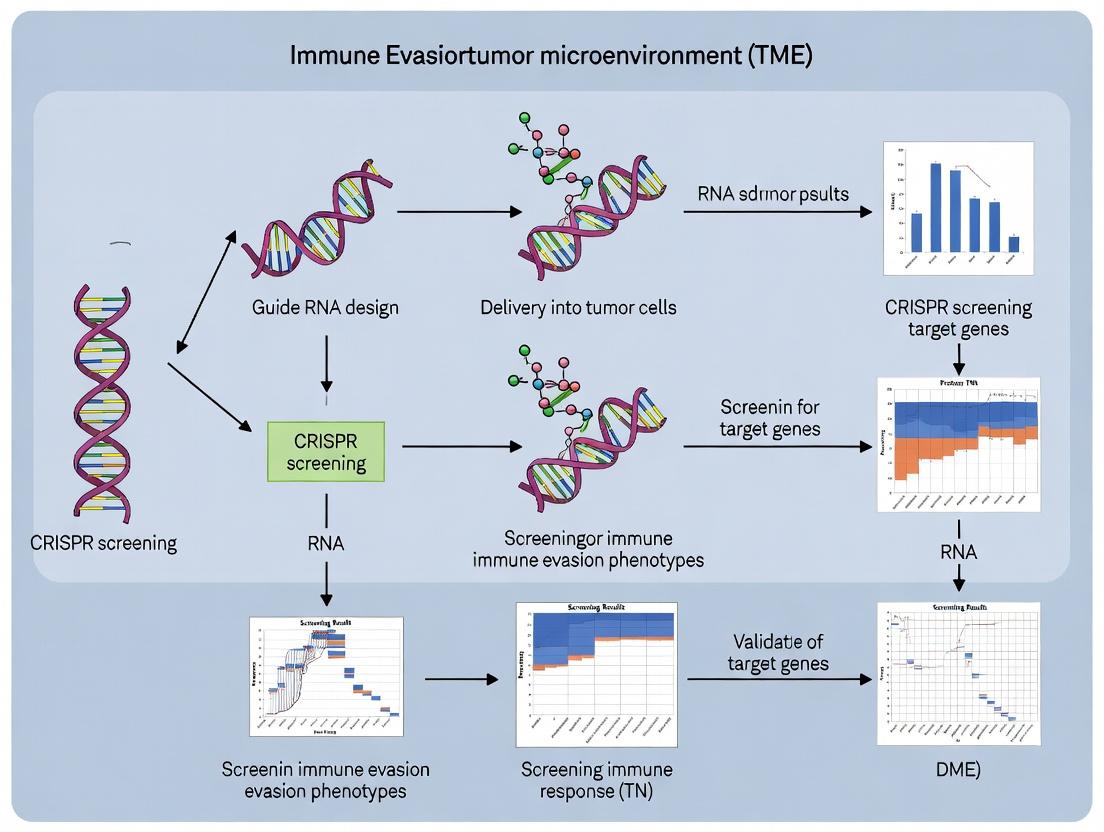
This article provides a comprehensive guide to using CRISPR-based functional genomics screens to identify and validate mechanisms of immune evasion within the tumor microenvironment (TME).
Unraveling Tumor Immune Evasion: How CRISPR Screens Decode the Tumor Microenvironment
Abstract
This article provides a comprehensive guide to using CRISPR-based functional genomics screens to identify and validate mechanisms of immune evasion within the tumor microenvironment (TME). Aimed at researchers and drug developers, it covers the foundational principles of immune editing and CRISPR screening design, details step-by-step methodological applications in complex co-culture systems, addresses common troubleshooting and optimization challenges for robust data generation, and compares validation strategies using orthogonal in vitro and in vivo models. The synthesis offers a critical roadmap for translating screening hits into novel therapeutic targets for cancer immunotherapy.
CRISPR Screening 101: Laying the Groundwork for Immune Evasion Discovery in the TME
Within the broader thesis of utilizing CRISPR screening to deconvolute immune evasion mechanisms in the Tumor Microenvironment (TME), this document outlines the principal hallmarks exploited by tumors to evade immune destruction. The TME is a complex ecosystem where cancer cells orchestrate immunosuppression through diverse, overlapping mechanisms. The advent of high-throughput, functional genomic CRISPR screens has been instrumental in systematically identifying and validating these key immune evasion pathways, offering novel targets for next-generation immunotherapies.
Application Note 1: CRISPR Screening for Immune Evasion Gene Discovery CRISPR-Cas9 knockout (KO) or CRISPR interference (CRISPRi) screens conducted in vivo or in complex co-culture systems allow for the unbiased identification of genes essential for tumor cell survival under immune pressure. Tumor cells expressing a genome-wide sgRNA library are implanted into immunocompetent hosts or co-cultured with immune effector cells (e.g., cytotoxic T cells, NK cells). Depletion or enrichment of specific sgRNAs post-selection reveals genes critical for immune evasion.
Application Note 2: Validating Hallmarks in Functional Assays Genes identified in primary screens are validated through secondary assays measuring hallmark-specific functions: suppression of T-cell infiltration, induction of T-cell exhaustion, or resistance to cytotoxic killing. Isogenic tumor cell lines with targeted gene KO are used to recapitulate phenotypes and elucidate mechanisms.
Key Hallmarks Quantified in Recent CRISPR Studies: Table 1: Key Immune Evasion Hallmarks and Validated Targets from Recent CRISPR Screens
| Immune Evasion Hallmark | Validated Gene Target(s) | Primary Screening Model | Phenotypic Readout (Quantitative Change vs Control) | Reference (Example) |
|---|---|---|---|---|
| Antigen Presentation Disruption | B2m, Tap1, Tap2 | In vivo, immunocompetent mouse | >90% reduction in MHC-I surface expression; 5-10x increased tumor growth | Manguso et al., 2017 |
| T-cell Exhaustion Signaling | Pd-l1, Cd47, Fas | In vitro T-cell co-culture | 2-3 fold increase in T-cell apoptosis; 70% reduction in IFN-γ production | Patel et al., 2017 |
| Cytokine Signaling Interference | Ifngr1, Jak1, Stat1 | In vivo & In vitro IFN-γ challenge | Complete loss of IFN-γ-responsive gene induction (e.g., Pd-l1); 8x tumor resistance to anti-PD-1 | Gao et al., 2016 |
| Chemokine-Mediated Exclusion | Cxcl9, Cxcl10, Ccr2 | In vivo spatial analysis | 60-80% reduction in CD8+ T-cell tumor infiltration measured by IHC | Peng et al., 2022 |
| Metabolic Suppression | Ido1, Arg1, Cd38 | In vitro nutrient competition assay | 50% reduction in T-cell proliferation; 2-fold increase in extracellular adenosine |
Detailed Experimental Protocols
Protocol 1: In Vivo CRISPR Screen for Immune Evasion Genes Objective: To identify tumor-intrinsic genes required for evasion of adaptive immunity in an immunocompetent host. Materials: See "Research Reagent Solutions" below. Workflow:
- Library Transduction: Infect Cas9-expressing murine tumor cells (e.g., B16F10, MC38) with a pooled, genome-wide sgRNA lentiviral library at an MOI of ~0.3 to ensure single integration. Culture under puromycin selection for 5-7 days.
- In Vivo Selection: Harvest library cells and implant subcutaneously (1x10^6 cells/mouse) into immunocompetent syngeneic mice (n≥5) and immunodeficient NSG mice (n≥3) as a "no immune pressure" control.
- Harvest and Analysis: Allow tumors to grow for 21-28 days. Harvest tumors from both cohorts, extract genomic DNA, and PCR-amplify integrated sgRNA sequences. Sequence via NGS.
- Data Processing: Using MAGeCK or similar algorithms, compare sgRNA abundance between immunocompetent and immunodeficient cohorts. Genes with significantly depleted sgRNAs in the immunocompetent setting are candidate immune evasion genes.
Protocol 2: In Vitro T-cell Killing Co-culture Validation Assay Objective: To validate candidate genes in mediating resistance to antigen-specific T-cell cytotoxicity. Materials: Isogenic KO tumor cell lines (generated via CRISPR-Cas9), OT-1 transgenic CD8+ T cells, OVA peptide, flow cytometry antibodies for Annexin V/Propidium Iodide. Workflow:
- Target Cell Preparation: Seed candidate KO and control wild-type (WT) tumor cells expressing a model antigen (e.g., OVA) in a 96-well plate.
- Effector Cell Activation: Isolate and activate OT-1 CD8+ T cells with OVA peptide and IL-2 for 72 hours.
- Co-culture: Add activated OT-1 T-cells to tumor cells at specified Effector:Target (E:T) ratios (e.g., 5:1, 10:1). Include tumor-only and T-cell-only controls.
- Cytotoxicity Measurement: After 24-48 hours, harvest co-culture and stain with Annexin V and PI. Analyze by flow cytometry to quantify percentage of dead/dying tumor cells (Annexin V+/PI+). Calculate specific lysis:
[(% death in co-culture - % spontaneous death in tumor control) / (100 - % spontaneous death)] * 100.
Visualizations
In Vivo CRISPR Screen for Immune Evasion
MHC-I Disruption Blunts Cytotoxic Killing
The Scientist's Toolkit: Research Reagent Solutions
Table 2: Essential Reagents for CRISPR Screening in Immune Evasion Research
| Reagent / Material | Supplier Examples | Function in Experiment |
|---|---|---|
| Genome-wide sgRNA Library (Mouse, Human) | Addgene, Custom Arrays | Provides pooled targeting constructs for knockout screening. |
| Lentiviral Packaging Mix | Takara Bio, Invitrogen | Produces lentivirus for stable sgRNA delivery into target cells. |
| Anti-Puromycin / Blasticidin | Sigma-Aldrich, Thermo Fisher | Selects for successfully transduced cells post-viral infection. |
| Cas9-Expressing Cell Line | ATCC, generated in-house | Provides the enzymatic machinery for CRISPR-mediated gene editing. |
| Syngeneic Mouse Models (C57BL/6, BALB/c) | Jackson Laboratory | Immunocompetent hosts for in vivo screens and validation. |
| Magnetic Cell Separation Kits (CD8+ T cells) | Miltenyi Biotec, STEMCELL | Isolates specific immune cell populations for co-culture assays. |
| NGS Library Prep Kit | Illumina, NEB | Prepares sgRNA amplicons for high-throughput sequencing. |
| Flow Cytometry Antibodies (Annexin V, PI, MHC-I, CD8) | BioLegend, BD Biosciences | Quantifies cell death, protein expression, and immune subsets. |
| Cytokine ELISA/Kits (IFN-γ, TNF-α) | R&D Systems, BioLegend | Measures immune cell activity and cytokine secretion. |
| MAGeCK Software | Open Source | Computational tool for analyzing CRISPR screen NGS data. |
Application Notes
Within the broader thesis investigating how CRISPR screening can identify immune evasion mechanisms in the Tumor Microenvironment (TME), the CRISPR-Cas9 toolkit has evolved into an indispensable platform. Its applications range from focused validation of candidate genes to unbiased, large-scale discovery of novel pathways. Key applications in TME immune evasion research include:
- Loss-of-Function Screens in Tumor Cells: Identify genes essential for tumor cell survival or proliferation under immune pressure (e.g., co-culture with T cells or exposure to cytokines like IFN-γ).
- Gain-of-Function Screens using SAM or CRISPRA: Activate gene expression to discover factors that confer resistance to immune-mediated killing, such as upregulated checkpoint molecules.
- In Vivo CRISPR Screening in Immunocompetent Models: Pooled tumor cells, transduced with a sgRNA library, are implanted into syngeneic mice to identify genes whose loss affects tumor growth and immune infiltration in a physiological TME.
- Screens in Immune Cells: CRISPR-engineered immune cells (e.g., T cells, macrophages) are used to dissect cell-intrinsic pathways that regulate cytotoxic activity, exhaustion, or polarization within the TME.
- Dual-Gene Interaction Screens: Combinatorial CRISPR approaches (e.g., dual-sgRNA libraries) map synthetic lethal interactions or identify co-operative immune evasion pathways.
Table 1: Quantitative Outcomes from Key TME Immune Evasion CRISPR Screens
| Study Focus (Cell Type) | Library Size & Type | Key Identified Hits | Primary Phenotype/Readout | Hit Validation Rate* |
|---|---|---|---|---|
| IFN-γ Resistance (Melanoma) | ~18,000 sgRNAs (GeCKO v2) | PBRM1, APLNR, ARID2 | Enhanced tumor cell killing by T cells | >70% |
| T-cell Exhaustion (Primary CD8+ T cells) | ~12,000 sgRNAs (Custom) | DGKα, DGKζ, PTPN2 | Enhanced persistence & tumor clearance in vivo | ~60% |
| Macrophage Polarization (iPSC-derived) | ~10,000 sgRNAs (Brunello) | KDM6B, EP300, KAT2A | Shift from pro-tumor (M2) to anti-tumor (M1) state | ~80% |
| In Vivo Immune Evasion (Colorectal Cancer) | ~6,000 sgRNAs (MinLib) | Spns2, Sell, Cd300lf | Altered tumor-infiltrating lymphocyte composition | >65% |
*Validation rate refers to the percentage of top screen hits confirmed in subsequent low-throughput functional assays.
Detailed Protocols
Protocol 1: Genome-wide Loss-of-Function Screen for Immune Evasion Genes in Tumor Cells
Objective: To identify tumor cell-intrinsic genes whose knockout enhances sensitivity to T-cell-mediated killing.
Research Reagent Solutions:
| Item | Function |
|---|---|
| Brunello sgRNA Library | A highly active, genome-wide human knockout library (4 sgRNAs/gene, ~77,441 sgRNAs). Provides consistent on-target efficacy. |
| Lentiviral Packaging Plasmids (psPAX2, pMD2.G) | Required for production of replication-incompetent lentiviral particles to deliver the sgRNA library. |
| Polybrene (Hexadimethrine bromide) | A cationic polymer that enhances viral transduction efficiency. |
| Puromycin | Selective antibiotic for stably transduced cell population enrichment. |
| Recombinant Human IFN-γ | Cytokine used to mimic T-cell-mediated immune pressure in the TME. |
| Anti-human CD3/CD28 Dynabeads | For activation and expansion of primary human T cells for co-culture assays. |
| Genomic DNA Extraction Kit (e.g., QIAamp DNA Blood Maxi Kit) | For high-quality gDNA isolation from pooled screen cells prior to NGS. |
| NEBNext Ultra II Q5 Master Mix | For efficient PCR amplification of sgRNA sequences from genomic DNA for sequencing library prep. |
| MiSeq or NextSeq System (Illumina) | For high-throughput sequencing of sgRNA amplicons. |
Methodology:
- Library Amplification & Lentivirus Production: Amplify the Brunello plasmid library in Endura electrocompetent cells to maintain diversity. Produce high-titer lentivirus in HEK293T cells via psPAX2/pMD2.G co-transfection.
- Cell Line Preparation & Transduction: Culture target tumor cells (e.g., A375 melanoma). Transduce cells at a low MOI (~0.3) with library virus + 8 µg/mL polybrene to ensure single sgRNA integration per cell. Aim for >500x coverage of the library.
- Selection & Expansion: 48h post-transduction, select with puromycin (2-5 µg/mL) for 5-7 days. Expand the population to maintain coverage.
- Screen Execution (Co-culture):
- Day 0: Split cells into two arms: "Immune Pressure" and "Control."
- Immune Pressure Arm: Seed tumor cells and activate primary human T cells (from matched donor) with anti-CD3/CD28 beads at a defined effector:target ratio (e.g., 1:1). Add 20 ng/mL IFN-γ.
- Control Arm: Seed tumor cells alone.
- Co-culture for 5-7 days, with T-cell re-stimulation if needed.
- Harvest & Genomic DNA Extraction: Harvest cells from both arms. Extract gDNA from a cell count representing >500x library coverage.
- sgRNA Amplification & Sequencing: Perform a two-step PCR. Step 1: Amplify integrated sgRNA cassette from gDNA. Step 2: Add Illumina adaptors and sample barcodes. Pool and sequence on an Illumina platform.
- Bioinformatic Analysis: Align reads to the library reference. Use MAGeCK (Model-based Analysis of Genome-wide CRISPR-Cas9 Knockout) to compare sgRNA abundance between "Immune Pressure" and "Control" arms, identifying significantly depleted or enriched genes.
Protocol 2: In Vivo CRISPR Screening in an Immunocompetent Mouse Model
Objective: To identify genes affecting tumor growth and immune composition in a physiological TME.
Methodology:
- Library Transduction & Tumor Cell Preparation: Transduce a mouse tumor cell line (e.g., MC38 colon carcinoma) with the mouse-adapted Yusa library (Mouse CRISPR Knockout Pooled Library) at low MOI. Select with puromycin.
- Implantation: Subcutaneously inject ~10 million transduced cells (maintaining >500x coverage) into immunocompetent syngeneic mice (e.g., C57BL/6).
- Tumor Harvest & Processing: Allow tumors to grow for 14-21 days. Harvest tumors at a defined endpoint size (e.g., 1000 mm³). Split each tumor: one portion for gDNA extraction, another for flow cytometry analysis of immune infiltrate (CD45+, CD8+, CD4+, Tregs, MDSCs).
- Analysis: Sequence sgRNAs from input cells and endpoint tumors. MAGeCK identifies sgRNAs depleted (essential for in vivo growth) or enriched (potential immune evasion hits). Correlate genetic changes with immune profiling data.
Diagrams
Title: CRISPR Screen Workflow for Immune Evasion Genes
Title: IFN-γ/JAK/STAT Pathway & CRISPR Knockout
Within the thesis investigating CRISPR screening to identify immune evasion mechanisms in the tumor microenvironment (TME), the initial design of the screen is a critical determinant of success. Two fundamental philosophical approaches exist: Hypothesis-Driven and Unbiased Discovery. This application note details the strategic considerations, experimental protocols, and reagent solutions for implementing each approach to deconstruct the complex cellular and molecular interactions that enable tumors to evade immune destruction.
Strategic Comparison: Hypothesis-Driven vs. Unbiased Discovery
The choice between approaches balances the depth of mechanistic inquiry against the breadth of novel target discovery.
Table 1: Strategic Comparison of Screening Approaches
| Feature | Hypothesis-Driven Approach | Unbiased Discovery (Genome-Wide) Approach |
|---|---|---|
| Primary Goal | Test a specific mechanistic model (e.g., a specific pathway's role in evasion). | Identify all genetic modifiers of a phenotype without prior assumptions. |
| Library Design | Focused (100-5000 genes). Targets known immune pathways, metabolic genes, signaling nodes. | Genome-wide (~20,000 genes). Uses whole-genome knockout (GeCKO, Brunello) or activation (SAM) libraries. |
| Thesis Context | Ideal for validating candidate pathways from prior omics data (e.g., IFN-γ resistance genes). | Ideal for initial discovery in a novel TME model or when mechanisms are poorly understood. |
| Throughput & Cost | Lower cost, higher sequencing depth per guide, feasible with more complex phenotypic assays. | Higher cost, requires immense sequencing depth, often limited to robust survival/selection assays. |
| Data Analysis | Simpler, focused on significance within a predefined set. | Complex, requires stringent genome-wide multiple-testing correction (e.g., FDR, MAGeCK algorithm). |
| Key Strength | Deep mechanistic insight, higher signal-to-noise for targeted biology. | Comprehensiveness, potential for serendipitous discovery of novel mechanisms. |
| Key Limitation | Limited to known biology; cannot find entirely unknown players. | High false-positive rate; hit validation is extensive; may miss subtle phenotypes. |
Experimental Protocols
Protocol 3.1: Hypothesis-Driven Screen for PD-L1 Regulation Genes
Objective: Identify novel regulators of PD-L1 cell surface expression in cancer cells under TME-mimetic conditions (IFN-γ exposure). Workflow Diagram Title: Hypothesis-Driven PD-L1 Regulation Screen
Detailed Steps:
- Library Design: Select a commercially available focused library (e.g., CRISPRko Immune Gene Set) or custom design targeting 500-1000 genes involved in cytokine signaling, epigenetics, and surfaceome regulation.
- Virus Production: Generate lentivirus for the sgRNA library in HEK293T cells using standard packaging plasmids (psPAX2, pMD2.G). Titer virus.
- Cell Transduction: Transduce your cancer cell line (e.g., A375 melanoma) at a low MOI (0.3) to ensure single-guide integration. Include a non-targeting sgRNA control.
- Selection & Expansion: Treat with puromycin (1-2 µg/mL) for 5-7 days to select transduced cells. Maintain cells at >500x library representation.
- Phenotypic Induction: Split cells and treat with IFN-γ (e.g., 20 ng/mL for 48h) or vehicle control.
- FACS Sorting: Harvest and stain cells with anti-PD-L1-APC antibody. Use FACS to isolate the top 10% (PD-L1-High) and bottom 10% (PD-L1-Low) of expressing cells from the IFN-γ treated population. Collect >1000x library representation per population.
- NGS Sample Prep: Extract genomic DNA from each sorted population and the unsorted reference pool. Amplify the sgRNA region via PCR with indexed primers for multiplexing.
- Sequencing & Analysis: Sequence on an Illumina platform. Use algorithms like MAGeCK (Model-based Analysis of Genome-wide CRISPR-Cas9 Knockout) to compare sgRNA abundance between High/Low populations and identify enriched/depleted genes (FDR < 0.1).
Protocol 3.2: Unbiased Genome-Wide Screen for Resistance to T-cell Killing
Objective: Identify genes whose knockout confers resistance or sensitivity to cytotoxic T lymphocyte (CTL) killing in a co-culture model. Workflow Diagram Title: Genome-Wide T-cell Killing Resistance Screen
Detailed Steps:
- Library & Cell Prep: Generate a Cas9-expressing cancer cell line stably expressing the target antigen (e.g., NY-ESO-1). Transduce with the Brunello genome-wide knockout library at MOI ~0.3, select with puromycin, and expand to maintain >500x coverage. Freeze aliquots as the T0 reference.
- Effector Cell Prep: Expand antigen-specific CD8+ T cells (e.g., from transgenic mouse or engineered TCR T cells).
- Co-culture Selection Seed: 50 million library cells with >500x coverage. Co-culture with CTLs at a defined effector:target ratio (e.g., 2:1) for 72 hours. Include a "no CTL" control culture.
- Harvest: After co-culture, remove T cells (using CD8+ depletion beads or by exploiting differential adhesion) and harvest surviving cancer cells.
- NGS & Analysis: Extract gDNA from T0 and final populations. Perform PCR and NGS as in Protocol 3.1. Analyze with MAGeCK to identify genes whose sgRNAs are significantly depleted (sensitizers) or enriched (resistance genes) in the co-culture vs. T0 control (FDR < 0.05 for primary hit calling).
The Scientist's Toolkit
Table 2: Key Research Reagent Solutions for CRISPR TME Screens
| Reagent / Material | Function & Rationale | Example Product/Source |
|---|---|---|
| Focused CRISPR Library | Targets a curated gene set for hypothesis-testing; increases depth and reduces cost. | Horizon Discovery Dharmacon "Kinase", "Immuno-Oncology" libraries. |
| Genome-wide CRISPRko Library | Enables unbiased discovery; high-confidence, optimized sgRNA designs. | Broad Institute's "Brunello" (4 sgRNAs/gene) or "Toronto KnockOut" (TKO) v3. |
| Lentiviral Packaging Mix | Produces high-titer, replication-incompetent lentivirus for sgRNA delivery. | psPAX2 & pMD2.G plasmids; or commercial kits (e.g., Lenti-X from Takara). |
| Cas9-Expressing Cell Line | Essential for CRISPR knockout; ensures consistent nuclease activity across screen. | Commercially available lines or generate via lentivirus + blasticidin selection. |
| Recombinant Cytokines | To mimic specific TME conditions (e.g., IFN-γ, TNF-α, TGF-β) during screening. | PeproTech, R&D Systems recombinant human proteins. |
| Flow Cytometry Antibodies | For phenotypic sorting (e.g., PD-L1, MHC-I, activation markers). | BioLegend, BD Biosciences fluorochrome-conjugated antibodies. |
| Magnetic Cell Separation Beads | To rapidly separate cancer cells from immune effector cells post-co-culture. | Miltenyi Biotec CD8+ or CD45+ Depletion kits. |
| gDNA Extraction Kit (Large Scale) | High-yield, high-quality gDNA prep from millions of pooled cells. | QIAGEN Blood & Cell Culture DNA Maxi Kit. |
| NGS Library Prep Kit for sgRNA | Efficient, bias-free amplification of the sgRNA cassette for sequencing. | "Amplify guide RNA sequences for Illumina" (NEBNext). |
| Bioinformatics Pipeline | For robust statistical identification of hits from NGS count data. | MAGeCK (https://sourceforge.net/p/mageck), CRISPRcleanR. |
Pathway Visualization: Key Immune Evasion Mechanisms Identified
Diagram Title: CRISPR-Uncovered Immune Evasion Pathways in TME
Application Notes
CRISPR screening has become indispensable for deconvoluting immune evasion mechanisms within the tumor microenvironment (TME). The central strategic decision lies in selecting the appropriate cellular target for genetic perturbation: the cancer cell itself or the stromal/immune components. This choice dictates the experimental model, screening readout, and biological interpretation.
Cancer Cell-Intrinsic Screening focuses on identifying genes within tumor cells that modulate their sensitivity or resistance to immune attack. These screens typically use co-culture models with immune effector cells (e.g., cytotoxic T cells, NK cells). Readouts include tumor cell viability, caspase activation, or IFN-γ response. This approach directly reveals tumor vulnerabilities that can be therapeutically targeted.
Stromal/Immune Cell-Focused Screening aims to uncover genes in immune or stromal cells (e.g., T cells, macrophages, cancer-associated fibroblasts) that regulate their anti-tumor or pro-tumor functions. These screens require efficient CRISPR delivery into primary immune cells, often using lentiviral transduction activated by T cell stimulation. Readouts include immune cell proliferation, cytokine production, cytotoxicity, or exhaustion markers.
The choice of model must align with the core thesis question: "What are the genetic determinants of immune evasion?" A cancer cell-intrinsic screen identifies "victim" genes whose loss makes tumors susceptible. A stromal/immune cell screen identifies "aggressor" genes whose manipulation enhances anti-tumor immunity. Integrated models, such as organotypic co-cultures or in vivo screens, are now emerging to capture bidirectional crosstalk.
Table 1: Comparison of CRISPR Screening Approaches for TME Research
| Screening Feature | Cancer Cell-Intrinsic Target | Stromal/Immune Cell Target |
|---|---|---|
| Primary Cell Model | Immortalized or patient-derived cancer cell lines | Primary T cells, macrophages, or engineered stromal cells |
| CRISPR Delivery Efficiency | High (often >80% with lentivirus) | Variable (10-60% for primary T cells; improved with activated transduction) |
| Typical Pooled Library Size | Genome-wide (~90k sgRNAs) or focused immune-related subsets | Focused libraries (5k-20k sgRNAs) due to primary cell constraints |
| Key Co-culture Partner | Engineered T cells (CAR-T, TCR-T), Tumor-infiltrating lymphocytes (TILs), NK cells | Tumor organoids, cancer cell monolayers, or antigen-presenting systems |
| Primary Screening Readout | Tumor cell viability/death via sequencing (Drop-seq), Incucyte imaging, or FACS | Immune cell function (cytokine secretion, activation markers), tumor killing capacity |
| Common Validation Assays | In vitro cytotoxicity re-assay; in vivo syngeneic or humanized mouse models | In vitro suppression/activation assays; adoptive transfer in vivo models |
| Major Technical Challenge | Distinguishing cell-autonomous effects from indirect immune modulation | Maintaining cell viability/function post-CRISPR editing; low library representation |
| Example Hit Genes | IFN-γ pathway (JAK1/2, B2M), Antigen presentation (MHC class I), Death receptors (FAS) | T cell receptor signaling (PD-1, CBLB), Cytokine signaling (IL-2R), Epigenetic regulators |
Table 2: Example Hit Genes from Recent In Vivo CRISPR TME Screens (2023-2024)
| Target Cell Type | Screening Model | Top Validated Hit Genes | Proposed Immune Evasion Mechanism | Reference (Type) |
|---|---|---|---|---|
| Melanoma Cells | In vivo co-injection with CD8+ T cells in immunocompetent mice | Ptger4, Cd274 (PD-L1), Jak1 | Upregulation of prostaglandin E2 & PD-L1 suppresses T cell function | Nat. Immunol. 2023 |
| CD8+ T Cells | In vivo adoptive transfer into tumor-bearing mice | Rgs1, Ppp2r2d | Modulators of T cell trafficking and signal transduction exhaustion | Cell 2024 |
| Myeloid Cells | In vivo screen in glioblastoma model | Cebpb, Irf8 | Transcription factors controlling pro-tumor vs. anti-tumor polarization | Science 2023 |
| Colorectal Organoids | Co-culture with TILs in vitro | APC, TGFBR2 | Wnt/β-catenin and TGF-β signaling mediate T cell exclusion | Cancer Discov. 2024 |
Experimental Protocols
Protocol 1: Pooled CRISPRko Screen for Cancer Cell-Intrinsic Immune Evasion Genes
Objective: To identify tumor cell genes whose loss enhances sensitivity to antigen-specific T cell killing.
Materials: See "The Scientist's Toolkit" below.
Method:
- Library Lentivirus Production: Generate high-titer lentivirus from a pooled human Brunello or mouse Brie CRISPRko library in HEK293T cells using standard calcium phosphate transfection.
- Target Cell Transduction: Infect the target cancer cell line (e.g., MC38-OVA) at an MOI of ~0.3 to ensure single sgRNA integration, with 8μg/mL polybrene. Spinfect at 1000 × g for 90 min at 32°C.
- Selection and Expansion: Select transduced cells with 2μg/mL puromycin for 7 days. Expand cells for 10-14 population doublings to allow gene knockout phenotype manifestation. Harvest a pre-co-culture sample (Time Zero).
- Co-culture Setup: Plate 5x10^6 CRISPR-pooled cancer cells. Add activated, antigen-specific CD8+ T cells (e.g., OT-I T cells for OVA antigen) at a 1:1 effector:target ratio in RPMI-1640 + 10% FBS.
- Selection Pressure: Co-culture for 48-72 hours. Include control wells of cancer cells alone (No T cell).
- Sample Collection: Harvest surviving cancer cells by gentle trypsinization and FACS sorting for a cancer cell-specific marker (e.g., GFP+ if engineered).
- Genomic DNA (gDNA) Extraction & NGS Prep: Isolate gDNA using a silica-column kit. Amplify sgRNA sequences via a two-step PCR (PCR1: add Illumina adapters and sample barcodes; PCR2: add P5/P7 flow cell binding sites). Use at least 500ng gDNA per PCR and maintain >500x library coverage.
- Sequencing & Analysis: Sequence on an Illumina NextSeq. Align reads to the sgRNA library reference. Calculate depletion/enrichment scores for each sgRNA using model-based analysis (e.g., MAGeCK or BAGEL2) comparing T cell-co-cultured samples to Time Zero and No T cell controls.
Protocol 2: CRISPR Screening in Primary Human CD8+ T Cells for Enhanced Anti-Tumor Function
Objective: To identify genes in primary T cells whose knockout enhances persistence or cytotoxicity against tumors.
Materials: See "The Scientist's Toolkit" below.
Method:
- T Cell Activation & Transduction: Isolate CD8+ T cells from healthy donor PBMCs using negative selection beads. Activate with CD3/CD28 Dynabeads (1:1 bead:cell ratio) in IL-2 (100 IU/mL) containing media.
- Lentiviral Transduction: At 24h post-activation, transduce cells with a focused lentiviral sgRNA library (e.g., kinase/phosphatase library) in retronectin-coated plates via spinfection. Use a high MOI (~5-10) to ensure high representation.
- Bead Removal & Expansion: Remove beads at 72h. Expand T cells in IL-2 media for 7-10 days.
- Functional Assay Setup: Co-culture sgRNA-library T cells with target tumor cells (e.g., A549) at a 2:1 E:T ratio. Include a control condition without tumor targets. Culture for 5-7 days, refreshing IL-2 as needed.
- Cell Harvesting & Sorting: Harvest T cells using a gentle dissociation reagent. Sort viable T cells (based on viability dye) into high- and low-performing populations based on a functional marker (e.g., top vs bottom 20% of PD-1+Tim-3+ (exhausted) or CD25+CD69+ (activated) via FACS).
- gDNA Extraction & NGS: Extract gDNA from sorted populations and the pre-co-culture reference. Perform a two-step PCR to amplify sgRNA constructs for sequencing, ensuring high-fidelity polymerase is used.
- Bioinformatic Analysis: Map sequencing reads to the sgRNA library. Use statistical tools (e.g., MAGeCK-VISPR) to compare sgRNA abundance between high- and low-functioning T cell populations to identify hits that drive the desired phenotype.
Visualizations
Diagram 1: Model Selection Logic for TME CRISPR Screens
Diagram 2: Cancer Cell-Intrinsic Screening Workflow
Diagram 3: Key IFN-γ Pathway in Cancer Cell-Intrinsic Evasion
The Scientist's Toolkit
Table 3: Essential Research Reagents & Materials
| Item | Function & Application | Example Vendor/Catalog |
|---|---|---|
| Pooled CRISPRko Library | Contains thousands of sgRNAs for genome-wide or focused knockout screening. | Addgene (e.g., Human Brunello, Mouse Brie) |
| Lentiviral Packaging Mix | Second/third-generation plasmids (psPAX2, pMD2.G) for producing replication-incompetent lentivirus. | Addgene #12260, #12259 |
| Polybrene (Hexadimethrine Bromide) | A cationic polymer that enhances viral transduction efficiency by neutralizing charge repulsion. | Sigma-Aldrich, TR-1003 |
| Retronectin | A recombinant fibronectin fragment used to co-localize virus and cells, critical for transducing primary T cells. | Takara Bio, T100B |
| CD3/CD28 Activator Beads | Magnetic beads conjugated with anti-CD3 and anti-CD28 antibodies to activate primary T cells for transduction and expansion. | Thermo Fisher, 11161D |
| Recombinant Human IL-2 | Cytokine essential for T cell survival, proliferation, and maintenance of function during screening culture. | PeproTech, 200-02 |
| Viability Dye (e.g., Fixable Viability Stain) | Allows discrimination of live/dead cells during FACS sorting post-co-culture, preventing NGS background from dead cells. | BD Biosciences, 565388 |
| Next-Generation Sequencing Kit | For preparing sgRNA amplicon libraries from genomic DNA (e.g., two-step PCR with indexing). | Illumina, MiSeq Reagent Kit v3 |
| gDNA Extraction Kit (Silica Column) | For high-yield, high-purity genomic DNA extraction from 1e6 to 1e7 cells for downstream sgRNA PCR. | QIAGEN, DNeasy Blood & Tissue Kit |
| Bioinformatics Software (MAGeCK) | A computational tool specifically designed for robust identification of CRISPR screen hits from NGS count data. | Source: https://sourceforge.net/p/mageck |
Essential Controls and Experimental Design for High-Confidence Hit Calling
Application Notes Within the broader thesis investigating CRISPR screening to identify immune evasion mechanisms in the tumor microenvironment (TME), rigorous controls are paramount. High-confidence hit calling separates true genetic modulators of tumor-immune interactions from technical and biological noise. This requires experimental designs that account for screening-specific artifacts, such as gene-independent effects on cellular fitness and guide RNA (gRNA) efficiency.
Key principles include the use of non-targeting control gRNAs to model the null distribution of phenotypic effects and essential gene controls (e.g., ribosomal proteins) as positive controls for depletion phenotypes. For immune co-culture screens, additional controls for non-cell-autonomous effects, such as tumor-independent immune cell proliferation or viability, are critical. Replicate strategy (minimum n=3 biological replicates) and early timepoint sequencing are essential to assess gRNA distribution and screen robustness prior to phenotypic selection. Data normalization to account for library representation and variance stabilization models (e.g., using RRA, MAGeCK, or drugZ algorithms) is required for final hit identification.
Quantitative Data Summary
Table 1: Core Control Elements for CRISPR TME Screening
| Control Type | Purpose | Recommended Number/Set | Expected Outcome |
|---|---|---|---|
| Non-Targeting gRNAs | Define baseline phenotype distribution, false-positive control | 50-100 per library | No consistent phenotypic skew. |
| Essential Gene gRNAs | Positive control for depletion (e.g., cell fitness) | 50-100 targeting core essentials | Strong depletion in all conditions. |
| Non-Essential Gene gRNAs | Positive control for neutrality (e.g., safe-targeting) | 50-100 targeting "safe-harbor" loci | No depletion or enrichment. |
| Library Coverage | Ensure sufficient representation for statistics | >500x cells per gRNA at start | Maintain >200x coverage post-selection. |
| Replication | Measure reproducibility, improve statistical power | Minimum 3 biological replicates | High correlation between replicates (Pearson R > 0.8). |
Table 2: Key Metrics for Screen Quality Assessment
| Metric | Calculation/Description | Target Threshold |
|---|---|---|
| Gini Index | Measure of gRNA distribution equality at Day 0. | < 0.2 |
| Pearson R (Reproducibility) | Correlation of gRNA log2 fold-changes between replicates. | > 0.8 |
| ESS Gene Log2FC | Average fold-change of positive control essential genes. | < -1.0 at endpoint |
| NTC Standard Deviation | Spread of non-targeting control gRNA log2 fold-changes. | Low, stable value. |
Experimental Protocols
Protocol 1: Production of Lentiviral gRNA Library
- Library Transformation: Transform the plasmid gRNA library (e.g., Brunello, Dolcetto) into Endura electrocompetent cells via electroporation (1.8 kV). Plate on large LB-agar plates with appropriate antibiotic (e.g., Ampicillin). Incubate overnight at 32°C.
- Plasmid Harvest: Scrape all colonies and perform Maxi- or Gigaprep plasmid DNA extraction. Quantify DNA concentration and verify library representation by next-generation sequencing (NGS) of the gRNA cassette.
- Lentivirus Production: In a 10cm plate, co-transfect HEK293T cells (70% confluency) with: 10 µg library plasmid, 7.5 µg psPAX2 (packaging), and 2.5 µg pMD2.G (envelope) using polyethylenimine (PEI). Replace media after 6-8 hours.
- Virus Collection: Harvest supernatant at 48 and 72 hours post-transfection. Pool, filter through a 0.45 µm PES filter, and concentrate via ultracentrifugation (70,000 x g, 2h at 4°C) or PEG-it precipitation. Aliquot and store at -80°C. Determine functional titer on target cells via puromycin selection.
Protocol 2: CRISPR Screening in a Tumor-Immune Co-Culture System
- Cell Line Preparation: Generate a stable Cas9-expressing tumor cell line (e.g., mouse or human cancer line). Validate Cas9 activity via surrogate reporter or western blot.
- Library Transduction: In biological triplicate, transduce tumor cells at a low MOI (<0.3) to ensure single gRNA integration, with >500x library coverage. Include a non-transduced control. Spinfect (1000 x g, 90 min, 32°C) if needed.
- Puromycin Selection: Begin selection with appropriate puromycin dose (determined by kill curve) 48 hours post-transduction. Maintain cells for 7-10 days, passaging to maintain >500x coverage.
- Baseline Sample (T0): Harvest a minimum of 50 million cells (or equivalent coverage) for gDNA extraction (Qiagen Blood & Cell Culture DNA Maxi Kit) 2 days post-selection.
- Co-Culture Assay Setup: Split cells into two arms: Control Arm: Tumor cells cultured alone. Co-Culture Arm: Tumor cells co-cultured with immune effector cells (e.g., T cells, macrophages) at a defined ratio (e.g., 1:1) in appropriate media. Culture for 5-7 days, maintaining library coverage.
- Endpoint Sample (T1): Harvest all surviving tumor cells from each arm separately via FACS (using a tumor-specific surface marker) or selective trypsinization. Extract gDNA.
- gRNA Amplification & Sequencing: Perform a two-step PCR to amplify the gRNA cassette from gDNA and add Illumina adapters/indexes. Pool PCR products and purify. Sequence on an Illumina NextSeq platform to achieve >200x coverage per sample.
Protocol 3: Bioinformatics Analysis for Hit Calling
- gRNA Read Count Alignment: Demultiplex sequencing reads. Align reads to the reference gRNA library using
Bowtie2or exact matching. Generate a count table for each gRNA in each sample (T0, T1 Control, T1 Co-culture). - Normalization & Fold-Change Calculation: Using a tool like
MAGeCK count, normalize read counts to counts per million (CPM). Calculate log2 fold-change (LFC) for each gRNA relative to T0 for each condition. - Statistical Modeling & Hit Calling: Analyze data with
MAGeCK MLEordrugZ, using the non-targeting control gRNAs to model the null distribution. The model will generate a beta score (phenotypic effect) and a false discovery rate (FDR) for each gene. High-confidence hits are defined as genes with FDR < 0.1 (or 0.05) and a significant beta score difference between co-culture and control arms.
Visualizations
Title: CRISPR TME Screening Experimental Workflow
Title: Hit Calling Bioinformatics Pipeline Logic
The Scientist's Toolkit: Research Reagent Solutions
Table 3: Essential Materials for CRISPR Immuno-Oncology Screens
| Item | Function & Application |
|---|---|
| Genome-Scale gRNA Library (e.g., Brunello, Dolcetto) | Pre-designed, pooled library targeting all human or mouse protein-coding genes with 4-6 gRNAs per gene. Provides coverage for loss-of-function screening. |
| Lentiviral Packaging Plasmids (psPAX2, pMD2.G) | Second- and third-generation packaging plasmids required for production of replication-incompetent lentiviral particles. |
| Polybrene or Hexadimethrine Bromide | A cationic polymer that enhances viral transduction efficiency by neutralizing charge repulsion between virus and cell membrane. |
| Puromycin Dihydrochloride | Selective antibiotic for stably transduced, gRNA-expressing cell populations. Dose must be determined via kill curve. |
| Magnetic Cell Separation Kits (e.g., for FACS or MACS) | For efficient isolation of tumor cells from complex co-cultures using specific surface markers (e.g., CD45- selection). |
| gDNA Extraction Kit (Large-scale, spin-column based) | For high-yield, high-purity genomic DNA extraction from 10^7 to 10^8 cells, compatible with subsequent PCR amplification. |
| Illumina-Compatible PCR Primers (i5/i7 indexed) | Custom primers for two-step PCR amplification of the integrated gRNA sequence from gDNA and addition of sequencing adapters/indexes. |
| CRISPR Analysis Software (MAGeCK, drugZ, PinAPL-Py) | Open-source computational pipelines specifically designed for the normalization, statistical analysis, and hit ranking of pooled CRISPR screen data. |
From Library to Hit List: A Step-by-Step Guide to Executing TME-Focused CRISPR Screens
Constructing and Delivering CRISPR Libraries for Immune Co-Culture Assays
This protocol details the construction and delivery of pooled CRISPR-Cas9 libraries for high-throughput screening in immune co-culture assays. These screens are designed to identify genes that confer tumor cell resistance or susceptibility to immune effector mechanisms within the Tumor Microenvironment (TME), directly supporting the thesis aim of mapping immune evasion pathways. The workflow enables systematic, genome-scale interrogation of gene function in tumor cells under immune pressure.
Key Considerations for Library Design in Immune Co-Cultures
Library Type and Focus
Screens typically use genome-wide (e.g., Brunello, ~76,441 sgRNAs) or focused libraries targeting specific gene families (e.g., kinases, phosphatases, immune ligands, checkpoint molecules). Focused libraries offer deeper coverage and are cost-effective for co-culture assays, which often have lower throughput due to complexity.
Immune Co-Culture Variables
The library delivery and screen readout are dictated by the co-culture system:
- Effector Cells: Primary T cells (CD8+, CAR-T), NK cells, macrophages.
- Tumor Cell Model: Adherent, suspension, or 3D cultures.
- Readout: Fitness-based (cell survival/death) or FACS-based (surface marker expression).
- Assay Length: Typically 7-14 days to allow for immune-mediated selection pressure.
Protocol Part 1: Library Construction and Lentiviral Production
Materials & Reagents
Research Reagent Solutions
| Item | Function |
|---|---|
| Pooled CRISPR sgRNA Library Plasmid (e.g., Brunello, Human CRISPR Knockout) | Contains the sgRNA expression cassette and antibiotic resistance for cloning and selection. |
| Competent E. coli (EndA-) | High-efficiency bacterial cells for large-scale plasmid library transformation to maintain diversity. |
| Maxiprep/Megaprep Kit | For high-quality, endotoxin-free plasmid DNA isolation from large bacterial cultures. |
| Lentiviral Packaging Plasmids (psPAX2, pMD2.G) | Provide viral structural proteins and VSV-G envelope for pseudotyping. |
| HEK293T/17 Cells | Highly transfectable cell line for high-titer lentivirus production. |
| Polyethylenimine (PEI) Max | Cationic polymer transfection reagent for efficient plasmid delivery into HEK293T cells. |
| Lenti-X Concentrator | PEG-based solution to concentrate lentiviral particles from supernatant. |
| qPCR Lentiviral Titer Kit | Quantifies functional viral vector particles by measuring integrated proviral DNA. |
Method
A. Library Plasmid Amplification
- Thaw an aliquot of competent E. coli (EndA- strain, ≥ 10⁹ CFU/µg efficiency) on ice.
- Perform electroporation with 10 ng of the library plasmid pool. Use a large electroporation cuvette (2 mm gap) and conditions: 2.5 kV, 200 Ω, 25 µF.
- Immediately recover cells in 1 mL SOC medium, incubate with shaking (225 rpm) at 37°C for 1 hour.
- Plate the entire recovery culture onto five 245 mm x 245 mm LB agar plates containing the appropriate antibiotic (e.g., 100 µg/mL ampicillin). Incubate at 37°C for 16-18 hours.
- Ensure colony count exceeds library complexity by at least 200-fold (e.g., >15 million colonies for a 76k-guide library). Scrape colonies and perform maxiprep (≥ 500 µg DNA total).
- Verify library representation by next-generation sequencing (NGS) of the sgRNA region. A high-quality prep should maintain >95% of sgRNAs.
B. High-Titer Lentivirus Production
- Day 0: Seed HEK293T/17 cells in 15-cm dishes (8-10 dishes) at 6 x 10⁶ cells/dish in 20 mL DMEM + 10% FBS (no antibiotics). Target 70-80% confluency for transfection the next day.
- Day 1 (Transfection): For each dish, prepare DNA mix in 1.5 mL Opti-MEM:
- 12 µg library plasmid
- 9 µg psPAX2
- 3 µg pMD2.G Add 72 µL of PEI Max (1 mg/mL) in 1.5 mL Opti-MEM. Mix, incubate 15 min at RT, then add dropwise to cells.
- Day 2 (6-8 hours post-transfection): Replace medium with 20 mL fresh complete medium per dish.
- Day 3 & 4: Harvest supernatant (contains virus) at 48h and 72h post-transfection. Pool harvests, filter through a 0.45 µm PES filter.
- Concentrate virus by adding Lenti-X Concentrator (1:3 ratio), incubate O/N at 4°C, then centrifuge at 1500 x g for 45 min. Resuspend pellet in cold PBS (100-200 µL per original dish). Aliquot and store at -80°C.
- Titer Determination (Critical Step):
- Transduce HEK293T cells in a 24-well plate with serially diluted virus in the presence of 8 µg/mL polybrene.
- 72 hours later, extract genomic DNA and perform qPCR for the lentiviral WPRE element vs. a reference gene (e.g., RPP30).
- Calculate titer (Transducing Units/mL, TU/mL) using a standard curve of known plasmid copies. Aim for >1 x 10⁸ TU/mL. The optimal multiplicity of infection (MOI) for screening is 0.3-0.4.
| Parameter | Target Value | Purpose |
|---|---|---|
| Bacterial Colony Coverage | >200x library complexity | Maintains sgRNA diversity, prevents bottlenecking. |
| Plasmid DNA Yield | ≥ 500 µg total | Sufficient for large-scale virus production and sequencing. |
| sgRNA Retention Post-Amplification | >95% by NGS | Ensures library integrity. |
| Functional Viral Titer | >1 x 10⁸ TU/mL | Enables low-MOI transduction to ensure single sgRNA integration per cell. |
| Transduction MOI | 0.3 - 0.4 | Minimizes cells with multiple sgRNA integrations (<20% of transduced cells). |
Protocol Part 2: Library Delivery & Co-Culture Screening
Materials & Reagents
| Item | Function |
|---|---|
| Target Tumor Cell Line | Genetically stable, susceptible to lentiviral transduction, and relevant to TME biology (e.g., melanoma, RCC, CRC). |
| Polybrene (Hexadimethrine Bromide) | Cationic polymer that enhances viral transduction efficiency. |
| Puromycin (or appropriate antibiotic) | For selecting successfully transduced tumor cells post-viral delivery. |
| Primary Immune Cells (e.g., CD8+ T cells, NK cells) | The effector population mediating selection pressure in co-culture. |
| Cell Staining Antibodies & Viability Dye | For FACS-based sorting of live/dead tumor cells or specific phenotypic populations post-co-culture. |
| Genomic DNA Extraction Kit | For bulk DNA isolation from harvested cell populations prior to NGS. |
| sgRNA Amplification PCR Primers | Contain Illumina adapters and sample barcodes for multiplexed NGS. |
Method
A. Generating the Mutant Tumor Cell Pool
- Determine the screening scale. For a genome-wide library (76k guides), a minimum of 500 cells per sgRNA is required to avoid stochastic dropout. For a screen with 500x coverage, you need 76,441 * 500 = ~38 million transduced cells. Scale transduction accordingly.
- Day -2: Seed tumor cells in multiple 15-cm dishes. Calculate total cells needed for transduction at 30-40% confluency, plus an uninfected control.
- Day -1 (Transduction): Prepare infection medium: fresh growth medium, 8 µg/mL polybrene, and lentivirus at the pre-determined MOI of 0.3-0.4. Replace medium on cells with infection medium. Spinoculate by centrifuging plates at 800 x g for 30 min at 32°C. Incubate O/N.
- Day 0: Replace medium with fresh growth medium.
- Day 1: Begin antibiotic selection (e.g., 2 µg/mL puromycin). Maintain selection for 5-7 days, until all cells in the uninfected control dish are dead.
- Day 7 (Post-Selection): Harvest a sample of the pooled, selected cells. This is the "T0" or pre-co-culture reference population. Extract genomic DNA and store at -20°C. Expand the remaining pool for co-culture assays. Ensure the population maintains >500x coverage.
B. Immune Co-Culture Selection
- Day 0 (Co-culture Initiation):
- Harvest the mutant tumor cell pool and seed in appropriate format (e.g., 96-well plates for cytotoxicity, 6-well plates for FACS-based sorting).
- In parallel, activate and expand primary immune cells (e.g., isolate CD8+ T cells, activate with anti-CD3/CD28 beads and IL-2 for 3 days).
- Co-culture tumor cells with immune effectors at a defined Effector:Target (E:T) ratio. This ratio must be determined empirically in pilot assays to achieve a partial killing effect (e.g., 30-70% tumor cell death). Common ratios range from 1:1 to 10:1.
- Include essential controls:
- Tumor cells alone (no effector control).
- Tumor cells + effectors with an isotype control antibody (baseline killing).
- Tumor cells + effectors with a blocking antibody (e.g., anti-PD-1, positive control for restored killing).
- Day 3-7 (Assay Duration): Incubate co-cultures. Refresh medium/cytokines as needed.
- Day of Harvest:
- For fitness-based survival screens: Collect all surviving adherent tumor cells by trypsinization. For suspension mixes, use FACS to sort live, dye-negative tumor cells based on a specific marker (e.g., GFP+ if tumor cells are tagged).
- This population is the "T1" or post-selection population.
- Pellet cells, extract genomic DNA, and store at -20°C. Aim for >200 µg DNA per sample for NGS.
C. Next-Generation Sequencing (NGS) and Hit Identification
- sgRNA Amplification & Sequencing: Perform a two-step PCR on genomic DNA to amplify the integrated sgRNA sequences and add Illumina adapters/indexes.
- PCR1 (From gDNA): Use primers binding the constant regions of the sgRNA backbone.
- PCR2 (Add Indexes): Use primers adding full Illumina adapters and sample-specific barcodes.
- Pool PCR products and run on a HiSeq or NovaSeq platform (single-end, 75-100 bp read).
- Bioinformatic Analysis:
- Align sequencing reads to the reference sgRNA library file.
- Count sgRNA reads in T0 and T1 samples.
- Use specialized algorithms (e.g., MAGeCK, CRISPRcleanR) to perform robust rank aggregation (RRA) or similar statistical tests to identify sgRNAs significantly enriched or depleted in T1 vs T0.
- Genes targeted by multiple, significantly depleted sgRNAs are "hits" conferring sensitivity to immune killing. Enriched sgRNAs may target immune evasion genes.
| Parameter | Recommended Value / Empirical Target | Rationale |
|---|---|---|
| Library Coverage (Cells/sgRNA) | ≥ 500x | Reduces screen noise from random drift. |
| Transduction Efficiency (MOI) | 0.3 - 0.4 | Maximizes single-integration events. |
| Post-Selection Population Size | >500x library coverage | Maintains representation for co-culture. |
| Co-culture E:T Ratio | Pilot-Dependent (e.g., 5:1) | Must achieve sub-lethal killing (30-70% tumor cell death) for effective selection. |
| Co-culture Duration | 5 - 14 days | Allows immune-mediated selection pressure to manifest. |
| gDNA per Sample for NGS | >200 µg | Ensures sufficient template for PCR amplification of all sgRNAs. |
| Sequencing Depth per Sample | >500 reads per sgRNA | Provides robust quantitative counts for statistical analysis. |
Experimental Workflow Diagram
CRISPR-Immune Co-Culture Screening Workflow
Key Signaling Pathways Targeted in TME Screens
Immune Evasion Pathways Interrogated by CRISPR
Application Notes
Integrating advanced in vitro tumor microenvironment (TME) models with CRISPR screening is a powerful strategy for deconvoluting immune evasion mechanisms. These systems enable the functional interrogation of gene networks within a realistic multicellular context, moving beyond monoculture studies.
Key Applications:
- Target Discovery: Identify tumor-intrinsic genes that modulate susceptibility to immune cell killing (e.g., by T cells, NK cells).
- Resistance Mechanisms: Uncover genes that confer resistance to immune checkpoint blockade or adoptive cell therapies.
- Stromal Influence: Study the role of cancer-associated fibroblasts (CAFs) or endothelial cells in shaping immune exclusion.
- Therapeutic Validation: Test combinatorial strategies (e.g., CRISPR knockout + biologic therapy) in a high-throughput format.
Quantitative Data from Recent Studies: Table 1: Performance Metrics of Advanced TME Co-culture Screening Platforms
| System Type | Throughput (Genes Screened) | Primary Readout | Key Immune Evasion Hit | Validation Rate | Reference (Year) |
|---|---|---|---|---|---|
| 2D Tumor-PBMC Co-culture | Genome-wide (~19,000) | Tumor cell viability (imaging) | APLNR | 85% | (Doshi et al., 2024) |
| 3D Organoid-TIL Co-culture | Focused (~500) | Organoid killing (flow cytometry) | CD58 | 70% | (Wang et al., 2023) |
| Spheroid-NK Cell Co-culture | Subset (~2,000) | Cytokine secretion (Luminex) | CEACAM1 | 90% | (Patel & Lee, 2023) |
| Air-Liquid Interface (ALI) Tumor | Custom Library (~1,000) | T cell infiltration (imaging) | PTPN2 | 80% | (Chen et al., 2024) |
Table 2: Comparison of In Vitro TME Model Systems for CRISPR Screening
| Parameter | 2D Co-culture | 3D Spheroid | Patient-Derived Organoid (PDO) | Microfluidic "Organ-on-Chip" |
|---|---|---|---|---|
| Physiological Relevance | Low | Moderate | High | Very High |
| Throughput | Very High | High | Moderate | Low |
| Cost per Screen | Low | Moderate | High | Very High |
| Ease of Genetic Manipulation | Very High | High | Moderate | Low |
| Immune Cell Incorporation | Straightforward | Possible | Challenging | Specialized |
| Best For | Primary, high-throughput hit discovery | Studying hypoxia & spatial effects | Patient-specific mechanisms | Modeling vascular flow & shear stress |
Experimental Protocols
Protocol 1: CRISPR Knockout Screening in a 2D Tumor Cell - T Cell Co-culture System
Objective: To identify tumor cell genes that confer resistance to antigen-specific T cell killing.
Materials: See "The Scientist's Toolkit" below.
Methodology:
- Library Transduction: Transduce a pool of Cas9-expressing tumor cells (e.g., A375 melanoma) with a genome-wide sgRNA lentiviral library at a low MOI (0.3) to ensure single integration. Culture for 48 hrs.
- Selection & Expansion: Add puromycin (1-2 µg/mL) for 7 days to select transduced cells. Expand cells for 10-14 population doublings to ensure complete turnover of target proteins. This is the "T0" reference population.
- Co-culture Setup:
- Experimental Arm: Seed 1x10^6 tumor cells per well (6-well plate). After 24 hrs, add tumor-antigen specific CD8+ T cells at a 2:1 (Effector:Target) ratio in RPMI-1640 + 10% FBS + 50 IU/mL IL-2.
- Control Arm: Seed tumor cells identically but culture in T cell media without T cells.
- Co-culture & Harvest: Co-culture for 72-96 hours. Harvest all tumor cells (both adherent and in suspension) by thorough trypsinization.
- Genomic DNA (gDNA) Extraction & Sequencing: Extract gDNA from the harvested tumor cell pellets (T cell gDNA is negligible). Perform PCR amplification of the integrated sgRNA region using barcoded primers. Purify amplicons and sequence on a high-throughput platform (e.g., Illumina NextSeq).
- Data Analysis: Align sequences to the reference sgRNA library. Quantify sgRNA abundance in the co-culture sample vs. the T0 reference control. Use MAGeCK or similar algorithms to identify significantly depleted sgRNAs (hits), indicating genes whose knockout sensitizes tumor cells to T cell killing.
Protocol 2: Establishing a 3D Tumor Organoid - Immune Cell Co-culture for Validation
Objective: To validate candidate immune evasion genes from Protocol 1 in a physiologically relevant 3D model.
Methodology:
- Organoid Generation: Embed single cells from patient-derived tumor tissue or a CRISPR-modified cell line in 30 µL domes of Matrigel (growth factor reduced) in a 24-well plate. Overlay with organoid-specific medium. Culture for 5-7 days until organoids form.
- Immune Cell Isolation & Activation: Isave PBMCs from donor blood using Ficoll density gradient. Activate CD8+ T cells using anti-CD3/CD28 beads and IL-2 (100 IU/mL) for 5 days.
- Co-culture: Mechanically dissociate organoids to ~100-200 µm fragments. Plate fragments in a low-attachment 96-well U-bottom plate. Add activated T cells at a 1:5 (organoid cell:T cell) ratio in co-culture medium (RPMI + 10% FBS + 5% organoid-conditioned medium).
- Functional Readouts (96 hrs post-co-culture):
- Viability: Add CellTiter-Glo 3D reagent. Luminescence correlates with live organoid cell mass.
- Cytotoxicity: Measure lactate dehydrogenase (LDH) release in supernatant.
- Imaging: Fix and stain for cleaved caspase-3 (apoptosis) and cytokeratin (tumor cells). Image using confocal microscopy.
Visualizations
CRISPR TME Screening Workflow
IFNγ-Induced Immune Evasion Pathway
The Scientist's Toolkit
Table 3: Key Research Reagent Solutions for TME CRISPR Screening
| Reagent / Material | Supplier Examples | Function in Protocol |
|---|---|---|
| GeCKO v2 or Brunello sgRNA Library | Addgene | Genome-wide pooled lentiviral libraries for human CRISPR knockout screens. |
| LentiCas9-Blast | Addgene | Lentiviral vector for stable expression of SpCas9 in target tumor cells. |
| Matrigel, Growth Factor Reduced | Corning | Basement membrane matrix for 3D organoid and spheroid culture. |
| Recombinant Human IL-2 | PeproTech | Critical cytokine for maintaining T cell viability and function in co-culture. |
| Anti-human CD3/CD28 Dynabeads | Thermo Fisher | For robust activation and expansion of primary human T cells. |
| CellTiter-Glo 3D | Promega | Luminescent assay optimized for measuring viability in 3D culture models. |
| NucleoSpin Tissue Kit | Macherey-Nagel | For high-quality gDNA extraction from pooled screening samples. |
| NEBNext Ultra II Q5 Master Mix | New England Biolabs | High-fidelity PCR mix for amplification of sgRNA sequences prior to NGS. |
| MAGeCK (Bioinformatics Tool) | Broad Institute | Computational pipeline for analyzing CRISPR screen knockout data. |
Within the broader thesis of using CRISPR screening to identify immune evasion mechanisms in the Tumor Microenvironment (TME), applying selective pressure through functional readouts is paramount. This moves beyond identifying genes that simply alter surface marker expression to pinpointing genes essential for cancer cell survival under immune attack or for immune cell effector function. This application note details protocols for designing and implementing functional assays that apply selective pressure, enabling the discovery of genes critical for proliferation under immune pressure, resistance to killing, and cytokine production.
Table 1: Comparison of Functional Readout Modalities for CRISPR Screening
| Readout Type | Assay Format | Primary Measurement | Typical Screening Timeline | Key Advantage | Key Limitation |
|---|---|---|---|---|---|
| Proliferation | Co-culture (Immune + Target cells) | Target cell abundance via sequencing (sgRNA freq.) | 7-14 days | Measures net survival/growth; in vivo adaptable | Confounded by killing; requires deconvolution. |
| Killing | Cytotoxicity (e.g., Incucyte, LDH) | Real-time lysis or endpoint death marker | 24-72 hours | Direct functional measure; kinetic data. | Can be low-throughput for genome-wide screens. |
| Cytokine Production | Secreted factor capture (e.g., PLA, FACS) | IFN-γ, TNF-α, IL-2 concentration per cell | 6-24 hours | Single-cell resolution; multi-plexing possible. | May require specialized reporter lines or tools. |
Table 2: Example Screening Hits from Functional vs. Static Readouts
| Gene Target | Static Surface Protein Readout (MFI) | Functional Proliferation/Killing Readout (Log2 Fold Change) | Interpretation in TME Context |
|---|---|---|---|
| PD-L1 | Strong Increase | Enriched in Surviving Tumor Cells | Confirmed immune evasion gene. |
| IFNGR1 | No Change | Depleted in Surviving Tumor Cells | Identifies essential sensor for IFN-γ mediated killing, missed by protein expression alone. |
| B2M | Decrease | Strongly Depleted in Surviving Tumor Cells | Validates loss of antigen presentation as a key evasion mechanism. |
Detailed Experimental Protocols
Protocol 1: Proliferation-Based Selection with Co-culture
Objective: To identify tumor cell genes that confer resistance to T cell-mediated killing by applying selective pressure through prolonged co-culture. Materials: See "Scientist's Toolkit" below. Procedure:
- Cell Preparation: Generate a tumor cell line (e.g., A375 melanoma) stably expressing a genome-wide CRISPR knockout (KO) library (e.g., Brunello). Expand library cells to >500x representation.
- Effector Cell Activation: Isolate human PBMCs from donor blood. Activate CD8+ T cells using anti-CD3/CD28 beads and IL-2 (100 IU/mL) for 3-5 days.
- Baseline Sample: Harvest 50 million library cells as the "T0" baseline. Extract genomic DNA (gDNA).
- Co-culture Setup: Plate target library cells in 10cm dishes. Add activated CD8+ T cells at specified Effector:Target (E:T) ratios (e.g., 1:1, 2:1). Include control plates of library cells alone (No T cell control). Culture for 10-14 days, replenishing T cells and media as needed.
- Endpoint Sample: Harvest surviving tumor cells. Extract gDNA.
- NGS Library Prep & Analysis: Amplify sgRNA sequences from T0 and endpoint gDNA via PCR. Sequence on an Illumina platform. Calculate sgRNA fold depletion/enrichment using specialized software (MAGeCK, CERES). Hits are genes whose sgRNAs are significantly depleted (sensitizing) or enriched (resistance) in co-culture vs. control.
Protocol 2: High-Throughput Cytokine Production Readout via PLPA
Objective: To identify genes regulating cytokine production (e.g., IFN-γ) in immune cells at single-cell resolution. Materials: See "Scientist's Toolkit" below. Procedure:
- CRISPR Immune Cell Engineering: Transduce primary human T cells with a focused sgRNA library (e.g., immune signaling kinases/phosphatases) using lentiviral spinfection. Expand cells.
- Stimulation & Secretion: Plate engineered T cells in 96-well format. Stimulate with PMA/Ionomycin or anti-CD3/CD28 coated plates for 6-12 hours. Include a secretion inhibitor (e.g., Brefeldin A) for the final 4-6 hours.
- Proximity Ligation & PCR (PLPA): a. Use antibodies against surface markers (CD8, CD4) and the cytokine of interest (IFN-γ). b. Add oligonucleotide-conjugated secondary antibodies (PLA probes). c. If the two probes are in close proximity (indicating cytokine capture on the producing cell), a connector oligonucleotide will ligate, forming a amplifiable DNA template. d. Lyse cells and perform a targeted PCR to amplify the unique template, which contains both the cell's sgRNA barcode and the cytokine signal.
- Sorting & Sequencing: FACS-sort cells into "Cytokine High" and "Cytokine Low" populations based on the PCR product signal (or a surrogate marker). Extract gDNA and sequence sgRNA amplicons.
- Analysis: Compare sgRNA abundance between High and Low populations to identify genes whose knockout suppresses or enhances cytokine production.
Signaling Pathways & Workflow Diagrams
The Scientist's Toolkit: Research Reagent Solutions
Table 3: Essential Materials for Functional Readout Screens
| Reagent / Solution | Function / Role | Example Product / Note |
|---|---|---|
| Genome-wide CRISPR KO Library | Introduces loss-of-function mutations across the genome for target cell screening. | Brunello (human), Mouse Brie. Maintain >500x coverage. |
| Lentiviral Packaging Mix | Produces lentiviral particles for efficient sgRNA library delivery. | psPAX2 & pMD2.G plasmids, or commercial kits (e.g., Lenti-X). |
| Magnetic Cell Separation Beads | For isolation and activation of immune effector cells. | Human CD8+ T Cell Isolation Kit, anti-CD3/CD28 Dynabeads. |
| Proximity Ligation Assay (PLA) Kit | Enables single-cell, secretion-based sorting by linking cytokine to sgRNA barcode. | Commercial PLPA kits (e.g., from Prof. Alex K. Shalek's protocol). |
| Cell Viability Dye (Fluorescent) | To distinguish live/dead cells in co-culture, especially for FACS-based deconvolution. | Fixable Viability Dye eFluor 780. |
| NGS sgRNA Amplification Primers | Specific primers to amplify integrated sgRNA sequences from genomic DNA for sequencing. | See library manufacturer specs (e.g., Addgene). |
| Bioinformatics Analysis Pipeline | Statistical tool to identify significantly enriched/depleted genes from sgRNA counts. | MAGeCK-VISPR, CERES (corrects for copy-number effects). |
Next-Generation Sequencing and Primary Data Analysis for Screen Deconvolution
Within a broader thesis focused on using CRISPR screening to identify tumor cell-intrinsic immune evasion mechanisms in the tumor microenvironment (TME), Next-Generation Sequencing (NGS) and its primary analysis are critical. Pooled CRISPR screens, where cells are transduced with a complex library of single-guide RNAs (sgRNAs), require NGS to deconvolute which genetic perturbations enrich or deplete under selective pressures, such as co-culture with immune effector cells. Accurate sequencing and robust primary data analysis directly translate to the reliable identification of hits involved in immune evasion pathways.
Key Experimental Protocols
Protocol: NGS Library Preparation from PCR-Amplified sgRNA Sequences
Objective: To generate sequencing-ready libraries from genomic DNA of CRISPR-pooled screening samples.
Materials:
- Purified genomic DNA (≥ 1 µg) from screen samples (e.g., pre-selection and post-selection with T-cell co-culture).
- Herculase II Fusion DNA Polymerase (or equivalent high-fidelity polymerase).
- Custom forward and reverse primers containing:
- Forward Primer: Partial P5 adapter sequence + sequencing primer binding site + variable length stagger (to increase complexity) + sgRNA-targeting sequence.
- Reverse Primer: Partial P7 adapter sequence + sample index/barcode + sgRNA-targeting sequence.
- AMPure XP beads.
- Qubit dsDNA HS Assay Kit.
- TapeStation D1000/High Sensitivity D1000 ScreenTape.
Method:
- Primary PCR (Amplify sgRNA cassette):
- Set up 50 µL reactions in triplicate per sample: 1 µg gDNA, 0.5 µM each primer, 1X Herculase II reaction buffer, dNTPs, polymerase.
- Cycling: 98°C 2 min; [98°C 20s, 60°C 20s, 72°C 30s] x 22-28 cycles; 72°C 3 min.
- Pool triplicate reactions.
- Purification: Clean pooled PCR product with 0.8X AMPure XP beads. Elute in 30 µL nuclease-free water.
- Quantification: Assess concentration (Qubit) and size distribution (TapeStation). Expected product: ~200-300 bp.
- Indexing PCR (Add Full Adapters):
- Use 100 ng of purified primary PCR product as template.
- Use full-length P5 and indexed P7 primers.
- Run 6-8 cycles of amplification.
- Final Purification: Clean with 0.8X AMPure XP beads. Elute in 20 µL.
- Final QC: Quantify and validate library. Pool libraries equimolarly for multiplexed sequencing.
Protocol: Primary NGS Data Analysis for sgRNA Depletion/Enrichment
Objective: Process raw FASTQ files to generate a count matrix of sgRNA abundances per sample.
Software: Command-line tools (e.g., cutadapt, Bowtie2, custom Python/R scripts) or dedicated pipelines (MAGeCK, pinAPL-Py).
Method:
- Demultiplexing: If not done by the sequencer, assign reads to samples based on index/barcode sequences (e.g., using
bcl2fastqorguppy_barcoder). - Quality Control: Assess raw read quality using
FastQC. - Adapter Trimming: Trim constant adapter sequences flanking the variable sgRNA region using
cutadapt.- Example:
cutadapt -a CTTTAG... -m 18 -M 24 -o trimmed.fq raw.fq
- Example:
- sgRNA Extraction: Align trimmed reads to the reference sgRNA library file using a short-read aligner (
Bowtie2in --end-to-end mode with very low mismatch tolerance) or exact string matching.- Example Bowtie2:
bowtie2 -x sgRNA_lib_ref -U trimmed.fq -S aligned.sam --no-unal -L 18 -N 0
- Example Bowtie2:
- Count Table Generation: Parse alignment files (SAM/BAM) to count the number of reads mapping uniquely to each sgRNA in each sample. Discard reads mapping to multiple sgRNAs.
- Output: A count matrix (sgRNAs x Samples) in CSV/TSV format, ready for statistical analysis.
Data Presentation
Table 1: Example NGS Metrics for a CRISPR TME Screen (Illumina NovaSeq 6000, S4 Flow Cell)
| Metric | Pre-Selection Sample (Input) | Post T-cell Co-culture (Output) | Target/Threshold |
|---|---|---|---|
| Raw Reads per Sample | 45,000,000 | 45,000,000 | ≥ 500 reads/sgRNA |
| Reads After Trim (%) | 43,200,000 (96%) | 42,750,000 (95%) | >90% |
| Aligned to sgRNA Lib (%) | 41,850,000 (93%) | 40,500,000 (90%) | >85% |
| sgRNAs Detected (≥10 reads) | 98.5% of library | 97.8% of library | >95% of library |
| Mean Reads per sgRNA | 418 | 405 | Even coverage |
| Coefficient of Variation | 0.25 | 0.28 | <0.5 |
Table 2: Essential Research Reagent Solutions for NGS-based CRISPR Screen Deconvolution
| Item | Function in Protocol | Example Product/Catalog |
|---|---|---|
| High-Fidelity PCR Master Mix | Accurate amplification of sgRNA region from gDNA with minimal bias. | Herculase II Fusion, KAPA HiFi HotStart |
| SPRIselect Beads | Size-selective purification and cleanup of PCR products. | Beckman Coulter AMPure XP |
| High-Sensitivity DNA Assay | Accurate quantification of low-concentration NGS libraries. | Qubit dsDNA HS Assay, Fragment Analyzer |
| Library Quantification Kit | Precise molar quantification for library pooling. | KAPA Library Quantification Kit (qPCR) |
| Pooled sgRNA Library | The defined set of sgRNA sequences used in the screen. | Custom synthesized (e.g., Twist Bioscience) or commercial (e.g., Brunello, Calabrese) |
| Indexed P7 Primers | Unique dual indices for multiplexing samples, reducing index hopping. | Illumina TruSeq UD Indexes, IDT for Illumina |
Visualizations
Title: NGS Library Prep Workflow for CRISPR Screens
Title: Primary Bioinformatics Pipeline for Screen Deconvolution
Title: NGS Deconvolution in a TME Immune Evasion Screen
Bioinformatics Pipelines for Pathway Analysis and Hit Prioritization
Within the broader thesis investigating CRISPR screening to identify immune evasion mechanisms in the Tumor Microenvironment (TME), robust bioinformatics pipelines are essential. These pipelines transform raw genetic screening data into biologically interpretable results, highlighting key pathways and prioritizing high-confidence hits for functional validation. This document details application notes and protocols for pathway enrichment analysis and hit prioritization following a CRISPR-based screen.
Application Notes: Core Pipeline Components
Data Preprocessing & Quality Control
Prior to analysis, raw sequencing reads from the CRISPR screen (e.g., sgRNA counts from treated vs. control samples) must be processed. This involves alignment to the reference library, sgRNA quantification, and normalization.
Key Quantitative Metrics: Table 1: Standard QC Metrics for CRISPR Screen Data
| Metric | Target Value | Purpose |
|---|---|---|
| Read Alignment Rate | >90% | Ensures efficient library mapping |
| sgRNAs Detected | >80% of library | Confirms library representation |
| Pearson R (Rep replicates) | >0.9 | Assesses technical reproducibility |
| Gini Index (sgRNA distribution) | <0.2 | Checks for extreme amplification bias |
Hit Identification and Statistical Analysis
Gene-level scores (e.g., log2 fold change, p-value) are calculated from normalized sgRNA counts using specialized algorithms. Hits are genes whose perturbation significantly alters the proliferation or function of immune or cancer cells in the TME co-culture assay.
Common Analysis Tools: MAGeCK, CRISPRcleanR, BAGEL2. Table 2: Comparative Output of Hit-Calling Algorithms (Example Data)
| Tool | # Significant Hits (FDR<0.1) | Top Hit (Gene) | Gene Score | FDR |
|---|---|---|---|---|
| MAGeCK (RRA) | 142 | PDCD1 | -3.21 | 1.2e-05 |
| BAGEL2 (Bayesian) | 118 | JAK1 | -2.98 | 3.5e-05 |
Pathway & Network Enrichment Analysis
Significant hits are analyzed for enrichment in biological pathways (e.g., KEGG, Reactome, Hallmarks) and gene ontology (GO) terms to identify immune evasion mechanisms.
Protocol: Functional Enrichment with clusterProfiler
- Input: A ranked list of genes (e.g., by log2 fold change) from the CRISPR screen.
- Tool Execution: Run
gseGO()orgseKEGG()functions in R using the clusterProfiler package. - Parameters: Organism database (
org.Hs.eg.db),pvalueCutoff = 0.05,pAdjustMethod = "BH". - Output: A table of enriched terms. Filter for those relevant to TME (e.g., "Immune checkpoint," "Cytokine-cytokine receptor interaction," "T cell activation").
Table 3: Example Enriched Pathways in a TME-Focused Screen
| Pathway Source | Pathway Name | Gene Ratio | p.adjust | Core Enrichment Genes |
|---|---|---|---|---|
| KEGG | T cell receptor signaling | 12/108 | 0.003 | CD247, GRAP2, IL2RB, ... |
| Reactome | PD-1 signaling | 8/108 | 0.007 | PDCD1, PTPN11, SOS1, ... |
| GO Biological Process | Regulation of lymphocyte activation | 15/108 | 0.001 | CD274, JAK1, STAT1, ... |
Integrated Hit Prioritization
Hits are prioritized by integrating multiple layers of evidence: statistical strength, phenotype strength, pathway relevance, and prior knowledge from TME databases.
Prioritization Score Protocol:
- Assign Evidence Scores (0-1 scale):
- Sstat: Normalized rank of gene's FDR.
- Spheno: Absolute value of normalized log2 fold change.
- Spath: Number of significant enriched pathways containing the gene.
- Sknown: Literature score from immune-oncology databases (e.g., TISIDB, ImmPort).
- Calculate Composite Score:
Composite = w1*S_stat + w2*S_pheno + w3*S_path + w4*S_known(Default weights: w1=0.4, w2=0.3, w3=0.2, w4=0.1). - Rank: Sort genes by composite score to generate final prioritized list for validation.
Experimental Protocols
Protocol A: CRISPR Screen Analysis with MAGeCK
Objective: To identify essential genes for immune evasion in a tumor/immune cell co-culture system. Materials: See "Scientist's Toolkit" below. Method:
- Demultiplex & Align: Use
mageck countto process FASTQ files.mageck count -l library.csv -n sample_id --sample-label T1,T0 --fastq sample.1.fastq.gz sample.2.fastq.gz
- Test for Essentiality: Use
mageck testto compare conditions (e.g., Day 7 vs Day 0).mageck test -k sample.count.txt -t T1 -c T0 -n results --gene-lfc-method median
- Pathway Analysis: Use
mageck pathwayon the gene summary file.mageck pathway -k results.gene_summary.txt -g KEGG_2021_Human --rank-by neg|score
- Visualize: Generate rank plots and waterfall plots of top hits.
Protocol B: Functional Validation of Prioritized Hits
Objective: Validate the role of a top-prioritized hit (e.g., a novel immune checkpoint candidate) in vitro. Method:
- Knockout Confirmation: Generate clonal knockout of the target gene in the tumor cell line using CRISPR-Cas9 and validate via western blot and Sanger sequencing.
- Co-culture Assay: Co-culture knockout vs. wild-type tumor cells with primary human T cells (effector:target ratio = 5:1).
- Phenotypic Readout: After 48-72 hours, measure:
- T cell activation: Flow cytometry for CD69, CD25.
- Cytokine production: Luminex assay for IFN-γ, TNF-α, IL-2.
- Tumor cell killing: Incucyte-based cytotoxicity assay or Annexin V staining.
- Rescue Experiment: Re-express a CRISPR-resistant cDNA of the target gene in the knockout line to confirm phenotype specificity.
The Scientist's Toolkit
Table 4: Key Research Reagent Solutions
| Item | Function/Application |
|---|---|
| Brunello CRISPR Knockout Library | Genome-wide sgRNA library for human gene knockout screens. |
| Lentiviral Packaging Mix (psPAX2, pMD2.G) | Produces VSV-G pseudotyped lentivirus for sgRNA delivery. |
| Polybrene (Hexadimethrine bromide) | Enhances lentiviral transduction efficiency. |
| Puromycin | Selects for cells successfully transduced with the sgRNA library. |
| CellTiter-Glo Luminescent Assay | Measures cell viability/proliferation in 96/384-well format. |
| MACSplex Cytokine Release Assay Kit | Multiplexed detection of secreted human cytokines from co-culture supernatants. |
| Anti-human CD3/CD28 Dynabeads | Activates T cells for functional assays. |
| RNeasy Mini Kit | Isolates high-quality total RNA for downstream transcriptomic validation (e.g., RNA-seq). |
Visualizations
CRISPR Screen Bioinformatics Pipeline Workflow
Immune Evasion Pathway in TME with Novel Target
Navigating Pitfalls: Optimizing CRISPR Screens for Reliable Immune Evasion Data
Application Notes
Within the context of a CRISPR screening thesis aimed at identifying novel immune evasion mechanisms in the tumor microenvironment (TME), three technical pillars are paramount. Success hinges on constructing a comprehensive library, delivering it with high efficiency into relevant immune or tumor cell models, and rigorously controlling for off-target effects to ensure phenotypic fidelity.
Library Representation and Design
A well-designed library is the foundation. For TME-focused immune evasion screens, libraries must encompass genes involved in cytokine signaling, antigen presentation, chemotaxis, and immune checkpoints. Pooled libraries, such as the Brunello or Calabrese libraries, provide broad coverage. However, targeted sub-libraries focusing on surface proteins or secretome are increasingly valuable for in vivo screens where representation is critical. Recent benchmarks indicate that for a typical 1000-gene sub-library, a minimum of 500x guide representation pre-transduction is required to maintain statistical power, which often necessitates large-scale virus production.
Delivery Efficiency and Model Systems
Delivery efficiency varies drastically between cell types relevant to TME research. Primary human T cells or tumor-infiltrating lymphocytes (TILs) present significant challenges compared to immortalized cell lines. Electroporation of ribonucleoprotein (RNP) complexes has become the gold standard for hard-to-transfect cells, achieving editing efficiencies of 70-90% in T cells. For in vivo screens, delivery via viral vectors (e.g., lentivirus) directly into the tumor remains a bottleneck, with typical transduction efficiencies in solid tumors ranging from 10-40%, necessitating careful downstream analysis to overcome low representation.
Off-Target Effects and Validation
Off-target effects can generate false positives, confounding the identification of true immune evasion genes. Using high-fidelity Cas9 variants (e.g., HiFi Cas9, eSpCas9) can reduce off-target activity. Recent studies employing GUIDE-seq or CIRCLE-seq in TME-relevant cells show that while standard SpCas9 may have dozens of detectable off-target sites per guide, high-fidelity variants reduce this to near-background levels. Validation requires orthogonal approaches, such as using multiple guides per gene or rescuing phenotypes with cDNA constructs resistant to CRISPR editing.
Table 1: Quantitative Benchmarks for CRISPR Screening in TME Models
| Parameter | Immortalized Cell Line (e.g., MC38) | Primary Murine T Cells | Human PBMCs | In Vivo Tumor Delivery |
|---|---|---|---|---|
| Typical Editing Efficiency | >90% | 70-90% (RNP) | 50-80% (RNP) | 10-40% |
| Recommended Library Coverage | 500x | 1000x | 1000x | 2000x |
| Critical Cas9 Variant | SpCas9 | HiFi Cas9 | HiFi Cas9 | eSpCas9 |
| Common Delivery Method | Lentivirus | Electroporation (RNP) | Electroporation (RNP) | Lentivirus (local) |
| Off-Target Sites/Guide (avg) | 5-15 (SpCas9) | 1-3 (HiFi Cas9) | 1-3 (HiFi Cas9) | Not easily assayed |
Detailed Protocols
Protocol 1: RNP Electroporation for Primary Mouse T Cells for anEx VivoScreen
Objective: To achieve high-efficiency gene knockout in primary murine CD8+ T cells for a functional co-culture screen with cancer cells. Materials: See "Research Reagent Solutions" below. Procedure:
- Isolate CD8+ T cells from mouse spleen using a negative selection kit. Activate cells with CD3/CD28 Dynabeads (1:1 bead:cell ratio) in complete RPMI (IL-2 at 100 U/mL) for 48 hours.
- RNP Complex Formation: For each reaction, combine 3 µL of 60 µM tracrRNA with 3 µL of 60 µM crRNA (resuspended in nuclease-free duplex buffer). Heat at 95°C for 5 min, then cool to room temperature. Add 6 µL of 40 µM HiFi Cas9 protein. Incubate at room temp for 10-20 min.
- Cell Preparation: Harvest activated T cells, remove beads, and wash with PBS. Count and resuspend at 1-2 x 10^8 cells/mL in P3 Primary Cell Electroporation Buffer.
- Electroporation: Mix 10 µL of RNP complex with 20 µL of cell suspension (2 million cells) in a 96-well nucleocuvette plate. Electroporate using the 4D-Nucleofector (program EH-115). Immediately add 80 µL of pre-warmed complete RPMI.
- Recovery & Screening: Transfer cells to a 96-well plate with pre-warmed medium. After 24h, assess viability and editing efficiency (via T7E1 assay or flow cytometry if using a fluorescent reporter). Expand cells for 3-4 days before co-culturing with target cancer cells at desired effector:target ratios for the functional screen.
Protocol 2: Validating Screening Hits via Orthogonal cDNA Rescue
Objective: To confirm that a phenotype observed in a TME co-culture screen is due to the intended target gene knockout. Procedure:
- Design Rescue Construct: Clone the cDNA of the target gene into a lentiviral expression vector with a puromycin resistance marker. Introduce silent mutations in the PAM/protospacer region targeted by the sgRNA to make it resistant to Cas9 cleavage.
- Generate Stable Rescue Cell Line: Transduce the CRISPR-knockout cell population (e.g., a macrophage line where Cd47 was knocked out) with the rescue or empty vector virus. Select with puromycin (1-2 µg/mL) for 5-7 days.
- Functional Re-Assay: Repeat the key assay from the primary screen (e.g., phagocytosis assay using flow cytometry) comparing: a) Wild-type cells, b) Cd47 KO cells, c) Cd47 KO + empty vector, d) Cd47 KO + Cd47 rescue cDNA.
- Analysis: A true on-target hit will show a significant phenotype in conditions b & c, which is statistically rescued back to wild-type levels in condition d.
Diagrams
Title: CRISPR Screening Workflow for TME Immune Evasion
Title: Example Immune Evasion Signaling Pathway
The Scientist's Toolkit: Research Reagent Solutions
Table 2: Essential Reagents for CRISPR TME Screens
| Item | Function & Rationale |
|---|---|
| High-Fidelity Cas9 (HiFi Cas9) | Engineered Cas9 variant with significantly reduced off-target effects, crucial for clean genetics in sensitive phenotypic assays. |
| Chemically Modified sgRNAs (e.g., Alt-R CRISPR-Cas9 sgRNA) | Enhanced stability and reduced immunogenicity, improving editing efficiency, especially in primary immune cells. |
| P3 Primary Cell 4D-Nucleofector Kit | Optimized reagents for high-efficiency, low-toxicity delivery of RNPs into hard-to-transfect primary T cells and macrophages. |
| Brunello Genome-wide CRISPR Knockout Library | A highly active and specific 4-guide-per-gene library, providing excellent coverage for genome-wide screens in mammalian cells. |
| MAGeCK-VISPR Analysis Pipeline | A comprehensive computational tool for the statistical analysis of CRISPR screen data, from NGS count to hit ranking. |
| Recombinant Immune Ligands/Cytokines (e.g., IFN-γ, anti-PD-1) | Used to create a biologically relevant selective pressure in the screen to unmask immune modulatory genes. |
| Next-Gen Sequencing Validated Cells | Low-passage, mycoplasma-free cells with known STR profiles to ensure screen reproducibility and reduce artifacts. |
| CIRCLE-seq Kit | An in vitro method for comprehensive, unbiased identification of potential Cas9 off-target cleavage sites for guide validation. |
This application note addresses the critical challenge of biological noise in single-cell CRISPR screening aimed at identifying tumor immune evasion mechanisms within the complex Tumor Microenvironment (TME). Heterogeneity in cell state, differential immune cell activity, and technical variability can obscure genuine genetic hits. The protocols herein provide methodologies to dissect and account for this noise, ensuring robust target discovery for therapeutic development.
| Source of Noise | Description | Impact on Screen | Mitigation Strategy |
|---|---|---|---|
| Tumor Cell Heterogeneity | Genetic and epigenetic diversity within the tumor cell population. | Variable baseline susceptibility to immune killing. | Use of clonal cell lines, deep sequencing to track clones. |
| Immune Cell Donor Variability | Functional differences in primary immune cells (e.g., T cells) from different donors. | Inconsistent immune effector activity across screen replicates. | Pool multiple donors, use standardized cytokine priming protocols. |
| Dynamic Cell State Changes | Non-genetic shifts in tumor (e.g., EMT) or immune cell (e.g., exhaustion) states. | Gene essentiality conflated with state-dependent effects. | Integrated single-cell RNA-seq (scRNA-seq) for concurrent state readout. |
| Stochastic Cell-Cell Interactions | Low-probability, transient interactions between tumor and immune cells. | High variance in co-culture assay outcomes. | Increase replicate number, use prolonged co-culture in microfluidic devices. |
Protocols
Protocol 1: Multiplexed Single-Cell CRISPR Screening with Cell Hashing to Demultiplex Donor-Specific Noise
Purpose: To pool samples from multiple immune cell donors during a co-culture screen while retaining the ability to deconvolve donor-specific effects during analysis.
- sgRNA Transduction: Transduce your tumor cell library (e.g., a genome-wide immune evasion-focused library) into target cells via lentiviral spinfection. Select with puromycin for 5-7 days.
- Immune Cell Preparation: Isolate CD8+ T cells from 3-5 independent healthy donors. Activate each donor's cells separately with CD3/CD28 beads and IL-2 (100 IU/mL) for 72 hours.
- Cell Hashing Labeling: Label the activated T cells from each donor with a unique, stable TotalSeq-C antibody hashtag (e.g., BioLegend) according to manufacturer instructions. Use an anti-CD8 or anti-CD45 antibody conjugated to a distinct oligonucleotide barcode per donor.
- Pooling and Co-culture: Pool the hashed T cells from all donors at equal ratios. Co-culture the pooled T cells with the sgRNA-transduced tumor cells at a defined effector-to-target ratio (e.g., 2:1) for 48-72 hours. Include tumor-only controls.
- Single-Cell Capture and Library Prep: Recover all cells, wash, and proceed to single-cell capture using the 10x Genomics Chromium Next GEM platform. Generate single-cell 5' gene expression, CRISPR gRNA, and cell hashtag libraries simultaneously.
- Data Analysis: Process data using Cell Ranger and DemuxEM. Exclude multiplet cells. Analyze gene essentiality within each donor hashtag group before integrating results to filter donor-specific noise.
Protocol 2: Intrinsic Gene Covariate Modeling to Correct for Tumor Cell State Heterogeneity
Purpose: To statistically separate the effect of a gene knockout from pre-existing transcriptional states that influence immune susceptibility.
- Pre-Screen State Profiling: Prior to immune co-culture, take an aliquot of the transduced tumor cell pool. Perform scRNA-seq (10x Genomics) to establish a baseline transcriptional profile for each cell, linked to its sgRNA barcode.
- Feature Selection: Identify the top 50 principal components (PCs) of gene expression from the pre-screen data. These PCs represent major axes of inherent transcriptional heterogeneity.
- Parallel Functional Screen: Perform the primary immune co-culture CRISPR screen as planned (e.g., with pooled T cells). Harvest surviving tumor cells and sequence the sgRNA library via bulk NGS to obtain standard depletion scores.
- Covariate Adjustment in Hit Calling: Use a generalized linear model (e.g., in R) for sgRNA depletion. Model:
Depletion Score ~ sgRNA_ID + PC1 + PC2 + ... + PC50. This controls for the influence of baseline state on survival. - Validation: Compare gene hits from the covariate-adjusted model to a standard model (without PCs). Prioritize hits that remain significant after correction.
Diagrams
Title: Single-Cell Hashed Screen Workflow
Title: IFN-γ to PD-L1 Immune Evasion Pathway
The Scientist's Toolkit: Key Research Reagent Solutions
| Item | Function in Addressing Biological Noise | Example Vendor/Catalog |
|---|---|---|
| TotalSeq-C Hashtag Antibodies | Uniquely label cells by sample origin (e.g., donor) for later computational pooling and deconvolution, reducing inter-donor noise. | BioLegend |
| 10x Genomics Chromium Single Cell 5' Kit | Enables coupled transcriptome, sgRNA, and hashtag sequencing from single cells, linking genotype, phenotype, and sample origin. | 10x Genomics |
| Lentiviral sgRNA Library (Immune Evasion Focused) | Targets genes hypothesized to modulate tumor-immune interactions; provides the perturbation basis for the screen. | Addgene (e.g., SINTEF library) |
| Recombinant Human IL-2 | Standardizes the activation and expansion of primary human T-cells across experiments, reducing activity variability. | PeproTech |
| Anti-human CD3/CD28 Activator Beads | Provides a consistent, strong signal for primary T-cell activation, standardizing the starting effector cell population. | Gibco |
| DemuxEM Software | Algorithm for demultiplexing cell hashtag data, accurately assigning single cells to their sample of origin. | Part of Cell Ranger pipeline |
| MAGeCK-VISPR Pipeline | Comprehensive computational tool for analyzing CRISPR screen data, including quality control and statistical hit calling. | Open Source |
Table 2: Example Quantitative Metrics from a Noise-Corrected Screen
| Analysis Stage | Metric | Typical Value (Pre-Correction) | Value (Post-Correction) | Interpretation |
|---|---|---|---|---|
| Donor Deconvolution | Percentage of cells confidently assigned to a donor | N/A | >90% | High-quality hashtag labeling enables clean separation. |
| Hit Identification | Number of significant (FDR < 0.1) immune evasion hits | 45 | 22 | Covariate modeling removes false positives from cell state. |
| Signal-to-Noise | Variance in essentiality scores explained by donor effect | ~25% | <5% | Hashtag pooling and donor-aware analysis reduces donor-driven noise. |
| Replicate Concordance | Pearson correlation of gene scores between replicates | 0.65 | 0.88 | Protocols improve reproducibility. |
Within the broader thesis on using CRISPR screening to identify immune evasion mechanisms in the Tumor Microenvironment (TME), optimizing functional co-culture assays is paramount. The precise conditions under which immune cells (e.g., T cells, NK cells) interact with cancer cells dictate the sensitivity and reproducibility of screens aiming to uncover genetic regulators of immune killing or resistance. This document provides detailed application notes and protocols for establishing robust assay conditions, focusing on effector-to-target cell ratios, critical timepoints, and statistical replication strategies.
Core Optimization Parameters: Rationale and Data
Effector-to-Target (E:T) Cell Ratios
The E:T ratio is a critical determinant of assay dynamic range. A ratio too low may fail to exert selective pressure, while one too high can cause overwhelming, non-specific killing, masking genetic perturbations.
Table 1: Optimized E:T Ratios for Common TME Co-culture Assays
| Effector Cell Type | Target Cell Type | Recommended E:T Ratio Range | Rationale & Key Considerations |
|---|---|---|---|
| Primary Human CD8+ T cells (activated) | Solid Tumor Cell Line (e.g., A375, MDA-MB-231) | 2:1 to 5:1 | Balances sufficient killing signal (~40-70% Specific Lysis) with resource constraints for genome-scale screens. Requires prior T cell activation (α-CD3/CD28, 72h). |
| CAR-T cells (anti-CD19) | Hematologic Cancer Line (e.g., Nalm6) | 0.5:1 to 2:1 | CAR-T cells are highly potent. Lower ratios prevent saturation, allowing detection of both sensitizing and resistance mutations. |
| Natural Killer (NK) cells (NK-92 or primary) | Leukemia Line (K562) or Solid Tumor | 1:1 to 3:1 | NK cell activity can be more variable. Titration is essential; K562 is highly susceptible. Use IL-2 priming for primary NK cells. |
| Tumor-Infiltrating Lymphocytes (TILs) | Autologous or HLA-matched Tumor Cells | 1:1 to 10:1 | Highly variable based on TIL quality and tumor immunogenicity. Pilot titrations across a wide range are mandatory. |
Critical Timepoints
Timepoint selection influences whether early or late-stage immune evasion mechanisms are captured.
Table 2: Strategic Timepoint Selection for CRISPR Screening Readouts
| Screen Objective | Recommended Co-culture Duration | Key Readout Method | Notes |
|---|---|---|---|
| Identification of Intrinsic Tumor Resistance Genes (e.g., Death Pathways) | 24 - 72 hours | Viability (CellTiter-Glo) / FACS-based cell counting. | Shorter timepoints (24h) may capture immediate signaling defects; 72h captures cumulative resistance. |
| Identification of Immune Modulatory Genes (Ligand-Receptor Interactions) | 96 - 120 hours | FACS for target cell survival (e.g., GFP+ if targets are labeled) or paired genomic DNA NGS for guide abundance. | Longer durations allow for paracrine signaling and adaptive immune evasion mechanisms to manifest. |
| Profiling of Cytokine/Killing Molecule Secretion | 12 - 48 hours (Supernatant harvest) | Luminex/ELISA for IFN-γ, Granzyme B, TNF-α. | Early timepoints for initial activation, later for sustained response. Typically a secondary validation assay. |
Replication Strategies
Adequate replication mitigates technical noise and false discoveries in high-throughput screens.
Table 3: Replication Scheme for Robust CRISPR Screens
| Replication Type | Minimum Recommendation | Implementation | Primary Benefit |
|---|---|---|---|
| Technical Replicates | 3 per condition | Same cell pool, plated in separate wells/plates during co-culture. | Controls for plate-to-plate, handling, and assay measurement variability. |
| Biological Replicates (Independent Cultures) | 2-3 | CRISPR library transduction performed on target cells cultured from independent seedings. | Accounts for variability in library representation, transduction efficiency, and clonal effects. |
| Guide-level Redundancy | 4-6 sgRNAs per gene | Use of a validated genome-scale library (e.g., Brunello, Calabrese). | Enables statistical confidence in gene-level hit calling; controls for sgRNA-specific outliers. |
Detailed Experimental Protocols
Protocol 3.1: Optimized Co-culture Assay for CRISPR Resistance Screening
Objective: To identify tumor cell genes conferring resistance to T cell-mediated killing.
Part A: Preparation of CRISPR-Perturbed Target Cells
- Library Transduction: Transduce your target cancer cell line (e.g., A375 melanoma) with a lentiviral sgRNA library (e.g., Brunello) at an MOI of ~0.3-0.4 to ensure most cells receive a single guide. Use polybrene (8 µg/mL) or equivalent enhancer.
- Selection: 24 hours post-transduction, replace media with puromycin-containing growth media (concentration determined by kill curve). Select for 5-7 days.
- Library Expansion: Maintain the pooled population at a minimum coverage of 500-1000 cells per sgRNA throughout expansion (typically 5-10 population doublings post-selection) to prevent drift.
Part B: Preparation of Effector T Cells
- Isolation: Isolate CD8+ T cells from healthy donor PBMCs using negative selection magnetic beads.
- Activation: Activate T cells using plate-bound anti-CD3 (5 µg/mL) and soluble anti-CD28 (2 µg/mL) in T cell media (RPMI-1640, 10% FBS, 100 U/mL IL-2) for 72 hours.
- Resting: Harvest activated T cells, wash, and rest in T cell media with IL-2 for 24 hours before co-culture.
Part C: Co-culture Setup & Harvest
- Plate Target Cells: Harvest the CRISPR-pooled target cells. Seed 2.5 x 10^5 cells per well in a 6-well plate in triplicate (technical replicates). Include "Targets Only" and "Effectors Only" control wells.
- Initiate Co-culture: After 4-6 hours (allow adherence for adherent lines), add rested effector T cells to the target cell wells at the optimized E:T ratio (e.g., 3:1). Use a final volume of 2-3 mL per well.
- Incubate: Culture for the determined timepoint (e.g., 72h) in a 37°C, 5% CO2 incubator.
- Harvest for NGS: After co-culture, carefully aspirate media. For adherent targets, wash once with PBS, then trypsinize. Pool all cells from replicate wells per condition. Pellet cells and lyse for genomic DNA extraction using a kit suitable for PCR-amplification of sgRNA sequences (e.g., Qiagen Blood & Cell Culture DNA Kit). Ensure high yield and purity.
Part D: Sequencing Library Preparation & Analysis
- Amplify sgRNA Cassettes: Perform a two-step PCR protocol on the extracted gDNA. Step 1 (Amplification): Use primers adding partial Illumina adapters. Use a high-fidelity polymerase and limit cycles (typically 18-22) to maintain representation. Step 2 (Indexing): Add full Illumina adapters and sample indexes.
- Sequencing: Pool libraries and sequence on an Illumina NextSeq or HiSeq platform (minimum 75 bp single-end). Aim for >500 reads per sgRNA in the pre-co-culture sample.
- Hit Calling: Align reads to the sgRNA library reference. Normalize read counts (e.g., to total reads per sample). Use a specialized analysis pipeline (e.g., MAGeCK, CRISPResso2) to compare sgRNA abundance between co-culture (selected) and pre-co-culture (reference) populations. Genes with significantly depleted sgRNAs are candidate resistance genes.
The Scientist's Toolkit: Research Reagent Solutions
Table 4: Essential Materials for CRISPR Immune Co-culture Screens
| Item | Function & Rationale | Example Product/Catalog |
|---|---|---|
| Genome-wide CRISPR Knockout Library | Enables systematic, loss-of-function screening of all protein-coding genes to identify hits. | Brunello Human CRISPR Knockout Pooled Library (Addgene #73179) |
| Lentiviral Packaging Mix | For production of replication-incompetent lentivirus to deliver sgRNA library. | psPAX2 & pMD2.G packaging plasmids (Addgene #12260, #12259) |
| Magnetic Cell Separation Beads (Human) | For isolation of specific immune effector populations (e.g., CD8+ T cells, NK cells) from PBMCs with high purity. | Miltenyi Biotec CD8+ T Cell Isolation Kit, human |
| Recombinant Human IL-2 | Critical cytokine for maintaining T cell viability, proliferation, and cytotoxic function during activation and co-culture. | PeproTech, recombinant human IL-2 |
| Cell Viability Assay Kit | For quantifying target cell survival in pilot optimization experiments (e.g., E:T titration). | Promega CellTiter-Glo 2.0 (Luminescent) |
| High-Fidelity PCR Master Mix | For accurate, unbiased amplification of sgRNA sequences from genomic DNA during NGS library prep. | NEB Q5 Hot Start High-Fidelity 2X Master Mix |
| Genomic DNA Extraction Kit (Large Scale) | For efficient, high-yield gDNA extraction from up to 10^7 cells per sample, required for library representation. | Qiagen Blood & Cell Culture DNA Maxi Kit |
Visualizations
CRISPR TME Co-culture Screen Workflow
Key T Cell-Tumor Interaction Pathways
Within the broader thesis on utilizing CRISPR screening to identify immune evasion mechanisms in the Tumor Microenvironment (TME), a critical challenge is distinguishing true genetic drivers from background noise. Enhancing selective pressure during screening is paramount for isolating genes that confer a significant survival advantage under immune attack. This application note details protocols and strategies to amplify this signal, enabling the discovery of high-confidence therapeutic targets.
Core Strategies to Amplify Selective Pressure
Modulating Effector-to-Target Ratios in Co-culture Screens
A primary method involves precisely controlling the interaction between immune effector cells (e.g., cytotoxic T cells, NK cells) and cancer cell populations. Increasing the Effector-to-Target (E:T) ratio intensifies immune pressure, demanding stronger evasion mechanisms for survival.
Protocol: Titration of E:T Ratios for CRISPR Pooled Screening Objective: To determine the optimal E:T ratio that yields a 30-60% cancer cell kill in the control (non-targeting guide) population, creating strong selective pressure while maintaining sufficient library representation.
Materials:
- CRISPR-pooled cancer cell line (e.g., MC38, B16F10, A375).
- Activated primary human or murine T cells (or NK cells).
- Appropriate culture medium + IL-2 (for T cells).
- Flow cytometry buffer and viability dye (e.g., propidium iodide, 7-AAD).
- Tissue culture plates (6-well, 96-well U-bottom).
Procedure:
- Prepare Target Cells: Harvest CRISPR-pooled cancer cells. Count and resuspend in complete medium.
- Prepare Effector Cells: Harvest and count activated T/NK cells. Ensure high viability (>90%).
- Setup Co-culture: In a 96-well U-bottom plate, seed a constant number of target cancer cells (e.g., 50,000 cells/well) across rows. Serially dilute effector cells across columns to create E:T ratios (e.g., 0:1, 0.5:1, 1:1, 2:1, 5:1). Include target-only and effector-only controls. Use at least triplicate wells per condition.
- Incubation: Centrifuge plate at 300 x g for 2 min to encourage cell contact. Incubate at 37°C, 5% CO2 for 24-48 hours.
- Viability Assessment: Harvest all cells from each well. Stain with viability dye and a cancer-cell-specific marker (e.g., GFP if engineered, or a surface antigen). Analyze by flow cytometry.
- Calculation: Determine the percentage of viable cancer cells in each co-culture condition relative to the target-only control.
- Optimal Ratio Selection: Choose the E:T ratio that results in the desired 30-60% cytotoxicity in the control population for the large-scale screen.
Table 1: Example Data from E:T Ratio Titration
| Effector:Target Ratio | % Viable Cancer Cells (Mean ± SD) | % Cytotoxicity | Recommended for Screen? |
|---|---|---|---|
| 0:1 (Target Only) | 100.0 ± 5.2 | 0% | No (No pressure) |
| 0.5:1 | 78.4 ± 6.1 | 21.6% | No (Weak pressure) |
| 1:1 | 55.7 ± 4.8 | 44.3% | Yes |
| 2:1 | 32.1 ± 5.3 | 67.9% | Potential (Strong) |
| 5:1 | 10.5 ± 3.1 | 89.5% | No (Excessive kill) |
Pharmacologic Potentiation of Immune Effectors
Selective pressure can be enhanced by combining genetic screening with immunomodulatory drugs that boost effector function or block intrinsic cancer cell resistance pathways.
Protocol: Screening with Checkpoint Blockade or Cytokine Support Objective: To conduct a CRISPR screen in the presence of agents that amplify the immune response, increasing dependency on specific evasion genes.
Materials:
- CRISPR-pooled cancer cells.
- Immune effector cells.
- Anti-PD-1/PD-L1/CTLA-4 antibodies (e.g., 10 µg/mL).
- Recombinant human IFN-γ (e.g., 20-100 ng/mL).
- Control IgG antibody.
Procedure:
- Establish co-cultures at the pre-determined optimal E:T ratio in large-scale format (e.g., T175 flasks or 15cm dishes). Ensure sufficient representation (>500x library coverage).
- Divide cultures into three treatment arms:
- Arm 1: Co-culture + Isotype Control IgG.
- Arm 2: Co-culture + Anti-PD-1 antibody.
- Arm 3: Co-culture + IFN-γ.
- Maintain cultures for 7-14 days, with fresh medium and reagent replenishment every 2-3 days. Passage cells as needed to maintain sub-confluence.
- Harvest genomic DNA from the initial cell population (Day 0) and each treatment arm at endpoint (Day 14). Perform guide sequencing and abundance analysis.
Sequential or Multiplexed Pressure Application
Applying multiple, sequential selective pressures can identify genes essential for evasion across different immune mechanisms.
Workflow Diagram: Sequential Pressure Screen
Title: Workflow for Sequential Immune Pressure Screening
Critical Experimental Controls and Data Normalization
Robust controls are essential for distinguishing signal from noise.
Table 2: Essential Control Conditions for Immune CRISPR Screens
| Control Condition | Purpose | Expected Outcome |
|---|---|---|
| Cancer Cells Alone | Baseline growth without immune pressure. | Identifies essential genes for general proliferation. |
| Cancer Cells + Non-active Immune Cells | Control for effects of co-culture media/cytokines. | Identifies genes sensitive to bystander factors, not cytotoxicity. |
| Immune Cells Alone | Monitor immune cell health/contamination. | N/A for cancer cell analysis. |
| Non-targeting sgRNA Population | Internal reference for neutral guides. | Defines the null distribution for guide abundance changes. |
| Essential Gene sgRNAs (e.g., RPA3) | Positive control for negative selection. | Should be depleted in all conditions. |
| Non-essential Gene sgRNAs (e.g., AAVS1) | Positive control for neutral selection. | Should remain stable in cancer-cells-alone control. |
Data Analysis Protocol: MAGeCK MLE for Multi-condition Analysis
- Alignment & Count: Use
mageck countto align NGS reads to the sgRNA library and generate a count table. - Normalization: Apply median normalization to adjust for sequencing depth differences between samples.
- Statistical Modeling: Run
mageck mleto jointly analyze all conditions (e.g., T cell co-culture, T cell + anti-PD-1).- Specify the design matrix to model the effect of each treatment.
- Model:
~ 0 + Cancer_Alone + Tcell_Coculture + Tcell_antiPD1
- Hit Calling: Rank genes by beta scores (representing log2 fold-change enrichment/depletion) and associated p-values. Genes significantly enriched in the treated co-culture arms versus the "Cancer_Alone" control are high-confidence immune evasion hits.
The Scientist's Toolkit: Key Research Reagent Solutions
Table 3: Essential Materials for Immune-Evasion CRISPR Screens
| Item Category / Specific Reagent | Function & Rationale |
|---|---|
| CRISPR Library | |
| * Brunello/CALABRESE (Human) or Brie (Mouse) genome-wide lib. | Provides broad coverage of protein-coding genes to identify unknown evasion mechanisms. |
| * Custom Immune-focused sgRNA library (e.g., targeting signaling pathways, chemokines, antigen presentation) | Enables deep, focused screening with higher guide coverage per gene, increasing statistical power. |
| Immune Cell Activation | |
| * CD3/CD28 T Cell Activator (e.g., Dynabeads) | Generates a consistent, potent population of activated T cells for co-culture. |
| * Recombinant IL-2 | Maintains T cell proliferation and viability during extended co-culture. |
| * NK Cell Expansion Kit (e.g., with IL-15, IL-21) | Expands and activates primary Natural Killer cells for NK-mediated killing screens. |
| Cell Tracking & Viability | |
| * CellTrace Violet/CFSE Proliferation Dye | Labels target cancer cells to distinguish them from effectors for FACS-based sorting or analysis. |
| * Incucyte Live-Cell Analysis System with Cytotoxicity Dyes (e.g., Annexin V, Caspase-3/7) | Enables real-time, kinetic quantification of cell death without harvesting. |
| * Luciferase or GFP-labeled cancer cell line | Facilitates rapid quantification of surviving cancer cells via luminescence or fluorescence. |
| Critical Assay Kits | |
| * Genomic DNA Extraction Kit (for large cell numbers) | High-yield, pure gDNA preparation for subsequent PCR and NGS library prep. |
| * NEBNext Ultra II FS DNA Library Prep Kit | Efficient preparation of sequencing libraries from amplicons of sgRNA regions. |
Best Practices for Minimizing False Positives and Negatives.
1. Introduction and Thesis Context Within the broader thesis of using CRISPR screening to identify immune evasion mechanisms in the Tumor Microenvironment (TME), data integrity is paramount. False positives (hits that are not biologically relevant) and false negatives (true biological hits missed by the screen) can derail validation efforts and obscure critical pathways. These application notes detail best practices and protocols to enhance screening fidelity.
2. Key Sources of Error and Mitigation Strategies
| Error Type | Primary Source | Mitigation Best Practice | Expected Impact |
|---|---|---|---|
| False Positives | Off-target gRNA activity | Use high-fidelity Cas9 variants (e.g., HiFi Cas9); employ paired gRNA designs for gene knockout; use curated, high-specificity gRNA libraries. | Can reduce off-target effects by >90% compared to wild-type SpCas9. |
| Confounding genomic features (e.g., copy number variations) | Normalize screen data using copy number correction algorithms (e.g., CERES, BAGEL2). | Improves gene essentiality call specificity, especially in aneuploid cancer lines. | |
| Viral transduction bias & multiplicity of infection (MOI) >1 | Maintain low MOI (<0.3) with high cell coverage (>500x). Use FACS to sort for single-guide-containing cells if necessary. | Ensures most cells receive a single gRNA, simplifying phenotype-genotype linkage. | |
| False Negatives | Inefficient gene knockout/knockdown | Use validated, high-activity gRNA libraries (e.g., Brunello, Calabrese); employ dual screening (CRISPRko + CRISPRi) for essential genes; confirm knockout via western blot. | Top libraries achieve knockout rates of 80-90% for most genes. |
| Insufficient screen coverage & statistical power | Maintain a minimum of 500 cells per gRNA pre-selection; use ≥3 biological replicates. | Provides >99% probability of gRNA representation; enables robust statistical testing. | |
| Context-specific buffering in the TME | Perform screens in in vivo or complex in vitro TME co-culture models (e.g., with immune cells, stromal cells). | Identifies mechanisms that are only relevant in physiologic cellular contexts. |
3. Detailed Experimental Protocols
Protocol 1: Optimized In Vitro CRISPR-KO Screen in a TME Co-culture System Objective: Identify tumor-intrinsic immune evasion genes under T cell pressure. Materials: Target cancer cell line, primary human T cells, validated CRISPRko library (e.g., Brunello), lentiviral packaging plasmids, polybrene, puromycin, cell sorting equipment, genomic DNA extraction kit, NGS library prep kit. Procedure:
- Library Amplification & Virus Production: Amplify the gRNA plasmid library per manufacturer's protocol. Produce lentivirus in HEK293T cells. Titer virus to determine volume for MOI=0.3.
- Cell Transduction & Selection: Transduce 500 million target cells at MOI<0.3 with >500x library coverage. Puromycin select for 5-7 days.
- Co-culture Assay: Split transduced pool into two arms: "Control" (tumor alone) and "TME" (co-cultured with activated T cells at a defined effector:target ratio). Culture for 14-16 cell doublings, maintaining coverage.
- Harvest & Sequencing: Harvest genomic DNA from initial pool (T0) and both endpoint arms. PCR amplify integrated gRNA sequences and prepare for NGS.
- Data Analysis: Align reads to library reference. Use MAGeCK or similar to compare gRNA abundance between T0/Control/TME arms. Apply CERES correction. Hits: genes whose gRNAs are significantly depleted in the TME arm only.
Protocol 2: In Vivo CRISPR Screen for Immune Evasion Objective: Identify genes conferring sensitivity to immune checkpoint blockade in vivo. Procedure:
- Prepare Screening Pool: Generate a pooled tumor cell population as in Protocol 1, steps 1-2.
- Implantation & Treatment: Implant 10-20 million cells subcutaneously into immunocompetent syngeneic mice (n≥5 per group). Randomize into groups: 1) Isotype control, 2) Anti-PD-1/CTLA-4 therapy.
- Tumor Harvest & Processing: Harvest tumors upon reaching endpoint volume. A portion is dissociated for FACS sorting of viable tumor cells (based on surface markers). Genomic DNA is extracted from this purified population.
- NGS & Analysis: Process gDNA as in Protocol 1. Primary analysis identifies gRNAs depleted in the therapy group versus control, indicating genes whose loss sensitizes tumors to immunotherapy.
4. Diagrams
Title: CRISPR Screening Workflow for TME Immune Evasion
Title: Mitigating Common CRISPR Screen Errors
5. The Scientist's Toolkit: Essential Research Reagents & Materials
| Item | Function & Rationale |
|---|---|
| High-Fidelity SpCas9 (e.g., HiFi Cas9) | CRISPR nuclease engineered for reduced off-target cleavage, crucial for minimizing false positives. |
| Curated Genome-Wide Library (e.g., Brunello) | Optimized gRNA library with validated on-target knockout efficiency and reduced off-target risk. |
| CERES/BAGEL2 Algorithm | Computational tool that corrects for copy number effect and identifies core essential genes, improving specificity. |
| MAGeCK (Model-based Analysis of Genome-wide CRISPR/Cas9 Knockout) | Robust statistical pipeline for identifying significantly enriched/depleted gRNAs from screen NGS data. |
| Immunocompetent Syngeneic Mouse Models (e.g., MC38, B16) | In vivo platform for screening in a physiologic, intact TME with functional immune system. |
| Flow Cytometry with Cell Sorting (FACS) | Essential for purifying tumor cells from in vivo or co-culture screens prior to gDNA extraction, reducing host cell contamination. |
From Screen to Significance: Validating and Benchmarking Immune Evasion Targets
Within a thesis investigating CRISPR screening to identify immune evasion mechanisms in the tumor microenvironment (TME), orthogonal validation is critical. Hits from a primary CRISPR loss-of-function screen targeting immune-modulatory genes require confirmation through independent methods. This document provides application notes and detailed protocols for three core orthogonal techniques: siRNA-mediated knockdown, antibody blockade of protein function, and small-molecule inhibition.
Application Notes: Strategic Use of Orthogonal Modalities
Each validation technique offers distinct advantages and addresses different biological questions, making them complementary.
| Technique | Primary Mechanism | Key Advantage | Best For Validating | Typical Readout |
|---|---|---|---|---|
| siRNA Knockdown | Transcript degradation via RNAi | Confirms phenotype is due to loss of target gene mRNA/protein | Gene-level necessity | qPCR, Western Blot, Functional assay (e.g., cytotoxicity) |
| Antibody Blockade | Steric hindrance or receptor-ligand disruption | Inhibits specific protein-protein interactions; therapeutically relevant | Extracellular protein function (receptors, ligands) | Flow cytometry (activation markers), Coculture assays |
| Small Molecule Inhibitor | Binds and inhibits protein activity (kinase, enzyme) | Rapid, titratable, often reversible inhibition; high clinical relevance | Enzymatic activity or specific druggable domains | Phospho-flow, metabolic assays, Proliferation |
Table 1: Summary of key orthogonal validation techniques. Quantitative data from a representative CRISPR screen hit (e.g., a putative immune checkpoint gene) showed a 60% increase in T-cell-mediated tumor cell killing in the CRISPR knockout. siRNA knockdown replicated ~50% of this effect, antibody blockade achieved ~70% inhibition, and a small molecule inhibitor showed a dose-dependent effect with an IC50 of 100 nM.
Detailed Experimental Protocols
Protocol 1: siRNA-Mediated Knockdown in Tumor Cell Lines
Objective: To validate that reduced mRNA expression of a CRISPR screen hit phenocopies the enhanced immune evasion phenotype.
- Seed Cells: Seed 2.5 x 10⁴ target tumor cells (e.g., MC38, B16F10) per well in a 24-well plate in antibiotic-free growth medium. Incubate 24h.
- Transfect siRNA: For each well, prepare two solutions:
- Solution A: 25 pmol ON-TARGETplus siRNA (pool of 4) vs. Non-targeting Control in 50 µL Opti-MEM.
- Solution B: 1.5 µL Lipofectamine RNAiMAX in 50 µL Opti-MEM. Combine A+B, incubate 20 min at RT. Add 100 µL complex dropwise to cells.
- Incubate: Assay at 48-72h post-transfection.
- Validation & Assay:
- mRNA Validation: Harvest cells for RT-qPCR. Calculate % knockdown via ΔΔCt method.
- Functional Co-culture Assay: Co-culture siRNA-treated tumor cells with activated primary murine or human T-cells (e.g., at 1:5 effector:target ratio). Measure tumor cell viability via Incucyte or flow cytometry after 24-48h.
Protocol 2: Antibody Blockade in Immune-Tumor Cell Co-culture
Objective: To validate that blocking a putative immune checkpoint protein identified in the screen enhances T-cell effector function.
- Prepare Cells: Isolate CD8⁺ T-cells from mouse spleen or human PBMCs using a negative selection kit. Activate with CD3/CD28 beads for 48-72h.
- Set Up Co-culture: Seed target tumor cells (CRISPR KO vs. WT) in a 96-well U-bottom plate (5 x 10³ cells/well). Add activated T-cells at desired E:T ratio (e.g., 5:1).
- Add Blocking Antibody: Add anti-[Target] blocking antibody (e.g., anti-PD-1, anti-LAG-3) or isotype control at a pre-titrated concentration (typically 5-10 µg/mL). Include a no-antibody control.
- Incubate and Analyze: Incubate for 24-48h.
- Supernatant: Harvest for cytokine analysis (IFN-γ ELISA).
- Cells: Analyze for tumor cell apoptosis (Annexin V/7-AAD) or T-cell activation markers (CD69, CD107a) via flow cytometry.
Protocol 3: Small Molecule Inhibition of an Intracellular Target
Objective: To validate pharmacological inhibition of a druggable enzyme (e.g., kinase, metabolic enzyme) identified in the CRISPR screen reverses immune suppression.
- Titration Curve: Treat tumor cells (WT and CRISPR KO) with a 10-point, half-log serial dilution of the inhibitor (e.g., from 10 µM to 1 nM) in a 96-well plate for 2h prior to co-culture.
- Co-culture: Add pre-activated T-cells. Maintain inhibitor concentration throughout the assay.
- Viability Readout: At 48h, measure tumor cell viability using CellTiter-Glo 2.0. Normalize to no-inhibitor controls.
- Data Analysis: Calculate IC₅₀ values using nonlinear regression (log(inhibitor) vs. response) in GraphPad Prism. Compare curves between WT and KO cells to assess target specificity.
The Scientist's Toolkit
Table 2: Essential Research Reagents for Orthogonal Validation in TME Research.
| Reagent / Material | Function & Application |
|---|---|
| ON-TARGETplus siRNA SMARTpools | Minimizes off-target effects; used for robust gene knockdown validation. |
| Lipofectamine RNAiMAX | High-efficiency, low-toxicity transfection reagent for siRNA delivery. |
| Recombinant Anti-[Target] Blocking Antibodies | High-affinity antibodies for functional blockade of protein interactions. |
| Isozyme Control Antibodies | Critical negative controls for antibody blockade experiments. |
| Potent & Selective Small Molecule Inhibitors | Pharmacological validation; choose inhibitors with published selectivity profiles. |
| CellTiter-Glo 2.0 / Incucyte Systems | Quantitative measurement of cell viability in co-culture setups. |
| ELISA Kits (IFN-γ, Granzyme B) | Quantify secreted immune effector molecules from co-culture supernatants. |
| Flow Cytometry Antibody Panels | Multiplexed analysis of cell surface markers, activation, and viability. |
Pathway and Workflow Visualizations
Title: Orthogonal Validation Workflow Post-CRISPR Screen
Title: Targeting an Immune Checkpoint with Orthogonal Methods
This protocol is part of a broader thesis employing CRISPR-Cas9 functional genomics screening to identify tumor cell-intrinsic immune evasion mechanisms within the Tumor Microenvironment (TME). Primary screens in 2D co-culture systems yield candidate genes requiring validation in physiologically relevant, complex model systems. This document details the subsequent application notes and protocols for validating screen hits using ex vivo tumor slice cultures and immunocompetent in vivo mouse models.
Key Research Reagent Solutions
The following table catalogs essential reagents and materials for executing the validation workflows.
Table 1: Research Reagent Solutions for TME Validation Studies
| Reagent/Material | Function/Application | Example Vendor/Product |
|---|---|---|
| CRISPR Lentiviral Vectors | Delivery of sgRNAs for in vivo or ex vivo gene knockout validation. | Addgene: lentiCRISPRv2, lentiGuide-Puro |
| Recombinant Cas9 Mouse Strain | Enables in vivo CRISPR screening/validation in immunocompetent hosts. | Jackson Lab: B6J.129(Cg)-Gt(ROSA)26Sortm1.1(CAG-cas9*,-EGFP)Fezh/J (Stock #026179) |
| Mouse Tumor Cell Line | Syngeneic, immunogenic cell line for implantation in compatible mouse strains. | ATCC: CT26 (BALB/c), MC38 (C57BL/6) |
| Tumor Dissociation Kit | Generation of single-cell suspensions from tumors for flow cytometry analysis. | Miltenyi Biotec: Tumor Dissociation Kit, mouse |
| Multicolor Flow Cytometry Antibody Panel | Profiling immune cell populations (CD45+, CD3+, CD4+, CD8+, CD11b+, F4/80+, Ly6G+, Ly6C+). | BioLegend: Anti-mouse CD8a (53-6.7), CD4 (GK1.5), F4/80 (BM8) |
| Cytokine/Chemokine Multiplex Assay | Quantification of soluble factors (IFN-γ, TNF-α, IL-2, CCL5, CXCL10) from slice supernatants or tumor lysates. | Luminex: MILLIPLEX Mouse Cytokine/Chemokine Panel |
| Vibratome | Precision cutting of live, fresh tumor tissue into thin slices for culture. | Leica Biosystems: VT1200 S Vibratome |
| Slice Culture Medium | Serum-free, supplemented medium optimized for maintaining tissue viability and immune cell function ex vivo. | Gibco RPMI 1640 + N-2 Supplement + 55 μM 2-mercaptoethanol |
Protocol A: Validation Using Ex Vivo Tumor Slice Cultures
This protocol maintains the native TME architecture for short-term functional assays.
Diagram Title: Ex Vivo Tumor Slice Culture Validation Workflow
Detailed Methodology
Materials: Fresh tumor (~5mm diameter), Vibratome, low-melt agarose, slice culture medium, cell culture inserts (0.4 μm pore), 24-well plates.
Procedure:
- Tumor Harvest & Embedding: Euthanize mouse bearing syngeneic tumor. Aseptically excise tumor, place in ice-cold PBS. Embed tumor in 4% low-melt agarose. Allow to solidify on ice.
- Sectioning: Mount agarose block on vibratome stage. Fill reservoir with ice-cold, sterile PBS. Section tumor to 300 μm thickness. Collect slices using wide-bore pipette.
- Culture Setup: Place one slice per cell culture insert in a 24-well plate. Add 500 μL of pre-warmed slice culture medium to the well (below insert). Pre-incubate slices for 2h.
- Intervention: For validation, use tumor slices from Cas9-expressing tumors or transduce slices ex vivo with lentivirus encoding control sgRNA vs. target hit sgRNA. Alternatively, add neutralizing antibodies or recombinant proteins.
- Incubation & Harvest: Culture for 48-72 hours. Collect and centrifuge supernatant for multiplex cytokine analysis. Transfer slices to digestion tube for dissociation into single-cell suspension for flow cytometry.
Expected Data & Analysis
Quantitative outputs from slice culture experiments are summarized below.
Table 2: Example Data Outputs from Ex Vivo Slice Assay
| Measured Parameter | Control sgRNA | Target Gene sgRNA | Assay Method | Interpretation |
|---|---|---|---|---|
| CD8+ T Cell Infiltration | 15.2% ± 2.1% | 28.7% ± 3.5% | Flow Cytometry | Increased cytotoxic T cell recruitment. |
| IFN-γ in Supernatant | 245 pg/mL ± 45 | 520 pg/mL ± 62 | Multiplex ELISA | Enhanced T cell effector function. |
| Treg (CD4+FoxP3+) Proportion | 12.5% ± 1.8% | 6.3% ± 1.2% | Flow Cytometry | Reduced immunosuppressive population. |
| Slice Viability (ATP assay) | 85% ± 5% | 82% ± 6% | Luminescence | Treatment not grossly toxic. |
Protocol B: Validation Using In Vivo Mouse Models
This protocol tests the functional impact of target gene knockout on tumor growth and immune responses in vivo.
Diagram Title: In Vivo Tumor Growth and Immune Profiling Workflow
Detailed Methodology
Materials: Cas9-expressing syngeneic tumor cells (e.g., MC38-Cas9), lentiviral sgRNA vectors, puromycin, immunocompetent mice (C57BL/6), calipers.
Procedure:
- Cell Engineering: Infect MC38-Cas9 cells in vitro with high-titer lentivirus encoding a control non-targeting sgRNA or a sgRNA targeting the hit gene. Select with puromycin (2 μg/mL) for 5-7 days. Validate knockout via Western blot or targeted next-generation sequencing.
- Tumor Implantation: Harvest engineered cells. Resuspend in PBS. Inject 0.5-1 x 10^6 cells subcutaneously into the flank of 8-12 week old female C57BL/6 mice (n=8-10 per group). Randomize mice into cages post-implantation.
- Tumor Monitoring: Measure tumor dimensions with digital calipers every 2-3 days. Calculate volume using formula: Volume = (Length x Width^2) / 2. Euthanize mice when tumor volume reaches institutional limit (e.g., 1500 mm³) or at a predetermined endpoint (e.g., day 21).
- Endpoint Analysis: Harvest tumors. Weigh each tumor. Divide each tumor for multiple analyses:
- Flow Cytometry: Mechanically dissociate and digest a portion to analyze immune infiltrate composition.
- Transcriptomics: Snap-freeze a portion in liquid N2 for RNA-seq.
- Histology: Fix a portion in 4% PFA for multiplex immunohistochemistry (IHC) to assess immune cell localization.
Expected Data & Analysis
Key quantitative and functional readouts from the in vivo study are summarized.
Table 3: Example Data Outputs from In Vivo Validation Study
| Parameter | Control sgRNA Group | Target Gene sgRNA Group | Statistical Significance (p-value) | Interpretation |
|---|---|---|---|---|
| Final Tumor Volume (Day 21) | 850 mm³ ± 120 | 420 mm³ ± 95 | p < 0.001 | Significant growth inhibition. |
| Tumor-Infiltrating CD8+ T Cells | 18.5% ± 3.2% of CD45+ | 35.2% ± 4.8% of CD45+ | p < 0.01 | Enhanced cytotoxic T cell infiltration. |
| CD8+/Treg Ratio | 4.5 ± 1.1 | 11.2 ± 2.3 | p < 0.005 | Favorable shift in immune balance. |
| MHC-I (H2-Kb) Mean Fluorescence Intensity on Tumor Cells | 1550 ± 210 | 3200 ± 450 | p < 0.001 | Increased antigen presentation machinery. |
| Serum IFN-γ Level | 120 pg/mL ± 25 | 290 pg/mL ± 40 | p < 0.01 | Systemic immune activation. |
Integrated Pathway Diagram
The candidate immune evasion gene identified in the primary CRISPR screen is hypothesized to regulate a key signaling axis, validated in the complex models.
Diagram Title: Validated Immune Evasion Gene Mechanism in TME
Benchmarking Against Known Immune Checkpoints (PD-1/PD-L1, CTLA-4)
Within the broader thesis of utilizing CRISPR screening to identify novel immune evasion mechanisms in the Tumor Microenvironment (TME), benchmarking against known immune checkpoints is a critical validation and discovery step. Established pathways like PD-1/PD-L1 and CTLA-4 serve as essential biological and technical comparators. This protocol details methodologies for functionally benchmarking newly identified hits from CRISPR screens against these canonical pathways, ensuring robust identification of true immune modulators with therapeutic potential.
Core Experimental Protocols
Protocol 1: In Vitro T-cell Activation and Cytotoxicity Assay (Co-culture Benchmarking)
Objective: To compare the functional impact of a novel gene knockout (from CRISPR screen hits) on T-cell-mediated tumor killing relative to PD-1/PD-L1 or CTLA-4 blockade.
Methodology:
- Cell Preparation:
- Generate target tumor cell lines: Wild-type (WT), gene X knockout (KO) via CRISPR-Cas9, and PD-L1 knockout (positive control).
- Isolate primary human CD8+ T-cells from healthy donor PBMCs using negative selection kits.
- Label tumor cell populations with distinct, dose-titrated CellTrace dyes (e.g., CFSE, Violet Proliferation Dye).
T-cell Activation:
- Activate CD8+ T-cells using plate-bound anti-CD3 (1 µg/mL) and soluble anti-CD28 (1 µg/mL) in IL-2 (50 IU/mL) containing media for 3 days.
Co-culture Setup:
- Mix activated T-cells with labeled tumor target cells (WT, Gene X KO, PD-L1 KO) at effector-to-target (E:T) ratios (e.g., 1:1, 5:1, 10:1) in a 96-well U-bottom plate.
- Treatment Conditions: Include wells with:
- Isotype control antibody (10 µg/mL).
- Anti-PD-1 blocking antibody (pembrolizumab surrogate, 10 µg/mL).
- Anti-CTLA-4 blocking antibody (ipilimumab surrogate, 10 µg/mL).
- Incubate for 24-72 hours.
Flow Cytometric Analysis:
- Quantify target cell killing by measuring the loss of the dye-labeled tumor cell population via flow cytometry, using counting beads for absolute quantification.
- Parallel Immune Phenotyping: Stain co-cultures for T-cell activation markers (CD69, CD25), exhaustion markers (PD-1, TIM-3, LAG-3), and intracellular cytokines (IFN-γ, TNF-α) after protein transport inhibition.
Data Analysis:
Calculate specific lysis: [1 - (% Target cells in test well / % Target cells in no T-cell control)] x 100. Compare dose-response curves (E:T ratio vs. lysis) between Gene X KO and checkpoint blockade conditions.
Protocol 2: In Vivo Validation in Syngeneic Mouse Models
Objective: To assess the in vivo therapeutic effect of targeting a novel hit compared to anti-PD-1/CTLA-4 therapy.
Methodology:
- Model Generation:
- Use CRISPR-Cas9 to generate a stable knockout of the homologous gene in a murine tumor cell line (e.g., MC38, B16-F10).
- Validate knockout via western blot and sequencing.
Therapeutic Study Design:
- Implant WT or Gene KO tumor cells subcutaneously in immunocompetent mice (C57BL/6).
- Randomize mice into treatment groups (n=8-10) when tumors reach ~50 mm³:
- Group 1: Isotype control IgG (200 µg, i.p., twice weekly).
- Group 2: Anti-mouse PD-1 antibody (RMP1-14, 200 µg, i.p., twice weekly).
- Group 3: Anti-mouse CTLA-4 antibody (9D9, 200 µg, i.p., twice weekly).
- Group 4: Mice bearing Gene X KO tumors (receiving isotype control).
- Monitor tumor volume and mouse weight bi-weekly.
Endpoint Immune Profiling:
- Harvest tumors at study endpoint, process into single-cell suspensions.
- Perform high-parameter flow cytometry (≥15-color panel) to analyze Tumor-Infiltrating Lymphocytes (TILs): CD8+/CD4+ T cell ratios, exhaustion phenotypes, Treg frequency (CD4+FoxP3+), and myeloid cell populations (MDSCs, macrophages).
Data Presentation
Table 1: Functional Benchmarking of CRISPR Screen Hits vs. Known Checkpoints
| Target / Condition | In Vitro Cytotoxicity (% Specific Lysis at E:T 10:1) | In Vivo Tumor Growth Inhibition (% vs. Control) | Key TIL Phenotype Changes (vs. WT) | Therapeutic Window Notes |
|---|---|---|---|---|
| Isotype Control | 25.5% ± 4.2 | 0% | Baseline exhaustion (High PD-1+, TIM-3+) | N/A |
| α-PD-1 Treatment | 65.3% ± 6.1 | 72% | ↓ Exhaustion markers, ↑ Effector CD8+ | Generally favorable; immune-related adverse events (irAEs) possible. |
| α-CTLA-4 Treatment | 48.7% ± 5.4 | 55% | ↑ CD8+/Treg Ratio, ↑ T-cell clonality | Higher incidence of irAEs. |
| Gene X KO | 70.1% ± 5.8 | 80% | ↑ CD8+ T-cell infiltration, ↓ Treg recruitment | Preliminary data suggests manageable toxicity. Synergistic with α-PD-1. |
| PD-L1 KO (Control) | 68.9% ± 5.2 | 75% | Similar to α-PD-1 | Cell-intrinsic effect only. |
Table 2: Research Reagent Solutions Toolkit
| Reagent / Material | Function / Application | Example Product (Supplier) |
|---|---|---|
| CRISPR-Cas9 KO Kit | Generation of stable knockout cell lines for target validation. | LentiCRISPR v2 (Addgene); Syntho-grade Cas9 nuclease (Synthego). |
| Human T-cell Isolation Kit | Negative selection of untouched CD8+ or CD4+ T cells from PBMCs. | Human CD8+ T Cell Isolation Kit, Miltenyi Biotec. |
| CellTrace Proliferation Dyes | For fluorescently labeling and tracking distinct target cell populations in co-culture. | CellTrace CFSE Cell Proliferation Kit, Thermo Fisher. |
| Anti-Human PD-1/CTLA-4 Blocking Antibodies | In vitro positive control for checkpoint blockade in functional assays. | Recombinant Anti-PD-1 (Nivolumab biosimilar), Bio X Cell; Anti-CTLA-4 (Ipilimumab biosimilar), ACROBiosystems. |
| Mouse Anti-PD-1/CTLA-4 Antibodies | In vivo benchmarking therapeutics in syngeneic models. | InVivoMAb anti-mouse PD-1 (RMP1-14) & anti-mouse CTLA-4 (9D9), Bio X Cell. |
| Multicolor Flow Cytometry Panels | Comprehensive immunophenotyping of T-cell activation, exhaustion, and tumor immune contexture. | Antibody panels against CD3, CD4, CD8, PD-1, TIM-3, LAG-3, FoxP3, CD11b, Gr-1 (BioLegend, BD Biosciences). |
| High-Viability Tumor Dissociation Kit | Gentle enzymatic digestion of solid tumors for high-quality single-cell suspensions for TIL analysis. | Mouse Tumor Dissociation Kit, Miltenyi Biotec. |
Visualizations
Diagram 1: Benchmarking workflow logic
Diagram 2: PD-1 & CTLA-4 signaling in T-cells
Application Notes
CRISPR-Cas9 knockout (KO) and activation (CRISPRa) screens are instrumental for systematically identifying genes that enable tumor cells to evade immune destruction in the Tumor Microenvironment (TME). Within a broader thesis on mapping immune evasion circuitry, this comparative analysis synthesizes findings from major published in vitro and in vivo screens to highlight consensus hits, context-dependent mechanisms, and experimental variables influencing outcomes.
A core consensus emerges across studies: the essentiality of the IFN-γ signaling pathway (JAK1, JAK2, STAT1, IRF1) and antigen presentation machinery (B2M, TAP1/2, NLRC5) for immune recognition. Divergences frequently involve genes regulating autophagy, metabolic adaptation (e.g., CD36, PRODH2), and specific cytokine pathways, influenced by the screen model (e.g., T cell vs. macrophage co-culture), tumor type, and immune pressure. The tables below summarize key quantitative findings.
Table 1: Concordant Core Immune Evasion Hits from Key Screens
| Gene Symbol | Functional Pathway | Frequency (Across 5 Major Studies) | In Vivo Validation (Y/N) | Proposed Mechanism in TME |
|---|---|---|---|---|
| B2M | Antigen Presentation | 5/5 | Y | Loss prevents MHC-I display, evades CD8+ T cells. |
| JAK1 / JAK2 | IFN-γ Signaling | 5/5 | Y | Disrupts cytokine sensing and immunogenic gene induction. |
| STAT1 | IFN-γ / Type I IFN Signaling | 5/5 | Y | Central transcription factor for immune response. |
| TAP1 | Antigen Processing | 4/5 | Y | Impairs peptide loading onto MHC-I. |
| IRF1 | Immune Gene Regulation | 4/5 | Y | Directs expression of MHC-I and immunoproteasome components. |
Table 2: Context-Dependent Divergent Hits
| Gene Symbol | Reporting Study (Model) | Non-Hit in Contrasting Study (Model) | Proposed Contextual Driver |
|---|---|---|---|
| CD36 | In vivo macrophage phagocytosis screen | In vitro CD8+ T cell cytotoxicity screen | Role in fatty acid uptake critical for macrophage interaction. |
| PTPN2 | In vivo anti-PD-1 therapy model | In vitro cytokine-only screen | Modulates T cell receptor signaling in dense T cell infiltrates. |
| ADAR1 | In vivo IFN-γ selection pressure | Untreated in vitro co-culture | Shields tumor cells from IFN-driven translational arrest. |
| PRODH2 | Hypoxic TME model | Normoxic in vitro model | Proline metabolism adapts to oxidative stress in TME. |
Experimental Protocols
Protocol 1: In Vitro CRISPR KO Pooled Screen for T Cell Cytotoxicity Resistance Objective: Identify genes whose loss confers resistance to antigen-specific CD8+ T cell killing.
- Library Transduction: Transduce a target tumor cell line (e.g., B16-OVA, MC38) with a genome-wide CRISPR KO lentiviral library (e.g., Brunello) at an MOI of ~0.3, ensuring 500x coverage. Select with puromycin (2 µg/mL) for 5-7 days.
- Co-culture Setup: Split cells into two arms. "Immune Pressure" arm: Co-culture with activated, OVA-specific OT-I CD8+ T cells at a 1:1 effector-to-target ratio in RPMI-1640 + 10% FBS. "Control" arm: Culture with T cell culture media only.
- Harvest and Genomic DNA Extraction: Co-culture for 7-10 days, replenishing T cells as needed. Harvest >50 million cells per arm at endpoint. Extract gDNA using a Maxi Prep kit.
- sgRNA Amplification & Sequencing: Amplify integrated sgRNA sequences via a two-step PCR. Step 1: Amplify from gDNA with primers adding partial Illumina adapters. Step 2: Add full adapters and sample barcodes. Pool and sequence on an Illumina NextSeq (75bp single-end).
- Bioinformatic Analysis: Align reads to the library reference. Calculate sgRNA depletion/enrichment using MAGeCK or BAGEL2. Genes with significantly enriched sgRNAs (FDR < 0.05) in the "Immune Pressure" arm are candidate immune evasion hits.
Protocol 2: In Vivo CRISPR Screen for Resistance to Checkpoint Blockade Objective: Identify genes whose loss enables tumor growth in the presence of anti-PD-1 therapy in immunocompetent hosts.
- Tumor Cell Preparation: Generate Cas9-expressing tumor cells. Transduce with a focused sgRNA library (e.g., 500+ genes from in vitro hits) at 500x coverage. Expand for 5 days post-selection.
- Inoculation and Treatment: Inject 5-10 million library-bearing cells subcutaneously into C57BL/6 mice (n=5 per group). Allow tumors to establish (~50 mm³). Initiate treatment: Group 1: Anti-PD-1 antibody (200 µg, i.p., twice weekly). Group 2: Isotype control.
- Tumor Harvest and Processing: Harvest tumors upon control tumors reaching endpoint volume (~1500 mm³). Dissociate tumors to single-cell suspensions. Isolate genomic DNA from all samples.
- Sequencing and Analysis: Perform sgRNA amplicon sequencing as in Protocol 1. Compare sgRNA abundances in anti-PD-1 vs. control tumors. Genes with significantly enriched sgRNAs post-treatment are candidate mediators of checkpoint inhibitor resistance.
Visualizations
The Scientist's Toolkit: Research Reagent Solutions
| Item / Reagent | Function & Application in Screens |
|---|---|
| Genome-wide CRISPR KO Library (e.g., Brunello, TorontoKO) | Contains 4 sgRNAs per gene for comprehensive loss-of-function screening. |
| Lentiviral Packaging Mix (psPAX2, pMD2.G) | Produces high-titer lentivirus for efficient sgRNA library delivery. |
| Recombinant Cas9 Protein / Cas9-Expressing Cell Line | Provides the effector enzyme for genomic cleavage. Stable lines ensure uniform activity. |
| Anti-PD-1 InVivoMAb (clone RMP1-14) | For in vivo checkpoint blockade studies in mouse models. |
| Tumor Dissociation Kit (e.g., GentleMACS) | Generates single-cell suspensions from solid tumors for downstream gDNA extraction. |
| gDNA Extraction Maxi Kit | High-yield, high-quality genomic DNA preparation from millions of screen cells. |
| Q5 High-Fidelity DNA Polymerase | For accurate, low-bias amplification of sgRNA sequences prior to sequencing. |
| Illumina NextSeq 500/550 High Output Kit | Provides the sequencing depth required for complex pooled library deconvolution. |
| MAGeCK or BAGEL2 Software | Essential bioinformatics tools for robust statistical analysis of screen hit significance. |
Application Notes
This protocol details a bioinformatic pipeline for integrating functional genomics data from CRISPR knockout screens with multi-omics clinical datasets. The goal is to prioritize genes identified as immune evasion mechanisms in the Tumor Microenvironment (TME) by assessing their clinical relevance. This integration validates screen hits, identifies patient subgroups that may benefit from targeted intervention, and discovers potential biomarkers.
Key Applications:
- Triaging CRISPR-Cas9 Screen Hits: Moving from in vitro or in vivo screen hit lists to clinically actionable targets by correlating gene dependency with patient survival, immune infiltration, or mutational status.
- Identifying Predictive Biomarkers: Discovering genetic or expression features associated with sensitivity or resistance to immune evasion targeting.
- Stratifying Patient Populations: Using integrated omics signatures to define patient subgroups with distinct TME biology and predicted therapeutic vulnerabilities.
Core Workflow:
- CRISPR Hit Processing: Generate a list of candidate immune evasion genes from a primary screen (e.g., co-culture of tumor cells with T cells or macrophages). Essential metrics include gene-level p-values, log2 fold-change (LFC) in sgRNA abundance, and a ranking statistic (e.g., RSA score, MAGeCK RRA score).
- Clinical Dataset Curation: Source and pre-process relevant public (e.g., TCGA, ICGC) or proprietary clinical datasets containing transcriptomic (RNA-seq), genomic (WES/WGS), and clinicopathological data.
- Data Integration & Correlation: Statistically correlate CRISPR screen metrics (e.g., gene essentiality score) with clinical parameters (e.g., gene expression, immune cell scores, survival).
- Pathway & Network Analysis: Place prioritized genes in the context of biological pathways and regulatory networks within the TME.
Protocol: Integrating CRISPR Screen Hits with TCGA Clinical Data
Part 1: CRISPR Screen Data Preparation
Objective: Process raw sequencing data from a pooled CRISPR screen to generate a ranked list of candidate immune evasion genes.
Materials & Reagents:
- Raw FASTQ files from pre- and post-selection screen samples.
- Reference sgRNA library file (e.g., Brunello, GeCKOv2).
- High-performance computing cluster or server.
Procedure:
- sgRNA Quantification: Align reads to the reference sgRNA library using
Bowtie2orBWA.
- Read Counting: Count aligned reads per sgRNA using custom scripts or
magcount. Gene-Level Analysis: Perform hit identification using a dedicated tool (MAGeCK is recommended).
Output: A gene summary file containing:
Gene,neg|score(MAGeCK RRA score),neg|p-value,neg|fdr,neg|rank. Filter hits at FDR < 0.1 and LFC < -1 (for essential/depleted genes).
Table 1: Example CRISPR Screen Hit List (Top 5 Immune Evasion Candidates)
| Gene | MAGeCK RRA Score | p-value | FDR | LFC | Known Function in TME |
|---|---|---|---|---|---|
| PD-L1 | -4.32 | 2.1E-06 | 0.003 | -2.5 | Immune checkpoint ligand |
| CD47 | -3.89 | 5.7E-06 | 0.007 | -2.1 | "Don't eat me" signal |
| CSF1R | -3.45 | 1.2E-05 | 0.012 | -1.8 | Macrophage recruitment/survival |
| HLA-A | -2.98 | 3.4E-05 | 0.025 | -1.4 | Antigen presentation |
| IDO1 | -2.67 | 8.9E-05 | 0.048 | -1.2 | Tryptophan metabolism, T cell suppression |
Part 2: Clinical Data Acquisition & Preprocessing
Objective: Obtain and prepare a clinical cohort (e.g., TCGA-SKCM for melanoma) for integration.
Procedure:
- Download Data: Use
TCGAbiolinks(R/Bioconductor) to download RNA-seq (FPKM/UQ), clinical, and survival data.
- Normalize Expression Data: Convert counts to log2(CPM + 1) or use variance stabilizing transformation.
- Calculate Immune Signatures: Use
ESTIMATEorCIBERSORTxto generate tumor purity and immune cell infiltration scores for each sample. - Merge Datasets: Create a unified data frame with rows as patients and columns as:
Patient_ID,Gene_Expression_[Your_Hits],Immune_Score,Macrophage_Infiltration,Survival_Time,Vital_Status.
Part 3: Integrative Correlation Analysis
Objective: Statistically correlate CRISPR screen hits with clinical and immunological variables.
Procedure:
- Survival Analysis: For each top hit gene, perform Kaplan-Meier analysis stratified by gene expression (high vs. low, median split).
- Correlation with TME Features: Calculate Spearman correlation between hit gene expression and computed immune scores.
- Multivariate Regression: Build a Cox proportional-hazards model to assess the independent prognostic value of the hit gene.
Table 2: Correlation of CRISPR Hits with Clinical Parameters in TCGA-SKCM (n=471)
| Gene | Hazard Ratio (High Exp.) | p-value (Survival) | Correlation with CD8+ T Cell Score (ρ) | Correlation with M2 Macrophage Score (ρ) |
|---|---|---|---|---|
| PD-L1 | 0.65 | 0.02 | 0.45 | 0.38 |
| CD47 | 1.82 | 0.003 | -0.21 | 0.62 |
| CSF1R | 1.91 | 0.001 | -0.32 | 0.78 |
| HLA-A | 0.58 | 0.008 | 0.71 | -0.41 |
| IDO1 | 1.45 | 0.04 | 0.10 | 0.55 |
Visualizations
Workflow for Integrating CRISPR and Clinical Omics Data
Immune Evasion Pathways of CRISPR Hits in TME
The Scientist's Toolkit: Research Reagent Solutions
Table 3: Essential Materials for Integrated CRISPR-Clinical Analysis
| Item | Function & Application |
|---|---|
| Pooled CRISPR Library (e.g., Brunello, Human KO) | Genome-wide or targeted sgRNA sets for screening immune evasion phenotypes. |
| Immune Cell Lines (Primary or iPSC-derived) | For co-culture screens (T cells, NK cells, macrophages) to model TME interactions. |
| NGS Kit for sgRNA Amplification | Prepares sequencing libraries from genomic DNA of screened cell populations. |
| MAGeCK Software Suite | Standard computational pipeline for analyzing CRISPR screen read counts and identifying significant hits. |
| CIBERSORTx Web Portal or License | Deconvolutes bulk tumor RNA-seq data to infer immune cell composition (key clinical correlate). |
R/Bioconductor Packages (TCGAbiolinks, survival, ggplot2) |
For downloading, processing, and statistically analyzing clinical omics data. |
| Cloud/High-Performance Computing Access | Essential for processing large NGS and omics datasets in a reasonable timeframe. |
Conclusion
CRISPR screening has revolutionized the systematic discovery of tumor immune evasion mechanisms, transforming our understanding of the TME from a descriptive landscape to a functionally mapped battlefield. By mastering foundational design principles, implementing robust and physiologically relevant methodologies, proactively troubleshooting technical and biological variability, and employing rigorous multi-layered validation, researchers can convert screening hits into high-confidence therapeutic targets. The future lies in integrating these functional genomics approaches with spatial transcriptomics, patient-derived models, and computational biology to identify context-dependent vulnerabilities and develop the next generation of precise, combination immunotherapies that overcome resistance and benefit more patients.